Overview
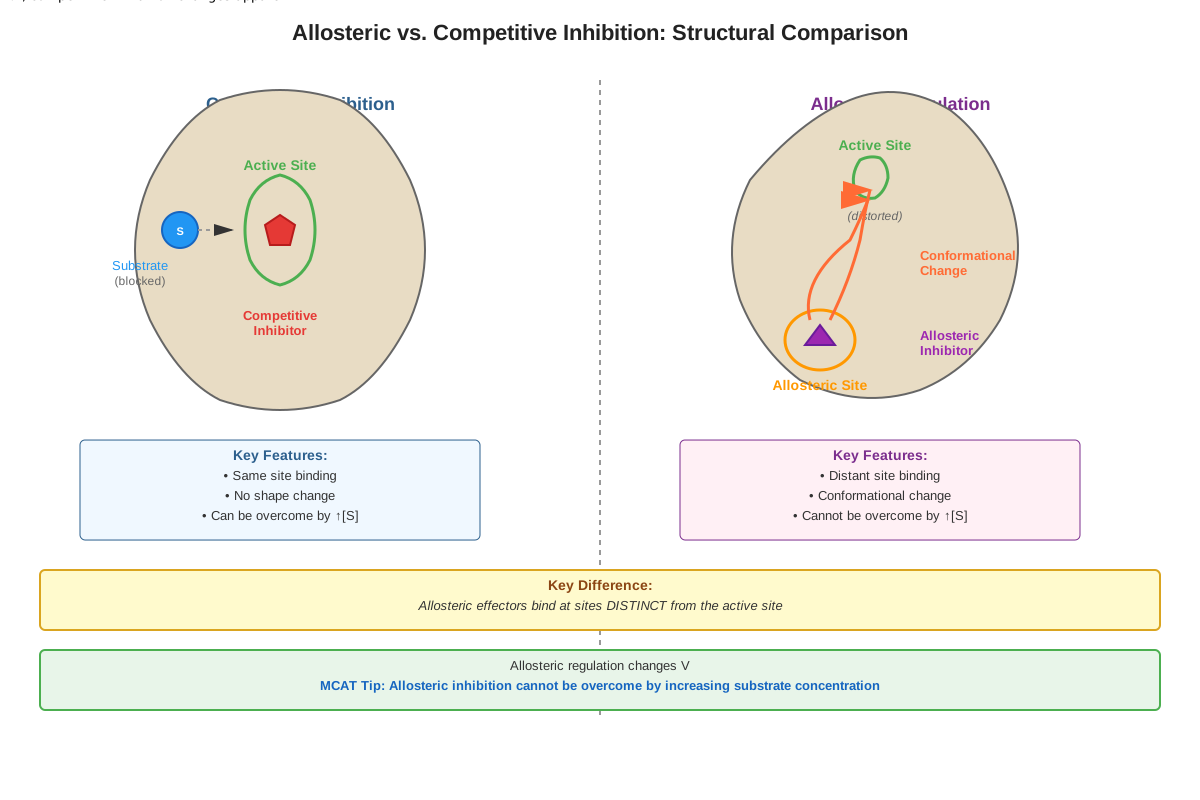
Allosteric regulation represents one of the most sophisticated and clinically relevant mechanisms by which cells control enzyme activity and protein function. Unlike simple competitive inhibition that occurs at the active site, allosteric regulation involves the binding of regulatory molecules to sites distinct from the active site—termed allosteric sites—which induces conformational changes that either enhance or diminish protein activity. This elegant control mechanism allows cells to respond dynamically to metabolic needs, maintain homeostasis, and coordinate complex biochemical pathways with remarkable precision.
For the MCAT, understanding allosteric regulation Biochemistry is absolutely essential because it bridges multiple high-yield topics including enzyme kinetics, metabolic pathway control, and protein structure-function relationships. The exam frequently tests allosteric concepts through passage-based questions involving hemoglobin cooperativity, feedback inhibition in metabolic pathways, and the interpretation of sigmoidal binding curves. Questions may present experimental data showing how effector molecules alter enzyme activity or ask students to predict the physiological consequences of mutations affecting allosteric sites.
Allosteric regulation MCAT content connects intimately to broader Biochemistry principles, particularly the relationship between protein quaternary structure and function. The topic exemplifies how Amino Acids and Proteins achieve biological regulation through conformational flexibility rather than covalent modification alone. Mastery of allosteric regulation provides the conceptual foundation for understanding cooperative binding, metabolic control points, and the pharmacological basis of many drugs that function as allosteric modulators. This topic appears across multiple MCAT sections, including Biological and Biochemical Foundations of Living Systems, and frequently integrates with physiology passages discussing oxygen transport, metabolic diseases, and cellular signaling.
Learning Objectives
- [ ] Define Allosteric regulation using accurate Biochemistry terminology
- [ ] Explain why Allosteric regulation matters for the MCAT
- [ ] Apply Allosteric regulation to exam-style questions
- [ ] Identify common mistakes related to Allosteric regulation
- [ ] Connect Allosteric regulation to related Biochemistry concepts
- [ ] Distinguish between positive and negative allosteric effectors and predict their effects on enzyme kinetics
- [ ] Interpret sigmoidal versus hyperbolic binding curves and explain their mechanistic basis
- [ ] Analyze the molecular basis of cooperativity in multi-subunit proteins
- [ ] Predict the physiological consequences of allosteric regulation in metabolic pathways
Prerequisites
- Enzyme kinetics and Michaelis-Menten equation: Essential for understanding how allosteric regulation differs from competitive inhibition and how it affects Vmax and Km parameters
- Protein structure (primary through quaternary): Allosteric regulation depends on conformational changes transmitted through protein structure, particularly in multi-subunit proteins
- Thermodynamics and equilibrium: Understanding how binding at one site affects binding at another requires knowledge of free energy changes and equilibrium shifts
- Basic metabolic pathways: Many allosteric examples involve feedback inhibition in glycolysis, citric acid cycle, and other metabolic sequences
- Hemoglobin structure and function: The classic example of cooperativity and allosteric regulation that appears frequently on the MCAT
Why This Topic Matters
Clinical and Real-World Significance
Allosteric regulation governs critical physiological processes including oxygen delivery to tissues (hemoglobin), blood clotting cascades, neurotransmitter signaling, and metabolic pathway control. Clinical conditions such as sickle cell disease involve disrupted allosteric interactions in hemoglobin. Many modern pharmaceuticals function as allosteric modulators rather than active site inhibitors because they offer greater specificity and fewer side effects. For example, benzodiazepines act as positive allosteric modulators of GABA receptors, and many cancer therapeutics target allosteric sites on kinases. Understanding allosteric mechanisms is fundamental to pharmacology, toxicology, and the development of precision medicine approaches.
MCAT Exam Statistics and Question Types
Allosteric regulation appears in approximately 15-20% of Biochemistry passages on the MCAT, making it one of the highest-yield topics in enzyme regulation. Questions typically fall into several categories: (1) interpreting kinetic data showing sigmoidal curves versus hyperbolic curves, (2) predicting the effects of mutations on cooperative binding, (3) analyzing feedback inhibition in metabolic pathways, (4) comparing hemoglobin and myoglobin oxygen-binding properties, and (5) identifying allosteric effectors from experimental data. The AAMC particularly favors questions that integrate allosteric regulation with graph interpretation, requiring students to connect molecular mechanisms to quantitative data.
Common Exam Passage Contexts
MCAT passages frequently present allosteric regulation in the context of: hemoglobin variants and their oxygen-binding properties under different physiological conditions; metabolic enzymes like phosphofructokinase-1 (PFK-1) responding to ATP, AMP, and citrate; experimental studies measuring enzyme activity in the presence of various effectors; drug development targeting allosteric sites; and genetic mutations affecting protein cooperativity. Passages may provide kinetic data, structural information, or physiological scenarios requiring students to apply allosteric principles to novel situations.
Core Concepts
Definition and Fundamental Mechanism
Allosteric regulation (from Greek "allos" meaning "other" and "stereos" meaning "solid" or "shape") refers to the modulation of protein activity through the binding of regulatory molecules—called allosteric effectors or allosteric modulators—to sites topographically distinct from the active site. This binding induces conformational changes that propagate through the protein structure, altering the shape and functional properties of the active site without the effector directly occupying it.
The molecular basis of allosteric regulation rests on the inherent conformational flexibility of proteins, particularly those with quaternary structure. Proteins exist in dynamic equilibrium between different conformational states, and allosteric effectors shift this equilibrium by stabilizing particular conformations. This mechanism allows for exquisitely sensitive control because small changes in effector concentration can produce large changes in protein activity, and multiple regulatory inputs can be integrated at different allosteric sites.
The Two-State Model: T and R States
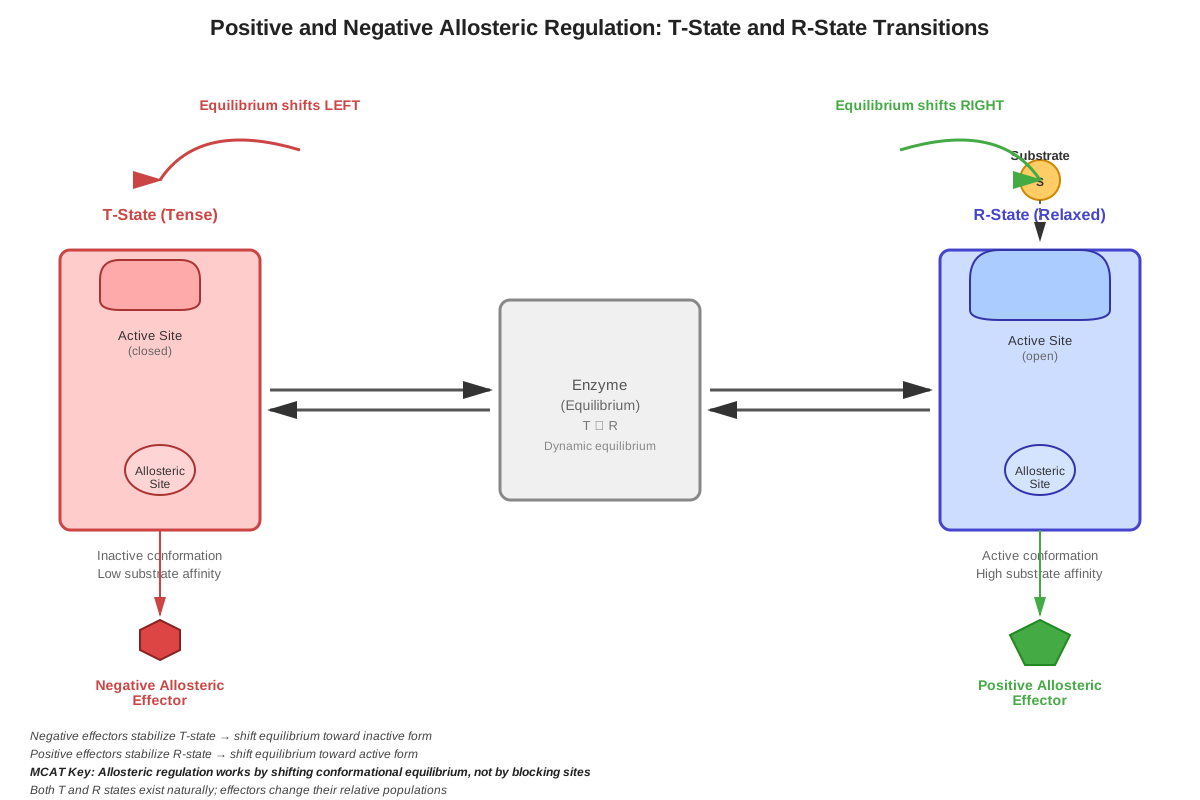
The concerted model (also called the Monod-Wyman-Changeux model or MWC model) provides the classical framework for understanding allosteric regulation in multi-subunit proteins. This model proposes that allosteric proteins exist in equilibrium between two conformational states:
- T state (Tense state): The low-affinity, less active conformation with constrained structure
- R state (Relaxed state): The high-affinity, more active conformation with relaxed structure
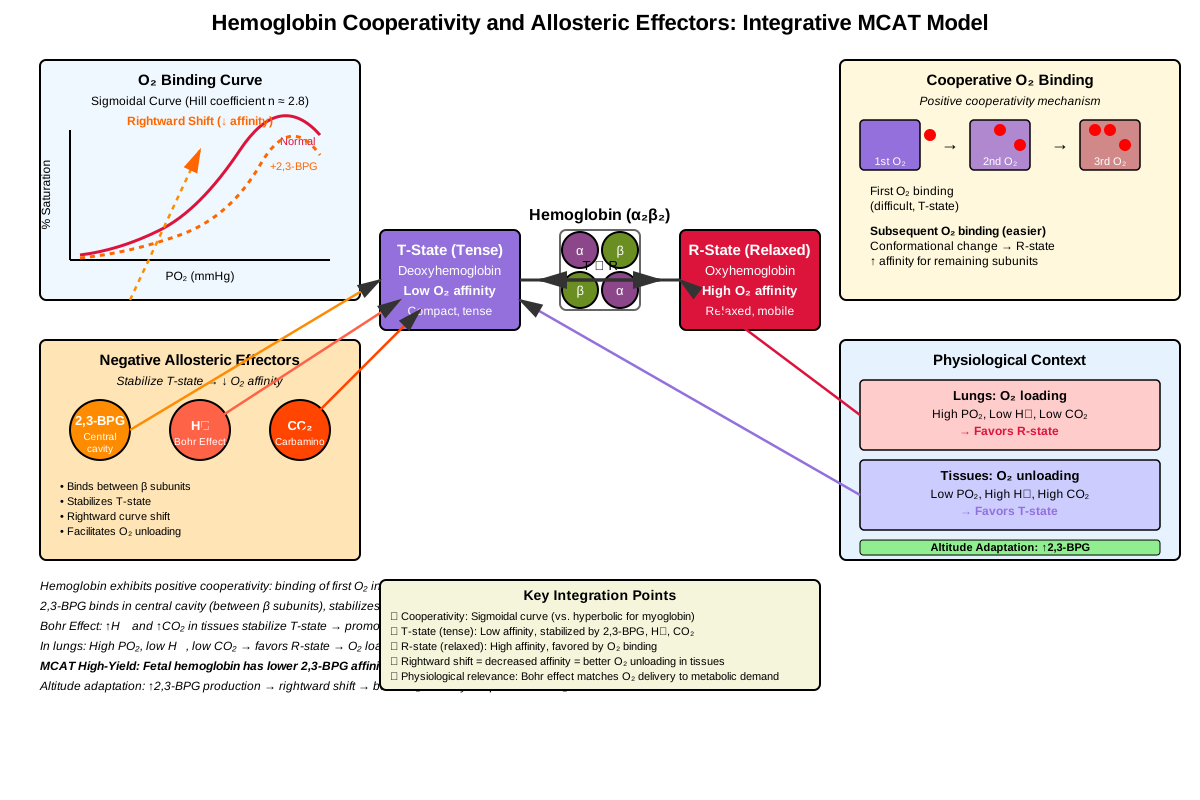
According to this model, all subunits in a multi-subunit protein change conformation simultaneously (hence "concerted"), maintaining symmetry. The binding of substrate or positive allosteric effectors shifts the equilibrium toward the R state, while negative allosteric effectors stabilize the T state. This model successfully explains cooperative binding, where the binding of one substrate molecule increases the affinity of remaining subunits for substrate.
Positive and Negative Allosteric Regulation
Positive allosteric effectors (also called allosteric activators) bind to allosteric sites and stabilize the active conformation of the enzyme, increasing its activity. These molecules:
- Shift the T↔R equilibrium toward the R state
- Increase substrate affinity (decrease Km or K0.5)
- May increase Vmax in some cases
- Often signal that the enzyme's product is needed
Negative allosteric effectors (also called allosteric inhibitors) bind to allosteric sites and stabilize the inactive conformation, decreasing enzyme activity. These molecules:
- Shift the T↔R equilibrium toward the T state
- Decrease substrate affinity (increase Km or K0.5)
- May decrease Vmax in some cases
- Often represent end products of metabolic pathways (feedback inhibition)
Critically, allosteric inhibition differs from competitive inhibition: allosteric inhibitors cannot be overcome by increasing substrate concentration alone, and they affect both Km and Vmax parameters, whereas competitive inhibitors only affect apparent Km.
Cooperativity and Sigmoidal Binding Curves
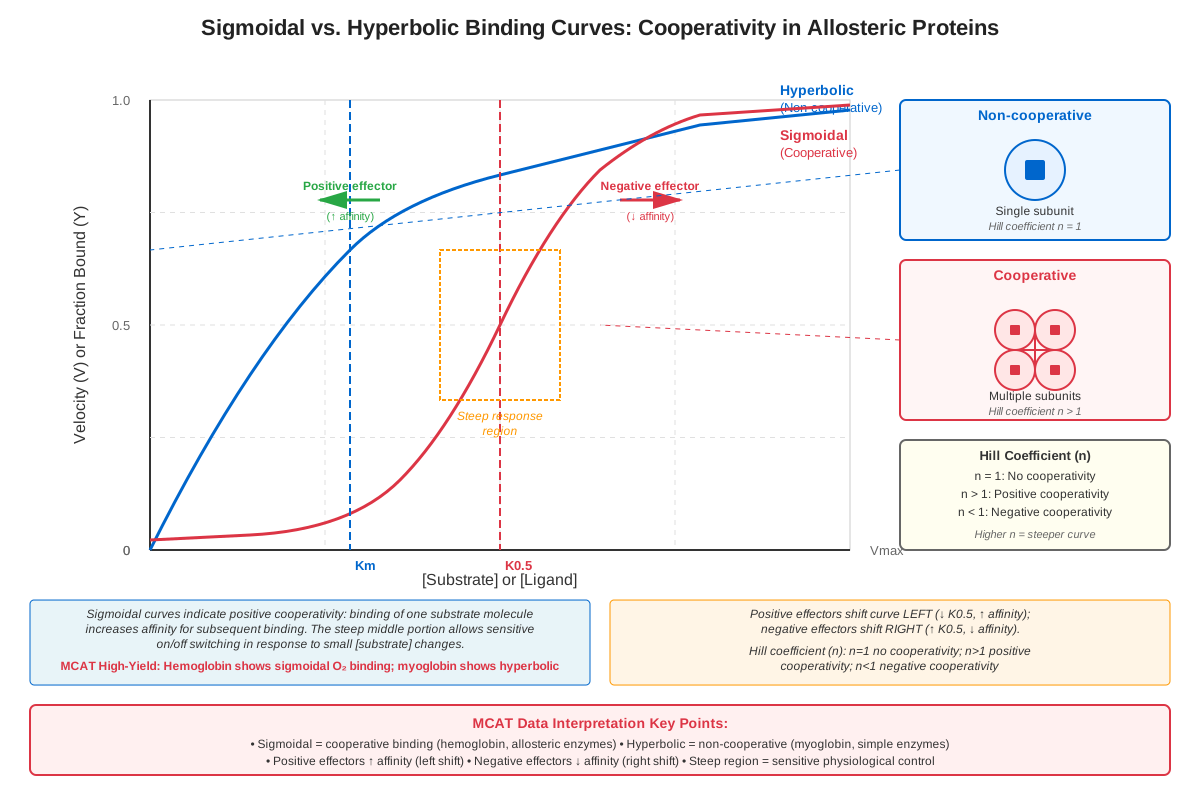
Cooperativity represents a special case of allosteric regulation where substrate binding to one subunit affects substrate binding to other subunits in a multi-subunit protein. Positive cooperativity occurs when substrate binding to one subunit increases the affinity of other subunits for substrate, producing a sigmoidal (S-shaped) binding curve when plotting fractional saturation versus substrate concentration.
The sigmoidal curve contrasts sharply with the hyperbolic curve characteristic of simple Michaelis-Menten enzymes or non-cooperative binding (like myoglobin). The sigmoidal shape reflects the transition from T state to R state as substrate concentration increases, with three distinct regions:
- Initial lag phase: Low substrate concentrations cannot efficiently shift the equilibrium from T to R state
- Steep middle region: Once some subunits bind substrate and convert to R state, remaining subunits rapidly follow
- Plateau phase: All subunits are saturated
The Hill coefficient (n) quantifies cooperativity:
- n = 1: No cooperativity (hyperbolic curve)
- n > 1: Positive cooperativity (sigmoidal curve)
- n < 1: Negative cooperativity (rare)
For hemoglobin, n ≈ 2.8, indicating strong positive cooperativity among its four subunits.
Hemoglobin: The Archetypal Allosteric Protein
Hemoglobin serves as the quintessential example of allosteric regulation and appears extensively on the MCAT. This tetrameric protein (α₂β₂) exhibits positive cooperativity for oxygen binding and responds to multiple allosteric effectors:
Positive allosteric effectors (promote R state, increase O₂ affinity):
- Oxygen itself (cooperative binding)
- Increased pH (Bohr effect)
- Decreased CO₂
- Decreased 2,3-bisphosphoglycerate (2,3-BPG)
Negative allosteric effectors (promote T state, decrease O₂ affinity):
- Decreased pH/increased H⁺ (Bohr effect)
- Increased CO₂
- Increased 2,3-BPG
- Increased temperature
The Bohr effect describes how hemoglobin's oxygen affinity decreases with decreasing pH (increasing H⁺ concentration). Protons bind to histidine residues, stabilizing the T state and promoting oxygen release in metabolically active tissues where pH is lower due to CO₂ production. This elegant mechanism ensures oxygen delivery matches metabolic demand.
2,3-BPG binds in the central cavity between the four subunits of deoxyhemoglobin (T state), stabilizing this conformation and decreasing oxygen affinity. This adaptation is crucial at high altitude, where increased 2,3-BPG levels facilitate oxygen unloading to tissues despite lower atmospheric oxygen pressure.
Feedback Inhibition in Metabolic Pathways
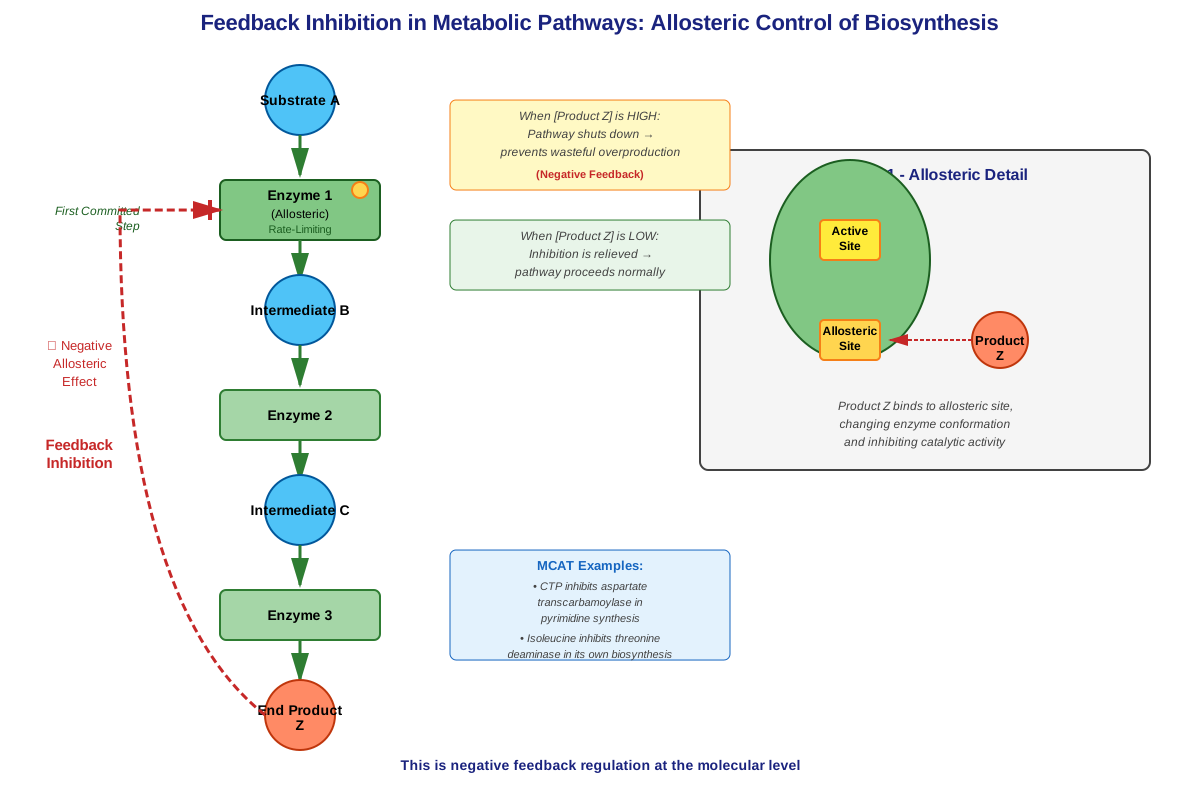
Feedback inhibition (also called end-product inhibition) represents a common application of negative allosteric regulation in metabolic pathways. The final product of a biosynthetic pathway acts as an allosteric inhibitor of the first committed step enzyme, preventing overproduction when the product is abundant.
Classic MCAT examples include:
| Pathway | Regulated Enzyme | Allosteric Inhibitor | Allosteric Activator |
|---|---|---|---|
| Glycolysis | Phosphofructokinase-1 (PFK-1) | ATP, citrate | AMP, ADP, F-2,6-BP |
| Citric Acid Cycle | Isocitrate dehydrogenase | ATP, NADH | ADP, NAD⁺ |
| Pyrimidine Synthesis | Aspartate transcarbamoylase (ATCase) | CTP | ATP |
| Purine Synthesis | Glutamine PRPP amidotransferase | AMP, GMP | PRPP |
Phosphofructokinase-1 (PFK-1) exemplifies sophisticated allosteric control as the rate-limiting enzyme of glycolysis:
- Inhibited by: ATP (signals sufficient energy), citrate (signals active citric acid cycle)
- Activated by: AMP and ADP (signal energy depletion), fructose-2,6-bisphosphate (F-2,6-BP, hormonal signal)
This multi-input regulation allows PFK-1 to integrate cellular energy status and hormonal signals, making it a critical metabolic control point.
Heterotropic vs. Homotropic Effects
Homotropic effects occur when the substrate itself acts as an allosteric effector, as in cooperative binding. Oxygen binding to hemoglobin exemplifies homotropic positive cooperativity—oxygen is both the substrate and a positive allosteric effector.
Heterotropic effects occur when molecules other than the substrate act as allosteric effectors. H⁺, CO₂, and 2,3-BPG exert heterotropic effects on hemoglobin. Most metabolic enzymes experience heterotropic regulation by pathway intermediates, energy molecules (ATP, ADP, AMP), or regulatory molecules.
K Systems vs. V Systems
Allosteric enzymes can be classified based on how effectors alter their kinetic parameters:
K systems: Allosteric effectors primarily change the substrate affinity (K₀.₅ or Km) without significantly affecting maximum velocity (Vmax). The effector alters the position of the binding curve along the x-axis. Hemoglobin exemplifies a K system—allosteric effectors shift the oxygen dissociation curve left or right without changing the maximum oxygen-carrying capacity.
V systems: Allosteric effectors primarily change the maximum velocity (Vmax) without significantly affecting substrate affinity. The effector alters the height of the curve. Some metabolic enzymes show V-system behavior where activators increase catalytic efficiency.
Many enzymes show mixed K and V system characteristics, with effectors affecting both parameters.
Concept Relationships
Allosteric regulation integrates multiple biochemical concepts into a unified control mechanism. The relationship begins with protein quaternary structure → enables conformational changes between T and R states → produces cooperative binding → generates sigmoidal kinetics → allows sensitive metabolic control.
Within the topic, positive cooperativity and positive allosteric effectors both shift equilibrium toward the R state, but cooperativity involves substrate binding while allosteric activation involves separate effector molecules. Negative allosteric effectors oppose both by stabilizing the T state, creating an integrated control system responsive to multiple signals.
Allosteric regulation connects to prerequisite topics: enzyme kinetics provides the framework for understanding how allosteric effects differ from competitive inhibition; protein structure explains how conformational changes propagate through subunits; thermodynamics governs the T↔R equilibrium and binding energetics.
The topic extends to related concepts: metabolic pathway regulation applies allosteric principles to coordinate flux through biosynthetic and catabolic pathways; signal transduction often involves allosteric activation of kinases and other signaling proteins; pharmacology exploits allosteric sites for drug development; oxygen transport physiology depends entirely on hemoglobin's allosteric properties.
The conceptual flow: Structural flexibility → Multiple conformational states → Effector binding stabilizes specific states → Conformational changes alter active site → Activity modulation → Physiological regulation
High-Yield Facts
⭐ Allosteric effectors bind to sites distinct from the active site and induce conformational changes that alter protein activity
⭐ Sigmoidal binding curves indicate positive cooperativity and allosteric regulation, while hyperbolic curves indicate non-cooperative binding
⭐ The Hill coefficient (n) quantifies cooperativity: n > 1 indicates positive cooperativity, n = 1 indicates no cooperativity
⭐ Hemoglobin exhibits positive cooperativity for oxygen binding with a Hill coefficient of approximately 2.8
⭐ The Bohr effect describes decreased hemoglobin oxygen affinity at lower pH, facilitating oxygen delivery to metabolically active tissues
- The T state (tense) represents the low-affinity conformation while the R state (relaxed) represents the high-affinity conformation
- 2,3-BPG binds to deoxyhemoglobin and stabilizes the T state, decreasing oxygen affinity and facilitating oxygen release to tissues
- Feedback inhibition involves the end product of a metabolic pathway acting as a negative allosteric effector on the first committed step enzyme
- Phosphofructokinase-1 (PFK-1) is allosterically inhibited by ATP and citrate but activated by AMP, ADP, and fructose-2,6-bisphosphate
- Allosteric inhibition cannot be overcome by simply increasing substrate concentration, unlike competitive inhibition
- K systems show changes primarily in substrate affinity (K₀.₅) while V systems show changes primarily in maximum velocity (Vmax)
- Homotropic effects involve the substrate acting as an allosteric effector, while heterotropic effects involve other molecules
- Aspartate transcarbamoylase (ATCase) is allosterically inhibited by CTP (end product) and activated by ATP in pyrimidine synthesis
- Myoglobin lacks cooperativity and shows hyperbolic oxygen binding because it is monomeric, unlike tetrameric hemoglobin
- Allosteric regulation allows for rapid, reversible control without requiring covalent modification or protein synthesis
Quick check — test yourself on Allosteric regulation so far.
Try Flashcards →Common Misconceptions
Misconception: Allosteric inhibitors bind to the active site and compete with substrate.
Correction: Allosteric effectors bind to sites topographically distinct from the active site. They alter enzyme activity through conformational changes, not direct competition. Competitive inhibitors bind to the active site; allosteric inhibitors bind elsewhere.
Misconception: All enzymes with multiple subunits exhibit cooperativity.
Correction: Quaternary structure is necessary but not sufficient for cooperativity. The subunits must communicate through conformational changes that affect each other's substrate affinity. Some multi-subunit enzymes function independently without cooperativity.
Misconception: A sigmoidal curve always indicates enzyme kinetics following Michaelis-Menten assumptions.
Correction: Sigmoidal curves indicate cooperative binding and deviation from simple Michaelis-Menten kinetics. The Michaelis-Menten equation produces hyperbolic curves. Sigmoidal curves require the Hill equation or more complex models.
Misconception: Increasing substrate concentration can overcome allosteric inhibition just like competitive inhibition.
Correction: Allosteric inhibition affects the enzyme's intrinsic properties (Vmax and/or Km), not just substrate binding competition. While very high substrate concentrations may partially overcome some allosteric effects by mass action, the mechanism differs fundamentally from competitive inhibition.
Misconception: The Bohr effect means hemoglobin binds more oxygen at lower pH.
Correction: The Bohr effect describes decreased oxygen affinity at lower pH (higher H⁺ concentration). Protons stabilize the T state, promoting oxygen release. This is physiologically appropriate because metabolically active tissues produce CO₂ and H⁺, signaling need for oxygen delivery.
Misconception: 2,3-BPG increases hemoglobin's oxygen-carrying capacity.
Correction: 2,3-BPG decreases hemoglobin's oxygen affinity by stabilizing the T state, making it easier to release oxygen to tissues. It doesn't change the maximum oxygen-carrying capacity (four O₂ per hemoglobin), but shifts when oxygen is released.
Misconception: Allosteric activators always increase Vmax.
Correction: Allosteric activators may increase substrate affinity (decrease K₀.₅), increase Vmax, or both, depending on whether the enzyme is a K system, V system, or mixed. The defining feature is stabilization of the active conformation, not a specific kinetic parameter change.
Misconception: Feedback inhibition requires covalent modification of the enzyme.
Correction: Feedback inhibition typically involves reversible, non-covalent binding of the end product to an allosteric site. This allows rapid response to changing metabolite concentrations without the time delay of covalent modification or degradation.
Worked Examples
Example 1: Interpreting Kinetic Data for an Allosteric Enzyme
Question: Researchers study an enzyme involved in amino acid biosynthesis. They measure reaction velocity at various substrate concentrations in the presence and absence of compound X, a downstream product of the pathway. The data show:
- Without compound X: Sigmoidal curve, K₀.₅ = 2 mM, Vmax = 100 μmol/min
- With compound X: Sigmoidal curve, K₀.₅ = 8 mM, Vmax = 100 μmol/min
What type of regulation does compound X exert, and what is the likely physiological significance?
Solution:
Step 1: Identify the curve shape. Both conditions show sigmoidal curves, indicating the enzyme exhibits cooperativity and allosteric regulation regardless of compound X presence.
Step 2: Analyze the kinetic parameter changes. Compound X increases K₀.₅ from 2 mM to 8 mM (4-fold increase), indicating decreased substrate affinity. However, Vmax remains unchanged at 100 μmol/min.
Step 3: Classify the regulation type. Since K₀.₅ increases while Vmax remains constant, compound X acts as a negative allosteric effector exhibiting K-system behavior. The compound shifts the T↔R equilibrium toward the T state (lower affinity) without affecting the maximum catalytic capacity.
Step 4: Determine physiological significance. Compound X is a downstream product that inhibits an enzyme earlier in its biosynthetic pathway. This represents feedback inhibition, a common regulatory mechanism preventing overproduction of metabolites. When compound X accumulates, it allosterically inhibits its own synthesis by decreasing the enzyme's substrate affinity, requiring higher substrate concentrations to achieve the same reaction velocity.
Step 5: Connect to learning objectives. This example demonstrates allosteric regulation in metabolic control, distinguishes between effects on Km versus Vmax, and shows how to interpret kinetic data—all high-yield MCAT skills.
Answer: Compound X is a negative allosteric effector (allosteric inhibitor) that decreases substrate affinity without affecting maximum velocity, representing feedback inhibition to prevent overproduction of the amino acid product.
Example 2: Comparing Oxygen Binding in Hemoglobin Variants
Question: A patient presents with a hemoglobin variant (Hemoglobin Kansas) that has a mutation reducing its ability to transition from the T state to the R state. Compared to normal hemoglobin (HbA):
A) How would the oxygen dissociation curve differ?
B) What would happen to the Hill coefficient?
C) What clinical symptoms might this patient experience?
Solution:
Part A - Oxygen Dissociation Curve:
Step 1: Understand normal hemoglobin. HbA exists in equilibrium between T state (low O₂ affinity) and R state (high O₂ affinity). Oxygen binding shifts equilibrium toward R state, producing positive cooperativity and a sigmoidal curve.
Step 2: Analyze the mutation effect. If the variant cannot efficiently transition to R state, it remains predominantly in the T state (low affinity conformation) even when oxygen binds.
Step 3: Predict curve changes. The oxygen dissociation curve would shift right (increased P₅₀, meaning higher partial pressure of oxygen needed to achieve 50% saturation). The curve might also become less sigmoidal, approaching hyperbolic shape if cooperativity is severely impaired.
Part B - Hill Coefficient:
Step 4: Connect cooperativity to Hill coefficient. The Hill coefficient (n) quantifies cooperativity, which depends on communication between subunits during the T→R transition.
Step 5: Predict Hill coefficient change. If the T→R transition is impaired, subunits cannot effectively communicate the "oxygen-bound" signal to each other. The Hill coefficient would decrease from normal (~2.8) toward 1.0, indicating reduced cooperativity. The binding would become more myoglobin-like (independent subunits).
Part B - Clinical Symptoms:
Step 6: Analyze physiological consequences. Hemoglobin with decreased oxygen affinity (right-shifted curve) binds oxygen less efficiently in the lungs but releases it more readily in tissues.
Step 7: Predict clinical presentation. The patient would experience:
- Decreased oxygen loading in lungs (more significant problem)
- Tissue hypoxia despite normal oxygen release
- Compensatory polycythemia (increased red blood cell production) to compensate for reduced oxygen-carrying efficiency
- Cyanosis (bluish discoloration) due to increased deoxyhemoglobin
- Fatigue and exercise intolerance from inadequate oxygen delivery
Step 8: Distinguish from other conditions. This differs from carbon monoxide poisoning (left-shifted curve, won't release O₂) or anemia (normal curve shape, just fewer hemoglobin molecules).
Answers:
A) Right-shifted oxygen dissociation curve with reduced sigmoidicity
B) Decreased Hill coefficient (approaching 1.0)
C) Tissue hypoxia, compensatory polycythemia, cyanosis, and exercise intolerance due to impaired oxygen loading in the lungs
Exam Strategy
Approaching MCAT Questions on Allosteric Regulation
Step 1 - Identify the question type: Determine whether the question asks about mechanism (how allosteric regulation works), kinetics (interpreting curves or data), physiology (hemoglobin and oxygen transport), or metabolism (feedback inhibition in pathways).
Step 2 - Look for trigger words:
- "Sigmoidal curve" → cooperativity, allosteric regulation
- "Feedback inhibition" → end product acting as negative allosteric effector
- "Conformational change" → allosteric mechanism
- "Distinct from active site" → allosteric site
- "Cannot be overcome by increasing substrate" → allosteric (not competitive) inhibition
- "Hill coefficient" → quantifying cooperativity
- "T state" or "R state" → two-state model
Step 3 - Analyze graphs systematically:
- Curve shape: Hyperbolic = no cooperativity; Sigmoidal = cooperativity
- Curve shifts: Left shift = increased affinity; Right shift = decreased affinity
- Parameter changes: Compare K₀.₅/Km and Vmax between conditions
- Slope in middle region: Steeper = greater cooperativity (higher Hill coefficient)
Step 4 - Apply process of elimination:
- Eliminate answers confusing competitive with allosteric inhibition
- Eliminate answers that reverse the direction of effects (e.g., saying negative effectors increase affinity)
- Eliminate answers that confuse T and R states
- Eliminate answers that misapply the Bohr effect or 2,3-BPG effects
Step 5 - Connect to physiology: For hemoglobin questions, remember the physiological logic:
- Lungs: high O₂, high pH, low CO₂, low 2,3-BPG effect → favor R state → load oxygen
- Tissues: low O₂, low pH, high CO₂, 2,3-BPG present → favor T state → release oxygen
- Any factor that makes physiological sense (delivering oxygen where needed) is likely correct
Time allocation: Allosteric regulation questions often involve graph interpretation or multi-step reasoning. Allocate 90-120 seconds for passage-based questions. For discrete questions, 60 seconds should suffice if you recognize the concept immediately.
Common Trap Answers
Watch for answers that:
- Confuse allosteric sites with active sites
- State that allosteric inhibition can be overcome by substrate (like competitive inhibition)
- Reverse the effects of positive and negative effectors
- Confuse the Bohr effect direction (lower pH = lower affinity, not higher)
- Claim that 2,3-BPG increases oxygen-carrying capacity rather than decreasing affinity
- Misidentify hyperbolic curves as showing cooperativity
- Confuse homotropic and heterotropic effects
Memory Techniques
Mnemonics
"T is Tight, R is Ready": The T state is Tense and Tight with low affinity (doesn't want to bind substrate). The R state is Relaxed and Ready to bind substrate with high affinity.
"TRAP for T state": Factors that stabilize the T state and Trap hemoglobin in low-affinity form:
- Temperature (increased)
- Reduced pH (increased H⁺)
- Acid (CO₂, carbonic acid)
- Phosphate (2,3-BPG)
"PFK-1 Hates Rich, Loves Poor": Phosphofructokinase-1 is:
- Inhibited when the cell is "rich" in energy: ATP, Citrate
- Activated when the cell is "poor" in energy: AMP, ADP
"Sigmoidal = Sophisticated": Sigmoidal curves indicate Sophisticated regulation with cooperativity, while simple hyperbolic curves indicate simple Michaelis-Menten kinetics.
"FEEDBACK = Final End Enzyme Decreases By Allosteric Control of Key enzyme": Describes feedback inhibition mechanism.
Visualization Strategies
The Domino Effect: Visualize allosteric proteins as a row of dominoes. When an effector binds to one site (pushing the first domino), conformational changes propagate through the structure (dominoes falling in sequence), ultimately affecting the active site (last domino). This illustrates how binding at a distant site affects function.
The Handshake Model: Imagine four people (subunits) holding hands in a circle (quaternary structure). When one person squeezes (substrate binds), the squeeze propagates around the circle, making everyone's grip tighter (positive cooperativity). This visualizes how subunits communicate.
The Light Switch Analogy: Think of allosteric proteins as having a light switch (T↔R equilibrium). The switch can be in the "off" position (T state) or "on" position (R state). Positive effectors push the switch toward "on," negative effectors push toward "off," and the protein spends more time in whichever state is stabilized.
Acronyms
COOP for requirements of COOPerativity:
- Conformational flexibility
- Oligomeric (multiple subunits)
- Occupancy affects affinity
- Propagation of conformational changes
ALLO for ALLOsteric regulation characteristics:
- Alternate site (not active site)
- Long-range conformational changes
- Ligand binding shifts equilibrium
- Outcome is activity modulation
Summary
Allosteric regulation represents a sophisticated mechanism for controlling protein function through the binding of regulatory molecules to sites distinct from the active site, inducing conformational changes that modulate activity. The two-state model (T and R states) provides the conceptual framework, with positive effectors stabilizing the active R state and negative effectors stabilizing the inactive T state. Cooperative binding in multi-subunit proteins produces characteristic sigmoidal binding curves, quantified by the Hill coefficient, which contrasts with the hyperbolic curves of non-cooperative proteins. Hemoglobin exemplifies allosteric regulation through positive cooperativity for oxygen binding and responsiveness to heterotropic effectors including H⁺, CO₂, and 2,3-BPG, enabling efficient oxygen loading in lungs and delivery to tissues. In metabolic pathways, feedback inhibition employs allosteric regulation to prevent overproduction, with enzymes like phosphofructokinase-1 integrating multiple allosteric signals to control pathway flux. Understanding allosteric regulation requires distinguishing it from competitive inhibition, recognizing that allosteric effects cannot be overcome by substrate alone and affect both Km and Vmax parameters. For the MCAT, mastery involves interpreting sigmoidal curves, predicting effector impacts, analyzing hemoglobin variants, and connecting molecular mechanisms to physiological consequences.
Key Takeaways
- Allosteric regulation involves effector binding at sites distinct from the active site, causing conformational changes that alter protein activity through the T state (low affinity) ↔ R state (high affinity) equilibrium
- Sigmoidal binding curves indicate positive cooperativity and allosteric regulation, with the Hill coefficient (n > 1) quantifying the degree of cooperativity
- Hemoglobin demonstrates positive cooperativity for oxygen binding and responds to allosteric effectors: decreased pH, increased CO₂, and increased 2,3-BPG all decrease oxygen affinity (Bohr effect), facilitating oxygen delivery to metabolically active tissues
- Feedback inhibition uses the end product of a metabolic pathway as a negative allosteric effector on the first committed step enzyme, preventing overproduction
- Allosteric inhibition differs fundamentally from competitive inhibition: it cannot be overcome by increasing substrate concentration, affects both Km and Vmax, and involves binding at a site distinct from the active site
- K systems show primarily changes in substrate affinity while V systems show primarily changes in maximum velocity, though many enzymes exhibit mixed behavior
- Phosphofructokinase-1 exemplifies sophisticated allosteric control, inhibited by ATP and citrate (energy abundance signals) and activated by AMP, ADP, and F-2,6-BP (energy depletion signals)
Related Topics
Enzyme Kinetics and Inhibition: Understanding Michaelis-Menten kinetics, competitive inhibition, non-competitive inhibition, and uncompetitive inhibition provides the foundation for appreciating how allosteric regulation differs from other regulatory mechanisms. Mastering allosteric regulation enables deeper understanding of complex enzyme behavior.
Metabolic Pathway Regulation: Allosteric regulation serves as a primary control mechanism in glycolysis, gluconeogenesis, citric acid cycle, and biosynthetic pathways. Understanding allosteric principles allows prediction of how metabolic flux responds to cellular energy status and hormonal signals.
Hemoglobin and Myoglobin: These oxygen-binding proteins illustrate the functional consequences of allosteric regulation (hemoglobin) versus non-cooperative binding (myoglobin). This topic extends to hemoglobin variants, oxygen transport physiology, and clinical conditions affecting oxygen delivery.
Protein Structure and Function: Allosteric regulation depends on the relationship between protein structure (particularly quaternary structure) and conformational flexibility. Understanding this connection enables prediction of how mutations affect allosteric properties.
Signal Transduction: Many signaling proteins including G-proteins, kinases, and receptors utilize allosteric mechanisms for activation and regulation. Allosteric principles extend beyond metabolism to cellular communication.
Pharmacology and Drug Design: Modern drug development increasingly targets allosteric sites rather than active sites for greater specificity. Understanding allosteric mechanisms provides insight into drug action and therapeutic strategies.
Practice CTA
Now that you've mastered the core concepts of allosteric regulation, it's time to solidify your understanding through active practice. Challenge yourself with MCAT-style practice questions that test your ability to interpret sigmoidal curves, predict the effects of allosteric effectors, and analyze hemoglobin variants under different physiological conditions. Use flashcards to reinforce high-yield facts about the Bohr effect, 2,3-BPG, feedback inhibition, and the distinction between T and R states. Remember, allosteric regulation appears frequently on the MCAT in both passage-based and discrete questions—your investment in mastering this topic will pay dividends on test day. Focus particularly on graph interpretation and connecting molecular mechanisms to physiological outcomes, as these skills distinguish high-scoring students. You've built a strong conceptual foundation; now apply it to achieve MCAT excellence!
Sign up free to keep reading
Create a free AnvayaPrep account to finish this MCAT guide on Allosteric regulation — plus flashcards and practice questions.