Overview
The induced fit model represents a fundamental paradigm in understanding enzyme-substrate interactions and catalytic mechanisms. This model, proposed by Daniel Koshland in 1958, revolutionized biochemistry by explaining how enzymes dynamically change their conformation upon substrate binding, rather than maintaining a rigid, pre-formed active site. Unlike the earlier lock-and-key model, the induced fit model accounts for the flexibility of enzyme structures and explains how conformational changes optimize catalytic efficiency, substrate specificity, and regulatory control.
For the MCAT, the induced fit model is essential because it appears across multiple contexts within Biochemistry and biological sciences. Questions may test understanding of enzyme kinetics, allosteric regulation, competitive versus non-competitive inhibition, and the thermodynamic basis of catalysis. The model provides the mechanistic foundation for understanding how enzymes achieve their remarkable catalytic power—often accelerating reactions by factors of 10^6 to 10^17. Beyond pure enzyme kinetics, this concept connects to protein structure-function relationships, signal transduction pathways, and drug design principles that appear in MCAT passages.
The induced fit model bridges multiple biochemistry concepts including protein tertiary and quaternary structure, thermodynamics of binding interactions, transition state stabilization, and metabolic regulation. Understanding this model enables students to predict how mutations affect enzyme function, explain cooperative binding phenomena, and analyze experimental data from enzyme assays—all high-yield skills for MCAT success.
Learning Objectives
- [ ] Define the induced fit model using accurate Biochemistry terminology
- [ ] Explain why the induced fit model matters for the MCAT
- [ ] Apply the induced fit model to exam-style questions
- [ ] Identify common mistakes related to the induced fit model
- [ ] Connect the induced fit model to related Biochemistry concepts
- [ ] Compare and contrast the induced fit model with the lock-and-key model
- [ ] Explain how conformational changes in the induced fit model contribute to catalytic efficiency
- [ ] Predict the effects of mutations on induced fit and enzyme activity
- [ ] Analyze how the induced fit model explains substrate specificity and enzyme regulation
Prerequisites
- Protein structure (primary, secondary, tertiary, quaternary): The induced fit model involves conformational changes that depend on understanding protein flexibility and structural levels
- Enzyme basics and active sites: Knowledge of how enzymes bind substrates and catalyze reactions provides the foundation for understanding dynamic binding mechanisms
- Thermodynamics and free energy: The energetics of conformational changes and binding interactions are central to the induced fit mechanism
- Chemical kinetics fundamentals: Understanding reaction rates and catalysis helps explain why induced fit enhances enzymatic efficiency
- Non-covalent interactions: Hydrogen bonds, van der Waals forces, and electrostatic interactions drive the conformational changes in induced fit
Why This Topic Matters
Clinical and Real-World Significance
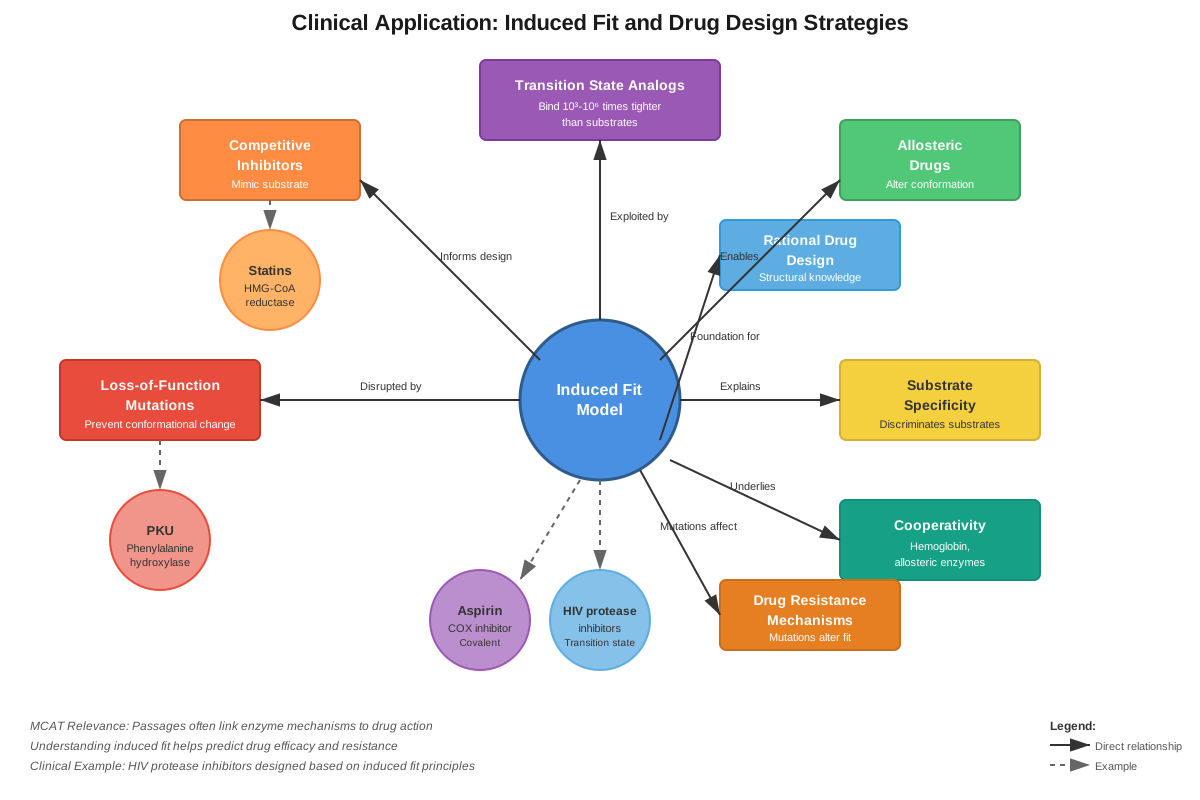
The induced fit model has profound implications for drug design and therapeutic interventions. Pharmaceutical companies exploit induced fit principles when designing enzyme inhibitors, as drugs must account for conformational flexibility to achieve optimal binding. Many genetic diseases result from mutations that impair the induced fit mechanism—for example, certain forms of phenylketonuria involve phenylalanine hydroxylase variants that cannot undergo proper conformational changes. Understanding induced fit also explains how allosteric drugs work, binding at sites distant from the active site to modulate enzyme conformation and activity.
MCAT Exam Statistics
The induced fit model appears in approximately 15-20% of MCAT Biochemistry passages, either as the primary focus or as supporting knowledge for enzyme kinetics questions. The MCAT frequently tests this concept through:
- Discrete questions asking students to compare lock-and-key versus induced fit models
- Passage-based questions presenting experimental data on enzyme mutants with altered conformational flexibility
- Graph interpretation showing how substrate binding affects enzyme structure
- Inhibitor mechanism questions requiring understanding of how molecules affect conformational changes
Common Exam Contexts
MCAT passages often present the induced fit model in contexts such as: allosteric enzyme regulation (hemoglobin oxygen binding, phosphofructokinase regulation), drug-enzyme interactions (HIV protease inhibitors, statins), experimental techniques revealing conformational changes (X-ray crystallography, fluorescence spectroscopy), and evolutionary adaptations where enzymes have evolved substrate specificity through induced fit mechanisms.
Core Concepts
Definition and Historical Context
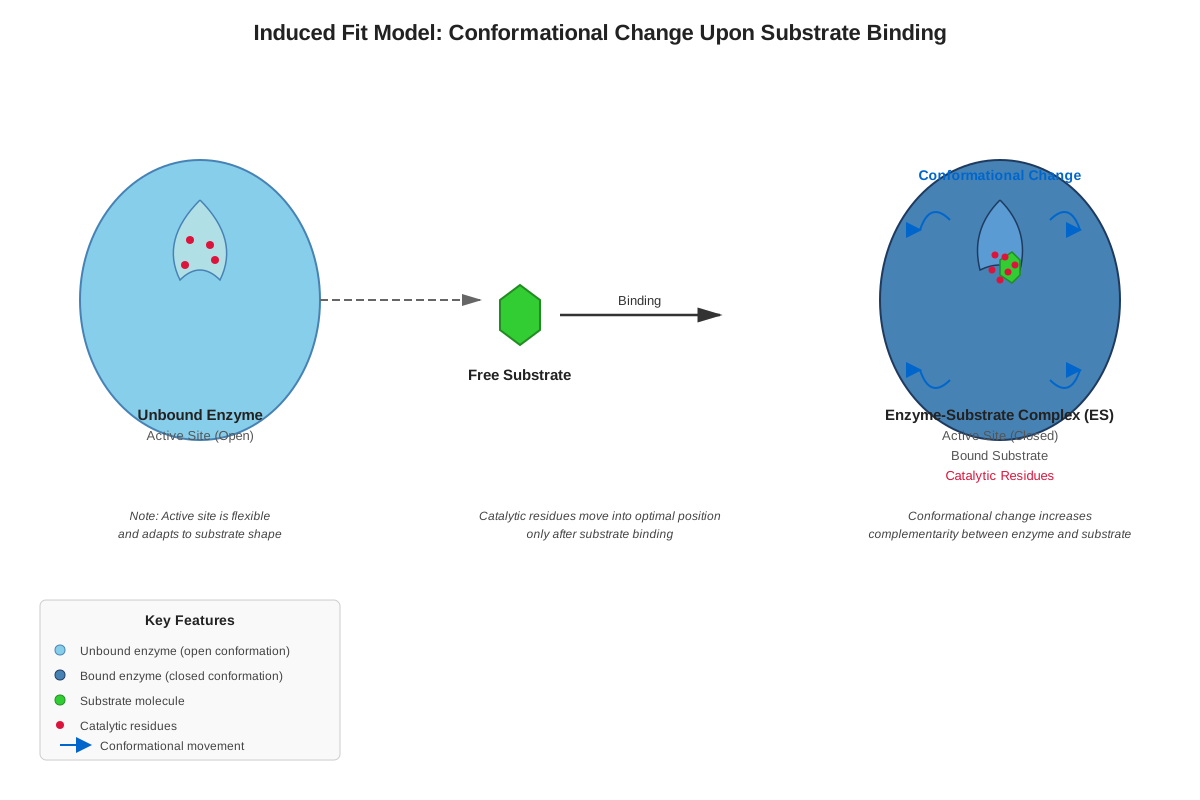
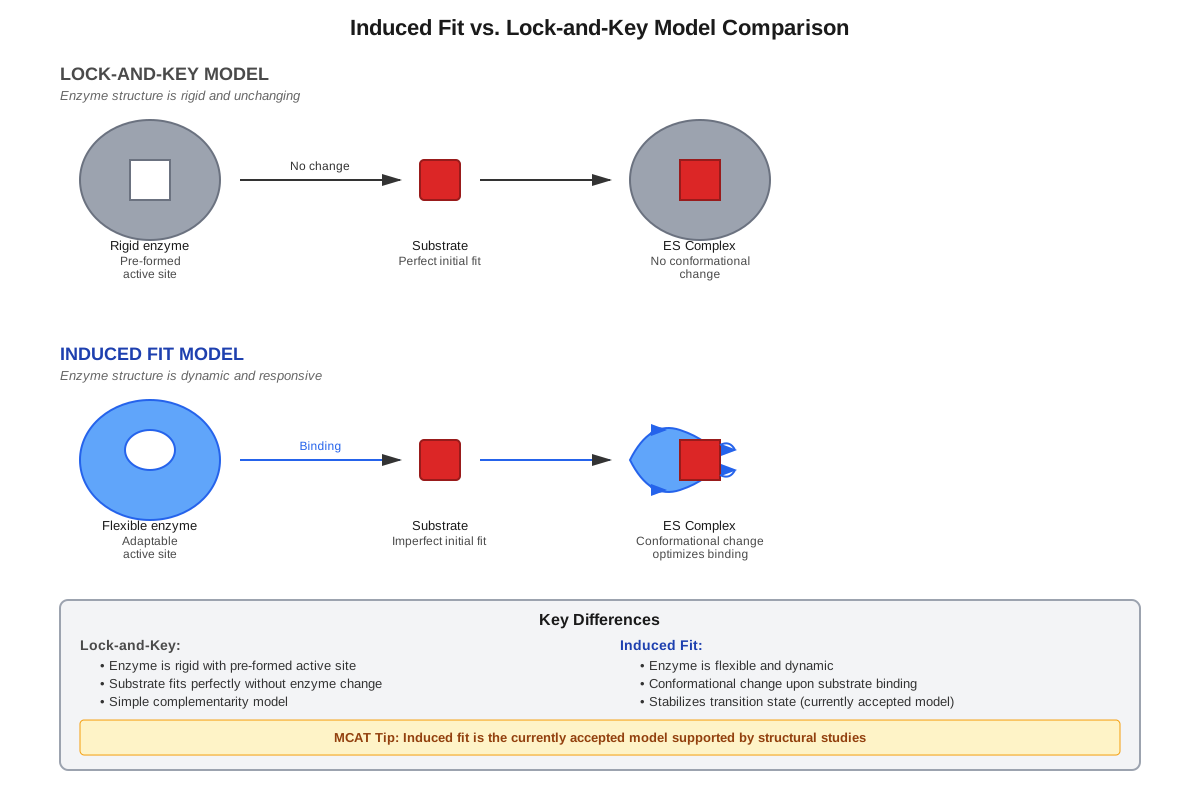
The induced fit model describes the dynamic process by which enzyme-substrate binding induces conformational changes in the enzyme structure, optimizing the active site geometry for catalysis. When a substrate approaches an enzyme, initial weak interactions trigger structural rearrangements that bring catalytic residues into optimal positions, exclude water from the active site, and stabilize the transition state. This model contrasts with the earlier lock-and-key model (proposed by Emil Fischer in 1894), which depicted enzymes as rigid structures with pre-formed active sites perfectly complementary to substrates.
The induced fit model explains several phenomena that the lock-and-key model could not: why enzymes show specificity for transition states rather than substrates, how allosteric regulation works, why certain mutations distant from active sites affect catalysis, and how enzymes can accommodate multiple similar substrates.
Mechanism of Induced Fit
The induced fit process occurs in distinct stages:
- Initial substrate recognition: The substrate approaches the enzyme active site through diffusion, with initial weak interactions (typically electrostatic or hydrophobic) occurring between substrate and residues at the active site periphery
- Conformational change initiation: These initial contacts trigger structural rearrangements, often involving loop movements, domain rotations, or subunit repositioning
- Active site optimization: The conformational change brings catalytic residues into precise alignment with substrate bonds to be broken or formed, creating an environment that stabilizes the transition state
- Catalysis: The optimized geometry facilitates the chemical reaction with lowered activation energy
- Product release and relaxation: After product formation, the enzyme releases the product and returns to its original or a resting conformation
Molecular Basis of Conformational Changes
The conformational changes in induced fit are driven by non-covalent interactions between substrate and enzyme. When a substrate binds, it forms multiple weak interactions (hydrogen bonds, van der Waals forces, electrostatic interactions) with active site residues. The cumulative energy from these interactions provides the thermodynamic driving force for conformational change. The flexibility required for induced fit comes from:
- Hinge regions: Flexible loops or linkers between more rigid domains that allow domain movements
- Cooperative interactions: Changes in one region of the protein propagate through the structure via networks of hydrogen bonds and hydrophobic contacts
- Solvent exclusion: Conformational changes often expel water molecules from the active site, increasing the strength of enzyme-substrate interactions
Energetics of Induced Fit
The thermodynamics of induced fit involve a balance between favorable and unfavorable contributions to binding free energy (ΔG):
Favorable contributions:
- Formation of enzyme-substrate interactions (hydrogen bonds, van der Waals contacts)
- Transition state stabilization through optimal geometry
- Entropy increase from water release upon active site closure
Unfavorable contributions:
- Loss of conformational entropy as enzyme adopts a more constrained structure
- Energy cost of breaking interactions in the original enzyme conformation
- Substrate desolvation
The net ΔG must be negative for binding to occur, but the induced fit model shows that binding energy is not simply maximized—instead, some binding energy is "spent" on conformational changes that optimize catalysis. This explains why enzymes bind transition states more tightly than substrates, a key principle in enzyme catalysis.
Comparison: Lock-and-Key vs. Induced Fit
| Feature | Lock-and-Key Model | Induced Fit Model |
|---|---|---|
| Enzyme flexibility | Rigid, pre-formed active site | Dynamic, conformational changes upon binding |
| Substrate complementarity | Perfect fit before binding | Optimal fit achieved after binding |
| Transition state | Not specifically addressed | Preferentially stabilized |
| Specificity explanation | Shape complementarity only | Shape + induced conformational optimization |
| Allosteric regulation | Difficult to explain | Naturally explains conformational coupling |
| Energy considerations | Binding energy only | Binding energy minus conformational cost |
Examples of Induced Fit in Key Enzymes
Hexokinase: This enzyme catalyzes the first step of glycolysis, phosphorylating glucose to glucose-6-phosphate. Upon glucose binding, hexokinase undergoes a dramatic conformational change where two domains close around the substrate like a clamshell. This closure serves multiple functions: it positions ATP and glucose for optimal reaction geometry, excludes water (preventing wasteful ATP hydrolysis), and prevents phosphorylation of larger molecules. The conformational change is so significant that it can be visualized through X-ray crystallography comparing substrate-free and substrate-bound forms.
DNA Polymerase: DNA polymerases exhibit induced fit when binding incoming nucleotides. The enzyme's "fingers" domain closes around the nascent base pair, checking for correct Watson-Crick geometry. Only correct base pairs induce the full conformational change needed for catalysis, providing a structural basis for replication fidelity. Incorrect base pairs cannot induce the proper fit, dramatically slowing catalysis and allowing time for proofreading.
Carboxypeptidase A: This digestive enzyme shows induced fit through movement of a tyrosine residue (Tyr 248) that swings into the active site upon substrate binding, helping to position the substrate and stabilize the transition state. This movement has been directly observed through structural studies.
Induced Fit and Enzyme Specificity
The induced fit model provides a sophisticated explanation for enzyme specificity. Enzymes achieve specificity not just through complementary shapes, but through the ability to undergo productive conformational changes only with correct substrates. Incorrect substrates may bind weakly but fail to induce the conformational changes necessary for catalysis. This explains:
- Substrate selectivity: Only molecules that can induce the proper conformational change are efficiently processed
- Transition state complementarity: The induced conformation is optimized for the transition state, not the substrate ground state
- Discrimination against similar molecules: Even structurally similar molecules may fail to trigger the precise conformational changes needed
Induced Fit in Allosteric Regulation
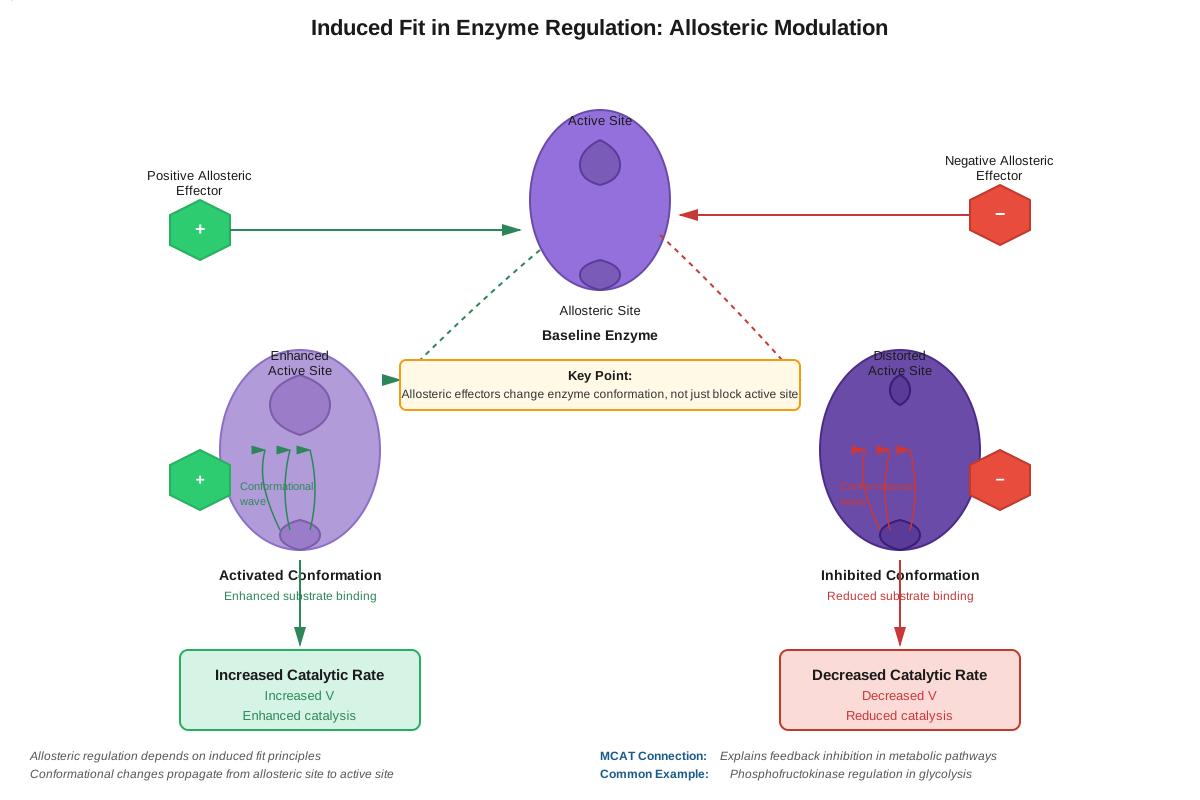
The induced fit model naturally extends to allosteric regulation, where binding of regulatory molecules at sites distant from the active site affects enzyme activity. Allosteric effectors induce conformational changes that propagate through the protein structure, either facilitating (positive cooperativity) or hindering (negative cooperativity) the conformational changes associated with substrate binding. This explains:
- Cooperative binding: In multi-subunit enzymes, substrate binding to one subunit can induce conformational changes that affect other subunits
- Feedback inhibition: End products of metabolic pathways bind allosteric sites, inducing conformations that reduce active site efficiency
- Activation mechanisms: Allosteric activators stabilize conformations favorable for substrate-induced fit
Concept Relationships
The induced fit model sits at the nexus of multiple biochemistry concepts, creating an integrated understanding of enzyme function. Protein structure provides the foundation—the tertiary and quaternary structural flexibility enables the conformational changes central to induced fit. These structural changes depend on non-covalent interactions (hydrogen bonds, electrostatic forces, van der Waals interactions) that can be rapidly formed and broken.
The induced fit model directly connects to enzyme kinetics: the conformational change step appears in detailed kinetic mechanisms and affects both kcat (catalytic rate constant) and KM (Michaelis constant). Mutations affecting conformational flexibility alter these kinetic parameters, providing experimental evidence for induced fit.
Thermodynamics governs the energetics of induced fit—the conformational change must be thermodynamically favorable (negative ΔG) when coupled to substrate binding. This connects to concepts of enthalpy (bond formation/breaking) and entropy (conformational freedom, water release).
The model extends to enzyme inhibition mechanisms: competitive inhibitors must induce similar conformational changes as substrates, while non-competitive inhibitors may prevent productive conformational changes or stabilize inactive conformations. Allosteric regulation represents induced fit operating across protein domains or subunits.
Relationship map: Protein flexibility → enables → Induced fit conformational changes → optimizes → Transition state stabilization → results in → Catalytic efficiency → can be modulated by → Allosteric effectors → explains → Metabolic regulation
Quick check — test yourself on Induced fit model so far.
Try Flashcards →High-Yield Facts
⭐ The induced fit model describes enzymes undergoing conformational changes upon substrate binding to optimize active site geometry for catalysis
⭐ Enzymes bind transition states more tightly than substrates, with induced fit conformational changes stabilizing the transition state specifically
⭐ Hexokinase demonstrates induced fit through domain closure upon glucose binding, preventing water from entering and ensuring substrate specificity
⭐ The induced fit model explains allosteric regulation by showing how conformational changes can propagate through protein structures
⭐ Binding energy from substrate-enzyme interactions provides the thermodynamic driving force for conformational changes in induced fit
- The lock-and-key model predates induced fit but cannot explain transition state stabilization or allosteric effects
- Conformational changes in induced fit typically occur on microsecond to millisecond timescales
- Mutations distant from the active site can impair enzyme function by disrupting the induced fit mechanism
- The induced fit model applies beyond enzymes to other proteins like antibodies, receptors, and transport proteins
- X-ray crystallography and NMR spectroscopy provide direct structural evidence for induced fit conformational changes
- Some binding energy is "spent" on conformational changes rather than maximizing substrate binding affinity
- Induced fit contributes to enzyme specificity by requiring substrates to trigger productive conformational changes
- The conformational change step can be rate-limiting in some enzymes, affecting overall catalytic efficiency
Common Misconceptions
Misconception: The induced fit model means enzymes are completely flexible and can bind any substrate
Correction: Enzymes maintain specific structural constraints and only undergo productive conformational changes with appropriate substrates. The flexibility is controlled and directed, not random. Incorrect substrates may bind weakly but fail to induce catalytically competent conformations.
Misconception: The lock-and-key model is completely wrong and has been replaced by induced fit
Correction: The lock-and-key model captures important aspects of enzyme specificity and complementarity. Induced fit refines and extends this model by adding dynamic conformational changes. Some enzymes show relatively rigid active sites approximating lock-and-key, while others show dramatic induced fit changes.
Misconception: Induced fit conformational changes always increase substrate binding affinity
Correction: The conformational change may actually reduce substrate binding affinity compared to a hypothetical rigid enzyme, because energy is spent on the conformational change itself. However, the conformational change optimizes transition state stabilization, which is more important for catalysis than substrate binding.
Misconception: Induced fit only involves the active site region of the enzyme
Correction: Conformational changes can involve large-scale domain movements, subunit rearrangements, or changes distant from the active site. These distant changes can propagate to affect active site geometry, explaining allosteric regulation and long-range effects of mutations.
Misconception: All enzymes show the same degree of induced fit conformational change
Correction: The magnitude of conformational change varies widely among enzymes. Some show dramatic domain movements (like hexokinase), while others show subtle rearrangements of a few residues. The extent of conformational change reflects the specific catalytic requirements of each enzyme.
Misconception: Induced fit conformational changes are irreversible
Correction: Induced fit changes are reversible and dynamic. After product release, enzymes typically return to their original conformation, ready for another catalytic cycle. The reversibility is essential for enzyme function and turnover.
Worked Examples
Example 1: Analyzing Hexokinase Mutation Effects
Question: A mutation in hexokinase replaces a glycine residue in the hinge region connecting the two domains with a proline. The mutant enzyme shows normal substrate binding (similar KM) but dramatically reduced catalytic activity (reduced kcat). Explain these observations using the induced fit model.
Solution:
Step 1 - Identify the structural role: Glycine is the most flexible amino acid due to its lack of a side chain, making it ideal for hinge regions that must undergo conformational changes. Proline is rigid due to its cyclic structure, restricting backbone flexibility.
Step 2 - Apply induced fit principles: Hexokinase requires domain closure (induced fit) upon glucose binding to create the catalytically competent active site. This closure excludes water and positions ATP and glucose optimally.
Step 3 - Explain KM observation: KM reflects substrate binding affinity. The mutation in the hinge region doesn't directly affect substrate recognition residues, so initial substrate binding remains relatively normal. The substrate can still access and bind to the active site.
Step 4 - Explain kcat observation: kcat reflects the catalytic rate once substrate is bound. The proline substitution prevents or severely restricts the domain closure required for induced fit. Without proper closure, catalytic residues are not optimally positioned, water is not excluded, and transition state stabilization is impaired. The enzyme-substrate complex forms but cannot efficiently proceed to catalysis.
Step 5 - Connect to learning objectives: This example demonstrates how induced fit involves conformational changes essential for catalysis (not just binding), how protein flexibility enables induced fit, and how mutations affecting conformational changes impair enzyme function even when substrate binding is preserved.
Example 2: Interpreting Experimental Data on Enzyme Conformational Changes
Question: Researchers study an enzyme using fluorescence spectroscopy, labeling a tryptophan residue near the active site. They observe that fluorescence intensity increases when substrate is added but not when a competitive inhibitor is added. The competitive inhibitor blocks enzyme activity. Explain these observations using the induced fit model.
Solution:
Step 1 - Understand the experimental technique: Tryptophan fluorescence is sensitive to its local environment. Changes in fluorescence intensity indicate conformational changes that alter the tryptophan's surroundings (typically changes in solvent exposure or proximity to quenching groups).
Step 2 - Interpret substrate result: The fluorescence increase upon substrate addition indicates a conformational change occurring near the labeled tryptophan. This is consistent with induced fit—substrate binding triggers structural rearrangements that change the tryptophan environment.
Step 3 - Interpret inhibitor result: The competitive inhibitor binds to the active site (competing with substrate) but does not induce the same conformational change. This explains why it blocks activity—it occupies the active site without triggering the induced fit conformational change necessary for catalysis.
Step 4 - Explain the mechanism: True substrates induce conformational changes that optimize the active site for catalysis. This particular competitive inhibitor likely resembles the substrate enough to bind but lacks structural features necessary to trigger the full induced fit response. It acts as a "dead-end" complex.
Step 5 - Broader implications: This demonstrates that not all molecules binding to an active site induce productive conformational changes. The induced fit model explains how enzymes discriminate between substrates and similar molecules—only substrates that trigger appropriate conformational changes are efficiently processed. This principle is exploited in drug design, where inhibitors are designed to bind without inducing catalytically productive conformations.
Exam Strategy
Approaching MCAT Questions on Induced Fit
When encountering induced fit questions on the MCAT, follow this systematic approach:
- Identify the question type: Is it asking about mechanism, comparison with lock-and-key, effects of mutations, or interpretation of experimental data?
- Look for conformational change indicators: Words like "flexibility," "structural rearrangement," "domain movement," or "conformational change" signal induced fit concepts
- Consider the energetics: Remember that conformational changes have thermodynamic costs and benefits
- Think about specificity: Induced fit explains how enzymes achieve specificity beyond simple shape complementarity
Trigger Words and Phrases
Watch for these high-yield terms that signal induced fit concepts:
- "Conformational change upon binding"
- "Domain closure" or "domain movement"
- "Transition state stabilization"
- "Allosteric regulation" or "cooperative binding"
- "Substrate-induced" changes
- "Flexible active site"
- "Hinge region" or "flexible loops"
- Specific enzymes known for induced fit: hexokinase, DNA polymerase, carboxypeptidase
Process of Elimination Tips
When evaluating answer choices:
- Eliminate answers suggesting complete enzyme rigidity unless the question specifically asks about lock-and-key limitations
- Eliminate answers that confuse binding affinity with catalytic efficiency—induced fit affects both but in different ways
- Eliminate answers suggesting induced fit is irreversible—conformational changes must be reversible for enzyme turnover
- Favor answers that connect conformational changes to transition state stabilization over those focusing only on substrate binding
- Be cautious of answers that overstate enzyme flexibility—induced fit is controlled and specific, not random
Time Allocation
For discrete questions on induced fit: allocate 60-90 seconds. These typically test definitions or direct comparisons with lock-and-key.
For passage-based questions: allocate 90-120 seconds per question. These often require integrating induced fit concepts with experimental data, kinetics, or structural information from the passage. Quickly identify relevant passage information before analyzing answer choices.
Memory Techniques
Mnemonic for Induced Fit Sequence
"SCAT-PR" - The stages of induced fit:
- Substrate recognition (initial approach)
- Conformational change (structural rearrangement)
- Active site optimization (precise alignment)
- Transition state stabilization (catalysis)
- Product formation
- Relaxation (return to original state)
Visualization Strategy
The Handshake Analogy: Visualize induced fit like a handshake. When two people shake hands, both adjust their hand positions to optimize the grip—neither hand is rigid. Similarly, both enzyme and substrate undergo adjustments upon binding. This contrasts with the lock-and-key model (like a key entering a rigid lock with no adjustment).
Hexokinase Memory Aid
"Hexokinase CLAMPS glucose":
- Closes domains around substrate
- Locks out water molecules
- Aligns ATP and glucose
- Moves dramatically (large conformational change)
- Prevents phosphorylation of wrong molecules
- Specificity through induced fit
Comparing Models Acronym
"LIFT vs LOCK":
- Lock-and-key: Limited flexibility, Original rigid model, Complementarity pre-exists, Key fits perfectly
- Induced Fit: Flexible enzyme, Induced changes, Transition state optimized
Summary
The induced fit model represents the modern understanding of enzyme-substrate interactions, describing how enzymes undergo dynamic conformational changes upon substrate binding to optimize catalytic efficiency. Unlike the earlier lock-and-key model, induced fit explains enzyme flexibility, transition state stabilization, and allosteric regulation through structural rearrangements driven by substrate binding energy. These conformational changes bring catalytic residues into optimal positions, exclude water, and create an environment that preferentially stabilizes the transition state rather than the substrate ground state. The model applies broadly across enzyme classes, with hexokinase serving as a classic example showing dramatic domain closure. For the MCAT, understanding induced fit is essential for analyzing enzyme kinetics, predicting mutation effects, interpreting experimental data, and explaining regulatory mechanisms. The model connects protein structure, thermodynamics, and catalytic function into an integrated framework that appears frequently in MCAT passages and discrete questions.
Key Takeaways
- The induced fit model describes enzymes as flexible structures that undergo conformational changes upon substrate binding to optimize catalysis
- Conformational changes are driven by binding energy from enzyme-substrate interactions and serve to stabilize the transition state specifically
- Hexokinase exemplifies induced fit through dramatic domain closure that excludes water and ensures substrate specificity
- The induced fit model explains phenomena that lock-and-key cannot: allosteric regulation, transition state stabilization, and effects of distant mutations
- Enzymes achieve specificity not just through shape complementarity but through the ability to undergo productive conformational changes only with correct substrates
- Some binding energy is "spent" on conformational changes rather than maximizing substrate affinity, but this investment optimizes catalytic efficiency
- The induced fit mechanism is reversible, allowing enzymes to return to their original conformation after product release for continued catalytic cycles
Related Topics
Enzyme Kinetics (Michaelis-Menten): Understanding induced fit provides mechanistic insight into the steps underlying Michaelis-Menten kinetics, particularly the enzyme-substrate complex formation and the relationship between KM and kcat. Mastering induced fit enables deeper analysis of how conformational changes affect kinetic parameters.
Allosteric Regulation: The induced fit model extends naturally to allosteric enzymes, where conformational changes propagate through protein structures to regulate activity. This topic builds directly on induced fit principles to explain cooperative binding and metabolic control.
Enzyme Inhibition Mechanisms: Competitive, non-competitive, and uncompetitive inhibitors all interact with the induced fit mechanism in distinct ways. Understanding induced fit clarifies why some inhibitors prevent conformational changes while others stabilize particular conformations.
Protein Structure and Function: The induced fit model exemplifies the fundamental principle that protein function depends on structural flexibility. This connection reinforces understanding of how tertiary and quaternary structures enable biological activity.
Transition State Theory and Catalysis: Induced fit provides the structural basis for understanding how enzymes stabilize transition states. This topic deepens comprehension of activation energy, reaction coordinates, and the thermodynamic basis of catalytic power.
Practice CTA
Now that you've mastered the induced fit model, reinforce your understanding by attempting practice questions and flashcards on this topic. Focus on questions that require you to apply induced fit principles to experimental scenarios, compare mechanisms, and predict effects of structural changes. The induced fit model appears frequently on the MCAT, and active practice will solidify your ability to quickly recognize and correctly answer these high-yield questions. Your investment in understanding this fundamental concept will pay dividends across multiple biochemistry topics!
Sign up free to keep reading
Create a free AnvayaPrep account to finish this MCAT guide on Induced fit model — plus flashcards and practice questions.