Overview
Irreversible inhibition represents a critical mechanism of enzyme regulation in which an inhibitor forms a permanent, covalent bond with an enzyme, rendering it permanently inactive. Unlike reversible inhibitors that can dissociate from their target enzymes, irreversible inhibitors create lasting modifications that can only be overcome through the synthesis of new enzyme molecules. This fundamental concept bridges enzyme kinetics, protein structure, and pharmacology, making it an essential topic for MCAT success.
Understanding irreversible inhibition is crucial for the MCAT because it appears frequently in both Biochemistry and Biological Sciences passages, often integrated with clinical scenarios involving drug mechanisms, toxins, and metabolic regulation. The MCAT tests not only the theoretical understanding of how these inhibitors work but also the ability to interpret kinetic data, predict physiological consequences, and distinguish between different types of enzyme inhibition. Questions may present experimental data showing enzyme activity over time, ask students to identify inhibitor types from Lineweaver-Burk plots, or describe the mechanism of action of specific drugs and toxins.
Within the broader context of Biochemistry, irreversible inhibition connects to multiple high-yield topics including enzyme kinetics, protein structure and function, drug mechanisms, and metabolic pathway regulation. It serves as a bridge between understanding basic enzyme function and applying that knowledge to real-world scenarios such as aspirin's mechanism of action, nerve agent toxicity, and antibiotic function. Mastery of this topic requires integrating knowledge of covalent bonding, amino acid reactivity, active site structure, and the distinction between suicide inhibitors and other irreversible inhibitors.
Learning Objectives
- [ ] Define irreversible inhibition using accurate Biochemistry terminology
- [ ] Explain why irreversible inhibition matters for the MCAT
- [ ] Apply irreversible inhibition to exam-style questions
- [ ] Identify common mistakes related to irreversible inhibition
- [ ] Connect irreversible inhibition to related Biochemistry concepts
- [ ] Distinguish between irreversible inhibition and reversible inhibition based on kinetic parameters and molecular mechanisms
- [ ] Analyze Lineweaver-Burk plots and Michaelis-Menten curves to identify irreversible inhibition patterns
- [ ] Predict the physiological and therapeutic consequences of irreversible enzyme inhibition in clinical scenarios
Prerequisites
- Enzyme structure and function: Understanding active sites, catalytic mechanisms, and the role of specific amino acid residues is essential for comprehending how irreversible inhibitors form covalent bonds with target residues
- Michaelis-Menten kinetics: Knowledge of Vmax, Km, and basic enzyme kinetics provides the foundation for understanding how irreversible inhibition affects these parameters
- Reversible inhibition (competitive, noncompetitive, uncompetitive): Familiarity with reversible inhibition mechanisms enables clear distinction and comparison with irreversible inhibition
- Covalent bonding and nucleophilic reactions: Understanding how covalent bonds form between inhibitors and amino acid side chains is necessary for mechanism comprehension
- Protein synthesis and turnover: Recognizing that cells must synthesize new enzymes to overcome irreversible inhibition requires knowledge of protein production
Why This Topic Matters
Clinical and Real-World Significance
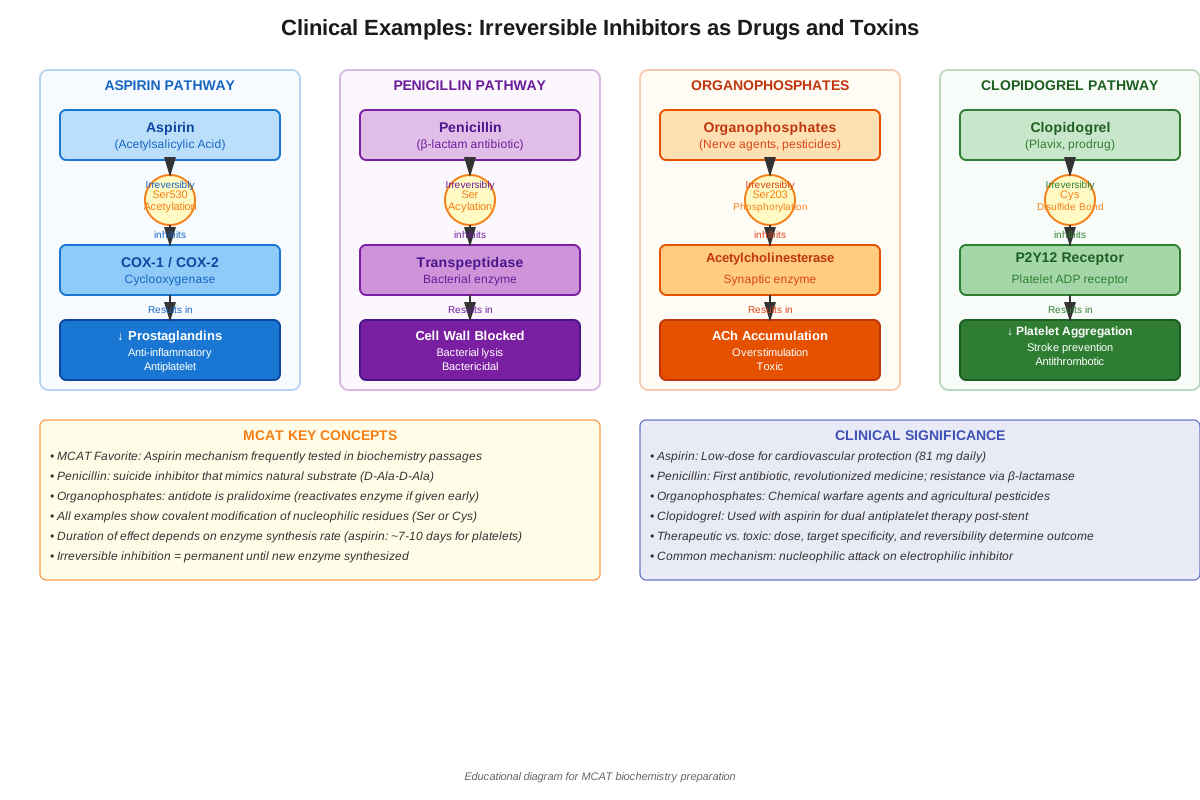
Irreversible inhibition underlies the mechanism of action for numerous clinically important drugs and explains the toxicity of many poisons. Aspirin, one of the most widely used medications globally, works through irreversible acetylation of cyclooxygenase (COX) enzymes, preventing prostaglandin synthesis and reducing inflammation and platelet aggregation. Penicillin and related β-lactam antibiotics irreversibly inhibit bacterial transpeptidases, preventing cell wall synthesis. Organophosphate nerve agents and pesticides irreversibly inhibit acetylcholinesterase, causing potentially fatal accumulation of acetylcholine at synapses. Understanding these mechanisms is essential for medical practice and frequently appears in MCAT clinical vignettes.
MCAT Exam Statistics and Question Types
Irreversible inhibition appears in approximately 15-20% of enzyme-related MCAT questions, making it a high-yield topic. Questions typically fall into several categories: (1) mechanism identification from experimental data, (2) interpretation of kinetic plots showing time-dependent enzyme inactivation, (3) clinical scenarios requiring application of inhibition principles, (4) comparison questions distinguishing irreversible from reversible inhibition, and (5) passage-based questions integrating drug mechanisms with physiological effects. The topic frequently appears in both discrete questions and passage-based formats, often combined with experimental data interpretation.
Common Exam Passage Contexts
MCAT passages featuring irreversible inhibition commonly present: drug development scenarios testing novel enzyme inhibitors, toxicology cases involving poisoning mechanisms, research studies comparing different inhibitor types, clinical trials evaluating therapeutic agents, and biochemical experiments measuring enzyme activity under various conditions. Passages may include Lineweaver-Burk plots, time-course graphs showing progressive enzyme inactivation, or dose-response curves. Students must recognize that irreversible inhibition shows time-dependent effects and cannot be reversed by dilution or dialysis, distinguishing it from reversible inhibition patterns.
Core Concepts
Definition and Fundamental Mechanism
Irreversible inhibition occurs when an inhibitor forms a stable, typically covalent bond with an enzyme, permanently inactivating it. Unlike reversible inhibitors that maintain equilibrium between bound and unbound states, irreversible inhibitors create lasting chemical modifications that cannot be reversed under physiological conditions. The inhibitor molecule reacts with specific amino acid residues in or near the active site, most commonly targeting nucleophilic residues such as serine, cysteine, or lysine.
The defining characteristic of irreversible inhibition is that the enzyme-inhibitor complex does not dissociate. Once bound, the inhibitor remains permanently attached, and enzyme activity can only be restored through synthesis of new, uninhibited enzyme molecules. This creates a time-dependent decrease in total enzyme activity that distinguishes irreversible inhibition from reversible forms.
Molecular Mechanisms and Chemical Reactions
Irreversible inhibitors typically contain electrophilic functional groups that react with nucleophilic amino acid side chains. Common reactive groups include:
Alkylating agents: These compounds transfer alkyl groups to nucleophilic residues, forming stable covalent bonds. Iodoacetamide, for example, alkylates cysteine residues.
Acylating agents: These molecules transfer acyl groups to hydroxyl or amino groups. Aspirin acetylates a serine residue (Ser530) in cyclooxygenase through transfer of an acetyl group from acetylsalicylic acid.
Phosphorylating agents: Organophosphates form covalent phosphate-ester bonds with serine residues in enzymes like acetylcholinesterase, creating extremely stable complexes.
The reaction mechanism typically involves nucleophilic attack by an amino acid side chain on the electrophilic center of the inhibitor, resulting in formation of a covalent bond and release of a leaving group. This chemical modification permanently alters the enzyme's structure, preventing substrate binding or catalysis.
Suicide Inhibitors (Mechanism-Based Inhibitors)
Suicide inhibitors, also called mechanism-based inhibitors or suicide substrates, represent a special class of irreversible inhibitors that are initially unreactive but become activated by the target enzyme itself. These compounds are substrate analogs that undergo partial enzymatic processing, generating a highly reactive intermediate that then forms a covalent bond with the enzyme, permanently inactivating it.
The mechanism involves several steps:
- The suicide inhibitor binds to the active site as a substrate analog
- The enzyme begins its normal catalytic mechanism
- Catalysis generates a reactive intermediate (often a free radical or electrophile)
- The reactive intermediate forms a covalent bond with a nearby amino acid residue
- The enzyme becomes permanently inactivated
Classic examples include:
- Penicillin: Mimics the D-Ala-D-Ala terminus of peptidoglycan precursors, becomes activated by bacterial transpeptidase, then forms a covalent adduct with the enzyme's serine residue
- 5-Fluorouracil: Converted to active metabolites that irreversibly inhibit thymidylate synthase
- Clavulanic acid: A β-lactamase inhibitor that acts as a suicide substrate
Suicide inhibitors offer therapeutic advantages because they specifically target enzymes capable of activating them, providing selectivity and reducing off-target effects.
Kinetic Characteristics and Parameters
Irreversible inhibition produces distinctive kinetic patterns that differ fundamentally from reversible inhibition:
Time-dependent inactivation: Enzyme activity decreases progressively over time as more enzyme molecules become covalently modified. This contrasts with reversible inhibition, where equilibrium is rapidly established.
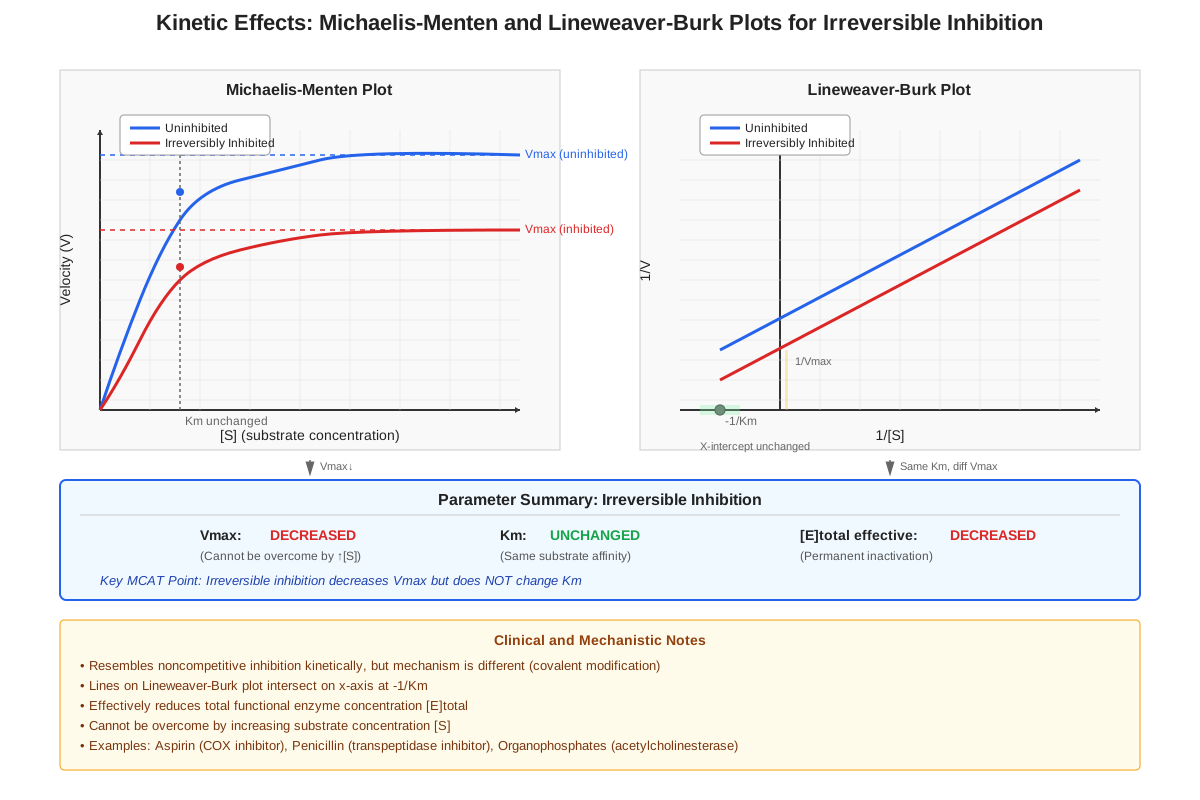
Vmax reduction: Because irreversible inhibitors permanently remove active enzyme molecules from the system, they effectively reduce the total concentration of functional enzyme ([E]total). Since Vmax = kcat × [E]total, irreversible inhibition decreases Vmax. This effect cannot be overcome by increasing substrate concentration.
Km effects: Depending on whether the inhibitor binds to the active site or an allosteric site, Km may remain unchanged or change. However, unlike competitive inhibition, increasing substrate concentration cannot restore full enzyme activity.
Irreversibility: The inhibition cannot be reversed by dilution, dialysis, or addition of excess substrate. This distinguishes irreversible inhibition from all forms of reversible inhibition.
Lineweaver-Burk Plot Characteristics
On a Lineweaver-Burk plot (double reciprocal plot of 1/V versus 1/[S]), irreversible inhibition appears similar to noncompetitive inhibition but with crucial differences:
| Parameter | No Inhibitor | With Irreversible Inhibitor |
|---|---|---|
| y-intercept (1/Vmax) | Lower value | Higher value (Vmax decreased) |
| x-intercept (-1/Km) | May vary | May remain same or change |
| Slope | Baseline | Increased |
| Reversibility | N/A | Cannot be reversed by washing or dilution |
The key diagnostic feature is that preincubation time affects the degree of inhibition—longer preincubation with inhibitor before adding substrate results in greater activity loss. This time-dependence distinguishes irreversible from reversible inhibition.
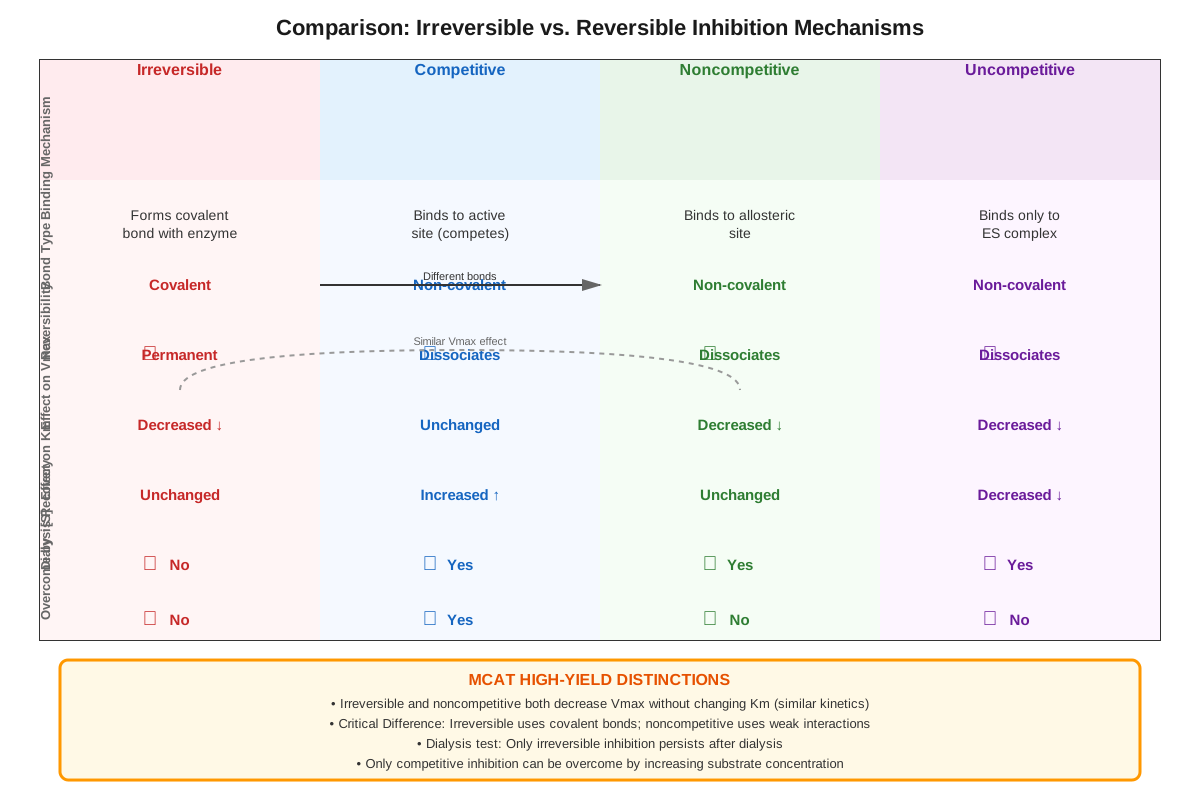
Comparison with Reversible Inhibition
| Feature | Reversible Inhibition | Irreversible Inhibition |
|---|---|---|
| Binding type | Non-covalent (weak interactions) | Covalent bond formation |
| Dissociation | Inhibitor can dissociate | Inhibitor cannot dissociate |
| Reversibility | Can be reversed by dilution/dialysis | Cannot be reversed |
| Time-dependence | Rapid equilibrium | Progressive inactivation over time |
| Vmax | May or may not change depending on type | Always decreases |
| Substrate competition | Can compete in competitive type | Cannot overcome with excess substrate |
| Recovery | Immediate upon inhibitor removal | Requires new enzyme synthesis |
Physiological and Therapeutic Implications
The permanence of irreversible inhibition creates important physiological consequences:
Duration of effect: Because enzyme activity can only be restored through new protein synthesis, irreversible inhibitors produce long-lasting effects. Aspirin's antiplatelet effect persists for the 7-10 day lifespan of platelets because these anucleate cells cannot synthesize new cyclooxygenase.
Dosing considerations: Irreversible inhibitors often require less frequent dosing than reversible inhibitors because their effects persist beyond drug clearance from the body.
Toxicity concerns: Accidental or intentional exposure to irreversible inhibitors (such as organophosphate nerve agents) can be life-threatening because the effects cannot be simply reversed by removing the toxin. Treatment often requires administering compounds that reactivate the enzyme (like pralidoxime for organophosphate poisoning) or providing supportive care until new enzymes are synthesized.
Therapeutic selectivity: Suicide inhibitors provide enhanced selectivity because only cells expressing the target enzyme can activate the inhibitor, reducing systemic toxicity.
Clinical Examples
Aspirin (acetylsalicylic acid): Irreversibly acetylates Ser530 of cyclooxygenase-1 (COX-1) and COX-2, blocking prostaglandin and thromboxane synthesis. The antiplatelet effect is particularly important because platelets cannot synthesize new COX-1.
Penicillin and β-lactam antibiotics: Irreversibly inhibit bacterial transpeptidases (penicillin-binding proteins) by acylating a serine residue, preventing peptidoglycan cross-linking and causing bacterial cell lysis.
Organophosphates (nerve agents and pesticides): Irreversibly phosphorylate the serine residue in the active site of acetylcholinesterase, preventing acetylcholine breakdown and causing cholinergic crisis.
Clopidogrel: A prodrug converted to an active metabolite that irreversibly modifies the P2Y12 ADP receptor on platelets, preventing platelet activation.
Omeprazole (proton pump inhibitor): Irreversibly inhibits the H+/K+-ATPase in gastric parietal cells, reducing acid secretion for 24-48 hours despite short drug half-life.
Concept Relationships
Irreversible inhibition connects to multiple biochemistry concepts in an integrated network. At the molecular level, understanding covalent bond formation between inhibitors and amino acid residues requires knowledge of nucleophilic substitution reactions and protein structure, particularly the reactivity of specific amino acids like serine, cysteine, and lysine. This connects to enzyme active site architecture and how spatial arrangement enables specific chemical reactions.
The concept flows into enzyme kinetics, where irreversible inhibition produces distinctive patterns in Michaelis-Menten kinetics and Lineweaver-Burk plots. Unlike reversible inhibition (competitive, noncompetitive, uncompetitive, and mixed), irreversible inhibition shows time-dependent effects and permanent Vmax reduction. This distinction is crucial: reversible inhibition ↔ equilibrium binding ↔ can be overcome or reversed, while irreversible inhibition → covalent modification → permanent inactivation → requires new enzyme synthesis.
The relationship extends to pharmacology and drug mechanisms, where irreversible inhibition explains the action of numerous therapeutic agents (aspirin, penicillin, omeprazole) and toxins (organophosphates, cyanide). This connects to clinical medicine through understanding drug duration of action, dosing strategies, and toxicity management.
At the cellular level, irreversible inhibition links to protein synthesis and turnover, as cells must produce new enzymes to restore activity. This connects to gene expression, translation, and protein degradation pathways. The concept also relates to metabolic regulation, where irreversible inhibition can serve as a regulatory mechanism, though cells more commonly use reversible modifications for metabolic control due to their flexibility.
The suicide inhibitor subtype creates additional connections to prodrug activation, enzyme specificity, and selective toxicity principles used in antibiotic and anticancer drug design. Understanding that enzymes can activate their own inhibitors bridges enzyme mechanism with therapeutic strategy.
High-Yield Facts
⭐ Irreversible inhibitors form covalent bonds with enzymes, permanently inactivating them until new enzyme molecules are synthesized
⭐ Irreversible inhibition decreases Vmax and cannot be overcome by increasing substrate concentration, distinguishing it from competitive inhibition
⭐ Irreversible inhibition shows time-dependent enzyme inactivation—longer preincubation with inhibitor produces greater activity loss
⭐ Aspirin irreversibly acetylates COX-1 Ser530, producing antiplatelet effects lasting 7-10 days (platelet lifespan) because platelets cannot synthesize new enzyme
⭐ Suicide inhibitors (mechanism-based inhibitors) are activated by the target enzyme itself, providing enhanced selectivity
- Irreversible inhibition cannot be reversed by dilution, dialysis, or washing, unlike all forms of reversible inhibition
- Organophosphates irreversibly phosphorylate acetylcholinesterase serine residues, causing cholinergic crisis; pralidoxime can reactivate the enzyme if given early
- Penicillin acts as a suicide inhibitor of bacterial transpeptidase, mimicking D-Ala-D-Ala substrate and forming a covalent adduct with the enzyme's serine residue
- On Lineweaver-Burk plots, irreversible inhibition resembles noncompetitive inhibition but shows progressive worsening with increased preincubation time
- Clavulanic acid is a suicide inhibitor of β-lactamase, protecting penicillin antibiotics from degradation when co-administered
- Irreversible inhibitors typically contain electrophilic groups (alkylating, acylating, or phosphorylating agents) that react with nucleophilic amino acid residues
- The duration of irreversible inhibitor effects depends on the rate of new enzyme synthesis, not drug clearance from the body
Quick check — test yourself on Irreversible inhibition so far.
Try Flashcards →Common Misconceptions
Misconception: Irreversible inhibition is the same as noncompetitive inhibition because both decrease Vmax.
Correction: While both decrease Vmax, noncompetitive inhibition is reversible and reaches rapid equilibrium, whereas irreversible inhibition involves covalent bond formation, shows time-dependent inactivation, and cannot be reversed by removing the inhibitor. Noncompetitive inhibitors can dissociate; irreversible inhibitors cannot.
Misconception: Adding excess substrate can overcome irreversible inhibition, just like competitive inhibition.
Correction: Excess substrate cannot overcome irreversible inhibition because the inhibitor has permanently modified the enzyme through covalent bonding. The enzyme molecules are destroyed, not just temporarily blocked. Only synthesis of new enzyme can restore activity.
Misconception: All irreversible inhibitors bind to the active site.
Correction: While many irreversible inhibitors do target active site residues, some form covalent bonds with residues outside the active site, causing conformational changes that prevent catalysis. The defining feature is covalent bond formation, not binding location.
Misconception: Suicide inhibitors are more toxic than other irreversible inhibitors because of their name.
Correction: The term "suicide" refers to the enzyme "committing suicide" by activating its own inhibitor, not to toxicity. Suicide inhibitors are often more selective and less toxic than other irreversible inhibitors because only cells expressing the target enzyme can activate them, reducing off-target effects.
Misconception: Irreversible inhibition always shows the same Lineweaver-Burk pattern as noncompetitive inhibition (lines intersecting on x-axis).
Correction: While irreversible inhibition often appears similar to noncompetitive inhibition on Lineweaver-Burk plots, the pattern depends on whether the inhibitor affects Km. The key distinguishing feature is time-dependence—progressive worsening with longer preincubation—not the specific plot pattern.
Misconception: Once an irreversible inhibitor is cleared from the body, enzyme activity immediately returns to normal.
Correction: Because irreversible inhibitors permanently modify enzymes, activity only returns as new enzyme molecules are synthesized. The duration of effect depends on enzyme turnover rate, not drug clearance. This is why aspirin's antiplatelet effect lasts days after the drug is eliminated.
Misconception: Dialysis or washing can remove irreversible inhibitors from enzymes.
Correction: While dialysis can remove free (unbound) inhibitor molecules from solution, it cannot remove inhibitors that have formed covalent bonds with enzymes. The covalent modification is permanent under physiological conditions.
Worked Examples
Example 1: Interpreting Experimental Data
Question: Researchers are studying a novel enzyme inhibitor, Compound X. They measure enzyme activity under the following conditions:
- Condition A: Enzyme + substrate → 100% activity
- Condition B: Enzyme + Compound X + substrate (added simultaneously) → 60% activity
- Condition C: Enzyme preincubated with Compound X for 30 minutes, then substrate added → 25% activity
- Condition D: Enzyme preincubated with Compound X for 30 minutes, then dialyzed extensively to remove free Compound X, then substrate added → 25% activity
What type of inhibitor is Compound X, and what is the reasoning?
Solution:
Step 1: Analyze the time-dependence (Conditions B vs. C)
- Simultaneous addition: 60% activity remains
- Preincubation for 30 minutes: 25% activity remains
- The longer exposure time produces greater inhibition, indicating time-dependent inactivation
- This is characteristic of irreversible inhibition
Step 2: Analyze reversibility (Conditions C vs. D)
- Before dialysis: 25% activity
- After extensive dialysis: 25% activity (unchanged)
- Dialysis removes free inhibitor but does not restore enzyme activity
- This confirms the inhibition is irreversible
Step 3: Consider alternative explanations
- If this were competitive inhibition, activity would increase after dialysis as free inhibitor is removed
- If this were noncompetitive or uncompetitive inhibition, dialysis would restore activity by shifting equilibrium
- The time-dependence rules out simple reversible inhibition
Conclusion: Compound X is an irreversible inhibitor. The time-dependent inactivation and inability to restore activity through dialysis indicate covalent modification of the enzyme. The partial activity remaining in Condition B (60%) likely represents enzyme molecules that had not yet reacted with the inhibitor during the brief exposure time.
Example 2: Clinical Vignette Application
Question: A 45-year-old patient with a history of cardiovascular disease takes a daily aspirin tablet (81 mg) for stroke prevention. The patient's physician explains that aspirin prevents platelet aggregation by inhibiting cyclooxygenase-1 (COX-1). The patient asks why they need to take aspirin every day if it "permanently blocks" the enzyme.
Part A: Explain the mechanism by which aspirin inhibits COX-1.
Part B: Why does the antiplatelet effect last approximately 7-10 days after a single dose?
Part C: Why is daily dosing still recommended despite the long duration of effect?
Solution:
Part A - Mechanism:
Aspirin (acetylsalicylic acid) is an irreversible inhibitor that acetylates serine 530 in the active site of COX-1. The mechanism involves:
- Aspirin's acetyl group acts as an electrophile
- The hydroxyl group of Ser530 performs nucleophilic attack on the acetyl group
- A covalent ester bond forms between the acetyl group and the serine residue
- Salicylic acid is released as a leaving group
- The acetylated serine physically blocks the COX-1 active site channel, preventing arachidonic acid from accessing the catalytic site
- The enzyme is permanently inactivated and cannot produce prostaglandins or thromboxane A2
Part B - Duration of Effect:
The antiplatelet effect lasts 7-10 days because:
- Platelets are anucleate cells (lack nuclei) and cannot synthesize new proteins
- Once COX-1 in a platelet is irreversibly inhibited, that platelet cannot produce thromboxane A2 for its entire lifespan
- The average platelet lifespan is 7-10 days
- As inhibited platelets are removed from circulation and replaced by new platelets (produced by megakaryocytes in bone marrow), normal hemostatic function gradually returns
- Complete recovery requires replacement of the entire platelet population
Part C - Daily Dosing Rationale:
Daily dosing is recommended because:
- The body continuously produces new platelets (approximately 10% of the platelet pool is replaced daily)
- These newly produced platelets have functional, uninhibited COX-1
- Daily aspirin dosing ensures that new platelets are inhibited as they enter circulation
- This maintains a consistent antiplatelet effect, with >95% of circulating platelets inhibited
- Missing doses allows accumulation of functional platelets, reducing antiplatelet protection
- The goal is sustained prevention, not just temporary inhibition
Key Concept Integration: This example demonstrates how irreversible inhibition principles (covalent modification, permanent inactivation, requirement for new enzyme synthesis) directly apply to clinical pharmacology and patient care. Understanding that platelets cannot synthesize new COX-1 explains why aspirin has such prolonged effects in these cells compared to nucleated cells that can produce replacement enzyme.
Exam Strategy
Approaching MCAT Questions on Irreversible Inhibition
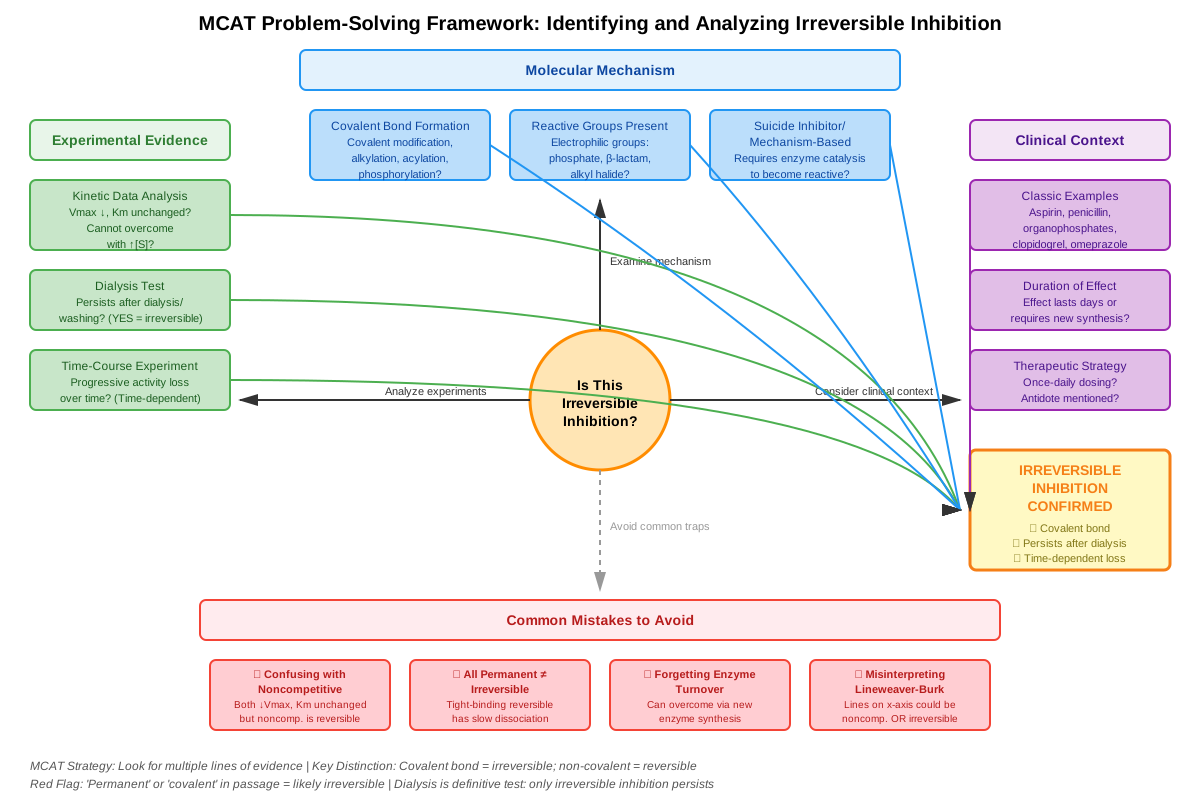
Step 1 - Identify the question type: Determine whether the question asks about mechanism, kinetics, clinical application, or experimental interpretation. Look for keywords that signal irreversible inhibition.
Step 2 - Look for diagnostic features: Time-dependent effects, inability to reverse by dilution/dialysis, permanent Vmax reduction, and covalent bond formation all indicate irreversible inhibition.
Step 3 - Distinguish from reversible inhibition: If the question presents data or scenarios, check whether the inhibition can be overcome by substrate addition (competitive), reversed by washing (any reversible type), or shows immediate equilibrium (reversible) versus progressive inactivation (irreversible).
Trigger Words and Phrases
Watch for these high-yield terms that signal irreversible inhibition:
- "Covalent modification"
- "Permanent inactivation"
- "Time-dependent"
- "Preincubation"
- "Cannot be reversed by dialysis"
- "Suicide inhibitor" or "mechanism-based inhibitor"
- "Requires new enzyme synthesis"
- Specific drugs: aspirin, penicillin, organophosphates, omeprazole, clopidogrel
- "Acetylation," "alkylation," "phosphorylation" (modification types)
Process of Elimination Tips
When comparing inhibitor types:
- Eliminate competitive inhibition if Vmax is decreased or if excess substrate doesn't restore activity
- Eliminate all reversible types if dialysis doesn't restore activity
- Eliminate irreversible inhibition if the effect is immediately reversible or shows no time-dependence
When interpreting kinetic data:
- If Vmax decreases progressively over time → likely irreversible
- If activity returns after washing → definitely not irreversible
- If the Lineweaver-Burk plot shows parallel lines → uncompetitive (reversible), not irreversible
- If increasing [S] restores full activity → competitive (reversible), not irreversible
When analyzing clinical scenarios:
- If the drug effect outlasts drug presence in the body → consider irreversible inhibition
- If the question mentions enzyme reactivation or antidote → likely irreversible inhibition requiring special treatment
- If cells without nuclei show prolonged effects → likely irreversible (they can't make new enzyme)
Time Allocation Advice
For discrete questions on irreversible inhibition: Allocate 60-90 seconds. These typically test straightforward concept recognition or simple mechanism identification.
For passage-based questions: Allocate 90-120 seconds per question. These often require integrating experimental data, interpreting graphs, or applying concepts to novel scenarios. Spend extra time carefully analyzing any kinetic plots or time-course data, as these contain critical information for distinguishing inhibitor types.
If a question presents a Lineweaver-Burk plot with multiple lines: Spend 15-20 seconds identifying the pattern before reading answer choices. Note which parameters change (Vmax, Km, both) and whether the question mentions preincubation time or reversibility.
Memory Techniques
Mnemonics
"COVALENT" for irreversible inhibition characteristics:
- Covalent bond formation
- Overcome only by new synthesis
- Vmax always decreases
- Aspirin is classic example
- Long-lasting effects
- Enzyme permanently modified
- Not reversed by dilution
- Time-dependent inactivation
"SUICIDE" for mechanism-based inhibitor features:
- Substrate analog structure
- Undergo partial catalysis
- Intermediate becomes reactive
- Covalent bond forms
- Inactivation is permanent
- Drug selectivity enhanced
- Enzyme activates its own inhibitor
Visualization Strategy
Mental image for irreversible vs. reversible inhibition:
- Reversible: Imagine a key (inhibitor) inserted into a lock (enzyme) that can be removed—the lock still works after key removal
- Irreversible: Imagine super glue (inhibitor) poured into a lock (enzyme)—the lock is permanently jammed and must be replaced
For suicide inhibitors: Visualize a Trojan horse entering a city (enzyme active site). Once inside, it opens to release soldiers (reactive intermediate) that destroy the city from within. The enzyme "invites in" its own destruction by processing the inhibitor as a substrate.
Acronym for Common Examples
"APOC" for high-yield irreversible inhibitors:
- Aspirin (COX inhibitor)
- Penicillin (transpeptidase inhibitor)
- Organophosphates (acetylcholinesterase inhibitor)
- Clopidogrel (P2Y12 receptor inhibitor)
Kinetic Pattern Memory Aid
"Time Tells the Truth": If enzyme activity decreases over time with constant inhibitor concentration, it's irreversible. Reversible inhibition reaches equilibrium quickly—time doesn't change the degree of inhibition once equilibrium is established.
"Dialysis Distinguishes": If dialysis (or washing, or dilution) doesn't restore activity, the inhibition is irreversible. This single test definitively distinguishes irreversible from all reversible types.
Summary
Irreversible inhibition represents a fundamental mechanism of enzyme regulation characterized by covalent bond formation between inhibitor and enzyme, resulting in permanent inactivation that can only be overcome through synthesis of new enzyme molecules. Unlike reversible inhibitors that maintain equilibrium and can dissociate, irreversible inhibitors create lasting chemical modifications, typically through alkylation, acylation, or phosphorylation of nucleophilic amino acid residues. This produces distinctive kinetic patterns including time-dependent inactivation, decreased Vmax that cannot be overcome by excess substrate, and inability to restore activity through dialysis or washing. Suicide inhibitors represent a specialized subclass that are activated by the target enzyme itself, providing enhanced selectivity. Clinically important examples include aspirin (COX inhibitor), penicillin (transpeptidase inhibitor), and organophosphates (acetylcholinesterase inhibitor), each demonstrating how irreversible inhibition principles translate to therapeutic applications and toxicology. For MCAT success, students must recognize irreversible inhibition from experimental data, distinguish it from reversible types using kinetic parameters and time-dependence, interpret Lineweaver-Burk plots, and apply these concepts to clinical scenarios involving drug mechanisms and physiological consequences.
Key Takeaways
- Irreversible inhibitors form permanent covalent bonds with enzymes, requiring new enzyme synthesis to restore activity—this cannot be reversed by dilution, dialysis, or excess substrate
- Time-dependent inactivation is the hallmark of irreversible inhibition; longer preincubation with inhibitor produces greater activity loss, distinguishing it from reversible inhibition which reaches rapid equilibrium
- Irreversible inhibition always decreases Vmax by permanently removing functional enzyme molecules from the system, unlike competitive inhibition which leaves Vmax unchanged
- Suicide inhibitors (mechanism-based inhibitors) are substrate analogs activated by the target enzyme itself, providing enhanced selectivity by specifically targeting cells expressing the enzyme
- Aspirin's irreversible acetylation of COX-1 produces antiplatelet effects lasting 7-10 days because anucleate platelets cannot synthesize new enzyme—a high-yield clinical example
- On experimental data and kinetic plots, look for progressive activity loss over time and inability to restore activity after washing as diagnostic features of irreversible inhibition
- The duration of irreversible inhibitor effects depends on enzyme turnover rate (new synthesis), not drug clearance, explaining why effects can outlast drug presence in the body
Related Topics
Reversible Enzyme Inhibition (Competitive, Noncompetitive, Uncompetitive, Mixed): Understanding reversible inhibition mechanisms provides essential contrast for recognizing irreversible inhibition. Mastering the differences in binding, kinetics, and reversibility enables accurate inhibitor classification.
Enzyme Kinetics and Michaelis-Menten Equation: Deep understanding of Vmax, Km, and kinetic plots is necessary for interpreting how irreversible inhibition affects these parameters and for analyzing experimental data on MCAT passages.
Allosteric Regulation and Covalent Modification: Irreversible inhibition connects to broader enzyme regulation mechanisms. While allosteric regulation is typically reversible, understanding how covalent modifications affect enzyme function applies to both irreversible inhibition and regulatory mechanisms like phosphorylation.
Drug Metabolism and Pharmacokinetics: The principles of irreversible inhibition extend to understanding drug duration of action, dosing strategies, and drug-drug interactions, particularly for medications that irreversibly inhibit metabolic enzymes.
Protein Structure and Amino Acid Reactivity: Advanced understanding of which amino acids are nucleophilic (serine, cysteine, lysine) and how their reactivity depends on local environment enhances comprehension of irreversible inhibitor mechanisms.
Practice CTA
Now that you've mastered the core concepts of irreversible inhibition, it's time to solidify your understanding through active practice. Challenge yourself with MCAT-style practice questions that test your ability to distinguish inhibitor types from experimental data, interpret kinetic plots, and apply these principles to clinical scenarios. Use flashcards to reinforce high-yield facts, drug examples, and the distinguishing features between reversible and irreversible inhibition. Remember, the MCAT rewards not just knowledge but the ability to apply concepts under time pressure—practice is what transforms understanding into test-day success. You've built a strong foundation; now strengthen it through deliberate practice and you'll be fully prepared to tackle any irreversible inhibition question the MCAT presents!
Sign up free to keep reading
Create a free AnvayaPrep account to finish this MCAT guide on Irreversible inhibition — plus flashcards and practice questions.