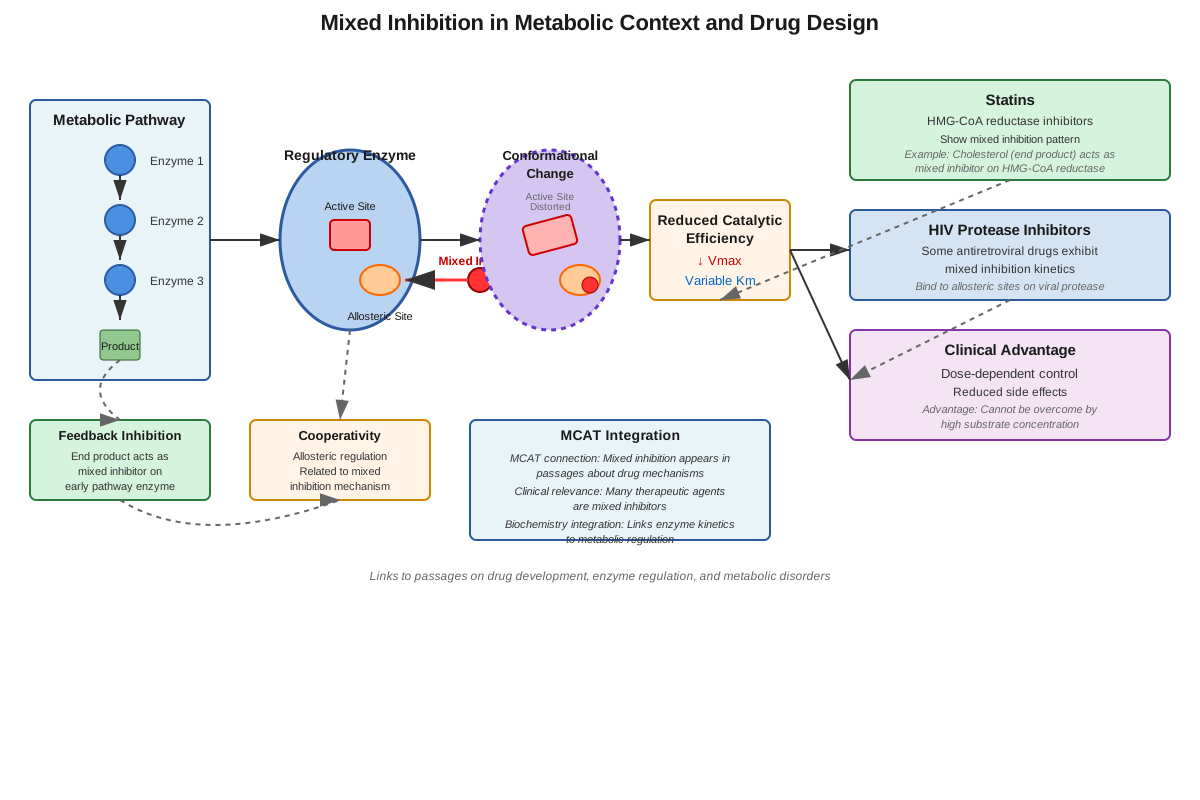
Overview
Mixed inhibition is a sophisticated enzyme regulatory mechanism that represents one of the most challenging topics in MCAT Biochemistry. Unlike simpler inhibition patterns, mixed inhibition occurs when an inhibitor can bind to both the free enzyme and the enzyme-substrate complex, but with different affinities for each form. This dual binding capability creates unique kinetic signatures that distinguish it from competitive, noncompetitive, and uncompetitive inhibition patterns. Understanding mixed inhibition requires integrating knowledge of enzyme kinetics, binding equilibria, and Lineweaver-Burk plot interpretation—all high-yield skills for the MCAT.
The complexity of mixed inhibition makes it a favorite topic for MCAT test writers who want to assess higher-order thinking and the ability to analyze experimental data. Questions often present enzyme kinetics data in graphical or tabular form, requiring students to identify inhibition patterns based on changes in Vmax and Km values. Mixed inhibition is particularly important because it represents the most general case of enzyme inhibition; all other reversible inhibition types can be considered special cases of mixed inhibition under specific binding conditions.
From a broader biochemical perspective, mixed inhibition connects to fundamental concepts including enzyme structure-function relationships, allosteric regulation, drug design, and metabolic control. Many pharmaceutical agents and endogenous regulatory molecules function as mixed inhibitors, making this topic clinically relevant. The ability to distinguish mixed inhibition from other patterns demonstrates mastery of enzyme kinetics—a cornerstone of MCAT Biochemistry that appears across multiple question formats and difficulty levels.
Learning Objectives
- [ ] Define Mixed inhibition using accurate Biochemistry terminology
- [ ] Explain why Mixed inhibition matters for the MCAT
- [ ] Apply Mixed inhibition to exam-style questions
- [ ] Identify common mistakes related to Mixed inhibition
- [ ] Connect Mixed inhibition to related Biochemistry concepts
- [ ] Analyze Lineweaver-Burk plots to distinguish mixed inhibition from other inhibition types
- [ ] Calculate and interpret changes in Km and Vmax values in the presence of mixed inhibitors
- [ ] Predict the structural and mechanistic basis for mixed inhibition patterns
- [ ] Evaluate experimental data to determine inhibitor binding constants (Ki and Ki')
Prerequisites
- Michaelis-Menten kinetics: Essential for understanding how Vmax and Km define enzyme behavior and how inhibitors alter these parameters
- Lineweaver-Burk plots: Required to interpret the graphical signatures of different inhibition patterns, particularly the changes in x-intercept, y-intercept, and slope
- Competitive inhibition: Provides the foundation for understanding inhibitor binding to free enzyme and the concept of increased apparent Km
- Noncompetitive inhibition: Introduces the concept of inhibitor binding to enzyme-substrate complex and decreased Vmax
- Uncompetitive inhibition: Demonstrates exclusive binding to ES complex, providing contrast to mixed inhibition's dual binding capability
- Enzyme active sites and allosteric sites: Necessary to understand where different inhibitors bind and how binding affects catalytic activity
- Binding equilibria and dissociation constants: Critical for understanding the quantitative relationships between inhibitor concentration and enzyme activity
Why This Topic Matters
Mixed inhibition represents a clinically significant regulatory mechanism found throughout human metabolism. Many drugs function as mixed inhibitors, including certain antibiotics, antivirals, and metabolic disease treatments. For example, some HIV protease inhibitors and statins exhibit mixed inhibition patterns. Understanding mixed inhibition enables prediction of drug efficacy at different substrate concentrations and helps explain why some medications show variable effectiveness depending on physiological conditions.
On the MCAT, enzyme inhibition questions appear in approximately 15-20% of Biochemistry passages, with mixed inhibition specifically featured in 3-5% of all MCAT questions. These questions typically appear as medium-to-hard difficulty items that test data interpretation skills. The MCAT frequently presents enzyme kinetics data in research-style passages where students must identify inhibition mechanisms from experimental results, making mixed inhibition a high-yield topic for students targeting competitive scores.
Mixed inhibition commonly appears in MCAT passages through several formats: (1) Lineweaver-Burk plots showing lines that intersect in the second quadrant (above the x-axis, left of the y-axis), (2) tables showing both Km and Vmax changes in the presence of inhibitor, (3) experimental descriptions of inhibitors that bind to multiple enzyme forms, and (4) questions asking students to predict inhibition patterns based on inhibitor binding sites. The ability to quickly recognize mixed inhibition patterns and distinguish them from other inhibition types provides a significant advantage in time-pressured testing conditions.
Core Concepts
Definition and Mechanism of Mixed Inhibition
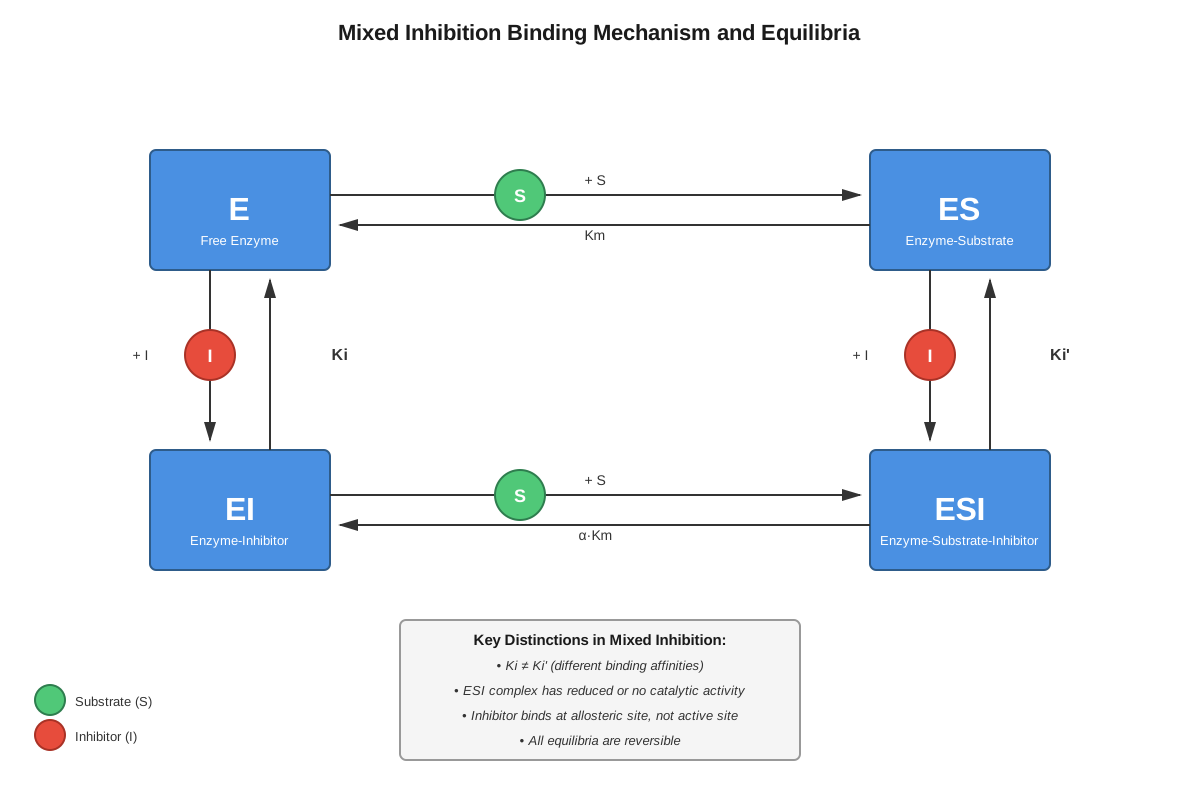
Mixed inhibition is a reversible enzyme inhibition pattern in which an inhibitor can bind to both the free enzyme (E) and the enzyme-substrate complex (ES), but with different binding affinities for each form. This distinguishes mixed inhibition from competitive inhibition (binds only E), uncompetitive inhibition (binds only ES), and pure noncompetitive inhibition (binds E and ES with equal affinity). The term "mixed" reflects the combination of competitive-like and uncompetitive-like characteristics.
The binding of a mixed inhibitor creates two distinct enzyme-inhibitor complexes: EI (enzyme-inhibitor) and ESI (enzyme-substrate-inhibitor). The formation of EI prevents substrate binding, similar to competitive inhibition, while ESI formation reduces catalytic efficiency, similar to uncompetitive inhibition. The key distinguishing feature is that the dissociation constants differ: Ki (for EI formation) ≠ Ki' (for ESI formation).
The mechanism proceeds through the following equilibria:
E + S ⇌ ES → E + P
+         +
I         I
↓         ↓
EI        ESI
When Ki < Ki', the inhibitor binds more tightly to free enzyme than to ES complex, creating predominantly competitive-like behavior. When Ki > Ki', the inhibitor preferentially binds ES complex, creating predominantly uncompetitive-like behavior. Most mixed inhibitors show Ki ≠ Ki', which creates the characteristic kinetic pattern.
Kinetic Parameters in Mixed Inhibition
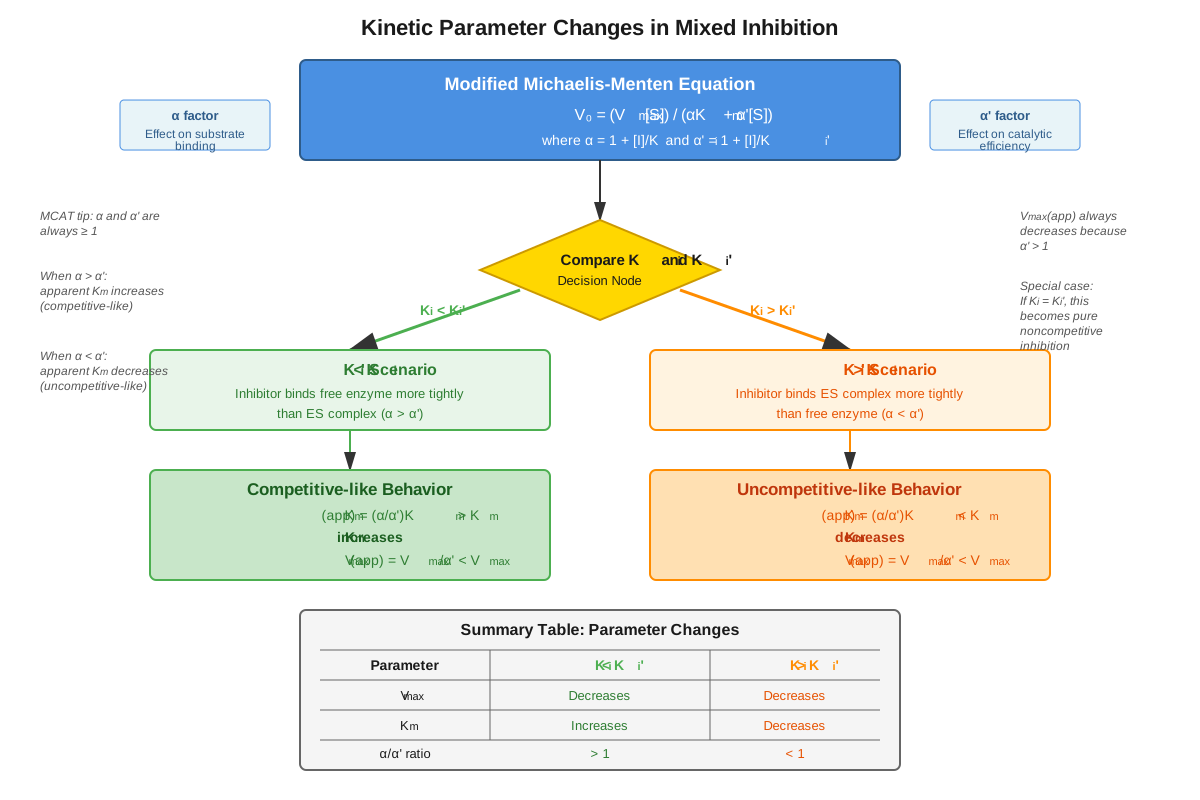
Mixed inhibition affects both Vmax and Km, distinguishing it from pure competitive (affects only Km) and pure uncompetitive (affects both proportionally) inhibition. The apparent Vmax decreases because ESI complex formation reduces the amount of productive ES complex available for catalysis. The apparent Km can either increase or decrease depending on the relative values of Ki and Ki'.
The mathematical relationships are:
Vmax(app) = Vmax / (1 + [I]/Ki')

Km(app) = Km × (1 + [I]/Ki) / (1 + [I]/Ki')
When Ki < Ki' (inhibitor prefers free enzyme): Km increases more than Vmax decreases, creating competitive-like behavior. When Ki > Ki' (inhibitor prefers ES complex): Km decreases while Vmax decreases, creating uncompetitive-like behavior. The ratio of these effects determines the overall kinetic signature.
Lineweaver-Burk Plot Characteristics
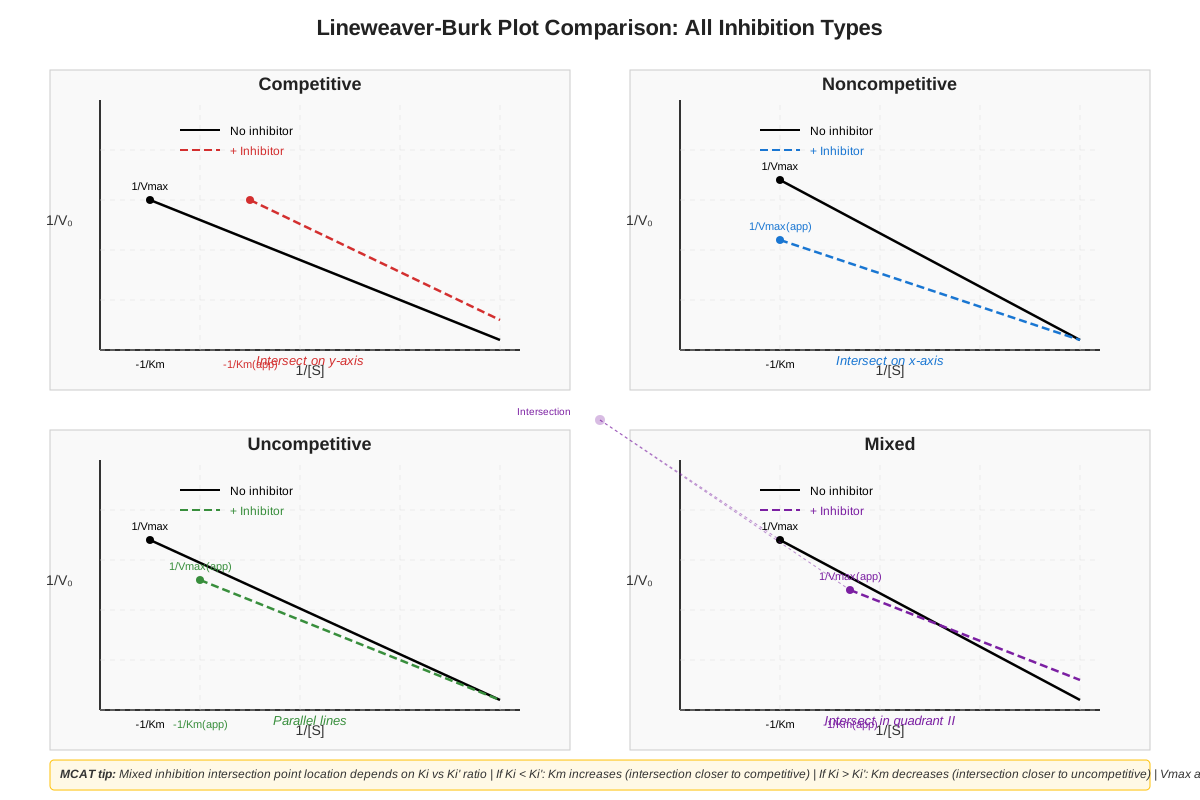
The Lineweaver-Burk plot (double reciprocal plot of 1/V versus 1/[S]) provides the most diagnostic tool for identifying mixed inhibition. In mixed inhibition, the lines representing enzyme activity with and without inhibitor intersect at a point that is neither on the y-axis (as in competitive inhibition) nor on the x-axis (as in uncompetitive inhibition). Instead, the lines intersect in the second quadrant—above the x-axis and to the left of the y-axis.
This intersection pattern occurs because both the slope and both intercepts change in mixed inhibition:
- Y-intercept (1/Vmax) increases, indicating decreased Vmax
- X-intercept (-1/Km) changes position, indicating altered Km
- Slope (Km/Vmax) changes in a manner dependent on the relative values of Ki and Ki'
The location of the intersection point provides information about inhibitor preference: intersections closer to the y-axis suggest Ki < Ki' (competitive-like), while intersections closer to the x-axis suggest Ki > Ki' (uncompetitive-like).
Structural Basis for Mixed Inhibition
Mixed inhibitors typically bind to allosteric sites—locations on the enzyme distinct from the active site. This allosteric binding can occur whether or not substrate occupies the active site, explaining the dual binding capability. However, the conformational changes induced by substrate binding alter the allosteric site geometry, changing inhibitor affinity and creating different Ki and Ki' values.
The structural mechanism involves:
- Conformational flexibility: Enzymes exist in multiple conformational states
- Induced fit: Substrate binding induces conformational changes that propagate to allosteric sites
- Differential affinity: The allosteric site has different shapes/properties in E versus ES forms
- Partial overlap: Some mixed inhibitors bind to sites that partially overlap with the active site or substrate binding region
This structural understanding explains why mixed inhibition is common in multi-domain enzymes and enzymes with significant conformational dynamics during catalysis.
Comparison Table of Inhibition Types
| Inhibition Type | Binds E | Binds ES | Vmax Effect | Km Effect | LB Plot Intersection |
|---|---|---|---|---|---|
| Competitive | Yes | No | No change | Increases | Y-axis |
| Uncompetitive | No | Yes | Decreases | Decreases | X-axis |
| Noncompetitive | Yes | Yes (equal) | Decreases | No change | X-axis |
| Mixed | Yes | Yes (unequal) | Decreases | Increases or Decreases | Second quadrant |
Distinguishing Mixed from Noncompetitive Inhibition
Noncompetitive inhibition is actually a special case of mixed inhibition where Ki = Ki'—the inhibitor binds E and ES with equal affinity. In pure noncompetitive inhibition, Km remains unchanged while Vmax decreases. This creates Lineweaver-Burk lines that intersect on the x-axis. However, true noncompetitive inhibition is relatively rare in biological systems.
Most inhibitors previously classified as "noncompetitive" are actually mixed inhibitors with Ki ≈ Ki'. The MCAT may present scenarios where Ki and Ki' are similar but not identical, requiring careful analysis of whether Km changes. The key distinction: any change in Km (even small) indicates mixed rather than pure noncompetitive inhibition.
Physiological and Pharmacological Examples
Several important biological molecules function as mixed inhibitors:
- Aspirin acts as a mixed inhibitor of cyclooxygenase (COX) enzymes at certain concentrations
- Some statins show mixed inhibition patterns against HMG-CoA reductase
- Certain kinase inhibitors used in cancer therapy exhibit mixed inhibition
- Feedback inhibitors in metabolic pathways often display mixed inhibition characteristics
These examples demonstrate that mixed inhibition is not merely a theoretical construct but a clinically relevant mechanism that affects drug design, dosing strategies, and understanding of metabolic regulation.
Concept Relationships
Mixed inhibition integrates multiple fundamental biochemistry concepts into a unified framework. At its foundation, Michaelis-Menten kinetics provides the mathematical model that mixed inhibition modifies. The Michaelis-Menten equation describes how substrate concentration affects reaction velocity, and mixed inhibition alters both the Vmax and Km parameters in this relationship.
The relationship flows: Enzyme structure → determines binding site availability → enables dual binding capability → creates mixed inhibition kinetics → manifests as altered Vmax and Km → appears as characteristic Lineweaver-Burk pattern. Each step depends on the previous one, creating an integrated understanding.
Mixed inhibition connects to other inhibition types through a hierarchical relationship. Competitive inhibition represents the limiting case where Ki' → ∞ (no ES binding), uncompetitive inhibition represents the case where Ki → ∞ (no E binding), and noncompetitive inhibition represents the case where Ki = Ki' (equal binding). Mixed inhibition is the general case that encompasses all these patterns as special conditions.
The concept also links to allosteric regulation, as most mixed inhibitors bind allosteric sites. This connects to cooperativity, protein conformational changes, and quaternary structure in multi-subunit enzymes. Understanding mixed inhibition therefore reinforces knowledge of protein structure-function relationships and dynamic biochemistry.
Finally, mixed inhibition relates to drug design and pharmacokinetics. The effectiveness of mixed inhibitors depends on both inhibitor concentration and substrate concentration, connecting to concepts of competitive binding, IC50 values, and therapeutic windows. This creates a bridge between basic enzyme kinetics and clinical pharmacology.
High-Yield Facts
⭐ Mixed inhibition occurs when an inhibitor binds both free enzyme (E) and enzyme-substrate complex (ES) with different affinities (Ki ≠ Ki')
⭐ In mixed inhibition, both Vmax and Km change, with Vmax always decreasing while Km can increase or decrease depending on whether Ki < Ki' or Ki > Ki'
⭐ On Lineweaver-Burk plots, mixed inhibition produces lines that intersect in the second quadrant (above x-axis, left of y-axis), distinguishing it from all other inhibition types
⭐ When Ki < Ki' (inhibitor prefers free enzyme), mixed inhibition appears competitive-like with increased Km; when Ki > Ki' (inhibitor prefers ES), it appears uncompetitive-like with decreased Km
⭐ Noncompetitive inhibition is a special case of mixed inhibition where Ki = Ki', resulting in decreased Vmax with unchanged Km and intersection on the x-axis
- Mixed inhibitors typically bind to allosteric sites that undergo conformational changes when substrate binds, explaining different affinities for E versus ES
- The apparent Vmax in mixed inhibition equals Vmax/(1 + [I]/Ki'), showing that higher inhibitor concentrations progressively reduce maximum velocity
- The apparent Km in mixed inhibition equals Km × (1 + [I]/Ki)/(1 + [I]/Ki'), demonstrating the complex interplay between competitive and uncompetitive effects
- Mixed inhibition cannot be overcome by increasing substrate concentration to infinity, unlike competitive inhibition, because the inhibitor still binds ES complex
- Many clinically important drugs exhibit mixed inhibition, including certain statins, protease inhibitors, and kinase inhibitors
- The slope of the Lineweaver-Burk plot in mixed inhibition changes by a factor of (1 + [I]/Ki)/(1 + [I]/Ki'), which differs from both competitive and uncompetitive patterns
- Mixed inhibition is more common in biological systems than pure noncompetitive inhibition because most allosteric sites undergo at least subtle conformational changes upon substrate binding
Quick check — test yourself on Mixed inhibition so far.
Try Flashcards →Common Misconceptions
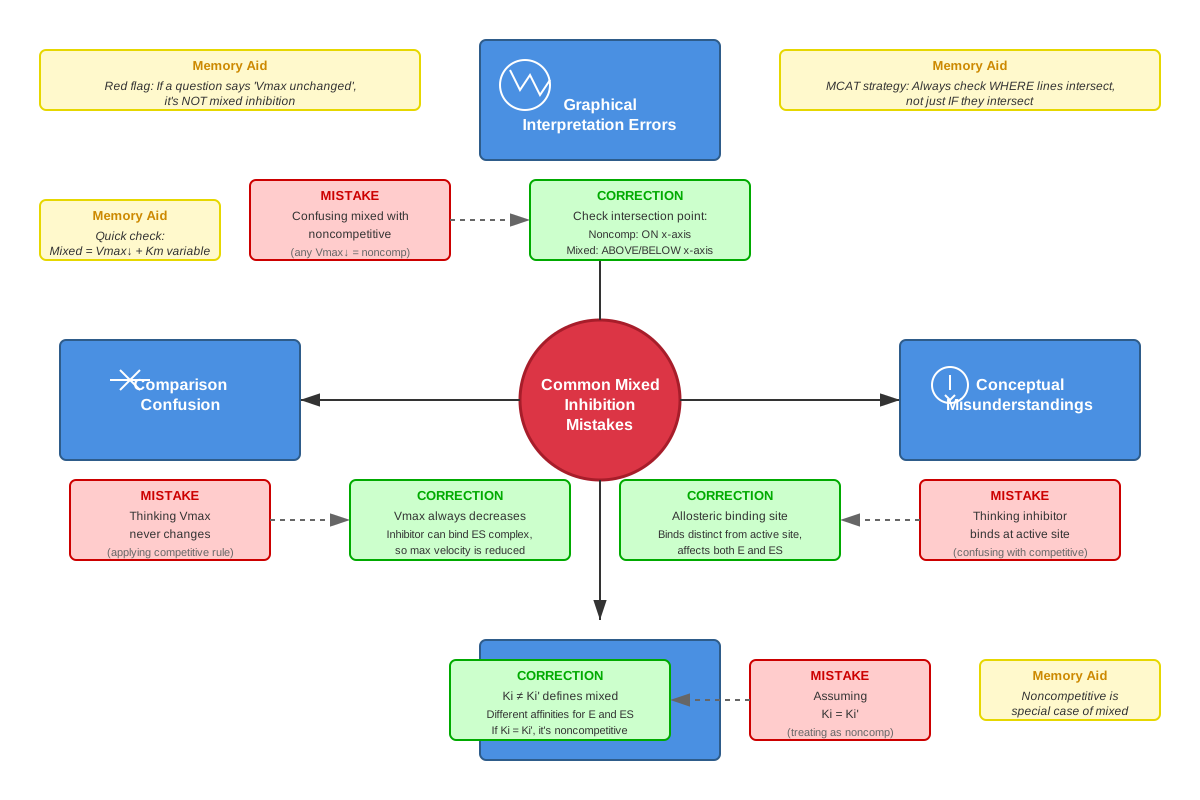
Misconception: Mixed inhibition is the same as noncompetitive inhibition because both affect Vmax and can bind E and ES.
Correction: Noncompetitive inhibition is a special case of mixed inhibition where Ki = Ki' (equal binding affinity for E and ES). In true mixed inhibition, Ki ≠ Ki', causing Km to change in addition to Vmax. Noncompetitive inhibition leaves Km unchanged. The Lineweaver-Burk plots differ: mixed inhibition intersects in the second quadrant, while noncompetitive intersects on the x-axis.
Misconception: If Km increases in the presence of an inhibitor, it must be competitive inhibition.
Correction: While competitive inhibition always increases Km, mixed inhibition can also increase Km when Ki < Ki' (inhibitor binds free enzyme more tightly than ES complex). The key distinction is that competitive inhibition does not change Vmax, while mixed inhibition always decreases Vmax. Always check both parameters before classifying inhibition type.
Misconception: Mixed inhibitors bind to the active site of the enzyme.
Correction: Mixed inhibitors typically bind to allosteric sites, not the active site. If they bound the active site, they would be competitive inhibitors unable to bind when substrate is present. The allosteric binding allows the inhibitor to bind both E and ES forms, though with different affinities due to conformational changes induced by substrate binding.
Misconception: Increasing substrate concentration can overcome mixed inhibition.
Correction: Unlike competitive inhibition, mixed inhibition cannot be fully overcome by increasing substrate concentration. While high [S] can reduce the competitive-like component (EI formation), the uncompetitive-like component (ESI formation) actually increases with higher [S]. The Vmax remains reduced regardless of substrate concentration because the inhibitor still binds ES complex.
Misconception: The intersection point on a Lineweaver-Burk plot for mixed inhibition can appear anywhere.
Correction: The intersection point for mixed inhibition must appear in the second quadrant (above the x-axis and to the left of the y-axis). If lines intersect on the y-axis, it's competitive; on the x-axis, it's uncompetitive or noncompetitive; in the first quadrant (positive x and y), it's not a standard reversible inhibition pattern. The second quadrant location is diagnostic for mixed inhibition.
Misconception: All enzymes can exhibit mixed inhibition with the right inhibitor.
Correction: Mixed inhibition requires an enzyme with an allosteric site that exists in both E and ES forms but with different conformations or accessibilities. Rigid enzymes with minimal conformational changes upon substrate binding are less likely to show mixed inhibition. Enzymes with significant induced-fit mechanisms or multiple domains are more susceptible to mixed inhibition.
Misconception: If Ki = Ki', the inhibitor has no effect on the enzyme.
Correction: When Ki = Ki', the inhibitor binds E and ES with equal affinity, creating pure noncompetitive inhibition. This still decreases Vmax because it reduces the concentration of productive enzyme forms. The condition Ki = Ki' doesn't mean no inhibition; it means the inhibition is equally effective regardless of whether substrate is bound, leaving Km unchanged while reducing Vmax.
Worked Examples
Example 1: Lineweaver-Burk Plot Analysis
Question: An enzyme kinetics experiment measures reaction velocity at various substrate concentrations in the absence and presence of compound X. The data produces the following Lineweaver-Burk plot: Without inhibitor, the line has a y-intercept of 0.1 (μM/min)⁻¹ and x-intercept of -0.5 (μM)⁻¹. With compound X, the line has a y-intercept of 0.2 (μM/min)⁻¹ and x-intercept of -0.25 (μM)⁻¹. The two lines intersect above the x-axis and to the left of the y-axis. What type of inhibition does compound X exhibit? Calculate the changes in Vmax and Km.
Solution:
Step 1: Identify the inhibition type from the intersection pattern.
The lines intersect in the second quadrant (above x-axis, left of y-axis), which is diagnostic for mixed inhibition. This immediately rules out competitive (y-axis intersection), uncompetitive (x-axis intersection), and noncompetitive (x-axis intersection).
Step 2: Calculate Vmax values.
The y-intercept equals 1/Vmax.
- Without inhibitor: 1/Vmax = 0.1, so Vmax = 10 μM/min
- With inhibitor: 1/Vmax(app) = 0.2, so Vmax(app) = 5 μM/min
- Vmax decreased by 50%, confirming that the inhibitor reduces maximum velocity
Step 3: Calculate Km values.
The x-intercept equals -1/Km.
- Without inhibitor: -1/Km = -0.5, so Km = 2 μM
- With inhibitor: -1/Km(app) = -0.25, so Km(app) = 4 μM
- Km increased by 100% (doubled), indicating the inhibitor has higher affinity for free enzyme
Step 4: Interpret the Ki and Ki' relationship.
Since Km increased while Vmax decreased, we know Ki < Ki'. The inhibitor binds free enzyme more tightly than ES complex, giving the mixed inhibition a competitive-like character. The magnitude of Km increase (2-fold) relative to Vmax decrease (2-fold) suggests moderate preference for free enzyme.
Answer: Compound X exhibits mixed inhibition with Ki < Ki'. Vmax decreases from 10 to 5 μM/min (50% reduction), and Km increases from 2 to 4 μM (100% increase). This pattern indicates the inhibitor preferentially binds free enzyme but can also bind ES complex with lower affinity.
Example 2: Predicting Inhibition from Binding Data
Question: A research team studies a novel enzyme inhibitor and determines the following binding constants: Ki (dissociation constant for EI complex) = 10 μM, and Ki' (dissociation constant for ESI complex) = 50 μM. The enzyme has a Km of 20 μM and Vmax of 100 μmol/min/mg. If the inhibitor is added at a concentration of 30 μM, predict: (a) the type of inhibition, (b) the apparent Km, (c) the apparent Vmax, and (d) whether increasing substrate concentration will be an effective strategy to restore enzyme activity.
Solution:
Step 1: Identify inhibition type from Ki and Ki' relationship.
Since Ki (10 μM) ≠ Ki' (50 μM), this is mixed inhibition, not noncompetitive. Since Ki < Ki', the inhibitor binds free enzyme more tightly than ES complex, creating competitive-like characteristics.
Step 2: Calculate apparent Vmax using the formula.
Vmax(app) = Vmax / (1 + [I]/Ki')
Vmax(app) = 100 / (1 + 30/50)
Vmax(app) = 100 / (1 + 0.6)
Vmax(app) = 100 / 1.6
Vmax(app) = 62.5 μmol/min/mg
The maximum velocity decreases to 62.5% of the original value.
Step 3: Calculate apparent Km using the formula.
Km(app) = Km × (1 + [I]/Ki) / (1 + [I]/Ki')
Km(app) = 20 × (1 + 30/10) / (1 + 30/50)
Km(app) = 20 × (1 + 3) / (1 + 0.6)
Km(app) = 20 × 4 / 1.6
Km(app) = 80 / 1.6
Km(app) = 50 μM
The apparent Km increases to 2.5 times the original value.
Step 4: Evaluate the effectiveness of increasing substrate concentration.
Increasing [S] will partially overcome the competitive-like component (EI formation) but cannot overcome the uncompetitive component (ESI formation). At very high [S], the enzyme will approach Vmax(app) = 62.5 μmol/min/mg, not the original Vmax of 100 μmol/min/mg. Therefore, increasing substrate can improve activity but cannot fully restore it.
Answer: (a) Mixed inhibition with competitive-like character (Ki < Ki'); (b) Km(app) = 50 μM (2.5-fold increase); (c) Vmax(app) = 62.5 μmol/min/mg (37.5% decrease); (d) Increasing substrate concentration will partially restore activity by competing for free enzyme binding, but cannot fully overcome inhibition because the inhibitor still binds ES complex. Maximum achievable activity is 62.5% of uninhibited Vmax regardless of substrate concentration.
Exam Strategy
When approaching mixed inhibition questions on the MCAT, begin by identifying the question format. If presented with a Lineweaver-Burk plot, immediately locate the intersection point of the lines with and without inhibitor. Second quadrant intersection (above x-axis, left of y-axis) definitively indicates mixed inhibition. If given numerical data, check whether both Vmax and Km change—if both change and Km doesn't change proportionally to Vmax, it's mixed inhibition.
Trigger words and phrases that signal mixed inhibition include: "binds to both enzyme forms," "allosteric inhibitor that affects both Km and Vmax," "inhibitor binding changes when substrate is present," "lines intersect in the second quadrant," "Ki does not equal Ki'," and "partially competitive character." Be alert for passages describing inhibitors that bind outside the active site but show substrate-dependent effects.
For process of elimination, use this hierarchy: First, check if Vmax changes—if not, eliminate all options except competitive. Second, check if Km changes—if not, eliminate competitive and mixed, leaving uncompetitive or noncompetitive. Third, check the Lineweaver-Burk intersection—second quadrant means mixed, y-axis means competitive, x-axis means uncompetitive or noncompetitive. Fourth, if both Vmax and Km decrease proportionally, it's uncompetitive; if Vmax decreases but Km unchanged, it's noncompetitive; if both change non-proportionally, it's mixed.
Time allocation: Spend 30-45 seconds analyzing any Lineweaver-Burk plot to identify the intersection point—this single observation often answers the question. For calculation problems, write down the formulas for Vmax(app) and Km(app) immediately, as these are not provided on the exam. If a question asks about overcoming inhibition with substrate, remember that only competitive inhibition can be fully overcome; mixed inhibition can be partially overcome but Vmax remains reduced.
Exam Tip: If you're unsure between noncompetitive and mixed inhibition, check whether Km changes at all. Any change in Km, even slight, indicates mixed rather than noncompetitive inhibition. The MCAT often includes answer choices that differ only in this distinction.
Memory Techniques
Mnemonic for Lineweaver-Burk intersections: "Competitive Yells" (intersects Y-axis), "Uncompetitive and Noncompetitive eXit" (intersect X-axis), "Mixed is in the Middle" (second quadrant, between the axes). This helps recall that mixed inhibition is the only type that intersects neither axis.
Visualization strategy: Picture the enzyme as a two-room house. The active site is the main room (where substrate enters), and the allosteric site is the side room. A competitive inhibitor blocks the main door (can't enter if substrate is there). An uncompetitive inhibitor only enters through the side room after substrate is in the main room. A mixed inhibitor can enter the side room anytime, but the side room's shape changes when substrate is in the main room, making it easier or harder for the inhibitor to fit.
Acronym for parameter changes: "MV-K" = "Mixed affects Vmax and Km." This reminds you that mixed inhibition is the most complex pattern affecting both parameters in non-proportional ways.
Relationship mnemonic: "Ki Less, Km Larger" (Ki < Ki' leads to Km increase, competitive-like). "Ki More, Km Minimized" (Ki > Ki' leads to Km decrease, uncompetitive-like). This helps predict Km changes based on the Ki/Ki' relationship.
Formula memory aid: For Vmax(app), remember "Very Simple Inhibition" = Vmax / (1 + [I]/Ki'). The denominator only includes Ki' (the ESI dissociation constant) because Vmax is measured at infinite substrate where all enzyme is in ES or ESI form. For Km(app), remember it's more complex with both Ki and Ki' because Km reflects the balance between E and ES forms.
Summary
Mixed inhibition represents the most general case of reversible enzyme inhibition, occurring when an inhibitor binds both free enzyme and enzyme-substrate complex with different affinities (Ki ≠ Ki'). This dual binding capability, typically at allosteric sites, creates unique kinetic signatures: both Vmax and Km change, with Vmax always decreasing while Km can increase or decrease depending on whether the inhibitor prefers free enzyme (Ki < Ki') or ES complex (Ki > Ki'). On Lineweaver-Burk plots, mixed inhibition produces the diagnostic pattern of lines intersecting in the second quadrant, distinguishing it from competitive (y-axis), uncompetitive (x-axis), and noncompetitive (x-axis) patterns. Understanding mixed inhibition requires integrating enzyme structure, binding equilibria, and kinetic analysis—skills that are highly testable on the MCAT. The clinical relevance of mixed inhibition, exemplified by numerous pharmaceutical agents, makes this topic both practically important and frequently featured in MCAT passages that assess higher-order thinking and data interpretation abilities.
Key Takeaways
- Mixed inhibition occurs when an inhibitor binds both E and ES with different affinities (Ki ≠ Ki'), affecting both Vmax (always decreases) and Km (increases if Ki < Ki', decreases if Ki > Ki')
- The diagnostic feature on Lineweaver-Burk plots is intersection in the second quadrant (above x-axis, left of y-axis), which cannot occur with any other inhibition type
- Noncompetitive inhibition is a special case of mixed inhibition where Ki = Ki', resulting in unchanged Km with decreased Vmax and x-axis intersection
- Mixed inhibition cannot be fully overcome by increasing substrate concentration because the inhibitor still binds ES complex, permanently reducing Vmax regardless of [S]
- Most mixed inhibitors bind allosteric sites that undergo conformational changes upon substrate binding, explaining the different affinities for E versus ES forms
- MCAT questions on mixed inhibition typically require analyzing experimental data (graphs or tables) to identify inhibition patterns and predict kinetic parameter changes
- Understanding the relationship between Ki and Ki' allows prediction of whether mixed inhibition will appear more competitive-like (Ki < Ki') or uncompetitive-like (Ki > Ki')
Related Topics
Allosteric Regulation and Cooperativity: Mixed inhibition connects directly to allosteric regulation mechanisms. Mastering mixed inhibition provides foundation for understanding how allosteric effectors modulate enzyme activity through conformational changes, including positive and negative cooperativity in multi-subunit enzymes.
Drug Design and Pharmacodynamics: Many therapeutic agents function as mixed inhibitors. Understanding mixed inhibition kinetics enables analysis of drug-target interactions, dose-response relationships, and the effects of varying substrate (endogenous ligand) concentrations on drug efficacy.
Metabolic Pathway Regulation: Feedback inhibition in metabolic pathways often exhibits mixed inhibition patterns. This topic connects to understanding how end products regulate pathway flux and how cells maintain metabolic homeostasis through enzyme regulation.
Protein Conformational Dynamics: The structural basis for mixed inhibition—different inhibitor affinities for E versus ES—relates to broader concepts of protein flexibility, induced fit, and conformational selection in enzyme catalysis.
Enzyme Kinetics in Vivo: Mixed inhibition provides a bridge to understanding enzyme behavior in cellular environments where multiple substrates, products, and regulatory molecules compete for enzyme binding sites simultaneously.
Practice CTA
Now that you've mastered the complexities of mixed inhibition, challenge yourself with practice questions that test your ability to analyze Lineweaver-Burk plots, calculate kinetic parameters, and distinguish mixed inhibition from other patterns. Work through enzyme kinetics problems that present experimental data in various formats—this skill translates directly to MCAT success. Review the flashcards focusing on the diagnostic features of each inhibition type and the mathematical relationships governing mixed inhibition kinetics. Remember: mixed inhibition questions often separate high-scoring students from the rest because they require integrating multiple concepts and analyzing data critically. Your investment in mastering this challenging topic will pay dividends on test day when you confidently identify that second quadrant intersection and select the correct answer while others struggle. You've got this!
Sign up free to keep reading
Create a free AnvayaPrep account to finish this MCAT guide on Mixed inhibition — plus flashcards and practice questions.