Overview
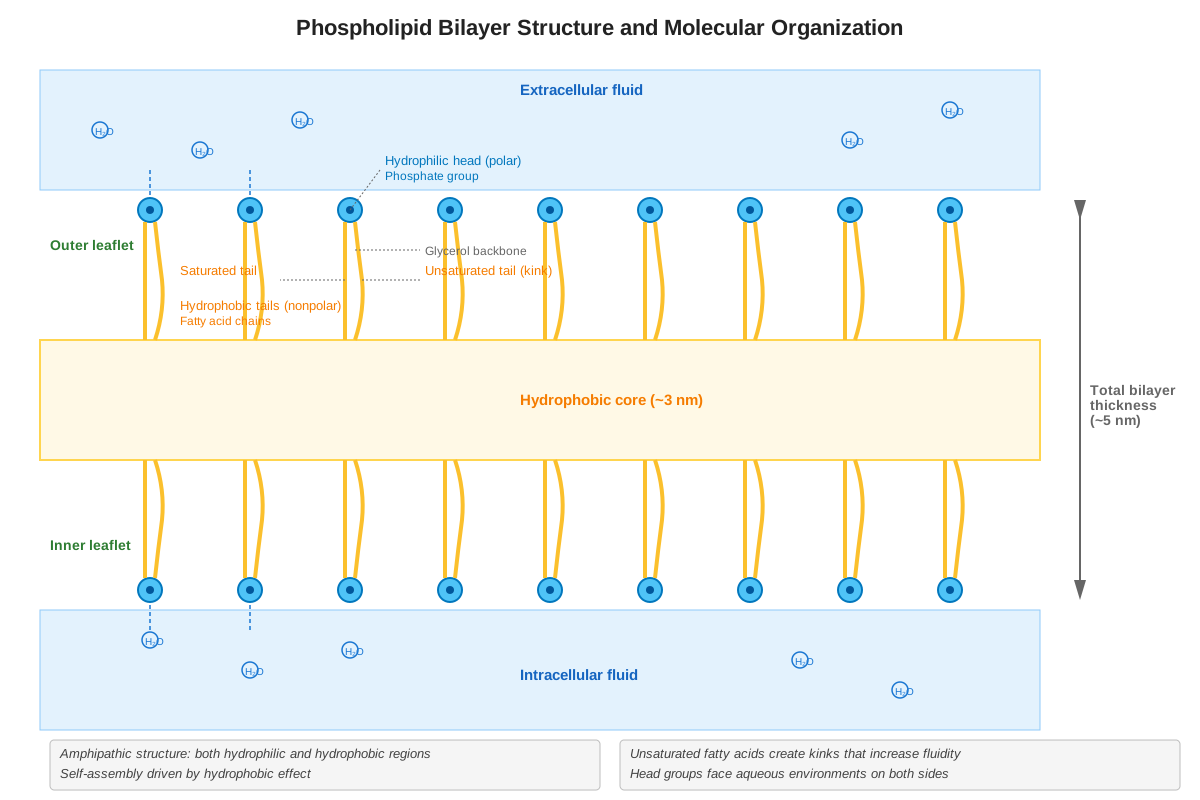
Lipid bilayers form the fundamental structural basis of all biological membranes, representing one of the most critical organizational principles in cellular Biochemistry. These self-assembling structures consist of two layers of amphipathic phospholipids arranged with their hydrophobic fatty acid tails facing inward and their hydrophilic head groups facing the aqueous environments on both sides. This arrangement creates a selective permeability barrier that defines cellular boundaries, compartmentalizes biochemical reactions, and enables the sophisticated signaling and transport processes essential for life.
For the MCAT, understanding lipid bilayers extends far beyond memorizing their structure. The exam frequently tests the physicochemical principles governing bilayer formation, the factors affecting membrane fluidity, and how membrane composition influences cellular function. Questions often integrate concepts from Lipids and Membranes with thermodynamics, protein structure, and cellular physiology, requiring students to apply their knowledge of hydrophobic effects, entropy, and molecular interactions to novel scenarios. The lipid bilayers MCAT content appears in both discrete questions and passage-based contexts, particularly in Biological and Biochemical Foundations sections.
The study of lipid bilayers Biochemistry connects intimately with numerous other topics including protein structure (membrane proteins), cellular respiration (mitochondrial membranes), signal transduction (receptor localization), and transport mechanisms (channels and carriers). Mastering lipid bilayers provides the foundation for understanding how cells maintain homeostasis, respond to their environment, and organize the complex biochemical machinery necessary for survival. This topic bridges organic chemistry concepts (lipid structure) with biological principles (membrane function), making it a high-yield integration point for MCAT preparation.
Learning Objectives
- [ ] Define lipid bilayers using accurate Biochemistry terminology
- [ ] Explain why lipid bilayers matters for the MCAT
- [ ] Apply lipid bilayers to exam-style questions
- [ ] Identify common mistakes related to lipid bilayers
- [ ] Connect lipid bilayers to related Biochemistry concepts
- [ ] Predict how changes in lipid composition affect membrane fluidity and function
- [ ] Analyze the thermodynamic driving forces behind spontaneous bilayer formation
- [ ] Evaluate the role of cholesterol in modulating membrane properties across different temperature ranges
Prerequisites
- Lipid structure and classification: Understanding phospholipids, glycolipids, and sterols is essential because these molecules constitute the bilayer components
- Amphipathic molecules: Recognition of molecules with both hydrophobic and hydrophilic regions explains why bilayers form spontaneously
- Thermodynamics basics: Knowledge of entropy, enthalpy, and free energy is necessary to understand the energetic favorability of bilayer formation
- Intermolecular forces: Familiarity with hydrogen bonding, van der Waals forces, and hydrophobic interactions explains bilayer stability
- Organic chemistry functional groups: Identifying polar head groups and nonpolar tails enables prediction of molecular behavior in aqueous environments
Why This Topic Matters
Clinical and Real-World Significance
Lipid bilayers are not merely academic constructs—they represent the fundamental barrier separating life from non-life. Every drug that enters a cell must either cross or interact with lipid bilayers, making membrane permeability a central consideration in pharmaceutical design. Diseases ranging from cystic fibrosis (involving membrane channel dysfunction) to atherosclerosis (involving membrane lipid composition) to Alzheimer's disease (involving membrane-associated protein aggregation) all involve lipid bilayer dysfunction. Understanding membrane fluidity helps explain why hypothermia is dangerous (membranes become too rigid) and why fever can be protective within limits (increased membrane fluidity enhances immune cell function).
MCAT Exam Statistics
Lipid bilayers appear in approximately 3-5% of MCAT questions directly, but membrane-related concepts appear in 10-15% of Biological and Biochemical Foundations questions when including membrane proteins, transport, and signaling. The topic most commonly appears in:
- Passage-based questions involving experimental manipulation of membrane composition
- Discrete questions testing membrane fluidity factors
- Pseudo-discrete questions connecting membrane structure to function
- Data interpretation questions analyzing the effects of temperature or lipid composition on membrane properties
Common Exam Contexts
The MCAT frequently presents lipid bilayers in research passages describing experiments that manipulate membrane composition, temperature studies examining phase transitions, or clinical vignettes involving membrane-active drugs or toxins. Questions may ask students to predict experimental outcomes, interpret fluorescence recovery after photobleaching (FRAP) data, or explain why certain molecules can or cannot cross membranes passively. The exam particularly favors questions that require integration of multiple concepts, such as predicting how temperature changes affect both membrane fluidity and protein function simultaneously.
Core Concepts
Structure and Composition of Lipid Bilayers
A lipid bilayer consists of two leaflets of amphipathic lipids, primarily phospholipids, arranged so that hydrophobic fatty acid tails face each other in the membrane interior while hydrophilic head groups face the aqueous environments on both sides. This arrangement, typically 5-10 nanometers thick, creates a hydrophobic core that is impermeable to most polar molecules and ions. The major phospholipids in mammalian membranes include phosphatidylcholine (PC), phosphatidylethanolamine (PE), phosphatidylserine (PS), and sphingomyelin (SM), each contributing distinct properties to the membrane.
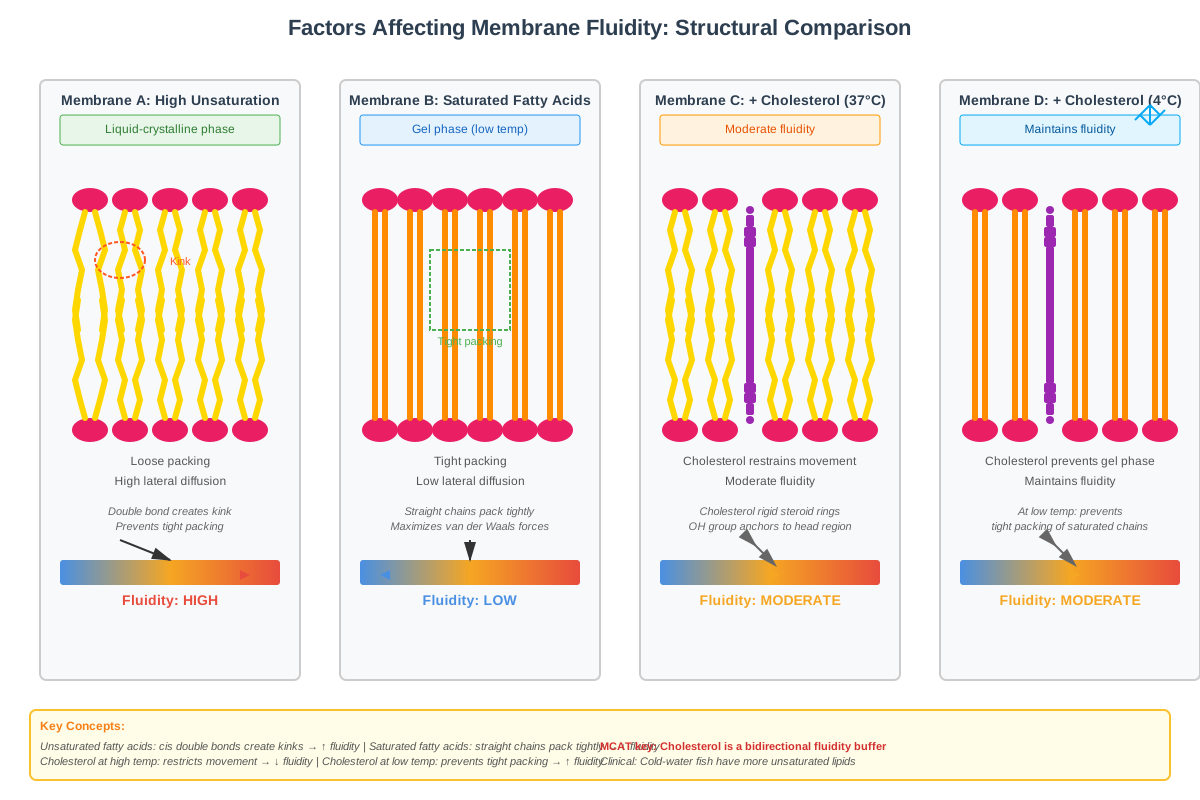
The fatty acid composition critically influences membrane behavior. Saturated fatty acids contain no double bonds, allowing tight packing and creating more rigid, ordered membranes. Unsaturated fatty acids contain one or more cis double bonds that introduce kinks in the hydrocarbon chains, preventing tight packing and increasing membrane fluidity. Most biological membranes contain a mixture of saturated and unsaturated fatty acids, with the degree of unsaturation varying based on organism, tissue type, and environmental conditions.
Cholesterol, present at 20-25% of membrane lipids in animal cells, plays a unique dual role in membrane structure. The rigid steroid ring structure of cholesterol inserts between phospholipids with its hydroxyl group oriented toward the aqueous interface and its hydrophobic body interacting with fatty acid chains. This positioning has a bidirectional effect on fluidity: at high temperatures, cholesterol restrains phospholipid movement and decreases fluidity; at low temperatures, cholesterol prevents tight packing and increases fluidity. This "fluidity buffer" effect helps maintain membrane function across temperature ranges.
Thermodynamics of Bilayer Formation
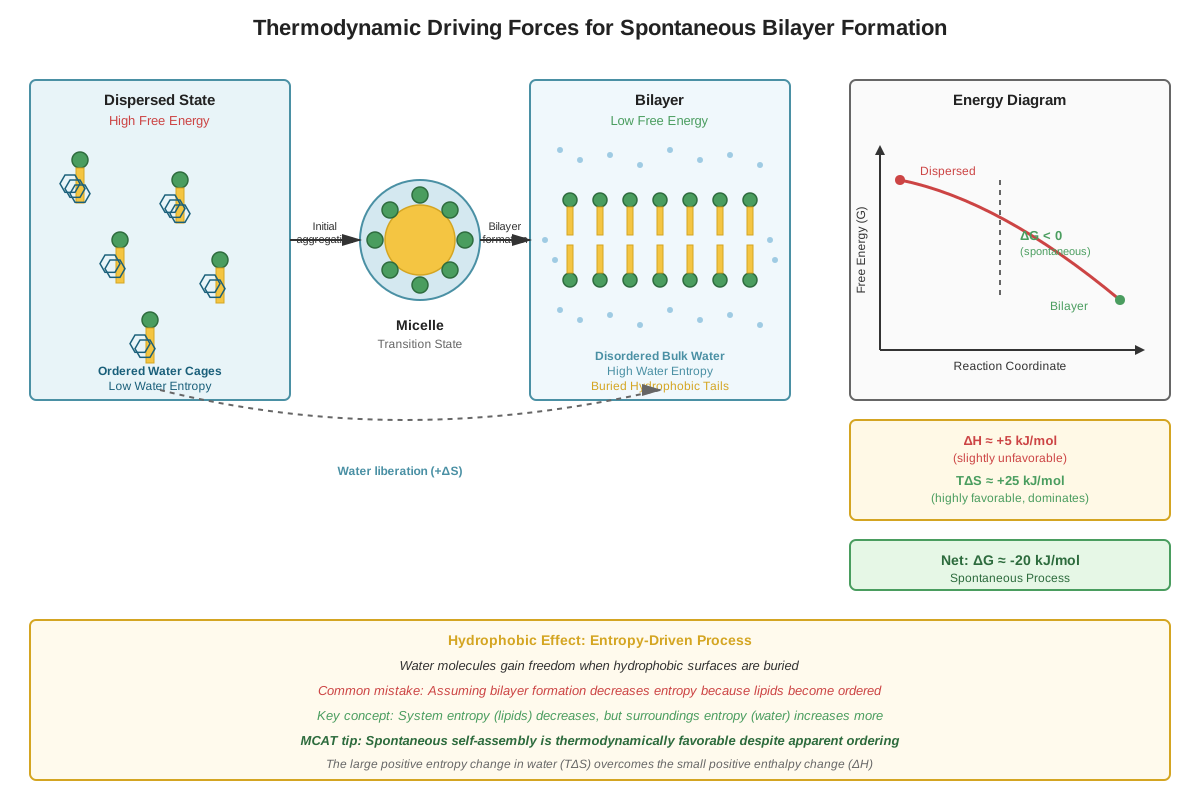
The spontaneous formation of lipid bilayers in aqueous solution represents a thermodynamically favorable process driven primarily by the hydrophobic effect. When amphipathic lipids are placed in water, the system can minimize unfavorable interactions between hydrophobic tails and water molecules by sequestering the tails in a hydrophobic core. This arrangement maximizes the entropy of water molecules, which would otherwise be forced into ordered "cages" around exposed hydrophobic surfaces.
The free energy change (ΔG) for bilayer formation is negative, indicating spontaneity:
ΔG = ΔH - TΔSWhile the enthalpy change (ΔH) may be slightly positive or negative depending on specific interactions, the large positive entropy change (ΔS) from releasing ordered water molecules makes the -TΔS term highly negative, driving the overall process. This explains why lipid bilayers are self-assembling and self-sealing—any disruption that exposes hydrophobic edges to water is thermodynamically unfavorable, causing the membrane to spontaneously close.
Membrane Fluidity and the Fluid Mosaic Model
The fluid mosaic model, proposed by Singer and Nicolson in 1972, describes biological membranes as two-dimensional fluids in which lipids and proteins can move laterally within the plane of the membrane. This fluidity is essential for numerous cellular processes including membrane fusion, cell division, endocytosis, and protein function. The degree of fluidity depends on several factors:
| Factor | Effect on Fluidity | Mechanism |
|---|---|---|
| Temperature increase | Increases fluidity | Greater kinetic energy overcomes van der Waals forces |
| Unsaturated fatty acids | Increases fluidity | Cis double bonds create kinks, preventing tight packing |
| Shorter fatty acid chains | Increases fluidity | Fewer van der Waals interactions between chains |
| Cholesterol (high temp) | Decreases fluidity | Rigid rings restrict phospholipid movement |
| Cholesterol (low temp) | Increases fluidity | Prevents crystallization and tight packing |
Lateral diffusion of lipids within a leaflet occurs rapidly (approximately 10^7 times per second), while transverse diffusion (flip-flop) between leaflets is extremely rare without enzymatic assistance (once per several hours). This asymmetry is functionally important because the two leaflets of biological membranes have different compositions: the outer leaflet of the plasma membrane is enriched in phosphatidylcholine and sphingomyelin, while the inner leaflet contains more phosphatidylethanolamine and phosphatidylserine.
Selective Permeability
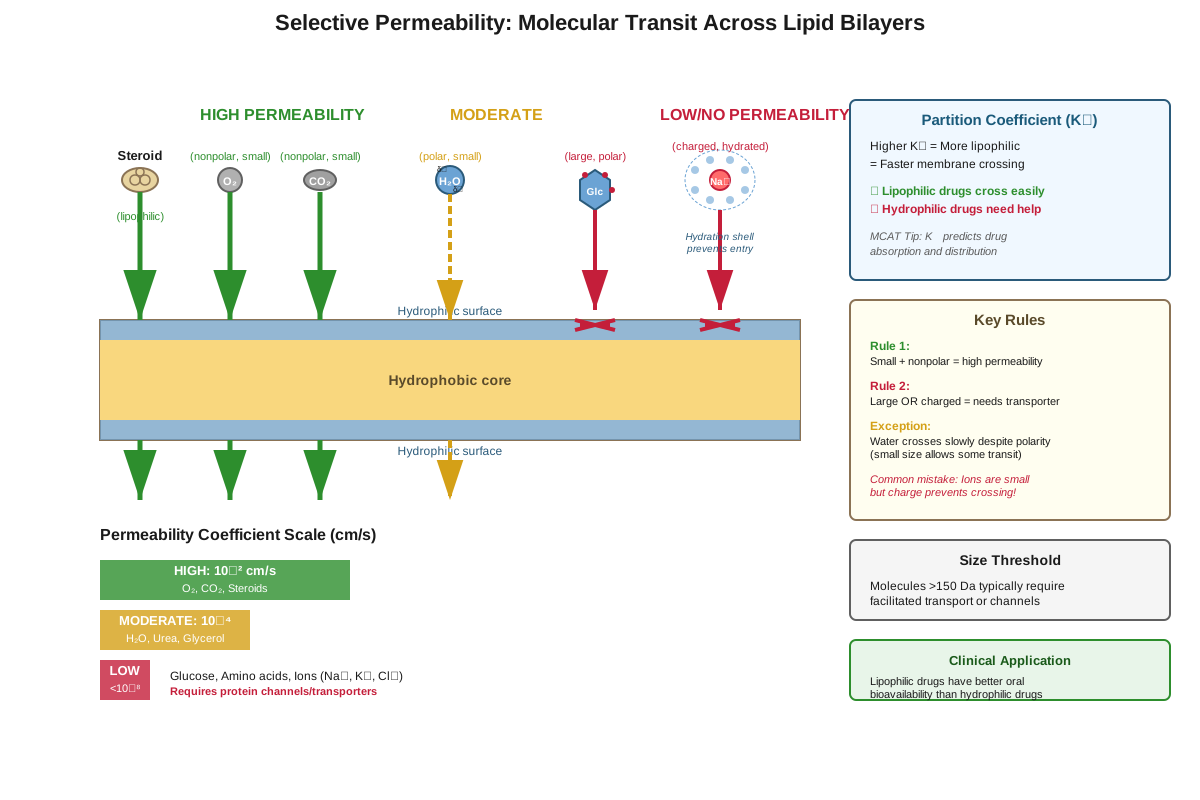
The hydrophobic core of the lipid bilayer creates a selective permeability barrier that determines which molecules can cross membranes passively. Small, nonpolar molecules (O₂, CO₂, N₂) and small, uncharged polar molecules (H₂O, ethanol, urea) can cross relatively easily. However, large polar molecules (glucose, amino acids) and all ions (Na⁺, K⁺, Cl⁻, Ca²⁺) cannot cross the hydrophobic core without assistance from membrane proteins.
The permeability coefficient (P) for a molecule depends on:
- Size: Smaller molecules cross more easily
- Polarity: Less polar molecules cross more easily
- Charge: Charged molecules face both polarity and electrostatic barriers
- Lipid solubility: Molecules that dissolve in the hydrophobic core cross more readily
This selective permeability enables cells to maintain distinct internal compositions, establish ion gradients for energy storage and signaling, and control the uptake of nutrients and elimination of wastes through specific transport proteins.
Phase Transitions and Membrane Behavior
Lipid bilayers can exist in different physical states depending on temperature. At low temperatures, membranes exist in a gel phase (Lβ) where lipids are tightly packed and movement is restricted. As temperature increases, membranes undergo a phase transition to a liquid crystalline phase (Lα) where lipids move freely. The transition temperature (Tm) depends on lipid composition:
- Saturated fatty acids: Higher Tm (more ordered at physiological temperatures)
- Unsaturated fatty acids: Lower Tm (more fluid at physiological temperatures)
- Longer chains: Higher Tm (more van der Waals interactions)
- Cholesterol presence: Broadens and moderates the transition
Organisms adapt membrane composition to maintain appropriate fluidity at their environmental temperature, a process called homeoviscous adaptation. Cold-water fish increase unsaturated fatty acid content to prevent membrane solidification, while thermophilic bacteria increase saturated fatty acid content to maintain membrane integrity at high temperatures.
Membrane Microdomains and Lipid Rafts
Biological membranes are not homogeneous but contain specialized regions called lipid rafts—microdomains enriched in cholesterol, sphingolipids, and specific proteins. These rafts exist in a more ordered, less fluid state than surrounding membrane regions and serve as platforms for organizing signaling molecules, concentrating receptors, and facilitating protein-protein interactions. The MCAT may test understanding of how lipid composition creates functional heterogeneity within membranes and how this organization affects cellular processes like signal transduction and membrane trafficking.
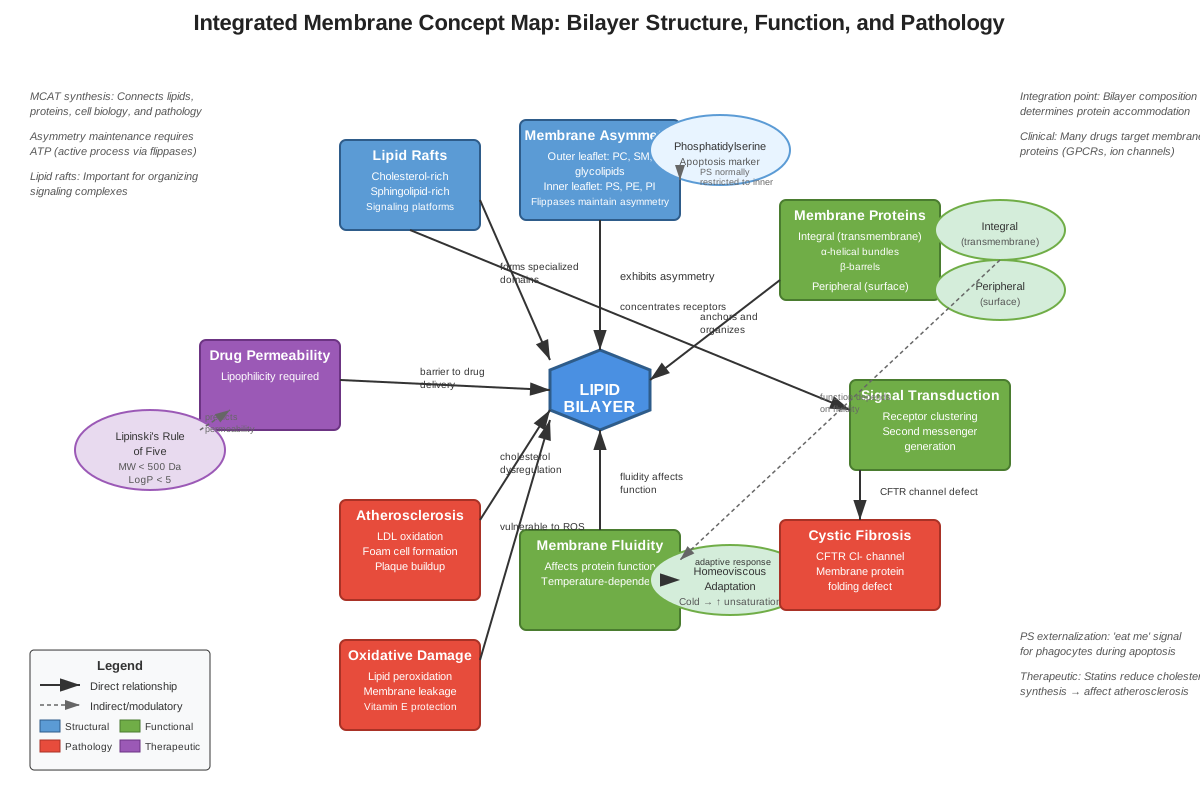
Concept Relationships
The core concepts of lipid bilayers form an interconnected network of structure-function relationships. Amphipathic lipid structure → drives → spontaneous bilayer formation through the hydrophobic effect, which represents the thermodynamic foundation. The composition of fatty acids (saturated vs. unsaturated, chain length) → determines → membrane fluidity, which in turn affects → protein function and cellular processes. Cholesterol → modulates → fluidity bidirectionally, acting as a buffer that → enables → function across temperature ranges.
Selective permeability emerges from → hydrophobic core structure, which → necessitates → membrane transport proteins (covered in related topics). The fluid mosaic model → explains → lateral diffusion and protein mobility, which → enables → receptor clustering, signal transduction, and membrane fusion events. Phase transitions → connect to → homeoviscous adaptation, demonstrating how organisms → adjust → lipid composition to maintain optimal fluidity.
These concepts connect to prerequisite knowledge of lipid structure (provides the building blocks), thermodynamics (explains spontaneous assembly), and intermolecular forces (determines stability). They lead forward to understanding membrane proteins (require the bilayer environment), transport mechanisms (overcome selective permeability), cell signaling (depends on membrane organization), and bioenergetics (requires membrane-bound protein complexes).
Quick check — test yourself on Lipid bilayers so far.
Try Flashcards →High-Yield Facts
⭐ Lipid bilayers form spontaneously in aqueous solution due to the hydrophobic effect, driven by increased entropy of water molecules
⭐ Unsaturated fatty acids increase membrane fluidity by introducing kinks that prevent tight packing
⭐ Cholesterol acts as a bidirectional fluidity buffer: decreasing fluidity at high temperatures and increasing it at low temperatures
⭐ Small nonpolar molecules (O₂, CO₂) cross membranes easily, while ions and large polar molecules require transport proteins
⭐ Lateral diffusion within a leaflet is rapid (~10⁷/sec), while flip-flop between leaflets is extremely slow without enzymes
- The hydrophobic core of a lipid bilayer is approximately 3-4 nm thick, while the entire bilayer is 5-10 nm thick
- Phosphatidylserine (PS) is normally restricted to the inner leaflet; its appearance on the outer leaflet signals apoptosis
- Membrane fluidity increases with temperature, shorter fatty acid chains, and greater unsaturation
- The transition temperature (Tm) is higher for membranes with more saturated fatty acids and longer chains
- Lipid rafts are cholesterol- and sphingolipid-rich microdomains that organize signaling proteins
- Biological membranes are asymmetric, with different lipid compositions in inner and outer leaflets
- The self-sealing property of bilayers results from the thermodynamic unfavorability of exposing hydrophobic edges to water
Common Misconceptions
Misconception: Lipid bilayers are static, rigid structures → Correction: Lipid bilayers are dynamic, fluid structures where individual lipids undergo rapid lateral diffusion within each leaflet. The fluid mosaic model emphasizes this fluidity as essential for membrane function, protein mobility, and cellular processes like endocytosis and cell division.
Misconception: Cholesterol always decreases membrane fluidity → Correction: Cholesterol has a bidirectional effect on fluidity depending on temperature. At high temperatures, cholesterol restrains phospholipid movement and decreases fluidity; at low temperatures, cholesterol prevents tight packing and crystallization, thereby increasing fluidity. This makes cholesterol a "fluidity buffer."
Misconception: All small molecules can cross lipid bilayers easily → Correction: While small nonpolar molecules cross readily, small polar molecules face significant barriers, and small ions face even greater barriers despite their size. Permeability depends on polarity and charge, not just size. For example, water (small and polar) crosses slowly without aquaporins, while O₂ (small and nonpolar) crosses rapidly.
Misconception: Saturated fats are always solid and unsaturated fats are always liquid → Correction: The physical state depends on temperature relative to the transition temperature (Tm). Saturated fatty acids have higher Tm values, making them more likely to be solid at room temperature, but they become fluid at sufficiently high temperatures. The key concept is that unsaturation lowers Tm by preventing tight packing.
Misconception: Lipids can easily flip between membrane leaflets → Correction: Transverse diffusion (flip-flop) is extremely slow (hours to days) without enzymatic assistance because it requires moving the polar head group through the hydrophobic core, which is highly energetically unfavorable. This maintains membrane asymmetry, which is functionally important for processes like apoptosis signaling.
Misconception: All membrane lipids are phospholipids → Correction: While phospholipids are the most abundant membrane lipids, biological membranes also contain significant amounts of cholesterol (20-25% in animal cells), glycolipids (especially in the outer leaflet), and sphingolipids. Each lipid class contributes distinct properties to membrane structure and function.
Worked Examples
Example 1: Predicting Membrane Fluidity Changes
Question: A researcher studies two bacterial strains adapted to different temperatures. Strain A grows optimally at 15°C, while Strain B grows optimally at 45°C. When the fatty acid composition of their membranes is analyzed, which strain would be expected to have a higher proportion of unsaturated fatty acids, and why?
Solution:
Step 1: Identify the key principle. Membrane fluidity must be maintained within an optimal range for proper function. Temperature affects fluidity—higher temperatures increase fluidity, lower temperatures decrease fluidity.
Step 2: Apply homeoviscous adaptation. Organisms adjust membrane lipid composition to maintain appropriate fluidity at their environmental temperature.
Step 3: Consider the effect of unsaturation. Unsaturated fatty acids have cis double bonds that create kinks, preventing tight packing and increasing membrane fluidity. Saturated fatty acids pack tightly, decreasing fluidity.
Step 4: Reason through each strain:
- Strain A (15°C): At low temperatures, membranes tend toward the gel phase (too rigid). To maintain fluidity, this strain needs more unsaturated fatty acids to prevent tight packing.
- Strain B (45°C): At high temperatures, membranes are already very fluid. To prevent excessive fluidity and maintain membrane integrity, this strain needs more saturated fatty acids.
Answer: Strain A (cold-adapted) would have a higher proportion of unsaturated fatty acids. This compensates for the fluidity-decreasing effect of low temperature, maintaining optimal membrane function through homeoviscous adaptation.
Connection to Learning Objectives: This example applies lipid bilayer principles to predict membrane composition based on environmental conditions, demonstrating understanding of the relationship between fatty acid structure and membrane fluidity.
Example 2: Analyzing Membrane Permeability
Question: A student designs an experiment to test membrane permeability by creating artificial lipid bilayer vesicles (liposomes) and measuring the rate at which different molecules equilibrate across the membrane. Rank the following molecules from fastest to slowest membrane crossing rate: glucose (C₆H₁₂O₆), oxygen (O₂), sodium ion (Na⁺), and ethanol (C₂H₅OH).
Solution:
Step 1: Identify the factors affecting membrane permeability:
- Size (smaller crosses faster)
- Polarity (less polar crosses faster)
- Charge (charged molecules face electrostatic barrier)
- Lipid solubility (more lipid-soluble crosses faster)
Step 2: Analyze each molecule:
Oxygen (O₂):
- Very small
- Nonpolar
- Uncharged
- Highly lipid-soluble
- Expected to cross very rapidly
Ethanol (C₂H₅OH):
- Small
- Slightly polar (one hydroxyl group)
- Uncharged
- Moderately lipid-soluble
- Expected to cross relatively quickly
Glucose (C₆H₁₂O₆):
- Larger molecule
- Highly polar (multiple hydroxyl groups)
- Uncharged
- Not lipid-soluble
- Expected to cross very slowly
Sodium ion (Na⁺):
- Very small
- Charged (positive)
- Hydrated in solution (effectively larger)
- Faces both polarity and electrostatic barriers
- Expected to cross extremely slowly (essentially impermeable)
Step 3: Rank from fastest to slowest:
- O₂ (fastest - small, nonpolar)
- Ethanol (fast - small, slightly polar)
- Glucose (very slow - large, highly polar)
- Na⁺ (slowest - charged, hydrated)
Answer: O₂ > Ethanol > Glucose > Na⁺
Important Note: In reality, Na⁺ and glucose cross so slowly that they are effectively impermeable without transport proteins. The key distinction is between molecules that can cross (O₂, ethanol) and those that essentially cannot (glucose, Na⁺).
Connection to Learning Objectives: This example applies understanding of selective permeability to predict relative crossing rates, demonstrating how membrane structure determines function and why cells require transport proteins for many essential molecules.
Exam Strategy
Approaching MCAT Questions on Lipid Bilayers
When encountering lipid bilayer questions, first identify whether the question tests structure, thermodynamics, fluidity, or permeability. Many questions integrate multiple concepts, so look for the primary focus. If a passage describes an experiment, identify the independent variable (what's being manipulated) and dependent variable (what's being measured), then connect these to membrane properties.
Trigger Words and Phrases
Watch for these high-yield trigger words:
- "Membrane fluidity" → Think about temperature, saturation, cholesterol, chain length
- "Spontaneous formation" → Think about hydrophobic effect, entropy, thermodynamics
- "Selectively permeable" → Think about size, polarity, charge
- "Lateral diffusion" vs. "flip-flop" → Different rates and mechanisms
- "Phase transition" or "Tm" → Think about gel vs. liquid crystalline states
- "Homeoviscous adaptation" → Organisms adjusting lipid composition for temperature
- "Amphipathic" or "amphiphilic" → Molecules with both hydrophobic and hydrophilic regions
Process of Elimination Tips
For fluidity questions, eliminate answers that:
- Suggest cholesterol has only one effect on fluidity (it's bidirectional)
- Claim saturated fats always increase fluidity (they decrease it)
- Ignore temperature as a factor
For permeability questions, eliminate answers that:
- Suggest ions cross membranes easily without proteins
- Claim size is the only factor determining permeability
- Ignore the importance of polarity and charge
For thermodynamics questions, eliminate answers that:
- Suggest bilayer formation requires energy input (it's spontaneous)
- Claim enthalpy is the primary driving force (entropy is more important)
- Ignore the role of water entropy in the hydrophobic effect
Time Allocation
For discrete questions on lipid bilayers, spend 60-90 seconds. These typically test straightforward recall or simple application. For passage-based questions, allocate 1.5-2 minutes per question, as you'll need to integrate passage information with content knowledge. If a question requires complex reasoning about multiple factors affecting fluidity or permeability, don't hesitate to use the full 2 minutes—these integration questions are designed to be challenging.
Exam Tip: If a question asks about membrane fluidity and provides multiple factors (temperature, saturation, cholesterol), consider each factor's effect independently, then combine them. Don't try to intuit the combined effect directly—systematic analysis prevents errors.
Memory Techniques
Mnemonic for Factors Increasing Membrane Fluidity
"CUTS Fluidity"
- Cholesterol (at low temperature)
- Unsaturated fatty acids
- Temperature increase
- Shorter fatty acid chains
Visualization for Bilayer Formation
Imagine lipids as people at a party: the "heads" (hydrophilic) are social and want to talk to water molecules, while the "tails" (hydrophobic) are antisocial and want to hide from water. The bilayer forms because the tails huddle together in the middle (away from water) while the heads face outward (toward water). This self-organization happens automatically because it's the most comfortable arrangement for everyone.
Acronym for Membrane-Permeable Molecules
"SONG" molecules cross membranes easily:
- Small
- Oil-soluble (lipid-soluble)
- Nonpolar
- Gas molecules (O₂, CO₂, N₂)
Cholesterol's Dual Role
Remember: "Cholesterol is a thermostat"
- Too hot? Cholesterol cools it down (decreases fluidity)
- Too cold? Cholesterol warms it up (increases fluidity)
- It buffers temperature effects to maintain optimal function
Lateral vs. Transverse Diffusion
"Lateral is FAST, Transverse is TRAPPED"
- Lateral diffusion: lipids slide sideways within their leaflet (Fast And Sideways Together)
- Transverse diffusion: lipids must flip through the hydrophobic core (Trapped, Rare, And Painfully Slow)
Summary
Lipid bilayers represent the fundamental structural unit of all biological membranes, formed through spontaneous self-assembly of amphipathic phospholipids driven by the hydrophobic effect and increased water entropy. These dynamic, fluid structures consist of two leaflets with hydrophobic tails facing inward and hydrophilic heads facing aqueous environments, creating a selective permeability barrier essential for cellular compartmentalization. Membrane fluidity, critical for proper function, depends on temperature, fatty acid saturation and chain length, and cholesterol content, with cholesterol acting as a bidirectional fluidity buffer. The fluid mosaic model describes rapid lateral diffusion of lipids within leaflets while transverse diffusion between leaflets remains extremely slow without enzymatic assistance. Selective permeability allows small nonpolar molecules to cross freely while restricting ions and large polar molecules, necessitating transport proteins for many essential cellular processes. Understanding these principles enables prediction of membrane behavior under various conditions and explains how organisms adapt membrane composition to maintain function across environmental changes.
Key Takeaways
- Lipid bilayers form spontaneously through the hydrophobic effect, driven primarily by increased entropy of water molecules rather than direct lipid-lipid interactions
- Membrane fluidity increases with higher temperature, greater unsaturation, shorter fatty acid chains, and (at low temperatures) cholesterol presence
- Cholesterol acts as a bidirectional fluidity buffer, decreasing fluidity at high temperatures and increasing it at low temperatures
- Small nonpolar molecules cross membranes readily, while ions and large polar molecules require transport proteins due to the hydrophobic core barrier
- Lateral diffusion within a membrane leaflet is rapid, but flip-flop between leaflets is extremely slow without enzymatic assistance, maintaining membrane asymmetry
- Organisms use homeoviscous adaptation to adjust membrane lipid composition in response to environmental temperature changes
- The fluid mosaic model emphasizes that membranes are dynamic structures where lipids and proteins move laterally, enabling essential cellular processes
Related Topics
Membrane Proteins: Understanding lipid bilayers provides the foundation for studying integral and peripheral membrane proteins, which require the bilayer environment for proper folding, function, and mobility. Mastering bilayer properties enables comprehension of how proteins interact with and span membranes.
Membrane Transport: The selective permeability of lipid bilayers necessitates specialized transport mechanisms including channels, carriers, and pumps. Understanding why certain molecules cannot cross bilayers explains the need for these protein-mediated transport systems.
Cell Signaling: Many signaling pathways depend on membrane organization, receptor localization in lipid rafts, and the ability of membrane proteins to move laterally and cluster. Bilayer fluidity directly affects signal transduction efficiency.
Membrane Potential: The impermeability of lipid bilayers to ions enables cells to establish and maintain electrochemical gradients, which are fundamental to nerve impulses, muscle contraction, and ATP synthesis.
Bioenergetics: The electron transport chains of mitochondria and chloroplasts are embedded in lipid bilayers, and the impermeability of these membranes to protons is essential for chemiosmotic ATP synthesis.
Practice CTA
Now that you've mastered the core concepts of lipid bilayers, it's time to solidify your understanding through active practice. Challenge yourself with the practice questions and flashcards designed to test your ability to apply these principles to MCAT-style scenarios. Focus particularly on questions that integrate multiple concepts—these mirror the complexity you'll encounter on test day. Remember, understanding lipid bilayers opens the door to mastering membrane proteins, transport mechanisms, and cellular signaling. Each practice question you complete strengthens your ability to think like a biochemist and reason through novel scenarios. You've built a strong foundation—now prove it to yourself through deliberate practice!
Sign up free to keep reading
Create a free AnvayaPrep account to finish this MCAT guide on Lipid bilayers — plus flashcards and practice questions.