Overview
Membrane proteins are essential macromolecules embedded within or associated with the phospholipid bilayer of cellular membranes. These proteins constitute approximately 50% of the mass of most biological membranes and perform critical functions including transport, signal transduction, cell recognition, enzymatic activity, and structural support. Understanding membrane proteins is fundamental to Cell Biology and represents a cornerstone concept that integrates biochemistry, molecular biology, and physiology. The MCAT frequently tests membrane protein structure, function, and mechanisms through both discrete questions and passage-based scenarios that require students to apply their knowledge to experimental contexts or clinical situations.
The significance of membrane proteins extends beyond their structural role in defining membrane architecture. These proteins serve as the primary interface between the cell's internal environment and the extracellular space, mediating virtually all cellular communication and material exchange. From ion channels that establish membrane potential in neurons to receptor proteins that initiate signal cascades in hormone response, membrane proteins enable cells to respond dynamically to their environment. For MCAT preparation, mastery of membrane protein classification, orientation, and function provides the foundation for understanding more complex topics including action potentials, hormone signaling, immune recognition, and metabolic regulation.
Biology questions on the MCAT often present membrane proteins within the context of experimental passages describing novel transport mechanisms, drug interactions with receptors, or disease states resulting from protein dysfunction. Students must recognize how membrane protein structure dictates function, predict the consequences of mutations affecting protein domains, and interpret data from techniques used to study membrane proteins. This topic bridges multiple MCAT disciplines, connecting biochemical principles of protein structure to physiological processes and even psychological concepts when examining neurotransmitter receptors. A comprehensive understanding of Membrane proteins MCAT concepts ensures students can confidently approach questions across all biological sciences sections.
Learning Objectives
- [ ] Define Membrane proteins using accurate Biology terminology
- [ ] Explain why Membrane proteins matters for the MCAT
- [ ] Apply Membrane proteins to exam-style questions
- [ ] Identify common mistakes related to Membrane proteins
- [ ] Connect Membrane proteins to related Biology concepts
- [ ] Distinguish between integral and peripheral membrane proteins based on structural characteristics
- [ ] Predict the functional consequences of mutations in specific membrane protein domains
- [ ] Analyze experimental data involving membrane protein isolation and characterization techniques
Prerequisites
- Phospholipid bilayer structure: Understanding membrane architecture is essential because membrane proteins exist within this context and their orientation depends on bilayer properties
- Protein structure (primary through quaternary): Membrane protein function derives from their three-dimensional structure, including alpha-helices and beta-sheets
- Amino acid properties (hydrophobic vs. hydrophilic): The distribution of amino acids determines which protein regions span the membrane versus face aqueous environments
- Basic thermodynamics and entropy: Protein insertion into membranes follows thermodynamic principles governing hydrophobic interactions
- Cell membrane function: General understanding of membrane roles provides context for why diverse protein types are necessary
Why This Topic Matters
Clinical and Real-World Significance
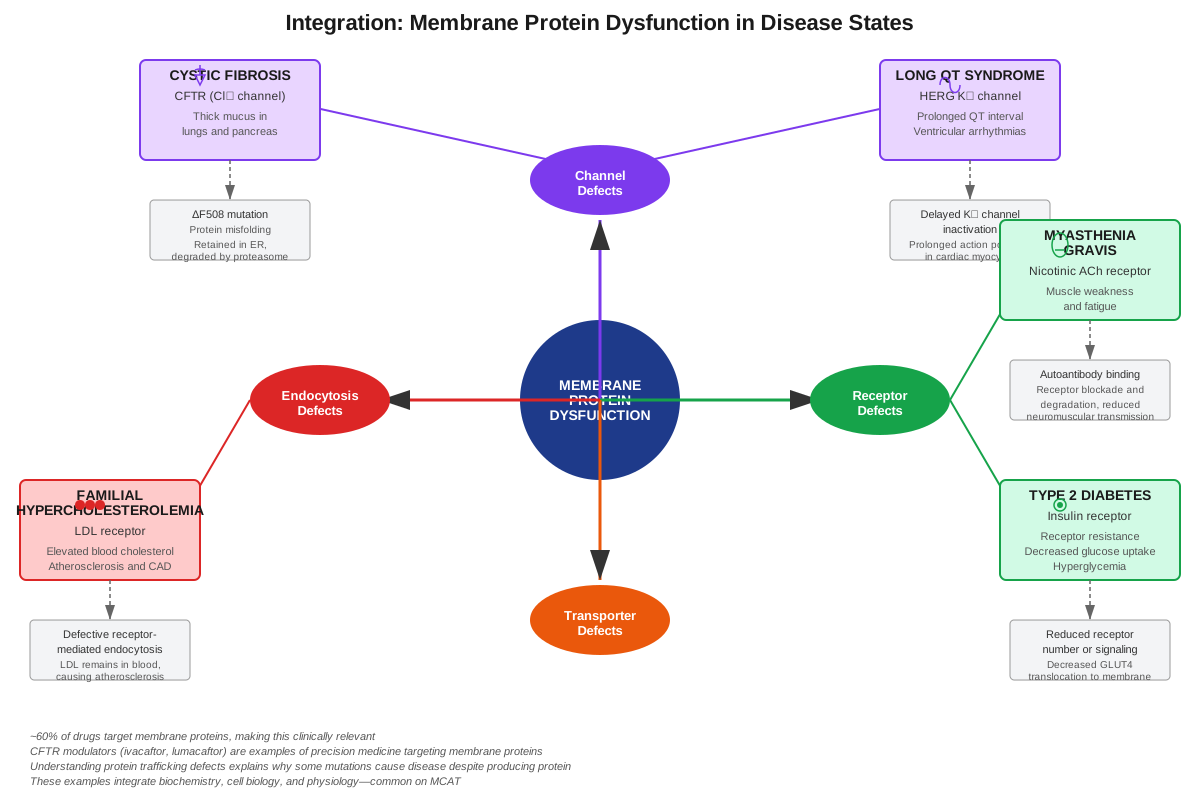
Membrane proteins represent the targets for approximately 60% of all pharmaceutical drugs currently in clinical use. Receptor proteins, ion channels, and transporters are manipulated therapeutically to treat conditions ranging from hypertension (ACE inhibitors affecting membrane-bound enzymes) to depression (SSRIs targeting serotonin transporters) to diabetes (insulin receptors). Genetic mutations affecting membrane proteins cause numerous diseases: cystic fibrosis results from defective CFTR chloride channels, while certain forms of diabetes insipidus arise from mutated aquaporin water channels. Understanding membrane protein structure-function relationships enables medical professionals to comprehend drug mechanisms, predict side effects, and understand disease pathophysiology at the molecular level.
MCAT Examination Statistics
Membrane proteins appear in approximately 8-12% of Biological and Biochemical Foundations questions on the MCAT. This topic most frequently appears in passage-based questions (65% of membrane protein questions) rather than discrete items, often embedded within experimental contexts examining transport kinetics, receptor-ligand binding, or signal transduction cascades. The MCAT particularly favors questions requiring students to interpret graphs showing concentration-dependent transport, analyze mutations affecting protein function, or predict experimental outcomes when membrane proteins are manipulated. Questions may appear in the Biological and Biochemical Foundations section, but membrane protein concepts also surface in Chemical and Physical Foundations questions involving electrochemical gradients and in Psychological, Social, and Biological Foundations questions addressing neurotransmission.
Common Exam Presentation Formats
The MCAT presents membrane proteins through several characteristic formats: (1) experimental passages describing novel transport proteins with data requiring interpretation of saturation kinetics or competitive inhibition; (2) clinical vignettes involving receptor dysfunction or pharmacological intervention; (3) questions requiring prediction of protein topology based on amino acid sequence hydropathy plots; (4) scenarios examining cell signaling cascades initiated by membrane receptors; and (5) questions testing understanding of techniques like Western blotting, immunofluorescence, or freeze-fracture electron microscopy used to study membrane proteins. Recognizing these patterns helps students quickly identify the relevant concepts being tested.
Core Concepts
Classification of Membrane Proteins
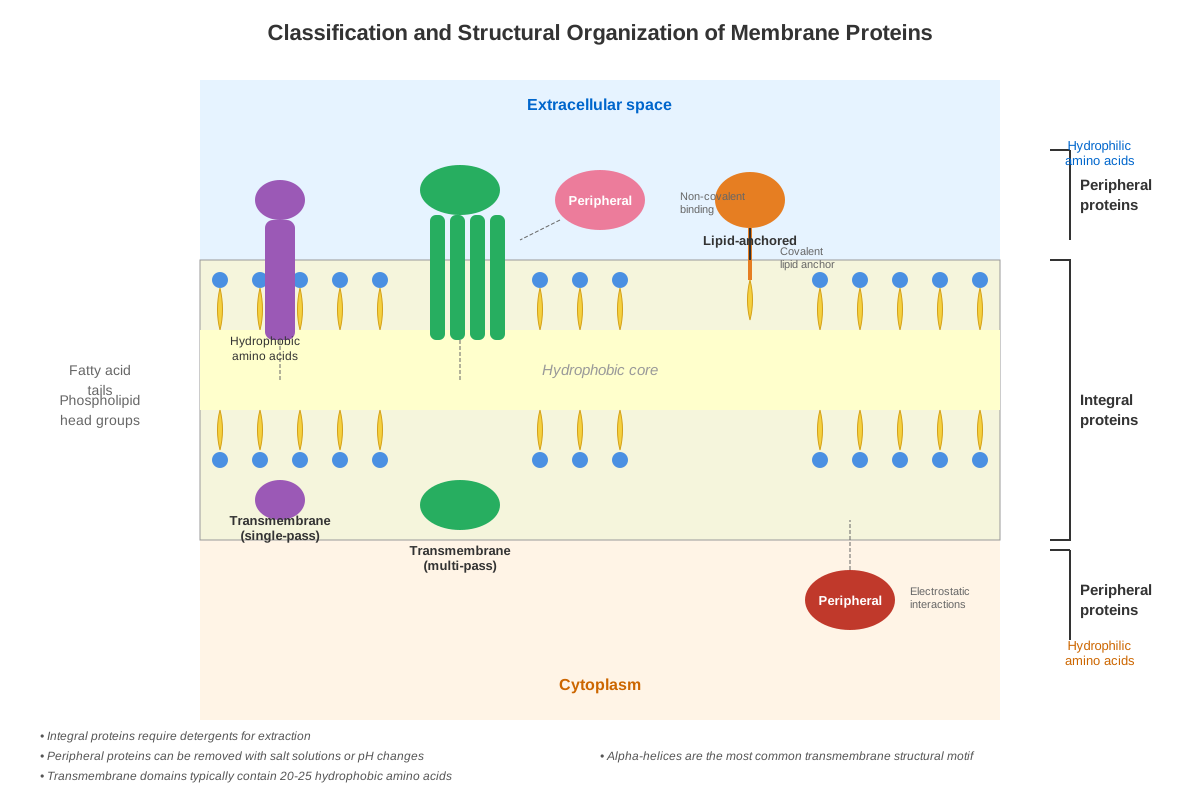
Membrane proteins are classified into two major categories based on their association with the lipid bilayer: integral membrane proteins and peripheral membrane proteins. This classification reflects fundamental differences in how proteins interact with membranes and has important implications for protein function and experimental manipulation.
Integral membrane proteins (also called intrinsic proteins) are permanently embedded within the phospholipid bilayer and cannot be removed without disrupting the membrane structure, typically requiring detergents or organic solvents for extraction. These proteins contain hydrophobic amino acid sequences that interact favorably with the fatty acid tails of phospholipids. The most common type of integral membrane protein is the transmembrane protein, which spans the entire bilayer with portions exposed on both sides of the membrane. Transmembrane proteins typically cross the membrane one or more times, with each membrane-spanning region called a transmembrane domain.
Peripheral membrane proteins (extrinsic proteins) associate with membranes through non-covalent interactions with integral proteins or with the polar head groups of phospholipids. These proteins do not penetrate the hydrophobic core of the bilayer and can be removed by gentle treatments that disrupt ionic interactions or hydrogen bonds, such as changes in pH or ionic strength. Peripheral proteins often serve regulatory or structural functions, temporarily associating with membranes to perform specific tasks before dissociating.
Structural Features of Transmembrane Proteins
Transmembrane proteins exhibit characteristic structural motifs that enable them to span the hydrophobic environment of the lipid bilayer. The two primary structural configurations are alpha-helical transmembrane domains and beta-barrel structures.
Alpha-helical transmembrane domains consist of approximately 20-25 hydrophobic amino acids arranged in an alpha-helix, a length sufficient to span the ~30 Å width of the membrane's hydrophobic core. The alpha-helix configuration maximizes hydrogen bonding between backbone carbonyl and amino groups, satisfying the hydrogen-bonding potential of these polar groups in the hydrophobic membrane environment. Many transmembrane proteins contain multiple alpha-helices that traverse the membrane, with hydrophilic loops connecting them on either side. Examples include G-protein coupled receptors (7 transmembrane helices) and ion channels (often 4-6 helices per subunit).
Beta-barrel structures are found primarily in the outer membranes of bacteria, mitochondria, and chloroplasts. These structures consist of beta-strands arranged in a cylindrical barrel shape, with hydrophobic amino acids facing outward toward the lipid environment and hydrophilic residues lining the interior, often forming a pore. Porins, which allow passive diffusion of small molecules, exemplify this structural class.
Membrane Protein Topology and Orientation
Membrane protein topology refers to the number of times a protein crosses the membrane and the orientation of its termini (N-terminus and C-terminus) relative to the membrane surfaces. Topology is determined during protein synthesis and insertion, and once established, remains fixed throughout the protein's lifetime. Understanding topology is crucial for predicting which protein domains interact with extracellular ligands versus intracellular signaling molecules.
The positive-inside rule helps predict membrane protein topology: positively charged amino acids (lysine and arginine) are more frequently found on the cytoplasmic side of membranes than the extracellular side. This asymmetry reflects both the mechanism of protein insertion and the negative charge of the cytoplasmic leaflet due to phosphatidylserine and phosphatidylinositol.
Membrane proteins can be classified by topology as:
- Type I transmembrane proteins: Single-pass proteins with N-terminus extracellular and C-terminus cytoplasmic
- Type II transmembrane proteins: Single-pass proteins with N-terminus cytoplasmic and C-terminus extracellular
- Type III transmembrane proteins: Multi-pass proteins crossing the membrane multiple times
- Type IV transmembrane proteins: Multi-pass proteins with multiple subunits
Functional Categories of Membrane Proteins
Membrane proteins perform six major functional roles, each critical for cellular physiology:
1. Transport Proteins facilitate the movement of ions and molecules across membranes. These include:
- Channel proteins: Form hydrophilic pores allowing passive diffusion down concentration gradients (e.g., ion channels, aquaporins)
- Carrier proteins: Bind specific substrates and undergo conformational changes to transport them across membranes, including both facilitated diffusion carriers and active transporters (e.g., glucose transporters, Na⁺/K⁺-ATPase)
2. Receptor Proteins bind specific signaling molecules (ligands) and initiate cellular responses. Major classes include:
- G-protein coupled receptors (GPCRs)
- Receptor tyrosine kinases (RTKs)
- Ion channel-linked receptors (ligand-gated ion channels)
- Intracellular receptor-associated proteins
3. Enzymatic Proteins catalyze reactions at membrane surfaces, often involved in signal transduction or metabolic pathways. Examples include adenylyl cyclase (produces cAMP) and membrane-bound digestive enzymes.
4. Cell Recognition Proteins serve as identification tags, enabling cells to recognize each other and foreign substances. These include:
- Major histocompatibility complex (MHC) proteins for immune recognition
- Glycoproteins with carbohydrate groups serving as cellular "ID tags"
5. Cell Adhesion Proteins attach cells to each other or to the extracellular matrix, forming tissues and enabling cell communication. Examples include integrins, cadherins, and selectins.
6. Structural Proteins maintain cell shape and anchor the cytoskeleton to the membrane. Spectrin in red blood cells exemplifies this category.
Membrane Protein Modifications
Many membrane proteins undergo post-translational modifications that affect their localization, function, or stability:
Glycosylation involves the addition of carbohydrate chains to proteins, creating glycoproteins. This modification occurs almost exclusively on the extracellular side of plasma membranes or the luminal side of organellar membranes. Glycosylation serves multiple functions including protein folding, stability, cell recognition, and protection from proteolysis.
Lipid anchoring attaches proteins to membranes through covalently linked lipid molecules:
- GPI anchors (glycosylphosphatidylinositol) attach proteins to the extracellular leaflet
- Prenylation (farnesyl or geranylgeranyl groups) anchors proteins to the cytoplasmic leaflet
- Palmitoylation (palmitic acid attachment) can occur on either leaflet
- Myristoylation (myristic acid attachment) typically targets proteins to the cytoplasmic leaflet
These lipid modifications convert soluble proteins into membrane-associated proteins and often regulate protein localization and function.
Membrane Protein Dynamics and Fluidity
Membrane proteins are not static structures but exhibit significant mobility within the lipid bilayer, consistent with the fluid mosaic model of membrane structure. Proteins can undergo:
Lateral diffusion: Movement within the plane of the membrane, though typically slower than lipid diffusion due to larger size and potential cytoskeletal attachments. Some proteins diffuse freely, while others are restricted to specific membrane domains.
Rotational diffusion: Spinning around an axis perpendicular to the membrane plane.
Transverse diffusion (flip-flop): Movement from one leaflet to the other, which is extremely rare for proteins due to the energetic cost of moving hydrophilic domains through the hydrophobic core.
Membrane protein mobility is restricted by several factors:
- Attachment to cytoskeletal elements
- Interactions with other membrane proteins (forming complexes)
- Confinement to lipid rafts (specialized membrane microdomains enriched in cholesterol and sphingolipids)
- Tight junctions in epithelial cells that separate apical and basolateral membrane domains
Concept Relationships
The concepts within membrane protein biology form an interconnected network where structure dictates function and cellular context determines protein behavior. Membrane protein classification (integral vs. peripheral) → determines → extraction methods and experimental approaches used to study them. The structural features (alpha-helices or beta-barrels) → enable → membrane spanning → which determines → protein topology → which dictates → functional orientation and which molecular domains interact with extracellular versus intracellular environments.
Amino acid properties (prerequisite knowledge) → determine → transmembrane domain formation → which enables → specific functional categories to exist. For example, hydrophobic amino acid sequences enable channel formation, while the specific arrangement of these sequences determines whether a protein functions as a channel, carrier, or receptor. Post-translational modifications → affect → protein localization and stability → which influences → functional capacity and cellular distribution.
The relationship between membrane proteins and other Cell Biology concepts is extensive. Membrane protein receptors → initiate → signal transduction cascades (covered in cell signaling). Transport proteins → establish and maintain → electrochemical gradients → which enable → secondary active transport and action potentials (covered in physiology). Cell adhesion proteins → facilitate → tissue formation and cell-cell communication → which underlies → developmental biology and immune function. Enzymatic membrane proteins → participate in → metabolic pathways → connecting to → biochemistry and metabolism topics.
Understanding membrane proteins also connects to experimental techniques: protein structure → determines → behavior in SDS-PAGE and response to protease treatment → which enables → topology determination through biochemical approaches. This integration of structural knowledge with experimental methodology frequently appears in MCAT passages.
Quick check — test yourself on Membrane proteins so far.
Try Flashcards →High-Yield Facts
⭐ Integral membrane proteins require detergents for extraction, while peripheral proteins can be removed by changes in pH or salt concentration
⭐ Transmembrane alpha-helices typically contain 20-25 hydrophobic amino acids, sufficient to span the ~30 Å hydrophobic core of the bilayer
⭐ Glycosylation of membrane proteins occurs exclusively on the extracellular side of plasma membranes (or luminal side of organellar membranes)
⭐ The positive-inside rule states that positively charged amino acids (Lys, Arg) are more abundant on the cytoplasmic side of membrane proteins
⭐ G-protein coupled receptors (GPCRs) contain seven transmembrane alpha-helices and represent the largest family of membrane receptors
- Beta-barrel structures are found primarily in outer membranes of bacteria, mitochondria, and chloroplasts, not in plasma membranes of eukaryotic cells
- Membrane proteins can undergo lateral and rotational diffusion but rarely flip-flop between membrane leaflets
- Aquaporins are channel proteins that specifically facilitate water transport while excluding protons through a specialized selectivity mechanism
- Lipid rafts are membrane microdomains enriched in cholesterol and sphingolipids that concentrate specific proteins for signaling functions
- The Na⁺/K⁺-ATPase is a primary active transporter that maintains electrochemical gradients by pumping 3 Na⁺ out and 2 K⁺ in per ATP hydrolyzed
- Receptor tyrosine kinases (RTKs) undergo dimerization upon ligand binding, leading to autophosphorylation and signal cascade initiation
- GPI-anchored proteins can be released from membranes by phospholipase treatment, distinguishing them from transmembrane proteins
Common Misconceptions
Misconception: All membrane proteins span the entire bilayer.
Correction: Only integral transmembrane proteins span the bilayer. Peripheral membrane proteins associate with membrane surfaces without penetrating the hydrophobic core, and some integral proteins are embedded in only one leaflet without fully spanning the membrane.
Misconception: Membrane proteins can freely flip-flop between membrane leaflets like lipids do (albeit slowly).
Correction: Membrane proteins essentially never flip-flop between leaflets because the energetic cost of moving hydrophilic domains through the hydrophobic membrane core is prohibitively high. Protein topology is established during synthesis and remains fixed.
Misconception: Hydrophobic amino acids are only found in transmembrane domains, while hydrophilic amino acids are only in extramembrane regions.
Correction: While transmembrane domains are enriched in hydrophobic amino acids, they also contain some polar residues that may be important for function (e.g., forming hydrogen bonds within the membrane or lining channel pores). Similarly, extramembrane domains contain hydrophobic residues important for protein folding and stability.
Misconception: All transport proteins require ATP to move substances across membranes.
Correction: Only primary active transporters directly use ATP (or other energy sources). Channel proteins enable passive diffusion down gradients without energy input, facilitated diffusion carriers transport down gradients without ATP, and secondary active transporters use existing ion gradients (established by primary active transport) rather than directly consuming ATP.
Misconception: Glycosylation can occur on either side of the plasma membrane depending on the protein.
Correction: Glycosylation occurs exclusively on the extracellular side of plasma membranes (or the luminal side of ER, Golgi, and other organelles). This asymmetry reflects the location of glycosylation enzymes in the secretory pathway and is a reliable indicator of membrane protein orientation.
Misconception: Peripheral membrane proteins are less important than integral proteins because they're not permanently attached.
Correction: Peripheral proteins perform critical regulatory and structural functions. Their reversible association with membranes often enables dynamic regulation of cellular processes. Examples include protein kinases that transiently associate with membranes to phosphorylate targets, and cytoskeletal proteins that provide structural support.
Misconception: All seven-transmembrane proteins are G-protein coupled receptors.
Correction: While GPCRs are the most common seven-transmembrane proteins and this is a useful heuristic, not all proteins with seven transmembrane domains couple to G-proteins. The defining feature of GPCRs is their mechanism of signal transduction through heterotrimeric G-proteins, not merely their topology.
Worked Examples
Example 1: Predicting Membrane Protein Topology
Question: A newly discovered membrane protein is analyzed and found to have the following properties: (1) it contains three segments of 22 consecutive hydrophobic amino acids, (2) the N-terminus is located in the cytoplasm, (3) treatment with trypsin (a protease that cannot cross membranes) from the extracellular side cleaves the protein, and (4) the protein has a molecular weight of 45 kDa before trypsin treatment and 30 kDa after treatment. What is the most likely topology of this protein?
Solution:
Step 1: Analyze the hydrophobic segments. Three segments of 22 hydrophobic amino acids suggest three transmembrane domains, as each segment is sufficient to span the membrane (~20-25 amino acids needed).
Step 2: Determine the orientation. With the N-terminus in the cytoplasm and three transmembrane passes, the protein must cross the membrane an odd number of times. Starting from the cytoplasmic side:
- N-terminus: cytoplasmic
- After 1st transmembrane domain: extracellular
- After 2nd transmembrane domain: cytoplasmic
- After 3rd transmembrane domain: extracellular
- C-terminus: extracellular
Step 3: Interpret the trypsin data. Trypsin cleaves from the extracellular side and reduces the molecular weight from 45 kDa to 30 kDa, removing 15 kDa of protein mass. This indicates that 15 kDa worth of protein is exposed on the extracellular side and accessible to protease. The remaining 30 kDa is protected (either within the membrane or on the cytoplasmic side).
Step 4: Synthesize the information. The protein is a Type III (multi-pass) transmembrane protein with three transmembrane domains, N-terminus cytoplasmic, and C-terminus extracellular. The extracellular portions (including the C-terminus and extracellular loops) comprise approximately 33% of the protein mass (15/45 kDa).
MCAT Connection: This question type requires integrating multiple pieces of experimental data to deduce protein structure, a common MCAT passage-based question format. The key is recognizing that protease accessibility indicates membrane sidedness and that hydrophobic stretches predict transmembrane domains.
Example 2: Analyzing Transport Protein Function
Question: A researcher studies two membrane proteins involved in glucose transport: Protein A and Protein B. Experimental data shows:
- Protein A: Glucose transport rate increases linearly with extracellular glucose concentration from 0-20 mM, then plateaus. Transport is not affected by ATP depletion but is inhibited by other monosaccharides.
- Protein B: Glucose transport occurs against its concentration gradient. Transport rate decreases to zero when ATP is depleted. Transport is not affected by the presence of other monosaccharides.
Classify each protein and explain the mechanism of glucose transport for each.
Solution:
Protein A Analysis:
- The saturation kinetics (linear increase then plateau) indicates carrier-mediated transport with limited binding sites
- ATP independence indicates passive transport (no direct energy input)
- Inhibition by other monosaccharides suggests competitive binding to the same site
- Classification: Facilitated diffusion carrier (specifically, a glucose transporter like GLUT family members)
- Mechanism: Protein A binds glucose on the high-concentration side, undergoes a conformational change, releases glucose on the low-concentration side, then returns to the original conformation. Transport follows the concentration gradient without energy input.
Protein B Analysis:
- Transport against concentration gradient indicates active transport requiring energy
- ATP dependence indicates primary active transport (direct ATP use)
- Lack of competition from other monosaccharides suggests high specificity or a different mechanism than simple competitive binding
- Classification: Primary active transporter (ATP-dependent glucose pump)
- Mechanism: Protein B uses ATP hydrolysis to drive conformational changes that move glucose against its concentration gradient. This is less common for glucose (which typically uses secondary active transport via sodium-glucose cotransporters) but the ATP dependence clearly indicates primary active transport.
Alternative consideration: If Protein B were a sodium-glucose cotransporter (SGLT), it would be a secondary active transporter. However, the question states ATP depletion stops transport. For secondary active transport, ATP depletion would only indirectly affect transport by allowing the sodium gradient to dissipate over time. The immediate cessation of transport with ATP depletion more strongly suggests primary active transport.
MCAT Connection: This question requires distinguishing between transport mechanisms based on experimental observations—a high-yield skill for MCAT passages. Key discriminators include: ATP dependence (active vs. passive), saturation kinetics (carrier vs. channel), and direction relative to gradient (active vs. passive).
Exam Strategy
Approaching MCAT Questions on Membrane Proteins
When encountering membrane protein questions, employ this systematic approach:
- Identify the protein category first: Determine whether the question involves integral vs. peripheral, or which functional category (transport, receptor, enzyme, etc.). This immediately narrows the relevant concepts.
- Look for structural clues: Hydrophobic amino acid sequences, glycosylation sites, and terminus locations provide information about topology and orientation. Remember that glycosylation always indicates extracellular/luminal sides.
- Connect structure to function: Once you've identified the protein type, predict its function. Seven transmembrane domains suggest GPCR, multiple subunits forming a pore suggest ion channel, saturation kinetics suggest carrier-mediated transport.
- Consider the experimental context: MCAT passages often describe techniques like protease treatment, fluorescence labeling, or transport assays. Understand what each technique reveals about protein properties.
Trigger Words and Phrases
Watch for these high-yield terms that signal specific concepts:
- "Detergent extraction required" → integral membrane protein
- "High salt wash removes" → peripheral membrane protein
- "Saturation kinetics" → carrier-mediated transport (not channel)
- "Seven transmembrane domains" → likely GPCR
- "Glycosylated residues" → extracellular/luminal side
- "ATP-dependent" → primary active transport
- "Down concentration gradient" → passive transport (channel or facilitated diffusion)
- "Against concentration gradient" → active transport (primary or secondary)
- "Competitive inhibition by similar molecules" → carrier protein with specific binding site
- "Lipid raft localization" → protein involved in signaling, often GPI-anchored or associated with cholesterol-rich domains
Process of Elimination Tips
When uncertain between answer choices:
- Eliminate options that violate thermodynamics: Passive transport cannot move substances against gradients without coupling to another gradient
- Eliminate options with incorrect sidedness: If a protein is glycosylated, it cannot have that domain on the cytoplasmic side
- Eliminate options inconsistent with protein class: If a protein is described as a channel, eliminate answers suggesting it undergoes conformational changes for each transport event (that's carrier behavior)
- Check for ATP requirement consistency: If ATP depletion stops transport immediately, it must be primary active transport, not secondary active transport or passive transport
Time Allocation Advice
Membrane protein questions, especially in passages, typically require 1.5-2 minutes per question due to the need to integrate multiple pieces of information. Budget time as follows:
- Discrete questions: 45-60 seconds (straightforward recall or single-step application)
- Passage-based questions: 90-120 seconds (requires integrating passage information with content knowledge)
- Complex experimental analysis: Up to 150 seconds (multiple steps of reasoning, graph interpretation, or prediction)
If a question requires determining protein topology from multiple experimental results, this is time-intensive but high-yield—invest the time to work through it systematically rather than guessing.
Memory Techniques
Mnemonic for Membrane Protein Functions
"TRACES" helps remember the six major functional categories:
- Transport
- Receptor
- Adhesion
- Cell recognition
- Enzymatic
- Structural
Mnemonic for Lipid Anchor Types
"Please Get My Protein" for the four major lipid modifications:
- Palmitoylation
- GPI anchor
- Myristoylation
- Prenylation
Visualization Strategy for Protein Topology
When determining topology, draw a simple membrane as two parallel lines and trace the protein path:
- Mark the starting terminus (N or C) on the appropriate side
- Draw a line crossing the membrane for each transmembrane domain
- The final terminus location is determined by whether you crossed an odd or even number of times
- Odd number of crossings = termini on opposite sides
- Even number of crossings = termini on same side
Acronym for Transport Protein Characteristics
"CASE" distinguishes carrier proteins from channels:
- Conformational change (carriers undergo this, channels don't)
- ATP use (some carriers use it, channels never do)
- Saturation kinetics (carriers show this, channels typically don't)
- Exhibit specificity (both do, but carriers show more pronounced competitive inhibition)
Memory Aid for Glycosylation Location
"Glyco-OUT": Glycosylation always faces OUT (extracellular space or organellar lumen), never the cytoplasm. This reflects the location of glycosylation enzymes in the secretory pathway.
Summary
Membrane proteins are diverse macromolecules that perform essential cellular functions while embedded in or associated with lipid bilayers. The fundamental distinction between integral proteins (permanently embedded, requiring detergents for extraction) and peripheral proteins (reversibly associated, removed by pH or salt changes) reflects different structural relationships with membranes. Integral transmembrane proteins span membranes through hydrophobic alpha-helical domains (typically 20-25 amino acids) or beta-barrel structures, with topology determined during synthesis and remaining fixed throughout the protein's lifetime. The six major functional categories—transport, receptor, enzymatic, cell recognition, adhesion, and structural—encompass the diverse roles membrane proteins play in cellular physiology. Post-translational modifications, particularly glycosylation (exclusively extracellular/luminal) and lipid anchoring, further diversify membrane protein properties and localization. For MCAT success, students must connect membrane protein structure to function, interpret experimental data regarding protein topology and mechanism, and distinguish between transport types based on ATP dependence, saturation kinetics, and direction relative to concentration gradients. Understanding membrane proteins provides the foundation for comprehending signal transduction, cellular transport, immune recognition, and numerous other physiological processes tested on the MCAT.
Key Takeaways
- Integral membrane proteins require detergents for extraction and contain hydrophobic transmembrane domains, while peripheral proteins associate reversibly and can be removed by pH or salt changes
- Transmembrane alpha-helices contain approximately 20-25 hydrophobic amino acids, sufficient to span the membrane's hydrophobic core
- Glycosylation occurs exclusively on extracellular/luminal sides, providing a reliable marker for membrane protein orientation
- The six functional categories (transport, receptor, enzymatic, cell recognition, adhesion, structural) encompass all major membrane protein roles
- Transport proteins are distinguished by ATP dependence (active vs. passive), saturation kinetics (carrier vs. channel), and direction relative to gradients
- Membrane protein topology is established during synthesis and remains fixed, with the positive-inside rule helping predict orientation
- Experimental approaches like protease treatment, glycosylation analysis, and transport kinetics studies reveal membrane protein structure and function
Related Topics
Signal Transduction Cascades: Membrane receptors (GPCRs, RTKs, ion channel-linked receptors) initiate intracellular signaling pathways. Mastering membrane protein structure enables understanding of how extracellular signals are transduced into cellular responses through second messengers and phosphorylation cascades.
Electrochemical Gradients and Membrane Potential: Transport proteins establish and maintain ion gradients that create electrical potentials across membranes. This connects to action potentials in neurons, muscle contraction, and ATP synthesis in mitochondria.
Immune System Cell Recognition: MHC proteins and other cell surface markers enable immune cells to distinguish self from non-self. Understanding membrane protein structure explains antigen presentation and immune surveillance mechanisms.
Enzyme Kinetics and Inhibition: Membrane-bound enzymes and transport proteins exhibiting saturation kinetics follow Michaelis-Menten principles. Competitive and non-competitive inhibition concepts apply to both enzymatic membrane proteins and carrier-mediated transport.
Protein Synthesis and Trafficking: The synthesis of membrane proteins involves signal sequences, co-translational insertion into the ER, and trafficking through the secretory pathway. This explains how membrane proteins achieve their final topology and modifications.
Practice CTA
Now that you've mastered the core concepts of membrane proteins, it's time to reinforce your understanding through active practice. Attempt the practice questions and flashcards associated with this topic to test your ability to apply these concepts in exam-style scenarios. Focus particularly on questions requiring you to interpret experimental data, predict functional consequences of mutations, and distinguish between different types of membrane proteins based on their properties. Remember that membrane proteins integrate multiple biological concepts—transport, signaling, cell recognition—so practicing these questions strengthens your understanding across multiple MCAT topics simultaneously. Your investment in mastering this foundational topic will pay dividends throughout your MCAT preparation and medical education. Challenge yourself to explain each answer choice, not just identify the correct one, to deepen your conceptual understanding.
Sign up free to keep reading
Create a free AnvayaPrep account to finish this MCAT guide on Membrane proteins — plus flashcards and practice questions.