Overview
Chromosome structure is a foundational topic in Molecular Biology and Genetics that bridges the gap between molecular-level DNA organization and cellular-level genetic processes. Understanding how DNA is packaged, organized, and regulated within chromosomes is essential for comprehending gene expression, cell division, DNA replication, and inheritance patterns—all high-yield topics for the MCAT. Chromosomes represent the physical embodiment of genetic information, and their structural organization directly impacts how genes are accessed, replicated, and transmitted from one generation to the next.
For the MCAT, chromosome structure Biology knowledge is tested both directly through discrete questions and indirectly through passage-based questions involving genetics, cell division, gene regulation, and molecular biology experiments. The exam frequently presents scenarios requiring students to understand chromatin condensation states, histone modifications, and the relationship between chromosome structure and gene expression. Questions may ask students to predict the effects of structural changes on cellular processes or to interpret experimental data involving chromatin immunoprecipitation (ChIP) assays or karyotyping.
The big-picture relationship of chromosome structure MCAT content extends across multiple biological disciplines. Chromosome organization connects to biochemistry through histone proteins and their post-translational modifications, to cell biology through mitosis and meiosis, to genetics through inheritance patterns and mutations, and to molecular biology through transcriptional regulation and DNA replication. Mastering chromosome structure provides the conceptual framework necessary to understand how cells regulate gene expression spatially and temporally, how genetic information is faithfully transmitted during cell division, and how structural abnormalities can lead to disease states—all topics that appear regularly on the MCAT.
Learning Objectives
- [ ] Define chromosome structure using accurate Biology terminology
- [ ] Explain why chromosome structure matters for the MCAT
- [ ] Apply chromosome structure to exam-style questions
- [ ] Identify common mistakes related to chromosome structure
- [ ] Connect chromosome structure to related Biology concepts
- [ ] Describe the hierarchical levels of DNA packaging from nucleosomes to metaphase chromosomes
- [ ] Differentiate between euchromatin and heterochromatin and explain their functional significance
- [ ] Analyze how histone modifications affect chromatin structure and gene expression
- [ ] Predict the consequences of chromosomal structural abnormalities on cellular function
Prerequisites
- DNA structure and base pairing: Understanding the double helix, antiparallel strands, and complementary base pairing is essential because chromosome structure begins with DNA organization
- Protein structure: Knowledge of primary through quaternary structure helps explain histone protein organization and nucleosome assembly
- Cell cycle phases: Familiarity with interphase and mitotic phases is necessary to understand dynamic changes in chromosome condensation
- Basic genetics terminology: Terms like gene, allele, locus, and homologous chromosomes provide the vocabulary framework for discussing chromosome organization
- Prokaryotic vs. eukaryotic cells: Recognizing fundamental differences between these cell types explains why eukaryotes require complex chromosome packaging
Why This Topic Matters
Clinical and Real-World Significance
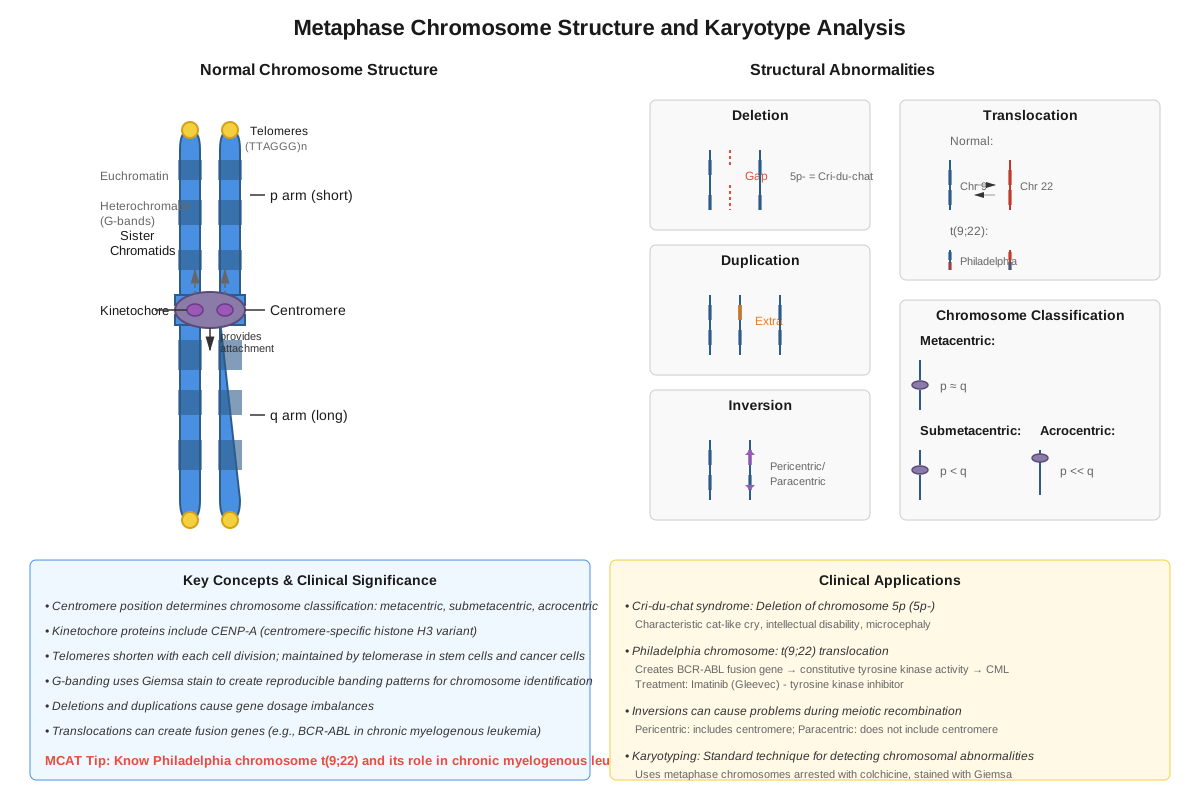
Chromosome structure abnormalities underlie numerous human diseases and genetic disorders. Chromosomal structural changes—including deletions, duplications, inversions, and translocations—can cause developmental disorders, intellectual disabilities, and cancer. For example, the Philadelphia chromosome (a translocation between chromosomes 9 and 22) causes chronic myelogenous leukemia. Understanding chromatin structure is also crucial for epigenetics research, which has revealed how environmental factors can alter gene expression without changing DNA sequence, contributing to diseases like cancer, diabetes, and neurological disorders. Karyotyping, which analyzes chromosome structure and number, remains a standard diagnostic tool in prenatal screening and cancer diagnosis.
MCAT Exam Statistics
Chromosome structure appears in approximately 3-5% of MCAT Biology questions, with medium importance for overall exam performance. Questions typically appear in two formats: discrete questions testing direct knowledge of chromosome components and organization, and passage-based questions requiring application of chromosome structure concepts to experimental scenarios or genetic phenomena. The topic frequently appears integrated with questions about gene expression regulation, cell division errors, genetic inheritance patterns, and molecular biology techniques.
Common Exam Contexts
The MCAT presents chromosome structure in several recurring contexts: (1) passages describing chromatin immunoprecipitation experiments investigating histone modifications and transcription factor binding; (2) genetics passages requiring understanding of how chromosome structure affects inheritance patterns; (3) cell biology passages involving mitosis, meiosis, or cell cycle regulation where chromosome condensation is relevant; (4) molecular biology passages about DNA replication, repair, or recombination that depend on chromatin accessibility; and (5) evolution or development passages where chromatin remodeling regulates gene expression programs.
Core Concepts
DNA Packaging Hierarchy
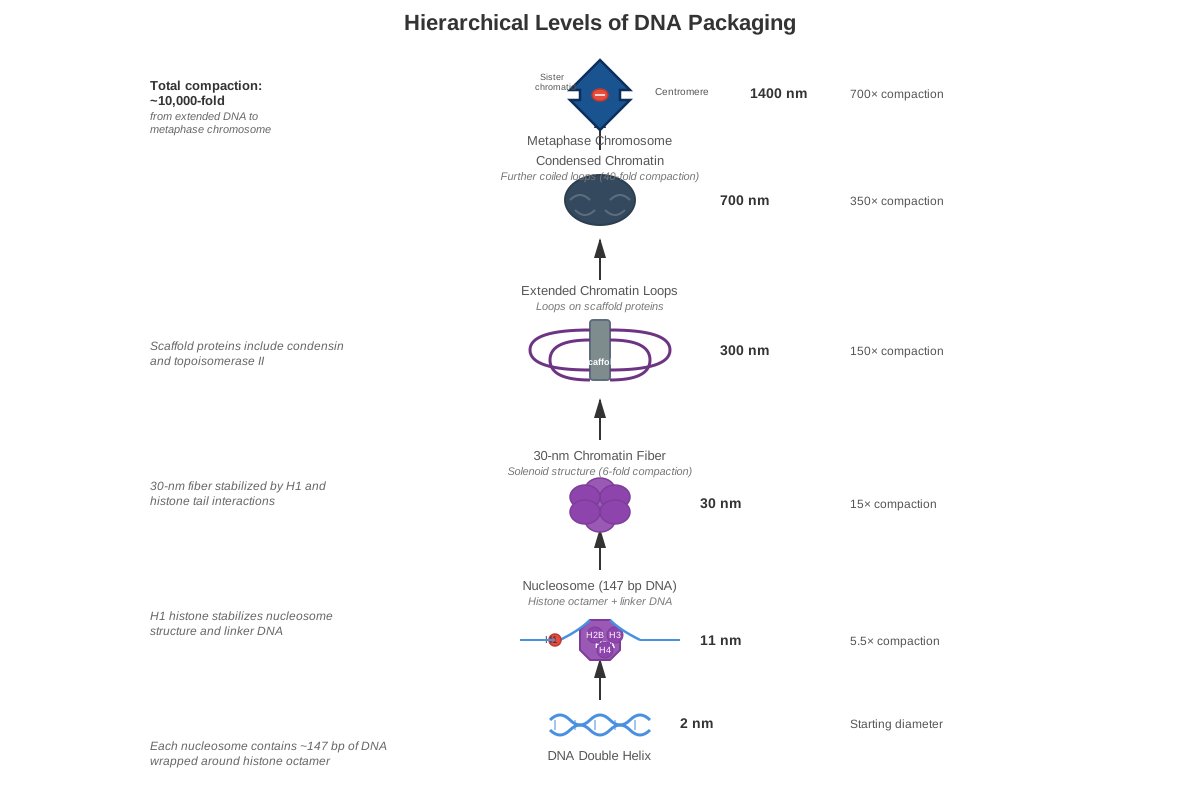
The human genome contains approximately 3 billion base pairs of DNA, which if stretched linearly would measure about 2 meters in length. This enormous amount of genetic material must fit within a nucleus typically only 5-10 micrometers in diameter. Chromosome structure refers to the hierarchical organization of DNA that achieves this remarkable compaction while maintaining accessibility for essential cellular processes.
The packaging hierarchy proceeds through several distinct levels:
- Naked DNA double helix: The starting point is the familiar Watson-Crick double helix with a diameter of 2 nanometers
- Nucleosome formation: DNA wraps around histone octamers to form the first level of compaction
- 30-nanometer fiber: Nucleosomes coil into a higher-order structure
- Higher-order loops: The 30-nm fiber forms loops attached to a protein scaffold
- Condensed chromatin: Further compaction creates visible chromosome structures
- Metaphase chromosome: The maximally condensed form visible during cell division
Nucleosomes: The Fundamental Unit
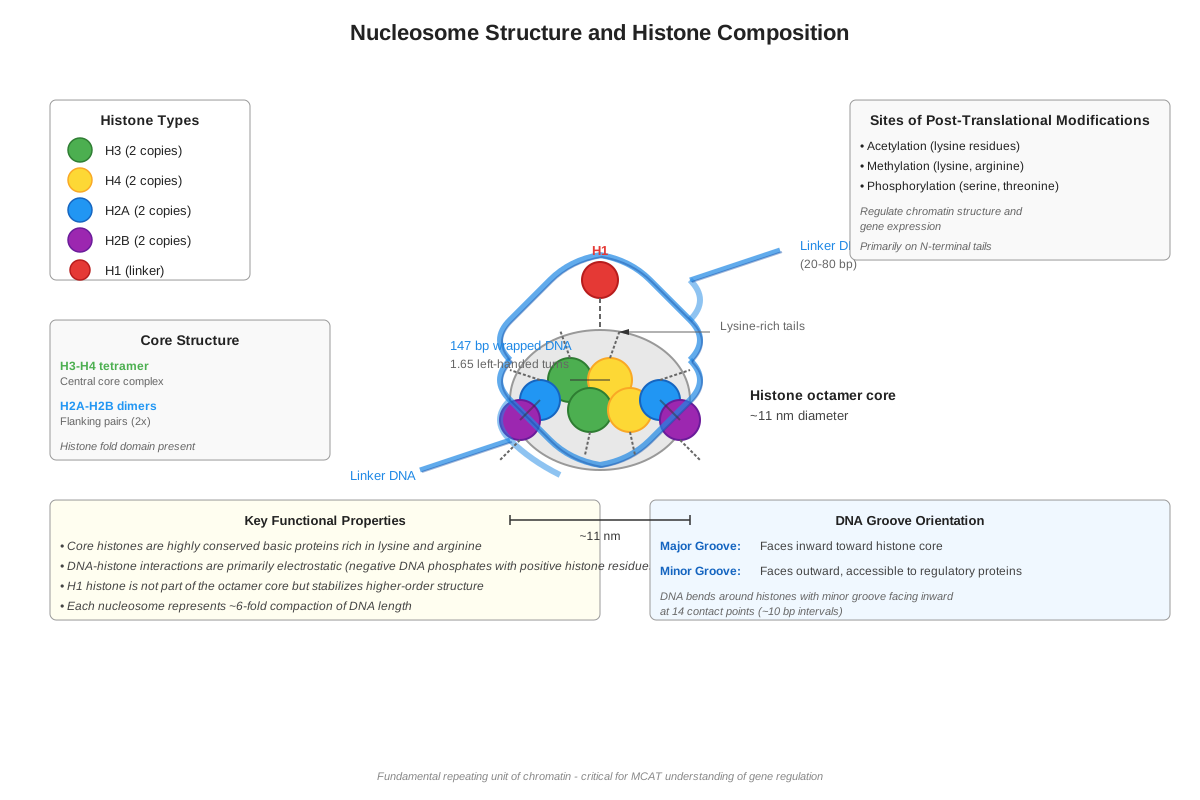
The nucleosome represents the basic repeating unit of eukaryotic chromosome structure. Each nucleosome consists of an octamer of histone proteins (two copies each of histones H2A, H2B, H3, and H4) around which approximately 147 base pairs of DNA wrap 1.65 turns. The DNA connecting adjacent nucleosomes, called linker DNA, typically spans 20-80 base pairs depending on the organism and cell type.
Histone proteins are small, positively charged proteins rich in lysine and arginine amino acids. These positive charges interact electrostatically with the negatively charged DNA phosphate backbone, stabilizing the nucleosome structure. The N-terminal "tails" of histones extend outward from the nucleosome core and serve as sites for post-translational modifications that regulate chromatin structure and function.
Histone H1 binds to linker DNA between nucleosomes and helps stabilize higher-order chromatin structure. Unlike the core histones, H1 is not part of the nucleosome octamer but instead acts as a "linker histone" that promotes chromatin compaction into the 30-nanometer fiber.
Chromatin States: Euchromatin vs. Heterochromatin
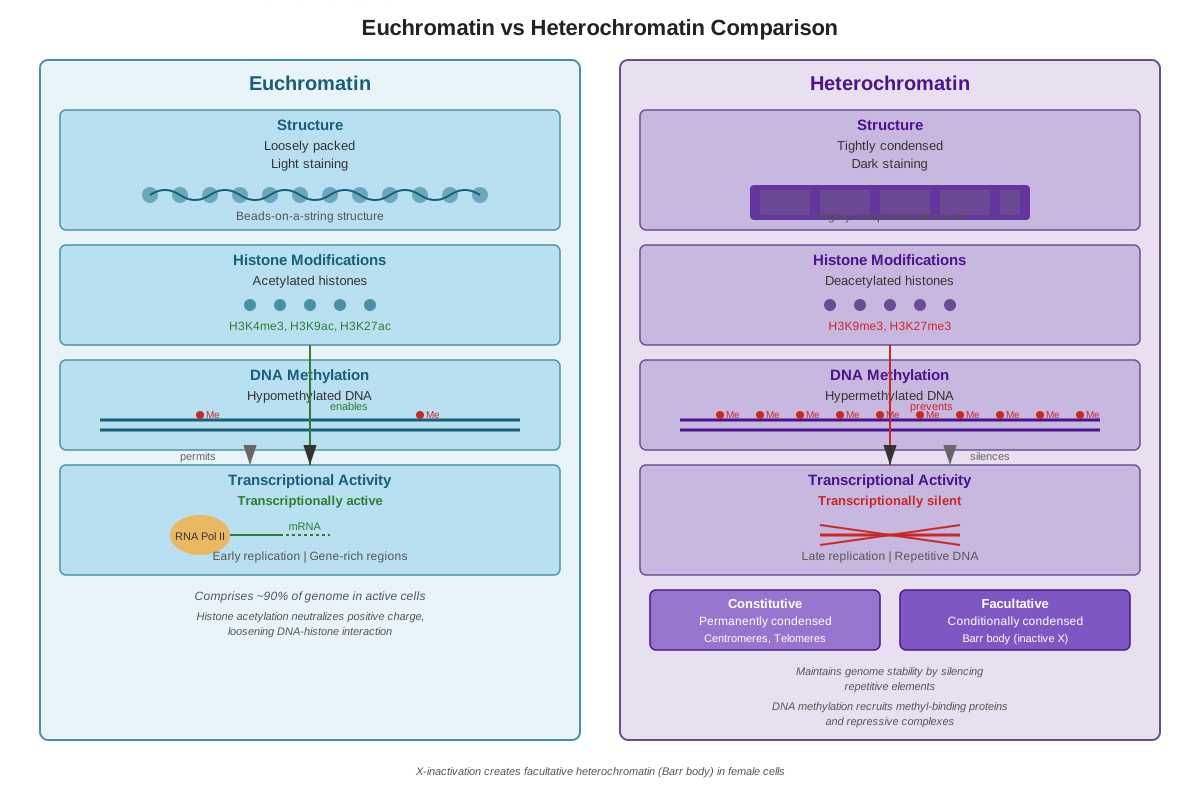
Chromatin refers to the complex of DNA, histones, and non-histone proteins that constitutes chromosomes. Chromatin exists in two functionally distinct states that differ in their degree of compaction and transcriptional activity:
| Feature | Euchromatin | Heterochromatin |
|---|---|---|
| Compaction | Loosely packed | Tightly packed |
| Transcriptional activity | Transcriptionally active | Transcriptionally silent |
| DNA accessibility | High accessibility | Low accessibility |
| Staining | Lightly staining | Darkly staining |
| Replication timing | Early S phase | Late S phase |
| Location | Interior of nucleus | Nuclear periphery, around nucleolus |
Euchromatin represents the open, accessible form of chromatin where genes are actively transcribed or available for transcription. The loose packaging allows transcription factors and RNA polymerase to access DNA sequences. Most housekeeping genes and actively expressed tissue-specific genes reside in euchromatic regions.
Heterochromatin represents highly condensed, transcriptionally inactive chromatin. It exists in two forms: constitutive heterochromatin, which remains permanently condensed and contains repetitive DNA sequences like centromeres and telomeres, and facultative heterochromatin, which can transition between condensed and open states depending on developmental or environmental signals. The inactive X chromosome in female mammals (Barr body) exemplifies facultative heterochromatin.
Histone Modifications and the Histone Code
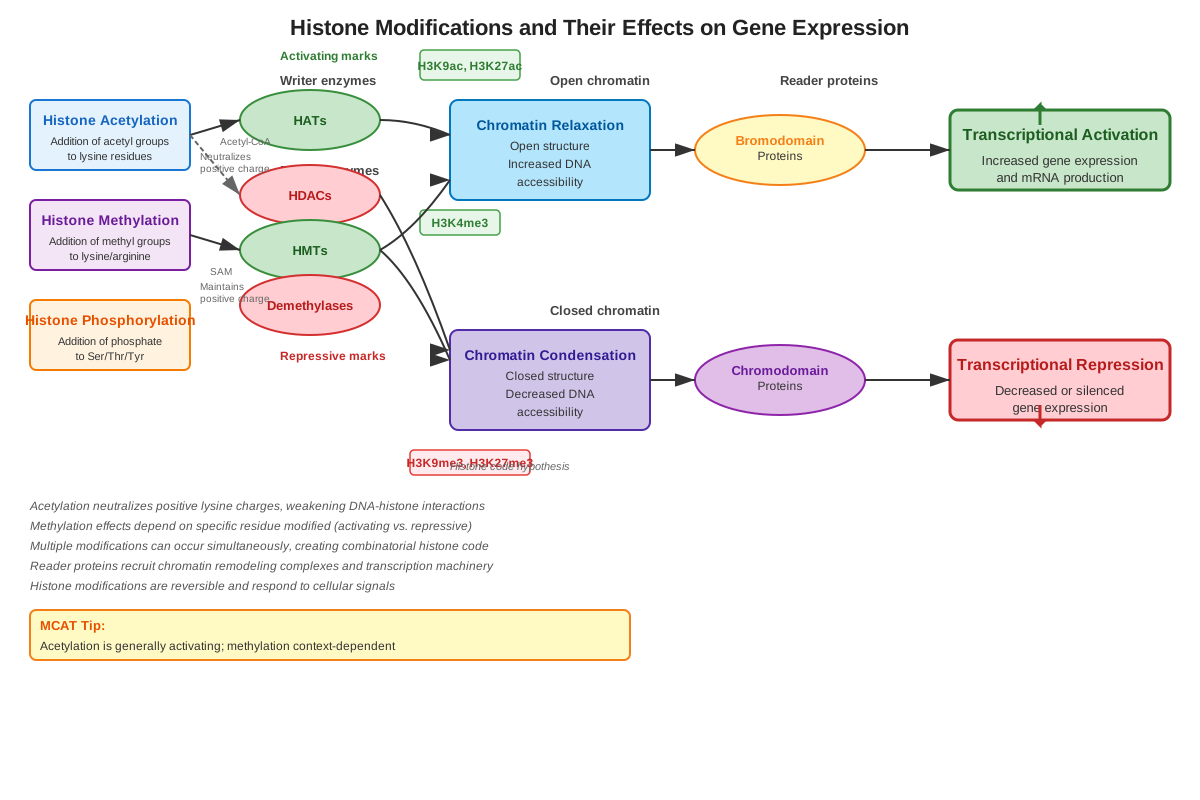
Post-translational modifications of histone proteins constitute a critical regulatory mechanism for chromosome structure and gene expression. The histone code hypothesis proposes that specific combinations of histone modifications create a "code" that recruits specific proteins to regulate chromatin structure and function.
Major types of histone modifications include:
- Acetylation: Addition of acetyl groups to lysine residues, typically by histone acetyltransferases (HATs), neutralizes positive charges and weakens DNA-histone interactions, promoting open chromatin and transcriptional activation
- Methylation: Addition of methyl groups to lysine or arginine residues by histone methyltransferases (HMTs) can either activate or repress transcription depending on the specific residue modified
- Phosphorylation: Addition of phosphate groups, often associated with DNA damage response and chromosome condensation during mitosis
- Ubiquitination: Addition of ubiquitin proteins, involved in transcriptional regulation and DNA repair
Specific modifications have well-characterized effects. For example, H3K4me3 (trimethylation of lysine 4 on histone H3) marks active promoters, while H3K9me3 (trimethylation of lysine 9 on histone H3) marks heterochromatin and gene silencing. H3K27ac (acetylation of lysine 27 on histone H3) marks active enhancers. These modifications are recognized by "reader" proteins containing specialized domains that bind modified histones and recruit additional regulatory complexes.
Chromosome Structure During Cell Division
Chromosome structure undergoes dramatic changes during the cell cycle. During interphase (G1, S, and G2 phases), chromosomes exist as loosely organized chromatin dispersed throughout the nucleus, allowing DNA replication and active transcription. As cells enter mitosis or meiosis, chromosomes undergo progressive condensation to form compact, visible structures.
The condensed metaphase chromosome represents the maximally compacted form, achieving approximately 10,000-fold compaction compared to naked DNA. Each metaphase chromosome consists of two identical sister chromatids (following DNA replication in S phase) joined at the centromere. The centromere contains specialized chromatin marked by the histone variant CENP-A and serves as the attachment site for kinetochore proteins that connect chromosomes to spindle microtubules during cell division.
Telomeres, the repetitive DNA sequences (TTAGGG in humans) at chromosome ends, protect chromosomes from degradation and fusion. Telomeric DNA forms a specialized structure called a T-loop where the 3' single-stranded overhang invades the double-stranded telomeric DNA, protecting the chromosome end.
Non-Histone Chromosomal Proteins
Beyond histones, numerous non-histone proteins contribute to chromosome structure and function:
- Condensins: Protein complexes that promote chromosome condensation during mitosis and meiosis
- Cohesins: Protein complexes that hold sister chromatids together from S phase until anaphase
- Topoisomerases: Enzymes that relieve DNA supercoiling during replication and transcription by creating transient breaks in DNA strands
- Scaffold proteins: Structural proteins that form the chromosome scaffold to which DNA loops attach
- High mobility group (HMG) proteins: Chromatin-associated proteins that bend DNA and facilitate transcription factor binding
Chromatin Remodeling Complexes
Chromatin remodeling complexes are ATP-dependent enzyme complexes that alter nucleosome positioning, composition, or structure to regulate DNA accessibility. These complexes can slide nucleosomes along DNA, eject nucleosomes entirely, or replace canonical histones with histone variants. Major families include SWI/SNF, ISWI, CHD, and INO80 complexes. These remodelers work in concert with histone-modifying enzymes to regulate gene expression, DNA replication, and DNA repair.
Concept Relationships
The concepts within chromosome structure form an integrated hierarchy. The foundational DNA double helix → wraps around histone octamers → forming nucleosomes → which compact into the 30-nm fiber → which further organizes into higher-order loops and domains → ultimately creating visible chromosomes during cell division. This structural hierarchy enables functional regulation: histone modifications → alter chromatin compaction → determining euchromatin vs. heterochromatin states → which controls DNA accessibility → thereby regulating gene expression, replication, and repair.
Chromosome structure connects to prerequisite knowledge in multiple ways. DNA structure (prerequisite) → provides the substrate that wraps around histones. Protein structure (prerequisite) → explains how histone octamers assemble and how histone modifications affect protein-protein interactions. Cell cycle knowledge (prerequisite) → contextualizes when chromosomes condense and decondense. Basic genetics (prerequisite) → provides the framework for understanding how chromosome structure affects inheritance patterns.
Chromosome structure also connects forward to numerous advanced topics. Understanding chromatin states is essential for comprehending gene expression regulation, where transcription factors must access DNA in euchromatic regions. Chromosome structure knowledge is critical for understanding mitosis and meiosis, where chromosome condensation, sister chromatid cohesion, and proper segregation depend on structural proteins. The topic connects to epigenetics, where heritable changes in gene expression occur through chromatin modifications rather than DNA sequence changes. Finally, chromosome structure abnormalities link to medical genetics, where structural rearrangements cause genetic diseases.
Quick check — test yourself on Chromosome structure so far.
Try Flashcards →High-Yield Facts
⭐ Nucleosomes consist of 147 base pairs of DNA wrapped around an octamer of core histones (two each of H2A, H2B, H3, and H4)
⭐ Euchromatin is loosely packed and transcriptionally active, while heterochromatin is tightly packed and transcriptionally silent
⭐ Histone acetylation generally promotes transcription by loosening DNA-histone interactions, while histone deacetylation generally represses transcription
⭐ The centromere is the chromosome region where sister chromatids attach and where kinetochores assemble for spindle attachment during cell division
⭐ Telomeres are repetitive DNA sequences at chromosome ends that protect against degradation and shorten with each cell division
- Histone H1 binds linker DNA between nucleosomes and stabilizes higher-order chromatin structure
- H3K4me3 (trimethylation of histone H3 lysine 4) marks active gene promoters
- H3K9me3 (trimethylation of histone H3 lysine 9) marks heterochromatin and silenced genes
- Condensins promote chromosome condensation during mitosis, while cohesins hold sister chromatids together
- Chromatin remodeling complexes use ATP to alter nucleosome positioning and regulate DNA accessibility
- The 30-nanometer fiber represents the next level of chromatin organization beyond the nucleosome "beads-on-a-string" structure
- Facultative heterochromatin can transition between condensed and open states, while constitutive heterochromatin remains permanently condensed
- Topoisomerases relieve DNA supercoiling by creating transient single-strand or double-strand breaks
- The histone code hypothesis proposes that combinations of histone modifications recruit specific regulatory proteins
- Metaphase chromosomes represent the maximally condensed form of chromatin, achieving approximately 10,000-fold compaction
Common Misconceptions
Misconception: Chromosomes only exist during cell division when they become visible under a microscope.
Correction: Chromosomes exist throughout the cell cycle but are only visible as distinct structures during mitosis and meiosis when they are maximally condensed. During interphase, the same genetic material exists as loosely organized chromatin dispersed throughout the nucleus.
Misconception: All histone modifications have the same effect on gene expression.
Correction: Different histone modifications have distinct and sometimes opposite effects. Acetylation typically activates transcription, but methylation can either activate or repress depending on which specific residue is modified. For example, H3K4me3 activates transcription while H3K9me3 represses it.
Misconception: Heterochromatin is "junk DNA" with no function.
Correction: Heterochromatin serves critical functions including maintaining chromosome structural integrity (centromeres), protecting chromosome ends (telomeres), silencing transposable elements, and regulating developmental gene expression (facultative heterochromatin). The heterochromatic state is an active regulatory mechanism, not simply inactive DNA.
Misconception: DNA packaging is purely structural and doesn't affect gene function.
Correction: Chromosome structure is intimately linked to gene regulation. Genes packaged in heterochromatin are generally inaccessible to transcription machinery and silenced, while genes in euchromatin are accessible and can be transcribed. Chromatin structure changes dynamically to regulate which genes are expressed in different cell types and conditions.
Misconception: Histones are just structural proteins that package DNA.
Correction: While histones do provide structural organization, they are also dynamic regulatory molecules. Histone modifications, histone variants, and nucleosome positioning all actively regulate gene expression, DNA replication, DNA repair, and chromosome segregation. Histones are central players in epigenetic regulation.
Misconception: Sister chromatids and homologous chromosomes are the same thing.
Correction: Sister chromatids are identical copies of a single chromosome produced during DNA replication, joined at the centromere. Homologous chromosomes are pairs of chromosomes (one maternal, one paternal) that carry genes for the same traits but may have different alleles. Sister chromatids separate during mitosis and meiosis II, while homologous chromosomes separate during meiosis I.
Misconception: Chromosome condensation is irreversible once it occurs.
Correction: Chromosome condensation is a reversible, dynamic process. Chromosomes condense during prophase and decondense during telophase/early G1 phase of each cell cycle. The process is regulated by condensin proteins and post-translational modifications that can be added and removed.
Worked Examples
Example 1: Interpreting a Chromatin Immunoprecipitation (ChIP) Experiment
Question: Researchers perform ChIP experiments on two genes in liver cells. Gene A shows enrichment for H3K4me3 and H3K27ac at its promoter region, while Gene B shows enrichment for H3K9me3 and H3K27me3. Based on these histone modification patterns, what can you conclude about the transcriptional state of these genes?
Solution:
Step 1: Identify the histone modifications and their known functions.
- H3K4me3: Marks active promoters
- H3K27ac: Marks active enhancers and promoters
- H3K9me3: Marks heterochromatin and gene silencing
- H3K27me3: Marks polycomb-mediated gene repression
Step 2: Analyze Gene A's modification pattern.
Gene A has H3K4me3 and H3K27ac, both of which are associated with transcriptional activation. These modifications typically correlate with open chromatin structure (euchromatin) and active transcription.
Step 3: Analyze Gene B's modification pattern.
Gene B has H3K9me3 and H3K27me3, both of which are associated with transcriptional repression. These modifications typically correlate with condensed chromatin structure (heterochromatin) and gene silencing.
Step 4: Draw conclusions.
Gene A is likely actively transcribed in liver cells, with an open chromatin structure allowing transcription factor and RNA polymerase access. Gene B is likely transcriptionally silent in liver cells, with a condensed chromatin structure preventing transcription machinery access.
Connection to learning objectives: This example applies chromosome structure knowledge to interpret experimental data, demonstrating how histone modifications affect chromatin states and gene expression—a common MCAT passage scenario.
Example 2: Predicting Effects of Chromosome Structure Disruption
Question: A mutation in a gene encoding a subunit of the cohesin complex prevents proper sister chromatid cohesion. During which phase of the cell cycle would this mutation first cause problems, and what would be the likely consequence during mitosis?
Solution:
Step 1: Recall cohesin function and timing.
Cohesins are protein complexes that hold sister chromatids together. They are loaded onto chromosomes during S phase (when DNA replication produces sister chromatids) and remain until anaphase, when they are cleaved to allow sister chromatid separation.
Step 2: Identify when the mutation would first cause problems.
The mutation would first cause problems during S phase when cohesins normally establish sister chromatid cohesion following DNA replication. Without functional cohesins, sister chromatids would not be properly held together.
Step 3: Predict consequences during mitosis.
During metaphase, chromosomes normally align at the metaphase plate with sister chromatids held together at centromeres by cohesins. Without proper cohesion, sister chromatids might separate prematurely or fail to align properly. During anaphase, when cohesins are normally cleaved to allow separation, the lack of prior cohesion could result in unequal chromosome segregation.
Step 4: Identify the ultimate consequence.
The likely result would be aneuploidy (abnormal chromosome number) in daughter cells, with some cells receiving too many copies of certain chromosomes and others receiving too few. This could lead to cell death or, if cells survive, potentially contribute to cancer development.
Connection to learning objectives: This example connects chromosome structure (specifically the role of non-histone proteins like cohesins) to cell division and demonstrates how structural defects lead to functional consequences—integrating multiple biological concepts as the MCAT frequently requires.
Exam Strategy
Approaching MCAT Questions on Chromosome Structure
When encountering chromosome structure questions, first identify whether the question asks about structure (what components exist and how they're organized) or function (how structure affects cellular processes). Many MCAT questions integrate both, requiring you to predict functional consequences of structural changes.
For passage-based questions, pay attention to experimental techniques mentioned. ChIP experiments indicate questions about histone modifications and chromatin states. Karyotyping or chromosome staining suggests questions about chromosome number or structural abnormalities. DNA accessibility assays (like DNase hypersensitivity) indicate questions about euchromatin versus heterochromatin.
Trigger Words and Phrases
Watch for these high-yield trigger words that signal chromosome structure concepts:
- "Chromatin remodeling" or "chromatin accessibility": Think about euchromatin vs. heterochromatin and factors that regulate transitions between these states
- "Histone modification" or "epigenetic regulation": Consider specific modifications (acetylation, methylation) and their effects on gene expression
- "Nucleosome positioning": Think about how nucleosome location affects transcription factor binding and gene expression
- "Sister chromatid cohesion" or "chromosome condensation": Consider cell cycle phase and proteins like cohesins and condensins
- "Transcriptionally active/silent regions": Translate to euchromatin (active) or heterochromatin (silent)
Process of Elimination Tips
When evaluating answer choices:
- Eliminate options that confuse sister chromatids with homologous chromosomes—these are distinct concepts frequently tested
- Eliminate options suggesting all histone modifications have identical effects—modifications have specific, sometimes opposite effects
- Eliminate options claiming heterochromatin is transcriptionally active or euchromatin is transcriptionally silent—these are definitional opposites
- Eliminate options suggesting chromosome structure is static—emphasize the dynamic nature of chromatin remodeling
- For questions about histone modifications, eliminate options that reverse the typical effects (e.g., claiming acetylation represses transcription)
Time Allocation
Discrete chromosome structure questions typically require 60-90 seconds. Quickly recall the relevant structural component or modification and its function. Passage-based questions may require 90-120 seconds as you must integrate passage information with background knowledge. Don't spend excessive time trying to recall every specific histone modification—focus on the general principles (acetylation activates, methylation can activate or repress depending on site) and use passage context to guide your answer.
Memory Techniques
Mnemonic for Core Histones
"Always Have 2 Babies, 2 Boys, 2 Girls, 2 Homes" helps remember the nucleosome contains 2 copies each of H2A, H2B, H3, and H4 (with H1 as the linker histone outside the core).
Mnemonic for Euchromatin vs. Heterochromatin
"EU-chromatin is EUphoric and EXpressed" (euchromatin is open and transcriptionally active)
"HETERO-chromatin is HEAVY and HIDDEN" (heterochromatin is condensed and transcriptionally silent)
Visualization Strategy for DNA Packaging Hierarchy
Visualize DNA packaging as a series of increasingly larger coils, like a rope:
- Thread (DNA double helix)
- Thread wrapped around spools (nucleosomes)
- Spools on a string coiled into a rope (30-nm fiber)
- Rope coiled into a thicker cable (higher-order loops)
- Cable maximally twisted (metaphase chromosome)
Acronym for Histone Modification Effects
"Acetylation Activates, Methylation is Mixed" (A-A, M-M) reminds you that acetylation generally promotes transcription while methylation effects depend on the specific residue modified.
Memory Palace for Chromosome Components
Create a mental journey through a chromosome:
- Enter through the telomere (protective caps at the ends)
- Walk along the chromatin fiber (seeing nucleosomes like beads)
- Reach the centromere (the attachment point in the middle)
- Notice euchromatin regions (open, bright, active areas)
- Notice heterochromatin regions (dark, condensed, quiet areas)
- See cohesins holding sister chromatids together
- See condensins compacting the structure
Summary
Chromosome structure represents the hierarchical organization of DNA from the double helix through multiple levels of compaction to form visible chromosomes during cell division. The fundamental unit is the nucleosome, consisting of DNA wrapped around histone octamers, which further compact into 30-nanometer fibers and higher-order structures. Chromatin exists in two functional states: euchromatin (loosely packed, transcriptionally active) and heterochromatin (tightly packed, transcriptionally silent). Histone modifications, particularly acetylation and methylation, regulate chromatin structure and gene expression through the histone code. Non-histone proteins including condensins, cohesins, and chromatin remodeling complexes dynamically regulate chromosome structure throughout the cell cycle. Understanding chromosome structure is essential for comprehending gene regulation, cell division, DNA replication, and inheritance patterns—all high-yield MCAT topics. The MCAT tests this material through both discrete questions about structural components and passage-based questions requiring application to experimental scenarios, particularly involving chromatin immunoprecipitation, gene expression regulation, and cell division abnormalities.
Key Takeaways
- Nucleosomes (DNA wrapped around histone octamers) represent the fundamental repeating unit of chromosome structure, providing the first level of DNA compaction
- Euchromatin is loosely packed and transcriptionally active, while heterochromatin is tightly packed and transcriptionally silent—this distinction is critical for understanding gene regulation
- Histone modifications, especially acetylation (generally activating) and methylation (context-dependent), regulate chromatin structure and gene expression through the histone code
- Chromosome structure is dynamic, not static, with dramatic condensation during mitosis and decondensation during interphase, regulated by condensins and other proteins
- Cohesins hold sister chromatids together from S phase until anaphase, while centromeres serve as attachment sites for spindle microtubules during cell division
- Chromatin remodeling complexes use ATP to alter nucleosome positioning and regulate DNA accessibility for transcription, replication, and repair
- Understanding chromosome structure is essential for predicting how structural changes affect gene expression, cell division, and inheritance—common MCAT question themes
Related Topics
Gene Expression and Transcriptional Regulation: Mastering chromosome structure enables deeper understanding of how transcription factors access DNA, how enhancers and promoters function, and how cells regulate which genes are expressed in different tissues and developmental stages.
Cell Division (Mitosis and Meiosis): Chromosome structure knowledge is essential for understanding chromosome condensation, sister chromatid separation, homologous chromosome pairing, and how errors in these processes lead to aneuploidy and genetic disorders.
DNA Replication: Understanding chromatin structure helps explain how replication machinery accesses DNA, how nucleosomes are disrupted and reassembled during replication, and how epigenetic marks are maintained through cell divisions.
Epigenetics: Chromosome structure provides the foundation for understanding heritable changes in gene expression that don't involve DNA sequence changes, including DNA methylation, histone modifications, and chromatin remodeling.
Medical Genetics and Chromosomal Abnormalities: Knowledge of normal chromosome structure enables understanding of structural abnormalities (deletions, duplications, inversions, translocations) and their clinical consequences, including cancer and developmental disorders.
Practice CTA
Now that you've mastered the core concepts of chromosome structure, it's time to reinforce your understanding through active practice. Attempt the practice questions to test your ability to apply these concepts to MCAT-style scenarios, and use the flashcards to solidify your recall of high-yield facts. Remember, understanding chromosome structure isn't just about memorizing components—it's about seeing how structure enables function and predicting how changes affect cellular processes. This integrative thinking is exactly what the MCAT rewards. You've built a strong foundation; now strengthen it through deliberate practice!
Sign up free to keep reading
Create a free AnvayaPrep account to finish this MCAT guide on Chromosome structure — plus flashcards and practice questions.