Overview
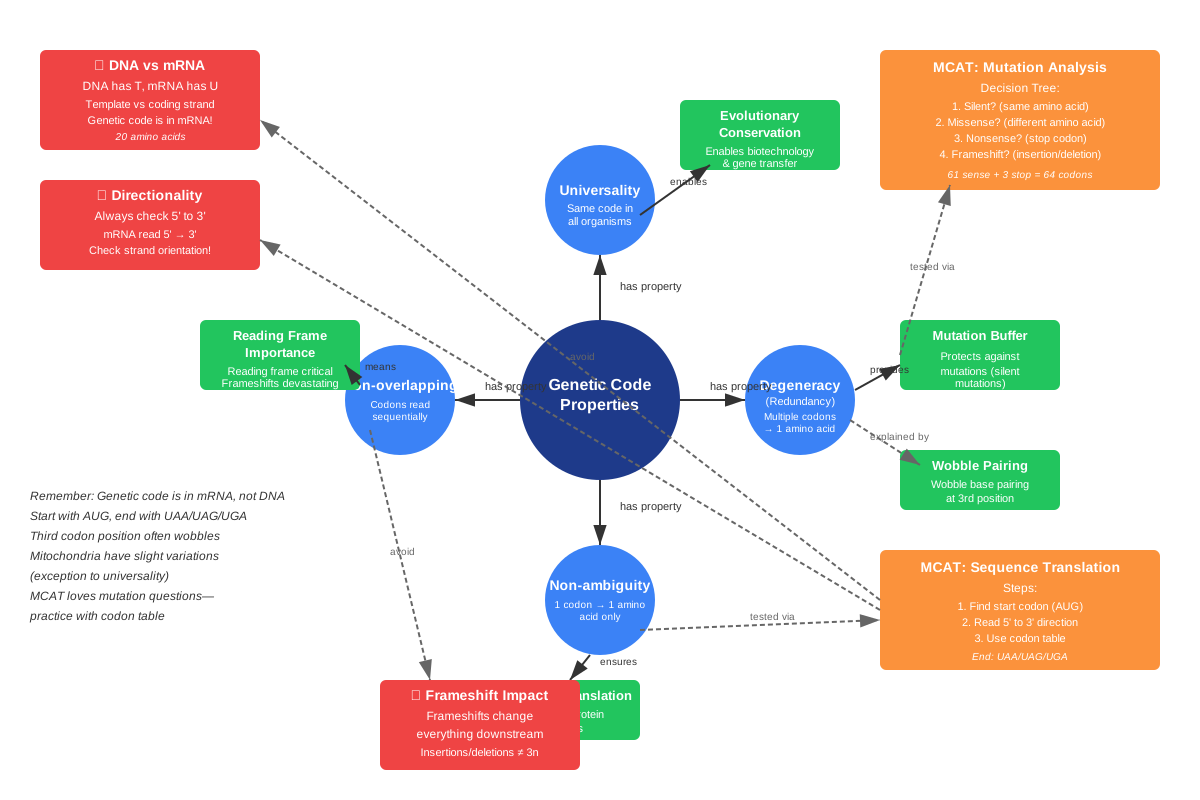
The genetic code is one of the most fundamental concepts in molecular biology and genetics, serving as the universal dictionary that translates nucleotide sequences in DNA and RNA into the amino acid sequences of proteins. This triplet-based code consists of 64 possible codons (three-nucleotide combinations) that specify the 20 standard amino acids plus start and stop signals for translation. Understanding the genetic code is essential for comprehending how genetic information flows from DNA to RNA to protein—the central dogma of molecular biology.
For the MCAT, mastery of the genetic code extends beyond simple memorization of codon assignments. Test-takers must understand the code's properties (degeneracy, universality, and lack of ambiguity), predict the effects of mutations on protein sequences, and analyze experimental scenarios involving translation. Questions frequently integrate the genetic code with topics such as transcription, translation, gene regulation, and evolutionary biology. The ability to work through genetic code problems efficiently distinguishes high-scoring students from those who struggle with the Biology section.
The genetic code represents a critical junction point in Molecular Biology and Genetics, connecting DNA structure and replication to protein synthesis and function. It underlies our understanding of genetic diseases, biotechnology applications, and evolutionary relationships among organisms. For genetic code MCAT preparation, students must develop both conceptual understanding and practical problem-solving skills to tackle the diverse question formats that appear on test day.
Learning Objectives
- [ ] Define genetic code using accurate Biology terminology
- [ ] Explain why genetic code matters for the MCAT
- [ ] Apply genetic code to exam-style questions
- [ ] Identify common mistakes related to genetic code
- [ ] Connect genetic code to related Biology concepts
- [ ] Analyze the consequences of point mutations (silent, missense, nonsense) using the genetic code
- [ ] Predict the amino acid sequence from a given mRNA sequence using codon tables
- [ ] Explain the evolutionary and biochemical significance of the genetic code's degeneracy and wobble base pairing
Prerequisites
- DNA structure and base pairing: Understanding the four nucleotide bases (A, T, G, C) and complementary base pairing is essential for comprehending how genetic information is encoded
- RNA structure and transcription: Knowledge of mRNA synthesis and the substitution of uracil (U) for thymine (T) is necessary since the genetic code operates on mRNA sequences
- Protein structure and amino acids: Familiarity with the 20 standard amino acids and their properties enables understanding of how codon changes affect protein function
- Central dogma of molecular biology: The flow of genetic information (DNA → RNA → Protein) provides the framework within which the genetic code operates
- Translation basics: Understanding ribosomes, tRNA, and the general process of protein synthesis contextualizes where and how the genetic code functions
Why This Topic Matters
The genetic code appears in approximately 5-8% of MCAT Biology questions, making it a medium-yield but essential topic. Its importance extends beyond standalone questions because it integrates with numerous high-yield topics including mutation analysis, gene expression, biotechnology, and evolution. Clinical applications abound: genetic diseases like sickle cell anemia result from single codon changes, while understanding the genetic code enables interpretation of genetic testing results and personalized medicine approaches.
On the MCAT, the genetic code typically appears in three question formats: (1) direct application problems requiring students to translate mRNA sequences or predict mutation effects, (2) passage-based questions integrating the genetic code with experimental data about protein synthesis or gene regulation, and (3) conceptual questions testing understanding of the code's properties such as degeneracy or universality. Many students underestimate this topic's importance because they assume it requires only memorization, but MCAT questions demand deeper analytical skills.
Real-world significance includes pharmaceutical development (understanding how mutations affect drug targets), agricultural biotechnology (engineering crops with modified proteins), and evolutionary biology (using genetic code similarities to establish phylogenetic relationships). The near-universality of the genetic code across all domains of life represents one of biology's most compelling pieces of evidence for common ancestry, a concept that appears in evolution-focused MCAT passages.
Core Concepts
Definition and Structure of the Genetic Code
The genetic code is the set of rules by which information encoded in genetic material (DNA or mRNA sequences) is translated into proteins by living cells. Specifically, it defines the correspondence between nucleotide triplets called codons and the amino acids they specify during translation. Each codon consists of three consecutive nucleotides read in the 5' to 3' direction on mRNA.
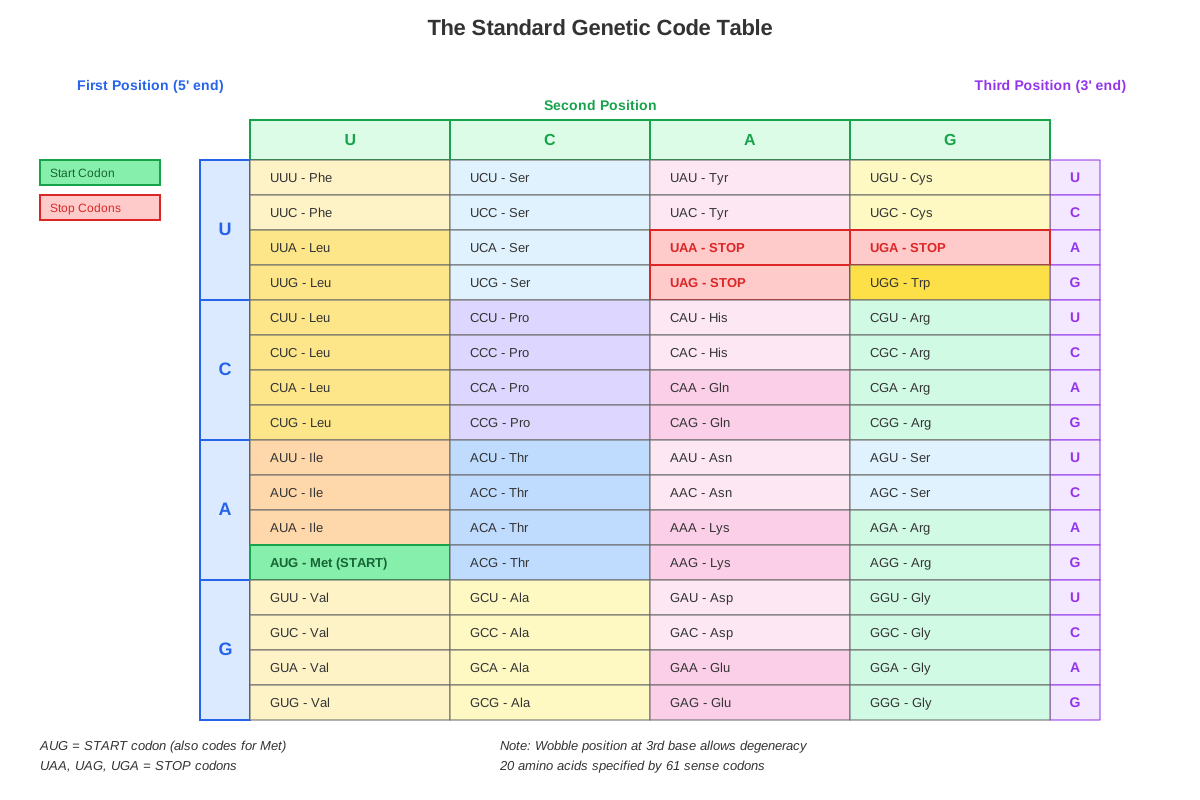
With four possible nucleotides (A, U, G, C in RNA), there are 4³ = 64 possible codon combinations. These 64 codons encode 20 standard amino acids plus three stop signals (UAA, UAG, UGA) and one start signal (AUG, which also codes for methionine). The genetic code is conventionally presented as a codon table organized by the first, second, and third nucleotide positions, facilitating rapid lookup during problem-solving.
Key Properties of the Genetic Code
Degeneracy (also called redundancy) means that most amino acids are specified by more than one codon. For example, leucine has six different codons (UUA, UUG, CUU, CUC, CUA, CUG), while serine also has six. Only methionine and tryptophan have single codons (AUG and UGG, respectively). This redundancy provides a buffer against mutations—many single nucleotide changes result in synonymous codons that specify the same amino acid, producing silent mutations.
Universality refers to the fact that the genetic code is nearly identical across all organisms, from bacteria to humans. This universality supports the theory of common descent and enables biotechnology applications like expressing human proteins in bacterial cells. Minor exceptions exist in mitochondrial DNA and some microorganisms, but these variations are rare and typically involve only a few codons.
Lack of ambiguity means each codon specifies only one amino acid (or stop signal). While multiple codons may encode the same amino acid (degeneracy), no single codon encodes multiple different amino acids. This one-way specificity ensures faithful translation of genetic information.
Non-overlapping and comma-free nature means codons are read sequentially without gaps or overlaps. Once translation begins at the start codon, the ribosome reads three nucleotides at a time, moving exactly three positions for each amino acid added. The reading frame established at initiation determines which triplets are read as codons.
Wobble Base Pairing and Codon Degeneracy Patterns
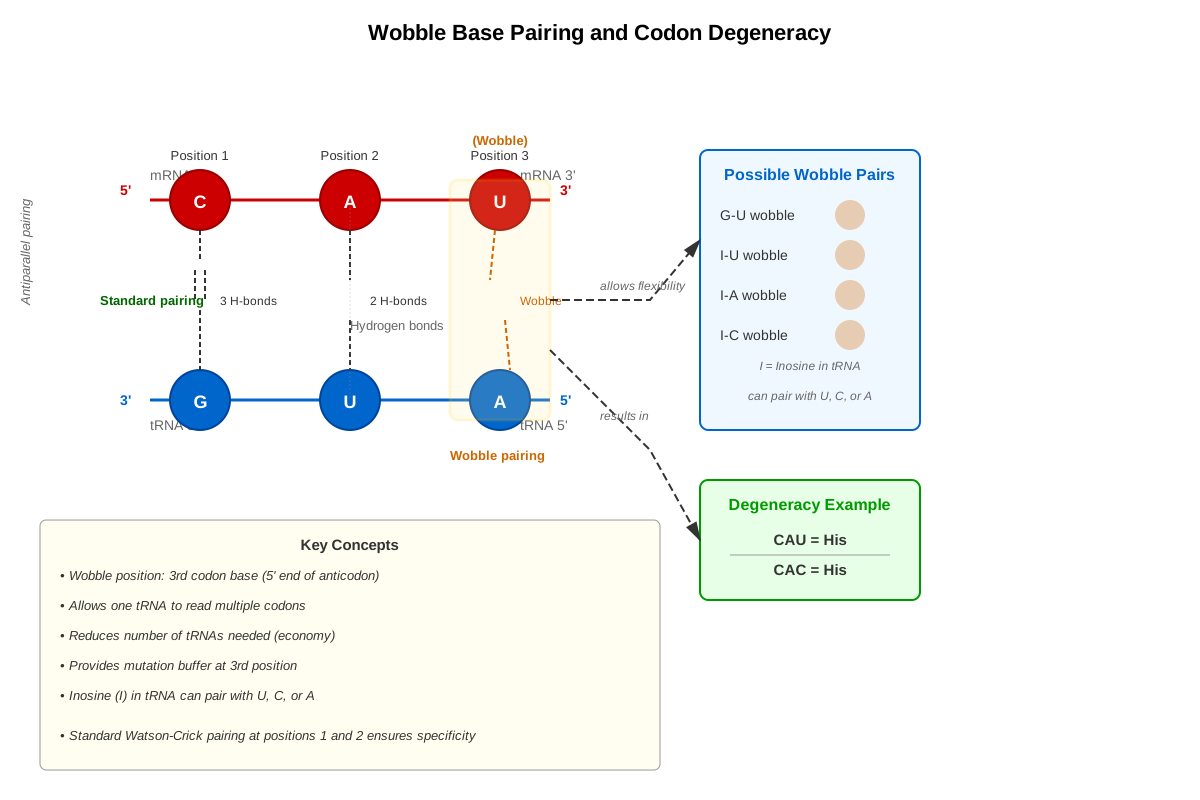
The wobble hypothesis, proposed by Francis Crick, explains the molecular basis for codon degeneracy. The third position of the codon (3' end) pairs less stringently with the first position of the tRNA anticodon (5' end), allowing non-Watson-Crick base pairing. This wobble position permits a single tRNA to recognize multiple codons differing only in the third nucleotide.
Degeneracy follows systematic patterns that minimize the impact of mutations:
| Amino Acid Property | Codon Pattern | Example |
|---|---|---|
| Hydrophobic amino acids | Often share first two nucleotides | Valine: GUU, GUC, GUA, GUG |
| Chemically similar amino acids | Grouped in codon table | Aspartate (GAU, GAC) near Glutamate (GAA, GAG) |
| Third position changes | Usually synonymous | Glycine: GGU, GGC, GGA, GGG (all four) |
This organization means that mutations in the third codon position are most likely to be silent, while first and second position changes more frequently alter the amino acid (missense mutations) or create stop codons (nonsense mutations).
Start and Stop Signals
AUG serves as the universal start codon, establishing the reading frame for translation and coding for methionine (Met). In prokaryotes, the initial methionine is modified to N-formylmethionine (fMet), though the codon remains AUG. The start codon's position is determined by ribosome binding sites (Shine-Dalgarno sequence in prokaryotes, Kozak sequence in eukaryotes) rather than being the first AUG in the mRNA.
Three stop codons (also called termination codons or nonsense codons) signal translation termination: UAA (ochre), UAG (amber), and UGA (opal). These codons are not recognized by standard tRNAs but instead bind release factors that trigger ribosome dissociation and polypeptide release. The presence of three stop codons provides redundancy for this critical function.
Reading Frames and Frame-Shift Mutations
The reading frame is the grouping of nucleotides into sequential triplets starting from the initiation codon. Because the genetic code is non-overlapping, the same mRNA sequence can theoretically be read in three different frames (starting at position 1, 2, or 3), each producing a completely different amino acid sequence. However, only one frame—established by the start codon—is normally used during translation.
Frame-shift mutations result from insertions or deletions of nucleotides that are not multiples of three. These mutations shift the reading frame downstream of the mutation, typically producing completely altered amino acid sequences and often encountering premature stop codons. Frame-shift mutations generally have more severe consequences than point mutations because they affect all codons after the mutation site.
Mutation Types and Their Effects
Understanding how changes in DNA sequence affect the genetic code is crucial for MCAT problem-solving:
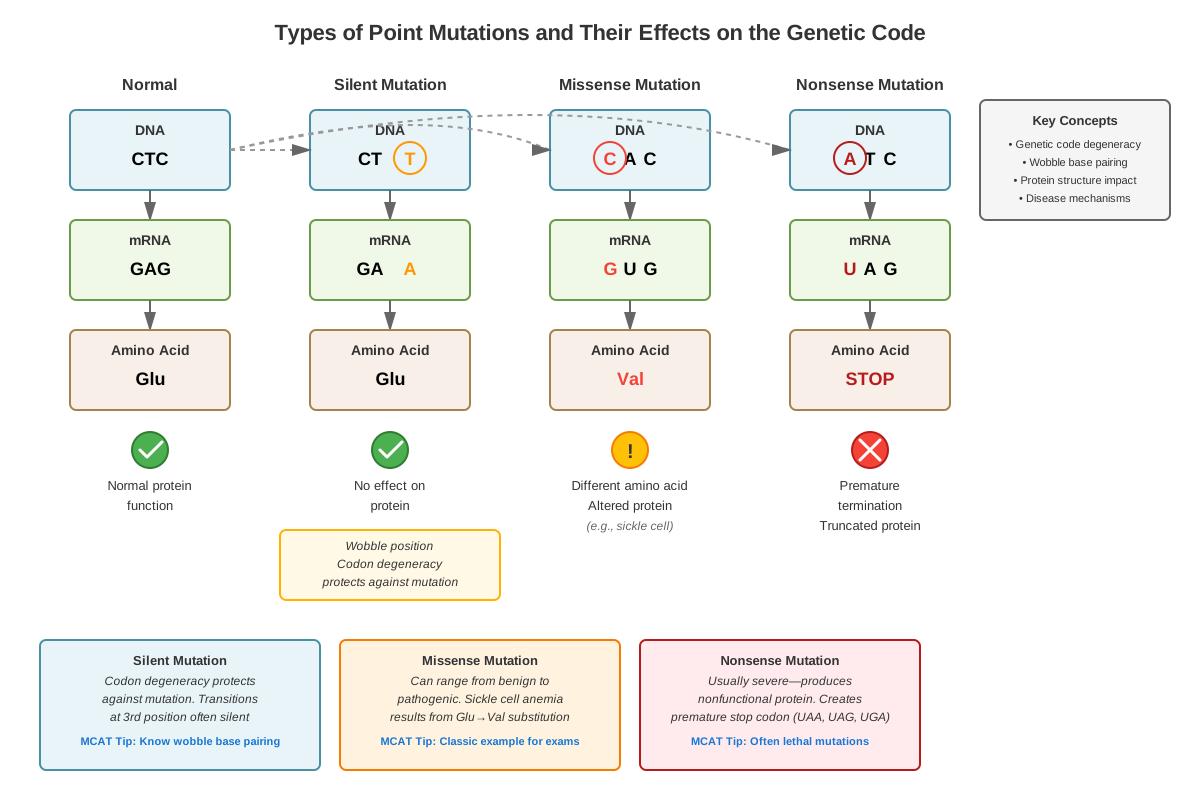
Silent mutations (synonymous mutations) change the nucleotide sequence but not the amino acid sequence due to codon degeneracy. Example: CAA → CAG both code for glutamine.
Missense mutations (non-synonymous mutations) change one codon to another that specifies a different amino acid. Effects range from negligible (conservative substitution of similar amino acids) to severe (non-conservative substitution). Example: GAA → GUA changes glutamate to valine, causing sickle cell disease.
Nonsense mutations change an amino acid codon to a stop codon, resulting in premature translation termination and truncated proteins. Example: UAC (tyrosine) → UAA (stop). These mutations typically have severe effects because they produce incomplete, non-functional proteins.
Concept Relationships
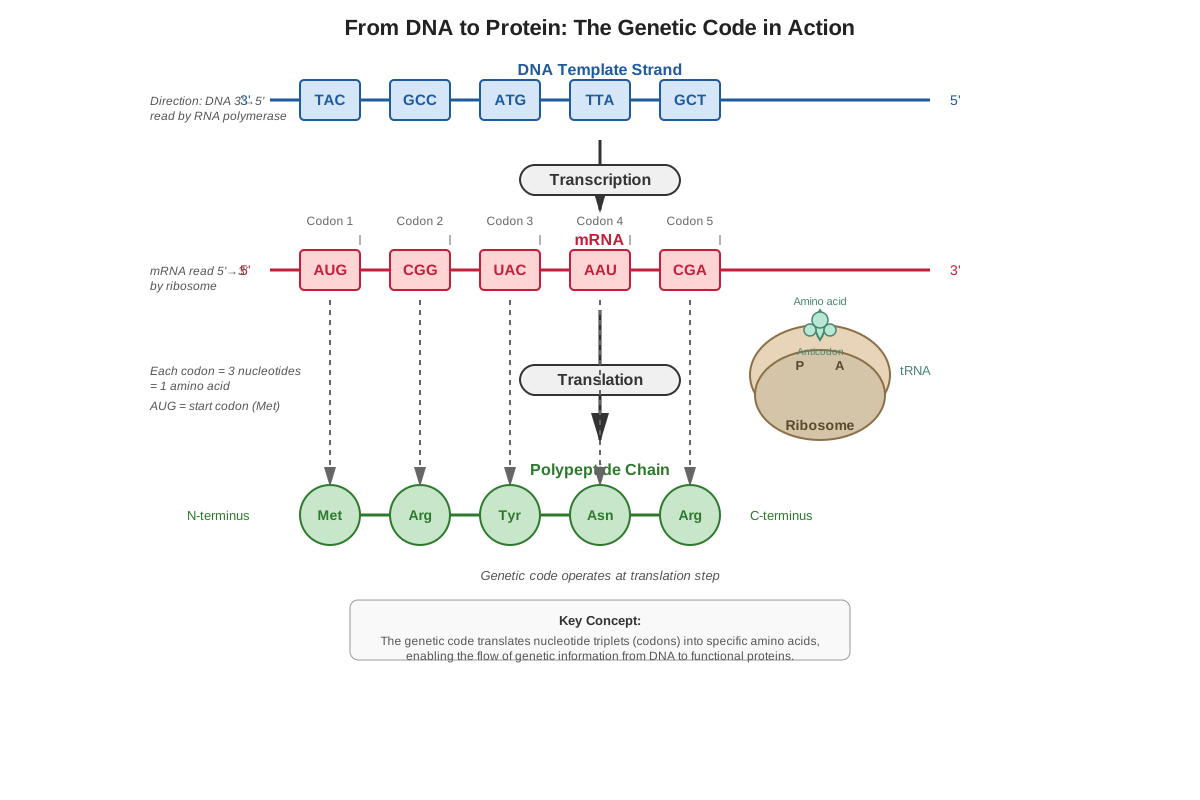
The genetic code serves as the central translation mechanism connecting nucleic acid information to protein structure. DNA sequence → (transcription) → mRNA sequence → (genetic code interpretation) → amino acid sequence → (protein folding) → protein function. This linear flow represents the fundamental information transfer in molecular biology.
Within the genetic code itself, codon degeneracy connects to wobble base pairing at the molecular level, explaining why mutations in the third codon position often have minimal effects. This relationship extends to tRNA structure and function, where anticodon-codon recognition determines translation fidelity. The start codon (AUG) establishes the reading frame, which determines how all subsequent codons are interpreted, connecting to frame-shift mutations when insertions or deletions disrupt this frame.
The genetic code's properties relate to broader biological concepts: universality connects to evolutionary biology and common descent, while degeneracy relates to mutation buffering and genetic robustness. Understanding stop codons requires knowledge of release factors and translation termination, linking the genetic code to the broader translation machinery. The code's organization also relates to tRNA charging by aminoacyl-tRNA synthetases, which must match each tRNA anticodon with the correct amino acid to maintain translation accuracy.
Quick check — test yourself on Genetic code so far.
Try Flashcards →High-Yield Facts
⭐ The genetic code consists of 64 codons: 61 specify amino acids and 3 are stop signals (UAA, UAG, UGA)
⭐ AUG is the universal start codon and codes for methionine; it establishes the reading frame for translation
⭐ The genetic code is degenerate (redundant)—most amino acids are encoded by multiple codons, with differences typically in the third position
⭐ The genetic code is nearly universal across all organisms, with rare exceptions in mitochondria and some microorganisms
⭐ Each codon is unambiguous—it specifies only one amino acid, though multiple codons may specify the same amino acid
- Silent mutations change the codon but not the amino acid due to degeneracy, while missense mutations change the amino acid
- Nonsense mutations convert an amino acid codon to a stop codon, causing premature translation termination
- Frame-shift mutations (insertions/deletions not in multiples of three) alter all downstream codons and typically have severe effects
- Wobble base pairing at the third codon position allows one tRNA to recognize multiple codons differing only at that position
- Only methionine (AUG) and tryptophan (UGG) have single codons; leucine, serine, and arginine each have six codons
Common Misconceptions
Misconception: The genetic code is found in DNA, so you use T instead of U when working with codons.
Correction: The genetic code operates on mRNA sequences during translation, so codons always use U (uracil) rather than T (thymine). While DNA contains the genetic information, the actual code is read from mRNA.
Misconception: All mutations in the third codon position are silent mutations.
Correction: While third position changes are more likely to be silent due to wobble pairing and degeneracy patterns, not all are silent. For example, UGG (tryptophan) → UGA (stop) is a nonsense mutation despite being a third position change.
Misconception: The genetic code is completely universal with no exceptions.
Correction: While nearly universal, the genetic code has minor variations in mitochondrial DNA (where UGA codes for tryptophan instead of stop) and some microorganisms. However, the standard code applies to the vast majority of organisms and all MCAT questions unless otherwise specified.
Misconception: Frame-shift mutations only affect the region immediately after the insertion or deletion.
Correction: Frame-shift mutations alter the reading frame for all codons downstream of the mutation, typically affecting the entire remainder of the protein sequence and often introducing premature stop codons.
Misconception: Conservative amino acid substitutions (similar properties) never affect protein function.
Correction: While conservative substitutions are less likely to disrupt function than non-conservative changes, they can still have significant effects depending on the amino acid's location in the protein structure, particularly in active sites or critical structural regions.
Misconception: You need to memorize all 64 codons and their amino acid assignments for the MCAT.
Correction: The MCAT provides codon tables when needed for specific problems. Focus instead on understanding the code's properties (degeneracy, universality, wobble pairing) and being able to use a codon table efficiently to solve problems.
Worked Examples
Example 1: Mutation Analysis
Problem: A gene segment has the DNA template strand sequence 3'-TAC GCA TGG ACT-5'. After transcription and translation, a mutation changes the DNA to 3'-TAC GCA TGA ACT-5'. Identify the original and mutated amino acid sequences, classify the mutation type, and predict its likely effect on protein function.
Solution:
Step 1: Transcribe the DNA template strand to mRNA (remember: complementary and antiparallel, with U replacing T)
- Original DNA template: 3'-TAC GCA TGG ACT-5'
- Original mRNA: 5'-AUG CGU ACC UGA-3'
Step 2: Translate the original mRNA using the genetic code
- AUG = Methionine (Met)
- CGU = Arginine (Arg)
- ACC = Threonine (Thr)
- UGA = Stop codon
- Original sequence: Met-Arg-Thr-Stop
Step 3: Transcribe the mutated DNA
- Mutated DNA template: 3'-TAC GCA TGA ACT-5'
- Mutated mRNA: 5'-AUG CGU ACU UGA-3'
Step 4: Translate the mutated mRNA
- AUG = Methionine (Met)
- CGU = Arginine (Arg)
- ACU = Threonine (Thr)
- UGA = Stop codon
- Mutated sequence: Met-Arg-Thr-Stop
Step 5: Compare and classify
The mutation changed ACC to ACU in the mRNA (both code for threonine). This is a silent mutation because the amino acid sequence remains unchanged despite the nucleotide change. The mutation occurred in the third position of the codon, where degeneracy is most common.
Step 6: Predict functional effect
Since the amino acid sequence is identical, this mutation would likely have no effect on protein function. The protein produced would be indistinguishable from the wild-type version.
Key Learning Points: This example demonstrates how to work systematically from DNA to protein, the importance of codon degeneracy in buffering against mutations, and why third-position changes are most likely to be silent.
Example 2: Frame-Shift Mutation Analysis
Problem: A portion of mRNA reads 5'-AUG GCC UAU GGC UGA-3'. A single adenine (A) is inserted after the sixth nucleotide. Determine the original and mutated amino acid sequences and explain why frame-shift mutations typically have severe consequences.
Solution:
Step 1: Translate the original sequence
- AUG = Methionine (Met)
- GCC = Alanine (Ala)
- UAU = Tyrosine (Tyr)
- GGC = Glycine (Gly)
- UGA = Stop
- Original: Met-Ala-Tyr-Gly-Stop
Step 2: Insert the adenine after position 6
Original: 5'-AUG GCC UAU GGC UGA-3'
After insertion: 5'-AUG GCC AUA UGG CUG A-3'
(The inserted A is bolded; note how this shifts all downstream nucleotides)
Step 3: Translate the mutated sequence with the new reading frame
- AUG = Methionine (Met)
- GCC = Alanine (Ala)
- AUA = Isoleucine (Ile)
- UGG = Tryptophan (Trp)
- CUG = Leucine (Leu)
- A = incomplete codon (translation would continue if more sequence existed)
- Mutated: Met-Ala-Ile-Trp-Leu-...
Step 4: Compare sequences
Original: Met-Ala-Tyr-Gly-Stop (4 amino acids)
Mutated: Met-Ala-Ile-Trp-Leu-... (continues beyond original stop)
Step 5: Explain severity
The frame-shift mutation has multiple severe consequences:
- Complete change in amino acid sequence after the mutation point (Tyr-Gly became Ile-Trp-Leu)
- Loss of the original stop codon, causing read-through translation
- Altered protein length and structure, likely producing a non-functional protein
- Potential for premature stop codon in the new frame (though not in this segment)
Key Learning Points: Frame-shift mutations alter the entire downstream sequence, not just one amino acid. They typically have more severe effects than point mutations because they affect multiple codons. The loss or gain of stop codons can dramatically change protein length.
Exam Strategy
When approaching genetic code MCAT questions, first identify whether the question provides a codon table or expects you to know general principles. Most questions requiring specific codon assignments will include a table, while conceptual questions test understanding of degeneracy, universality, or mutation effects.
Trigger words and phrases to recognize:
- "Silent mutation" or "synonymous mutation" → look for codon changes that don't alter amino acid
- "Reading frame" → consider whether insertions/deletions are multiples of three
- "Nonsense mutation" → identify changes creating stop codons (UAA, UAG, UGA)
- "Conservative substitution" → compare amino acid properties (both hydrophobic, both charged, etc.)
- "Wobble position" or "third position" → expect degeneracy and silent mutations
Process of elimination strategies:
- For mutation questions, immediately eliminate answer choices that confuse DNA with RNA (T vs. U)
- When predicting mutation severity, eliminate choices suggesting frame-shifts are less severe than point mutations
- For universality questions, eliminate extreme answers (completely universal or completely variable)
- When analyzing codon tables, eliminate answers that violate the unambiguous nature of the code
Time allocation: Genetic code questions typically require 60-90 seconds. Spend 20-30 seconds understanding what's being asked, 30-40 seconds working through the sequence/mutation, and 10-20 seconds selecting and confirming your answer. If a question requires extensive codon table lookup, it may take up to 2 minutes—don't rush and make transcription errors.
Common question formats:
- Direct translation: Given mRNA, find amino acid sequence (straightforward but error-prone)
- Mutation analysis: Compare wild-type and mutant sequences (requires systematic approach)
- Reverse problems: Given amino acid sequence, determine possible mRNA sequences (remember degeneracy)
- Conceptual: Explain why certain properties of the genetic code are advantageous (connect to evolution/robustness)
Memory Techniques
START-STOP mnemonic:
- Start = AUG (also: "Always Use Go signal")
- Stop = UAA, UAG, UGA (all begin with U; remember "U Are Away," "U Are Gone," "U Go Away")
Degeneracy pattern visualization: Picture the codon table as having "families" where codons sharing the first two nucleotides often code for the same amino acid. The third position is the "wobble child" that can vary without changing the family identity.
Mutation severity hierarchy:
Silent < Missense < Nonsense < Frameshift
Mnemonic: "Some Mutations Need Fixing" (in order of increasing severity)
Universal code memory aid: Think "genetic code = genetic unity" to remember that the code's universality supports common ancestry and enables biotechnology across species.
Reading frame concept: Visualize a sentence with no spaces: "THECATANDTHEDOG." Starting at different positions gives completely different "words" (THE CAT AND THE DOG vs. T HEC ATA NDT HED OG). This illustrates why frame-shifts are so disruptive.
Wobble position: Remember "third time's the charm" or "three's a crowd"—the third position is where flexibility (wobble) occurs, making it the most forgiving position for mutations.
Summary
The genetic code is the universal translation system that converts nucleotide triplets (codons) in mRNA into amino acid sequences in proteins. Comprising 64 codons that specify 20 amino acids plus start and stop signals, the code exhibits key properties essential for MCAT success: degeneracy (multiple codons per amino acid), universality (nearly identical across all life), unambiguity (one amino acid per codon), and a non-overlapping, comma-free reading pattern. The start codon AUG establishes the reading frame and codes for methionine, while three stop codons (UAA, UAG, UGA) terminate translation. Degeneracy, particularly at the wobble (third) position, buffers against mutations, making silent mutations common. Understanding mutation types—silent, missense, nonsense, and frame-shift—and their relative impacts on protein function is crucial for analyzing genetic scenarios. The genetic code connects DNA sequence to protein function, serving as the central mechanism in the flow of genetic information and appearing frequently in MCAT questions involving translation, mutations, biotechnology, and evolution.
Key Takeaways
- The genetic code consists of 64 codons (61 amino acid-specifying, 3 stop) that translate mRNA into protein sequences with degeneracy providing mutation buffering
- AUG serves as both the start codon and methionine codon, establishing the reading frame that determines all subsequent codon interpretation
- The code's near-universality across organisms enables biotechnology applications and provides evidence for common evolutionary ancestry
- Mutation effects follow a severity hierarchy: silent < missense < nonsense < frame-shift, with third-position changes most likely to be silent
- Wobble base pairing at the third codon position explains degeneracy patterns and allows single tRNAs to recognize multiple related codons
- Frame-shift mutations (insertions/deletions not in multiples of three) alter all downstream codons and typically have severe functional consequences
- MCAT questions test both direct application (sequence translation) and conceptual understanding (code properties, mutation analysis, evolutionary significance)
Related Topics
Translation Mechanism: Understanding the genetic code enables deeper study of ribosome structure, tRNA function, and the detailed steps of initiation, elongation, and termination during protein synthesis.
Gene Mutations and Genetic Diseases: The genetic code provides the foundation for analyzing how specific mutations cause diseases like sickle cell anemia, cystic fibrosis, and various cancers through altered protein function.
Biotechnology and Genetic Engineering: The code's universality makes possible recombinant DNA technology, allowing expression of human proteins in bacteria and development of genetically modified organisms.
Molecular Evolution and Phylogenetics: Comparing genetic code variations and codon usage patterns across species reveals evolutionary relationships and selection pressures on protein sequences.
Gene Expression Regulation: Understanding the genetic code connects to studying how cells control which proteins are made through transcriptional and translational regulation mechanisms.
Practice CTA
Now that you've mastered the genetic code's fundamental principles and MCAT applications, reinforce your understanding by working through practice questions and flashcards. Focus on problems requiring mutation analysis and sequence translation, as these represent the most common question formats. Challenge yourself with timed practice to build the speed and accuracy needed for test day success. Remember: understanding the genetic code's properties matters more than memorizing individual codon assignments—the MCAT tests your ability to apply principles, not recall tables. You've built a strong foundation; now apply it to achieve your target score!
Sign up free to keep reading
Create a free AnvayaPrep account to finish this MCAT guide on Genetic code — plus flashcards and practice questions.