Overview
Mendelian genetics forms the foundation of classical genetics and represents one of the most testable topics in the Molecular Biology and Genetics section of the MCAT. Named after Gregor Mendel, the 19th-century monk whose pea plant experiments revealed the fundamental principles of inheritance, this field explains how traits pass from parents to offspring through discrete units called genes. Understanding Mendelian genetics requires mastery of concepts including dominance, segregation, independent assortment, and probability—all of which appear frequently in both discrete questions and passage-based items on the exam.
The MCAT tests Mendelian genetics through pedigree analysis, Punnett square problems, probability calculations, and experimental design questions. Students must not only memorize inheritance patterns but also apply these principles to novel scenarios, interpret genetic crosses, and predict offspring ratios. This topic bridges molecular biology (DNA structure, gene expression) with population genetics and evolutionary biology, making it a central hub in Biology content. Questions often integrate Mendelian principles with biochemistry (enzyme deficiencies), cell biology (meiosis), or even psychology (behavioral genetics).
Mastery of Mendelian genetics enables students to tackle more complex topics including non-Mendelian inheritance, linkage analysis, and genetic counseling scenarios. The MCAT frequently presents clinical vignettes involving genetic diseases, requiring students to determine inheritance patterns, calculate recurrence risks, and understand the molecular basis of phenotypes. This topic appears in approximately 10-15% of Biological and Biochemical Foundations questions, making it a high-yield area that rewards thorough preparation.
Learning Objectives
- [ ] Define Mendelian genetics using accurate Biology terminology
- [ ] Explain why Mendelian genetics matters for the MCAT
- [ ] Apply Mendelian genetics to exam-style questions
- [ ] Identify common mistakes related to Mendelian genetics
- [ ] Connect Mendelian genetics to related Biology concepts
- [ ] Calculate probabilities of offspring genotypes and phenotypes using multiple methods
- [ ] Analyze pedigrees to determine modes of inheritance (autosomal dominant, autosomal recessive, X-linked)
- [ ] Distinguish between genotype and phenotype in various genetic scenarios
- [ ] Apply the law of segregation and law of independent assortment to predict inheritance patterns
Prerequisites
- Basic cell biology: Understanding chromosomes, homologous pairs, and cell division provides the structural context for gene inheritance
- Meiosis: Knowledge of how gametes form and chromosomes separate is essential for understanding segregation and independent assortment
- DNA structure and function: Genes are segments of DNA; understanding the molecular basis of heredity clarifies how traits are encoded and transmitted
- Probability and statistics: Mendelian genetics relies heavily on probability calculations, including multiplication and addition rules
- Dominance relationships: Basic understanding that some alleles mask the expression of others forms the foundation for predicting phenotypes
Why This Topic Matters
Mendelian genetics has profound clinical significance, as thousands of human diseases follow Mendelian inheritance patterns. Conditions like cystic fibrosis (autosomal recessive), Huntington's disease (autosomal dominant), and hemophilia (X-linked recessive) affect millions of individuals worldwide. Genetic counselors use Mendelian principles daily to calculate recurrence risks for families, guide reproductive decisions, and explain inheritance patterns. Understanding these principles enables healthcare providers to interpret genetic test results, predict disease manifestation, and provide evidence-based counseling.
On the MCAT, Mendelian genetics appears in approximately 10-15% of Biological and Biochemical Foundations questions, with additional appearances in passages integrating multiple disciplines. Questions typically fall into several categories: discrete problems requiring Punnett square construction or probability calculations (20-30% of genetics questions), pedigree analysis passages requiring determination of inheritance mode (30-40%), experimental passages describing genetic crosses in model organisms (20-30%), and clinical vignettes involving human genetic diseases (10-20%). The exam frequently tests students' ability to apply principles rather than simply recall definitions.
Common passage contexts include: research studies investigating inheritance patterns in fruit flies or mice; clinical scenarios presenting family histories of genetic diseases; molecular biology experiments examining gene function through complementation analysis; and evolutionary biology passages exploring how Mendelian inheritance contributes to genetic variation. The MCAT often combines Mendelian genetics with other topics, such as asking students to connect inheritance patterns with protein function, enzyme kinetics, or developmental biology. Questions may present non-standard scenarios requiring students to extend basic principles to novel situations, testing true conceptual understanding rather than memorization.
Core Concepts
Fundamental Principles of Mendelian Genetics
Mendelian genetics describes the inheritance of traits controlled by genes that follow predictable patterns discovered by Gregor Mendel. A gene is a hereditary unit occupying a specific location (locus) on a chromosome, while alleles are alternative versions of a gene that can produce different phenotypes. Each diploid organism possesses two alleles for each gene, one inherited from each parent. The genotype refers to the specific allelic composition of an organism, while the phenotype describes the observable characteristics resulting from the interaction between genotype and environment.
Dominance relationships determine how alleles interact to produce phenotypes. A dominant allele masks the expression of a recessive allele when both are present. Organisms with two identical alleles are homozygous (either homozygous dominant or homozygous recessive), while those with two different alleles are heterozygous. In standard notation, dominant alleles are represented by uppercase letters (A) and recessive alleles by lowercase letters (a). A heterozygous individual (Aa) displays the dominant phenotype but carries the recessive allele, making them a carrier for recessive traits.
Mendel's Law of Segregation
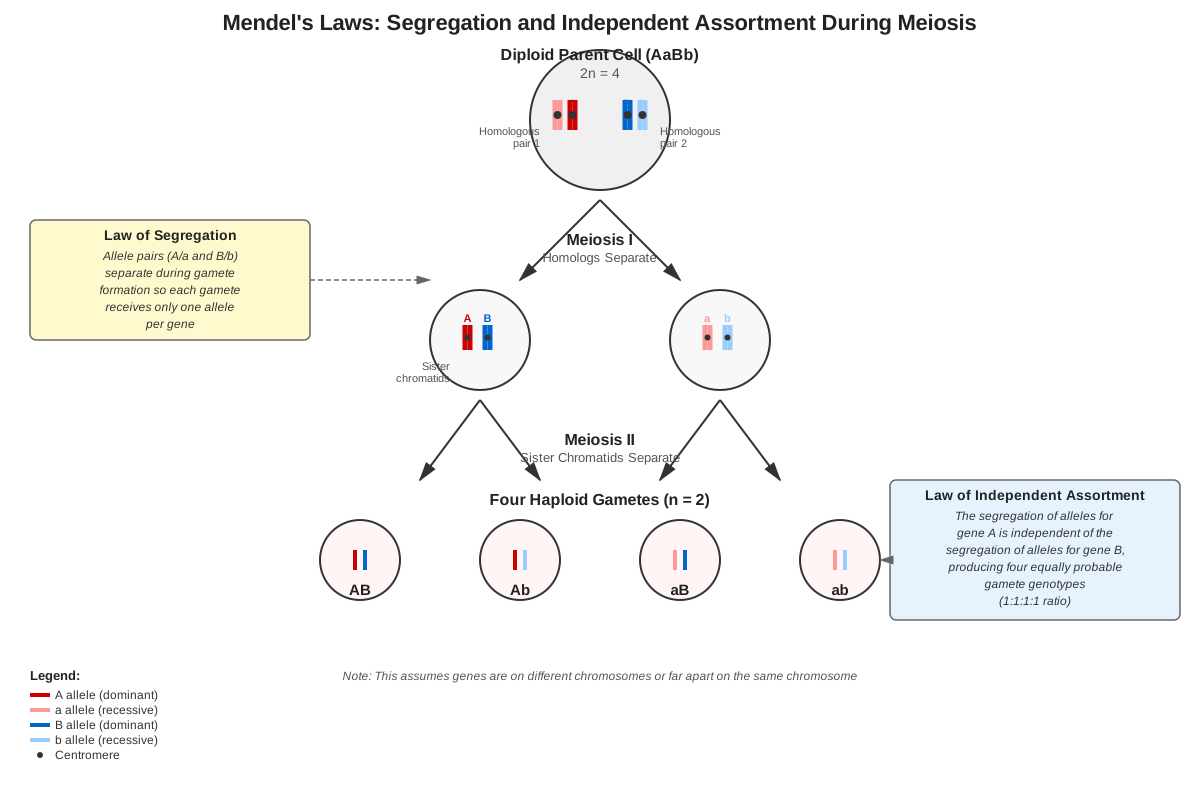
The Law of Segregation states that the two alleles for each gene separate during gamete formation, with each gamete receiving only one allele. This occurs during meiosis I when homologous chromosomes separate, ensuring that each sperm or egg contains a single allele for each gene. When fertilization occurs, the offspring receives one allele from each parent, restoring the diploid number. This principle explains why offspring of heterozygous parents can display recessive phenotypes—each parent can contribute their recessive allele, producing a homozygous recessive offspring.
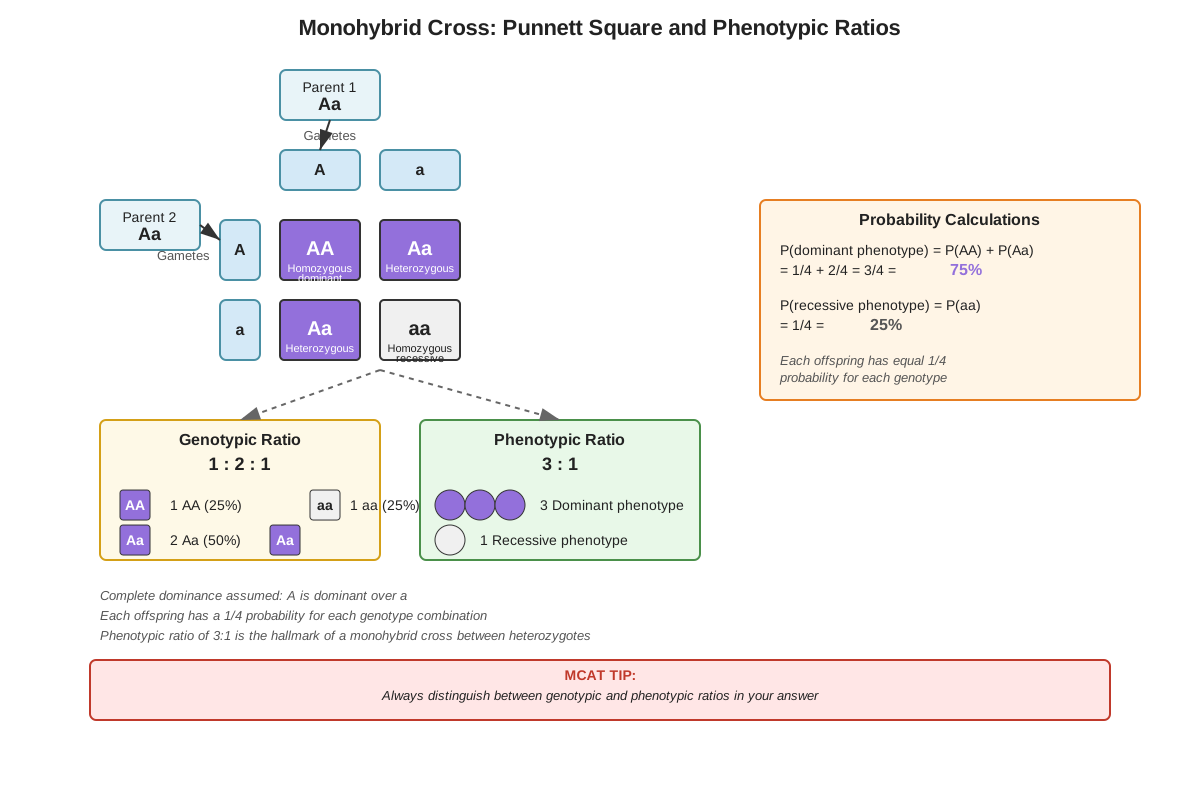
The segregation principle underlies the classic monohybrid cross, where organisms differing in a single trait are crossed. When two heterozygous individuals (Aa × Aa) mate, the expected offspring ratio is 3:1 (dominant:recessive phenotype) or 1:2:1 (homozygous dominant:heterozygous:homozygous recessive genotype). This ratio emerges because each parent produces gametes with equal probability (50% A, 50% a), and fertilization occurs randomly.
Mendel's Law of Independent Assortment
The Law of Independent Assortment states that alleles of different genes segregate independently during gamete formation, provided the genes are located on different chromosomes or are far apart on the same chromosome. This principle applies during meiosis I when chromosome pairs align randomly at the metaphase plate. For an organism heterozygous at two loci (AaBb), four gamete types form with equal probability: AB, Ab, aB, and ab (each 25%).
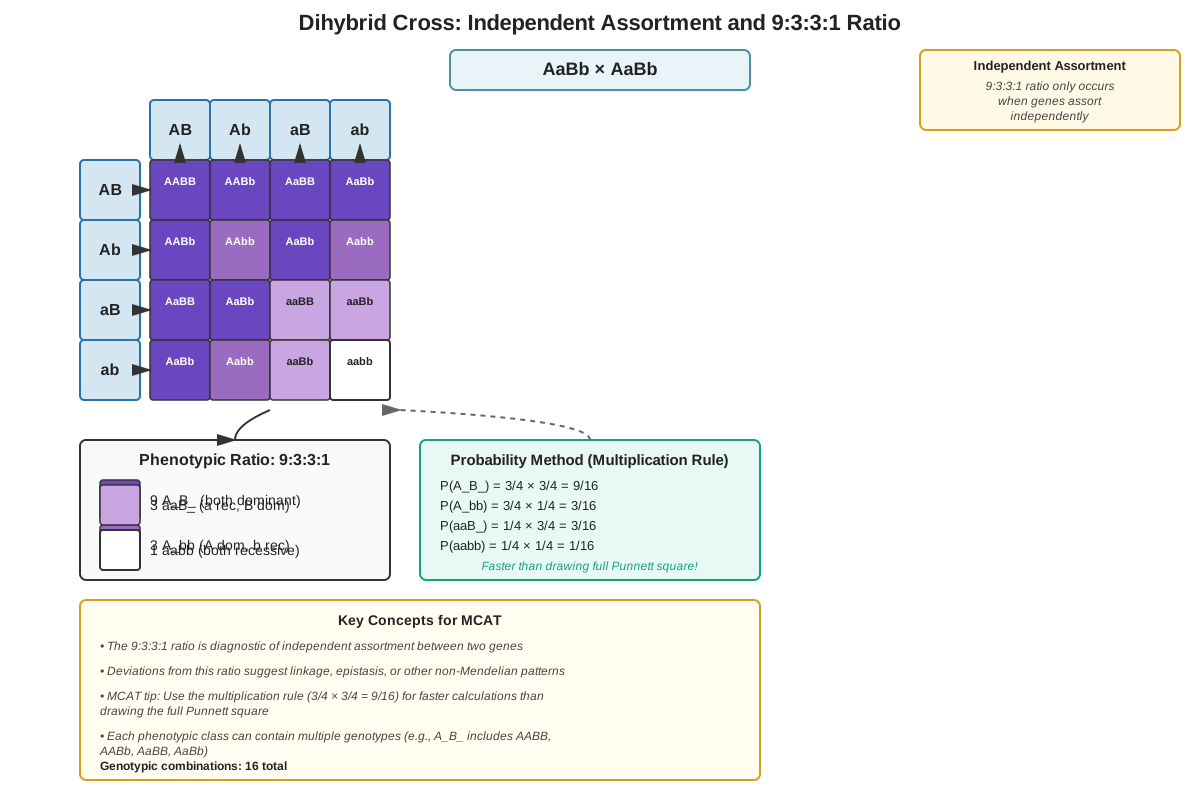
A dihybrid cross examines inheritance of two traits simultaneously. When two organisms heterozygous for both traits (AaBb × AaBb) mate, the expected phenotypic ratio is 9:3:3:1, representing all possible combinations of dominant and recessive phenotypes. This ratio assumes complete dominance at both loci and independent assortment. The 9:3:3:1 ratio breaks down as: 9/16 display both dominant traits, 3/16 display the first dominant and second recessive, 3/16 display the first recessive and second dominant, and 1/16 display both recessive traits.
Punnett Squares and Probability Methods
Punnett squares provide a visual method for predicting offspring genotypes and phenotypes. For a monohybrid cross, a 2×2 grid suffices, while dihybrid crosses require a 4×4 grid. Each parent's possible gametes are listed along the top and side, and boxes are filled by combining the corresponding alleles. While Punnett squares work well for simple crosses, they become unwieldy for three or more genes.
The probability method offers a more efficient alternative, especially for complex crosses. This approach applies two fundamental rules: the multiplication rule (probability of independent events occurring together equals the product of their individual probabilities) and the addition rule (probability of either of two mutually exclusive events equals the sum of their individual probabilities). For example, to find the probability of an AaBb × AaBb cross producing an AaBb offspring: P(Aa) = 1/2 and P(Bb) = 1/2, so P(AaBb) = 1/2 × 1/2 = 1/4.
Test Crosses and Determining Unknown Genotypes
A test cross involves crossing an organism displaying the dominant phenotype with a homozygous recessive individual to determine whether the unknown organism is homozygous dominant or heterozygous. If any offspring display the recessive phenotype, the unknown parent must be heterozygous (Aa × aa → 50% Aa, 50% aa). If all offspring display the dominant phenotype, the unknown parent is likely homozygous dominant (AA × aa → 100% Aa), though larger sample sizes increase confidence in this conclusion.
Test crosses prove particularly valuable in agriculture and research, where identifying carriers of recessive alleles matters for breeding programs. The MCAT may present experimental scenarios requiring students to design appropriate crosses to test hypotheses about inheritance patterns or gene interactions.
Pedigree Analysis
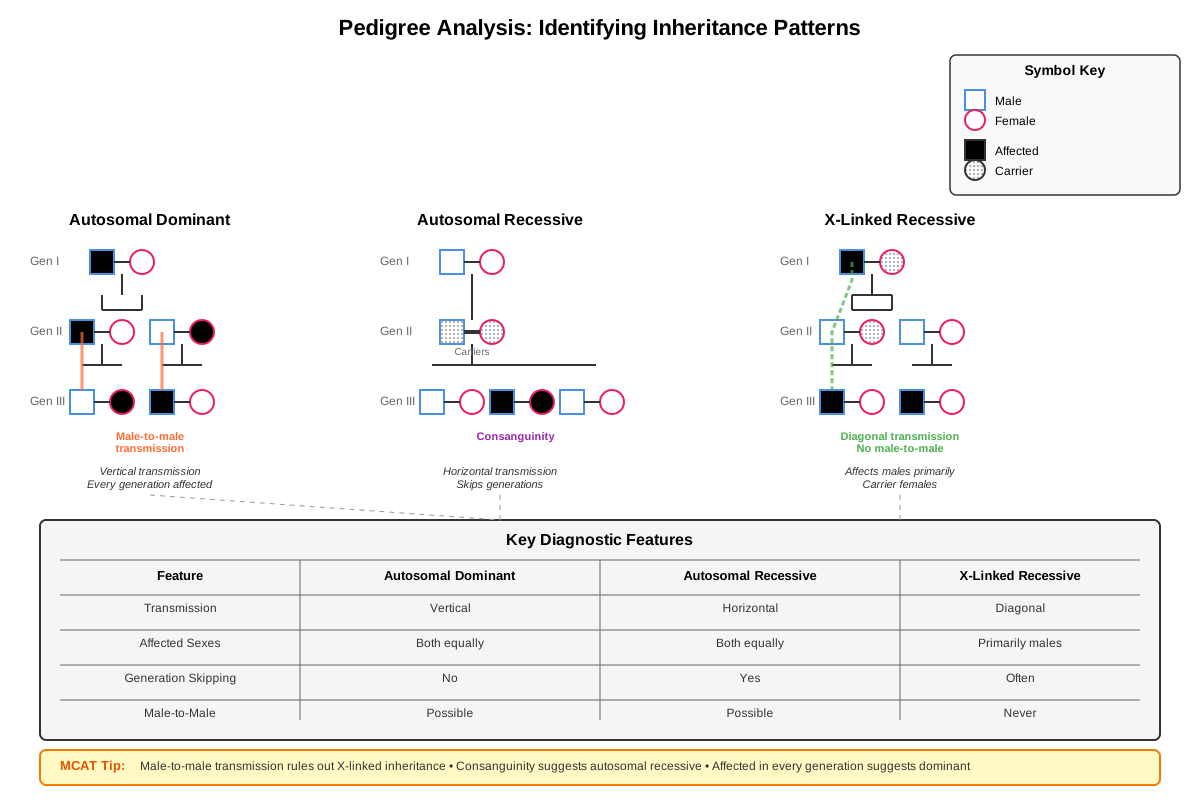
Pedigrees are family trees showing inheritance patterns across generations, using standardized symbols: squares represent males, circles represent females, filled symbols indicate affected individuals, and half-filled symbols indicate carriers (for recessive traits). Horizontal lines connect mating pairs, while vertical lines connect parents to offspring. Pedigree analysis allows determination of inheritance mode (autosomal dominant, autosomal recessive, X-linked dominant, X-linked recessive) based on pattern recognition.
| Inheritance Pattern | Key Features | Example Diseases |
|---|---|---|
| Autosomal Dominant | Appears in every generation; affected individuals have at least one affected parent; males and females equally affected; can be transmitted by either sex | Huntington's disease, achondroplasia, familial hypercholesterolemia |
| Autosomal Recessive | Skips generations; affected individuals often have unaffected parents; males and females equally affected; consanguinity increases frequency | Cystic fibrosis, sickle cell disease, Tay-Sachs disease |
| X-linked Recessive | Predominantly affects males; affected males have unaffected parents; no male-to-male transmission; carrier females may have affected sons | Hemophilia A, Duchenne muscular dystrophy, red-green color blindness |
| X-linked Dominant | Affects both sexes but more females than males; affected males have all affected daughters; no male-to-male transmission | Fragile X syndrome, vitamin D-resistant rickets |
Variations in Dominance
While Mendel's experiments revealed complete dominance, many traits exhibit alternative dominance relationships. Incomplete dominance occurs when the heterozygous phenotype is intermediate between the two homozygous phenotypes. For example, in snapdragons, red flowers (RR) crossed with white flowers (WW) produce pink flowers (RW). The 1:2:1 genotypic ratio equals the phenotypic ratio because each genotype produces a distinct phenotype.
Codominance occurs when both alleles are fully expressed in heterozygotes, producing a phenotype displaying both traits simultaneously. The ABO blood group system exemplifies codominance: individuals with genotype I^A I^B express both A and B antigens on red blood cells, resulting in type AB blood. Unlike incomplete dominance, codominance does not produce a blended intermediate but rather the simultaneous expression of both alleles.
Multiple Alleles and Polygenic Traits
While diploid organisms possess only two alleles per gene, populations may contain multiple alleles—more than two alternative forms of a gene. The ABO blood system involves three alleles (I^A, I^B, i), though any individual carries only two. This creates six possible genotypes producing four phenotypes (A, B, AB, O). The i allele is recessive to both I^A and I^B, while I^A and I^B are codominant with each other.
Polygenic traits result from the combined effects of multiple genes, each contributing additively to the phenotype. Examples include height, skin color, and intelligence. These traits typically show continuous variation rather than discrete categories, producing bell-shaped distributions in populations. While individual genes may follow Mendelian inheritance, the overall phenotype results from complex interactions among multiple loci plus environmental factors.
Concept Relationships
The core concepts of Mendelian genetics form an interconnected framework built on fundamental principles. The Law of Segregation provides the foundation for understanding how single genes are inherited, which then extends to the Law of Independent Assortment when considering multiple genes simultaneously. Both laws depend on the mechanics of meiosis, where chromosome separation during cell division ensures proper allele distribution to gametes.
Genotype → determines → Phenotype (modified by dominance relationships and environmental factors). Understanding this relationship requires knowledge of how alleles interact: complete dominance → heterozygotes resemble homozygous dominant individuals; incomplete dominance → heterozygotes display intermediate phenotypes; codominance → heterozygotes express both alleles fully.
Punnett squares and probability methods serve as complementary tools for predicting offspring ratios, both deriving from the same underlying principles of random gamete formation and fertilization. Simple crosses → analyzed via Punnett squares; complex crosses → more efficiently solved using probability calculations. Test crosses apply these prediction methods in reverse, using observed offspring ratios to infer parental genotypes.
Pedigree analysis integrates all Mendelian principles, requiring students to recognize patterns consistent with different inheritance modes. Autosomal patterns → apply standard Mendelian ratios; X-linked patterns → require consideration of sex-specific inheritance. The connection to meiosis becomes explicit when explaining why X-linked traits predominantly affect males (hemizygosity) and why autosomal traits affect both sexes equally.
These concepts connect to broader biological principles: molecular biology (genes encode proteins; mutations create alleles); cell biology (chromosome behavior during meiosis explains segregation and assortment); evolution (Mendelian inheritance generates genetic variation, the raw material for natural selection); biochemistry (enzyme deficiencies often follow recessive inheritance because one functional allele produces sufficient enzyme).
Quick check — test yourself on Mendelian genetics so far.
Try Flashcards →High-Yield Facts
⭐ The Law of Segregation states that allele pairs separate during gamete formation, with each gamete receiving one allele per gene
⭐ The Law of Independent Assortment applies only to genes on different chromosomes or genes far apart on the same chromosome
⭐ A monohybrid cross between two heterozygotes (Aa × Aa) produces a 3:1 phenotypic ratio and 1:2:1 genotypic ratio
⭐ A dihybrid cross between two double heterozygotes (AaBb × AaBb) produces a 9:3:3:1 phenotypic ratio
⭐ Test crosses (crossing with homozygous recessive) reveal whether a dominant-phenotype organism is homozygous or heterozygous
- Autosomal recessive traits often skip generations and can appear in offspring of two unaffected carrier parents
- Autosomal dominant traits appear in every generation, and affected individuals have at least one affected parent
- X-linked recessive traits predominantly affect males and show no male-to-male transmission
- Incomplete dominance produces heterozygous phenotypes intermediate between the two homozygous phenotypes
- Codominance results in heterozygotes expressing both alleles fully and simultaneously
- The probability of independent events occurring together equals the product of their individual probabilities (multiplication rule)
- Consanguineous (related) matings increase the probability of autosomal recessive disorders in offspring
- Carrier frequency for recessive traits can be calculated from affected individual frequency using Hardy-Weinberg equilibrium
- Multiple alleles exist in populations, but diploid individuals carry only two alleles per gene
- Polygenic traits show continuous variation and are influenced by multiple genes plus environmental factors
Common Misconceptions
Misconception: Dominant alleles are more common in populations than recessive alleles.
Correction: Dominance describes how alleles interact in heterozygotes, not allele frequency. Many recessive alleles are more common than their dominant counterparts (e.g., blue eye color alleles are recessive but common in some populations).
Misconception: If both parents are heterozygous carriers (Aa), each child has a 25% chance of being affected, so after three unaffected children, the fourth must be affected.
Correction: Each conception is an independent event with the same 25% probability. Previous offspring outcomes do not influence future probabilities—this is the "gambler's fallacy" applied to genetics.
Misconception: In a test cross, if the first offspring shows the recessive phenotype, the unknown parent is definitely heterozygous.
Correction: While one recessive offspring proves the unknown parent is heterozygous (homozygous dominant cannot produce recessive offspring), the absence of recessive offspring does not definitively prove homozygous dominant status—it only increases the probability, which approaches certainty with larger sample sizes.
Misconception: The Law of Independent Assortment applies to all genes.
Correction: Independent assortment applies only to genes on different chromosomes or genes sufficiently far apart on the same chromosome. Linked genes (close together on the same chromosome) do not assort independently and are inherited together more frequently than expected by chance.
Misconception: In pedigrees, if a trait skips generations, it must be recessive.
Correction: While skipping generations strongly suggests recessive inheritance, incomplete penetrance (not all individuals with the genotype express the phenotype) can cause dominant traits to appear to skip generations. Additional pedigree features must be considered for definitive determination.
Misconception: X-linked traits never affect females.
Correction: X-linked recessive traits predominantly affect males but can affect females who are homozygous recessive (inheriting the recessive allele from both parents). Additionally, X-linked dominant traits affect both sexes, though often more severely in males.
Misconception: Codominance and incomplete dominance are the same phenomenon.
Correction: Incomplete dominance produces a blended intermediate phenotype in heterozygotes (e.g., pink flowers from red and white), while codominance produces simultaneous expression of both alleles without blending (e.g., AB blood type expressing both A and B antigens).
Worked Examples
Example 1: Dihybrid Cross with Probability Method
Problem: In pea plants, tall (T) is dominant to short (t), and yellow seeds (Y) are dominant to green seeds (y). A plant heterozygous for both traits is crossed with another plant heterozygous for both traits (TtYy × TtYy). What is the probability of producing offspring that are tall with green seeds?
Solution:
Step 1: Identify the target phenotype and corresponding genotypes.
- Tall with green seeds requires: T_ yy (at least one T allele, two y alleles)
- Possible genotypes: TTyy or Ttyy
Step 2: Calculate probability for each gene separately.
- For height: P(tall) = P(TT) + P(Tt) = 1/4 + 1/2 = 3/4
- For seed color: P(green) = P(yy) = 1/4
Step 3: Apply the multiplication rule (genes assort independently).
- P(tall AND green) = P(tall) × P(green) = 3/4 × 1/4 = 3/16
Answer: The probability is 3/16 or approximately 18.75%.
Connection to learning objectives: This problem applies the Law of Independent Assortment and demonstrates the probability method for solving dihybrid crosses, which is more efficient than constructing a 4×4 Punnett square. The multiplication rule applies because height and seed color are determined by genes on different chromosomes.
Example 2: Pedigree Analysis
Problem: Analyze the following pedigree description and determine the most likely mode of inheritance:
- Generation I: Unaffected parents (individuals 1 and 2)
- Generation II: Four children—two unaffected daughters, one unaffected son, one affected son
- Generation III: The affected son (II-4) has three children with an unaffected woman—two affected sons and one unaffected daughter
Solution:
Step 1: Evaluate autosomal dominant.
- Autosomal dominant traits require affected individuals to have at least one affected parent
- The affected son (II-4) has unaffected parents
- Conclusion: NOT autosomal dominant
Step 2: Evaluate autosomal recessive.
- Autosomal recessive traits can skip generations (unaffected carrier parents)
- However, if II-4 is affected (homozygous recessive), and his wife is unaffected, their children's genotypes depend on whether she is a carrier
- If autosomal recessive: II-4 (aa) × unaffected wife (AA or Aa)
- If wife is AA: all children would be Aa (unaffected)
- If wife is Aa: expect 50% affected, both sexes equally
- The pedigree shows only males affected in Generation III
- Conclusion: Unlikely to be autosomal recessive (would expect some affected daughters)
Step 3: Evaluate X-linked recessive.
- Affected males can have unaffected parents if mother is a carrier
- Individual I-2 must be a carrier (X^R X^r) to have an affected son
- Affected male II-4 (X^r Y) crossed with unaffected female (X^R X^R or X^R X^r)
- All daughters receive X^R from mother and X^r from father → X^R X^r (carriers, unaffected)
- Sons receive X from mother and Y from father
- If mother is X^R X^R: all sons X^R Y (unaffected)
- If mother is X^R X^r: 50% sons X^R Y (unaffected), 50% sons X^r Y (affected)
- The pattern of affected sons and unaffected daughters fits X-linked recessive
- No male-to-male transmission (affected father cannot pass X to sons)
- Conclusion: X-linked recessive is most consistent
Answer: The inheritance pattern is most consistent with X-linked recessive inheritance.
Connection to learning objectives: This example demonstrates systematic pedigree analysis by testing each inheritance mode against observed patterns. It reinforces understanding of sex-linked inheritance and the importance of considering sex distribution of affected individuals. The absence of male-to-male transmission and predominance of affected males are key diagnostic features.
Exam Strategy
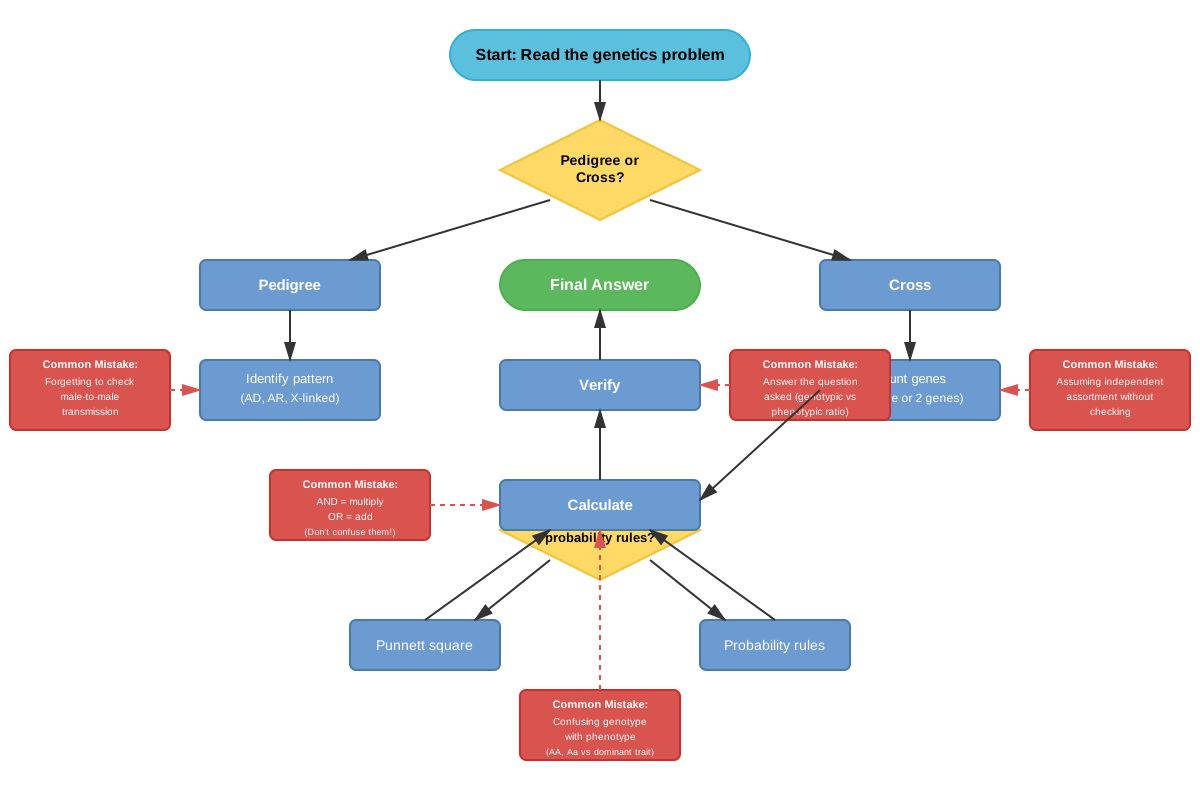
When approaching Mendelian genetics questions on the MCAT, begin by identifying the question type: probability calculation, pedigree analysis, experimental design, or conceptual understanding. For probability problems, determine whether a Punnett square or probability method is more efficient—use Punnett squares for simple one- or two-gene crosses, but switch to probability calculations for three or more genes or when asked about specific genotype combinations.
Trigger words and phrases to recognize:
- "What is the probability..." or "What fraction..." → probability calculation required
- "Test cross" → cross with homozygous recessive to determine unknown genotype
- "True-breeding" → homozygous for the trait in question
- "Carrier" → heterozygous for a recessive allele
- "Skips generations" → suggests recessive inheritance
- "Appears in every generation" → suggests dominant inheritance
- "Predominantly affects males" → suggests X-linked recessive
- "No male-to-male transmission" → confirms X-linked (not Y-linked or autosomal)
For pedigree analysis questions, systematically eliminate inheritance modes that contradict the observed pattern. Start by checking for male-to-male transmission (rules out X-linked), then evaluate whether the trait skips generations (suggests recessive), and finally consider sex distribution of affected individuals. When multiple inheritance modes remain possible, look for additional clues in the passage or question stem.
Process-of-elimination strategies:
- If a trait appears in offspring but not in either parent, it must be recessive (eliminates dominant)
- If two affected parents have an unaffected child, the trait must be dominant (two recessive parents cannot produce dominant offspring)
- If an affected father has all unaffected sons, consider X-linked recessive (father passes Y to sons)
- If the question asks for "probability of at least one," calculate the probability of none and subtract from 1
Time allocation: Allocate 60-90 seconds for discrete Mendelian genetics questions and 90-120 seconds for passage-based questions. If a probability calculation requires more than a 4×4 Punnett square, switch to the probability method immediately. For pedigree analysis, spend 30 seconds identifying the inheritance pattern before attempting calculations.
Exam Tip: When calculating probabilities for multiple offspring, remember that each conception is independent. The probability that all three children have a specific genotype equals the probability for one child raised to the third power.
Memory Techniques
Mnemonic for Pedigree Analysis - "SAND":
- Skips generations → recessive
- Appears every generation → dominant
- No male-to-male → X-linked
- Daughters and sons equally → autosomal
Mnemonic for Phenotypic Ratios:
- "3-1 for One, 9-3-3-1 for Two": Monohybrid crosses yield 3:1, dihybrid crosses yield 9:3:3:1
Visualization for Independent Assortment:
Picture chromosomes as different colored pairs of socks. During meiosis, each sock from a pair goes into a different gamete (segregation), and which sock from the blue pair goes with which sock from the red pair is random (independent assortment). This mental image reinforces that genes on different chromosomes segregate independently.
Acronym for Dominance Types - "CIC":
- Complete dominance → heterozygote = dominant homozygote
- Incomplete dominance → heterozygote = intermediate blend
- Codominance → heterozygote = both expressed
Memory aid for Test Crosses:
"Test with the worst" → always cross with homozygous recessive (the "worst" genotype for dominant traits) to reveal the unknown genotype.
Probability Rules Mnemonic - "MAD":
- Multiplication for AND (both events occur)
- Addition for OR (either event occurs)
- Divide to find conditional probability
Summary
Mendelian genetics describes the fundamental principles of inheritance discovered through Gregor Mendel's pea plant experiments. The Law of Segregation explains how allele pairs separate during gamete formation, while the Law of Independent Assortment describes how genes on different chromosomes segregate independently. These principles enable prediction of offspring genotypes and phenotypes using Punnett squares or probability calculations. Dominance relationships (complete, incomplete, and codominance) determine how alleles interact to produce phenotypes. Pedigree analysis applies Mendelian principles to determine inheritance patterns in families, distinguishing between autosomal and X-linked, dominant and recessive traits. Test crosses reveal unknown genotypes by crossing with homozygous recessive individuals. For the MCAT, students must master probability calculations, recognize inheritance patterns in pedigrees, and apply these principles to novel scenarios including human genetic diseases and experimental crosses in model organisms.
Key Takeaways
- The Law of Segregation and Law of Independent Assortment form the foundation of Mendelian inheritance, explaining how alleles separate during meiosis and how genes on different chromosomes assort independently
- Monohybrid crosses between heterozygotes produce 3:1 phenotypic ratios, while dihybrid crosses produce 9:3:3:1 ratios, assuming complete dominance and independent assortment
- Pedigree analysis requires systematic evaluation of inheritance patterns: autosomal traits affect both sexes equally, X-linked traits show no male-to-male transmission, dominant traits appear in every generation, and recessive traits can skip generations
- Probability methods (multiplication rule for AND, addition rule for OR) provide efficient alternatives to Punnett squares for complex crosses involving multiple genes
- Test crosses with homozygous recessive individuals reveal whether dominant-phenotype organisms are homozygous or heterozygous
- Dominance relationships vary: complete dominance (heterozygote resembles dominant homozygote), incomplete dominance (heterozygote is intermediate), and codominance (both alleles fully expressed)
- Common MCAT question types include probability calculations, pedigree analysis, experimental design for genetic crosses, and clinical scenarios involving human genetic diseases
Related Topics
Non-Mendelian Inheritance: Explores inheritance patterns that deviate from classical Mendelian ratios, including linkage, epistasis, pleiotropy, and genomic imprinting. Mastering Mendelian genetics provides the foundation for understanding why some traits do not follow expected ratios.
Sex Determination and Sex Linkage: Examines how chromosomal composition determines sex and how genes on sex chromosomes are inherited differently than autosomal genes. Builds directly on Mendelian principles while introducing sex-specific inheritance patterns.
Population Genetics and Hardy-Weinberg Equilibrium: Applies Mendelian principles to entire populations, using allele and genotype frequencies to predict evolutionary changes. Understanding individual-level inheritance enables analysis of population-level genetic dynamics.
Molecular Basis of Inheritance: Connects Mendelian genetics to DNA structure, replication, and gene expression, explaining how genes encode traits at the molecular level. Provides the biochemical foundation underlying classical genetic observations.
Genetic Counseling and Risk Assessment: Applies Mendelian principles to calculate recurrence risks for genetic diseases in families, integrating pedigree analysis with probability calculations for clinical decision-making.
Practice CTA
Now that you have mastered the core concepts of Mendelian genetics, reinforce your understanding by attempting practice questions and reviewing flashcards. Focus on problems requiring pedigree analysis and probability calculations, as these represent the most common MCAT question types for this topic. Challenge yourself with complex scenarios involving multiple genes or non-standard inheritance patterns to build the flexible problem-solving skills the MCAT rewards. Remember: consistent practice with varied question types transforms conceptual knowledge into test-day success. Your investment in mastering Mendelian genetics will pay dividends not only on exam day but throughout your medical career as you encounter genetic diseases and counsel patients about inheritance risks.
Sign up free to keep reading
Create a free AnvayaPrep account to finish this MCAT guide on Mendelian genetics — plus flashcards and practice questions.