Overview
Sex is a foundational concept in Sociology that refers to the biological and physiological characteristics that distinguish males, females, and intersex individuals. In the context of the MCAT, understanding sex is critical because it serves as the biological foundation upon which social constructs like gender are built, and it plays a central role in discussions of Social Stratification and Inequality. The MCAT Psychological, Social, and Biological Foundations of Behavior section frequently tests students' ability to distinguish between sex (biological) and gender (social/cultural), and to understand how biological sex categories intersect with social systems to create patterns of inequality, discrimination, and differential health outcomes.
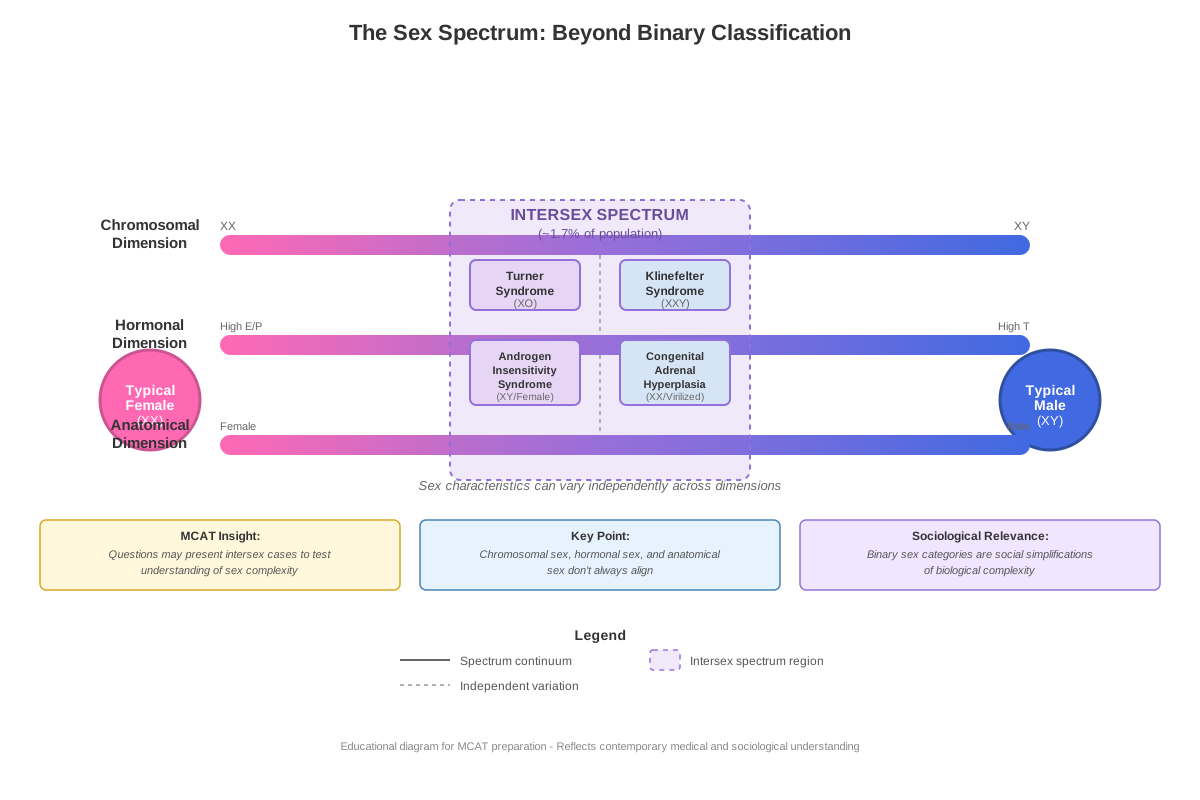
The concept of sex extends beyond simple binary categorization. While traditionally conceptualized as male or female based on chromosomes, hormones, and reproductive anatomy, contemporary sociological and medical understanding recognizes that sex exists on a spectrum, with intersex individuals representing naturally occurring variations in sex characteristics. For MCAT purposes, students must understand both the traditional biological definitions and the sociological implications of how societies respond to and organize around sex differences. This includes understanding how sex-based stratification creates systematic advantages and disadvantages in access to resources, power, and opportunities.
Sex Sociology examines how biological sex characteristics interact with social structures to produce inequality. This topic connects directly to broader themes in Social Stratification and Inequality, including gender stratification, intersectionality, discrimination, and health disparities. The MCAT frequently presents passages that require students to analyze how sex (as a biological variable) and gender (as a social construct) independently and jointly influence health behaviors, medical treatment, social mobility, and institutional practices. Mastering this topic enables students to critically evaluate research studies, identify confounding variables, and understand the complex interplay between biology and society that characterizes human health and behavior.
Learning Objectives
- [ ] Define Sex using accurate Sociology terminology
- [ ] Explain why Sex matters for the MCAT
- [ ] Apply Sex to exam-style questions
- [ ] Identify common mistakes related to Sex
- [ ] Connect Sex to related Sociology concepts
- [ ] Distinguish between sex and gender with precision and provide examples of each
- [ ] Analyze how sex-based stratification contributes to social inequality
- [ ] Evaluate the role of sex as a variable in health disparities research
- [ ] Synthesize understanding of sex with intersectionality frameworks
Prerequisites
- Basic biological understanding of human reproduction: Necessary to understand the anatomical and physiological basis of sex categories
- Introduction to social stratification: Provides the framework for understanding how sex functions as a stratifying variable in society
- Fundamental concepts of culture and socialization: Essential for distinguishing biological sex from socially constructed gender roles
- Basic research methodology: Required to understand how sex is operationalized as a variable in sociological and medical research
Why This Topic Matters
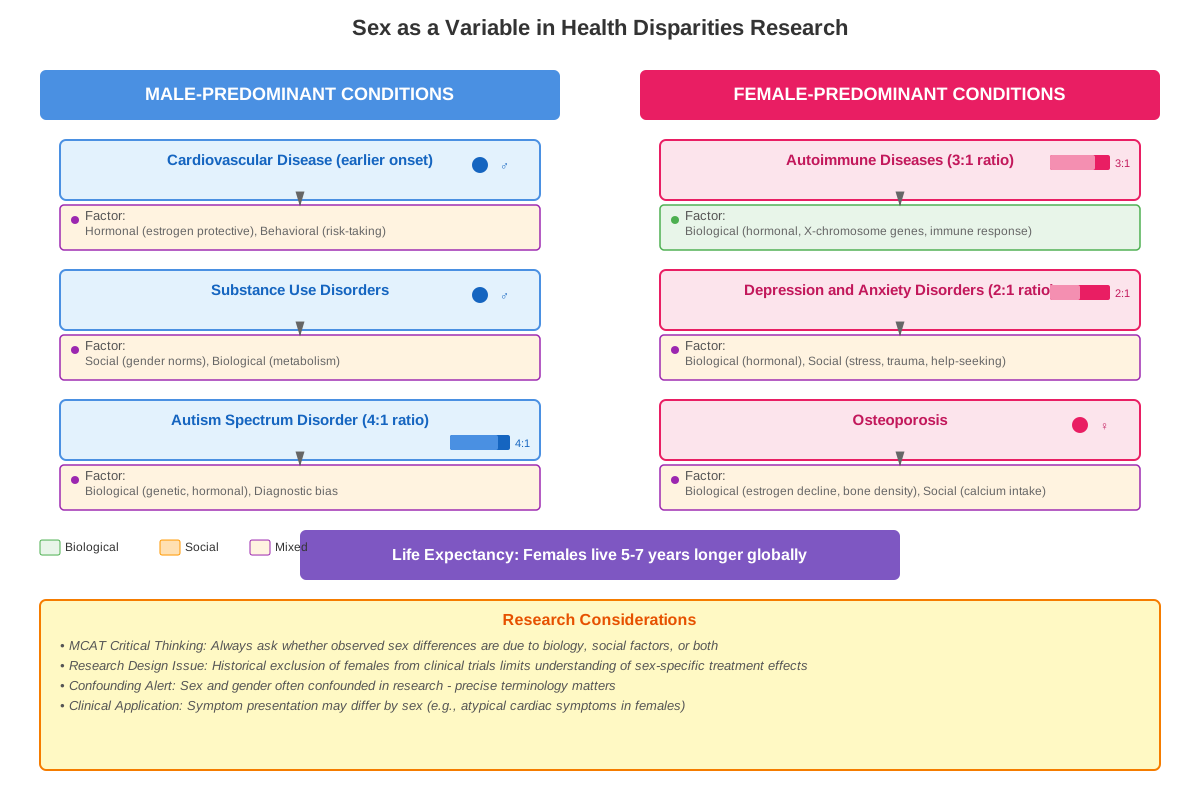
Sex MCAT questions appear with high frequency across multiple question types in the Psychological, Social, and Biological Foundations of Behavior section. Understanding sex is clinically significant because biological sex differences influence disease prevalence, symptom presentation, treatment efficacy, and health-seeking behaviors. For example, cardiovascular disease presents differently in males and females, with females often experiencing atypical symptoms that lead to delayed diagnosis and treatment. Autoimmune diseases disproportionately affect females, while males face higher rates of certain cancers and shorter life expectancy across most populations.
From an exam perspective, sex-related content appears in approximately 8-12% of Sociology passages on the MCAT, often integrated with questions about gender, health disparities, discrimination, and research design. The MCAT frequently tests students' ability to identify whether a passage is discussing sex (biological) or gender (social), to recognize how sex functions as both an independent and dependent variable in research, and to understand how sex-based stratification intersects with other forms of inequality such as race, class, and sexuality.
Common question formats include: (1) passage-based questions asking students to identify whether observed differences are attributable to biological sex or socialized gender; (2) discrete questions testing definitional knowledge of sex versus gender; (3) research design questions requiring students to identify sex as a potential confounding variable; and (4) application questions asking students to predict how sex-based stratification might influence health outcomes, social mobility, or institutional practices. Understanding this topic is essential not only for direct questions about sex but also for correctly interpreting passages about gender inequality, feminist theory, health disparities, and intersectionality.
Core Concepts
Biological Definition of Sex
Sex refers to the biological and physiological characteristics that categorize individuals as male, female, or intersex. These characteristics include chromosomal composition (typically XX or XY, though variations exist), reproductive anatomy (internal and external genitalia), hormonal profiles (relative levels of testosterone, estrogen, and other sex hormones), and secondary sex characteristics (breast development, facial hair, body composition). The biological basis of sex is determined primarily at conception through chromosomal inheritance, though the expression of sex characteristics develops throughout prenatal development, childhood, and puberty.
The traditional binary model of sex categorizes individuals as either male or female based on concordance of these characteristics. Males typically possess XY chromosomes, testes, higher testosterone levels, and male-typical external genitalia, while females typically possess XX chromosomes, ovaries, higher estrogen levels, and female-typical external genitalia. However, this binary model does not capture the full spectrum of human biological variation. Intersex individuals are born with sex characteristics (chromosomes, gonads, hormones, or genitalia) that do not fit typical binary notions of male or female bodies. Intersex conditions occur in approximately 1-2% of births and include conditions such as androgen insensitivity syndrome, congenital adrenal hyperplasia, and chromosomal variations like XXY (Klinefelter syndrome) or XO (Turner syndrome).
Sex as a Social Category
While sex has a biological basis, how societies recognize, categorize, and respond to sex differences is fundamentally social. Societies create sex categories that determine legal status, social roles, and institutional treatment. Most societies operate with a binary sex classification system that assigns individuals to male or female categories at birth based on external genital appearance. This assignment has profound social consequences, influencing everything from legal documentation to bathroom access to medical treatment protocols.
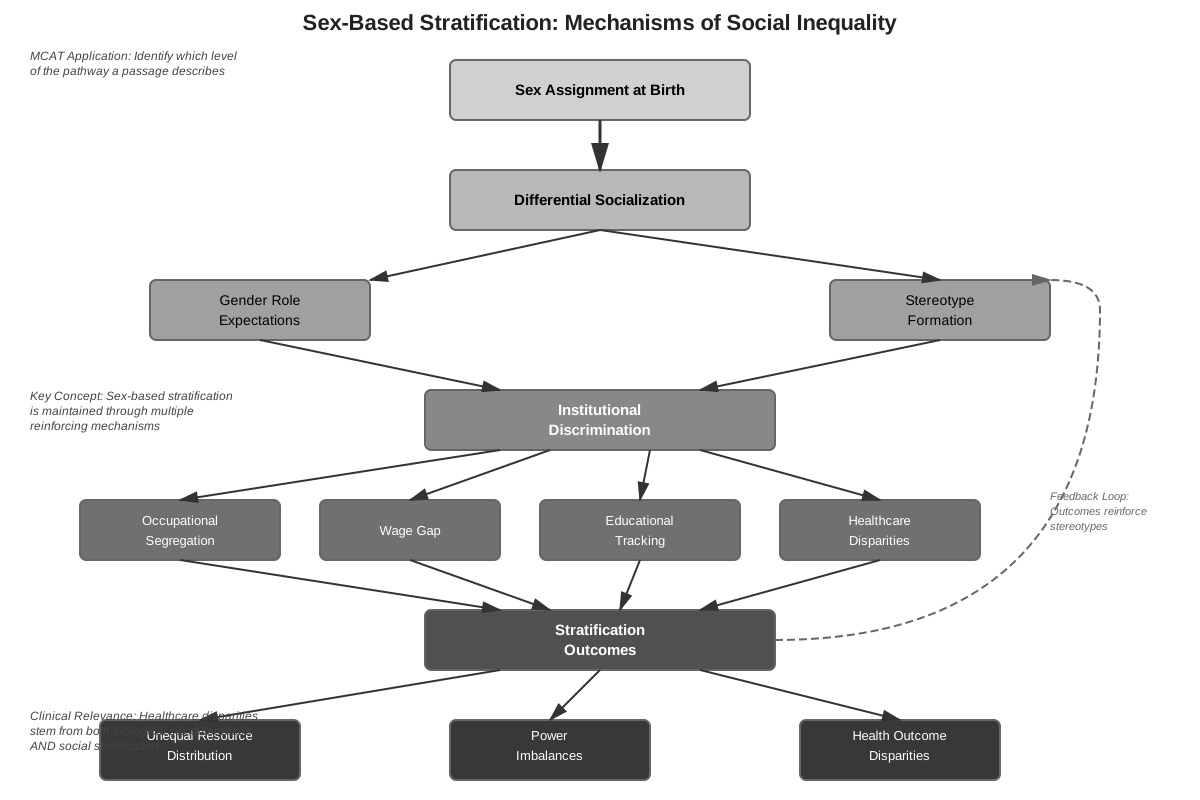
The sociological significance of sex lies not in the biological differences themselves, but in how societies interpret and organize around these differences. Sex-based stratification refers to the systematic inequality between sex categories in access to resources, power, prestige, and opportunities. This stratification manifests in various forms: occupational segregation (concentration of males and females in different jobs), wage gaps (differential compensation for similar work), educational tracking (steering individuals toward different fields based on sex), and differential treatment in healthcare, criminal justice, and other institutions.
Sex Versus Gender Distinction
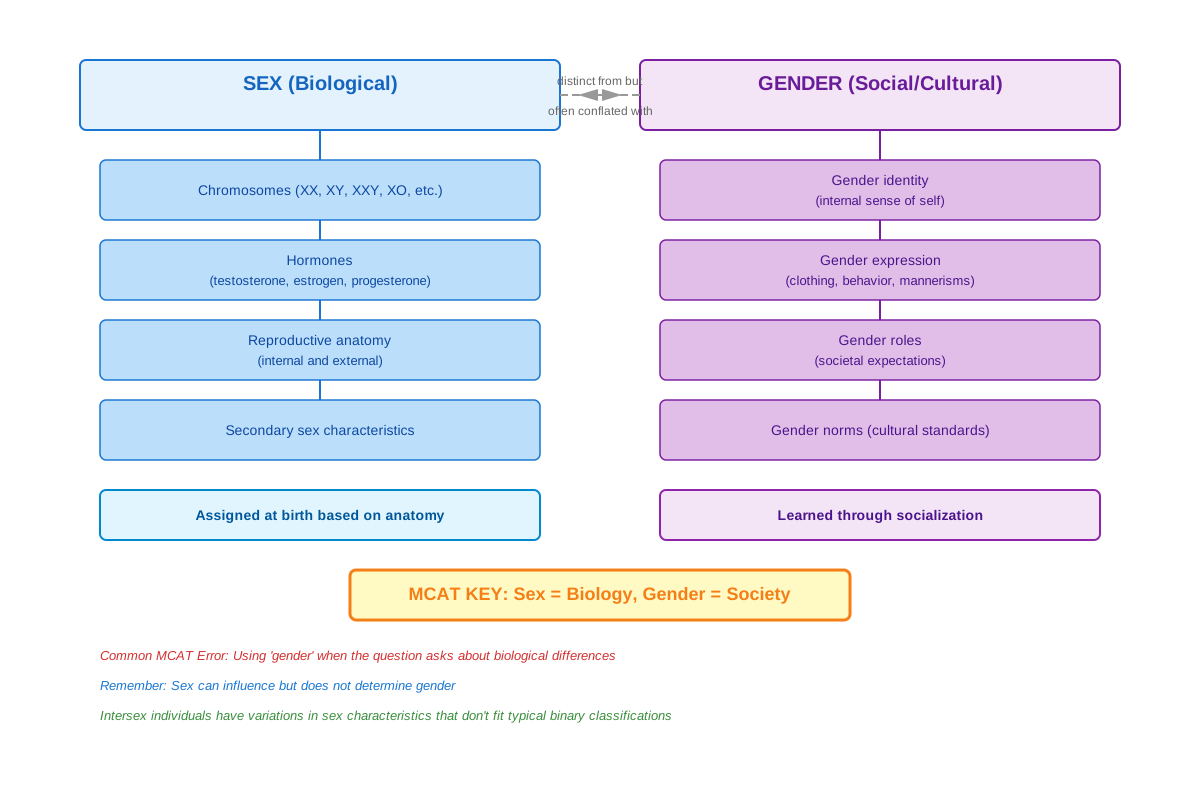
A critical concept for the MCAT is the distinction between sex and gender. While sex refers to biological characteristics, gender refers to the socially constructed roles, behaviors, expressions, and identities that societies associate with being male, female, or other gender categories. Gender includes concepts like masculinity and femininity, gender roles (expected behaviors for males and females), gender identity (one's internal sense of being male, female, both, or neither), and gender expression (how one presents gender through clothing, behavior, and appearance).
| Characteristic | Sex | Gender |
|---|---|---|
| Nature | Biological/physiological | Social/cultural |
| Basis | Chromosomes, hormones, anatomy | Roles, behaviors, identities |
| Variability | Relatively consistent across cultures | Varies significantly across cultures and time |
| Assignment | Typically at birth based on anatomy | Learned through socialization |
| Examples | Male, female, intersex | Masculine, feminine, gender roles |
| Changeability | Relatively fixed (though medical interventions exist) | Fluid and socially constructed |
The MCAT frequently tests whether students can correctly identify which concept (sex or gender) is being discussed in a passage. For example, a passage describing hormonal differences in disease susceptibility is discussing sex, while a passage describing how boys and girls are socialized to express emotions differently is discussing gender. Understanding this distinction is essential for correctly answering questions about health disparities, socialization, identity formation, and inequality.
Sex and Health Disparities
Biological sex differences contribute to significant health disparities between males and females. These disparities arise from multiple mechanisms: (1) chromosomal and hormonal differences that influence disease susceptibility and progression; (2) anatomical differences that affect disease presentation and diagnosis; (3) sex-specific conditions (prostate cancer in males, ovarian cancer in females); and (4) differential physiological responses to medications and treatments.
Examples of sex-based health disparities include higher rates of autoimmune diseases in females (lupus, multiple sclerosis, rheumatoid arthritis), higher rates of cardiovascular disease in males at younger ages, different symptom presentation for heart attacks (males more likely to experience chest pain, females more likely to experience fatigue and nausea), and different pharmacokinetics for many medications (females often metabolize drugs differently due to hormonal influences and body composition differences). The MCAT may present passages requiring students to distinguish whether observed health differences are attributable to biological sex differences or to gendered behaviors and social factors.
Sex as a Variable in Research
In sociological and medical research, sex functions as an important demographic and biological variable. Researchers must carefully consider how to operationalize and analyze sex in their studies. Sex can function as:
- Independent variable: Examining how sex influences outcomes (e.g., "Do males and females differ in rates of depression?")
- Dependent variable: Examining factors that influence sex ratios or sex-selective outcomes (e.g., "How does sex-selective abortion affect population sex ratios?")
- Confounding variable: Sex may correlate with both the independent and dependent variables, creating spurious associations
- Moderating variable: Sex may influence the strength or direction of relationships between other variables
The MCAT frequently tests students' ability to identify sex as a potential confounding variable in research designs. For example, if a study finds that taller individuals earn higher salaries, sex could be a confounding variable because males are on average taller than females and also face different labor market conditions due to gender discrimination.
Intersectionality and Sex
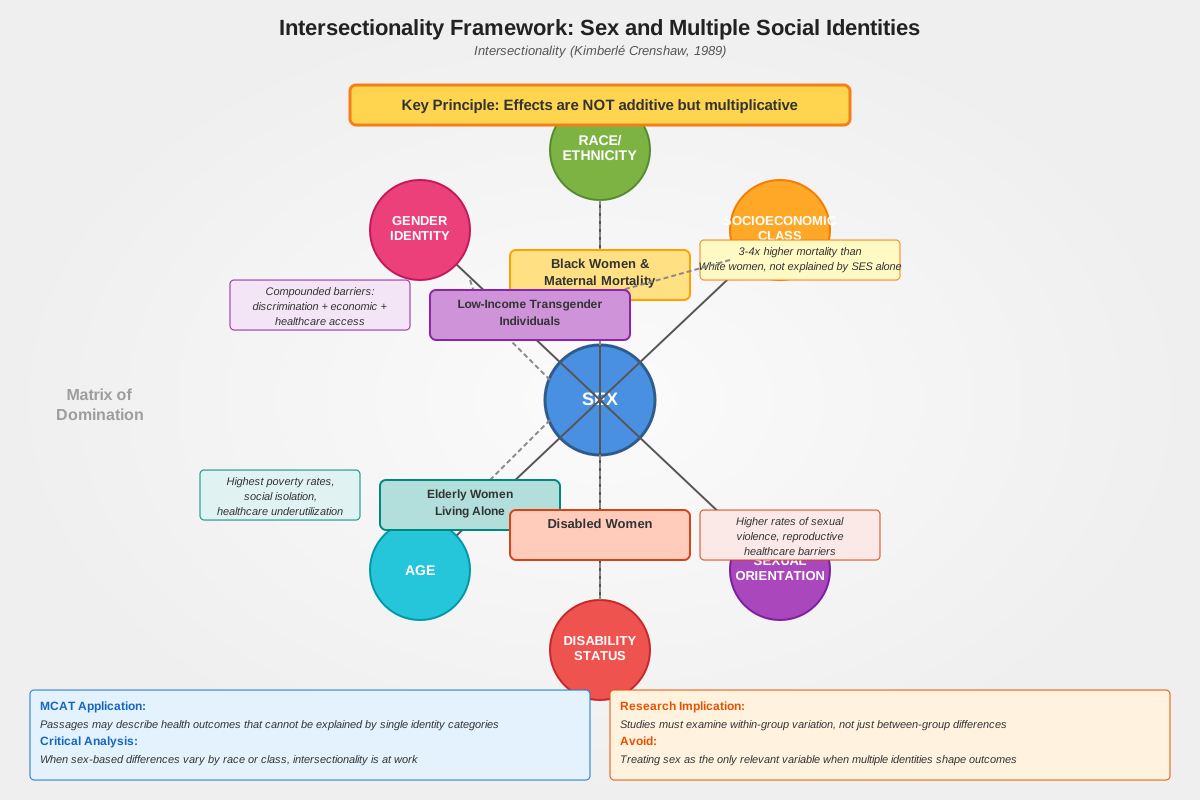
Intersectionality is a framework for understanding how multiple social identities (race, class, sex, sexuality, disability, etc.) intersect to create unique experiences of privilege and oppression. Sex does not operate in isolation but intersects with other identity categories to produce complex patterns of inequality. For example, the experience of being female differs significantly based on race, class, and other identities. Black females face different stereotypes, discrimination patterns, and health outcomes than white females, reflecting the intersection of sexism and racism.
The MCAT may present passages requiring students to apply intersectional analysis to understand health disparities or social outcomes. For instance, maternal mortality rates in the United States are significantly higher for Black females than white females, even when controlling for socioeconomic status and education level. This disparity reflects the intersection of sex (pregnancy-related risks), race (systemic racism in healthcare), and gender (dismissal of females' pain reports), demonstrating how multiple forms of stratification compound to produce severe health inequities.
Concept Relationships
The concept of sex serves as a foundational biological category upon which social systems build gendered expectations and roles. The relationship flows: Biological Sex → Sex Category Assignment → Gender Socialization → Gender Roles and Identity. However, this is not a simple unidirectional relationship; social responses to sex differences also influence how biological sex is understood, measured, and treated medically.
Sex connects directly to social stratification as one of the primary axes along which societies organize inequality. Sex-based stratification intersects with other stratification systems (race, class, sexuality) through intersectionality to create complex patterns of advantage and disadvantage. This intersection influences health disparities, as biological sex differences combine with gendered social experiences and other forms of discrimination to produce differential health outcomes.
Within research methodology, sex functions as a critical variable that connects to concepts of confounding, sampling, and generalizability. Researchers must consider whether their findings apply equally across sex categories or whether sex moderates observed relationships. This connects to broader discussions of research ethics and representation in medical research, as historically many studies excluded females or failed to analyze results by sex, leading to gaps in medical knowledge.
The relationship map: Sex (biological) ↔ Gender (social) → Gender Stratification → Occupational Segregation, Wage Gaps, Educational Tracking → Social Inequality → Health Disparities ← Sex (biological) + Discrimination (social). This bidirectional relationship illustrates how biological and social factors interact to produce observed outcomes.
Quick check — test yourself on Sex so far.
Try Flashcards →High-Yield Facts
⭐ Sex refers to biological and physiological characteristics (chromosomes, hormones, anatomy), while gender refers to socially constructed roles, behaviors, and identities.
⭐ Sex exists on a spectrum; intersex individuals (1-2% of births) have sex characteristics that don't fit typical binary categories.
⭐ Sex-based stratification creates systematic inequality in access to resources, power, and opportunities between sex categories.
⭐ Sex functions as both an independent variable (influencing outcomes) and a potential confounding variable (creating spurious associations) in research.
⭐ Health disparities between sexes arise from both biological differences (hormones, chromosomes, anatomy) and social factors (discrimination, gender roles, access to care).
- Intersectionality examines how sex intersects with race, class, and other identities to create unique experiences of privilege and oppression.
- Sex category assignment typically occurs at birth based on external genital appearance and has profound social consequences throughout life.
- Biological sex differences influence disease prevalence (autoimmune diseases more common in females, cardiovascular disease more common in males at younger ages).
- The MCAT frequently tests the ability to distinguish whether a passage discusses sex (biological) or gender (social/cultural).
- Sex-based health disparities include different symptom presentation (heart attacks present differently in males and females) and different medication responses.
- Historical medical research often excluded females or failed to analyze by sex, creating gaps in medical knowledge about sex-specific treatment efficacy.
- Sex-selective practices (abortion, infanticide) in some societies create skewed population sex ratios with social consequences.
Common Misconceptions
Misconception: Sex and gender are synonyms and can be used interchangeably.
Correction: Sex refers to biological characteristics (chromosomes, hormones, anatomy), while gender refers to socially constructed roles, behaviors, and identities. These are distinct concepts that may or may not align for a given individual. The MCAT specifically tests the ability to distinguish between these terms.
Misconception: Sex is strictly binary—everyone is either male or female.
Correction: While most individuals are male or female, sex exists on a spectrum. Intersex individuals (approximately 1-2% of births) have sex characteristics that don't fit typical binary notions. Additionally, chromosomal, hormonal, and anatomical sex characteristics don't always align in the same individual.
Misconception: All health differences between males and females are due to biological sex differences.
Correction: Observed health differences between males and females result from complex interactions between biological sex factors (hormones, chromosomes, anatomy) and social gender factors (discrimination, socialized behaviors, differential access to care, occupational exposures). The MCAT requires students to distinguish biological from social contributions to health disparities.
Misconception: Sex is the independent variable and gender is the dependent variable (sex causes gender).
Correction: While biological sex influences how individuals are socialized into gender roles, the relationship is bidirectional and complex. Gender (social expectations) also influences how sex is understood, measured, and treated. Additionally, gender identity may not align with assigned sex category.
Misconception: Sex-based stratification is natural and inevitable because it's based on biological differences.
Correction: While sex has a biological basis, sex-based stratification (systematic inequality between sex categories) is a social phenomenon. The extent and nature of inequality between sex categories varies dramatically across societies and historical periods, demonstrating that stratification is socially constructed rather than biologically determined.
Misconception: If a study controls for sex, it has controlled for gender.
Correction: Sex and gender are distinct variables. Controlling for biological sex (male/female categories) does not control for gender-related factors such as socialized behaviors, discrimination experiences, or adherence to gender roles. Rigorous research should consider both sex and gender as potentially relevant variables.
Misconception: Sex differences in health outcomes are always larger than gender differences.
Correction: The relative contribution of biological sex versus social gender to health outcomes varies by condition. For some outcomes (pregnancy complications), biological sex is primary. For others (depression, substance use), gendered social experiences may contribute more than biological factors. Many outcomes reflect complex interactions of both.
Worked Examples
Example 1: Distinguishing Sex from Gender in Research
Vignette: A research study examines differences in pain tolerance between males and females. The study finds that males report higher pain tolerance than females when exposed to standardized painful stimuli. The researchers conclude that males have biologically higher pain tolerance than females.
Question: What is the primary limitation of this conclusion?
Analysis:
- Identify what's being measured: The study measures reported pain tolerance, which involves both physiological pain perception (biological) and willingness to report pain (social/behavioral).
- Consider biological sex factors: Biological sex differences in pain perception do exist—hormones (particularly estrogen) influence pain pathways, and there are documented sex differences in endogenous opioid systems.
- Consider gender factors: Males are socialized to suppress pain expression and demonstrate toughness (masculine gender norms), while females may be more comfortable reporting pain. This socialization affects reported pain tolerance independent of actual physiological pain perception.
- Evaluate the conclusion: The researchers attribute findings solely to biological sex differences, but the study design cannot distinguish biological pain perception from gendered reporting behaviors.
Answer: The primary limitation is that the study confounds biological sex with gender socialization. The observed difference in reported pain tolerance may reflect gendered norms about pain expression (males socialized to suppress pain reports) rather than purely biological differences in pain perception. To isolate biological sex effects, researchers would need to measure physiological pain responses (neurological, hormonal) rather than relying solely on self-reported tolerance, or control for gender role adherence as a separate variable.
Connection to Learning Objectives: This example demonstrates the critical distinction between sex (biological) and gender (social), shows how these concepts can be confounded in research, and illustrates why careful analysis is necessary when interpreting sex differences in health outcomes.
Example 2: Intersectionality and Health Disparities
Vignette: A public health study examines maternal mortality rates in the United States and finds the following patterns:
- White females: 13 deaths per 100,000 live births
- Black females: 41 deaths per 100,000 live births
- Hispanic females: 11 deaths per 100,000 live births
The disparity persists even when controlling for socioeconomic status, education level, and access to prenatal care. Researchers note that Black females with college degrees have higher maternal mortality rates than white females without high school diplomas.
Question: Which sociological framework best explains these persistent disparities, and what factors beyond biological sex contribute to these outcomes?
Analysis:
- Identify the relevant framework: Intersectionality is the appropriate framework because the data show that sex (pregnancy-related risks) intersects with race to produce disparities that cannot be explained by either factor alone.
- Consider biological sex factors: All groups face biological risks associated with pregnancy and childbirth (hemorrhage, infection, complications). These biological sex-related risks are relatively constant across racial groups.
- Consider social factors at the intersection:
- Systemic racism in healthcare: Black females report experiencing discrimination, having their symptoms dismissed, and receiving lower quality care
- Chronic stress: Weathering hypothesis suggests cumulative stress from racism produces physiological wear that increases pregnancy complications
- Implicit bias: Healthcare providers may hold unconscious biases affecting treatment decisions
- Historical trauma: Medical exploitation of Black females (e.g., unethical experimentation) creates mistrust
- Explain why controlling for SES doesn't eliminate disparity: The persistence of disparities after controlling for socioeconomic factors indicates that race-based discrimination and stress operate independently of class. A Black female with a college degree still experiences racism that a white female without a degree does not.
Answer: Intersectionality best explains these disparities. While biological sex creates universal pregnancy-related risks, the intersection of sex and race produces unique vulnerabilities for Black females. The disparities result from systemic racism in healthcare (discrimination, bias, differential treatment quality), chronic stress from racism that produces physiological effects (weathering), and historical trauma affecting trust and care-seeking. The persistence of disparities across socioeconomic levels demonstrates that race-based oppression operates independently of class, creating compounded disadvantage at the intersection of being female and Black.
Connection to Learning Objectives: This example demonstrates how sex intersects with other forms of stratification (race) to produce health disparities, illustrates the application of intersectionality theory, and shows how biological factors (sex-related pregnancy risks) interact with social factors (racism, discrimination) to produce observed outcomes.
Exam Strategy
When approaching Sex MCAT questions, first determine whether the passage or question is discussing sex (biological) or gender (social). Look for trigger words: "chromosomes," "hormones," "anatomy," "physiological" suggest sex; "roles," "socialization," "expectations," "identity" suggest gender. Many MCAT questions specifically test whether students can make this distinction.
For research design questions involving sex, systematically consider whether sex is functioning as an independent variable (the factor being studied), dependent variable (the outcome), confounding variable (creating spurious associations), or moderating variable (influencing relationship strength). If a passage describes a correlation between two variables, always ask: "Could sex be a confounding variable here?" For example, if a study finds that height correlates with income, sex could confound this relationship because males are taller on average and face different labor market conditions.
When passages discuss health disparities between males and females, use a systematic framework to analyze contributing factors:
- Biological sex factors: Chromosomes, hormones, anatomy, sex-specific conditions
- Gender factors: Socialized behaviors, occupational exposures, health-seeking patterns
- Discrimination factors: Differential treatment by healthcare providers, systemic barriers
- Intersectional factors: How sex/gender intersects with race, class, other identities
Process-of-elimination strategy: Eliminate answer choices that confuse sex with gender or that attribute social phenomena to biological causes (biological determinism). Be suspicious of answers that suggest sex-based inequality is "natural" or "inevitable"—the MCAT expects students to recognize that stratification is socially constructed. Also eliminate answers that oversimplify complex phenomena by attributing outcomes to a single factor when multiple factors interact.
Time allocation: Sex-related questions typically require 60-90 seconds. Definitional questions (sex vs. gender) should take 30-45 seconds. Application questions requiring analysis of research design or health disparities may take 90-120 seconds. If a question asks about both sex and gender, budget extra time to carefully distinguish the contributions of each.
Exam Tip: If a question asks about differences between males and females, the correct answer often involves BOTH biological sex factors AND social gender factors. Answers that attribute everything to biology or everything to socialization are usually incorrect.
Memory Techniques
Mnemonic for Sex vs. Gender - "CHAB vs. RIBE":
- Sex = CHAB: Chromosomes, Hormones, Anatomy, Biology
- Gender = RIBE: Roles, Identity, Behaviors, Expression
Visualization for Intersectionality: Picture a grid or matrix where sex forms one axis and race forms another axis. Each cell in the matrix represents a unique intersection (Black female, white male, etc.) with distinct experiences. This visual reinforces that intersectional identities are not simply additive (female + Black) but create qualitatively different experiences.
Acronym for Sex as Research Variable - "ICMD":
- Independent variable (sex influences outcome)
- Confounding variable (sex correlates with both IV and DV)
- Moderating variable (sex influences relationship strength)
- Dependent variable (factors influence sex ratios)
Memory aid for Health Disparities Framework: Use the acronym "BIDS" to remember factors contributing to sex-based health disparities:
- Biological (chromosomes, hormones, anatomy)
- Intersectional (sex + race + class interactions)
- Discrimination (systemic barriers, bias)
- Socialized behaviors (gender roles affecting health behaviors)
Conceptual anchor: Remember that sex is to gender as hardware is to software. Sex is the biological "hardware" (physical characteristics), while gender is the social "software" (programmed roles and expectations). This analogy helps maintain the distinction while recognizing that both influence behavior and outcomes.
Summary
Sex refers to the biological and physiological characteristics that categorize individuals as male, female, or intersex, based on chromosomes, hormones, reproductive anatomy, and secondary sex characteristics. While sex has a biological basis, it functions as a social category that societies use to organize inequality through sex-based stratification. The critical distinction between sex (biological) and gender (social) is frequently tested on the MCAT and essential for correctly interpreting passages about health disparities, socialization, and inequality. Sex influences health outcomes through multiple mechanisms: direct biological effects (hormonal influences on disease), sex-specific conditions (pregnancy complications), and interactions with social factors (discrimination, gendered behaviors). In research, sex functions as an important variable that can be independent, dependent, confounding, or moderating, requiring careful consideration in study design and interpretation. Intersectionality provides a framework for understanding how sex intersects with race, class, and other identities to create unique experiences of privilege and oppression. Mastering this topic requires understanding both the biological foundations of sex differences and the social processes through which these differences are interpreted, organized, and transformed into systematic inequality.
Key Takeaways
- Sex (biological: chromosomes, hormones, anatomy) is distinct from gender (social: roles, behaviors, identities)—the MCAT frequently tests this distinction
- Sex exists on a spectrum; intersex individuals represent natural biological variation beyond the male/female binary
- Sex-based stratification creates systematic inequality between sex categories in access to resources, power, and opportunities
- Health disparities between sexes result from complex interactions of biological factors (hormones, anatomy) and social factors (discrimination, gendered behaviors)
- In research, sex can function as independent, dependent, confounding, or moderating variable—always consider sex as potential confounder
- Intersectionality explains how sex intersects with race, class, and other identities to produce unique experiences and compounded disadvantage
- Understanding sex is essential for interpreting MCAT passages on health disparities, research design, social stratification, and inequality
Related Topics
Gender and Gender Stratification: Building directly on the concept of sex, gender examines socially constructed roles, identities, and expressions, and how these create systematic inequality. Mastering sex provides the foundation for understanding how biological categories are transformed into social hierarchies.
Intersectionality: This framework examines how multiple social identities (sex, race, class, sexuality) intersect to create unique experiences. Understanding sex as one axis of stratification enables deeper analysis of how multiple forms of oppression compound.
Health Disparities: Sex is a fundamental variable in health disparities research. Understanding biological sex differences and their interaction with social factors is essential for analyzing differential health outcomes across populations.
Feminist Theory: Various feminist perspectives analyze how sex-based categories and gender systems create and maintain inequality. Understanding sex provides the foundation for engaging with feminist analyses of patriarchy, oppression, and social change.
Research Methods and Design: Sex functions as a critical variable in research requiring careful operationalization and analysis. Understanding sex enhances ability to evaluate study designs, identify confounding variables, and interpret research findings.
Practice CTA
Now that you've mastered the foundational concepts of sex in sociology, it's time to test your understanding! Work through the practice questions and flashcards to reinforce your ability to distinguish sex from gender, analyze sex-based stratification, and apply these concepts to MCAT-style passages. Pay special attention to questions that require you to identify whether biological or social factors are being discussed—this distinction is high-yield for exam success. Remember, consistent practice with application questions is what transforms conceptual knowledge into the rapid, accurate analysis required for MCAT excellence. You've built a strong foundation—now strengthen it through deliberate practice!
Sign up free to keep reading
Create a free AnvayaPrep account to finish this MCAT guide on Sex — plus flashcards and practice questions.