Overview
Ribosome structure is a foundational topic in Molecular Biology and Genetics that appears consistently on the MCAT, particularly in passages involving protein synthesis, gene expression, and cellular function. Ribosomes are complex molecular machines composed of ribosomal RNA (rRNA) and proteins that catalyze the translation of messenger RNA (mRNA) into polypeptide chains. Understanding the structural organization of ribosomes—including their subunit composition, functional sites, and differences between prokaryotic and eukaryotic forms—is essential for answering questions about translation mechanisms, antibiotic action, and cellular compartmentalization.
The MCAT tests ribosome structure both directly and indirectly. Direct questions may ask students to identify subunit sizes, distinguish between prokaryotic and eukaryotic ribosomes, or locate functional sites within the ribosome. Indirect questions embed ribosomal structure within broader contexts such as gene expression regulation, protein targeting to organelles, or the mechanism of action of antibiotics that selectively inhibit bacterial ribosomes. This topic serves as a critical bridge connecting DNA transcription to protein function, making it indispensable for understanding the central dogma of molecular biology.
Mastery of ribosome structure Biology enables students to tackle interdisciplinary MCAT questions that span biochemistry, cell biology, and even pharmacology. The structural differences between prokaryotic and eukaryotic ribosomes explain why certain antibiotics can selectively target bacterial infections without harming human cells—a concept frequently tested in both biological and biochemical passages. Additionally, understanding ribosomal components and their assembly provides insight into genetic diseases, cellular stress responses, and evolutionary relationships among organisms.
Learning Objectives
- [ ] Define ribosome structure using accurate Biology terminology
- [ ] Explain why ribosome structure matters for the MCAT
- [ ] Apply ribosome structure to exam-style questions
- [ ] Identify common mistakes related to ribosome structure
- [ ] Connect ribosome structure to related Biology concepts
- [ ] Compare and contrast prokaryotic and eukaryotic ribosome structures quantitatively
- [ ] Locate and describe the function of the A, P, and E sites within the ribosome
- [ ] Explain how ribosomal structure relates to antibiotic selectivity and mechanism of action
Prerequisites
- Basic cell structure: Understanding the distinction between prokaryotic and eukaryotic cells is essential because ribosome structure differs significantly between these cell types
- Central dogma of molecular biology: Knowledge of DNA → RNA → protein flow provides context for where ribosomes function in gene expression
- RNA types: Familiarity with mRNA, tRNA, and rRNA helps students understand the molecular components that interact with ribosomes
- Protein structure: Basic understanding of polypeptide formation and amino acid bonding clarifies what ribosomes produce
- Svedberg units (S): Awareness that S units measure sedimentation rate (not additive) prevents calculation errors with ribosomal subunits
Why This Topic Matters
Clinical and Real-World Significance
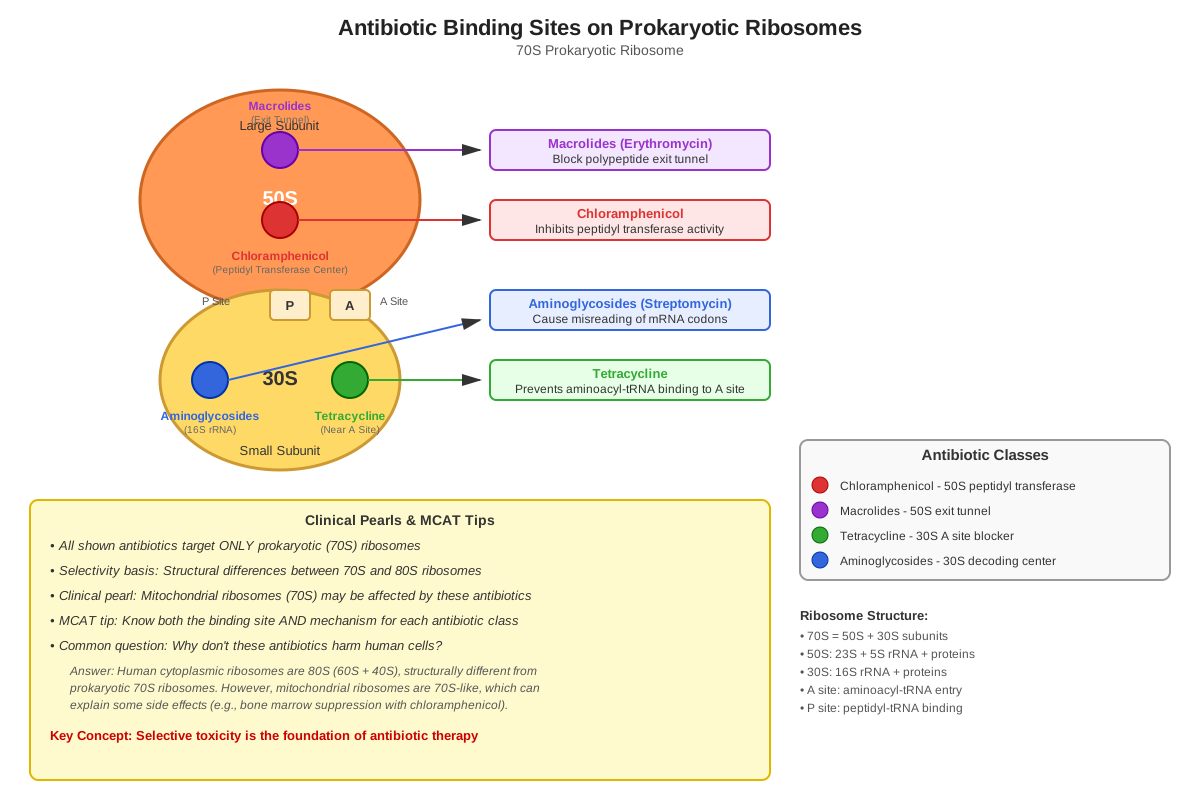
Ribosome structure has profound clinical implications, particularly in antibiotic therapy. Many antibiotics—including tetracycline, chloramphenicol, streptomycin, and erythromycin—specifically target bacterial ribosomes while sparing human ribosomes. This selectivity arises from structural differences between prokaryotic (70S) and eukaryotic (80S) ribosomes. Understanding these structural distinctions explains both the therapeutic efficacy and potential side effects of antibiotics. Additionally, ribosomal dysfunction underlies several genetic disorders, including Diamond-Blackfan anemia, which results from mutations in ribosomal protein genes.
MCAT Exam Statistics
Ribosome structure appears in approximately 3-5% of MCAT Biology questions, with medium frequency across both passage-based and discrete questions. The topic most commonly appears in:
- Biochemistry passages discussing translation mechanisms and protein synthesis
- Cell biology passages examining organelle function and cellular compartmentalization
- Genetics passages exploring gene expression and regulation
- Pharmacology-themed passages analyzing antibiotic mechanisms
Questions typically test structural knowledge indirectly by asking students to predict the effects of mutations, explain experimental results involving ribosomal inhibitors, or identify the cellular location of specific translation events.
Common Exam Contexts
The MCAT frequently embeds ribosome structure within passages about:
- Antibiotic resistance mechanisms and selective toxicity
- Protein targeting to the endoplasmic reticulum versus cytosolic synthesis
- Evolutionary relationships based on ribosomal RNA sequences
- Experimental techniques like polysome analysis or ribosome profiling
- Mitochondrial and chloroplast ribosomes as evidence for endosymbiotic theory
Core Concepts
Ribosome Composition and Basic Structure
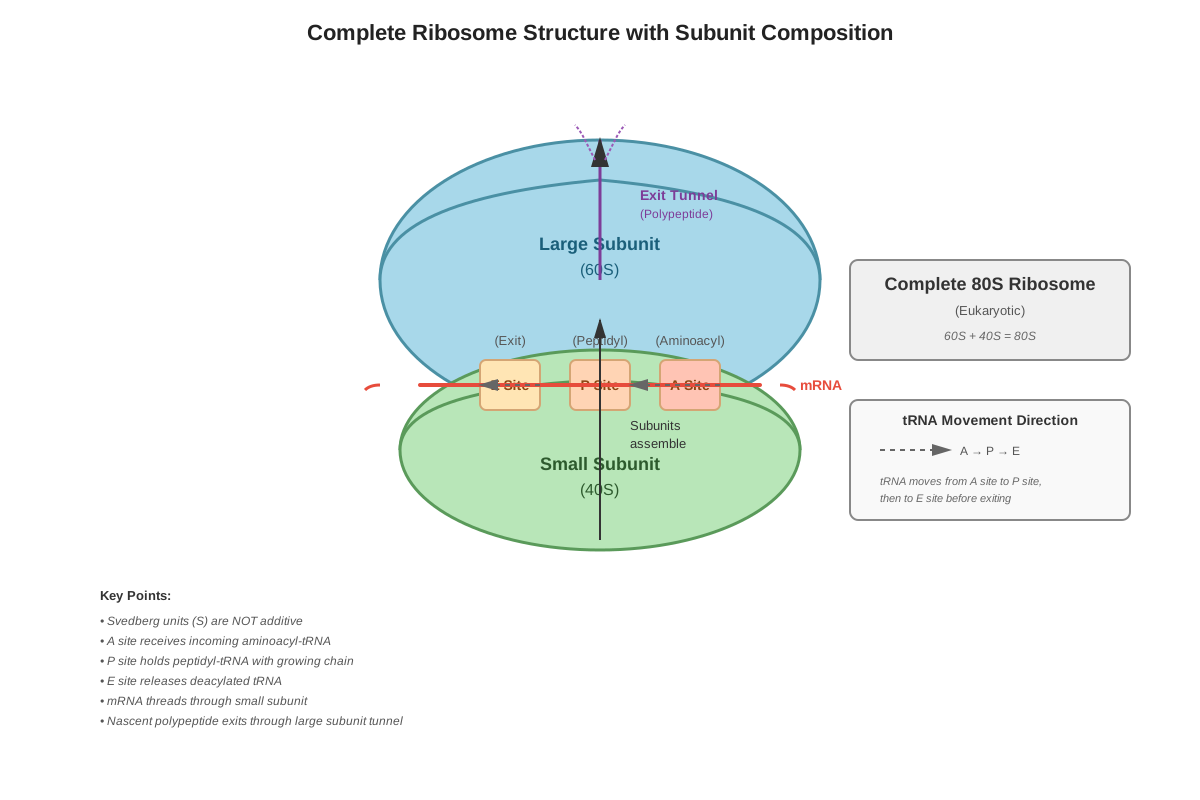
Ribosomes are ribonucleoprotein complexes consisting of ribosomal RNA (rRNA) and ribosomal proteins. Unlike most cellular structures, ribosomes are not membrane-bound organelles but rather macromolecular machines that can exist freely in the cytoplasm or attached to the endoplasmic reticulum. Each ribosome comprises two subunits—a large subunit and a small subunit—that come together during translation initiation and dissociate after translation termination.
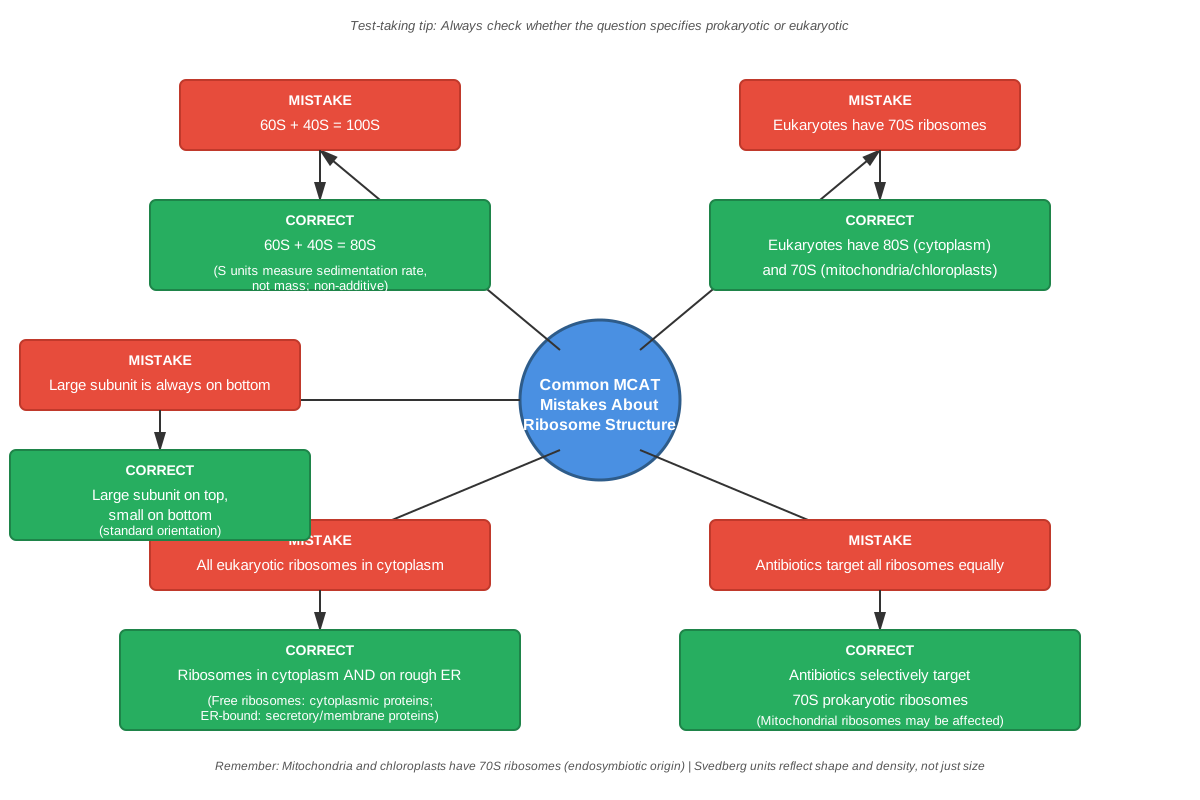
The ribosome structure is measured in Svedberg units (S), which reflect sedimentation rate during ultracentrifugation. Importantly, S units are not additive because they depend on both mass and shape. This explains why the prokaryotic 30S and 50S subunits combine to form a 70S ribosome (not 80S), and eukaryotic 40S and 60S subunits form an 80S ribosome (not 100S).
Ribosomes contain approximately 60-65% rRNA and 35-40% protein by mass. The rRNA molecules provide both structural scaffolding and catalytic activity—ribosomes are actually ribozymes, with the peptidyl transferase activity residing in the rRNA of the large subunit, not in ribosomal proteins. This discovery revolutionized understanding of RNA's catalytic potential and has important evolutionary implications.
Prokaryotic Ribosome Structure (70S)
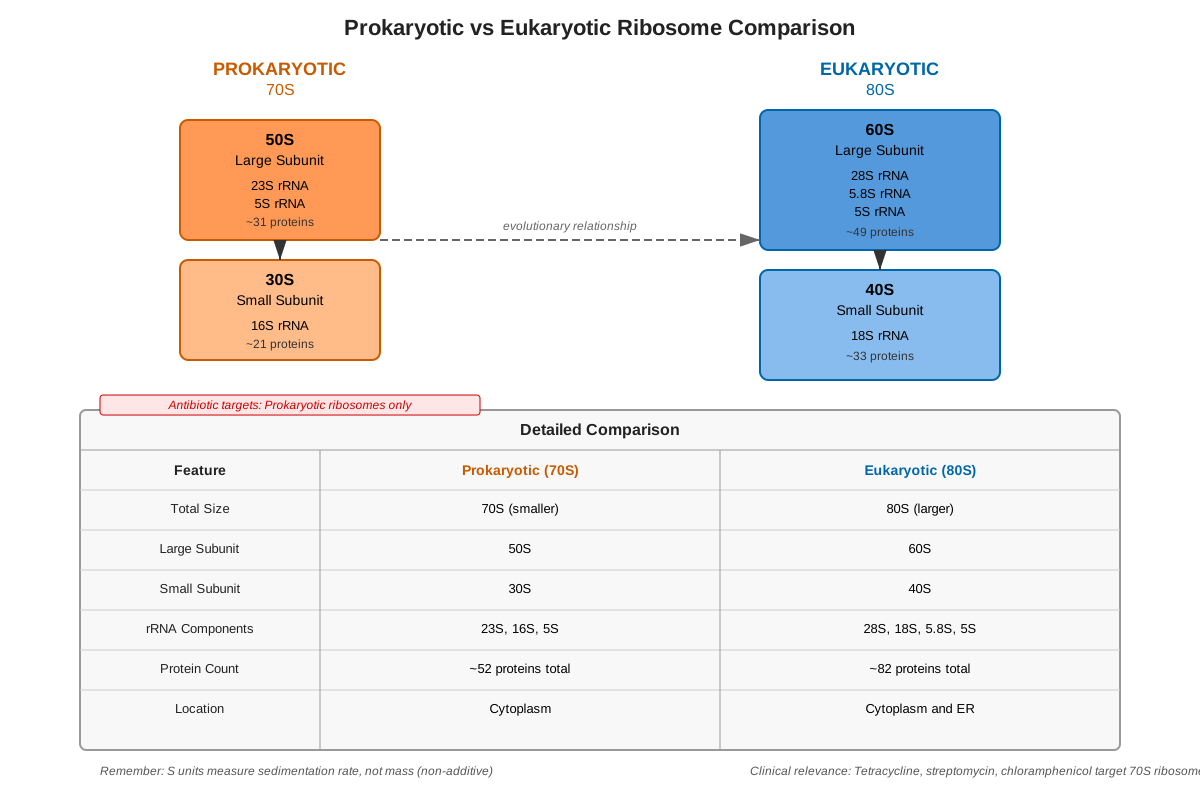
Prokaryotic ribosomes, found in bacteria and archaea, are designated 70S ribosomes and consist of:
Small Subunit (30S):
- Contains one 16S rRNA molecule (~1540 nucleotides)
- Contains approximately 21 ribosomal proteins (named S1-S21)
- Functions in mRNA binding and decoding
- Contains the Shine-Dalgarno sequence binding site for translation initiation
Large Subunit (50S):
- Contains one 23S rRNA molecule (~2900 nucleotides)
- Contains one 5S rRNA molecule (~120 nucleotides)
- Contains approximately 31 ribosomal proteins (named L1-L31)
- Houses the peptidyl transferase center (catalytic site)
- Contains the exit tunnel through which nascent polypeptides emerge
The smaller size and distinct structure of prokaryotic ribosomes make them excellent antibiotic targets. Drugs like streptomycin bind to the 30S subunit and cause misreading of mRNA, while chloramphenicol inhibits the peptidyl transferase activity of the 50S subunit.
Eukaryotic Ribosome Structure (80S)
Eukaryotic ribosomes, found in the cytoplasm of eukaryotic cells, are designated 80S ribosomes and consist of:
Small Subunit (40S):
- Contains one 18S rRNA molecule (~1900 nucleotides)
- Contains approximately 33 ribosomal proteins
- Functions in mRNA binding and start codon recognition
- Recognizes the 5' cap structure of eukaryotic mRNA
Large Subunit (60S):
- Contains one 28S rRNA molecule (~4700 nucleotides)
- Contains one 5.8S rRNA molecule (~160 nucleotides)
- Contains one 5S rRNA molecule (~120 nucleotides)
- Contains approximately 49 ribosomal proteins
- Houses the peptidyl transferase center
- Contains the polypeptide exit tunnel
Eukaryotic ribosomes are larger and more complex than prokaryotic ribosomes, containing more proteins and longer rRNA molecules. This increased complexity correlates with more sophisticated translation regulation mechanisms in eukaryotes.
Comparison Table: Prokaryotic vs. Eukaryotic Ribosomes
| Feature | Prokaryotic (70S) | Eukaryotic (80S) |
|---|---|---|
| Overall size | 70S | 80S |
| Small subunit | 30S | 40S |
| Large subunit | 50S | 60S |
| Small subunit rRNA | 16S | 18S |
| Large subunit rRNA | 23S, 5S | 28S, 5.8S, 5S |
| Total proteins | ~52 | ~82 |
| Location | Cytoplasm | Cytoplasm, ER-bound |
| Antibiotic sensitivity | High | Low |
| First amino acid | N-formylmethionine | Methionine |
Functional Sites Within the Ribosome
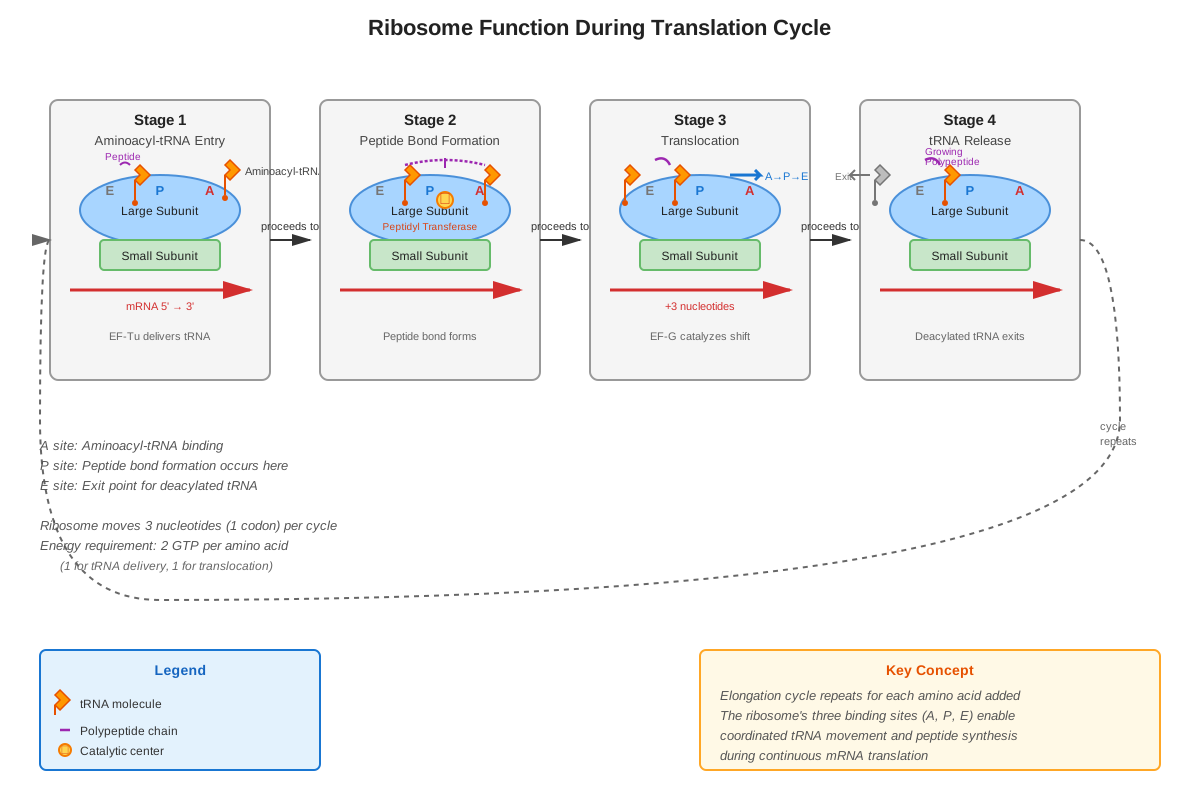
The ribosome contains three critical binding sites for tRNA molecules, each serving a distinct function during translation:
A Site (Aminoacyl-tRNA site):
- Accepts incoming aminoacyl-tRNA molecules
- Located primarily in the small subunit
- Ensures codon-anticodon recognition
- Site of initial tRNA binding during elongation
P Site (Peptidyl-tRNA site):
- Holds the tRNA carrying the growing polypeptide chain
- Spans both ribosomal subunits
- Site where peptide bond formation occurs
- First tRNA (initiator tRNA) binds directly to P site during initiation
E Site (Exit site):
- Holds deacylated tRNA before it leaves the ribosome
- Located primarily in the large subunit
- Facilitates tRNA recycling
- Ensures orderly tRNA exit after peptide transfer
During translation elongation, tRNAs move through these sites in the sequence: A → P → E. This translocation is driven by elongation factors and GTP hydrolysis, ensuring directional and accurate protein synthesis.
Ribosomal Assembly and Location
In eukaryotes, ribosomal subunits are assembled in the nucleolus, a specialized nuclear region where rRNA genes are transcribed and ribosomal proteins (imported from the cytoplasm) are combined with rRNA. The assembled subunits are then exported through nuclear pores to the cytoplasm, where they remain separate until translation initiation brings them together on an mRNA molecule.
Eukaryotic ribosomes can be:
- Free ribosomes: Located in the cytosol, synthesizing proteins destined for the cytoplasm, nucleus, mitochondria, or peroxisomes
- Bound ribosomes: Attached to the endoplasmic reticulum (forming rough ER), synthesizing proteins destined for secretion, membrane insertion, or organelles within the endomembrane system
The distinction between free and bound ribosomes is functional, not structural—the same ribosome can be free or bound depending on the protein being synthesized and the presence of a signal sequence.
Mitochondrial and Chloroplast Ribosomes
Mitochondria and chloroplasts contain their own ribosomes, which more closely resemble prokaryotic ribosomes than eukaryotic cytoplasmic ribosomes. Mitochondrial ribosomes vary in size across species but are generally smaller (55S-70S range) and sensitive to some antibiotics that target bacterial ribosomes. Chloroplast ribosomes are 70S, virtually identical to bacterial ribosomes.
This structural similarity provides strong evidence for the endosymbiotic theory, which proposes that mitochondria and chloroplasts evolved from ancient prokaryotic cells that were engulfed by ancestral eukaryotic cells. The presence of prokaryotic-type ribosomes in these organelles supports their bacterial origin.
Concept Relationships
The concepts within ribosome structure form an interconnected network essential for understanding translation. The basic composition (rRNA + proteins) determines the overall structure (subunit sizes), which in turn defines the functional sites (A, P, E sites) where translation occurs. The prokaryotic vs. eukaryotic distinction explains both evolutionary relationships and practical applications like antibiotic selectivity.
Relationship map:
- Ribosome composition (rRNA + proteins) → determines → Subunit structure (30S/50S or 40S/60S)
- Subunit structure → creates → Functional sites (A, P, E sites)
- Functional sites → enable → Translation mechanism
- Prokaryotic vs. eukaryotic differences → explain → Antibiotic selectivity
- Organellar ribosomes → support → Endosymbiotic theory
- Ribosome location (free vs. bound) → determines → Protein destination
Connections to prerequisites:
- Central dogma provides the context (DNA → RNA → ribosome-mediated translation → protein)
- Cell structure knowledge explains why prokaryotic/eukaryotic ribosomes differ
- RNA types (mRNA, tRNA, rRNA) all converge at the ribosome during translation
Connections to related topics:
- Translation initiation, elongation, and termination depend on ribosome structure
- Protein targeting mechanisms rely on ribosome location (free vs. ER-bound)
- Gene expression regulation often involves ribosome availability and activity
- Antibiotic mechanisms exploit structural differences between ribosome types
Quick check — test yourself on Ribosome structure so far.
Try Flashcards →High-Yield Facts
⭐ Prokaryotic ribosomes are 70S (30S + 50S subunits); eukaryotic cytoplasmic ribosomes are 80S (40S + 60S subunits)
⭐ Svedberg units (S) are NOT additive because they measure sedimentation rate, which depends on both mass and shape
⭐ The peptidyl transferase activity that forms peptide bonds resides in the 23S rRNA (prokaryotes) or 28S rRNA (eukaryotes), making ribosomes ribozymes
⭐ Mitochondrial and chloroplast ribosomes resemble prokaryotic ribosomes (70S), supporting the endosymbiotic theory
⭐ The three tRNA binding sites are A (aminoacyl), P (peptidyl), and E (exit), and tRNAs move through them in the order A → P → E
- Ribosomes are approximately 60-65% rRNA and 35-40% protein by mass
- The small ribosomal subunit is responsible for mRNA binding and codon recognition
- The large ribosomal subunit contains the catalytic site for peptide bond formation
- Prokaryotic ribosomes use 16S rRNA in the small subunit; eukaryotes use 18S rRNA
- Many clinically important antibiotics (tetracycline, chloramphenicol, streptomycin) specifically target prokaryotic ribosomes
- Free ribosomes synthesize proteins for the cytoplasm, nucleus, mitochondria, and peroxisomes
- Bound ribosomes (on rough ER) synthesize proteins for secretion, lysosomes, or membrane insertion
- Ribosomal subunits are assembled in the nucleolus and exported to the cytoplasm in eukaryotes
- The exit tunnel in the large subunit is approximately 80-100 Å long and 10-20 Å wide
- Polyribosomes (polysomes) are multiple ribosomes translating the same mRNA simultaneously
Common Misconceptions
Misconception: Svedberg units are additive, so 30S + 50S should equal 80S.
Correction: Svedberg units measure sedimentation rate during ultracentrifugation, which depends on both mass and shape. Because the subunits change shape when they combine, the S values are not additive. Prokaryotic 30S + 50S = 70S, and eukaryotic 40S + 60S = 80S.
Misconception: Ribosomal proteins provide the catalytic activity for peptide bond formation.
Correction: The ribosome is a ribozyme—the catalytic activity for peptide bond formation (peptidyl transferase activity) resides in the rRNA (specifically the 23S rRNA in prokaryotes or 28S rRNA in eukaryotes), not in the ribosomal proteins. Proteins primarily provide structural support.
Misconception: Free and bound ribosomes are structurally different types of ribosomes.
Correction: Free and bound ribosomes are structurally identical. The distinction is purely functional and depends on the protein being synthesized. A ribosome becomes "bound" when it attaches to the ER after synthesizing a signal sequence; the same ribosome can be free when translating a different mRNA.
Misconception: All eukaryotic ribosomes are 80S.
Correction: While cytoplasmic eukaryotic ribosomes are 80S, mitochondrial ribosomes are smaller (varying by species but generally 55S-70S range) and chloroplast ribosomes are 70S. These organellar ribosomes resemble prokaryotic ribosomes, reflecting their evolutionary origin.
Misconception: The A, P, and E sites are located entirely within one ribosomal subunit.
Correction: The tRNA binding sites span both ribosomal subunits. The anticodon-binding region is in the small subunit (where codon-anticodon interaction occurs), while the aminoacyl end of tRNA extends into the large subunit (where peptide bond formation occurs). This arrangement coordinates decoding with catalysis.
Misconception: Antibiotics that target ribosomes are equally toxic to prokaryotic and eukaryotic cells.
Correction: Many antibiotics selectively target prokaryotic ribosomes due to structural differences from eukaryotic ribosomes. This selectivity allows antibiotics to kill bacteria while causing minimal harm to human cells. However, some toxicity can occur because mitochondrial ribosomes resemble prokaryotic ribosomes.
Worked Examples
Example 1: Antibiotic Selectivity
Question: A researcher is studying a new antibiotic that binds specifically to the 50S ribosomal subunit and inhibits peptidyl transferase activity. Which of the following best explains why this antibiotic can treat bacterial infections without significantly harming human cells?
Step 1 - Identify the target: The antibiotic targets the 50S subunit, which is part of the prokaryotic 70S ribosome (30S + 50S).
Step 2 - Compare to eukaryotic ribosomes: Human cytoplasmic ribosomes are 80S (40S + 60S), not 70S. The large subunit is 60S in eukaryotes, not 50S.
Step 3 - Consider structural differences: Although both prokaryotic and eukaryotic large subunits contain peptidyl transferase activity, the structural differences between the 50S and 60S subunits mean that drugs can be designed to bind selectively to the bacterial form.
Step 4 - Address potential complications: Mitochondrial ribosomes resemble prokaryotic ribosomes, so there may be some toxicity to mitochondria, but this is generally less significant than the therapeutic benefit.
Answer: The antibiotic selectively targets the prokaryotic 50S subunit found in bacteria, while human cytoplasmic ribosomes contain a structurally distinct 60S subunit. This structural difference allows the antibiotic to inhibit bacterial protein synthesis while largely sparing human cells, though some mitochondrial toxicity may occur.
Connection to learning objectives: This example applies ribosome structure knowledge to explain antibiotic selectivity, demonstrating why understanding the prokaryotic vs. eukaryotic distinction matters for the MCAT.
Example 2: Experimental Analysis
Question: In an experiment, researchers treat cells with a drug that prevents ribosomal subunits from associating with each other. When they analyze the cells using sucrose gradient centrifugation, they observe peaks at 40S and 60S but no peak at 80S. The cells are unable to synthesize proteins. What type of cells are being studied, and at what stage of translation is the drug acting?
Step 1 - Identify the ribosome type: The presence of 40S and 60S subunits indicates eukaryotic cells (prokaryotes would show 30S and 50S).
Step 2 - Interpret the absence of 80S: The lack of an 80S peak means that the large and small subunits are not combining to form complete ribosomes.
Step 3 - Determine the translation stage affected: Ribosomal subunits normally associate during translation initiation when they come together on mRNA. The drug must be preventing this association.
Step 4 - Connect to protein synthesis failure: Without complete ribosomes, translation cannot proceed, explaining why protein synthesis is blocked.
Answer: The cells are eukaryotic (based on 40S and 60S subunits). The drug is acting during translation initiation by preventing the association of the small and large ribosomal subunits, which normally combine to form the functional 80S ribosome. Without this association, translation cannot begin, and protein synthesis is completely blocked.
Connection to learning objectives: This example requires applying knowledge of ribosome structure to interpret experimental data, a common MCAT question format that tests both structural knowledge and analytical reasoning.
Exam Strategy
Approaching MCAT Questions on Ribosome Structure
When encountering questions about ribosome structure MCAT, follow this systematic approach:
- Identify the organism type first: Determine whether the question involves prokaryotes or eukaryotes, as this immediately tells you whether to think about 70S or 80S ribosomes
- Watch for Svedberg unit calculations: If numbers are involved, remember that S units are NOT additive
- Consider the functional context: Questions often embed ribosome structure within translation mechanisms, antibiotic action, or protein targeting
- Look for signal words: "Bacterial," "mitochondrial," and "chloroplast" all suggest 70S ribosomes; "cytoplasmic" in eukaryotes suggests 80S
Trigger Words and Phrases
- "Prokaryotic" or "bacterial" → Think 70S (30S + 50S)
- "Eukaryotic cytoplasmic" → Think 80S (40S + 60S)
- "Mitochondrial" or "chloroplast" → Think 70S (prokaryotic-like)
- "Antibiotic selectivity" → Focus on structural differences between 70S and 80S
- "Peptidyl transferase" → Large subunit, rRNA catalytic activity
- "Signal sequence" or "rough ER" → Bound ribosomes, but structurally identical to free ribosomes
- "A, P, E sites" → tRNA binding and movement during translation
- "Sedimentation" or "centrifugation" → Svedberg units, non-additive values
Process of Elimination Tips
When using process of elimination on ribosome structure questions:
- Eliminate answers that add Svedberg units incorrectly (e.g., 30S + 50S = 80S is wrong)
- Eliminate answers that attribute catalytic activity to ribosomal proteins rather than rRNA
- Eliminate answers that suggest free and bound ribosomes are structurally different
- Eliminate answers that claim antibiotics affect prokaryotic and eukaryotic ribosomes equally
- Eliminate answers that place mitochondrial or chloroplast ribosomes in the 80S category
Time Allocation
For discrete questions on ribosome structure, allocate 60-90 seconds. For passage-based questions, spend 30-45 seconds per question after reading the passage. If a question requires comparing multiple ribosome types or analyzing experimental data, allow up to 90 seconds. The key is recognizing that most ribosome questions test straightforward structural knowledge that can be answered quickly once the organism type is identified.
Memory Techniques
Mnemonic for tRNA Binding Sites
"APE" for the order of tRNA movement: Aminoacyl → Peptidyl → Exit
Visualize an ape swinging through the ribosome from branch to branch (A to P to E).
Mnemonic for Ribosome Sizes
"Pro-7, Eu-8": Prokaryotes have 70S ribosomes; Eukaryotes have 80S ribosomes
The numbers 7 and 8 also help you remember the subunits:
- Prokaryotic: 30S + 50S = 70S (3+5=8, but think "7" for 70S)
- Eukaryotic: 40S + 60S = 80S (4+6=10, but think "8" for 80S)
Visualization Strategy for Subunit Assembly
Picture a hamburger to remember ribosome structure:
- Top bun = Small subunit (lighter, sits on top)
- Bottom bun = Large subunit (bigger, provides foundation)
- Meat/filling = mRNA threading through between subunits
- Condiments = tRNAs at A, P, E sites
This visualization helps remember that mRNA threads between the subunits and that tRNAs bind at the interface.
Acronym for Ribosome Composition
"RNA Rules Ribosomes": Remember that ribosomes are approximately RNA (60-65%) more than protein, and that RNA provides the catalytic activity (Ribozyme).
Memory Aid for Antibiotic Targets
"Small Strep, Large Chlor": Streptomycin targets the small (30S) subunit; Chloramphenicol targets the large (50S) subunit. This helps remember which antibiotics target which subunits.
Summary
Ribosome structure is a critical topic in Molecular Biology and Genetics that bridges gene expression and protein synthesis. Ribosomes are ribonucleoprotein complexes consisting of approximately 60-65% rRNA and 35-40% protein, organized into two subunits that come together during translation. Prokaryotic ribosomes (70S) comprise 30S and 50S subunits, while eukaryotic cytoplasmic ribosomes (80S) comprise 40S and 60S subunits. The key to MCAT success is remembering that Svedberg units are not additive, understanding the structural basis for antibiotic selectivity, and recognizing that mitochondrial and chloroplast ribosomes resemble prokaryotic ribosomes. The three tRNA binding sites (A, P, E) facilitate the sequential addition of amino acids during translation. Ribosomes function as ribozymes, with the peptidyl transferase activity residing in rRNA rather than protein. Understanding these structural features enables students to answer questions about translation mechanisms, protein targeting, antibiotic action, and evolutionary relationships—all common themes in MCAT passages.
Key Takeaways
- Prokaryotic ribosomes are 70S (30S + 50S); eukaryotic cytoplasmic ribosomes are 80S (40S + 60S); Svedberg units are NOT additive
- Ribosomes are ribozymes—the catalytic peptidyl transferase activity resides in rRNA (23S or 28S), not in ribosomal proteins
- The three tRNA binding sites (A, P, E) coordinate translation, with tRNAs moving sequentially through them
- Structural differences between prokaryotic and eukaryotic ribosomes enable selective antibiotic targeting of bacterial infections
- Mitochondrial and chloroplast ribosomes resemble prokaryotic 70S ribosomes, supporting the endosymbiotic theory
- Free and bound ribosomes are structurally identical; their location depends on the protein being synthesized
- The small subunit binds mRNA and ensures codon recognition; the large subunit catalyzes peptide bond formation
Related Topics
Translation Mechanism: Understanding ribosome structure provides the foundation for learning how initiation, elongation, and termination occur during protein synthesis. The functional sites (A, P, E) and subunit roles become critical when studying the detailed steps of translation.
Protein Targeting and Sorting: Ribosome location (free vs. ER-bound) determines protein destination. Mastering ribosome structure enables understanding of how signal sequences direct proteins to different cellular compartments.
Antibiotic Mechanisms: The structural differences between prokaryotic and eukaryotic ribosomes explain how antibiotics achieve selective toxicity. This topic extends ribosome structure knowledge into pharmacology and clinical medicine.
Gene Expression Regulation: Ribosome availability, modification, and activity represent important control points in gene expression. Understanding ribosome structure facilitates learning about translational control mechanisms.
Endosymbiotic Theory: The prokaryotic-like ribosomes in mitochondria and chloroplasts provide key evidence for this evolutionary theory, connecting ribosome structure to broader biological concepts.
Practice CTA
Now that you have mastered the structural foundations of ribosomes, test your knowledge with practice questions and flashcards. Focus on distinguishing prokaryotic from eukaryotic ribosomes, understanding the functional significance of ribosomal sites, and applying this knowledge to antibiotic mechanisms and experimental scenarios. Remember that ribosome structure questions often appear embedded within larger passages about translation or gene expression, so practice integrating this knowledge with related concepts. Your solid understanding of ribosome structure will serve as a foundation for more complex topics in molecular biology—keep building on this knowledge, and you will be well-prepared for any MCAT question involving protein synthesis!
Sign up free to keep reading
Create a free AnvayaPrep account to finish this MCAT guide on Ribosome structure — plus flashcards and practice questions.