Overview
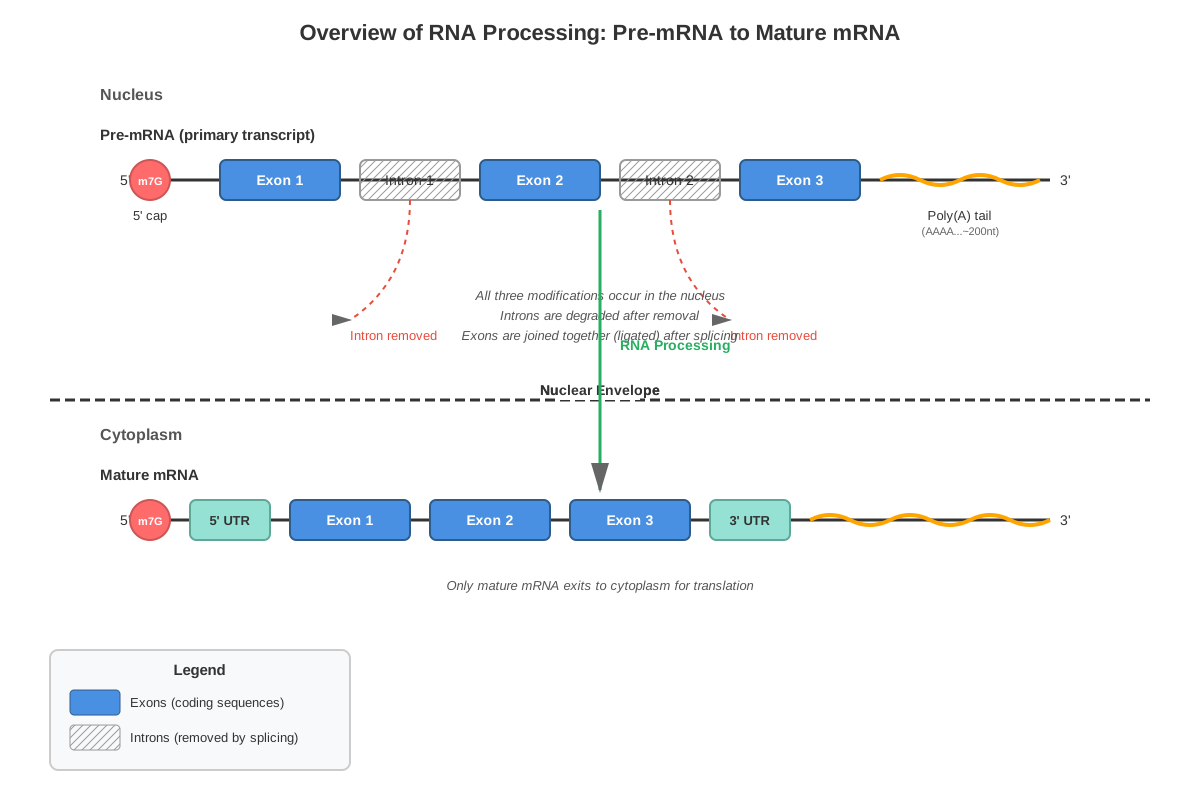
RNA processing is a critical post-transcriptional modification pathway that transforms the primary transcript (pre-mRNA) synthesized by RNA polymerase II into mature, functional messenger RNA (mRNA) in eukaryotic cells. This multi-step process occurs in the nucleus and includes three major modifications: 5' capping, 3' polyadenylation, and splicing. Understanding RNA processing Biology is fundamental to grasping how genetic information flows from DNA to protein, and how a single gene can produce multiple protein variants through alternative splicing.
For the MCAT, RNA processing MCAT questions frequently appear in passages involving gene expression regulation, genetic mutations, and molecular biology experiments. The exam tests not only the mechanistic details of each processing step but also the functional consequences when these processes are disrupted. Questions may present experimental data showing aberrant splicing patterns, ask students to predict the effects of mutations in splice sites, or require interpretation of Northern blots demonstrating different mRNA sizes. The topic bridges fundamental molecular biology with clinical applications, as defects in RNA processing underlie numerous human diseases including β-thalassemia, spinal muscular atrophy, and various cancers.
Within the broader context of Molecular Biology and Genetics, RNA processing represents a crucial regulatory checkpoint in gene expression. It connects transcription (the synthesis of pre-mRNA) to translation (protein synthesis at ribosomes), while providing mechanisms for generating protein diversity without expanding genome size. This topic integrates with concepts of gene structure (exons and introns), protein synthesis, gene regulation, and evolutionary biology, making it a high-yield area that appears across multiple MCAT Biology passages and discrete questions.
Learning Objectives
- [ ] Define RNA processing using accurate Biology terminology
- [ ] Explain why RNA processing matters for the MCAT
- [ ] Apply RNA processing to exam-style questions
- [ ] Identify common mistakes related to RNA processing
- [ ] Connect RNA processing to related Biology concepts
- [ ] Describe the molecular mechanisms of 5' capping, 3' polyadenylation, and splicing
- [ ] Predict the consequences of mutations affecting splice sites or processing signals
- [ ] Explain how alternative splicing generates protein diversity from a single gene
- [ ] Distinguish between constitutive and alternative splicing patterns
- [ ] Analyze experimental data related to RNA processing (Northern blots, RT-PCR results)
Prerequisites
- DNA structure and replication: Understanding the template strand and directionality is essential for comprehending how pre-mRNA is synthesized and processed
- Transcription basics: Knowledge of RNA polymerase II function and promoter recognition provides the foundation for understanding what happens after initial transcript synthesis
- Gene structure (exons and introns): Familiarity with the organization of eukaryotic genes is necessary to understand which sequences are retained or removed during processing
- Basic protein synthesis: Understanding how mRNA is translated helps contextualize why proper RNA processing is critical for functional protein production
- Eukaryotic vs. prokaryotic cell organization: Recognizing that RNA processing occurs in the nucleus (eukaryotes only) is fundamental to understanding the spatial and temporal aspects of gene expression
Why This Topic Matters
Clinical and Real-World Significance
RNA processing defects cause or contribute to numerous human diseases. β-thalassemia, a hereditary blood disorder, often results from mutations that disrupt normal splicing of the β-globin gene, leading to reduced hemoglobin production. Spinal muscular atrophy (SMA), a leading genetic cause of infant mortality, results from defective splicing of the SMN2 gene. Cancer cells frequently exhibit aberrant splicing patterns that promote tumor growth and metastasis. Understanding RNA processing is also crucial for developing therapeutic strategies—antisense oligonucleotides that modulate splicing are now FDA-approved treatments for SMA and Duchenne muscular dystrophy.
MCAT Exam Statistics and Question Types
RNA processing appears in approximately 3-5 questions per MCAT exam, representing roughly 2-3% of the Biological and Biochemical Foundations section. Questions appear both as discrete items and within passages, particularly those involving:
- Molecular biology experiments (Northern blots, RT-PCR, RNA-seq data)
- Genetic mutations and their phenotypic consequences
- Gene expression regulation mechanisms
- Evolutionary biology (comparing prokaryotic and eukaryotic gene expression)
Common Exam Passage Contexts
MCAT passages frequently present RNA processing in these scenarios:
- Research studies investigating disease-causing mutations in splice sites
- Experiments comparing mRNA sizes between different tissues (demonstrating alternative splicing)
- Drug development targeting splicing machinery
- Evolutionary comparisons highlighting the absence of splicing in prokaryotes
- Cancer biology passages discussing oncogene activation through aberrant splicing
Core Concepts
Definition and Overview of RNA Processing
RNA processing refers to the series of post-transcriptional modifications that convert the primary transcript (heterogeneous nuclear RNA or hnRNA, also called pre-mRNA) into mature messenger RNA capable of being translated into protein. This process is exclusive to eukaryotes and occurs co-transcriptionally, meaning many modifications begin while RNA polymerase II is still synthesizing the transcript. The three major components of RNA processing are 5' capping, 3' polyadenylation (addition of a poly-A tail), and splicing (removal of introns and joining of exons).
The 5' Cap Structure
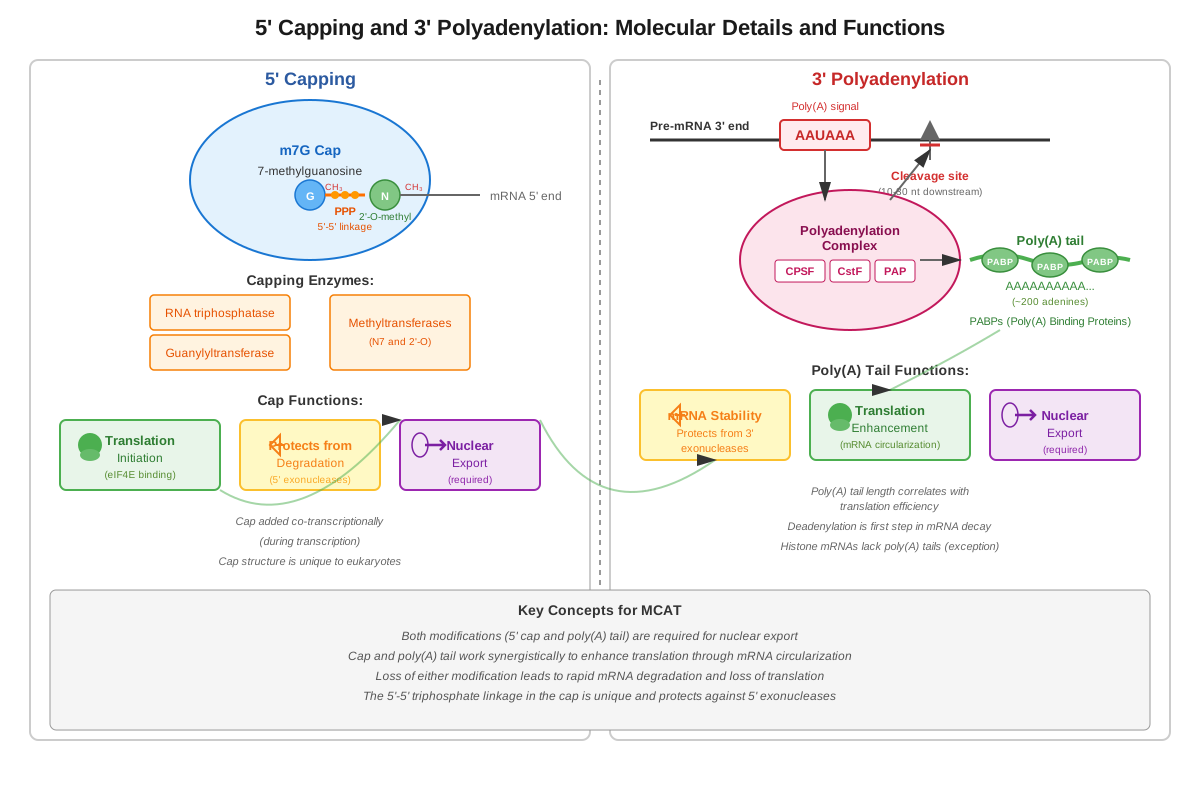
The 5' cap is a modified guanosine nucleotide added to the 5' end of the pre-mRNA through an unusual 5'-5' triphosphate linkage (rather than the typical 3'-5' phosphodiester bond). This modification occurs very early, when the nascent transcript is only 20-30 nucleotides long.
Mechanism of 5' Capping:
- A phosphatase removes one phosphate from the 5' triphosphate of the first transcribed nucleotide
- A guanylyl transferase adds GMP from GTP, creating the 5'-5' linkage
- A methyltransferase adds a methyl group to the N-7 position of the guanine base
- Additional methylations may occur on the 2'-OH groups of the first and second nucleotides
Functions of the 5' Cap:
- Protects mRNA from degradation by 5' exonucleases
- Facilitates ribosome binding during translation initiation
- Assists in mRNA export from nucleus to cytoplasm
- Distinguishes cellular mRNA from viral RNA (important for innate immunity)
MCAT Tip: Questions may ask why prokaryotic mRNA lacks a 5' cap—the answer relates to the absence of a nuclear membrane and the coupling of transcription and translation in prokaryotes.
The 3' Poly-A Tail
3' polyadenylation involves the addition of approximately 200 adenine nucleotides to the 3' end of the pre-mRNA. This process requires specific sequence signals in the pre-mRNA and occurs through a two-step mechanism: cleavage and polyadenylation.
Key Sequence Elements:
- AAUAAA hexanucleotide: The highly conserved polyadenylation signal located 10-30 nucleotides upstream of the cleavage site
- Downstream element (DSE): A U-rich or GU-rich region located downstream of the cleavage site
Mechanism of 3' Polyadenylation:
- Cleavage and polyadenylation specificity factor (CPSF) recognizes and binds the AAUAAA sequence
- Cleavage stimulation factor (CstF) binds the downstream element
- The pre-mRNA is cleaved 10-30 nucleotides downstream of AAUAAA
- Poly-A polymerase (PAP) adds ~200 adenine residues without requiring a template
- Poly-A binding proteins (PABPs) coat the poly-A tail
Functions of the Poly-A Tail:
- Protects mRNA from 3' exonuclease degradation
- Enhances translation efficiency through interaction with translation initiation factors
- Facilitates mRNA export from the nucleus
- Influences mRNA localization within the cell
- Regulates mRNA stability (tail length correlates with mRNA half-life)
Splicing: Removal of Introns
Splicing is the process by which non-coding sequences (introns) are removed from pre-mRNA and coding sequences (exons) are joined together to form mature mRNA. This is the most complex aspect of RNA processing and provides the greatest opportunity for gene expression regulation.
Splice Site Sequences:
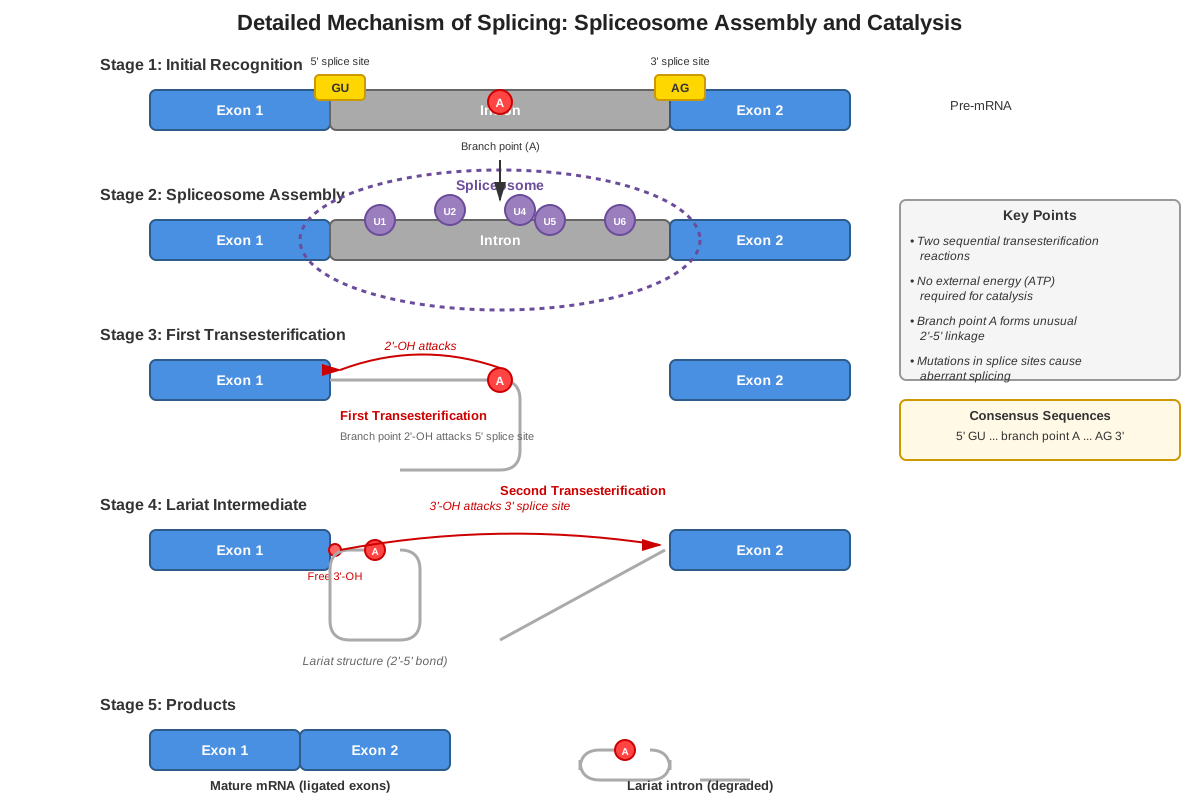
- 5' splice site (donor site): Consensus sequence GU at the beginning of the intron
- 3' splice site (acceptor site): Consensus sequence AG at the end of the intron
- Branch point: An adenine residue located 20-50 nucleotides upstream of the 3' splice site
- Polypyrimidine tract: A pyrimidine-rich region between the branch point and 3' splice site
The Spliceosome:
The spliceosome is a large ribonucleoprotein complex that catalyzes splicing. It consists of five small nuclear RNAs (snRNAs: U1, U2, U4, U5, and U6) and associated proteins, collectively called small nuclear ribonucleoproteins (snRNPs, pronounced "snurps").
Mechanism of Splicing (Two Transesterification Reactions):
- Assembly Phase:
- U1 snRNP binds to the 5' splice site
- U2 snRNP binds to the branch point adenine
- U4/U6•U5 tri-snRNP complex joins, forming the complete spliceosome
- First Transesterification:
- The 2'-OH of the branch point adenine attacks the phosphodiester bond at the 5' splice site
- This creates a free 3'-OH on the upstream exon and forms a lariat structure (the intron loops back on itself)
- Second Transesterification:
- The free 3'-OH of the upstream exon attacks the phosphodiester bond at the 3' splice site
- This joins the two exons and releases the intron in lariat form
- The lariat is subsequently degraded
| Splicing Component | Function |
|---|---|
| U1 snRNP | Recognizes 5' splice site (GU) |
| U2 snRNP | Binds branch point adenine |
| U4/U6•U5 tri-snRNP | Catalyzes transesterification reactions |
| SR proteins | Splicing enhancers; recruit spliceosome |
| hnRNPs | Splicing silencers; can block spliceosome assembly |
Alternative Splicing
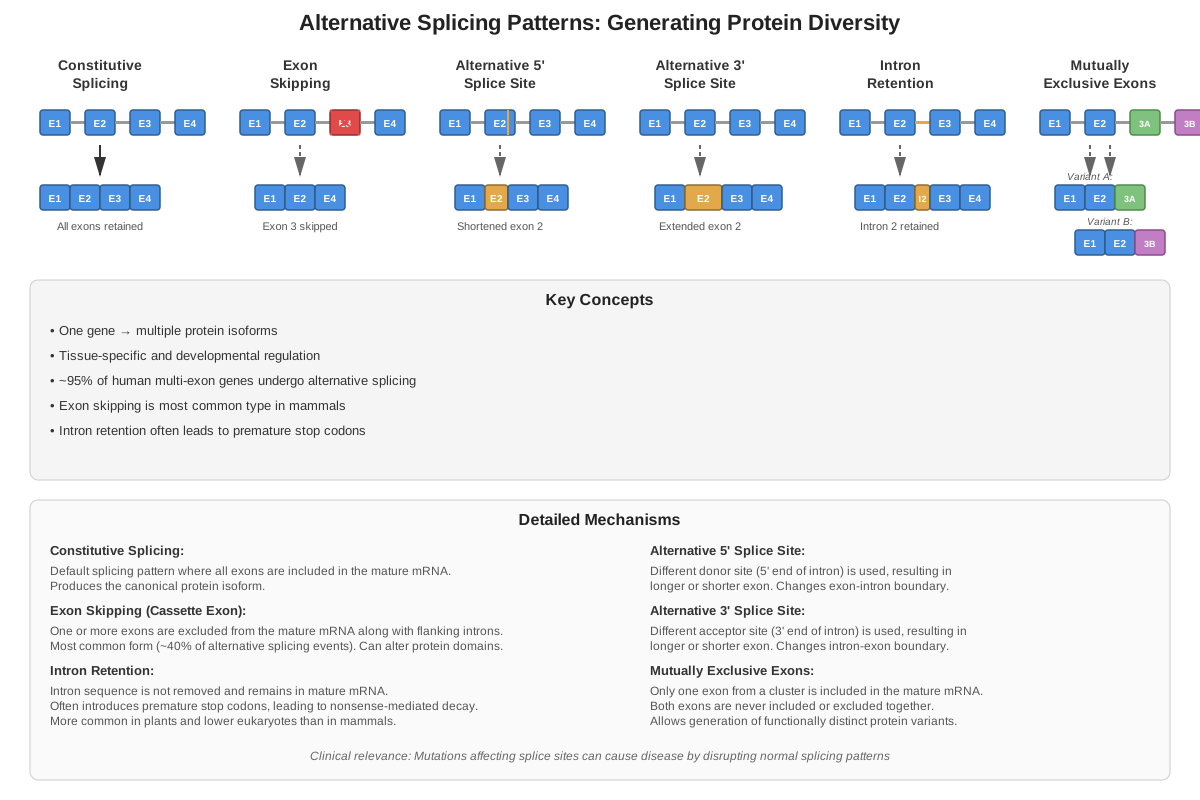
Alternative splicing is the process by which different combinations of exons are joined together, allowing a single gene to produce multiple protein isoforms. This mechanism dramatically increases proteomic diversity—humans have approximately 20,000 genes but produce over 100,000 different proteins, largely due to alternative splicing.
Types of Alternative Splicing:
- Exon skipping (cassette exons): The most common type; an exon may be included or excluded from the final mRNA
- Alternative 5' splice sites: Different 5' splice sites are used, changing the 3' boundary of an exon
- Alternative 3' splice sites: Different 3' splice sites are used, changing the 5' boundary of an exon
- Intron retention: An intron remains in the mature mRNA (less common in mammals)
- Mutually exclusive exons: Only one exon from a group is included in the final mRNA
Regulation of Alternative Splicing:
- Tissue-specific splicing factors: Different cell types express different splicing regulators
- Developmental stage: Splicing patterns change during development
- Splicing enhancers and silencers: Cis-acting sequences that promote or inhibit spliceosome assembly
- SR proteins and hnRNPs: Trans-acting factors that bind enhancers or silencers
High-Yield MCAT Concept: Alternative splicing explains how organisms with similar numbers of genes (humans vs. C. elegans) can have vastly different complexity. This is a common exam question theme.
Self-Splicing Introns
While most introns require the spliceosome, some RNA molecules can catalyze their own splicing. Group I and Group II introns are self-splicing ribozymes found primarily in organellar genes (mitochondria and chloroplasts) and some bacteria.
Group I Introns:
- Require an external guanosine cofactor
- Use the 3'-OH of guanosine to attack the 5' splice site
- Result in a linear excised intron (not a lariat)
Group II Introns:
- Use an internal adenine (like spliceosomal introns)
- Form a lariat structure
- Thought to be evolutionary precursors to the spliceosome
The discovery of self-splicing introns by Thomas Cech earned the Nobel Prize and demonstrated that RNA can have catalytic activity, challenging the dogma that only proteins are enzymes.
RNA Processing and Gene Expression Regulation
RNA processing provides multiple regulatory checkpoints:
- Alternative polyadenylation: Using different polyadenylation signals produces mRNAs with different 3' UTRs, affecting stability and localization
- Regulated splicing: Splicing factors respond to cellular signals, changing protein isoform expression
- Nonsense-mediated decay (NMD): Aberrantly spliced mRNAs with premature stop codons are degraded
- Nuclear retention: Improperly processed mRNAs are retained in the nucleus and degraded
Concept Relationships
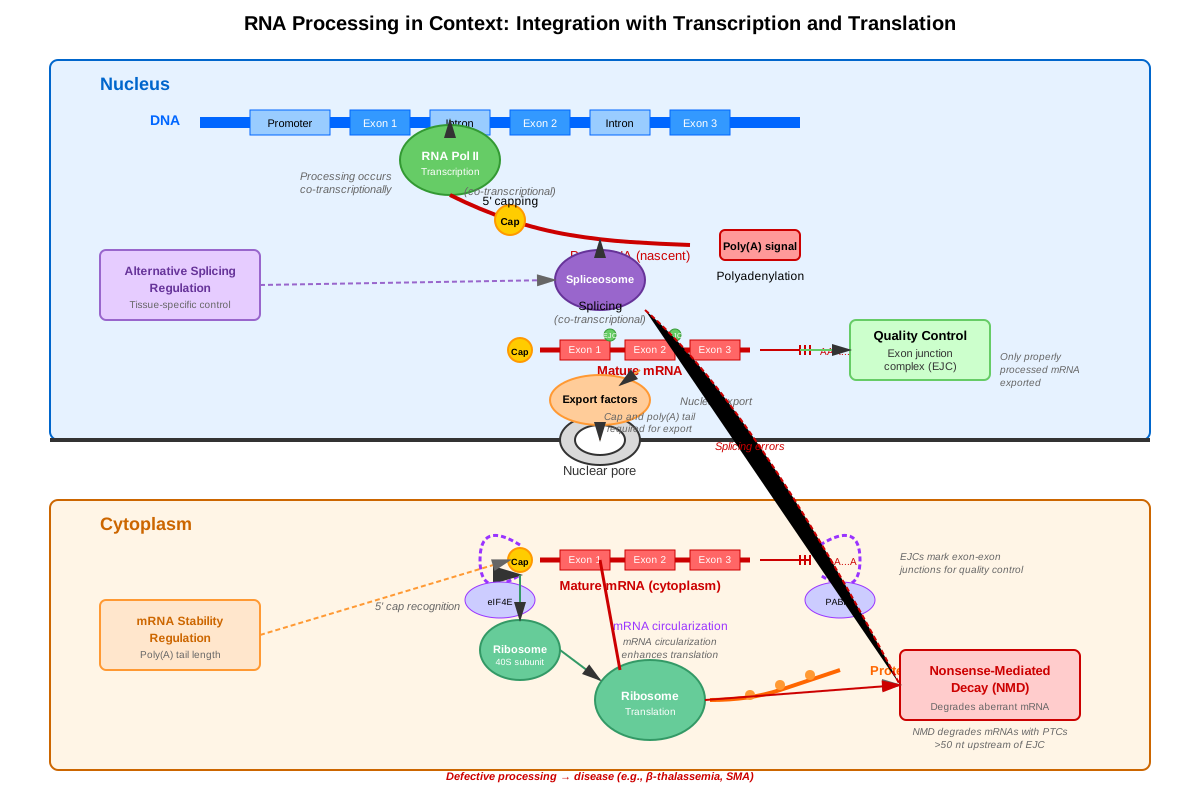
RNA processing concepts form an integrated pathway that connects transcription to translation. The relationship flow can be mapped as:
DNA transcription → pre-mRNA synthesis → 5' capping (co-transcriptional) → ongoing transcription → splicing (co-transcriptional) → 3' polyadenylation (coupled to transcription termination) → mature mRNA → nuclear export → translation
Within RNA processing itself, the three major modifications are interconnected:
- The 5' cap is recognized by cap-binding proteins that recruit splicing factors, linking capping to splicing
- The C-terminal domain (CTD) of RNA polymerase II serves as a landing platform for capping enzymes, splicing factors, and polyadenylation machinery, coordinating all processing events
- Exon junction complexes (EJCs) deposited during splicing mark properly processed mRNA and facilitate nuclear export and translation
Connections to prerequisite knowledge:
- Transcription provides the pre-mRNA substrate that undergoes processing
- Gene structure (exon-intron organization) determines which sequences are spliced
- Eukaryotic cell organization explains why processing occurs in the nucleus, separated from translation
Connections to related topics:
- Translation: Processed mRNA is the template for protein synthesis; the 5' cap and poly-A tail enhance translation
- Gene regulation: Alternative splicing is a major mechanism for tissue-specific and developmental gene regulation
- Mutations: Splice site mutations can cause disease by disrupting normal processing
- Evolution: The presence of introns and RNA processing distinguishes eukaryotes from prokaryotes
Quick check — test yourself on RNA processing so far.
Try Flashcards →High-Yield Facts
⭐ RNA processing occurs only in eukaryotes; prokaryotic mRNA lacks a 5' cap, poly-A tail, and introns, allowing immediate translation during transcription.
⭐ The 5' cap structure contains a 7-methylguanosine connected via an unusual 5'-5' triphosphate linkage to the first transcribed nucleotide.
⭐ The consensus sequences for splice sites are GU at the 5' end (donor) and AG at the 3' end (acceptor) of introns; mutations in these sequences typically prevent splicing.
⭐ Splicing occurs through two transesterification reactions catalyzed by the spliceosome, producing a lariat-shaped excised intron.
⭐ Alternative splicing allows one gene to produce multiple protein isoforms, dramatically increasing proteomic diversity without expanding genome size.
- The poly-A tail consists of approximately 200 adenine residues added by poly-A polymerase without requiring a DNA template.
- The AAUAAA hexanucleotide sequence is the highly conserved polyadenylation signal located 10-30 nucleotides upstream of the cleavage site.
- The spliceosome consists of five snRNPs (U1, U2, U4, U5, U6) and numerous associated proteins.
- Exon junction complexes (EJCs) are deposited 20-24 nucleotides upstream of exon-exon junctions during splicing and play roles in mRNA export, localization, and translation.
- Group I and Group II self-splicing introns are ribozymes that do not require the spliceosome and are found primarily in organellar genes.
- The branch point adenine in the intron attacks the 5' splice site during the first transesterification reaction of splicing.
- SR proteins (serine-arginine rich proteins) are splicing enhancers that promote spliceosome assembly at nearby splice sites.
- Nonsense-mediated decay (NMD) is a quality control mechanism that degrades mRNAs containing premature stop codons, often resulting from aberrant splicing.
- The C-terminal domain (CTD) of RNA polymerase II coordinates all RNA processing events by serving as a binding platform for processing factors.
Common Misconceptions
Misconception: RNA processing occurs after transcription is completely finished.
Correction: RNA processing is largely co-transcriptional, meaning 5' capping begins when the transcript is only 20-30 nucleotides long, and splicing often occurs while RNA polymerase II is still synthesizing the downstream portions of the pre-mRNA. Only the final polyadenylation step is coupled to transcription termination.
Misconception: All exons in a gene are always included in the mature mRNA.
Correction: Through alternative splicing, exons can be selectively included or excluded, allowing a single gene to produce multiple different mRNA variants. Constitutive exons are always included, but cassette exons may be skipped depending on cellular context.
Misconception: The poly-A tail is encoded in the DNA template.
Correction: The poly-A tail is added post-transcriptionally by poly-A polymerase without using a DNA template. The enzyme adds approximately 200 adenine residues based on recognition of the AAUAAA polyadenylation signal in the pre-mRNA, not by reading DNA.
Misconception: Introns are "junk DNA" with no function.
Correction: While introns are removed from mature mRNA, they serve important functions: they contain regulatory elements (enhancers, silencers), allow for alternative splicing to increase protein diversity, facilitate recombination between exons during evolution, and some contain sequences for regulatory RNAs (miRNAs, snoRNAs).
Misconception: Splicing removes the same sequences in all cell types.
Correction: Alternative splicing is regulated in a tissue-specific and developmental stage-specific manner. Different cell types express different splicing factors that determine which exons are included or excluded, producing cell-type-specific protein isoforms from the same gene.
Misconception: The spliceosome is a single, stable enzyme complex.
Correction: The spliceosome is a dynamic complex that assembles stepwise on each intron. The snRNPs join sequentially (U1, then U2, then U4/U6•U5), undergo conformational changes, and disassemble after catalyzing splicing. It must reassemble for each intron.
Misconception: All RNA splicing requires the spliceosome.
Correction: While most nuclear pre-mRNA splicing requires the spliceosome, Group I and Group II introns are self-splicing ribozymes that catalyze their own removal without protein enzymes. These are found primarily in organellar genes and some bacteria.
Worked Examples
Example 1: Analyzing a Splice Site Mutation
Question: A patient presents with β-thalassemia, a disorder characterized by reduced β-globin production. Genetic analysis reveals a point mutation that changes the sequence at the beginning of intron 1 from GU to AU. Which of the following best describes the molecular consequence of this mutation?
A) The 5' cap will not be added to the mRNA
B) The poly-A tail will be shortened
C) Intron 1 will not be removed from the pre-mRNA
D) Translation will initiate at an incorrect start codon
Reasoning Process:
- Identify the key information: The mutation affects the first two nucleotides of an intron (GU → AU)
- Recall the relevant concept: The 5' splice site (donor site) has a consensus sequence of GU at the beginning of every intron. This sequence is recognized by U1 snRNP during spliceosome assembly.
- Predict the consequence: If the GU sequence is mutated to AU, U1 snRNP cannot properly recognize the 5' splice site. This prevents spliceosome assembly and splicing of intron 1.
- Evaluate each answer:
- A) Incorrect - 5' capping occurs independently of splicing and recognizes the 5' end of the transcript, not splice sites
- B) Incorrect - Polyadenylation recognizes the AAUAAA signal near the 3' end, unrelated to internal splice sites
- C) Correct - Without a functional 5' splice site, the spliceosome cannot assemble and intron 1 remains in the mRNA
- D) Incorrect - While the retained intron might contain stop codons affecting translation, the primary molecular defect is failure to remove the intron
- Connect to clinical presentation: The unspliced mRNA containing intron 1 likely contains premature stop codons, leading to either nonsense-mediated decay (reducing mRNA levels) or production of truncated, nonfunctional β-globin protein. This explains the reduced β-globin production in β-thalassemia.
Answer: C
Key Takeaway: Mutations in the highly conserved GU (5' splice site) or AG (3' splice site) sequences typically prevent splicing, resulting in intron retention and often disease phenotypes.
Example 2: Interpreting Alternative Splicing Data
Question: Researchers studying the DSCAM gene in Drosophila find that it contains 95 exons, with four regions containing mutually exclusive exon clusters: region A (12 alternatives), region B (48 alternatives), region C (33 alternatives), and region D (2 alternatives). Assuming one exon from each variable region must be included and all other exons are constitutive, how many different mRNA variants can theoretically be produced from this single gene?
A) 95
B) 195
C) 38,016
D) Over 38,000
Reasoning Process:
- Identify the key information:
- Four regions with mutually exclusive exons
- Region A: 12 alternatives
- Region B: 48 alternatives
- Region C: 33 alternatives
- Region D: 2 alternatives
- One exon from each region must be included
- Recall the relevant concept: Mutually exclusive exons means only one exon from each cluster can be included in any given mRNA. The number of possible combinations is calculated by multiplying the number of alternatives in each region.
- Calculate:
- Total variants = 12 × 48 × 33 × 2
- 12 × 48 = 576
- 576 × 33 = 19,008
- 19,008 × 2 = 38,016
- Evaluate the biological significance: This demonstrates how alternative splicing can generate enormous protein diversity from a single gene. The DSCAM gene in Drosophila can theoretically produce 38,016 different protein isoforms, each potentially having different binding specificities. This is crucial for neuronal wiring, where each neuron needs a unique molecular identity.
- Select the answer: C) 38,016
Key Takeaway: Alternative splicing, particularly with mutually exclusive exons, can generate exponential increases in protein diversity. This is a powerful mechanism for creating complexity without expanding genome size—a common MCAT theme when comparing organismal complexity to gene number.
Exam Strategy
Approaching RNA Processing Questions
Step 1: Identify the processing stage - Determine whether the question focuses on 5' capping, 3' polyadenylation, or splicing. Each has distinct mechanisms and consequences.
Step 2: Look for sequence signals - MCAT questions often provide sequences. Scan for:
- GU and AG (splice sites)
- AAUAAA (polyadenylation signal)
- Branch point adenine
- Polypyrimidine tract
Step 3: Consider the functional consequence - If a processing step is disrupted, think through the cascade:
- Failed capping → mRNA degradation, reduced translation
- Failed polyadenylation → mRNA instability, impaired nuclear export
- Failed splicing → intron retention, often premature stop codons, NMD
Step 4: Apply the eukaryote-prokaryote distinction - Many questions test whether you know that RNA processing is eukaryote-specific.
Trigger Words and Phrases
Watch for these terms that signal RNA processing content:
- "Mature mRNA" vs. "primary transcript" or "pre-mRNA"
- "Splice site mutation"
- "Alternative splicing" or "protein isoforms"
- "Northern blot showing different sized transcripts"
- "Tissue-specific expression of protein variants"
- "Intron" and "exon"
- "Spliceosome"
- "Poly-A tail"
- "5' cap"
Process of Elimination Tips
For splicing questions:
- Eliminate answers suggesting splicing occurs in prokaryotes
- Eliminate answers confusing exons (kept) with introns (removed)
- Eliminate answers suggesting splicing requires a DNA template
For alternative splicing questions:
- Eliminate answers suggesting all exons are always included
- Eliminate answers that don't account for tissue-specific or developmental regulation
- Look for answers involving different protein isoforms from one gene
For mutation questions:
- Prioritize answers involving splice site consensus sequences (GU, AG)
- Consider whether the mutation would affect spliceosome recognition
- Think about downstream consequences (NMD, truncated proteins)
Time Allocation
- Discrete questions: 60-90 seconds - These typically test straightforward recall of mechanisms or sequences
- Passage-based questions: 90-120 seconds - These require integrating passage data (experimental results, sequences) with RNA processing knowledge
- Complex calculation questions (like the alternative splicing example): 120-150 seconds - Take time to set up the calculation correctly
Exam Tip: If a passage presents Northern blot data showing multiple bands of different sizes from the same gene, immediately think "alternative splicing." This is one of the most common ways the MCAT tests this concept.
Memory Techniques
Mnemonics for Splicing
"GU-AG" Rule: "Go Under, And Get out" - Remember that introns start with GU (go under/into the intron) and end with AG (get out of the intron).
Spliceosome snRNPs: "Under 1 2 4 5 6 trees" - Remember the five snRNPs (U1, U2, U4, U5, U6) that comprise the spliceosome.
Order of snRNP assembly: "1 2 4-5-6" - U1 binds first (5' splice site), then U2 (branch point), then the tri-snRNP complex U4/U6•U5 joins.
Mnemonic for Polyadenylation Signal
"AAU-AAA": "All Adenines Under Are Added After" - Remember the AAUAAA hexanucleotide signal, and that adenines are added after (downstream of) this signal.
Visualization Strategy for Splicing Mechanism
The Lariat Loop: Visualize the intron forming a lasso or lariat shape during splicing. The branch point adenine is where the rope loops back on itself. This image helps remember:
- The branch point A attacks the 5' splice site (forming the loop)
- The intron forms a lariat structure
- The exons are brought together and joined
Acronym for RNA Processing Steps
"CPS": Capping, Polyadenylation, Splicing - The three major RNA processing modifications (though remember they occur co-transcriptionally, not strictly in this order).
Memory Aid for Alternative Splicing Types
"SEAM":
- Skipping (exon skipping/cassette exons)
- Exclusive (mutually exclusive exons)
- Alternative splice sites (5' or 3')
- Maintained intron (intron retention)
Summary
RNA processing is the essential post-transcriptional modification pathway that converts eukaryotic pre-mRNA into mature, functional mRNA through three coordinated processes: 5' capping, 3' polyadenylation, and splicing. The 5' cap, consisting of 7-methylguanosine linked via a 5'-5' triphosphate bond, protects mRNA from degradation and facilitates translation initiation. The poly-A tail, approximately 200 adenine residues added at the 3' end following recognition of the AAUAAA signal, enhances mRNA stability and translation. Splicing, catalyzed by the spliceosome complex of five snRNPs, removes introns through two transesterification reactions that recognize GU (5' splice site) and AG (3' splice site) consensus sequences, producing a lariat-shaped excised intron. Alternative splicing allows selective inclusion or exclusion of exons, enabling one gene to produce multiple protein isoforms and dramatically increasing proteomic diversity. This process is exclusive to eukaryotes, occurs co-transcriptionally in the nucleus, and provides critical regulatory checkpoints in gene expression. Mutations affecting splice sites or processing signals cause numerous human diseases, making RNA processing a high-yield topic for MCAT questions involving molecular biology mechanisms, experimental data interpretation, and clinical applications.
Key Takeaways
- RNA processing (5' capping, 3' polyadenylation, and splicing) occurs only in eukaryotes and transforms pre-mRNA into mature mRNA in the nucleus
- The 5' cap (7-methylguanosine with 5'-5' linkage) and poly-A tail (~200 adenines) protect mRNA from degradation and enhance translation
- Splicing removes introns via the spliceosome, which recognizes GU (5' donor) and AG (3' acceptor) splice site consensus sequences
- The splicing mechanism involves two transesterification reactions producing a lariat-shaped excised intron
- Alternative splicing generates multiple protein isoforms from a single gene, explaining how limited gene numbers produce vast protein diversity
- Mutations in splice sites (especially GU and AG) or the AAUAAA polyadenylation signal commonly cause disease by disrupting normal RNA processing
- RNA processing is co-transcriptional, coordinated by the C-terminal domain of RNA polymerase II, not a post-transcriptional afterthought
Related Topics
Translation and Protein Synthesis: Understanding how the 5' cap and poly-A tail facilitate ribosome binding and translation efficiency builds directly on RNA processing knowledge. The processed mRNA serves as the template for protein synthesis.
Gene Regulation: RNA processing, particularly alternative splicing, represents a major mechanism for tissue-specific and developmental gene regulation. Mastering RNA processing enables deeper understanding of how cells control protein expression beyond transcriptional control.
Mutations and Genetic Disease: Many genetic disorders result from mutations affecting splice sites or processing signals. Understanding RNA processing is essential for predicting phenotypic consequences of mutations in non-coding regions.
Molecular Biology Techniques: Northern blots, RT-PCR, and RNA-seq experiments frequently appear in MCAT passages and rely on understanding RNA processing to interpret results showing different mRNA sizes or variants.
Evolution and Comparative Biology: The presence of introns and RNA processing in eukaryotes but not prokaryotes is a fundamental evolutionary distinction that appears in comparative biology questions.
Cancer Biology: Aberrant splicing patterns contribute to oncogenesis, and understanding normal RNA processing is prerequisite for comprehending how cancer cells hijack these mechanisms.
Practice CTA
Now that you've mastered the core concepts of RNA processing, it's time to reinforce your understanding through active practice. Challenge yourself with MCAT-style practice questions that test your ability to apply these concepts to experimental scenarios, interpret data, and predict the consequences of processing defects. Use flashcards to drill the high-yield facts, especially the consensus sequences (GU, AG, AAUAAA) and the functions of each processing modification. Remember, the MCAT rewards not just memorization but the ability to integrate concepts and think critically about molecular mechanisms. You've built a strong foundation—now solidify it through deliberate practice. Your investment in mastering RNA processing will pay dividends across multiple passages and question types on test day!
Sign up free to keep reading
Create a free AnvayaPrep account to finish this MCAT guide on RNA processing — plus flashcards and practice questions.