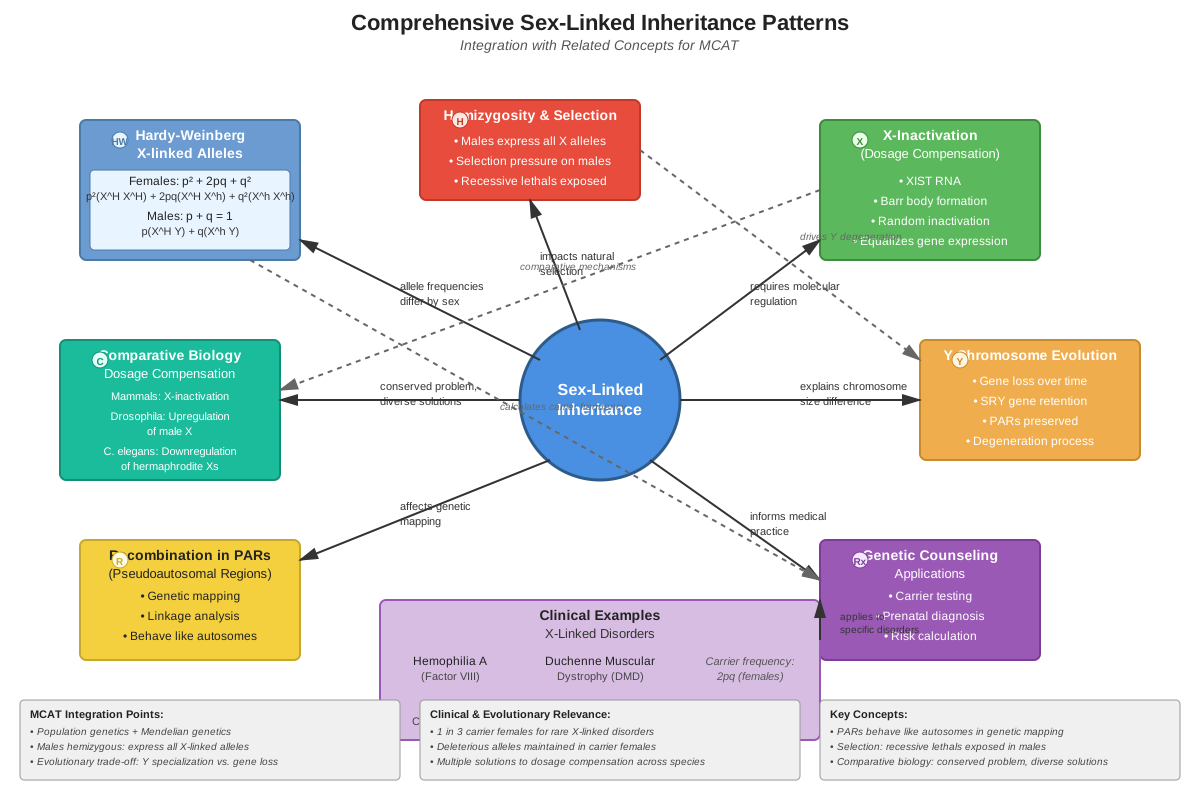
Overview
Sex-linked inheritance is a fundamental pattern of genetic transmission that occurs when genes are located on the sex chromosomes (X or Y) rather than on autosomes. This inheritance pattern produces distinctive phenotypic ratios that differ from typical Mendelian inheritance, particularly showing different frequencies of trait expression between males and females. Understanding sex-linked inheritance is crucial for interpreting pedigrees, predicting offspring phenotypes, and explaining why certain genetic disorders predominantly affect one sex over the other.
For the MCAT, sex-linked inheritance represents a high-yield topic within Molecular Biology and Genetics that frequently appears in both discrete questions and passage-based scenarios. The exam tests not only the ability to recognize sex-linked patterns in pedigrees but also to apply probability calculations, understand the molecular basis of dosage compensation, and connect genetic concepts to evolutionary biology and population genetics. Questions often integrate sex-linked inheritance with concepts like genetic mapping, mutation analysis, and Hardy-Weinberg equilibrium.
This topic bridges multiple areas of Biology tested on the MCAT. Sex-linked inheritance connects directly to chromosome structure and behavior during meiosis, gene expression regulation (particularly X-inactivation), and the molecular mechanisms underlying genetic disease. It also provides a foundation for understanding more complex inheritance patterns, including X-linked dominant and recessive disorders, Y-linked inheritance, and the interaction between genetic and environmental factors in phenotype determination. Mastery of sex-linked inheritance enables students to tackle interdisciplinary questions that combine genetics with evolution, development, and human physiology.
Learning Objectives
- [ ] Define sex-linked inheritance using accurate Biology terminology
- [ ] Explain why sex-linked inheritance matters for the MCAT
- [ ] Apply sex-linked inheritance to exam-style questions
- [ ] Identify common mistakes related to sex-linked inheritance
- [ ] Connect sex-linked inheritance to related Biology concepts
- [ ] Predict phenotypic ratios for X-linked recessive and X-linked dominant traits across multiple generations
- [ ] Analyze pedigrees to determine the mode of inheritance and carrier status of individuals
- [ ] Explain the molecular mechanism of X-inactivation and its phenotypic consequences in heterozygous females
Prerequisites
- Mendelian genetics and basic inheritance patterns: Essential for understanding how sex-linked inheritance differs from autosomal inheritance and for calculating probability ratios
- Chromosome structure and sex determination: Required to understand why genes on sex chromosomes behave differently and how the XY system determines biological sex
- Meiosis and independent assortment: Necessary for comprehending how sex chromosomes segregate during gamete formation and why males produce two types of gametes
- Pedigree analysis fundamentals: Needed to recognize inheritance patterns and trace traits through family trees
- Basic probability and Punnett squares: Critical for predicting offspring genotypes and phenotypes in sex-linked crosses
Why This Topic Matters
Sex-linked inheritance has profound clinical significance, as numerous medically important disorders follow X-linked patterns. Hemophilia A and B, Duchenne muscular dystrophy, red-green color blindness, and fragile X syndrome all demonstrate X-linked recessive inheritance, affecting millions worldwide. Understanding these patterns enables genetic counseling, risk assessment for prospective parents, and comprehension of why certain populations show different disease frequencies. The concept also explains carrier detection and the importance of family history in medical diagnosis.
On the MCAT, sex-linked inheritance appears with moderate to high frequency, typically in 2-4 questions per exam. Questions may present as discrete items testing pedigree interpretation or probability calculations, but more commonly appear within passages discussing genetic disorders, population genetics, or evolutionary biology. The AAMC frequently integrates sex-linked inheritance with experimental data interpretation, requiring students to analyze crosses, interpret chi-square tests, or evaluate gene mapping studies. Approximately 60% of sex-linked questions involve X-linked recessive inheritance, while the remainder address X-linked dominant, Y-linked, or dosage compensation mechanisms.
Common exam scenarios include: analyzing multi-generation pedigrees to determine inheritance mode and carrier probability; calculating the likelihood of affected offspring from specific parental genotypes; explaining why X-linked recessive disorders predominantly affect males; interpreting experimental crosses in model organisms (particularly Drosophila); and connecting X-inactivation to mosaic phenotypes in heterozygous females. The MCAT also tests understanding of pseudoautosomal regions, sex-limited versus sex-linked traits, and the evolutionary implications of sex chromosome inheritance.
Core Concepts
Fundamentals of Sex Chromosomes and Sex Determination
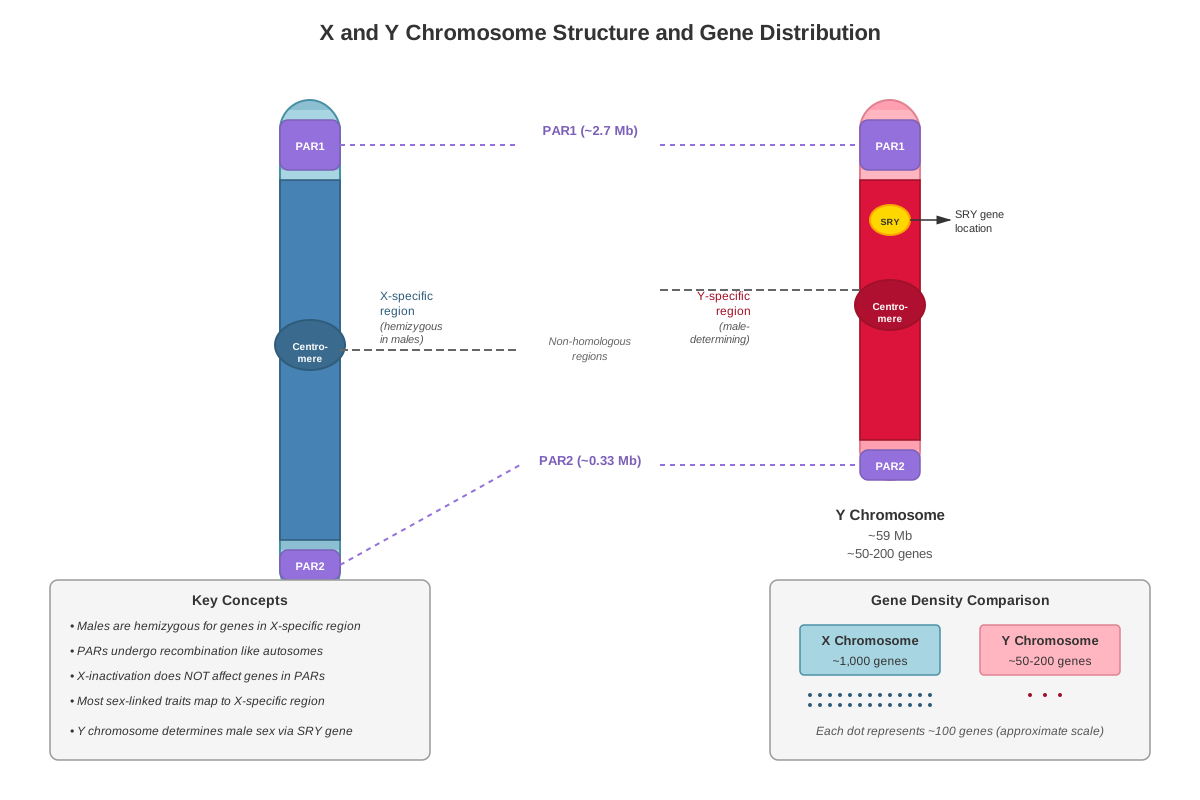
Sex chromosomes are specialized chromosomes that determine biological sex and carry genes beyond those directly involved in sex determination. In humans and most mammals, females possess two X chromosomes (XX), while males have one X and one Y chromosome (XY). The X chromosome is substantially larger than the Y, containing approximately 1,100 genes compared to only 78 functional genes on the Y chromosome. This size disparity creates an inherent genetic imbalance between sexes that organisms must address through dosage compensation mechanisms.
The sex determination system in mammals relies primarily on the SRY gene (sex-determining region Y) located on the Y chromosome. Presence of a functional SRY gene triggers male development regardless of the number of X chromosomes present. This explains why individuals with Klinefelter syndrome (XXY) develop as phenotypic males, while those with Turner syndrome (XO) develop as females. Understanding this system is crucial for interpreting sex-linked inheritance patterns and recognizing that males are hemizygous for X-linked genes—possessing only one copy rather than the typical two copies found in females.
X-Linked Recessive Inheritance
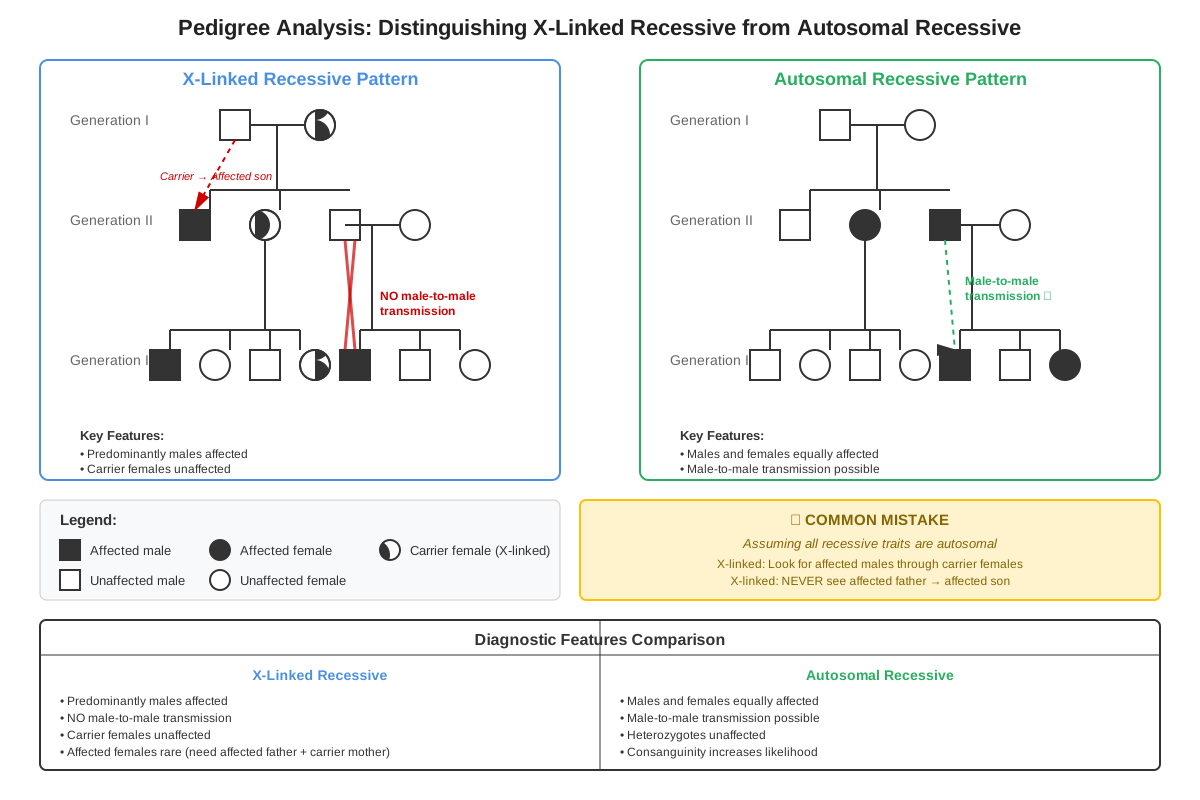
X-linked recessive inheritance represents the most commonly tested sex-linked pattern on the MCAT. In this pattern, the recessive allele is located on the X chromosome, and males require only one copy of the recessive allele to express the phenotype (since they lack a second X chromosome that might carry a dominant allele). Females must inherit two copies of the recessive allele (one from each parent) to express the recessive phenotype, making affected females much rarer than affected males.
The characteristic features of X-linked recessive inheritance include:
- Affected individuals are predominantly male
- Affected males often have unaffected parents but affected maternal grandfathers
- Carrier females typically show no phenotype (though X-inactivation may produce mild mosaic effects)
- Affected males cannot pass the trait to sons (since sons receive the Y chromosome from fathers)
- All daughters of affected males are obligate carriers
- The trait often "skips generations" appearing in males related through carrier females
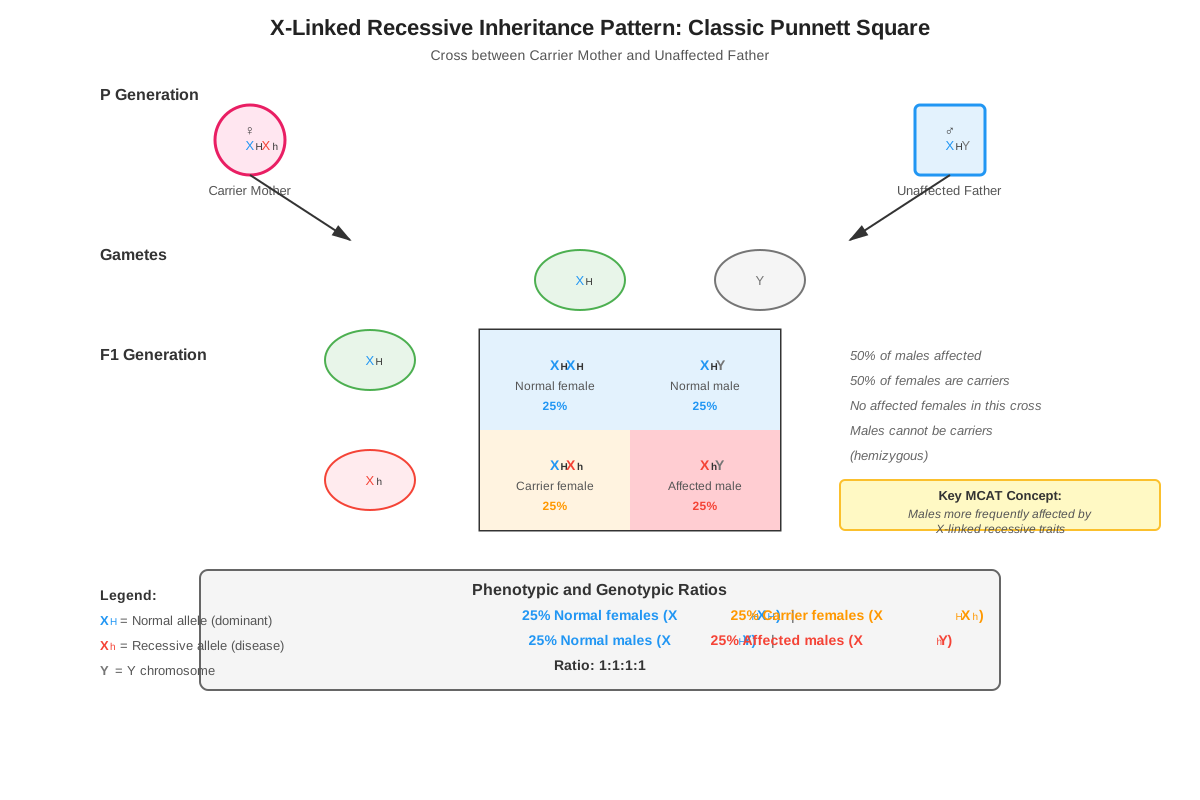
Classic examples include hemophilia A (Factor VIII deficiency), Duchenne muscular dystrophy, and red-green color blindness. For a cross between a carrier female (X^A X^a) and an unaffected male (X^A Y), the expected offspring ratios are:
| Offspring | Genotype | Phenotype | Probability |
|---|---|---|---|
| Daughters | X^A X^A | Unaffected | 25% |
| Daughters | X^A X^a | Carrier | 25% |
| Sons | X^A Y | Unaffected | 25% |
| Sons | X^a Y | Affected | 25% |
This produces a 1:1 ratio of affected to unaffected males, with no affected females in this particular cross.
X-Linked Dominant Inheritance
X-linked dominant inheritance occurs when the dominant allele on the X chromosome causes the phenotype in both males and females who possess even one copy. This pattern is less common than X-linked recessive but produces distinctive pedigree patterns. Affected males with X-linked dominant conditions pass the trait to all daughters but no sons, creating a characteristic pattern easily distinguished from autosomal dominant inheritance.
Key features of X-linked dominant inheritance:
- Both males and females can be affected, but females are typically affected twice as frequently as males
- Affected males have all affected daughters and no affected sons
- Affected females (if heterozygous) pass the trait to 50% of offspring regardless of sex
- The condition is often more severe in males than in heterozygous females
- Some X-linked dominant conditions are male-lethal, appearing only in females
Examples include hypophosphatemic rickets (vitamin D-resistant rickets), Rett syndrome (typically lethal in males), and incontinentia pigmenti (male-lethal). The MCAT may present these conditions in passages requiring students to distinguish between inheritance patterns based on pedigree analysis or predict offspring ratios.
Y-Linked Inheritance
Y-linked inheritance (also called holandric inheritance) involves genes located exclusively on the Y chromosome. This pattern is straightforward: only males can be affected, and all sons of affected males will be affected. The trait passes directly from father to son without skipping generations. Y-linked traits never appear in females and show 100% transmission from affected fathers to sons.
Examples of Y-linked traits include male sex determination (SRY gene), certain spermatogenesis factors, and some cases of male infertility. Historically, the presence of hair on the outer ear (hypertrichosis pinnae auris) was thought to be Y-linked, though this is now disputed. While Y-linked inheritance is less commonly tested than X-linked patterns, the MCAT may include it in questions asking students to distinguish between different inheritance modes or in passages discussing sex determination and fertility.
Dosage Compensation and X-Inactivation
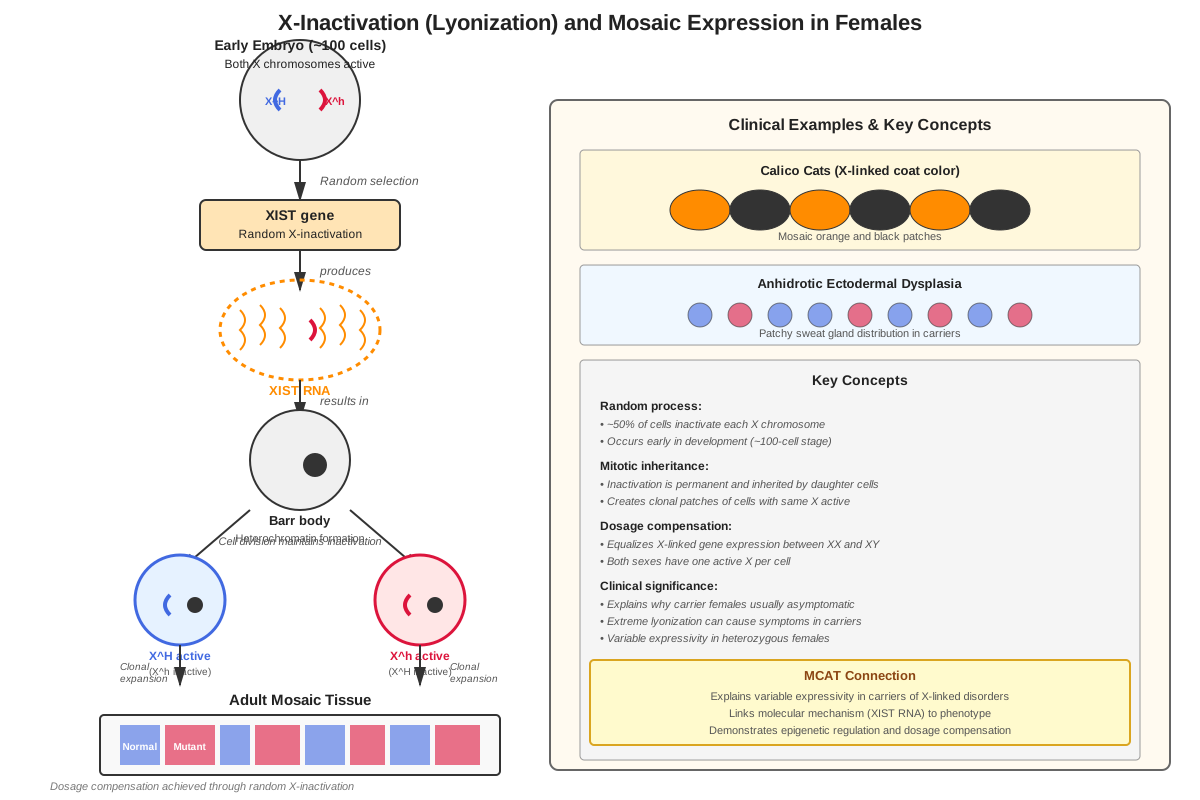
Dosage compensation refers to mechanisms that equalize gene expression from sex chromosomes between males and females. In mammals, this occurs through X-inactivation (also called lyonization), where one X chromosome in each female cell is randomly inactivated early in development. This process ensures that females, like males, have only one functional copy of most X-linked genes per cell.
The X-inactivation process involves several key steps:
- During early embryonic development (around the blastocyst stage), each cell randomly inactivates either the maternal or paternal X chromosome
- The inactive X chromosome condenses into a Barr body, a densely staining structure visible at the nuclear periphery
- The XIST gene (X-inactive specific transcript) on the inactive X produces a long non-coding RNA that coats the chromosome and recruits chromatin-modifying complexes
- Most genes on the inactive X are silenced through heterochromatin formation, though some genes (particularly in pseudoautosomal regions) escape inactivation
- The inactivation pattern is maintained through subsequent cell divisions, creating a mosaic pattern in adult females
This mosaicism explains why heterozygous carrier females for X-linked recessive conditions sometimes show mild phenotypic effects. For example, female carriers of hemophilia may have slightly reduced clotting factor levels, and carriers of Duchenne muscular dystrophy may show elevated creatine kinase levels or mild muscle weakness. The classic example is the calico cat, where random X-inactivation of different color alleles produces patches of orange and black fur.
Pseudoautosomal Regions
Pseudoautosomal regions (PARs) are small homologous segments at the tips of the X and Y chromosomes where the chromosomes pair and recombine during meiosis. Genes in these regions are present on both sex chromosomes and therefore do not follow typical sex-linked inheritance patterns—instead, they behave like autosomal genes. The human genome contains two PARs: PAR1 (approximately 2.7 Mb at the tips of the short arms) and PAR2 (approximately 0.33 Mb at the tips of the long arms).
Genes in pseudoautosomal regions escape X-inactivation because both males and females need two functional copies. These regions are critical for proper chromosome pairing during meiosis I, and mutations affecting PAR genes can lead to chromosomal nondisjunction. While the MCAT rarely tests PAR-specific content, understanding these regions helps explain exceptions to typical sex-linked inheritance patterns and why some genes on sex chromosomes don't show sex-linked inheritance.
Calculating Probabilities in Sex-Linked Crosses
Probability calculations for sex-linked inheritance follow the same basic principles as autosomal inheritance but require careful attention to the hemizygous state in males. For X-linked traits, males have only one allele, so their genotype directly determines their phenotype. Females have two alleles, allowing for heterozygous carrier states.
For multi-generation problems, apply the multiplication rule (for independent events) and addition rule (for mutually exclusive outcomes). Consider this example: A carrier female (X^A X^a) has children with an unaffected male (X^A Y). What is the probability that their first two children are both affected males?
- Probability of affected male in any pregnancy = 1/4 (must be male AND inherit X^a)
- Probability of two consecutive affected males = 1/4 × 1/4 = 1/16
For more complex scenarios involving conditional probability, use Bayes' theorem or pedigree analysis to determine carrier status before calculating offspring probabilities.
Concept Relationships
Sex-linked inheritance fundamentally depends on chromosome structure and behavior during meiosis. The segregation of sex chromosomes during meiosis I determines which gametes receive X versus Y chromosomes, directly influencing the inheritance patterns observed. This connects to independent assortment, though sex-linked genes on the same chromosome show linkage and may not assort independently from each other.
The relationship flows as follows: Chromosome structure → determines → Gene location → influences → Inheritance pattern → produces → Phenotypic ratios → enables → Pedigree analysis. Within sex-linked inheritance itself, understanding X-linked recessive patterns provides the foundation for comprehending X-linked dominant and Y-linked inheritance, as all three share the common feature of genes located on sex chromosomes but differ in dominance relationships and which sex chromosome carries the gene.
X-inactivation represents a compensatory mechanism that evolved in response to sex-linked inheritance, connecting molecular biology (gene regulation and chromatin modification) to genetics (inheritance patterns). This mechanism explains why heterozygous females for X-linked recessive conditions may show variable phenotypes, linking genotype to phenotype through epigenetic regulation. The concept also connects to development (timing of X-inactivation during embryogenesis) and cell biology (Barr body formation and nuclear organization).
Sex-linked inheritance relates to population genetics through Hardy-Weinberg equilibrium calculations, which must be modified for X-linked genes since males and females have different numbers of X chromosomes. This connects to evolution, as sex-linked genes experience different selective pressures in males versus females, potentially leading to sexually antagonistic selection. The topic also relates to genetic mapping and recombination, as genes on the X chromosome show sex-specific recombination rates and can be mapped relative to each other through linkage analysis.
Quick check — test yourself on Sex linked inheritance so far.
Try Flashcards →High-Yield Facts
⭐ Males are hemizygous for X-linked genes, possessing only one allele and therefore expressing whatever allele they inherit (dominant or recessive) without a second allele to mask it.
⭐ X-linked recessive traits predominantly affect males because males need only one recessive allele to express the phenotype, while females need two recessive alleles.
⭐ Affected males with X-linked recessive conditions cannot pass the trait to their sons because sons receive the Y chromosome from their father, not the X chromosome carrying the recessive allele.
⭐ All daughters of affected males with X-linked recessive conditions are obligate carriers because they must receive their father's X chromosome carrying the recessive allele.
⭐ X-inactivation occurs randomly in each cell during early female development, creating a mosaic pattern where approximately half the cells express the maternal X and half express the paternal X.
- The Barr body represents the inactive X chromosome and appears as a dark-staining structure at the nuclear periphery in female cells.
- X-linked dominant conditions affect both sexes but typically show twice as many affected females as males in populations.
- Affected males with X-linked dominant traits pass the condition to all daughters but no sons, creating a distinctive pedigree pattern.
- Y-linked traits pass directly from father to all sons with 100% transmission and never appear in females.
- Pseudoautosomal regions on sex chromosomes contain genes that behave like autosomal genes and escape X-inactivation.
- Carrier females for X-linked recessive conditions have a 50% chance of passing the recessive allele to each offspring, regardless of offspring sex.
- The probability of an affected male from a carrier mother and unaffected father is 25% (50% chance of being male × 50% chance of inheriting the recessive allele).
Common Misconceptions
Misconception: All daughters of carrier mothers will be carriers themselves.
Correction: Daughters of carrier mothers have a 50% chance of being carriers and a 50% chance of being homozygous dominant (unaffected non-carriers). Only daughters of affected fathers are guaranteed to be carriers.
Misconception: X-linked recessive traits never affect females.
Correction: Females can be affected if they inherit two copies of the recessive allele (one from each parent), which occurs when an affected male has children with a carrier female, or through X-inactivation patterns that favor expression of the recessive allele in heterozygous carriers.
Misconception: X-inactivation always produces a perfect 50:50 ratio of cells expressing each X chromosome.
Correction: X-inactivation is random but not always perfectly balanced. Some females show skewed X-inactivation (>75:25 ratio), which can occur by chance or through selection if one X chromosome carries a deleterious allele. This explains variable expressivity in carrier females.
Misconception: Males can be carriers of X-linked traits.
Correction: Males cannot be carriers in the traditional sense because they have only one X chromosome. They either express the trait (if they have the allele) or don't have the allele at all. The term "carrier" specifically refers to heterozygous individuals who possess a recessive allele without expressing the phenotype.
Misconception: Sex-linked inheritance is the same as sex-limited or sex-influenced inheritance.
Correction: Sex-linked inheritance involves genes located on sex chromosomes. Sex-limited traits (like lactation or beard growth) are controlled by autosomal genes but expressed in only one sex due to hormonal or anatomical differences. Sex-influenced traits (like male pattern baldness) are autosomal but show different dominance relationships in males versus females due to hormonal influences.
Misconception: All genes on the X chromosome are subject to X-inactivation.
Correction: Approximately 15-25% of genes on the inactive X chromosome escape inactivation and remain expressed from both X chromosomes in females. These genes are often located in pseudoautosomal regions or are dosage-sensitive genes that require two functional copies.
Misconception: Y-linked traits are common and medically significant.
Correction: The Y chromosome contains relatively few genes (approximately 78), most involved in male sex determination and spermatogenesis. Y-linked inheritance is rare and accounts for very few genetic conditions compared to X-linked or autosomal inheritance.
Worked Examples
Example 1: X-Linked Recessive Pedigree Analysis
Scenario: A pedigree shows a family with red-green color blindness, an X-linked recessive trait. Individual II-2 is an affected male. His parents (I-1 and I-2) are both unaffected. He has a sister (II-1) who is unaffected and marries an unaffected male (II-3). They have two sons: one affected (III-1) and one unaffected (III-2).
Question: What is the probability that individual II-1 is a carrier? What is the probability that her next child will be an affected male?
Solution:
Step 1: Determine genotypes of known individuals.
- Individual II-2 is an affected male, so his genotype must be X^c Y (where X^c represents the X chromosome with the color blindness allele)
- Since II-2's father (I-1) is unaffected, he must be X^+ Y (cannot pass X^c to his son)
- Therefore, II-2 must have inherited X^c from his mother (I-2)
- Individual I-2 must be a carrier (X^+ X^c) since she is unaffected but passed X^c to her son
Step 2: Determine the probability that II-1 is a carrier.
- Mother I-2 is X^+ X^c
- Father I-1 is X^+ Y
- Daughter II-1 could be either X^+ X^+ (50% probability) or X^+ X^c (50% probability)
- However, we have additional information: II-1 has an affected son (III-1)
- An affected son can only occur if II-1 is a carrier
- Therefore, II-1 must be a carrier (X^+ X^c) with 100% certainty based on her affected son
Step 3: Calculate the probability of an affected male in the next pregnancy.
- Mother II-1 is X^+ X^c (carrier)
- Father II-3 is X^+ Y (unaffected)
- Probability of male offspring = 1/2
- Probability of inheriting X^c from mother = 1/2
- Probability of affected male = 1/2 × 1/2 = 1/4 or 25%
Key Concepts Applied: Pedigree analysis, conditional probability, hemizygous males, carrier determination through affected offspring.
Example 2: Multi-Generation Probability Calculation
Scenario: Hemophilia A is an X-linked recessive disorder. A woman whose father had hemophilia (but she is unaffected) marries an unaffected man. They want to know the probability that their first three children will be two unaffected daughters and one affected son, in any order.
Question: Calculate this probability.
Solution:
Step 1: Determine parental genotypes.
- The woman's father had hemophilia, so he was X^h Y
- The woman must have inherited X^h from her father
- Since she is unaffected, she must be X^+ X^h (carrier)
- Her husband is unaffected, so he is X^+ Y
Step 2: Determine possible offspring and their probabilities.
From the cross X^+ X^h × X^+ Y:
| Offspring Type | Genotype | Probability |
|---|---|---|
| Unaffected daughter | X^+ X^+ | 1/4 |
| Carrier daughter | X^+ X^h | 1/4 |
| Unaffected son | X^+ Y | 1/4 |
| Affected son | X^h Y | 1/4 |
- Probability of unaffected daughter (either genotype) = 1/4 + 1/4 = 1/2
- Probability of affected son = 1/4
Step 3: Calculate probability for the specific combination.
- We need exactly 2 unaffected daughters and 1 affected son in any order
- Probability of this specific combination in a specific order = (1/2) × (1/2) × (1/4) = 1/16
- Number of different orders for 2 daughters and 1 son = 3!/(2!×1!) = 3
- (D, D, S), (D, S, D), (S, D, D)
- Total probability = 1/16 × 3 = 3/16 or approximately 18.75%
Key Concepts Applied: Punnett square analysis, multiplication rule, permutations for unordered outcomes, obligate carrier determination.
Exam Strategy
When approaching sex-linked inheritance questions on the MCAT, first identify whether the question involves X-linked recessive, X-linked dominant, or Y-linked inheritance by examining the pedigree pattern or trait description. Look for trigger phrases like "predominantly affects males" (X-linked recessive), "affected males have all affected daughters" (X-linked dominant), or "passes from father to all sons" (Y-linked).
For pedigree analysis questions, systematically work through generations:
- Identify the sex of all individuals (squares = males, circles = females)
- Mark affected individuals and determine if the trait is dominant or recessive
- Look for key patterns: affected males with unaffected parents suggest X-linked recessive; affected individuals in every generation suggest dominant inheritance
- Determine obligate carriers (unaffected mothers of affected sons, all daughters of affected males for X-linked recessive)
- Assign genotypes to individuals with certainty, then use probability for uncertain genotypes
Process-of-elimination strategies specific to sex-linked inheritance:
- Eliminate autosomal inheritance if the trait shows clear sex bias in affected individuals
- Eliminate X-linked recessive if affected females appear frequently or if father-to-son transmission occurs
- Eliminate X-linked dominant if no affected males have all affected daughters
- Eliminate Y-linked if any females are affected or if affected males have unaffected sons
Watch for trigger words that indicate specific inheritance patterns:
- "Hemizygous" → male with X-linked gene
- "Obligate carrier" → must possess the allele based on offspring or parents
- "Barr body" → X-inactivation and dosage compensation
- "Skips generations" → often suggests recessive inheritance, particularly X-linked recessive
- "Male-lethal" → X-linked dominant condition severe enough to cause male embryonic death
Time allocation: Spend 60-90 seconds on discrete sex-linked inheritance questions involving straightforward probability calculations or pedigree interpretation. For passage-based questions, allocate 2-3 minutes for complex multi-step problems involving conditional probability or integration with other genetic concepts. If a question requires extensive pedigree analysis with multiple unknown genotypes, consider flagging it and returning after completing easier questions.
For calculation-heavy problems, set up Punnett squares quickly and focus on the specific offspring types requested rather than calculating all possibilities. Remember that for X-linked traits, you can often determine probabilities by considering sex determination (1/2 male or female) and allele inheritance (1/2 from heterozygous parent) separately, then multiplying.
Memory Techniques
Mnemonic for X-linked recessive characteristics: "MANGO"
- Males predominantly affected
- Affected males have carrier mothers
- No male-to-male transmission
- Grandfathers (maternal) often affected
- Obligate carrier daughters of affected males
Visualization for X-inactivation: Picture a female cell as a room with two light switches (two X chromosomes). Early in development, one switch is randomly turned off and taped in the off position (inactivated X becomes Barr body). All daughter cells inherit the same switch configuration, creating patches of cells with different active X chromosomes—like a patchwork quilt or calico cat pattern.
Acronym for distinguishing inheritance patterns: "SEXY"
- Sex-linked: genes on X or Y chromosomes
- Expression differs by sex
- X-inactivation in females
- Y-linked passes father to son only
Memory aid for carrier probability: "Carrier mothers give 50-50" → Carrier females (X^+ X^a) have a 50% chance of passing the recessive allele to ANY offspring, regardless of sex. Then consider sex separately: 50% of offspring are male, so 50% × 50% = 25% chance of affected male.
Rhyme for X-linked dominant: "Dominant X from dad to daughter, passes on like it ought-a. But sons get Y, so they're free, from dad's X-linked legacy."
Summary
Sex-linked inheritance describes the transmission of genes located on sex chromosomes, producing distinctive patterns that differ from autosomal inheritance due to the hemizygous state of males for X-linked genes. X-linked recessive inheritance, the most clinically significant and frequently tested pattern, predominantly affects males who need only one recessive allele to express the phenotype, while females require two copies. Affected males cannot transmit X-linked traits to sons but pass the allele to all daughters, making them obligate carriers. X-linked dominant inheritance affects both sexes but shows characteristic father-to-daughter transmission without father-to-son transmission. Y-linked inheritance passes directly from fathers to all sons. Dosage compensation through X-inactivation equalizes gene expression between sexes by randomly inactivating one X chromosome in each female cell, creating mosaic patterns that can produce variable phenotypes in heterozygous carriers. Understanding these patterns enables accurate pedigree analysis, probability calculations for genetic counseling, and comprehension of why certain genetic disorders show sex-specific prevalence. Mastery requires distinguishing between sex-linked, sex-limited, and sex-influenced traits, recognizing obligate carriers, and applying probability rules to multi-generation crosses.
Key Takeaways
- Males are hemizygous for X-linked genes, expressing whatever allele they inherit without a second allele to mask recessive traits, making X-linked recessive conditions predominantly affect males
- X-linked recessive traits show no male-to-male transmission because fathers pass the Y chromosome (not X) to sons; all daughters of affected males are obligate carriers
- X-inactivation randomly silences one X chromosome in each female cell during early development, creating mosaic patterns and explaining variable expressivity in heterozygous carriers
- Pedigree analysis for sex-linked traits requires identifying affected individuals' sex, determining obligate carriers, and recognizing characteristic patterns like skipped generations or sex-biased prevalence
- Probability calculations for sex-linked crosses must account for sex determination (1/2 male or female) and allele inheritance separately, then combine using multiplication rule
- X-linked dominant inheritance shows affected males passing traits to all daughters but no sons, distinguishing it from autosomal dominant patterns
- Understanding sex-linked inheritance connects molecular mechanisms (X-inactivation, dosage compensation) to clinical genetics (carrier detection, genetic counseling) and population genetics (Hardy-Weinberg modifications for X-linked genes)
Related Topics
Pedigree Analysis and Inheritance Patterns: Mastering sex-linked inheritance provides the foundation for analyzing complex pedigrees involving multiple inheritance modes, including autosomal dominant, autosomal recessive, and mitochondrial inheritance. Advanced pedigree analysis integrates probability calculations with conditional reasoning.
Genetic Mapping and Linkage Analysis: Sex-linked genes on the X chromosome can be mapped relative to each other through recombination frequency analysis. Understanding X-linked inheritance enables comprehension of sex-specific recombination rates and the use of X-linked markers in genetic studies.
Population Genetics and Hardy-Weinberg Equilibrium: X-linked genes require modified Hardy-Weinberg calculations because males and females have different numbers of X chromosomes. This topic extends sex-linked inheritance to population-level allele frequency analysis.
Gene Expression and Epigenetic Regulation: X-inactivation represents a key example of epigenetic gene silencing through chromatin modification and long non-coding RNAs. This connects sex-linked inheritance to broader concepts of gene regulation and developmental biology.
Human Genetic Disorders: Many clinically significant genetic disorders follow sex-linked inheritance patterns, including hemophilia, Duchenne muscular dystrophy, and fragile X syndrome. Understanding the inheritance patterns enables comprehension of disease prevalence, carrier screening, and genetic counseling.
Practice CTA
Now that you've mastered the core concepts of sex-linked inheritance, challenge yourself with practice questions that test pedigree analysis, probability calculations, and integration with other genetic concepts. Work through the accompanying flashcards to reinforce high-yield facts and common inheritance patterns. Focus particularly on distinguishing between different inheritance modes and calculating multi-generation probabilities—these skills will serve you well not only on sex-linked questions but across all genetics topics on the MCAT. Remember, genetics questions reward systematic thinking and careful attention to detail. You've built a strong foundation; now apply it with confidence!
Sign up free to keep reading
Create a free AnvayaPrep account to finish this MCAT guide on Sex linked inheritance — plus flashcards and practice questions.