Overview
Speciation is the evolutionary process by which populations evolve to become distinct species, representing one of the most fundamental concepts in evolutionary Biology. This process explains the remarkable biodiversity observed on Earth and provides the mechanistic framework for understanding how genetic variation, reproductive isolation, and environmental pressures combine to create new species over time. For the MCAT, speciation serves as a critical bridge between Molecular Biology and Genetics concepts and broader evolutionary principles, requiring students to integrate knowledge of population genetics, natural selection, and reproductive biology.
Understanding Speciation Biology is essential for the MCAT because it frequently appears in both passage-based and discrete questions within the Biological and Biochemical Foundations of Living Systems section. Questions may present experimental data on reproductive isolation, ask students to interpret phylogenetic trees, or require analysis of how geographic or behavioral barriers lead to divergence. The topic demands both conceptual understanding and the ability to apply evolutionary principles to novel scenarios, making it a medium-difficulty but high-yield area of study.
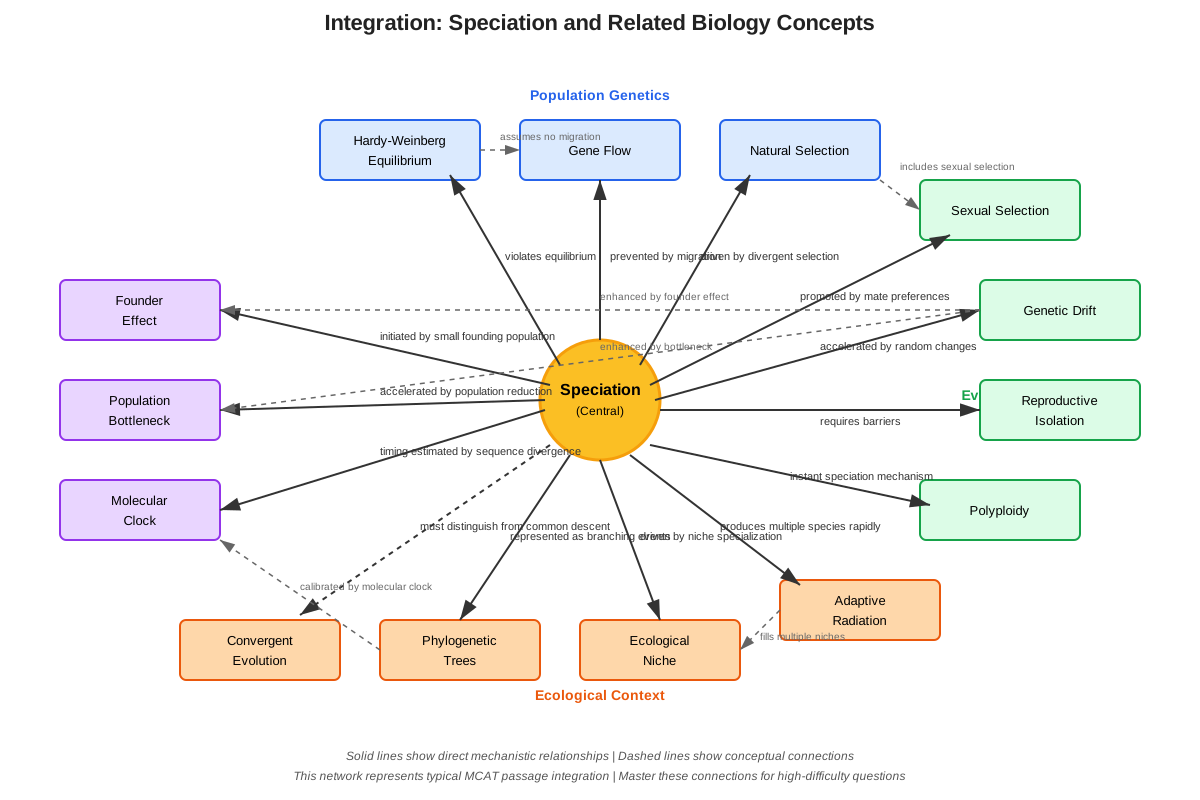
Speciation MCAT questions often integrate multiple biological concepts, including Hardy-Weinberg equilibrium, genetic drift, natural selection, and reproductive strategies. This topic connects directly to population genetics, ecology, and even behavioral biology, making it a nexus point for understanding how molecular changes scale up to create macroevolutionary patterns. Mastery of speciation enables students to tackle complex passages involving island biogeography, adaptive radiation, and conservation biology—all common themes in MCAT biological sciences passages.
Learning Objectives
- [ ] Define Speciation using accurate Biology terminology
- [ ] Explain why Speciation matters for the MCAT
- [ ] Apply Speciation to exam-style questions
- [ ] Identify common mistakes related to Speciation
- [ ] Connect Speciation to related Biology concepts
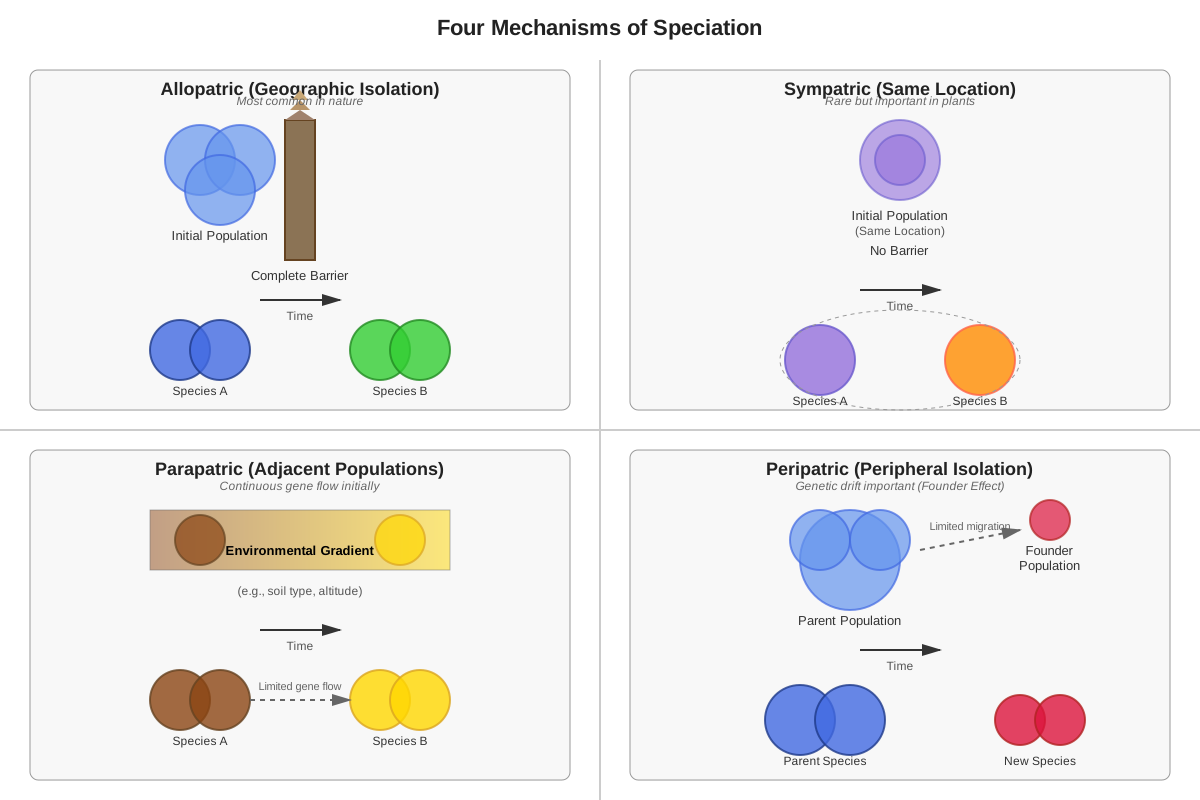
- [ ] Distinguish between allopatric, sympatric, parapatric, and peripatric speciation mechanisms
- [ ] Analyze how prezygotic and postzygotic barriers contribute to reproductive isolation
- [ ] Evaluate experimental evidence for speciation events using genetic and morphological data
Prerequisites
- Population genetics fundamentals: Understanding allele frequencies and Hardy-Weinberg equilibrium provides the mathematical foundation for tracking genetic changes during speciation
- Natural selection mechanisms: Knowledge of directional, stabilizing, and disruptive selection explains how environmental pressures drive divergence
- Genetic drift and gene flow: These concepts are essential for understanding how isolated populations diverge genetically
- Reproductive biology: Familiarity with mating systems and reproductive strategies helps explain reproductive isolation mechanisms
- Basic taxonomy: Understanding species concepts and classification systems provides context for defining when speciation has occurred
Why This Topic Matters
Speciation has profound real-world significance in conservation biology, agriculture, and medicine. Understanding how species form helps scientists predict how populations will respond to habitat fragmentation, climate change, and human-induced environmental pressures. In medicine, speciation concepts explain antibiotic resistance in bacterial populations and the emergence of new viral strains. Agricultural applications include understanding crop domestication and developing pest management strategies that account for rapid evolutionary change.
On the MCAT, speciation appears in approximately 3-5% of biological sciences questions, typically integrated into passages about evolution, ecology, or population genetics. Questions may be presented as data interpretation (analyzing graphs of genetic divergence), experimental design (evaluating studies on reproductive isolation), or conceptual application (predicting outcomes of geographic separation). The topic frequently appears in passages describing island ecosystems, adaptive radiation scenarios, or laboratory evolution experiments.
Common MCAT passage contexts include Darwin's finches demonstrating adaptive radiation, cichlid fish speciation in African lakes, polyploidy in plant speciation, and ring species demonstrating gradual reproductive isolation. Discrete questions often test the distinction between different speciation modes or ask students to identify which type of reproductive barrier is operating in a described scenario. Understanding speciation also enables students to answer questions about phylogenetic relationships and evolutionary timescales.
Core Concepts
Definition and Species Concepts
Speciation is the evolutionary process through which new biological species arise from existing populations. The process requires populations to diverge genetically and develop reproductive isolation—the inability to produce viable, fertile offspring with members of other populations. However, defining exactly when speciation has occurred depends on which species concept is applied.
The biological species concept defines species as groups of actually or potentially interbreeding populations that are reproductively isolated from other such groups. This is the most commonly tested definition on the MCAT and works well for sexually reproducing organisms. However, it has limitations for asexual organisms, extinct species, and populations that rarely encounter each other. Alternative concepts include the morphological species concept (based on structural features), ecological species concept (based on ecological niche), and phylogenetic species concept (based on evolutionary history).
Mechanisms of Reproductive Isolation
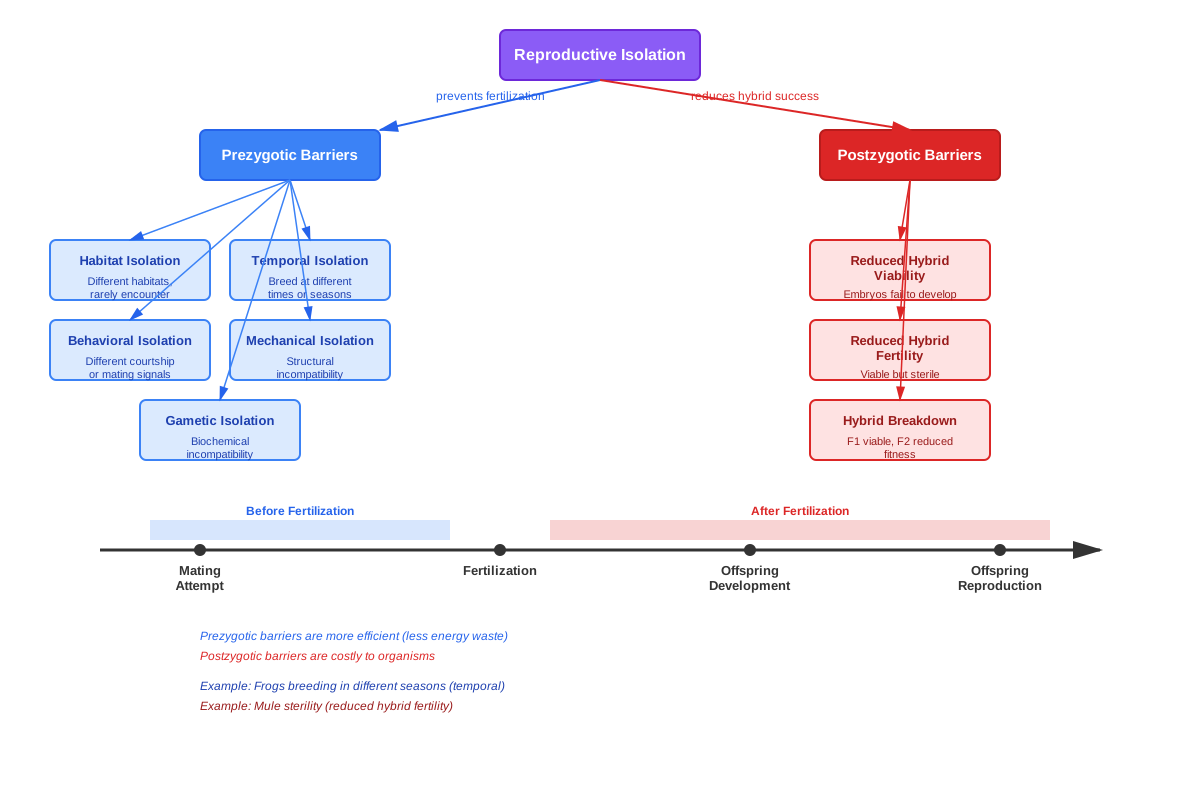
Reproductive isolation mechanisms fall into two major categories: prezygotic barriers and postzygotic barriers. These barriers prevent gene flow between populations and are essential for maintaining species boundaries.
Prezygotic barriers prevent fertilization from occurring:
- Habitat isolation: Species occupy different habitats and rarely encounter each other
- Temporal isolation: Species breed at different times (seasons, times of day, or years)
- Behavioral isolation: Species have different courtship behaviors or mating signals
- Mechanical isolation: Structural differences prevent successful mating
- Gametic isolation: Sperm cannot fertilize eggs due to biochemical incompatibility
Postzygotic barriers operate after fertilization:
- Reduced hybrid viability: Hybrid offspring fail to develop properly or have reduced survival
- Reduced hybrid fertility: Hybrids survive but are sterile (e.g., mules)
- Hybrid breakdown: First-generation hybrids are viable and fertile, but subsequent generations have reduced fitness
| Barrier Type | Timing | Energy Investment | Examples |
|---|---|---|---|
| Prezygotic | Before fertilization | Low | Different mating calls, incompatible genitalia |
| Postzygotic | After fertilization | High | Sterile hybrids, inviable embryos |
Prezygotic barriers are generally more advantageous because they prevent wasted reproductive effort, while postzygotic barriers represent significant energy investment with no reproductive success.
Allopatric Speciation
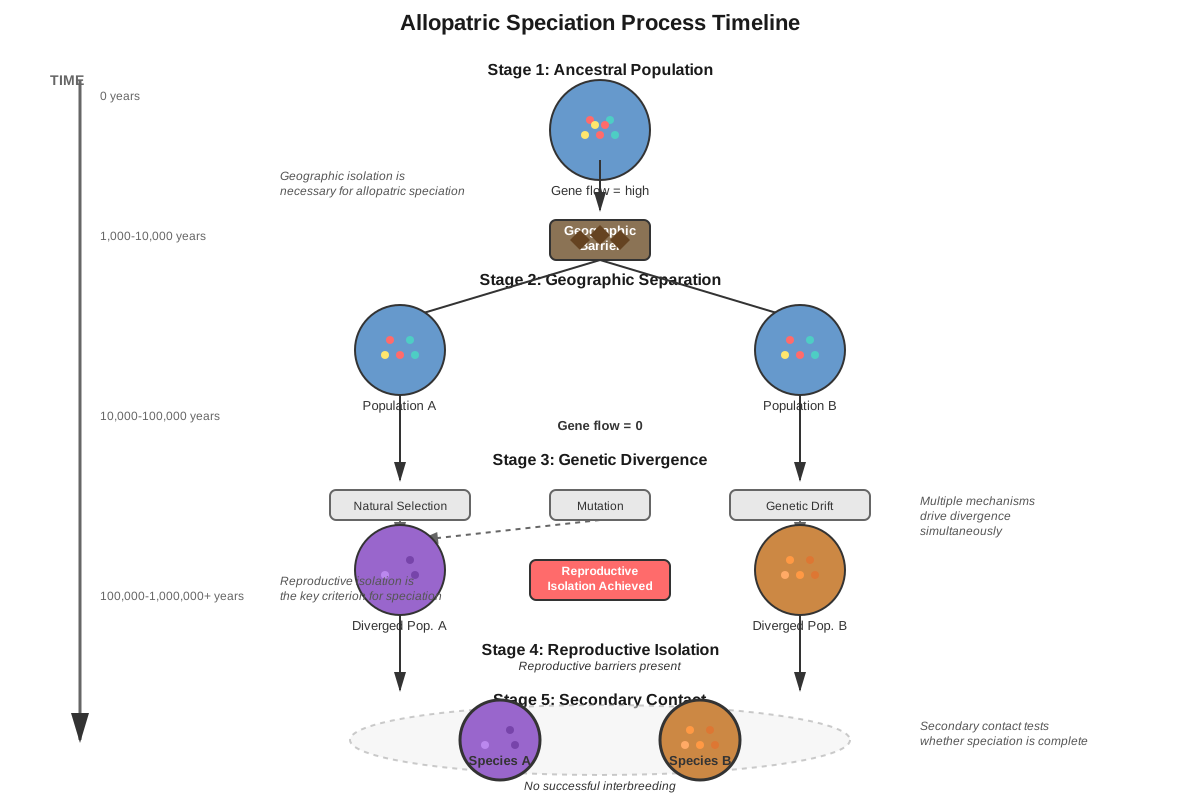
Allopatric speciation occurs when populations are geographically separated by physical barriers, preventing gene flow. This is the most common mode of speciation and can occur through two mechanisms: dispersal (populations colonize new areas) or vicariance (barriers divide existing populations).
During geographic isolation, populations experience different selective pressures, mutations, and genetic drift. Over time, these forces cause genetic divergence. If populations remain separated long enough, they may accumulate sufficient genetic differences that reproductive isolation persists even if geographic barriers are removed. The time required varies from thousands to millions of years depending on generation time, population size, and strength of divergent selection.
Classic examples include Darwin's finches on the Galápagos Islands, where ancestral finches colonized different islands and evolved distinct beak morphologies adapted to local food sources. The Grand Canyon separating squirrel populations and the formation of the Isthmus of Panama dividing marine species are other well-studied cases.
Sympatric Speciation
Sympatric speciation occurs within a single geographic area without physical barriers to gene flow. This mode is less common and more controversial because gene flow tends to homogenize populations. However, several mechanisms can drive sympatric speciation:
Polyploidy is the most common mechanism in plants. Autopolyploidy occurs when chromosome duplication within a species creates individuals with multiple chromosome sets (e.g., 4n instead of 2n). Allopolyploidy results from hybridization between species followed by chromosome doubling, creating a new polyploid species that is reproductively isolated from both parent species. Approximately 50% of flowering plant species originated through polyploidy.
Sexual selection can drive sympatric speciation when mate preferences create reproductive isolation. If different subpopulations develop preferences for different traits, assortative mating can reduce gene flow and promote divergence. African cichlid fish provide examples where female color preferences have driven rapid speciation.
Ecological specialization can lead to sympatric speciation when populations exploit different resources within the same area. Apple maggot flies in North America have diverged into host races that prefer either hawthorn or apple trees, with different emergence times creating temporal isolation.
Parapatric and Peripatric Speciation
Parapatric speciation occurs when populations are adjacent with limited but not absent gene flow. Strong divergent selection across an environmental gradient can overcome the homogenizing effect of gene flow. This mode is intermediate between allopatric and sympatric speciation and may occur along ecological boundaries where different selective pressures operate over short distances.
Peripatric speciation is a special case of allopatric speciation involving small peripheral populations. The founder effect and genetic drift play larger roles in small populations, potentially causing rapid genetic divergence. This mechanism may explain speciation on small islands or in isolated habitat patches.
Adaptive Radiation
Adaptive radiation is the rapid diversification of a single ancestral species into multiple new species, each adapted to different ecological niches. This process typically occurs when populations colonize new environments with many available niches and few competitors. Key conditions include ecological opportunity, morphological innovation (key adaptations), and release from competition or predation.
Famous examples include Hawaiian honeycreepers (over 50 species from one ancestor), Caribbean anole lizards, and the Cambrian explosion. Adaptive radiation demonstrates how speciation can accelerate under favorable conditions, producing remarkable diversity in relatively short evolutionary time.
Concept Relationships
The core concepts of speciation form an interconnected framework where reproductive isolation serves as the central requirement. Geographic separation (allopatric speciation) → reduced gene flow → genetic divergence through drift and selection → accumulation of genetic differences → development of reproductive barriers → complete speciation. Alternatively, strong disruptive selection or polyploidy (sympatric speciation) → reproductive isolation without geographic barriers → speciation.
Prezygotic barriers connect to behavioral biology and sensory systems, while postzygotic barriers connect to developmental biology and genetics. The effectiveness of different barriers influences which speciation mode is most likely: strong prezygotic barriers facilitate sympatric speciation, while weaker barriers require geographic isolation.
Speciation connects backward to population genetics (Hardy-Weinberg equilibrium describes populations NOT undergoing speciation) and forward to macroevolution and phylogenetics (speciation events create branching patterns in evolutionary trees). The topic also links to ecology through concepts of niche partitioning and resource competition, which can drive divergent selection. Understanding genetic drift and founder effects from population genetics is essential for comprehending peripatric speciation and the role of small populations in evolutionary change.
High-Yield Facts
⭐ Reproductive isolation is the defining characteristic of speciation—populations must be unable to produce viable, fertile offspring to be considered separate species under the biological species concept.
⭐ Allopatric speciation is the most common mode, requiring geographic separation that prevents gene flow between populations.
⭐ Prezygotic barriers are more evolutionarily advantageous than postzygotic barriers because they prevent wasted reproductive effort.
⭐ Polyploidy is the most common mechanism of sympatric speciation in plants, creating instant reproductive isolation through chromosome number changes.
⭐ Sympatric speciation requires mechanisms to reduce gene flow within a population, such as assortative mating, polyploidy, or strong disruptive selection.
- Postzygotic barriers include reduced hybrid viability, reduced hybrid fertility, and hybrid breakdown across generations.
- Adaptive radiation occurs when a single ancestral species rapidly diversifies into multiple species adapted to different ecological niches.
- The biological species concept cannot be applied to asexual organisms, extinct species, or populations that never encounter each other.
- Temporal isolation (breeding at different times) and behavioral isolation (different mating signals) are common prezygotic barriers.
- Ring species demonstrate gradual speciation where adjacent populations can interbreed but populations at the "ends" of the ring cannot, showing speciation as a continuum rather than a discrete event.
Quick check — test yourself on Speciation so far.
Try Flashcards →Common Misconceptions
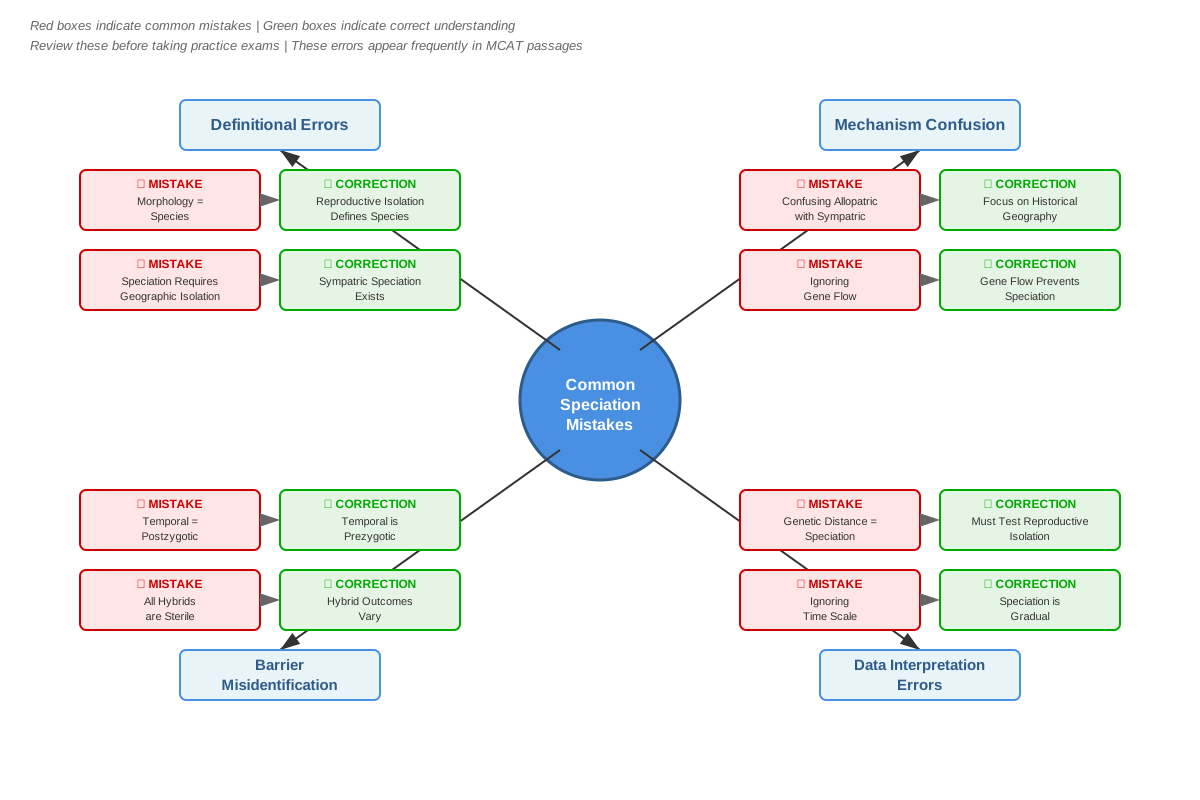
Misconception: Speciation always requires millions of years to occur.
Correction: Speciation timescales vary dramatically. Polyploidy can create reproductive isolation in a single generation, and some cichlid fish species have diverged in less than 10,000 years. However, many speciation events do require hundreds of thousands to millions of years, particularly in organisms with long generation times.
Misconception: Geographic separation alone causes speciation.
Correction: Geographic separation (allopatric conditions) prevents gene flow, but speciation requires genetic divergence through mutation, drift, and selection. Populations can remain geographically separated for long periods without speciating if they experience similar selective pressures and maintain genetic compatibility.
Misconception: Sympatric speciation is impossible because gene flow prevents divergence.
Correction: While sympatric speciation is less common and more difficult than allopatric speciation, several mechanisms can overcome gene flow, including polyploidy (especially in plants), strong disruptive selection with assortative mating, and sexual selection. Well-documented examples exist in cichlid fish, insects, and plants.
Misconception: Hybrids are always sterile or inviable.
Correction: Hybrid sterility and inviability are postzygotic barriers that can contribute to reproductive isolation, but many species can produce viable, fertile hybrids, especially in the early stages of divergence. The existence of fertile hybrids indicates incomplete reproductive isolation and ongoing or recent speciation.
Misconception: All members of a species look similar and can be identified by appearance.
Correction: The biological species concept is based on reproductive compatibility, not morphology. Cryptic species look nearly identical but are reproductively isolated, while some species show extreme sexual dimorphism or polymorphism. Morphology alone is insufficient to define species boundaries.
Misconception: Speciation creates "better" or "more advanced" organisms.
Correction: Speciation is not directional or progressive. New species are simply adapted to their specific environments and ecological niches. There is no hierarchy of "advancement" in evolution—all extant species are equally evolved from the origin of life.
Worked Examples
Example 1: Identifying Speciation Mode
Question: A population of beetles lives in a large forest. A new highway is constructed through the forest, creating a permanent barrier. Over 50,000 years, the beetle populations on either side of the highway develop different mating calls. When researchers bring beetles from both sides together in the laboratory, they do not attempt to mate with each other, even though they are physically capable of producing offspring. What type of speciation has occurred, and what type of reproductive barrier has developed?
Solution:
Step 1: Identify the speciation mode. The highway created a geographic barrier that divided a previously continuous population. This is the defining characteristic of allopatric speciation—geographic separation preventing gene flow.
Step 2: Determine the type of reproductive barrier. The beetles are physically capable of producing offspring (no mechanical or gametic isolation), but they do not attempt to mate due to different mating calls. This is behavioral isolation, a prezygotic barrier.
Step 3: Explain the evolutionary process. During the 50,000 years of separation, the populations experienced different selective pressures, mutations, and genetic drift. Changes in mating call preferences could have evolved through sexual selection or genetic drift. Because the populations were isolated, these changes accumulated without being homogenized by gene flow.
Step 4: Evaluate completeness of speciation. The behavioral isolation is a prezygotic barrier that prevents mating under natural conditions. However, to confirm complete speciation, researchers would need to test whether forced matings produce viable, fertile offspring. If hybrids are viable and fertile, the populations might still be capable of gene flow under some circumstances, indicating incomplete speciation.
Answer: Allopatric speciation with behavioral isolation (prezygotic barrier). This represents a classic case of geographic separation leading to divergence in mate recognition systems.
Example 2: Analyzing Polyploidy
Question: A diploid plant species (2n = 14) undergoes an error in meiosis, producing diploid gametes instead of haploid gametes. These diploid gametes fuse during self-fertilization, creating offspring with 28 chromosomes. Can these offspring reproduce with the parent population? What type of speciation has occurred?
Solution:
Step 1: Identify the chromosome numbers. The parent species is diploid with 2n = 14 (n = 7). Diploid gametes have 14 chromosomes. Fusion of two diploid gametes creates offspring with 28 chromosomes (4n = 28), making them tetraploid.
Step 2: Analyze reproductive compatibility with parents. If a tetraploid individual (4n = 28) mates with a diploid parent (2n = 14), the gametes would be 2n = 14 from the tetraploid and n = 7 from the diploid. The resulting offspring would be triploid (3n = 21). Triploid organisms typically have severe problems during meiosis because chromosomes cannot pair properly, resulting in sterility or inviability. This represents a postzygotic barrier (reduced hybrid fertility).
Step 3: Determine if tetraploids can reproduce. Tetraploid individuals can potentially reproduce with each other through self-fertilization or mating with other tetraploids. Their gametes (2n = 14) would fuse to produce tetraploid offspring (4n = 28), maintaining the chromosome number.
Step 4: Identify the speciation type. This is sympatric speciation through autopolyploidy. The new tetraploid population is reproductively isolated from the parent diploid population despite occurring in the same geographic location. The reproductive isolation arose instantly through a chromosomal change rather than gradually through geographic separation.
Step 5: Consider evolutionary implications. If the tetraploid individuals have sufficient fitness and can establish a breeding population, they represent a new species. This mechanism is common in plants and can occur in a single generation, making it one of the fastest speciation mechanisms.
Answer: Sympatric speciation through autopolyploidy. The tetraploid offspring are reproductively isolated from the diploid parent population due to production of sterile triploid hybrids (postzygotic barrier), but tetraploids can reproduce with each other, establishing a new species.
Exam Strategy
When approaching Speciation MCAT questions, first identify whether the question asks about the mode of speciation (allopatric vs. sympatric) or the type of reproductive barrier (prezygotic vs. postzygotic). Look for key trigger words: "geographic separation," "physical barrier," or "isolated populations" indicate allopatric speciation, while "same location," "within a population," or "polyploidy" suggest sympatric speciation.
For reproductive barrier questions, determine the timing: Does the barrier prevent mating or fertilization (prezygotic), or does it affect hybrid offspring (postzygotic)? Prezygotic barrier triggers include "different mating seasons" (temporal), "incompatible mating behaviors" (behavioral), "structural differences" (mechanical), and "sperm cannot fertilize eggs" (gametic). Postzygotic triggers include "hybrid offspring die" (reduced viability), "hybrids are sterile" (reduced fertility), and "second generation has problems" (hybrid breakdown).
Exam Tip: If a question describes a scenario and asks "what type of speciation," eliminate answer choices systematically. If there's geographic separation, eliminate sympatric options. If there's no geographic separation, eliminate allopatric options. If the question mentions plants and chromosome numbers, strongly consider polyploidy.
Process of elimination is particularly effective for speciation questions. If a question asks about reproductive barriers and describes events before fertilization, immediately eliminate all postzygotic options. If hybrids are mentioned, eliminate prezygotic options. For speciation mode questions, the presence or absence of geographic barriers is usually definitive.
Time allocation: Most speciation questions can be answered in 60-90 seconds if you quickly identify the key features (geographic separation? timing of barrier? chromosome numbers?). Don't overthink—the MCAT typically tests straightforward application of definitions rather than edge cases. If a passage describes an experiment, focus on the variables being manipulated and measured, as these usually directly indicate the type of isolation being tested.
Watch for questions that combine speciation with other topics. A passage might present data on allele frequencies (population genetics) in separated populations and ask you to predict speciation outcomes. Or a question might describe reproductive barriers and ask about Hardy-Weinberg equilibrium (populations with complete reproductive isolation are separate gene pools and must be analyzed separately).
Memory Techniques
Mnemonic for Prezygotic Barriers - "HTBMG": Habitat, Temporal, Behavioral, Mechanical, Gametic. Remember "Hot Tamales Bring Much Gratitude" to recall all five prezygotic barriers in order.
Mnemonic for Postzygotic Barriers - "VFB": Viability, Fertility, Breakdown. Think "Very Few Babies" to remember that postzygotic barriers reduce reproductive success after fertilization.
Visualization for Allopatric vs. Sympatric: Picture "allo" as "other" (different places) and "sym" as "same" (same place). Allopatric = populations in other locations; Sympatric = populations in the same location.
Acronym for Speciation Requirements - "GRID": Genetic divergence, Reproductive isolation, Isolation from gene flow, Divergent selection. All four components typically contribute to speciation.
Memory aid for Polyploidy types: Autopolyploidy = automatic (within same species, like an automatic transmission in one car). Allopolyploidy = allocate between species (combining chromosomes from different species, like allocating resources between different departments).
Visualization for Adaptive Radiation: Picture a single tree trunk (ancestral species) rapidly branching into many different branches (new species), each reaching toward different resources (ecological niches). The Hawaiian honeycreepers or Darwin's finches provide concrete examples to anchor this concept.
Summary
Speciation is the fundamental evolutionary process creating biological diversity through the formation of new species from existing populations. The process requires reproductive isolation, which can develop through prezygotic barriers (preventing fertilization) or postzygotic barriers (reducing hybrid fitness). Allopatric speciation, the most common mode, occurs when geographic barriers separate populations, allowing genetic divergence through drift, mutation, and divergent selection. Sympatric speciation occurs within a single location through mechanisms like polyploidy, sexual selection, or ecological specialization. Understanding the distinction between speciation modes and types of reproductive barriers is essential for MCAT success, as questions frequently require students to identify which mechanism operates in a given scenario or predict evolutionary outcomes. Speciation connects population genetics, natural selection, and reproductive biology into a unified framework explaining how molecular and genetic changes scale up to create macroevolutionary patterns and the remarkable diversity of life on Earth.
Key Takeaways
- Speciation requires reproductive isolation—the inability of populations to produce viable, fertile offspring—which can develop through prezygotic or postzygotic barriers
- Allopatric speciation (with geographic separation) is more common than sympatric speciation (without geographic separation) because gene flow opposes divergence
- Prezygotic barriers (habitat, temporal, behavioral, mechanical, gametic) prevent fertilization and are more advantageous than postzygotic barriers (reduced viability, fertility, or hybrid breakdown)
- Polyploidy, especially in plants, can create instant reproductive isolation and is the most common mechanism of sympatric speciation
- Adaptive radiation occurs when a single ancestral species rapidly diversifies into multiple species adapted to different ecological niches
- The biological species concept defines species based on reproductive compatibility, not morphology, though it has limitations for asexual organisms and extinct species
- Speciation integrates concepts from population genetics, natural selection, reproductive biology, and ecology, making it a nexus topic for MCAT passages
Related Topics
Population Genetics and Hardy-Weinberg Equilibrium: Understanding allele frequency changes provides the mathematical foundation for tracking genetic divergence during speciation. Mastering speciation helps explain when Hardy-Weinberg assumptions are violated.
Natural Selection and Adaptation: Different types of selection (directional, disruptive, stabilizing) drive divergence between populations. Speciation represents the ultimate outcome of sustained divergent selection.
Phylogenetics and Evolutionary Trees: Each speciation event creates a branching point in phylogenetic trees. Understanding speciation mechanisms helps interpret evolutionary relationships and estimate divergence times.
Behavioral Biology and Mating Systems: Mate choice, courtship behaviors, and sexual selection directly influence behavioral isolation and can drive sympatric speciation.
Conservation Biology: Understanding speciation helps predict how habitat fragmentation, climate change, and human activities affect biodiversity and extinction risk.
Practice CTA
Now that you've mastered the core concepts of speciation, it's time to reinforce your understanding through active practice. Challenge yourself with MCAT-style practice questions that require you to apply these concepts to novel scenarios, interpret experimental data, and distinguish between different speciation modes and reproductive barriers. Use flashcards to drill the definitions of key terms and the distinctions between prezygotic and postzygotic barriers. The more you practice applying these concepts, the more automatic your recognition of speciation patterns will become on test day. Remember: understanding speciation isn't just about memorizing definitions—it's about developing the analytical skills to evaluate evolutionary scenarios and predict outcomes. You've got this!
Sign up free to keep reading
Create a free AnvayaPrep account to finish this MCAT guide on Speciation — plus flashcards and practice questions.