Overview
Natural selection is the cornerstone mechanism of evolutionary biology and represents one of the most fundamental concepts tested in the Biology section of the MCAT. As a process by which organisms with advantageous traits survive and reproduce at higher rates than those without such traits, natural selection explains the diversity of life on Earth and the adaptation of organisms to their environments. Understanding natural selection requires integrating knowledge from Molecular Biology and Genetics, ecology, population dynamics, and even biochemistry, making it a truly interdisciplinary topic that frequently appears in MCAT passages combining multiple biological concepts.
For the MCAT, natural selection serves as a unifying framework that connects genetic variation, inheritance patterns, population genetics, speciation, and evolutionary adaptation. Test-makers frequently present experimental passages describing bacterial resistance to antibiotics, changes in allele frequencies across generations, or adaptations in response to environmental pressures. These passages require students to apply principles of natural selection to interpret data, predict outcomes, and understand the molecular basis of evolutionary change. The topic appears not only in standalone questions but also integrated within passages about genetics, ecology, and even biochemistry when discussing enzyme evolution or protein adaptation.
The significance of natural selection extends beyond evolutionary biology into practical applications that MCAT passages commonly explore: antibiotic resistance in pathogens, pesticide resistance in agricultural pests, cancer cell evolution within patients, and the emergence of new viral strains. These real-world applications make natural selection a high-yield topic that bridges basic science with clinical relevance, exactly the type of integration the MCAT emphasizes. Mastering natural selection provides the foundation for understanding speciation, population genetics, Hardy-Weinberg equilibrium, and the molecular mechanisms underlying genetic diversity—all topics that appear regularly on the exam.
Learning Objectives
- [ ] Define Natural selection using accurate Biology terminology
- [ ] Explain why Natural selection matters for the MCAT
- [ ] Apply Natural selection to exam-style questions
- [ ] Identify common mistakes related to Natural selection
- [ ] Connect Natural selection to related Biology concepts
- [ ] Distinguish between the different types of natural selection (directional, stabilizing, and disruptive)
- [ ] Analyze how genetic variation serves as the raw material for natural selection
- [ ] Predict changes in allele frequencies across generations given specific selective pressures
- [ ] Evaluate experimental data to determine whether natural selection is occurring in a population
Prerequisites
- Mendelian genetics and inheritance patterns: Understanding how traits pass from parents to offspring is essential for comprehending how advantageous alleles increase in frequency across generations
- DNA structure and gene expression: Natural selection acts on phenotypes that result from genotypes, requiring knowledge of how genes produce traits
- Population genetics basics: Familiarity with allele frequencies, gene pools, and the concept of populations as the unit of evolution
- Mutation as a source of variation: Recognizing that mutations create the genetic diversity upon which selection acts
- Basic ecology and environmental interactions: Understanding how organisms interact with their environment provides context for selective pressures
Why This Topic Matters
Natural selection represents one of the most clinically and practically relevant topics in biology. In medicine, the evolution of antibiotic-resistant bacteria through natural selection poses one of the greatest public health challenges of the 21st century. When physicians prescribe antibiotics, they must consider how incomplete treatment courses allow resistant bacteria to survive and proliferate—a direct application of natural selection principles. Similarly, cancer treatment strategies must account for tumor cell populations evolving resistance to chemotherapy drugs through the same mechanisms. Understanding natural selection enables future physicians to make informed decisions about treatment protocols and public health interventions.
On the MCAT, natural selection appears with moderate to high frequency, particularly in Biology/Biochemistry passages. Exam statistics indicate that evolutionary biology concepts, with natural selection as the centerpiece, appear in approximately 10-15% of biological sciences questions. The topic most commonly appears in three formats: (1) experimental passages presenting data on changing allele frequencies or trait distributions across generations, (2) research passages describing molecular mechanisms of adaptation, and (3) standalone questions testing conceptual understanding of selection types and evolutionary principles. The MCAT particularly favors questions that require students to interpret graphs showing population changes, analyze experimental designs studying selection, or apply natural selection principles to novel scenarios.
Common passage types include bacterial evolution experiments tracking antibiotic resistance, field studies documenting changes in wild populations, molecular biology research on protein evolution, and ecological studies examining predator-prey dynamics. The exam frequently tests the ability to distinguish natural selection from other evolutionary mechanisms (genetic drift, gene flow, mutation), recognize the requirements for natural selection to occur, and predict evolutionary outcomes based on selective pressures. Questions often integrate natural selection with Hardy-Weinberg equilibrium, asking students to identify which assumptions are violated when selection occurs.
Core Concepts
Definition and Mechanism of Natural Selection
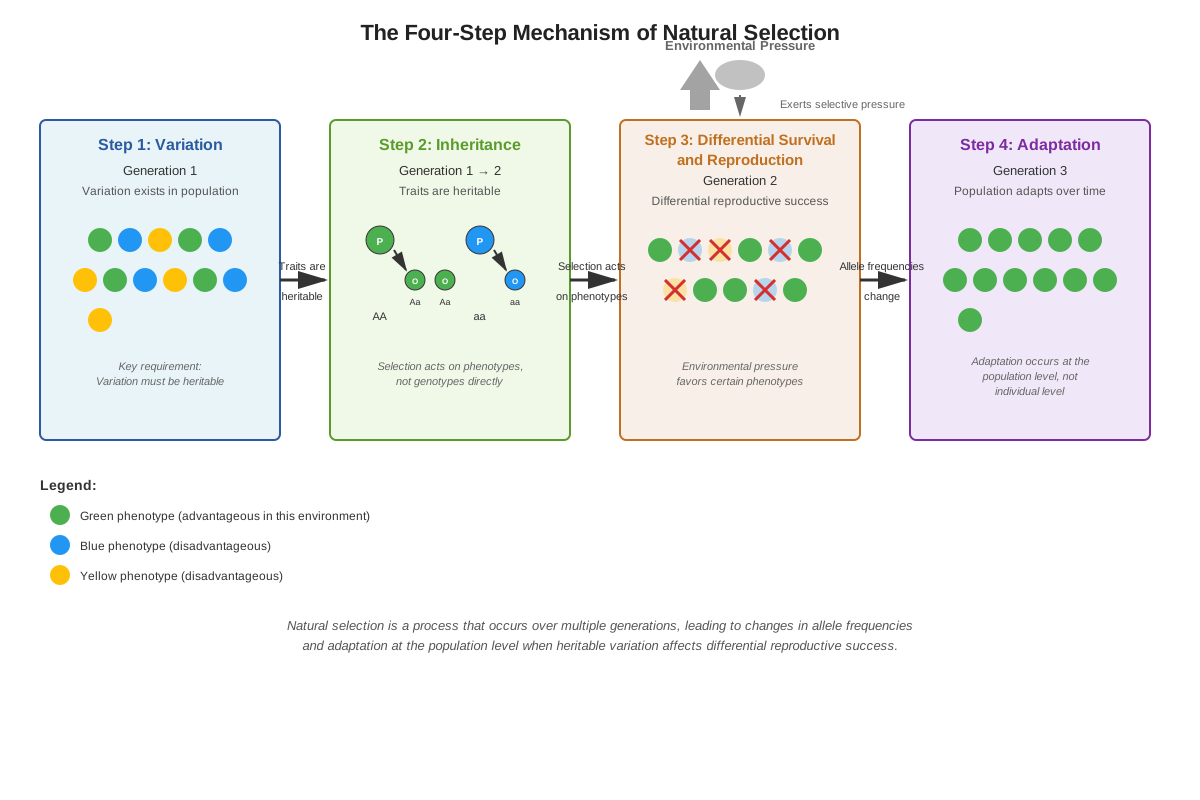
Natural selection is the differential survival and reproduction of individuals within a population based on heritable phenotypic variation that affects fitness in a specific environment. This process, first articulated by Charles Darwin, operates through several key components that must all be present for natural selection to occur. The mechanism requires: (1) variation in traits among individuals in a population, (2) heritability of those traits (genetic basis), (3) differential reproductive success based on those traits, and (4) limited resources creating competition. When these conditions are met, alleles associated with advantageous traits increase in frequency across generations, while deleterious alleles decrease.
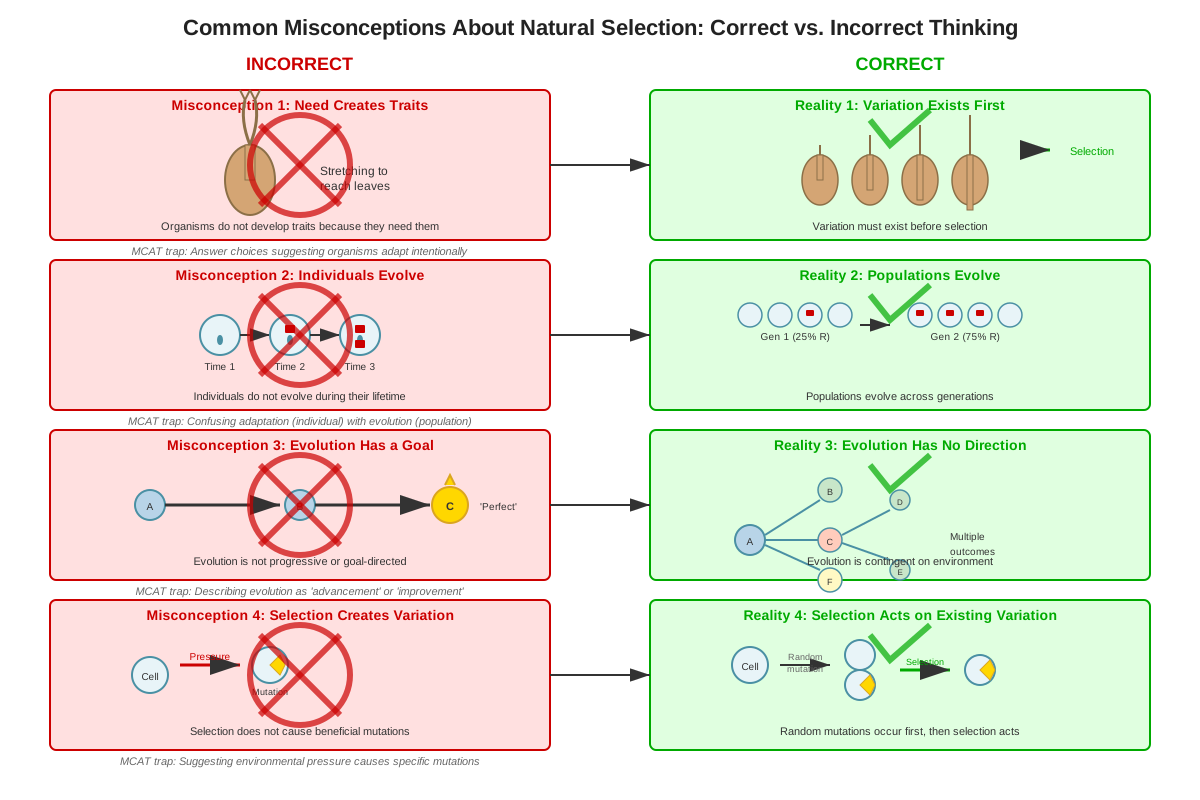
The process operates at the population level, not on individual organisms. An individual cannot evolve; rather, populations evolve as their allele frequencies change over time. Fitness, in evolutionary terms, refers specifically to reproductive success—the number of viable, fertile offspring an organism produces. An organism with high fitness contributes more alleles to the next generation's gene pool than organisms with lower fitness. This concept differs from colloquial usage of "fitness" as physical health or strength; evolutionary fitness is measured solely by reproductive output.
Types of Natural Selection
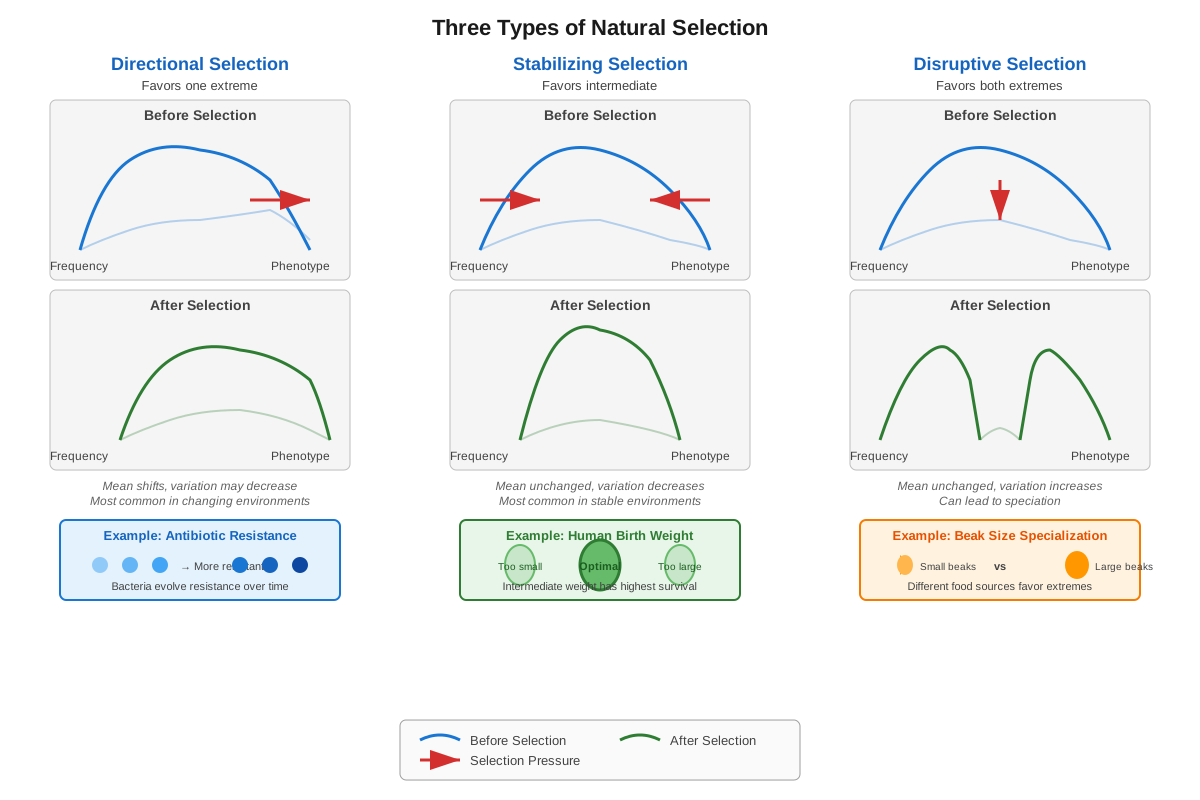
Natural selection operates in three distinct patterns, each producing different effects on trait distribution within populations:
Directional selection occurs when one extreme phenotype has higher fitness than intermediate or opposite extreme phenotypes. This shifts the population mean toward the favored extreme. Classic examples include the evolution of antibiotic resistance in bacteria, where increasingly resistant strains are favored, or the lengthening of giraffe necks over evolutionary time as longer-necked individuals accessed more food. On the MCAT, directional selection often appears in passages about pesticide resistance, drug resistance, or adaptation to new environments.
Stabilizing selection favors intermediate phenotypes over extreme variants, reducing variation while maintaining the population mean. Human birth weight provides a classic example: babies of intermediate weight have higher survival rates than very small or very large babies. This type of selection maintains the status quo and is common in stable environments. MCAT passages may present stabilizing selection in contexts of optimal enzyme function at intermediate temperatures or optimal body size for thermoregulation.
Disruptive selection (also called diversifying selection) favors both extreme phenotypes over intermediate forms, potentially leading to a bimodal distribution. This can occur when different ecological niches favor different extremes, as seen in African seedcracker finches where both small-beaked birds (eating soft seeds) and large-beaked birds (eating hard seeds) have higher fitness than intermediate-beaked birds. Disruptive selection can be a precursor to speciation and appears in MCAT passages about niche specialization or polymorphism maintenance.
| Selection Type | Effect on Mean | Effect on Variation | Example |
|---|---|---|---|
| Directional | Shifts toward one extreme | May decrease | Antibiotic resistance |
| Stabilizing | Maintains current mean | Decreases | Human birth weight |
| Disruptive | May split into two modes | Increases | Beak size in seedcrackers |
Requirements for Natural Selection
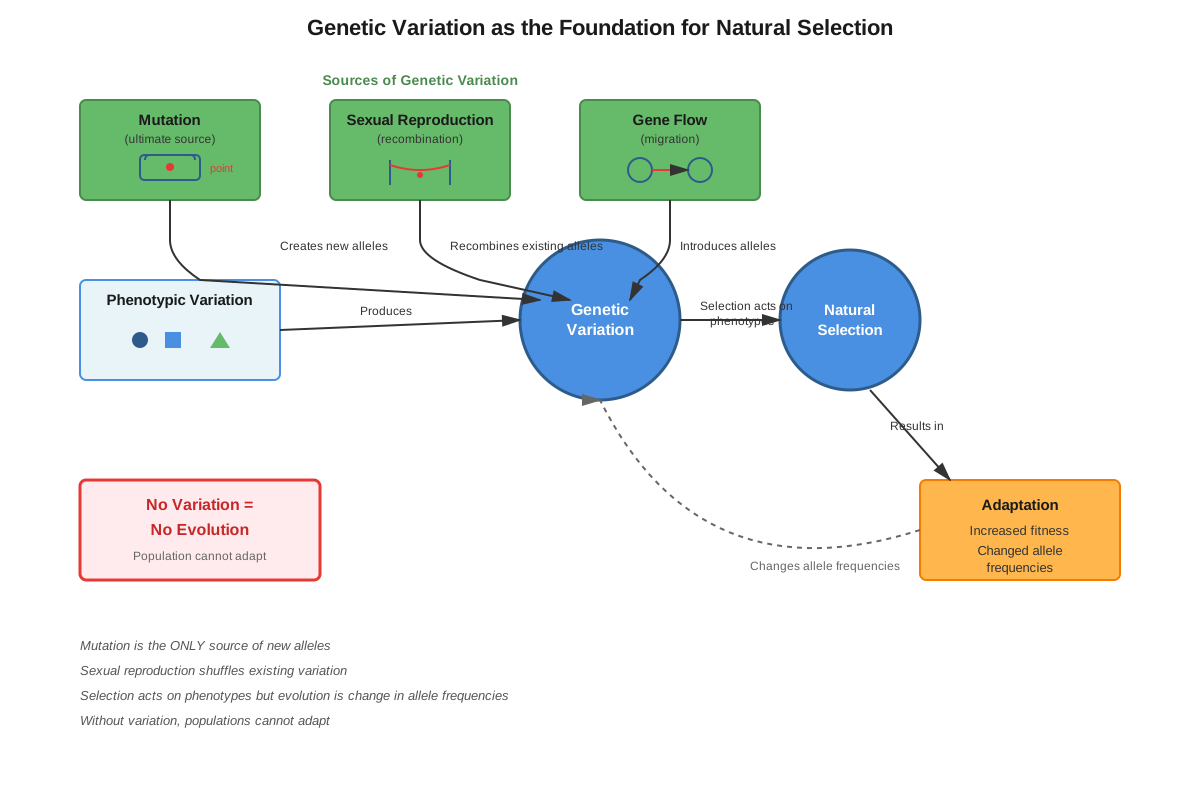
For natural selection to drive evolutionary change, four conditions must be satisfied simultaneously. First, phenotypic variation must exist within the population—individuals must differ in observable traits. This variation arises from genetic differences (mutations, recombination during sexual reproduction, and gene flow from other populations). Without variation, selection has nothing to act upon; all individuals would have equal fitness.
Second, the variation must be heritable—traits must have a genetic basis that can be passed to offspring. Purely environmental modifications that don't affect genotype cannot be selected for. For example, muscles developed through exercise won't be inherited by offspring (contrary to Lamarckian evolution, a common MCAT distractor). The heritability requirement explains why natural selection changes allele frequencies: alleles associated with advantageous phenotypes become more common because organisms carrying them reproduce more successfully.
Third, there must be differential reproductive success—some variants must produce more surviving offspring than others. This differential fitness is the engine of natural selection. The environment determines which traits confer advantages; a trait beneficial in one environment may be neutral or harmful in another. Fourth, resources must be limited, creating competition. In an environment with unlimited resources, all individuals could reproduce maximally regardless of traits, eliminating differential fitness.
Natural Selection vs. Other Evolutionary Mechanisms
Understanding what natural selection is requires distinguishing it from other mechanisms that change allele frequencies. Genetic drift causes random changes in allele frequencies, particularly in small populations, and operates independently of fitness. The founder effect and bottleneck effect are special cases of genetic drift. Unlike natural selection, drift can increase the frequency of deleterious alleles or decrease beneficial ones purely by chance. MCAT questions often ask students to identify whether observed changes result from selection (non-random, fitness-based) or drift (random).
Gene flow (migration) introduces new alleles into populations or changes existing allele frequencies through movement of individuals between populations. Gene flow can counteract natural selection by reintroducing alleles that selection is eliminating. Mutation creates new alleles but typically at rates too low to significantly change allele frequencies by itself; however, mutation provides the raw material upon which selection acts. Sexual selection, a special form of natural selection, favors traits that increase mating success rather than survival, sometimes producing traits that decrease survival (like peacock tails) but increase reproductive opportunities.
Adaptation and Fitness
Adaptation refers both to the process of becoming better suited to an environment through natural selection and to the traits that result from this process. Adaptations are inherited characteristics that enhance survival or reproduction in specific environments. Not all traits are adaptations—some are byproducts of other adaptations, some result from genetic drift, and some are vestigial structures from ancestral species. The MCAT tests the ability to distinguish true adaptations (products of natural selection) from other trait origins.
Relative fitness compares the reproductive success of different genotypes within a population, typically expressed as a proportion where the most successful genotype has fitness = 1.0. The selection coefficient (s) measures the reduction in fitness of less successful genotypes: s = 1 - relative fitness. These quantitative measures allow prediction of how quickly allele frequencies will change. For example, a deleterious allele with selection coefficient s = 0.1 reduces fitness by 10%, and natural selection will gradually eliminate it from the population (unless maintained by other factors like heterozygote advantage).
Molecular Basis of Natural Selection
At the molecular level, natural selection acts on genetic variation in DNA sequences that affects phenotype. Point mutations in coding regions may alter protein structure and function, providing variation in enzyme efficiency, structural protein properties, or regulatory protein binding. Regulatory mutations in promoters or enhancers can change gene expression levels without altering protein sequence. The MCAT frequently tests understanding of how molecular changes translate to phenotypic variation subject to selection.
Synonymous (silent) mutations that don't change amino acid sequence typically experience little selection pressure, while nonsynonymous mutations that alter amino acids may be subject to strong selection if they affect protein function. Positive selection accelerates the fixation of beneficial mutations, while purifying (negative) selection eliminates deleterious mutations. The ratio of nonsynonymous to synonymous substitution rates (dN/dS ratio) indicates selection type: dN/dS > 1 suggests positive selection, dN/dS < 1 indicates purifying selection, and dN/dS ≈ 1 suggests neutral evolution.
Natural Selection in Action: Contemporary Examples
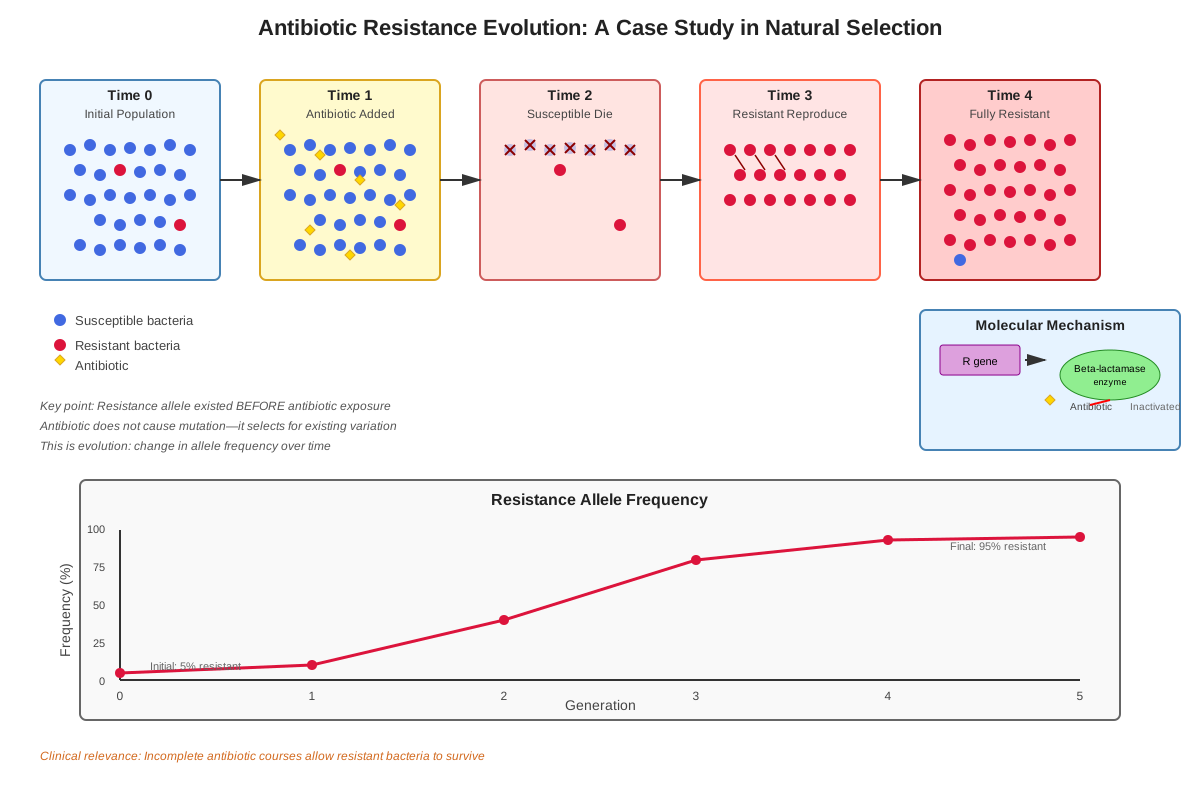
Natural selection operates on observable timescales, not just over millions of years. Antibiotic resistance in bacteria demonstrates rapid evolution: when antibiotics kill susceptible bacteria, resistant mutants (which existed at low frequency before treatment) survive and reproduce, quickly dominating the population. This directional selection can occur within days in bacterial populations. MCAT passages frequently present antibiotic resistance scenarios, requiring students to explain the mechanism, predict outcomes of different treatment protocols, or analyze data on resistance frequency.
Industrial melanism in peppered moths (Biston betularia) provides another classic example. Before industrialization, light-colored moths were camouflaged against lichen-covered trees, while dark moths were easily spotted by predators. Industrial pollution killed lichens and darkened trees, reversing the selective advantage. Dark moths became predominant through directional selection. When pollution controls were implemented, light moths again increased in frequency. This example illustrates how changing environments alter selective pressures and demonstrates that natural selection is ongoing, not a historical process.
HIV evolution within individual patients exemplifies natural selection at the molecular level. The virus's high mutation rate generates genetic diversity, and antiretroviral drugs impose strong selective pressure. Drug-resistant viral variants, initially rare, are selected for and proliferate. This explains why combination therapy (multiple drugs simultaneously) is more effective than monotherapy—the probability of a virus having mutations conferring resistance to multiple drugs simultaneously is much lower than resistance to a single drug.
Concept Relationships
Natural selection serves as the central mechanism connecting multiple evolutionary and genetic concepts. The process begins with genetic variation (created by mutation, recombination, and gene flow) → which produces phenotypic variation → upon which environmental selective pressures act → resulting in differential fitness → leading to changes in allele frequencies → ultimately producing adaptation and potentially speciation.
The relationship to Hardy-Weinberg equilibrium is particularly important for the MCAT. Hardy-Weinberg describes populations NOT evolving (allele frequencies remain constant), which requires the absence of natural selection (among other conditions). When natural selection occurs, Hardy-Weinberg equilibrium is violated, and allele frequencies change predictably based on fitness differences. MCAT questions often present scenarios and ask whether Hardy-Weinberg applies or which assumption is violated.
Natural selection connects to population genetics through its effects on allele frequencies in gene pools. The concepts of genetic drift and gene flow interact with natural selection—drift can overpower weak selection in small populations, while gene flow can introduce alleles that selection would otherwise eliminate. Understanding these interactions allows prediction of evolutionary outcomes in complex scenarios.
At the molecular level, natural selection links to Molecular Biology and Genetics through the genotype-phenotype relationship. Gene expression, protein structure and function, and regulatory mechanisms all influence phenotype and thus fitness. Mutations in coding sequences, regulatory regions, or non-coding RNAs can all be subject to selection if they affect phenotype. The connection extends to biochemistry when considering how enzyme efficiency, protein stability, or metabolic pathway optimization can be shaped by selection.
Natural selection also connects forward to speciation—the formation of new species. When populations experience different selective pressures (due to geographic isolation or ecological niche differentiation), they may diverge genetically through natural selection acting differently in each population. Over time, this divergence can lead to reproductive isolation and speciation. Adaptive radiation, where one ancestral species diversifies into multiple species adapted to different niches, results from natural selection operating in varied environments.
Quick check — test yourself on Natural selection so far.
Try Flashcards →High-Yield Facts
⭐ Natural selection requires four conditions: phenotypic variation, heritability of traits, differential reproductive success, and limited resources creating competition
⭐ Fitness in evolutionary biology means reproductive success only—the number of viable, fertile offspring produced, not physical strength or health
⭐ Populations evolve, not individuals—natural selection changes allele frequencies in populations across generations; individual organisms cannot evolve during their lifetime
⭐ Natural selection is non-random (unlike genetic drift)—it consistently favors alleles that increase fitness in the current environment
⭐ Directional selection shifts the population mean toward one extreme, stabilizing selection maintains the mean while reducing variation, and disruptive selection favors both extremes over intermediate phenotypes
- Natural selection acts on phenotypes but changes genotype frequencies—the connection between genotype and phenotype is crucial
- Antibiotic resistance evolves through natural selection when antibiotics kill susceptible bacteria, allowing resistant mutants to proliferate
- Natural selection can only act on existing variation—it cannot create new alleles (that's mutation's role)
- Traits must be heritable (genetic basis) to evolve through natural selection—acquired characteristics from environmental exposure are not inherited
- Sexual selection is a form of natural selection that favors traits increasing mating success, even if they decrease survival
- The selection coefficient (s) quantifies the fitness disadvantage of less fit genotypes: s = 1 - relative fitness
- Natural selection violates Hardy-Weinberg equilibrium—when selection occurs, allele frequencies change across generations
- Relative fitness is always measured in comparison to the most successful genotype in the population (which has fitness = 1.0)
Common Misconceptions
Misconception: Natural selection is a conscious process where organisms "try" to adapt or "want" to evolve.
Correction: Natural selection is a passive, automatic process with no consciousness or intent. Organisms with traits that happen to increase fitness in the current environment reproduce more successfully; there is no goal-directed behavior or purposeful adaptation. The giraffe didn't stretch its neck to reach higher leaves—rather, giraffes with longer necks (due to random genetic variation) obtained more food, survived better, and reproduced more successfully.
Misconception: Individual organisms evolve during their lifetime through natural selection.
Correction: Evolution occurs at the population level across generations, not within individual organisms during their lifetime. An individual's genotype remains fixed (barring somatic mutations that aren't inherited). What changes through natural selection is the frequency of alleles in the population's gene pool from one generation to the next. The individual bacterium doesn't become resistant to antibiotics—resistant bacteria that already existed become more common in the population.
Misconception: Natural selection always produces perfect adaptations and optimal organisms.
Correction: Natural selection produces "good enough" solutions, not perfection. Constraints include: (1) selection can only work with existing variation, (2) traits may involve trade-offs (improving one aspect may worsen another), (3) historical constraints limit possibilities (vertebrates are "stuck" with the basic body plan inherited from ancestors), and (4) random processes like genetic drift also influence evolution. Additionally, environments change, so what was adaptive may become maladaptive.
Misconception: All traits are adaptations produced by natural selection.
Correction: Not all traits result from natural selection. Some traits are byproducts of other adaptations (spandrels), some result from genetic drift (especially in small populations), some are vestigial structures from ancestors, and some result from developmental constraints. The MCAT may present traits and ask students to determine whether they're true adaptations or have other origins.
Misconception: Natural selection and evolution are the same thing.
Correction: Evolution is the change in allele frequencies in populations over time, which can occur through multiple mechanisms: natural selection, genetic drift, gene flow, and mutation. Natural selection is one mechanism of evolution—arguably the most important for producing adaptations—but not synonymous with evolution itself. A population can evolve through genetic drift without any natural selection occurring.
Misconception: Acquired characteristics (traits developed during an organism's lifetime) can be inherited and subject to natural selection.
Correction: This Lamarckian view is incorrect. Only traits with a genetic basis can be inherited and thus subject to natural selection. Muscles developed through exercise, scars from injuries, or learned behaviors (unless genetically influenced) are not passed to offspring. The exception is epigenetic modifications, which can sometimes be inherited, but this is distinct from classical Lamarckian inheritance and is a more nuanced topic.
Misconception: Natural selection always increases genetic diversity in populations.
Correction: The effect of natural selection on diversity depends on the type. Directional selection typically reduces diversity by eliminating alleles associated with less fit phenotypes. Stabilizing selection also reduces diversity by selecting against both extremes. Only disruptive selection increases diversity by favoring multiple phenotypes. Additionally, strong selection for a beneficial allele can cause a "selective sweep" that dramatically reduces diversity at linked loci.
Worked Examples
Example 1: Antibiotic Resistance Evolution
Scenario: A bacterial population of 1 million cells is exposed to an antibiotic. Initially, 99.99% of bacteria are susceptible to the antibiotic (genotype ss), while 0.01% carry a resistance mutation (genotype sr or rr). The antibiotic kills 99.9% of susceptible bacteria but has no effect on resistant bacteria. After treatment, the surviving bacteria reproduce until the population returns to 1 million cells.
Question: Explain how this scenario demonstrates natural selection and predict the genotype frequencies after treatment and reproduction.
Solution:
Step 1: Identify the components of natural selection present.
- Variation: The population has genetic variation (susceptible vs. resistant alleles)
- Heritability: The resistance trait is genetic and heritable
- Differential fitness: Resistant bacteria have much higher survival (and thus fitness) in the presence of antibiotics
- Limited resources: Bacteria compete for nutrients (implicit in the scenario)
All four requirements for natural selection are met, so natural selection will occur.
Step 2: Calculate initial numbers.
- Susceptible bacteria: 1,000,000 × 0.9999 = 999,900
- Resistant bacteria: 1,000,000 × 0.0001 = 100
Step 3: Calculate survival after antibiotic treatment.
- Surviving susceptible: 999,900 × 0.001 = ~1,000 bacteria
- Surviving resistant: 100 × 1.0 = 100 bacteria
- Total survivors: 1,100 bacteria
Step 4: Calculate frequencies after selection but before reproduction.
- Frequency of susceptible: 1,000/1,100 = 90.9%
- Frequency of resistant: 100/1,100 = 9.1%
Step 5: Predict after reproduction.
If both types reproduce at equal rates to restore population to 1 million, the frequencies remain approximately the same (assuming no further selection during reproduction):
- Susceptible: ~909,000 (90.9%)
- Resistant: ~91,000 (9.1%)
Conclusion: This demonstrates directional selection favoring the resistance allele. The frequency of resistant bacteria increased from 0.01% to 9.1%—a 910-fold increase in a single generation. This is natural selection in action: the environment (presence of antibiotic) imposed selective pressure, and the population evolved (changed allele frequencies) as a result. This example illustrates why incomplete antibiotic courses are problematic—they allow resistant bacteria to proliferate.
MCAT Connection: This type of calculation and reasoning appears frequently in MCAT passages. Key skills tested include: recognizing natural selection components, calculating frequency changes, understanding that populations evolve (not individuals), and applying concepts to predict outcomes.
Example 2: Identifying Selection Type from Data
Scenario: Researchers studied clutch size (number of eggs laid) in a bird population over 20 years. They measured clutch size and offspring survival for 5,000 nests. The data showed:
- Birds laying 2-3 eggs: 40% offspring survival to adulthood
- Birds laying 4-5 eggs: 75% offspring survival to adulthood
- Birds laying 6-7 eggs: 45% offspring survival to adulthood
The mean clutch size was 4.8 eggs initially and 4.7 eggs after 20 years. The variance in clutch size decreased from 2.1 to 1.3.
Question: What type of natural selection is occurring? Justify your answer using the data provided.
Solution:
Step 1: Analyze fitness across the phenotypic range.
The intermediate phenotype (4-5 eggs) has the highest offspring survival (75%), which is the measure of fitness. Both extremes (2-3 eggs and 6-7 eggs) have lower fitness (40% and 45% respectively). This pattern—intermediate phenotype favored, extremes selected against—is characteristic of stabilizing selection.
Step 2: Examine changes in population mean.
The mean clutch size changed minimally (4.8 → 4.7 eggs), remaining near the intermediate value. This stability of the mean is consistent with stabilizing selection, which maintains the population mean rather than shifting it (as directional selection would) or splitting it (as disruptive selection would).
Step 3: Examine changes in variance.
The variance decreased substantially (2.1 → 1.3), indicating the population became less variable. Stabilizing selection reduces variation by selecting against both extremes, concentrating the population around the intermediate optimum. This is the signature pattern of stabilizing selection.
Step 4: Consider the biological mechanism.
Why might intermediate clutch size be optimal? Birds laying too few eggs don't maximize reproductive output. Birds laying too many eggs may be unable to adequately provision all offspring (limited parental resources), resulting in lower survival per offspring. The intermediate represents an optimal balance—a classic scenario for stabilizing selection.
Conclusion: This is stabilizing selection. The evidence includes: (1) highest fitness at intermediate phenotype, (2) stable population mean, (3) decreased variance, and (4) biological rationale for an optimal intermediate value. This type of selection is common in stable environments where the current population mean represents a well-adapted state.
MCAT Connection: The MCAT frequently presents data tables or graphs and asks students to identify the type of selection occurring. Key skills include: interpreting fitness from survival/reproduction data, recognizing patterns of mean and variance changes, and connecting data patterns to selection types. Always look for which phenotypes have highest fitness and how the population distribution changes.
Exam Strategy
When approaching MCAT questions on natural selection, begin by identifying whether the question asks about the mechanism itself, the requirements for selection to occur, or the outcomes of selection. Questions about mechanism typically require explaining how differential fitness leads to allele frequency changes. Questions about requirements often present scenarios and ask whether natural selection can occur or which condition is missing. Questions about outcomes usually involve predicting how populations will change or interpreting data showing evolutionary change.
Trigger words and phrases that signal natural selection questions include: "differential reproductive success," "fitness," "adaptation," "allele frequency change," "evolution," "selective pressure," "advantageous trait," and "survival of the fittest" (though this phrase is imprecise). Phrases like "over many generations" or "population changes" indicate evolutionary processes. When you see experimental passages tracking trait frequencies across generations or describing environmental pressures affecting survival, natural selection is likely being tested.
For process-of-elimination strategies, remember these key distinctions:
- If an answer choice suggests individuals evolve or organisms change during their lifetime, eliminate it (populations evolve, not individuals)
- If an answer implies natural selection is random, eliminate it (selection is non-random; drift is random)
- If an answer suggests natural selection creates new mutations, eliminate it (selection acts on existing variation; mutation creates variation)
- If an answer describes acquired characteristics being inherited, eliminate it (Lamarckian evolution is incorrect)
- If an answer confuses fitness with physical strength rather than reproductive success, eliminate it
When passages present data on population changes, systematically evaluate: (1) Is there variation in the trait? (2) Does the trait affect survival or reproduction? (3) Do trait frequencies change across generations? If yes to all three, natural selection is likely occurring. Then determine the type: Does the mean shift (directional), stay constant with reduced variance (stabilizing), or split (disruptive)?
Time allocation advice: Natural selection questions are typically medium difficulty and should take 60-90 seconds for standalone questions, 90-120 seconds for passage-based questions. Don't overthink—the MCAT tests core principles, not obscure exceptions. If you find yourself considering complex scenarios or rare cases, you're probably overcomplicating. Return to the fundamental definition: differential reproductive success based on heritable variation leads to allele frequency changes.
For calculation questions involving fitness or allele frequencies, quickly estimate rather than calculating precisely unless the answer choices are very close. The MCAT rarely requires exact calculations; usually, determining whether a value increases, decreases, or stays constant is sufficient. If you must calculate, use the answer choices to guide your precision—if they differ by orders of magnitude, rough estimates suffice.
Memory Techniques
Mnemonic for requirements of natural selection: "VHDR" = Variation (phenotypic), Heritability, Differential fitness, Resources (limited)
Mnemonic for types of selection: "DiStaD" = Directional (shifts mean), Stabilizing (maintains mean, reduces variance), Disruptive (favors extremes)
Visualization for directional selection: Picture a bell curve sliding along the x-axis toward one extreme, like a sled sliding down a hill. The entire distribution shifts in one direction.
Visualization for stabilizing selection: Picture a bell curve being squeezed from both sides, becoming taller and narrower. The middle stays put, but the extremes are compressed inward.
Visualization for disruptive selection: Picture a bell curve being pulled apart at the middle, creating two separate peaks. The intermediate phenotypes disappear, leaving two distinct groups.
Acronym for distinguishing selection from drift: "SURF" = Selection is Unidirectional (consistently favors higher fitness), Repeatable (same selective pressure produces same outcome), Fitness-based (non-random). Drift is random, unpredictable, and fitness-independent.
Memory aid for fitness definition: "Fitness = Future offspring" (both start with F). Evolutionary fitness is measured by how many offspring you contribute to future generations, not by physical attributes.
Conceptual anchor: Always remember that natural selection is the only evolutionary mechanism that consistently produces adaptations (traits that enhance survival or reproduction in specific environments). Drift, gene flow, and mutation can change allele frequencies, but only selection reliably creates adaptive traits. When a question asks about adaptation, natural selection is almost always involved.
Summary
Natural selection is the differential survival and reproduction of individuals based on heritable phenotypic variation that affects fitness, resulting in changes in allele frequencies across generations. This fundamental mechanism of evolution requires four conditions: phenotypic variation, heritability, differential reproductive success, and limited resources. Natural selection operates in three patterns—directional (shifting toward one extreme), stabilizing (maintaining the mean while reducing variation), and disruptive (favoring both extremes)—each producing distinct effects on population trait distributions. Unlike genetic drift, natural selection is non-random and consistently favors alleles that increase fitness in the current environment. The process acts on phenotypes but changes genotype frequencies, operating at the population level rather than on individuals. For the MCAT, understanding natural selection requires integrating molecular genetics (how genotype produces phenotype), population genetics (how allele frequencies change), and ecology (how environment determines fitness). The concept appears frequently in passages about antibiotic resistance, adaptation, speciation, and Hardy-Weinberg equilibrium violations, requiring students to interpret data, predict evolutionary outcomes, and distinguish selection from other evolutionary mechanisms.
Key Takeaways
- Natural selection requires variation, heritability, differential fitness, and competition—all four conditions must be present for selection to drive evolutionary change
- Fitness means reproductive success only, not physical strength; it's measured by the number of viable, fertile offspring produced
- Populations evolve through changes in allele frequencies; individuals cannot evolve during their lifetime
- Three types of selection produce different outcomes: directional shifts the mean, stabilizing maintains the mean while reducing variance, and disruptive favors extremes
- Natural selection is the only mechanism that consistently produces adaptations—traits that enhance survival or reproduction in specific environments
- Selection acts on phenotypes but changes genotype frequencies, making the genotype-phenotype connection crucial for understanding evolutionary change
- Natural selection violates Hardy-Weinberg equilibrium by causing allele frequencies to change across generations in predictable, fitness-based patterns
Related Topics
- Hardy-Weinberg Equilibrium: Understanding the conditions under which populations don't evolve provides the baseline for recognizing when natural selection (and other evolutionary mechanisms) are operating. Mastering natural selection enables deeper comprehension of Hardy-Weinberg violations.
- Population Genetics and Allele Frequencies: Natural selection changes allele frequencies in gene pools. Understanding how to calculate and predict these changes builds directly on natural selection principles.
- Speciation and Macroevolution: Natural selection operating differently in separated populations drives divergence that can lead to new species formation. The mechanisms learned here extend to understanding how biodiversity arises.
- Genetic Drift and Gene Flow: These alternative evolutionary mechanisms interact with natural selection. Understanding selection enables comparison with random (drift) and migration-based (gene flow) changes in allele frequencies.
- Molecular Evolution and Phylogenetics: Natural selection at the molecular level shapes DNA and protein sequences. The principles learned here apply to understanding how genes and proteins evolve.
- Ecology and Population Dynamics: Environmental factors determine which traits are advantageous, making ecology essential context for understanding selective pressures and fitness.
Practice CTA
Now that you've mastered the core concepts of natural selection, it's time to reinforce your understanding through active practice. Work through the practice questions to apply these principles to MCAT-style scenarios, and use the flashcards to cement high-yield facts in your memory. Remember, natural selection is not just a theoretical concept—it's a practical framework for understanding everything from antibiotic resistance to cancer evolution. The more you practice applying these principles to diverse scenarios, the more confident you'll be when you encounter natural selection questions on test day. You've got this!
Sign up free to keep reading
Create a free AnvayaPrep account to finish this MCAT guide on Natural selection — plus flashcards and practice questions.