Overview
Bone structure is a fundamental topic in Biology that appears regularly on the MCAT, particularly within the Physiology and Organ Systems unit. Understanding bone anatomy and organization is essential because bones serve multiple critical functions: they provide structural support, protect vital organs, facilitate movement through muscle attachment, store minerals (especially calcium and phosphate), and house bone marrow for hematopoiesis. The MCAT tests not only the anatomical organization of bone tissue but also the physiological processes of bone remodeling, mineral homeostasis, and the integration of skeletal function with other organ systems.
Bone structure Biology encompasses both macroscopic and microscopic levels of organization. At the macroscopic level, students must understand the distinction between compact (cortical) bone and spongy (trabecular) bone, as well as the overall architecture of long bones including the diaphysis, epiphysis, and various membrane coverings. At the microscopic level, the MCAT expects familiarity with osteons (Haversian systems), osteocytes, osteoblasts, osteoclasts, and the extracellular matrix composition. This multi-level understanding allows test-takers to answer questions ranging from straightforward identification to complex passage-based scenarios involving bone diseases, fracture healing, or calcium homeostasis.
The significance of Bone structure MCAT content extends beyond isolated anatomy questions. Bone structure connects to endocrine physiology (parathyroid hormone, calcitonin, vitamin D), cellular biology (cell differentiation and signaling), biochemistry (collagen synthesis, mineralization), and even psychology/sociology (osteoporosis as a public health concern). Questions often appear in passage format, presenting clinical vignettes about metabolic bone diseases, fractures, or experimental studies on bone remodeling. Mastering bone structure provides a foundation for understanding musculoskeletal physiology and serves as a gateway to more complex integrative questions that the MCAT favors.
Learning Objectives
- [ ] Define Bone structure using accurate Biology terminology
- [ ] Explain why Bone structure matters for the MCAT
- [ ] Apply Bone structure to exam-style questions
- [ ] Identify common mistakes related to Bone structure
- [ ] Connect Bone structure to related Biology concepts
- [ ] Distinguish between compact and spongy bone at both structural and functional levels
- [ ] Describe the cellular components of bone tissue and their specific roles in bone remodeling
- [ ] Explain the hierarchical organization of bone from the molecular level (collagen and hydroxyapatite) to the tissue level (osteons and trabeculae)
Prerequisites
- Basic cell biology: Understanding cell types, cellular differentiation, and cell-to-cell communication is necessary to comprehend how osteoblasts, osteoclasts, and osteocytes function and coordinate bone remodeling
- Connective tissue structure: Familiarity with extracellular matrix components, particularly collagen, provides the foundation for understanding bone's organic matrix
- Basic anatomy terminology: Knowledge of directional terms (proximal, distal, medial, lateral) and body planes enables accurate description of bone locations and structures
- Mineral chemistry: Understanding calcium and phosphate ions is essential for comprehending bone mineralization and the role of bone in mineral homeostasis
- Endocrine system basics: General knowledge of hormones and their mechanisms of action helps explain how bone responds to systemic signals like PTH and calcitonin
Why This Topic Matters
Bone structure represents a high-yield topic for the MCAT because it integrates multiple biological disciplines. Clinically, bone-related conditions affect millions of people worldwide—osteoporosis alone affects approximately 10 million Americans, with another 44 million having low bone density. Understanding bone structure is essential for comprehending how diseases like osteoporosis, osteomalacia, Paget's disease, and osteogenesis imperfecta develop. The MCAT frequently presents clinical vignettes involving elderly patients with fractures, children with rickets, or athletes with stress fractures, requiring students to apply their knowledge of bone structure to diagnostic and therapeutic scenarios.
From an exam statistics perspective, bone structure appears in approximately 3-5% of MCAT Biology/Biochemistry questions, either as discrete questions or within passage-based contexts. Questions typically fall into three categories: (1) direct identification of bone structures or cell types, (2) application questions requiring students to predict outcomes of disrupted bone remodeling or mineral homeostasis, and (3) experimental passage questions analyzing research on bone physiology or pathology. The topic frequently appears alongside questions about calcium homeostasis, vitamin D metabolism, and endocrine regulation, making it a connector topic that can appear in multiple contexts.
Common exam passage scenarios include: experimental studies comparing bone density in different populations, clinical cases of metabolic bone disease requiring diagnosis based on laboratory values and symptoms, research on bone healing or regeneration, and evolutionary or comparative anatomy passages discussing skeletal adaptations. The MCAT particularly favors questions that require students to integrate bone structure with hormonal regulation, making this topic a prime candidate for interdisciplinary questions that test higher-order thinking skills.
Core Concepts
Macroscopic Bone Structure
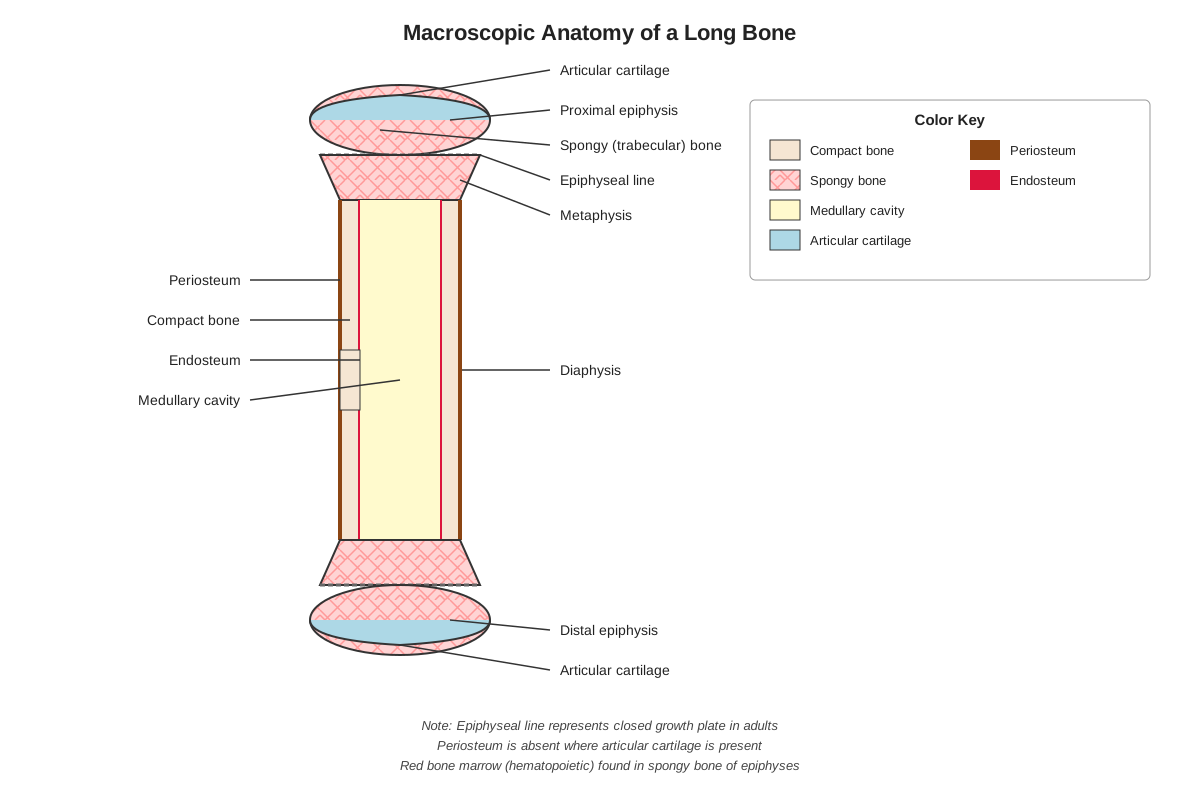
Bone structure refers to the hierarchical organization of skeletal tissue from the molecular to the organ level. At the macroscopic level, bones are classified by shape (long, short, flat, irregular, and sesamoid), with long bones being the most commonly tested on the MCAT. A typical long bone, such as the femur or humerus, consists of several distinct regions and coverings that serve specific functions.
The diaphysis is the long, cylindrical shaft of the bone, composed primarily of compact bone surrounding a hollow medullary cavity (marrow cavity) that contains yellow bone marrow (primarily adipose tissue in adults). The epiphyses (singular: epiphysis) are the expanded ends of long bones, consisting of a thin layer of compact bone surrounding spongy bone. The metaphysis is the region between the diaphysis and epiphysis, containing the epiphyseal plate (growth plate) in growing individuals or the epiphyseal line in adults after growth has ceased.
Two important membrane coverings protect and nourish bone tissue. The periosteum is a dense connective tissue membrane covering the external surface of bone (except at joints where articular cartilage is present). It contains two layers: an outer fibrous layer of dense irregular connective tissue and an inner cellular layer containing osteoprogenitor cells and osteoblasts essential for bone growth and repair. The periosteum is richly supplied with blood vessels and nerves, and it anchors tendons and ligaments to bone. The endosteum is a thinner membrane lining the medullary cavity and the spaces within spongy bone, also containing osteoprogenitor cells and osteoblasts.
Microscopic Bone Structure: Compact vs. Spongy Bone
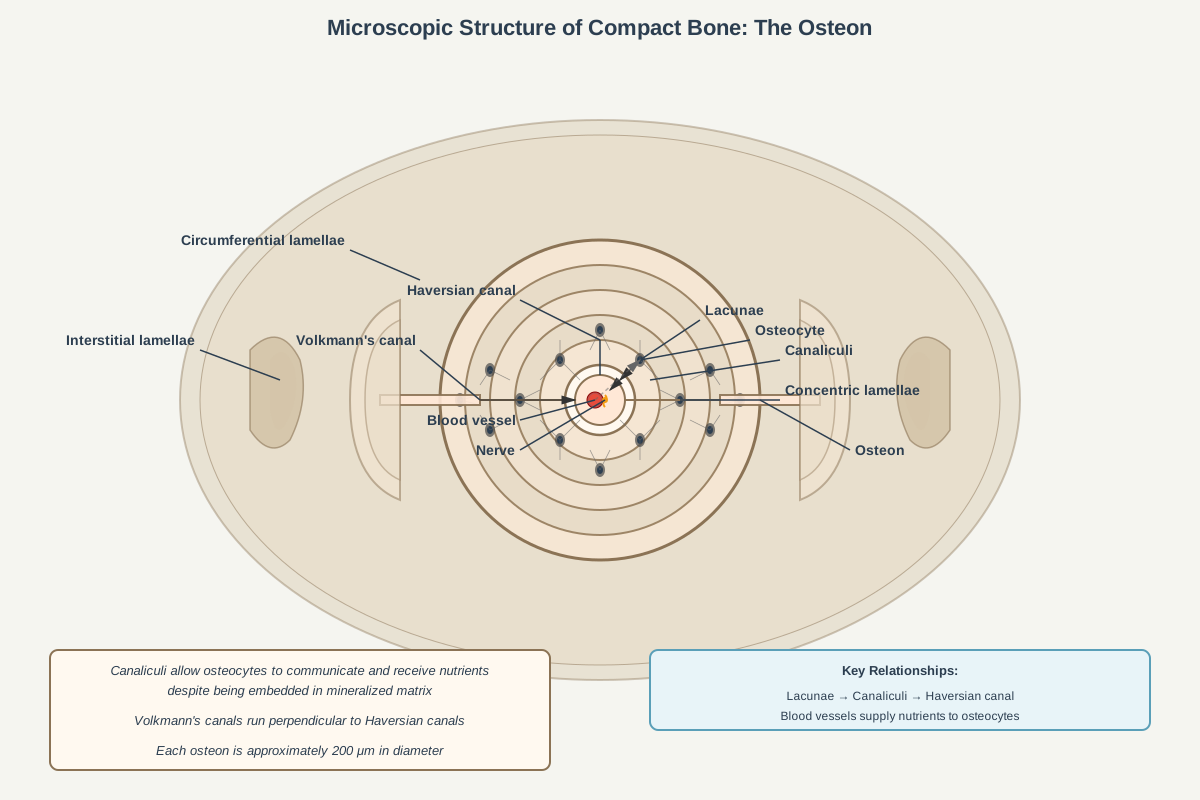
Compact bone (cortical bone) appears dense and solid, comprising approximately 80% of skeletal mass. Its fundamental structural unit is the osteon (Haversian system), a cylindrical structure oriented parallel to the long axis of the bone. Each osteon consists of concentric layers called lamellae (singular: lamella) surrounding a central Haversian canal that contains blood vessels and nerves. Between lamellae are small spaces called lacunae (singular: lacuna) that house mature bone cells called osteocytes. Radiating from each lacuna are tiny channels called canaliculi (singular: canaliculus) that connect lacunae to each other and to the Haversian canal, allowing nutrient and waste exchange.
Osteons are connected by Volkmann's canals (perforating canals), which run perpendicular to Haversian canals and connect blood vessels from the periosteum to those in the Haversian canals and medullary cavity. Between intact osteons are interstitial lamellae, remnants of old osteons that have been partially resorbed during bone remodeling. The outermost and innermost layers of compact bone contain circumferential lamellae that extend around the entire circumference of the bone.
Spongy bone (trabecular or cancellous bone) has a lattice-like appearance with numerous interconnecting spaces, making it lighter and less dense than compact bone while still providing structural support. Instead of osteons, spongy bone consists of trabeculae (singular: trabecula), thin plates and rods of bone oriented along lines of mechanical stress. The spaces between trabeculae contain red bone marrow (in certain bones and in children) or yellow bone marrow. Osteocytes in spongy bone reside in lacunae and receive nutrients through canaliculi, but the shorter diffusion distances in trabeculae eliminate the need for Haversian canals.
| Feature | Compact Bone | Spongy Bone |
|---|---|---|
| Location | External surfaces, diaphysis of long bones | Interior of epiphyses, interior of flat bones |
| Structure | Dense, organized into osteons | Lattice-like trabeculae |
| Porosity | ~10% porous | ~50-90% porous |
| Function | Support, protection, resistance to stress | Reduces weight, houses marrow, shock absorption |
| Blood supply | Haversian and Volkmann's canals | Direct diffusion from marrow spaces |
| Percentage of skeleton | ~80% | ~20% |
Bone Matrix Composition
Bone tissue consists of cells embedded in an extracellular matrix composed of organic and inorganic components. The organic component (approximately 35% of bone mass) consists primarily of collagen type I fibers, which provide tensile strength and flexibility. The organic matrix also contains proteoglycans, glycoproteins, and various bone-specific proteins like osteocalcin and osteonectin that regulate mineralization and cell attachment.
The inorganic component (approximately 65% of bone mass) consists mainly of hydroxyapatite crystals, a calcium phosphate mineral with the formula Ca₁₀(PO₄)₆(OH)₂. These crystals deposit along and between collagen fibers, providing compressive strength and hardness. The combination of flexible collagen and rigid mineral crystals gives bone its unique properties—strong enough to support body weight yet flexible enough to absorb impact without shattering. Bone also serves as the body's primary reservoir for calcium and phosphate ions, storing approximately 99% of the body's calcium and 85% of its phosphate.
Bone Cells
Four types of cells are responsible for bone development, maintenance, and remodeling:
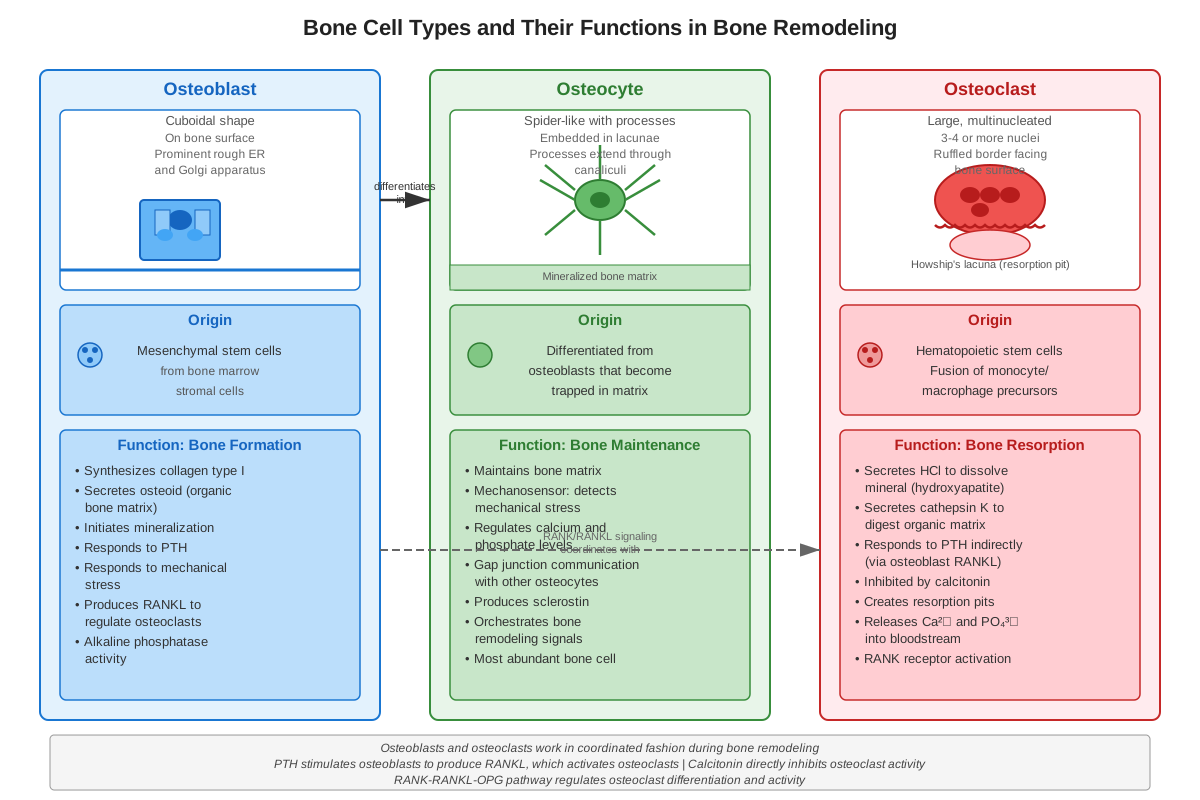
- Osteoprogenitor cells (osteogenic cells) are stem cells derived from mesenchyme, located in the periosteum and endosteum. They divide by mitosis and differentiate into osteoblasts, playing a crucial role in bone growth and repair.
- Osteoblasts are bone-building cells that synthesize and secrete the organic components of bone matrix (collagen and other proteins). They actively produce new bone tissue in a process called ossification or osteogenesis. Osteoblasts also regulate mineralization by controlling the deposition of hydroxyapatite crystals. When osteoblasts become surrounded by the matrix they produce, they differentiate into osteocytes. Osteoblasts possess receptors for parathyroid hormone (PTH) and respond to mechanical stress, making them central to bone remodeling.
- Osteocytes are mature bone cells that maintain bone tissue. They reside in lacunae and extend cytoplasmic processes through canaliculi to communicate with other osteocytes and with cells on bone surfaces. Osteocytes function as mechanosensors, detecting mechanical strain and coordinating bone remodeling in response to stress. They also regulate local calcium and phosphate concentrations.
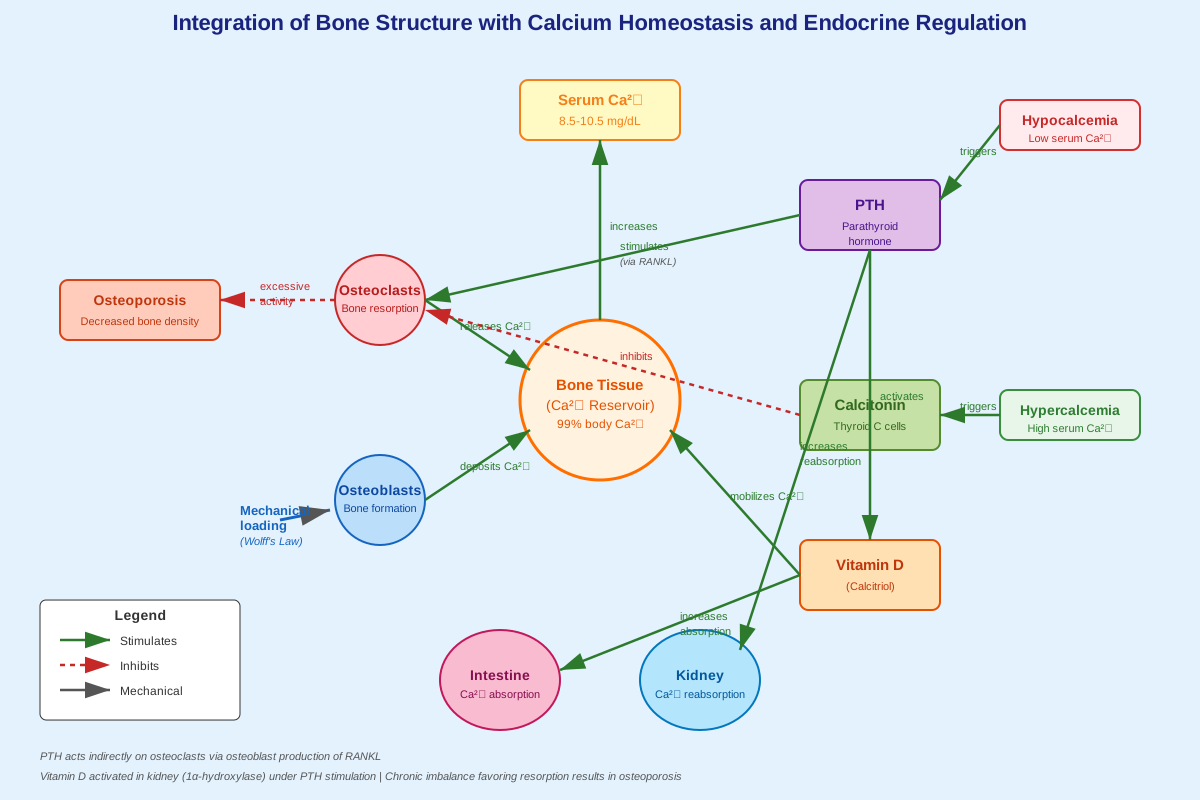
- Osteoclasts are large, multinucleated cells derived from hematopoietic stem cells (specifically, monocyte/macrophage lineage). They resorb bone tissue through a process called bone resorption. Osteoclasts attach to bone surfaces and create an isolated microenvironment called a resorption bay (Howship's lacuna). They secrete hydrochloric acid to dissolve the mineral component and proteolytic enzymes (particularly cathepsin K) to digest the organic matrix. Osteoclasts possess receptors for calcitonin and respond to signals from osteoblasts, including RANKL (receptor activator of nuclear factor kappa-B ligand), which stimulates osteoclast differentiation and activity.
Bone Remodeling
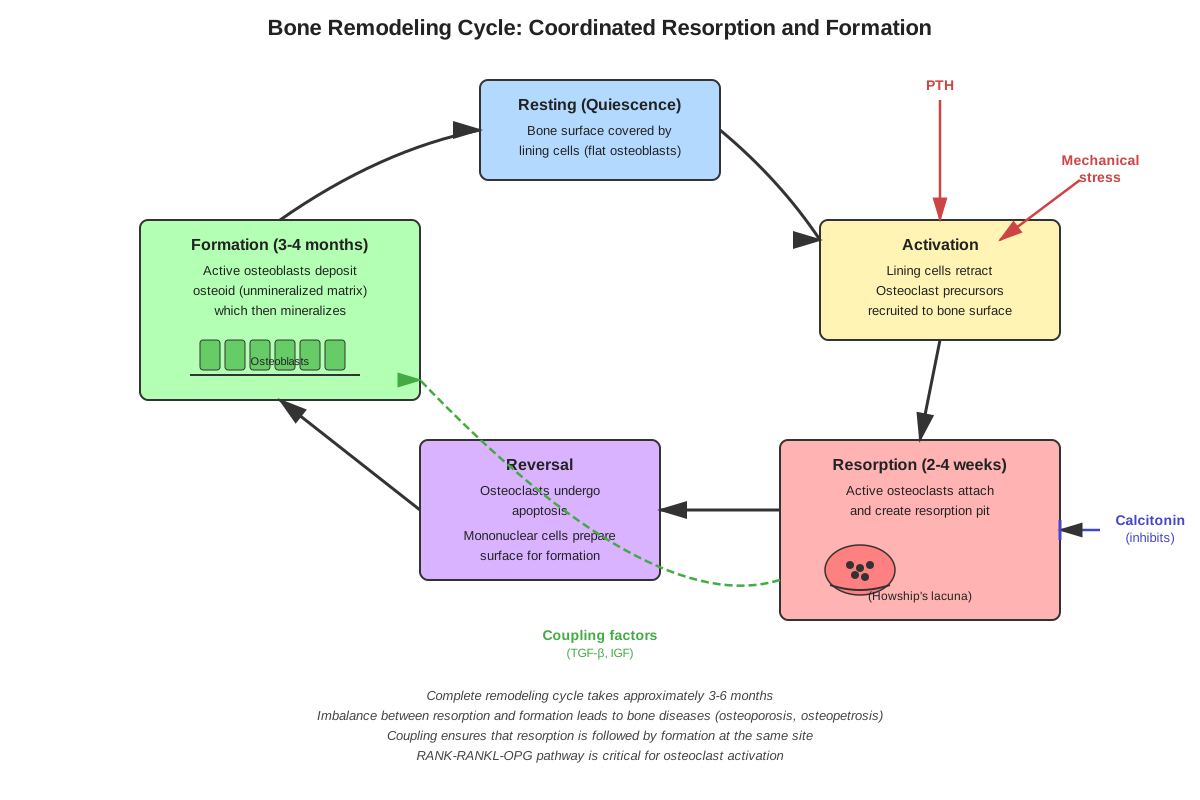
Bone remodeling is the continuous process of bone resorption by osteoclasts followed by bone formation by osteoblasts. This process serves multiple functions: repairing microdamage, adapting bone structure to mechanical demands (Wolff's Law), and maintaining calcium homeostasis. Approximately 10% of the adult skeleton is remodeled each year.
The remodeling cycle occurs in discrete packets called basic multicellular units (BMUs) and proceeds through several phases:
- Activation: Mechanical stress, microdamage, or hormonal signals trigger the recruitment of osteoclast precursors to a specific bone surface
- Resorption: Osteoclasts excavate a cavity in compact bone or create a trench on trabecular surfaces over 2-4 weeks
- Reversal: Osteoclasts undergo apoptosis, and the resorption surface is prepared for new bone formation
- Formation: Osteoblasts deposit new bone matrix (osteoid) that subsequently mineralizes over 3-4 months
- Quiescence: The bone surface returns to a resting state with a thin layer of lining cells
The coupling of resorption and formation is tightly regulated by local and systemic factors. RANK/RANKL/OPG signaling is central to this regulation: osteoblasts produce RANKL, which binds to RANK receptors on osteoclast precursors, stimulating their differentiation and activation. Osteoblasts also produce osteoprotegerin (OPG), a decoy receptor that binds RANKL and prevents osteoclast activation, thus inhibiting bone resorption.
Concept Relationships
The concepts within bone structure form an integrated hierarchy from molecular to organ level. At the foundation, collagen type I and hydroxyapatite combine to form the bone matrix, which provides the material properties necessary for bone function. This matrix is organized into lamellae, which in compact bone are arranged concentrically around Haversian canals to form osteons, while in spongy bone they form trabeculae. These microscopic structures aggregate to create the macroscopic regions of bone: the diaphysis, metaphysis, and epiphyses, each with distinct proportions of compact and spongy bone suited to their mechanical demands.
The cellular components—osteoprogenitor cells, osteoblasts, osteocytes, and osteoclasts—interact dynamically to maintain and remodel these structures. Osteoprogenitor cells differentiate into osteoblasts → osteoblasts build bone and become embedded as osteocytes → osteocytes sense mechanical strain and signal for remodeling → osteoclasts resorb bone in response to these signals → the cycle repeats. This bone remodeling process connects bone structure to broader physiological systems, particularly calcium homeostasis (prerequisite for understanding endocrine physiology) and mechanical adaptation (relevant to biomechanics and exercise physiology).
Bone structure also connects forward to related topics: understanding the periosteum and endosteum is essential for comprehending fracture healing; knowledge of spongy bone architecture explains why certain bones (vertebrae, femoral neck) are particularly susceptible to osteoporotic fractures; and familiarity with osteoclast function is necessary for understanding how bisphosphonate drugs work. The RANK/RANKL/OPG signaling pathway connects bone biology to immunology, as these molecules are also involved in immune system regulation.
Quick check — test yourself on Bone structure so far.
Try Flashcards →High-Yield Facts
⭐ Compact bone is organized into osteons (Haversian systems) with concentric lamellae surrounding a central Haversian canal containing blood vessels and nerves.
⭐ Osteoblasts build bone and possess receptors for parathyroid hormone (PTH), while osteoclasts resorb bone and possess receptors for calcitonin.
⭐ Bone matrix consists of approximately 35% organic material (mainly collagen type I) and 65% inorganic material (mainly hydroxyapatite crystals: Ca₁₀(PO₄)₆(OH)₂).
⭐ Osteocytes are mature bone cells located in lacunae that function as mechanosensors, detecting mechanical strain and coordinating bone remodeling.
⭐ The periosteum covers the external bone surface and contains osteoprogenitor cells essential for bone growth and repair, while the endosteum lines internal bone surfaces.
- Spongy bone consists of trabeculae oriented along lines of stress and contains bone marrow in its spaces, making it lighter while maintaining strength.
- Volkmann's canals (perforating canals) run perpendicular to Haversian canals and connect blood vessels from the periosteum to the Haversian canals and medullary cavity.
- Osteoclasts are derived from hematopoietic stem cells (monocyte/macrophage lineage), unlike other bone cells which are derived from mesenchymal stem cells.
- RANKL (produced by osteoblasts) stimulates osteoclast differentiation and activity, while OPG (osteoprotegerin) acts as a decoy receptor to inhibit this process.
- The epiphyseal plate (growth plate) in children contains cartilage that allows for longitudinal bone growth and is replaced by the epiphyseal line when growth ceases in adulthood.
- Canaliculi are microscopic channels connecting lacunae to each other and to Haversian canals, allowing osteocytes to exchange nutrients and communicate despite being embedded in mineralized matrix.
- Bone serves as the body's primary mineral reservoir, storing approximately 99% of total body calcium and 85% of total body phosphate.
Common Misconceptions
Misconception: Bone is a static, unchanging tissue once growth is complete.
Correction: Bone is highly dynamic throughout life, with continuous remodeling occurring even in adults. Approximately 10% of the adult skeleton is replaced each year through coordinated osteoclast resorption and osteoblast formation. This remodeling repairs microdamage, adapts bone to mechanical demands, and maintains mineral homeostasis.
Misconception: Osteoclasts and osteoblasts are simply opposite versions of the same cell type.
Correction: Osteoclasts and osteoblasts have completely different embryonic origins. Osteoblasts derive from mesenchymal stem cells, while osteoclasts derive from hematopoietic stem cells of the monocyte/macrophage lineage. They have different structures (osteoclasts are large and multinucleated), different functions, and different hormone receptors (osteoblasts have PTH receptors; osteoclasts have calcitonin receptors).
Misconception: Spongy bone is weaker than compact bone because it has spaces.
Correction: While spongy bone is less dense than compact bone, it is not necessarily weaker for its weight. The trabecular architecture of spongy bone is oriented along lines of mechanical stress, providing excellent strength-to-weight ratio. This design allows bones to be strong enough to support loads while remaining light enough for efficient movement. The spaces also serve important functions, housing bone marrow for hematopoiesis.
Misconception: The Haversian canal is the same as the medullary cavity.
Correction: These are distinct structures at different scales. Haversian canals are microscopic channels (about 50 μm in diameter) running through the center of each osteon in compact bone, containing blood vessels and nerves. The medullary cavity is a macroscopic hollow space in the center of the diaphysis of long bones, containing bone marrow. A single bone contains one medullary cavity but thousands of Haversian canals.
Misconception: Bone strength comes primarily from calcium.
Correction: Bone strength results from the combination of organic and inorganic components. Calcium (as hydroxyapatite) provides compressive strength and hardness, but collagen fibers provide tensile strength and flexibility. Without collagen, bone would be brittle and shatter easily (as seen in osteogenesis imperfecta, a collagen disorder). Without adequate mineralization, bone would be soft and deformable (as seen in osteomalacia and rickets). The integration of both components creates bone's unique mechanical properties.
Misconception: All bones contain red bone marrow that produces blood cells.
Correction: In adults, red bone marrow (hematopoietically active) is found primarily in flat bones (sternum, ribs, pelvis, skull), vertebrae, and the proximal epiphyses of the femur and humerus. Most long bone diaphyses contain yellow bone marrow (primarily adipose tissue) in adults, though yellow marrow can convert back to red marrow if needed (e.g., in severe anemia). In children, most bones contain red marrow, but this gradually converts to yellow marrow with age.
Worked Examples
Example 1: Interpreting a Bone Remodeling Scenario
Question: A researcher is studying a novel compound that increases OPG (osteoprotegerin) production by osteoblasts. Based on your knowledge of bone structure and remodeling, predict the effect of this compound on bone density and explain the mechanism.
Solution:
Step 1: Recall the RANK/RANKL/OPG signaling pathway. Osteoblasts produce RANKL, which binds to RANK receptors on osteoclast precursors, stimulating osteoclast differentiation and activation. Osteoblasts also produce OPG, which acts as a decoy receptor.
Step 2: Understand OPG's mechanism. OPG binds to RANKL and prevents it from binding to RANK receptors on osteoclast precursors. This inhibits osteoclast formation and activity, thereby decreasing bone resorption.
Step 3: Apply to the scenario. If the compound increases OPG production, more OPG will be available to bind RANKL. This will reduce RANKL's ability to stimulate osteoclasts.
Step 4: Predict the outcome. With decreased osteoclast activity, bone resorption will decrease. If bone formation by osteoblasts continues at normal rates while resorption decreases, the net effect will be increased bone density.
Step 5: Consider clinical relevance. This mechanism is similar to how denosumab (a monoclonal antibody that mimics OPG) works to treat osteoporosis by inhibiting RANKL.
Answer: The compound would increase bone density by inhibiting osteoclast formation and activity. Increased OPG acts as a decoy receptor for RANKL, preventing RANKL from binding to RANK on osteoclast precursors. This reduces bone resorption while bone formation continues, resulting in net bone gain.
Connection to learning objectives: This example applies bone structure knowledge to an exam-style question, demonstrates understanding of cellular components and their interactions, and connects bone biology to clinical applications (osteoporosis treatment).
Example 2: Analyzing Bone Structure in Disease
Question: A 65-year-old woman presents with a vertebral compression fracture after a minor fall. Bone density scan reveals significant bone loss, particularly in the vertebral bodies. A bone biopsy shows normal bone matrix composition but reduced trabecular thickness and connectivity. Which component of bone structure is most affected, and why are vertebrae particularly vulnerable in this condition?
Solution:
Step 1: Identify the affected bone type. The description of "reduced trabecular thickness and connectivity" indicates that spongy (trabecular) bone is primarily affected. The normal matrix composition suggests that the remaining bone is properly mineralized, but there is simply less of it.
Step 2: Recall vertebral anatomy. Vertebral bodies consist primarily of spongy bone surrounded by a thin shell of compact bone. The high proportion of spongy bone makes vertebrae particularly dependent on trabecular integrity for strength.
Step 3: Understand trabecular function. Trabeculae are oriented along lines of mechanical stress to provide strength while minimizing weight. When trabeculae become thinner and lose connectivity, the structural integrity of the bone is compromised disproportionately to the amount of bone lost.
Step 4: Connect to bone remodeling. This pattern is consistent with osteoporosis, where increased bone resorption relative to formation leads to progressive bone loss. Spongy bone is affected earlier and more severely than compact bone because it has a higher surface area-to-volume ratio, providing more sites for osteoclast activity.
Step 5: Explain vulnerability. Vertebrae are particularly vulnerable because: (1) they consist primarily of spongy bone, (2) they bear significant compressive loads from body weight, and (3) loss of trabecular connectivity dramatically reduces load-bearing capacity.
Answer: Spongy (trabecular) bone is most affected, showing reduced trabecular thickness and connectivity. Vertebrae are particularly vulnerable because their bodies consist primarily of spongy bone, which has high surface area-to-volume ratio making it more susceptible to resorption. The loss of trabecular connectivity disproportionately reduces structural integrity, and vertebrae must bear significant compressive loads, making them prone to compression fractures when trabecular architecture is compromised.
Connection to learning objectives: This example integrates bone structure with clinical presentation, requires distinguishing between compact and spongy bone, applies knowledge of bone remodeling to disease pathology, and demonstrates how structure relates to function.
Exam Strategy
When approaching MCAT questions on bone structure, begin by identifying the level of organization being tested—molecular (collagen, hydroxyapatite), cellular (osteoblasts, osteoclasts, osteocytes), microscopic (osteons, trabeculae), or macroscopic (diaphysis, epiphysis). Many questions will require you to move between these levels, so practice making these connections.
Trigger words and phrases to watch for:
- "Haversian system" or "osteon" → think compact bone organization, concentric lamellae, central canal with blood vessels
- "Trabecular" or "cancellous" → think spongy bone, lattice-like structure, houses marrow
- "Bone remodeling" or "bone turnover" → think coupled osteoclast resorption and osteoblast formation
- "RANKL" or "OPG" → think osteoclast regulation, bone resorption control
- "Mechanosensor" or "mechanical stress" → think osteocytes in lacunae, Wolff's Law
- "Periosteum" → think bone growth, repair, attachment of tendons/ligaments
- "Mineralization" → think hydroxyapatite deposition, calcium and phosphate
Process-of-elimination strategies:
- If a question asks about bone formation, eliminate answers involving osteoclasts (they resorb, not form)
- If a question involves hormone receptors, remember: osteoblasts have PTH receptors, osteoclasts have calcitonin receptors
- For questions about bone strength, eliminate answers that focus solely on calcium or solely on collagen—both are necessary
- If a passage describes increased bone resorption, look for answers involving increased osteoclast activity or increased RANKL/decreased OPG
- For questions about blood supply to bone, remember that compact bone requires Haversian and Volkmann's canals, while spongy bone receives nutrients by diffusion from marrow spaces
Time allocation advice: Discrete bone structure questions should take 60-90 seconds. For passage-based questions, spend 30-45 seconds per question, but invest time upfront understanding any experimental setup or clinical presentation. If a passage involves bone remodeling or calcium homeostasis, quickly sketch the RANK/RANKL/OPG pathway or the PTH/calcitonin effects to keep relationships clear. Don't get bogged down in memorizing every anatomical detail—focus on functional relationships and how disruptions in one component affect others.
Memory Techniques
Mnemonic for bone cell functions: "Progenitors Produce, Blasts Build, Cytes Communicate, Clasts Crush"
- Progenitors Produce new cells through division
- Blasts Build bone by secreting matrix
- Cytes Communicate through canaliculi and sense mechanical stress
- Clasts Crush (resorb) bone
Mnemonic for osteon structure: "Lazy Lions Lie Around Huge Caves"
- Lacunae contain osteocytes
- Lamellae are concentric layers
- Little canaliculi connect lacunae
- Around the center
- Haversian canal in the middle
- Containing blood vessels
Visualization for compact vs. spongy bone: Picture compact bone as a dense forest of tree trunks (osteons) standing parallel, with the Haversian canals as the hollow centers of the trunks. Picture spongy bone as a kitchen sponge with interconnected struts (trabeculae) and spaces (containing marrow). This helps remember that compact bone is dense and organized, while spongy bone is porous but still structured.
Acronym for RANKL/OPG pathway: "Resorption Activated Now Kills bone, OPG Prevents Gone bone"
- RANKL activates osteoclasts → bone resorption
- OPG prevents RANKL from working → protects bone
Memory aid for periosteum vs. endosteum: "Peri-phery = Periosteum (outside), Endo-interior = Endosteum (inside)"
Visualization for bone remodeling cycle: Picture a construction site where demolition crews (osteoclasts) tear down an old building, then construction crews (osteoblasts) build a new one in the same location. The site supervisor (osteocytes) monitors the structure and calls for repairs when needed. This helps remember that remodeling is a coordinated, sequential process, not random destruction and building.
Summary
Bone structure encompasses multiple levels of organization, from molecular components (collagen type I and hydroxyapatite) to cellular elements (osteoprogenitor cells, osteoblasts, osteocytes, and osteoclasts) to microscopic architecture (osteons in compact bone, trabeculae in spongy bone) to macroscopic anatomy (diaphysis, epiphysis, periosteum, endosteum). Compact bone provides strength and protection through densely packed osteons with central Haversian canals, while spongy bone reduces weight and houses marrow through its lattice-like trabecular structure. The four bone cell types work in concert to maintain bone through continuous remodeling: osteoprogenitor cells differentiate into osteoblasts, which build bone and become embedded as osteocytes that sense mechanical stress, while osteoclasts resorb bone in response to signals including RANKL from osteoblasts. This dynamic remodeling process maintains bone integrity, adapts structure to mechanical demands, and regulates calcium homeostasis. Understanding these structural and cellular relationships is essential for answering MCAT questions about bone physiology, metabolic bone diseases, fracture healing, and mineral homeostasis.
Key Takeaways
- Bone consists of organic matrix (35%, mainly collagen type I) and inorganic mineral (65%, mainly hydroxyapatite), combining flexibility with compressive strength
- Compact bone is organized into osteons (Haversian systems) with concentric lamellae around central canals, while spongy bone consists of trabeculae oriented along stress lines
- Osteoblasts (mesenchymal origin) build bone and have PTH receptors; osteoclasts (hematopoietic origin) resorb bone and have calcitonin receptors; osteocytes sense mechanical stress
- The RANKL/OPG signaling pathway regulates bone remodeling: RANKL (from osteoblasts) activates osteoclasts, while OPG inhibits this activation
- Bone remodeling is a continuous, coupled process of osteoclast resorption followed by osteoblast formation, maintaining bone integrity and mineral homeostasis
- The periosteum (external covering) and endosteum (internal lining) contain osteoprogenitor cells essential for bone growth and repair
- Spongy bone is particularly vulnerable to osteoporosis due to high surface area-to-volume ratio, explaining why vertebral compression fractures are common
Related Topics
Calcium Homeostasis: Understanding bone structure provides the foundation for learning how parathyroid hormone (PTH), calcitonin, and vitamin D regulate blood calcium levels through effects on bone remodeling. Bone serves as the body's calcium reservoir, and osteoclast activity directly affects serum calcium concentration.
Endocrine System: Bone cells possess receptors for multiple hormones (PTH, calcitonin, estrogen, growth hormone, thyroid hormone), making bone an endocrine target organ. Mastering bone structure enables understanding of how hormonal imbalances affect skeletal health.
Fracture Healing: Knowledge of periosteum, endosteum, and bone cell functions is essential for understanding the stages of fracture repair, including hematoma formation, callus formation, and bone remodeling.
Metabolic Bone Diseases: Understanding normal bone structure and remodeling is prerequisite for learning about osteoporosis, osteomalacia, rickets, Paget's disease, and osteogenesis imperfecta—all of which appear in MCAT passages.
Musculoskeletal System: Bone structure connects to muscle physiology (attachment sites, leverage), joint anatomy (articular surfaces), and biomechanics (how bones respond to forces).
Practice CTA
Now that you've mastered the core concepts of bone structure, it's time to reinforce your learning through active practice. Complete the practice questions to test your ability to apply these concepts in MCAT-style scenarios, and use the flashcards to solidify your recall of high-yield facts. Remember, understanding bone structure isn't just about memorizing parts—it's about seeing how structure relates to function and how disruptions at one level affect the entire system. This integrative thinking is exactly what the MCAT rewards. You've built a strong foundation; now strengthen it through deliberate practice!
Sign up free to keep reading
Create a free AnvayaPrep account to finish this MCAT guide on Bone structure — plus flashcards and practice questions.