Overview
Countercurrent multiplication is a physiological mechanism that enables the kidneys to produce urine with varying concentrations, allowing the body to conserve water when necessary or excrete excess water when appropriate. This elegant system operates primarily in the loop of Henle within the nephron, where the descending and ascending limbs work in concert to establish and maintain an osmotic gradient in the renal medulla. Understanding this process is fundamental to comprehending how the body regulates water balance, blood osmolarity, and ultimately maintains homeostasis—a central theme throughout Biology and particularly within Physiology and Organ Systems.
For the MCAT, countercurrent multiplication represents a high-yield integration point where students must synthesize knowledge of membrane transport, osmosis, nephron anatomy, and hormonal regulation. The MCAT frequently tests this concept through passage-based questions that require students to analyze experimental manipulations of kidney function, interpret data about urine concentration, or predict the effects of diuretics and hormones on the countercurrent system. Questions may present clinical scenarios involving dehydration, diabetes insipidus, or inappropriate ADH secretion, all of which directly relate to the countercurrent multiplication mechanism.
This topic connects to broader biological principles including concentration gradients, active versus passive transport, epithelial cell specialization, and negative feedback systems. Mastery of countercurrent multiplication provides the foundation for understanding not only renal physiology but also similar countercurrent exchange systems found in other organs, such as the vasa recta blood vessels that preserve the medullary gradient, and even countercurrent heat exchange in certain animals. The concept exemplifies how anatomical structure directly enables physiological function—a recurring theme in MCAT passages.
Learning Objectives
- [ ] Define countercurrent multiplication using accurate Biology terminology
- [ ] Explain why countercurrent multiplication matters for the MCAT
- [ ] Apply countercurrent multiplication to exam-style questions
- [ ] Identify common mistakes related to countercurrent multiplication
- [ ] Connect countercurrent multiplication to related Biology concepts
- [ ] Diagram the osmotic gradient established in the renal medulla and explain how each segment of the loop of Henle contributes to its formation
- [ ] Predict the effects of loop diuretics, ADH, and changes in blood osmolarity on the countercurrent multiplication system
- [ ] Distinguish between countercurrent multiplication and countercurrent exchange, explaining the role of each in urine concentration
Prerequisites
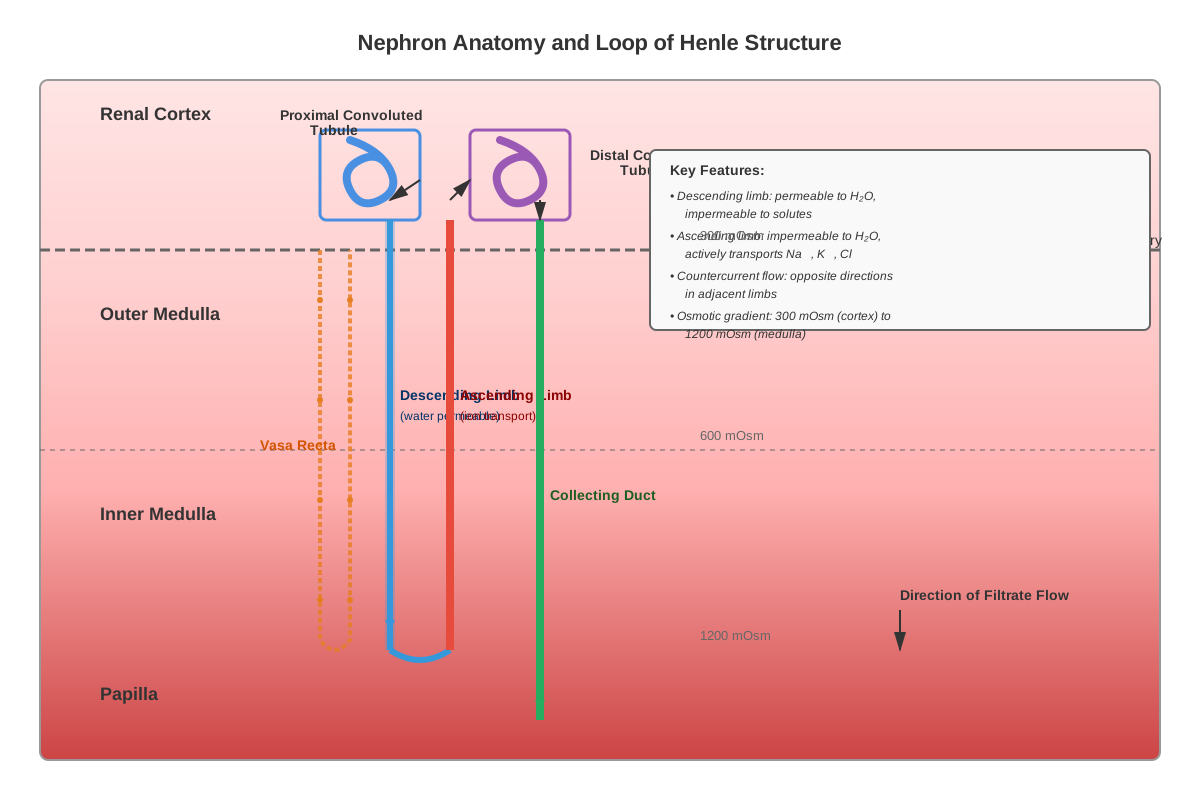
- Nephron anatomy: Understanding the structural organization of the proximal tubule, loop of Henle (descending and ascending limbs), distal tubule, and collecting duct is essential because countercurrent multiplication occurs specifically in the loop of Henle
- Osmosis and tonicity: Knowledge of water movement across semipermeable membranes down concentration gradients is fundamental to understanding how the countercurrent system concentrates urine
- Active and passive transport: Distinguishing between energy-requiring and energy-independent transport mechanisms is necessary because the ascending limb actively pumps ions while the descending limb passively allows water movement
- Basic endocrinology: Familiarity with hormone signaling, particularly antidiuretic hormone (ADH/vasopressin), is required to understand how the countercurrent system is regulated
- Concentration gradients: Understanding how solute gradients drive water movement and how gradients are established and maintained underlies the entire countercurrent multiplication process
Why This Topic Matters
Countercurrent multiplication has significant clinical relevance in understanding fluid and electrolyte disorders, which are among the most common medical problems encountered in clinical practice. Conditions such as diabetes insipidus (insufficient ADH), syndrome of inappropriate antidiuretic hormone secretion (SIADH), and chronic kidney disease all involve disruptions to the countercurrent system. Diuretic medications, which are among the most prescribed drugs worldwide, exert their effects by interfering with specific components of the countercurrent multiplication mechanism. Understanding this system enables healthcare providers to predict and manage the consequences of these medications and disease states.
From an MCAT perspective, countercurrent multiplication appears with moderate frequency but high importance. Exam statistics suggest that renal physiology questions constitute approximately 5-8% of the Biological and Biochemical Foundations section, with countercurrent multiplication being a central concept within this domain. The MCAT favors this topic because it requires integration of multiple biological principles: membrane transport, osmotic pressure, anatomical structure-function relationships, and hormonal regulation. Questions typically appear in passage-based formats where students must interpret experimental data, analyze graphs showing osmolarity changes along the nephron, or predict outcomes of physiological manipulations.
Common exam presentations include passages describing research on desert-dwelling animals with exceptionally long loops of Henle, clinical vignettes involving patients with altered urine concentration abilities, or experimental scenarios where specific nephron segments are blocked or manipulated. Discrete questions may ask students to identify which nephron segment is impermeable to water, explain why the ascending limb is called the "diluting segment," or predict changes in medullary osmolarity under various conditions. The topic also frequently appears in questions testing the mechanism of action of loop diuretics like furosemide, which block the Na-K-2Cl cotransporter in the thick ascending limb.
Core Concepts
Definition and Basic Mechanism
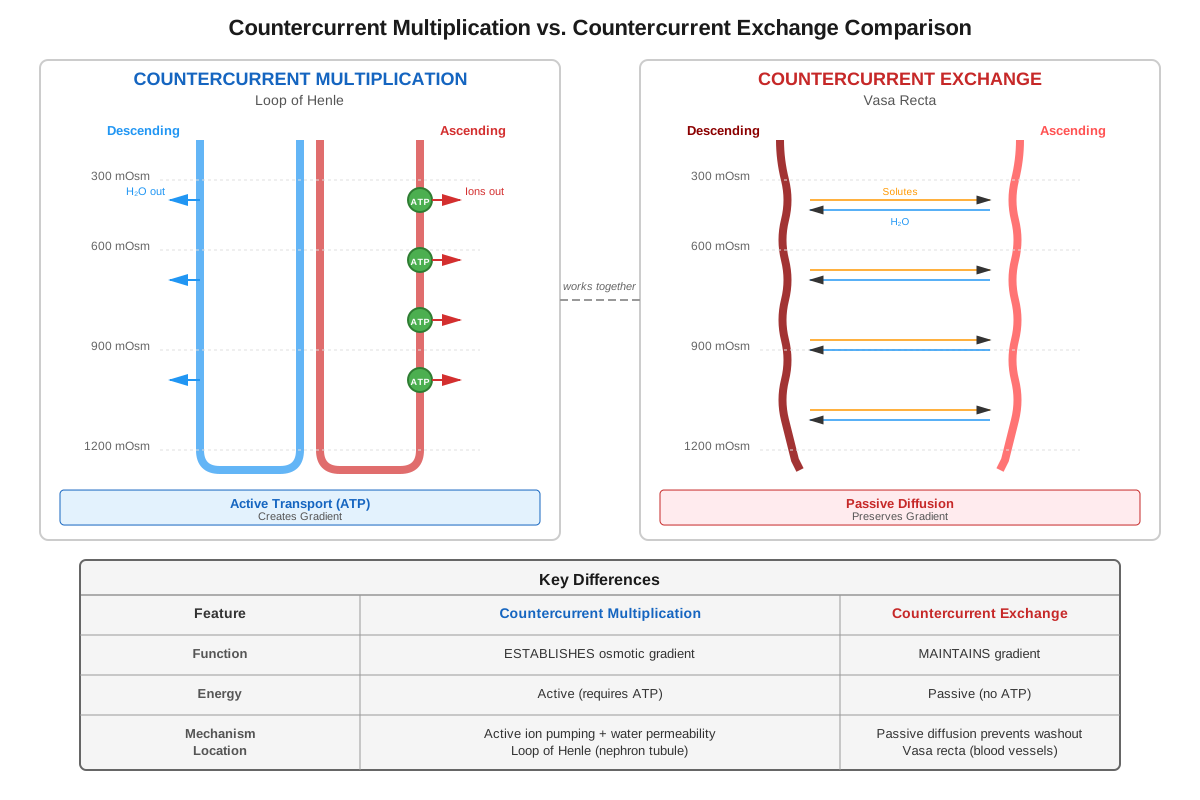
Countercurrent multiplication is a process in which energy is used to create and maintain an osmotic gradient by means of two parallel tubular structures with fluid flowing in opposite directions. In the kidney, this system operates in the loop of Henle, where the descending limb and ascending limb run parallel to each other but conduct filtrate in opposite directions—hence the term "countercurrent." The "multiplication" aspect refers to how a small osmotic difference created at any single horizontal level is multiplied longitudinally along the length of the loop to produce a much larger overall gradient.
The fundamental principle involves the thick ascending limb actively pumping sodium, potassium, and chloride ions (via the Na-K-2Cl cotransporter) out of the tubular fluid into the medullary interstitium. This active transport is the energy-requiring step that drives the entire system. Critically, the ascending limb is impermeable to water, so water cannot follow the solutes out. This creates a hypotonic (dilute) tubular fluid and a hypertonic (concentrated) medullary interstitium.
Anatomical Organization and Permeability Properties
The loop of Henle consists of distinct segments with different permeability characteristics that are essential for countercurrent multiplication:
| Nephron Segment | Water Permeability | Solute Transport | Key Characteristic |
|---|---|---|---|
| Descending limb (thin) | High (permeable) | Low (passive only) | Water exits freely; concentrates tubular fluid |
| Ascending limb (thin) | Low (impermeable) | Moderate (passive) | Some passive NaCl reabsorption |
| Ascending limb (thick) | Very low (impermeable) | High (active) | Na-K-2Cl cotransporter; "diluting segment" |
| Collecting duct | Variable (ADH-dependent) | Moderate | Final concentration adjustment |
The descending limb is highly permeable to water but relatively impermeable to solutes. As the filtrate descends deeper into the increasingly hypertonic medulla, water moves out by osmosis, concentrating the tubular fluid. By the time filtrate reaches the bottom of the loop (the hairpin turn), it has equilibrated with the surrounding interstitium and reached its maximum concentration.
The thick ascending limb is the workhorse of the system. Its epithelial cells contain abundant mitochondria to power the Na-K-ATPase pumps on the basolateral membrane, which maintain the electrochemical gradient that drives the Na-K-2Cl cotransporter on the apical membrane. This segment is often called the "diluting segment" because it removes solutes without allowing water to follow, thereby diluting the tubular fluid.
Step-by-Step Mechanism
The countercurrent multiplication process can be understood through the following sequence:
- Initial active transport: The thick ascending limb actively transports NaCl out of the tubular fluid into the medullary interstitium, creating a ~200 mOsm/L difference between the tubular fluid and the surrounding interstitium at any given horizontal level
- Osmotic equilibration: Water moves out of the descending limb by osmosis in response to the hypertonic interstitium created by the ascending limb, concentrating the descending limb fluid
- Flow and multiplication: As new filtrate continuously enters the descending limb and flows downward, and as diluted fluid exits the ascending limb and flows upward, the small horizontal gradient is "multiplied" vertically along the length of the loop
- Gradient establishment: This continuous process establishes a gradient from ~300 mOsm/L at the cortex to ~1200 mOsm/L (or higher in some species) at the deepest part of the medulla
- Steady-state maintenance: Once established, the gradient is maintained as long as the ascending limb continues active transport and the descending limb remains permeable to water
The Role of Urea
Urea plays a crucial supporting role in countercurrent multiplication, particularly in the inner medulla. The collecting duct becomes permeable to urea in the presence of ADH, allowing urea to diffuse out into the medullary interstitium. This urea contributes significantly to the osmolarity of the deep medulla (accounting for approximately 40-50% of the osmolarity at the papillary tip). Some of this urea recycles back into the thin ascending limb, creating a "urea cycle" that helps maintain the medullary gradient without requiring additional energy expenditure.
Countercurrent Exchange in the Vasa Recta
The vasa recta are specialized capillaries that run parallel to the loops of Henle and perform countercurrent exchange (distinct from multiplication). These vessels must supply blood to the medulla without washing away the osmotic gradient. The vasa recta achieve this through their hairpin loop structure: as blood descends into the hypertonic medulla, water moves out and solutes move in; as blood ascends back toward the cortex, the opposite occurs. This countercurrent exchange allows the vasa recta to equilibrate with the surrounding interstitium at each level while maintaining the overall gradient. The relatively slow blood flow through these vessels (compared to cortical blood flow) also helps preserve the gradient.
Hormonal Regulation by ADH
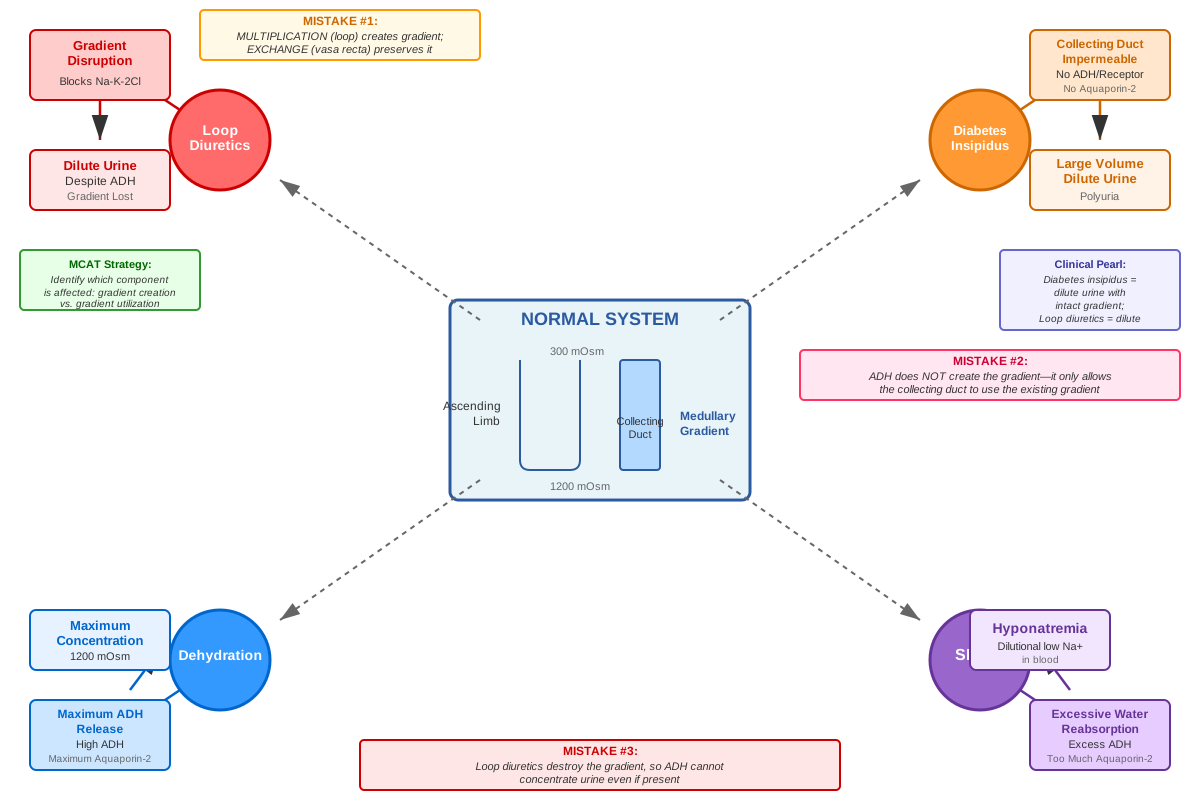
Antidiuretic hormone (ADH), also called vasopressin, regulates the final concentration of urine by controlling water permeability in the collecting duct. When ADH is present (released in response to increased blood osmolarity or decreased blood volume), it binds to V2 receptors on collecting duct principal cells, triggering insertion of aquaporin-2 (AQP2) water channels into the apical membrane. This allows water to move from the tubular fluid into the hypertonic medullary interstitium, concentrating the urine. Without ADH, the collecting duct remains impermeable to water, and dilute urine is excreted. Importantly, ADH does not create the medullary gradient—that is accomplished by countercurrent multiplication—but rather allows the collecting duct to utilize the existing gradient to concentrate urine.
Concept Relationships
The concepts within countercurrent multiplication are hierarchically and functionally interconnected. The anatomical structure of the loop of Henle (parallel limbs with opposite flow directions) → enables → the countercurrent arrangement → which allows → active transport in the ascending limb → to create → a small horizontal osmotic gradient → that through continuous flow becomes → multiplied into a large vertical gradient → which is then → preserved by countercurrent exchange in the vasa recta → and finally → utilized by the collecting duct (when ADH is present) → to produce → concentrated urine.
This topic connects to prerequisite knowledge in several ways. Understanding osmosis is essential because water movement out of the descending limb and collecting duct occurs entirely by osmosis down concentration gradients. Knowledge of active transport explains why the ascending limb requires significant energy (ATP) and why this segment is particularly vulnerable to ischemic injury. Nephron anatomy provides the structural framework without which the functional relationships cannot be understood.
Countercurrent multiplication also connects forward to related topics. It is fundamental to understanding acid-base balance (the kidneys' role in regulating blood pH involves many of the same nephron segments), electrolyte homeostasis (sodium, potassium, and chloride handling), and blood pressure regulation (through the renin-angiotensin-aldosterone system, which affects sodium reabsorption). The concept also relates to evolutionary adaptations, as animals in different environments have loops of Henle of varying lengths—desert mammals have exceptionally long loops that create steeper gradients, enabling them to produce highly concentrated urine and conserve water.
High-Yield Facts
⭐ The thick ascending limb is impermeable to water but actively transports NaCl out of the tubular fluid, making it the "diluting segment" and the energy-requiring driver of countercurrent multiplication
⭐ The descending limb is permeable to water but relatively impermeable to solutes, allowing water to exit by osmosis and concentrate the tubular fluid as it descends
⭐ The medullary osmotic gradient ranges from approximately 300 mOsm/L at the corticomedullary junction to 1200 mOsm/L (or higher) at the papillary tip
⭐ Loop diuretics (furosemide, bumetanide) block the Na-K-2Cl cotransporter in the thick ascending limb, preventing establishment of the medullary gradient and causing excretion of dilute urine
⭐ ADH increases water permeability of the collecting duct by inserting aquaporin-2 channels; it does not create the gradient but allows the collecting duct to use the existing gradient to concentrate urine
- The countercurrent arrangement (opposite flow directions in parallel tubes) is essential for multiplication of the gradient; concurrent flow would not produce the same effect
- Urea contributes approximately 40-50% of the osmolarity in the deep medulla and recycles between the collecting duct and thin ascending limb
- The vasa recta perform countercurrent exchange (not multiplication), which preserves the medullary gradient while supplying blood to the medulla
- Longer loops of Henle create steeper osmotic gradients, which is why desert animals have proportionally longer loops than aquatic animals
- The single effect (the ~200 mOsm/L difference created at any horizontal level) is multiplied longitudinally to produce the much larger overall gradient from cortex to papilla
Quick check — test yourself on Countercurrent multiplication so far.
Try Flashcards →Common Misconceptions
Misconception: The descending limb actively transports water out of the tubule.
Correction: The descending limb is passively permeable to water. Water exits by osmosis in response to the hypertonic medullary interstitium created by active solute transport in the ascending limb. No energy is directly expended to move water out of the descending limb.
Misconception: ADH creates the osmotic gradient in the medulla.
Correction: ADH does not create the medullary gradient; countercurrent multiplication (driven by active transport in the thick ascending limb) creates and maintains the gradient. ADH's role is to make the collecting duct permeable to water so that water can move out of the collecting duct into the already-existing hypertonic medullary interstitium, thereby concentrating the urine.
Misconception: The ascending limb is permeable to water but doesn't transport solutes.
Correction: This is exactly backward. The ascending limb (particularly the thick segment) is impermeable to water but actively transports solutes (Na, K, Cl) out of the tubular fluid. This impermeability to water is crucial—if water could follow the solutes out, no gradient would be established.
Misconception: Countercurrent multiplication and countercurrent exchange are the same process.
Correction: These are distinct processes. Countercurrent multiplication (in the loop of Henle) actively creates an osmotic gradient using energy. Countercurrent exchange (in the vasa recta) passively preserves an existing gradient without adding energy. Multiplication establishes the gradient; exchange maintains it.
Misconception: The entire loop of Henle has uniform permeability properties.
Correction: Different segments of the loop have dramatically different permeability characteristics. The thin descending limb is highly water-permeable, the thin ascending limb is somewhat solute-permeable, and the thick ascending limb is water-impermeable but has active solute transport. These differential permeabilities are essential for the mechanism to work.
Misconception: Blocking the Na-K-2Cl cotransporter would cause concentrated urine production.
Correction: Blocking this transporter (as loop diuretics do) prevents establishment of the medullary osmotic gradient, resulting in excretion of large volumes of dilute urine. Without the gradient, the collecting duct cannot concentrate urine even if ADH is present.
Worked Examples
Example 1: Predicting the Effect of a Loop Diuretic
Question: A patient is administered furosemide, a loop diuretic that blocks the Na-K-2Cl cotransporter in the thick ascending limb of the loop of Henle. Predict the effects on: (a) medullary interstitial osmolarity, (b) tubular fluid osmolarity exiting the loop of Henle, (c) final urine volume and concentration, and (d) explain why this occurs.
Solution:
Step 1: Identify the normal function being blocked
The Na-K-2Cl cotransporter in the thick ascending limb normally actively transports NaCl out of the tubular fluid into the medullary interstitium. This is the primary mechanism that creates and maintains the hypertonic medullary gradient.
Step 2: Predict the effect on medullary osmolarity
(a) Medullary interstitial osmolarity will decrease toward isotonic levels (~300 mOsm/L). Without active solute transport out of the ascending limb, the medullary gradient cannot be maintained. Over time, the gradient dissipates as the vasa recta wash away the existing solutes.
Step 3: Predict the effect on tubular fluid leaving the loop
(b) Tubular fluid osmolarity exiting the loop will be higher than normal (closer to isotonic rather than hypotonic). Normally, the ascending limb dilutes the tubular fluid to ~100-150 mOsm/L by removing solutes without water. When the transporter is blocked, solutes remain in the tubular fluid, so it exits the loop less diluted.
Step 4: Predict the effect on final urine
(c) Urine volume will increase dramatically, and urine concentration will decrease (dilute urine). Even if ADH is present and the collecting duct is permeable to water, there is no longer a sufficient medullary gradient to draw water out of the collecting duct. Additionally, the increased solute load in the tubular fluid creates an osmotic force that retains water in the tubule.
Step 5: Explain the mechanism
(d) Furosemide prevents countercurrent multiplication by blocking the energy-requiring step that drives the entire system. Without active solute removal from the ascending limb, no gradient is established. The collecting duct cannot concentrate urine without a medullary gradient to provide the osmotic driving force for water reabsorption. This results in diuresis (increased urine production) with dilute urine—the therapeutic goal when treating conditions like heart failure or edema.
Connection to learning objectives: This example demonstrates application of countercurrent multiplication to predict the effects of a pharmacological intervention, a common MCAT question type.
Example 2: Analyzing an Experimental Manipulation
Question: Researchers create a genetically modified mouse in which the descending limb of the loop of Henle is made impermeable to water (while maintaining all other normal properties). Predict and explain: (a) whether a medullary osmotic gradient would still be established, (b) the osmolarity of fluid at the bottom of the loop, (c) the osmolarity of fluid exiting the ascending limb, and (d) the animal's ability to concentrate urine.
Solution:
Step 1: Identify what remains functional
The thick ascending limb can still actively transport NaCl out of the tubular fluid into the interstitium. The ascending limb remains impermeable to water. Only the descending limb's water permeability has been eliminated.
Step 2: Determine if a gradient can form
(a) Yes, a medullary osmotic gradient would still be established, but it would be less steep than normal. The ascending limb's active transport would still pump solutes into the medullary interstitium, creating hypertonicity. However, the gradient would not be as effectively multiplied because the normal mechanism involves osmotic equilibration in the descending limb.
Step 3: Analyze fluid at the loop bottom
(b) The osmolarity of fluid at the bottom of the loop would be lower than normal (closer to the ~300 mOsm/L that entered from the proximal tubule, rather than the normal ~1200 mOsm/L). Normally, water exits the descending limb, concentrating the tubular fluid as it descends. Without water permeability, the fluid cannot concentrate as it descends, so it reaches the bottom at a much lower osmolarity.
Step 4: Analyze fluid exiting the ascending limb
(c) The osmolarity of fluid exiting the ascending limb would be hypotonic (dilute), similar to normal. The ascending limb would still actively remove solutes without water following, diluting the tubular fluid. However, because the fluid entering the ascending limb is less concentrated than normal, the absolute amount of solute reabsorbed would be less.
Step 5: Assess urine concentration ability
(d) The animal's ability to concentrate urine would be significantly impaired. The medullary gradient would be much less steep than normal because the countercurrent multiplication effect depends on the descending limb concentrating the fluid that then enters the ascending limb. With a reduced medullary gradient, even maximum ADH stimulation would produce less concentrated urine than normal. The mouse would likely require increased water intake to maintain fluid balance.
Connection to learning objectives: This example requires understanding the specific role of each nephron segment in countercurrent multiplication and the ability to predict outcomes when one component is altered—a sophisticated application of the concept frequently tested on the MCAT.
Exam Strategy
When approaching countercurrent multiplication MCAT questions, begin by identifying which component of the system is being tested: the loop of Henle structure, the permeability properties of different segments, the active transport mechanism, the medullary gradient itself, or the hormonal regulation. Many questions will present experimental or clinical scenarios that manipulate one variable while holding others constant.
Trigger words and phrases to watch for:
- "Thick ascending limb" or "diluting segment" → think active NaCl transport, impermeable to water
- "Loop diuretic" or "furosemide" → blocks Na-K-2Cl cotransporter, eliminates gradient
- "ADH" or "vasopressin" → affects collecting duct permeability, not gradient creation
- "Medullary osmolarity" → refers to the gradient created by countercurrent multiplication
- "Vasa recta" → countercurrent exchange (preserves gradient), not multiplication
- "Desert animals" or "long loops of Henle" → steeper gradients, more concentrated urine
- "Diabetes insipidus" → ADH deficiency or resistance, cannot concentrate urine despite intact gradient
Process-of-elimination strategies:
- Eliminate answer choices that confuse the roles of different nephron segments (e.g., stating that the descending limb actively transports solutes)
- Eliminate choices that attribute gradient creation to ADH rather than to active transport in the ascending limb
- Eliminate options that confuse countercurrent multiplication with countercurrent exchange
- Watch for choices that reverse cause and effect (e.g., suggesting that concentrated urine creates the medullary gradient rather than the gradient enabling concentrated urine)
Time allocation advice:
Countercurrent multiplication questions often appear in passage-based formats with experimental data or graphs. Allocate 1.5-2 minutes per question. Spend 30-45 seconds identifying the specific aspect being tested (structure, mechanism, regulation, or clinical application), then systematically work through the logic. If a question asks about multiple effects of a single manipulation, address each effect sequentially rather than trying to see the whole picture at once. For discrete questions, 60-90 seconds should suffice if the core concepts are well understood.
Exam Tip: When a passage presents data about osmolarity changes along the nephron, pay careful attention to the x-axis (position along the nephron) and y-axis (osmolarity). The characteristic pattern shows increasing osmolarity in the descending limb, maximum osmolarity at the loop bottom, and decreasing osmolarity in the ascending limb. Any deviation from this pattern suggests a disruption to normal countercurrent multiplication.
Memory Techniques
Mnemonic for ascending limb properties: "Ascending Actively Avoids Aqua"
- Ascending = ascending limb
- Actively = active transport of solutes
- Avoids = impermeable to
- Aqua = water
Mnemonic for loop of Henle function: "Down Concentrates, Up Dilutes"
- Down (descending limb) = Concentrates the tubular fluid (water exits)
- Up (ascending limb) = Dilutes the tubular fluid (solutes exit)
Visualization strategy: Picture the loop of Henle as a hairpin with arrows showing opposite flow directions. Mentally draw plus signs (+) accumulating in the interstitium around the ascending limb (representing solute pumped out), and draw water molecules (H₂O) moving out of the descending limb toward those plus signs. Visualize the gradient as a color gradient from light (cortex) to dark (papilla), getting progressively darker as osmolarity increases.
Acronym for what the thick ascending limb transports: "NaKCl" (pronounced "knuckle")
- Na = sodium
- K = potassium
- Cl = chloride
- These three ions are transported together by the Na-K-2Cl cotransporter
Memory aid for ADH function: "ADH Adds Aquaporins"
- ADH = antidiuretic hormone
- Adds = inserts into membrane
- Aquaporins = water channels (specifically AQP2)
- This reminds you that ADH makes the collecting duct permeable to water by adding channels
Summary
Countercurrent multiplication is the active process by which the kidneys establish and maintain a steep osmotic gradient in the renal medulla, enabling production of concentrated urine when necessary for water conservation. The mechanism depends on the anatomical arrangement of the loop of Henle, where the descending and ascending limbs run parallel with fluid flowing in opposite directions. The thick ascending limb actively transports NaCl into the medullary interstitium while remaining impermeable to water, creating a small horizontal osmotic difference at each level. The descending limb, permeable to water but not solutes, allows water to exit by osmosis, concentrating the tubular fluid. Through continuous flow, this small horizontal gradient is multiplied longitudinally to create a gradient from ~300 mOsm/L at the cortex to ~1200 mOsm/L at the papilla. The vasa recta preserve this gradient through countercurrent exchange. ADH regulates the final urine concentration by controlling collecting duct water permeability, allowing utilization of the existing gradient. Understanding this system is essential for predicting the effects of diuretics, hormonal disorders, and physiological challenges to water balance—all common MCAT topics.
Key Takeaways
- Countercurrent multiplication creates the medullary osmotic gradient through active NaCl transport in the water-impermeable thick ascending limb and passive water reabsorption from the water-permeable descending limb
- The "countercurrent" arrangement (opposite flow directions in parallel tubes) is essential for multiplying a small horizontal gradient into a large vertical gradient along the length of the loop
- The thick ascending limb is the energy-requiring driver of the system and is the target of loop diuretics, which abolish the gradient and cause diuresis
- ADH does not create the medullary gradient but rather allows the collecting duct to utilize the existing gradient by inserting aquaporin-2 water channels
- Longer loops of Henle create steeper osmotic gradients, explaining why desert mammals can produce more concentrated urine than aquatic mammals
- The vasa recta perform countercurrent exchange (not multiplication) to preserve the medullary gradient while supplying blood to the medulla
- Understanding the distinct permeability properties of each nephron segment is crucial for predicting the effects of experimental manipulations and pharmacological interventions
Related Topics
Proximal Tubule Function: The proximal tubule reabsorbs approximately 65% of filtered water and solutes before the filtrate reaches the loop of Henle. Understanding proximal tubule function provides context for what enters the countercurrent multiplication system and why the loop of Henle is necessary for further concentration.
Distal Tubule and Collecting Duct Physiology: These segments perform fine-tuning of urine composition and, in the case of the collecting duct, utilize the medullary gradient created by countercurrent multiplication to produce the final concentrated urine. Mastering countercurrent multiplication enables deeper understanding of how aldosterone and ADH regulate final urine composition.
Acid-Base Balance and the Kidneys: Many of the same nephron segments involved in countercurrent multiplication also participate in acid-base regulation through hydrogen ion secretion and bicarbonate reabsorption. Understanding the loop of Henle's structure and function provides foundation for learning renal acid-base physiology.
Diuretic Pharmacology: Loop diuretics, thiazide diuretics, and potassium-sparing diuretics all act on different parts of the nephron. Mastery of countercurrent multiplication is essential for understanding why loop diuretics are the most potent diuretics and why they cause specific electrolyte disturbances.
Renin-Angiotensin-Aldosterone System (RAAS): This hormonal system regulates blood pressure partly through effects on sodium reabsorption in the nephron. Understanding how the loop of Henle and distal nephron handle sodium provides the foundation for learning how RAAS affects kidney function and blood pressure.
Practice CTA
Now that you have mastered the core concepts of countercurrent multiplication, it's time to reinforce your understanding through active practice. Attempt the practice questions and flashcards associated with this topic to test your ability to apply these concepts in exam-style scenarios. Focus particularly on questions that require you to predict outcomes of experimental manipulations or explain clinical presentations—these higher-order applications are exactly what the MCAT demands. Remember, understanding the mechanism is just the first step; being able to rapidly apply that understanding under timed conditions is what will earn you points on test day. You've built a strong foundation—now strengthen it through deliberate practice!
Sign up free to keep reading
Create a free AnvayaPrep account to finish this MCAT guide on Countercurrent multiplication — plus flashcards and practice questions.