Overview
The electrical conduction system of the heart represents one of the most elegant examples of specialized tissue coordination in human physiology. This intrinsic system of modified cardiac muscle cells generates and propagates electrical impulses that coordinate the rhythmic contraction of the heart chambers, ensuring efficient blood circulation throughout the body. Understanding this system is fundamental to grasping cardiovascular physiology, a high-yield topic area that appears consistently across MCAT Biology sections, particularly within Physiology and Organ Systems.
The electrical conduction system Biology encompasses the anatomical structures, cellular mechanisms, and physiological principles that govern cardiac automaticity and rhythmicity. Unlike skeletal muscle, which requires external nervous stimulation to contract, cardiac muscle possesses the unique ability to generate its own electrical impulses through specialized pacemaker cells. This autorhythmicity, combined with the precisely timed propagation of electrical signals through a defined pathway, ensures that atrial contraction precedes ventricular contraction by an appropriate interval, maximizing cardiac output and maintaining adequate tissue perfusion.
For the MCAT, the electrical conduction system serves as an integrative topic that connects cellular electrophysiology, tissue-level coordination, organ function, and clinical pathology. Questions may test knowledge of the anatomical pathway, the ionic basis of action potentials in different cardiac cells, the relationship between electrical events and mechanical contraction, or the interpretation of electrocardiogram (ECG) tracings. This topic frequently appears in passage-based questions that integrate multiple physiological concepts, making it essential for achieving competitive scores in the Biological and Biochemical Foundations of Living Systems section.
Learning Objectives
- [ ] Define the electrical conduction system using accurate Biology terminology
- [ ] Explain why the electrical conduction system matters for the MCAT
- [ ] Apply electrical conduction system concepts to exam-style questions
- [ ] Identify common mistakes related to the electrical conduction system
- [ ] Connect the electrical conduction system to related Biology concepts
- [ ] Trace the complete pathway of electrical impulse propagation through cardiac tissue
- [ ] Compare and contrast action potential characteristics in different regions of the conduction system
- [ ] Analyze how disruptions in the conduction system manifest in clinical scenarios and ECG patterns
Prerequisites
- Basic cardiac anatomy: Understanding the four chambers (atria and ventricles), major vessels, and valves provides the structural framework for comprehending electrical pathway locations
- Action potential physiology: Knowledge of membrane potential, ion channels, depolarization, and repolarization is essential for understanding how electrical signals are generated and propagated
- Gap junctions and intercalated discs: Familiarity with these structures explains how cardiac cells communicate electrically and contract as a functional syncytium
- Autonomic nervous system: Understanding sympathetic and parasympathetic influences on heart rate contextualizes how the intrinsic conduction system can be modulated
- Muscle contraction mechanisms: Knowledge of excitation-contraction coupling helps connect electrical events to mechanical pumping action
Why This Topic Matters
The electrical conduction system holds significant clinical relevance, as disorders of cardiac rhythm (arrhythmias) represent some of the most common and potentially life-threatening cardiovascular conditions. Atrial fibrillation, heart blocks, and ventricular tachycardia all result from disruptions in normal conduction pathways. Medical interventions including pacemakers, antiarrhythmic medications, and ablation procedures directly target components of this system, making it essential knowledge for future healthcare professionals.
From an MCAT perspective, the electrical conduction system appears with moderate-to-high frequency across multiple question formats. Approximately 3-5% of Biology/Biochemistry section questions directly test cardiovascular physiology, with the conduction system representing a substantial portion of this content. Questions typically appear as:
- Discrete questions testing anatomical sequence or cellular physiology
- Passage-based questions integrating ECG interpretation with physiological principles
- Experimental passages describing research on ion channels, pacemaker cells, or conduction velocity
- Clinical vignettes presenting patients with arrhythmias requiring physiological reasoning
The topic frequently appears alongside questions about blood pressure regulation, cardiac output calculations, and autonomic nervous system effects, making it a high-yield area for integrated understanding. Students who master this topic gain significant advantages in answering complex, multi-step reasoning questions that characterize high-scoring MCAT performance.
Core Concepts
Anatomical Components of the Conduction System
The electrical conduction system consists of specialized cardiac muscle cells organized into distinct anatomical structures that form a defined pathway for impulse propagation. These structures include:
- Sinoatrial (SA) node: Located in the right atrial wall near the superior vena cava opening, the SA node serves as the heart's primary pacemaker, generating spontaneous action potentials at a rate of 60-100 beats per minute under resting conditions.
- Internodal pathways: Three bands of specialized atrial tissue (anterior, middle, and posterior) conduct impulses from the SA node across both atria toward the atrioventricular node.
- Atrioventricular (AV) node: Positioned in the inferior right atrium near the interatrial septum, the AV node introduces a critical delay (approximately 0.1 seconds) that allows complete atrial contraction before ventricular activation begins.
- Bundle of His (AV bundle): This structure penetrates the fibrous skeleton separating atria from ventricles, representing the only normal electrical connection between these chambers.
- Right and left bundle branches: These pathways descend along either side of the interventricular septum, distributing impulses toward the respective ventricles.
- Purkinje fibers: These terminal branches spread throughout the ventricular myocardium, particularly concentrated in the subendocardial regions, enabling rapid and coordinated ventricular depolarization.
Pacemaker Cell Physiology
The unique property of autorhythmicity distinguishes pacemaker cells from contractile cardiac myocytes. Pacemaker cells in the SA node exhibit an unstable resting membrane potential that spontaneously depolarizes toward threshold, creating rhythmic action potentials without external stimulation. This pacemaker potential (also called the prepotential or funny current) results from three ionic mechanisms:
Phase 4 (Spontaneous Depolarization):
- Gradual decrease in potassium permeability reduces outward K⁺ current
- "Funny current" (If) through HCN channels allows slow Na⁺ influx
- Transient (T-type) calcium channels open near threshold, accelerating depolarization
Phase 0 (Depolarization):
- Long-lasting (L-type) calcium channels open at threshold
- Calcium influx (rather than sodium) produces the upstroke
- Slower upstroke velocity compared to ventricular myocytes
Phase 3 (Repolarization):
- Calcium channels inactivate
- Potassium channels open, allowing K⁺ efflux
- Membrane potential returns toward maximum diastolic potential (approximately -60 mV)
The cycle then repeats, with Phase 4 immediately following Phase 3 without a stable resting potential.
Contractile Myocyte Action Potentials
Ventricular and atrial contractile cells exhibit distinctly different action potential characteristics compared to pacemaker cells. These cells maintain a stable resting potential (approximately -90 mV) and require external stimulation to depolarize. The ventricular action potential demonstrates five phases:
| Phase | Ion Movement | Channels/Mechanisms | Membrane Potential Change |
|---|---|---|---|
| Phase 0 | Na⁺ influx | Fast voltage-gated Na⁺ channels | Rapid depolarization to +20 mV |
| Phase 1 | K⁺ efflux | Transient outward K⁺ channels | Brief partial repolarization |
| Phase 2 | Ca²⁺ influx, K⁺ efflux | L-type Ca²⁺ channels, K⁺ channels | Plateau (balanced currents) |
| Phase 3 | K⁺ efflux | Delayed rectifier K⁺ channels | Repolarization to -90 mV |
| Phase 4 | K⁺ leak | Inward rectifier K⁺ channels | Stable resting potential |
The extended plateau phase (Phase 2) represents a critical feature of cardiac action potentials, lasting 200-300 milliseconds. This prolonged depolarization ensures sustained calcium entry, which triggers robust contraction, and creates an extended absolute refractory period that prevents tetanic contraction and allows adequate ventricular filling between beats.
Conduction Velocity and Timing
Different regions of the conduction system exhibit characteristic conduction velocities that ensure proper timing of cardiac chamber activation:
- Atrial muscle: 0.3-0.5 m/s
- AV node: 0.05 m/s (slowest conduction, creating the AV delay)
- Bundle of His: 1-1.5 m/s
- Purkinje fibers: 2-4 m/s (fastest conduction)
- Ventricular muscle: 0.3-0.5 m/s
The AV nodal delay serves multiple physiological functions: it allows time for complete atrial contraction to maximize ventricular filling (contributing to the "atrial kick" that accounts for approximately 20-30% of ventricular end-diastolic volume), and it protects the ventricles from excessively rapid atrial rates during pathological conditions like atrial fibrillation.
The rapid conduction through Purkinje fibers ensures nearly simultaneous activation of ventricular myocardium, producing coordinated contraction that efficiently ejects blood. The activation sequence proceeds from the interventricular septum (left-to-right), then to the apex, and finally upward toward the base, creating a "wringing" motion that optimizes ejection.
Autonomic Modulation
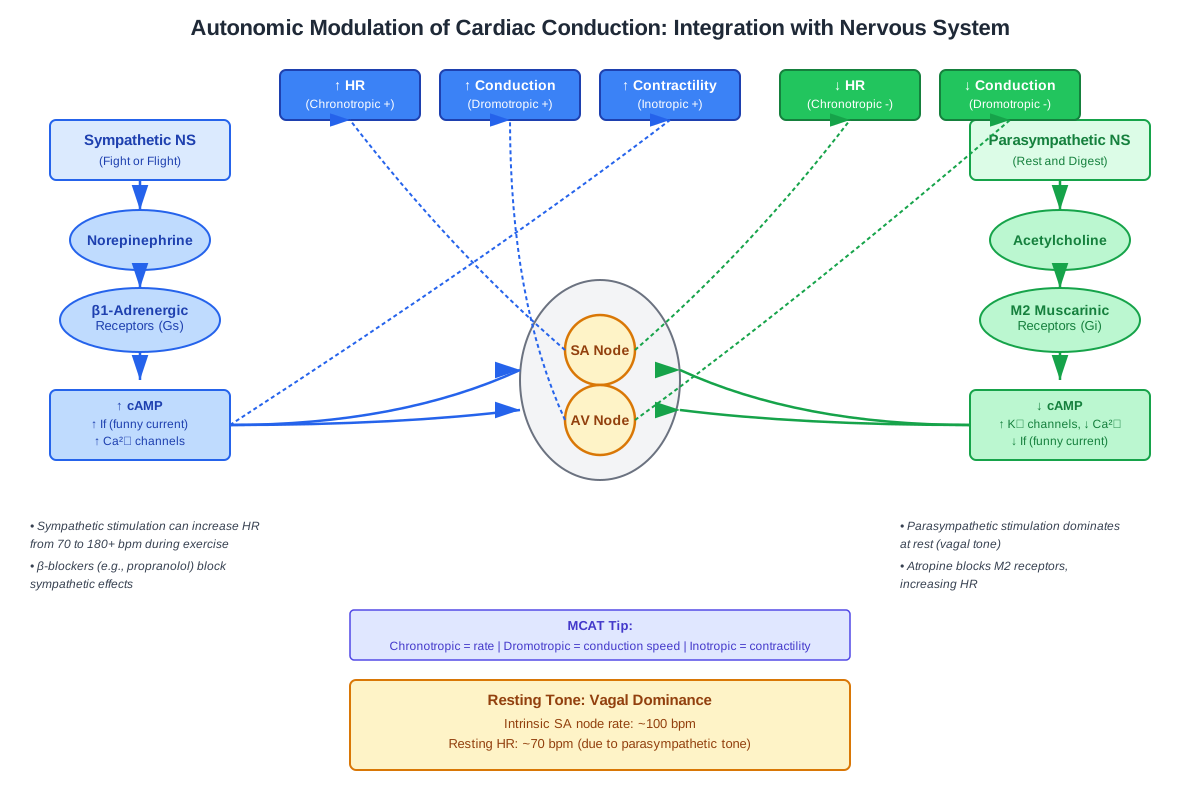
Although the conduction system functions intrinsically, the autonomic nervous system significantly modulates its activity. Parasympathetic innervation via the vagus nerve releases acetylcholine, which:
- Decreases SA node firing rate (negative chronotropy)
- Slows AV node conduction (negative dromotropy)
- Activates muscarinic receptors that increase K⁺ permeability and decrease If current
- Hyperpolarizes pacemaker cells, reducing the slope of Phase 4
Sympathetic innervation releases norepinephrine, which:
- Increases SA node firing rate (positive chronotropy)
- Accelerates AV node conduction (positive dromotropy)
- Enhances contractility (positive inotropy)
- Activates β₁-adrenergic receptors that increase calcium current and If current
- Steepens the slope of Phase 4 in pacemaker cells
Under resting conditions, parasympathetic tone predominates, explaining why the intrinsic SA node rate (100 bpm) exceeds typical resting heart rates (60-80 bpm).
Electrocardiogram Correlation
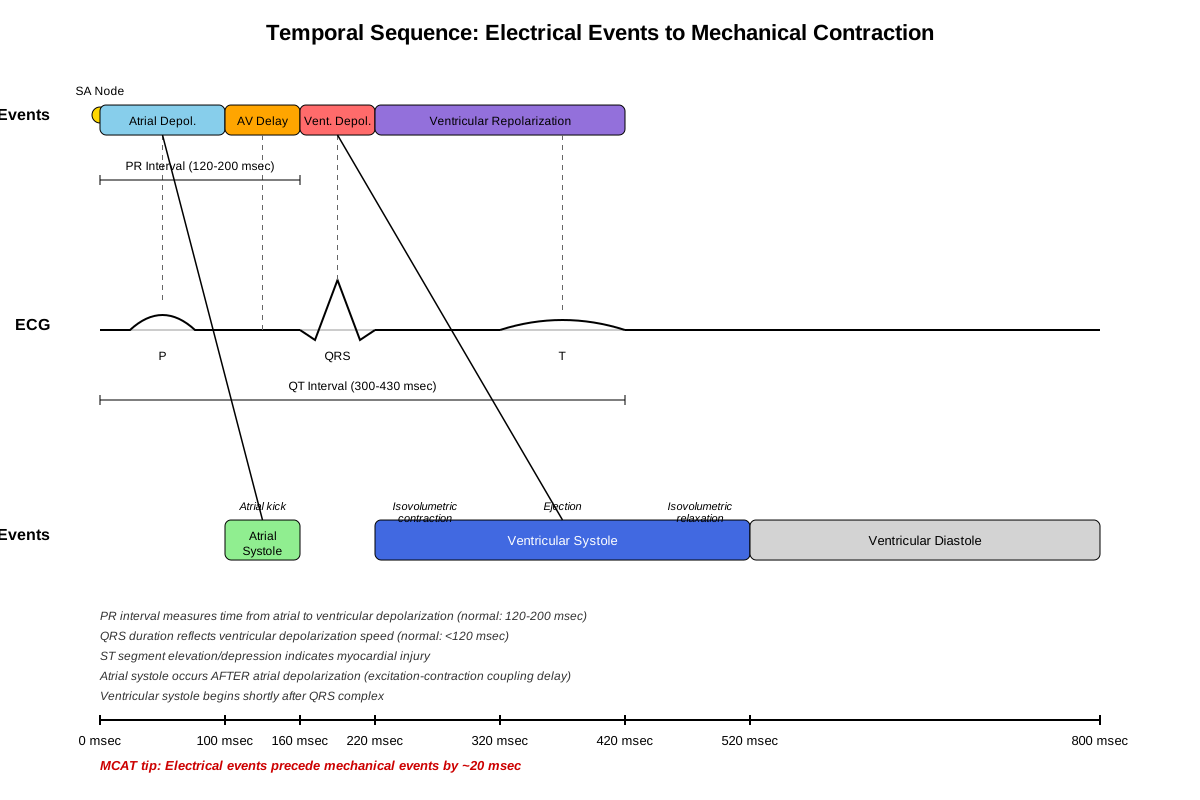
The electrocardiogram (ECG) provides a surface recording of the heart's electrical activity, with specific waveforms corresponding to conduction system events:
- P wave: Atrial depolarization initiated by SA node firing and spreading through atrial tissue
- PR interval: Time from atrial depolarization onset to ventricular depolarization onset, reflecting AV nodal conduction delay (normal: 0.12-0.20 seconds)
- QRS complex: Ventricular depolarization via bundle branches and Purkinje system (normal duration: <0.12 seconds)
- T wave: Ventricular repolarization
- QT interval: Total ventricular depolarization and repolarization time
Understanding these correlations enables interpretation of conduction abnormalities from ECG patterns, a skill frequently tested on the MCAT through passage-based questions.
Concept Relationships
The electrical conduction system integrates multiple physiological concepts into a coordinated functional unit. At the cellular level, ion channel function → determines action potential characteristics → which vary between pacemaker cells and contractile myocytes. The autorhythmicity of SA node cells → establishes the intrinsic heart rate → which can be modulated by autonomic nervous system input.
Anatomically, the SA node → initiates impulses that spread through internodal pathways → converging at the AV node → where conduction slows → before rapid transmission through the Bundle of His → bundle branches → and Purkinje fibers → finally activating ventricular myocardium. This sequential activation ensures that atrial contraction precedes ventricular contraction → optimizing ventricular filling → which determines stroke volume → a key component of cardiac output.
The electrical events connect directly to mechanical function through excitation-contraction coupling: action potential depolarization → opens voltage-gated calcium channels → calcium enters the cytoplasm → triggers calcium-induced calcium release from the sarcoplasmic reticulum → calcium binds to troponin → enabling actin-myosin interaction → producing muscle contraction.
This topic also connects to broader cardiovascular physiology concepts including blood pressure regulation, cardiac output determinants (heart rate × stroke volume), and oxygen delivery to tissues. Understanding conduction system pathology links to clinical medicine, pharmacology (antiarrhythmic drugs targeting specific ion channels), and diagnostic techniques (ECG interpretation).
Quick check — test yourself on Electrical conduction system so far.
Try Flashcards →High-Yield Facts
⭐ The SA node is the primary pacemaker because it has the fastest intrinsic depolarization rate (60-100 bpm), overriding slower pacemakers in the AV node (40-60 bpm) and Purkinje fibers (20-40 bpm)
⭐ The AV node is the only normal electrical connection between atria and ventricles due to the fibrous cardiac skeleton that electrically insulates these chambers
⭐ Pacemaker cells use calcium influx (through L-type channels) for Phase 0 depolarization, while ventricular myocytes use sodium influx (through fast Na⁺ channels)
⭐ The plateau phase (Phase 2) of ventricular action potentials creates a long refractory period (250-300 ms) that prevents tetanic contraction and ensures adequate filling time
⭐ Purkinje fibers have the fastest conduction velocity (2-4 m/s) in the heart, enabling synchronized ventricular contraction
- The "funny current" (If) in pacemaker cells is a mixed Na⁺/K⁺ current activated by hyperpolarization that contributes to spontaneous depolarization
- Parasympathetic stimulation decreases heart rate by increasing K⁺ permeability and decreasing If current, hyperpolarizing pacemaker cells
- Sympathetic stimulation increases heart rate by enhancing calcium current and If current, steepening the Phase 4 slope
- The PR interval (0.12-0.20 seconds) represents the time from atrial to ventricular depolarization onset and reflects AV nodal conduction time
- Ventricular depolarization proceeds from endocardium to epicardium, while repolarization proceeds from epicardium to endocardium (explaining why T waves are normally upright in the same leads where QRS complexes are upright)
- Gap junctions at intercalated discs allow direct electrical coupling between cardiac myocytes, enabling the heart to function as a functional syncytium
- The absolute refractory period in cardiac muscle extends through most of the action potential, preventing premature stimulation during contraction
Common Misconceptions
Misconception: The nervous system initiates each heartbeat.
Correction: The heart possesses intrinsic autorhythmicity through specialized pacemaker cells in the SA node that spontaneously generate action potentials without external nervous stimulation. The autonomic nervous system modulates heart rate but does not initiate the basic rhythm.
Misconception: All cardiac muscle cells have pacemaker activity.
Correction: Only specialized cells in the SA node, AV node, and Purkinje system exhibit autorhythmicity. Contractile myocytes (the majority of cardiac muscle) maintain stable resting potentials and require external stimulation to depolarize.
Misconception: The P wave represents atrial contraction.
Correction: The P wave represents atrial depolarization (the electrical event), not contraction (the mechanical event). Atrial contraction follows depolarization after a brief delay required for excitation-contraction coupling.
Misconception: Calcium is unimportant in cardiac action potentials compared to sodium.
Correction: Calcium plays critical roles in cardiac electrophysiology: it produces Phase 0 depolarization in pacemaker cells, creates the plateau phase in ventricular myocytes, and triggers contraction through calcium-induced calcium release. Some cardiac action potentials depend entirely on calcium influx rather than sodium.
Misconception: The AV node delay is a defect or inefficiency in the conduction system.
Correction: The AV nodal delay is a crucial physiological feature that allows complete atrial contraction before ventricular activation begins, optimizing ventricular filling. This delay contributes approximately 20-30% additional blood volume (the "atrial kick") to ventricular end-diastolic volume.
Misconception: Faster conduction is always better for cardiac function.
Correction: Different conduction velocities serve specific purposes. While rapid Purkinje conduction enables synchronized ventricular contraction, slow AV nodal conduction provides essential timing coordination. Pathologically fast conduction (as in accessory pathways) can cause dangerous arrhythmias.
Misconception: The refractory period in cardiac muscle is the same as in neurons.
Correction: Cardiac muscle has a much longer refractory period (250-300 ms) compared to neurons (1-2 ms), extending through most of the contraction period. This prevents tetanic contraction, which would be fatal as the heart could not refill with blood.
Worked Examples
Example 1: Analyzing Conduction System Disruption
Clinical Vignette: A 68-year-old patient presents with fatigue and dizziness. ECG reveals a heart rate of 35 bpm with normal P waves occurring regularly but no consistent relationship between P waves and QRS complexes. Some P waves are not followed by QRS complexes.
Analysis:
Step 1: Identify the key ECG findings:
- Bradycardia (heart rate <60 bpm)
- P waves present and regular (SA node functioning normally)
- QRS complexes present but dissociated from P waves
- Some P waves not followed by QRS complexes
Step 2: Localize the conduction abnormality:
The presence of normal P waves indicates the SA node is firing appropriately. The lack of consistent P-QRS relationship suggests a problem at the AV node or Bundle of His, where impulses should normally conduct from atria to ventricles.
Step 3: Determine the specific pathology:
This pattern indicates complete heart block (third-degree AV block), where no atrial impulses conduct to the ventricles. The ventricles are being activated by an escape pacemaker, likely in the AV junction or bundle branches.
Step 4: Explain the heart rate:
The ventricular rate of 35 bpm is consistent with a ventricular escape rhythm. Recall that intrinsic pacemaker rates decrease as you move down the conduction system: SA node (60-100 bpm) > AV node (40-60 bpm) > Purkinje fibers (20-40 bpm). A rate of 35 bpm suggests a low ventricular pacemaker.
Step 5: Connect to physiology:
Without AV conduction, the atria and ventricles contract independently. The ventricles lose the "atrial kick" contribution to filling, reducing stroke volume by approximately 20-30%. Combined with bradycardia, cardiac output (HR × SV) is significantly reduced, explaining the patient's symptoms of fatigue and dizziness.
MCAT Connection: This example integrates conduction system anatomy, pacemaker hierarchy, ECG interpretation, and hemodynamic consequences—exactly the type of multi-step reasoning tested in passage-based questions.
Example 2: Predicting Drug Effects on Conduction
Question: A novel antiarrhythmic drug blocks If (funny current) channels in cardiac pacemaker cells. Predict the drug's effects on heart rate and explain the mechanism.
Solution:
Step 1: Identify the target and its normal function:
If channels (HCN channels) are activated by hyperpolarization and conduct a mixed Na⁺/K⁺ current that contributes to spontaneous depolarization during Phase 4 of the pacemaker potential.
Step 2: Predict the effect of channel blockade:
Blocking If channels will reduce the inward (depolarizing) current during Phase 4, decreasing the slope of spontaneous depolarization in SA node cells.
Step 3: Connect to heart rate:
A decreased Phase 4 slope means pacemaker cells will take longer to reach threshold potential. This increases the time between action potentials, reducing the firing rate of the SA node and thereby decreasing heart rate (negative chronotropic effect).
Step 4: Consider selectivity:
If channels are predominantly expressed in pacemaker cells (SA node, AV node) rather than contractile myocytes. The drug should primarily affect heart rate without directly altering contractility.
Step 5: Relate to existing drugs:
This mechanism is similar to ivabradine, an actual medication used to treat angina and heart failure by selectively reducing heart rate through If channel blockade.
MCAT Connection: This example requires understanding of pacemaker cell physiology, ion channel function, and the relationship between cellular mechanisms and organ-level effects—integrating concepts from cell biology, physiology, and pharmacology.
Exam Strategy
When approaching MCAT questions on the electrical conduction system, employ these strategic approaches:
Trigger Word Recognition: Watch for terms that signal specific concepts:
- "Intrinsic," "spontaneous," or "autorhythmic" → pacemaker cell physiology
- "Delay" or "slowed conduction" → AV node function
- "Synchronized" or "coordinated" → Purkinje fiber role
- "Refractory period" → action potential duration and prevention of tetany
- "Autonomic," "vagal," or "sympathetic" → nervous system modulation
Anatomical Sequence Questions: When asked about impulse propagation, always follow the pathway: SA node → internodal pathways → AV node → Bundle of His → bundle branches → Purkinje fibers → ventricular myocardium. Questions often test whether students know the AV node is the only normal connection between atria and ventricles.
Action Potential Comparison: Create a mental comparison table distinguishing pacemaker cells (unstable Phase 4, calcium-dependent Phase 0, no true resting potential) from ventricular myocytes (stable Phase 4, sodium-dependent Phase 0, long plateau phase). Questions frequently test these differences.
ECG Interpretation: Connect waveforms to anatomical events:
- P wave = atrial depolarization
- PR interval = AV conduction time
- QRS = ventricular depolarization
- T wave = ventricular repolarization
When given abnormal ECG patterns, systematically evaluate each component to localize the problem.
Process of Elimination:
- Eliminate options suggesting the nervous system initiates heartbeats (the heart is intrinsically autorhythmic)
- Eliminate options confusing electrical events (depolarization) with mechanical events (contraction)
- Eliminate options suggesting tetanic contraction is possible in cardiac muscle (the long refractory period prevents this)
Time Management: Discrete questions on this topic typically require 60-90 seconds. Passage-based questions may require 90-120 seconds, especially if ECG interpretation is involved. Don't spend excessive time memorizing exact conduction velocities; focus instead on relative speeds (Purkinje fastest, AV node slowest) and functional significance.
Integration Approach: The MCAT rarely tests isolated facts. Expect questions that integrate conduction system knowledge with cardiac output, blood pressure, autonomic effects, or clinical scenarios. Practice connecting cellular mechanisms to organ-level function to system-wide effects.
Memory Techniques
Conduction Pathway Sequence: "Sally Ate Nine Burgers Before Puking Vigorously"
- SA node
- Atrial pathways
- Node (AV)
- Bundle of His
- Bundle branches
- Purkinje fibers
- Ventricular myocardium
Pacemaker Rate Hierarchy: "Sixty, Forty, Twenty" (SA node: 60-100, AV node: 40-60, Purkinje: 20-40)
Remember: The fastest pacemaker wins, which is why the SA node normally controls heart rate.
Phases of Ventricular Action Potential: "No Potassium Comes Quickly Resting"
- Phase 0: Na⁺ influx (rapid depolarization)
- Phase 1: Partial repolarization (K⁺ efflux)
- Phase 2: Ca²⁺ influx (plateau)
- Phase 3: Quick repolarization (K⁺ efflux)
- Phase 4: Resting potential
Autonomic Effects: "SLUD" for Parasympathetic (Salivation, Lacrimation, Urination, Defecation) extends to heart as "Slow Down"
- Parasympathetic = Slow heart rate
- Sympathetic = Speed up heart rate
Visualization Strategy: Picture the heart as a building with electrical wiring:
- SA node = main power generator (top floor, right atrium)
- AV node = circuit breaker with intentional delay (ground floor)
- Bundle branches = main electrical conduits (walls)
- Purkinje fibers = extensive wiring network (throughout rooms)
This spatial visualization helps remember anatomical locations and functional relationships.
Ion Channel Memory: "Pacemakers Prefer Calcium, Ventricles Value Sodium"
- Pacemaker cells: Phase 0 uses Ca²⁺ channels
- Ventricular cells: Phase 0 uses Na⁺ channels
Summary
The electrical conduction system represents the heart's intrinsic mechanism for generating and coordinating rhythmic contractions through specialized pacemaker and conducting tissues. The SA node initiates impulses that propagate through atrial pathways to the AV node, where conduction deliberately slows to allow complete atrial contraction. Impulses then rapidly transmit through the Bundle of His, bundle branches, and Purkinje fibers to activate ventricular myocardium in a coordinated pattern. Pacemaker cells exhibit autorhythmicity through unstable Phase 4 depolarization driven by funny current and calcium channels, while contractile myocytes display stable resting potentials and prolonged plateau phases that prevent tetanic contraction. The autonomic nervous system modulates but does not initiate cardiac rhythm, with parasympathetic input slowing and sympathetic input accelerating heart rate. Understanding this system enables interpretation of ECG patterns, prediction of drug effects, and analysis of clinical arrhythmias—all high-yield skills for MCAT success.
Key Takeaways
- The SA node serves as the primary pacemaker due to its fastest intrinsic depolarization rate (60-100 bpm), with backup pacemakers in the AV node and Purkinje system having progressively slower rates
- The AV node provides the only normal electrical connection between atria and ventricles and introduces a critical delay that optimizes ventricular filling
- Pacemaker cells use calcium influx for Phase 0 depolarization and exhibit unstable Phase 4 spontaneous depolarization, while ventricular myocytes use sodium influx and maintain stable resting potentials
- The prolonged plateau phase (Phase 2) in ventricular action potentials creates an extended refractory period that prevents tetanic contraction and ensures adequate cardiac filling
- Purkinje fibers conduct impulses most rapidly (2-4 m/s), enabling synchronized ventricular contraction, while the AV node conducts most slowly (0.05 m/s), creating the necessary atrial-ventricular delay
- Parasympathetic stimulation decreases heart rate by hyperpolarizing pacemaker cells, while sympathetic stimulation increases heart rate by steepening Phase 4 depolarization
- ECG waveforms directly correlate with conduction system events: P wave (atrial depolarization), PR interval (AV conduction time), QRS complex (ventricular depolarization), and T wave (ventricular repolarization)
Related Topics
Cardiac Output and Hemodynamics: Understanding how heart rate (determined by the conduction system) combines with stroke volume to determine cardiac output and blood pressure. Mastering the electrical conduction system provides the foundation for analyzing factors affecting cardiovascular performance.
Autonomic Nervous System Physiology: Deeper exploration of sympathetic and parasympathetic effects on cardiac function, including receptor types (β₁-adrenergic, muscarinic M₂), signaling pathways, and integration with other organ systems.
Excitation-Contraction Coupling: Detailed examination of how electrical depolarization triggers mechanical contraction through calcium signaling, sarcoplasmic reticulum function, and troponin-tropomyosin interactions.
Cardiac Pathophysiology: Application of conduction system knowledge to understanding arrhythmias (atrial fibrillation, heart blocks, ventricular tachycardia), their hemodynamic consequences, and therapeutic interventions.
Electrocardiography: Advanced ECG interpretation skills, including axis determination, interval measurements, and recognition of specific conduction abnormalities and ischemic patterns.
Practice CTA
Now that you've mastered the core concepts of the electrical conduction system, challenge yourself with practice questions and flashcards to reinforce your understanding. Focus on questions that integrate multiple concepts—tracing impulse pathways while predicting hemodynamic effects, or analyzing ECG patterns while explaining underlying cellular mechanisms. The electrical conduction system represents exactly the type of integrative, physiologically-grounded content that separates high-scoring MCAT students from average performers. Your investment in truly understanding these concepts will pay dividends not only on test day but throughout your medical career. Approach each practice question as an opportunity to strengthen your reasoning skills and deepen your physiological intuition!
Sign up free to keep reading
Create a free AnvayaPrep account to finish this MCAT guide on Electrical conduction system — plus flashcards and practice questions.