Overview
The heart anatomy is a cornerstone topic within the Physiology and Organ Systems unit of Biology for the MCAT. Understanding the structural organization of the heart provides the foundation for comprehending cardiovascular physiology, including blood flow patterns, electrical conduction, and the cardiac cycle. The heart functions as a dual pump system with four chambers, four valves, and specialized tissue layers that work in concert to maintain systemic and pulmonary circulation. Mastery of heart anatomy enables students to predict physiological consequences of structural abnormalities, understand disease pathophysiology, and answer complex passage-based questions that integrate anatomy with function.
For the MCAT, heart anatomy appears frequently in both standalone questions and passage-based scenarios involving cardiovascular pathology, exercise physiology, or pharmacological interventions. Questions often require students to trace blood flow through cardiac chambers, identify valve dysfunction consequences, or explain how structural features relate to pressure gradients and oxygen saturation. The topic bridges multiple disciplines—connecting anatomical structure to physiological function, biochemical oxygen delivery, and clinical manifestations of disease.
Beyond isolated anatomy questions, understanding cardiac structure is essential for interpreting experimental passages about cardiac output, electrocardiograms, or hemodynamic measurements. The heart's anatomy directly influences topics such as blood pressure regulation, gas exchange efficiency, and metabolic demands during exercise. Students who thoroughly understand heart anatomy can rapidly eliminate incorrect answer choices and recognize when passages describe normal versus pathological conditions, making this a high-yield investment of study time.
Learning Objectives
- [ ] Define Heart anatomy using accurate Biology terminology
- [ ] Explain why Heart anatomy matters for the MCAT
- [ ] Apply Heart anatomy to exam-style questions
- [ ] Identify common mistakes related to Heart anatomy
- [ ] Connect Heart anatomy to related Biology concepts
- [ ] Trace the complete pathway of blood flow through all cardiac chambers and major vessels
- [ ] Differentiate between the structural and functional characteristics of each heart valve
- [ ] Analyze how anatomical features of the heart relate to pressure gradients and oxygen saturation levels
Prerequisites
- Basic circulatory system organization: Understanding that the cardiovascular system consists of the heart, blood vessels, and blood is necessary to contextualize the heart's role as the central pump
- Oxygen and carbon dioxide transport: Knowledge of gas exchange principles helps explain why the heart maintains separate pulmonary and systemic circuits
- Pressure gradients and fluid flow: Basic physics concepts about how fluids move from high to low pressure areas underpin understanding of blood flow through chambers and vessels
- Cell and tissue organization: Familiarity with how cells form tissues and tissues form organs provides context for understanding the heart's layered structure
Why This Topic Matters
Heart anatomy holds significant clinical relevance as cardiovascular disease remains the leading cause of mortality worldwide. Congenital heart defects, valvular diseases, myocardial infarctions, and heart failure all stem from or affect cardiac structure. Understanding normal anatomy allows clinicians to recognize pathological deviations through physical examination, imaging studies, and diagnostic testing. For medical students, this foundational knowledge becomes essential for interpreting chest X-rays, echocardiograms, and cardiac catheterization data.
On the MCAT, heart anatomy appears in approximately 3-5% of Biology questions, with higher representation in passages involving the cardiovascular system. Questions typically fall into three categories: (1) direct anatomy identification requiring students to name structures or trace blood flow, (2) functional integration questions linking structure to physiological consequences, and (3) experimental interpretation requiring students to predict outcomes based on anatomical knowledge. The topic frequently appears in passages describing cardiac pathology, exercise physiology experiments, or pharmacological studies affecting cardiovascular function.
Common passage contexts include: congenital heart defects (septal defects, patent ductus arteriosus), valvular stenosis or regurgitation, myocardial infarction affecting specific heart regions, and comparative physiology examining cardiac adaptations across species. Discrete questions often test blood flow sequences, valve function during cardiac cycle phases, or the relationship between chamber anatomy and pressure/oxygen content. Understanding heart anatomy enables rapid elimination of anatomically impossible answer choices and recognition of physiologically plausible scenarios.
Core Concepts
Gross Cardiac Structure and Position
The heart is a muscular organ approximately the size of a closed fist, located in the mediastinum between the lungs, with its apex pointing toward the left hip. The heart sits within the pericardial sac, a double-layered membrane consisting of the fibrous pericardium (outer protective layer) and serous pericardium (inner layer producing lubricating fluid). The pericardial cavity between these layers contains serous fluid that reduces friction during cardiac contractions. This anatomical arrangement protects the heart while allowing the freedom of movement necessary for rhythmic beating.
Heart Wall Layers
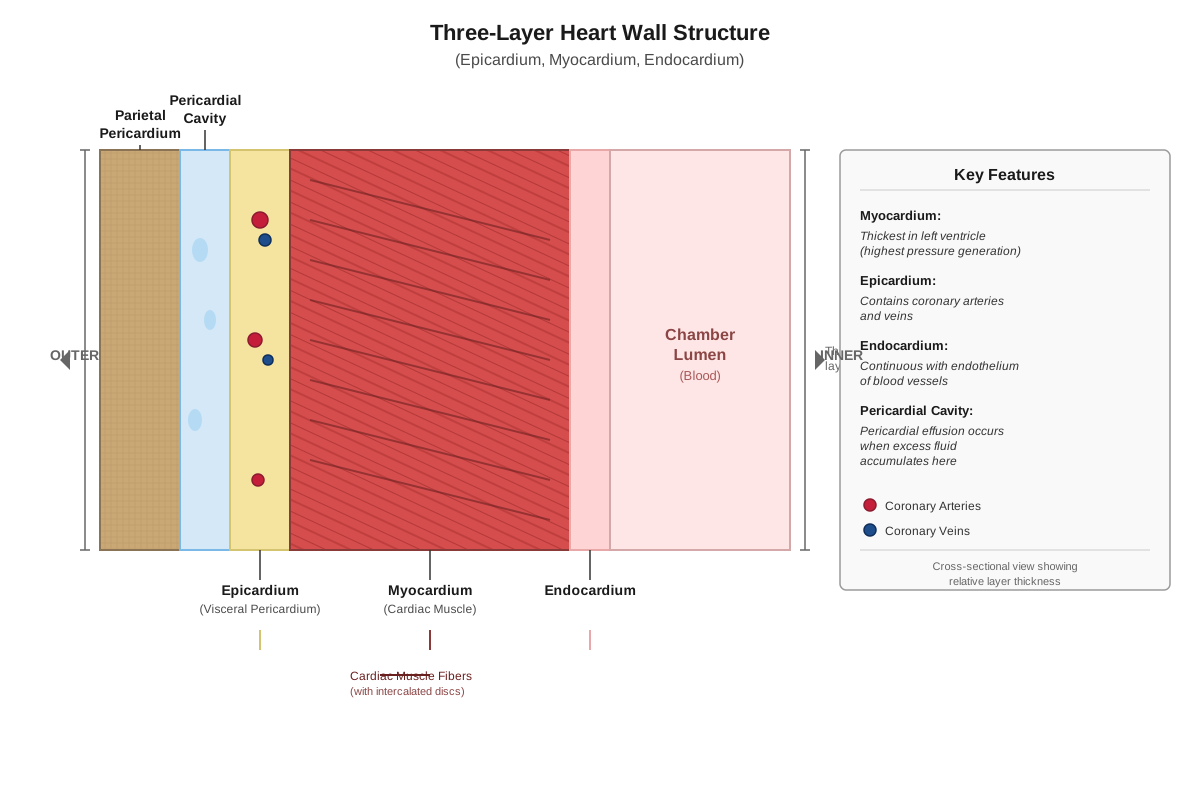
The heart wall consists of three distinct layers, each with specialized functions:
| Layer | Composition | Function |
|---|---|---|
| Endocardium | Simple squamous epithelium (endothelium) | Lines chambers; continuous with blood vessel endothelium; prevents clot formation |
| Myocardium | Cardiac muscle tissue | Generates contractile force; thickest in left ventricle |
| Epicardium | Visceral layer of serous pericardium | Outer protective covering; contains coronary vessels and fat |
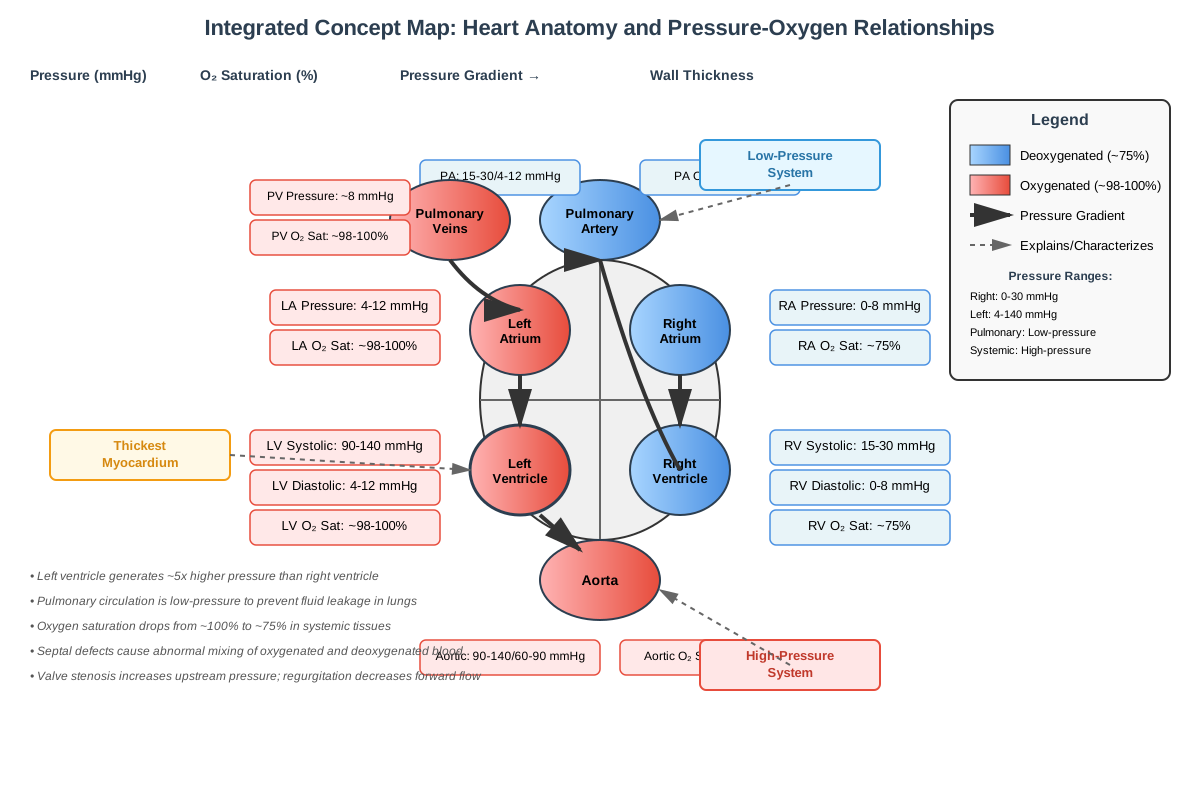
The myocardium varies in thickness according to the mechanical work required by each chamber. The left ventricular myocardium is approximately three times thicker than the right ventricular wall because it must generate sufficient pressure to propel blood through the entire systemic circulation, while the right ventricle only pumps blood through the lower-resistance pulmonary circuit.
Four-Chamber Architecture
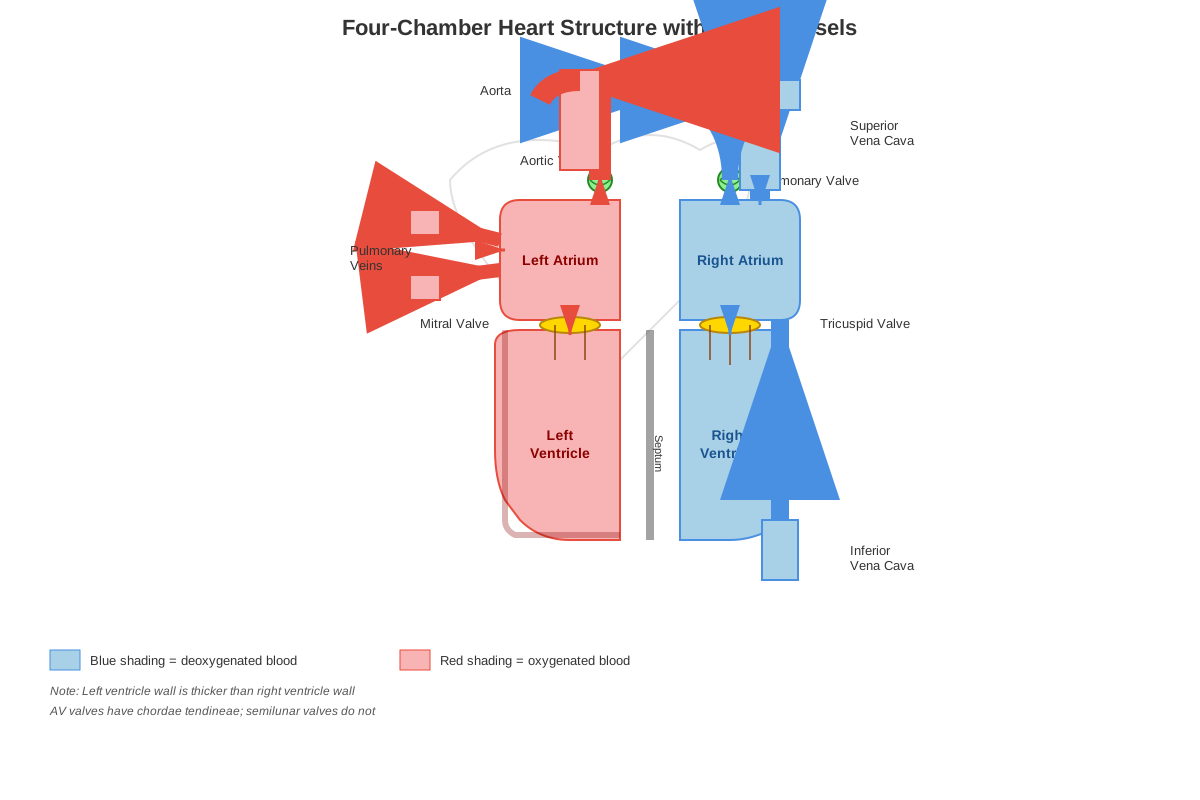
The heart contains four chambers: two atria (receiving chambers) and two ventricles (pumping chambers). This four-chamber design maintains complete separation between oxygen-poor and oxygen-rich blood, maximizing oxygen delivery efficiency.
Right Atrium: Receives deoxygenated blood from the systemic circulation via three vessels: the superior vena cava (from upper body), inferior vena cava (from lower body), and coronary sinus (from cardiac muscle itself). The right atrial wall is relatively thin as it functions primarily as a receiving chamber with minimal pumping requirements. The fossa ovalis, a depression in the interatrial septum, marks the location of the foramen ovale that allowed blood to bypass the lungs during fetal development.
Right Ventricle: Receives blood from the right atrium and pumps it to the lungs via the pulmonary trunk. The right ventricular wall is thicker than atrial walls but thinner than the left ventricle. Internal structures include trabeculae carneae (muscular ridges), papillary muscles (projections that anchor valve leaflets), and chordae tendineae (fibrous cords connecting papillary muscles to valve cusps).
Left Atrium: Receives oxygenated blood from the lungs via four pulmonary veins (two from each lung). The left atrium has the thinnest myocardial wall of all chambers, as it primarily serves as a reservoir and conduit rather than a high-pressure pump. The smooth posterior wall contrasts with the muscular anterior wall and auricle.
Left Ventricle: The most muscular chamber, with walls 2-3 times thicker than the right ventricle. It pumps oxygenated blood into the systemic circulation via the aorta. The left ventricle must generate pressures of 120 mmHg or higher during systole, compared to only 25 mmHg in the right ventricle. The interventricular septum separating left and right ventricles is predominantly muscular with a small membranous portion near the atria.
Cardiac Valves
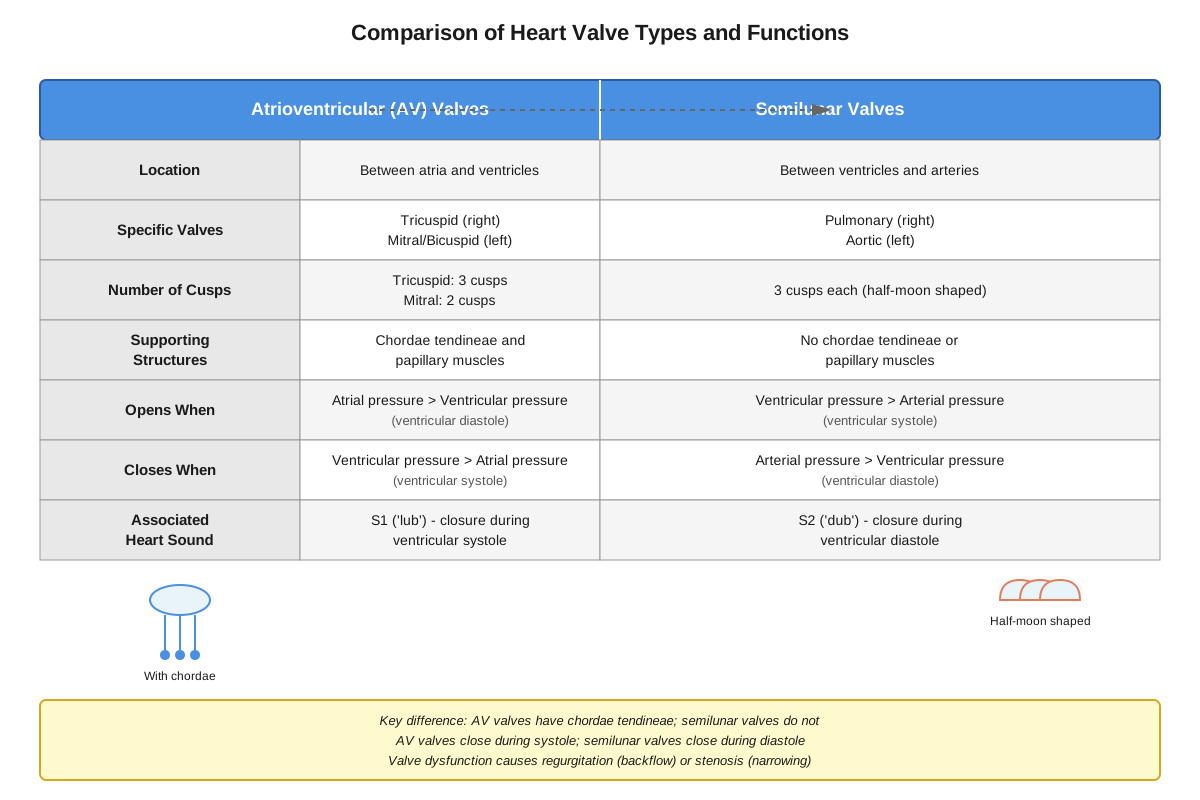
Four valves ensure unidirectional blood flow through the heart, preventing backflow during the cardiac cycle. Valves open passively when pressure in the upstream chamber exceeds downstream pressure and close when this gradient reverses.
Atrioventricular (AV) Valves: Located between atria and ventricles, these valves prevent backflow into atria during ventricular contraction.
- Tricuspid valve: Right AV valve with three cusps (leaflets) anchored by chordae tendineae to papillary muscles
- Mitral (bicuspid) valve: Left AV valve with two cusps; subjected to higher pressures than tricuspid valve
The chordae tendineae and papillary muscles form a critical support system preventing valve prolapse (inversion into atria) during ventricular systole when intraventricular pressure dramatically exceeds atrial pressure.
Semilunar Valves: Located at the exits of ventricles, these valves prevent backflow from arteries into ventricles during ventricular relaxation.
- Pulmonary valve: Guards the opening between right ventricle and pulmonary trunk; has three cusps
- Aortic valve: Guards the opening between left ventricle and aorta; has three cusps
Semilunar valves lack chordae tendineae and papillary muscles because the pressure gradient during diastole naturally forces the cusps closed. The cusps are shaped like half-moons (hence "semilunar"), and when closed, they meet in the center to form a complete seal.
Blood Flow Pathway
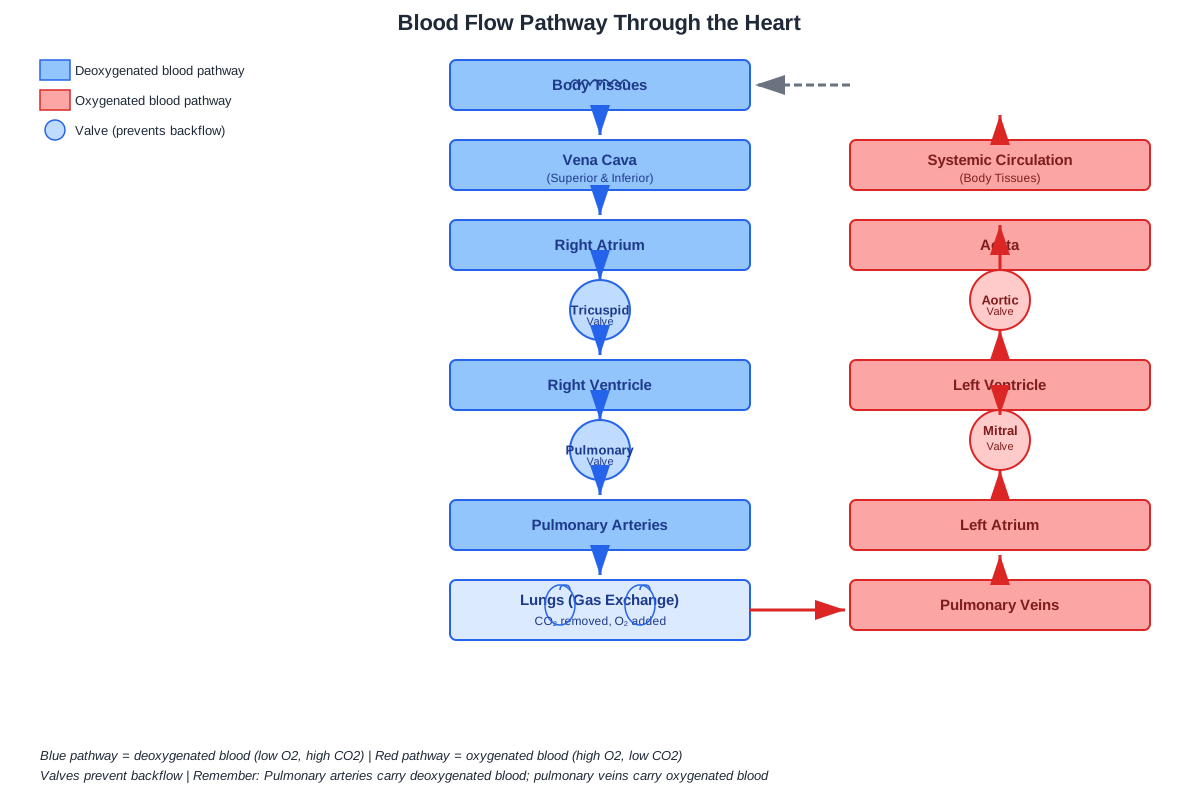
Understanding the complete circuit of blood flow through the heart is essential for MCAT success:
- Deoxygenated blood enters the right atrium from the superior vena cava, inferior vena cava, and coronary sinus
- Blood flows through the tricuspid valve into the right ventricle
- Right ventricular contraction propels blood through the pulmonary valve into the pulmonary trunk
- The pulmonary trunk bifurcates into left and right pulmonary arteries carrying deoxygenated blood to the lungs
- Gas exchange occurs in pulmonary capillaries
- Oxygenated blood returns via four pulmonary veins to the left atrium
- Blood flows through the mitral valve into the left ventricle
- Left ventricular contraction propels blood through the aortic valve into the aorta
- The aorta distributes oxygenated blood throughout the systemic circulation
- Deoxygenated blood returns to the right atrium, completing the circuit
MCAT Exam Tip: Remember that pulmonary arteries carry deoxygenated blood (exception to the rule that arteries carry oxygenated blood), while pulmonary veins carry oxygenated blood. This counterintuitive fact frequently appears in MCAT questions.
Coronary Circulation
The heart muscle itself requires continuous oxygen supply delivered by coronary arteries that branch directly from the aorta just above the aortic valve. The two main coronary arteries are:
Right coronary artery (RCA): Supplies the right atrium, right ventricle, inferior portion of left ventricle, and posterior interventricular septum. The RCA typically gives rise to the posterior interventricular artery.
Left coronary artery (LCA): Divides into the anterior interventricular artery (left anterior descending) and circumflex artery. These branches supply the left atrium, most of the left ventricle, and anterior interventricular septum.
Coronary blood flow occurs primarily during diastole (ventricular relaxation) because during systole, the contracting myocardium compresses coronary vessels, reducing flow. This physiological principle explains why conditions that shorten diastole (extreme tachycardia) can compromise myocardial oxygen delivery.
Coronary veins drain deoxygenated blood from cardiac muscle into the coronary sinus, which empties into the right atrium. This arrangement means the heart's own deoxygenated blood mixes with systemic venous return before entering the pulmonary circulation.
Cardiac Skeleton
The cardiac skeleton (fibrous skeleton) consists of dense connective tissue forming four rings around the valve orifices, plus interconnecting structures. This non-conductive tissue serves multiple functions:
- Provides structural support and attachment points for valve leaflets
- Anchors cardiac muscle fibers
- Electrically insulates atria from ventricles, ensuring that electrical signals pass only through the atrioventricular node
- Prevents valve orifices from dilating excessively during contraction
The cardiac skeleton's electrical insulation is crucial for coordinated cardiac function, as it forces the electrical impulse to travel through the specialized conduction system rather than spreading randomly from atria to ventricles.
Concept Relationships
Heart anatomy concepts form an integrated network where structure dictates function. The four-chamber architecture → enables separation of pulmonary and systemic circuits → which maintains distinct oxygen saturation levels in different chambers. Chamber wall thickness → correlates with pressure generation requirements → which determines the mechanical work each chamber performs. Valve structure and position → ensures unidirectional flow → which prevents mixing of oxygenated and deoxygenated blood and maintains efficient circulation.
The relationship between heart anatomy and prerequisite knowledge includes: tissue organization principles → explain the three-layered heart wall structure; pressure gradient concepts → govern valve opening and closing; and gas exchange principles → justify the need for separate pulmonary and systemic circuits. These foundational concepts support understanding of why the heart evolved its specific anatomical configuration.
Connections to related Biology topics include: the cardiac cycle (systole and diastole) depends on chamber anatomy and valve function; cardiac output calculations require understanding of ventricular volume; electrocardiogram interpretation relies on knowledge of the conduction system's anatomical pathway through cardiac structures; and blood pressure regulation involves the relationship between ventricular contractility and arterial anatomy. Understanding heart anatomy also connects to pathophysiology topics such as heart murmurs (valve dysfunction), myocardial infarction (coronary artery occlusion), and congenital defects (septal defects or valve malformations).
The coronary circulation → supplies the myocardium → which generates contractile force → which creates pressure gradients → which drive blood flow through chambers and valves → which maintains systemic and pulmonary circulation. This circular relationship demonstrates how anatomical structures work together to achieve the heart's primary function as a dual pump.
Quick check — test yourself on Heart anatomy so far.
Try Flashcards →High-Yield Facts
⭐ The left ventricular wall is approximately three times thicker than the right ventricular wall because it must generate sufficient pressure to perfuse the entire systemic circulation
⭐ Pulmonary veins carry oxygenated blood and pulmonary arteries carry deoxygenated blood, the opposite of the general rule for systemic vessels
⭐ The tricuspid valve has three cusps and is located on the right side; the mitral (bicuspid) valve has two cusps and is located on the left side
⭐ Chordae tendineae and papillary muscles prevent AV valve prolapse during ventricular systole by resisting the high intraventricular pressure
⭐ Coronary blood flow occurs primarily during diastole because systolic contraction compresses coronary vessels
- The fossa ovalis marks the site of the foramen ovale, which allowed blood to bypass the lungs during fetal development
- The cardiac skeleton electrically insulates atria from ventricles, forcing electrical signals through the AV node
- The right atrium receives blood from three sources: superior vena cava, inferior vena cava, and coronary sinus
- The left atrium receives oxygenated blood from four pulmonary veins (two from each lung)
- Semilunar valves (pulmonary and aortic) lack chordae tendineae and papillary muscles, unlike AV valves
- The interventricular septum is mostly muscular with a small membranous portion near the atria
- The endocardium is continuous with the endothelium lining blood vessels throughout the body
- Trabeculae carneae are muscular ridges on the internal surface of ventricles that increase contractile efficiency
Common Misconceptions
Misconception: All arteries carry oxygenated blood and all veins carry deoxygenated blood.
Correction: While this is true for systemic circulation, pulmonary arteries carry deoxygenated blood from the right ventricle to the lungs, and pulmonary veins carry oxygenated blood from the lungs to the left atrium. Arteries are defined as vessels carrying blood away from the heart, while veins carry blood toward the heart, regardless of oxygen content.
Misconception: The right and left sides of the heart pump blood simultaneously to the same destination.
Correction: The right side pumps deoxygenated blood to the lungs (pulmonary circulation) while the left side simultaneously pumps oxygenated blood to the body (systemic circulation). These are separate circuits with different pressure requirements, which explains the difference in ventricular wall thickness.
Misconception: Valves actively open and close through muscular contraction.
Correction: Cardiac valves open and close passively in response to pressure gradients. When upstream pressure exceeds downstream pressure, valves open; when this gradient reverses, valves close. The papillary muscles and chordae tendineae don't open or close the AV valves—they prevent the valves from inverting during ventricular contraction.
Misconception: The heart receives oxygen from the blood passing through its chambers.
Correction: The endocardium receives some oxygen by diffusion from chamber blood, but the thick myocardium requires its own dedicated blood supply via coronary arteries. Coronary arteries branch from the aorta immediately above the aortic valve and deliver oxygenated blood to cardiac muscle tissue.
Misconception: Blood flows continuously through the heart at a constant rate.
Correction: Blood flow through the heart is pulsatile, corresponding to the cardiac cycle phases. During atrial systole, blood flows from atria to ventricles; during ventricular systole, blood flows from ventricles to arteries while AV valves are closed; during diastole, ventricles fill while semilunar valves are closed. This rhythmic pattern creates the characteristic heart sounds and pulse.
Misconception: The interventricular septum is a simple wall dividing the ventricles.
Correction: The interventricular septum is a complex structure that is mostly muscular but includes a small membranous portion near the atria. It contains part of the cardiac conduction system and is a common site for congenital defects (ventricular septal defects). The septum's thickness contributes to left ventricular mass and contractile force.
Worked Examples
Example 1: Tracing Blood Flow with Oxygen Saturation
Question: A researcher injects a radioactive tracer into the superior vena cava and monitors its progression through the cardiovascular system. Arrange the following structures in the order the tracer will encounter them: (A) left ventricle, (B) pulmonary veins, (C) right ventricle, (D) pulmonary arteries, (E) left atrium, (F) right atrium.
Solution:
Step 1: Identify the starting point. The superior vena cava delivers deoxygenated blood to the right atrium, so the tracer begins in the right atrium (F).
Step 2: From the right atrium, blood flows through the tricuspid valve into the right ventricle (C).
Step 3: The right ventricle pumps blood through the pulmonary valve into the pulmonary trunk, which divides into pulmonary arteries (D).
Step 4: Pulmonary arteries carry blood to the lungs for gas exchange. After oxygenation, blood returns via pulmonary veins (B).
Step 5: Pulmonary veins deliver oxygenated blood to the left atrium (E).
Step 6: From the left atrium, blood flows through the mitral valve into the left ventricle (A).
Answer: F → C → D → B → E → A (right atrium → right ventricle → pulmonary arteries → pulmonary veins → left atrium → left ventricle)
Key Concept: This question tests understanding of the complete blood flow pathway and reinforces that pulmonary arteries carry deoxygenated blood while pulmonary veins carry oxygenated blood. The MCAT frequently presents blood flow questions requiring students to trace pathways through multiple structures while tracking oxygen saturation changes.
Example 2: Valve Dysfunction Analysis
Question: A patient presents with a heart murmur. Echocardiography reveals that during ventricular systole, blood regurgitates from the left ventricle back into the left atrium. Which structure is most likely dysfunctional, and what is the probable cause?
Solution:
Step 1: Identify which valve separates the left ventricle and left atrium. The mitral (bicuspid) valve is located between these chambers.
Step 2: Determine normal valve function during ventricular systole. During ventricular contraction, the mitral valve should be closed to prevent backflow into the atrium while blood is ejected through the aortic valve into the aorta.
Step 3: Analyze the pathology. If blood regurgitates (flows backward) from the left ventricle into the left atrium during systole, the mitral valve is failing to close completely—a condition called mitral regurgitation or mitral insufficiency.
Step 4: Consider anatomical causes. Mitral regurgitation can result from: (1) damaged or elongated chordae tendineae that fail to prevent valve prolapse, (2) dysfunctional papillary muscles that cannot maintain proper tension, (3) damaged valve leaflets from infection or inflammation, or (4) dilation of the valve annulus.
Step 5: Predict consequences. Mitral regurgitation reduces forward cardiac output (less blood reaches the aorta) and increases left atrial pressure and volume, potentially leading to pulmonary congestion as pressure backs up into pulmonary veins.
Answer: The mitral valve is dysfunctional, most likely due to chordae tendineae rupture or papillary muscle dysfunction, preventing proper valve closure during ventricular systole.
Key Concept: This clinical vignette integrates heart anatomy with pathophysiology. Understanding the normal anatomical relationships between valves, chambers, and supporting structures (chordae tendineae and papillary muscles) allows prediction of dysfunction consequences. MCAT passages frequently describe valve pathology and expect students to identify affected structures and predict hemodynamic consequences.
Exam Strategy
When approaching MCAT questions on heart anatomy, begin by identifying whether the question asks about structure, function, or the relationship between them. Structure-only questions typically require naming chambers, valves, or vessels, while function questions ask about blood flow direction, pressure gradients, or valve timing. Integration questions—the most common on the MCAT—require applying anatomical knowledge to predict physiological or pathological outcomes.
Trigger words indicating heart anatomy questions include: "chamber," "valve," "septum," "coronary," "pulmonary circulation," "systemic circulation," "oxygenated/deoxygenated," "atrium/ventricle," and specific valve names (tricuspid, mitral, pulmonary, aortic). Phrases like "blood flow pathway," "valve dysfunction," "pressure gradient," or "oxygen saturation" signal that anatomical knowledge must be applied to solve the problem.
For blood flow questions, always start from a known point and trace systematically through chambers and vessels. Remember the oxygen saturation rule: right side = deoxygenated (except coronary sinus), left side = oxygenated, pulmonary arteries = deoxygenated, pulmonary veins = oxygenated. This knowledge allows rapid elimination of anatomically impossible answer choices.
When questions describe valve dysfunction, immediately identify: (1) which valve is affected, (2) whether it's stenosis (narrowing/won't open) or regurgitation (won't close), (3) during which phase of the cardiac cycle the problem occurs, and (4) which chambers experience abnormal pressure or volume. This systematic approach prevents confusion and guides you toward correct answers.
Process-of-elimination strategy: Eliminate answers that violate basic anatomical principles (blood flowing backward through normal valves, oxygenated blood in the right ventricle without a defect, deoxygenated blood in the left atrium without a defect). Also eliminate answers that confuse right and left sides or mix up AV valves with semilunar valves.
Time allocation: Straightforward anatomy questions should take 30-45 seconds. Complex passage-based questions integrating anatomy with physiology or pathology may require 90-120 seconds. If a question requires tracing blood through multiple structures, quickly sketch the pathway rather than trying to visualize it mentally—this reduces errors and saves time.
Memory Techniques
Valve Mnemonic - "Try Pulling My Aorta":
- Try = Tricuspid valve (right AV valve, 3 cusps)
- Pulling = Pulmonary valve (right semilunar valve)
- My = Mitral valve (left AV valve, 2 cusps)
- Aorta = Aortic valve (left semilunar valve)
This mnemonic follows the blood flow pathway from right atrium through both sides of the heart.
Blood Flow Pathway - "Very Tired, Relaxing People Are Pretty Lazy About Studying Anatomy":
- Very = Vena cava
- Tired = Tricuspid valve
- Relaxing = Right ventricle
- People = Pulmonary valve
- Are = Arteries (pulmonary)
- Pretty = Pulmonary veins
- Lazy = Left atrium
- About = AV valve (mitral)
- Studying = Strong left ventricle
- Anatomy = Aortic valve
Visualization Strategy: Picture the heart as two houses side-by-side (right and left). The right house has thin walls (lower pressure) and blue furniture (deoxygenated blood). The left house has thick walls (higher pressure) and red furniture (oxygenated blood). Each house has two floors (atrium above, ventricle below) with doors (valves) between floors and at the exit. This spatial visualization helps remember chamber positions and relative wall thickness.
Coronary Circulation - "Right Coronary Really Supplies Inferior Regions": The right coronary artery supplies the inferior (posterior) portions of the heart, while the left coronary artery supplies anterior and lateral regions.
Cusps Count - "TRI-cuspid = 3, BI-cuspid = 2": The prefixes directly indicate the number of cusps for each AV valve.
Summary
Heart anatomy forms the structural foundation for understanding cardiovascular physiology on the MCAT. The heart's four-chamber design with two atria and two ventricles maintains complete separation between pulmonary and systemic circuits, maximizing oxygen delivery efficiency. The right side receives deoxygenated blood from systemic veins and pumps it to the lungs, while the left side receives oxygenated blood from pulmonary veins and pumps it to the body. Four valves—tricuspid, pulmonary, mitral, and aortic—ensure unidirectional flow, with AV valves supported by chordae tendineae and papillary muscles. The left ventricle's thick muscular wall generates the high pressure needed for systemic circulation, while the thinner right ventricle suffices for lower-pressure pulmonary circulation. Coronary arteries branching from the aorta supply the myocardium itself, with flow occurring primarily during diastole. Understanding these anatomical relationships enables prediction of pathological consequences, interpretation of experimental data, and rapid solution of MCAT questions involving cardiovascular structure and function.
Key Takeaways
- The heart contains four chambers (two atria, two ventricles) that maintain separate pulmonary and systemic circuits with distinct oxygen saturation levels
- Four valves (tricuspid, pulmonary, mitral, aortic) ensure unidirectional blood flow, with AV valves supported by chordae tendineae and papillary muscles
- The left ventricular wall is approximately three times thicker than the right because it must generate sufficient pressure for systemic circulation
- Pulmonary arteries carry deoxygenated blood to the lungs while pulmonary veins carry oxygenated blood to the left atrium—opposite the pattern in systemic circulation
- Coronary arteries supply the myocardium with oxygenated blood, with flow occurring primarily during diastole when the myocardium is relaxed
- The cardiac skeleton provides structural support and electrically insulates atria from ventricles, forcing electrical signals through the specialized conduction system
- Understanding the complete blood flow pathway through chambers, valves, and vessels is essential for solving MCAT questions and predicting consequences of structural abnormalities
Related Topics
Cardiac Cycle and Heart Sounds: Understanding the timing of systole and diastole, pressure changes in chambers, and valve opening/closing creates the foundation for interpreting heart sounds and murmurs. Mastering heart anatomy enables comprehension of why specific valve dysfunctions produce characteristic auscultation findings.
Cardiac Conduction System: The anatomical pathway of electrical signals through the SA node, AV node, bundle of His, and Purkinje fibers depends on understanding chamber locations and the cardiac skeleton's insulating properties. This topic builds directly on heart anatomy knowledge.
Cardiac Output and Hemodynamics: Calculations involving stroke volume, heart rate, and cardiac output require understanding ventricular anatomy and function. The relationship between chamber size, wall thickness, and pressure generation connects anatomy to quantitative physiology.
Cardiovascular Pathophysiology: Conditions such as myocardial infarction, valve stenosis/regurgitation, septal defects, and heart failure all involve anatomical abnormalities. Mastering normal heart anatomy provides the baseline for recognizing and understanding pathological deviations.
Fetal Circulation: Understanding structures unique to fetal circulation (foramen ovale, ductus arteriosus) and their postnatal closure requires solid knowledge of normal adult heart anatomy, particularly the interatrial and interventricular septa.
Practice CTA
Now that you've mastered the core concepts of heart anatomy, challenge yourself with practice questions and flashcards to reinforce your understanding. Focus on tracing blood flow pathways, identifying valve dysfunction consequences, and connecting anatomical structures to their physiological functions. Active recall through practice questions is the most effective way to solidify this high-yield MCAT content and build the confidence needed to tackle complex cardiovascular passages on test day. Your investment in thoroughly understanding heart anatomy will pay dividends across multiple Biology topics and question types!
Sign up free to keep reading
Create a free AnvayaPrep account to finish this MCAT guide on Heart anatomy — plus flashcards and practice questions.