Overview
The cardiac cycle represents the complete sequence of mechanical and electrical events that occur during one heartbeat, from the beginning of one contraction to the beginning of the next. This fundamental concept in Physiology and Organ Systems encompasses the coordinated contraction and relaxation of the atria and ventricles, the opening and closing of heart valves, and the resulting pressure and volume changes that drive blood circulation throughout the body. Understanding the cardiac cycle requires integrating knowledge of cardiac anatomy, electrical conduction, hemodynamics, and the relationship between pressure gradients and blood flow.
For the MCAT, the cardiac cycle serves as a cornerstone topic that bridges multiple disciplines within Biology. Questions frequently test the ability to interpret pressure-volume loops, predict the consequences of valvular dysfunction, and understand how the autonomic nervous system modulates cardiac function. The cardiac cycle MCAT content appears not only in standalone questions but also in complex passages involving cardiovascular physiology, pathophysiology, and pharmacology. Students must be able to trace blood flow through the heart chambers, identify which valves are open or closed during specific phases, and correlate electrical events (ECG waves) with mechanical events (heart sounds and pressure changes).
The cardiac cycle connects intimately with broader Biology concepts including cellular respiration (oxygen delivery), fluid dynamics (pressure-flow relationships), nervous system regulation (sympathetic and parasympathetic control), and endocrine function (hormonal influences on heart rate and contractility). Mastery of this topic enables deeper understanding of cardiovascular diseases, exercise physiology, and compensatory mechanisms during physiological stress—all high-yield areas for MCAT passages.
Learning Objectives
- [ ] Define the cardiac cycle using accurate Biology terminology
- [ ] Explain why the cardiac cycle matters for the MCAT
- [ ] Apply cardiac cycle concepts to exam-style questions
- [ ] Identify common mistakes related to the cardiac cycle
- [ ] Connect the cardiac cycle to related Biology concepts
- [ ] Sequence the seven phases of the cardiac cycle and identify valve positions during each phase
- [ ] Interpret pressure-volume loops and correlate them with cardiac work and efficiency
- [ ] Predict the effects of autonomic nervous system stimulation on cardiac cycle timing and parameters
Prerequisites
- Basic cardiac anatomy: Understanding the four chambers (right atrium, right ventricle, left atrium, left ventricle), four valves (tricuspid, pulmonary, mitral, aortic), and major vessels is essential for tracking blood flow through the cardiac cycle
- Electrical conduction system: Knowledge of the SA node, AV node, bundle of His, and Purkinje fibers provides the foundation for understanding how electrical depolarization triggers mechanical contraction
- Pressure gradients and flow: Familiarity with the principle that blood flows from high to low pressure explains valve opening/closing and directional blood movement
- Systole and diastole definitions: Basic understanding that systole refers to contraction and diastole to relaxation frames the entire cardiac cycle discussion
- ECG basics: Recognition of P waves, QRS complexes, and T waves allows correlation of electrical and mechanical events
Why This Topic Matters
The cardiac cycle represents one of the most clinically relevant topics in cardiovascular physiology. Every heartbeat—approximately 100,000 per day—follows this precise sequence, and disruptions at any phase can lead to conditions ranging from heart murmurs to heart failure. Clinicians use understanding of the cardiac cycle to interpret physical examination findings (heart sounds, pulses), diagnostic tests (echocardiograms, cardiac catheterization data), and to predict the effects of cardiovascular medications.
On the MCAT, cardiac cycle questions appear with moderate frequency, typically 2-4 questions per exam either as standalone items or embedded within physiology passages. The AAMC particularly favors questions that require integration of multiple concepts: students might need to predict how increased afterload affects the pressure-volume loop, explain why certain heart sounds occur during specific phases, or determine how autonomic drugs alter cycle timing. Approximately 60% of cardiac cycle questions appear in passage-based formats, often presenting clinical scenarios involving valvular disease, heart failure, or exercise physiology.
Common MCAT question formats include: (1) interpreting graphs showing pressure changes in different cardiac chambers over time, (2) predicting the timing of valve opening/closing based on pressure relationships, (3) correlating ECG waves with mechanical events, (4) analyzing how pathological conditions alter normal cycle parameters, and (5) calculating cardiac output from heart rate and stroke volume data. The topic frequently appears alongside questions on blood pressure regulation, the Frank-Starling mechanism, and cardiovascular responses to exercise.
Core Concepts
Definition and Overview of the Cardiac Cycle
The cardiac cycle encompasses all mechanical and electrical events occurring from the start of one heartbeat to the start of the next. One complete cycle includes one period of systole (contraction) and one period of diastole (relaxation) for both atria and ventricles. At a resting heart rate of 75 beats per minute, each cardiac cycle lasts approximately 0.8 seconds. Critically, atrial and ventricular events are offset in timing: atrial systole occurs during ventricular diastole, and vice versa, ensuring efficient filling and ejection of blood.
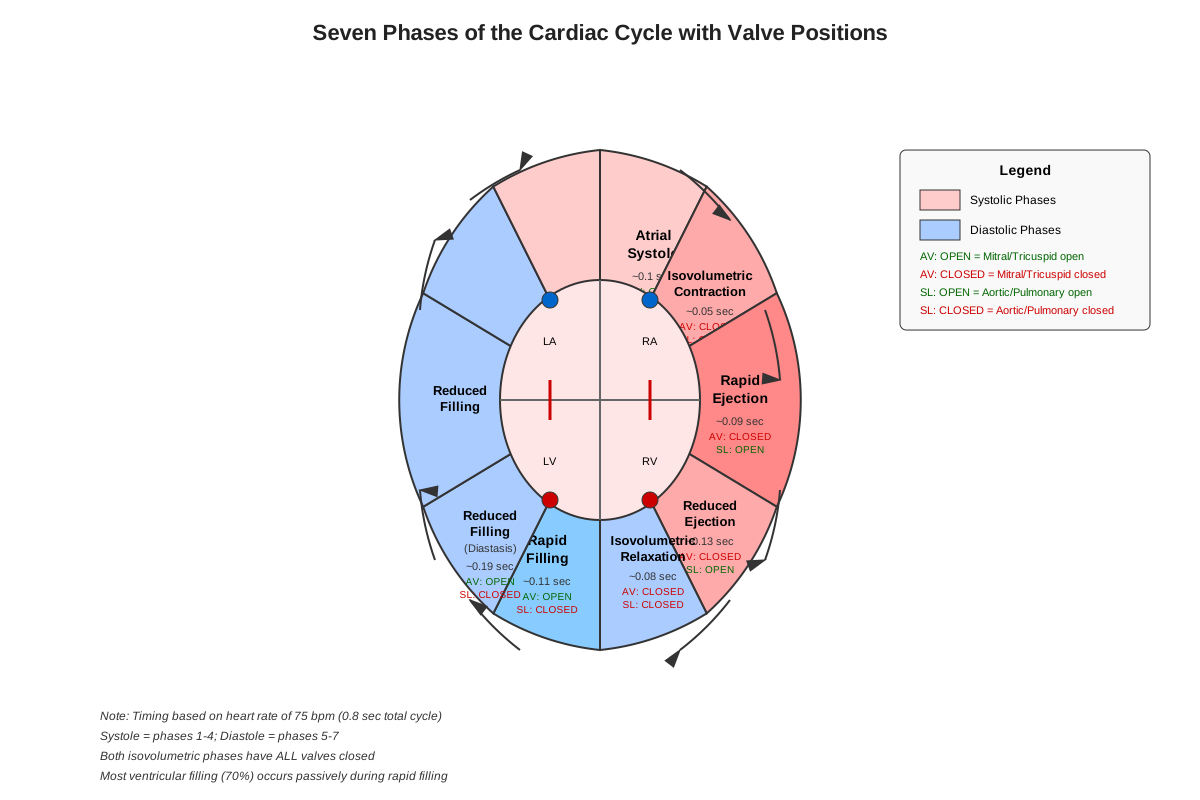
The cardiac cycle can be divided into seven distinct phases based on valve positions and pressure relationships. Understanding these phases requires tracking three key variables simultaneously: (1) pressure changes in the atria, ventricles, and aorta, (2) volume changes in the ventricles, and (3) valve positions (open or closed). The cycle is driven by pressure gradients—valves open when upstream pressure exceeds downstream pressure and close when this relationship reverses.
The Seven Phases of the Cardiac Cycle
Phase 1: Atrial Systole (Late Ventricular Diastole)
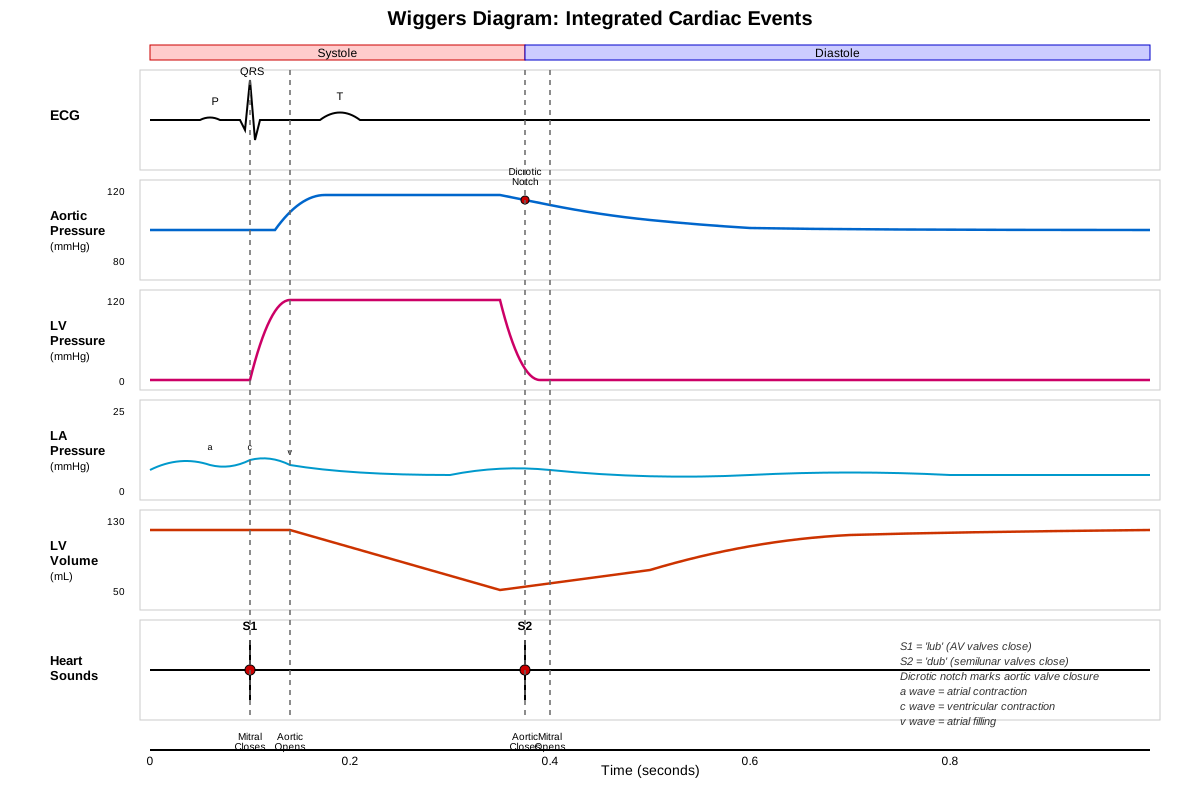
This phase begins with atrial contraction triggered by the P wave on the ECG. The atria contract, raising atrial pressure and forcing additional blood into the already partially filled ventricles. This "atrial kick" contributes approximately 20-30% of ventricular filling under resting conditions. The atrioventricular (AV) valves (tricuspid and mitral) remain open, while the semilunar valves (pulmonary and aortic) remain closed. Ventricular volume reaches its maximum at the end of this phase, termed end-diastolic volume (EDV), typically around 120-130 mL.
Phase 2: Isovolumetric Contraction
Ventricular depolarization (QRS complex on ECG) triggers ventricular contraction. As ventricular pressure rises rapidly, it exceeds atrial pressure, causing the AV valves to snap shut, producing the first heart sound (S1, "lub"). However, ventricular pressure has not yet exceeded aortic pressure (~80 mmHg), so the aortic valve remains closed. During this brief period (0.05 seconds), all four valves are closed, and ventricular volume remains constant (hence "isovolumetric"). Ventricular pressure rises steeply from ~5 mmHg to ~80 mmHg.
Phase 3: Rapid Ejection
When ventricular pressure exceeds aortic pressure, the aortic valve opens, and blood rapidly ejects from the left ventricle into the aorta. Approximately two-thirds of stroke volume is ejected during this phase. Ventricular pressure continues to rise slightly (to ~120 mmHg) before beginning to fall. Simultaneously, atrial pressure begins to rise as blood returns from the veins, filling the atria against closed AV valves (producing the "v wave" on atrial pressure tracings).
Phase 4: Reduced Ejection
As ventricular contraction wanes, the rate of ejection slows. Ventricular pressure begins to fall, though it remains above aortic pressure, keeping the aortic valve open. The remaining one-third of stroke volume is ejected during this phase. At the end of ejection, ventricular volume reaches its minimum, termed end-systolic volume (ESV), typically around 50 mL. The difference between EDV and ESV represents stroke volume (SV = EDV - ESV ≈ 70 mL).
Phase 5: Isovolumetric Relaxation
Ventricular repolarization (T wave on ECG) initiates ventricular relaxation. As ventricular pressure drops below aortic pressure, the aortic valve closes, producing the second heart sound (S2, "dub"). The AV valves remain closed because ventricular pressure still exceeds atrial pressure. Again, all four valves are closed, and ventricular volume remains constant. Ventricular pressure falls rapidly from ~80 mmHg toward 0 mmHg. This phase lasts approximately 0.08 seconds.
Phase 6: Rapid Passive Filling
When ventricular pressure falls below atrial pressure, the AV valves open, and blood that has accumulated in the atria during ventricular systole rushes into the ventricles. Approximately 70-80% of ventricular filling occurs during this phase without any atrial contraction—purely passive filling driven by the pressure gradient. In young, healthy individuals, rapid filling may produce a third heart sound (S3), though this is often pathological in older adults.
Phase 7: Reduced Passive Filling (Diastasis)
As the pressure gradient between atria and ventricles diminishes, the rate of filling slows. Blood continues to flow from the veins through the atria into the ventricles, but at a reduced rate. This phase is the longest component of diastole and is most affected by changes in heart rate—as heart rate increases, diastasis shortens disproportionately, potentially compromising ventricular filling.
Pressure-Volume Relationships
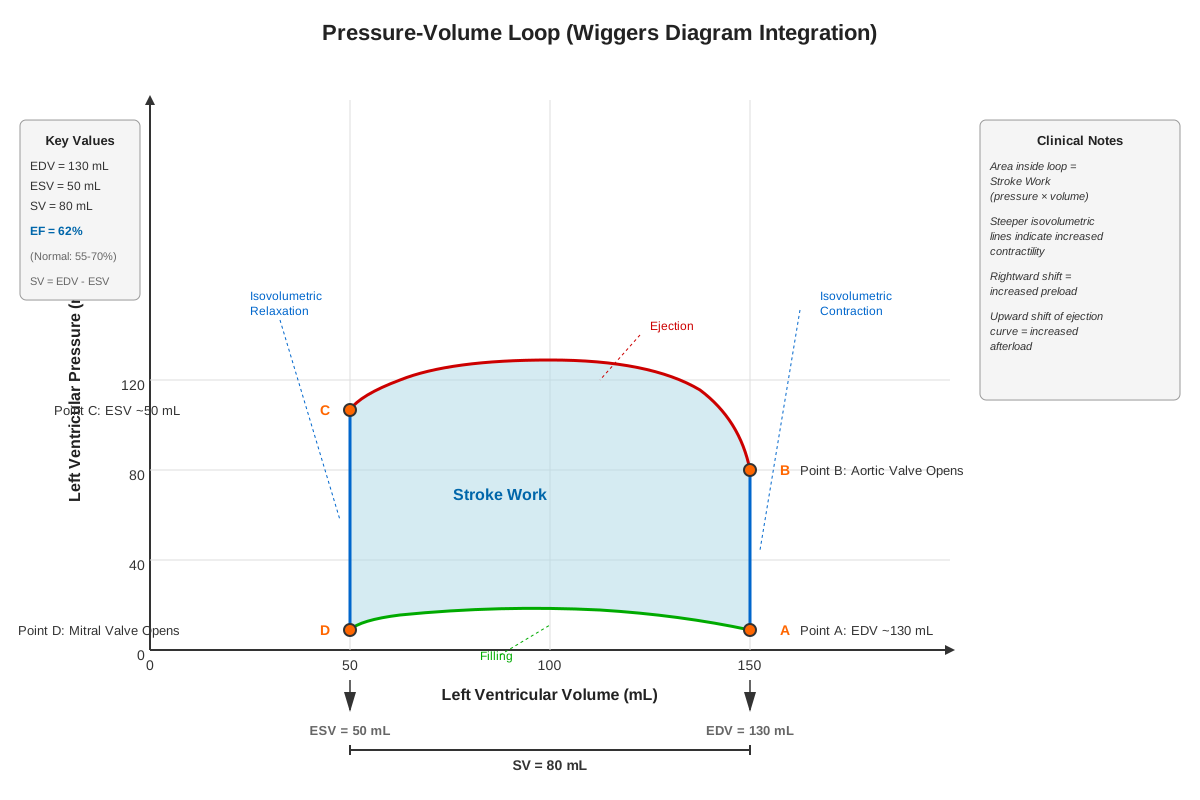
The pressure-volume (PV) loop provides a powerful graphical representation of the cardiac cycle, plotting left ventricular pressure (y-axis) against left ventricular volume (x-axis). The loop proceeds counterclockwise through four segments:
- Ventricular filling (bottom segment): Pressure remains low while volume increases from ESV to EDV
- Isovolumetric contraction (right vertical segment): Pressure increases while volume remains constant at EDV
- Ventricular ejection (top segment): Pressure initially rises then falls while volume decreases from EDV to ESV
- Isovolumetric relaxation (left vertical segment): Pressure decreases while volume remains constant at ESV
The area enclosed by the PV loop represents the stroke work—the external work performed by the ventricle to eject blood. The width of the loop represents stroke volume, while the height reflects the pressure generated. Changes in preload (EDV), afterload (aortic pressure), or contractility alter the shape and position of the PV loop in predictable ways that are frequently tested on the MCAT.
Heart Sounds and Their Physiological Basis
| Heart Sound | Timing | Cause | Clinical Significance |
|---|---|---|---|
| S1 ("lub") | Beginning of systole | Closure of AV valves (mitral and tricuspid) | Marks onset of ventricular contraction |
| S2 ("dub") | Beginning of diastole | Closure of semilunar valves (aortic and pulmonary) | Marks onset of ventricular relaxation |
| S3 | Early diastole | Rapid ventricular filling | Normal in children/young adults; suggests volume overload in older adults |
| S4 | Late diastole | Atrial contraction into stiff ventricle | Always pathological; indicates reduced ventricular compliance |
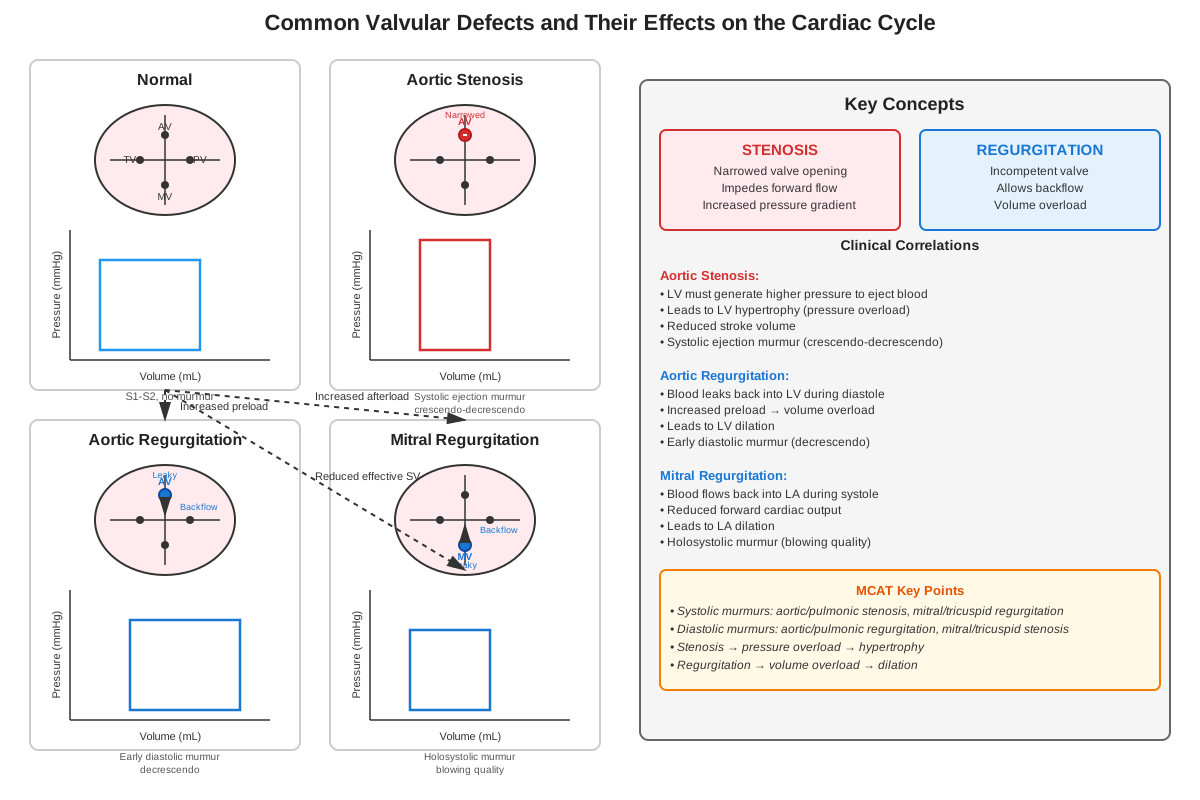
Murmurs represent abnormal heart sounds caused by turbulent blood flow, typically due to valvular stenosis (narrowing) or regurgitation (backflow). Systolic murmurs occur between S1 and S2, while diastolic murmurs occur between S2 and S1. Understanding the timing of valve opening and closing allows prediction of when specific valvular defects will produce audible murmurs.
Regulation of the Cardiac Cycle
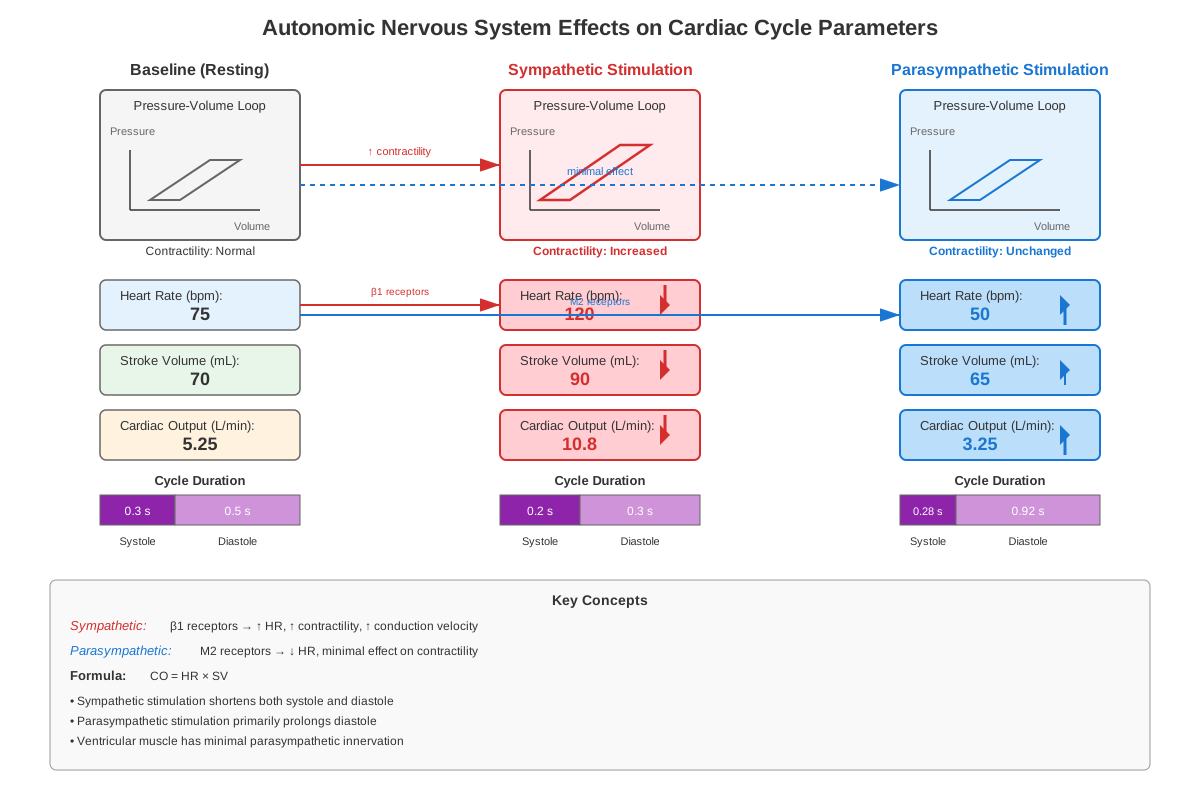
The autonomic nervous system profoundly influences cardiac cycle parameters:
Sympathetic stimulation (β1-adrenergic receptors):
- Increases heart rate (positive chronotropy) by accelerating SA node depolarization
- Increases contractility (positive inotropy) by enhancing calcium influx
- Increases conduction velocity (positive dromotropy)
- Shortens systole and diastole, but diastole shortens proportionally more
- Shifts the PV loop leftward and upward (decreased ESV, increased pressure)
Parasympathetic stimulation (muscarinic receptors):
- Decreases heart rate (negative chronotropy) by slowing SA node depolarization
- Minimal effect on ventricular contractility (few vagal fibers innervate ventricles)
- Decreases conduction velocity through the AV node
- Lengthens diastole, improving ventricular filling
Cardiac Output and Its Determinants
Cardiac output (CO) represents the volume of blood pumped by each ventricle per minute, calculated as:
CO = Heart Rate (HR) × Stroke Volume (SV)At rest, CO averages 5 L/min (70 beats/min × 70 mL/beat). Stroke volume is determined by three factors:
- Preload: The degree of ventricular stretch at end-diastole (related to EDV). Increased preload increases stroke volume via the Frank-Starling mechanism—greater stretch of cardiac myocytes leads to more forceful contraction.
- Afterload: The resistance the ventricle must overcome to eject blood (related to aortic pressure). Increased afterload decreases stroke volume by making ejection more difficult.
- Contractility: The intrinsic ability of cardiac muscle to generate force, independent of preload and afterload. Increased contractility (e.g., from sympathetic stimulation) increases stroke volume by reducing ESV.
Ejection fraction (EF) quantifies the percentage of EDV ejected with each beat:
EF = (SV / EDV) × 100% = [(EDV - ESV) / EDV] × 100%Normal EF ranges from 55-70%. Values below 40% indicate systolic heart failure with reduced contractility.
Concept Relationships
The cardiac cycle integrates multiple physiological concepts into a unified framework. Electrical conduction (SA node depolarization → atrial depolarization → AV node delay → ventricular depolarization) triggers mechanical events (atrial contraction → ventricular contraction → ejection), demonstrating excitation-contraction coupling. The pressure gradients generated by contraction determine valve function (AV valves open when atrial pressure > ventricular pressure; semilunar valves open when ventricular pressure > arterial pressure), which in turn controls blood flow direction.
The cardiac cycle connects bidirectionally with autonomic regulation: sympathetic input accelerates the cycle and enhances contractility, while parasympathetic input slows the cycle. These autonomic effects link to homeostatic mechanisms such as the baroreceptor reflex, which adjusts cardiac output to maintain blood pressure. The Frank-Starling mechanism provides intrinsic regulation, allowing the heart to match output to venous return without neural input.
Understanding the cardiac cycle enables comprehension of cardiovascular pathophysiology: valvular stenosis prolongs ejection phases, valvular regurgitation increases preload, hypertension increases afterload, and heart failure reduces contractility. These pathological states alter the PV loop in characteristic ways. The cardiac cycle also connects to exercise physiology—during exercise, sympathetic activation shortens cycle duration while increasing stroke volume, dramatically increasing cardiac output to meet metabolic demands.
Relationship map: Electrical depolarization → Mechanical contraction → Pressure changes → Valve opening/closing → Blood flow → Cardiac output → Tissue perfusion → Metabolic support. Simultaneously, Baroreceptors → Autonomic nervous system → SA node firing rate and contractility → Cardiac cycle parameters → Cardiac output adjustment.
Quick check — test yourself on Cardiac cycle so far.
Try Flashcards →High-Yield Facts
⭐ The AV valves close when ventricular pressure exceeds atrial pressure, producing S1; the semilunar valves close when arterial pressure exceeds ventricular pressure, producing S2.
⭐ During isovolumetric contraction, all four heart valves are closed; during isovolumetric relaxation, all four heart valves are also closed.
⭐ Approximately 70-80% of ventricular filling occurs passively during early diastole before atrial contraction; the "atrial kick" contributes only 20-30% under resting conditions.
⭐ Stroke volume equals end-diastolic volume minus end-systolic volume (SV = EDV - ESV), typically 120 mL - 50 mL = 70 mL.
⭐ Cardiac output equals heart rate times stroke volume (CO = HR × SV), averaging 5 L/min at rest.
- The P wave on ECG corresponds to atrial depolarization and precedes atrial systole; the QRS complex corresponds to ventricular depolarization and precedes ventricular systole.
- Ejection fraction (EF = SV/EDV × 100%) normally ranges from 55-70%; values below 40% indicate systolic heart failure.
- Sympathetic stimulation increases heart rate, contractility, and conduction velocity while decreasing both systolic and diastolic duration (diastole shortens more).
- The area within a pressure-volume loop represents the stroke work performed by the ventricle to eject blood against arterial pressure.
- Increased afterload (e.g., from hypertension) shifts the PV loop rightward, increasing ESV and decreasing stroke volume.
- The Frank-Starling mechanism states that increased ventricular stretch (preload) leads to increased force of contraction and stroke volume, up to a physiological limit.
- Diastasis (reduced passive filling) is the phase most shortened when heart rate increases, potentially compromising ventricular filling at very high heart rates.
- Aortic valve opening marks the beginning of ventricular ejection; aortic valve closure marks the end of ventricular systole.
- The "v wave" on atrial pressure tracings represents atrial filling during ventricular systole when the AV valves are closed.
- Mitral valve stenosis produces a diastolic murmur because turbulent flow occurs when blood attempts to pass through the narrowed valve during ventricular filling.
Common Misconceptions
Misconception: The atria and ventricles contract simultaneously during systole.
Correction: Atrial systole occurs during late ventricular diastole, just before ventricular contraction begins. This timing ensures the ventricles are maximally filled before they contract. The AV node delay (0.1 seconds) ensures atrial contraction completes before ventricular contraction begins.
Misconception: Most ventricular filling results from active atrial contraction.
Correction: Approximately 70-80% of ventricular filling occurs passively during early diastole due to the pressure gradient between the atria and ventricles. Atrial contraction contributes only the final 20-30% of filling. This is why patients with atrial fibrillation (no coordinated atrial contraction) can maintain adequate cardiac output at rest, though exercise tolerance may be reduced.
Misconception: During isovolumetric contraction, the ventricles are relaxed.
Correction: "Isovolumetric" refers to constant volume, not relaxation. During isovolumetric contraction, the ventricles are actively contracting with increasing force, but because all valves are closed, no blood can enter or leave, keeping volume constant. The term "isovolumetric relaxation" similarly describes active relaxation with constant volume.
Misconception: S1 and S2 heart sounds are produced by valve opening.
Correction: Heart sounds result from valve closure, not opening. S1 ("lub") occurs when the AV valves snap shut at the beginning of ventricular systole. S2 ("dub") occurs when the semilunar valves snap shut at the beginning of ventricular diastole. Valve opening is typically silent because it occurs gradually as pressure gradients develop.
Misconception: Increased heart rate proportionally shortens both systole and diastole.
Correction: While both systole and diastole shorten as heart rate increases, diastole shortens disproportionately more. At very high heart rates (>180 bpm), diastolic time becomes so short that ventricular filling is compromised, reducing stroke volume and potentially decreasing cardiac output despite the increased heart rate. This explains why extreme tachycardia can reduce cardiac output.
Misconception: The left and right sides of the heart pump different volumes of blood per beat.
Correction: Under steady-state conditions, the left and right ventricles must pump identical stroke volumes. If they didn't, blood would accumulate in either the pulmonary or systemic circulation. While pressures differ dramatically (right ventricle generates ~25 mmHg, left ventricle ~120 mmHg), volumes are equal. The Frank-Starling mechanism helps maintain this balance—if the right ventricle temporarily pumps more, left ventricular preload increases, increasing left ventricular stroke volume to match.
Misconception: Ejection fraction represents the percentage of blood in the body that the heart pumps per beat.
Correction: Ejection fraction is the percentage of end-diastolic volume ejected per beat (EF = SV/EDV × 100%), not a percentage of total blood volume. A normal EF of 60% means that 60% of the blood in the ventricle at end-diastole is ejected, with 40% remaining as residual volume (ESV). The heart never completely empties.
Worked Examples
Example 1: Interpreting Pressure Changes and Valve Function
Question: A patient undergoes cardiac catheterization. Simultaneous pressure measurements show left ventricular pressure at 125 mmHg, left atrial pressure at 8 mmHg, and aortic pressure at 80 mmHg. Which valves are open, and what phase of the cardiac cycle is occurring?
Solution:
Step 1: Identify the pressure relationships.
- Left ventricular pressure (125 mmHg) > Aortic pressure (80 mmHg)
- Left ventricular pressure (125 mmHg) > Left atrial pressure (8 mmHg)
Step 2: Apply valve opening/closing principles.
- The aortic valve opens when LV pressure > aortic pressure. Since 125 > 80, the aortic valve is OPEN.
- The mitral valve (left AV valve) opens when LA pressure > LV pressure. Since 8 < 125, the mitral valve is CLOSED.
Step 3: Identify the phase.
With the aortic valve open and mitral valve closed, blood is being ejected from the left ventricle into the aorta. The high ventricular pressure (125 mmHg, above normal systolic pressure of ~120 mmHg) suggests this is during the rapid ejection phase of ventricular systole, when ventricular pressure peaks.
Step 4: Verify with cardiac cycle knowledge.
During ventricular systole, the ventricle contracts, generating high pressure that closes the AV valves and opens the semilunar valves, allowing ejection. This matches our findings.
Answer: The aortic valve is open, the mitral valve is closed, and the patient is in the rapid ejection phase of ventricular systole.
Connection to learning objectives: This example demonstrates application of cardiac cycle concepts to interpret clinical data, requiring understanding of pressure-volume relationships and valve function—key skills for MCAT passages involving cardiovascular physiology.
Example 2: Analyzing the Effect of Increased Afterload
Question: A patient develops acute hypertension, increasing aortic pressure from 80 mmHg to 110 mmHg. Assuming heart rate and contractility remain constant, predict the effects on end-systolic volume (ESV), stroke volume (SV), and ejection fraction (EF). Explain your reasoning using the pressure-volume loop.
Solution:
Step 1: Define afterload and its relationship to ejection.
Afterload is the resistance the ventricle must overcome to eject blood, primarily determined by aortic pressure. Higher afterload makes ejection more difficult.
Step 2: Analyze the effect on the pressure-volume loop.
- The ventricle must generate higher pressure (110 mmHg instead of 80 mmHg) before the aortic valve opens
- Isovolumetric contraction lasts longer as the ventricle works to reach the higher aortic pressure
- During ejection, the ventricle works against higher resistance, ejecting less blood
- The PV loop shifts rightward—the ejection phase (top segment) ends at a higher volume
Step 3: Determine the effect on ESV.
With increased afterload, the ventricle cannot eject as much blood, so more blood remains at end-systole. ESV increases (e.g., from 50 mL to 65 mL).
Step 4: Determine the effect on stroke volume.
SV = EDV - ESV. If EDV remains constant (same filling time and venous return) but ESV increases, then SV decreases (e.g., from 70 mL to 55 mL).
Step 5: Determine the effect on ejection fraction.
EF = (SV/EDV) × 100%. With decreased SV and constant EDV, EF decreases (e.g., from 58% to 46%).
Step 6: Consider compensatory mechanisms (not immediate).
Over subsequent beats, the Frank-Starling mechanism would compensate: increased ESV means the next cycle starts with higher EDV (ESV from beat 1 + venous return = EDV for beat 2), increasing preload and partially restoring stroke volume. However, the question asks about immediate effects with constant contractility.
Answer: Increased afterload causes ESV to increase, SV to decrease, and EF to decrease. The pressure-volume loop shifts rightward, with the ventricle performing more work to eject less blood against higher resistance.
Connection to learning objectives: This example requires applying cardiac cycle concepts to predict physiological responses to pathological conditions, integrating knowledge of pressure-volume relationships, stroke volume determinants, and the mechanical consequences of altered afterload—all high-yield for MCAT questions on cardiovascular pathophysiology.
Exam Strategy
When approaching MCAT questions on the cardiac cycle, begin by identifying the specific phase being described. Look for trigger words: "beginning of systole" suggests isovolumetric contraction, "rapid filling" indicates early diastole, and "atrial contraction" points to late diastole. If pressure values are given, immediately compare them to determine valve positions—this single step often eliminates 2-3 answer choices.
For questions involving graphs (pressure tracings, PV loops, ECG correlations), identify key landmarks first: valve opening/closing points, peak pressures, and maximum/minimum volumes. Then trace through the cycle systematically rather than jumping to conclusions. Many incorrect answer choices exploit common timing errors (e.g., claiming S1 occurs during diastole).
When questions ask about the effects of drugs, diseases, or physiological states on the cardiac cycle, use the framework of preload, afterload, and contractility. Categorize the intervention into one of these three, then predict the systematic effects: increased preload → increased EDV → increased SV (Frank-Starling); increased afterload → increased ESV → decreased SV; increased contractility → decreased ESV → increased SV. This systematic approach prevents confusion and speeds problem-solving.
Watch for questions that test the distinction between isovolumetric phases and ejection/filling phases. The key discriminator is whether valves are open or closed. If a question states "all valves are closed," you're in an isovolumetric phase—immediately eliminate any answer suggesting blood flow into or out of the ventricles.
For time allocation, straightforward cardiac cycle questions (identifying phases, valve positions) should take 45-60 seconds. Complex questions involving PV loop interpretation or multi-step reasoning about pathophysiology may require 90-120 seconds. If a question requires calculating cardiac output or ejection fraction, quickly write the formula to avoid arithmetic errors under time pressure.
Process-of-elimination tip: If an answer choice claims that atrial contraction is responsible for most ventricular filling, eliminate it immediately—this is a common distractor. Similarly, any choice suggesting valves open to produce heart sounds is incorrect. These recurring wrong answers appear across multiple MCAT administrations.
Memory Techniques
Mnemonic for valve closure and heart sounds: "AV valves close First" (S1 = AV valves = First sound). The semilunar valves close second (S2).
Mnemonic for the phases of the cardiac cycle in order: "All Instructors Really Recommend Intensive Review Routines"
- Atrial systole
- Isovolumetric contraction
- Rapid ejection
- Reduced ejection
- Isovolumetric relaxation
- Rapid filling
- Reduced filling (diastasis)
Visualization strategy for valve positions: Picture the heart as a two-story house. During ventricular systole, the "floor" (AV valves) is closed to prevent backflow downstairs (to atria), while the "roof" (semilunar valves) is open to let blood out. During ventricular diastole, reverse this: floor open (blood enters from atria), roof closed (prevents backflow from arteries).
Mnemonic for stroke volume determinants: "PAC your bags" = Preload, Afterload, Contractility. Increased preload and contractility increase SV; increased afterload decreases SV.
Acronym for cardiac output formula: "COWS" = Cardiac Output = Work rate (heart rate) × Stroke volume. This reminds you that CO = HR × SV.
Visualization for pressure-volume loops: Imagine tracing a rectangle counterclockwise. Start at the bottom right (end of filling), go straight up (isovolumetric contraction), curve left across the top (ejection), drop straight down (isovolumetric relaxation), and curve right along the bottom (filling). The loop always goes counterclockwise.
Memory aid for ejection fraction: "EFficiency = Ejected/Filled" reminds you that EF = SV/EDV, representing the efficiency of ventricular emptying.
Summary
The cardiac cycle represents the complete sequence of electrical and mechanical events during one heartbeat, consisting of seven distinct phases that can be tracked through pressure, volume, and valve position changes. The cycle begins with atrial systole, which contributes the final 20-30% of ventricular filling to achieve end-diastolic volume. Ventricular depolarization triggers isovolumetric contraction, during which all valves are closed and ventricular pressure rises rapidly until exceeding aortic pressure. The aortic valve then opens, initiating rapid ejection followed by reduced ejection, after which ventricular pressure falls below aortic pressure, closing the aortic valve and producing S2. Isovolumetric relaxation follows with all valves closed until ventricular pressure drops below atrial pressure, opening the AV valves for rapid passive filling and then reduced filling. Understanding pressure-volume loops, the determinants of stroke volume (preload, afterload, contractility), and the calculation of cardiac output (HR × SV) enables prediction of how physiological and pathological conditions alter cardiac function. Autonomic regulation modulates cycle timing and contractility, with sympathetic stimulation increasing heart rate and contractility while parasympathetic stimulation decreases heart rate. Mastery of valve opening/closing principles, heart sound generation, and the relationship between electrical events (ECG) and mechanical events provides the foundation for analyzing MCAT questions on cardiovascular physiology and pathophysiology.
Key Takeaways
- The cardiac cycle consists of seven phases alternating between systole and diastole, with atrial and ventricular events offset in timing to optimize filling and ejection
- Valves open when upstream pressure exceeds downstream pressure and close when this reverses; S1 results from AV valve closure, S2 from semilunar valve closure
- During both isovolumetric phases (contraction and relaxation), all four heart valves are closed, maintaining constant ventricular volume while pressure changes dramatically
- Stroke volume (SV = EDV - ESV) is determined by three factors: preload (ventricular stretch), afterload (ejection resistance), and contractility (intrinsic force generation)
- Cardiac output (CO = HR × SV) averages 5 L/min at rest and is regulated by autonomic nervous system input and intrinsic mechanisms like Frank-Starling
- Pressure-volume loops graphically represent the cardiac cycle, with the enclosed area representing stroke work and loop shape changes reflecting alterations in preload, afterload, or contractility
- Most ventricular filling (70-80%) occurs passively during early diastole; atrial contraction contributes only 20-30%, explaining why atrial fibrillation is often tolerated at rest
Related Topics
Frank-Starling Mechanism: This intrinsic regulatory mechanism explains how increased venous return automatically increases stroke volume through enhanced myocardial stretch, providing beat-to-beat matching of cardiac output to venous return without neural input. Mastering the cardiac cycle enables deeper understanding of how preload changes affect the pressure-volume loop.
Cardiac Action Potentials: Understanding the ionic basis of pacemaker potentials in the SA node and the plateau phase in ventricular myocytes explains the electrical events that trigger mechanical events in the cardiac cycle. This topic connects electrical and mechanical coupling.
Cardiovascular Pathophysiology: Valvular diseases (stenosis and regurgitation), heart failure, and hypertension all alter the normal cardiac cycle in predictable ways. Understanding normal cycle mechanics is prerequisite to analyzing pathological states.
Autonomic Nervous System: Sympathetic and parasympathetic regulation of heart rate, contractility, and conduction velocity directly modulates cardiac cycle parameters. This topic explains how the body adjusts cardiac output to meet changing metabolic demands.
Hemodynamics and Blood Pressure Regulation: The cardiac cycle generates the pressure that drives blood flow through the circulatory system. Understanding how cardiac output, peripheral resistance, and blood volume interact to determine blood pressure builds on cardiac cycle knowledge.
Practice CTA
Now that you've mastered the cardiac cycle, reinforce your understanding by working through practice questions and flashcards. Focus on questions that require you to interpret pressure tracings, predict valve positions, and analyze pressure-volume loops—these represent the highest-yield question formats for the MCAT. Challenge yourself with passages that integrate cardiac cycle concepts with autonomic regulation, exercise physiology, or cardiovascular pathology. Each practice question you complete strengthens your ability to quickly identify phases, apply principles, and eliminate incorrect answers under time pressure. Your investment in understanding this foundational topic will pay dividends across multiple MCAT questions and passages. You've got this!
Sign up free to keep reading
Create a free AnvayaPrep account to finish this MCAT guide on Cardiac cycle — plus flashcards and practice questions.