Overview
Joints are critical anatomical structures where two or more bones meet, enabling movement, providing mechanical support, and facilitating growth in the skeletal system. Understanding joints is fundamental to Biology and specifically to Physiology and Organ Systems because they represent the functional interface between the skeletal and muscular systems. The study of Joints Biology encompasses their structural classification, functional capabilities, and the tissues that compose them—including cartilage, synovial membranes, ligaments, and bursae.
For the MCAT, joints represent a medium-yield topic that frequently appears in passages related to musculoskeletal physiology, biomechanics, injury mechanisms, and age-related pathologies such as arthritis. Questions may test structural classification (fibrous, cartilaginous, synovial), functional classification (synarthroses, amphiarthroses, diarthroses), or the relationship between joint structure and range of motion. Understanding joints also provides essential context for interpreting experimental passages about locomotion, exercise physiology, and orthopedic interventions.
The big-picture significance of Joints MCAT content lies in its integration with multiple biological systems. Joints connect skeletal anatomy to muscle physiology (enabling lever systems), relate to connective tissue biology (collagen, proteoglycans), and illustrate structure-function relationships—a core principle tested throughout the MCAT. Mastery of joint classification and mechanics enables students to tackle interdisciplinary questions spanning anatomy, physiology, and even physics (torque, mechanical advantage).
Learning Objectives
- [ ] Define Joints using accurate Biology terminology
- [ ] Explain why Joints matters for the MCAT
- [ ] Apply Joints to exam-style questions
- [ ] Identify common mistakes related to Joints
- [ ] Connect Joints to related Biology concepts
- [ ] Classify joints by both structural and functional criteria
- [ ] Describe the anatomical components of synovial joints and their physiological roles
- [ ] Predict the range of motion and stability trade-offs for different joint types
Prerequisites
- Basic skeletal anatomy: Understanding bone structure is essential because joints are defined by bone articulations
- Connective tissue types: Knowledge of cartilage, ligaments, and tendons provides the foundation for joint composition
- Muscle physiology fundamentals: Joints function as fulcrums for muscle-generated movement
- Basic biomechanics: Concepts of force, leverage, and range of motion apply directly to joint function
Why This Topic Matters
Clinical and Real-World Significance
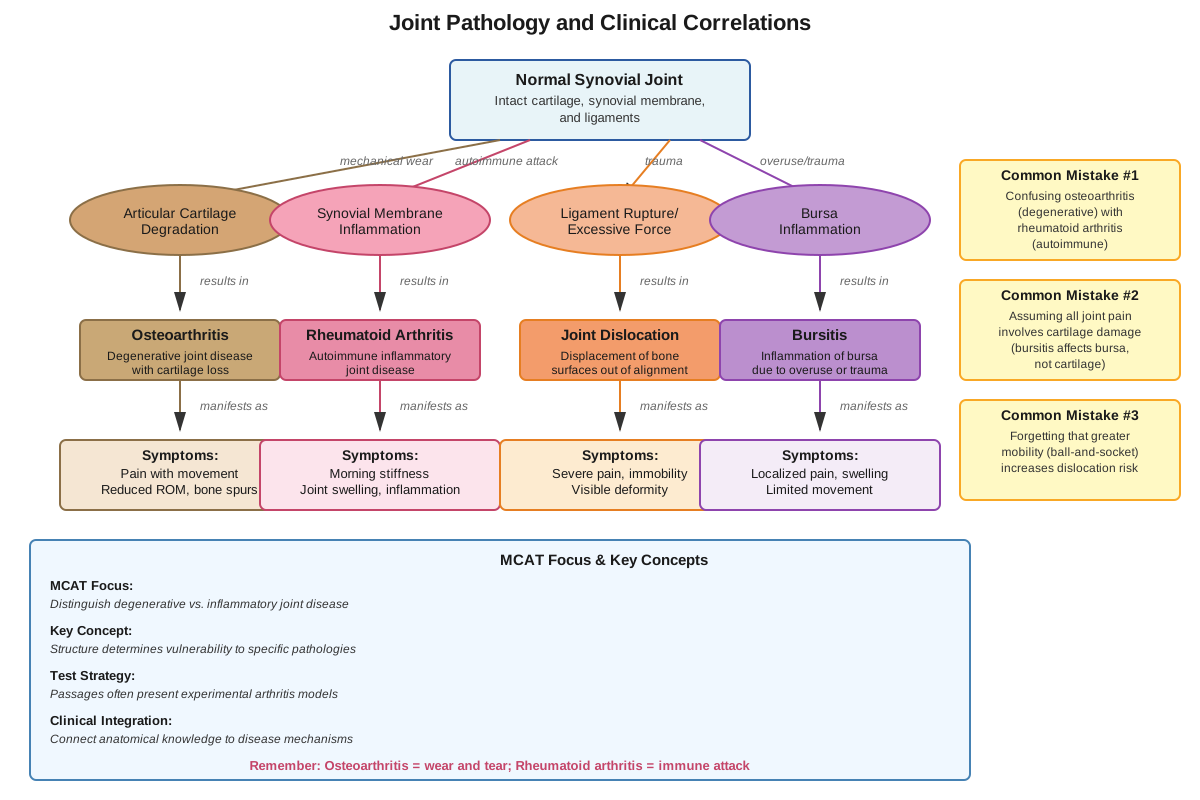
Joint pathology represents one of the most common reasons for medical consultation. Osteoarthritis affects over 32 million adults in the United States, while rheumatoid arthritis and other inflammatory joint diseases impact millions more. Sports medicine, orthopedic surgery, and physical therapy all center on joint function and dysfunction. Understanding normal joint anatomy and physiology provides the foundation for comprehending disease mechanisms, from cartilage degradation to synovial inflammation.
MCAT Exam Statistics
Joint-related content appears in approximately 3-5% of MCAT Biology/Biochemistry section questions, typically integrated into passages about musculoskeletal physiology, aging, exercise science, or injury mechanisms. Questions may be standalone (testing direct knowledge of joint classification) or embedded in experimental passages requiring students to apply joint mechanics to interpret data about range of motion, force transmission, or pathological changes.
Common Exam Contexts
The MCAT frequently presents joints within these frameworks:
- Comparative anatomy passages: Contrasting joint types across species or body regions
- Biomechanics experiments: Measuring forces, angles, or movement ranges at specific joints
- Pathophysiology scenarios: Describing arthritis, joint injuries, or age-related changes
- Exercise physiology studies: Examining joint stress during different activities
- Developmental biology: Discussing joint formation or growth plate function
Core Concepts
Definition and Basic Classification
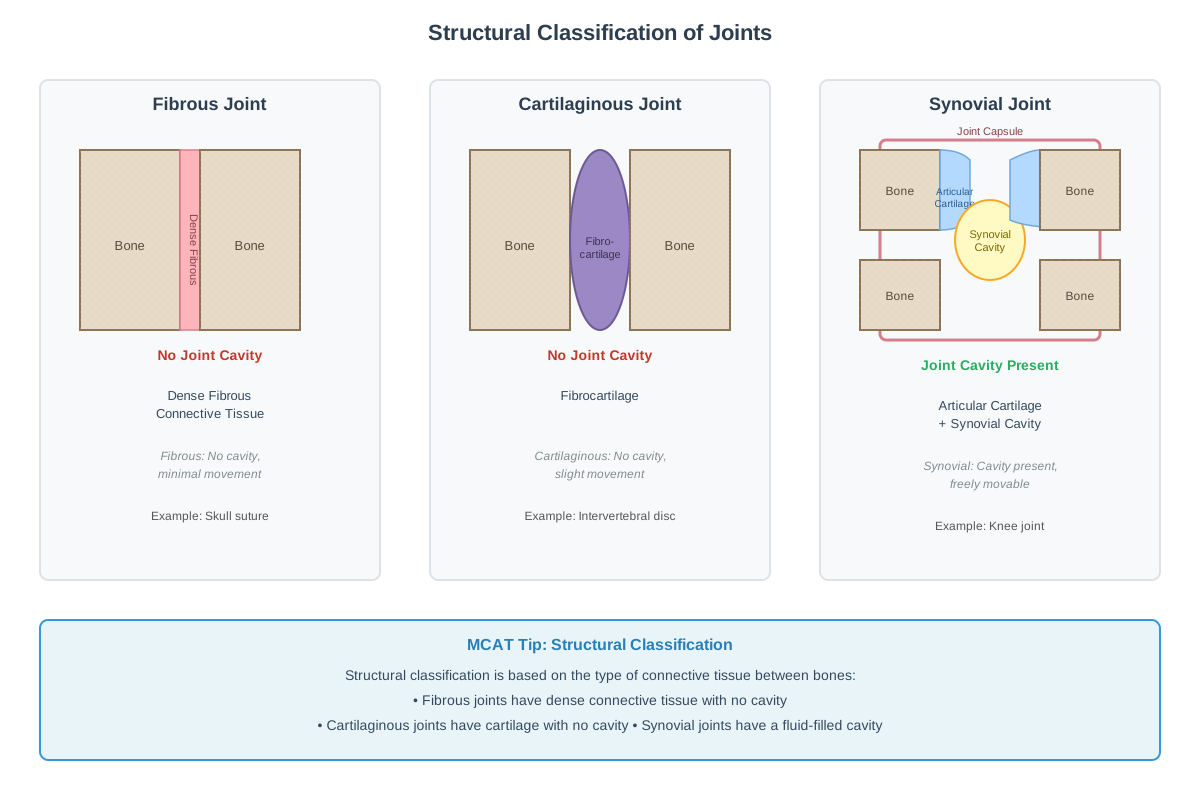
A joint (or articulation) is defined as the location where two or more bones make contact, facilitating movement and providing mechanical support. Joints can be classified using two complementary systems: structural classification (based on anatomical composition) and functional classification (based on degree of movement permitted).
Structural classification divides joints into three categories:
- Fibrous joints: Bones connected by dense connective tissue with no joint cavity
- Cartilaginous joints: Bones connected by cartilage with no joint cavity
- Synovial joints: Bones separated by a fluid-filled joint cavity enclosed in a capsule
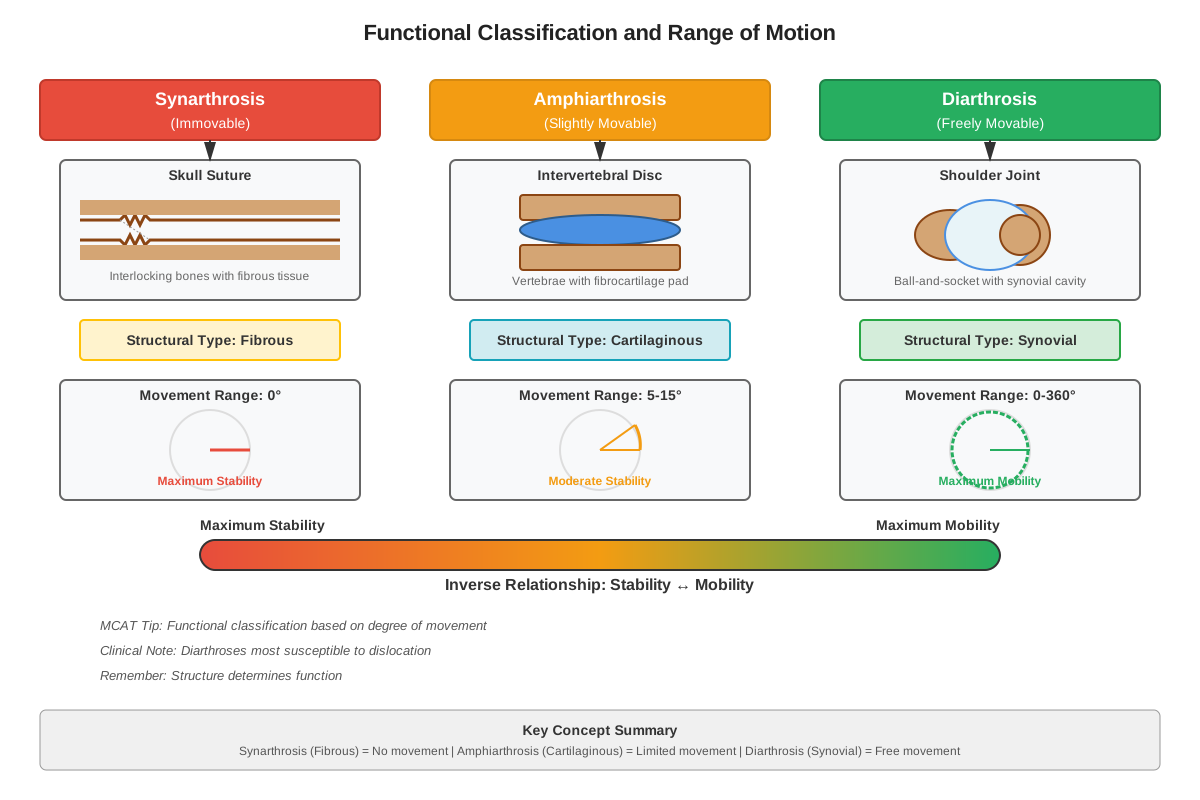
Functional classification categorizes joints by mobility:
- Synarthroses: Immovable joints
- Amphiarthroses: Slightly movable joints
- Diarthroses: Freely movable joints
Fibrous Joints
Fibrous joints lack a joint cavity and unite bones with dense regular connective tissue. Three subtypes exist:
Sutures are found exclusively in the skull, where bones are united by very short connective tissue fibers. These joints are functionally classified as synarthroses (immovable) in adults, though they permit slight movement during childbirth and skull growth. The interlocking, wavy edges of sutured bones provide exceptional strength.
Syndesmoses feature bones connected by ligaments (cords) or interosseous membranes (sheets). The distal tibiofibular joint exemplifies a syndesmosis, where the tibia and fibula are bound by ligaments. These joints are typically amphiarthrotic (slightly movable), allowing limited flexibility while maintaining stability.
Gomphoses are specialized fibrous joints where a tooth root fits into its socket in the mandible or maxilla. The periodontal ligament anchors the tooth, creating a synarthrotic joint. This unique joint type is critical for dental stability.
Cartilaginous Joints
Cartilaginous joints unite bones with cartilage and lack a joint cavity. Two types exist:
Synchondroses contain hyaline cartilage connecting bones. The epiphyseal plates (growth plates) in developing long bones are temporary synchondroses that ossify at skeletal maturity. The first sternocostal joint (between the first rib and sternum) is a permanent synchondrosis. These joints are functionally synarthrotic.
Symphyses feature a pad of fibrocartilage between bones. The intervertebral discs and pubic symphysis are classic examples. The fibrocartilage provides resilience and shock absorption while permitting limited movement, making symphyses amphiarthrotic. The nucleus pulposus (gel-like center) and annulus fibrosus (outer ring) of intervertebral discs exemplify the structure-function relationship in symphyses.
Synovial Joints: General Structure
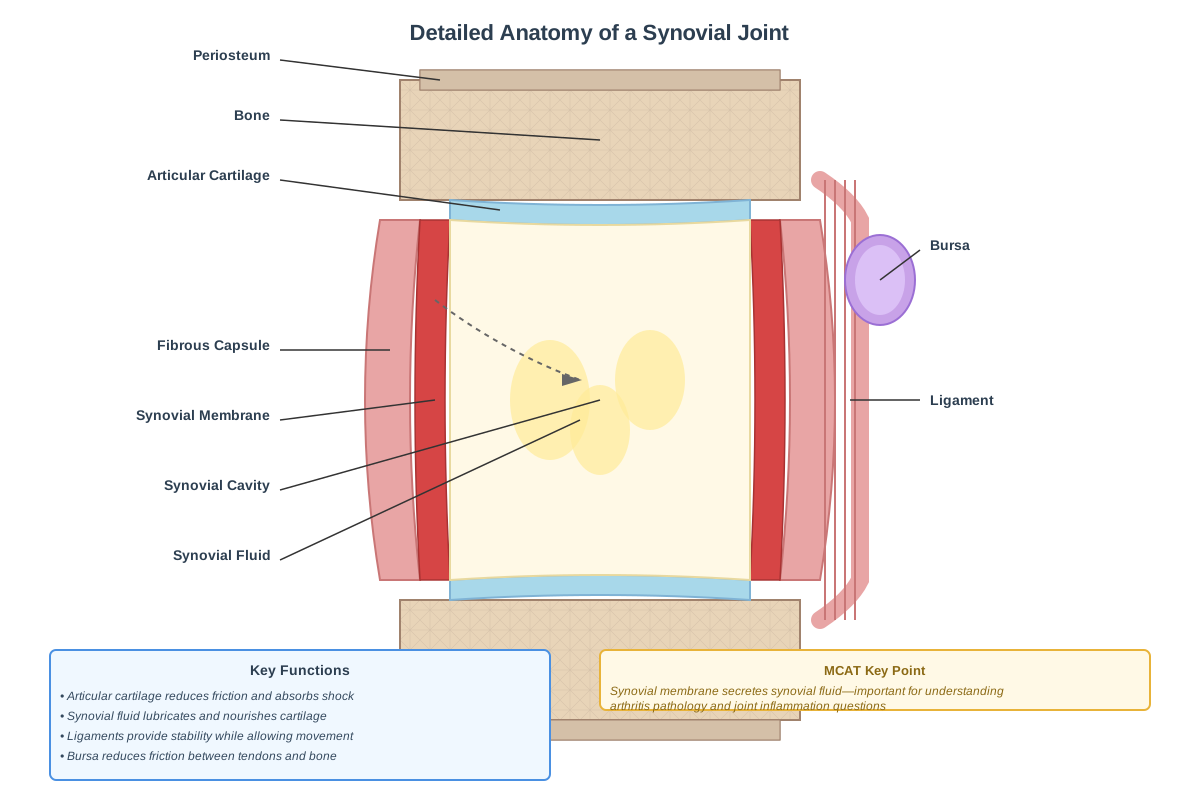
Synovial joints are the most common and functionally significant joint type, characterized by a fluid-filled joint cavity that permits extensive movement. All synovial joints are diarthrotic (freely movable) and share six key features:
- Articular cartilage: Hyaline cartilage covers the articulating bone surfaces, reducing friction and absorbing shock. This avascular tissue receives nutrients via diffusion from synovial fluid.
- Joint cavity: A potential space filled with synovial fluid, allowing smooth movement between bones.
- Articular capsule: A two-layered structure enclosing the joint. The outer fibrous layer consists of dense irregular connective tissue providing strength. The inner synovial membrane secretes synovial fluid and contains blood vessels and nerves.
- Synovial fluid: A viscous fluid containing hyaluronic acid and lubricin that reduces friction, nourishes articular cartilage, and removes metabolic wastes. Its viscosity decreases with movement (non-Newtonian fluid behavior).
- Reinforcing ligaments: Dense regular connective tissue structures that strengthen joints. These may be capsular (thickenings of the fibrous layer) or extracapsular (separate structures).
- Nerves and blood vessels: Sensory nerve endings detect pain, pressure, and position (proprioception). Blood vessels supply the synovial membrane but not the articular cartilage.
Many synovial joints also contain accessory structures:
- Menisci (or articular discs): Fibrocartilage pads that improve fit between articulating bones, distribute weight, and absorb shock (e.g., knee menisci)
- Bursae: Flattened fibrous sacs lined with synovial membrane and filled with synovial fluid, positioned between bones and soft tissues to reduce friction
- Tendon sheaths: Elongated bursae wrapped around tendons subjected to friction
Types of Synovial Joints
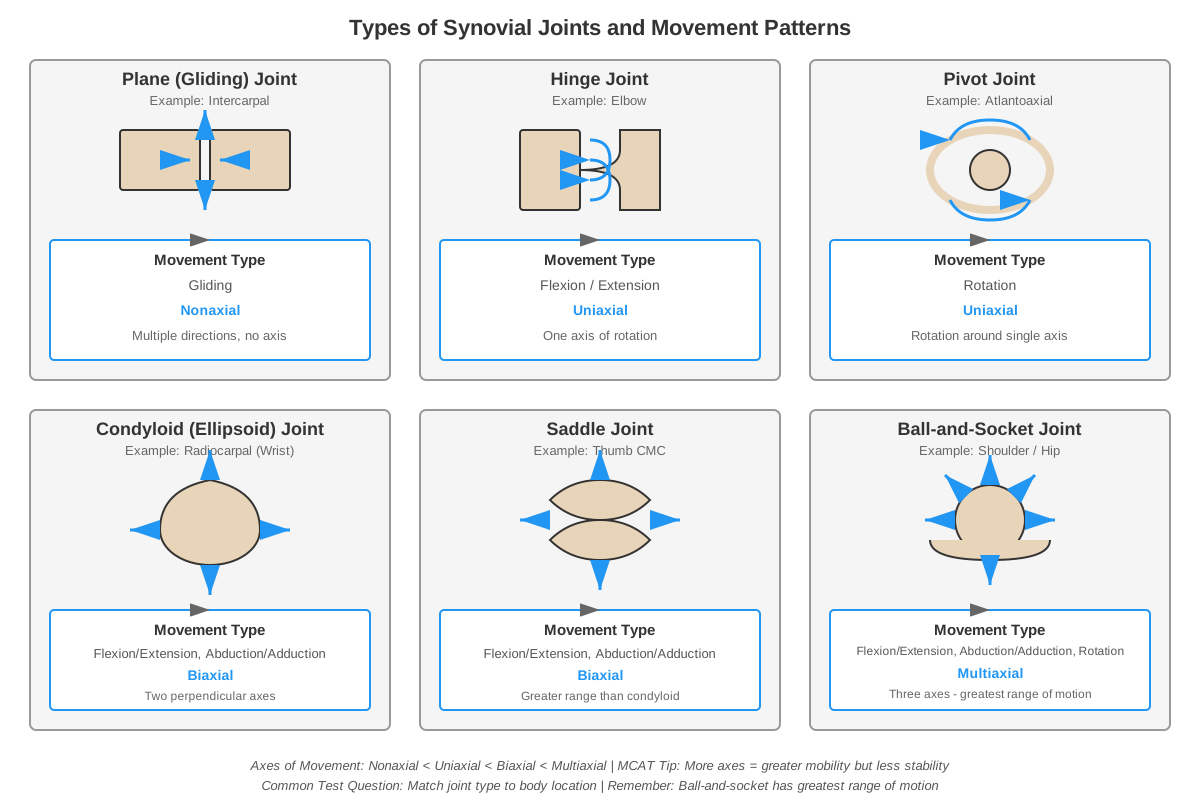
Synovial joints are further classified by shape and permitted movements:
| Joint Type | Structure | Movement | Examples |
|---|---|---|---|
| Plane (gliding) | Flat or slightly curved surfaces | Sliding/gliding in multiple directions | Intercarpal, intertarsal, vertebral facets |
| Hinge | Convex surface fits into concave surface | Uniaxial: flexion and extension | Elbow (humeroulnar), knee, ankle, interphalangeal |
| Pivot | Rounded surface rotates within ring | Uniaxial: rotation | Atlantoaxial (C1-C2), proximal radioulnar |
| Condylar (ellipsoid) | Oval convex surface fits into elliptical concavity | Biaxial: flexion/extension, abduction/adduction | Metacarpophalangeal (knuckles), radiocarpal (wrist) |
| Saddle | Both surfaces are saddle-shaped (concave and convex) | Biaxial: flexion/extension, abduction/adduction | Carpometacarpal joint of thumb |
| Ball-and-socket | Spherical head fits into cup-like socket | Multiaxial: flexion/extension, abduction/adduction, rotation | Shoulder (glenohumeral), hip (coxal) |
Stability Versus Mobility Trade-off
A fundamental principle in joint biology is the inverse relationship between stability and mobility. Joints with greater range of motion typically sacrifice stability, while highly stable joints restrict movement.
Factors influencing joint stability:
- Articular surface shape: Deeper sockets (e.g., hip acetabulum) provide more stability than shallow surfaces (e.g., shoulder glenoid fossa)
- Ligament number and arrangement: More ligaments and tighter ligaments increase stability
- Muscle tone: Muscles crossing joints provide dynamic stabilization
- Joint capsule tension: Tighter capsules limit movement but enhance stability
The shoulder joint exemplifies high mobility with low stability—its shallow glenoid fossa and loose capsule permit multiaxial movement but make it the most frequently dislocated major joint. Conversely, the hip joint demonstrates high stability with moderate mobility—its deep acetabulum and strong ligaments resist dislocation while still allowing multiaxial movement.
Joint Movements
Understanding movement terminology is essential for MCAT questions:
Angular movements change the angle between bones:
- Flexion: Decreases joint angle (bending)
- Extension: Increases joint angle (straightening)
- Hyperextension: Extension beyond anatomical position
- Abduction: Movement away from midline
- Adduction: Movement toward midline
Rotational movements:
- Rotation: Bone turns around its longitudinal axis
- Circumduction: Distal end moves in circle (combines flexion, extension, abduction, adduction)
Special movements:
- Supination/Pronation: Forearm rotation (palm up/palm down)
- Dorsiflexion/Plantarflexion: Ankle movements (toes up/toes down)
- Inversion/Eversion: Sole of foot movements (medial/lateral)
- Protraction/Retraction: Anterior/posterior movement (e.g., mandible)
- Elevation/Depression: Superior/inferior movement (e.g., scapula)
- Opposition: Thumb touches fingertips
Concept Relationships
The study of joints integrates multiple biological concepts in a hierarchical and functional manner. At the foundation, connective tissue biology determines joint composition—collagen provides tensile strength in ligaments and capsules, while proteoglycans in cartilage enable compression resistance. This structural foundation → determines → joint classification (fibrous, cartilaginous, synovial), which → determines → functional capacity (synarthrotic, amphiarthrotic, diarthrotic).
Joint structure → directly influences → biomechanical properties. For example, the presence of a synovial cavity filled with lubricating fluid → enables → extensive range of motion in diarthrotic joints. The shape of articular surfaces → determines → specific movement types (uniaxial, biaxial, multiaxial), which → influences → muscle arrangement and function around the joint.
The stability-mobility trade-off → connects to → evolutionary adaptations and clinical pathology. Joints requiring stability (hip, ankle) → evolved → deeper sockets and stronger ligaments, while joints prioritizing mobility (shoulder, wrist) → developed → shallower articulations and looser capsules. This relationship → explains → injury patterns (shoulder dislocations are common; hip dislocations are rare).
Joint physiology → relates to → tissue maintenance and pathology. Articular cartilage avascularity → necessitates → nutrient diffusion from synovial fluid, which → requires → regular joint movement. Inadequate movement or synovial fluid abnormalities → leads to → cartilage degeneration, connecting joint biology to aging and disease processes like osteoarthritis.
Understanding joints → enables comprehension of → lever systems in biomechanics, where joints serve as fulcrums for muscle-generated forces. This connection → extends to → exercise physiology and sports medicine, where joint mechanics determine movement efficiency and injury risk.
Quick check — test yourself on Joints so far.
Try Flashcards →High-Yield Facts
⭐ Synovial joints are the only joint type with a joint cavity and are all classified as diarthroses (freely movable).
⭐ Articular cartilage in synovial joints is avascular and receives nutrients via diffusion from synovial fluid.
⭐ The stability-mobility trade-off means that joints with greater range of motion (like the shoulder) are less stable and more prone to dislocation than joints with restricted movement (like the hip).
⭐ Fibrous joints lack a joint cavity and include sutures (skull), syndesmoses (tibiofibular), and gomphoses (teeth).
⭐ Cartilaginous joints include synchondroses (hyaline cartilage, like epiphyseal plates) and symphyses (fibrocartilage, like intervertebral discs).
- Ball-and-socket joints (shoulder and hip) are the only synovial joint type permitting multiaxial movement including rotation.
- Menisci are fibrocartilage structures in some synovial joints (especially the knee) that improve fit, distribute weight, and absorb shock.
- Bursae are fluid-filled sacs that reduce friction between bones and soft tissues, while tendon sheaths are elongated bursae surrounding tendons.
- Hinge joints permit only uniaxial movement (flexion and extension), exemplified by the elbow and interphalangeal joints.
- The synovial membrane secretes synovial fluid, which contains hyaluronic acid and functions as both lubricant and nutrient source for articular cartilage.
- Ligaments are dense regular connective tissue structures that reinforce joints and may be capsular (part of the joint capsule) or extracapsular (separate structures).
- Symphyses contain fibrocartilage and are amphiarthrotic (slightly movable), providing both stability and shock absorption.
Common Misconceptions
Misconception: All joints allow movement.
Correction: Joints are classified functionally into synarthroses (immovable), amphiarthroses (slightly movable), and diarthroses (freely movable). Sutures in the adult skull and gomphoses (tooth sockets) are examples of immovable joints that provide structural support rather than movement.
Misconception: Cartilaginous joints always contain fibrocartilage.
Correction: Cartilaginous joints include two subtypes—synchondroses contain hyaline cartilage (e.g., epiphyseal plates, first sternocostal joint), while symphyses contain fibrocartilage (e.g., intervertebral discs, pubic symphysis). The cartilage type determines the joint's mechanical properties.
Misconception: Synovial fluid is produced by articular cartilage.
Correction: Synovial fluid is secreted by the synovial membrane (the inner layer of the articular capsule), not by articular cartilage. Articular cartilage is avascular and depends on synovial fluid for nutrient delivery via diffusion.
Misconception: More mobile joints are always better for function.
Correction: Joint function requires a balance between mobility and stability appropriate to anatomical location. The hip joint's relative stability (compared to the shoulder) is functionally advantageous for weight-bearing and locomotion, even though it sacrifices some range of motion. Excessive mobility without adequate stability leads to joint instability and injury.
Misconception: All synovial joints have the same structure and components.
Correction: While all synovial joints share six basic features (articular cartilage, joint cavity, articular capsule, synovial fluid, ligaments, and innervation), many possess additional specialized structures. The knee contains menisci, the shoulder has a labrum, and many joints have associated bursae or tendon sheaths. These variations reflect functional adaptations.
Misconception: Ligaments and tendons are the same structure.
Correction: Both are dense regular connective tissue, but ligaments connect bone to bone (stabilizing joints), while tendons connect muscle to bone (transmitting contractile force). Ligaments are components of joints; tendons are components of the musculotendinous unit.
Worked Examples
Example 1: Joint Classification and Function
Question: A researcher is studying a joint where two bones are connected by a pad of fibrocartilage, allowing limited movement while providing shock absorption. The joint lacks a joint cavity. Based on this description, classify this joint both structurally and functionally, and provide two anatomical examples.
Solution:
Step 1: Identify structural classification based on composition.
- The joint contains fibrocartilage connecting bones
- No joint cavity is present
- These features indicate a cartilaginous joint
- Specifically, the presence of fibrocartilage (rather than hyaline cartilage) identifies this as a symphysis
Step 2: Determine functional classification based on movement.
- The joint allows "limited movement"
- This describes an amphiarthrosis (slightly movable joint)
- The shock absorption function is consistent with amphiarthrotic joints that must balance stability with limited flexibility
Step 3: Provide anatomical examples.
- Intervertebral discs: Fibrocartilage pads between vertebral bodies that permit slight movement while absorbing compressive forces during locomotion
- Pubic symphysis: Fibrocartilage joint between the two pubic bones that allows slight movement, particularly important during childbirth
Answer: This joint is structurally classified as a cartilaginous joint (specifically a symphysis) and functionally classified as an amphiarthrosis. Examples include intervertebral discs and the pubic symphysis.
Connection to learning objectives: This example demonstrates the application of joint classification systems to anatomical descriptions, a common MCAT question format that tests both definitional knowledge and analytical reasoning.
Example 2: Synovial Joint Structure-Function Analysis
Question: A patient presents with knee pain after a sports injury. MRI reveals damage to the medial meniscus. Explain: (a) what tissue type comprises the meniscus, (b) why menisci are present in the knee joint, and (c) why meniscal damage might lead to accelerated cartilage degeneration.
Solution:
Step 1: Identify meniscus tissue composition.
- Menisci are composed of fibrocartilage
- This tissue type combines tensile strength (from collagen fibers) with compression resistance (from proteoglycans)
- Fibrocartilage is ideal for structures experiencing both tensile and compressive forces
Step 2: Explain meniscus function in the knee.
- The knee is a modified hinge joint where the femoral condyles (convex) articulate with the tibial plateau (relatively flat)
- This creates poor congruence between articulating surfaces
- Menisci improve the fit between femur and tibia, increasing contact area
- They distribute weight more evenly across the joint surface, reducing peak stress
- They absorb shock during weight-bearing activities
- The knee experiences enormous forces during activities like running and jumping, making these functions critical
Step 3: Connect meniscal damage to cartilage degeneration.
- With meniscal damage, weight distribution becomes uneven
- Peak stresses on articular cartilage increase dramatically
- Articular cartilage is avascular and has limited regenerative capacity
- Excessive mechanical stress → cartilage matrix breakdown → chondrocyte death
- Loss of meniscal shock absorption → increased impact forces → accelerated wear
- This creates a degenerative cascade leading to osteoarthritis
Answer: (a) The meniscus is composed of fibrocartilage. (b) Menisci are present in the knee to improve congruence between the femoral condyles and tibial plateau, distribute weight evenly, and absorb shock during weight-bearing. (c) Meniscal damage leads to uneven weight distribution and increased peak stresses on articular cartilage, which has limited regenerative capacity due to its avascular nature, resulting in accelerated cartilage degeneration and osteoarthritis.
Connection to learning objectives: This example integrates joint structure (synovial joint components), tissue biology (fibrocartilage properties, cartilage avascularity), and pathophysiology (degenerative cascade), demonstrating the interdisciplinary nature of MCAT joint questions.
Exam Strategy
Approaching Joint Questions
When encountering MCAT questions about joints, employ this systematic approach:
- Identify the classification system being tested (structural vs. functional)
- Look for key descriptors: presence/absence of joint cavity, tissue type connecting bones, degree of movement
- Apply the classification hierarchy: structural classification → functional classification → specific joint type
- Consider structure-function relationships: joint anatomy determines movement capabilities and stability
Trigger Words and Phrases
Watch for these high-yield terms that signal specific concepts:
- "Joint cavity" or "synovial cavity" → indicates synovial joint (diarthrosis)
- "Dense connective tissue" or "ligaments" connecting bones → suggests fibrous joint
- "Cartilage" without cavity → indicates cartilaginous joint
- "Immovable" or "fused" → synarthrosis (often fibrous)
- "Slightly movable" or "limited movement" → amphiarthrosis (often cartilaginous)
- "Freely movable" or "wide range of motion" → diarthrosis (synovial)
- "Avascular" → likely referring to articular cartilage
- "Shock absorption" → may indicate menisci, symphyses, or synovial fluid function
- "Stability vs. mobility" → signals trade-off concept
Process of Elimination Tips
For joint classification questions:
- Eliminate options inconsistent with presence/absence of joint cavity first
- If a joint cavity exists, it must be synovial (eliminate fibrous and cartilaginous)
- If no cavity exists, determine tissue type (dense connective tissue → fibrous; cartilage → cartilaginous)
- Match functional classification to structural: synarthroses are typically fibrous, amphiarthroses are typically cartilaginous, diarthroses are always synovial
For joint component questions:
- If the question mentions nutrient delivery to cartilage, synovial fluid is likely involved
- If discussing friction reduction between bone and soft tissue, consider bursae
- If describing shock absorption in specific joints (especially knee), menisci are probable
Time Allocation
Joint questions typically require 60-90 seconds:
- 15-20 seconds: Read and identify the classification system or concept being tested
- 30-45 seconds: Apply systematic classification or analyze structure-function relationships
- 15-25 seconds: Eliminate incorrect options and confirm answer
For passage-based questions integrating joints with experimental data, allocate 90-120 seconds to interpret figures or tables showing joint mechanics, range of motion, or pathological changes.
Memory Techniques
Mnemonics for Joint Classification
"FBI Catches Serious Criminals" for structural classification:
- Fibrous
- Bones
- In
- Cartilaginous
- Synovial
- Cavities (only synovial has cavities)
"Some Ants Dance" for functional classification by increasing mobility:
- Synarthrosis (immovable)
- Amphiarthrosis (slightly movable)
- Diarthrosis (freely movable)
Synovial Joint Types by Axes
"Please Have Proper Coffee Before Starting" for synovial joint types in order of increasing mobility:
- Plane (gliding) - multiplanar but limited
- Hinge - uniaxial
- Pivot - uniaxial
- Condylar - biaxial
- Ball-and-socket - multiaxial
- Saddle - biaxial (but more mobile than condylar)
Visualization Strategy
For joint classification: Visualize a decision tree:
- Does it have a cavity? → YES = synovial (diarthrosis) | NO = proceed to step 2
- What connects the bones? → Dense connective tissue = fibrous | Cartilage = cartilaginous
- What type of cartilage? → Hyaline = synchondrosis (synarthrosis) | Fibrocartilage = symphysis (amphiarthrosis)
For synovial joint components: Picture a cross-section showing layers from outside to inside:
- Ligaments (external reinforcement)
- Fibrous layer of capsule (dense irregular connective tissue)
- Synovial membrane (secretes fluid)
- Synovial fluid (fills cavity)
- Articular cartilage (covers bone ends)
Summary
Joints are anatomical structures where bones articulate, classified structurally by composition (fibrous, cartilaginous, synovial) and functionally by movement degree (synarthrosis, amphiarthrosis, diarthrosis). Fibrous joints lack cavities and use dense connective tissue, cartilaginous joints employ cartilage without cavities, and synovial joints feature fluid-filled cavities enabling extensive movement. Synovial joints contain articular cartilage, joint cavities with synovial fluid, articular capsules, ligaments, and often accessory structures like menisci and bursae. The six synovial joint types (plane, hinge, pivot, condylar, saddle, ball-and-socket) differ in articular surface shape and permitted movements. A fundamental principle is the stability-mobility trade-off: joints with greater range of motion sacrifice stability. Understanding joint structure-function relationships enables prediction of movement capabilities, injury patterns, and pathological changes. For the MCAT, mastery requires integrating joint classification with connective tissue biology, biomechanics, and clinical applications, particularly regarding articular cartilage avascularity, synovial fluid function, and degenerative processes.
Key Takeaways
- Joints are classified structurally (fibrous, cartilaginous, synovial) based on composition and functionally (synarthrosis, amphiarthrosis, diarthrosis) based on movement degree
- Synovial joints are the only type with a joint cavity, are all diarthroses, and contain articular cartilage, synovial fluid, and an articular capsule
- Articular cartilage is avascular and depends on synovial fluid for nutrient delivery via diffusion, making joint movement essential for cartilage health
- The stability-mobility trade-off means highly mobile joints (shoulder) sacrifice stability, while stable joints (hip) restrict movement
- Six synovial joint types exist, ranging from uniaxial (hinge, pivot) to biaxial (condylar, saddle) to multiaxial (ball-and-socket) movement capabilities
- Fibrocartilage structures (menisci in symphyses, menisci in synovial joints) provide shock absorption and improve joint congruence
- Joint structure directly determines function: articular surface shape, ligament arrangement, and capsule tension all influence movement range and stability
Related Topics
Skeletal System Anatomy: Understanding bone structure, including epiphyses, diaphyses, and bone markings, provides essential context for joint articulations and attachment sites. Mastering joints enables deeper comprehension of how skeletal architecture facilitates movement.
Muscle Physiology and Biomechanics: Joints serve as fulcrums for lever systems created by muscle contractions. Understanding joint mechanics is prerequisite for analyzing muscle function, mechanical advantage, and movement efficiency.
Connective Tissue Biology: Detailed study of collagen types, proteoglycans, and extracellular matrix composition explains the mechanical properties of cartilage, ligaments, and joint capsules, connecting molecular biology to tissue-level function.
Inflammatory and Degenerative Diseases: Conditions like rheumatoid arthritis, osteoarthritis, and gout directly affect joint structures. Mastering normal joint anatomy and physiology enables understanding of pathological mechanisms and clinical presentations.
Developmental Biology: Joint formation (arthrogenesis), growth plate function, and skeletal maturation represent developmental applications of joint biology, connecting embryology to postnatal growth.
Practice CTA
Now that you've mastered the foundational concepts of joint structure, classification, and function, it's time to solidify your understanding through active practice. Challenge yourself with MCAT-style questions that test your ability to classify joints, predict functional capabilities from structural descriptions, and analyze clinical scenarios involving joint pathology. Use flashcards to reinforce the six synovial joint types and their movement capabilities. Remember: understanding joints isn't just about memorizing classifications—it's about recognizing the elegant structure-function relationships that enable human movement. Your investment in mastering this topic will pay dividends not only on test day but throughout your medical career. You've got this!
Sign up free to keep reading
Create a free AnvayaPrep account to finish this MCAT guide on Joints — plus flashcards and practice questions.