Overview
Neuron structure forms the anatomical foundation for understanding how the nervous system functions, making it an essential topic in Biology for the MCAT. Neurons are specialized cells designed to transmit electrical and chemical signals throughout the body, and their unique structural features directly enable this function. Understanding the relationship between neuronal anatomy and physiology is critical for answering questions in the Physiology and Organ Systems section of the exam, as well as for comprehending more complex topics like action potentials, synaptic transmission, and neural integration.
The MCAT frequently tests neuron structure Biology through both discrete questions and passage-based items that require students to apply anatomical knowledge to physiological scenarios. Questions may ask students to identify which part of a neuron performs a specific function, predict the consequences of structural damage, or explain how neuronal architecture supports signal propagation. Mastery of this topic provides the scaffolding for understanding neurological disorders, sensory systems, motor control, and the integration of the nervous system with other organ systems.
From a broader perspective, neuron structure MCAT content connects to cellular biology (membrane structure, organelles), biochemistry (ion channels, membrane potential), and even psychology (neural basis of behavior). The neuron represents a perfect example of how structure determines function—a recurring theme throughout biological sciences. By thoroughly understanding neuronal anatomy, students build a foundation that supports comprehension of virtually every nervous system topic tested on the MCAT.
Learning Objectives
- [ ] Define neuron structure using accurate Biology terminology
- [ ] Explain why neuron structure matters for the MCAT
- [ ] Apply neuron structure to exam-style questions
- [ ] Identify common mistakes related to neuron structure
- [ ] Connect neuron structure to related Biology concepts
- [ ] Differentiate between the structural and functional characteristics of each neuronal component
- [ ] Predict the functional consequences of damage to specific neuronal structures
- [ ] Compare and contrast the three main types of neurons based on their structural features
Prerequisites
- Cell membrane structure and function: Understanding phospholipid bilayers, membrane proteins, and selective permeability is essential because neurons are specialized cells whose membranes have unique properties
- Basic cell organelles: Knowledge of mitochondria, endoplasmic reticulum, Golgi apparatus, and ribosomes helps explain metabolic and synthetic activities within neurons
- Cellular transport mechanisms: Familiarity with active transport, passive diffusion, and facilitated diffusion provides context for understanding how neurons maintain ion gradients
- Basic electrical concepts: Understanding charge, voltage, and current helps explain how neurons generate and transmit electrical signals
Why This Topic Matters
Clinical and Real-World Significance
Neuronal structure directly relates to numerous clinical conditions tested on the MCAT. Multiple sclerosis involves demyelination of axons, leading to impaired signal transmission. Guillain-Barré syndrome similarly affects myelin in peripheral nerves. Neurodegenerative diseases like Alzheimer's and Parkinson's involve structural changes to neurons, including loss of dendritic spines and axonal degeneration. Understanding normal neuronal anatomy allows medical professionals to comprehend how these pathological changes produce specific symptoms and functional deficits.
MCAT Exam Statistics
Neuron structure appears in approximately 3-5% of Biology/Biochemistry section questions, either as discrete items or within passages about the nervous system. The topic most commonly appears in questions about:
- Signal transmission and propagation speed
- Effects of myelination on conduction velocity
- Structural basis for unidirectional signal flow
- Comparison of different neuron types in sensory and motor pathways
- Integration of multiple synaptic inputs
Common Exam Presentation Formats
The MCAT presents neuron structure through several typical formats: experimental passages describing research on neuronal function that require students to apply anatomical knowledge; clinical vignettes about neurological disorders where understanding structure helps predict symptoms; comparative passages examining different neuron types across species or developmental stages; and discrete questions testing direct knowledge of neuronal components and their functions.
Core Concepts
Basic Neuron Anatomy
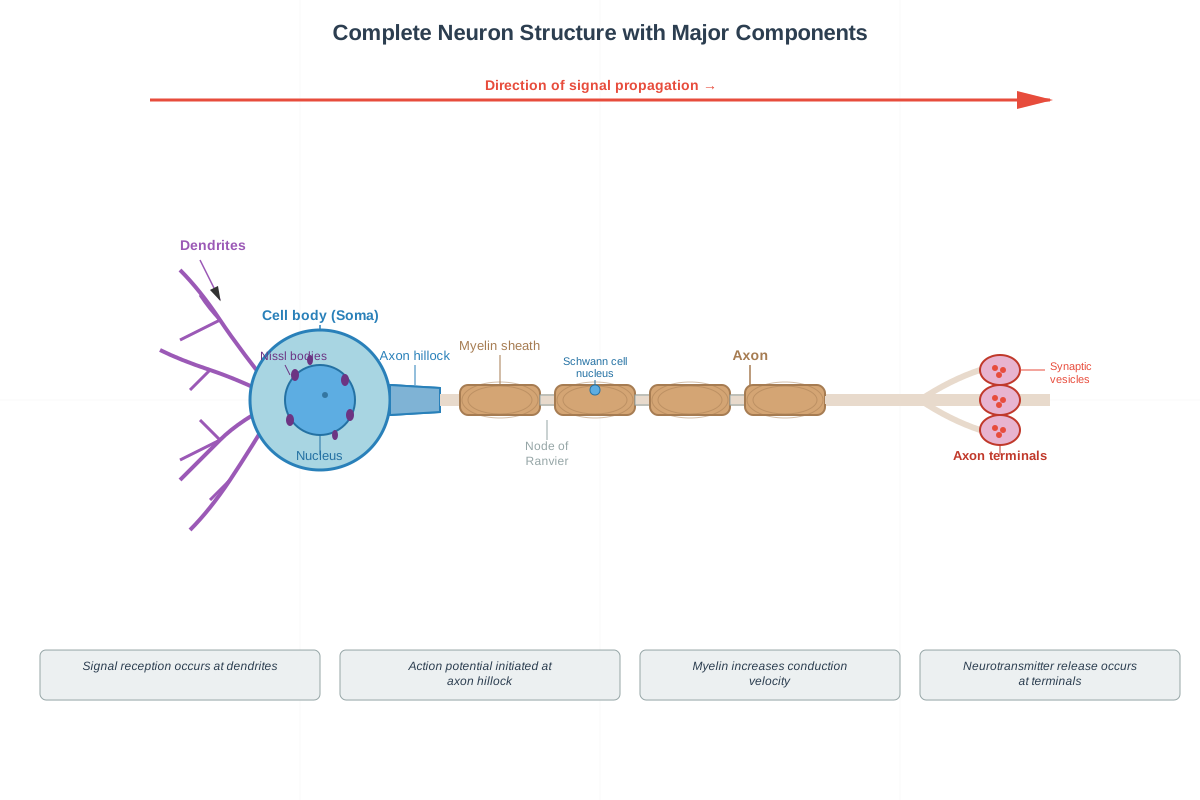
A neuron is a specialized cell designed for rapid communication through electrical and chemical signals. All neurons share a common basic structure consisting of three main regions: the cell body (soma), dendrites, and an axon. This fundamental organization reflects the neuron's primary function—receiving signals, integrating information, and transmitting output to other cells.
The cell body or soma contains the nucleus and most cellular organelles, serving as the metabolic center of the neuron. The soma houses abundant rough endoplasmic reticulum (called Nissl bodies in neurons), numerous mitochondria, and a well-developed Golgi apparatus. These organelles support the high metabolic demands of neurons and enable synthesis of neurotransmitters, membrane proteins, and other essential molecules. The soma integrates incoming signals and, if threshold is reached, initiates an action potential at the axon hillock, the region where the axon emerges from the cell body.
Dendrites: The Receiving Structures
Dendrites are branched, tree-like extensions that project from the cell body and serve as the primary receiving surfaces for incoming signals. Their extensive branching dramatically increases the surface area available for synaptic contacts, allowing a single neuron to receive input from thousands of other neurons. Dendrites contain numerous dendritic spines—small protrusions that form the postsynaptic component of most excitatory synapses in the brain.
The structure of dendrites directly supports their function. They contain ribosomes and can perform local protein synthesis, allowing rapid modification of synaptic strength. Dendrites typically taper as they extend from the soma, and their cytoplasm contains cytoskeletal elements (microtubules and microfilaments) that maintain their shape. The extensive dendritic arbor creates a large receptive field, and the pattern of branching varies among neuron types, reflecting their specific functional roles.
Axon: The Transmission Cable
The axon is a single, elongated process specialized for transmitting signals away from the cell body toward target cells. Axons can range from less than a millimeter to over a meter in length (such as axons extending from the spinal cord to the foot). The axon originates at the axon hillock, a specialized region where the decision to fire an action potential occurs based on the summation of all synaptic inputs.
The axon hillock has the highest concentration of voltage-gated sodium channels in the neuron, making it the most excitable region and the typical site of action potential initiation. Once initiated, the action potential propagates along the axon proper without decrement. The axon cytoplasm, called axoplasm, lacks ribosomes and endoplasmic reticulum, meaning it cannot synthesize proteins. Instead, proteins and organelles are transported from the soma through axonal transport mechanisms—anterograde transport moves materials toward the axon terminal, while retrograde transport returns materials to the cell body.
Axon Terminal and Synaptic Structures
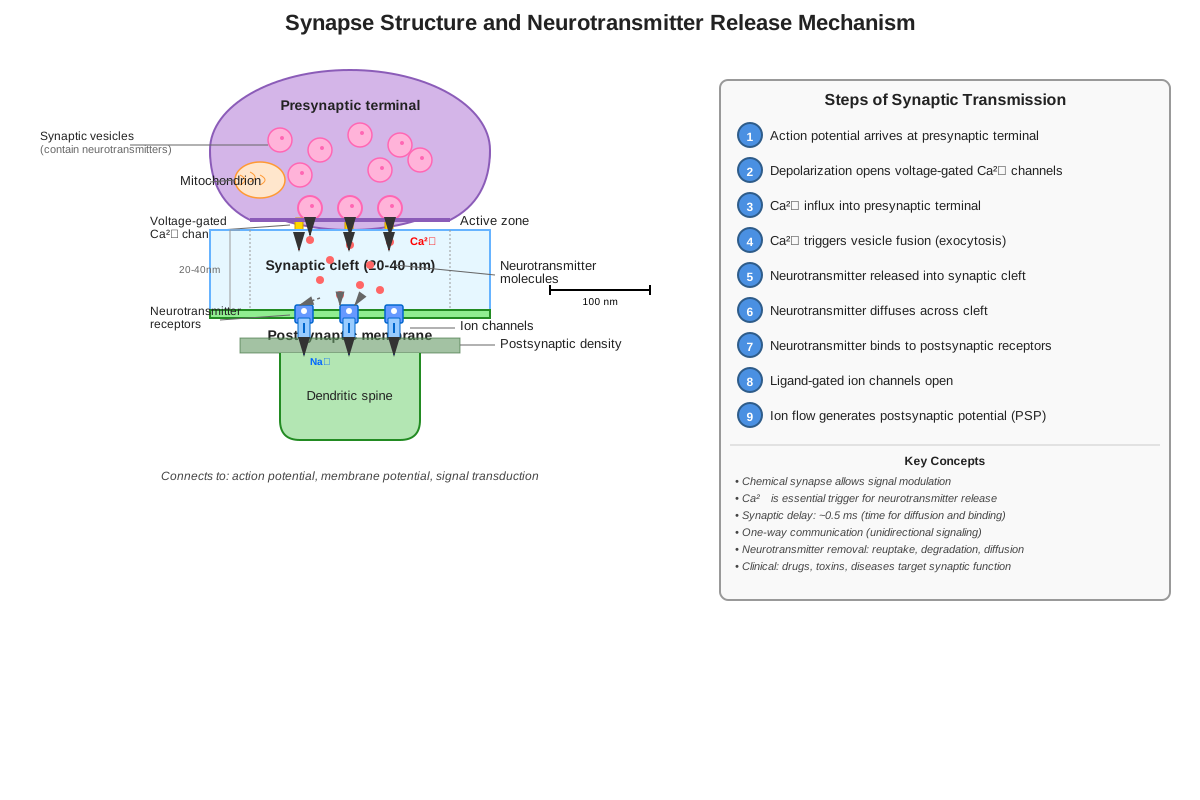
The axon typically branches at its end, forming multiple axon terminals (also called synaptic boutons or terminal buttons). These specialized endings contain synaptic vesicles filled with neurotransmitters, mitochondria to provide energy for neurotransmitter synthesis and release, and specialized proteins that mediate vesicle fusion with the presynaptic membrane. The axon terminal forms the presynaptic component of a synapse, the junction where communication with the next cell occurs.
At the synapse, a small gap called the synaptic cleft separates the presynaptic terminal from the postsynaptic cell (which may be another neuron, a muscle cell, or a gland cell). When an action potential reaches the axon terminal, voltage-gated calcium channels open, calcium influx triggers vesicle fusion, and neurotransmitters are released into the synaptic cleft. This structural arrangement ensures unidirectional signal flow—from axon terminal to postsynaptic cell.
Myelin Sheath and Nodes of Ranvier
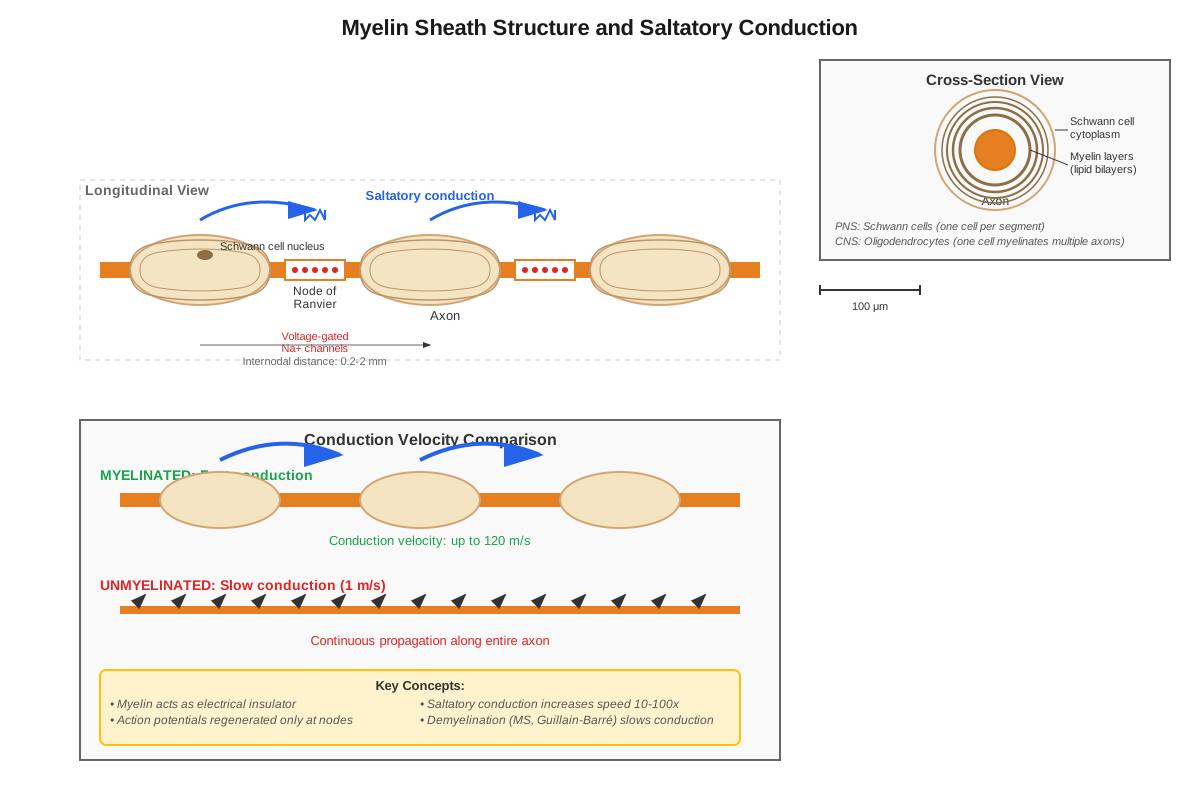
Many axons are wrapped in a myelin sheath, a fatty insulating layer that dramatically increases conduction velocity. In the peripheral nervous system, Schwann cells form myelin by wrapping their plasma membrane around the axon multiple times. In the central nervous system, oligodendrocytes extend processes that myelinate multiple axon segments. The myelin sheath is not continuous; it is interrupted at regular intervals by Nodes of Ranvier, small unmyelinated gaps where the axon membrane is exposed.
This segmented myelination enables saltatory conduction, where action potentials "jump" from node to node rather than propagating continuously along the axon. The myelin acts as an electrical insulator, preventing ion flow across the membrane in myelinated regions. Voltage-gated sodium channels are concentrated at the nodes, where action potentials are regenerated. This arrangement increases conduction velocity by 10-100 fold compared to unmyelinated axons of the same diameter, while also reducing the metabolic cost of signal transmission.
Structural Classification of Neurons
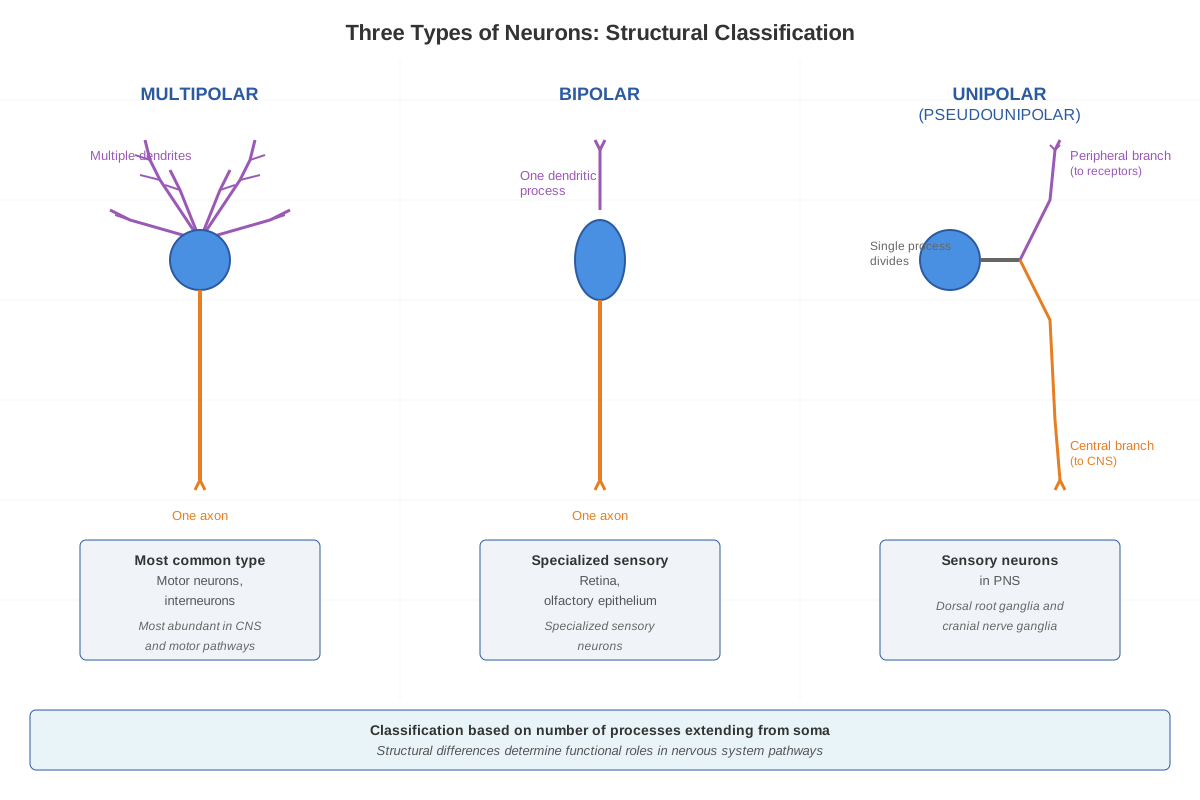
Neurons are classified structurally based on the number of processes extending from the cell body:
| Neuron Type | Structure | Location/Function | Example |
|---|---|---|---|
| Unipolar | Single process that divides into two branches | Sensory neurons in peripheral nervous system | Dorsal root ganglion cells |
| Bipolar | Two processes: one dendrite and one axon extending from opposite sides of soma | Specialized sensory neurons | Retinal bipolar cells, olfactory receptor neurons |
| Multipolar | Multiple dendrites and one axon | Most common type; motor neurons and interneurons | Spinal motor neurons, pyramidal cells, Purkinje cells |
| Pseudounipolar | Appears unipolar but develops from bipolar; single process splits into peripheral and central branches | Sensory neurons | Most sensory neurons in dorsal root ganglia |
Multipolar neurons represent the vast majority of neurons in the nervous system and show the greatest structural diversity. Their multiple dendrites allow integration of numerous inputs, making them ideal for complex information processing. Motor neurons that control skeletal muscle are multipolar, with dendrites receiving input from upper motor neurons and interneurons, and a long axon extending to neuromuscular junctions.
Functional Regions and Signal Flow
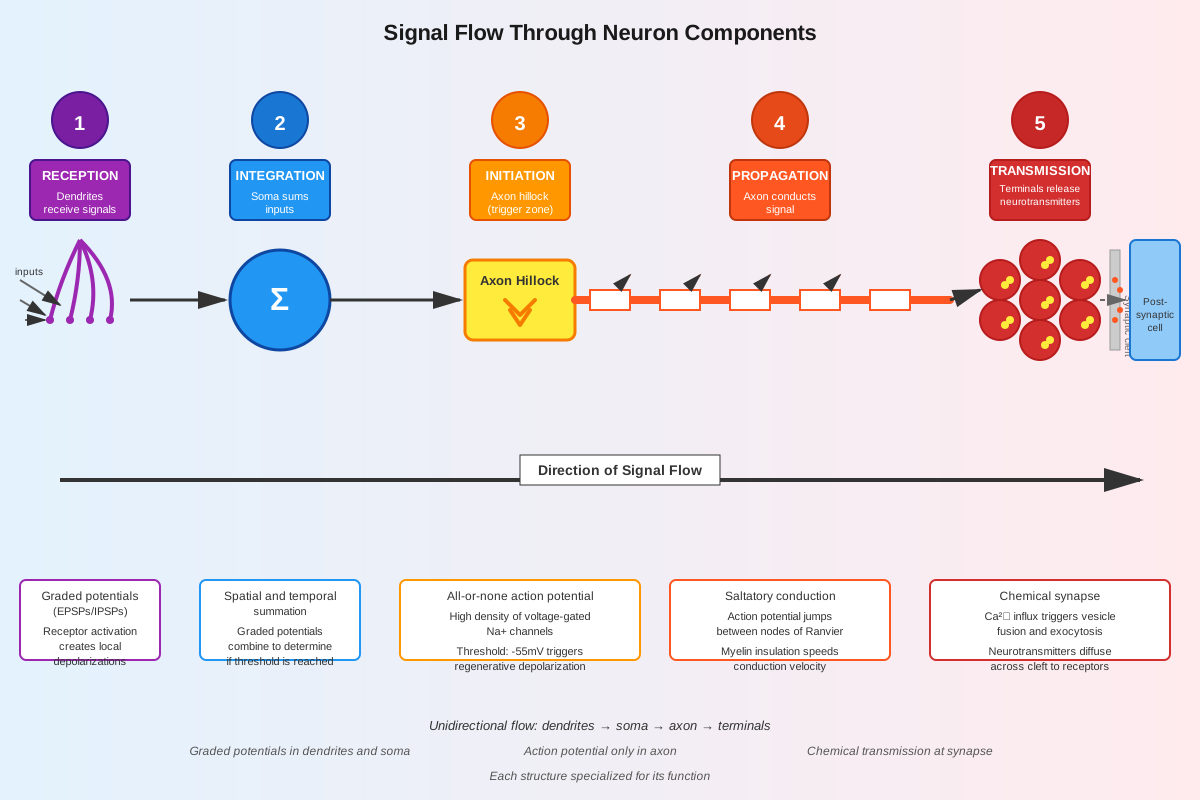
Understanding the functional organization of neurons helps predict how signals flow through neural circuits. The typical sequence follows this pattern:
- Receptive zone (dendrites and soma): Receives synaptic inputs and integrates signals
- Trigger zone (axon hillock): Determines whether threshold is reached and initiates action potential
- Conducting zone (axon): Propagates action potential without decrement
- Output zone (axon terminals): Releases neurotransmitters to communicate with postsynaptic cells
This functional compartmentalization reflects structural specialization. Each region contains specific proteins and ion channels appropriate for its role. For example, dendrites have ligand-gated channels that respond to neurotransmitters, the axon hillock has the highest density of voltage-gated sodium channels, and axon terminals contain voltage-gated calcium channels and vesicle release machinery.
Concept Relationships
The structural components of neurons are intimately connected to their functions, creating a clear structure-function relationship. Dendrites receive signals → soma integrates these inputs → axon hillock initiates action potential if threshold is reached → axon conducts signal → axon terminal releases neurotransmitters → communication with next cell occurs.
The presence or absence of myelin directly affects conduction velocity, connecting to concepts of action potential propagation and neural circuit timing. Myelination → saltatory conduction → faster signal transmission → enables rapid reflexes and coordinated movement. This relationship extends to clinical scenarios where demyelination → slower conduction → impaired neural function.
Neuron structure connects to prerequisite knowledge of cell biology through the presence of standard organelles (mitochondria, ER, Golgi) but with specialized distributions and functions. The abundance of Nissl bodies (rough ER) in the soma reflects high protein synthesis demands, connecting to concepts of gene expression and protein trafficking. The lack of protein synthesis machinery in axons necessitates axonal transport, connecting to cytoskeletal function and motor proteins.
The structural classification of neurons (unipolar, bipolar, multipolar) relates to their functional roles in neural circuits. Sensory neurons (often pseudounipolar) → transmit information from periphery to CNS → connect to interneurons (multipolar) → process and integrate information → connect to motor neurons (multipolar) → transmit commands to effectors. This structural-functional relationship enables understanding of reflex arcs and sensory-motor integration.
Quick check — test yourself on Neuron structure so far.
Try Flashcards →High-Yield Facts
⭐ The axon hillock has the highest concentration of voltage-gated sodium channels and is typically where action potentials are initiated.
⭐ Myelin increases conduction velocity by enabling saltatory conduction, where action potentials jump between Nodes of Ranvier.
⭐ Dendrites serve as the primary receptive surface, while axons transmit signals away from the cell body, establishing unidirectional information flow.
⭐ Schwann cells myelinate peripheral nervous system axons (one cell per segment), while oligodendrocytes myelinate central nervous system axons (one cell myelinates multiple segments).
⭐ Multipolar neurons are the most common structural type and include most motor neurons and interneurons.
- Nissl bodies are aggregations of rough endoplasmic reticulum found in neuronal cell bodies and proximal dendrites but not in axons.
- Axonal transport occurs in two directions: anterograde (soma to terminal) and retrograde (terminal to soma), using kinesin and dynein motor proteins respectively.
- The synaptic cleft is approximately 20-40 nanometers wide and contains extracellular matrix proteins that maintain synaptic structure.
- Dendritic spines are the postsynaptic sites for most excitatory synapses and can change shape and number based on activity (structural plasticity).
- Unipolar neurons are rare in mammals but common in invertebrates; most "unipolar" sensory neurons in vertebrates are actually pseudounipolar.
- The axon initial segment (part of the axon hillock) contains a specialized cytoskeletal structure that acts as a barrier, maintaining distinct protein compositions between soma and axon.
- Larger diameter axons conduct action potentials faster than smaller diameter axons, even without myelination.
Common Misconceptions
Misconception: All neurons have the same basic structure with multiple dendrites and one long axon.
Correction: While multipolar neurons (with multiple dendrites and one axon) are most common, neurons show significant structural diversity. Bipolar neurons have one dendrite and one axon, unipolar neurons have a single process, and some neurons (like amacrine cells in the retina) lack conventional axons entirely.
Misconception: Dendrites only receive signals and never transmit them.
Correction: While dendrites primarily receive synaptic input, they can also release neurotransmitters at dendrodendritic synapses and can generate local action potentials (dendritic spikes) that propagate back toward the soma, influencing neuronal excitability.
Misconception: The myelin sheath completely covers the entire axon.
Correction: Myelin forms segmented sheaths with regular gaps called Nodes of Ranvier. These nodes are essential for saltatory conduction and contain high concentrations of voltage-gated sodium channels where action potentials are regenerated.
Misconception: Axons cannot synthesize proteins because they lack ribosomes, so all proteins must come from the soma.
Correction: While axons lack ribosomes and cannot perform translation, some axons contain mRNA and can perform local protein synthesis at specific sites, particularly in growth cones during development and in response to injury.
Misconception: All neurons in the body are myelinated.
Correction: Many neurons, particularly small-diameter axons in the autonomic nervous system and many interneurons in the CNS, are unmyelinated. Myelination is an adaptation for rapid long-distance signaling but is not universal.
Misconception: The cell body (soma) is always located between the dendrites and axon.
Correction: In pseudounipolar sensory neurons, the soma is located off to the side of the main conducting pathway. The single process divides into peripheral and central branches that conduct signals past the soma, which primarily serves metabolic support rather than signal integration.
Worked Examples
Example 1: Predicting Consequences of Structural Damage
Question: A patient presents with muscle weakness and slowed reflexes. Nerve conduction studies reveal significantly decreased conduction velocity in peripheral motor neurons, but the amplitude of the action potential at the axon terminal remains normal. Based on your knowledge of neuron structure, which structural component is most likely damaged, and why does this produce the observed symptoms while preserving action potential amplitude?
Solution:
Step 1: Identify the key observations:
- Decreased conduction velocity
- Normal action potential amplitude at terminal
- Affects motor neurons in peripheral nervous system
Step 2: Consider which structures affect conduction velocity:
- Axon diameter (larger = faster)
- Myelination (present = faster via saltatory conduction)
- Temperature (not mentioned)
Step 3: Analyze why amplitude remains normal:
- Action potential amplitude depends on sodium channel density and function
- If channels work normally but signals travel slowly, this suggests a conduction problem rather than a generation problem
Step 4: Determine the most likely structural damage:
The myelin sheath is most likely damaged. Demyelination slows conduction velocity because action potentials must propagate continuously along the axon rather than jumping between Nodes of Ranvier (saltatory conduction). However, the voltage-gated sodium channels at the nodes remain functional, so action potentials can still be generated with normal amplitude—they just propagate more slowly.
Step 5: Connect to clinical context:
This pattern is consistent with demyelinating disorders like Guillain-Barré syndrome (peripheral nervous system) or multiple sclerosis (central nervous system). The preserved amplitude distinguishes demyelination from axonal degeneration, where amplitude would decrease due to loss of conducting axons.
Key Concept: The myelin sheath increases conduction velocity without affecting action potential amplitude, so selective myelin damage produces the specific pattern of slow conduction with preserved amplitude.
Example 2: Applying Structural Knowledge to Neural Circuit Function
Question: A researcher is studying a reflex arc and identifies three neurons: Neuron A (pseudounipolar with peripheral process in skin and central process entering spinal cord), Neuron B (multipolar with dendrites in spinal cord gray matter and short axon connecting to Neuron C), and Neuron C (multipolar with dendrites in spinal cord and long myelinated axon extending to leg muscle). Based on their structural features, identify the functional role of each neuron and explain how their structures support these roles.
Solution:
Step 1: Analyze Neuron A structure and function:
- Structure: Pseudounipolar with peripheral and central branches
- Function: Sensory neuron (primary afferent)
- Structure-function relationship: The peripheral process detects stimuli in skin (has sensory receptors), while the central process transmits signals to CNS. The pseudounipolar arrangement allows rapid signal transmission past the soma, which is located in the dorsal root ganglion. This structure is efficient because the soma doesn't need to integrate multiple inputs—it simply supports the metabolic needs of the long axon.
Step 2: Analyze Neuron B structure and function:
- Structure: Multipolar with short axon, located entirely within spinal cord
- Function: Interneuron
- Structure-function relationship: Multiple dendrites allow integration of inputs from multiple sensory neurons and descending pathways. The short axon indicates local processing rather than long-distance signaling. This structure enables the interneuron to integrate sensory information and modulate the reflex response based on context.
Step 3: Analyze Neuron C structure and function:
- Structure: Multipolar with long myelinated axon extending to muscle
- Function: Motor neuron (lower motor neuron)
- Structure-function relationship: Multiple dendrites receive input from interneurons and upper motor neurons, allowing integration of multiple commands. The long myelinated axon enables rapid transmission of motor commands to distant muscles. Myelination is crucial here because rapid muscle activation requires fast conduction velocity.
Step 4: Explain the complete circuit:
Stimulus → Neuron A (sensory) detects and transmits → Neuron B (interneuron) integrates and modulates → Neuron C (motor) executes response. Each neuron's structure is optimized for its specific role in this circuit.
Key Concept: Structural features of neurons (number of processes, axon length, myelination) directly reflect their functional roles in neural circuits. Sensory neurons have long processes for signal transmission, interneurons have multiple dendrites for integration, and motor neurons have long myelinated axons for rapid command execution.
Exam Strategy
Approaching MCAT Questions on Neuron Structure
When encountering neuron structure questions, first identify whether the question asks about normal anatomy, structure-function relationships, or consequences of damage. Questions about normal anatomy typically require straightforward recall, while structure-function questions require applying anatomical knowledge to predict physiological outcomes.
Trigger words to watch for:
- "Myelinated" or "unmyelinated" → Think about conduction velocity and saltatory conduction
- "Dendrites" → Think about signal reception and integration
- "Axon hillock" → Think about action potential initiation and threshold
- "Synaptic terminal" or "axon terminal" → Think about neurotransmitter release
- "Nodes of Ranvier" → Think about saltatory conduction and sodium channel concentration
- "Cell body" or "soma" → Think about metabolic support and integration
Process of Elimination Tips
When answering multiple-choice questions about neuron structure:
- Eliminate options that violate unidirectional flow: Signals normally flow from dendrites → soma → axon → terminal. Options suggesting backward flow are usually incorrect unless the question specifically addresses retrograde transport or backpropagating action potentials.
- Eliminate options that confuse CNS and PNS myelination: If a question mentions Schwann cells, it must involve the peripheral nervous system. If it mentions oligodendrocytes, it must involve the central nervous system.
- Watch for options that confuse structure with function: For example, an option stating "dendrites release neurotransmitters" is usually incorrect (axon terminals release neurotransmitters), unless the question specifically addresses dendrodendritic synapses.
- Consider metabolic requirements: Options suggesting high metabolic activity in regions lacking mitochondria (like distal axon segments far from the soma) are usually incorrect.
Time Allocation
For discrete questions on neuron structure, spend 30-45 seconds. These typically test straightforward recall or simple application. For passage-based questions, allocate 60-90 seconds per question, as you'll need to integrate passage information with anatomical knowledge. If a question requires detailed analysis of experimental results or clinical scenarios, don't hesitate to spend up to 2 minutes ensuring you understand the structure-function relationship being tested.
Exam Tip: When a passage describes damage to a specific neuronal structure, immediately predict the functional consequences before looking at the questions. This proactive approach helps you quickly identify correct answers and avoid distractors.
Memory Techniques
Mnemonic for Signal Flow
"Don't Stop Action Transmission" = Dendrites → Soma → Axon hillock → Terminal
This mnemonic captures the unidirectional flow of information through a neuron and helps remember the functional compartmentalization.
Mnemonic for Myelin Cells
"SCIP the PNS" = Schwann Cells in Peripheral Nervous System
"Oligo-CNS" = Oligodendrocytes in Central Nervous System
This helps distinguish which glial cell type myelinates axons in each division of the nervous system.
Visualization Strategy for Neuron Types
Create a mental image for each structural type:
- Multipolar: Visualize a tree with many branches (dendrites) and one trunk (axon)—like a motor neuron
- Bipolar: Visualize a dumbbell with processes extending from opposite ends—like retinal bipolar cells
- Pseudounipolar: Visualize a T-junction where the soma sits off to the side—like sensory neurons in dorsal root ganglia
Acronym for Axon Terminal Contents
"VMS" = Vesicles, Mitochondria, Specialized release proteins
This helps remember the three essential components found in axon terminals that enable neurotransmitter release.
Conceptual Anchor for Nodes of Ranvier
Think of Nodes of Ranvier as "recharging stations" along a myelinated axon. Just as a long road trip requires gas stations at intervals, long-distance signal transmission requires nodes where action potentials are regenerated. The myelin between nodes is like highway segments where you travel fast without stopping.
Summary
Neuron structure represents the anatomical foundation for understanding nervous system function on the MCAT. All neurons share a basic organization consisting of dendrites (receiving signals), a soma (integrating signals and providing metabolic support), an axon hillock (initiating action potentials), an axon (conducting signals), and axon terminals (releasing neurotransmitters). This structural organization establishes unidirectional signal flow and functional compartmentalization. Myelination by Schwann cells (PNS) or oligodendrocytes (CNS) dramatically increases conduction velocity through saltatory conduction at Nodes of Ranvier. Neurons are classified structurally as unipolar, bipolar, or multipolar based on the number of processes extending from the soma, with multipolar neurons being most common. Each structural feature directly supports specific functions: extensive dendritic branching increases receptive surface area, long axons enable communication over distance, and myelin sheaths enable rapid signal transmission. Understanding these structure-function relationships allows prediction of consequences when specific neuronal components are damaged and enables comprehension of how neurons integrate into functional circuits.
Key Takeaways
- Neurons have four functional regions: receptive zone (dendrites/soma), trigger zone (axon hillock), conducting zone (axon), and output zone (terminals), each with specialized structures
- Myelin sheaths increase conduction velocity by enabling saltatory conduction between Nodes of Ranvier, where voltage-gated sodium channels are concentrated
- Schwann cells myelinate peripheral axons (one cell per segment), while oligodendrocytes myelinate central axons (one cell myelinates multiple segments)
- Multipolar neurons (multiple dendrites, one axon) are the most common type and include motor neurons and most interneurons
- The axon hillock has the highest density of voltage-gated sodium channels and is typically where action potentials are initiated
- Structural features directly predict function: extensive dendrites enable integration of multiple inputs, long axons enable long-distance communication, and myelination enables rapid transmission
- Understanding neuron structure enables prediction of clinical consequences when specific components are damaged (e.g., demyelination slows conduction but preserves action potential amplitude)
Related Topics
Action Potential Propagation: Understanding neuron structure provides the foundation for comprehending how electrical signals are generated and conducted along axons, including the roles of voltage-gated channels and the mechanism of saltatory conduction.
Synaptic Transmission: The structure of axon terminals and synaptic specializations directly relates to mechanisms of chemical neurotransmission, including vesicle release, receptor binding, and signal termination.
Sensory Systems: Different sensory modalities utilize neurons with specialized structural adaptations (e.g., bipolar neurons in vision and olfaction, pseudounipolar neurons in somatosensation) that reflect their specific functional requirements.
Motor Systems: Understanding motor neuron structure, including the neuromuscular junction, builds on knowledge of basic neuronal anatomy and extends it to effector control.
Glial Cells: Schwann cells and oligodendrocytes are just two types of glial cells; exploring astrocytes, microglia, and ependymal cells reveals additional support functions in the nervous system.
Neural Development: Neurons undergo dramatic structural changes during development, including axon guidance, dendritic arborization, and synapse formation, all building on understanding of mature neuronal structure.
Practice CTA
Now that you've mastered the structural foundation of neurons, test your understanding with practice questions and flashcards! Focus on applying your knowledge to predict functional consequences of structural changes and to analyze experimental scenarios. Remember, the MCAT rewards not just memorization but the ability to apply anatomical knowledge to novel situations. Each practice question you work through strengthens your ability to quickly recognize structure-function relationships and make accurate predictions under time pressure. You've built a solid foundation—now reinforce it through active practice!
Sign up free to keep reading
Create a free AnvayaPrep account to finish this MCAT guide on Neuron structure — plus flashcards and practice questions.