Overview
Synaptic transmission is the fundamental process by which neurons communicate with each other and with target cells throughout the nervous system. This electrochemical signaling mechanism enables the rapid transfer of information across the microscopic gap between cells known as the synapse. Understanding synaptic transmission is essential for comprehending how the nervous system coordinates complex physiological processes, from simple reflexes to higher-order cognitive functions. The process involves the conversion of electrical signals (action potentials) into chemical signals (neurotransmitters), followed by the reconversion of these chemical signals back into electrical changes in the postsynaptic cell.
For the MCAT, synaptic transmission Biology represents a critical intersection of multiple testable concepts including neurophysiology, cell signaling, membrane dynamics, and pharmacology. This topic frequently appears in both Biological and Biochemical Foundations of Living Systems passages, often integrated with questions about drug mechanisms, disease pathophysiology, or experimental design. The MCAT tests not only the mechanistic understanding of how synapses function but also the ability to apply this knowledge to novel scenarios, interpret experimental data, and predict outcomes when synaptic function is altered.
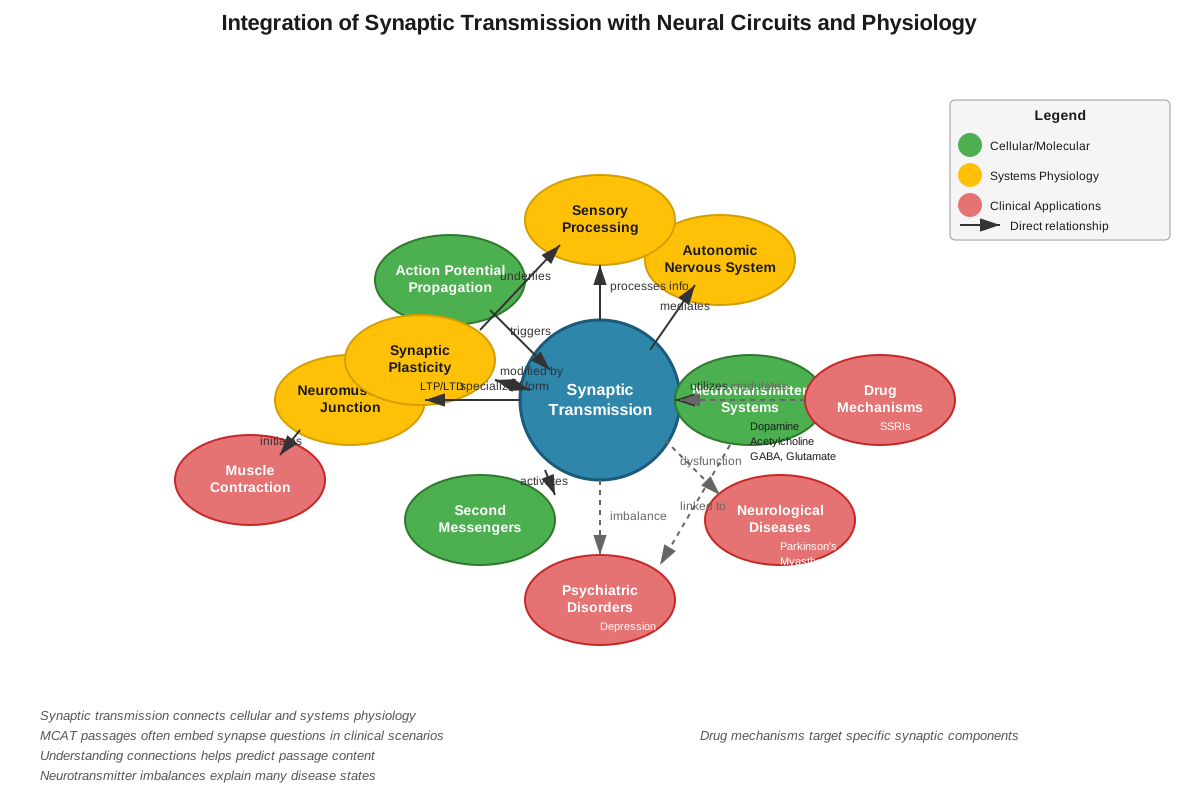
Within the broader context of Physiology and Organ Systems, synaptic transmission serves as the foundation for understanding neural circuits, sensory processing, motor control, and the autonomic nervous system. This topic connects directly to action potential propagation, neurotransmitter systems, muscle contraction, endocrine signaling, and behavioral neuroscience. Mastery of synaptic transmission enables students to tackle complex MCAT passages that integrate multiple organ systems and requires understanding both the molecular details and the physiological consequences of synaptic communication.
Learning Objectives
- [ ] Define synaptic transmission using accurate Biology terminology
- [ ] Explain why synaptic transmission matters for the MCAT
- [ ] Apply synaptic transmission concepts to exam-style questions
- [ ] Identify common mistakes related to synaptic transmission
- [ ] Connect synaptic transmission to related Biology concepts
- [ ] Describe the complete sequence of events in chemical synaptic transmission from presynaptic depolarization to postsynaptic response
- [ ] Compare and contrast excitatory and inhibitory synaptic transmission mechanisms
- [ ] Analyze how drugs and toxins can modify synaptic transmission at different molecular targets
- [ ] Predict the physiological consequences of alterations in neurotransmitter synthesis, release, or degradation
Prerequisites
- Action potential generation and propagation: Essential for understanding the electrical signal that triggers neurotransmitter release at the presynaptic terminal
- Membrane potential and ion gradients: Required to comprehend how postsynaptic potentials are generated and how they influence neuronal excitability
- Protein structure and function: Necessary for understanding neurotransmitter receptors, ion channels, and synaptic proteins
- Cell membrane structure: Foundational for understanding vesicle fusion, exocytosis, and receptor-ligand interactions
- Basic enzyme kinetics: Helpful for understanding neurotransmitter degradation and synthesis pathways
Why This Topic Matters
Synaptic transmission MCAT questions appear with moderate to high frequency on the exam, typically comprising 3-5 discrete questions per test and featuring prominently in 1-2 passage-based question sets. The topic's clinical relevance makes it particularly attractive for MCAT passage writers, as synaptic dysfunction underlies numerous neurological and psychiatric conditions including Parkinson's disease, myasthenia gravis, depression, schizophrenia, and Alzheimer's disease. Understanding synaptic transmission is also critical for comprehending how major drug classes work, including antidepressants, antipsychotics, anesthetics, and drugs of abuse.
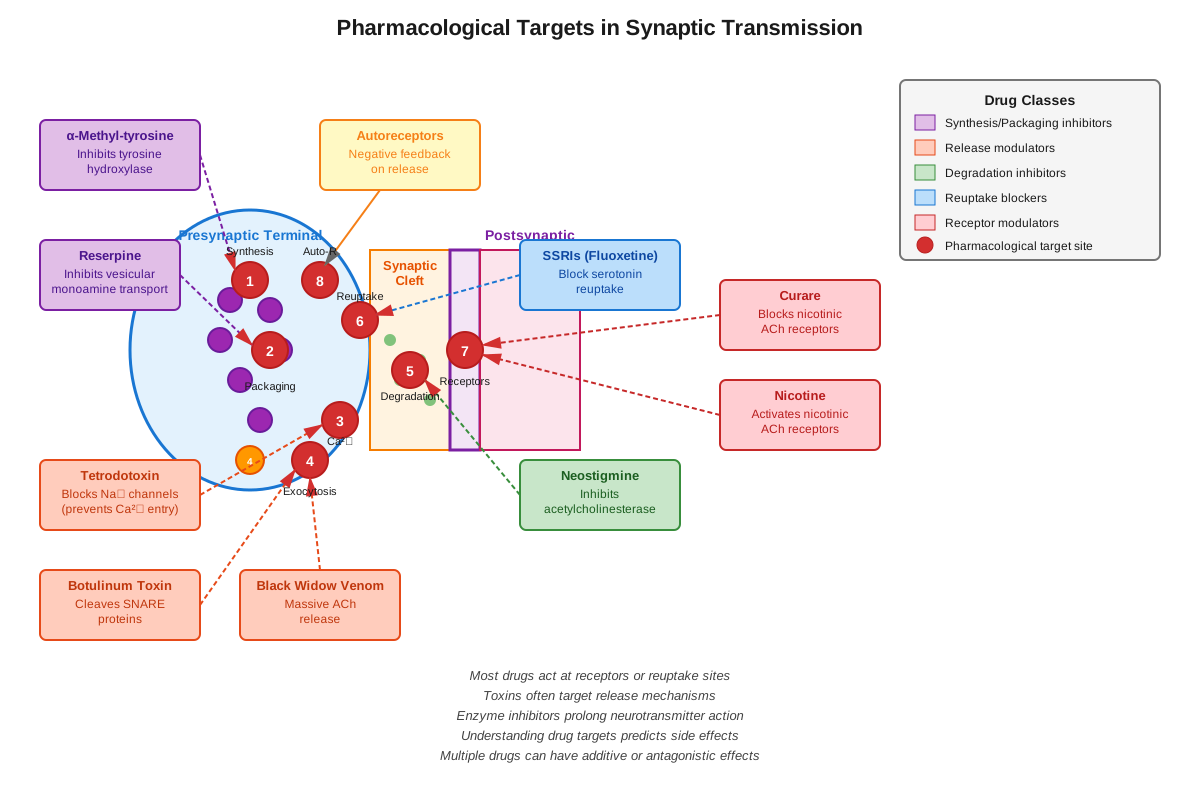
In clinical practice, virtually all neurological and psychiatric medications target some aspect of synaptic transmission. Selective serotonin reuptake inhibitors (SSRIs) block neurotransmitter reuptake, benzodiazepines enhance inhibitory neurotransmission, and botulinum toxin prevents neurotransmitter release. Many toxins and poisons exert their effects by disrupting synaptic function—organophosphates inhibit acetylcholinesterase, leading to excessive cholinergic stimulation, while tetanus toxin blocks inhibitory neurotransmitter release, causing uncontrolled muscle contractions.
On the MCAT, synaptic transmission commonly appears in passages describing experimental manipulations of neural circuits, pharmacological studies, behavioral experiments, or disease mechanisms. Questions may ask students to interpret graphs showing synaptic currents, predict the effects of genetic mutations affecting synaptic proteins, or explain how a novel drug might alter neurotransmission. The topic also frequently integrates with other testable content including muscle physiology (neuromuscular junction), sensory systems (sensory transduction), and psychology (neurotransmitter systems underlying behavior and emotion).
Core Concepts
Structure of the Synapse
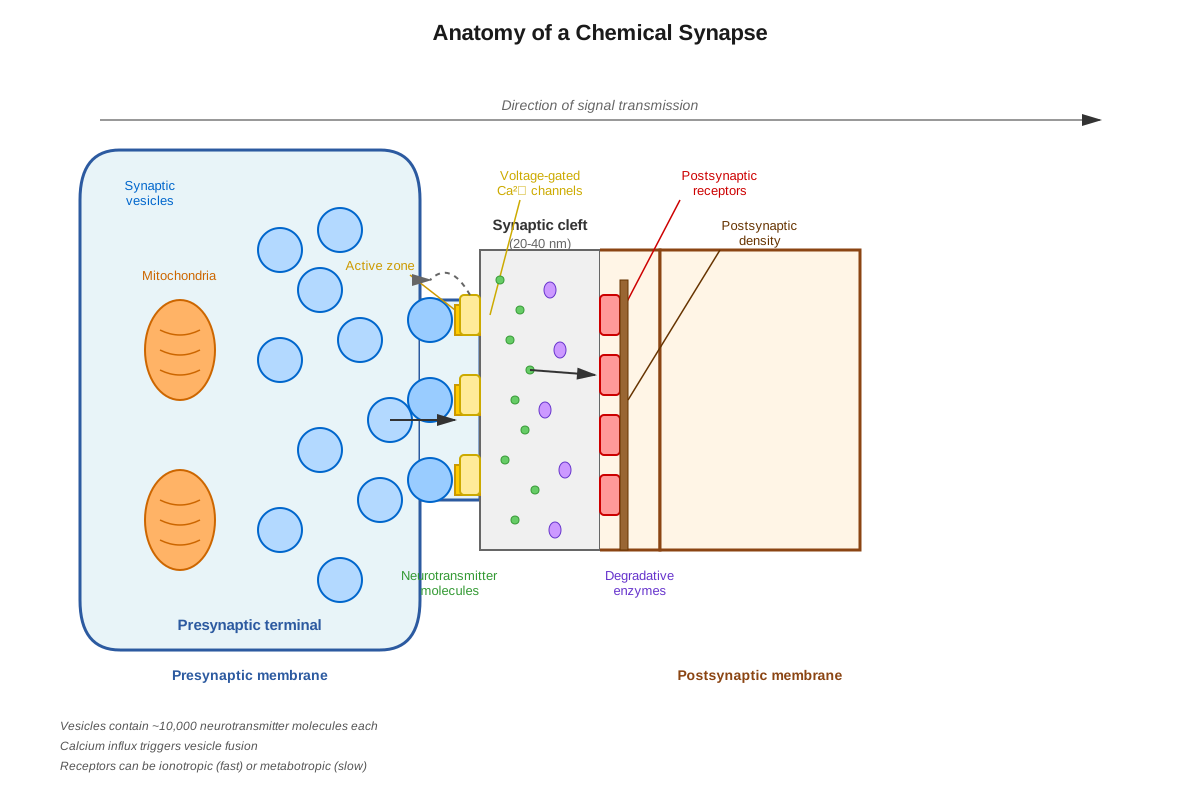
The synapse is the specialized junction between two neurons or between a neuron and an effector cell where signal transmission occurs. Chemical synapses, the predominant type in the human nervous system, consist of three main components: the presynaptic terminal (axon terminal of the transmitting neuron), the synaptic cleft (a narrow gap approximately 20-40 nanometers wide), and the postsynaptic membrane (specialized region of the receiving cell). The presynaptic terminal contains numerous synaptic vesicles filled with neurotransmitter molecules, mitochondria to provide energy for neurotransmitter synthesis and vesicle recycling, and voltage-gated calcium channels clustered near release sites. The postsynaptic membrane contains neurotransmitter receptors and associated signaling proteins that convert the chemical signal back into an electrical or biochemical response.
Sequence of Synaptic Transmission Events
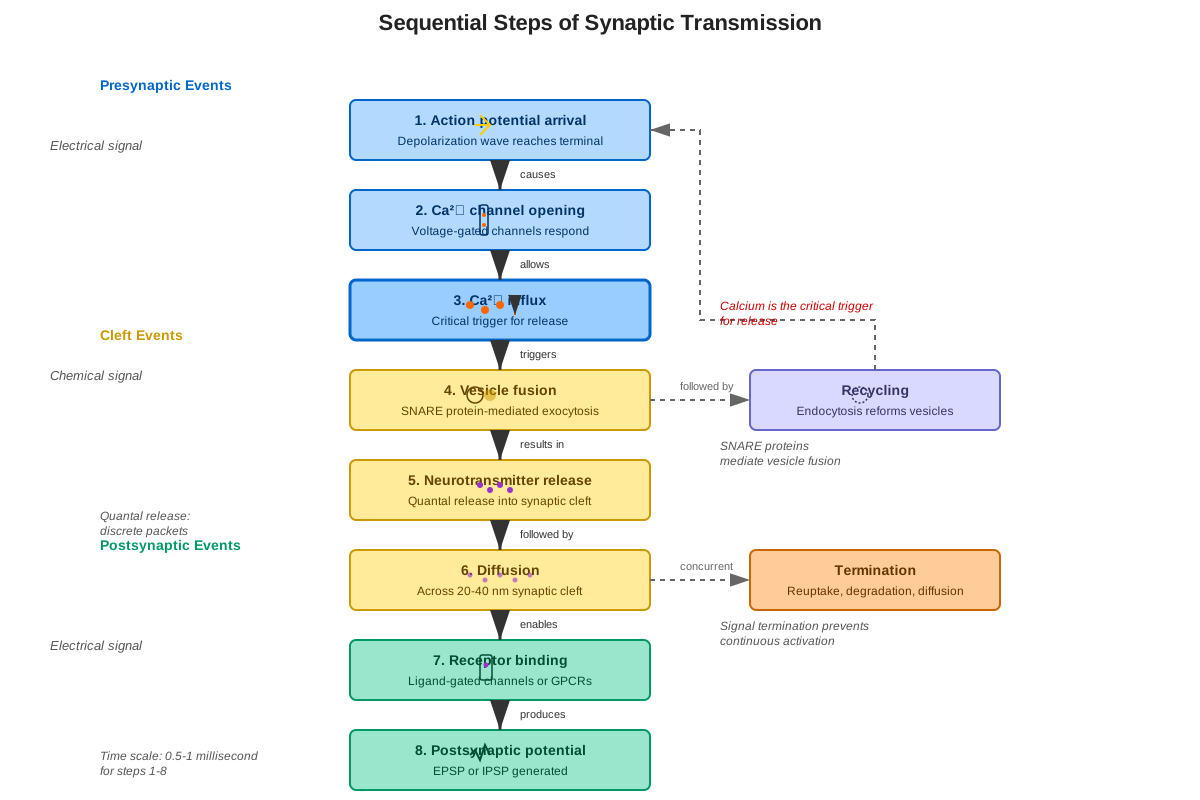
Synaptic transmission proceeds through a highly orchestrated sequence of events:
- Action potential arrival: A depolarizing action potential propagates down the axon and reaches the presynaptic terminal
- Calcium influx: Depolarization opens voltage-gated calcium channels in the presynaptic membrane, allowing Ca²⁺ ions to flow into the terminal down their concentration gradient
- Vesicle fusion: The increase in intracellular calcium triggers calcium-sensitive proteins (particularly synaptotagmin) that promote fusion of synaptic vesicles with the presynaptic membrane through SNARE protein complexes
- Neurotransmitter release: Vesicle fusion creates a fusion pore through which neurotransmitter molecules are released into the synaptic cleft via exocytosis
- Diffusion: Neurotransmitter molecules diffuse across the synaptic cleft (taking approximately 0.5 milliseconds)
- Receptor binding: Neurotransmitters bind to specific receptors on the postsynaptic membrane
- Postsynaptic response: Receptor activation produces either electrical changes (via ionotropic receptors) or biochemical changes (via metabotropic receptors) in the postsynaptic cell
- Signal termination: The neurotransmitter signal is terminated through reuptake, enzymatic degradation, or diffusion away from the synapse
Types of Postsynaptic Potentials
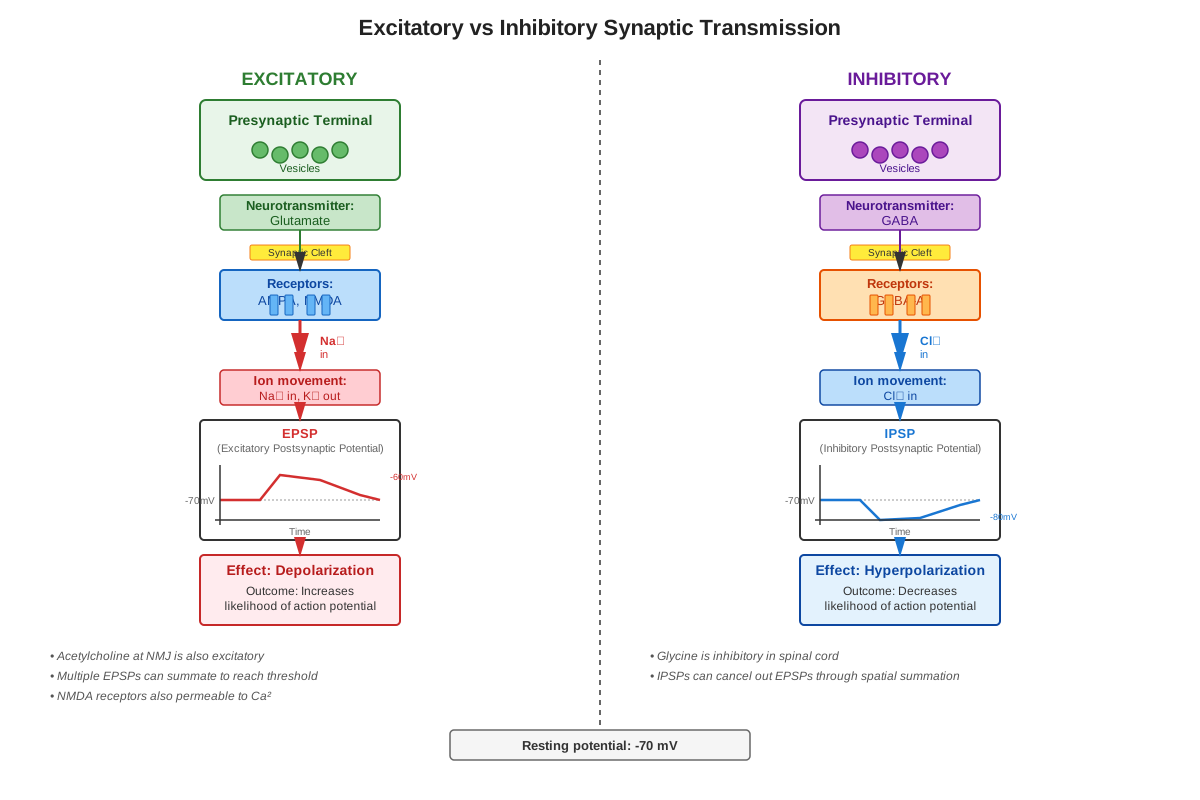
Neurotransmitter-receptor interactions produce local changes in postsynaptic membrane potential called postsynaptic potentials. Excitatory postsynaptic potentials (EPSPs) are depolarizations that make the postsynaptic neuron more likely to fire an action potential. EPSPs typically result from opening of sodium or nonselective cation channels, allowing positive charge to enter the cell. The most common excitatory neurotransmitter in the central nervous system is glutamate, which acts on AMPA, NMDA, and kainate receptors.
Inhibitory postsynaptic potentials (IPSPs) are hyperpolarizations that make the postsynaptic neuron less likely to fire an action potential. IPSPs typically result from opening of chloride channels (allowing Cl⁻ to enter) or potassium channels (allowing K⁺ to exit), both of which make the membrane potential more negative. The primary inhibitory neurotransmitters are GABA (gamma-aminobutyric acid) in the brain and glycine in the spinal cord.
Neurotransmitter Receptor Types
| Receptor Type | Mechanism | Speed | Duration | Examples |
|---|---|---|---|---|
| Ionotropic | Ligand-gated ion channel; direct | Fast (milliseconds) | Brief | Nicotinic ACh, GABA-A, AMPA, NMDA |
| Metabotropic | G-protein coupled; indirect | Slow (seconds) | Prolonged | Muscarinic ACh, GABA-B, dopamine, serotonin |
Ionotropic receptors are ligand-gated ion channels that open immediately upon neurotransmitter binding, producing rapid but short-lived postsynaptic responses. These receptors mediate fast synaptic transmission essential for rapid reflexes and precise timing in neural circuits.
Metabotropic receptors are G-protein coupled receptors (GPCRs) that activate intracellular signaling cascades when bound by neurotransmitter. These receptors produce slower, longer-lasting, and more diverse effects including modulation of ion channels, changes in gene expression, and alterations in synaptic strength. A single neurotransmitter can act on both ionotropic and metabotropic receptors (e.g., acetylcholine acts on nicotinic ionotropic receptors and muscarinic metabotropic receptors).
Neurotransmitter Removal and Recycling
Termination of the synaptic signal is as important as its initiation. Three primary mechanisms remove neurotransmitter from the synaptic cleft:
Reuptake involves transporter proteins in the presynaptic membrane (and sometimes glial cells) that actively transport neurotransmitter molecules back into cells for repackaging or degradation. Reuptake transporters are major drug targets—SSRIs block serotonin reuptake, cocaine blocks dopamine reuptake, and many antidepressants block norepinephrine reuptake.
Enzymatic degradation breaks down neurotransmitters in the synaptic cleft or postsynaptic cell. Acetylcholinesterase rapidly hydrolyzes acetylcholine into acetate and choline at cholinergic synapses. Monoamine oxidase (MAO) and catechol-O-methyltransferase (COMT) degrade monoamine neurotransmitters like dopamine, norepinephrine, and serotonin.
Diffusion allows some neurotransmitter molecules to simply diffuse away from the synapse, becoming too dilute to activate receptors effectively. This mechanism is less important for rapid synaptic transmission but contributes to volume transmission where neurotransmitters act on more distant receptors.
Synaptic Integration and Summation
Individual postsynaptic potentials are typically too small to trigger an action potential in the postsynaptic neuron. The postsynaptic cell integrates multiple synaptic inputs through summation. Temporal summation occurs when multiple action potentials arrive at the same synapse in rapid succession, causing postsynaptic potentials to add together before they decay. Spatial summation occurs when postsynaptic potentials from multiple different synapses arrive simultaneously and combine. Whether the postsynaptic neuron fires an action potential depends on whether the integrated signal at the axon hillock (the trigger zone with the lowest threshold) reaches threshold potential.
Synaptic Plasticity
Synapses are not static but can strengthen or weaken based on activity patterns, a property called synaptic plasticity that underlies learning and memory. Long-term potentiation (LTP) is a persistent strengthening of synapses following high-frequency stimulation, involving increased neurotransmitter release, insertion of additional postsynaptic receptors, and structural changes. Long-term depression (LTD) is a persistent weakening of synapses following low-frequency stimulation. These mechanisms allow neural circuits to be modified by experience, forming the cellular basis of learning.
Concept Relationships
The process of synaptic transmission represents a critical link between electrical signaling within neurons and chemical signaling between neurons. Action potential propagation → triggers calcium influx → which causes vesicle fusion → leading to neurotransmitter release → producing receptor activation → generating postsynaptic potentials → which may trigger new action potentials in the postsynaptic cell, continuing the signal chain.
Synaptic transmission connects intimately with membrane potential concepts, as the driving force for ion movement through postsynaptic receptors depends on electrochemical gradients established by the Na⁺/K⁺-ATPase. The topic also links to cell signaling pathways, particularly through metabotropic receptors that activate second messenger cascades involving cAMP, IP₃, and calcium. Understanding enzyme kinetics helps explain neurotransmitter degradation rates and how enzyme inhibitors can potentiate synaptic transmission.
The neuromuscular junction represents a specialized synapse where motor neurons communicate with skeletal muscle fibers, connecting synaptic transmission to muscle physiology. Autonomic synapses link this topic to the sympathetic and parasympathetic nervous systems and their effects on organ function. Neurotransmitter systems (dopaminergic, serotonergic, cholinergic, etc.) connect synaptic transmission to behavioral neuroscience, psychology, and psychopharmacology tested on the MCAT.
High-Yield Facts
⭐ Calcium influx through voltage-gated channels is the critical trigger for neurotransmitter release—blocking these channels prevents synaptic transmission
⭐ Ionotropic receptors produce fast, brief responses while metabotropic receptors produce slow, prolonged responses
⭐ EPSPs are depolarizations (typically from Na⁺ or Ca²⁺ influx) that increase firing probability; IPSPs are hyperpolarizations (typically from Cl⁻ influx or K⁺ efflux) that decrease firing probability
⭐ Acetylcholinesterase rapidly degrades acetylcholine at cholinergic synapses; inhibiting this enzyme causes excessive cholinergic stimulation
⭐ Summation (temporal and spatial) allows integration of multiple synaptic inputs to determine whether the postsynaptic neuron reaches threshold
- SNARE proteins (synaptobrevin, syntaxin, SNAP-25) mediate vesicle fusion with the presynaptic membrane
- The synaptic cleft is approximately 20-40 nanometers wide, and neurotransmitter diffusion across it takes about 0.5 milliseconds
- Neurotransmitter reuptake transporters are major targets for psychiatric medications including SSRIs, SNRIs, and cocaine
- Botulinum toxin cleaves SNARE proteins, preventing vesicle fusion and neurotransmitter release, causing flaccid paralysis
- Tetanus toxin blocks inhibitory neurotransmitter release, causing uncontrolled muscle contractions (spastic paralysis)
- NMDA receptors require both glutamate binding and postsynaptic depolarization to open, making them coincidence detectors important for synaptic plasticity
- Myasthenia gravis is an autoimmune disease where antibodies block nicotinic acetylcholine receptors at the neuromuscular junction, causing muscle weakness
Quick check — test yourself on Synaptic transmission so far.
Try Flashcards →Common Misconceptions
Misconception: Neurotransmitters carry the electrical signal across the synapse.
Correction: Neurotransmitters are chemical messengers that convert the electrical signal into a chemical signal. The electrical signal (action potential) cannot cross the synaptic cleft directly; it must be converted to a chemical signal (neurotransmitter release) that then generates a new electrical signal in the postsynaptic cell.
Misconception: All synapses are excitatory.
Correction: Synapses can be either excitatory (producing EPSPs that depolarize the postsynaptic cell) or inhibitory (producing IPSPs that hyperpolarize the postsynaptic cell). Both types are essential for proper nervous system function, and inhibitory transmission is critical for preventing excessive neural activity.
Misconception: Neurotransmitter release occurs as soon as an action potential reaches the presynaptic terminal.
Correction: Neurotransmitter release requires calcium influx through voltage-gated calcium channels, which opens in response to depolarization. The calcium then triggers vesicle fusion through calcium-sensitive proteins. This process takes time (synaptic delay of ~0.5-1 millisecond) and can be blocked by preventing calcium entry.
Misconception: A single EPSP is sufficient to trigger an action potential in the postsynaptic neuron.
Correction: Individual EPSPs are typically subthreshold (5-10 mV depolarizations) and must summate temporally or spatially to reach the threshold potential (~15 mV depolarization from rest) needed to trigger an action potential at the axon hillock.
Misconception: Metabotropic receptors are less important than ionotropic receptors.
Correction: While metabotropic receptors act more slowly, they produce longer-lasting effects and enable more diverse cellular responses including modulation of gene expression, metabolic changes, and synaptic plasticity. Many critical neurotransmitter systems (dopamine, serotonin, norepinephrine) act primarily through metabotropic receptors.
Misconception: Neurotransmitter effects are determined solely by the neurotransmitter molecule itself.
Correction: The effect of a neurotransmitter depends on the receptor type it binds to. For example, acetylcholine is excitatory at nicotinic receptors (ionotropic) but can be either excitatory or inhibitory at muscarinic receptors (metabotropic) depending on the specific receptor subtype and downstream signaling pathways.
Worked Examples
Example 1: Predicting Drug Effects on Synaptic Transmission
Question: A novel drug is found to block voltage-gated calcium channels specifically in presynaptic terminals. Predict the effect of this drug on synaptic transmission and explain your reasoning. How would this differ from a drug that blocks sodium channels in the presynaptic axon?
Solution:
Step 1: Identify the role of calcium in synaptic transmission. Calcium influx through voltage-gated calcium channels is the critical trigger for vesicle fusion and neurotransmitter release. Without calcium entry, synaptic vesicles cannot fuse with the presynaptic membrane.
Step 2: Predict the effect of blocking presynaptic calcium channels. This drug would prevent neurotransmitter release even when action potentials arrive at the presynaptic terminal. The result would be complete blockade of synaptic transmission at affected synapses. The presynaptic neuron could still generate and propagate action potentials, but these would not result in neurotransmitter release.
Step 3: Compare to blocking sodium channels in the presynaptic axon. A drug that blocks sodium channels would prevent action potential propagation along the axon, so the action potential would never reach the presynaptic terminal. The end result (no neurotransmitter release) would be the same, but the mechanism differs: sodium channel blockers prevent the electrical signal from arriving, while calcium channel blockers prevent the conversion of the electrical signal into neurotransmitter release.
Step 4: Consider clinical relevance. Calcium channel blockers that affect presynaptic terminals would act as powerful inhibitors of neurotransmission. This mechanism is exploited by some toxins (like ω-conotoxin from cone snails) and has therapeutic applications in treating conditions with excessive neurotransmitter release.
Key Concept: This example demonstrates understanding of the sequential steps in synaptic transmission and the ability to predict consequences of disrupting specific steps—a common MCAT question type.
Example 2: Analyzing Experimental Data on Synaptic Summation
Question: Researchers record from a postsynaptic neuron with a resting potential of -70 mV and a threshold of -55 mV. They stimulate two presynaptic neurons (A and B) and measure the following:
- Single stimulus to A produces a 5 mV depolarization lasting 20 ms
- Single stimulus to B produces a 7 mV depolarization lasting 20 ms
- Two stimuli to A separated by 5 ms produce a 9 mV depolarization
- Simultaneous stimulation of A and B produces a 12 mV depolarization
Explain these results in terms of synaptic summation and predict whether any of these stimulation patterns would trigger an action potential.
Solution:
Step 1: Analyze single stimuli. Neuron A produces a 5 mV EPSP (postsynaptic potential reaches -65 mV), and neuron B produces a 7 mV EPSP (postsynaptic potential reaches -63 mV). Neither reaches the -55 mV threshold, so neither alone triggers an action potential.
Step 2: Analyze temporal summation (two stimuli to A). Two stimuli to A separated by 5 ms produce a 9 mV depolarization (postsynaptic potential reaches -61 mV). This demonstrates temporal summation—the second EPSP arrives before the first has completely decayed, so they add together. However, 9 mV is less than the arithmetic sum of 5 + 5 = 10 mV because the first EPSP has partially decayed during the 5 ms interval. This still doesn't reach threshold.
Step 3: Analyze spatial summation (simultaneous A and B). Simultaneous stimulation produces a 12 mV depolarization (postsynaptic potential reaches -58 mV). This demonstrates spatial summation—EPSPs from different synapses arriving simultaneously add together. The result (12 mV) equals the arithmetic sum of 5 + 7 mV because the EPSPs arrive at exactly the same time. This still doesn't quite reach the -55 mV threshold.
Step 4: Predict action potential generation. None of these stimulation patterns would trigger an action potential because none reaches the -55 mV threshold. To trigger an action potential, the postsynaptic neuron would need additional excitatory input (perhaps a third presynaptic neuron, or more rapid stimulation of A and B to achieve greater temporal summation).
Step 5: Consider biological significance. This example illustrates why neurons typically receive input from hundreds or thousands of synapses—integration of multiple inputs through summation allows for complex information processing and ensures that action potentials are generated only when sufficient excitatory input is received.
Key Concept: This example demonstrates quantitative reasoning about synaptic integration, a skill frequently tested on the MCAT through data interpretation questions.
Exam Strategy
When approaching MCAT questions on synaptic transmission, first identify which stage of the process is being tested: presynaptic events (action potential arrival, calcium influx, vesicle fusion, neurotransmitter release), events in the synaptic cleft (diffusion, degradation), or postsynaptic events (receptor binding, postsynaptic potential generation, summation). Many questions can be answered by determining where in this sequence a drug, toxin, or mutation would act.
Exam Tip: Watch for trigger words like "blocks," "enhances," "inhibits," or "potentiates" followed by specific molecular targets. These indicate you need to trace through the consequences of that specific intervention.
For questions involving drugs or toxins, use the following approach: (1) Identify the molecular target, (2) Determine whether the drug enhances or inhibits that target, (3) Predict the immediate effect on synaptic transmission, (4) Consider the downstream physiological consequences. For example, "Drug X blocks acetylcholinesterase" → acetylcholine accumulates in the synaptic cleft → prolonged receptor activation → excessive cholinergic stimulation → symptoms of cholinergic excess.
Process-of-elimination strategies are particularly effective for synaptic transmission questions. If a question asks about the effect of blocking calcium channels, immediately eliminate any answer choice suggesting increased neurotransmitter release (calcium is required for release). If a question describes an EPSP, eliminate answer choices mentioning hyperpolarization or decreased firing probability.
Time management: Most synaptic transmission questions can be answered in 60-90 seconds if you have a solid conceptual framework. Don't get bogged down trying to recall every detail about specific neurotransmitter systems—focus on the general principles that apply to all chemical synapses. Save detailed neurotransmitter system knowledge for questions that specifically ask about dopamine, serotonin, etc.
For passage-based questions, pay special attention to figures showing synaptic currents, neurotransmitter concentrations over time, or dose-response curves. These often contain the key information needed to answer associated questions. Look for experimental manipulations that isolate specific components of synaptic transmission (e.g., removing extracellular calcium to test whether an effect requires synaptic transmission).
Memory Techniques
Mnemonic for the sequence of synaptic transmission: "Action Causes Vesicles Releasing Diffusing Receptor Potentials Summate" (Action potential → Calcium influx → Vesicle fusion → Release → Diffusion → Receptor binding → Postsynaptic potential → Summation)
Mnemonic for excitatory vs. inhibitory ions: "PINE - Positive IN is Excitatory" (sodium and calcium entering depolarize and excite); "CHOKE - Chloride and potassium Out Kills Excitation" (chloride in or potassium out hyperpolarize and inhibit)
Visualization strategy for ionotropic vs. metabotropic: Picture ionotropic receptors as "express elevators" (direct, fast, brief) and metabotropic receptors as "local trains with many stops" (indirect, slow, prolonged, reaching many destinations through second messengers)
Acronym for neurotransmitter removal: "RED - Reuptake, Enzymatic degradation, Diffusion"
Memory aid for calcium's role: "Calcium is the trigger for release" - visualize calcium ions as bullets triggering vesicles to fire neurotransmitters across the synapse
Mnemonic for SNARE proteins: "SNARE traps vesicles to the membrane" - the SNARE complex literally snares vesicles and pulls them to the presynaptic membrane for fusion
Summary
Synaptic transmission is the fundamental process enabling neuronal communication through conversion of electrical signals into chemical signals and back. The process begins when an action potential reaches the presynaptic terminal, triggering voltage-gated calcium channel opening and calcium influx. Elevated intracellular calcium causes synaptic vesicles to fuse with the presynaptic membrane via SNARE proteins, releasing neurotransmitter into the synaptic cleft. Neurotransmitters diffuse across the cleft and bind to postsynaptic receptors, which can be ionotropic (fast, direct ion channel opening) or metabotropic (slow, indirect G-protein signaling). Receptor activation produces postsynaptic potentials—EPSPs (depolarizing, excitatory) or IPSPs (hyperpolarizing, inhibitory)—that summate temporally and spatially to determine whether the postsynaptic neuron fires an action potential. Signal termination occurs through neurotransmitter reuptake, enzymatic degradation, or diffusion. Understanding this process is essential for MCAT success as it underlies questions about neural circuits, pharmacology, disease mechanisms, and experimental design across multiple organ systems.
Key Takeaways
- Calcium influx through voltage-gated channels is the essential trigger converting electrical signals into neurotransmitter release
- Ionotropic receptors (ligand-gated ion channels) mediate fast synaptic transmission, while metabotropic receptors (GPCRs) mediate slow, prolonged responses
- EPSPs depolarize and increase firing probability; IPSPs hyperpolarize and decrease firing probability
- Temporal summation integrates signals arriving sequentially at one synapse; spatial summation integrates signals from multiple synapses
- Neurotransmitter removal via reuptake, enzymatic degradation, or diffusion is critical for terminating synaptic signals
- Many drugs and toxins exert effects by modifying specific steps in synaptic transmission
- Synaptic transmission connects to multiple MCAT topics including action potentials, muscle contraction, autonomic function, and psychopharmacology
Related Topics
Neuromuscular Junction: The specialized synapse between motor neurons and skeletal muscle fibers, where acetylcholine triggers muscle contraction through nicotinic receptors. Mastering synaptic transmission provides the foundation for understanding how neural signals are converted into mechanical force.
Autonomic Nervous System: Sympathetic and parasympathetic divisions use different neurotransmitters (norepinephrine and acetylcholine) at their synapses to produce opposing effects on organ systems. Understanding synaptic transmission mechanisms enables prediction of autonomic drug effects.
Neurotransmitter Systems: Specific neurotransmitter systems (dopaminergic, serotonergic, cholinergic, GABAergic) have distinct distributions and functions in the brain. The general principles of synaptic transmission apply to all these systems while each has unique characteristics.
Synaptic Plasticity and Learning: Long-term potentiation and depression represent activity-dependent changes in synaptic strength that underlie learning and memory. These mechanisms build directly on understanding basic synaptic transmission.
Psychopharmacology: Most psychiatric medications target synaptic transmission components—reuptake transporters, receptors, or degradative enzymes. Understanding synaptic transmission is essential for predicting drug effects and side effects.
Practice CTA
Now that you've mastered the core concepts of synaptic transmission, it's time to solidify your understanding through active practice. Work through the practice questions to test your ability to apply these concepts to MCAT-style scenarios, and use the flashcards to reinforce high-yield facts and terminology. Remember, understanding the mechanistic details of synaptic transmission will enable you to tackle complex passages integrating neuroscience, pharmacology, and physiology—giving you a significant advantage on test day. The investment you make in truly mastering this foundational topic will pay dividends across multiple sections of the MCAT!
Sign up free to keep reading
Create a free AnvayaPrep account to finish this MCAT guide on Synaptic transmission — plus flashcards and practice questions.