Overview
The sarcomere is the fundamental contractile unit of striated muscle tissue, representing one of the most elegant examples of structure-function relationships in human physiology. Understanding sarcomere structure and function is essential for mastering muscle physiology, a topic that appears consistently across MCAT Biology sections, particularly within Physiology and Organ Systems. The sarcomere's highly organized arrangement of protein filaments enables the sliding filament mechanism that powers all voluntary movement, cardiac contraction, and postural maintenance.
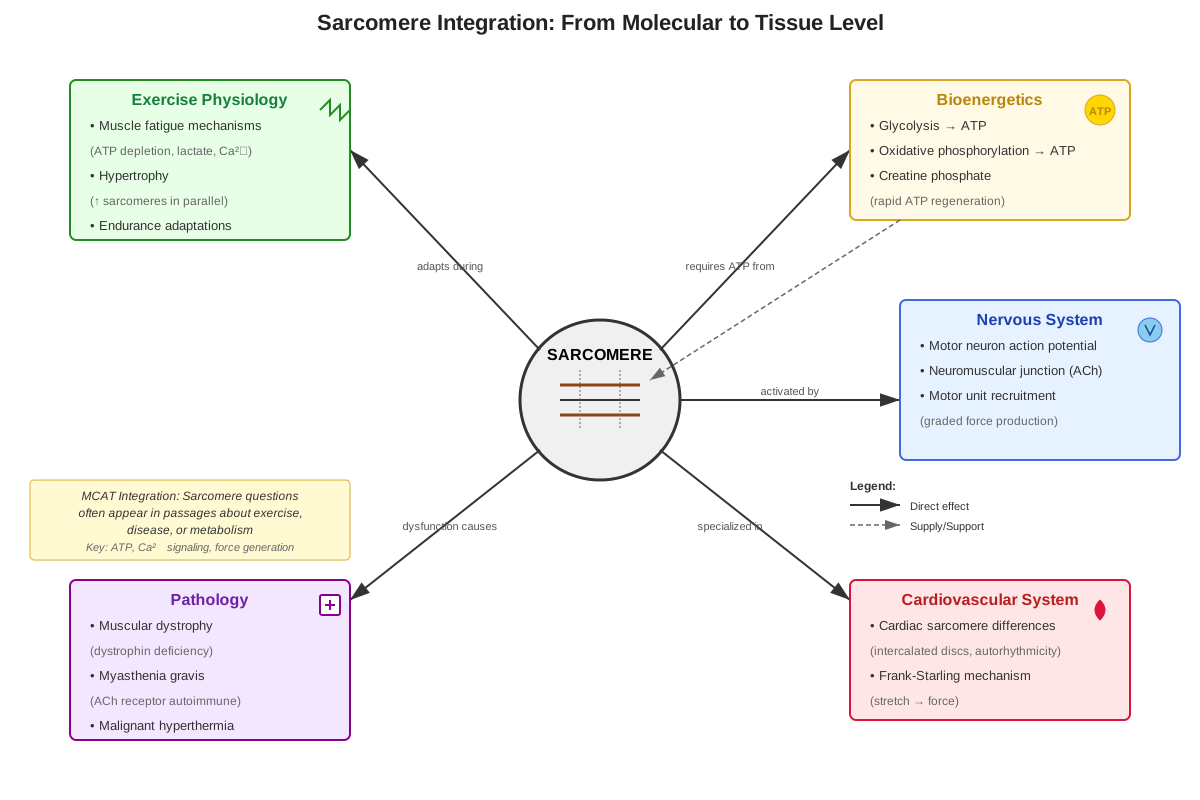
For the MCAT, sarcomere biology extends beyond simple memorization of band patterns. Test-makers frequently integrate sarcomere questions with bioenergetics (ATP hydrolysis), cell signaling (calcium regulation), and biomechanics (force generation). Questions may appear as standalone discrete items testing structural knowledge or embedded within passages exploring muscle disorders, exercise physiology, or comparative anatomy. The sarcomere also serves as an excellent model system for understanding how molecular interactions scale up to tissue-level function—a conceptual framework the MCAT emphasizes across multiple biological systems.
The sarcomere connects to broader biological principles including protein structure-function relationships, cellular organization, energy metabolism, and homeostatic regulation. Mastery of sarcomere MCAT content provides the foundation for understanding cardiac muscle physiology, smooth muscle contraction mechanisms, and pathological conditions like muscular dystrophy—all topics that may appear in biological or biochemical passages on test day.
Learning Objectives
- [ ] Define sarcomere using accurate Biology terminology
- [ ] Explain why sarcomere matters for the MCAT
- [ ] Apply sarcomere concepts to exam-style questions
- [ ] Identify common mistakes related to sarcomere structure and function
- [ ] Connect sarcomere to related Biology concepts
- [ ] Diagram the sarcomere structure and label all major components (Z-lines, M-line, H-zone, I-band, A-band)
- [ ] Predict changes in sarcomere band patterns during muscle contraction and relaxation
- [ ] Explain the molecular mechanism of the sliding filament theory including the role of ATP and calcium
Prerequisites
- Basic protein structure: Understanding of primary through quaternary protein structure is essential because myosin and actin are complex proteins whose shapes determine function
- ATP structure and hydrolysis: The energy currency of cells powers the myosin power stroke; knowledge of ATP → ADP + Pi is fundamental
- Cell membrane structure: Sarcolemma and sarcoplasmic reticulum function depends on understanding membrane properties and ion gradients
- Action potentials: Muscle contraction initiates with electrical signals that propagate along muscle cell membranes
- Calcium signaling: Ca²⁺ serves as the critical second messenger linking electrical excitation to mechanical contraction
Why This Topic Matters
Clinical and Real-World Significance: Sarcomere dysfunction underlies numerous clinically significant conditions including muscular dystrophies (where structural proteins are defective), cardiomyopathies (affecting heart muscle contractility), and malignant hyperthermia (uncontrolled calcium release). Understanding normal sarcomere function enables comprehension of how these pathologies develop and why certain therapeutic interventions work. Athletes, physical therapists, and physicians all rely on sarcomere physiology principles when addressing muscle performance, fatigue, and injury.
MCAT Exam Statistics: Sarcomere questions appear in approximately 3-5% of Biology/Biochemistry section questions, with higher frequency in passages involving physiology or exercise science. The topic appears in multiple question formats: discrete questions testing structural knowledge, passage-based questions requiring application to experimental scenarios, and integrated questions connecting muscle physiology to metabolism or nervous system function. The AAMC has consistently included at least one sarcomere-related question on recent official practice materials.
Common Exam Appearances: Sarcomere content typically appears in passages describing muscle research experiments (measuring force generation, examining genetic mutations affecting contractile proteins), clinical vignettes involving muscle disorders, or comparative physiology passages contrasting skeletal, cardiac, and smooth muscle. Questions may ask students to interpret graphs showing length-tension relationships, predict outcomes of calcium channel blockers, or identify which sarcomere bands change during contraction. The topic integrates well with bioenergetics passages exploring ATP consumption during exercise.
Core Concepts
Sarcomere Definition and Basic Structure
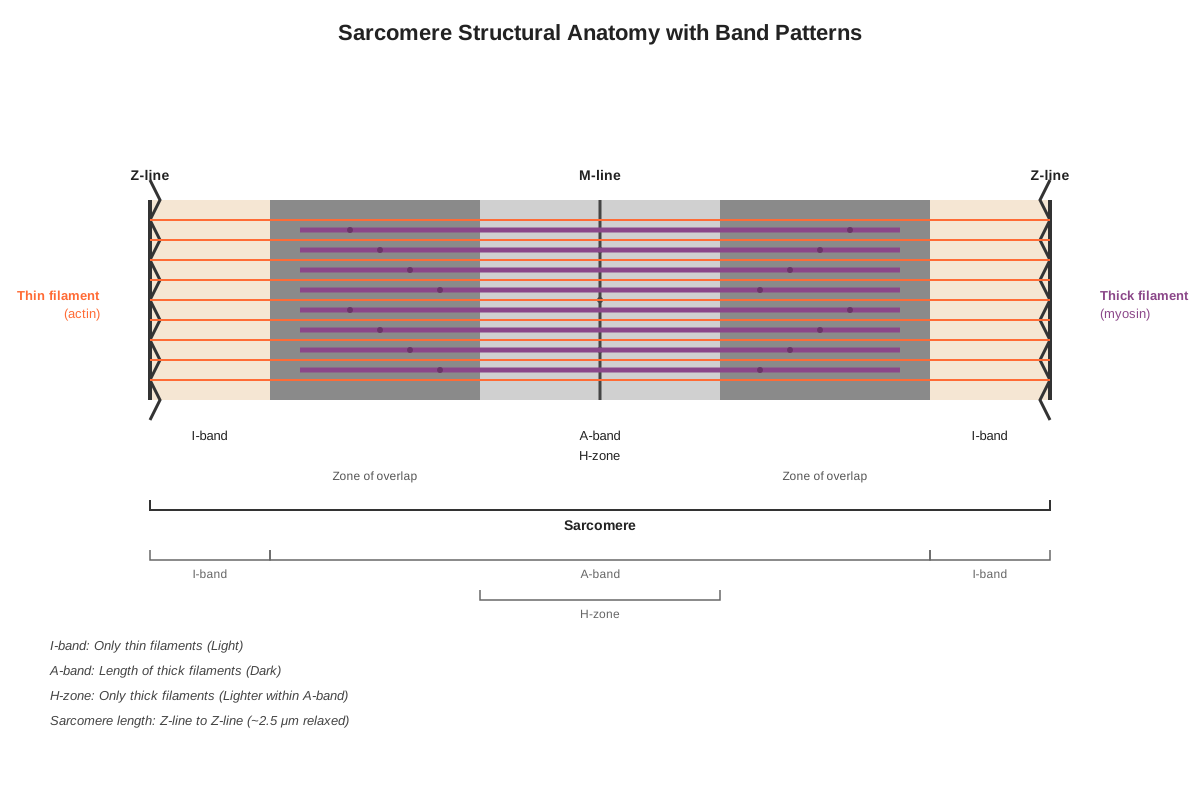
A sarcomere is defined as the repeating functional unit of striated muscle, extending from one Z-line (or Z-disc) to the next Z-line. This highly organized structure contains overlapping thick and thin filaments arranged in a precise geometric pattern that enables muscle contraction. Each sarcomere measures approximately 2.0-2.5 micrometers in length at rest, though this dimension changes during contraction and relaxation.
The sarcomere's structural organization creates the characteristic striated (striped) appearance of skeletal and cardiac muscle when viewed under microscopy. These alternating light and dark bands result from the differential overlap of thick and thin filaments and their varying optical properties. Understanding this banding pattern is essential for MCAT success because test questions frequently ask students to identify which bands change during contraction or to interpret electron micrographs of muscle tissue.
Thick and Thin Filaments
Thick filaments consist primarily of the motor protein myosin, specifically myosin II in skeletal muscle. Each myosin molecule contains two heavy chains that intertwine to form a tail region and two globular head regions. The heads possess both actin-binding sites and ATPase activity, enabling them to bind thin filaments and hydrolyze ATP to generate force. Approximately 300 myosin molecules bundle together with their tails aligned centrally and heads projecting outward in a helical arrangement, creating the thick filament structure. The thick filaments anchor at the M-line (middle line), which contains structural proteins that maintain proper thick filament alignment.
Thin filaments are composed primarily of actin, along with the regulatory proteins tropomyosin and troponin. Each thin filament consists of two strands of fibrous (F-) actin, formed by polymerization of globular (G-) actin monomers into a helical structure. Each G-actin monomer contains a myosin-binding site that, under resting conditions, is blocked by tropomyosin—a long, rope-like protein that lies in the groove between the two actin strands. The troponin complex (consisting of troponin C, troponin I, and troponin T) attaches to tropomyosin at regular intervals and serves as the calcium-sensitive switch that regulates contraction. Thin filaments anchor at the Z-lines, which contain α-actinin and other structural proteins that maintain proper thin filament organization.
Sarcomere Banding Pattern
The sarcomere's distinctive banding pattern includes several named regions that MCAT questions frequently reference:
| Band/Zone | Composition | Appearance | Changes During Contraction |
|---|---|---|---|
| A-band | Entire length of thick filaments (including overlap with thin filaments) | Dark | Remains constant |
| I-band | Thin filaments only (no thick filament overlap) | Light | Shortens |
| H-zone | Thick filaments only (no thin filament overlap) | Lighter region within A-band | Shortens |
| M-line | Center of thick filaments; contains structural proteins | Dark line in center of H-zone | Remains visible |
| Z-line | Anchoring point for thin filaments; sarcomere boundary | Dark line | Z-lines move closer together |
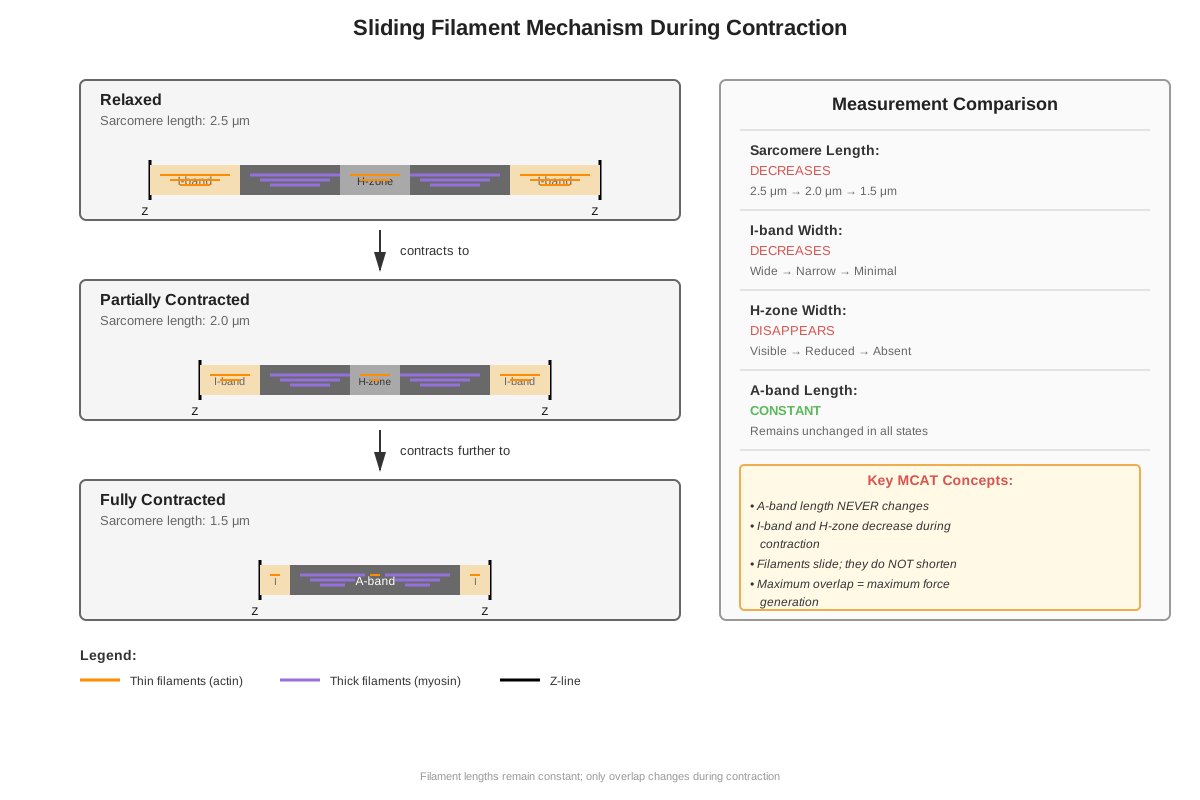
The A-band (anisotropic band) remains constant in length during contraction because it represents the full length of the thick filaments, which do not change size. This is a high-yield fact frequently tested on the MCAT. The I-band (isotropic band) shortens during contraction as thin filaments slide deeper into the A-band, increasing overlap with thick filaments. The H-zone (from the German "heller," meaning brighter) also shortens as thin filaments from opposite sides of the sarcomere slide toward the M-line, reducing the region containing only thick filaments.
Sliding Filament Theory
The sliding filament theory explains muscle contraction as the result of thin filaments sliding past thick filaments, increasing their overlap without either filament changing length. This mechanism, proposed by Hugh Huxley and Jean Hanson in the 1950s, revolutionized understanding of muscle physiology and remains the accepted model tested on the MCAT.
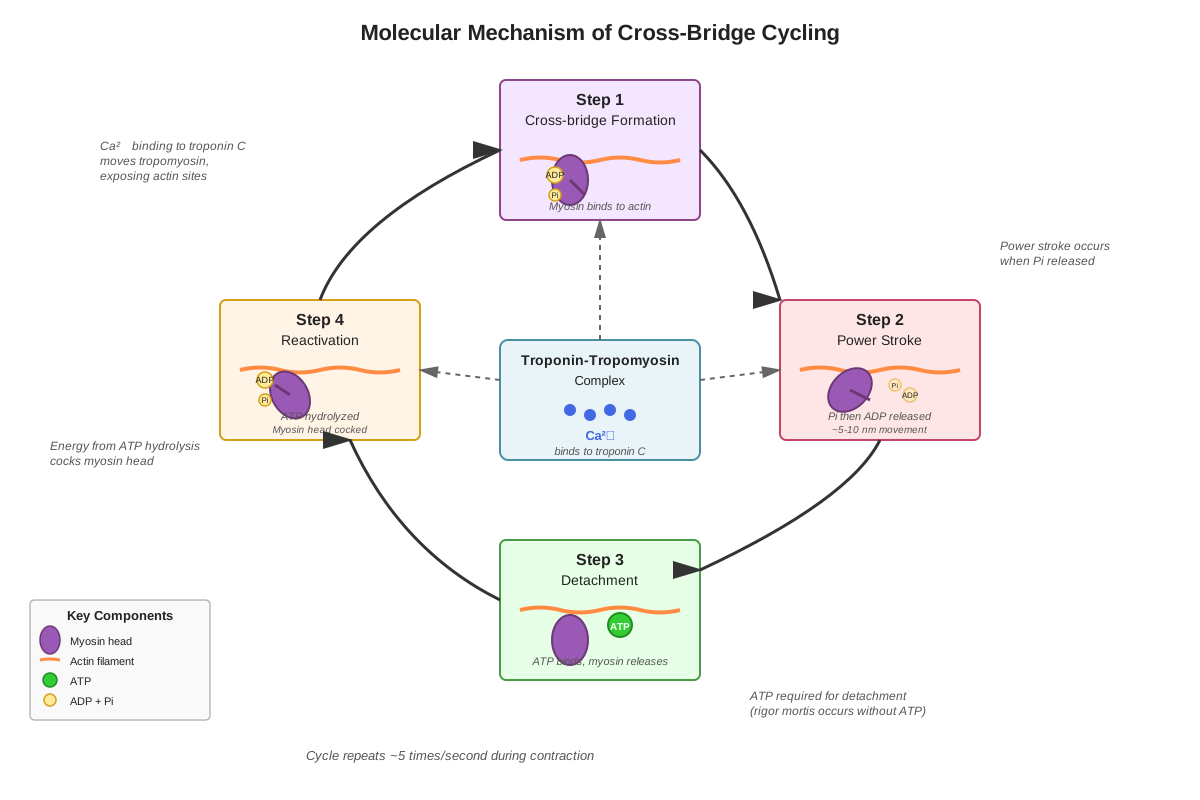
The molecular mechanism involves a cyclical interaction between myosin heads and actin binding sites:
- Attachment: The myosin head, energized by ATP hydrolysis (in a "cocked" position with ADP + Pi bound), binds to an exposed actin binding site, forming a cross-bridge
- Power stroke: The myosin head pivots, pulling the thin filament toward the M-line while releasing Pi and then ADP; this generates approximately 5-10 piconewtons of force
- Detachment: A new ATP molecule binds to the myosin head, causing it to release from actin
- Reactivation: The myosin head hydrolyzes ATP to ADP + Pi, returning to the cocked position and ready to bind actin again
This cycle repeats hundreds of times per second during active contraction, with each cycle pulling the thin filament approximately 10 nanometers toward the sarcomere center. The asynchronous cycling of hundreds of myosin heads along each thick filament produces smooth, sustained force generation rather than jerky movements.
Calcium's Regulatory Role
Calcium ions (Ca²⁺) serve as the essential regulatory signal linking electrical excitation to mechanical contraction in the excitation-contraction coupling process. At rest, intracellular calcium concentration remains very low (~10⁻⁷ M) due to active sequestration by the sarcoplasmic reticulum (SR), a specialized endoplasmic reticulum in muscle cells. This low calcium concentration keeps troponin in a conformation that allows tropomyosin to block myosin-binding sites on actin, preventing contraction.
When an action potential propagates along the sarcolemma and into T-tubules (transverse tubules—invaginations of the cell membrane), voltage-sensitive dihydropyridine receptors (DHPRs) undergo conformational changes. In skeletal muscle, DHPRs mechanically couple to ryanodine receptors (RyRs) on the SR membrane, causing them to open and release Ca²⁺ into the sarcoplasm. The calcium concentration rapidly increases to ~10⁻⁵ M.
Calcium binds to troponin C (the calcium-binding subunit of the troponin complex), causing a conformational change that is transmitted through troponin I (the inhibitory subunit) and troponin T (the tropomyosin-binding subunit). This conformational change shifts tropomyosin deeper into the groove between actin strands, exposing myosin-binding sites and permitting cross-bridge cycling to begin.
Relaxation occurs when calcium is actively pumped back into the SR by SERCA pumps (Sarcoplasmic/Endoplasmic Reticulum Calcium ATPase), which use ATP to transport Ca²⁺ against its concentration gradient. As calcium concentration drops, it dissociates from troponin C, allowing tropomyosin to return to its blocking position and terminating contraction.
Length-Tension Relationship
The length-tension relationship describes how the force a sarcomere can generate depends on its starting length, which determines the degree of thick and thin filament overlap. This relationship has important physiological implications and appears frequently in MCAT passages involving muscle mechanics.
At optimal length (~2.0-2.2 μm), maximum overlap between thick and thin filaments occurs, allowing the greatest number of cross-bridges to form simultaneously and generating maximum force. When sarcomeres are overstretched (>2.4 μm), thick and thin filaments overlap less, reducing the number of possible cross-bridges and decreasing force production. At extreme lengths (>3.6 μm), no overlap occurs and no force can be generated. When sarcomeres are compressed (<2.0 μm), thin filaments from opposite sides begin to overlap in the center, and thick filaments may contact Z-lines, creating mechanical interference that reduces force generation.
This relationship explains why muscles generate optimal force at intermediate lengths—neither fully stretched nor fully shortened. In the body, muscle attachments and joint angles typically maintain sarcomeres near optimal length during normal movements.
ATP's Multiple Roles
ATP (adenosine triphosphate) plays three critical roles in sarcomere function, making it essential for both contraction and relaxation:
- Powering the cross-bridge cycle: ATP hydrolysis by myosin ATPase provides the energy for the power stroke; approximately one ATP is consumed per cross-bridge cycle
- Enabling cross-bridge detachment: ATP binding (before hydrolysis) causes myosin to release from actin, preventing rigor (the permanent attachment state)
- Fueling calcium reuptake: SERCA pumps consume ATP to transport calcium back into the SR during relaxation
The ATP requirement for detachment explains rigor mortis—the stiffening of muscles after death. When ATP production ceases, myosin heads remain attached to actin in a permanent rigor state because they cannot detach without ATP binding. This high-yield concept occasionally appears in MCAT questions involving muscle physiology or death investigation scenarios.
Concept Relationships
The sarcomere's structure directly determines its function through the sliding filament mechanism. Thick filament structure (myosin arrangement) → enables → cross-bridge formation → drives → thin filament sliding → produces → sarcomere shortening → results in → muscle contraction. This hierarchical relationship demonstrates how molecular-level interactions scale up to tissue-level function.
The regulatory pathway connects electrical and mechanical events: Action potential → propagates through → T-tubules → activates → calcium release from SR → binds to → troponin C → causes → tropomyosin movement → exposes → myosin-binding sites on actin → permits → cross-bridge cycling. Understanding this sequence is essential for predicting how interventions (drugs, mutations, toxins) affect muscle function.
Energy metabolism connects to sarcomere function through ATP: Cellular respiration → produces → ATP → powers → myosin ATPase (contraction) and SERCA pumps (relaxation) → enables → continuous muscle function. This relationship explains why metabolic disorders or ischemia (reduced blood flow) impair muscle performance.
The sarcomere concept connects to prerequisite knowledge: Protein structure determines myosin and actin function → ATP hydrolysis provides energy for conformational changes → Calcium signaling regulates protein-protein interactions → Action potentials initiate excitation-contraction coupling. These connections frequently appear in integrated MCAT questions.
Quick check — test yourself on Sarcomere so far.
Try Flashcards →High-Yield Facts
⭐ The A-band remains constant during contraction because it represents the full length of thick filaments, which do not change size
⭐ The I-band and H-zone both shorten during contraction as thin filaments slide deeper into the A-band, increasing overlap
⭐ ATP is required for both contraction (power stroke) and relaxation (cross-bridge detachment and calcium reuptake)
⭐ Calcium binding to troponin C causes tropomyosin to shift, exposing myosin-binding sites on actin
⭐ The sarcomere extends from one Z-line to the next Z-line, defining the functional unit of muscle contraction
- Myosin heads contain both actin-binding sites and ATPase activity, enabling them to function as molecular motors
- The M-line anchors thick filaments at the sarcomere center, while Z-lines anchor thin filaments at sarcomere boundaries
- Each cross-bridge cycle pulls thin filaments approximately 10 nanometers toward the M-line
- Optimal sarcomere length (~2.0-2.2 μm) produces maximum force due to optimal thick-thin filament overlap
- Rigor mortis results from ATP depletion preventing myosin-actin detachment after death
- The sarcoplasmic reticulum stores and releases calcium, serving as the primary regulator of contraction
- Troponin consists of three subunits: troponin C (calcium-binding), troponin I (inhibitory), and troponin T (tropomyosin-binding)
- T-tubules are invaginations of the sarcolemma that conduct action potentials deep into muscle fibers
- SERCA pumps actively transport calcium from the sarcoplasm back into the SR during relaxation
- The sliding filament theory states that filaments slide past each other without changing length during contraction
Common Misconceptions
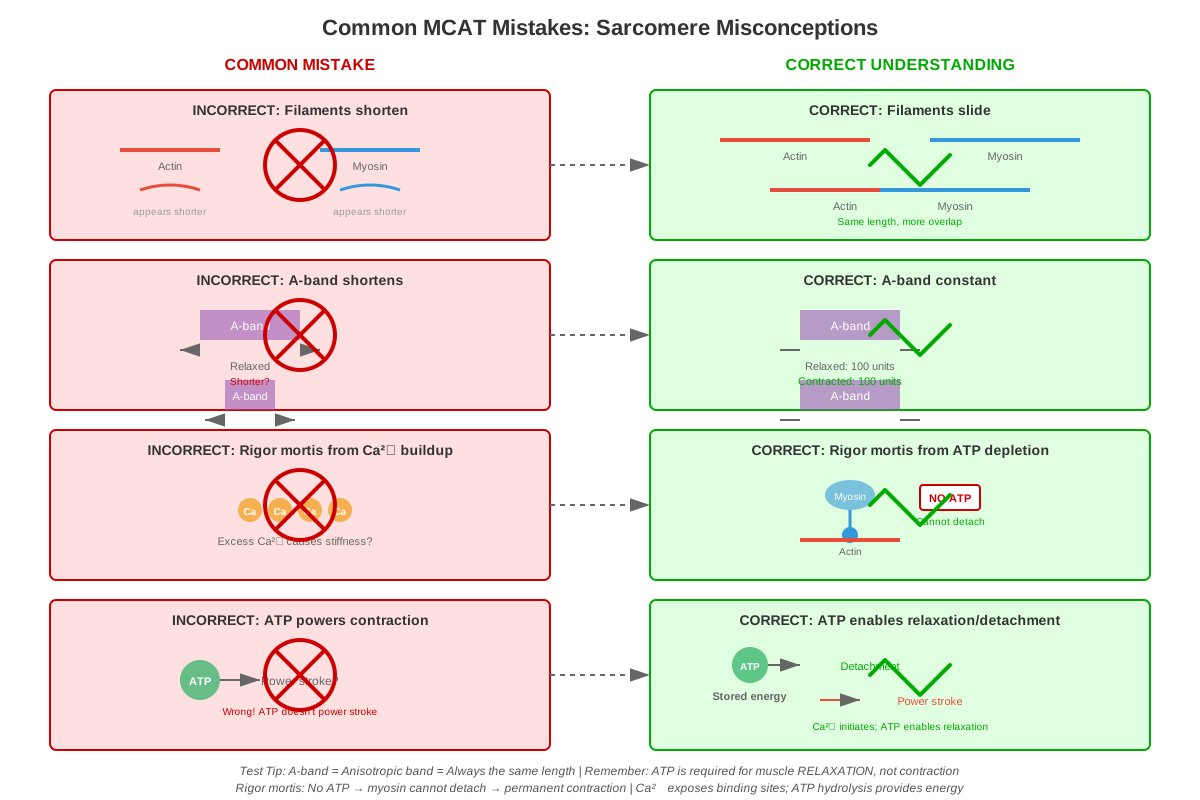
Misconception: Thick and thin filaments shorten during muscle contraction → Correction: The filaments themselves do not change length; they slide past each other, increasing overlap. This is why it's called the "sliding filament" theory, not the "shortening filament" theory. The A-band (thick filament length) remaining constant proves this point.
Misconception: ATP is only needed for muscle contraction → Correction: ATP is required for three distinct processes: energizing the myosin head for the power stroke, detaching myosin from actin after the power stroke, and pumping calcium back into the SR during relaxation. Without ATP, muscles cannot relax (rigor state).
Misconception: Calcium directly causes muscle contraction → Correction: Calcium does not directly power contraction; rather, it acts as a regulatory signal that removes the inhibition of myosin-actin interaction. Calcium binds to troponin C, causing tropomyosin to move and expose binding sites. ATP hydrolysis by myosin actually powers the contraction.
Misconception: The H-zone contains only thin filaments → Correction: The H-zone contains only thick filaments (no thin filament overlap). The I-band contains only thin filaments (no thick filament overlap). Students often confuse these regions because both appear lighter than the fully overlapped regions of the A-band.
Misconception: All sarcomere bands shorten during contraction → Correction: Only the I-band and H-zone shorten during contraction. The A-band remains constant because it represents the unchanging length of thick filaments. The Z-lines move closer together, reducing sarcomere length, but the A-band itself does not change.
Misconception: Myosin heads pull themselves along actin filaments → Correction: Myosin heads remain attached to thick filaments and pull the thin filaments toward the M-line. The thick filaments stay relatively stationary (anchored at the M-line), while thin filaments slide inward from both sides of the sarcomere.
Misconception: More calcium always produces stronger contractions → Correction: While calcium is necessary for contraction, force generation also depends on sarcomere length (length-tension relationship), ATP availability, and the number of muscle fibers recruited. At saturating calcium concentrations, additional calcium does not increase force. Additionally, excessive calcium can be pathological.
Worked Examples
Example 1: Interpreting Sarcomere Changes During Contraction
Question: A researcher uses electron microscopy to examine sarcomeres in relaxed and contracted states. In the relaxed state, the sarcomere measures 2.4 μm with an A-band of 1.6 μm, I-bands of 0.4 μm each, and an H-zone of 0.4 μm. After maximal stimulation, the sarcomere shortens to 2.0 μm. What are the new dimensions of the I-band and H-zone?
Solution:
Step 1: Identify what changes and what stays constant. The A-band represents the full length of thick filaments, which do not change during contraction. Therefore, A-band = 1.6 μm in both states.
Step 2: Calculate total sarcomere shortening. The sarcomere shortened from 2.4 μm to 2.0 μm, a decrease of 0.4 μm.
Step 3: Determine how shortening is distributed. The sarcomere has two I-bands (one on each side of the A-band). The total I-band length in the relaxed state is 0.4 μm + 0.4 μm = 0.8 μm. Since the sarcomere shortened by 0.4 μm total, and this shortening comes from the I-bands, the total I-band length is now 0.8 μm - 0.4 μm = 0.4 μm. Each individual I-band is therefore 0.2 μm.
Step 4: Calculate the new H-zone. The H-zone represents the region of thick filaments without thin filament overlap. In the relaxed state, we can calculate thin filament length: Each thin filament extends from the Z-line through the I-band and into the A-band. The length of thin filament within the A-band (on one side) = (A-band - H-zone)/2 = (1.6 - 0.4)/2 = 0.6 μm. The total thin filament length = I-band + portion in A-band = 0.4 + 0.6 = 1.0 μm.
During contraction, thin filaments slide deeper into the A-band. The new I-band is 0.2 μm, so the thin filament now extends 0.2 μm beyond the A-band edge. Since the thin filament length remains 1.0 μm, it now extends 1.0 - 0.2 = 0.8 μm into the A-band. With thin filaments extending 0.8 μm from each side, the H-zone = 1.6 - (0.8 × 2) = 0 μm.
Answer: I-band = 0.2 μm (each side); H-zone = 0 μm (complete overlap)
Connection to Learning Objectives: This problem applies sarcomere structure knowledge to predict quantitative changes during contraction, demonstrating understanding of which bands change and why.
Example 2: Predicting Effects of a Calcium Channel Mutation
Question: A patient presents with muscle weakness. Genetic testing reveals a mutation in the ryanodine receptor (RyR) that reduces its calcium release by 60% compared to normal. The patient's myosin, actin, troponin, and ATP production are all normal. Which of the following best explains the muscle weakness?
A) Reduced cross-bridge cycling rate due to insufficient ATP
B) Inability of tropomyosin to block myosin-binding sites at rest
C) Fewer myosin-binding sites exposed during stimulation
D) Decreased thick filament stability leading to sarcomere disorganization
Solution:
Step 1: Identify the defect. The RyR mutation reduces calcium release from the SR by 60%. This means that when the muscle receives a signal to contract, less calcium enters the sarcoplasm than normal.
Step 2: Trace the consequences. Calcium binds to troponin C, causing conformational changes that move tropomyosin and expose myosin-binding sites on actin. With 60% less calcium released, fewer troponin C molecules bind calcium, meaning fewer myosin-binding sites become exposed.
Step 3: Evaluate each answer choice:
- Choice A: The problem states ATP production is normal, and the defect is in calcium release, not energy metabolism. Incorrect.
- Choice B: This describes a situation where tropomyosin fails to block sites at rest, which would cause spontaneous contraction, not weakness. The mutation affects calcium release during stimulation, not resting state regulation. Incorrect.
- Choice C: This directly follows from reduced calcium release → less troponin C activation → less tropomyosin movement → fewer exposed binding sites → fewer cross-bridges → weaker contraction. Correct.
- Choice D: The mutation affects calcium signaling, not structural proteins. Myosin and other structural components are normal. Incorrect.
Answer: C
Connection to Learning Objectives: This problem requires understanding the calcium regulatory pathway and applying it to predict functional consequences of a specific molecular defect—a common MCAT question format that integrates structure, function, and pathology.
Exam Strategy
Approaching Sarcomere Questions: Begin by identifying what the question is really asking. Is it testing structural knowledge (identifying bands), functional understanding (predicting changes during contraction), or regulatory mechanisms (calcium's role)? Many students jump to conclusions without carefully reading whether the question asks about contraction versus relaxation, or which specific band is being referenced.
Trigger Words and Phrases: Watch for these high-yield terms that signal specific concepts:
- "Striated muscle" or "skeletal muscle" → sarcomere structure applies
- "A-band," "I-band," "H-zone" → band pattern question; remember A-band stays constant
- "Sliding filament" → filaments slide past each other without changing length
- "Cross-bridge" → myosin-actin interaction; requires ATP and exposed binding sites
- "Calcium release" or "sarcoplasmic reticulum" → regulatory mechanism question
- "Rigor" → ATP depletion preventing detachment
- "Length-tension" → relationship between sarcomere length and force generation
Process of Elimination Tips:
- Eliminate any answer suggesting thick or thin filaments change length during normal contraction
- Eliminate answers that confuse the roles of ATP (energizing, detaching, calcium pumping)
- Eliminate answers that place calcium's action directly on myosin or actin rather than on the troponin-tropomyosin regulatory system
- When a question asks which band changes during contraction, eliminate "A-band" immediately
- For questions about muscle relaxation, eliminate answers that don't mention calcium removal or ATP
Time Allocation: Discrete sarcomere questions should take 45-60 seconds—they typically test straightforward structural or functional knowledge. Passage-based questions may take 60-90 seconds, especially if they require interpreting experimental data or graphs. Don't spend excessive time trying to visualize complex 3D arrangements; instead, focus on the key principle being tested (usually band changes, calcium regulation, or ATP roles).
Common Question Formats:
- Diagram interpretation: "Which band shortens during contraction?"
- Experimental prediction: "If calcium channels are blocked, what happens to muscle force?"
- Comparative physiology: "How does cardiac muscle differ from skeletal muscle in excitation-contraction coupling?"
- Pathology application: "A toxin prevents ATP binding to myosin. What is the result?"
Memory Techniques
Mnemonic for Sarcomere Bands: "All I Have Must Zoom" helps remember the order from center outward: A-band contains everything, I-band is light (thin filaments only), H-zone is in the middle (thick only), M-line is the center, Z-lines are the boundaries.
Mnemonic for What Changes: "I and H Shorten" (I-band and H-zone Shorten during contraction, while A-band stays constant). The letter "A" in A-band can remind you it "Always" stays the same.
Troponin Subunit Functions: "Calcium Inhibits Tropomyosin" helps remember: Troponin C binds calcium, Troponin I is inhibitory, Troponin T binds tropomyosin.
ATP's Three Roles: "Power, Detach, Pump" (Power the stroke, Detach from actin, Pump calcium back). The three P/D sounds help recall all three functions.
Visualization Strategy: Picture the sarcomere as a railroad track with the Z-lines as stations. The thick filaments are stationary train cars in the middle (anchored at M-line), while the thin filaments are platforms that slide inward from both stations during contraction. The platforms (thin filaments) slide along the train cars (thick filaments) but neither changes length—they just overlap more. This mental model helps visualize why the A-band (train car length) stays constant while I-bands (platform extending beyond train) shorten.
Calcium Cascade: Use the acronym "AT TEMS" for the calcium signaling sequence: Action potential → T-tubules → Excitation-contraction coupling → Myosin-binding sites exposed → Shortening (contraction).
Summary
The sarcomere is the fundamental contractile unit of striated muscle, extending from Z-line to Z-line and containing precisely arranged thick (myosin) and thin (actin-tropomyosin-troponin) filaments. During contraction, thin filaments slide past thick filaments without either changing length, increasing their overlap and shortening the sarcomere—the sliding filament mechanism. This process requires calcium to bind troponin C, exposing myosin-binding sites on actin, and ATP to power the cross-bridge cycle and enable detachment. The characteristic banding pattern includes the A-band (entire thick filament length, remains constant), I-band (thin filaments only, shortens), H-zone (thick filaments only, shortens), M-line (thick filament anchor), and Z-lines (thin filament anchors, sarcomere boundaries). Understanding these structural-functional relationships enables prediction of how interventions, mutations, or pathological conditions affect muscle performance—a key skill for MCAT success.
Key Takeaways
- The sarcomere extends from Z-line to Z-line and is the functional unit of muscle contraction in striated muscle
- During contraction, the A-band remains constant while the I-band and H-zone shorten as filaments slide past each other
- Calcium binding to troponin C exposes myosin-binding sites by moving tropomyosin, enabling cross-bridge formation
- ATP serves three essential roles: powering the myosin power stroke, enabling cross-bridge detachment, and fueling calcium reuptake for relaxation
- The sliding filament theory explains contraction as increased overlap between thick and thin filaments without either filament changing length
- Optimal sarcomere length (~2.0-2.2 μm) produces maximum force due to optimal thick-thin filament overlap
- Rigor mortis results from ATP depletion preventing myosin-actin detachment after cellular death
Related Topics
Cardiac Muscle Physiology: While cardiac muscle contains sarcomeres similar to skeletal muscle, it differs in excitation-contraction coupling (calcium-induced calcium release), intercalated discs for cell-cell communication, and intrinsic rhythmicity. Mastering skeletal muscle sarcomeres provides the foundation for understanding these cardiac-specific modifications.
Smooth Muscle Contraction: Smooth muscle lacks organized sarcomeres but uses similar contractile proteins (actin and myosin) regulated by calcium through a different mechanism (calmodulin-myosin light chain kinase pathway). Understanding sarcomere regulation helps appreciate the evolutionary variations in contractile mechanisms.
Muscle Metabolism and Fatigue: The ATP requirements of sarcomere function connect directly to muscle energy systems (phosphocreatine, glycolysis, oxidative phosphorylation) and fatigue mechanisms. Sarcomere knowledge enables deeper understanding of how metabolic limitations affect performance.
Neuromuscular Junction: The action potentials that initiate sarcomere contraction originate from neuromuscular transmission. Understanding sarcomeres completes the pathway from neural signal to mechanical output.
Muscle Disorders: Muscular dystrophies, myopathies, and other muscle diseases often involve defects in sarcomere proteins or regulatory mechanisms. Sarcomere mastery enables comprehension of disease pathophysiology and therapeutic approaches.
Practice CTA
Now that you've mastered the core concepts of sarcomere structure and function, it's time to solidify your understanding through active practice. Challenge yourself with MCAT-style practice questions that test your ability to apply these concepts in novel contexts—exactly what you'll face on test day. Use flashcards to drill the high-yield facts, especially the band changes during contraction and ATP's multiple roles. Remember, understanding sarcomeres isn't just about memorizing structures; it's about developing the ability to predict functional outcomes from structural changes, a skill that will serve you throughout the MCAT Biology section. You've built a strong foundation—now reinforce it through deliberate practice!
Sign up free to keep reading
Create a free AnvayaPrep account to finish this MCAT guide on Sarcomere — plus flashcards and practice questions.