Overview
The neuromuscular junction (NMJ) represents one of the most critical interfaces in human physiology, serving as the specialized synapse where motor neurons communicate with skeletal muscle fibers to initiate voluntary movement. This chemical synapse exemplifies the fundamental principles of synaptic transmission while demonstrating unique structural and functional adaptations that ensure rapid, reliable signal transduction from the nervous system to the muscular system. Understanding the neuromuscular junction Biology requires integrating knowledge of neuronal action potentials, neurotransmitter release mechanisms, receptor pharmacology, and muscle fiber excitation—making it a high-yield integration point for MCAT preparation.
For the MCAT, the neuromuscular junction serves as a model system that tests multiple competencies simultaneously. Questions may probe the molecular mechanisms of acetylcholine release, the role of calcium ions in vesicle fusion, the pharmacological effects of drugs that modify synaptic transmission, or the pathophysiology of disorders affecting neuromuscular communication. The neuromuscular junction MCAT content frequently appears in passages discussing muscle physiology, neurological disorders, drug mechanisms, or experimental designs investigating synaptic function. This topic bridges the gap between cellular neuroscience and organ system physiology, requiring students to apply biochemical principles to physiological contexts.
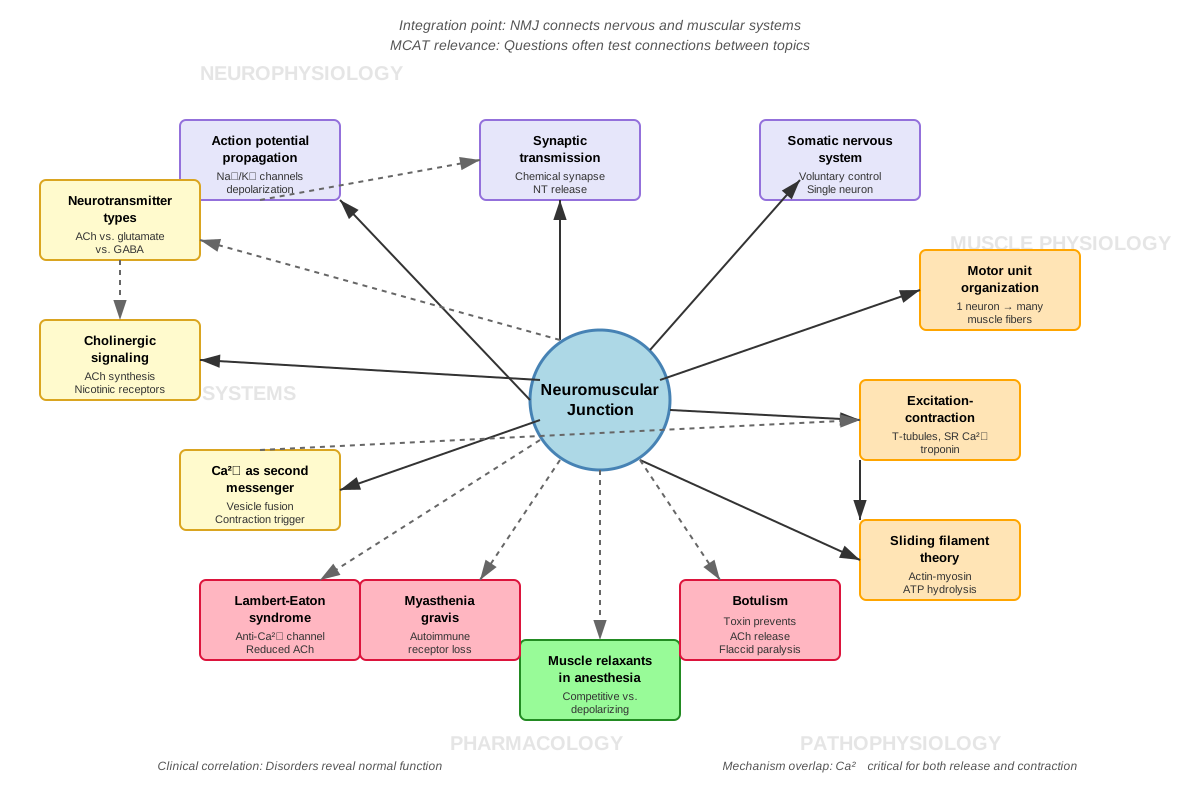
Within the broader framework of Physiology and Organ Systems, the neuromuscular junction connects directly to topics including action potential propagation, muscle contraction mechanisms, autonomic versus somatic nervous system organization, and calcium signaling pathways. Mastery of this topic provides the foundation for understanding how the nervous system controls voluntary movement, how drugs and toxins can disrupt normal function, and how diseases like myasthenia gravis or botulism produce their characteristic symptoms. The neuromuscular junction exemplifies the elegant precision of Biology at the molecular level while demonstrating clinically relevant principles that appear regularly on standardized examinations.
Learning Objectives
- [ ] Define neuromuscular junction using accurate Biology terminology
- [ ] Explain why neuromuscular junction matters for the MCAT
- [ ] Apply neuromuscular junction concepts to exam-style questions
- [ ] Identify common mistakes related to neuromuscular junction
- [ ] Connect neuromuscular junction to related Biology concepts
- [ ] Describe the sequential steps of synaptic transmission at the neuromuscular junction
- [ ] Analyze the effects of pharmacological agents on neuromuscular junction function
- [ ] Predict the physiological consequences of disruptions to neuromuscular junction components
- [ ] Compare and contrast the neuromuscular junction with other types of chemical synapses
Prerequisites
- Action potential generation and propagation: Understanding voltage-gated ion channels and membrane depolarization is essential for comprehending how signals reach the neuromuscular junction
- Neurotransmitter basics: Familiarity with chemical synaptic transmission provides the framework for understanding acetylcholine's role
- Muscle fiber structure: Knowledge of sarcolemma, sarcoplasm, and basic muscle cell organization helps contextualize where the neuromuscular junction interfaces with muscle
- Membrane potential and ion gradients: Understanding electrochemical gradients explains how ion movements generate electrical signals
- Exocytosis and vesicle fusion: Basic cell biology of vesicular transport underlies neurotransmitter release mechanisms
- Receptor types: Distinguishing between ionotropic and metabotropic receptors clarifies nicotinic receptor function
Why This Topic Matters
Clinical and Real-World Significance
The neuromuscular junction represents a critical target for numerous clinical conditions and therapeutic interventions. Myasthenia gravis, an autoimmune disorder where antibodies attack nicotinic acetylcholine receptors, causes progressive muscle weakness and demonstrates the clinical importance of intact neuromuscular transmission. Botulinum toxin (Botox), one of the most potent biological toxins known, prevents acetylcholine release at the neuromuscular junction, causing paralysis—yet in controlled doses, it treats muscle spasticity and cosmetic concerns. Organophosphate pesticides and nerve agents inhibit acetylcholinesterase, causing excessive stimulation of muscle fibers and potentially fatal respiratory paralysis. Understanding neuromuscular junction physiology enables comprehension of these clinically relevant scenarios.
MCAT Exam Statistics and Question Types
The neuromuscular junction appears in approximately 2-4% of MCAT Biology/Biochemistry section questions, with higher frequency in passages involving experimental physiology, pharmacology, or neurological disorders. Questions typically fall into three categories: (1) mechanism-based questions requiring step-by-step understanding of synaptic transmission, (2) pharmacology questions testing knowledge of drugs affecting acetylcholine synthesis, release, receptor binding, or degradation, and (3) experimental interpretation questions where students must analyze data from neuromuscular junction studies. The topic frequently appears in passages discussing muscle physiology, neurological diseases, or drug development.
Common Exam Passage Contexts
MCAT passages featuring the neuromuscular junction often present: experimental designs measuring muscle contraction force in response to nerve stimulation under various drug conditions; clinical vignettes describing patients with muscle weakness requiring differential diagnosis; research passages investigating calcium channel function or vesicle fusion mechanisms; or pharmacological studies examining competitive versus non-competitive receptor antagonists. The neuromuscular junction also appears in questions about the autonomic nervous system (contrasting nicotinic receptors at ganglia versus the NMJ) and in passages discussing evolutionary adaptations or comparative physiology.
Core Concepts
Structure of the Neuromuscular Junction
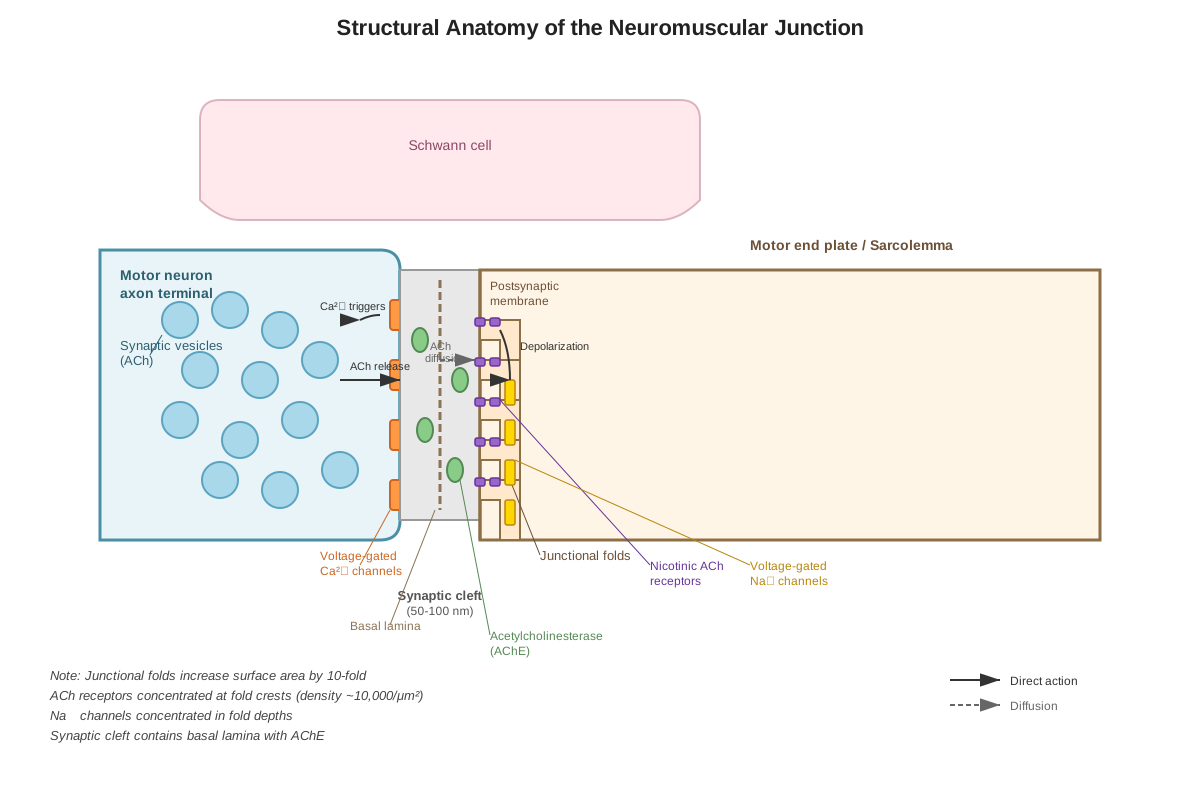
The neuromuscular junction is a specialized chemical synapse formed between the terminal end of a motor neuron axon and a skeletal muscle fiber. This synapse consists of three primary components: the presynaptic terminal (motor neuron ending), the synaptic cleft (narrow space between neuron and muscle), and the postsynaptic membrane (specialized region of the muscle fiber called the motor end plate).
The presynaptic terminal contains numerous synaptic vesicles filled with the neurotransmitter acetylcholine (ACh). Each vesicle contains approximately 5,000-10,000 molecules of acetylcholine. The terminal also houses voltage-gated calcium channels, mitochondria (providing ATP for neurotransmitter synthesis and vesicle recycling), and the molecular machinery necessary for vesicle docking and fusion. The presynaptic membrane contains specialized active zones where vesicles preferentially dock and fuse.
The synaptic cleft at the neuromuscular junction measures approximately 50-100 nanometers wide and contains the enzyme acetylcholinesterase (AChE), which rapidly degrades acetylcholine after its release. This enzyme is crucial for terminating the signal and preventing continuous muscle stimulation.
The postsynaptic membrane, or motor end plate, exhibits extensive folding into junctional folds that dramatically increase surface area. The crests of these folds contain high concentrations of nicotinic acetylcholine receptors (nAChRs), while the troughs contain voltage-gated sodium channels. This spatial organization ensures efficient signal transduction: acetylcholine binding at the crests triggers local depolarization, which then activates sodium channels in the troughs to generate an action potential that propagates along the muscle fiber.
Acetylcholine Synthesis and Storage
Acetylcholine synthesis occurs in the presynaptic terminal through a single enzymatic reaction catalyzed by choline acetyltransferase (ChAT):
Acetyl-CoA + Choline → Acetylcholine + CoAThe acetyl-CoA comes from mitochondrial metabolism, while choline is actively transported into the neuron from the extracellular space via a sodium-dependent choline transporter. After synthesis, acetylcholine is packaged into synaptic vesicles by a vesicular acetylcholine transporter (VAChT) that uses a proton gradient to concentrate the neurotransmitter.
Each motor neuron terminal contains hundreds of thousands of synaptic vesicles, with approximately 1,000 vesicles "docked" and ready for immediate release at any given moment. This large reserve ensures sustained neuromuscular transmission during repetitive stimulation.
Synaptic Transmission Sequence
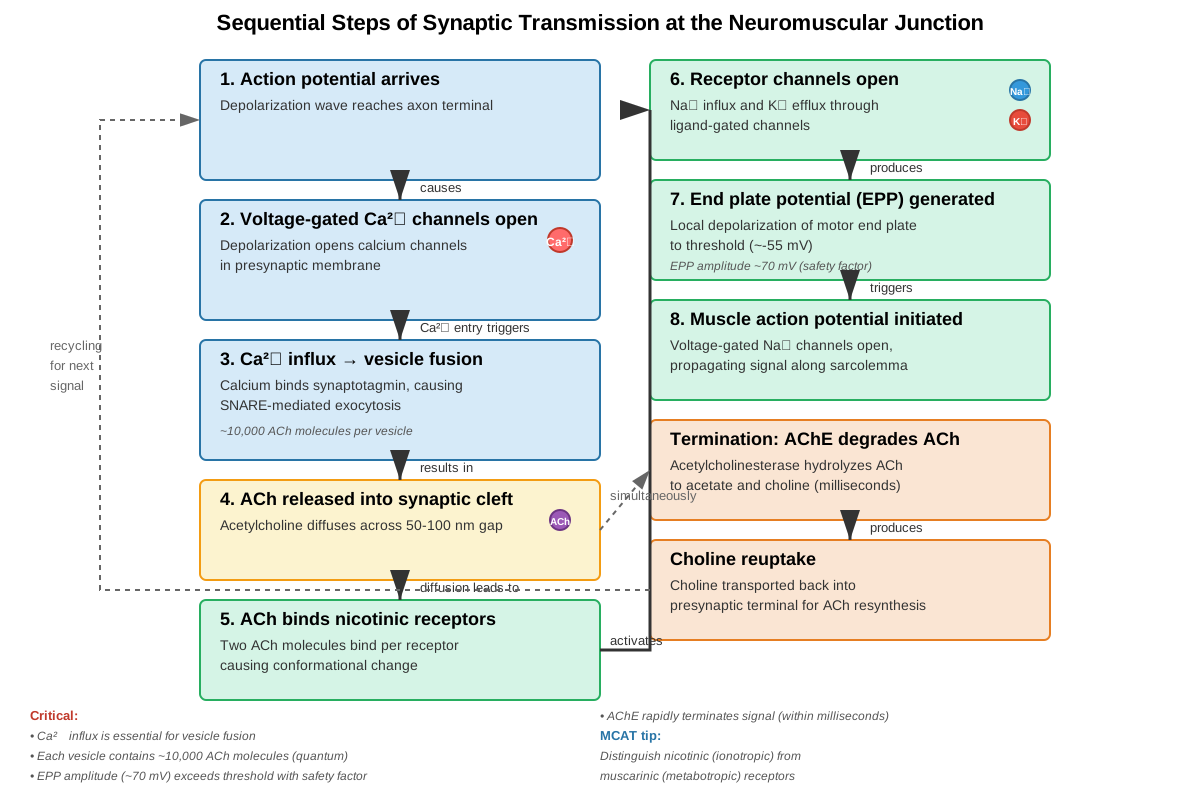
The process of neuromuscular transmission follows a precise sequence:
- Action potential arrival: A nerve action potential propagates down the motor neuron axon and reaches the presynaptic terminal
- Calcium influx: Depolarization opens voltage-gated calcium channels in the presynaptic membrane, allowing Ca²⁺ to flow into the terminal down its concentration gradient (extracellular Ca²⁺ concentration is ~10,000 times higher than intracellular)
- Vesicle fusion: Increased intracellular calcium triggers SNARE protein-mediated fusion of docked vesicles with the presynaptic membrane
- Acetylcholine release: Vesicle fusion releases acetylcholine into the synaptic cleft via exocytosis; typically 100-300 vesicles fuse in response to a single action potential
- Receptor binding: Acetylcholine diffuses across the synaptic cleft (~0.5 milliseconds) and binds to nicotinic receptors on the motor end plate
- Ion channel opening: Nicotinic receptors are ligand-gated ion channels; when two acetylcholine molecules bind to each receptor, the channel opens
- End plate potential: Open nicotinic receptors allow simultaneous influx of Na⁺ and efflux of K⁺, with net depolarization (the end plate potential or EPP)
- Muscle action potential: The end plate potential depolarizes the muscle membrane to threshold, triggering voltage-gated sodium channels in the junctional folds to generate a muscle fiber action potential
- Signal termination: Acetylcholinesterase rapidly hydrolyzes acetylcholine into acetate and choline, terminating the signal within 1-2 milliseconds
Nicotinic Acetylcholine Receptors
The nicotinic acetylcholine receptor at the neuromuscular junction is a pentameric ligand-gated ion channel composed of five protein subunits arranged around a central pore. In adult muscle, the receptor consists of two α subunits, one β subunit, one δ subunit, and one ε subunit (α₂βδε). Each of the two α subunits contains an acetylcholine binding site, and both sites must be occupied for the channel to open efficiently.
When acetylcholine binds, the receptor undergoes a conformational change that opens the central pore, creating a non-selective cation channel permeable to both Na⁺ and K⁺ (and to a lesser extent, Ca²⁺). The driving forces for these ions differ: sodium has a large driving force to enter the cell (both concentration and electrical gradients favor influx), while potassium has a smaller driving force to exit (concentration gradient favors efflux, but electrical gradient opposes it). The net result is depolarization.
The nicotinic receptor at the neuromuscular junction differs from nicotinic receptors in autonomic ganglia and the CNS, which have different subunit compositions. This distinction is clinically relevant because some drugs selectively target muscle-type versus neuronal-type nicotinic receptors.
End Plate Potential and Safety Factor
The end plate potential (EPP) is the local depolarization of the motor end plate caused by acetylcholine binding to nicotinic receptors. Unlike action potentials, the EPP is graded (its amplitude depends on the amount of acetylcholine released) and does not propagate. However, the EPP is normally much larger than necessary to trigger a muscle action potential—typically 70-80 mV depolarization when only 20-30 mV is needed to reach threshold.
This excess depolarization represents the safety factor of neuromuscular transmission, ensuring reliable signal transduction even under suboptimal conditions. The safety factor means that neuromuscular transmission can tolerate significant reductions in acetylcholine release or receptor availability before failing. This concept is crucial for understanding diseases like myasthenia gravis, where antibodies reduce receptor numbers but symptoms only appear when the safety factor is exceeded.
Acetylcholinesterase and Signal Termination
Acetylcholinesterase (AChE) is one of the fastest enzymes known, with each molecule capable of hydrolyzing approximately 25,000 acetylcholine molecules per second. This enzyme is anchored in the synaptic cleft and rapidly breaks down acetylcholine into acetate and choline:
Acetylcholine + H₂O → Acetate + CholineThe choline is then recycled back into the presynaptic terminal via the sodium-dependent choline transporter for resynthesis into acetylcholine. This recycling is essential because choline cannot be synthesized de novo in sufficient quantities.
The rapid degradation of acetylcholine by AChE ensures that each nerve impulse produces only a brief muscle response, allowing precise control of muscle contraction. Without AChE activity, acetylcholine would accumulate in the synaptic cleft, causing continuous receptor activation, sustained depolarization, and eventually muscle paralysis due to receptor desensitization and sodium channel inactivation.
Pharmacological Agents Affecting the Neuromuscular Junction
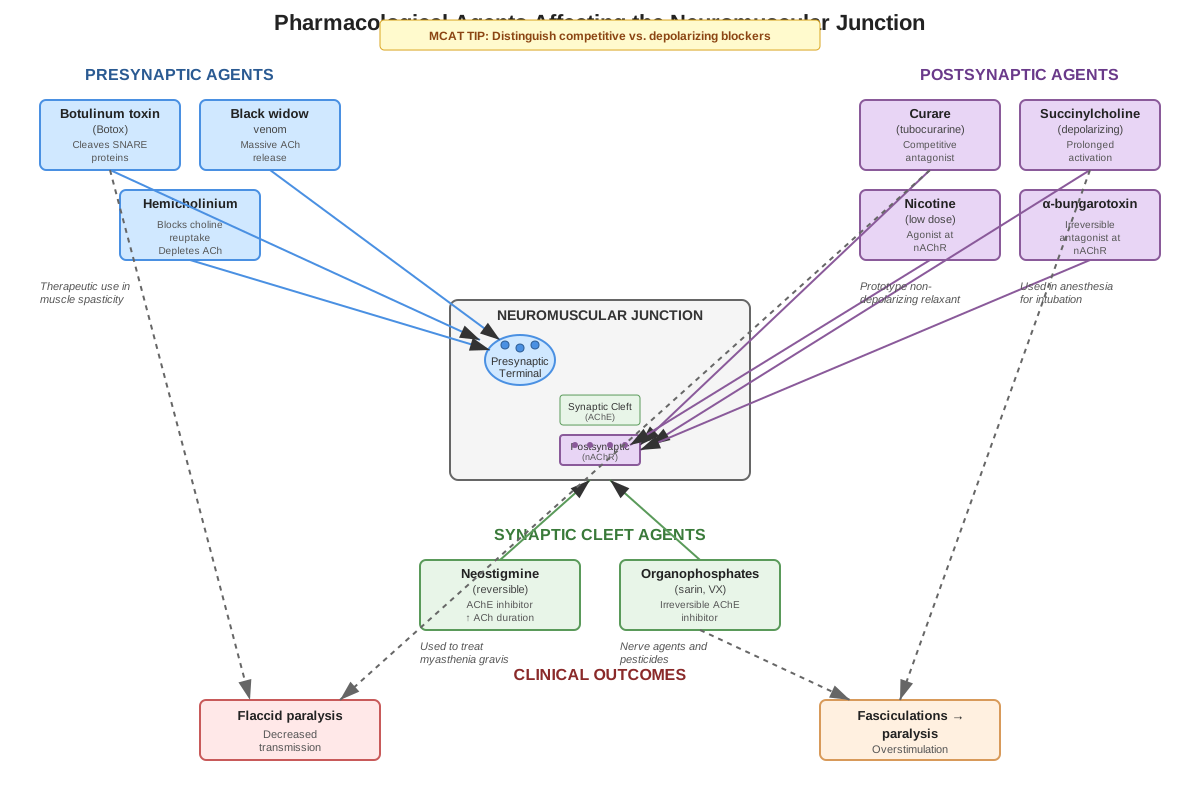
| Drug Class | Mechanism | Effect | Clinical Use/Example |
|---|---|---|---|
| Acetylcholinesterase inhibitors | Prevent ACh breakdown | Prolonged ACh action, enhanced transmission | Neostigmine (myasthenia gravis), organophosphates (pesticides) |
| Competitive antagonists | Block nicotinic receptors | Prevent ACh binding, cause paralysis | Curare, tubocurarine (surgical muscle relaxation) |
| Depolarizing blockers | Activate then desensitize receptors | Initial fasciculation, then paralysis | Succinylcholine (rapid-onset paralysis) |
| Botulinum toxin | Cleaves SNARE proteins | Prevents ACh release | Botox (cosmetic, spasticity treatment) |
| Black widow spider venom | Causes massive ACh release | Excessive stimulation, then depletion | Latrotoxin (research tool) |
| Hemicholinium | Blocks choline reuptake | Depletes ACh synthesis | Research tool only |
Understanding these pharmacological agents is high-yield for the MCAT because questions often present scenarios involving drug effects and ask students to predict physiological outcomes or identify mechanisms of action.
Comparison with Other Synapses
The neuromuscular junction differs from typical CNS synapses in several important ways:
- One-to-one transmission: Each muscle fiber receives input from only one motor neuron, and each action potential in that neuron reliably triggers a muscle action potential (due to the large safety factor)
- No summation required: Unlike CNS neurons that require multiple synaptic inputs to reach threshold, the EPP alone is sufficient to trigger muscle contraction
- Single neurotransmitter: The NMJ uses only acetylcholine, whereas CNS synapses may use glutamate, GABA, dopamine, serotonin, or other transmitters
- Excitatory only: The NMJ always produces excitation, never inhibition
- Structural specialization: The extensive junctional folds and high receptor density are unique to the motor end plate
Concept Relationships
The neuromuscular junction integrates multiple physiological concepts into a unified functional system. Action potential propagation in the motor neuron → triggers voltage-gated calcium channel opening → which causes calcium-dependent exocytosis → releasing acetylcholine → which binds to nicotinic receptors → opening ligand-gated ion channels → producing the end plate potential → which activates voltage-gated sodium channels → generating a muscle action potential → that propagates along the sarcolemma and into T-tubules → triggering excitation-contraction coupling and ultimately muscle contraction.
This sequence connects to prerequisite knowledge of membrane potentials and ion gradients, which determine the driving forces for ion movement through nicotinic receptors. The calcium-dependent vesicle fusion mechanism relates to broader cell biology concepts of membrane trafficking and SNARE protein function. The pharmacology of the neuromuscular junction connects to receptor theory, competitive versus non-competitive inhibition, and drug-receptor interactions.
The neuromuscular junction also relates to the autonomic nervous system through the shared use of nicotinic receptors at autonomic ganglia (though with different subunit compositions). Understanding the NMJ provides a foundation for learning about other cholinergic synapses, including muscarinic receptors in the parasympathetic nervous system. The concept of the safety factor relates to homeostatic mechanisms and physiological reserve capacity seen in other organ systems.
Pathophysiologically, neuromuscular junction dysfunction connects to immunology (autoimmune disorders like myasthenia gravis), toxicology (organophosphate poisoning, botulism), and neurodegenerative diseases (Lambert-Eaton myasthenic syndrome). These clinical connections make the neuromuscular junction a frequent topic in MCAT passages that integrate multiple disciplines.
Quick check — test yourself on Neuromuscular junction so far.
Try Flashcards →High-Yield Facts
⭐ The neuromuscular junction uses acetylcholine as its sole neurotransmitter, released from the presynaptic motor neuron terminal
⭐ Nicotinic acetylcholine receptors at the NMJ are ligand-gated ion channels that require binding of two ACh molecules to open
⭐ Acetylcholinesterase rapidly degrades acetylcholine in the synaptic cleft, terminating the signal within 1-2 milliseconds
⭐ The end plate potential normally exceeds threshold by a large margin (safety factor), ensuring reliable neuromuscular transmission
⭐ Voltage-gated calcium channels in the presynaptic terminal are essential for triggering neurotransmitter release
- The motor end plate contains extensive junctional folds that increase surface area and concentrate nicotinic receptors at the crests
- Each synaptic vesicle contains approximately 5,000-10,000 molecules of acetylcholine
- Choline acetyltransferase synthesizes acetylcholine from acetyl-CoA and choline in the presynaptic terminal
- Competitive antagonists like curare block nicotinic receptors without activating them, causing flaccid paralysis
- Acetylcholinesterase inhibitors (neostigmine, organophosphates) prolong acetylcholine action and can treat myasthenia gravis or cause toxicity
- Botulinum toxin prevents acetylcholine release by cleaving SNARE proteins necessary for vesicle fusion
- Myasthenia gravis involves autoantibodies against nicotinic receptors, reducing the safety factor and causing muscle weakness
- The neuromuscular junction exhibits one-to-one transmission: each motor neuron action potential reliably triggers a muscle fiber action potential
- Nicotinic receptors are non-selective cation channels permeable to Na⁺, K⁺, and Ca²⁺, with net depolarizing effect
- Depolarizing blockers like succinylcholine initially activate receptors (causing fasciculations) then cause desensitization and paralysis
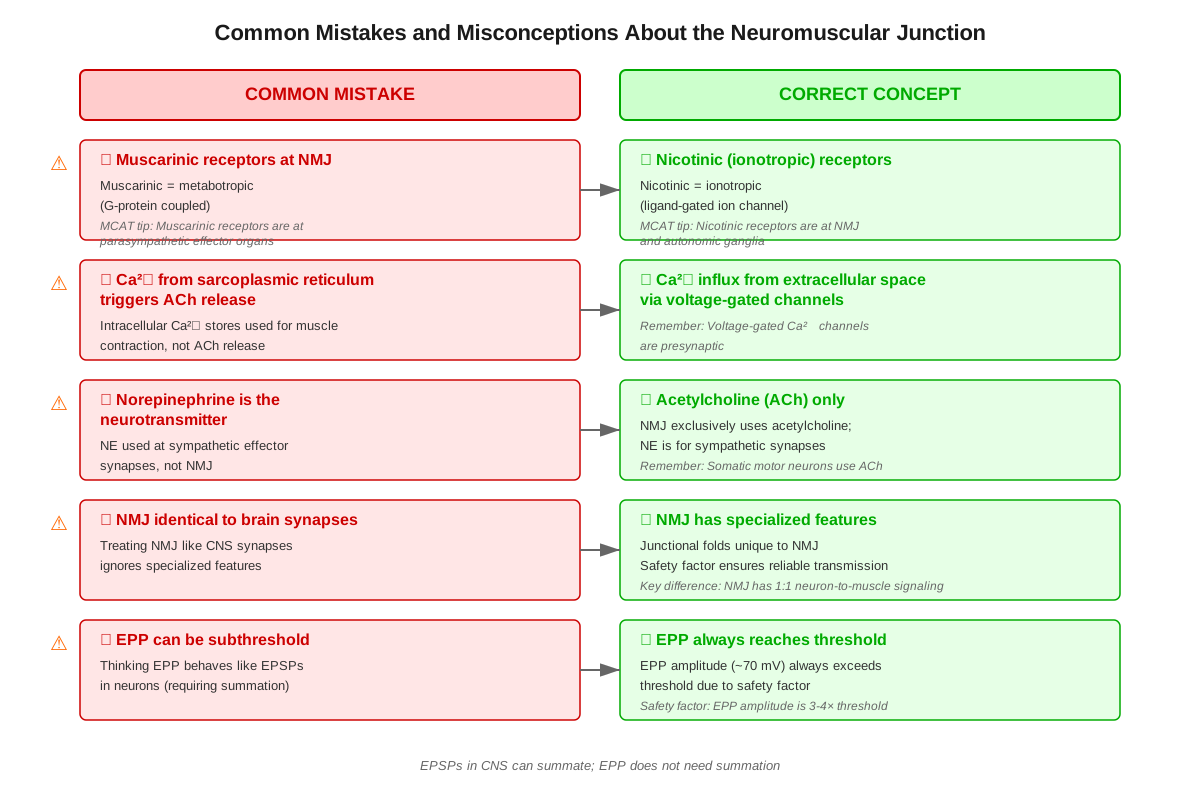
Common Misconceptions
Misconception: Acetylcholine directly causes muscle contraction.
Correction: Acetylcholine triggers the end plate potential, which generates a muscle action potential that propagates along the sarcolemma and into T-tubules. This action potential then triggers calcium release from the sarcoplasmic reticulum through excitation-contraction coupling, and it is this calcium that directly causes contraction by binding to troponin. Acetylcholine is several steps removed from the actual contractile mechanism.
Misconception: The neuromuscular junction uses the same nicotinic receptors found in the brain and autonomic ganglia.
Correction: While all nicotinic receptors share the same basic pentameric structure and acetylcholine binding mechanism, the specific subunit composition differs. Muscle-type nicotinic receptors (α₂βδε in adults) differ from neuronal-type receptors, which is why some drugs can selectively target one type over another. This distinction has important pharmacological implications.
Misconception: Acetylcholinesterase inhibitors strengthen muscle contraction by increasing acetylcholine levels.
Correction: While AChE inhibitors do increase acetylcholine availability and can improve transmission in conditions like myasthenia gravis, excessive inhibition leads to continuous receptor activation, receptor desensitization, and eventually depolarization block where the muscle membrane remains depolarized and cannot generate new action potentials. This is why organophosphate poisoning causes initial muscle fasciculations followed by paralysis.
Misconception: The end plate potential is an action potential.
Correction: The end plate potential is a graded, local depolarization that does not propagate and does not exhibit the all-or-none property of action potentials. It results from the opening of ligand-gated channels (nicotinic receptors) rather than voltage-gated channels. However, if the EPP is large enough to depolarize the adjacent membrane to threshold, it triggers a true action potential in the muscle fiber via voltage-gated sodium channels.
Misconception: Each muscle fiber receives input from multiple motor neurons, allowing for graded control of contraction.
Correction: Each skeletal muscle fiber is innervated by only one motor neuron at a single neuromuscular junction. Graded control of muscle force is achieved through motor unit recruitment (activating different numbers of motor neurons, each of which innervates multiple muscle fibers) and rate coding (varying the frequency of action potentials), not through summation of inputs from multiple neurons to a single fiber.
Misconception: Botulinum toxin and curare both cause paralysis, so they work through the same mechanism.
Correction: These agents cause paralysis through entirely different mechanisms. Botulinum toxin prevents acetylcholine release from the presynaptic terminal by cleaving SNARE proteins, so no neurotransmitter reaches the receptors. Curare blocks nicotinic receptors on the postsynaptic membrane, preventing acetylcholine from binding even though it is released normally. This distinction is important for understanding treatment approaches and physiological effects.
Misconception: Calcium enters the muscle fiber through nicotinic receptors to trigger contraction.
Correction: While nicotinic receptors are permeable to calcium, the small amount entering through these channels does not directly trigger contraction. Instead, the depolarization caused by nicotinic receptor activation propagates as an action potential into the T-tubules, where it triggers voltage-sensitive dihydropyridine receptors that mechanically open ryanodine receptors on the sarcoplasmic reticulum, releasing large amounts of stored calcium into the sarcoplasm. This calcium then binds to troponin to initiate contraction.
Worked Examples
Example 1: Pharmacology Question
Question: A patient undergoing surgery receives succinylcholine to facilitate intubation. The anesthesiologist observes brief muscle fasciculations followed by flaccid paralysis. Which of the following best explains this sequence of events?
A) Succinylcholine blocks acetylcholine receptors, preventing depolarization
B) Succinylcholine activates acetylcholine receptors but is not degraded by acetylcholinesterase, causing sustained depolarization and receptor desensitization
C) Succinylcholine inhibits acetylcholinesterase, causing acetylcholine accumulation
D) Succinylcholine prevents acetylcholine release from motor neurons
Worked Solution:
Step 1: Identify what type of drug succinylcholine is. Succinylcholine is a depolarizing neuromuscular blocker, meaning it activates nicotinic receptors rather than blocking them.
Step 2: Explain the initial fasciculations. When succinylcholine binds to nicotinic receptors, it activates them just like acetylcholine would, causing depolarization and initial muscle contraction (fasciculations). This eliminates option A, which describes a competitive antagonist.
Step 3: Explain the subsequent paralysis. Unlike acetylcholine, succinylcholine is not rapidly degraded by acetylcholinesterase. It remains bound to receptors, causing sustained depolarization. This sustained depolarization leads to two problems: (1) nicotinic receptors become desensitized and stop responding, and (2) voltage-gated sodium channels in the muscle membrane become inactivated due to the sustained depolarization, preventing new action potentials. This is called "depolarization block."
Step 4: Eliminate incorrect options. Option C describes an AChE inhibitor (like neostigmine), not succinylcholine. Option D describes botulinum toxin's mechanism. Option B correctly describes succinylcholine's mechanism.
Answer: B
Key Concept: This question tests understanding of depolarizing versus non-depolarizing neuromuscular blockers and the concept of depolarization block. The MCAT frequently presents pharmacology questions requiring mechanistic understanding rather than simple memorization.
Example 2: Experimental Interpretation
Question: Researchers studying neuromuscular transmission measure the amplitude of end plate potentials (EPPs) under various conditions. They find that when they reduce extracellular calcium concentration from 2 mM to 0.5 mM, the EPP amplitude decreases from 80 mV to 25 mV, but muscle action potentials still occur. When they add a drug that blocks 50% of nicotinic receptors, the EPP decreases from 80 mV to 40 mV, and muscle action potentials still occur. However, when they combine low calcium (0.5 mM) with 50% receptor blockade, muscle action potentials fail to occur. Which concept best explains these results?
A) Calcium is required for acetylcholine synthesis
B) The safety factor of neuromuscular transmission
C) Receptor desensitization
D) Competitive inhibition
Worked Solution:
Step 1: Analyze the normal condition. The baseline EPP of 80 mV is much larger than the typical threshold of ~20-30 mV needed to trigger a muscle action potential. This excess represents the safety factor.
Step 2: Analyze the low calcium condition. Reducing extracellular calcium decreases calcium influx into the presynaptic terminal, reducing the number of vesicles that fuse and thus the amount of acetylcholine released. The EPP drops to 25 mV, which is still above threshold, so action potentials still occur. The safety factor has been reduced but not eliminated.
Step 3: Analyze the receptor blockade condition. Blocking 50% of receptors reduces the postsynaptic response to acetylcholine. The EPP drops to 40 mV, still well above threshold. Again, the safety factor is reduced but adequate.
Step 4: Analyze the combined condition. When both challenges are applied simultaneously, the EPP falls below threshold (implied by the failure of action potentials). The safety factor has been exceeded—the combination of reduced transmitter release and reduced receptor availability is too much.
Step 5: Connect to the concept. This demonstrates the safety factor: neuromuscular transmission can tolerate significant impairment of either presynaptic or postsynaptic function alone, but not both simultaneously. This is why myasthenia gravis patients (reduced receptors) may be asymptomatic until stressed, or why Lambert-Eaton syndrome patients (reduced ACh release) show weakness that worsens with activity.
Answer: B
Key Concept: This question tests quantitative understanding of the safety factor and the ability to interpret experimental data. MCAT passages often present data requiring students to integrate multiple concepts and predict outcomes under different conditions.
Exam Strategy
Approaching Neuromuscular Junction Questions
When encountering MCAT questions about the neuromuscular junction, follow this systematic approach:
- Identify the level of organization: Is the question asking about molecular mechanisms (receptor structure, enzyme kinetics), cellular processes (vesicle fusion, action potentials), or systemic effects (muscle weakness, paralysis)?
- Trace the signal pathway: For mechanism questions, mentally walk through the sequence from action potential arrival → calcium influx → ACh release → receptor binding → EPP → muscle action potential. Identify where in this sequence the question focuses.
- Consider both presynaptic and postsynaptic factors: Many questions present scenarios affecting either neurotransmitter release (presynaptic) or receptor function (postsynaptic). Distinguishing between these is often key to selecting the correct answer.
- Apply pharmacological reasoning: For drug-related questions, determine whether the agent affects synthesis, release, receptor binding, or degradation of acetylcholine. Then predict the physiological consequence.
Trigger Words and Phrases
Watch for these high-yield terms that signal specific concepts:
- "Muscle weakness that worsens with activity": Suggests myasthenia gravis (antibodies against receptors, depleting the safety factor)
- "Muscle weakness that improves with activity": Suggests Lambert-Eaton syndrome (antibodies against presynaptic calcium channels, but repeated stimulation partially overcomes this)
- "Fasciculations followed by paralysis": Indicates depolarizing blocker (succinylcholine) or excessive AChE inhibition
- "Flaccid paralysis without fasciculations": Suggests competitive antagonist (curare) or botulinum toxin
- "Calcium-dependent": Refers to presynaptic vesicle fusion and neurotransmitter release
- "Ligand-gated": Describes nicotinic receptors (versus voltage-gated channels)
- "Safety factor": Relates to the excess EPP amplitude beyond threshold
Process of Elimination Tips
- If a question asks about muscle paralysis, eliminate options suggesting increased muscle contraction or spasticity
- For pharmacology questions, if the drug affects the presynaptic terminal, eliminate answers describing postsynaptic receptor changes
- If acetylcholine levels are increased (AChE inhibitors), eliminate answers suggesting decreased neuromuscular transmission (though be aware of desensitization at high concentrations)
- For questions about receptor types, remember that the NMJ uses nicotinic (not muscarinic) receptors—eliminate muscarinic options
- If calcium is removed or blocked, neurotransmitter release will be impaired—eliminate answers suggesting normal or increased release
Time Allocation
Neuromuscular junction questions typically require 60-90 seconds. Straightforward mechanism questions (e.g., "What ion triggers neurotransmitter release?") should take 30-45 seconds. Complex pharmacology or experimental interpretation questions may require up to 2 minutes. If a passage presents detailed experimental data about the NMJ, budget 8-10 minutes for the entire passage, as these often include multiple questions requiring careful analysis.
Exam Tip: When facing a complex pharmacology question, draw a simple diagram of the NMJ and mark where the drug acts. This visual approach helps prevent confusion between presynaptic and postsynaptic effects.
Memory Techniques
Mnemonic for Synaptic Transmission Sequence
"Arriving Calcium Vessels Release Acetylcholine, Receptors Open, Ending Muscle Silence"
- Arriving = Action potential arrives
- Calcium = Calcium channels open
- Vessels = Vesicles fuse
- Release = Release of acetylcholine
- Acetylcholine = ACh crosses cleft
- Receptors = Receptors bind ACh
- Open = Channels open
- Ending = End plate potential
- Muscle = Muscle action potential
- Silence = Signal terminated by AChE
Visualization Strategy
Picture the neuromuscular junction as a "dock and ship" system:
- The motor neuron terminal is a dock with cargo ships (vesicles) loaded with packages (ACh)
- Calcium is the signal that tells ships to unload
- The synaptic cleft is the water the packages must cross
- Nicotinic receptors are receiving doors that open when packages arrive
- Acetylcholinesterase is a cleanup crew that immediately removes packages
- The muscle fiber is the warehouse that responds when enough packages arrive
This metaphor helps remember that calcium triggers release, ACh must cross a gap, receptors must open to receive the signal, and rapid cleanup prevents accumulation.
Acronym for Pharmacological Agents
"CRAB Blocks Muscles"
- Competitive antagonists (Curare)
- Release preventers (Botulinum toxin)
- AChE inhibitors (cause excessive stimulation)
- Blockers, depolarizing (Succinylcholine)
Memory Aid for Safety Factor
Remember: "The NMJ has insurance" — just like insurance provides a safety buffer, the large EPP provides a safety factor ensuring reliable transmission even when function is partially compromised.
Summary
The neuromuscular junction represents the critical interface where motor neurons communicate with skeletal muscle fibers through chemical synaptic transmission. This specialized synapse uses acetylcholine as its neurotransmitter, which is synthesized in the presynaptic terminal, stored in vesicles, and released in a calcium-dependent manner when an action potential arrives. The released acetylcholine crosses the synaptic cleft and binds to nicotinic acetylcholine receptors on the motor end plate—ligand-gated ion channels that open to allow sodium and potassium flux, generating the end plate potential. This local depolarization normally exceeds threshold by a large margin (the safety factor), reliably triggering a muscle action potential that propagates along the sarcolemma to initiate contraction. Acetylcholinesterase rapidly terminates the signal by degrading acetylcholine in the cleft. Understanding the neuromuscular junction requires integrating knowledge of action potentials, calcium-dependent exocytosis, receptor pharmacology, and the distinction between graded potentials and action potentials. This topic is clinically relevant for understanding disorders like myasthenia gravis, the mechanisms of neuromuscular blocking drugs used in anesthesia, and the effects of toxins like botulinum toxin and organophosphates. For the MCAT, students must be able to trace the complete sequence of neuromuscular transmission, predict the effects of pharmacological interventions, and interpret experimental data involving this system.
Key Takeaways
- The neuromuscular junction is a chemical synapse using acetylcholine to transmit signals from motor neurons to skeletal muscle fibers
- Calcium influx into the presynaptic terminal triggers vesicle fusion and neurotransmitter release through SNARE protein-mediated exocytosis
- Nicotinic acetylcholine receptors are ligand-gated ion channels requiring two ACh molecules to bind for channel opening
- The end plate potential normally exceeds threshold by a large safety factor, ensuring reliable one-to-one transmission
- Acetylcholinesterase rapidly degrades acetylcholine to terminate the signal and prevent continuous stimulation
- Drugs affecting the NMJ can target synthesis, release, receptor binding, or degradation of acetylcholine, each producing distinct physiological effects
- Understanding the distinction between presynaptic (release) and postsynaptic (receptor) mechanisms is essential for analyzing pharmacology and pathophysiology questions
Related Topics
Muscle Contraction Mechanism: After mastering the neuromuscular junction, students should study excitation-contraction coupling, the sliding filament theory, and the role of calcium in regulating troponin-tropomyosin interactions. The NMJ provides the electrical signal that initiates this entire process.
Autonomic Nervous System: The autonomic ganglia also use nicotinic receptors (though with different subunit composition), while postganglionic parasympathetic neurons use muscarinic receptors. Understanding the NMJ provides a foundation for distinguishing these receptor types.
Synaptic Transmission in the CNS: The principles learned at the NMJ—calcium-dependent release, receptor binding, signal termination—apply to CNS synapses, though with greater complexity due to multiple neurotransmitters, summation requirements, and both excitatory and inhibitory inputs.
Membrane Potentials and Ion Channels: Deeper study of voltage-gated and ligand-gated channels, electrochemical gradients, and the Nernst and Goldman equations builds on the ion movements occurring at the NMJ.
Immunology and Autoimmune Disorders: Myasthenia gravis exemplifies how antibodies can disrupt normal physiological function, connecting neuromuscular junction knowledge to immunological concepts.
Practice CTA
Now that you've mastered the neuromuscular junction, it's time to test your understanding with practice questions and flashcards. Focus on questions that require you to trace the complete sequence of synaptic transmission, predict the effects of pharmacological agents, and interpret experimental data. Pay special attention to questions integrating multiple concepts—these mirror the complexity of actual MCAT passages. Remember that understanding the mechanisms deeply will allow you to tackle novel scenarios confidently, even if you haven't seen that specific question before. The neuromuscular junction is a high-yield topic that connects to numerous other concepts in physiology, pharmacology, and pathology, so mastering it now will pay dividends throughout your MCAT preparation. You've got this!
Sign up free to keep reading
Create a free AnvayaPrep account to finish this MCAT guide on Neuromuscular junction — plus flashcards and practice questions.