Overview
Skeletal muscle contraction represents one of the most fundamental physiological processes tested on the MCAT, bridging molecular biology, biochemistry, and physiology. This process involves the coordinated interaction of proteins, ions, and energy molecules to produce the mechanical force that enables voluntary movement. Understanding skeletal muscle contraction requires integrating knowledge of cellular structure, membrane potentials, signal transduction, and ATP metabolism—making it a high-yield topic that frequently appears in both passage-based and discrete questions on the exam.
The mechanism of skeletal muscle contraction Biology centers on the sliding filament theory, where thick and thin filaments slide past one another without changing length, powered by ATP hydrolysis and regulated by calcium ions. This elegant molecular machinery demonstrates how cells convert chemical energy into mechanical work, a concept that extends beyond muscle physiology to broader themes in Physiology and Organ Systems. The MCAT tests not only the memorization of steps but also the ability to predict outcomes when components fail, interpret experimental data about muscle function, and connect molecular events to tissue-level responses.
For skeletal muscle contraction MCAT preparation, students must master the sequence of events from neural stimulation through force generation, understand the roles of key proteins (actin, myosin, troponin, tropomyosin), and recognize how calcium serves as the critical regulatory ion. This topic connects directly to the nervous system (motor neurons and neuromuscular junctions), energy metabolism (ATP and creatine phosphate), and cellular respiration, making it a nexus point for integrating multiple Biology concepts. Questions often present experimental scenarios involving muscle fatigue, drug effects on neuromuscular transmission, or genetic mutations affecting contractile proteins, requiring both conceptual understanding and analytical reasoning.
Learning Objectives
- [ ] Define skeletal muscle contraction using accurate Biology terminology
- [ ] Explain why skeletal muscle contraction matters for the MCAT
- [ ] Apply skeletal muscle contraction to exam-style questions
- [ ] Identify common mistakes related to skeletal muscle contraction
- [ ] Connect skeletal muscle contraction to related Biology concepts
- [ ] Diagram and explain the complete sequence of events in the cross-bridge cycle
- [ ] Predict the effects of calcium concentration changes on muscle contraction
- [ ] Analyze experimental data involving muscle contraction under various conditions
- [ ] Distinguish between the molecular events at the neuromuscular junction and within the muscle fiber
Prerequisites
- Action potential propagation: Understanding how electrical signals travel along membranes is essential for comprehending how motor neurons trigger muscle contraction
- ATP structure and hydrolysis: The energy currency that powers myosin movement and calcium pumping must be understood at the molecular level
- Protein structure: Knowledge of primary through quaternary structure helps explain how conformational changes in myosin and troponin enable contraction
- Membrane transport: Familiarity with ion channels and active transport mechanisms underlies calcium regulation
- Cell structure: Understanding organelles, particularly the sarcoplasmic reticulum and T-tubules, provides the anatomical framework for contraction
Why This Topic Matters
Skeletal muscle contraction has profound clinical significance, as disorders affecting any step in the contraction process can cause debilitating diseases. Myasthenia gravis (autoimmune destruction of acetylcholine receptors), muscular dystrophies (defective structural proteins), malignant hyperthermia (uncontrolled calcium release), and botulism (blocked neurotransmitter release) all directly involve components of the contraction mechanism. Understanding normal muscle physiology enables medical professionals to diagnose, treat, and prevent these conditions.
On the MCAT, skeletal muscle contraction appears in approximately 2-4 questions per exam, representing a medium-yield topic that can significantly impact scores when mastered. Questions typically appear in Biology passages within the Physiology and Organ Systems section, often integrated with biochemistry concepts. The topic appears in three main formats: (1) passage-based questions presenting experimental manipulations of muscle function, (2) discrete questions testing knowledge of the contraction sequence or protein functions, and (3) pseudo-discrete questions embedded in clinical vignettes about neuromuscular disorders.
Common exam scenarios include passages describing research on muscle fatigue mechanisms, the effects of drugs or toxins on neuromuscular transmission, genetic mutations affecting contractile proteins, or comparative physiology examining different muscle fiber types. The MCAT frequently tests the ability to interpret graphs showing force-length relationships, calcium transients, or ATP consumption during contraction. Questions may also require students to predict outcomes when specific steps are blocked or enhanced, making mechanistic understanding more valuable than simple memorization.
Core Concepts
Structural Organization of Skeletal Muscle
Skeletal muscle exhibits a hierarchical organization from the whole muscle down to molecular components. Each muscle consists of bundles of muscle fibers (individual muscle cells), which are multinucleated cells formed by fusion of myoblasts during development. Within each fiber lie hundreds of myofibrils, cylindrical structures containing the contractile machinery. Myofibrils display a characteristic striated (striped) appearance due to the regular arrangement of thick and thin filaments.
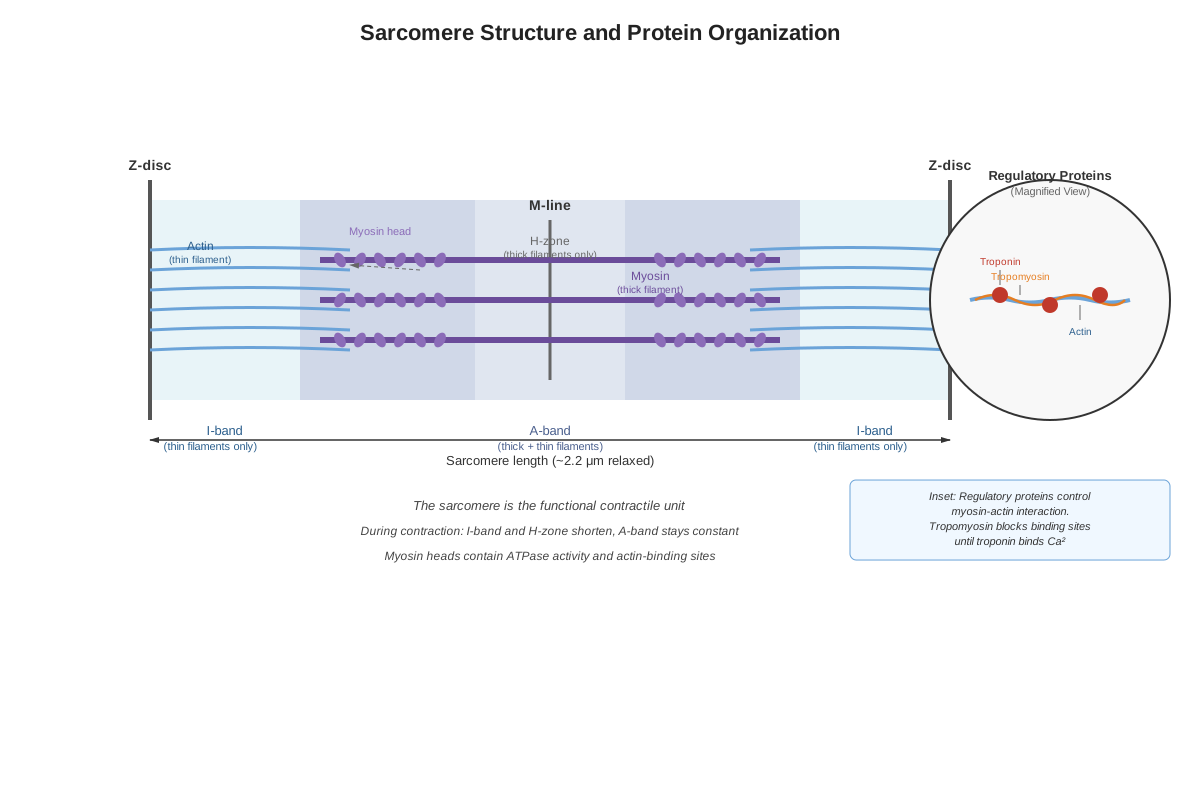
The repeating functional unit of a myofibril is the sarcomere, defined as the region between two Z-lines (also called Z-discs). Each sarcomere contains overlapping thick and thin filaments organized into distinct bands visible under microscopy:
- A-band: The dark band containing the entire length of thick filaments, including regions where thick and thin filaments overlap
- I-band: The light band containing only thin filaments, spanning from the Z-line to where thick filaments begin
- H-zone: The central region of the A-band containing only thick filaments (no overlap)
- M-line: The middle of the sarcomere where thick filaments are anchored
Molecular Components of the Contractile Apparatus
Thin filaments consist primarily of actin, a globular protein (G-actin) that polymerizes into filamentous actin (F-actin) forming a double helix. Each thin filament also contains two regulatory proteins:
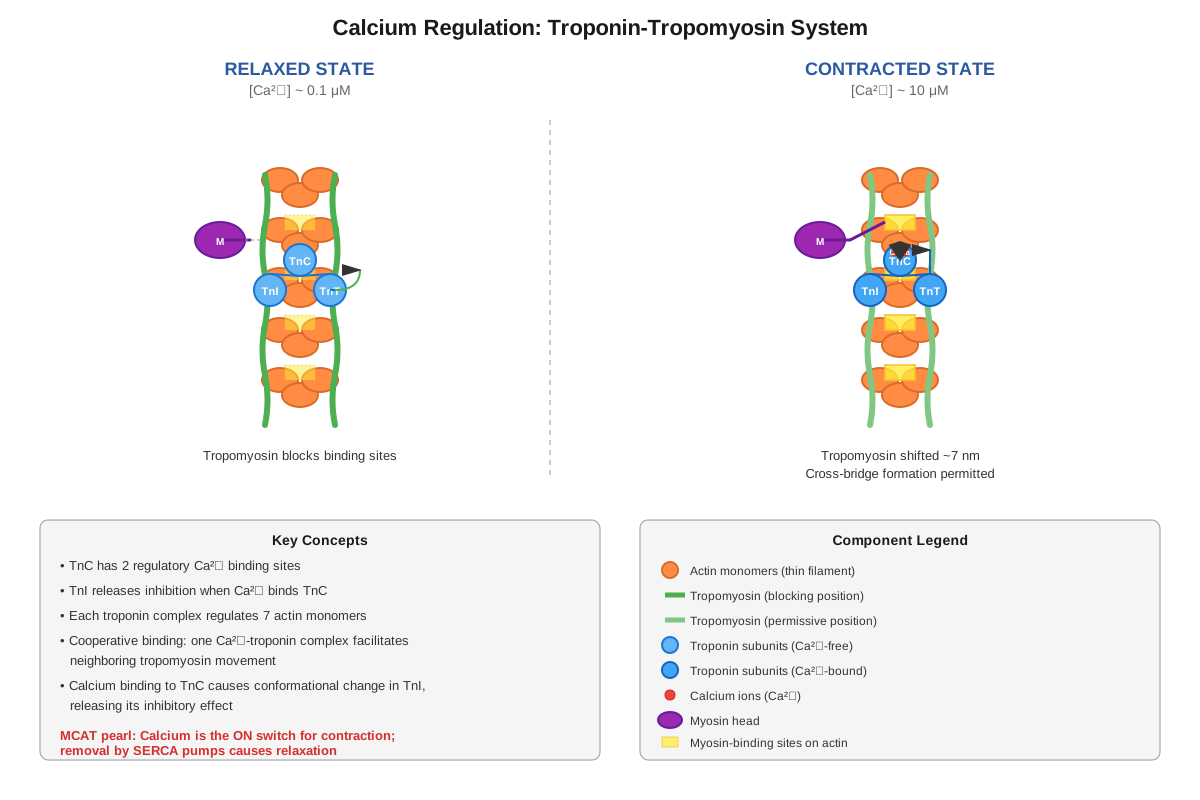
- Tropomyosin: A rod-shaped protein that wraps around the actin helix, physically blocking myosin-binding sites on actin in the relaxed state
- Troponin: A complex of three subunits (TnT binds tropomyosin, TnI inhibits actin-myosin interaction, TnC binds calcium ions)
Thick filaments consist of myosin II molecules, each containing two heavy chains and four light chains. The heavy chains form a long tail region and two globular head regions. The myosin heads contain an actin-binding site and an ATP-binding site with ATPase activity. Approximately 300 myosin molecules arrange in each thick filament with heads projecting outward at regular intervals, creating potential cross-bridges with thin filaments.
The Sliding Filament Theory
The sliding filament theory explains that muscle contraction occurs when thin filaments slide past thick filaments toward the center of the sarcomere, without either filament changing length. During contraction:
- The I-band shortens (less exposed thin filament)
- The H-zone shortens or disappears (increased overlap)
- The A-band remains constant (thick filament length unchanged)
- The sarcomere shortens overall
- Z-lines move closer together
This sliding is powered by the cyclical formation and breaking of cross-bridges between myosin heads and actin, with each cycle consuming one ATP molecule and producing a small movement (approximately 10 nanometers per cycle).
Excitation-Contraction Coupling
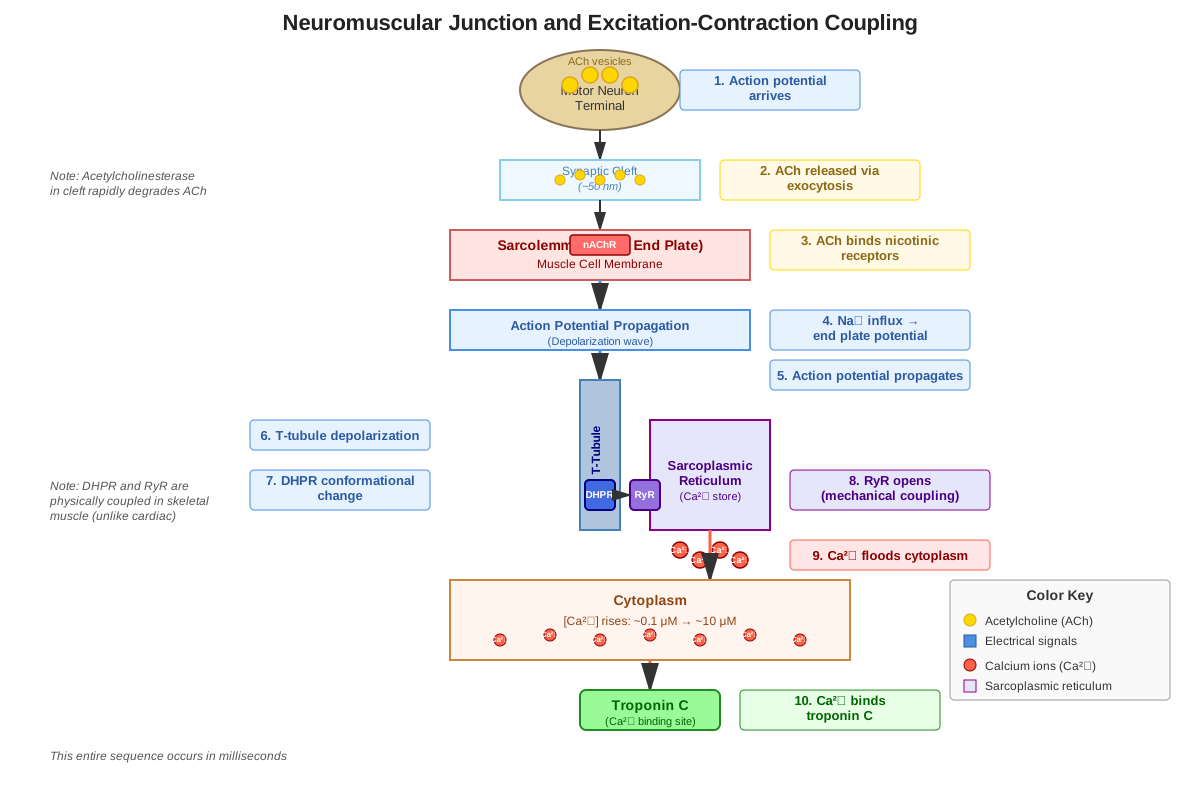
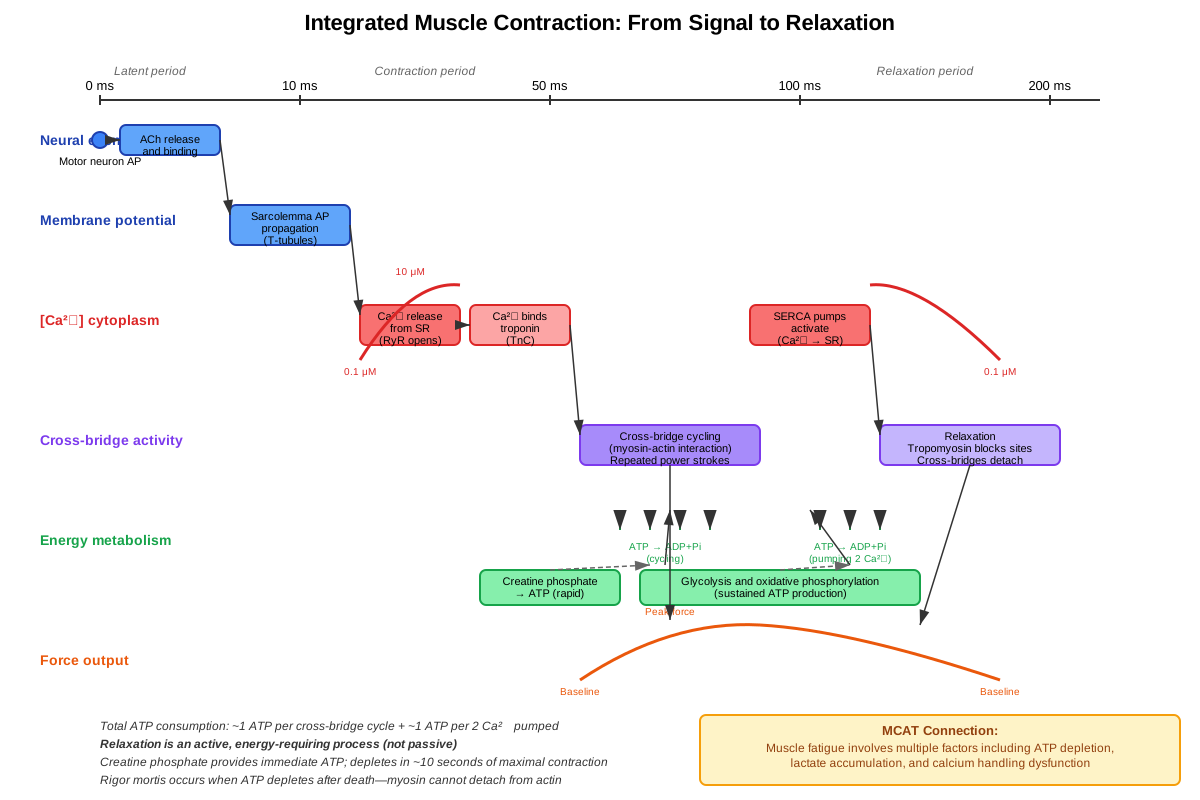
Excitation-contraction coupling describes the process linking electrical excitation of the muscle fiber membrane to mechanical contraction. The sequence begins when a motor neuron releases acetylcholine at the neuromuscular junction:
- Neuromuscular transmission: Acetylcholine binds to nicotinic receptors on the motor end plate, opening ligand-gated sodium channels
- End-plate potential: Local depolarization reaches threshold, triggering an action potential in the muscle fiber membrane (sarcolemma)
- Action potential propagation: The action potential spreads along the sarcolemma and into T-tubules (transverse tubules), invaginations that penetrate deep into the fiber
- Calcium release: Voltage sensors (dihydropyridine receptors) in T-tubule membranes undergo conformational changes that mechanically open ryanodine receptors (calcium channels) in the adjacent sarcoplasmic reticulum membrane
- Calcium binding: Released calcium ions flood the sarcoplasm, binding to troponin C subunits
- Regulatory protein movement: Calcium binding causes troponin to change conformation, pulling tropomyosin away from myosin-binding sites on actin
- Cross-bridge formation: Exposed binding sites allow myosin heads to attach to actin
The Cross-Bridge Cycle
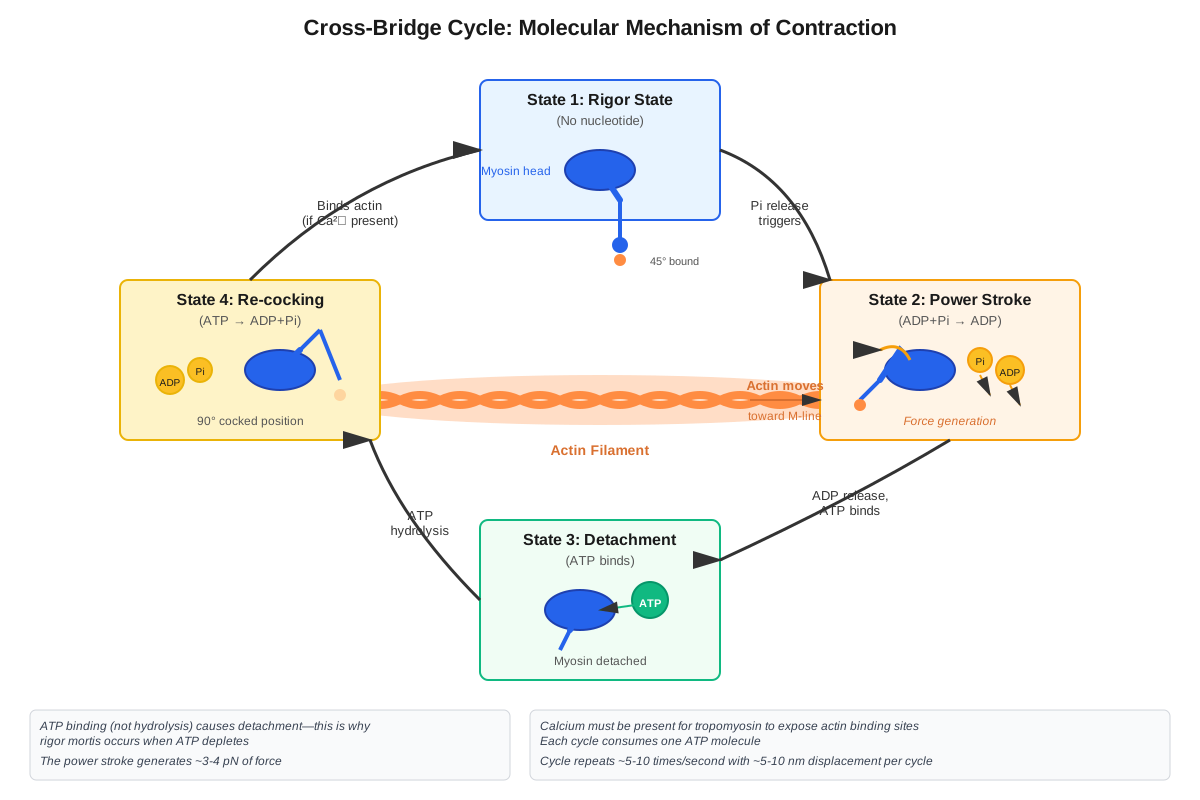
The cross-bridge cycle represents the molecular mechanism of force generation, consisting of four main steps that repeat as long as ATP and calcium remain available:
- Attachment (cross-bridge formation): The myosin head, with ADP and inorganic phosphate (Pi) bound, attaches to the exposed binding site on actin, forming a cross-bridge
- Power stroke: Release of Pi triggers a conformational change in the myosin head, causing it to pivot and pull the thin filament toward the M-line. ADP is released during or after this stroke, generating approximately 3-4 piconewtons of force
- Detachment: A new ATP molecule binds to the myosin head, causing it to release from actin. Without ATP, myosin remains bound (as in rigor mortis)
- Reactivation (cocking): ATP hydrolysis to ADP + Pi provides energy for the myosin head to return to its high-energy "cocked" position, ready to bind actin again at a site further along the thin filament
This cycle repeats hundreds of times per second during contraction, with multiple myosin heads working asynchronously to produce smooth, sustained force.
Muscle Relaxation
Relaxation occurs when neural stimulation ceases and calcium is actively removed from the sarcoplasm:
- Calcium reuptake: SERCA pumps (Sarcoplasmic/Endoplasmic Reticulum Calcium ATPases) actively transport calcium back into the sarcoplasmic reticulum, using ATP
- Regulatory protein reset: As calcium concentration drops, calcium dissociates from troponin C
- Blocking position restored: Troponin returns to its original conformation, allowing tropomyosin to slide back over myosin-binding sites on actin
- Cross-bridge prevention: Myosin heads can no longer bind to actin, and existing cross-bridges complete their cycles and detach
- Elastic recoil: Passive elastic elements (titin proteins) help return the sarcomere to its resting length
Energy Sources for Muscle Contraction
Muscle contraction requires ATP for three main processes: myosin ATPase activity during the cross-bridge cycle, SERCA pump activity during relaxation, and sodium-potassium pump activity to restore membrane potential. Muscle fibers maintain ATP through multiple pathways:
| Energy Source | Duration | Mechanism | Oxygen Required |
|---|---|---|---|
| Stored ATP | 2-4 seconds | Direct use of existing ATP | No |
| Creatine phosphate | 10-15 seconds | Phosphate transfer to ADP via creatine kinase | No |
| Anaerobic glycolysis | 30-60 seconds | Glucose → lactate, producing 2 ATP per glucose | No |
| Aerobic respiration | Hours | Complete glucose oxidation, producing ~30-32 ATP per glucose | Yes |
During intense exercise, muscles initially use stored ATP and creatine phosphate, then shift to anaerobic glycolysis (causing lactate accumulation and fatigue), and finally rely on aerobic metabolism for sustained activity.
Concept Relationships
The concepts within skeletal muscle contraction form an integrated cascade where each step enables the next. Structural organization provides the anatomical framework → Molecular components (actin, myosin, regulatory proteins) populate this framework → Excitation-contraction coupling links neural signals to calcium release → Calcium regulation controls access to actin-binding sites → Cross-bridge cycling generates force through ATP-dependent conformational changes → Energy metabolism sustains ATP availability → Relaxation mechanisms restore the resting state.
This topic connects to prerequisite knowledge of action potentials (the electrical signal that initiates contraction), ATP biochemistry (the energy source for all active processes), and protein structure (explaining how conformational changes produce mechanical work). Related topics include cardiac muscle contraction (which uses calcium-induced calcium release rather than mechanical coupling), smooth muscle contraction (regulated by calcium-calmodulin rather than troponin), neuromuscular junction pharmacology (drugs affecting acetylcholine signaling), and muscle metabolism (fiber types and fatigue mechanisms).
The relationship map flows: Motor neuron action potential → Acetylcholine release → Sarcolemma depolarization → T-tubule signal → Sarcoplasmic reticulum calcium release → Troponin-tropomyosin regulation → Actin-myosin interaction → Cross-bridge cycling → Force generation → ATP consumption → Calcium reuptake → Relaxation. Understanding this sequence enables prediction of outcomes when any component is altered.
Quick check — test yourself on Skeletal muscle contraction so far.
Try Flashcards →High-Yield Facts
⭐ The power stroke occurs when myosin releases inorganic phosphate (Pi), causing the myosin head to pivot and pull the thin filament toward the M-line
⭐ ATP binding to myosin causes detachment from actin; without ATP, myosin remains bound (rigor mortis)
⭐ Calcium binding to troponin C causes tropomyosin to move away from myosin-binding sites on actin, enabling cross-bridge formation
⭐ The A-band remains constant during contraction while the I-band and H-zone shorten
⭐ Excitation-contraction coupling in skeletal muscle involves mechanical coupling between dihydropyridine receptors (T-tubules) and ryanodine receptors (sarcoplasmic reticulum)
- Each myosin head hydrolyzes approximately 5 ATP molecules per second during maximal contraction
- The neuromuscular junction uses nicotinic (not muscarinic) acetylcholine receptors
- Creatine phosphate serves as a rapid ATP buffer, donating phosphate to ADP via creatine kinase
- SERCA pumps consume approximately 30% of resting muscle ATP to maintain low sarcoplasmic calcium
- Troponin has three subunits: TnC (calcium-binding), TnI (inhibitory), and TnT (tropomyosin-binding)
- The latent period between stimulation and contraction reflects the time required for calcium release and diffusion
- Tetanus (sustained contraction) occurs when stimulation frequency prevents calcium reuptake between action potentials
- Rigor mortis develops 3-4 hours after death when ATP depletion prevents myosin-actin detachment
Common Misconceptions
Misconception: Muscle filaments (actin and myosin) shorten during contraction → Correction: The filaments maintain constant length; contraction results from increased overlap as thin filaments slide past thick filaments toward the sarcomere center
Misconception: Calcium directly causes myosin to bind actin → Correction: Calcium binds to troponin C, which causes tropomyosin to move and expose binding sites on actin; calcium does not directly interact with myosin or actin
Misconception: ATP hydrolysis powers the power stroke → Correction: ATP hydrolysis occurs during the recovery stroke (cocking of the myosin head); the power stroke is powered by release of the hydrolysis products (especially Pi), which triggers a conformational change in the already-energized myosin head
Misconception: The neuromuscular junction action potential directly enters the muscle fiber → Correction: The motor neuron action potential triggers acetylcholine release, which then generates a new action potential in the muscle fiber membrane; the electrical signal does not directly pass from neuron to muscle
Misconception: Muscle relaxation is a passive process requiring no energy → Correction: Relaxation requires ATP for SERCA pumps to actively transport calcium back into the sarcoplasmic reticulum against its concentration gradient
Misconception: The H-zone contains thin filaments → Correction: The H-zone is the central region of the A-band containing only thick filaments with no thin filament overlap; it shortens or disappears during contraction
Misconception: All muscle contraction requires oxygen → Correction: The cross-bridge cycle itself is anaerobic; oxygen is required only for aerobic ATP regeneration, not for the contraction mechanism directly
Worked Examples
Example 1: Experimental Manipulation of Calcium
Question: Researchers studying muscle contraction inject a muscle fiber with a calcium chelator (calcium-binding molecule) that rapidly removes free calcium from the sarcoplasm. The muscle is then stimulated with a normal action potential. Which of the following best describes the expected result?
A) Normal contraction occurs because the action potential directly causes cross-bridge formation
B) No contraction occurs because tropomyosin remains blocking myosin-binding sites on actin
C) Partial contraction occurs because some myosin heads can bind actin without calcium
D) Stronger contraction occurs because calcium chelation increases ATP availability
Reasoning Process:
- Identify the role of calcium: Calcium binds to troponin C, causing conformational changes that move tropomyosin away from myosin-binding sites on actin
- Consider the experimental manipulation: The chelator removes free calcium, preventing it from binding to troponin
- Predict the consequence: Without calcium-troponin binding, tropomyosin remains in its blocking position
- Evaluate cross-bridge formation: Myosin heads cannot bind to actin when binding sites are blocked
- Determine the outcome: No contraction can occur regardless of action potential generation
Answer: B
Key Concept Connection: This question tests understanding that calcium is the essential regulatory signal linking excitation to contraction. The action potential alone is insufficient; it merely triggers calcium release, which is the actual regulatory step. This connects to learning objectives about applying skeletal muscle contraction concepts to experimental scenarios.
Example 2: ATP Depletion Scenario
Question: A patient presents with muscle rigidity following exposure to a toxin that inhibits ATP synthesis. Physical examination reveals that the muscles are contracted and cannot relax. Which step in the cross-bridge cycle is most directly prevented by the lack of ATP?
A) Attachment of myosin to actin
B) Power stroke of the myosin head
C) Detachment of myosin from actin
D) Calcium binding to troponin
Reasoning Process:
- Review ATP requirements in muscle: ATP is required for myosin detachment, myosin head cocking, and calcium reuptake
- Consider the clinical presentation: Muscles are stuck in contraction (cannot relax), suggesting cross-bridges cannot break
- Analyze each cross-bridge cycle step:
- Attachment: Does not require ATP (occurs when binding sites are exposed)
- Power stroke: Powered by Pi release from already-hydrolyzed ATP
- Detachment: Requires ATP binding to myosin
- Cocking: Requires ATP hydrolysis but occurs after detachment
- Identify the immediate consequence of ATP depletion: Myosin heads remain bound to actin
- Connect to clinical condition: This is the mechanism of rigor mortis
Answer: C
Key Concept Connection: This question integrates understanding of the cross-bridge cycle with clinical pathology. ATP binding (not hydrolysis) causes myosin-actin detachment, explaining why ATP depletion causes sustained contraction. This addresses learning objectives about connecting molecular mechanisms to physiological outcomes and identifying the specific role of ATP in different steps.
Exam Strategy
When approaching MCAT questions on skeletal muscle contraction, first identify what stage of the process is being tested: neuromuscular transmission, excitation-contraction coupling, cross-bridge cycling, or relaxation. Questions often present scenarios where one component is altered (drug, mutation, ion concentration change) and ask you to predict downstream effects.
Trigger words and phrases to recognize:
- "Calcium chelator" or "calcium channel blocker" → Think about troponin regulation and inability to expose binding sites
- "ATP analog that cannot be hydrolyzed" → Consider which steps require ATP binding versus hydrolysis
- "Acetylcholinesterase inhibitor" → Prolonged acetylcholine presence causes sustained depolarization
- "Ryanodine receptor mutation" → Altered calcium release from sarcoplasmic reticulum
- "Shortening of sarcomere" → Focus on which bands change (I-band and H-zone) versus which stay constant (A-band)
Process-of-elimination strategies:
- Eliminate answers suggesting filaments change length during contraction (they don't)
- Eliminate answers placing calcium's direct effect on myosin or actin (calcium acts through troponin)
- Eliminate answers suggesting the power stroke requires ATP hydrolysis (hydrolysis occurs during recovery)
- Eliminate answers confusing the neuromuscular junction (nicotinic receptors) with smooth muscle regulation (muscarinic receptors)
Time allocation: For passage-based questions, spend 30-45 seconds identifying the experimental manipulation and its direct effect, then 30-45 seconds tracing downstream consequences. For discrete questions, quickly categorize the question type (structural, regulatory, energetic) and recall the relevant mechanism before evaluating answer choices. Don't get lost in excessive detail about minor proteins; focus on the core components (actin, myosin, troponin, tropomyosin, calcium, ATP).
Memory Techniques
Mnemonic for troponin subunits: "TnC Catches Calcium, TnI Inhibits, TnT Ties to Tropomyosin"
Mnemonic for cross-bridge cycle: "A Power Detaches Rapidly"
- Attachment
- Power stroke
- Detachment (requires ATP binding)
- Reactivation (recovery/cocking)
Visualization for sliding filament theory: Picture two combs with teeth interlocking. During contraction, the combs slide deeper into each other (more overlap) but the teeth don't change length. The space between the backs of the combs (H-zone) gets smaller, and the exposed teeth on each side (I-band) get shorter, but the total length of each comb (A-band) stays the same.
Acronym for bands that shorten: "I Have" (I-band and H-zone shorten during contraction)
Memory aid for ATP roles: "ATP Does 3 Things: Detach, Drive, Deliver"
- Detach: ATP binding causes myosin to release from actin
- Drive: ATP hydrolysis cocks the myosin head
- Deliver: ATP powers calcium pumps to deliver calcium back to SR
Sequence memory device: Create a story: "A Motor neuron Aces (ACh) the Junction, causing Sodium to Depolarize the Sarcolemma. The signal Travels through Tunnels (T-tubules) to Release the Calcium from Storage (SR). Calcium Catches Troponin, which Moves Tropomyosin, Exposing Actin. Myosin Attaches, Powers through, Detaches with ATP, and Resets."
Summary
Skeletal muscle contraction represents the conversion of chemical energy (ATP) into mechanical work through a highly organized molecular mechanism. The process begins with motor neuron stimulation at the neuromuscular junction, where acetylcholine triggers an action potential in the muscle fiber. This electrical signal propagates along the sarcolemma and into T-tubules, mechanically coupling to ryanodine receptors that release calcium from the sarcoplasmic reticulum. Calcium binds to troponin C, causing tropomyosin to move away from myosin-binding sites on actin filaments. Myosin heads then cyclically attach to actin, execute power strokes, detach (requiring ATP binding), and recock (using ATP hydrolysis) in the cross-bridge cycle. This produces sliding of thin filaments past thick filaments, shortening the sarcomere without changing filament lengths. Relaxation occurs when calcium is actively pumped back into the sarcoplasmic reticulum by SERCA pumps, allowing tropomyosin to re-block binding sites. Understanding this sequence, the specific roles of calcium and ATP, and the structural changes during contraction enables students to answer any MCAT question on this topic, whether focused on molecular mechanisms, experimental manipulations, or clinical applications.
Key Takeaways
- Skeletal muscle contraction follows the sliding filament theory: thin and thick filaments slide past each other without changing length, shortening the I-band and H-zone while the A-band remains constant
- Calcium is the critical regulatory ion that binds to troponin C, causing tropomyosin to expose myosin-binding sites on actin
- ATP serves three essential roles: binding to myosin causes detachment from actin, hydrolysis provides energy for myosin head cocking, and powering SERCA pumps enables relaxation
- The cross-bridge cycle consists of attachment, power stroke (triggered by Pi release), detachment (requires ATP binding), and reactivation (requires ATP hydrolysis)
- Excitation-contraction coupling in skeletal muscle involves mechanical coupling between dihydropyridine receptors in T-tubules and ryanodine receptors in the sarcoplasmic reticulum
- The neuromuscular junction uses acetylcholine and nicotinic receptors to convert the motor neuron signal into muscle fiber depolarization
- Without ATP, myosin remains bound to actin, explaining rigor mortis and the clinical presentation of metabolic toxins
Related Topics
Cardiac muscle contraction: While similar to skeletal muscle, cardiac muscle uses calcium-induced calcium release rather than mechanical coupling, and has a longer refractory period preventing tetanus. Mastering skeletal muscle provides the foundation for understanding these differences.
Smooth muscle contraction: Regulated by calcium-calmodulin activating myosin light chain kinase rather than the troponin-tropomyosin system. Understanding the skeletal muscle regulatory mechanism helps appreciate the alternative control systems in smooth muscle.
Neuromuscular junction pharmacology: Drugs affecting acetylcholine synthesis, release, receptor binding, or degradation all impact muscle contraction. This topic builds directly on understanding the initiation of the contraction sequence.
Muscle fiber types and metabolism: Fast-twitch versus slow-twitch fibers differ in their metabolic pathways and fatigue resistance. The energy concepts from skeletal muscle contraction extend into understanding fiber type specialization.
Length-tension and force-velocity relationships: These physiological principles explain how sarcomere length and contraction speed affect force generation, building on the molecular mechanisms of cross-bridge cycling.
Practice CTA
Now that you've mastered the core concepts of skeletal muscle contraction, challenge yourself with practice questions that test your ability to apply this knowledge to experimental scenarios, clinical vignettes, and data interpretation. Focus on questions requiring you to predict outcomes when specific steps are blocked or enhanced, as these best simulate MCAT-style reasoning. Review the flashcards to reinforce the sequence of events, protein functions, and regulatory mechanisms. Remember: understanding the mechanism enables you to answer any question, even those testing details you haven't explicitly memorized. You've built a strong foundation in this high-yield topic—now demonstrate your mastery through deliberate practice!
Sign up free to keep reading
Create a free AnvayaPrep account to finish this MCAT guide on Skeletal muscle contraction — plus flashcards and practice questions.