Overview
Smell, or olfaction, is one of the five primary sensory modalities and represents a critical component of the chemosensory system tested on the MCAT. The sense of smell involves the detection of volatile chemical compounds in the environment through specialized olfactory receptors located in the nasal epithelium. This sensory system provides essential information about food quality, environmental hazards, and social communication through pheromones. Understanding the anatomy, physiology, and neural pathways of olfaction is fundamental to mastering the Physiology and Organ Systems section of Biology on the MCAT.
The olfactory system demonstrates unique neurological features that distinguish it from other sensory systems. Unlike vision or hearing, olfactory neurons project directly to the limbic system and cortical areas without first synapsing in the thalamus, explaining the powerful connection between smell and emotional memory. This direct pathway makes olfaction particularly important for understanding neural organization and sensory processing. The regenerative capacity of olfactory neurons—one of the few examples of neurogenesis in adult humans—also makes this system clinically and scientifically significant.
For MCAT preparation, smell frequently appears in passages involving sensory physiology, neural pathways, signal transduction mechanisms, and clinical scenarios involving neurological disorders. Questions may test understanding of receptor mechanisms, the distinction between olfaction and gustation (taste), the role of G-protein coupled receptors in sensory transduction, or the anatomical pathways from receptor to cortex. Mastery of Smell Biology requires integration of molecular biology, neuroanatomy, and physiological principles, making it an excellent topic for demonstrating comprehensive biological knowledge on the MCAT.
Learning Objectives
- [ ] Define Smell using accurate Biology terminology
- [ ] Explain why Smell matters for the MCAT
- [ ] Apply Smell to exam-style questions
- [ ] Identify common mistakes related to Smell
- [ ] Connect Smell to related Biology concepts
- [ ] Describe the molecular mechanism of olfactory signal transduction through G-protein coupled receptors
- [ ] Trace the complete neural pathway from olfactory receptor neurons to the primary olfactory cortex
- [ ] Compare and contrast olfaction with other sensory modalities in terms of receptor types, neural pathways, and cortical processing
- [ ] Explain the clinical significance of anosmia and its relationship to neurological conditions
Prerequisites
- Cell signaling and G-protein coupled receptors (GPCRs): Olfactory transduction relies on GPCR activation and second messenger cascades
- Neuroanatomy basics: Understanding cranial nerves, brain regions (especially limbic system), and neural pathways is essential
- Action potential generation and propagation: Olfactory neurons are true neurons that generate and transmit action potentials
- Membrane potential and ion channels: Olfactory transduction involves changes in membrane potential through ion channel opening
- Basic sensory physiology principles: Concepts like receptor adaptation, sensory coding, and threshold apply to olfaction
Why This Topic Matters
Clinical and Real-World Significance
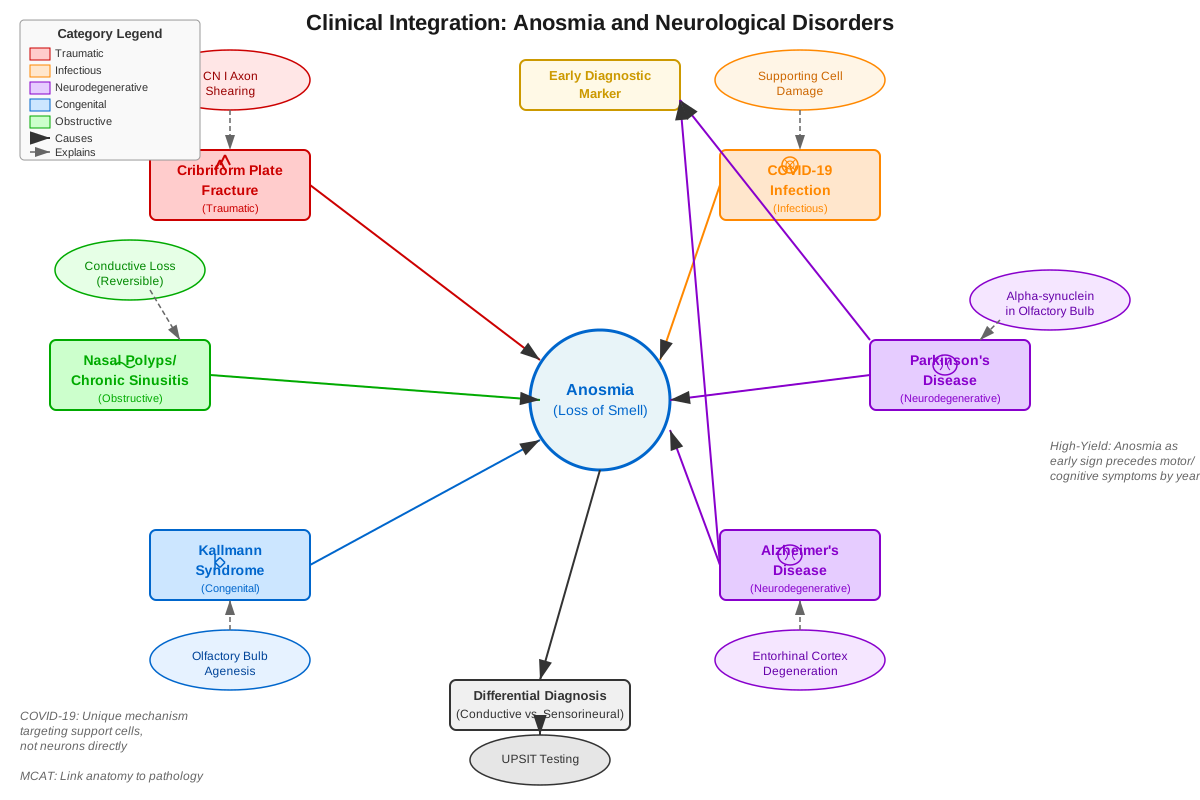
Olfactory dysfunction affects approximately 20% of the population and serves as an early diagnostic marker for several neurological conditions. Anosmia (complete loss of smell) and hyposmia (reduced smell sensitivity) are early symptoms of Parkinson's disease and Alzheimer's disease, often appearing years before motor or cognitive symptoms. The COVID-19 pandemic highlighted the clinical importance of olfaction, as sudden anosmia became a hallmark symptom of infection. Beyond disease, the sense of smell plays crucial roles in nutrition (flavor perception is 80% smell), safety (detecting gas leaks, smoke, spoiled food), and quality of life.
MCAT Exam Statistics and Question Types
Smell appears in approximately 3-5% of MCAT Biology passages, typically integrated with broader topics in sensory physiology or neuroscience. Questions most commonly test:
- Signal transduction mechanisms (30% of smell-related questions)
- Neural pathway anatomy and organization (25%)
- Comparison with other sensory systems (20%)
- Clinical scenarios involving olfactory dysfunction (15%)
- Receptor adaptation and sensory coding (10%)
Common Exam Passage Contexts
The MCAT frequently presents olfaction in passages about:
- Experimental studies investigating receptor specificity or signal transduction pathways
- Clinical vignettes describing patients with neurological conditions affecting smell
- Comparative physiology passages contrasting different sensory modalities
- Molecular biology passages examining GPCR function or gene expression in sensory neurons
- Evolutionary biology discussions of chemosensation across species
Core Concepts
Anatomy of the Olfactory System
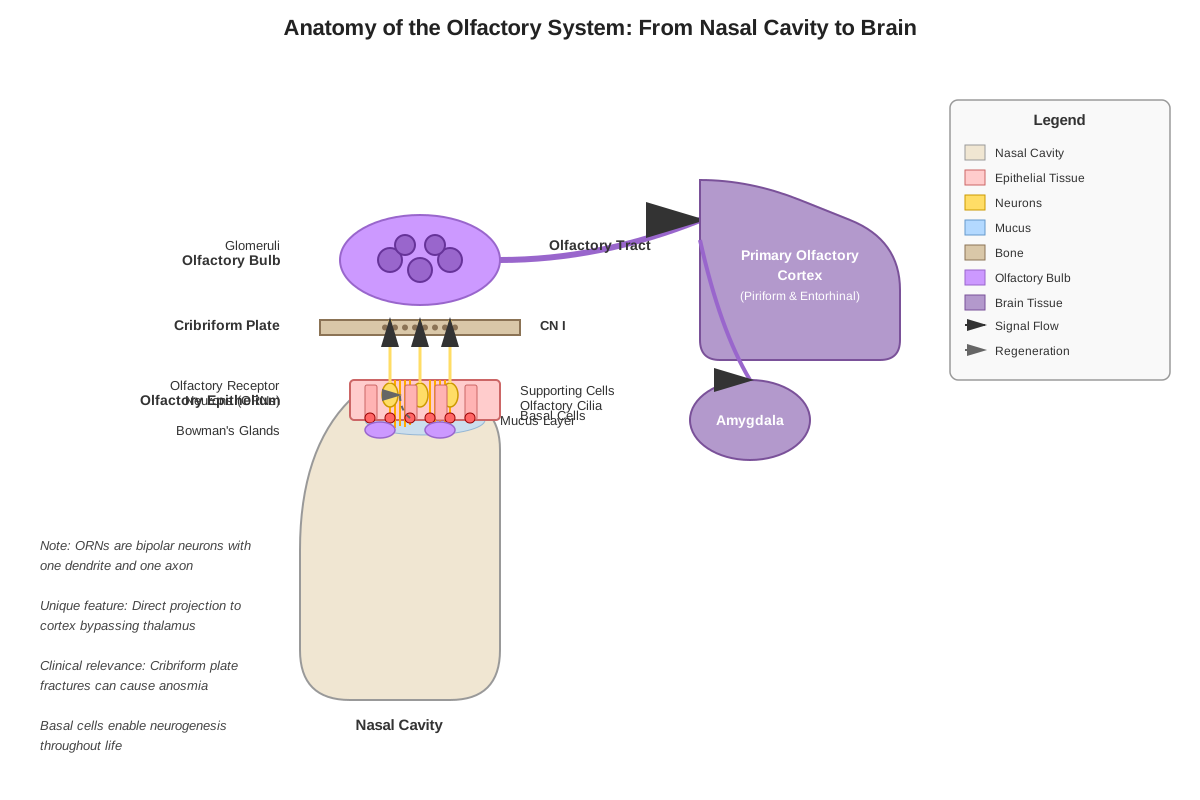
The olfactory epithelium is a specialized pseudostratified columnar epithelium located in the superior portion of the nasal cavity, covering approximately 10 cm² in humans. This epithelium contains three primary cell types: olfactory receptor neurons (ORNs), supporting cells (sustentacular cells), and basal stem cells. The ORNs are bipolar neurons with a single dendrite extending to the epithelial surface, where it terminates in a knob bearing 10-20 olfactory cilia. These cilia contain the olfactory receptors and provide a large surface area for odorant detection. The axons of ORNs project through the cribriform plate of the ethmoid bone to reach the olfactory bulb.
The olfactory bulb is the first central processing station for olfactory information. Within the bulb, ORN axons synapse with second-order neurons called mitral cells and tufted cells in spherical structures called glomeruli. Each glomerulus receives input from ORNs expressing the same olfactory receptor type, creating a spatial map of odor information. The olfactory bulb also contains inhibitory interneurons (granule cells and periglomerular cells) that refine and sharpen olfactory signals through lateral inhibition.
Olfactory Receptor Molecules
Olfactory receptors are G-protein coupled receptors (GPCRs) with seven transmembrane domains. Humans possess approximately 350-400 functional olfactory receptor genes (out of ~1000 total olfactory receptor genes, with the remainder being pseudogenes). Each olfactory receptor neuron expresses only one type of olfactory receptor protein, following the "one neuron-one receptor" rule. This monogenic expression is maintained through a complex regulatory mechanism involving negative feedback that silences other receptor genes once one is successfully expressed.
Olfactory receptors exhibit combinatorial coding: a single odorant molecule can activate multiple receptor types, and a single receptor type can respond to multiple odorants with varying affinities. This combinatorial system allows humans to discriminate between thousands of different odors despite having only ~400 receptor types. The pattern of receptor activation across the olfactory epithelium creates a unique "olfactory code" for each odorant.
Signal Transduction Mechanism
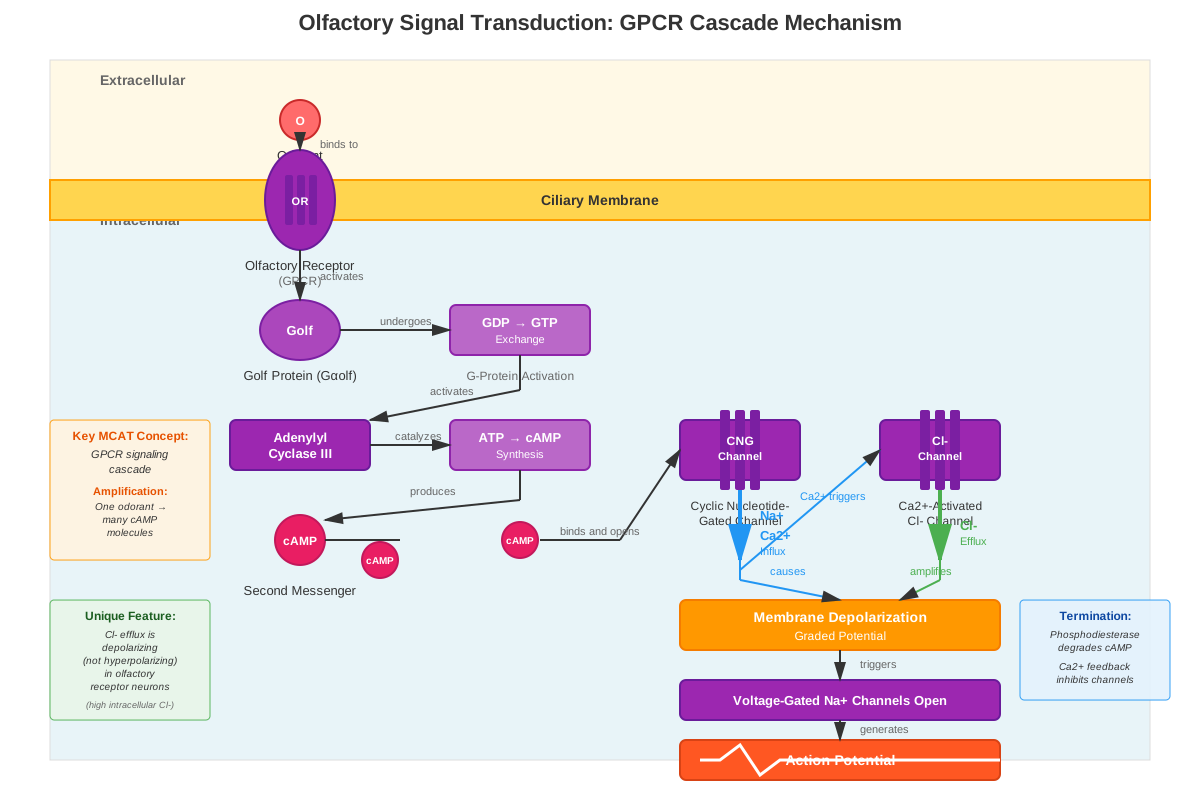
The olfactory signal transduction cascade represents a classic example of GPCR-mediated signaling:
- Odorant binding: Volatile odorant molecules dissolve in the mucus layer covering the olfactory epithelium and bind to olfactory receptors on the cilia
- G-protein activation: Odorant binding causes a conformational change in the receptor, activating the associated G-protein (Golf), a specialized olfactory variant of Gs
- Adenylyl cyclase activation: The activated Golf stimulates adenylyl cyclase III, which converts ATP to cyclic AMP (cAMP)
- Ion channel opening: Elevated cAMP directly binds to and opens cyclic nucleotide-gated (CNG) cation channels
- Depolarization: Opening of CNG channels allows influx of Na⁺ and Ca²⁺, causing membrane depolarization
- Amplification: The Ca²⁺ influx opens Ca²⁺-activated chloride channels, causing Cl⁻ efflux (depolarizing in olfactory neurons due to high intracellular Cl⁻ concentration)
- Action potential generation: If depolarization reaches threshold, voltage-gated Na⁺ channels open, generating an action potential that propagates along the ORN axon
This cascade provides significant signal amplification: a single odorant molecule can activate one receptor, which activates multiple G-proteins, each activating adenylyl cyclase to produce many cAMP molecules, each opening multiple ion channels.
Neural Pathways and Central Processing
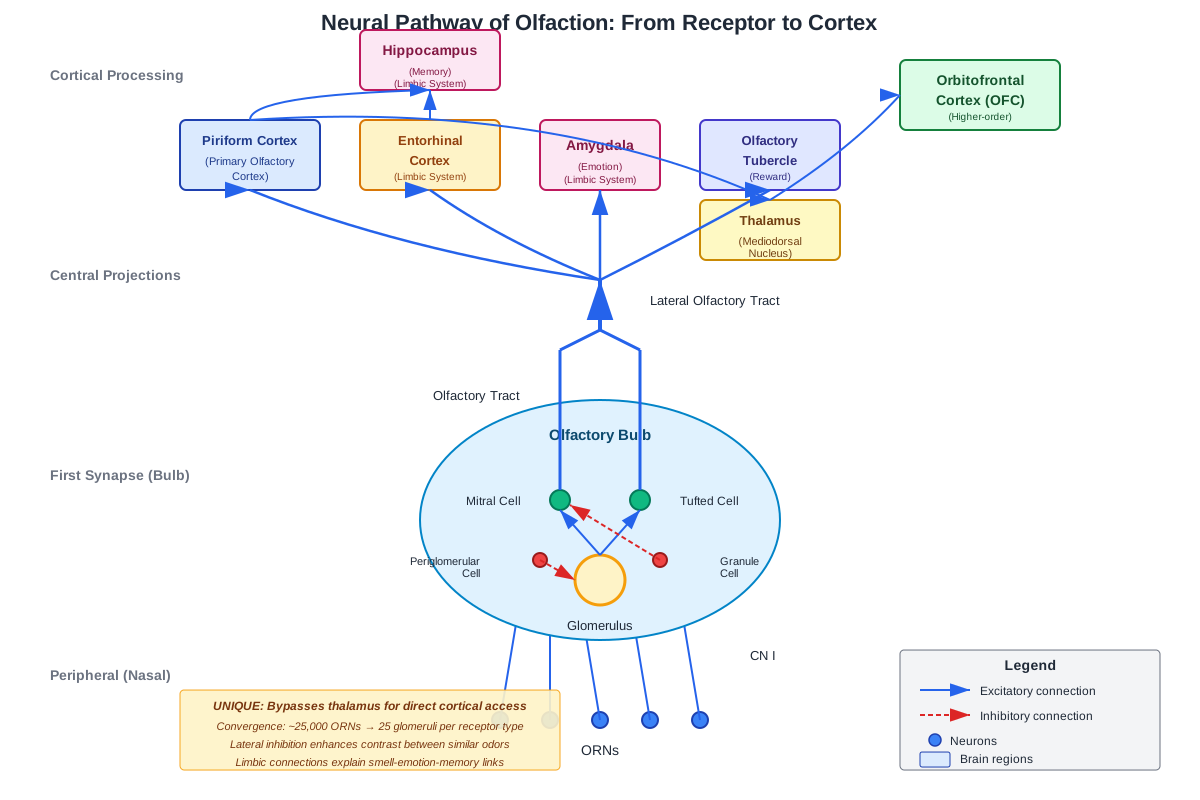
The olfactory pathway is unique among sensory systems because it bypasses the thalamus:
Primary pathway:
- Olfactory receptor neurons → Olfactory bulb (synapse in glomeruli)
- Mitral/tufted cells → Olfactory tract
- Olfactory tract → Primary olfactory cortex (piriform cortex, entorhinal cortex, amygdala)
- Primary olfactory cortex → Orbitofrontal cortex (conscious perception and discrimination)
Secondary connections:
- Amygdala: Emotional responses to odors
- Hippocampus: Olfactory memory formation
- Hypothalamus: Autonomic and endocrine responses to odors
- Thalamus (indirect): Eventually reaches thalamus for integration with other sensory information
This direct projection to limbic structures explains why odors can trigger powerful emotional memories (the Proust phenomenon) and why olfaction is so closely linked to emotion and memory.
Olfactory Adaptation and Coding
Olfactory adaptation occurs at multiple levels:
- Receptor level: Prolonged odorant exposure leads to receptor desensitization through phosphorylation and arrestin binding
- Cellular level: Calcium-dependent feedback mechanisms reduce cAMP production
- Central level: Synaptic adaptation in the olfactory bulb through inhibitory interneurons
Population coding in olfaction involves:
- Spatial coding: Different odorants activate different combinations of glomeruli in the olfactory bulb
- Temporal coding: The timing and pattern of action potentials carry information about odorant identity and concentration
- Concentration coding: Odorant concentration is encoded by both firing rate and the number of activated receptors
Regeneration and Neurogenesis
Olfactory receptor neurons are unique among mammalian neurons in their capacity for continuous regeneration throughout life. Basal stem cells in the olfactory epithelium divide to produce new ORNs, which differentiate, extend axons through the cribriform plate, and establish new synaptic connections in the olfactory bulb. This complete replacement cycle occurs approximately every 30-60 days. This regenerative capacity makes the olfactory system valuable for studying neurogenesis, axon guidance, and synapse formation, but also makes it vulnerable to damage from head trauma, viral infections, and environmental toxins.
Comparison with Other Sensory Systems
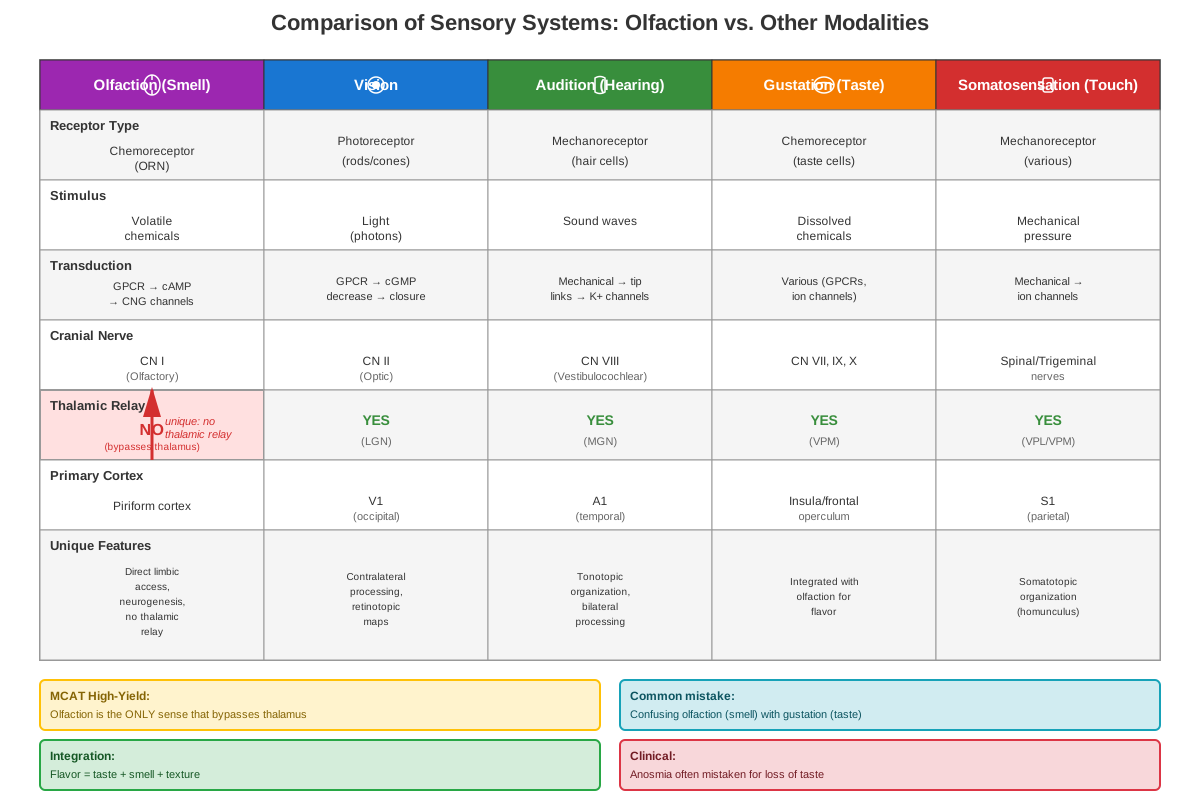
| Feature | Olfaction | Vision | Audition | Gustation |
|---|---|---|---|---|
| Receptor type | GPCR | GPCR (rhodopsin) | Mechanoreceptor | GPCR + Ion channels |
| Stimulus | Volatile chemicals | Light (photons) | Sound waves | Non-volatile chemicals |
| Receptor location | Nasal epithelium | Retina | Cochlea | Taste buds |
| Thalamic relay | No (direct to cortex) | Yes (LGN) | Yes (MGN) | Yes (VPM) |
| Regeneration | Yes | No | Limited | Yes |
| Adaptation rate | Fast | Medium | Fast | Medium |
| Number of receptor types | ~400 | 3 (cones) + 1 (rods) | 1 (hair cells) | ~40 |
Concept Relationships
The olfactory system integrates multiple biological concepts into a cohesive sensory modality. At the molecular level, olfactory receptors (GPCRs) connect to signal transduction mechanisms involving second messengers (cAMP) and ion channels, demonstrating principles of cell signaling. The one neuron-one receptor rule illustrates gene regulation and cellular differentiation. The signal transduction cascade exemplifies signal amplification, a critical concept in understanding how weak stimuli can generate robust cellular responses.
At the cellular level, olfactory receptor neurons demonstrate fundamental principles of neuronal structure and function: they possess dendrites, cell bodies, and axons; they generate and propagate action potentials; and they form synapses with second-order neurons. The continuous neurogenesis of ORNs connects to stem cell biology and developmental neuroscience.
At the systems level, the olfactory pathway illustrates neural circuit organization and sensory processing. The convergence of ORNs expressing the same receptor onto single glomeruli demonstrates topographic mapping. The direct projection to limbic structures explains the emotional and memory components of olfaction, connecting to behavioral neuroscience and psychology.
Relationship map:
Odorant molecules → Olfactory receptors (GPCRs) → G-protein activation → cAMP production → Ion channel opening → Membrane depolarization → Action potential generation → Axonal transmission → Glomerular processing → Mitral cell activation → Olfactory tract → Primary olfactory cortex → Conscious perception + Limbic system activation → Emotional/memory responses
The olfactory system also connects to gustation (taste), as flavor perception results from the integration of taste and smell. It relates to respiratory physiology because airflow patterns affect odorant delivery to the olfactory epithelium. Clinical connections include neurodegenerative diseases, head trauma, and viral infections, linking olfaction to pathology and medicine.
High-Yield Facts
⭐ Olfactory receptors are G-protein coupled receptors (GPCRs) that activate the Golf protein, leading to cAMP production and ion channel opening
⭐ Olfactory neurons are the only neurons in the human nervous system that undergo continuous regeneration throughout life, with complete replacement approximately every 30-60 days
⭐ The olfactory pathway bypasses the thalamus, projecting directly from the olfactory bulb to the primary olfactory cortex (piriform cortex) and limbic structures
⭐ Each olfactory receptor neuron expresses only one type of olfactory receptor (one neuron-one receptor rule), but each receptor can respond to multiple odorants
⭐ Humans have approximately 350-400 functional olfactory receptor genes, making this the largest gene family in the human genome
- Olfactory receptor neurons are bipolar neurons with cilia containing the olfactory receptors extending into the nasal mucus
- The olfactory signal transduction cascade involves: odorant binding → Golf activation → adenylyl cyclase activation → cAMP production → CNG channel opening → Ca²⁺ influx → Ca²⁺-activated Cl⁻ channel opening → depolarization
- Olfactory receptor neuron axons pass through the cribriform plate of the ethmoid bone to reach the olfactory bulb
- Glomeruli in the olfactory bulb receive convergent input from all ORNs expressing the same receptor type, creating a spatial map of odor information
- The high intracellular chloride concentration in olfactory neurons makes chloride efflux depolarizing rather than hyperpolarizing
- Anosmia (loss of smell) is an early symptom of Parkinson's disease and Alzheimer's disease, often preceding motor or cognitive symptoms by years
- The direct connection between olfaction and the amygdala/hippocampus explains the powerful link between odors and emotional memories (Proust phenomenon)
Quick check — test yourself on Smell so far.
Try Flashcards →Common Misconceptions
Misconception: Olfactory receptors are ion channels that directly open when odorants bind.
Correction: Olfactory receptors are G-protein coupled receptors (GPCRs) that activate a signal transduction cascade involving second messengers (cAMP). The ion channels (cyclic nucleotide-gated channels) open in response to cAMP, not directly in response to odorant binding. This multi-step process provides signal amplification.
Misconception: The olfactory pathway follows the same route as other sensory systems, synapsing in the thalamus before reaching the cortex.
Correction: The olfactory pathway is unique in bypassing the thalamus, projecting directly from the olfactory bulb to the primary olfactory cortex and limbic structures. This direct connection explains the strong emotional and memory associations with smell. Other sensory modalities (vision, audition, somatosensation) synapse in specific thalamic nuclei before reaching primary sensory cortex.
Misconception: Each olfactory receptor responds to only one specific odorant molecule (lock-and-key specificity).
Correction: Olfaction uses combinatorial coding: each olfactory receptor can respond to multiple structurally similar odorants with varying affinities, and each odorant typically activates multiple receptor types. The pattern of activation across many receptor types creates a unique code for each odor. This combinatorial system allows discrimination of thousands of odors with only ~400 receptor types.
Misconception: Chloride channel opening in olfactory neurons causes hyperpolarization, as it does in most neurons.
Correction: In olfactory receptor neurons, the intracellular chloride concentration is unusually high (maintained by active transport). When Ca²⁺-activated chloride channels open, chloride flows out of the cell (down its concentration gradient), which is depolarizing because positive charge is lost. This is opposite to most neurons where chloride influx causes hyperpolarization.
Misconception: Olfactory neurons, like other neurons, cannot regenerate once damaged.
Correction: Olfactory receptor neurons are exceptional in their capacity for continuous regeneration throughout life. Basal stem cells in the olfactory epithelium continuously produce new ORNs that differentiate, extend axons to the olfactory bulb, and form functional synapses. This regenerative capacity is unique among mammalian neurons and occurs approximately every 30-60 days.
Misconception: Taste and smell are completely independent sensory systems.
Correction: While taste (gustation) and smell (olfaction) are anatomically and physiologically distinct systems with different receptors and pathways, they are functionally integrated in flavor perception. Approximately 80% of what we perceive as "taste" is actually smell. This is why food tastes bland when nasal passages are congested. The integration occurs in higher cortical areas, particularly the orbitofrontal cortex.
Misconception: All olfactory receptor neurons project to the same area of the olfactory bulb.
Correction: Olfactory receptor neurons expressing the same receptor type converge onto specific glomeruli in the olfactory bulb, creating a spatial map. Different receptor types project to different glomeruli. This organization preserves spatial information about which receptors were activated, allowing the brain to decode odor identity based on the pattern of glomerular activation.
Worked Examples
Example 1: Signal Transduction Mechanism
Question: A researcher is studying olfactory signal transduction and applies an odorant to isolated olfactory receptor neurons while measuring intracellular cAMP levels and membrane potential. After odorant application, cAMP levels increase 100-fold within 50 milliseconds, followed by membrane depolarization. The researcher then applies a drug that blocks adenylyl cyclase. What would be the expected result?
Analysis:
Let's work through the olfactory signal transduction cascade step by step:
- Normal pathway: Odorant binds to olfactory receptor (GPCR) → Receptor activates Golf protein → Golf activates adenylyl cyclase III → Adenylyl cyclase converts ATP to cAMP → cAMP opens cyclic nucleotide-gated (CNG) ion channels → Na⁺ and Ca²⁺ influx → Depolarization
- Effect of blocking adenylyl cyclase: If adenylyl cyclase is blocked, it cannot convert ATP to cAMP, even when activated by Golf. This breaks the signal transduction chain at the second messenger production step.
- Expected results:
- cAMP levels would NOT increase (the 100-fold increase would be prevented)
- Without cAMP, cyclic nucleotide-gated channels cannot open
- Without ion channel opening, no Na⁺/Ca²⁺ influx occurs
- Without ion influx, no membrane depolarization occurs
- No action potential would be generated
Answer: Blocking adenylyl cyclase would prevent the increase in cAMP levels and eliminate membrane depolarization, completely blocking olfactory signal transduction. The odorant would still bind to the receptor and activate Golf, but the signal would not propagate beyond that point because the second messenger (cAMP) cannot be produced.
Key concept tested: Understanding the sequential steps of GPCR-mediated signal transduction and identifying where in the cascade a specific intervention would have its effect. This demonstrates the importance of second messengers in amplifying and propagating signals.
Example 2: Clinical Vignette - Anosmia
Question: A 68-year-old patient presents to a neurologist complaining of difficulty identifying familiar odors over the past 18 months. Formal olfactory testing reveals bilateral anosmia (complete loss of smell). The patient has no history of head trauma, upper respiratory infections, or nasal polyps. Physical examination reveals mild resting tremor and bradykinesia. Which of the following best explains the relationship between the patient's anosmia and other symptoms?
A) Damage to the olfactory bulb from repeated infections
B) Degeneration of dopaminergic neurons affecting olfactory processing
C) Blockage of the cribriform plate preventing odorant access
D) Vitamin B12 deficiency affecting peripheral nerve function
Analysis:
- Clinical presentation: The patient has anosmia (loss of smell) plus tremor and bradykinesia (slow movement). These motor symptoms are classic signs of Parkinson's disease.
- Temporal relationship: The anosmia preceded the motor symptoms by 18 months, which is typical—olfactory dysfunction often appears years before motor symptoms in Parkinson's disease.
- Mechanism: Parkinson's disease involves degeneration of dopaminergic neurons in the substantia nigra (causing motor symptoms) and accumulation of alpha-synuclein protein (Lewy bodies) in multiple brain regions, including the olfactory bulb and olfactory cortex. The olfactory system is affected early in the disease process.
- Evaluating options:
- Option A: No history of infections, and repeated infections wouldn't explain the motor symptoms
- Option B: CORRECT - Parkinson's disease involves neurodegeneration affecting both dopaminergic systems (motor control) and olfactory processing areas
- Option C: Physical blockage wouldn't explain motor symptoms and would likely be unilateral
- Option D: B12 deficiency causes peripheral neuropathy, not the central motor symptoms described
Answer: B - Degeneration of dopaminergic neurons affecting olfactory processing. This case illustrates how anosmia serves as an early biomarker for Parkinson's disease, with pathological changes in the olfactory system preceding motor symptoms.
Key concepts tested:
- Clinical significance of olfactory dysfunction as an early sign of neurodegenerative disease
- Understanding that olfaction involves central nervous system processing, not just peripheral receptors
- Integration of sensory and motor systems in disease processes
- Differential diagnosis of anosmia based on associated symptoms
Exam Strategy
Approaching MCAT Questions on Olfaction
Step 1: Identify the level of organization being tested:
- Molecular (receptor structure, signal transduction)
- Cellular (neuron structure, action potential generation)
- Systems (neural pathways, cortical processing)
- Clinical (disease states, functional deficits)
Step 2: Recognize trigger words and phrases:
- "G-protein coupled receptor" → Think signal transduction cascade, second messengers
- "Olfactory bulb" → Think glomeruli, convergence, spatial mapping
- "Bypasses the thalamus" → Distinguishes olfaction from other sensory systems
- "Regeneration" or "neurogenesis" → Unique feature of olfactory neurons
- "Anosmia" → Consider causes (trauma, infection, neurodegeneration)
- "Combinatorial coding" → Multiple receptors activated by one odorant
- "Cribriform plate" → Anatomical pathway, vulnerable to head trauma
Step 3: Apply process of elimination:
- Eliminate options that confuse olfaction with gustation (taste)
- Eliminate options that incorrectly place thalamus in the olfactory pathway
- Eliminate options that describe olfactory receptors as ion channels rather than GPCRs
- Eliminate options that suggest olfactory neurons cannot regenerate
Step 4: Watch for common question types:
- Mechanism questions: Trace the signal transduction pathway step by step
- Comparison questions: Know how olfaction differs from other sensory systems
- Experimental interpretation: Understand what happens when specific steps are blocked
- Clinical correlation: Connect olfactory dysfunction to neurological conditions
Time Allocation Advice
For discrete questions on olfaction: 60-90 seconds
- These typically test straightforward factual knowledge (pathway, receptor type, unique features)
- If you know the content, answer quickly and move on
For passage-based questions:
- Spend 3-4 minutes reading and annotating the passage
- Identify whether the passage focuses on molecular mechanisms, neural pathways, or clinical applications
- Each question should take 60-90 seconds once you understand the passage
- Don't get bogged down in unfamiliar experimental details—focus on applying core olfactory principles
Exam Tip: If a question asks about signal transduction in olfaction, mentally walk through the cascade: odorant → GPCR → Golf → adenylyl cyclase → cAMP → CNG channels → depolarization. Most questions can be answered by identifying where in this sequence the question focuses.
Exam Tip: When comparing sensory systems, remember that olfaction is the "odd one out" because it bypasses the thalamus and has regenerative capacity. If an answer choice applies to all sensory systems equally, it's probably wrong for an olfaction-specific question.
Memory Techniques
Mnemonics
"GOCAD" - The olfactory signal transduction cascade:
- G-protein (Golf) activation
- Odorant binding to receptor
- CAMP production (by adenylyl cyclase)
- Action potential generation
- Depolarization (via ion channels)
"CRIB" - Pathway of olfactory neurons:
- Cilia (where receptors are located)
- Receptor neuron cell body
- Into cribriform plate
- Bulb (olfactory bulb, first synapse)
"No THAL in SMELL" - Reminder that olfaction bypasses the thalamus (unlike other sensory systems)
"One Neuron, One Receptor" - Each olfactory receptor neuron expresses only one type of olfactory receptor gene
Visualization Strategies
The Cascade Waterfall: Visualize the signal transduction cascade as a waterfall with increasing volume at each level, representing signal amplification:
- Top: Single odorant molecule (small drop)
- Level 2: Multiple G-proteins activated (small stream)
- Level 3: Many cAMP molecules produced (larger stream)
- Level 4: Multiple ion channels opening (rushing water)
- Bottom: Strong depolarization and action potential (waterfall pool)
The Direct Highway: Picture the olfactory pathway as a highway that takes a direct route (bypassing the thalamus "rest stop") straight to the limbic system "destination." Other sensory systems must stop at the thalamus rest stop first.
The Regeneration Factory: Imagine the olfactory epithelium as a factory with a conveyor belt continuously producing new neurons (basal cells → immature neurons → mature ORNs → old neurons shed), emphasizing the unique regenerative capacity.
Acronyms
GPCR - G-Protein Coupled Receptor (the type of olfactory receptor)
ORN - Olfactory Receptor Neuron
CNG - Cyclic Nucleotide-Gated (the ion channels opened by cAMP)
POC - Primary Olfactory Cortex (piriform cortex, where olfactory information first reaches the cortex)
Summary
Smell (olfaction) is a chemosensory system that detects volatile chemical compounds through specialized G-protein coupled receptors in the olfactory epithelium. The signal transduction cascade involves odorant binding to olfactory receptors, activation of Golf proteins, production of cAMP by adenylyl cyclase, opening of cyclic nucleotide-gated ion channels, and subsequent membrane depolarization leading to action potential generation. Each olfactory receptor neuron expresses only one receptor type but projects to specific glomeruli in the olfactory bulb, creating a spatial map of odor information. The olfactory pathway uniquely bypasses the thalamus, projecting directly to the primary olfactory cortex and limbic structures, explaining the powerful connection between smell and emotional memory. Olfactory receptor neurons are exceptional in their capacity for continuous regeneration throughout life, with basal stem cells producing new neurons approximately every 30-60 days. Humans possess ~400 functional olfactory receptor genes, and combinatorial coding allows discrimination of thousands of odors. Clinically, olfactory dysfunction serves as an early biomarker for neurodegenerative diseases like Parkinson's and Alzheimer's. For the MCAT, understanding the molecular mechanisms of olfactory transduction, the unique anatomical pathway, and the distinctions from other sensory systems is essential for answering questions in physiology and organ systems.
Key Takeaways
- Olfactory receptors are GPCRs that activate a signal transduction cascade involving Golf, adenylyl cyclase, cAMP, and cyclic nucleotide-gated ion channels, providing significant signal amplification
- The olfactory pathway bypasses the thalamus, projecting directly from the olfactory bulb to the primary olfactory cortex and limbic structures, distinguishing it from all other sensory systems
- Each olfactory receptor neuron expresses only one receptor type (one neuron-one receptor rule), but combinatorial coding allows ~400 receptor types to discriminate thousands of odors
- Olfactory neurons continuously regenerate throughout life from basal stem cells, making them unique among mammalian neurons and clinically relevant for studying neurogenesis
- Anosmia is an early symptom of neurodegenerative diseases (Parkinson's, Alzheimer's), often appearing years before motor or cognitive symptoms, making olfactory testing clinically valuable
- The high intracellular chloride concentration in olfactory neurons makes chloride efflux depolarizing, contributing to signal transduction alongside calcium and sodium influx
- Glomerular organization in the olfactory bulb creates a spatial map where all neurons expressing the same receptor converge onto specific glomeruli, preserving information about receptor activation patterns
Related Topics
Gustation (Taste): Understanding taste receptors, taste pathways, and the integration of taste and smell in flavor perception builds on olfactory principles and demonstrates how different chemosensory systems work together.
G-Protein Coupled Receptor Signaling: Deeper exploration of GPCR structure, G-protein subtypes, and second messenger systems provides molecular context for olfactory transduction and applies to numerous physiological processes.
Neuroanatomy of the Limbic System: Studying the amygdala, hippocampus, and their connections explains the emotional and memory components of olfaction and is essential for understanding behavior and psychiatry topics.
Sensory Physiology: Comparing all sensory modalities (vision, audition, somatosensation, gustation, olfaction) reveals common principles of sensory coding, adaptation, and neural processing while highlighting unique features of each system.
Neurodegenerative Diseases: Exploring Parkinson's disease, Alzheimer's disease, and other conditions that affect olfaction connects sensory physiology to pathology and clinical medicine, important for MCAT passages.
Stem Cells and Neurogenesis: The regenerative capacity of olfactory neurons provides a model for studying adult neurogenesis, stem cell differentiation, and neural development, topics that appear in developmental biology and cell biology contexts.
Practice CTA
Now that you've mastered the core concepts of olfaction, it's time to reinforce your understanding through active practice. Attempt the practice questions and flashcards associated with this topic to test your ability to apply these concepts in exam-style scenarios. Focus on tracing signal transduction pathways, identifying unique features of the olfactory system, and connecting olfactory dysfunction to clinical conditions. Remember that the MCAT rewards not just memorization but the ability to integrate knowledge across multiple biological levels—from molecules to systems to clinical applications. Your thorough understanding of smell will serve as a foundation for mastering related topics in sensory physiology and neuroscience. Keep pushing forward—you're building the comprehensive knowledge base needed for MCAT success!
Sign up free to keep reading
Create a free AnvayaPrep account to finish this MCAT guide on Smell — plus flashcards and practice questions.