Overview
Voltage-gated channels are specialized transmembrane proteins that open or close in response to changes in the electrical potential across the cell membrane. These channels are fundamental to the generation and propagation of electrical signals in excitable cells, particularly neurons and muscle cells. Understanding voltage-gated channels is essential for mastering neurophysiology, muscle physiology, and cellular signaling—all high-yield topics for the MCAT. These channels represent a critical intersection of molecular biology, biochemistry, and physiology, making them a favorite target for integrated MCAT passages that test multiple knowledge domains simultaneously.
The importance of voltage-gated channels for the MCAT cannot be overstated. They are central to understanding action potentials, synaptic transmission, muscle contraction, and cardiac electrophysiology. Questions involving voltage-gated channels frequently appear in both passage-based and discrete questions within the Biology and Biochemistry sections. The MCAT tests not only the structural features of these channels but also their functional roles, regulation, and clinical significance. Students must be able to predict how changes in channel function affect cellular excitability and physiological processes.
Within the broader context of Physiology and Organ Systems, voltage-gated channels serve as molecular gatekeepers that translate chemical and electrical signals into coordinated physiological responses. They connect foundational concepts in membrane biology and electrochemistry to complex organ system functions, including neural communication, cardiac rhythm, and skeletal muscle contraction. Mastery of this topic enables students to tackle questions spanning from molecular mechanisms to whole-organism physiology, making it an essential component of comprehensive MCAT preparation.
Learning Objectives
- [ ] Define voltage-gated channels using accurate Biology terminology
- [ ] Explain why voltage-gated channels matters for the MCAT
- [ ] Apply voltage-gated channels to exam-style questions
- [ ] Identify common mistakes related to voltage-gated channels
- [ ] Connect voltage-gated channels to related Biology concepts
- [ ] Describe the structural features that enable voltage sensing in these channels
- [ ] Compare and contrast the kinetics and functions of different voltage-gated channel types
- [ ] Predict the physiological consequences of voltage-gated channel dysfunction or pharmacological modulation
Prerequisites
- Membrane structure and function: Understanding lipid bilayers and transmembrane proteins is essential because voltage-gated channels are integral membrane proteins that span the phospholipid bilayer
- Electrochemical gradients: Knowledge of ion concentration gradients and membrane potential is necessary to understand the driving forces for ion movement through channels
- Action potential basics: Familiarity with depolarization, repolarization, and hyperpolarization provides context for when and why voltage-gated channels open
- Protein structure: Understanding of primary through quaternary structure helps explain how conformational changes enable channel gating
- Basic electricity concepts: Comprehension of voltage, current, and resistance applies directly to understanding ion flow through channels
Why This Topic Matters
Voltage-gated channels are clinically significant because their dysfunction underlies numerous pathological conditions. Channelopathies—diseases caused by defective ion channels—include epilepsy, cardiac arrhythmias, periodic paralysis, and certain forms of migraine. Many therapeutic drugs target voltage-gated channels, including local anesthetics (sodium channel blockers), anticonvulsants, antiarrhythmics, and calcium channel blockers used for hypertension. Understanding these channels provides insight into both disease mechanisms and pharmacological interventions, making them relevant to future medical practice.
From an exam perspective, voltage-gated channels appear in approximately 3-5% of MCAT questions, with particularly high representation in passages involving neurophysiology, muscle physiology, and pharmacology. The MCAT frequently tests this topic through graphical interpretation (voltage-clamp experiments, action potential traces), experimental manipulation scenarios (toxin effects, genetic mutations), and clinical vignettes. Questions often require integration of multiple concepts, such as predicting how a sodium channel blocker would affect action potential propagation or explaining why certain mutations cause loss of channel function.
Common MCAT passage contexts include: research experiments measuring channel currents under different voltage conditions, clinical cases involving channelopathies or drug effects, evolutionary comparisons of channel structure across species, and molecular biology studies of channel expression and regulation. The interdisciplinary nature of voltage-gated channels makes them ideal for testing critical thinking and data interpretation skills that are central to the MCAT's mission.
Core Concepts
Structure of Voltage-Gated Channels
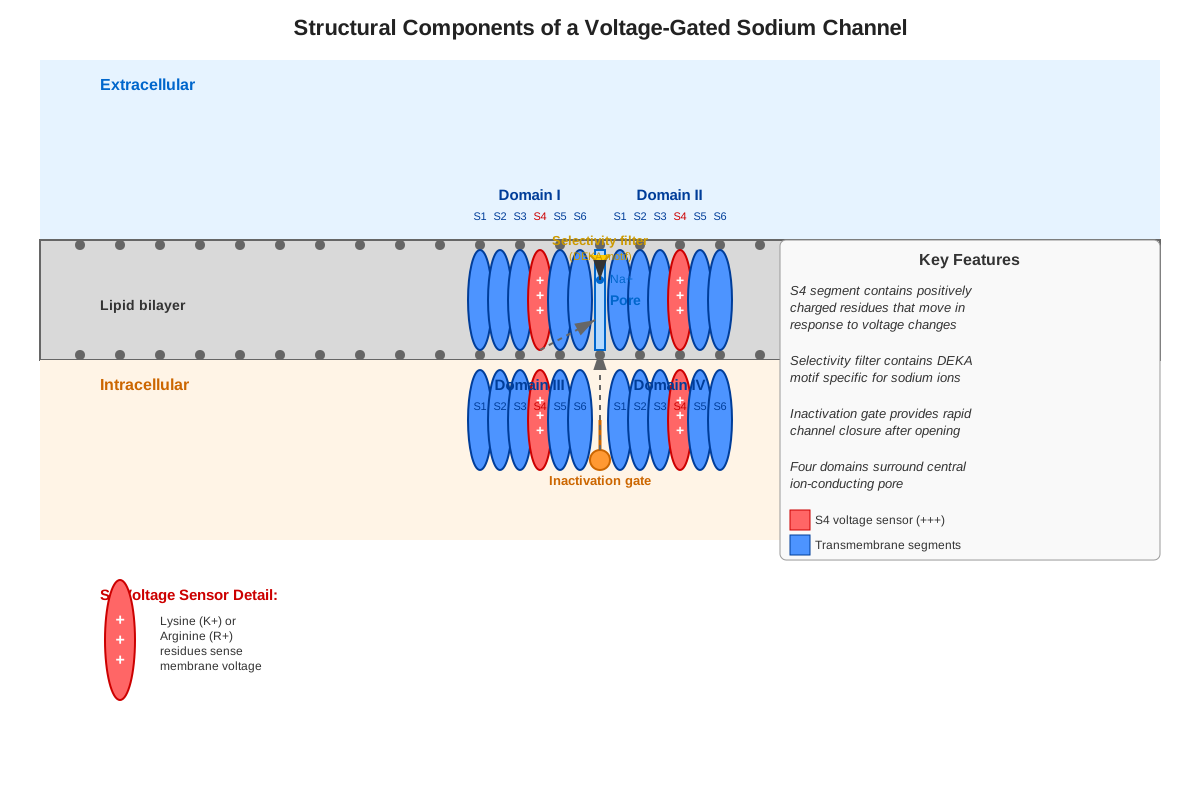
Voltage-gated channels are large transmembrane proteins composed of multiple subunits that form a central pore through which specific ions can pass. The fundamental architecture includes a pore domain that determines ion selectivity and a voltage sensor domain that detects changes in membrane potential. Most voltage-gated channels contain four homologous domains (in sodium and calcium channels) or four separate subunits (in potassium channels), each contributing to the functional channel.
The voltage sensor typically consists of the S4 transmembrane segment, which contains positively charged amino acids (arginine and lysine) positioned at every third residue. When the membrane depolarizes (becomes less negative inside), the electric field across the membrane exerts force on these positive charges, causing the S4 segment to move outward. This conformational change is mechanically coupled to the channel gate, triggering channel opening. This elegant molecular mechanism allows the channel to respond to voltage changes within milliseconds.
The selectivity filter is a narrow region of the pore that determines which ions can pass through. In sodium channels, the selectivity filter contains negatively charged amino acids that attract sodium ions while excluding larger ions. The filter is just wide enough to allow dehydrated sodium ions to pass while preventing potassium ions from moving through efficiently. Potassium channels use a different mechanism, with carbonyl oxygen atoms lining the pore to stabilize dehydrated potassium ions at specific binding sites, allowing rapid and selective potassium permeation.
Types of Voltage-Gated Channels
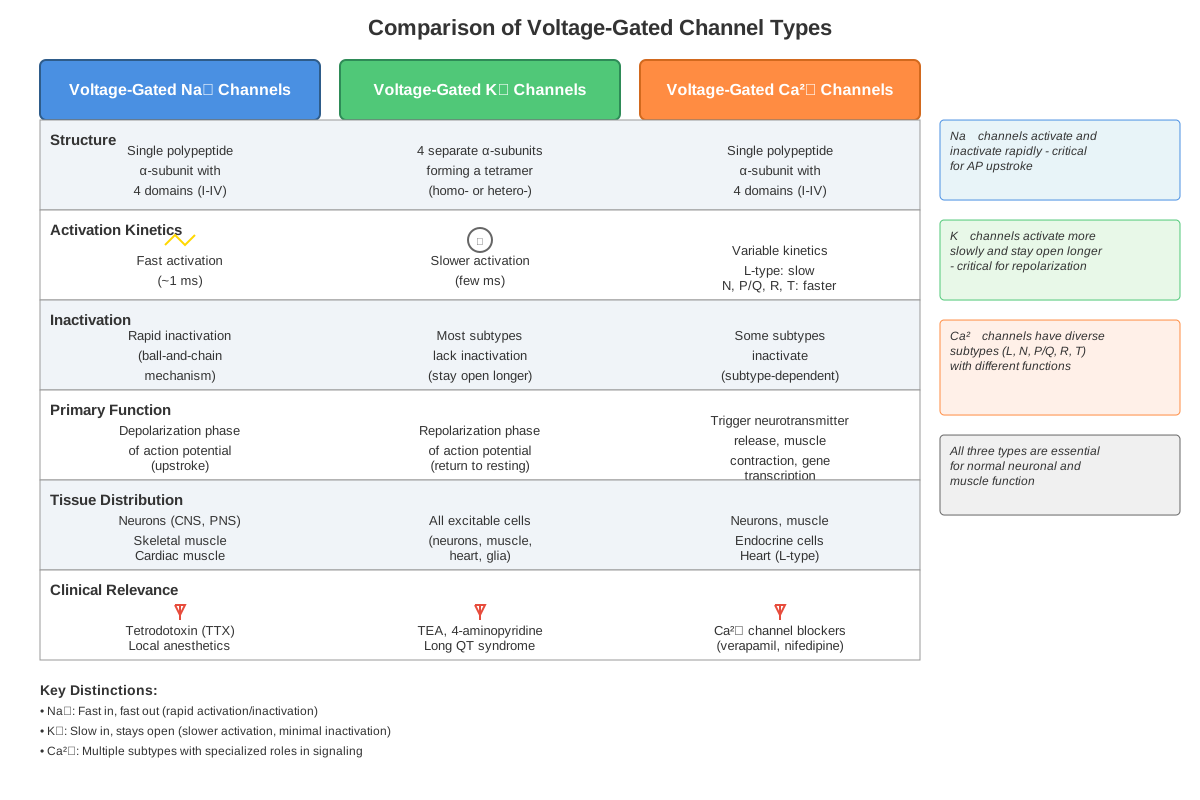
| Channel Type | Primary Ion | Activation Threshold | Inactivation | Primary Function |
|---|---|---|---|---|
| Voltage-gated Na⁺ | Sodium | -55 to -50 mV | Fast (1-2 ms) | Action potential upstroke |
| Voltage-gated K⁺ | Potassium | -50 to -40 mV | Slow or none | Repolarization, setting resting potential |
| Voltage-gated Ca²⁺ | Calcium | -40 to -20 mV | Moderate | Neurotransmitter release, muscle contraction |
Voltage-gated sodium channels are responsible for the rapid depolarization phase of action potentials in neurons and muscle cells. These channels open quickly when the membrane reaches threshold potential (approximately -55 mV), allowing sodium ions to rush into the cell down their electrochemical gradient. Within 1-2 milliseconds, these channels undergo inactivation, a process where an intracellular "ball and chain" structure physically blocks the pore even though the channel remains in an activated conformation. This inactivation is crucial for limiting action potential duration and establishing the refractory period.
Voltage-gated potassium channels exist in multiple subtypes with varying kinetics. Delayed rectifier potassium channels activate more slowly than sodium channels and are primarily responsible for repolarization during action potentials. These channels typically do not inactivate rapidly, allowing sustained potassium efflux that returns the membrane to its resting potential. Some potassium channel subtypes, such as A-type channels, do exhibit inactivation and contribute to regulating firing frequency and interspike intervals in neurons.
Voltage-gated calcium channels are classified into several subtypes (L-type, N-type, P/Q-type, R-type, T-type) based on their biophysical properties and tissue distribution. L-type calcium channels, which require large depolarizations and produce long-lasting currents, are critical for excitation-contraction coupling in cardiac and smooth muscle. N-type and P/Q-type channels are concentrated at presynaptic terminals where they trigger neurotransmitter release. T-type channels activate at more negative potentials and contribute to pacemaker activity in cardiac cells and rhythmic firing in neurons.
Channel Gating Mechanisms
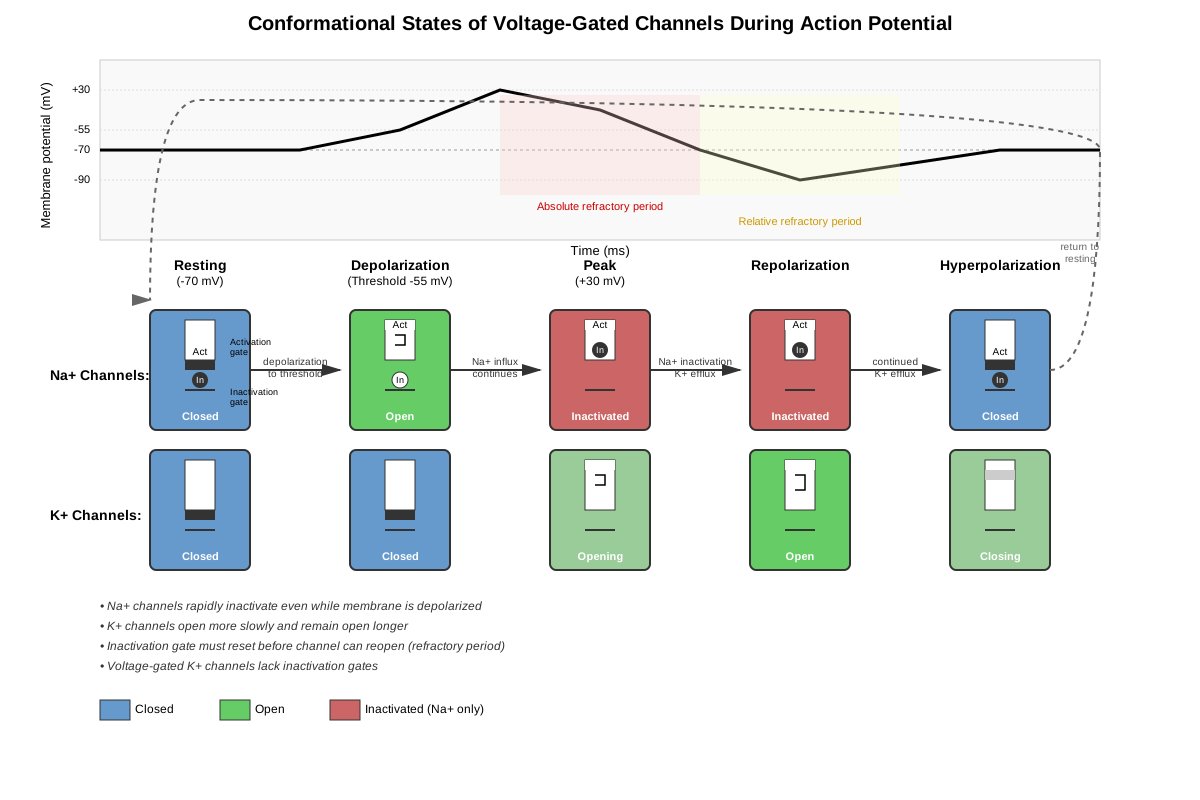
The transition between closed, open, and inactivated states follows a specific sequence that is fundamental to understanding channel function. Voltage-gated channels exist in three primary conformational states:
- Closed (resting): The channel is closed but capable of opening; the voltage sensor is in its resting position
- Open (activated): The voltage sensor has moved in response to depolarization, opening the gate and allowing ion flow
- Inactivated: The channel cannot conduct ions despite continued depolarization; requires repolarization to return to the closed state
The activation gate opens in response to depolarization when the voltage sensor moves. In sodium channels, this occurs within microseconds of reaching threshold. The inactivation gate closes shortly after activation through a distinct mechanism. In sodium channels, the inactivation gate consists of a cytoplasmic loop between domains III and IV that swings into the open pore like a hinged lid, physically occluding ion passage. This "ball and chain" model of inactivation explains why sodium channels cannot reopen immediately even if the membrane remains depolarized.
Recovery from inactivation requires membrane repolarization, which allows the inactivation gate to move away from the pore and the channel to return to its closed (but activatable) state. The time required for recovery from inactivation determines the absolute and relative refractory periods of excitable cells. During the absolute refractory period, no stimulus can trigger another action potential because sodium channels remain inactivated. During the relative refractory period, a stronger-than-normal stimulus can trigger an action potential because some sodium channels have recovered from inactivation.
Voltage-Gated Channels in Action Potentials
The orchestrated opening and closing of different voltage-gated channels generates the stereotypical action potential waveform. Understanding this temporal sequence is essential for MCAT success:
- Resting state (-70 mV): Sodium and calcium channels are closed; some potassium channels are open, maintaining resting potential
- Threshold reached (-55 mV): Sufficient depolarization causes voltage-gated sodium channels to begin opening
- Rapid depolarization (rising phase): Positive feedback loop as sodium influx causes more depolarization, opening more sodium channels; membrane potential approaches sodium equilibrium potential (+60 mV)
- Peak (+30 to +40 mV): Maximum sodium channel opening; sodium channels begin inactivating
- Repolarization (falling phase): Sodium channels inactivate; voltage-gated potassium channels open, allowing potassium efflux
- Hyperpolarization (undershoot): Continued potassium efflux temporarily drives membrane potential below resting level
- Return to resting: Potassium channels close; sodium-potassium pump maintains gradients
The all-or-none principle of action potentials results from the positive feedback mechanism of sodium channel activation. Once threshold is reached, the regenerative cycle of depolarization and sodium channel opening proceeds to completion regardless of stimulus strength. Subthreshold stimuli fail to trigger action potentials because insufficient sodium channels open to overcome the repolarizing influence of potassium leak channels.
Pharmacology and Toxins
Many clinically important drugs and naturally occurring toxins target voltage-gated channels, making this a high-yield topic for MCAT passages involving pharmacology or experimental manipulation. Local anesthetics such as lidocaine and procaine block voltage-gated sodium channels by binding to the intracellular side of the pore, particularly when channels are in the open or inactivated state. This use-dependent block preferentially affects rapidly firing neurons, explaining why sensory neurons transmitting pain signals are more susceptible than other neurons.
Tetrodotoxin (TTX), found in puffer fish, is a potent sodium channel blocker that binds to the extracellular side of the channel pore, physically preventing sodium passage. TTX is highly selective for voltage-gated sodium channels and is frequently used in research to isolate sodium currents from other ionic currents. Similarly, saxitoxin, produced by dinoflagellates and concentrated in shellfish, blocks sodium channels and causes paralytic shellfish poisoning.
Calcium channel blockers used therapeutically include dihydropyridines (nifedipine, amlodipine) that selectively block L-type calcium channels in vascular smooth muscle, causing vasodilation and reducing blood pressure. Non-dihydropyridine calcium channel blockers (verapamil, diltiazem) also affect cardiac calcium channels, reducing heart rate and contractility. The MCAT may present scenarios requiring prediction of physiological effects when these channels are blocked or enhanced.
Concept Relationships
Voltage-gated channels serve as the molecular link between electrical and chemical signaling in excitable cells. The relationship begins with the electrochemical gradient (prerequisite concept) that provides the driving force for ion movement once channels open. The membrane potential determines when voltage-gated channels will activate, creating a bidirectional relationship where membrane potential controls channel state, and channel state determines membrane potential.
Within the topic itself, the three major channel types (sodium, potassium, calcium) work in coordinated sequence during action potentials. Sodium channel activation → rapid depolarization → sodium channel inactivation + potassium channel activation → repolarization → return to resting state. This temporal orchestration is essential for proper neuronal and muscle function.
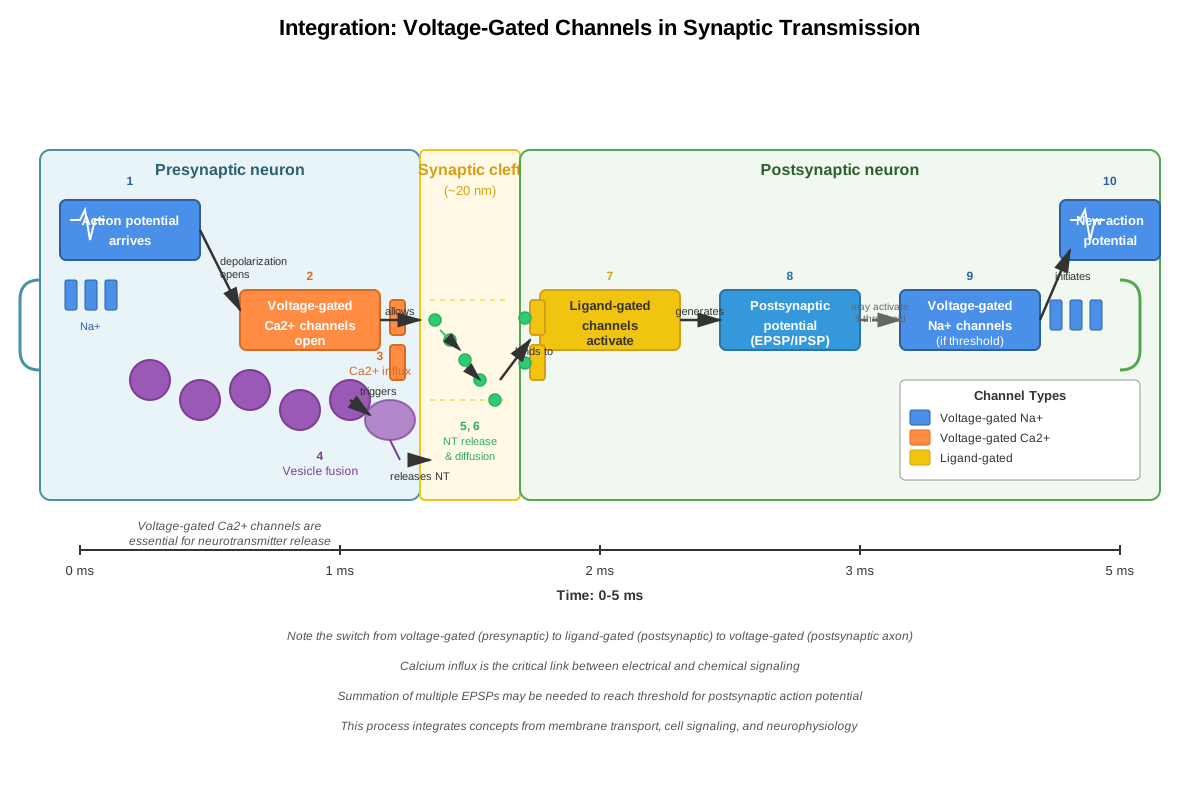
Voltage-gated channels connect forward to numerous advanced topics in Physiology and Organ Systems. They enable synaptic transmission by triggering calcium influx at presynaptic terminals, which causes neurotransmitter release. They are essential for muscle contraction through excitation-contraction coupling, where action potentials in muscle fibers trigger calcium release from the sarcoplasmic reticulum. In the cardiovascular system, voltage-gated channels in cardiac myocytes generate the cardiac action potential, while channels in smooth muscle regulate vascular tone.
The relationship to cell signaling extends beyond electrical signals. Calcium entering through voltage-gated calcium channels serves as a second messenger, activating numerous intracellular pathways including enzyme activation, gene transcription, and vesicle fusion. This connects voltage-gated channels to broader concepts in cell biology and biochemistry, demonstrating how electrical signals are transduced into chemical and mechanical responses.
Quick check — test yourself on Voltage gated channels so far.
Try Flashcards →High-Yield Facts
⭐ Voltage-gated sodium channels are responsible for the rapid depolarization phase of action potentials and inactivate within 1-2 milliseconds after opening
⭐ The voltage sensor in voltage-gated channels consists of positively charged amino acids in the S4 transmembrane segment that move in response to changes in membrane potential
⭐ Inactivation of sodium channels creates the absolute refractory period during which no stimulus can trigger another action potential
⭐ Voltage-gated potassium channels open more slowly than sodium channels and are primarily responsible for repolarization during action potentials
⭐ Voltage-gated calcium channels at presynaptic terminals trigger neurotransmitter release when they open in response to action potential arrival
- The selectivity filter in sodium channels is narrow enough to allow passage of dehydrated sodium ions while excluding potassium ions
- Local anesthetics like lidocaine block voltage-gated sodium channels in a use-dependent manner, preferentially affecting rapidly firing neurons
- Tetrodotoxin (TTX) and saxitoxin are highly specific blockers of voltage-gated sodium channels used in research and implicated in poisoning
- L-type calcium channels in cardiac and smooth muscle are targets for therapeutic calcium channel blockers used to treat hypertension and angina
- The all-or-none principle of action potentials results from positive feedback in voltage-gated sodium channel activation
- Different subtypes of voltage-gated calcium channels (L, N, P/Q, R, T) have distinct tissue distributions and physiological roles
- Recovery from inactivation requires membrane repolarization and determines the duration of refractory periods
Common Misconceptions
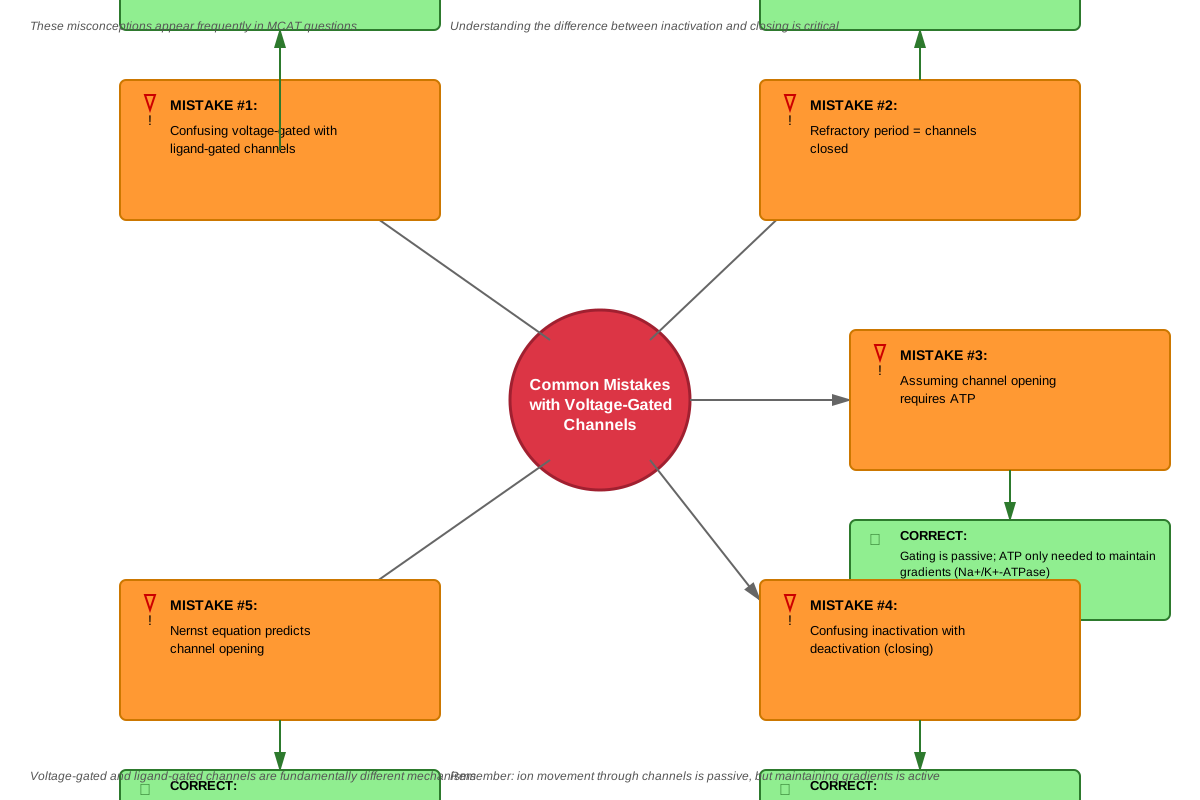
Misconception: Voltage-gated channels actively pump ions across the membrane using ATP.
Correction: Voltage-gated channels are passive conduits that allow ions to flow down their electrochemical gradients when open. They do not require ATP and do not perform active transport. The sodium-potassium pump (Na⁺/K⁺-ATPase) maintains the gradients that drive ion flow through channels.
Misconception: All voltage-gated channels open at the same threshold potential.
Correction: Different types of voltage-gated channels have distinct activation thresholds. Sodium channels typically activate around -55 mV, while some calcium channels require depolarization to -20 mV or higher. This differential activation is functionally important for the temporal sequence of events during action potentials.
Misconception: Inactivation and closing are the same process.
Correction: Inactivation and closing are distinct conformational states. A closed channel can open in response to depolarization, but an inactivated channel cannot open even if the membrane remains depolarized. Inactivated channels must first recover (return to the closed state) through repolarization before they can open again.
Misconception: Voltage-gated potassium channels cause depolarization during action potentials.
Correction: Voltage-gated potassium channels cause repolarization, not depolarization. When these channels open, potassium ions flow out of the cell down their concentration gradient, making the inside of the cell more negative and returning the membrane potential toward the resting level.
Misconception: The sodium-potassium pump directly generates action potentials.
Correction: The sodium-potassium pump maintains the ion gradients necessary for action potentials but does not directly generate them. Action potentials result from the opening and closing of voltage-gated channels, which allow passive ion flow down pre-existing gradients. The pump works continuously but slowly to maintain these gradients over time.
Misconception: Voltage-gated channels are only found in neurons.
Correction: While abundant in neurons, voltage-gated channels are also essential in cardiac muscle, skeletal muscle, smooth muscle, and some endocrine cells. Any excitable cell that generates action potentials or electrical signals requires voltage-gated channels.
Worked Examples
Example 1: Predicting Effects of a Sodium Channel Mutation
Question: A genetic mutation in voltage-gated sodium channels prevents the inactivation gate from closing after channel activation. Predict the effect on action potential generation and explain your reasoning.
Solution:
Step 1: Identify the normal function of sodium channel inactivation.
Normally, voltage-gated sodium channels inactivate 1-2 milliseconds after opening, which limits the duration of sodium influx and terminates the depolarization phase of the action potential.
Step 2: Predict the immediate consequence of preventing inactivation.
If the inactivation gate cannot close, sodium channels will remain open as long as the membrane is depolarized. This will cause prolonged sodium influx into the cell.
Step 3: Determine the effect on membrane potential.
Continued sodium influx will maintain depolarization, preventing or delaying repolarization. The membrane potential will remain elevated (positive) for an abnormally long duration.
Step 4: Consider the effect on action potential duration and shape.
The action potential will be dramatically prolonged. Even when voltage-gated potassium channels open to promote repolarization, the continued sodium influx will oppose this repolarization, creating a much longer action potential.
Step 5: Predict physiological consequences.
Prolonged action potentials can cause excessive calcium entry (through voltage-gated calcium channels that remain activated during the prolonged depolarization), leading to cellular dysfunction. In cardiac muscle, this could cause long QT syndrome, a dangerous arrhythmia. In neurons, this could cause hyperexcitability and seizures.
Answer: The mutation would cause prolonged action potentials due to sustained sodium influx, potentially leading to hyperexcitability, excessive calcium entry, and in cardiac tissue, arrhythmias such as long QT syndrome. This connects to learning objectives about channel structure-function relationships and predicting consequences of channel dysfunction.
Example 2: Interpreting a Voltage-Clamp Experiment
Question: In a voltage-clamp experiment on a neuron, the membrane potential is suddenly changed from -70 mV to 0 mV and held constant. The recorded current shows a rapid inward current that peaks at 2 ms and then declines to near zero by 5 ms, followed by a sustained outward current. Identify the ionic basis of each current component and explain the underlying channel behavior.
Solution:
Step 1: Identify the rapid inward current.
An inward current (positive charges entering the cell) that occurs rapidly after depolarization to 0 mV is characteristic of voltage-gated sodium channels opening. Sodium ions rush into the cell down their electrochemical gradient.
Step 2: Explain why the inward current declines.
The decline of the inward current from 2-5 ms reflects sodium channel inactivation. Even though the membrane is held at 0 mV (which would normally keep activation gates open), the inactivation gates close, blocking ion flow through the channels.
Step 3: Identify the sustained outward current.
An outward current (positive charges leaving the cell) that develops more slowly and persists is characteristic of voltage-gated potassium channels. These channels activate more slowly than sodium channels but do not inactivate rapidly, allowing sustained potassium efflux.
Step 4: Explain why the potassium current is sustained.
Voltage-gated potassium channels (particularly delayed rectifier type) remain open as long as the membrane is depolarized and do not undergo rapid inactivation. Therefore, the outward potassium current continues as long as the voltage clamp maintains the depolarized potential.
Step 5: Connect to physiological function.
This experiment demonstrates the temporal sequence of channel activation during an action potential: rapid sodium channel activation and inactivation followed by slower but sustained potassium channel activation. Under normal conditions (without voltage clamp), the potassium current would repolarize the membrane, but the voltage clamp prevents this by injecting current to maintain the set voltage.
Answer: The rapid inward current represents voltage-gated sodium channel activation followed by inactivation (2-5 ms). The sustained outward current represents voltage-gated potassium channel activation without rapid inactivation. This experiment reveals the kinetic differences between channel types that underlie action potential generation. This example addresses learning objectives about applying channel concepts to experimental data and understanding channel kinetics.
Exam Strategy
When approaching MCAT questions on voltage-gated channels, first identify which channel type is being discussed (sodium, potassium, or calcium) and what phase of the action potential or physiological process is relevant. Many questions will present experimental manipulations or clinical scenarios and ask you to predict outcomes. Use a systematic approach: identify the normal function of the channel, determine how the manipulation changes that function, and trace the consequences through the physiological system.
Trigger words to watch for include: "threshold," "depolarization," "repolarization," "inactivation," "refractory period," "action potential," "excitability," "channel blocker," and "mutation." When you see "inactivation," immediately think about sodium channels and refractory periods. When you see "repolarization," think about potassium channels. When you see "neurotransmitter release" or "muscle contraction," think about calcium channels.
For process-of-elimination strategies, remember that voltage-gated channels are passive (eliminate answers suggesting active transport), ion-selective (eliminate answers suggesting non-selective permeability), and voltage-dependent (eliminate answers suggesting ligand binding as the primary gating mechanism). If an answer choice confuses the pump with channels, or suggests that channels require ATP, eliminate it immediately.
Time allocation: For discrete questions on voltage-gated channels, spend 60-90 seconds. For passage-based questions, allocate 1.5-2 minutes per question, but use the passage strategically. Often, graphs showing current traces or action potential waveforms contain the information needed to answer questions without requiring extensive outside knowledge. Practice interpreting these graphs quickly by identifying which phase corresponds to which channel type.
When questions involve pharmacology or toxins, remember that most drugs affecting voltage-gated channels are blockers (reducing function) rather than enhancers. Consider which physiological processes would be impaired: sodium channel blockers reduce excitability and action potential propagation (local anesthetics, antiarrhythmics), calcium channel blockers reduce muscle contraction and neurotransmitter release (antihypertensives), and potassium channel blockers prolong action potentials (some antiarrhythmics).
Memory Techniques
Mnemonic for action potential sequence: "Some People Really Hate Reading"
- Sodium channels open (depolarization starts)
- Peak of action potential
- Repolarization begins (sodium inactivates, potassium opens)
- Hyperpolarization (undershoot)
- Return to resting potential
Mnemonic for channel states: "Can Open If Rested"
- Closed (resting state)
- Open (activated state)
- Inactivated (refractory state)
- Recovery requires repolarization
Visualization strategy: Picture voltage-gated channels as doors with two gates—an activation gate (outer door) and an inactivation gate (inner door). During resting state, the outer door is closed. Upon depolarization, the outer door swings open rapidly. Shortly after, the inner door swings shut (inactivation), blocking passage even though the outer door remains open. Only when the membrane repolarizes does the inner door open again, and the outer door closes, resetting the channel.
Acronym for calcium channel types: "Large Neurons Produce Rhythmic Timing"
- L-type: Long-lasting, Large depolarization needed (muscle contraction)
- N-type: Neuronal (neurotransmitter release)
- P/Q-type: Purkinje cells (neurotransmitter release)
- R-type: Residual (various functions)
- T-type: Transient, Tiny depolarization needed (pacemaker activity)
Memory aid for selectivity: Sodium channels are "Small and Selective" (narrow pore), while potassium channels "Keep K+ flowing" (wider pore but selective through coordination chemistry).
Summary
Voltage-gated channels are transmembrane proteins that open or close in response to changes in membrane potential, serving as the molecular basis for electrical signaling in excitable cells. These channels contain voltage sensors (S4 segments with positive charges) that detect membrane potential changes and undergo conformational changes to open or close the channel pore. The three major types—sodium, potassium, and calcium channels—have distinct activation thresholds, kinetics, and physiological roles. Voltage-gated sodium channels rapidly activate and then inactivate, generating the depolarization phase of action potentials. Voltage-gated potassium channels activate more slowly and mediate repolarization. Voltage-gated calcium channels trigger neurotransmitter release and muscle contraction. Understanding the structure, function, regulation, and pharmacology of these channels is essential for mastering neurophysiology, muscle physiology, and cardiovascular physiology on the MCAT. The coordinated activity of these channels generates action potentials, enables synaptic transmission, and underlies the function of the nervous system, muscular system, and cardiovascular system.
Key Takeaways
- Voltage-gated channels open or close in response to membrane potential changes, with voltage sensors (S4 segments) detecting electrical field changes across the membrane
- Voltage-gated sodium channels cause rapid depolarization and undergo fast inactivation, creating the absolute refractory period
- Voltage-gated potassium channels activate more slowly than sodium channels and mediate repolarization without rapid inactivation
- Voltage-gated calcium channels trigger neurotransmitter release at synapses and initiate muscle contraction through excitation-contraction coupling
- Inactivation is distinct from closing: inactivated channels cannot open even if the membrane remains depolarized and must recover through repolarization
- Many drugs and toxins target voltage-gated channels, including local anesthetics (sodium channel blockers) and antihypertensives (calcium channel blockers)
- The temporal sequence of channel activation and inactivation generates the stereotypical action potential waveform and determines cellular excitability
Related Topics
Ligand-gated ion channels: While voltage-gated channels respond to membrane potential changes, ligand-gated channels open in response to neurotransmitter binding. Understanding both types is essential for comprehensive knowledge of synaptic transmission and cellular signaling. Mastering voltage-gated channels provides the foundation for understanding how action potentials trigger neurotransmitter release, which then activates ligand-gated channels on the postsynaptic cell.
Action potential propagation: The mechanisms by which action potentials travel along axons depend entirely on voltage-gated channel function. Topics include saltatory conduction in myelinated axons, continuous conduction in unmyelinated axons, and factors affecting conduction velocity. This builds directly on voltage-gated channel knowledge.
Synaptic transmission: Voltage-gated calcium channels are the critical link between electrical signals (action potentials) and chemical signals (neurotransmitter release). Understanding synaptic transmission requires mastery of how calcium entry through voltage-gated channels triggers vesicle fusion and neurotransmitter release.
Cardiac electrophysiology: The cardiac action potential has a unique shape due to the specific complement of voltage-gated channels in cardiac myocytes, including specialized calcium channels that create the plateau phase. This topic integrates voltage-gated channel knowledge with cardiovascular physiology.
Excitation-contraction coupling: In both skeletal and cardiac muscle, voltage-gated channels link electrical excitation to mechanical contraction. This topic demonstrates how voltage-gated channels serve as signal transducers between electrical and mechanical domains.
Practice CTA
Now that you have mastered the core concepts of voltage-gated channels, it's time to reinforce your understanding through active practice. Attempt the practice questions and flashcards associated with this topic to test your ability to apply these concepts in exam-style scenarios. Focus on questions involving experimental manipulations, graphical interpretation, and clinical applications—these are the highest-yield question types for voltage-gated channels on the MCAT. Remember that understanding the temporal sequence of channel activation and the distinct properties of each channel type will enable you to tackle even the most challenging integrated passages. Your investment in mastering this foundational topic will pay dividends across multiple areas of the MCAT Biology section!
Sign up free to keep reading
Create a free AnvayaPrep account to finish this MCAT guide on Voltage gated channels — plus flashcards and practice questions.