Overview
Reaction mechanisms represent one of the most conceptually rich and frequently tested areas within General Chemistry on the MCAT. A reaction mechanism describes the step-by-step molecular pathway by which reactants transform into products, revealing the intimate details of chemical transformations that overall balanced equations cannot capture. Understanding reaction mechanisms requires integrating knowledge of chemical kinetics, thermodynamics, molecular structure, and bonding—making it a true synthesis topic that tests higher-order thinking skills.
For the MCAT, mastery of reaction mechanisms General Chemistry concepts is essential because these principles appear not only in standalone General Chemistry questions but also in passages involving organic chemistry reactions, biochemical pathways, and even biological systems questions where enzyme mechanisms are discussed. The MCAT frequently presents multi-step reaction sequences and asks students to identify rate-determining steps, predict intermediates, or explain how catalysts affect reaction pathways. Questions may require students to distinguish between elementary steps and overall reactions, apply the steady-state approximation, or use experimental data to propose plausible mechanisms.
Within the broader context of Kinetics and Equilibrium, reaction mechanisms serve as the molecular-level explanation for macroscopic kinetic observations. While rate laws describe how fast reactions proceed and equilibrium constants describe how far reactions go, mechanisms explain how reactions actually occur at the molecular level. This topic bridges the gap between empirical observations (rate laws determined experimentally) and theoretical understanding (molecular collisions, bond breaking and forming). Mastering reaction mechanisms MCAT content enables students to think like chemists, moving beyond memorization to genuine chemical reasoning that the exam rewards with higher scores.
Learning Objectives
- [ ] Define Reaction mechanisms using accurate General Chemistry terminology
- [ ] Explain why Reaction mechanisms matters for the MCAT
- [ ] Apply Reaction mechanisms to exam-style questions
- [ ] Identify common mistakes related to Reaction mechanisms
- [ ] Connect Reaction mechanisms to related General Chemistry concepts
- [ ] Distinguish between elementary steps and overall reactions, identifying molecularity
- [ ] Determine rate-determining steps and explain their relationship to overall rate laws
- [ ] Apply the steady-state approximation to derive rate laws from proposed mechanisms
- [ ] Evaluate whether a proposed mechanism is consistent with experimental rate law data
Prerequisites
- Chemical kinetics fundamentals: Understanding rate laws, rate constants, and reaction orders is essential because mechanisms must be consistent with experimentally determined rate laws
- Collision theory and activation energy: Knowledge of how molecules must collide with proper orientation and sufficient energy explains why reactions proceed through specific mechanistic pathways
- Thermodynamics and energy diagrams: Familiarity with enthalpy, Gibbs free energy, and reaction coordinate diagrams provides the framework for understanding why certain steps are fast or slow
- Molecular structure and bonding: Understanding Lewis structures, formal charges, and bond strengths is necessary to predict which bonds break and form during reaction steps
- Equilibrium concepts: Knowledge of Le Chatelier's principle and equilibrium constants helps explain how reversible elementary steps affect overall mechanisms
Why This Topic Matters
Clinical and Real-World Significance
Reaction mechanisms are fundamental to understanding how drugs work in the body, how enzymes catalyze biochemical reactions, and how metabolic pathways function. Pharmaceutical development relies heavily on mechanistic understanding—knowing the step-by-step process by which a drug molecule interacts with its target allows chemists to design more effective medications with fewer side effects. For example, understanding the mechanism by which aspirin acetylates cyclooxygenase enzymes explains both its therapeutic effects and its side effects. Environmental chemistry also depends on mechanistic knowledge: the catalytic destruction of ozone by chlorofluorocarbons follows a specific mechanism that explains why small amounts of CFCs can destroy large amounts of ozone.
MCAT Exam Statistics
Reaction mechanisms appear in approximately 3-5% of Chemical and Physical Foundations of Biological Systems questions, with medium-to-high difficulty ratings. Questions typically appear in two formats: (1) discrete questions asking students to identify rate-determining steps, predict intermediates, or evaluate proposed mechanisms against experimental data, and (2) passage-based questions where a complex reaction sequence is presented and students must apply mechanistic reasoning to answer multiple questions. The MCAT particularly favors questions that require students to connect mechanistic details to rate laws, distinguish between intermediates and catalysts, or explain how changing conditions affects specific steps in a mechanism.
Common Exam Presentations
The MCAT presents reaction mechanisms through several characteristic formats: reaction coordinate diagrams showing multiple transition states and intermediates; tables of experimental data (concentrations vs. initial rates) alongside proposed mechanisms; enzyme kinetics passages describing substrate binding and product formation steps; and organic chemistry passages where students must identify nucleophiles, electrophiles, and leaving groups in multi-step syntheses. Questions often ask students to identify which step is rate-determining, predict how temperature or catalyst changes affect specific steps, or determine whether a proposed mechanism is consistent with experimental observations.
Core Concepts
Elementary Steps and Overall Reactions
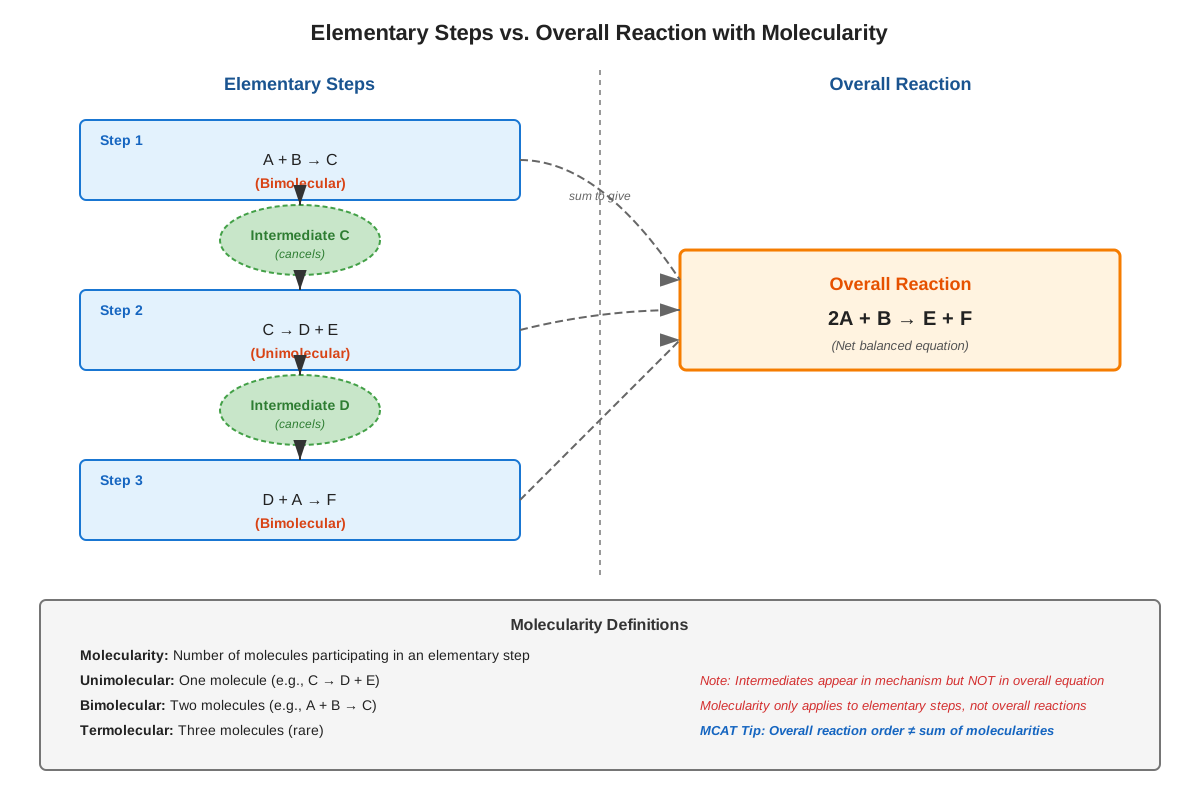
A reaction mechanism is the sequence of elementary steps (also called elementary reactions) that describes the molecular-level pathway from reactants to products. An elementary step is a single molecular event—a collision between molecules that results in bond breaking and/or bond forming. Unlike overall balanced equations, which may represent the sum of many steps, elementary steps describe actual molecular processes that occur in a single stage.
The molecularity of an elementary step refers to the number of molecules that participate as reactants in that step:
- Unimolecular: One molecule undergoes transformation (e.g., isomerization, decomposition)
- Bimolecular: Two molecules collide and react (most common)
- Termolecular: Three molecules collide simultaneously (extremely rare due to low probability)
The overall balanced equation is obtained by summing all elementary steps and canceling species that appear on both sides. Species that are produced in one step and consumed in a subsequent step are called reaction intermediates—they never appear in the overall balanced equation but are crucial to the mechanism.
Rate Laws and Elementary Steps
A fundamental principle connecting mechanisms to kinetics states that the rate law for an elementary step can be written directly from its stoichiometry. For an elementary step:
aA + bB → productsThe rate law is:
rate = k[A]^a[B]^bThis direct relationship holds ONLY for elementary steps, not for overall reactions. This is why determining the mechanism is so important—it explains why experimental rate laws often differ from what the overall stoichiometry might suggest.
For example, if an elementary step is:
2NO + O₂ → 2NO₂Then the rate law for this elementary step is:
rate = k[NO]²[O₂]This relationship allows us to work backward: if we know the experimental rate law for an overall reaction, we can evaluate whether a proposed mechanism is consistent with that rate law.
The Rate-Determining Step
In a multi-step mechanism, the rate-determining step (RDS) is the slowest elementary step, which acts as a bottleneck controlling the overall reaction rate. The rate-determining step is analogous to the narrowest point in a funnel—no matter how fast other steps proceed, the overall rate cannot exceed the rate of the slowest step.
The rate law for the overall reaction is determined by the rate-determining step and any fast equilibrium steps that precede it. If the RDS is the first step, the overall rate law matches the rate law of that elementary step. If fast equilibrium steps precede the RDS, the overall rate law becomes more complex and may involve applying the pre-equilibrium approximation or steady-state approximation.
Reaction Intermediates vs. Catalysts
Reaction intermediates are species formed in one elementary step and consumed in a later step. They:
- Do NOT appear in the overall balanced equation
- Are typically unstable, high-energy species
- Include carbocations, carbanions, free radicals, and other reactive species
- Can sometimes be detected spectroscopically but usually exist only transiently
Catalysts are species that:
- Participate in the mechanism but are regenerated by the end
- Appear in the mechanism but NOT in the overall balanced equation
- Lower activation energy by providing an alternative pathway
- Are NOT consumed overall (though they may be temporarily transformed)
The key distinction: intermediates are produced then consumed; catalysts are consumed then regenerated.
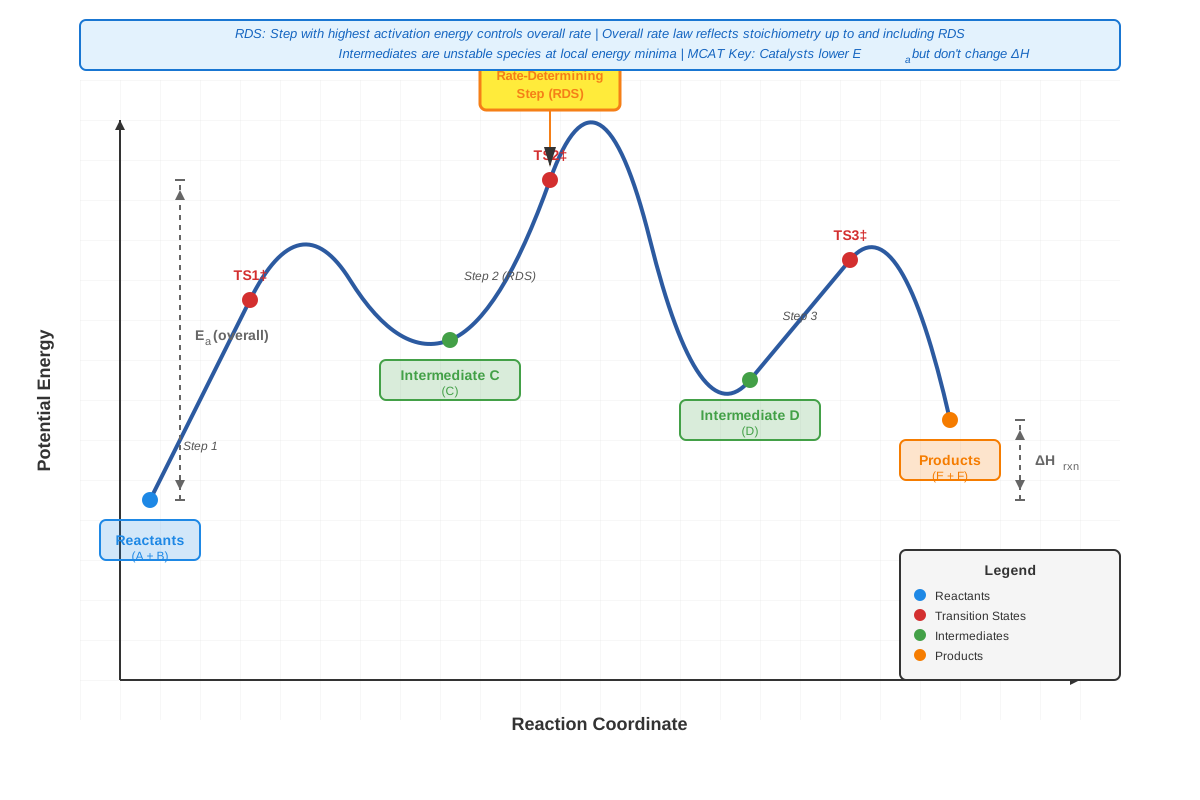
Reaction Coordinate Diagrams for Multi-Step Mechanisms
A reaction coordinate diagram for a multi-step mechanism shows multiple peaks (transition states) and valleys (intermediates). Key features include:
- Transition states: High-energy points representing the activated complex at the maximum of each energy barrier
- Intermediates: Local energy minima between transition states, representing species with finite (though brief) lifetimes
- Rate-determining step: The step with the highest activation energy barrier (usually, though not always)
- Overall ΔH: The difference between final products and initial reactants, independent of pathway
Energy
  |     TS₁    TS₂
  |      /\    /\
  |     /  \  /  \
  |    /   I₁    \
  | R /          \ P
  |________________
      Reaction Coordinate
Where R = reactants, I₁ = intermediate, TS = transition states, P = products
Determining Mechanisms from Experimental Data
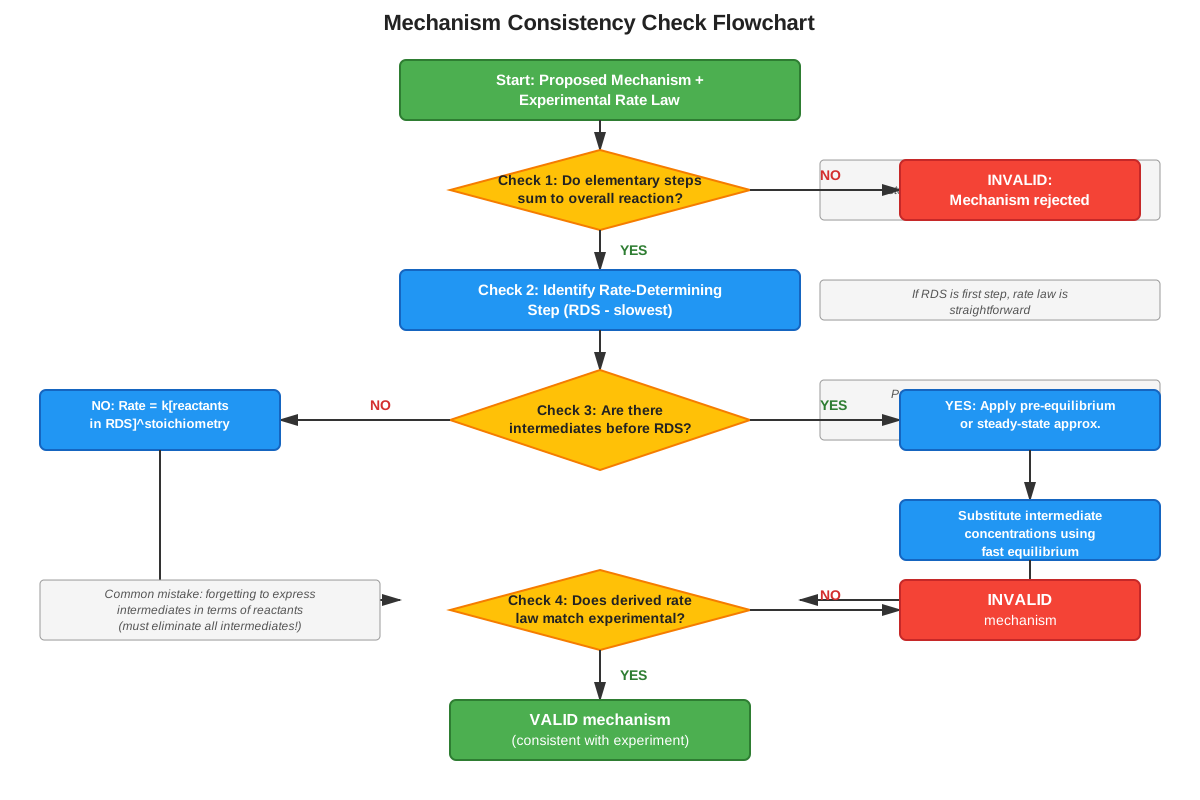
The MCAT frequently tests the ability to evaluate whether a proposed mechanism is consistent with experimental observations. A valid mechanism must satisfy three criteria:
- Stoichiometric consistency: Elementary steps must sum to give the overall balanced equation
- Rate law consistency: The mechanism must predict a rate law that matches experimental observations
- Physical reasonability: Steps must involve reasonable molecularities (no termolecular or higher) and plausible molecular interactions
To derive the rate law from a mechanism:
Method 1: Rate-Determining Step is First
If the RDS is the first step, the overall rate law equals the rate law of that step.
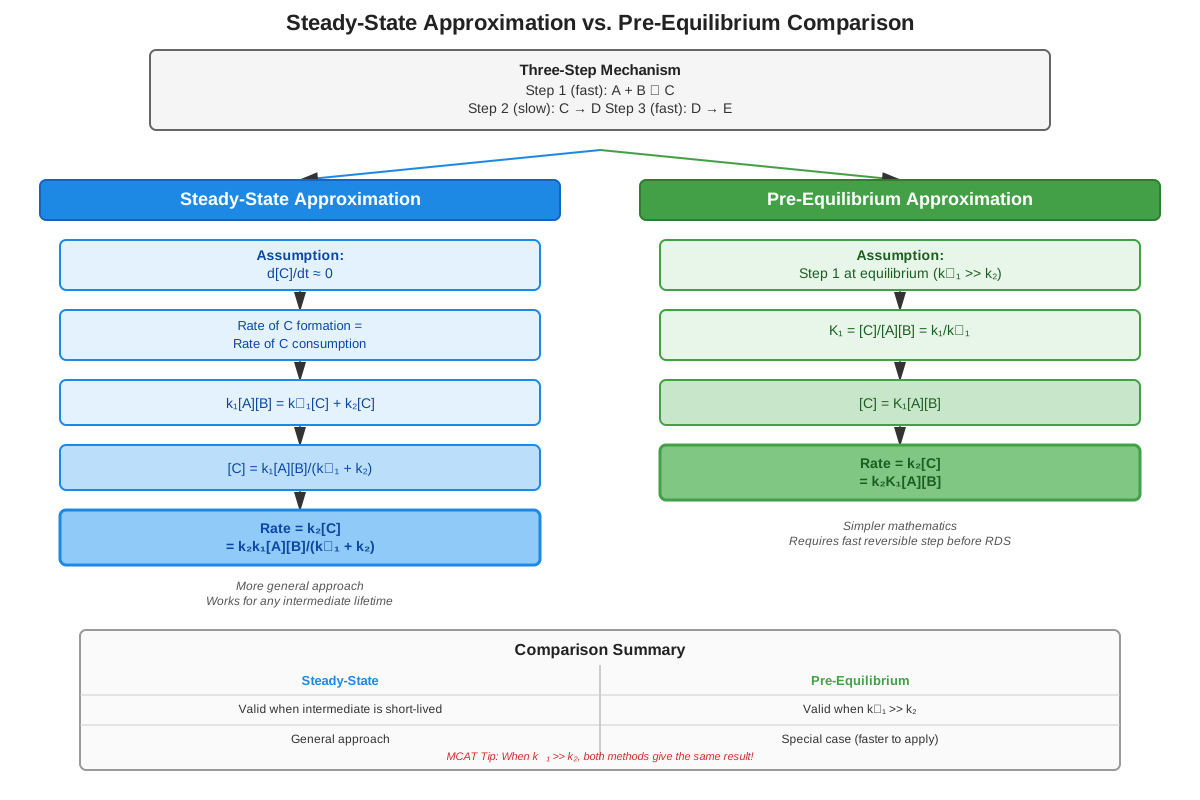
Method 2: Pre-Equilibrium Approximation
If fast equilibrium steps precede the RDS:
- Write the rate law for the RDS
- If it contains intermediates, use equilibrium expressions from prior fast steps to substitute for intermediate concentrations
- Express the final rate law in terms of reactants only
Method 3: Steady-State Approximation
For intermediates that don't reach equilibrium:
- Assume the rate of intermediate formation equals its rate of consumption
- Set d[intermediate]/dt = 0
- Solve for [intermediate] and substitute into the rate expression
Catalysis and Mechanisms
Catalysts affect mechanisms by providing alternative pathways with lower activation energies. Types include:
Homogeneous catalysts: Same phase as reactants; participate directly in elementary steps
Heterogeneous catalysts: Different phase (usually solid); provide surface for reaction
Enzymes: Biological catalysts that bind substrates and stabilize transition states
Catalysts appear in the mechanism but not in the overall equation. They work by:
- Stabilizing transition states
- Providing alternative pathways with lower Ea
- Orienting reactants favorably
- Temporarily forming bonds with reactants
Importantly, catalysts affect the rate but NOT the equilibrium position—they speed up both forward and reverse reactions equally.
Chain Reactions
Chain reactions are special mechanisms involving three stages:
- Initiation: Generation of reactive intermediates (often radicals)
- Propagation: Cycles where intermediates react to form products while regenerating intermediates
- Termination: Destruction of intermediates, ending the chain
Example: Chlorination of methane
Initiation: Cl₂ → 2Cl• (light)
Propagation: Cl• + CH₄ → HCl + •CH₃
            •CH₃ + Cl₂ → CH₃Cl + Cl•
Termination: Cl• + Cl• → Cl₂
Chain reactions are important in combustion, polymerization, and atmospheric chemistry.
Concept Relationships
The study of reaction mechanisms integrates multiple areas of General Chemistry into a cohesive framework. Reaction mechanisms directly explain rate laws observed experimentally—the mechanism is the molecular-level "why" behind the mathematical "what" of kinetics. The rate-determining step concept connects to activation energy from collision theory: the RDS typically has the highest activation energy barrier, explaining why it's slowest.
Reaction intermediates link mechanisms to molecular structure and stability—understanding which intermediates are likely requires knowledge of carbocation stability, resonance, and electronic effects. The distinction between intermediates and catalysts connects to stoichiometry and conservation of mass—catalysts are conserved while intermediates are not.
Reaction coordinate diagrams for mechanisms integrate thermodynamics (overall ΔH, ΔG) with kinetics (activation energies, relative rates). The diagram shows that thermodynamic favorability (negative ΔG) doesn't guarantee fast kinetics—a reaction might be thermodynamically favorable but kinetically slow if activation barriers are high.
The relationship flows: Experimental observations (rate laws) → Proposed mechanisms (elementary steps) → Validation (checking consistency) → Predictions (effects of changing conditions). This cycle represents the scientific method applied to chemical kinetics, making mechanisms a topic that tests scientific reasoning as much as content knowledge.
Quick check — test yourself on Reaction mechanisms so far.
Try Flashcards →High-Yield Facts
⭐ The rate law for an elementary step can be written directly from its stoichiometry, but this is NOT true for overall reactions
⭐ The rate-determining step is the slowest step and controls the overall reaction rate
⭐ Reaction intermediates are formed in one step and consumed in another; they do NOT appear in the overall equation
⭐ Catalysts participate in mechanisms but are regenerated; they appear in the mechanism but NOT in the overall equation
⭐ A valid mechanism must: (1) sum to the overall equation, (2) predict the experimental rate law, and (3) involve reasonable molecularities
- The molecularity of an elementary step equals the sum of stoichiometric coefficients of reactants in that step
- Unimolecular steps are first-order; bimolecular steps are second-order (for elementary steps only)
- The pre-equilibrium approximation applies when fast reversible steps precede the rate-determining step
- The steady-state approximation assumes d[intermediate]/dt ≈ 0 for reactive intermediates
- Catalysts lower activation energy for both forward and reverse reactions equally, so they don't affect equilibrium position
- In reaction coordinate diagrams, the number of peaks equals the number of elementary steps
- The step with the highest activation energy is usually (but not always) the rate-determining step
- Chain reactions involve initiation, propagation, and termination steps, with propagation steps forming cycles
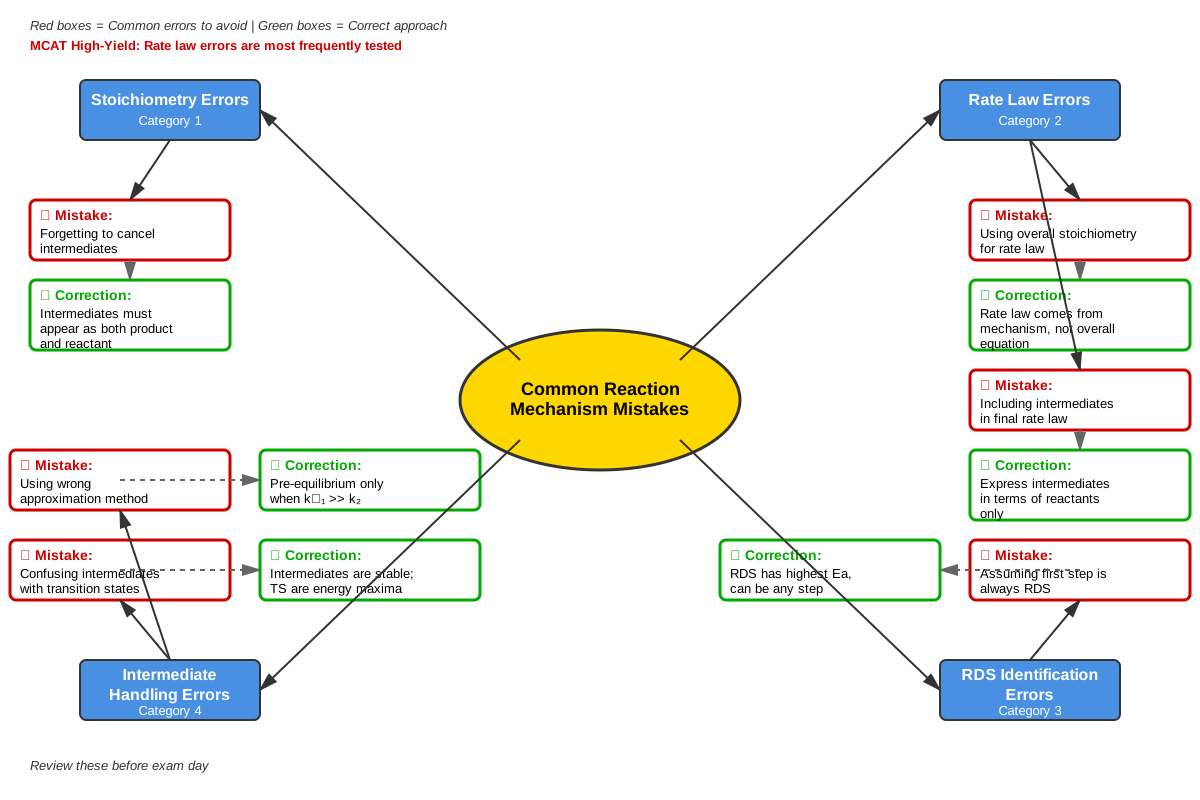
Common Misconceptions
Misconception: The rate law can be determined directly from the overall balanced equation.
Correction: Rate laws must be determined experimentally or derived from the mechanism. The stoichiometry of the overall equation does NOT directly give the rate law unless the reaction occurs in a single elementary step (which is rare).
Misconception: Intermediates and catalysts are the same thing because neither appears in the overall equation.
Correction: Intermediates are produced then consumed (net production is zero), while catalysts are consumed then regenerated (net consumption is zero). Intermediates are typically unstable and short-lived; catalysts are stable and can be recovered unchanged.
Misconception: The slowest step always has the highest activation energy.
Correction: While the rate-determining step usually has the highest activation energy, this isn't always true. The RDS is defined as the step that limits the overall rate, which depends on both activation energy and the concentrations of species entering that step.
Misconception: If a species doesn't appear in the overall equation, it must be a catalyst.
Correction: Species absent from the overall equation could be intermediates OR catalysts. The distinction depends on whether they're produced then consumed (intermediate) or consumed then regenerated (catalyst).
Misconception: Adding a catalyst changes the equilibrium constant or the amount of product formed.
Correction: Catalysts affect only the rate of reaching equilibrium, not the equilibrium position itself. They lower activation energy for both forward and reverse reactions equally, so Keq remains unchanged.
Misconception: All steps in a mechanism proceed at similar rates.
Correction: Steps can have vastly different rates. Fast equilibrium steps reach equilibrium quickly compared to the rate-determining step. This difference in rates is what makes certain steps rate-determining and allows approximations like pre-equilibrium and steady-state.
Misconception: Termolecular steps are common in mechanisms.
Correction: Termolecular steps are extremely rare because the probability of three molecules colliding simultaneously with proper orientation and energy is vanishingly small. Most mechanisms involve only unimolecular and bimolecular steps.
Worked Examples
Example 1: Evaluating a Proposed Mechanism
Problem: The reaction 2NO₂ + F₂ → 2NO₂F has the experimental rate law: rate = k[NO₂][F₂]. Evaluate whether the following mechanism is consistent with this rate law:
Step 1 (slow): NO₂ + F₂ → NO₂F + F
Step 2 (fast): NO₂ + F → NO₂F
Solution:
First, check stoichiometric consistency by summing the steps:
Step 1: NO₂ + F₂ → NO₂F + F
Step 2: NO₂ + F → NO₂F
_________________________________
Overall: 2NO₂ + F₂ → 2NO₂F
The F atom is an intermediate (produced in step 1, consumed in step 2). The sum matches the overall equation. ✓
Next, check rate law consistency. Since step 1 is slow (rate-determining) and step 2 is fast, the overall rate is determined by step 1. For this elementary step:
rate = k₁[NO₂][F₂]This matches the experimental rate law exactly. ✓
Finally, check physical reasonability. Both steps are bimolecular (two molecules colliding), which is physically reasonable. ✓
Conclusion: This mechanism is consistent with all criteria and is therefore a plausible mechanism for the reaction.
Key Learning Points:
- When the RDS is the first step, the rate law derivation is straightforward
- Intermediates must cancel when steps are summed
- The mechanism must predict the experimental rate law, not just match the overall stoichiometry
Example 2: Using Pre-Equilibrium Approximation
Problem: For the reaction 2NO + O₂ → 2NO₂, the following mechanism is proposed:
Step 1 (fast equilibrium): NO + NO ⇌ N₂O₂ (K₁ = k₁/k₋₁)
Step 2 (slow): N₂O₂ + O₂ → 2NO₂
Derive the rate law predicted by this mechanism.
Solution:
Since step 2 is the rate-determining step, start with its rate law:
rate = k₂[N₂O₂][O₂]However, N₂O₂ is an intermediate and shouldn't appear in the final rate law. Use the fast equilibrium in step 1 to express [N₂O₂] in terms of reactants.
For the equilibrium in step 1:
K₁ = [N₂O₂]/[NO]²Solving for the intermediate:
[N₂O₂] = K₁[NO]²Substitute into the rate expression:
rate = k₂(K₁[NO]²)[O₂]
rate = k₂K₁[NO]²[O₂]
Combining constants:
rate = k_obs[NO]²[O₂]where k_obs = k₂K₁
Conclusion: The mechanism predicts a rate law that is second-order in NO and first-order in O₂. This can be compared to experimental data to validate the mechanism.
Key Learning Points:
- When fast equilibrium precedes the RDS, use equilibrium expressions to eliminate intermediates
- The observed rate constant is often a combination of multiple elementary rate constants
- The pre-equilibrium approximation is valid when k₋₁ >> k₂ (reverse of step 1 is much faster than step 2)
Exam Strategy
Approaching MCAT Questions on Reaction Mechanisms
When encountering mechanism questions on the MCAT, follow this systematic approach:
- Identify what's given: Overall equation, experimental rate law, proposed mechanism, or reaction coordinate diagram
- Identify what's asked: Validate mechanism, identify RDS, predict rate law, identify intermediates/catalysts
- Check stoichiometry first: Ensure elementary steps sum to overall equation
- Locate the rate-determining step: Look for words like "slow," "rate-limiting," or the highest energy barrier on diagrams
- Derive the predicted rate law: Use RDS and any preceding equilibria
- Compare to experimental data: The mechanism must match observed kinetics
Trigger Words and Phrases
Watch for these key phrases that signal specific concepts:
- "Slow step" or "rate-limiting": Identifies the rate-determining step
- "Fast equilibrium": Signals use of pre-equilibrium approximation
- "Intermediate": Species formed and consumed; doesn't appear in overall equation
- "Catalyst": Appears in mechanism but not overall equation; is regenerated
- "Elementary step": Rate law can be written from stoichiometry
- "Molecularity": Number of molecules in an elementary step
- "Consistent with": Must validate mechanism against experimental rate law
Process of Elimination Tips
When evaluating answer choices:
- Eliminate mechanisms where steps don't sum to the overall equation (stoichiometric inconsistency)
- Eliminate mechanisms that predict rate laws inconsistent with experimental data (kinetic inconsistency)
- Eliminate mechanisms with termolecular or higher steps (physically unreasonable)
- Eliminate options that confuse intermediates with catalysts (check whether species are produced→consumed or consumed→regenerated)
- For rate law questions, eliminate options that include intermediates (final rate laws should contain only reactants/products)
Time Allocation
For discrete questions on mechanisms (typically 1-1.5 minutes):
- 15-20 seconds: Read and identify question type
- 30-40 seconds: Work through mechanism logic (sum steps, identify RDS, etc.)
- 20-30 seconds: Evaluate answer choices
- 10-15 seconds: Verify and select answer
For passage-based mechanism questions (typically 1.5-2 minutes per question):
- First pass through passage: Identify overall reaction, proposed mechanism, and experimental data
- Per question: Focus on the specific step or aspect being tested
- Use passage information systematically rather than trying to understand the entire mechanism at once
Memory Techniques
Mnemonic for Mechanism Validation: "SRP"
Stoichiometry: Steps must sum to overall equation
Rate law: Mechanism must predict experimental rate law
Physical reasonability: No termolecular steps, reasonable intermediates
Mnemonic for Intermediate vs. Catalyst: "PICR"
Produced then consumed = Intermediate
Consumed then Regenerated = Catalyst
Visualization Strategy for Multi-Step Mechanisms
Create a mental "assembly line" where:
- Reactants enter on the left
- Each station represents an elementary step
- The slowest station (RDS) creates a bottleneck
- Intermediates are "partially assembled products" that don't leave the factory
- Catalysts are "tools" that help but aren't consumed
- Products exit on the right
Acronym for Chain Reactions: "IPT"
Initiation: Start the chain (generate radicals)
Propagation: Perpetuate the chain (cycle that regenerates reactive species)
Termination: Stop the chain (destroy reactive species)
Memory Aid for Rate Law Derivation
"FRED" - Fast Reversible Equilibrium Determines rate law when preceding RDS
- Fast equilibrium first
- RDS second
- Eliminate intermediates using equilibrium expression
- Derive final rate law in terms of reactants
Summary
Reaction mechanisms represent the molecular-level, step-by-step pathways by which chemical reactions occur, bridging the gap between empirical kinetic observations and theoretical understanding. A mechanism consists of elementary steps—individual molecular events with defined molecularities—that sum to give the overall balanced equation. The rate-determining step, typically the slowest elementary step, controls the overall reaction rate and determines the form of the rate law. Reaction intermediates are transient species produced in one step and consumed in another, while catalysts participate in mechanisms but are regenerated, lowering activation energy without affecting equilibrium position. Valid mechanisms must satisfy three criteria: stoichiometric consistency (steps sum to overall equation), kinetic consistency (predicted rate law matches experimental observations), and physical reasonability (appropriate molecularities and plausible molecular interactions). The MCAT tests mechanism concepts through questions requiring students to validate proposed mechanisms, identify rate-determining steps, distinguish intermediates from catalysts, and derive rate laws using pre-equilibrium or steady-state approximations. Mastery requires integrating knowledge of kinetics, thermodynamics, and molecular structure to think mechanistically about chemical transformations.
Key Takeaways
- Reaction mechanisms describe step-by-step molecular pathways; elementary steps are individual molecular events whose rate laws can be written directly from stoichiometry
- The rate-determining step is the slowest step that controls overall reaction rate; it determines the form of the experimental rate law
- Intermediates are produced then consumed (don't appear in overall equation); catalysts are consumed then regenerated (also don't appear in overall equation)
- Valid mechanisms must sum to the overall equation, predict the experimental rate law, and involve physically reasonable steps (typically uni- or bimolecular)
- Pre-equilibrium approximation is used when fast reversible steps precede the RDS; use equilibrium expressions to eliminate intermediates from rate laws
- Reaction coordinate diagrams for multi-step mechanisms show multiple peaks (transition states) and valleys (intermediates), with the highest barrier typically corresponding to the RDS
- Chain reactions involve initiation, propagation (cyclic), and termination steps, important in combustion, polymerization, and atmospheric chemistry
Related Topics
Enzyme Kinetics (Biochemistry): Enzyme mechanisms follow the same principles as chemical mechanisms, with substrate binding, catalytic steps, and product release. Michaelis-Menten kinetics represents a specific application of steady-state approximation to enzyme-catalyzed reactions. Mastering reaction mechanisms provides the foundation for understanding competitive and noncompetitive inhibition.
Organic Reaction Mechanisms: Organic chemistry extensively uses mechanistic reasoning, with curved arrow notation showing electron movement through elementary steps. Understanding general mechanism principles enables learning SN1, SN2, E1, E2, and addition/elimination reactions that appear throughout the MCAT.
Transition State Theory: Advanced kinetic theory that explains rate constants in terms of transition state formation and decomposition. This topic extends mechanism concepts by providing quantitative relationships between activation parameters and molecular structure.
Catalysis in Biological Systems: Enzymes, cofactors, and coenzymes function as biological catalysts with complex mechanisms. Understanding how catalysts affect mechanisms without changing equilibrium is essential for biochemistry passages on the MCAT.
Atmospheric and Environmental Chemistry: Ozone depletion, photochemical smog formation, and greenhouse gas reactions all involve chain mechanisms. These real-world applications frequently appear in MCAT passages testing mechanism concepts in applied contexts.
Practice CTA
Now that you've mastered the core concepts of reaction mechanisms, it's time to solidify your understanding through active practice. Attempt the practice questions and work through the flashcards to reinforce the distinctions between intermediates and catalysts, practice deriving rate laws from mechanisms, and develop your ability to evaluate proposed mechanisms against experimental data. Remember, the MCAT rewards not just knowledge but the ability to apply mechanistic reasoning under time pressure—practice is what transforms understanding into exam-day performance. You've built a strong foundation; now make it automatic through deliberate practice!
Sign up free to keep reading
Create a free AnvayaPrep account to finish this MCAT guide on Reaction mechanisms — plus flashcards and practice questions.