Overview
Theoretical yield is a foundational concept in General Chemistry that represents the maximum amount of product that can be formed in a chemical reaction based on stoichiometric calculations. This concept sits at the intersection of stoichiometry, limiting reagents, and quantitative analysis—all critical components of the MCAT Chemical and Physical Foundations of Biological Systems section. Understanding theoretical yield enables students to predict reaction outcomes, evaluate reaction efficiency, and solve complex multi-step problems that frequently appear on standardized examinations.
For the MCAT, theoretical yield serves as more than just a calculation exercise. It forms the basis for understanding percent yield, reaction optimization, and the practical limitations of chemical processes in biological systems. Questions involving theoretical yield often appear in passage-based formats where students must analyze experimental data, identify limiting reagents, perform stoichiometric conversions, and evaluate the efficiency of biochemical pathways or synthetic reactions. The ability to rapidly calculate theoretical yield and recognize its relationship to actual experimental outcomes distinguishes high-scoring test-takers from those who struggle with quantitative reasoning.
Within the broader framework of Stoichiometry and Reactions, theoretical yield connects directly to balanced chemical equations, molar relationships, limiting reagents, and percent yield calculations. Mastery of this topic enables students to tackle more advanced concepts including reaction kinetics, thermodynamics, and the quantitative analysis of metabolic pathways. The theoretical yield concept also bridges pure chemistry with practical applications in pharmaceutical development, metabolic efficiency, and laboratory technique evaluation—all areas that the MCAT tests through integrated, interdisciplinary questions.
Learning Objectives
- [ ] Define theoretical yield using accurate General Chemistry terminology
- [ ] Explain why theoretical yield matters for the MCAT
- [ ] Apply theoretical yield to exam-style questions
- [ ] Identify common mistakes related to theoretical yield
- [ ] Connect theoretical yield to related General Chemistry concepts
- [ ] Calculate theoretical yield from balanced equations and given quantities of reactants
- [ ] Distinguish between theoretical yield, actual yield, and percent yield in experimental contexts
- [ ] Analyze multi-step reactions to determine overall theoretical yield
- [ ] Evaluate the efficiency of biochemical pathways using theoretical yield calculations
Prerequisites
- Balanced chemical equations: Essential for determining molar ratios between reactants and products, which form the foundation of all theoretical yield calculations
- Mole concept and molar mass: Required to convert between mass, moles, and number of particles—the fundamental units used in stoichiometric calculations
- Limiting reagent identification: Necessary because theoretical yield must be calculated based on the limiting reagent, not excess reagents
- Dimensional analysis: Critical skill for setting up conversion factors and ensuring proper unit cancellation throughout multi-step calculations
- Basic algebra: Needed to manipulate equations and solve for unknown quantities in stoichiometric problems
Why This Topic Matters
Clinical and Real-World Significance
Theoretical yield calculations are fundamental to pharmaceutical manufacturing, where drug synthesis must be optimized for cost-effectiveness and resource efficiency. When pharmaceutical companies develop new medications, they must predict how much product can be obtained from given quantities of starting materials to determine economic feasibility. In clinical biochemistry, theoretical yield concepts help explain why metabolic pathways produce specific amounts of ATP, why enzyme deficiencies lead to substrate accumulation, and how the body's chemical efficiency compares to theoretical maximum values.
MCAT Exam Statistics
Theoretical yield appears in approximately 3-5% of Chemical and Physical Foundations questions, typically integrated with limiting reagent problems, percent yield calculations, or passage-based experimental analysis. Questions may appear as discrete items requiring straightforward calculations or as part of complex passages involving multi-step synthesis, metabolic pathway analysis, or laboratory technique evaluation. The MCAT frequently tests this concept through:
- Passage-based questions: Experimental procedures where students must calculate expected product amounts and compare to actual results
- Discrete questions: Direct stoichiometric calculations requiring identification of limiting reagents and theoretical yield determination
- Data interpretation: Tables or graphs showing reaction conditions where students must predict or evaluate product formation
- Integrated problems: Questions combining theoretical yield with thermodynamics, kinetics, or equilibrium concepts
The topic appears most commonly in passages involving organic synthesis, biochemical pathways (especially cellular respiration and photosynthesis), and laboratory technique optimization.
Core Concepts
Definition and Fundamental Principles
Theoretical yield is defined as the maximum quantity of product that can be formed from a given amount of reactants, assuming complete conversion according to the stoichiometry of the balanced chemical equation. This value represents an idealized scenario where the reaction proceeds to 100% completion, all reactants are converted to products, no side reactions occur, and no product is lost during isolation or purification.
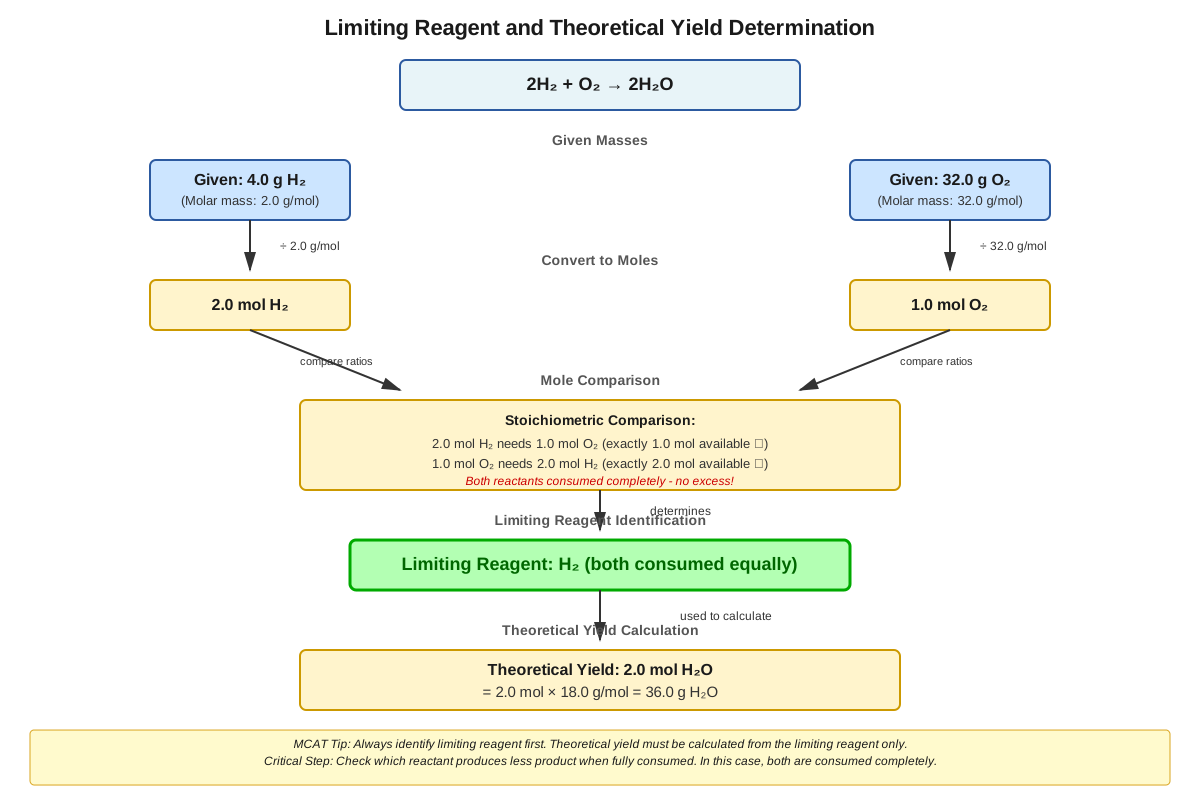
The theoretical yield is always calculated based on the limiting reagent—the reactant that is completely consumed first and thus determines the maximum amount of product that can form. Other reactants present in excess do not limit product formation and therefore do not determine theoretical yield. This distinction is crucial for MCAT problem-solving, as many questions deliberately provide information about multiple reactants to test whether students can correctly identify which one limits the reaction.
Mathematical Framework for Theoretical Yield Calculations
The systematic approach to calculating theoretical yield follows these essential steps:
- Write and balance the chemical equation for the reaction
- Convert all given quantities to moles using molar masses
- Identify the limiting reagent by comparing mole ratios to stoichiometric ratios
- Calculate moles of product formed from the limiting reagent using stoichiometric ratios
- Convert moles of product to desired units (typically grams) using molar mass
Theoretical Yield (g) = (moles of limiting reagent) × (stoichiometric ratio) × (molar mass of product)Limiting Reagent and Its Relationship to Theoretical Yield
The limiting reagent (also called limiting reactant) is the substance that determines the maximum amount of product that can form because it is completely consumed first. To identify the limiting reagent when multiple reactant quantities are given:
Method 1: Mole Ratio Comparison
- Calculate moles of each reactant
- Divide moles of each reactant by its stoichiometric coefficient
- The reactant with the smallest value is the limiting reagent
Method 2: Product Formation Comparison
- Calculate how much product would form if each reactant were limiting
- The reactant that produces the least product is the limiting reagent
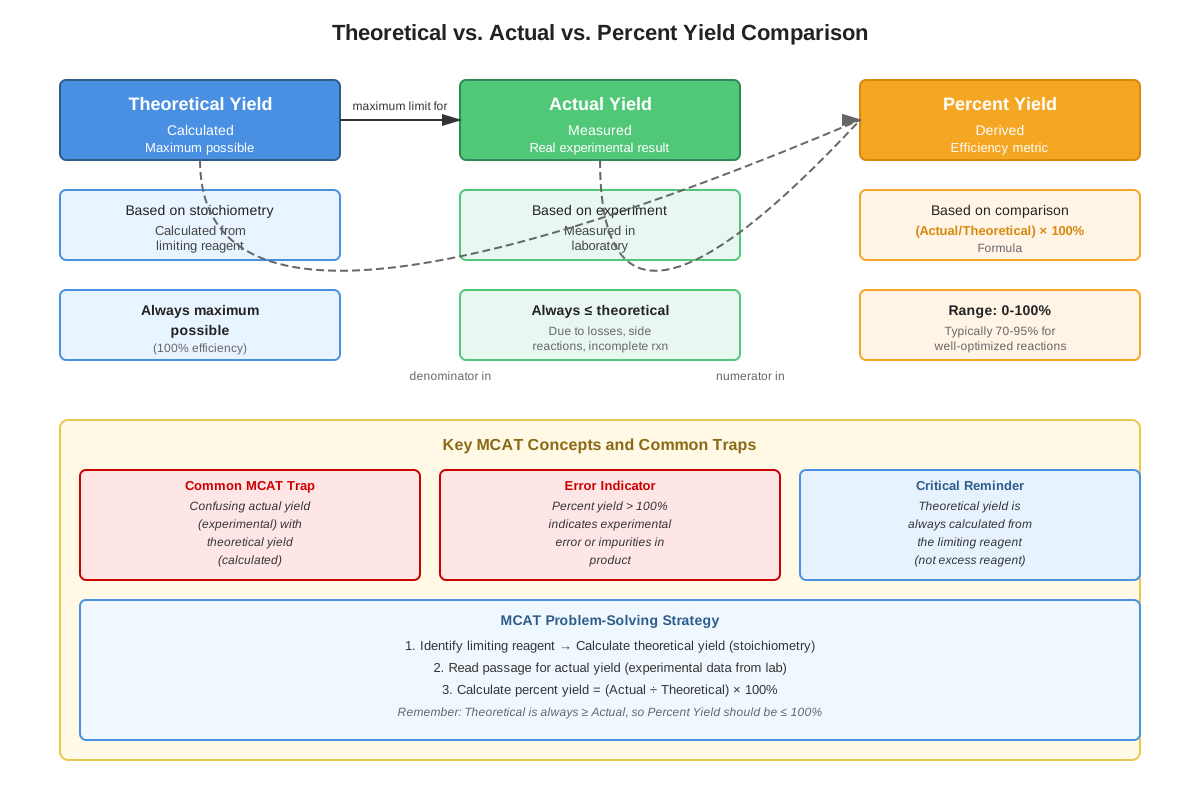
Theoretical Yield vs. Actual Yield vs. Percent Yield
Understanding the distinction between these three related concepts is essential for MCAT success:
| Concept | Definition | Characteristics | MCAT Relevance |
|---|---|---|---|
| Theoretical Yield | Maximum product possible from stoichiometry | Calculated value; assumes 100% efficiency | Used to predict reaction outcomes |
| Actual Yield | Amount of product actually obtained experimentally | Measured value; always ≤ theoretical yield | Given in experimental passages |
| Percent Yield | (Actual/Theoretical) × 100% | Measure of reaction efficiency | Tests understanding of practical limitations |
The relationship between these values provides insight into reaction efficiency, experimental technique quality, and the presence of side reactions or product loss. The MCAT frequently presents experimental data where students must calculate one value given the others.
Multi-Step Reactions and Overall Theoretical Yield
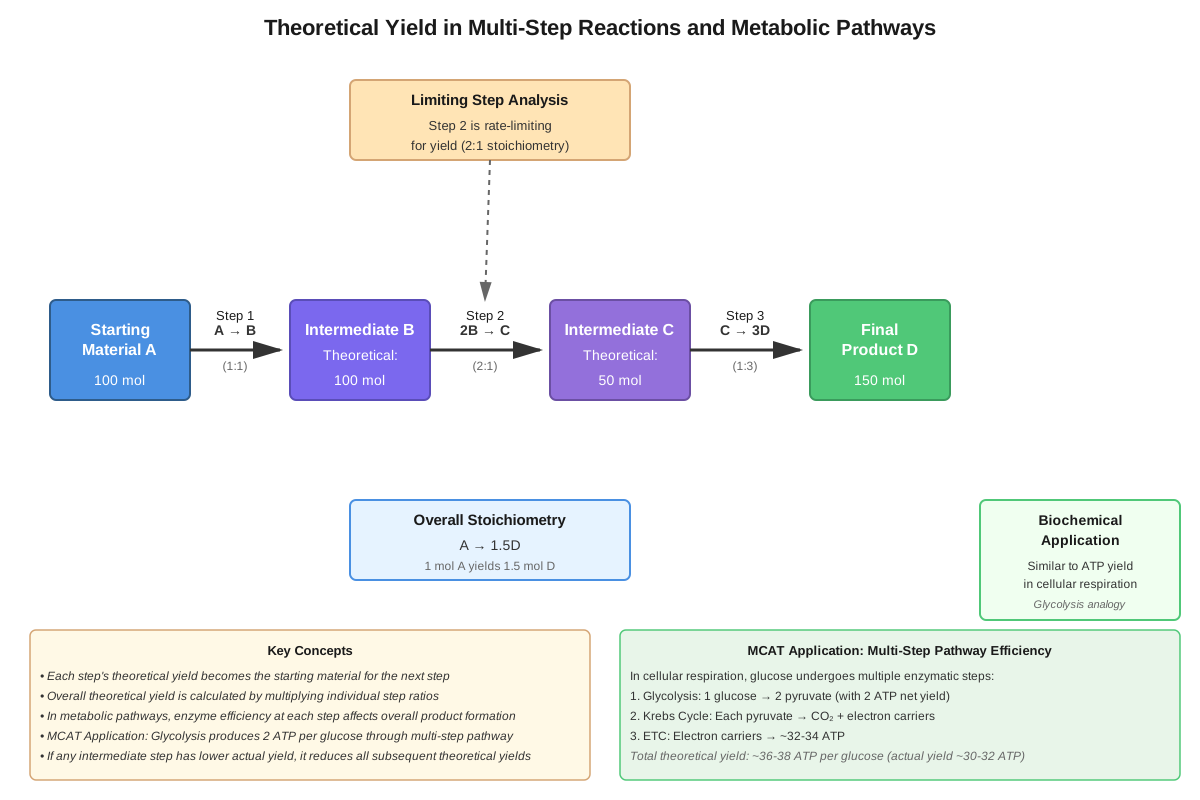
Many MCAT passages involve multi-step synthesis or metabolic pathways where the product of one reaction becomes the reactant for the next. For sequential reactions:
A → B → C → DThe overall theoretical yield of D depends on the limiting reagent in each step. Key principles include:
- The theoretical yield of each step becomes the maximum available reactant for the next step
- If percent yields are given for individual steps, multiply them to find overall efficiency
- The step with the lowest efficiency often determines overall product formation
- Each step must be analyzed independently before determining overall yield
Factors Affecting Theoretical vs. Actual Yield
While theoretical yield assumes ideal conditions, actual yield is always lower due to:
- Incomplete reactions: Equilibrium limitations prevent 100% conversion
- Side reactions: Competing pathways consume reactants without forming desired product
- Product loss: Material lost during transfer, purification, or isolation
- Reversible reactions: Product decomposition or reverse reaction occurrence
- Experimental error: Measurement inaccuracies or technique limitations
Understanding these factors helps interpret experimental results and answer questions about reaction optimization and efficiency improvement.
Concept Relationships
Theoretical yield serves as a central hub connecting multiple General Chemistry concepts within Stoichiometry and Reactions. The calculation pathway flows as follows:
Balanced Chemical Equation → provides stoichiometric ratios → Mole Calculations → enables comparison of reactants → Limiting Reagent Identification → determines maximum product → Theoretical Yield → compared with experimental results → Actual Yield → used to calculate → Percent Yield
This linear progression represents the typical problem-solving sequence, but the MCAT often tests these relationships in reverse. Students might be given percent yield and actual yield, then asked to work backward to determine theoretical yield or identify the limiting reagent.
The concept also connects vertically to more advanced topics. Theoretical yield calculations provide the foundation for understanding:
- Reaction kinetics: Rate laws describe how quickly theoretical yield is approached
- Chemical equilibrium: Equilibrium constants explain why actual yield falls short of theoretical
- Thermodynamics: Gibbs free energy predicts whether theoretical yield is achievable
- Laboratory techniques: Purification methods aim to maximize recovery of theoretical yield
In biological contexts, theoretical yield connects to metabolic efficiency. For example, cellular respiration has a theoretical yield of 38 ATP per glucose molecule, but actual yield is approximately 30-32 ATP due to proton leak and transport costs. This discrepancy between theoretical and actual values appears frequently in biochemistry passages.
High-Yield Facts
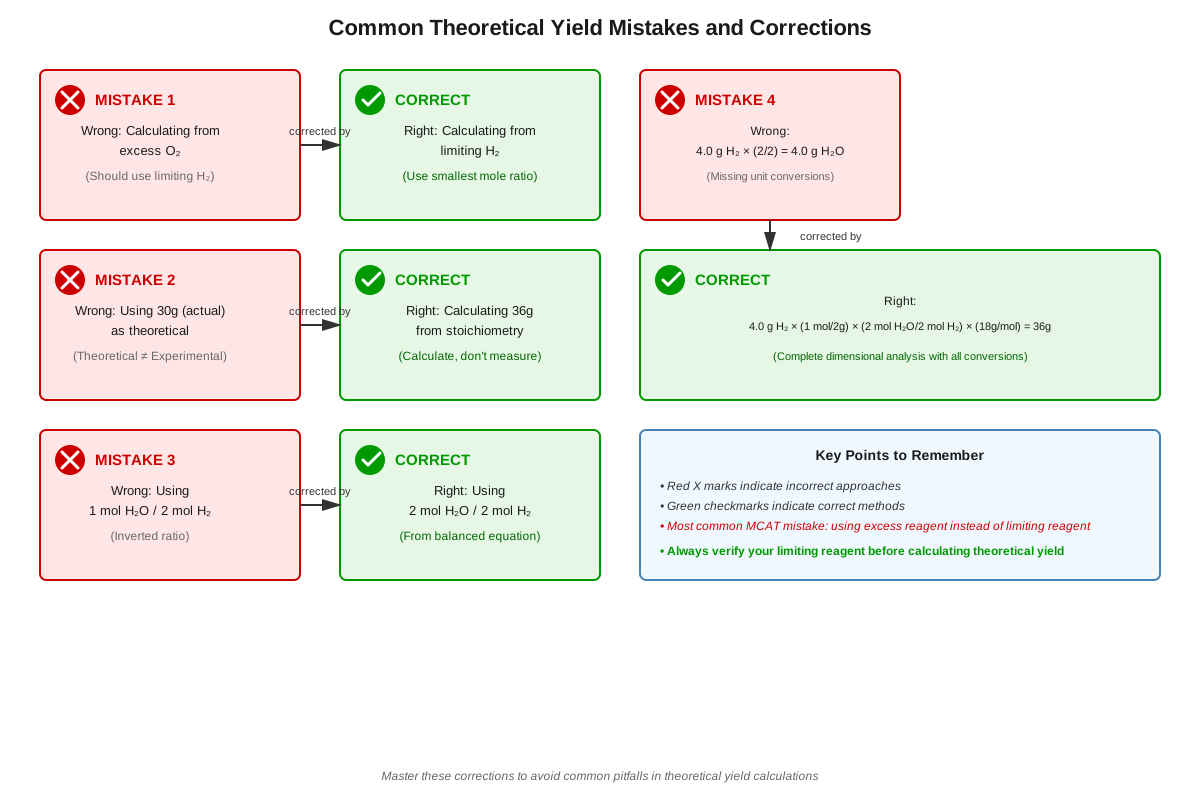
⭐ Theoretical yield is always calculated using the limiting reagent, never the excess reagent
⭐ Actual yield can never exceed theoretical yield in a single reaction (percent yield ≤ 100%)
⭐ To find limiting reagent, divide moles of each reactant by its stoichiometric coefficient; smallest value indicates limiting reagent
⭐ Percent yield = (actual yield / theoretical yield) × 100%
⭐ In multi-step reactions, overall percent yield equals the product of individual step percent yields
- Theoretical yield is expressed in units of mass (grams), moles, or number of particles, depending on the question
- The presence of a catalyst does not change theoretical yield; it only affects the rate of reaching that yield
- Theoretical yield assumes complete reaction, which rarely occurs in practice due to equilibrium limitations
- When multiple products form, each has its own theoretical yield based on stoichiometry
- Excess reagent quantity does not affect theoretical yield calculation but may affect reaction rate or equilibrium position
Quick check — test yourself on Theoretical yield so far.
Try Flashcards →Common Misconceptions
Misconception: Theoretical yield should be calculated using the reactant present in the largest mass or volume.
Correction: Theoretical yield must be calculated using the limiting reagent, which is determined by comparing mole ratios to stoichiometric ratios, not by comparing absolute quantities. A reactant present in smaller mass might actually be in excess if its stoichiometric coefficient is small or its molar mass is low.
Misconception: If actual yield exceeds theoretical yield, the calculation must be wrong.
Correction: While actual yield should not exceed theoretical yield for a single, pure reaction, apparent percent yields above 100% can occur due to experimental errors such as incomplete drying (water weight included), impurities in the product, or measurement errors. The MCAT may present such scenarios to test critical thinking about experimental technique.
Misconception: Theoretical yield changes if reaction conditions (temperature, pressure, catalyst) change.
Correction: Theoretical yield is determined solely by stoichiometry and the amount of limiting reagent present. Reaction conditions affect the rate of product formation and the actual yield obtained, but not the theoretical maximum. A catalyst, for example, helps reach theoretical yield faster but doesn't increase the theoretical value itself.
Misconception: In a multi-step synthesis, the theoretical yield of the final product equals the theoretical yield of the first step.
Correction: In sequential reactions, the theoretical yield of each step becomes the starting material for the next step. The overall theoretical yield must account for stoichiometric losses at each step. If 10 g of A theoretically produces 8 g of B, and 8 g of B theoretically produces 6 g of C, the overall theoretical yield of C from A is 6 g, not 8 g or 10 g.
Misconception: Percent yield and theoretical yield are the same concept.
Correction: Percent yield is a ratio comparing actual experimental results to theoretical predictions, while theoretical yield is the absolute maximum amount of product possible. Percent yield = (actual/theoretical) × 100% and provides information about reaction efficiency, whereas theoretical yield provides the benchmark for that comparison.
Misconception: The reagent present in the smallest molar amount is always the limiting reagent.
Correction: The limiting reagent is determined by comparing the ratio of moles available to the stoichiometric coefficient for each reactant. A reactant might be present in fewer moles but still be in excess if its stoichiometric coefficient is proportionally smaller. For example, in 2H₂ + O₂ → 2H₂O, if 1 mole of H₂ and 1 mole of O₂ are present, H₂ is limiting despite both being present in equal molar amounts, because the reaction requires 2 moles of H₂ for every 1 mole of O₂.
Worked Examples
Example 1: Basic Theoretical Yield Calculation with Limiting Reagent
Problem: Consider the combustion of propane: C₃H₈ + 5O₂ → 3CO₂ + 4H₂O. If 22.0 g of propane reacts with 64.0 g of oxygen, what is the theoretical yield of carbon dioxide in grams?
Solution:
Step 1: Verify the equation is balanced (it is).
Step 2: Convert given masses to moles.
- Molar mass of C₃H₈ = 3(12.0) + 8(1.0) = 44.0 g/mol
- Moles of C₃H₈ = 22.0 g ÷ 44.0 g/mol = 0.500 mol
- Molar mass of O₂ = 2(16.0) = 32.0 g/mol
- Moles of O₂ = 64.0 g ÷ 32.0 g/mol = 2.00 mol
Step 3: Identify the limiting reagent.
- From stoichiometry: 1 mol C₃H₈ requires 5 mol O₂
- Moles of O₂ needed for 0.500 mol C₃H₈ = 0.500 × 5 = 2.50 mol
- Only 2.00 mol O₂ available, so O₂ is the limiting reagent
Alternative method:
- Divide moles by stoichiometric coefficient:
- C₃H₈: 0.500 ÷ 1 = 0.500
- O₂: 2.00 ÷ 5 = 0.400 (smaller value → limiting reagent)
Step 4: Calculate moles of CO₂ produced from limiting reagent.
- From stoichiometry: 5 mol O₂ produces 3 mol CO₂
- Moles of CO₂ = 2.00 mol O₂ × (3 mol CO₂ / 5 mol O₂) = 1.20 mol CO₂
Step 5: Convert moles of product to grams.
- Molar mass of CO₂ = 12.0 + 2(16.0) = 44.0 g/mol
- Theoretical yield = 1.20 mol × 44.0 g/mol = 52.8 g CO₂
Connection to Learning Objectives: This problem demonstrates the complete workflow for theoretical yield calculation, emphasizing the critical importance of limiting reagent identification before calculating product formation.
Example 2: Multi-Step Synthesis with Percent Yield
Problem: A pharmaceutical synthesis involves three steps:
- Step 1: A → B with 85% yield
- Step 2: B → C with 90% yield
- Step 3: C → D with 75% yield
If the theoretical yield of B from 100 g of A is 120 g, what is the actual yield of final product D?
Solution:
Step 1: Calculate actual yield of B from step 1.
- Theoretical yield of B = 120 g
- Actual yield of B = 120 g × 0.85 = 102 g
Step 2: Calculate theoretical yield of C from step 2.
This requires the stoichiometry of B → C, which isn't given. However, we can work with the actual yield of B as the starting point.
- Starting with 102 g of B (actual from step 1)
- If we assume 1:1 molar ratio for simplicity (or the problem implies this), the theoretical yield of C would be based on 102 g of B
- Actual yield of C = (theoretical yield of C) × 0.90
Step 3: Recognize the key principle for multi-step reactions.
When percent yields are given for each step, the overall percent yield is the product of individual yields:
- Overall percent yield = 0.85 × 0.90 × 0.75 = 0.574 or 57.4%
Step 4: Calculate actual yield of D.
- We need the theoretical yield of D starting from 100 g of A
- Without complete stoichiometric information, we use the overall efficiency
- If theoretical yield of D from A is X grams, actual yield = X × 0.574
Alternative approach (if stoichiometry is 1:1 throughout):
- Theoretical B from A = 120 g
- If B → C and C → D are also 1:1 molar conversions with similar molar masses
- Theoretical D from A ≈ 120 g
- Actual D = 120 g × 0.574 = 68.9 g
Connection to Learning Objectives: This example illustrates how theoretical yield concepts extend to multi-step processes common in organic synthesis and metabolic pathways, requiring students to understand that efficiency losses compound across sequential reactions.
Exam Strategy
Approaching MCAT Questions on Theoretical Yield
Step 1: Identify the question type
- Direct calculation: "What is the theoretical yield of...?"
- Comparison: "Which reactant is limiting?" or "What is the percent yield?"
- Reverse calculation: Given actual and percent yield, find theoretical
- Experimental analysis: Interpret data tables or graphs showing reaction outcomes
Step 2: Extract and organize information
- Write out the balanced equation (or verify if provided)
- List all given quantities with units
- Identify what is being asked (theoretical yield, limiting reagent, percent yield)
- Note any experimental conditions that might affect interpretation
Step 3: Execute systematic calculations
- Always convert to moles first
- Identify limiting reagent before calculating product
- Use dimensional analysis to ensure proper unit cancellation
- Round appropriately (MCAT typically uses 2-3 significant figures)
Trigger Words and Phrases
Watch for these key phrases that signal theoretical yield problems:
- "Maximum amount of product" → calculate theoretical yield
- "Which reactant is in excess?" → identify limiting reagent first
- "Percent yield" or "actual yield" → compare to theoretical
- "If the reaction goes to completion" → assumes theoretical yield is achieved
- "Based on stoichiometry" → use balanced equation ratios
- "Starting with X grams of..." → given quantity for calculation
- "How much product can be formed?" → theoretical yield question
Process of Elimination Tips
When multiple choice answers are provided:
- Eliminate answers with wrong units (if question asks for grams, eliminate mole answers)
- Eliminate values larger than any starting material mass (product mass can't exceed total reactant mass in most cases)
- Check magnitude: If starting with grams of reactant, theoretical yield should be similar order of magnitude
- Verify limiting reagent logic: If two answers differ based on which reactant was used, determine limiting reagent first
- Percent yield must be ≤ 100% for single reactions (eliminate higher values unless experimental error is discussed)
Time Allocation Advice
For discrete questions (non-passage):
- 30-60 seconds: Read and identify question type
- 60-90 seconds: Set up calculation with dimensional analysis
- 30-60 seconds: Execute calculation and select answer
- Total: 2-3 minutes maximum
For passage-based questions:
- Leverage passage information: Often limiting reagent is identified or implied
- Look for data tables: May provide actual yields for comparison
- Connect to passage theme: Theoretical yield questions often relate to experimental optimization or technique evaluation
- Budget 1-2 minutes per question after passage reading
Exam Tip: If a calculation seems too complex or time-consuming, look for shortcuts. The MCAT often designs questions where limiting reagent identification alone eliminates wrong answers, or where ratio comparisons work without full calculations.
Memory Techniques
Mnemonic for Calculation Sequence
"BLISS" - The pathway to theoretical yield bliss:
- Balance the equation
- List given quantities in moles
- Identify limiting reagent
- Stoichiometry to find product moles
- Switch to grams (or requested units)
Visualization Strategy
Picture a production line with limited resources:
- Raw materials = reactants (some in excess, one limiting)
- Assembly instructions = balanced equation (stoichiometric ratios)
- Maximum output = theoretical yield (if line runs perfectly)
- Actual output = actual yield (accounting for inefficiencies)
- Efficiency rating = percent yield (how well the line performs)
This mental model helps remember that theoretical yield represents ideal conditions, while actual yield reflects real-world limitations.
Acronym for Limiting Reagent Identification
"DICE" - How to determine which reactant limits:
- Divide moles by coefficient
- Identify smallest value
- Calculate product from this reagent
- Excess reagents remain unreacted
Memory Aid for Percent Yield
"APT" formula (Always Practical over Theoretical):
- Actual yield (what you got)
- Per (divided by)
- Theoretical yield (what you could get)
- Then multiply by 100%
Remember: "Actual is Always less" - actual yield ≤ theoretical yield in real reactions
Summary
Theoretical yield represents the maximum quantity of product obtainable from a chemical reaction based on stoichiometric calculations and the amount of limiting reagent present. This fundamental concept in General Chemistry requires mastery of balanced equations, mole conversions, limiting reagent identification, and dimensional analysis. For the MCAT, theoretical yield serves as the foundation for understanding reaction efficiency through percent yield calculations and appears frequently in passage-based questions involving experimental analysis, multi-step synthesis, and metabolic pathway evaluation. Success requires systematic problem-solving: balance the equation, convert to moles, identify the limiting reagent, apply stoichiometric ratios, and convert to requested units. The distinction between theoretical yield (calculated maximum), actual yield (experimental result), and percent yield (efficiency measure) is critical for interpreting data and answering integrated questions that combine stoichiometry with kinetics, thermodynamics, or laboratory technique analysis.
Key Takeaways
- Theoretical yield is the maximum product amount calculated from stoichiometry and limiting reagent quantity, assuming 100% conversion
- Always identify the limiting reagent by comparing mole ratios to stoichiometric coefficients before calculating theoretical yield
- Actual yield ≤ theoretical yield in practice due to incomplete reactions, side reactions, and product loss
- Percent yield = (actual yield / theoretical yield) × 100% measures reaction efficiency and experimental technique quality
- Multi-step reactions require calculating theoretical yield for each step sequentially, with overall efficiency being the product of individual step efficiencies
- MCAT questions integrate theoretical yield with experimental data interpretation, requiring both calculation skills and conceptual understanding
- Systematic dimensional analysis prevents unit errors and ensures proper stoichiometric conversions throughout calculations
Related Topics
Limiting Reagents: The reactant that determines maximum product formation; mastering limiting reagent identification is prerequisite to all theoretical yield calculations and appears in approximately 5-7% of MCAT chemistry questions.
Percent Yield and Reaction Efficiency: The ratio of actual to theoretical yield; understanding this relationship enables evaluation of experimental techniques, reaction optimization, and metabolic pathway efficiency in biological systems.
Stoichiometric Calculations: The broader framework of quantitative relationships in chemical reactions; theoretical yield represents one specific application of stoichiometric principles that extends to gas laws, solution chemistry, and thermochemistry.
Chemical Equilibrium: Explains why actual yield often falls short of theoretical yield; equilibrium limitations prevent complete conversion and connect theoretical yield to Le Chatelier's principle and equilibrium constant calculations.
Reaction Kinetics: Describes the rate at which theoretical yield is approached; understanding that catalysts affect rate but not theoretical yield clarifies the distinction between thermodynamic and kinetic factors.
Metabolic Pathway Analysis: Applies theoretical yield concepts to biochemistry; calculating ATP yield from glucose oxidation or comparing aerobic versus anaerobic efficiency requires the same stoichiometric reasoning used in general chemistry.
Practice CTA
Now that you've mastered the theoretical foundations and calculation strategies for theoretical yield, it's time to solidify your understanding through active practice. Work through the practice questions and flashcards to test your ability to identify limiting reagents, calculate theoretical yields under various conditions, and interpret experimental data involving percent yield. Focus especially on multi-step problems and passage-based questions that mirror actual MCAT format. Remember: theoretical yield problems reward systematic, methodical approaches—develop your calculation workflow now, and you'll execute confidently under exam pressure. Each practice problem strengthens your stoichiometric reasoning and builds the pattern recognition that separates good scores from great ones!
Sign up free to keep reading
Create a free AnvayaPrep account to finish this MCAT guide on Theoretical yield — plus flashcards and practice questions.