Overview
Alcohol structure represents a foundational concept in Organic Chemistry that appears consistently throughout the MCAT Chemical and Physical Foundations of Biological Systems section. Alcohols are organic compounds characterized by the presence of one or more hydroxyl (-OH) groups bonded to saturated carbon atoms. Understanding alcohol structure is essential not only for identifying and naming these compounds but also for predicting their physical properties, reactivity patterns, and biological roles. The structural features of alcohols—including the classification as primary, secondary, or tertiary, the presence of hydrogen bonding capabilities, and the polarity introduced by the hydroxyl group—directly influence their behavior in chemical reactions and biological systems.
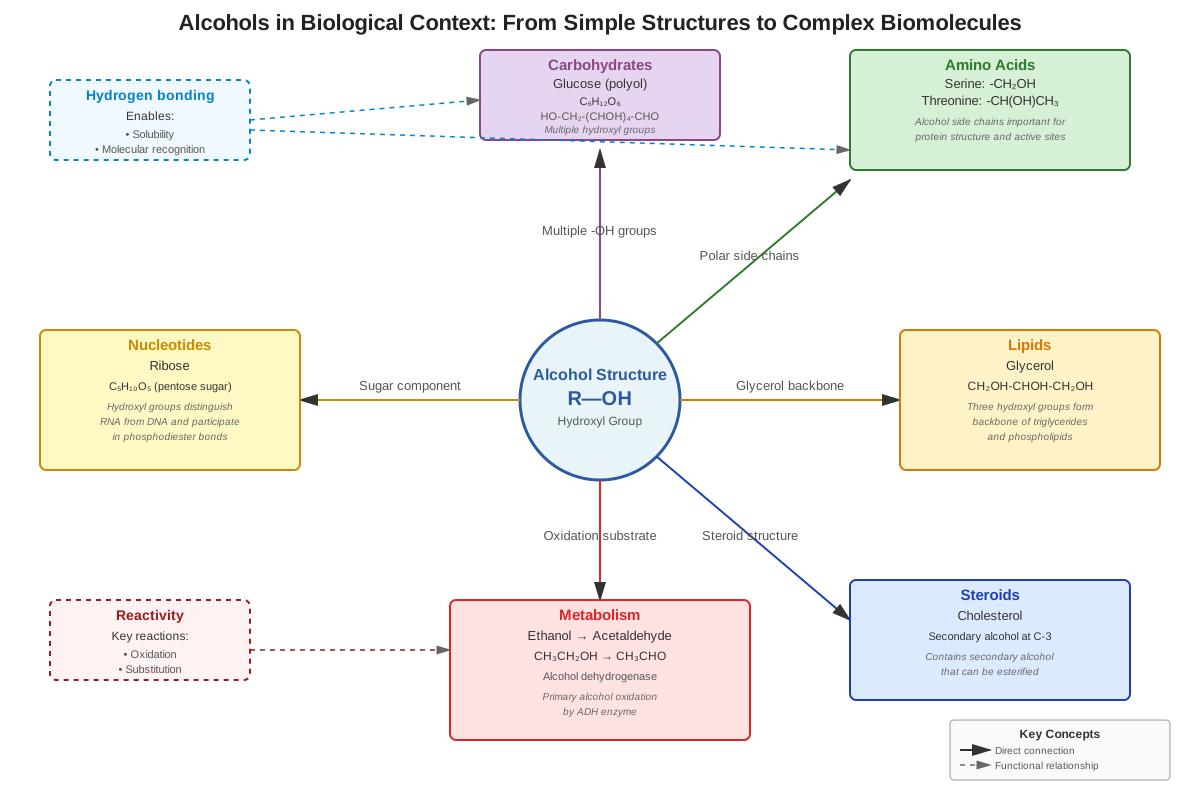
For MCAT preparation, mastery of Alcohol structure Organic Chemistry concepts provides the foundation for understanding more complex topics within the Alcohols and Ethers unit, including alcohol synthesis, oxidation reactions, and substitution mechanisms. The MCAT frequently tests alcohol structure through discrete questions requiring nomenclature skills, passage-based questions involving biochemical pathways (such as ethanol metabolism), and questions that require students to predict physical properties based on structural features. Additionally, alcohols appear in biological contexts throughout the exam, from carbohydrate chemistry to amino acid side chains to lipid structures.
The structural principles governing alcohols connect to broader themes in organic chemistry, including functional group reactivity, intermolecular forces, acid-base chemistry, and stereochemistry. A solid understanding of alcohol structure enables students to approach questions involving nucleophilic substitution, elimination reactions, oxidation-reduction chemistry, and spectroscopic analysis—all high-yield MCAT topics. This 30-minute focused study session will equip students with the conceptual framework and practical knowledge needed to confidently tackle any Alcohol structure MCAT question.
Learning Objectives
- [ ] Define Alcohol structure using accurate Organic Chemistry terminology
- [ ] Explain why Alcohol structure matters for the MCAT
- [ ] Apply Alcohol structure to exam-style questions
- [ ] Identify common mistakes related to Alcohol structure
- [ ] Connect Alcohol structure to related Organic Chemistry concepts
- [ ] Classify alcohols as primary (1°), secondary (2°), or tertiary (3°) based on carbon substitution patterns
- [ ] Predict relative physical properties (boiling point, solubility) based on alcohol structure
- [ ] Recognize alcohols in complex biological molecules and natural products
Prerequisites
- Basic organic chemistry nomenclature: Understanding IUPAC naming conventions and functional group identification is essential for properly naming alcohols and recognizing them in complex structures
- Molecular geometry and hybridization: Knowledge of sp³ hybridization and tetrahedral geometry helps explain the three-dimensional structure of alcohols and their reactivity
- Intermolecular forces: Familiarity with hydrogen bonding, dipole-dipole interactions, and London dispersion forces is necessary to predict alcohol physical properties
- Electronegativity and polarity: Understanding how oxygen's high electronegativity creates polar C-O and O-H bonds explains alcohol reactivity and solubility patterns
- Functional group basics: Recognition of common organic functional groups allows students to distinguish alcohols from phenols, ethers, and carbonyl compounds
Why This Topic Matters
Clinical and Real-World Significance
Alcohols play critical roles throughout biochemistry and medicine. Ethanol metabolism in the liver involves alcohol dehydrogenase and aldehyde dehydrogenase enzymes, making alcohol structure relevant to understanding toxicology, pharmacokinetics, and genetic variations affecting alcohol tolerance. Glycerol (a trihydric alcohol) forms the backbone of triglycerides and phospholipids, essential components of cell membranes and energy storage. Carbohydrates are polyhydroxy aldehydes or ketones, with multiple alcohol groups determining their properties and biological functions. Cholesterol and other steroids contain alcohol groups that influence their solubility and membrane interactions. Many pharmaceutical compounds contain alcohol functional groups that affect drug absorption, distribution, and metabolism.
MCAT Exam Statistics and Question Types
Alcohol structure appears in approximately 3-5% of Chemical and Physical Foundations questions and frequently in Biological and Biochemical Foundations passages involving metabolism, carbohydrate chemistry, or lipid biochemistry. The MCAT tests alcohol structure through multiple question formats: discrete questions requiring classification or nomenclature (15-20% of alcohol-related questions), passage-based questions involving experimental data about alcohol properties (40-50%), and integrated questions connecting alcohol structure to reactivity or biological function (30-40%). Questions may ask students to identify the most acidic proton, predict boiling point trends, determine oxidation products, or analyze spectroscopic data.
Common Exam Passage Contexts
Alcohol structure commonly appears in MCAT passages describing: fermentation and ethanol production, carbohydrate metabolism and glycolysis intermediates, lipid structure and membrane composition, natural product isolation and characterization, pharmaceutical development and structure-activity relationships, and experimental organic chemistry procedures involving alcohol synthesis or purification. Recognizing alcohol structural features quickly allows efficient passage analysis and accurate question answering.
Core Concepts
Definition and General Structure
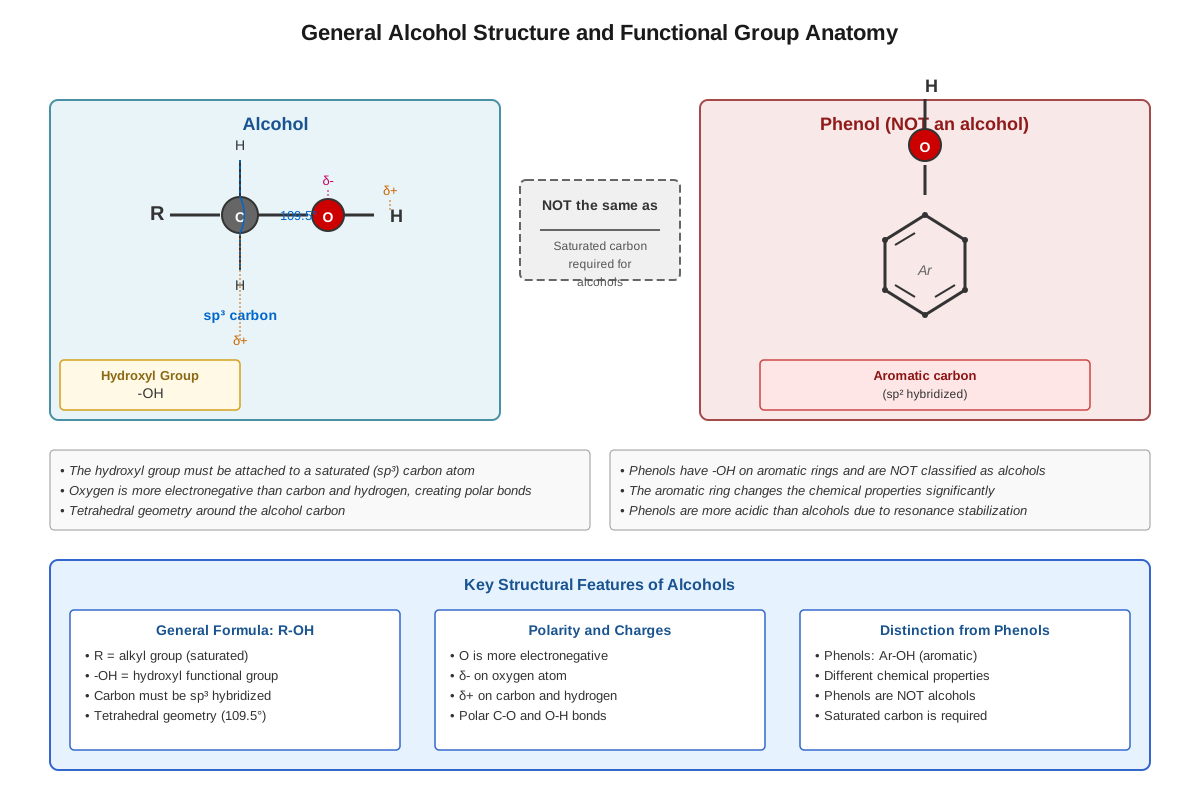
An alcohol is an organic compound containing one or more hydroxyl groups (-OH) bonded to saturated (sp³ hybridized) carbon atoms. The general formula for a simple alcohol is R-OH, where R represents an alkyl group (saturated hydrocarbon chain or ring). The defining structural feature is the C-O-H unit, with the oxygen atom forming two sigma bonds (one to carbon, one to hydrogen) and possessing two lone pairs of electrons. This structural arrangement creates a bent molecular geometry around oxygen (similar to water) with a bond angle of approximately 104.5°.
The hydroxyl group is the functional group that defines alcohols and determines their characteristic properties. The oxygen atom's high electronegativity (3.44 on the Pauling scale compared to carbon's 2.55 and hydrogen's 2.20) creates significant bond polarity. The O-H bond is highly polar with partial positive charge on hydrogen (δ+) and partial negative charge on oxygen (δ-), enabling hydrogen bonding. The C-O bond is also polar but less so than O-H, contributing to the overall molecular dipole moment.
Classification of Alcohols
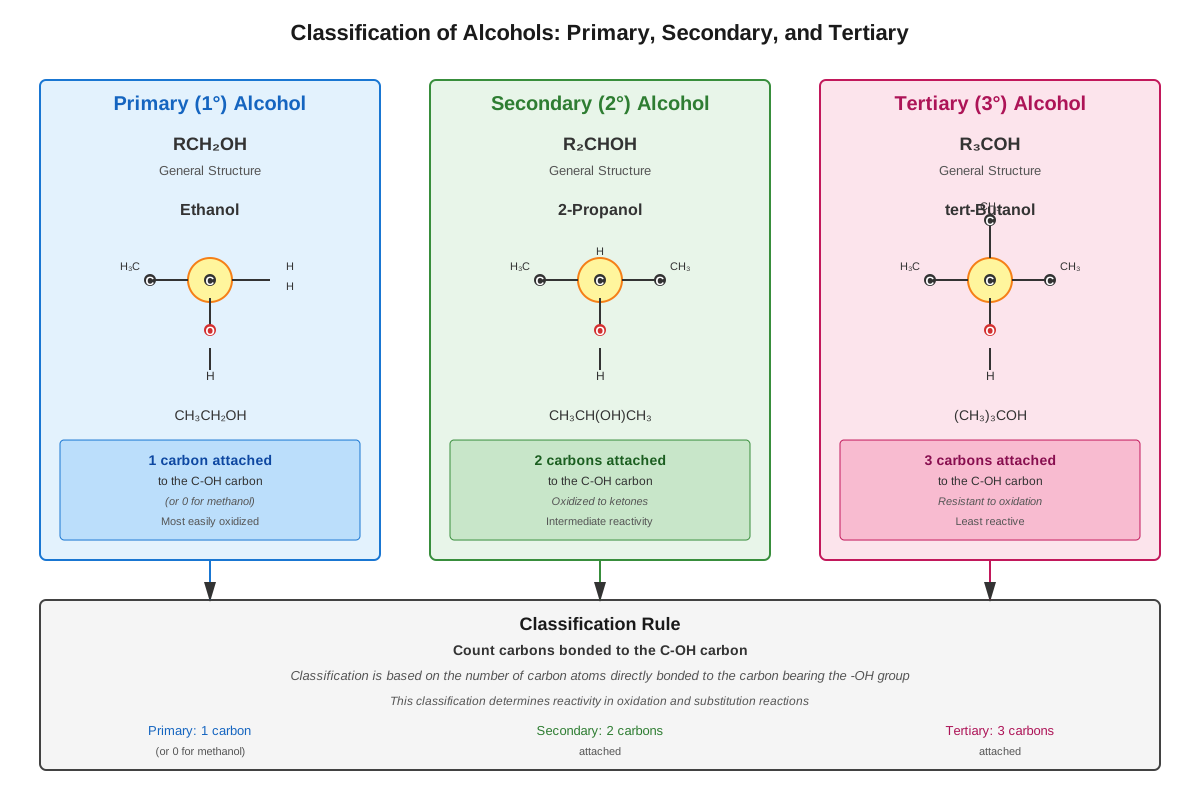
Alcohols are classified based on the number of carbon atoms directly bonded to the carbon bearing the hydroxyl group. This classification system is crucial for predicting reactivity patterns, oxidation products, and substitution mechanisms.
Primary (1°) alcohols have the hydroxyl group attached to a carbon atom that is bonded to only one other carbon atom (or no other carbons in the case of methanol). The general structure is RCH₂OH. Examples include methanol (CH₃OH), ethanol (CH₃CH₂OH), and 1-propanol (CH₃CH₂CH₂OH). Primary alcohols are the most easily oxidized and typically undergo oxidation to aldehydes and then to carboxylic acids.
Secondary (2°) alcohols have the hydroxyl group attached to a carbon atom bonded to two other carbon atoms. The general structure is R₂CHOH. Examples include 2-propanol (isopropanol, (CH₃)₂CHOH) and 2-butanol (CH₃CH(OH)CH₂CH₃). Secondary alcohols undergo oxidation to ketones but cannot be oxidized further without breaking carbon-carbon bonds.
Tertiary (3°) alcohols have the hydroxyl group attached to a carbon atom bonded to three other carbon atoms. The general structure is R₃COH. Examples include 2-methyl-2-propanol (tert-butanol, (CH₃)₃COH) and 2-methyl-2-butanol. Tertiary alcohols are resistant to oxidation under normal conditions because the carbon bearing the hydroxyl group has no hydrogen atoms available for removal.
| Alcohol Class | Carbon Substitution | General Structure | Oxidation Product | Example |
|---|---|---|---|---|
| Primary (1°) | 1 carbon attached | RCH₂OH | Aldehyde → Carboxylic acid | Ethanol |
| Secondary (2°) | 2 carbons attached | R₂CHOH | Ketone | 2-Propanol |
| Tertiary (3°) | 3 carbons attached | R₃COH | No oxidation (resistant) | tert-Butanol |
Nomenclature of Alcohols
IUPAC nomenclature for alcohols follows systematic rules that the MCAT expects students to apply. The parent chain is the longest continuous carbon chain containing the hydroxyl group. The suffix "-ol" replaces the final "-e" of the corresponding alkane name. Numbering begins from the end of the chain nearest the hydroxyl group to give the lowest possible number to the carbon bearing -OH. The position of the hydroxyl group is indicated by a number immediately before the parent name or before "-ol."
For example, CH₃CH₂CH₂OH is named 1-propanol (or propan-1-ol), while CH₃CH(OH)CH₃ is 2-propanol (or propan-2-ol). When other substituents are present, they are named and numbered as prefixes, with the hydroxyl group taking priority in numbering. Complex alcohols may have multiple hydroxyl groups: diols (two -OH groups), triols (three -OH groups), or polyols (many -OH groups). Common names persist for simple alcohols: methanol (methyl alcohol), ethanol (ethyl alcohol), and isopropanol (isopropyl alcohol).
Physical Properties and Hydrogen Bonding
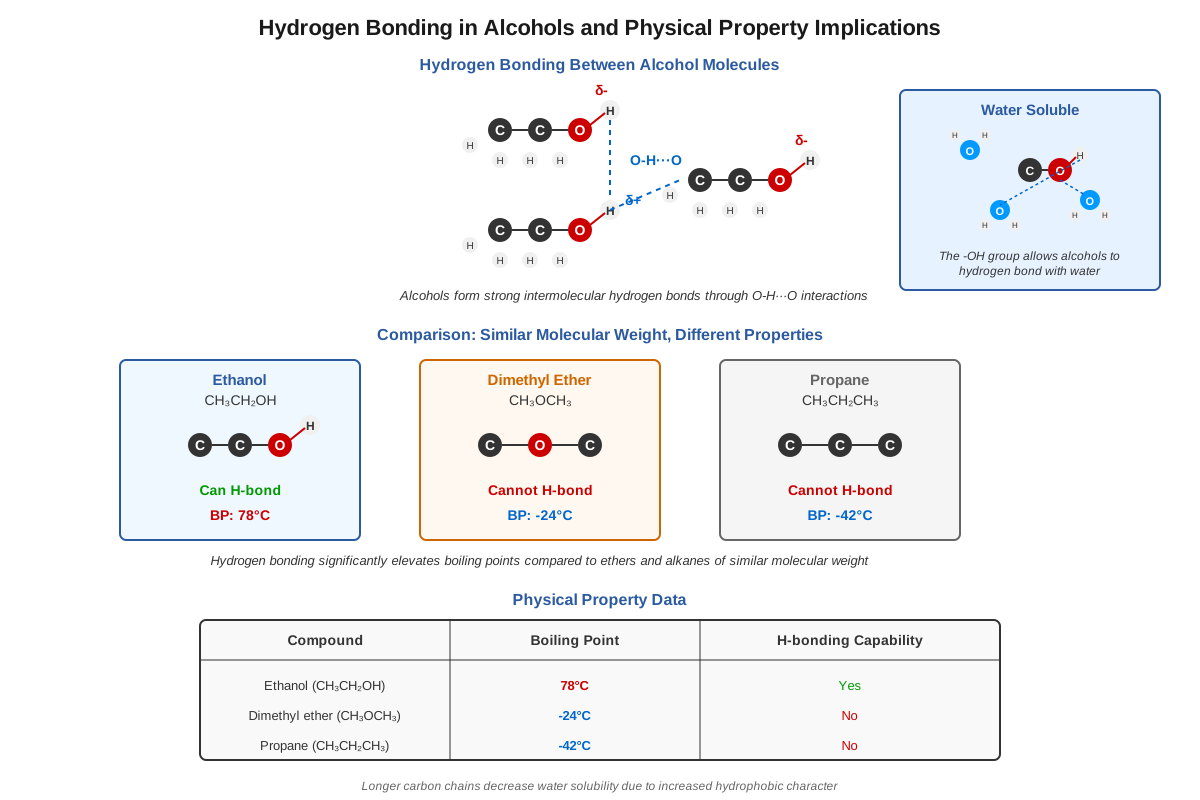
The physical properties of alcohols differ dramatically from those of comparable hydrocarbons due to the presence of the hydroxyl group. Hydrogen bonding is the dominant intermolecular force in alcohols, occurring when the partially positive hydrogen of one -OH group attracts the partially negative oxygen of another molecule. This strong intermolecular attraction (typically 5-10 kcal/mol) significantly elevates boiling points compared to alkanes of similar molecular weight.
For example, ethanol (MW = 46 g/mol) has a boiling point of 78°C, while propane (MW = 44 g/mol) boils at -42°C—a difference of 120°C despite similar molecular weights. The ability to form hydrogen bonds also makes small alcohols highly soluble in water. Methanol, ethanol, and 2-propanol are completely miscible with water in all proportions. As the hydrocarbon portion increases in size, water solubility decreases because the nonpolar alkyl group becomes dominant. Generally, alcohols with up to three carbon atoms are highly water-soluble, while those with five or more carbons show limited solubility.
The amphipathic nature of alcohols—possessing both hydrophilic (hydroxyl) and hydrophobic (alkyl) regions—becomes increasingly important as molecular size increases. This property explains why alcohols can act as solvents for both polar and nonpolar substances and why they appear in biological surfactants and membrane components.
Structural Variations and Special Cases
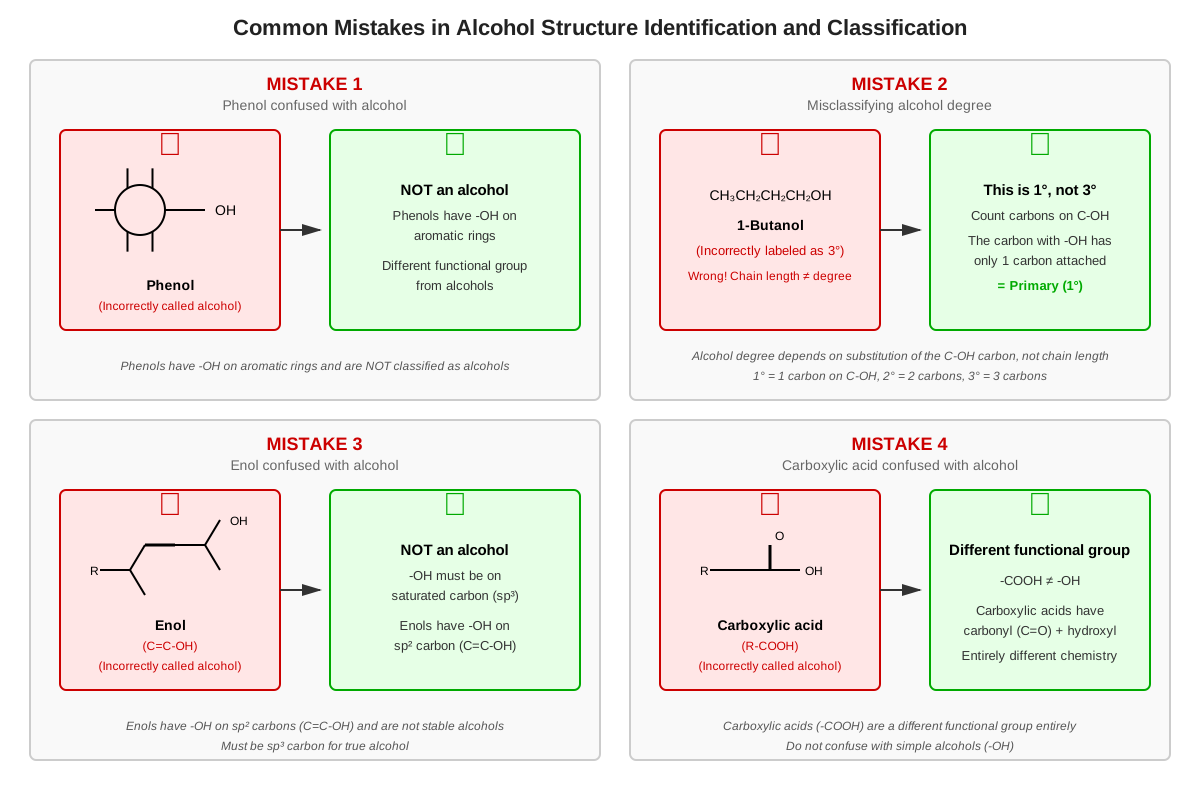
Phenols are compounds with hydroxyl groups attached directly to aromatic rings (Ar-OH). While structurally similar to alcohols, phenols exhibit distinct properties due to resonance stabilization of the phenoxide anion, making them significantly more acidic than aliphatic alcohols. The MCAT distinguishes between alcohols (hydroxyl on sp³ carbon) and phenols (hydroxyl on sp² aromatic carbon).
Enols are compounds with hydroxyl groups attached to sp² carbons of carbon-carbon double bonds (C=C-OH). Enols are typically unstable and tautomerize to carbonyl compounds (keto form), but they represent important reactive intermediates in organic mechanisms.
Polyhydric alcohols contain multiple hydroxyl groups. Ethylene glycol (1,2-ethanediol) has two hydroxyl groups, glycerol (1,2,3-propanetriol) has three, and carbohydrates contain multiple hydroxyl groups along with carbonyl functionality. The presence of multiple -OH groups dramatically increases water solubility and hydrogen bonding capacity, explaining the hygroscopic nature of glycerol and the high melting points of sugars.
Stereochemistry of Alcohols
When the carbon bearing the hydroxyl group is a stereocenter (chiral center), the alcohol exists as enantiomers. Secondary alcohols with three different substituents on the hydroxyl-bearing carbon are chiral. For example, 2-butanol (CH₃CH(OH)CH₂CH₃) has a chiral center and exists as (R)- and (S)-enantiomers. The MCAT may test the ability to assign R/S configuration to chiral alcohols or recognize that certain reactions proceed with inversion or retention of configuration.
Concept Relationships
Alcohol structure serves as the foundation for understanding alcohol reactivity throughout organic chemistry. The classification system (1°, 2°, 3°) directly determines oxidation products: primary alcohols → aldehydes → carboxylic acids; secondary alcohols → ketones; tertiary alcohols → no oxidation. This classification also predicts substitution reaction mechanisms, with tertiary alcohols favoring SN1 pathways and primary alcohols favoring SN2 pathways.
The hydrogen bonding capability arising from alcohol structure connects to physical property predictions (boiling point, solubility, viscosity) and explains biological phenomena such as carbohydrate solubility and alcohol absorption in the digestive tract. Understanding the polar nature of the O-H bond enables prediction of acid-base behavior, with alcohols acting as weak acids (pKa ≈ 15-18) and weak bases.
Alcohol structure relates to prerequisite knowledge of electronegativity and polarity, which explain why the hydroxyl group creates a reactive site susceptible to protonation, deprotonation, and nucleophilic attack. The sp³ hybridization of the carbon bearing -OH connects to molecular geometry concepts and explains the tetrahedral arrangement around this carbon.
Within the broader Alcohols and Ethers unit, alcohol structure provides the starting point for understanding: alcohol synthesis (hydration, reduction, Grignard reactions), alcohol reactions (oxidation, substitution, elimination, esterification), and the relationship between alcohols and ethers (ethers as alcohol derivatives where -OH is replaced by -OR). Mastery of alcohol structure enables progression to carbonyl chemistry, as aldehydes and ketones are oxidation products of alcohols, and alcohols are reduction products of carbonyl compounds.
Relationship Map: Molecular structure and hybridization → Alcohol functional group definition → Classification (1°, 2°, 3°) → Physical properties (H-bonding, solubility) → Reactivity patterns (oxidation, substitution) → Biological applications (metabolism, carbohydrates, lipids) → Advanced reactions (synthesis, mechanisms)
Quick check — test yourself on Alcohol structure so far.
Try Flashcards →High-Yield Facts
⭐ Alcohols contain hydroxyl groups (-OH) bonded to sp³ hybridized carbon atoms, distinguishing them from phenols (Ar-OH) and enols (C=C-OH)
⭐ Primary alcohols have one carbon attached to the hydroxyl-bearing carbon (RCH₂OH), secondary alcohols have two (R₂CHOH), and tertiary alcohols have three (R₃COH)
⭐ Hydrogen bonding between alcohol molecules dramatically increases boiling points compared to alkanes of similar molecular weight
⭐ Primary alcohols oxidize to aldehydes then carboxylic acids; secondary alcohols oxidize to ketones; tertiary alcohols resist oxidation
⭐ Small alcohols (1-3 carbons) are highly water-soluble due to hydrogen bonding with water; solubility decreases as the hydrocarbon chain lengthens
- The IUPAC suffix for alcohols is "-ol" and the hydroxyl group receives the lowest possible number in the parent chain
- Alcohols are weak acids (pKa ≈ 15-18) and can be deprotonated by strong bases like sodium hydride or alkyllithium reagents
- The oxygen atom in alcohols has two lone pairs, allowing alcohols to act as weak bases and nucleophiles
- Glycerol (1,2,3-propanetriol) is a trihydric alcohol that forms the backbone of triglycerides and phospholipids
- Ethanol metabolism in the liver proceeds through alcohol dehydrogenase (producing acetaldehyde) then aldehyde dehydrogenase (producing acetic acid)
- Chiral secondary alcohols exist as enantiomers that can be distinguished by R/S nomenclature
- The amphipathic nature of alcohols (hydrophilic -OH and hydrophobic alkyl groups) makes them useful solvents and biological intermediates
Common Misconceptions
Misconception: All compounds with -OH groups are alcohols → Correction: Only compounds with -OH bonded to sp³ hybridized carbons are alcohols. Phenols have -OH on aromatic rings (sp² carbons), enols have -OH on alkene carbons (sp² carbons), and carboxylic acids have -OH on carbonyl carbons. These structural differences create dramatically different chemical properties.
Misconception: Alcohol classification depends on the number of -OH groups present → Correction: Alcohol classification (primary, secondary, tertiary) depends on the number of carbon atoms bonded to the carbon bearing the hydroxyl group, not the number of hydroxyl groups in the molecule. A molecule can have multiple hydroxyl groups (diol, triol) with each classified independently based on its substitution pattern.
Misconception: Tertiary alcohols are more reactive than primary alcohols in all reactions → Correction: Reactivity depends on the reaction type. Tertiary alcohols are more reactive in SN1 substitution and E1 elimination (forming stable carbocations) but are completely unreactive toward oxidation. Primary alcohols are more reactive in SN2 substitution (less steric hindrance) and readily undergo oxidation.
Misconception: Alcohols and water have similar boiling points because both can hydrogen bond → Correction: While both form hydrogen bonds, molecular weight and the number of hydrogen bonding sites differ. Methanol (MW 32, bp 65°C) has a higher boiling point than water (MW 18, bp 100°C) would suggest based on molecular weight alone, but water's two hydrogen atoms available for hydrogen bonding (compared to methanol's one) and its smaller size create stronger intermolecular networks, resulting in water's higher boiling point.
Misconception: The -OH group makes all alcohols highly polar and water-soluble → Correction: Solubility depends on the balance between the polar hydroxyl group and the nonpolar hydrocarbon portion. Small alcohols (methanol, ethanol, 1-propanol) are highly water-soluble, but as the alkyl chain lengthens, the nonpolar character dominates and water solubility decreases dramatically. 1-Octanol is essentially water-insoluble despite having a hydroxyl group.
Misconception: Alcohols are strong acids because they contain acidic O-H bonds → Correction: Alcohols are very weak acids (pKa ≈ 15-18), much weaker than carboxylic acids (pKa ≈ 4-5) or even water (pKa = 15.7). The alkoxide ion (RO⁻) formed upon deprotonation is poorly stabilized compared to carboxylate ions, making alcohols only slightly more acidic than water and requiring strong bases for deprotonation.
Misconception: All secondary alcohols are chiral → Correction: Secondary alcohols are only chiral if the carbon bearing the hydroxyl group has four different substituents. For example, 2-propanol (CH₃CH(OH)CH₃) is not chiral because two of the substituents are identical methyl groups. However, 2-butanol (CH₃CH(OH)CH₂CH₃) is chiral because all four substituents differ.
Worked Examples
Example 1: Classification and Nomenclature
Question: Consider the following alcohol structure: (CH₃)₂CHCH₂CH(OH)CH₃. (a) Classify this alcohol as primary, secondary, or tertiary. (b) Provide the IUPAC name. (c) Predict whether this alcohol can be oxidized to a carbonyl compound.
Solution:
(a) Classification: First, identify the carbon bearing the hydroxyl group. In this structure, the -OH is attached to a carbon that is also bonded to one -CH₃ group and one -CH₂CH(CH₃)₂ group. Counting the carbons directly attached to the hydroxyl-bearing carbon: there are two carbon atoms attached (one from the methyl group, one from the longer chain). Therefore, this is a secondary (2°) alcohol.
(b) IUPAC Naming:
- Step 1: Identify the longest carbon chain containing the -OH group: 5 carbons (pentanol)
- Step 2: Number from the end nearest the -OH group: Starting from the right gives -OH on carbon 2
- Step 3: Identify substituents: There is a methyl group on carbon 4
- Step 4: Assemble the name: 4-methyl-2-pentanol (or 4-methylpentan-2-ol)
(c) Oxidation prediction: Secondary alcohols undergo oxidation to ketones. Using an oxidizing agent like chromic acid (H₂CrO₄) or PCC, this alcohol would be oxidized to 4-methyl-2-pentanone. The reaction would not proceed further because ketones lack the hydrogen atom on the carbonyl carbon needed for further oxidation (unlike aldehydes, which oxidize to carboxylic acids).
Connection to learning objectives: This example demonstrates classification based on carbon substitution, application of IUPAC nomenclature rules, and prediction of reactivity based on alcohol structure—all essential MCAT skills.
Example 2: Physical Properties and Hydrogen Bonding
Question: Rank the following compounds in order of increasing boiling point and explain your reasoning: 1-butanol (CH₃CH₂CH₂CH₂OH), diethyl ether (CH₃CH₂OCH₂CH₃), and pentane (CH₃CH₂CH₂CH₂CH₃).
Solution:
Step 1: Analyze molecular weights
- 1-Butanol: MW = 74 g/mol
- Diethyl ether: MW = 74 g/mol
- Pentane: MW = 72 g/mol
The molecular weights are essentially identical, so differences in boiling point will be determined by intermolecular forces, not molecular weight.
Step 2: Identify intermolecular forces
- Pentane: Only London dispersion forces (weakest intermolecular force). As a nonpolar hydrocarbon, pentane cannot participate in dipole-dipole interactions or hydrogen bonding.
- Diethyl ether: Dipole-dipole interactions and London dispersion forces. The C-O-C bond creates molecular polarity, but ethers cannot form hydrogen bonds with themselves (no O-H bond, though the oxygen has lone pairs).
- 1-Butanol: Hydrogen bonding, dipole-dipole interactions, and London dispersion forces. The -OH group allows strong hydrogen bonding between molecules (O-H···O interactions).
Step 3: Rank by boiling point
Pentane < Diethyl ether < 1-Butanol
Actual boiling points: Pentane (36°C) < Diethyl ether (35°C) < 1-Butanol (117°C)
Explanation: Pentane has the lowest boiling point due to only weak dispersion forces. Diethyl ether has a similar boiling point to pentane despite being polar because ethers cannot hydrogen bond with themselves. 1-Butanol has a dramatically higher boiling point (about 80°C higher) because hydrogen bonding creates strong intermolecular attractions that require significantly more energy to overcome during vaporization.
MCAT relevance: This type of comparison question frequently appears on the MCAT, testing understanding of how functional groups determine physical properties. The key insight is recognizing that hydrogen bonding capability (requiring both H-bond donor and acceptor) distinguishes alcohols from ethers despite similar polarity.
Exam Strategy
Approaching MCAT Questions on Alcohol Structure
When encountering alcohol-related questions, immediately identify the hydroxyl group location and classify the alcohol (1°, 2°, 3°). This classification predicts reactivity patterns and eliminates incorrect answer choices. For nomenclature questions, quickly identify the longest chain containing -OH and number from the nearest end—MCAT questions often include distractors with incorrect numbering.
Trigger Words and Phrases
Watch for these key phrases that signal alcohol structure concepts:
- "Hydroxyl group" or "OH functionality": Indicates focus on the alcohol functional group
- "Primary, secondary, or tertiary": Requires classification based on carbon substitution
- "Hydrogen bonding": Signals questions about physical properties or intermolecular forces
- "Water solubility" or "hydrophilic": Tests understanding of polarity and hydrogen bonding
- "Oxidation product": Requires knowing that 1° → aldehyde/acid, 2° → ketone, 3° → no reaction
- "Chiral center" or "stereoisomers": Indicates focus on secondary alcohols with four different substituents
Process of Elimination Tips
For structure identification questions, eliminate options with -OH on aromatic rings (phenols, not alcohols) or on sp² carbons (enols). For boiling point questions, eliminate choices that ignore hydrogen bonding effects—alcohols always have higher boiling points than comparable ethers or alkanes. For oxidation questions, immediately eliminate any answer showing tertiary alcohol oxidation products. For solubility questions, eliminate answers suggesting large alcohols (>5 carbons) are highly water-soluble.
Time Allocation
Alcohol structure questions are typically straightforward and should be answered quickly (30-45 seconds for discrete questions, 60-90 seconds for passage-based questions). Don't overthink classification—count the carbons attached to the hydroxyl-bearing carbon and move on. Save time for more complex mechanism or synthesis questions later in the section.
Exam Tip: If a passage describes an experimental procedure involving alcohols, quickly scan for the alcohol classification and predict likely reactions before reading questions. This preview often reveals the passage's focus and speeds up question answering.
Memory Techniques
Classification Mnemonic: "One, Two, Three - Easy as Can Be"
- Primary = ONE carbon attached to the hydroxyl-bearing carbon
- Secondary = TWO carbons attached to the hydroxyl-bearing carbon
- Tertiary = THREE carbons attached to the hydroxyl-bearing carbon
Oxidation Mnemonic: "Primary Produces Plenty, Secondary Stops at Ketones, Tertiary Takes None"
- Primary alcohols produce plenty of oxidation products (aldehydes, then carboxylic acids)
- Secondary alcohols stop at ketones (cannot oxidize further)
- Tertiary alcohols take no oxidation (resistant to oxidation)
Solubility Rule: "Three or Fewer - Water's Your Lover; Five or More - Water's No More"
- Alcohols with 3 or fewer carbons are highly water-soluble
- Alcohols with 5 or more carbons have limited water solubility
- 4-carbon alcohols are borderline (moderate solubility)
Hydrogen Bonding Visualization
Picture the alcohol molecule as a "hand" (the -OH group) reaching out to grab another alcohol's "hand." This hand-holding (hydrogen bonding) makes it hard to separate the molecules, requiring high temperatures (high boiling points). Alkanes have no hands (no hydrogen bonding), so they separate easily (low boiling points).
Nomenclature Acronym: "LION"
- Longest chain containing -OH
- Identify the -OH position (lowest number)
- Other substituents named and numbered
- Name assembled: [substituents]-[position]-[parent]-ol
Summary
Alcohol structure represents a fundamental concept in MCAT Organic Chemistry, defined by the presence of hydroxyl groups (-OH) bonded to sp³ hybridized carbon atoms. The classification system—primary (one carbon attached), secondary (two carbons attached), and tertiary (three carbons attached) to the hydroxyl-bearing carbon—determines reactivity patterns, particularly oxidation behavior and substitution mechanisms. The hydroxyl group's ability to form hydrogen bonds dramatically elevates boiling points compared to similar-sized hydrocarbons and makes small alcohols highly water-soluble. As the hydrocarbon portion increases, the amphipathic nature of alcohols becomes prominent, with decreasing water solubility. Understanding alcohol structure enables prediction of physical properties, reactivity patterns, and biological roles, from ethanol metabolism to carbohydrate chemistry to lipid structure. MCAT questions test alcohol structure through nomenclature, classification, physical property predictions, and reactivity analysis, making this topic essential for success on test day.
Key Takeaways
- Alcohols are defined by -OH groups on sp³ carbons, distinguishing them from phenols (aromatic) and enols (alkene carbons)
- Classification as 1°, 2°, or 3° depends on the number of carbons attached to the hydroxyl-bearing carbon and directly predicts oxidation products and substitution mechanisms
- Hydrogen bonding between alcohol molecules creates dramatically elevated boiling points compared to alkanes and ethers of similar molecular weight
- Water solubility decreases as alkyl chain length increases, with alcohols of 3 or fewer carbons being highly soluble and those with 5+ carbons showing limited solubility
- Primary alcohols oxidize to aldehydes then carboxylic acids, secondary alcohols oxidize to ketones, and tertiary alcohols resist oxidation
- IUPAC nomenclature uses the suffix "-ol" with numbering that gives the hydroxyl group the lowest possible position
- Alcohol structure connects to broader organic chemistry concepts including intermolecular forces, acid-base chemistry, stereochemistry, and carbonyl chemistry
Related Topics
Alcohol Reactions and Synthesis: Building on alcohol structure knowledge, this topic covers how alcohols are synthesized (hydration, reduction, Grignard reactions) and how they react (oxidation, substitution, elimination, esterification). Mastering structure enables understanding of mechanism and product prediction.
Ethers: Structurally related to alcohols (R-O-R' vs. R-O-H), ethers lack hydrogen bonding capability between molecules, creating different physical properties. Understanding alcohol structure facilitates comparison and contrast with ether properties.
Carbonyl Compounds (Aldehydes and Ketones): These are oxidation products of primary and secondary alcohols, respectively. The structural relationship between alcohols and carbonyls is essential for understanding redox chemistry and interconversion reactions.
Carbohydrate Chemistry: Carbohydrates are polyhydroxy aldehydes or ketones, containing multiple alcohol functional groups. Understanding alcohol structure and hydrogen bonding explains carbohydrate solubility, reactivity, and biological function.
Spectroscopy: Alcohols produce characteristic signals in IR spectroscopy (broad O-H stretch around 3300 cm⁻¹), ¹H NMR (exchangeable O-H proton), and ¹³C NMR (carbon bearing -OH around 50-90 ppm). Structural knowledge enables spectroscopic interpretation.
Practice CTA
Now that you've mastered the core concepts of alcohol structure, it's time to reinforce your understanding through active practice. Complete the practice questions to test your ability to classify alcohols, predict physical properties, and apply nomenclature rules under timed conditions. Use the flashcards to drill high-yield facts until alcohol classification and property prediction become automatic. Remember: understanding alcohol structure is not just about memorizing definitions—it's about developing the pattern recognition and analytical skills that will serve you throughout organic chemistry and biochemistry questions on the MCAT. You've built a strong foundation; now strengthen it through deliberate practice!
Sign up free to keep reading
Create a free AnvayaPrep account to finish this MCAT guide on Alcohol structure — plus flashcards and practice questions.