Overview
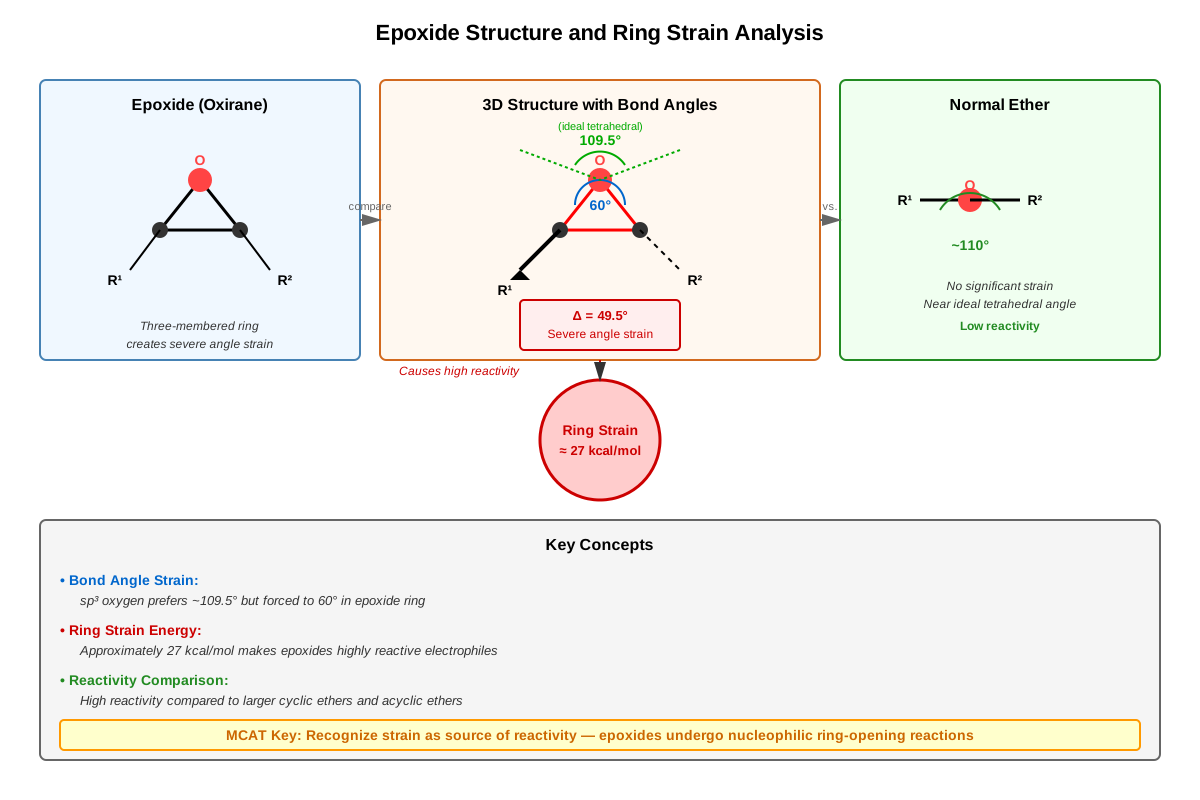
Epoxides are three-membered cyclic ethers containing an oxygen atom bonded to two adjacent carbon atoms, forming a highly strained ring structure. In Organic Chemistry, these compounds occupy a unique position due to their exceptional reactivity, which stems from the significant ring strain inherent in their three-membered ring geometry. The internal bond angles in an epoxide ring are approximately 60°, far from the ideal tetrahedral angle of 109.5°, creating substantial angle strain that makes these molecules highly susceptible to ring-opening reactions. This reactivity profile distinguishes epoxides from their larger cyclic ether counterparts and makes them valuable synthetic intermediates in both laboratory and biological contexts.
For the MCAT, understanding Epoxides Organic Chemistry is essential because these compounds frequently appear in passages involving reaction mechanisms, stereochemistry, and biological transformations. The MCAT tests not only the recognition of epoxide structures but also the ability to predict their reactivity patterns, particularly in nucleophilic ring-opening reactions under both acidic and basic conditions. These reactions demonstrate fundamental principles of organic reactivity, including regioselectivity, stereochemistry, and the influence of reaction conditions on product formation—all high-yield concepts that appear across multiple MCAT questions.
Epoxides bridge several critical areas within Alcohols and Ethers and broader organic chemistry topics. They are synthesized from alkenes through oxidation reactions, connect to alcohol chemistry through their ring-opening products, and illustrate key stereochemical principles including anti addition and inversion of configuration. Understanding epoxides provides insight into how ring strain influences reactivity, how reaction conditions control product distribution, and how biological systems utilize these reactive intermediates in metabolic pathways. This topic integrates mechanistic reasoning, stereochemical analysis, and synthetic strategy—all essential skills for MCAT success.
Learning Objectives
- [ ] Define Epoxides using accurate Organic Chemistry terminology
- [ ] Explain why Epoxides matters for the MCAT
- [ ] Apply Epoxides to exam-style questions
- [ ] Identify common mistakes related to Epoxides
- [ ] Connect Epoxides to related Organic Chemistry concepts
- [ ] Predict the regioselectivity of epoxide ring-opening reactions under acidic and basic conditions
- [ ] Analyze the stereochemical outcomes of epoxide formation and ring-opening reactions
- [ ] Evaluate the relative reactivity of different epoxides based on structural features
Prerequisites
- Alkene structure and reactivity: Epoxides are commonly synthesized from alkenes, requiring understanding of C=C double bond chemistry
- Nucleophilic substitution mechanisms (SN1 and SN2): Epoxide ring-opening reactions follow similar mechanistic principles
- Acid-base chemistry: Reaction conditions (acidic vs. basic) dramatically affect epoxide reactivity and regioselectivity
- Stereochemistry fundamentals: Understanding stereoisomers, enantiomers, and diastereomers is essential for predicting epoxide reaction outcomes
- Ether structure and nomenclature: Epoxides are cyclic ethers with unique properties derived from ring strain
- Alcohol functional groups: Ring-opening of epoxides produces alcohols, requiring familiarity with alcohol structure and properties
Why This Topic Matters
Clinical and Real-World Significance: Epoxides play crucial roles in both beneficial and harmful biological processes. Many drug molecules contain epoxide intermediates in their synthesis, and epoxide hydrolases—enzymes that catalyze epoxide ring-opening—are important in drug metabolism and detoxification pathways. However, some epoxides formed during xenobiotic metabolism are highly reactive electrophiles that can damage DNA and proteins, contributing to carcinogenesis. For example, benzo[a]pyrene from cigarette smoke is metabolized to a diol epoxide that causes mutations by alkylating DNA bases. Understanding epoxide reactivity helps explain both therapeutic drug design and toxicological mechanisms relevant to medical practice.
MCAT Exam Statistics: Epoxides appear in approximately 3-5% of Organic Chemistry passages on the MCAT, typically integrated into questions about reaction mechanisms, synthetic pathways, or stereochemistry. While not the highest-frequency topic, epoxide questions tend to be medium-to-high difficulty and effectively discriminate between students with superficial versus deep mechanistic understanding. Questions often require multi-step reasoning, combining knowledge of reaction conditions, regioselectivity, and stereochemical outcomes.
Common Exam Presentations: The MCAT presents epoxides in several characteristic formats: (1) synthesis passages showing epoxide formation from alkenes and subsequent transformations; (2) biochemistry passages discussing cytochrome P450 metabolism and epoxide intermediates; (3) discrete questions testing regioselectivity predictions in ring-opening reactions; (4) stereochemistry problems requiring analysis of configuration changes during epoxide formation or opening. Passages may embed epoxide chemistry within broader synthetic schemes, requiring students to recognize these intermediates and predict their behavior under specified conditions.
Core Concepts
Structure and Nomenclature of Epoxides
Epoxides (also called oxiranes) are three-membered cyclic ethers with the general structure of an oxygen atom bonded to two adjacent carbon atoms. The systematic IUPAC nomenclature uses the prefix "epoxy-" to indicate the three-membered ring, specifying the carbon atoms to which the oxygen is attached. Alternatively, epoxides can be named as oxiranes, with the parent three-membered ring called oxirane. Common nomenclature often uses "oxide" as a suffix following the name of the corresponding alkene (e.g., ethylene oxide from ethylene).
The molecular geometry of epoxides features approximately 60° bond angles within the ring, creating substantial angle strain compared to the ideal tetrahedral angle of 109.5°. This geometric constraint, combined with torsional strain from eclipsing interactions, makes epoxides significantly more reactive than larger cyclic ethers like tetrahydrofuran (five-membered) or dioxane (six-membered). The oxygen atom in an epoxide retains two lone pairs of electrons, making it weakly basic and capable of protonation under acidic conditions.
Synthesis of Epoxides
Epoxides are most commonly synthesized through two major pathways:
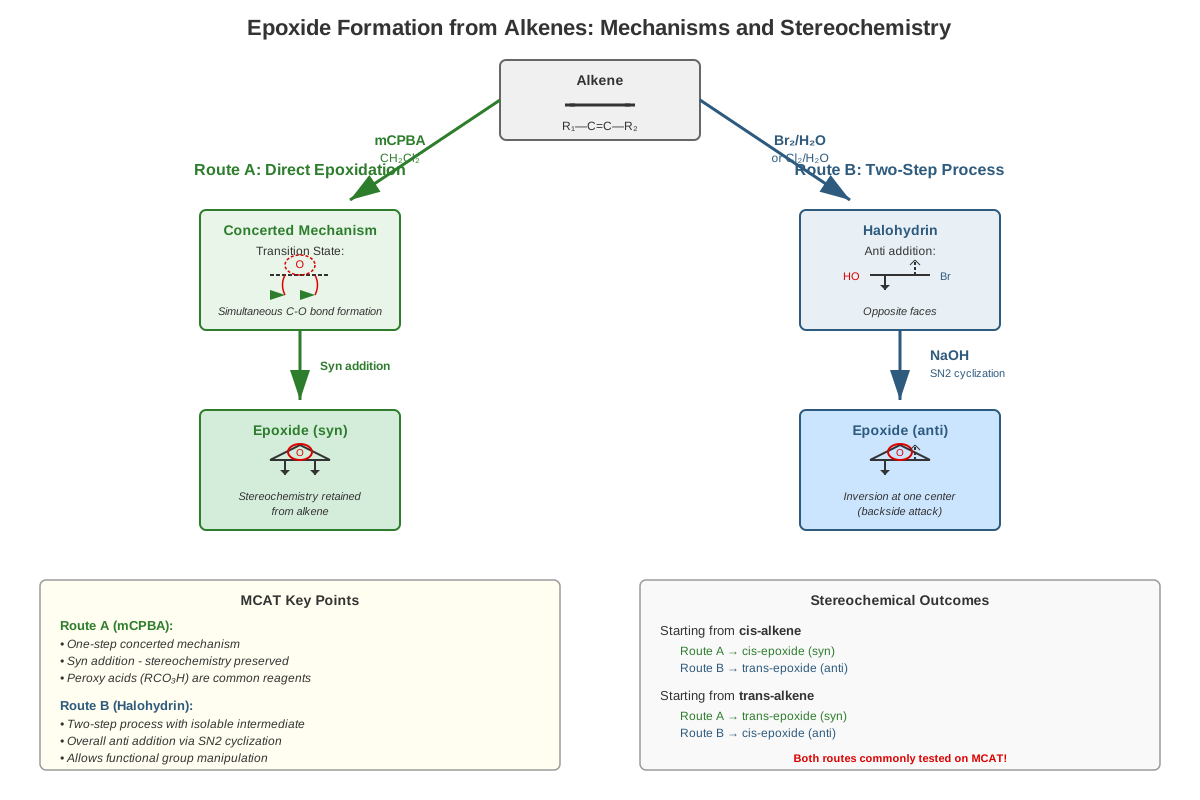
- Epoxidation of alkenes using peroxyacids (Prilezhaev reaction): Peroxycarboxylic acids such as meta-chloroperoxybenzoic acid (mCPBA) or peroxyacetic acid react with alkenes in a concerted mechanism to form epoxides. This reaction proceeds through a single transition state with simultaneous formation of both C-O bonds, resulting in syn addition of the oxygen atom to the same face of the alkene. The stereochemistry of substituents on the alkene is preserved in the epoxide product—cis alkenes yield cis epoxides, and trans alkenes yield trans epoxides.
- Intramolecular SN2 reaction of halohydrins: When alkenes are treated with halogens (Br₂ or Cl₂) in water, halohydrins form through anti addition. Subsequent treatment with base deprotonates the hydroxyl group, and the resulting alkoxide performs an intramolecular SN2 displacement of the halide, forming the epoxide. This two-step sequence results in overall anti addition of oxygen across the original double bond.
Ring-Opening Reactions Under Acidic Conditions
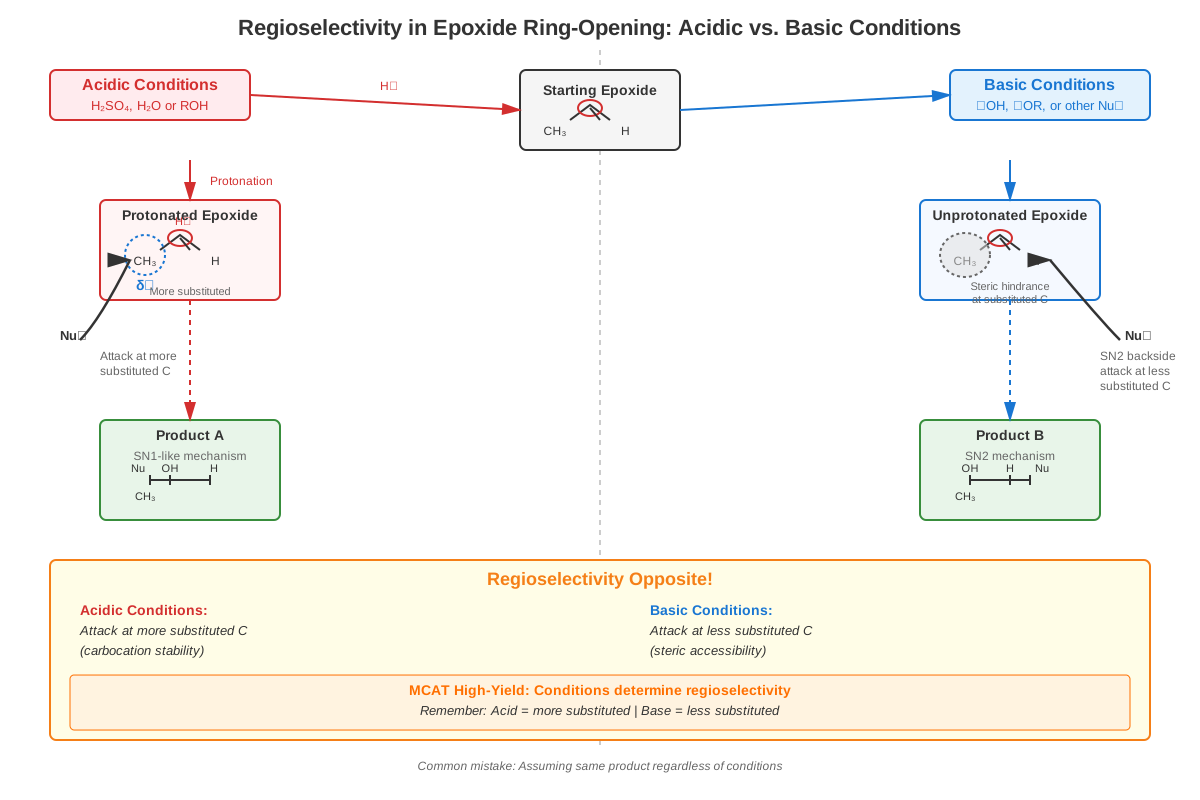
Epoxide ring-opening under acidic conditions follows a mechanism similar to SN1 reactions. The oxygen atom is first protonated, converting it into a better leaving group and increasing the electrophilicity of the adjacent carbon atoms. Nucleophilic attack then occurs, with regioselectivity determined by carbocation stability considerations.
Regioselectivity in acid-catalyzed ring-opening: The nucleophile preferentially attacks the more substituted carbon atom—the position that can best stabilize partial positive charge in the transition state. This occurs because the transition state has significant carbocation character, and more substituted positions stabilize this positive charge through hyperconjugation and inductive effects. For example, in the acid-catalyzed opening of 2-methyloxirane (propylene oxide) with water, the nucleophile attacks the secondary carbon rather than the primary carbon, yielding 2-methoxypropan-1-ol as the major product.
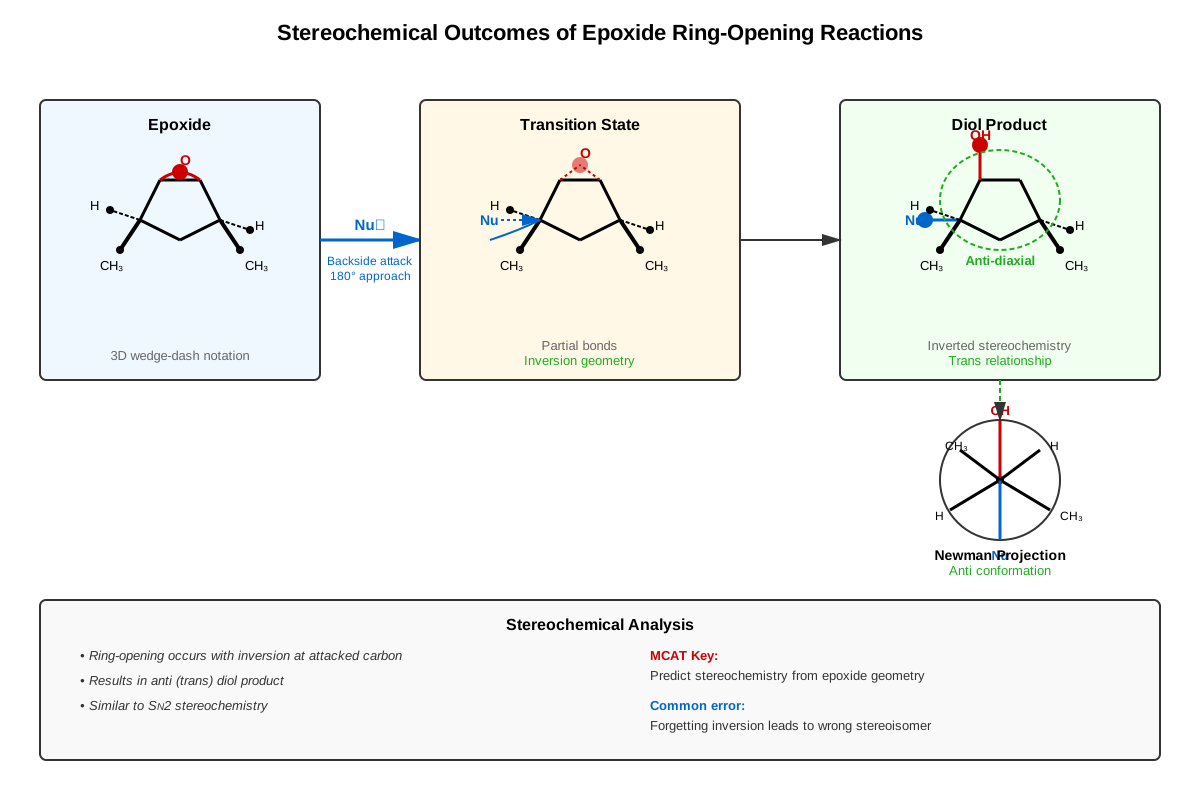
Stereochemistry: The ring-opening proceeds with inversion of configuration at the carbon atom undergoing nucleophilic attack, following SN2-like stereochemistry despite the SN1-like regioselectivity. The overall transformation converts the epoxide to a trans-1,2-difunctionalized product.
Ring-Opening Reactions Under Basic Conditions
Under basic conditions, strong nucleophiles attack unprotonated epoxides in a straightforward SN2 mechanism. The regioselectivity is opposite to that observed under acidic conditions.
Regioselectivity in base-catalyzed ring-opening: The nucleophile attacks the less substituted, less sterically hindered carbon atom. This follows standard SN2 principles where steric accessibility determines the site of attack. In the base-catalyzed opening of 2-methyloxirane with methoxide ion, attack occurs at the primary carbon, yielding 1-methoxypropan-2-ol.
Stereochemistry: The reaction proceeds with clean inversion of configuration at the attacked carbon through a backside SN2 mechanism. The product is a trans-1,2-difunctionalized compound.
Comparison of Acidic vs. Basic Ring-Opening
| Reaction Condition | Mechanism Type | Regioselectivity | Nucleophile Attacks | Stereochemistry |
|---|---|---|---|---|
| Acidic | SN1-like | More substituted C | Position stabilizing (+) charge | Inversion at attacked C |
| Basic | SN2 | Less substituted C | Less hindered position | Inversion at attacked C |
| Protonation | Required | Carbocation stability | Electronic control | Trans product |
| No protonation | Not required | Steric accessibility | Steric control | Trans product |
Biological Relevance of Epoxides
In biological systems, cytochrome P450 enzymes catalyze the oxidation of alkenes to epoxides as part of Phase I drug metabolism. These epoxide intermediates are typically detoxified by epoxide hydrolases, which catalyze the addition of water to form 1,2-diols. However, some epoxides escape detoxification and react with nucleophilic sites on DNA and proteins, potentially causing mutations and toxicity. The balance between epoxide formation and detoxification is clinically significant in understanding drug metabolism, carcinogenesis, and individual variations in drug response.
Reactivity Patterns and Synthetic Applications
Epoxides serve as versatile synthetic intermediates because their ring-opening reactions can introduce two functional groups in a controlled stereochemical relationship. The ability to control regioselectivity through choice of reaction conditions (acidic vs. basic) makes epoxides valuable in multi-step synthesis. Common nucleophiles for ring-opening include water (forming diols), alcohols (forming hydroxy ethers), amines (forming amino alcohols), and organometallic reagents (forming alcohols with carbon chain extension).
The reactivity order of epoxides increases with substitution: terminal epoxides (one primary carbon) < internal epoxides < epoxides with electron-withdrawing groups nearby. However, steric effects can override electronic effects in base-catalyzed reactions, where less substituted epoxides react faster due to better nucleophile accessibility.
Concept Relationships
The chemistry of epoxides integrates multiple fundamental organic chemistry principles into a cohesive framework. Alkene chemistry serves as the starting point, as epoxides are most commonly synthesized from C=C double bonds through oxidation reactions. The stereochemistry of the starting alkene directly determines the stereochemistry of the epoxide product, illustrating how stereochemical information is preserved or transformed through reactions.
Ring strain → drives → enhanced reactivity: The three-membered ring geometry creates angle strain and torsional strain, making epoxides much more reactive than acyclic ethers or larger cyclic ethers. This strain energy is released upon ring-opening, providing thermodynamic driving force for these reactions.
Reaction conditions → control → regioselectivity: The choice between acidic and basic conditions fundamentally alters which carbon atom is attacked by nucleophiles. Acidic conditions favor attack at more substituted positions (electronic control), while basic conditions favor attack at less substituted positions (steric control). This relationship demonstrates how mechanistic understanding enables synthetic control.
Epoxide ring-opening → produces → 1,2-difunctionalized products: The products of epoxide ring-opening are vicinal diols, hydroxy ethers, or amino alcohols, connecting epoxide chemistry to alcohol chemistry and polyfunctional compound synthesis. The trans stereochemistry of these products reflects the inversion of configuration during nucleophilic attack.
Biological epoxide formation → connects to → drug metabolism and toxicology: Understanding epoxide reactivity explains both beneficial drug transformations and harmful DNA alkylation, bridging organic chemistry with biochemistry and pharmacology—a common MCAT integration point.
Quick check — test yourself on Epoxides so far.
Try Flashcards →High-Yield Facts
⭐ Epoxides are three-membered cyclic ethers with significant ring strain (approximately 60° bond angles vs. ideal 109.5°), making them highly reactive toward ring-opening reactions
⭐ Under acidic conditions, nucleophiles attack the more substituted carbon of an epoxide (carbocation stability control)
⭐ Under basic conditions, nucleophiles attack the less substituted carbon of an epoxide (steric accessibility control)
⭐ Epoxidation of alkenes with peroxyacids (mCPBA) proceeds via syn addition, preserving alkene stereochemistry
⭐ Ring-opening of epoxides proceeds with inversion of configuration at the attacked carbon, producing trans-1,2-difunctionalized products
- Halohydrin formation followed by base treatment produces epoxides via anti addition to the original alkene
- Epoxide oxygen can be protonated under acidic conditions, converting it to a better leaving group
- Cytochrome P450 enzymes produce epoxide intermediates during drug metabolism
- Epoxide hydrolases catalyze the conversion of epoxides to 1,2-diols in detoxification pathways
- Terminal epoxides (with one primary carbon) are more reactive than internal epoxides under basic conditions due to reduced steric hindrance
- Epoxides with electron-withdrawing groups nearby show enhanced reactivity toward nucleophiles
- The three-membered ring in epoxides cannot adopt conformations that relieve strain, unlike larger rings
Common Misconceptions
Misconception: Epoxides are stable ethers like diethyl ether or tetrahydrofuran. → Correction: Epoxides are highly reactive due to ring strain from their three-membered ring structure. The approximately 60° bond angles create significant angle strain that is released upon ring-opening, making epoxides much more reactive than acyclic or larger cyclic ethers.
Misconception: Nucleophiles always attack the more substituted carbon of an epoxide. → Correction: Regioselectivity depends on reaction conditions. Under acidic conditions, nucleophiles attack the more substituted carbon (electronic control via carbocation-like transition state), but under basic conditions, nucleophiles attack the less substituted carbon (steric control via SN2 mechanism).
Misconception: Epoxide ring-opening produces cis-1,2-difunctionalized products. → Correction: Ring-opening proceeds with inversion of configuration at the attacked carbon through backside SN2-type attack, producing trans-1,2-difunctionalized products. The two functional groups end up on opposite faces of the carbon chain.
Misconception: Epoxidation of alkenes with mCPBA involves anti addition of oxygen. → Correction: Peroxyacid epoxidation is a concerted syn addition process where both C-O bonds form simultaneously on the same face of the alkene. The stereochemistry of the starting alkene is preserved in the epoxide product (cis alkene → cis epoxide; trans alkene → trans epoxide).
Misconception: The oxygen in an epoxide has no basic character because it's in a strained ring. → Correction: The oxygen atom in an epoxide retains two lone pairs and maintains weak basicity. Under acidic conditions, the oxygen can be protonated, which is actually the first step in acid-catalyzed ring-opening reactions. This protonation converts the oxygen into a better leaving group and activates the epoxide toward nucleophilic attack.
Misconception: All epoxides have the same reactivity regardless of substitution pattern. → Correction: Epoxide reactivity varies with substitution. Under basic conditions, terminal epoxides (less substituted) react faster due to better steric accessibility. Under acidic conditions, more substituted epoxides may react faster because they can better stabilize the partial positive charge in the transition state. Electron-withdrawing groups nearby increase electrophilicity and enhance reactivity.
Worked Examples
Example 1: Predicting Regioselectivity in Epoxide Ring-Opening
Problem: 2,3-Dimethyloxirane is treated with methanol under two different conditions: (A) in the presence of sulfuric acid, and (B) in the presence of sodium methoxide. Predict the major product in each case and explain the regioselectivity.
Solution:
First, identify the structure: 2,3-dimethyloxirane is an epoxide with methyl groups on both carbons of the three-membered ring. Both carbons are secondary and equally substituted.
Condition A (acidic - H₂SO₄):
- The epoxide oxygen is protonated by sulfuric acid, forming a protonated epoxide intermediate
- Methanol acts as a nucleophile and attacks the epoxide
- Since both carbons are equally substituted (both secondary), electronic factors are similar
- However, steric and conformational factors may lead to a mixture of products
- The mechanism follows SN1-like character with attack at the position that best stabilizes positive charge
- Product: A mixture of regioisomeric methoxy alcohols, with both possible products formed
Condition B (basic - NaOCH₃):
- Methoxide ion (a strong nucleophile) attacks the unprotonated epoxide directly
- The mechanism is pure SN2, so the nucleophile attacks from the backside
- Since both carbons are equally substituted and equally hindered, steric factors are similar
- Product: A mixture of regioisomeric methoxy alcohols, with both possible products formed
Key insight: When an epoxide is symmetrically substituted, regioselectivity is minimal under either condition. The real power of regioselective control emerges with unsymmetrically substituted epoxides.
Modified problem for better illustration: If the substrate were 2-methyloxirane (propylene oxide) instead:
- Under acidic conditions: Methanol would attack the more substituted (secondary) carbon, yielding 1-methoxy-2-propanol as the major product
- Under basic conditions: Methoxide would attack the less substituted (primary) carbon, yielding 2-methoxy-1-propanol as the major product
This example demonstrates how reaction conditions control regioselectivity and connects to learning objectives about applying epoxide chemistry to exam-style questions.
Example 2: Stereochemical Analysis of Epoxide Formation and Ring-Opening
Problem: (E)-2-Butene is treated with mCPBA to form an epoxide, which is then opened with water in the presence of acid. Draw the structure of the final product and specify its stereochemistry.
Solution:
Step 1 - Epoxidation:
- (E)-2-Butene has the two methyl groups on opposite sides of the double bond (trans configuration)
- mCPBA performs syn addition, meaning both C-O bonds form on the same face of the alkene
- The stereochemistry of the alkene is preserved: trans alkene → trans epoxide
- Product: trans-2,3-dimethyloxirane (the two methyl groups remain on opposite sides)
Step 2 - Acid-catalyzed ring-opening with water:
- The epoxide oxygen is protonated under acidic conditions
- Water acts as the nucleophile
- Both carbons are equally substituted (both secondary), so a mixture of attack sites is possible
- Attack occurs with inversion of configuration at the attacked carbon
- Since we started with a trans epoxide, and inversion occurs at one carbon, the product is a diol
Stereochemical outcome:
- Starting with trans-2,3-dimethyloxirane and opening with inversion gives 2,3-butanediol
- The two hydroxyl groups end up on opposite faces (trans/anti relationship)
- The product is (2R,3S)-butanediol or its enantiomer (2S,3R)-butanediol, depending on which face of the alkene was epoxidized
- These are enantiomers, and if the starting material was achiral, a racemic mixture forms
Key concepts illustrated:
- Syn addition during epoxidation preserves alkene stereochemistry
- Inversion during ring-opening creates trans-1,2-diol products
- The overall transformation converts a trans alkene to an anti diol
- Stereochemical analysis requires tracking configuration through multiple steps
This example addresses learning objectives about stereochemical outcomes and connects epoxide chemistry to alkene chemistry and alcohol products.
Exam Strategy
Approaching MCAT Epoxide Questions:
- Identify the reaction conditions first: Before predicting products, determine whether conditions are acidic or basic. This single piece of information controls regioselectivity. Look for acids (H₂SO₄, H₃O⁺, HCl), bases (NaOH, NaOCH₃, NaNH₂), or neutral nucleophiles (which typically require acidic activation).
- Assess substitution patterns: Quickly identify which carbon of the epoxide is more substituted. Draw a mental or quick sketch showing primary, secondary, or tertiary positions. This determines where attack will occur under each condition type.
- Track stereochemistry systematically: Epoxide questions often test stereochemical reasoning. Remember that ring-opening always involves inversion at the attacked carbon, producing trans products. If the question provides stereochemical information about starting materials, track it through each step.
Trigger Words and Phrases:
- "Epoxidation" or "treatment with mCPBA" → expect syn addition to alkene, preserving stereochemistry
- "Acid-catalyzed ring-opening" → nucleophile attacks more substituted carbon
- "Treatment with strong nucleophile" or "basic conditions" → attack at less substituted carbon
- "Halohydrin formation followed by base" → anti addition pathway to epoxide
- "Cytochrome P450" or "drug metabolism" → biological epoxide formation
- "Regioselective" → question is testing your understanding of substitution effects on attack position
Process of Elimination Tips:
- Eliminate answer choices showing cis-1,2-difunctionalized products (ring-opening gives trans products)
- Eliminate choices with wrong regioselectivity by checking reaction conditions
- If a question asks about relative reactivity, eliminate choices suggesting acyclic ethers are more reactive than epoxides
- For synthesis questions, eliminate pathways that would require anti addition during epoxidation (it's always syn)
Time Allocation:
Epoxide questions typically require 60-90 seconds. Spend 15-20 seconds identifying conditions and substitution pattern, 30-40 seconds working through the mechanism mentally, and 15-20 seconds selecting and confirming your answer. If a question requires multi-step stereochemical analysis, allocate up to 2 minutes but flag for review if you're uncertain—these are often designed as higher-difficulty discriminators.
Memory Techniques
Regioselectivity Mnemonic - "AMPS":
- Acid → More substituted
- Base → Less substituted (think "BL" = Base-Less)
Alternative: "Acid Attacks Abundant" (more substituted = more alkyl groups = abundant substitution)
Stereochemistry Visualization:
Picture the epoxide as a "bridge" over a canyon. The nucleophile is a climber who must attack from below (backside attack), causing the bridge to flip up (inversion). The two functional groups in the product end up on opposite sides of the canyon (trans relationship).
Syn vs. Anti Addition:
- mCPBA = "Concerted Process" = Syn addition (CPS)
- Halohydrin route = Halogen and Hydroxy from opposite sides = Anti (HHA)
Ring Strain Reminder:
"Three's a squeeze" - three-membered rings are strained and reactive. Four is fine, five is alive, six is stable, but three's a squeeze!
Biological Epoxides:
"P450 makes EPO" - cytochrome P450 enzymes produce EPoxides during Oxidation of drugs and xenobiotics
Product Functional Groups:
After epoxide ring-opening, count the functional groups: "Two-OH makes a diol" (water nucleophile), "One-OH, one-OR makes a hydroxy ether" (alcohol nucleophile), "One-OH, one-NR₂ makes an amino alcohol" (amine nucleophile)
Summary
Epoxides are highly reactive three-membered cyclic ethers whose chemistry is dominated by ring strain-driven ring-opening reactions. The approximately 60° bond angles in the three-membered ring create substantial angle strain that makes epoxides far more reactive than other ethers. These compounds are synthesized primarily through syn addition of peroxyacids to alkenes (preserving alkene stereochemistry) or through anti addition via the halohydrin pathway. The most important concept for MCAT success is understanding how reaction conditions control regioselectivity: under acidic conditions, nucleophiles attack the more substituted carbon (electronic control via carbocation-like transition states), while under basic conditions, nucleophiles attack the less substituted carbon (steric control via SN2 mechanism). Ring-opening proceeds with inversion of configuration at the attacked carbon, producing trans-1,2-difunctionalized products. Biologically, epoxides are formed by cytochrome P450 enzymes during drug metabolism and are detoxified by epoxide hydrolases, though some escape to cause DNA damage. Mastering epoxide chemistry requires integrating mechanistic reasoning, stereochemical analysis, and understanding how structural features influence reactivity—all essential skills for MCAT Organic Chemistry questions.
Key Takeaways
- Epoxides are three-membered cyclic ethers with high reactivity due to ring strain from 60° bond angles
- Regioselectivity in ring-opening is condition-dependent: acidic conditions favor attack at more substituted carbons; basic conditions favor attack at less substituted carbons
- Epoxidation with peroxyacids (mCPBA) proceeds via syn addition, preserving alkene stereochemistry
- Ring-opening reactions proceed with inversion of configuration, producing trans-1,2-difunctionalized products
- Epoxides serve as important intermediates in both synthetic chemistry and biological metabolism (cytochrome P450 pathways)
- Understanding the mechanistic basis for regioselectivity (carbocation stability vs. steric accessibility) enables prediction of products under any conditions
- Epoxide chemistry integrates multiple fundamental concepts: ring strain, nucleophilic substitution, stereochemistry, and reaction condition effects
Related Topics
Alkene Reactions and Stereochemistry: Mastering epoxides builds directly on alkene chemistry, as epoxides are synthesized from alkenes. Understanding how stereochemical information is preserved or transformed through epoxidation prepares students for more complex multi-step synthesis problems.
Alcohol Chemistry and Synthesis: Since epoxide ring-opening produces alcohols (diols, hydroxy ethers, amino alcohols), understanding epoxides enables mastery of alcohol synthesis strategies and retrosynthetic analysis.
Nucleophilic Substitution Mechanisms: The mechanistic principles governing epoxide ring-opening (SN1-like vs. SN2) apply broadly to other substitution reactions, making epoxides an excellent case study for understanding how structure and conditions influence mechanism.
Carbohydrate Chemistry: Many reactions in carbohydrate chemistry involve cyclic ethers and epoxide-like intermediates. Understanding epoxide reactivity provides foundation for comprehending glycoside formation and carbohydrate transformations.
Drug Metabolism and Toxicology: The biological formation and detoxification of epoxides connects organic chemistry to pharmacology and toxicology, topics that frequently appear in integrated MCAT passages combining chemistry with biological sciences.
Practice CTA
Now that you've mastered the core concepts of epoxide chemistry, it's time to reinforce your understanding through active practice. Attempt the practice questions to test your ability to predict regioselectivity, analyze stereochemical outcomes, and apply mechanistic reasoning to novel scenarios. Use the flashcards to drill high-yield facts until you can instantly recall the differences between acidic and basic ring-opening conditions. Remember: understanding epoxides demonstrates your command of fundamental organic chemistry principles—ring strain, stereochemistry, and mechanistic analysis—that appear throughout the MCAT. Your ability to quickly identify reaction conditions and predict products will serve you well across multiple question types. You've got this!
Sign up free to keep reading
Create a free AnvayaPrep account to finish this MCAT guide on Epoxides — plus flashcards and practice questions.