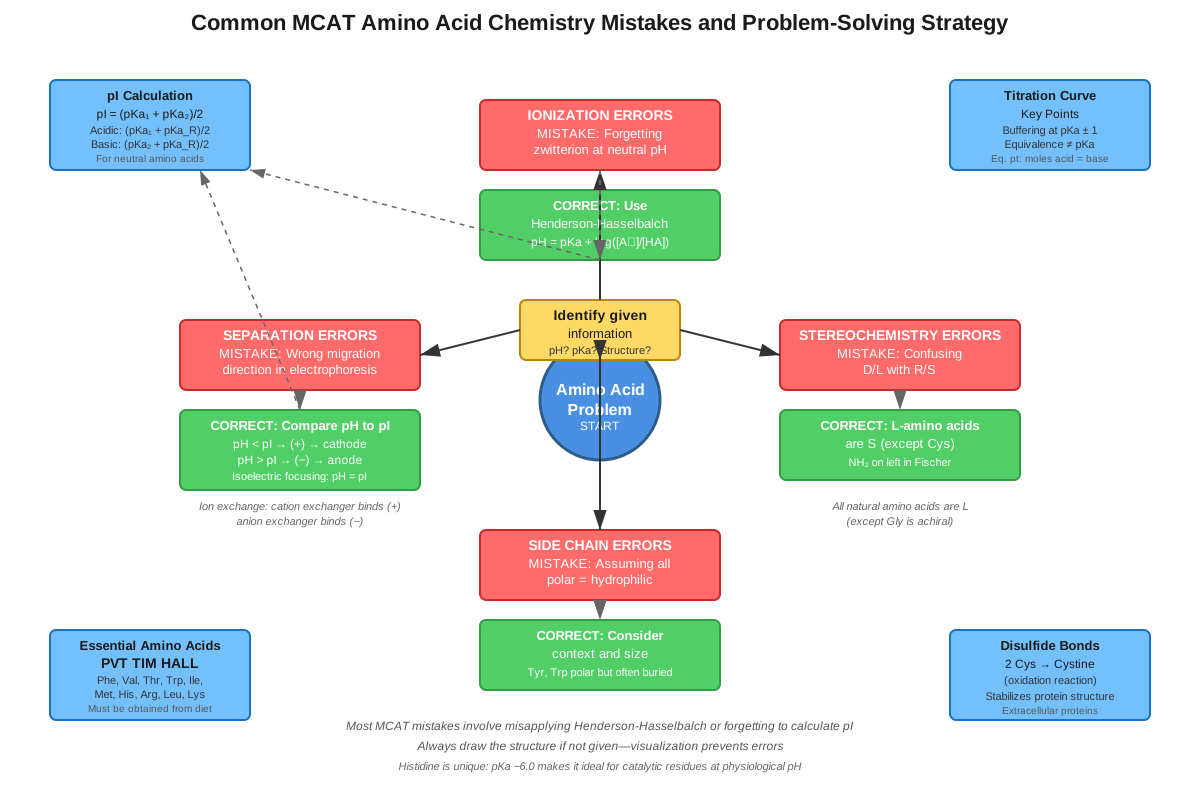
Overview
Amino acid chemistry forms the molecular foundation of protein structure and function, making it one of the most heavily tested topics in Organic Chemistry and biochemistry on the MCAT. Amino acids serve as the building blocks of proteins, and understanding their chemical properties, reactivity, and behavior under different conditions is essential for success on test day. The MCAT frequently integrates amino acid chemistry across multiple sections, including Chemical and Physical Foundations of Biological Systems, Biological and Biochemical Foundations of Living Systems, and even in passage-based questions that require interpretation of experimental data involving protein purification, enzyme kinetics, or drug design.
The chemistry of amino acids bridges fundamental organic chemistry principles with biologically relevant organic chemistry. Students must master the structure of the 20 standard amino acids, their acid-base behavior, stereochemistry, and how their side chains determine protein structure and function. This topic connects directly to peptide bond formation, protein folding, enzyme catalysis, and metabolic pathways. Questions may ask students to predict the behavior of amino acids at different pH values, identify amino acids based on their properties, or analyze experimental techniques like electrophoresis and chromatography that exploit amino acid chemistry.
Understanding amino acid chemistry MCAT content requires integration of multiple organic chemistry concepts including acid-base chemistry, stereochemistry, resonance structures, and functional group reactivity. The MCAT tests not just memorization of the 20 amino acids, but the ability to apply chemical principles to predict behavior, solve problems, and interpret experimental results. This topic appears in approximately 8-12% of MCAT questions and serves as prerequisite knowledge for understanding protein structure, enzyme mechanisms, and metabolic biochemistry.
Learning Objectives
- [ ] Define amino acid chemistry using accurate Organic Chemistry terminology
- [ ] Explain why amino acid chemistry matters for the MCAT
- [ ] Apply amino acid chemistry to exam-style questions
- [ ] Identify common mistakes related to amino acid chemistry
- [ ] Connect amino acid chemistry to related Organic Chemistry concepts
- [ ] Predict the ionization state of amino acids at any given pH value
- [ ] Classify amino acids based on side chain properties and predict their behavior in protein structures
- [ ] Calculate isoelectric points and understand their significance in separation techniques
Prerequisites
- Acid-base chemistry and pKa values: Essential for understanding amino acid ionization states and zwitterion formation at different pH values
- Stereochemistry and chirality: Required to understand L- and D-amino acid configurations and the stereochemical properties of amino acid α-carbons
- Functional group chemistry: Necessary to recognize and predict the reactivity of carboxylic acids, amines, and various side chain functional groups
- Resonance structures: Important for understanding the stability of zwitterions and the peptide bond
- Nomenclature of organic compounds: Needed to identify and name amino acid structures and derivatives
Why This Topic Matters
Amino acid chemistry represents a critical intersection between organic chemistry and biochemistry that the MCAT exploits extensively. In clinical medicine, amino acid disorders such as phenylketonuria (PKU), maple syrup urine disease, and homocystinuria demonstrate the importance of amino acid metabolism. Pharmaceutical development relies heavily on understanding amino acid chemistry for drug design, as many medications target proteins or mimic amino acid structures. Nutritional science depends on knowledge of essential versus non-essential amino acids and their metabolic fates.
On the MCAT, amino acid chemistry appears in approximately 8-12% of questions across multiple sections. The Chemical and Physical Foundations section tests amino acid structure, acid-base properties, and separation techniques. The Biological and Biochemical Foundations section integrates amino acid knowledge into questions about protein structure, enzyme function, and metabolism. Questions typically appear in three formats: discrete questions testing fundamental knowledge, passage-based questions requiring interpretation of experimental data (such as chromatography or electrophoresis results), and integrated questions connecting amino acid properties to protein function or disease states.
Common exam scenarios include: identifying amino acids from titration curves, predicting migration patterns in electrophoresis at different pH values, determining which amino acids would be found in hydrophobic versus hydrophilic regions of proteins, analyzing mutations that substitute one amino acid for another, and interpreting experimental techniques used to separate or identify amino acids. The MCAT particularly favors questions that require students to apply chemical principles rather than simply recall structures, making deep conceptual understanding essential.
Core Concepts
General Structure and Nomenclature
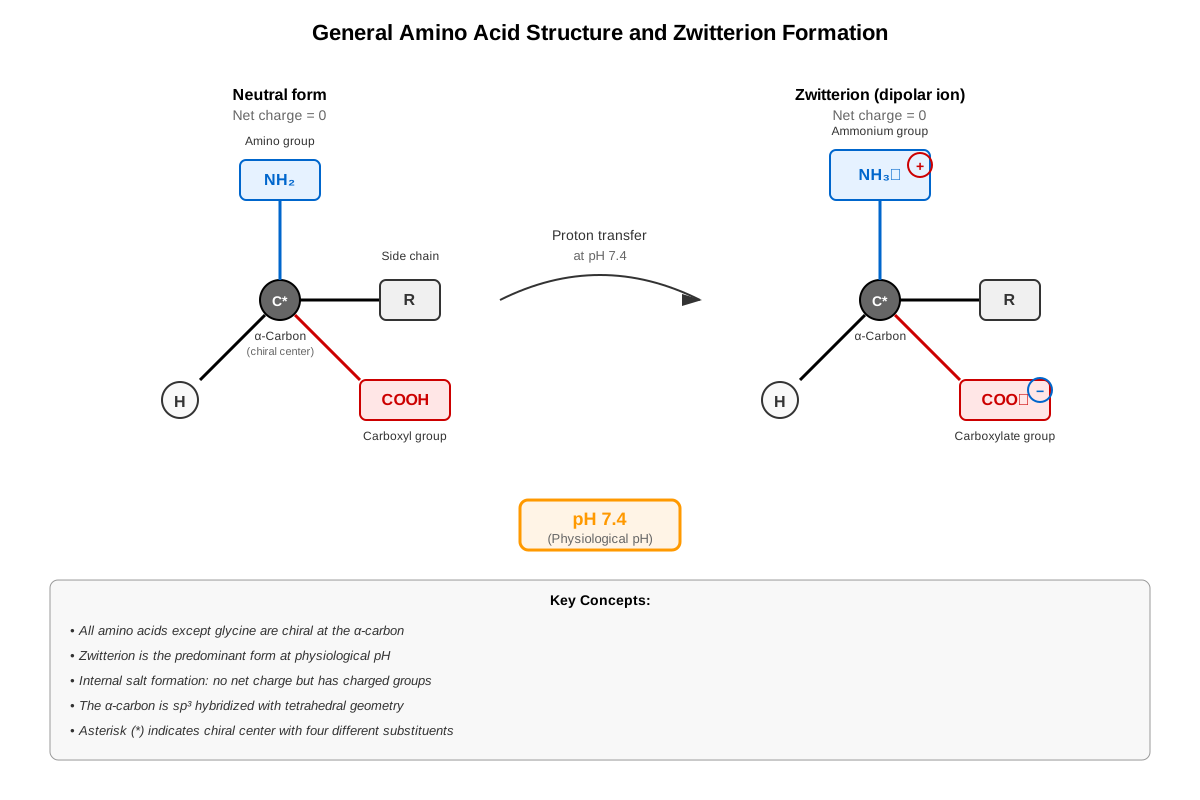
All amino acids share a common structural framework consisting of a central α-carbon (also called the Cα) bonded to four different groups: an amino group (-NH₂), a carboxyl group (-COOH), a hydrogen atom, and a variable side chain (R group). This general structure can be represented as: H₂N-CHR-COOH. The α-carbon is the carbon atom immediately adjacent to the carboxyl group, and this position is critical for amino acid chemistry.
With the exception of glycine (where R = H), all amino acids contain a chiral center at the α-carbon, making them optically active. The naturally occurring amino acids in proteins exist almost exclusively in the L-configuration, which corresponds to the S-configuration in the Cahn-Ingold-Prelog system for all amino acids except cysteine (which is R due to the sulfur atom's higher priority). The D-configuration amino acids are rare in nature but do appear in bacterial cell walls and some antibiotics.
The zwitterion form of amino acids is their predominant structure at physiological pH. In this form, the amino group is protonated (-NH₃⁺) and the carboxyl group is deprotonated (-COO⁻), creating an internal salt with no net charge but containing both positive and negative charges. This zwitterionic character explains many physical properties of amino acids, including their high melting points, water solubility, and low solubility in nonpolar solvents.
Classification by Side Chain Properties
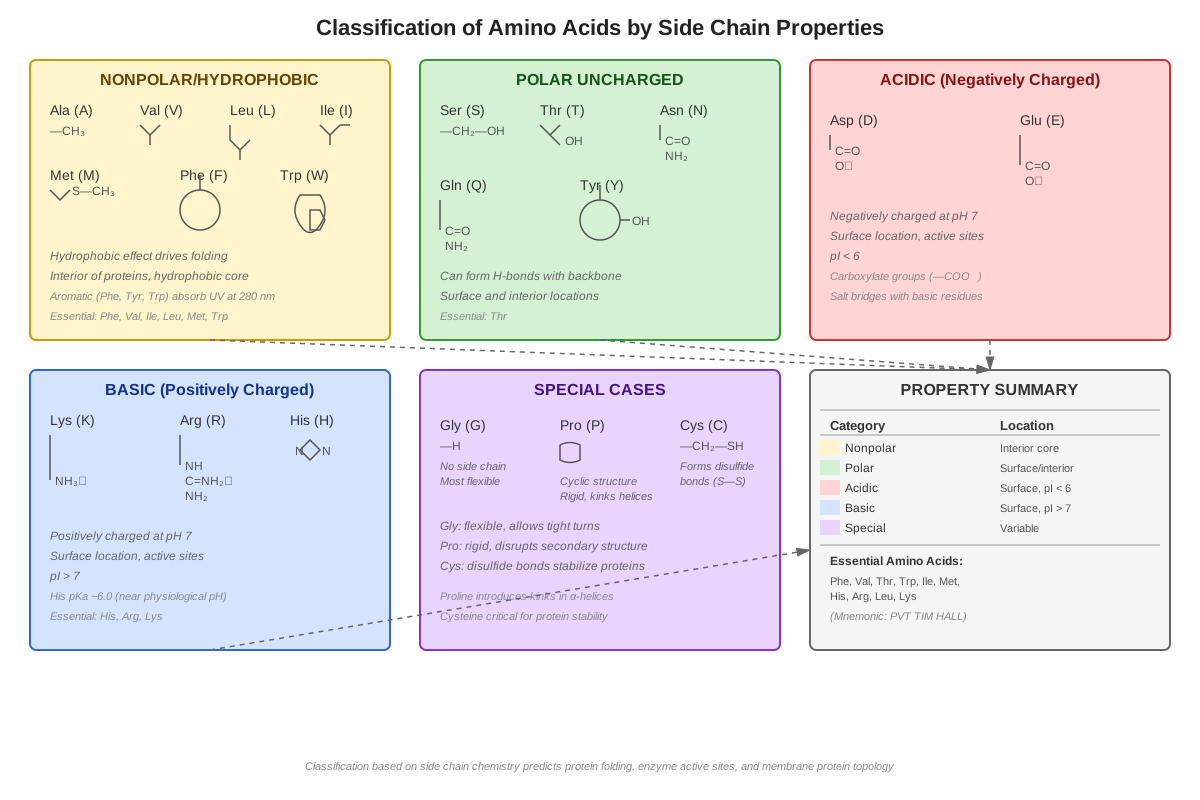
The 20 standard amino acids are classified based on their side chain (R group) properties, which determine their chemical behavior and role in protein structure:
Nonpolar, Aliphatic Amino Acids: Glycine (Gly, G), Alanine (Ala, A), Valine (Val, V), Leucine (Leu, L), Isoleucine (Ile, I), Methionine (Met, M), and Proline (Pro, P). These amino acids have hydrocarbon side chains and are hydrophobic. They typically cluster in the interior of folded proteins, away from aqueous environments. Proline is unique because its side chain forms a ring with the backbone nitrogen, creating conformational constraints.
Aromatic Amino Acids: Phenylalanine (Phe, F), Tyrosine (Tyr, Y), and Tryptophan (Trp, W). These contain aromatic ring systems that absorb UV light at 280 nm, making them useful for protein detection. Tyrosine and tryptophan are moderately polar due to their hydroxyl and indole groups, respectively.
Polar, Uncharged Amino Acids: Serine (Ser, S), Threonine (Thr, T), Cysteine (Cys, C), Asparagine (Asn, N), and Glutamine (Gln, Q). These amino acids can form hydrogen bonds through their side chains. Serine and threonine contain hydroxyl groups, making them sites for phosphorylation in cell signaling. Cysteine contains a thiol group (-SH) that can form disulfide bonds (cystine) with other cysteines, crucial for protein stability.
Positively Charged (Basic) Amino Acids: Lysine (Lys, K), Arginine (Arg, R), and Histidine (His, H). These amino acids have side chains that are protonated and positively charged at physiological pH. Histidine is unique with a pKa near 6.0, allowing it to act as both an acid and base at physiological pH, making it crucial in enzyme active sites.
Negatively Charged (Acidic) Amino Acids: Aspartic acid (Asp, D) and Glutamic acid (Glu, E). These amino acids have carboxylic acid groups in their side chains that are deprotonated and negatively charged at physiological pH.
| Classification | Amino Acids | Key Properties | Protein Location |
|---|---|---|---|
| Nonpolar aliphatic | G, A, V, L, I, M, P | Hydrophobic, no charge | Interior core |
| Aromatic | F, Y, W | UV absorption, mostly hydrophobic | Interior or surface |
| Polar uncharged | S, T, C, N, Q | H-bond donors/acceptors | Surface or interior |
| Positively charged | K, R, H | Basic, protonated at pH 7 | Surface, active sites |
| Negatively charged | D, E | Acidic, deprotonated at pH 7 | Surface, active sites |
Acid-Base Properties and Ionization
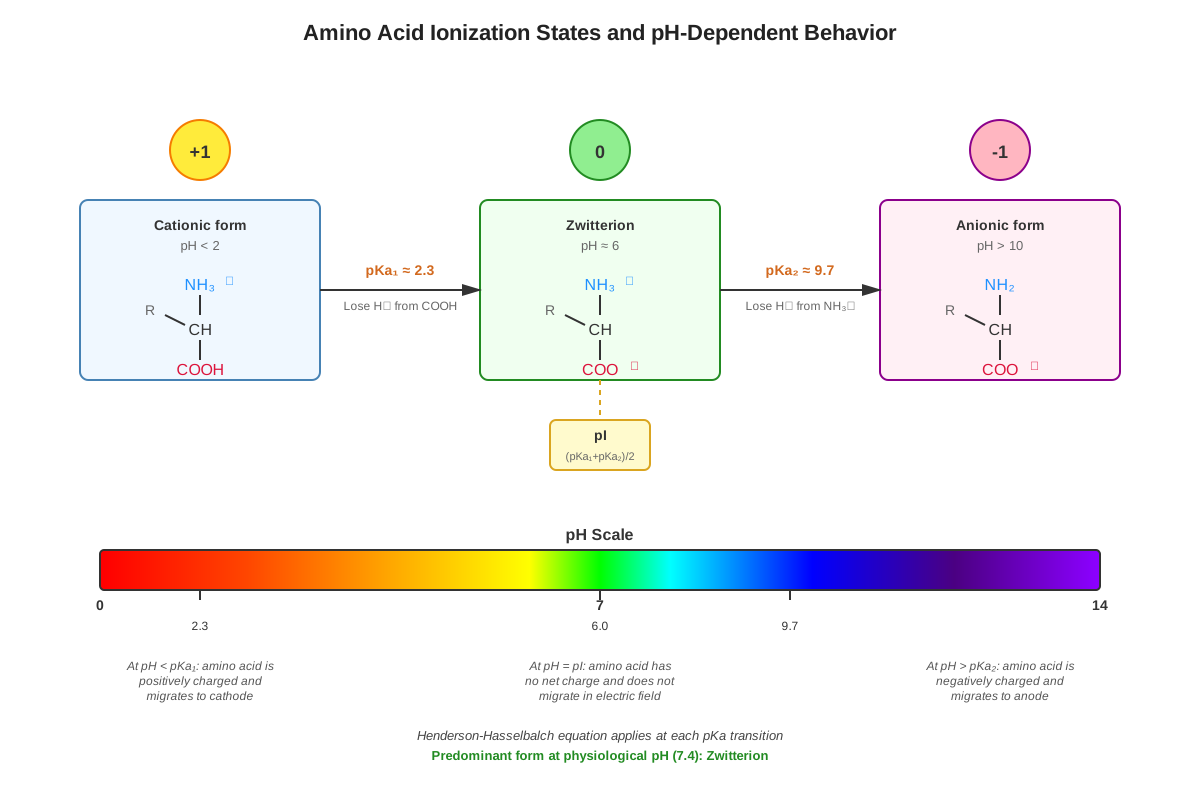
Amino acids are amphoteric molecules, meaning they can act as both acids and bases. Each amino acid has at least two ionizable groups: the α-carboxyl group (typical pKa ~2) and the α-amino group (typical pKa ~9-10). Some amino acids have ionizable side chains, giving them a third pKa value.
The isoelectric point (pI) is the pH at which an amino acid has no net electrical charge. For amino acids with only two ionizable groups (the α-amino and α-carboxyl groups), the pI is calculated as the average of the two pKa values: pI = (pKa₁ + pKa₂)/2. For amino acids with ionizable side chains, the calculation depends on which groups are involved in the zwitterion form.
At pH values below the pI, amino acids carry a net positive charge because both the amino and carboxyl groups are protonated. At pH values above the pI, amino acids carry a net negative charge because both groups are deprotonated. At the pI, amino acids exist predominantly as zwitterions and do not migrate in an electric field, a principle exploited in isoelectric focusing.
The Henderson-Hasselbalch equation is essential for calculating the ionization state of amino acids at any pH:
pH = pKa + log([A⁻]/[HA])This equation allows prediction of the protonation state of each ionizable group at any given pH, which is critical for understanding amino acid behavior in separation techniques and protein structure.
Peptide Bond Formation
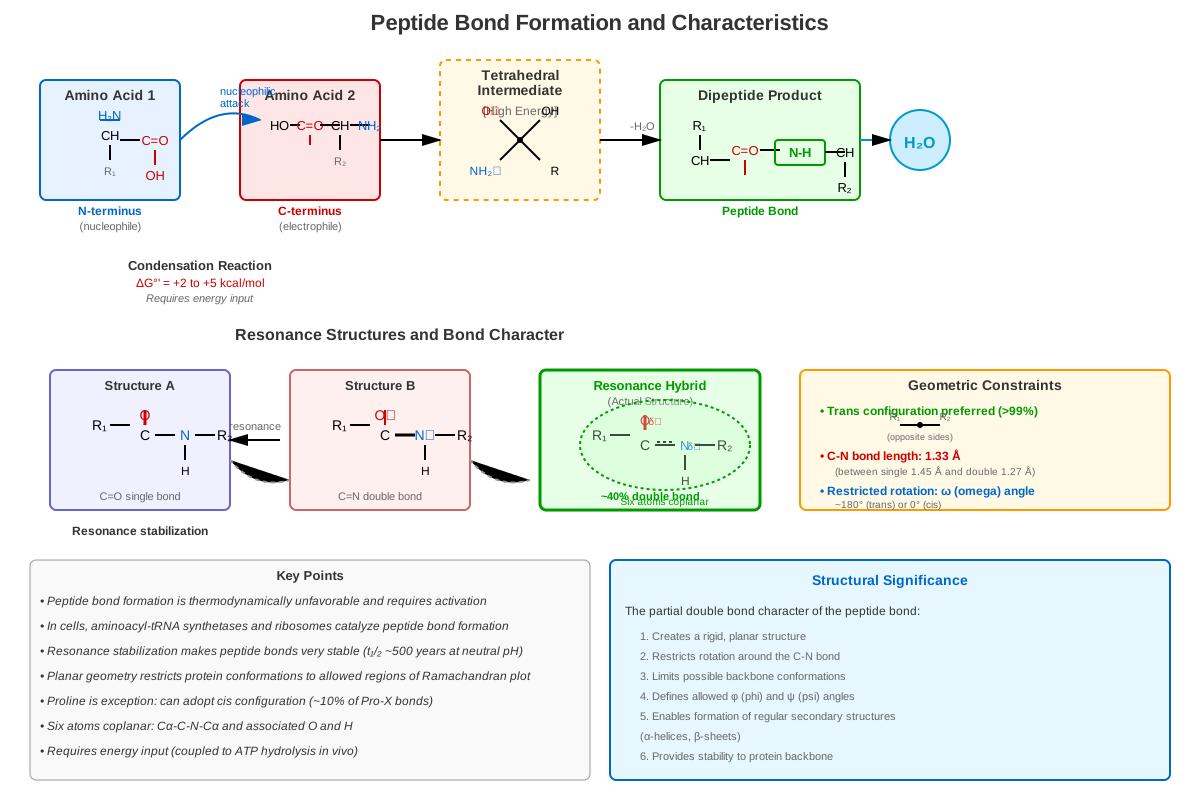
Amino acids link together through peptide bonds (also called amide bonds) to form polypeptides and proteins. The peptide bond forms through a condensation reaction (dehydration synthesis) between the carboxyl group of one amino acid and the amino group of another, releasing a water molecule. The resulting C-N bond has partial double-bond character due to resonance, restricting rotation and keeping the peptide bond planar.
The peptide bond is written as -CO-NH- and has several important properties:
- Planar geometry: The C-N bond has ~40% double-bond character due to resonance between the carbonyl oxygen and nitrogen lone pair
- Trans configuration: The α-carbons of adjacent amino acids are typically on opposite sides of the peptide bond (trans), though proline can adopt cis configurations
- Resonance stabilization: The partial double-bond character makes peptide bonds very stable, with a half-life of hydrolysis in neutral water of approximately 500 years
- Partial charges: The oxygen carries a partial negative charge and the nitrogen a partial positive charge, allowing hydrogen bonding
Chemical Reactions and Modifications
Several chemical reactions are particularly important for amino acid chemistry on the MCAT:
Disulfide Bond Formation: Two cysteine residues can undergo oxidation to form a disulfide bond (cystine), creating a covalent cross-link. This reaction is reversible through reduction. Disulfide bonds stabilize protein tertiary and quaternary structure, particularly in extracellular proteins.
Ninhydrin Reaction: Ninhydrin reacts with amino acids to produce a purple-blue color (Ruhemann's purple), used for detecting amino acids in chromatography. Proline produces a yellow color instead.
Sanger's Reagent and Edman Degradation: These methods identify the N-terminal amino acid of a peptide. Edman degradation sequentially removes and identifies amino acids from the N-terminus without destroying the rest of the peptide.
Post-translational Modifications: After protein synthesis, amino acids can be chemically modified. Common modifications include:
- Phosphorylation of serine, threonine, or tyrosine (adds negative charges)
- Acetylation of lysine (neutralizes positive charge)
- Methylation of lysine or arginine
- Glycosylation of serine, threonine, or asparagine
- Hydroxylation of proline and lysine (requires vitamin C)
Separation and Analysis Techniques
Understanding amino acid properties enables prediction of behavior in separation techniques:
Electrophoresis: Amino acids migrate in an electric field based on their net charge at the buffer pH. At pH < pI, amino acids migrate toward the cathode (negative electrode); at pH > pI, they migrate toward the anode (positive electrode). At pH = pI, no migration occurs.
Ion-Exchange Chromatography: Separates amino acids based on charge. Cation exchangers bind positively charged amino acids; anion exchangers bind negatively charged amino acids. Elution occurs by changing pH or salt concentration.
Size-Exclusion Chromatography: Separates based on molecular size. Larger molecules elute first because they cannot enter the pores of the stationary phase.
Reverse-Phase HPLC: Separates amino acids based on hydrophobicity. More hydrophobic amino acids interact more strongly with the nonpolar stationary phase and elute later.
Quick check — test yourself on Amino acid chemistry so far.
Try Flashcards →Concept Relationships
The core concepts of amino acid chemistry form an interconnected network essential for understanding protein biochemistry. The general structure of amino acids (α-carbon with amino, carboxyl, hydrogen, and R groups) → determines their stereochemistry (L-configuration in biological systems) → which influences their three-dimensional arrangement in proteins.
The side chain properties → dictate classification (nonpolar, polar, charged) → which determines location in folded proteins (interior vs. surface) → affecting protein function and stability. This relationship extends to understanding enzyme active sites, where specific amino acid side chains provide the chemical functionality needed for catalysis.
Acid-base properties → determine ionization state at different pH values → which affects net charge → influencing behavior in separation techniques (electrophoresis, chromatography) and protein solubility. The isoelectric point concept connects directly to practical applications in protein purification and analysis.
Peptide bond formation → creates primary structure → which through interactions between side chains leads to secondary structure (α-helices, β-sheets) → ultimately determining tertiary and quaternary structure. The planar, rigid nature of peptide bonds constrains possible conformations, while the flexibility of bonds around the α-carbon allows folding.
Chemical modifications (disulfide bonds, phosphorylation, etc.) → alter amino acid properties → changing protein structure and function → enabling regulation of biological processes. This connects amino acid chemistry to cell signaling, enzyme regulation, and disease mechanisms.
These relationships extend to prerequisite knowledge: functional group chemistry underlies understanding of side chain reactivity, stereochemistry explains L/D configurations, and acid-base chemistry is essential for predicting ionization states. Moving forward, amino acid chemistry connects to protein structure and function, enzyme kinetics, metabolism, and molecular biology techniques.
High-Yield Facts
⭐ All naturally occurring amino acids in proteins are in the L-configuration, with the exception of glycine which is achiral
⭐ At physiological pH (~7.4), amino acids exist predominantly as zwitterions with -NH₃⁺ and -COO⁻ groups
⭐ The isoelectric point (pI) is the pH at which an amino acid has no net charge; for simple amino acids, pI = (pKa₁ + pKa₂)/2
⭐ Only cysteine can form disulfide bonds, which are critical for stabilizing protein tertiary structure
⭐ Proline is unique because its side chain creates a ring with the backbone, restricting conformational flexibility and often disrupting α-helices
- Glycine is the only achiral amino acid and the smallest, allowing it to fit in tight spaces in protein structures
- Aromatic amino acids (Phe, Tyr, Trp) absorb UV light at 280 nm, enabling protein concentration determination
- Histidine has a pKa near 6.0, making it an excellent proton donor/acceptor at physiological pH and common in enzyme active sites
- Peptide bonds have partial double-bond character (~40%) due to resonance, making them planar and restricting rotation
- At pH < pI, amino acids are positively charged and migrate toward the cathode in electrophoresis; at pH > pI, they are negatively charged and migrate toward the anode
Common Misconceptions
Misconception: All amino acids have the S-configuration in the Cahn-Ingold-Prelog system.
Correction: While all naturally occurring amino acids are L-amino acids, cysteine has the R-configuration in the CIP system because the sulfur atom in its side chain has higher priority than the carboxyl carbon, reversing the designation despite being an L-amino acid.
Misconception: Amino acids exist primarily in their neutral form (H₂N-CHR-COOH) at physiological pH.
Correction: At physiological pH (~7.4), amino acids exist predominantly as zwitterions (⁺H₃N-CHR-COO⁻) because the carboxyl group (pKa ~2) is deprotonated and the amino group (pKa ~9-10) is protonated. The neutral form only predominates at pH values between these two pKa values.
Misconception: The isoelectric point is always calculated as the average of all pKa values.
Correction: The pI is calculated as the average of the two pKa values that bracket the zwitterion form. For acidic amino acids, this is (pKa₁ + pKa_R)/2 where pKa_R is the side chain pKa. For basic amino acids, it is (pKa₂ + pKa_R)/2. Only for amino acids without ionizable side chains is it simply (pKa₁ + pKa₂)/2.
Misconception: Hydrophobic amino acids are never found on protein surfaces.
Correction: While hydrophobic amino acids preferentially cluster in protein interiors, they can appear on surfaces, particularly at protein-protein interaction interfaces or in membrane proteins where they interact with the lipid bilayer. The distribution depends on the protein's environment and function.
Misconception: All amino acids with hydroxyl groups can be phosphorylated.
Correction: While serine, threonine, and tyrosine (which contain hydroxyl groups) are common phosphorylation sites, not all hydroxyl-containing molecules in amino acids are equally susceptible. The hydroxyl group must be positioned appropriately for kinase recognition, and the biological context determines which residues actually undergo phosphorylation.
Worked Examples
Example 1: Predicting Amino Acid Charge and Migration
Question: Lysine has pKa values of 2.2 (α-COOH), 9.0 (α-NH₃⁺), and 10.5 (side chain NH₃⁺). Calculate the isoelectric point of lysine and predict its migration pattern in electrophoresis at pH 7.0, pH 9.8, and pH 11.0.
Solution:
Step 1: Calculate the isoelectric point. For lysine (a basic amino acid), the pI is the average of the two pKa values that bracket the zwitterion form. The zwitterion has the α-COOH deprotonated and both amino groups protonated. The relevant pKa values are those for the two amino groups:
pI = (pKa₂ + pKa_R)/2 = (9.0 + 10.5)/2 = 9.75
Step 2: Analyze the charge at pH 7.0. At pH 7.0 (well below the pI of 9.75):
- α-COOH (pKa 2.2): Deprotonated (COO⁻) because pH >> pKa
- α-NH₃⁺ (pKa 9.0): Protonated (NH₃⁺) because pH < pKa
- Side chain NH₃⁺ (pKa 10.5): Protonated (NH₃⁺) because pH << pKa
- Net charge: -1 + 1 + 1 = +1
At pH 7.0, lysine is positively charged and will migrate toward the cathode (negative electrode).
Step 3: Analyze the charge at pH 9.8 (approximately equal to pI). At this pH, lysine exists predominantly as a zwitterion with minimal net charge and will show minimal migration in electrophoresis.
Step 4: Analyze the charge at pH 11.0 (above the pI):
- α-COOH: Deprotonated (COO⁻)
- α-NH₃⁺: Deprotonated (NH₂) because pH > pKa
- Side chain NH₃⁺: Mostly deprotonated (NH₂) because pH > pKa
- Net charge: approximately -1
At pH 11.0, lysine is negatively charged and will migrate toward the anode (positive electrode).
Key Concept: The relationship between pH and pI determines amino acid charge and migration. pH < pI → positive charge → cathode migration; pH > pI → negative charge → anode migration.
Example 2: Analyzing Protein Separation
Question: A mixture contains three peptides: Peptide A (pI = 4.5), Peptide B (pI = 7.0), and Peptide C (pI = 9.5). Describe their behavior in: (a) electrophoresis at pH 7.0, and (b) cation-exchange chromatography at pH 7.0.
Solution:
(a) Electrophoresis at pH 7.0:
Step 1: Determine the charge of each peptide at pH 7.0 by comparing pH to pI.
Peptide A (pI = 4.5): pH 7.0 > pI 4.5, so Peptide A is negatively charged. It will migrate toward the anode (positive electrode).
Peptide B (pI = 7.0): pH 7.0 = pI 7.0, so Peptide B has no net charge. It will not migrate significantly.
Peptide C (pI = 9.5): pH 7.0 < pI 9.5, so Peptide C is positively charged. It will migrate toward the cathode (negative electrode).
Step 2: Predict relative migration rates. Peptides A and C will migrate in opposite directions. The magnitude of charge (and thus migration rate) depends on how far the pH is from the pI. Peptide A (ΔpH = 2.5) and Peptide C (ΔpH = 2.5) have similar charge magnitudes and will migrate at similar rates in opposite directions.
(b) Cation-exchange chromatography at pH 7.0:
Step 1: Recall that cation-exchange resin has a negatively charged stationary phase that binds positively charged molecules.
Step 2: Determine which peptides will bind:
- Peptide A (negative at pH 7.0): Will not bind; elutes first
- Peptide B (neutral at pH 7.0): Minimal binding; elutes second
- Peptide C (positive at pH 7.0): Binds strongly; elutes last
Step 3: Elution order: A → B → C
To elute Peptide C, either increase the pH (to make it less positive) or increase salt concentration (to compete for binding sites).
Key Concept: Separation techniques exploit differences in amino acid and peptide properties. Understanding charge states at different pH values allows prediction of behavior in electrophoresis and chromatography.
Exam Strategy
When approaching amino acid chemistry MCAT questions, begin by identifying what property is being tested: structure, charge state, classification, or separation behavior. For questions involving pH and charge, immediately compare the given pH to relevant pKa values or the isoelectric point. Draw out the ionization states if needed—this takes only seconds and prevents errors.
Trigger words to watch for include: "physiological pH" (think zwitterion, pH ~7.4), "isoelectric point" (no net charge, no migration), "hydrophobic" (nonpolar amino acids, protein interior), "disulfide bond" (cysteine only), "basic amino acids" (Lys, Arg, His—remember "KRH"), and "acidic amino acids" (Asp, Glu—"DE"). When you see "electrophoresis," immediately think about charge and pH relationships. "Chromatography" questions require you to identify the property being exploited (charge, size, or hydrophobicity).
For process-of-elimination strategies, use extreme pH values to eliminate wrong answers. At very low pH (< 2), all ionizable groups are protonated; at very high pH (> 11), all are deprotonated. If an answer choice contradicts this, eliminate it. For amino acid classification questions, eliminate answers that place charged amino acids in hydrophobic protein cores or consistently place hydrophobic amino acids on protein surfaces exposed to water. When identifying amino acids from properties, eliminate options that don't match the described characteristics (e.g., if the question mentions UV absorption, only Phe, Tyr, and Trp are possible).
Time allocation: Discrete amino acid questions should take 45-60 seconds. If you're spending more time, you likely need to review fundamental concepts. Passage-based questions involving amino acids typically require 1-2 minutes, as you'll need to integrate passage information with your knowledge. Don't waste time trying to recall every detail about all 20 amino acids—focus on the properties relevant to the question. For calculation questions (pI, Henderson-Hasselbalch), set up the equation first, then solve—this prevents arithmetic errors and allows you to check your work quickly.
Memory Techniques
Mnemonic for nonpolar amino acids: "Grandma Always Visits London In May, Probably" (Glycine, Alanine, Valine, Leucine, Isoleucine, Methionine, Proline)
Mnemonic for aromatic amino acids: "FYW" or "Fly With Your" (Phenylalanine, Tyrosine, Tryptophan)—these are the amino acids that absorb UV light
Mnemonic for basic amino acids: "KRH" or "Knights Rescue Horses" (Lysine, aRginine, Histidine)—these are positively charged at physiological pH
Mnemonic for acidic amino acids: "DE" or "Definitely Eat" (aspartic acid, glutamic acid)—these are negatively charged at physiological pH
Mnemonic for amino acids with hydroxyl groups: "STY" or "Stay" (Serine, Threonine, tYrosine)—these can be phosphorylated
Visualization for zwitterion: Picture amino acids as molecular "magnets" with positive and negative ends at physiological pH. This helps remember that they're highly water-soluble (like charges attract water) and have high melting points (ionic character).
Visualization for isoelectric point: Imagine a pH scale with the amino acid "floating" at its pI (no net charge, no movement). Below the pI, the amino acid "sinks" toward the cathode (positive charge attracted to negative electrode); above the pI, it "rises" toward the anode (negative charge attracted to positive electrode).
Acronym for cysteine's unique property: "C = Cross-link" (Cysteine forms disulfide cross-links)
Memory aid for peptide bond planarity: "Resonance Restricts Rotation"—the three R's remind you that resonance between the carbonyl and nitrogen creates partial double-bond character that restricts rotation and keeps the peptide bond planar.
Summary
Amino acid chemistry represents a critical integration point between organic chemistry and biochemistry on the MCAT. The 20 standard amino acids share a common structure with an α-carbon bonded to an amino group, carboxyl group, hydrogen, and variable side chain, with all naturally occurring amino acids in the L-configuration except achiral glycine. At physiological pH, amino acids exist as zwitterions with both positive and negative charges but no net charge. Classification by side chain properties (nonpolar, polar uncharged, positively charged, negatively charged, and aromatic) determines amino acid behavior in proteins and separation techniques. The acid-base properties of amino acids, characterized by multiple pKa values and the isoelectric point, govern their charge state at different pH values and their behavior in electrophoresis and chromatography. Peptide bonds form through condensation reactions and have partial double-bond character that restricts rotation. Understanding these fundamental concepts enables prediction of amino acid behavior in biological systems and analytical techniques, making this topic essential for success on MCAT questions involving protein structure, enzyme function, and biochemical analysis.
Key Takeaways
- Amino acids exist as zwitterions at physiological pH with both -NH₃⁺ and -COO⁻ groups, explaining their high water solubility and melting points
- The isoelectric point (pI) is the pH at which an amino acid has no net charge; at pH < pI, amino acids are positively charged, and at pH > pI, they are negatively charged
- Side chain properties determine amino acid classification and location in proteins: nonpolar amino acids cluster in protein interiors, while charged amino acids typically appear on surfaces
- Only cysteine can form disulfide bonds, which stabilize protein tertiary structure through covalent cross-links
- Peptide bonds have partial double-bond character due to resonance, making them planar and restricting rotation around the C-N bond
- Understanding amino acid charge states at different pH values is essential for predicting behavior in separation techniques like electrophoresis and chromatography
- The three basic amino acids (Lys, Arg, His) are positively charged at physiological pH, while the two acidic amino acids (Asp, Glu) are negatively charged
Related Topics
Protein Structure and Folding: Understanding amino acid chemistry provides the foundation for learning how primary sequence determines secondary, tertiary, and quaternary structure through interactions between side chains. Mastery of amino acid properties enables prediction of protein folding patterns and stability.
Enzyme Kinetics and Mechanisms: Amino acid side chains in enzyme active sites provide the chemical functionality for catalysis. Knowledge of amino acid chemistry is essential for understanding enzyme mechanisms, particularly the roles of histidine, serine, and cysteine in catalytic triads.
Protein Purification Techniques: Chromatography and electrophoresis methods exploit amino acid properties for protein separation. Understanding amino acid chemistry enables prediction of protein behavior in various purification schemes.
Metabolism and Biosynthesis: Amino acid metabolism, including transamination, deamination, and the urea cycle, builds directly on amino acid chemistry. Essential versus non-essential amino acids and their metabolic fates are important MCAT topics.
Acid-Base Chemistry in Biological Systems: The principles learned in amino acid chemistry extend to understanding buffer systems, enzyme pH optima, and the effects of pH on protein structure and function throughout biochemistry.
Practice CTA
Now that you've mastered the core concepts of amino acid chemistry, it's time to reinforce your understanding through active practice. Attempt the practice questions and flashcards associated with this topic to test your ability to apply these concepts under exam conditions. Focus particularly on questions involving pH and charge state calculations, amino acid classification, and separation techniques—these are the highest-yield question types on the MCAT. Remember, understanding amino acid chemistry is not just about memorization; it's about developing the chemical intuition to predict behavior and solve problems. Your investment in mastering this topic will pay dividends across multiple sections of the MCAT and throughout your medical education. Keep pushing forward—you're building the foundation for success!
Sign up free to keep reading
Create a free AnvayaPrep account to finish this MCAT guide on Amino acid chemistry — plus flashcards and practice questions.