Overview
Imines and enamines represent crucial nitrogen-containing derivatives of carbonyl compounds that appear regularly on the MCAT, particularly within the Organic Chemistry and Carbonyl Chemistry sections. These functional groups form through nucleophilic addition-elimination reactions when primary or secondary amines react with aldehydes or ketones. Understanding the formation, structure, and reactivity of imines and enamines is essential for predicting reaction outcomes, recognizing biochemical transformations, and solving mechanism-based questions that frequently appear on standardized examinations.
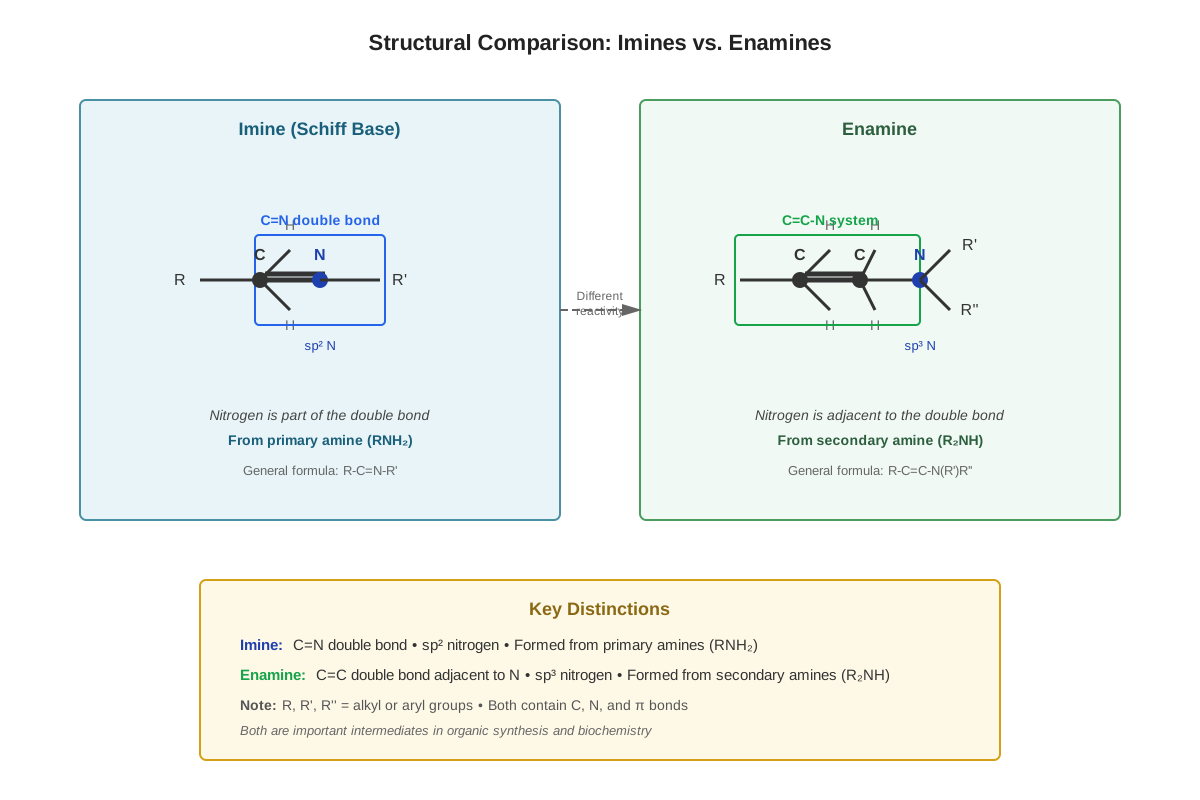
The chemistry of imines and enamines bridges fundamental carbonyl reactivity with nitrogen-containing biomolecules. Imines (also called Schiff bases) contain a carbon-nitrogen double bond (C=N) and form when primary amines react with carbonyl compounds. Enamines, conversely, contain both a carbon-carbon double bond and an amine group (C=C-N) and arise from secondary amine reactions with carbonyl compounds. Both transformations proceed through similar mechanistic pathways involving nucleophilic attack, tetrahedral intermediate formation, and water elimination—core concepts that the MCAT tests extensively.
For MCAT success, students must recognize how imines and enamines connect to broader themes in Organic Chemistry: acid-base catalysis, nucleophilic addition mechanisms, tautomerization, and the interconversion of functional groups. These compounds also appear in biochemical contexts, particularly in amino acid metabolism, vitamin B6 (pyridoxal phosphate) chemistry, and enzymatic mechanisms. The ability to predict products, identify intermediates, and understand pH-dependent equilibria involving these nitrogen-containing species distinguishes high-scoring students from those who struggle with carbonyl chemistry passages.
Learning Objectives
- [ ] Define imines and enamines using accurate Organic Chemistry terminology
- [ ] Explain why imines and enamines matter for the MCAT
- [ ] Apply imines and enamines concepts to exam-style questions
- [ ] Identify common mistakes related to imines and enamines
- [ ] Connect imines and enamines to related Organic Chemistry concepts
- [ ] Predict the products of reactions between various amines and carbonyl compounds
- [ ] Describe the complete mechanism for imine and enamine formation, including all intermediates
- [ ] Explain the pH dependence of imine formation and identify optimal reaction conditions
- [ ] Distinguish between conditions that favor imine versus enamine formation
Prerequisites
- Carbonyl compound structure and reactivity: Essential for understanding how aldehydes and ketones serve as electrophilic substrates in imine and enamine formation
- Nucleophilic addition mechanisms: The foundation for comprehending the initial attack of amines on carbonyl carbons
- Acid-base chemistry: Critical for understanding proton transfer steps and pH-dependent equilibria in these reactions
- Amine structure and basicity: Necessary to predict reactivity patterns and recognize primary versus secondary amines
- Resonance and electron delocalization: Required to understand the stability and reactivity of imines and enamines
- Leaving group ability: Important for understanding why water departs during the elimination step
Why This Topic Matters
Imines and enamines MCAT questions appear with moderate frequency, typically 1-3 questions per exam, often embedded within longer passages about amino acid chemistry, drug synthesis, or enzymatic mechanisms. These questions test both mechanistic understanding and the ability to predict products under varying conditions—skills that distinguish top-tier test-takers.
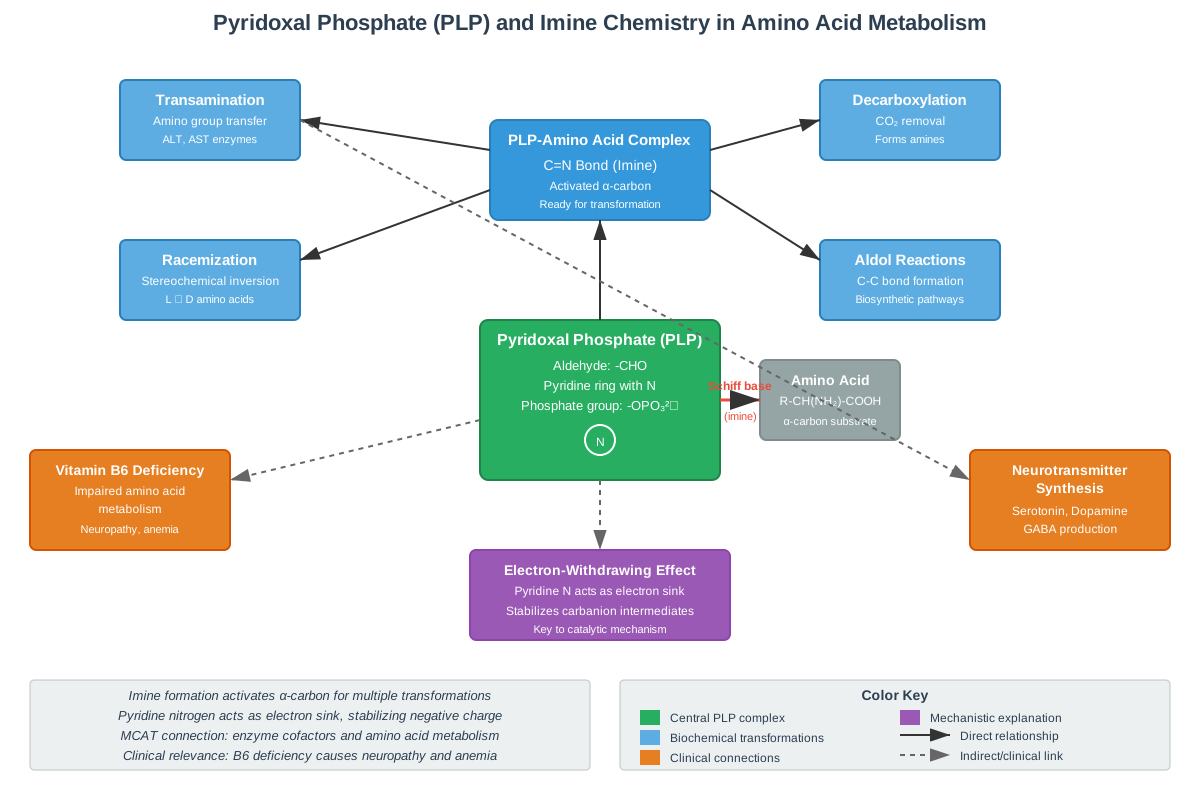
Clinically and biochemically, imine chemistry underlies numerous essential processes. Pyridoxal phosphate (vitamin B6) functions as a cofactor in amino acid metabolism by forming imine linkages (Schiff bases) with amino acid substrates, facilitating decarboxylation, transamination, and racemization reactions. The visual cycle in retinal cells involves imine formation between retinal (an aldehyde) and lysine residues in opsin proteins. Many pharmaceutical compounds contain imine or enamine moieties, and understanding their formation helps explain drug synthesis pathways that appear in MCAT passages.
On the MCAT, this topic commonly appears in several contexts: discrete questions asking students to identify products of amine-carbonyl reactions; passage-based questions involving enzyme mechanisms with pyridoxal phosphate; synthesis problems requiring multi-step transformations; and structure-function questions about biomolecules. The Chemical and Physical Foundations section frequently includes mechanism-based questions, while the Biological and Biochemical Foundations section may present imine chemistry in metabolic contexts. Students who master the mechanistic details and can quickly identify reaction conditions will efficiently navigate these questions.
Core Concepts
Structure and Nomenclature of Imines
Imines (also called Schiff bases) contain a carbon-nitrogen double bond (C=N) as their defining structural feature. The general structure is R₂C=NR', where R groups may be hydrogen, alkyl, or aryl substituents. When the nitrogen bears a hydrogen atom (R₂C=NH), the compound is specifically called a primary imine or aldimine/ketimine depending on the carbon substituents. When nitrogen is fully substituted (R₂C=NR' where R' ≠ H), it's called a secondary imine or N-substituted imine.
The carbon-nitrogen double bond exhibits properties intermediate between C=C and C=O bonds. The electronegativity difference between carbon and nitrogen creates bond polarization (Cδ+—Nδ-), though less pronounced than in carbonyls. This polarization influences reactivity: the carbon remains electrophilic (though less so than carbonyl carbons), while the nitrogen lone pair can act as a nucleophile or base. Imines can exist as E/Z geometric isomers when both carbon and nitrogen bear substituents, adding stereochemical complexity to product prediction.
Structure and Nomenclature of Enamines
Enamines contain both a carbon-carbon double bond and an amine group, with the nitrogen directly attached to one of the sp² carbons (C=C-NR₂). The name derives from "ene" (indicating the C=C double bond) and "amine" (indicating the nitrogen functionality). Unlike imines, enamines always form from secondary amines because the nitrogen must bear two carbon substituents—primary amines would form imines instead.
The enamine structure exhibits significant resonance stabilization. The nitrogen lone pair can delocalize into the π system of the adjacent double bond, creating a resonance contributor with C-C single bond character and C=N double bond character. This resonance makes the β-carbon (the carbon not attached to nitrogen) nucleophilic—a property exploited in synthetic chemistry. The α-carbon (attached to nitrogen) bears partial positive charge in the resonance structure, while the β-carbon becomes electron-rich and reactive toward electrophiles.
Mechanism of Imine Formation
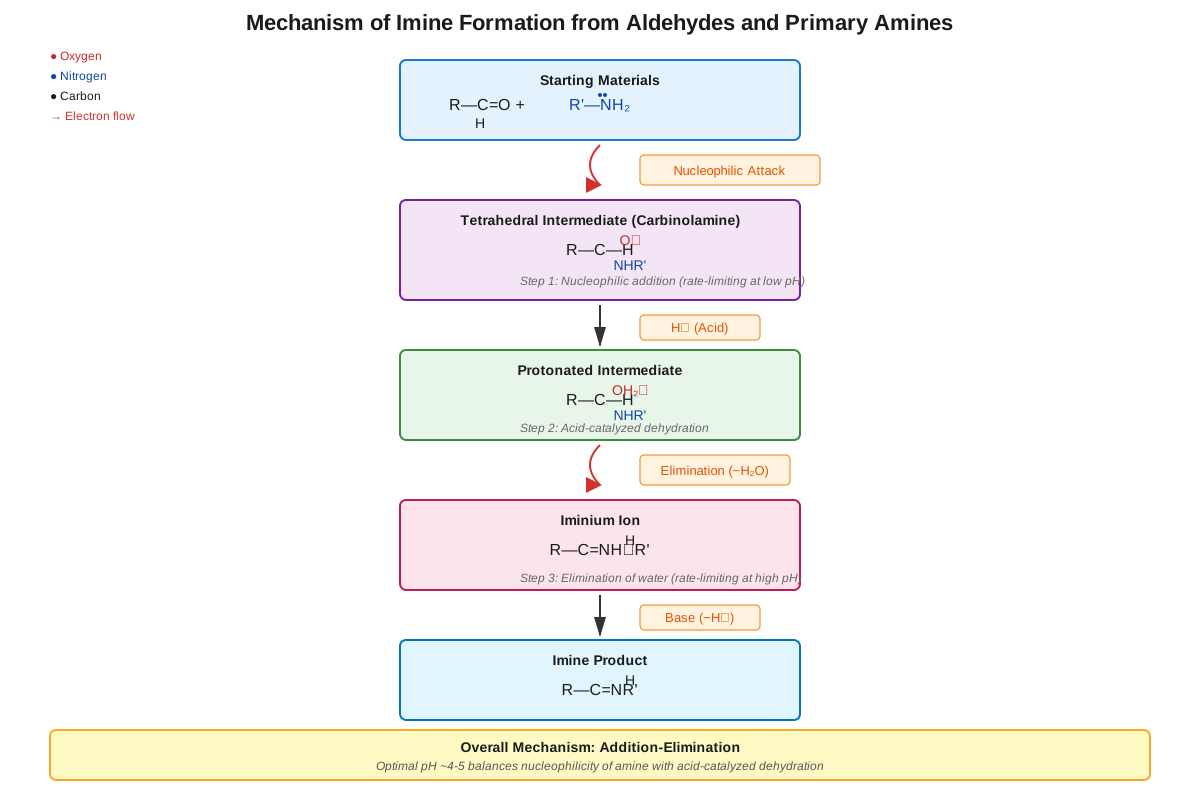
Imine formation proceeds through a nucleophilic addition-elimination mechanism involving several discrete steps. The reaction requires a primary amine (RNH₂) and a carbonyl compound (aldehyde or ketone), with acid catalysis playing a crucial role.
Step 1: Nucleophilic Addition
The amine nitrogen, acting as a nucleophile, attacks the electrophilic carbonyl carbon. The carbonyl π bond breaks, with electrons moving to oxygen, generating a tetrahedral intermediate with a negatively charged oxygen (alkoxide) and a positively charged nitrogen (ammonium).
Step 2: Proton Transfer
The alkoxide oxygen is protonated (by acid catalyst or by the ammonium group itself through intramolecular proton transfer), while the ammonium nitrogen is deprotonated. This produces a neutral tetrahedral intermediate called a carbinolamine or hemiaminal, containing both -OH and -NH- groups on the same carbon.
Step 3: Protonation of Hydroxyl Group
Under acidic conditions, the hydroxyl group is protonated to form a good leaving group (H₂O). This step is crucial because hydroxide would be a poor leaving group.
Step 4: Elimination
Water departs as a leaving group while a proton is removed from nitrogen, forming the C=N double bond of the imine product. This elimination step converts the sp³ carbon back to sp² hybridization.
The overall transformation is: R₂C=O + R'NH₂ → R₂C=NR' + H₂O
Mechanism of Enamine Formation
Enamine formation follows an identical initial pathway to imine formation but diverges after carbinolamine formation because secondary amines lack a hydrogen on nitrogen for the final elimination step.
Steps 1-3: Identical to imine formation—nucleophilic attack by secondary amine (R₂NH), tetrahedral intermediate formation, proton transfers to generate carbinolamine, and hydroxyl protonation.
Step 4: Alternative Elimination
Since the nitrogen lacks a hydrogen atom to lose, elimination cannot occur at nitrogen. Instead, a proton is removed from an α-carbon (a carbon adjacent to the original carbonyl carbon), and water departs. This generates a C=C double bond between the α-carbon and the carbonyl carbon, with the nitrogen attached to the α-carbon—the enamine structure.
The regioselectivity of enamine formation depends on which α-carbon bears hydrogens. If the carbonyl compound has α-hydrogens on both sides, the more substituted enamine typically predominates (following Zaitsev's rule), though steric factors from the secondary amine can influence this selectivity.
pH Dependence and Optimal Conditions
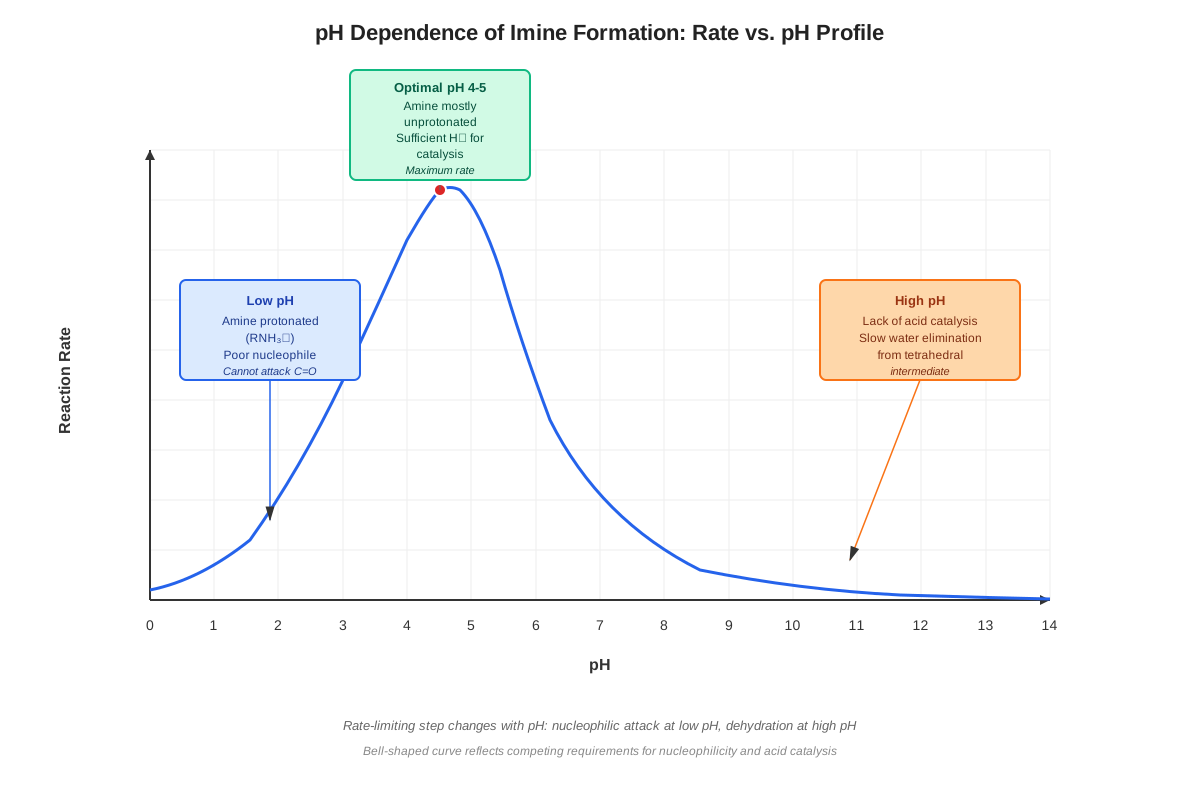
The formation of both imines and enamines exhibits strong pH dependence, with optimal yields occurring at mildly acidic pH (approximately 4-5). Understanding this pH profile is crucial for MCAT questions about reaction conditions.
At very low pH (strongly acidic), the amine becomes protonated (RNH₃⁺), eliminating its nucleophilicity and preventing the initial nucleophilic attack. The reaction rate drops dramatically because the amine cannot function as a nucleophile when it bears a positive charge.
At neutral to high pH (basic conditions), the amine remains unprotonated and nucleophilic, allowing carbinolamine formation. However, the elimination step becomes rate-limiting because the hydroxyl group is not protonated and thus is a poor leaving group. Additionally, the equilibrium may favor the carbinolamine intermediate rather than the imine/enamine product.
At optimal mildly acidic pH (4-5), sufficient acid is present to protonate the hydroxyl group (facilitating elimination) without protonating the amine nucleophile. This represents a compromise that maximizes both the nucleophilic attack rate and the elimination rate, producing the highest overall yield.
| pH Condition | Amine State | Hydroxyl State | Rate-Limiting Step | Product Yield |
|---|---|---|---|---|
| Very Low (<2) | Protonated (RNH₃⁺) | Protonated | Nucleophilic attack | Very Low |
| Optimal (4-5) | Mostly unprotonated | Easily protonated | Balanced | High |
| High (>7) | Unprotonated | Unprotonated | Elimination | Low-Moderate |
Hydrolysis of Imines and Enamines
Both imines and enamines undergo hydrolysis—the reverse of their formation—when treated with aqueous acid. This reversibility is mechanistically important and frequently tested on the MCAT.
Imine hydrolysis proceeds through the exact reverse mechanism: protonation of the imine nitrogen, nucleophilic attack by water, formation of the carbinolamine intermediate, and finally elimination of the amine to regenerate the carbonyl compound. The equilibrium position depends on reaction conditions, particularly water concentration and pH.
Enamine hydrolysis similarly regenerates the carbonyl compound and secondary amine. The C=C double bond is protonated, water attacks the resulting carbocation (or iminium ion), and the amine is eliminated. This reversibility explains why imines and enamines serve as protecting groups for carbonyl compounds in multi-step synthesis—they can be installed and removed under controlled conditions.
Comparison Table: Imines vs. Enamines
| Feature | Imines | Enamines |
|---|---|---|
| Amine reactant | Primary amine (RNH₂) | Secondary amine (R₂NH) |
| Key functional group | C=N double bond | C=C double bond with adjacent N |
| Alternative name | Schiff base | Vinyl amine |
| Nitrogen hybridization | sp² | sp³ |
| Resonance character | Limited | Significant (N lone pair → π system) |
| Reactive site | Electrophilic C=N carbon | Nucleophilic β-carbon |
| Geometric isomerism | E/Z possible | E/Z possible (at C=C) |
| Stability | Moderate (sensitive to hydrolysis) | Moderate (sensitive to hydrolysis) |
Concept Relationships
The chemistry of imines and enamines sits at the intersection of multiple fundamental Organic Chemistry concepts, creating a web of interconnected ideas essential for MCAT mastery.
Carbonyl reactivity → serves as the foundation → imine/enamine formation. The electrophilic carbonyl carbon's susceptibility to nucleophilic attack enables the initial step of both mechanisms. Understanding carbonyl polarization (Cδ+=Oδ-) predicts why amines attack the carbon rather than the oxygen.
Acid-base chemistry → controls → reaction rate and equilibrium position. Proton transfer steps occur throughout the mechanism, and pH determines whether the amine remains nucleophilic and whether the hydroxyl becomes a good leaving group. This connection explains why optimal pH is crucial.
Nucleophilic addition mechanisms → provide the template → for the addition phase. The same principles governing Grignard additions, hydride reductions, and cyanohydrin formation apply to amine additions—tetrahedral intermediate formation and subsequent proton transfers.
Leaving group ability → determines → elimination step feasibility. Water is an excellent leaving group when protonated (H₂O) but poor when deprotonated (OH⁻), explaining the pH dependence of the elimination step.
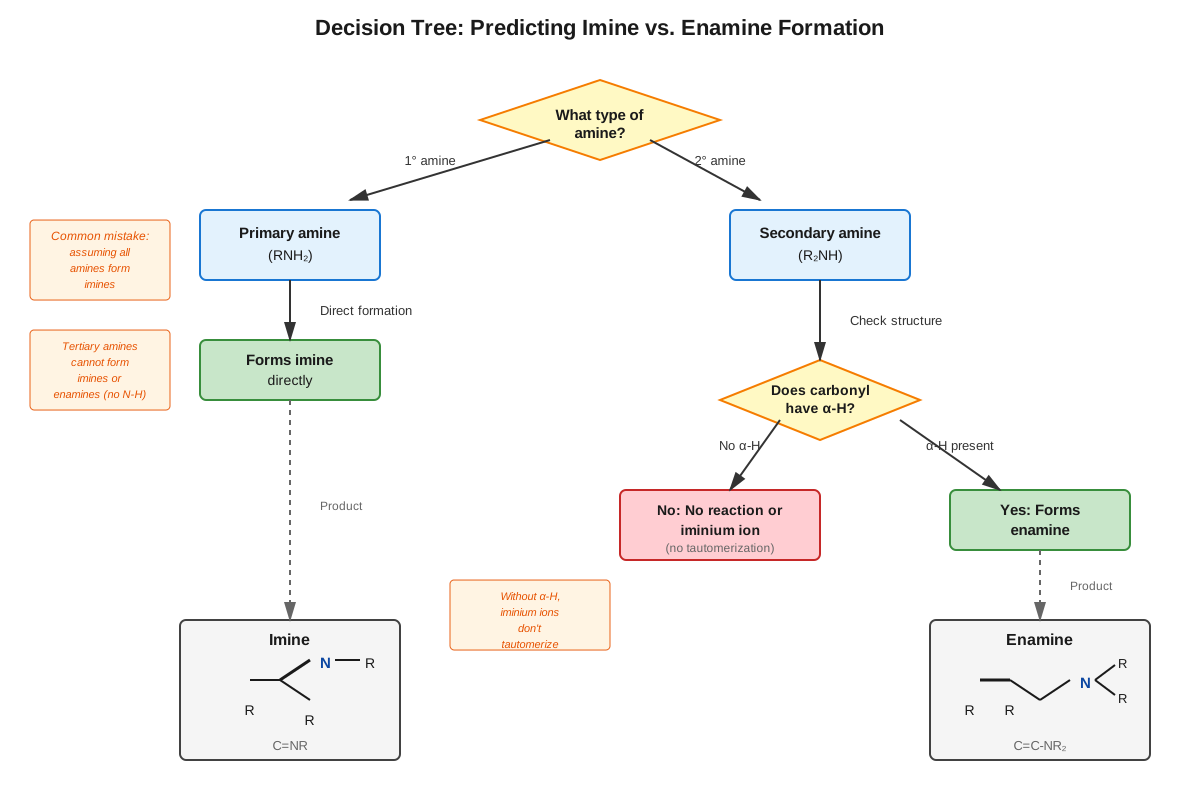
Imine formation → diverges from → enamine formation based on amine substitution. Primary amines have an N-H bond that can be broken during elimination, directing the reaction toward imines. Secondary amines lack this N-H bond, forcing elimination to occur at the α-carbon and producing enamines instead.
Resonance stabilization → enhances → enamine nucleophilicity. The nitrogen lone pair delocalizes into the π system, creating electron density at the β-carbon and making it reactive toward electrophiles—a property exploited in the Stork enamine synthesis.
Tautomerization → relates → enamine-imine interconversion. Under certain conditions, enamines can tautomerize to imines through proton transfer, similar to keto-enol tautomerization. This connection reinforces the relationship between these two functional groups.
Biochemical transformations → utilize → imine chemistry in enzyme mechanisms. Pyridoxal phosphate-dependent enzymes form Schiff base intermediates with amino acid substrates, demonstrating how imine formation enables biological catalysis. This connection bridges organic chemistry with biochemistry, a common MCAT integration point.
Quick check — test yourself on Imines and enamines so far.
Try Flashcards →High-Yield Facts
⭐ Imines form from primary amines and carbonyl compounds; enamines form from secondary amines and carbonyl compounds—the degree of amine substitution determines the product type.
⭐ Optimal pH for imine/enamine formation is approximately 4-5—mildly acidic conditions balance nucleophile availability with leaving group activation.
⭐ The carbinolamine (hemiaminal) intermediate is common to both imine and enamine formation—it contains both -OH and -NH- groups on the same carbon.
⭐ Imine formation is reversible through acid-catalyzed hydrolysis—adding water under acidic conditions regenerates the carbonyl compound and amine.
⭐ Enamines are nucleophilic at the β-carbon due to resonance—the nitrogen lone pair delocalizes into the π system, creating electron density at the carbon not attached to nitrogen.
- The mechanism proceeds through nucleophilic addition followed by elimination—never a direct substitution.
- Water is the leaving group in the elimination step—it must be protonated to depart efficiently.
- At very low pH, the amine is protonated and non-nucleophilic—this prevents the initial attack step.
- At high pH, the hydroxyl group is not protonated and is a poor leaving group—this slows the elimination step.
- Imines can exhibit E/Z geometric isomerism—when both carbon and nitrogen bear substituents.
- Pyridoxal phosphate (vitamin B6) forms Schiff bases with amino acids—this is a key biochemical application of imine chemistry.
- Secondary imines (N-substituted) are more stable than primary imines—the additional substituent provides steric and electronic stabilization.
- Enamine formation requires α-hydrogens on the carbonyl compound—without them, no elimination can occur to form the C=C bond.
- The nitrogen in imines is sp² hybridized; in enamines it is sp³ hybridized—this affects geometry and reactivity.
Common Misconceptions
Misconception: Imines and enamines form through direct substitution of the carbonyl oxygen with nitrogen.
Correction: Both form through addition-elimination mechanisms involving tetrahedral carbinolamine intermediates. The oxygen is not directly replaced; rather, nucleophilic addition occurs first, followed by water elimination.
Misconception: Tertiary amines can form enamines.
Correction: Tertiary amines cannot form enamines because they lack any N-H bonds and cannot form the initial carbinolamine intermediate. Only primary amines (forming imines) and secondary amines (forming enamines) react with carbonyl compounds to form these products.
Misconception: Imine formation is fastest at very low pH because acid catalyzes the reaction.
Correction: While acid catalysis is necessary for the elimination step, very low pH protonates the amine nucleophile (RNH₃⁺), preventing the initial nucleophilic attack. Optimal pH is mildly acidic (4-5), not strongly acidic.
Misconception: The nucleophilic site in enamines is the nitrogen atom.
Correction: Although nitrogen bears the lone pair, resonance delocalization makes the β-carbon (the carbon not attached to nitrogen) the primary nucleophilic site. The nitrogen lone pair delocalizes into the π system, creating electron density at the β-position.
Misconception: Imines are more stable than carbonyl compounds and do not hydrolyze easily.
Correction: Imines are generally less stable than carbonyl compounds and readily hydrolyze in aqueous acid to regenerate the carbonyl and amine. This reversibility is why imines serve as temporary protecting groups rather than permanent modifications.
Misconception: Enamine formation always produces a single regioisomer.
Correction: When a carbonyl compound has α-hydrogens on both sides, multiple enamine regioisomers can form. The more substituted enamine typically predominates (Zaitsev's rule), but steric factors from the secondary amine influence selectivity.
Misconception: The carbinolamine intermediate is the final product of the reaction.
Correction: The carbinolamine is an intermediate, not a product. Under the reaction conditions (mildly acidic), it undergoes elimination to form either an imine or enamine. Carbinolamines are generally unstable and not isolated.
Worked Examples
Example 1: Predicting Products and Mechanisms
Question: Cyclohexanone is treated with methylamine (CH₃NH₂) in the presence of a catalytic amount of acid. Draw the product and describe the mechanism.
Solution:
Step 1: Identify the reactants
- Carbonyl compound: cyclohexanone (a ketone)
- Amine: methylamine (a primary amine, RNH₂)
- Conditions: acid catalyst
Step 2: Predict the product type
Since methylamine is a primary amine, the product will be an imine (not an enamine).
Step 3: Mechanism
- Nucleophilic attack: The nitrogen lone pair of methylamine attacks the electrophilic carbonyl carbon of cyclohexanone. The π bond breaks, electrons move to oxygen, forming a tetrahedral intermediate with O⁻ and NH₂CH₃⁺.
- Proton transfer: The alkoxide oxygen is protonated (by acid or by the ammonium group), and the ammonium nitrogen is deprotonated, forming the neutral carbinolamine intermediate with both -OH and -NHCH₃ groups.
- Hydroxyl protonation: The -OH group is protonated by the acid catalyst to form -OH₂⁺, an excellent leaving group.
- Elimination: Water departs as the leaving group while a proton is removed from nitrogen, forming the C=N double bond.
Product: N-methylcyclohexanimine (a cyclic imine with the structure: cyclohexane ring with C=NCH₃ replacing the C=O)
Key reasoning: Primary amine → imine product. The mechanism follows addition-elimination through a carbinolamine intermediate. Acid catalysis is essential for protonating the hydroxyl group to facilitate elimination.
Example 2: pH Effects on Reaction Rate
Question: An experiment measures the rate of imine formation between benzaldehyde and aniline at various pH values. The rate is very slow at pH 2, maximal at pH 4.5, and moderate at pH 8. Explain these observations mechanistically.
Solution:
At pH 2 (very slow rate):
At this strongly acidic pH, aniline (a weak base with pKₐ of conjugate acid ≈ 4.6) exists predominantly in its protonated form (anilinium ion, C₆H₅NH₃⁺). The protonated amine has no lone pair available for nucleophilic attack on the carbonyl carbon. The rate-limiting step becomes the initial nucleophilic attack because the concentration of free, unprotonated aniline is extremely low. Even though the elimination step would be fast (due to easy hydroxyl protonation), the reaction cannot proceed past the first step.
At pH 4.5 (maximal rate):
This pH is near the pKₐ of anilinium ion, meaning a significant fraction of aniline remains unprotonated and nucleophilic. Simultaneously, sufficient acid is present to protonate the hydroxyl group in the carbinolamine intermediate, facilitating the elimination step. This represents the optimal balance: enough free amine for nucleophilic attack and enough acid for leaving group activation. Both the addition and elimination steps proceed efficiently.
At pH 8 (moderate rate):
At this mildly basic pH, essentially all aniline is unprotonated and nucleophilic, so the initial attack proceeds readily. However, the elimination step becomes rate-limiting because insufficient acid is present to protonate the hydroxyl group efficiently. The carbinolamine intermediate accumulates, and the conversion to imine product is slow. Additionally, the equilibrium may favor the carbinolamine over the imine at higher pH.
Conclusion: The pH-rate profile reflects the competing requirements for an unprotonated nucleophile (favored at higher pH) and a protonated leaving group (favored at lower pH). The optimal pH represents a compromise between these opposing needs.
MCAT Connection: This example demonstrates how mechanistic understanding predicts experimental observations—a common question type where students must explain pH effects, temperature effects, or solvent effects based on mechanism knowledge.
Exam Strategy
When approaching imines and enamines MCAT questions, employ a systematic strategy that leverages mechanistic understanding and pattern recognition.
Trigger words and phrases to identify these questions:
- "Schiff base" (always refers to imines)
- "Reaction with primary/secondary amine"
- "Carbinolamine intermediate"
- "Pyridoxal phosphate" or "vitamin B6" (biochemical imine formation)
- "pH optimum" or "acid-catalyzed"
- "Nucleophilic carbon" in context of nitrogen-containing compounds (suggests enamine)
Systematic approach for product prediction:
- Identify the amine type first: Primary amine → imine; secondary amine → enamine; tertiary amine → no reaction. This single determination eliminates wrong answer choices immediately.
- Check for α-hydrogens: If the question involves a secondary amine but the carbonyl compound lacks α-hydrogens, no enamine can form. This is a common trap.
- Consider pH conditions: If pH is mentioned, evaluate whether it's optimal (4-5), too low (amine protonated), or too high (poor leaving group). This helps predict reaction rate or yield.
- Draw the carbinolamine intermediate: For mechanism questions, explicitly drawing this intermediate helps track the subsequent elimination step and prevents errors.
Process-of-elimination strategies:
- Eliminate any answer showing direct oxygen-to-nitrogen substitution without intermediate formation—this mechanism is incorrect.
- Eliminate products that would require tertiary amine reactants—these cannot form imines or enamines.
- For enamine questions, eliminate structures where the nitrogen is attached to the carbonyl carbon—this would be an imine structure, not an enamine.
- If the question asks about nucleophilic reactivity, eliminate choices suggesting the nitrogen in enamines is the nucleophilic site—it's the β-carbon.
Time allocation:
Discrete questions on imine/enamine formation should take 60-90 seconds: 20 seconds to identify amine type and predict product type, 30 seconds to draw or visualize the product, 10-20 seconds to verify and select the answer. Passage-based questions involving these concepts typically require 90-120 seconds: additional time is needed to extract relevant information from the passage and connect it to the question stem.
Red flags indicating a trap answer:
- Products showing impossible valence (e.g., pentavalent nitrogen)
- Mechanisms skipping the carbinolamine intermediate
- Claims that tertiary amines form these products
- Statements that imine formation is irreversible
- Suggestions that very low pH is optimal
Memory Techniques
Mnemonic for amine type and product:
"Primary Produces I-mine, Secondary Synthesizes E-namine"
The alliteration helps remember: Primary → Imine; Secondary → Enamine
Mnemonic for mechanism steps:
"NAPE" - Nucleophilic attack, Addition (carbinolamine formation), Protonation, Elimination
This acronym captures the four major phases of the mechanism in order.
pH optimum visualization:
Picture a bell curve centered at pH 4-5. Below the curve (low pH), draw a protonated amine with a (+) charge and a sad face (can't react). Above the curve (high pH), draw an OH⁻ with a frown (can't leave). At the peak, draw a happy amine attacking a carbonyl with H₂O leaving—this visual reinforces the optimal pH concept.
Enamine nucleophilicity:
"Beta is Better for Bonding"
The β-carbon (not the nitrogen) is the nucleophilic site in enamines. The alliteration helps recall that β-carbon reactivity is the key feature.
Carbinolamine structure:
Remember "carbin-ol-amine" literally describes the structure: "carbin" (carbon), "ol" (alcohol, -OH), "amine" (-NH-). The name tells you it has both functional groups on the same carbon.
Reversibility reminder:
"Water In, Water Out"
Water is eliminated during imine/enamine formation; water is added during hydrolysis. This simple phrase captures the reversibility and the role of water in both directions.
Distinguishing imine vs. enamine structure:
Imine has "I" → looks like a straight line → C=N double bond (linear feature)
Enamine has "E" → looks like three lines → C=C-N (three atoms in sequence)
Summary
Imines and enamines represent nitrogen-containing derivatives of carbonyl compounds formed through nucleophilic addition-elimination mechanisms. Imines, containing C=N double bonds, arise from primary amine reactions with aldehydes or ketones, while enamines, featuring C=C-N structures, form from secondary amine reactions. Both transformations proceed through a common carbinolamine intermediate and require mildly acidic conditions (pH 4-5) for optimal yields—a balance between maintaining amine nucleophilicity and activating the hydroxyl leaving group. The mechanisms involve nucleophilic attack, tetrahedral intermediate formation, proton transfers, and water elimination. Enamines exhibit unique nucleophilicity at the β-carbon due to resonance delocalization of the nitrogen lone pair. Both functional groups undergo acid-catalyzed hydrolysis to regenerate starting materials, demonstrating reversibility. For MCAT success, students must predict products based on amine substitution, explain pH effects mechanistically, recognize biochemical applications (particularly pyridoxal phosphate chemistry), and avoid common misconceptions about mechanism and reactivity. Mastery requires connecting these concepts to broader carbonyl chemistry principles and understanding their role in both synthetic and biological contexts.
Key Takeaways
- Primary amines form imines (C=N); secondary amines form enamines (C=C-N)—amine substitution determines product type
- Optimal pH is 4-5 for both reactions—balancing nucleophile availability with leaving group activation
- Carbinolamine intermediates are common to both mechanisms—containing both -OH and -NH- groups on the same carbon
- Enamines are nucleophilic at the β-carbon, not at nitrogen—due to resonance delocalization
- Both reactions are reversible through acid-catalyzed hydrolysis—adding water regenerates carbonyl compounds
- Mechanism follows addition-elimination, never direct substitution—tetrahedral intermediate formation is essential
- Biochemical relevance includes pyridoxal phosphate (vitamin B6) forming Schiff bases—connecting organic chemistry to metabolism
Related Topics
Carbonyl reduction reactions: Understanding how hydride nucleophiles (NaBH₄, LiAlH₄) attack carbonyl compounds provides mechanistic parallels to amine additions and helps distinguish between different nucleophile types.
Acetal and ketal formation: These reactions also proceed through addition-elimination mechanisms with tetrahedral intermediates, offering direct comparison to imine/enamine formation and reinforcing carbonyl reactivity patterns.
Amino acid chemistry and metabolism: Pyridoxal phosphate-dependent enzymes utilize imine formation extensively, making this topic essential for understanding transamination, decarboxylation, and racemization reactions in biochemistry.
Enolate chemistry: Enamines serve as synthetic equivalents to enolates, providing an alternative approach to α-carbon alkylation. Understanding both mechanisms enhances synthesis problem-solving skills.
Protecting group strategies: Imines and enamines can temporarily mask carbonyl groups during multi-step synthesis, connecting to broader concepts of functional group interconversion and synthetic planning.
Practice CTA
Now that you've mastered the core concepts of imines and enamines, challenge yourself with practice questions to solidify your understanding. Focus on mechanism-based problems, product prediction under varying conditions, and pH-dependent scenarios. Work through biochemical applications involving pyridoxal phosphate to integrate organic chemistry with metabolism. Use flashcards to drill the key distinctions between imines and enamines, optimal reaction conditions, and common misconceptions. Remember: mechanistic understanding, not memorization, is the key to MCAT success with this topic. Your ability to predict products, explain pH effects, and recognize these functional groups in complex passages will directly translate to points on test day. Keep practicing, and you'll develop the pattern recognition and problem-solving speed that distinguishes top scorers!
Sign up free to keep reading
Create a free AnvayaPrep account to finish this MCAT guide on Imines and enamines — plus flashcards and practice questions.