Overview
Nucleophilic acyl substitution represents one of the most fundamental reaction mechanisms in Organic Chemistry, serving as the cornerstone for understanding the reactivity of carboxylic acid derivatives. This reaction type involves the replacement of a leaving group attached to a carbonyl carbon with a nucleophile, proceeding through a characteristic tetrahedral intermediate. Unlike simple nucleophilic substitution reactions (SN1 and SN2) that occur at saturated carbon centers, nucleophilic acyl substitution occurs specifically at the electrophilic carbonyl carbon of acyl compounds, making it a distinct and high-yield mechanism for the MCAT.
For the MCAT, mastery of nucleophilic acyl substitution is essential because it explains the interconversion of carboxylic acid derivatives—acid chlorides, anhydrides, esters, and amides—which appear frequently in both discrete questions and passage-based scenarios. The MCAT tests not only the mechanistic understanding of these reactions but also the ability to predict relative reactivity, identify appropriate reagents, and recognize biological applications such as peptide bond formation and ester hydrolysis in metabolic pathways. This topic bridges pure organic chemistry with biochemistry, making it particularly valuable for the Chemical and Physical Foundations of Biological Systems section.
Within the broader context of Carbonyl Chemistry, nucleophilic acyl substitution complements nucleophilic addition reactions (aldehydes and ketones) and represents a more complex reactivity pattern due to the presence of a leaving group. Understanding the electronic and steric factors that govern these reactions, along with the reactivity hierarchy of carboxylic acid derivatives, provides students with a powerful framework for predicting outcomes and solving multistep synthesis problems that commonly appear on standardized examinations.
Learning Objectives
- [ ] Define nucleophilic acyl substitution using accurate Organic Chemistry terminology
- [ ] Explain why nucleophilic acyl substitution matters for the MCAT
- [ ] Apply nucleophilic acyl substitution to exam-style questions
- [ ] Identify common mistakes related to nucleophilic acyl substitution
- [ ] Connect nucleophilic acyl substitution to related Organic Chemistry concepts
- [ ] Predict the relative reactivity of carboxylic acid derivatives based on leaving group ability and resonance stabilization
- [ ] Draw complete mechanisms for nucleophilic acyl substitution reactions including tetrahedral intermediate formation
- [ ] Recognize the conditions (acidic vs. basic) that favor different nucleophilic acyl substitution pathways
Prerequisites
- Carbonyl group structure and properties: Understanding the polarization of the C=O bond and electrophilicity of the carbonyl carbon is essential for predicting nucleophilic attack
- Resonance theory: Required to explain the stability differences among carboxylic acid derivatives and predict reactivity trends
- Acid-base chemistry: Necessary for understanding protonation/deprotonation steps in mechanisms and the role of catalysts
- Leaving group ability: Knowledge of what makes a good leaving group (weak base, stable anion) directly determines reaction feasibility
- Basic nucleophile properties: Familiarity with nucleophilicity trends helps predict reaction rates and outcomes
Why This Topic Matters
Clinical and Real-World Significance
Nucleophilic acyl substitution reactions are ubiquitous in biological systems and pharmaceutical chemistry. The formation and hydrolysis of ester bonds occur constantly in lipid metabolism, including the breakdown of triglycerides by lipases and the synthesis of phospholipids. Peptide bond formation during protein synthesis represents a specialized nucleophilic acyl substitution where the amino group of one amino acid attacks the activated carboxyl group of another. Many drugs, including aspirin (acetylsalicylic acid), function through nucleophilic acyl substitution—aspirin acetylates serine residues in cyclooxygenase enzymes, irreversibly inhibiting prostaglandin synthesis. Understanding these mechanisms provides insight into drug design, metabolism, and the chemical basis of biological processes.
MCAT Exam Statistics
Nucleophilic acyl substitution appears in approximately 3-5 questions per MCAT administration, representing roughly 5-8% of the Organic Chemistry content. Questions typically appear in three formats: (1) discrete questions testing mechanism knowledge and reactivity predictions, (2) passage-based questions involving synthetic schemes or metabolic pathways, and (3) integrated questions connecting organic mechanisms to biochemical processes. The AAMC has consistently included questions requiring students to identify products of ester hydrolysis, predict the outcome of reactions between acid chlorides and various nucleophiles, and explain the relative reactivity of carboxylic acid derivatives.
Common Exam Presentations
On the MCAT, this topic frequently appears in passages describing peptide synthesis, lipid biochemistry, or pharmaceutical mechanisms. Students may encounter reaction schemes showing the conversion of one carboxylic acid derivative to another and must identify reagents or predict products. Questions often test the understanding that reactions proceed "downhill" in reactivity (from more reactive to less reactive derivatives) without additional activation. Experimental passages may present data on reaction rates for different substrates, requiring interpretation based on electronic and steric effects. Integration with biochemistry appears when passages discuss enzyme mechanisms involving serine proteases or the role of coenzyme A in acyl transfer reactions.
Core Concepts
Definition and General Mechanism
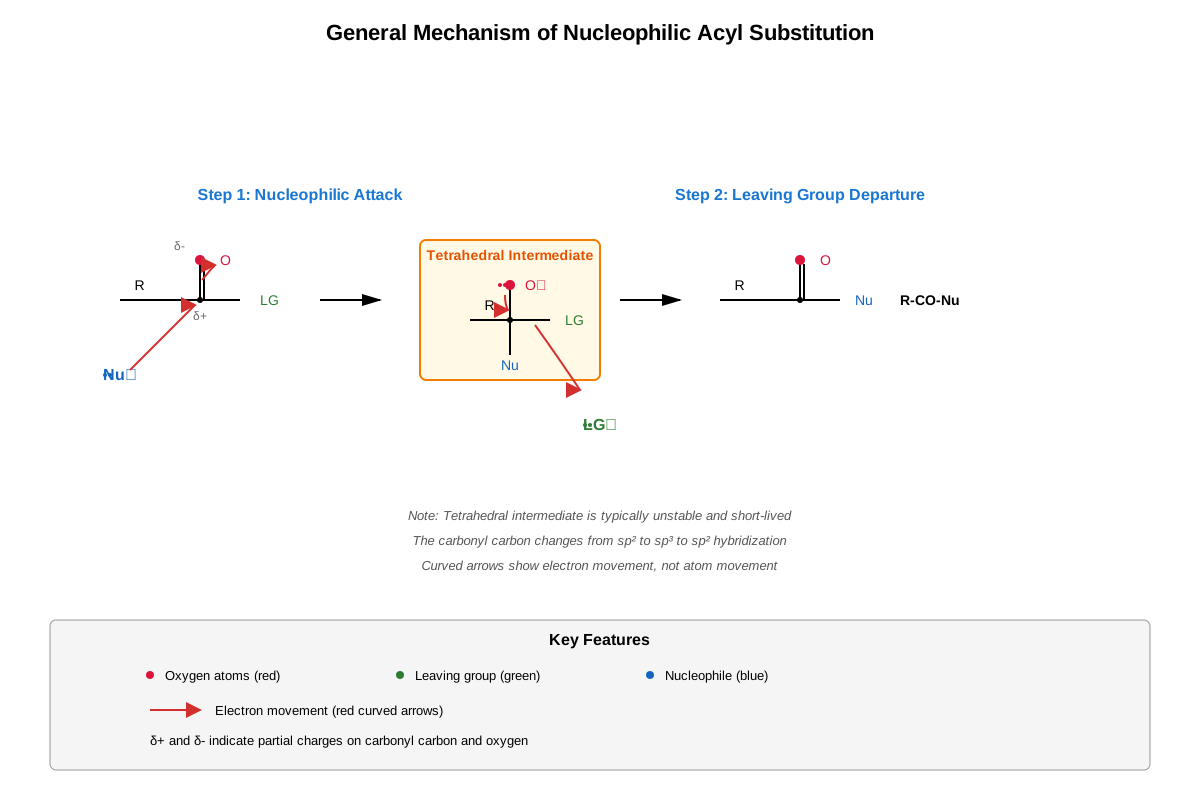
Nucleophilic acyl substitution is a two-step reaction mechanism in which a nucleophile attacks the electrophilic carbonyl carbon of an acyl compound (carboxylic acid derivative), forming a tetrahedral intermediate, followed by elimination of a leaving group to regenerate the carbonyl group. The general mechanism proceeds as follows:
- Nucleophilic attack: The nucleophile donates an electron pair to the electrophilic carbonyl carbon, forming a new σ bond while the π bond of the carbonyl breaks, with electrons moving to the oxygen atom
- Tetrahedral intermediate formation: A sp³-hybridized tetrahedral intermediate forms with a negatively charged oxygen (alkoxide)
- Leaving group departure: The carbonyl π bond reforms as the leaving group departs with its bonding electrons, restoring the sp² hybridization of the carbonyl carbon
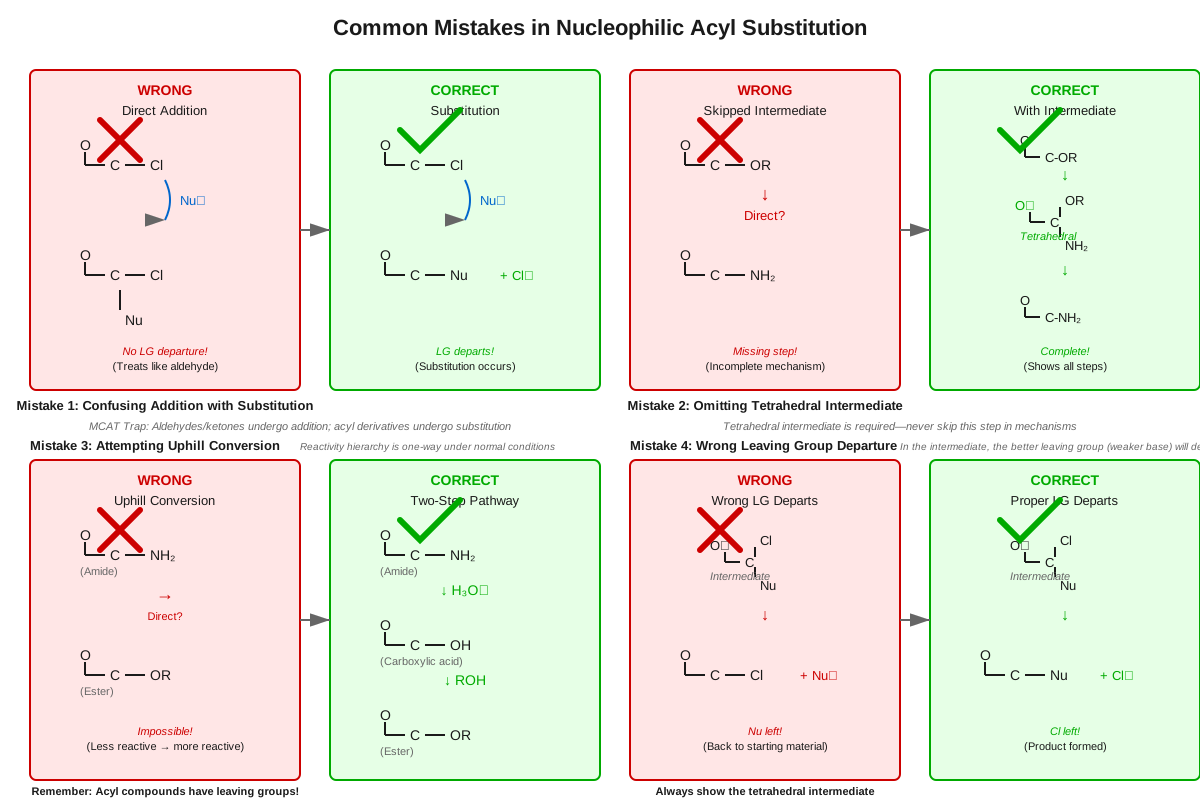
The key distinguishing feature from nucleophilic addition (aldehydes/ketones) is that acyl compounds possess a leaving group attached to the carbonyl carbon, enabling substitution rather than simple addition.
Carboxylic Acid Derivatives and Reactivity Hierarchy
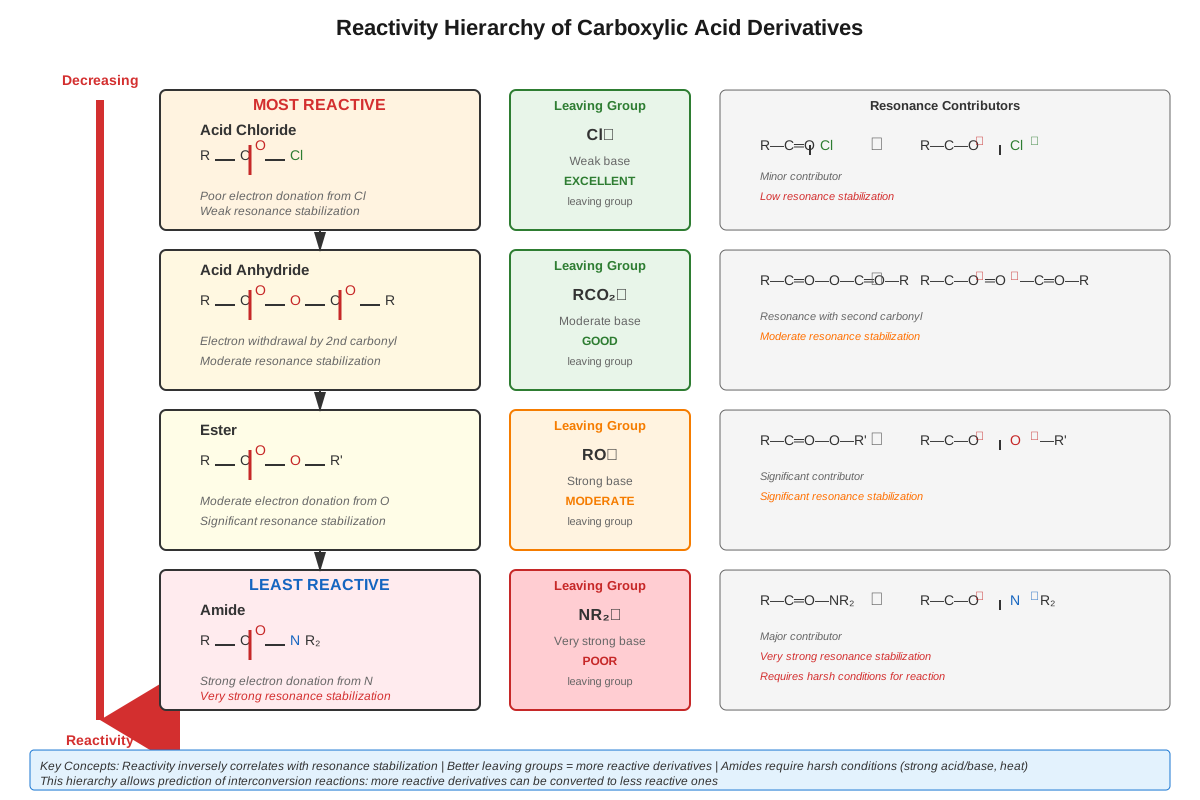
The four major carboxylic acid derivatives, in order of decreasing reactivity toward nucleophilic acyl substitution, are:
| Derivative | Structure | Relative Reactivity | Leaving Group |
|---|---|---|---|
| Acid chloride | RCOCl | Highest (most reactive) | Cl⁻ (good leaving group) |
| Acid anhydride | (RCO)₂O | High | RCOO⁻ (carboxylate, good leaving group) |
| Ester | RCOOR' | Moderate | R'O⁻ (alkoxide, moderate leaving group) |
| Amide | RCONH₂ | Lowest (least reactive) | NH₂⁻ (poor leaving group) |
This reactivity order is determined by two factors:
Electronic effects: The leaving group's ability to donate electrons through resonance affects the electrophilicity of the carbonyl carbon. Chlorine is weakly electron-donating through resonance (poor orbital overlap), making acid chlorides highly electrophilic. Nitrogen in amides is strongly electron-donating through resonance (good orbital overlap), significantly reducing carbonyl electrophilicity and making amides the least reactive.
Leaving group ability: Better leaving groups (more stable after departure) facilitate the second step of the mechanism. Chloride ion is a weak base and excellent leaving group. Amide ion (NH₂⁻) is a strong base and terrible leaving group, making amides resistant to nucleophilic acyl substitution under normal conditions.
Reaction Directionality
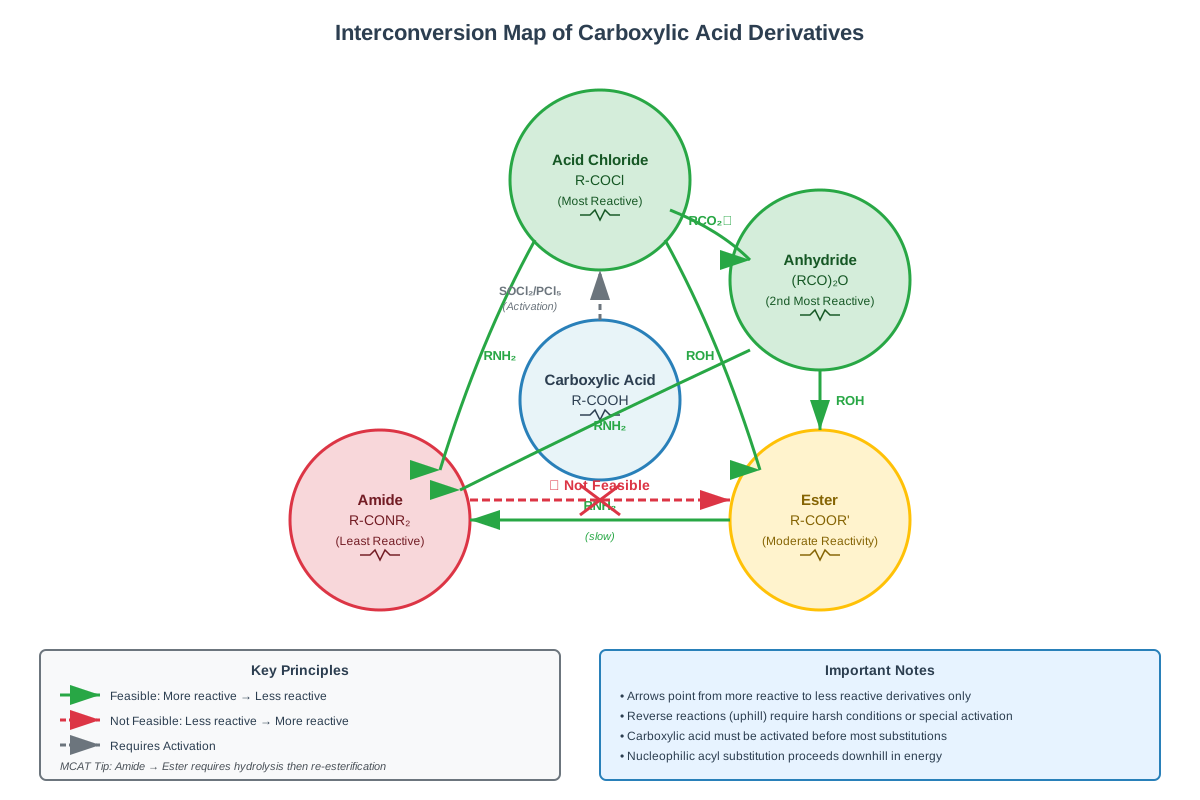
A crucial principle for MCAT success: nucleophilic acyl substitution reactions proceed spontaneously "downhill" in the reactivity series. An acid chloride can be converted to an anhydride, ester, or amide simply by treating it with the appropriate nucleophile. However, converting an amide to an ester requires harsh conditions (strong acid or base with heat) because the reaction is thermodynamically unfavorable and kinetically slow.
This directionality explains why:
- Acid chlorides are excellent acylating agents (can acylate almost any nucleophile)
- Esters can be converted to amides but not easily to acid chlorides
- Amides require hydrolysis (acid or base catalyzed) rather than direct substitution for most transformations
Specific Reaction Types
Hydrolysis Reactions
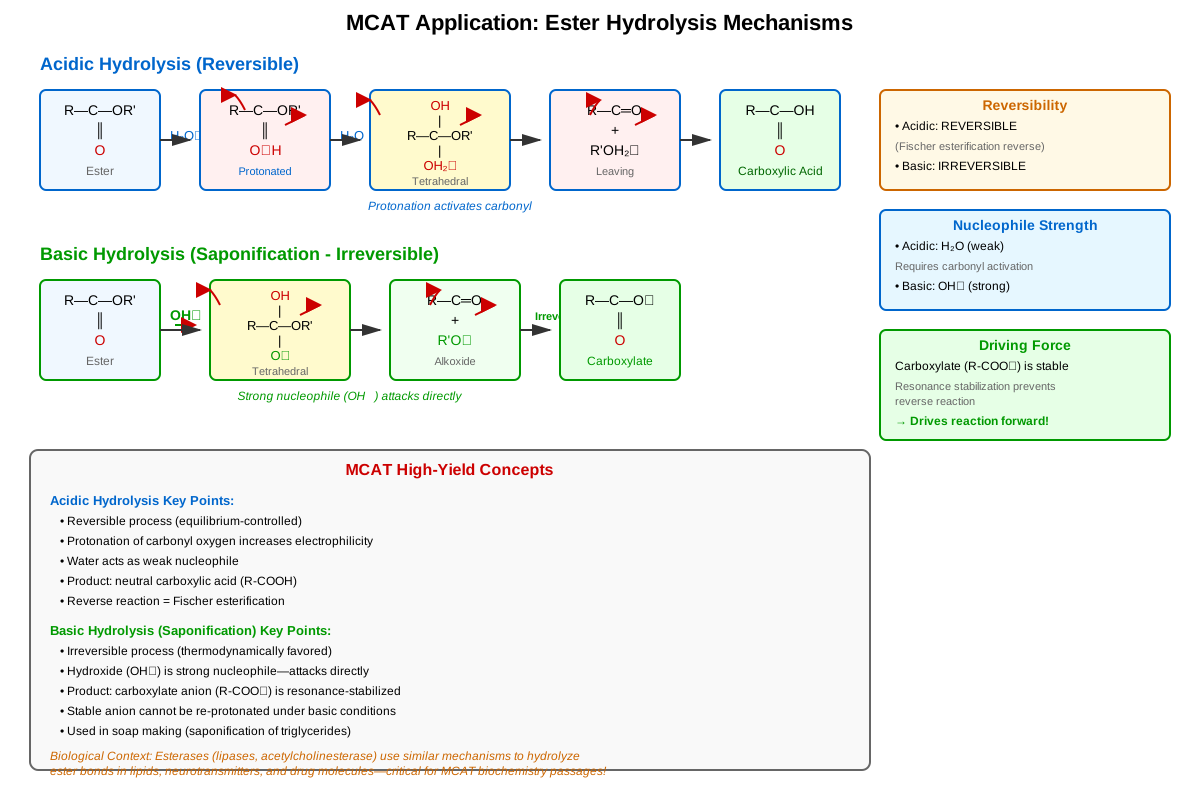
Hydrolysis involves water as the nucleophile and converts carboxylic acid derivatives to carboxylic acids. Two pathways exist:
Acid-catalyzed hydrolysis:
- Protonation of the carbonyl oxygen increases electrophilicity
- Water attacks the activated carbonyl
- Produces carboxylic acid directly
- Reversible for esters (Fischer esterification equilibrium)
Base-promoted hydrolysis (saponification):
- Hydroxide ion acts as the nucleophile
- Produces carboxylate salt (must acidify to obtain carboxylic acid)
- Irreversible because carboxylate is stabilized and cannot be attacked by alcohols
- Faster than acid-catalyzed for most derivatives
Aminolysis
Reaction with ammonia or amines converts carboxylic acid derivatives to amides. Acid chlorides and anhydrides react readily with amines at room temperature. Esters require heating and produce alcohols as byproducts. This reaction type is fundamental to peptide bond formation in biochemistry, where the amino group of one amino acid attacks the activated carboxyl group of another.
Alcoholysis
Reaction with alcohols converts more reactive derivatives to esters. Acid chlorides react vigorously with alcohols (often requiring pyridine to neutralize HCl). Anhydrides react smoothly with alcohols. The Fischer esterification (carboxylic acid + alcohol under acid catalysis) technically proceeds through a different mechanism but achieves the same transformation.
Resonance Stabilization and Reactivity
The extent of resonance delocalization between the leaving group and the carbonyl group inversely correlates with reactivity. In amides, the nitrogen lone pair strongly overlaps with the carbonyl π system, creating substantial resonance stabilization (approximately 20 kcal/mol). This delocalization:
- Reduces the partial positive charge on the carbonyl carbon
- Gives the C-N bond partial double bond character (restricted rotation)
- Raises the activation energy for nucleophilic attack
In acid chlorides, chlorine's lone pairs are in 3p orbitals that overlap poorly with carbon's 2p orbital, resulting in minimal resonance stabilization and maximum electrophilicity.
Steric Effects
While electronic effects dominate reactivity trends, steric hindrance around the carbonyl carbon affects reaction rates. Bulky substituents on the acyl group or the nucleophile slow the reaction by impeding approach to the electrophilic carbon and destabilizing the crowded tetrahedral intermediate. This effect is most pronounced with tertiary nucleophiles or highly branched acyl groups.
Concept Relationships
The concepts within nucleophilic acyl substitution are hierarchically organized: the general mechanism (nucleophilic attack → tetrahedral intermediate → leaving group departure) serves as the foundation for understanding all specific reactions. This mechanism depends on carbonyl electrophilicity, which is modulated by resonance effects from the leaving group, creating the reactivity hierarchy. The reactivity hierarchy determines reaction directionality, explaining why certain transformations occur spontaneously while others require activation.
Connections to prerequisite knowledge include: acid-base chemistry determines protonation states in mechanisms and explains why base-promoted hydrolysis is irreversible (carboxylate formation); leaving group ability from general substitution chemistry directly applies to predicting which derivatives undergo substitution most readily; resonance theory explains both the stability of products and the reactivity of starting materials.
Relationships to broader Organic Chemistry concepts: nucleophilic acyl substitution contrasts with nucleophilic addition (aldehydes/ketones lack leaving groups) and nucleophilic substitution at saturated carbons (SN1/SN2 mechanisms differ fundamentally). This topic connects forward to biochemistry through peptide bond formation/hydrolysis, lipid metabolism (ester hydrolysis), and enzyme mechanisms (serine proteases use nucleophilic acyl substitution). In synthesis planning, understanding this mechanism enables retrosynthetic analysis of complex molecules containing multiple functional groups.
Conceptual flow: Carbonyl structure → Electrophilicity → Nucleophilic attack → Tetrahedral intermediate → Leaving group ability → Product formation → Reactivity predictions → Synthetic applications
Quick check — test yourself on Nucleophilic acyl substitution so far.
Try Flashcards →High-Yield Facts
⭐ Reactivity order: Acid chlorides > Anhydrides > Esters > Amides (from most to least reactive toward nucleophilic acyl substitution)
⭐ Reactions proceed "downhill": Carboxylic acid derivatives can be converted to less reactive derivatives without additional activation, but not vice versa
⭐ Tetrahedral intermediate: All nucleophilic acyl substitution reactions proceed through a sp³-hybridized tetrahedral intermediate with an alkoxide oxygen
⭐ Base-promoted hydrolysis is irreversible: Saponification produces carboxylate salts that cannot undergo nucleophilic attack, making the reaction irreversible
⭐ Amide resonance: The C-N bond in amides has significant double bond character (~40%) due to resonance, causing restricted rotation and reduced reactivity
- Acid chlorides are the most reactive because chlorine is a weak resonance donor and excellent leaving group
- Acid catalysis increases carbonyl electrophilicity by protonating the carbonyl oxygen
- Esters undergo acid-catalyzed hydrolysis reversibly (Fischer esterification equilibrium)
- Amides require harsh conditions (6M HCl or NaOH with heat) for hydrolysis due to poor leaving group ability and resonance stabilization
- Pyridine is commonly used with acid chlorides to neutralize HCl produced during reactions with alcohols or amines
- The rate-determining step is typically nucleophilic attack on the carbonyl carbon (formation of tetrahedral intermediate)
Common Misconceptions
Misconception: Nucleophilic acyl substitution and SN2 substitution are the same mechanism because both involve nucleophilic attack and leaving group departure.
Correction: These are fundamentally different mechanisms. SN2 occurs at saturated (sp³) carbons in a single concerted step with backside attack and inversion of configuration. Nucleophilic acyl substitution occurs at carbonyl (sp²) carbons through a two-step mechanism with a tetrahedral intermediate, and no stereochemistry is involved at the carbonyl carbon.
Misconception: Amides are unreactive because the nitrogen is a poor nucleophile.
Correction: Amides are unreactive toward nucleophilic acyl substitution because they are the substrates (electrophiles), not nucleophiles. Their low reactivity stems from strong resonance stabilization that reduces carbonyl electrophilicity and the fact that NH₂⁻ is an extremely poor leaving group (strong base).
Misconception: Any carboxylic acid derivative can be directly converted to any other derivative by choosing the right nucleophile.
Correction: Conversions only proceed spontaneously "downhill" in reactivity. Converting a less reactive derivative (like an ester) to a more reactive one (like an acid chloride) requires special reagents like thionyl chloride (SOCl₂) or oxalyl chloride, not simple nucleophilic substitution.
Misconception: The carbonyl oxygen becomes protonated in base-promoted hydrolysis.
Correction: In base-promoted mechanisms, the carbonyl oxygen is not protonated—it becomes negatively charged (alkoxide) after nucleophilic attack. Protonation of the carbonyl oxygen only occurs in acid-catalyzed mechanisms to activate the carbonyl toward nucleophilic attack.
Misconception: The tetrahedral intermediate is a transition state.
Correction: The tetrahedral intermediate is an actual intermediate (local energy minimum) that briefly exists during the reaction, not a transition state (energy maximum). The reaction has two transition states: one for nucleophilic attack and one for leaving group departure, with the tetrahedral intermediate between them.
Misconception: Ester hydrolysis always produces an alcohol and carboxylic acid.
Correction: The products depend on conditions. Acid-catalyzed hydrolysis produces carboxylic acid and alcohol. Base-promoted hydrolysis (saponification) produces carboxylate salt and alcohol; acidification is required afterward to obtain the carboxylic acid.
Worked Examples
Example 1: Predicting Reaction Products and Mechanisms
Question: Acetyl chloride (CH₃COCl) is treated with excess methylamine (CH₃NH₂). Draw the product and explain the mechanism.
Solution:
Step 1 - Identify the reaction type: This is a nucleophilic acyl substitution where an amine (nucleophile) reacts with an acid chloride (highly reactive acyl compound).
Step 2 - Predict the product: The chlorine leaving group will be replaced by the methylamino group, forming N-methylacetamide (CH₃CONHCH₃). Additionally, one equivalent of methylamine will be protonated by the HCl produced, forming methylammonium chloride (CH₃NH₃⁺Cl⁻).
Step 3 - Mechanism:
- The lone pair on the nitrogen of methylamine attacks the electrophilic carbonyl carbon of acetyl chloride
- The carbonyl π bond breaks, electrons move to oxygen, forming a tetrahedral intermediate with O⁻ and a positively charged nitrogen (CH₃CO(O⁻)(NHC⁺H₃)Cl)
- The nitrogen is deprotonated (by another equivalent of methylamine or the alkoxide oxygen)
- The carbonyl reforms as chloride ion departs as the leaving group
- Final products: CH₃CONHCH₃ + CH₃NH₃⁺Cl⁻
Key insight: Two equivalents of amine are required—one acts as the nucleophile, and one acts as a base to neutralize the HCl produced. This is why excess amine is specified in the problem.
Connection to learning objectives: This example demonstrates applying nucleophilic acyl substitution to predict products (Learning Objective 3) and illustrates the high reactivity of acid chlorides in the reactivity hierarchy (Learning Objective 6).
Example 2: Comparing Reaction Rates
Question: Rank the following compounds in order of increasing rate of reaction with methanol (CH₃OH): (A) acetamide, (B) acetic anhydride, (C) methyl acetate, (D) acetyl chloride.
Solution:
Step 1 - Identify the reaction: Each compound would undergo nucleophilic acyl substitution with methanol (alcoholysis), converting to methyl acetate.
Step 2 - Apply the reactivity hierarchy:
- Acetyl chloride (D) - most reactive (best leaving group, minimal resonance stabilization)
- Acetic anhydride (B) - second most reactive (good leaving group)
- Methyl acetate (C) - moderate reactivity (moderate leaving group)
- Acetamide (A) - least reactive (poor leaving group, strong resonance stabilization)
Step 3 - Answer: Increasing rate order: A < C < B < D (acetamide < methyl acetate < acetic anhydride < acetyl chloride)
Reasoning: Acetyl chloride reacts most rapidly because Cl⁻ is an excellent leaving group and chlorine provides minimal resonance stabilization to the carbonyl. Acetamide reacts most slowly because NH₂⁻ is a terrible leaving group (strong base) and nitrogen strongly donates electrons through resonance, reducing carbonyl electrophilicity. Note that methyl acetate would actually be the product of the reaction with acetyl chloride, anhydride, or acetamide, so those reactions would stop at the ester stage.
MCAT relevance: This type of ranking question frequently appears on the MCAT, testing understanding of both electronic effects and leaving group ability (Learning Objectives 1, 3, and 6).
Exam Strategy
Approaching MCAT Questions
When encountering nucleophilic acyl substitution questions on the MCAT, follow this systematic approach:
- Identify the functional group: Determine which carboxylic acid derivative is present (look for C=O with an electronegative atom attached)
- Locate the nucleophile: Find the species with a lone pair or negative charge that will attack the carbonyl
- Check the reactivity hierarchy: Determine if the reaction proceeds "downhill" (spontaneous) or requires activation
- Consider conditions: Acidic conditions suggest protonation of the carbonyl; basic conditions suggest hydroxide or alkoxide as nucleophile
- Draw the tetrahedral intermediate: This helps visualize which group will leave
- Predict the product: The nucleophile replaces the leaving group
Trigger Words and Phrases
Watch for these terms that signal nucleophilic acyl substitution:
- "Hydrolysis" (water as nucleophile)
- "Saponification" (base-promoted ester hydrolysis)
- "Acylation" (introducing an acyl group)
- "Transesterification" (converting one ester to another)
- "Peptide bond formation/cleavage"
- "Ester formation from acid chloride"
- "Amide synthesis"
Phrases indicating specific conditions:
- "Aqueous acid" or "H₃O⁺" → acid-catalyzed hydrolysis
- "Aqueous base" or "NaOH" → base-promoted hydrolysis
- "Excess amine" → amide formation
- "Alcohol with pyridine" → ester formation from acid chloride
Process of Elimination Tips
When multiple answer choices seem plausible:
- Eliminate answers showing "uphill" conversions without special reagents: If a question shows an amide converting to an acid chloride with just a nucleophile, eliminate it
- Check for proper stoichiometry: Reactions with acid chlorides and amines require two equivalents of amine (or one equivalent with a base like pyridine)
- Verify leaving group departure: If an answer shows NH₂⁻ leaving under mild conditions, it's likely incorrect
- Consider reversibility: Base-promoted hydrolysis is irreversible; acid-catalyzed ester hydrolysis is reversible
- Look for the tetrahedral intermediate in mechanism questions: Correct mechanisms must show this intermediate
Time Allocation
For discrete questions on nucleophilic acyl substitution, allocate 60-90 seconds. These questions typically require:
- 15-20 seconds to identify the reaction type
- 20-30 seconds to apply the reactivity hierarchy or draw the mechanism mentally
- 20-30 seconds to select and verify the answer
For passage-based questions, spend 30-45 seconds per question after reading the passage. If a synthesis scheme is presented, quickly annotate the reactivity order of compounds shown before attempting questions.
Memory Techniques
Reactivity Hierarchy Mnemonic
"All Angry Elephants Attack" (from most to least reactive):
- All = Acid chlorides
- Angry = Anhydrides
- Elephants = Esters
- Attack = Amides
Mechanism Steps Mnemonic
"NAT" for the three stages:
- Nucleophilic attack
- Alkoxide intermediate (tetrahedral)
- Termination (leaving group departs)
Leaving Group Quality
"Weak bases leave with ease": The weaker the base (more stable the anion), the better the leaving group. Rank by conjugate acid pKa:
- HCl (pKa ≈ -7) → Cl⁻ excellent leaving group
- Carboxylic acid (pKa ≈ 5) → RCOO⁻ good leaving group
- Alcohol (pKa ≈ 16) → RO⁻ moderate leaving group
- Ammonia (pKa ≈ 38) → NH₂⁻ terrible leaving group
Visualization Strategy
The "Tetrahedral Checkpoint": Always visualize the tetrahedral intermediate as a checkpoint in the mechanism. Picture the carbonyl carbon changing from flat (sp²) to pyramidal (sp³) with the oxygen bearing a negative charge. This intermediate must form in every nucleophilic acyl substitution reaction—if you can't draw it, reconsider the mechanism.
Resonance Stability Acronym
"AAEN" for increasing resonance stabilization (inverse of reactivity):
- Acid chloride (minimal)
- Anhydride (low)
- Ester (moderate)
- Nitrogen/amide (maximum)
Summary
Nucleophilic acyl substitution is a fundamental two-step mechanism in which a nucleophile attacks the electrophilic carbonyl carbon of a carboxylic acid derivative, forming a tetrahedral intermediate, followed by departure of a leaving group to regenerate the carbonyl. The four major derivatives—acid chlorides, anhydrides, esters, and amides—exhibit a clear reactivity hierarchy determined by leaving group ability and resonance stabilization, with reactions proceeding spontaneously only "downhill" from more reactive to less reactive derivatives. Acid chlorides are most reactive due to excellent leaving group ability and minimal resonance stabilization, while amides are least reactive due to poor leaving group ability and strong resonance delocalization. Understanding this mechanism enables prediction of reaction outcomes, selection of appropriate reagents for synthesis, and recognition of biological processes including peptide bond formation and ester hydrolysis. For MCAT success, students must master the reactivity hierarchy, recognize the tetrahedral intermediate in all mechanisms, distinguish between acid-catalyzed and base-promoted pathways, and apply these principles to predict products and compare reaction rates.
Key Takeaways
- Nucleophilic acyl substitution proceeds through a tetrahedral intermediate formed by nucleophilic attack on the carbonyl carbon, followed by leaving group departure
- The reactivity hierarchy (acid chlorides > anhydrides > esters > amides) is determined by leaving group ability and resonance stabilization effects
- Reactions proceed spontaneously only "downhill" in reactivity; converting less reactive to more reactive derivatives requires special activating reagents
- Base-promoted hydrolysis (saponification) is irreversible because it produces stabilized carboxylate salts, while acid-catalyzed hydrolysis is reversible
- Amides are uniquely unreactive due to strong resonance stabilization (~20 kcal/mol) that gives the C-N bond partial double bond character
- Recognition of trigger words (hydrolysis, saponification, acylation) and systematic application of the reactivity hierarchy are essential exam strategies
- This mechanism connects directly to biochemistry through peptide bonds, lipid metabolism, and enzyme mechanisms, making it high-yield for integrated MCAT questions
Related Topics
Nucleophilic Addition to Aldehydes and Ketones: Understanding how carbonyl compounds without leaving groups undergo addition rather than substitution provides important contrast and deepens mechanistic insight. Mastering nucleophilic acyl substitution enables recognition of why aldehydes and ketones behave differently.
Carboxylic Acid Chemistry: The preparation of carboxylic acid derivatives from carboxylic acids and the interconversion pathways build directly on nucleophilic acyl substitution principles, representing the next level of synthetic complexity.
Enolate Chemistry and Claisen Condensation: The Claisen condensation involves nucleophilic acyl substitution where an ester enolate attacks another ester molecule, combining concepts from this topic with enolate reactivity.
Biochemistry of Proteins and Enzymes: Peptide bond formation and hydrolysis, as well as the mechanisms of serine proteases (chymotrypsin, trypsin), directly apply nucleophilic acyl substitution principles in biological contexts.
Lipid Metabolism: Understanding triglyceride hydrolysis by lipases and the formation of fatty acyl-CoA derivatives requires knowledge of ester reactivity and nucleophilic acyl substitution mechanisms.
Practice CTA
Now that you've mastered the core concepts of nucleophilic acyl substitution, it's time to solidify your understanding through active practice. Challenge yourself with the practice questions and flashcards designed specifically for this topic—they'll help you recognize the subtle variations in how the MCAT tests these concepts and build the pattern recognition essential for test day success. Remember, understanding the mechanism is just the first step; applying it rapidly and accurately under timed conditions is what separates good scores from great ones. You've built a strong foundation—now reinforce it through deliberate practice!
Sign up free to keep reading
Create a free AnvayaPrep account to finish this MCAT guide on Nucleophilic acyl substitution — plus flashcards and practice questions.