Overview
Nucleophilic addition represents one of the most fundamental reaction mechanisms in Organic Chemistry and serves as a cornerstone of Carbonyl Chemistry. This reaction type involves the attack of an electron-rich nucleophile on the electrophilic carbon atom of a carbonyl group (C=O), resulting in the formation of new carbon-carbon or carbon-heteroatom bonds. The carbonyl carbon's partial positive charge, created by the electronegativity difference between carbon and oxygen, makes it an ideal target for nucleophilic attack. Understanding this mechanism is essential for predicting reaction outcomes, synthesizing complex molecules, and comprehending biochemical processes that occur in living systems.
For the MCAT, nucleophilic addition reactions appear frequently in both the Chemical and Physical Foundations of Biological Systems section and occasionally in passages discussing biochemical pathways. The exam tests not only the ability to recognize when these reactions occur but also the capacity to predict products, understand stereochemical outcomes, and apply mechanistic reasoning to novel situations. Questions may present aldehydes or ketones reacting with various nucleophiles, require identification of reaction intermediates, or ask students to explain why certain reactions proceed while others do not.
Nucleophilic addition MCAT questions integrate seamlessly with broader organic chemistry concepts including acid-base chemistry, stereochemistry, reaction kinetics, and functional group transformations. Mastery of this topic enables understanding of more complex reactions such as nucleophilic acyl substitution, aldol condensations, and biological processes like glycolysis and the citric acid cycle, where carbonyl-containing compounds undergo nucleophilic attack as part of enzymatic mechanisms.
Learning Objectives
- [ ] Define nucleophilic addition using accurate Organic Chemistry terminology
- [ ] Explain why nucleophilic addition matters for the MCAT
- [ ] Apply nucleophilic addition to exam-style questions
- [ ] Identify common mistakes related to nucleophilic addition
- [ ] Connect nucleophilic addition to related Organic Chemistry concepts
- [ ] Predict the products of nucleophilic addition reactions given specific nucleophiles and carbonyl compounds
- [ ] Distinguish between nucleophilic addition to aldehydes versus ketones based on steric and electronic factors
- [ ] Analyze reaction mechanisms step-by-step, identifying intermediates and transition states
- [ ] Evaluate the role of acid or base catalysis in facilitating nucleophilic addition reactions
Prerequisites
- Carbonyl functional groups (aldehydes and ketones): Recognition of C=O structure is essential for identifying where nucleophilic addition occurs
- Electronegativity and polarity: Understanding charge distribution in carbonyl groups explains why the carbon is electrophilic
- Lewis acids and bases: Nucleophiles are Lewis bases; recognizing electron-rich species is fundamental to predicting reactivity
- Resonance structures: Carbonyl groups have resonance forms that help explain charge distribution and reactivity patterns
- Acid-base chemistry: Many nucleophilic additions are catalyzed by acids or bases, requiring understanding of proton transfer steps
- Basic arrow-pushing mechanisms: Curved arrow notation is the language used to depict electron movement during reactions
- Stereochemistry fundamentals: Products may contain new stereocenters, requiring knowledge of R/S configuration and chirality
Why This Topic Matters
Nucleophilic addition reactions have profound significance in both biological systems and synthetic chemistry. In biochemistry, these reactions are central to carbohydrate metabolism—glucose and other sugars exist in equilibrium between open-chain carbonyl forms and cyclic hemiacetal forms through intramolecular nucleophilic addition. The formation of Schiff bases (imines) through nucleophilic addition of amines to carbonyl groups is crucial in enzyme mechanisms, neurotransmitter synthesis, and vitamin B6 (pyridoxal phosphate) biochemistry. Understanding these reactions provides insight into how cells regulate metabolism and respond to environmental signals.
On the MCAT, nucleophilic addition appears in approximately 3-5% of Organic Chemistry questions, making it a medium-yield but consistently tested topic. Questions typically appear in two formats: discrete questions testing mechanistic understanding and passage-based questions where nucleophilic addition is embedded within a synthetic scheme or biochemical pathway. The exam frequently tests the ability to distinguish between nucleophilic addition (to aldehydes/ketones) and nucleophilic acyl substitution (to carboxylic acid derivatives), making conceptual clarity essential.
Common exam presentations include: (1) reaction prediction problems where students must identify products of carbonyl compounds reacting with Grignard reagents, hydride reducing agents, or other nucleophiles; (2) mechanism-based questions requiring identification of intermediates like tetrahedral alkoxide ions; (3) comparative reactivity questions asking why aldehydes react faster than ketones; and (4) biochemical passages discussing hemiacetal/acetal formation in carbohydrate chemistry or imine formation in amino acid metabolism. Mastery of this topic directly impacts performance on questions involving alcohols, ethers, and nitrogen-containing compounds, as these are often products of nucleophilic addition reactions.
Core Concepts
The Carbonyl Group: Structure and Reactivity
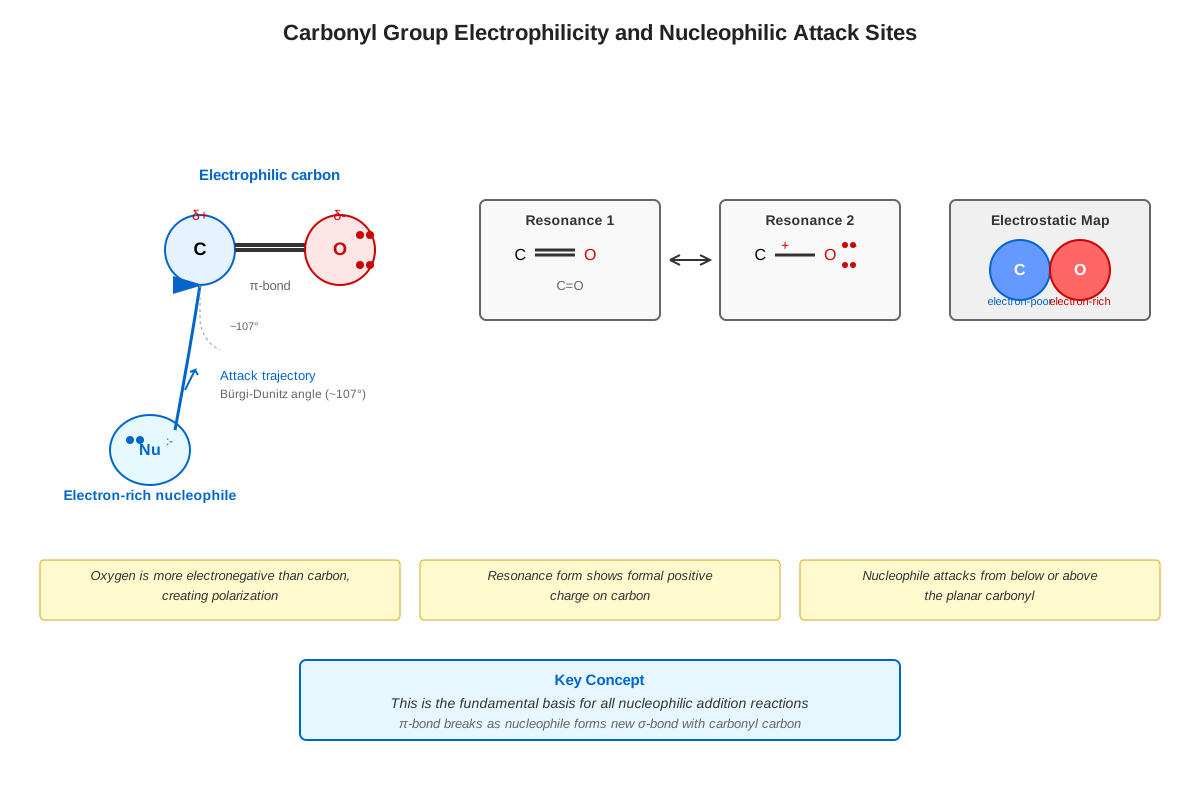
The carbonyl group (C=O) consists of a carbon-oxygen double bond with significant polarization due to oxygen's higher electronegativity (3.5) compared to carbon (2.5). This creates a dipole moment with partial positive charge (δ+) on carbon and partial negative charge (δ-) on oxygen. The carbon atom is sp²-hybridized, creating a planar geometry with 120° bond angles. This planarity allows nucleophiles to approach from either face of the carbonyl plane, which becomes important when considering stereochemical outcomes.
The electrophilic nature of the carbonyl carbon makes it susceptible to attack by nucleophiles—electron-rich species with lone pairs or π-bonds that can form new covalent bonds. The π-bond of the carbonyl is weaker than the σ-bond and breaks during nucleophilic attack, with electrons moving to the more electronegative oxygen atom, forming an alkoxide intermediate.
General Mechanism of Nucleophilic Addition
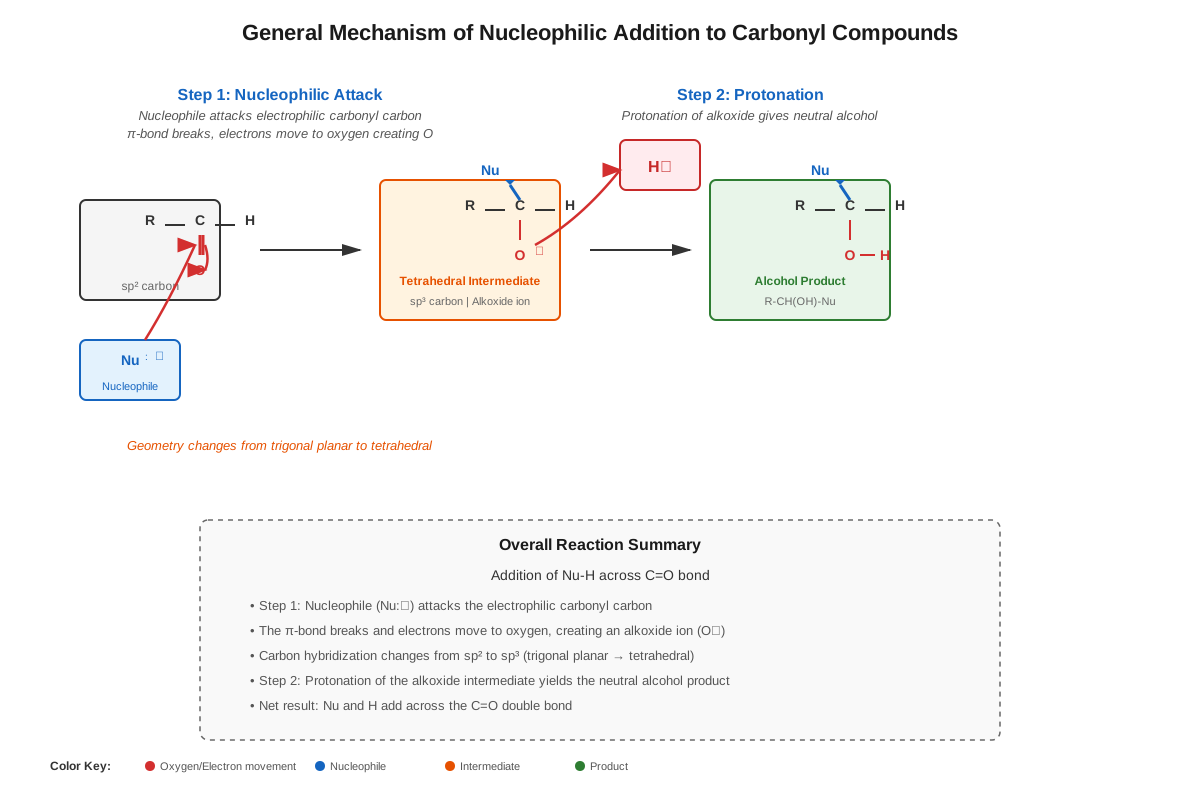
The nucleophilic addition mechanism proceeds through distinct steps:
- Nucleophilic attack: The nucleophile's lone pair attacks the electrophilic carbonyl carbon, forming a new σ-bond
- π-bond breaking: Simultaneously, the π-electrons of the C=O bond move to oxygen, creating a tetrahedral alkoxide intermediate
- Protonation: The negatively charged oxygen (alkoxide) is protonated by an acid source (solvent, acid catalyst, or aqueous workup) to form the neutral alcohol product
The overall transformation converts a trigonal planar sp² carbon into a tetrahedral sp³ carbon, adding two new groups: the nucleophile and a hydrogen (or proton source).
    O                    O⁻                   OH
    ‖                    |                    |
R—C—R'  +  Nu⁻  →   R—C—R'   +  H⁺  →   R—C—R'
                        |                    |
                       Nu                   Nu
Aldehydes versus Ketones: Reactivity Differences
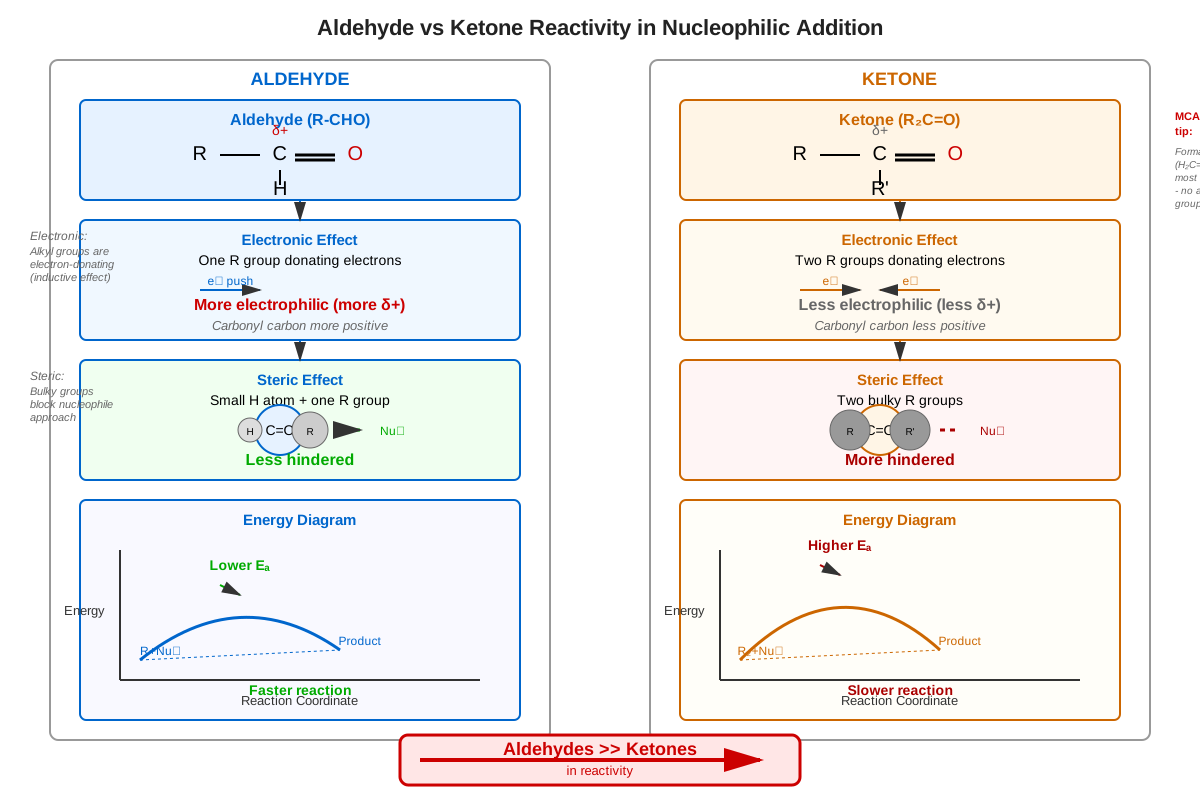
Aldehydes are generally more reactive toward nucleophilic addition than ketones for two primary reasons:
Electronic factors: Aldehydes have only one alkyl group attached to the carbonyl carbon (the other substituent is hydrogen), while ketones have two alkyl groups. Alkyl groups are electron-donating through inductive effects, which partially stabilizes the partial positive charge on the carbonyl carbon, making it less electrophilic. Aldehydes, with less electron donation, maintain a more positive carbonyl carbon.
Steric factors: The carbonyl carbon in ketones is more crowded due to two bulky alkyl groups, creating steric hindrance that impedes nucleophile approach. Aldehydes, with one small hydrogen substituent, present less steric obstruction, allowing easier nucleophilic attack.
| Feature | Aldehydes | Ketones |
|---|---|---|
| Substituents | One alkyl, one H | Two alkyl groups |
| Electronic effect | Less electron donation → more electrophilic | More electron donation → less electrophilic |
| Steric hindrance | Less crowded | More crowded |
| Relative reactivity | Higher | Lower |
| Oxidation state | Can be oxidized to carboxylic acids | Cannot be easily oxidized |
Common Nucleophiles in Addition Reactions
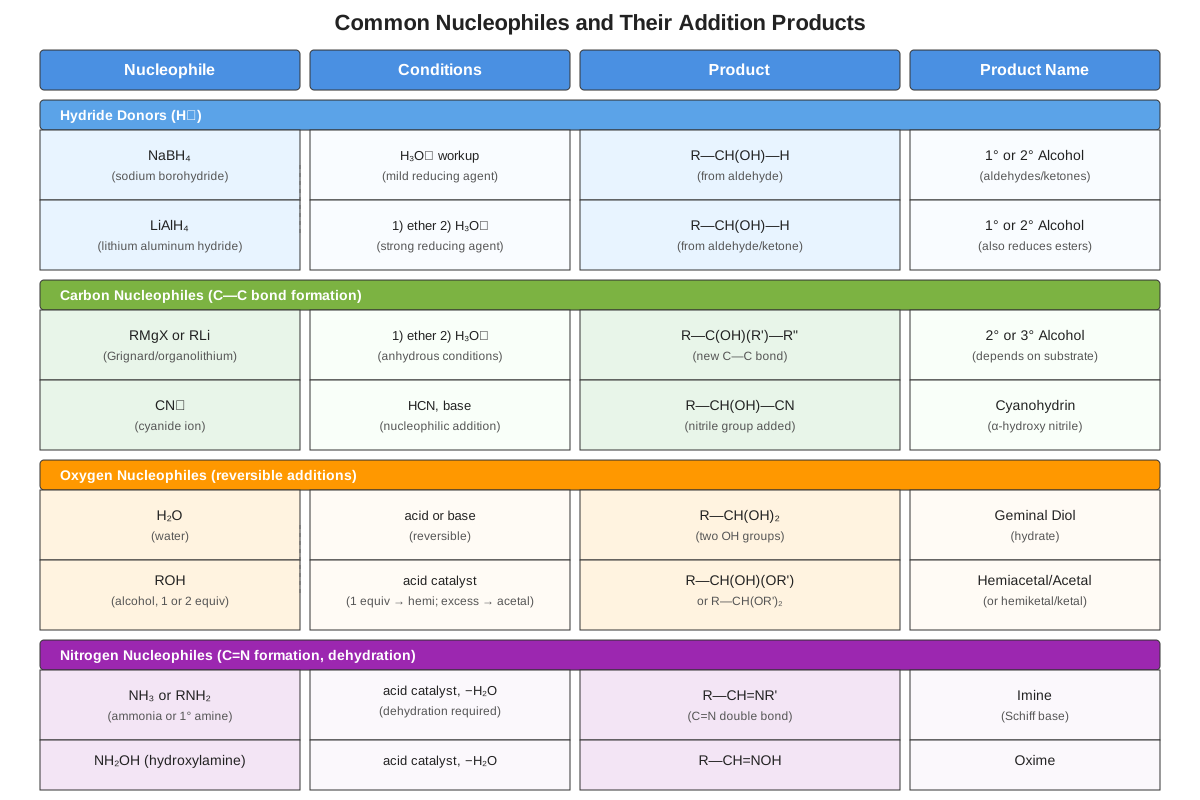
Several classes of nucleophiles participate in carbonyl addition reactions, each producing characteristic products:
Hydride donors (H⁻ sources):
- Sodium borohydride (NaBH₄): Mild reducing agent that reduces aldehydes and ketones to primary and secondary alcohols, respectively
- Lithium aluminum hydride (LiAlH₄): Strong reducing agent that reduces aldehydes, ketones, and even carboxylic acid derivatives
Organometallic reagents:
- Grignard reagents (RMgX): Highly reactive carbon nucleophiles that add alkyl groups to carbonyl carbons, producing alcohols after aqueous workup
- Organolithium reagents (RLi): Similar reactivity to Grignard reagents but even more reactive
Oxygen nucleophiles:
- Water (H₂O): Forms geminal diols (hydrates), though most are unstable except with highly electrophilic carbonyls
- Alcohols (ROH): Form hemiacetals (one alcohol added) and acetals (two alcohols added) under acid catalysis
Nitrogen nucleophiles:
- Ammonia and primary amines (NH₃, RNH₂): Form imines (Schiff bases) after addition and water elimination
- Secondary amines (R₂NH): Form enamines after addition and water elimination
- Hydroxylamine (NH₂OH): Forms oximes
Carbon nucleophiles:
- Cyanide ion (CN⁻): Forms cyanohydrins, adding both CN and OH groups
- Acetylide ions (RC≡C⁻): Add alkyne groups to carbonyl carbons
Hemiacetal and Acetal Formation
When alcohols act as nucleophiles toward carbonyl groups under acid catalysis, they form hemiacetals (containing both -OH and -OR groups on the same carbon) and acetals (containing two -OR groups on the same carbon). This reaction is particularly important in carbohydrate chemistry.
Hemiacetal formation mechanism:
- Protonation of carbonyl oxygen (acid catalysis increases electrophilicity)
- Nucleophilic attack by alcohol on protonated carbonyl
- Deprotonation to form neutral hemiacetal
Acetal formation requires a second equivalent of alcohol and proceeds through:
- Protonation of hemiacetal -OH group
- Loss of water to form resonance-stabilized carbocation
- Nucleophilic attack by second alcohol molecule
- Deprotonation to form acetal
Hemiacetals are generally unstable and exist in equilibrium with the carbonyl form, except in cyclic systems (like glucose forming pyranose rings). Acetals are stable under neutral and basic conditions but hydrolyze back to carbonyl compounds under acidic conditions, making them useful as protecting groups in organic synthesis.
Imine and Enamine Formation
Primary amines react with aldehydes and ketones to form imines (also called Schiff bases), which contain a C=N double bond. This reaction proceeds through:
- Nucleophilic addition of amine to carbonyl, forming a carbinolamine intermediate
- Protonation of the -OH group
- Loss of water to form iminium ion
- Deprotonation to form neutral imine
Secondary amines cannot form imines (no N-H to lose) and instead form enamines through:
- Nucleophilic addition forming carbinolamine
- Water loss forming iminium ion
- Deprotonation of α-carbon (carbon adjacent to carbonyl) to form C=C bond
Both reactions require acid catalysis but are reversible under aqueous conditions. Imines are important in biological systems—pyridoxal phosphate (vitamin B6) forms Schiff bases with amino acids during transamination reactions.
Cyanohydrin Formation
Cyanide ion (CN⁻) adds to aldehydes and ketones to form cyanohydrins, which contain both -OH and -CN groups on the same carbon. The mechanism involves:
- Nucleophilic attack of CN⁻ on carbonyl carbon
- Protonation of alkoxide intermediate by acid (often HCN)
Cyanohydrins are synthetically valuable because the nitrile group can be converted to carboxylic acids (by hydrolysis) or amines (by reduction), effectively extending the carbon chain by one carbon atom. This reaction works best with aldehydes and unhindered ketones due to steric considerations.
Grignard Reactions
Grignard reagents (RMgX, where X = Cl, Br, or I) are among the most important carbon nucleophiles in organic synthesis. These organometallic compounds contain a highly polarized C-Mg bond with significant carbanion character, making the carbon strongly nucleophilic.
Grignard additions to carbonyl compounds produce alcohols:
- Formaldehyde (HCHO) → primary alcohols
- Other aldehydes (RCHO) → secondary alcohols
- Ketones (R₂CO) → tertiary alcohols
The reaction mechanism involves:
- Nucleophilic attack of the carbanion-like carbon on the carbonyl
- Formation of alkoxide intermediate (coordinated to Mg²⁺)
- Aqueous acid workup to protonate the alkoxide, yielding the alcohol
MCAT Exam Tip: Grignard reagents are extremely reactive and incompatible with protic solvents (water, alcohols, carboxylic acids) or other electrophiles. Questions may test whether a Grignard reaction is feasible given other functional groups present in the molecule.
Stereochemistry of Nucleophilic Addition
When nucleophilic addition creates a new stereocenter at the carbonyl carbon, the product's stereochemistry depends on the approach of the nucleophile. For achiral (symmetric) carbonyl compounds, nucleophilic attack from either face of the planar carbonyl is equally likely, producing a racemic mixture of enantiomers.
For carbonyl compounds that are already chiral (containing stereocenters elsewhere in the molecule), the two faces of the carbonyl are diastereotopic, and attack from each face occurs at different rates, leading to unequal amounts of diastereomeric products. The major product is typically determined by steric factors—the nucleophile preferentially attacks from the less hindered face.
Concept Relationships
Nucleophilic addition reactions form the conceptual foundation for understanding more complex carbonyl transformations. The core mechanism—nucleophile attacking an electrophilic carbonyl carbon—appears repeatedly throughout organic chemistry with variations in nucleophile identity, leaving group presence, and reaction conditions.
Within nucleophilic addition: The various specific reactions (hydride reduction, Grignard addition, hemiacetal formation, imine formation, cyanohydrin formation) all follow the same fundamental mechanism but differ in nucleophile identity and subsequent steps. Understanding the general mechanism enables prediction of outcomes for any nucleophile-carbonyl combination.
Connection to acid-base chemistry: Many nucleophilic additions require acid or base catalysis. Acid catalysis increases carbonyl electrophilicity by protonating the oxygen, while base catalysis can generate more reactive nucleophiles (e.g., alkoxide from alcohol). The pH dependence of these reactions connects to broader acid-base equilibrium concepts.
Connection to stereochemistry: Nucleophilic addition creates new stereocenters, requiring application of R/S nomenclature, understanding of enantiomers versus diastereomers, and recognition of when racemic mixtures form. This bridges to stereochemistry units covering chirality and optical activity.
Connection to functional group transformations: Nucleophilic addition converts carbonyl compounds into alcohols, ethers (acetals), or nitrogen-containing compounds (imines, enamines), demonstrating how functional groups interconvert. This relates to retrosynthetic analysis and synthesis planning.
Progression to nucleophilic acyl substitution: Understanding nucleophilic addition to aldehydes/ketones (which lack leaving groups) provides the foundation for nucleophilic acyl substitution in carboxylic acid derivatives (which have leaving groups). The key difference—whether a leaving group departs after nucleophilic attack—distinguishes these reaction classes.
Relationship map:
Carbonyl electrophilicity → enables → Nucleophilic attack → produces → Tetrahedral intermediate → undergoes → Protonation → yields → Addition product (alcohol, hemiacetal, imine, etc.) → can undergo → Further reactions (acetal formation, imine hydrolysis, oxidation)
Quick check — test yourself on Nucleophilic addition so far.
Try Flashcards →High-Yield Facts
⭐ Aldehydes are more reactive than ketones toward nucleophilic addition due to both electronic (less electron donation) and steric (less crowding) factors.
⭐ The carbonyl carbon is electrophilic (δ+) due to oxygen's higher electronegativity, making it susceptible to nucleophilic attack.
⭐ Nucleophilic addition to aldehydes/ketones produces a tetrahedral alkoxide intermediate that must be protonated to form the final product.
⭐ Grignard reagents (RMgX) add to formaldehyde to give primary alcohols, to aldehydes to give secondary alcohols, and to ketones to give tertiary alcohols.
⭐ Hemiacetals contain one -OR and one -OH group on the same carbon; acetals contain two -OR groups and are stable to base but hydrolyze under acid.
- NaBH₄ is a mild reducing agent that selectively reduces aldehydes and ketones to alcohols without affecting esters or carboxylic acids.
- LiAlH₄ is a strong reducing agent that reduces aldehydes, ketones, esters, carboxylic acids, and amides.
- Primary amines react with carbonyl compounds to form imines (C=N) after loss of water; secondary amines form enamines.
- Cyanohydrins result from cyanide ion addition to carbonyl compounds and contain both -CN and -OH groups on the same carbon.
- Nucleophilic addition to achiral carbonyl compounds creates racemic mixtures when a new stereocenter forms, as both faces of the planar carbonyl are equally accessible.
- Acid catalysis in nucleophilic addition reactions increases carbonyl electrophilicity by protonating the oxygen atom.
- Hemiacetal formation is reversible and typically unfavorable except in cyclic systems (like glucose forming pyranose rings).
- The stability of carbocation intermediates in acetal formation follows the order: 3° > 2° > 1°, affecting reaction rates.
- Water adds to carbonyl compounds to form geminal diols (hydrates), but these are usually unstable except with formaldehyde and highly electron-withdrawing substituents.
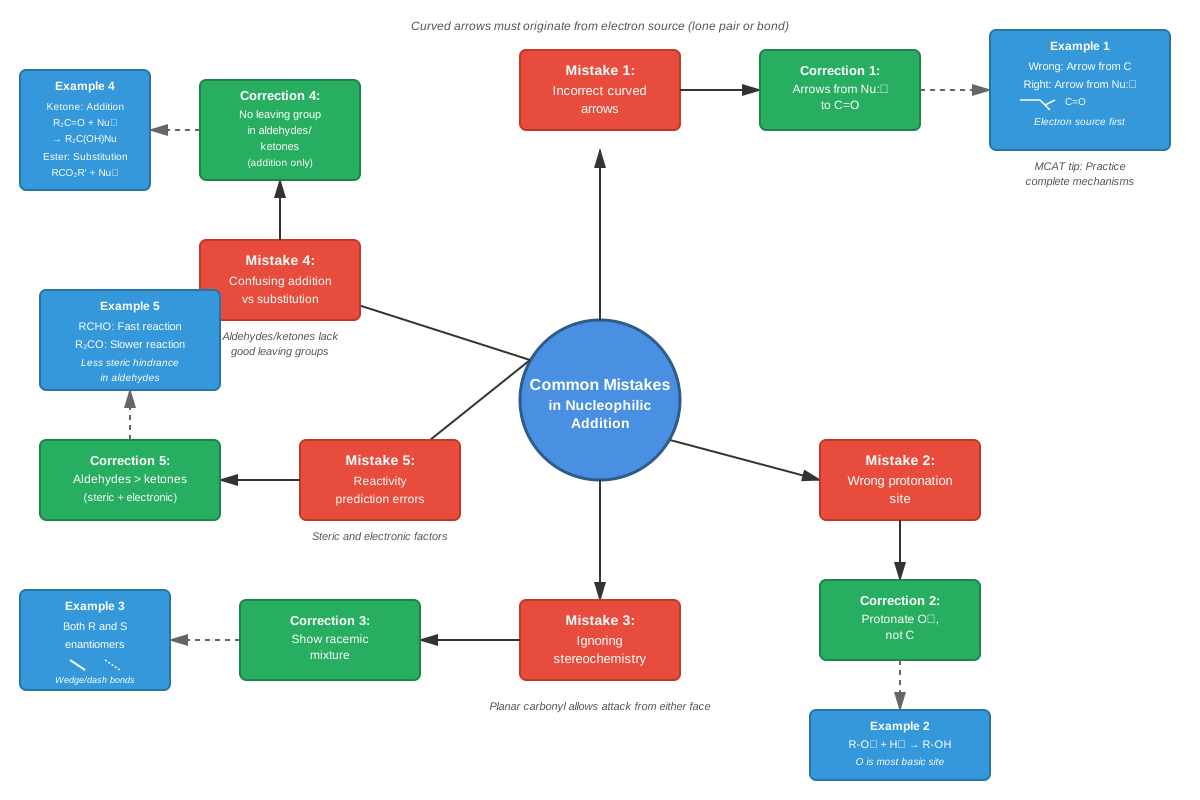
Common Misconceptions
Misconception: Nucleophilic addition and nucleophilic substitution are the same type of reaction.
Correction: Nucleophilic addition involves adding a nucleophile to a π-bond (typically C=O) without losing any atoms, while nucleophilic substitution involves replacing a leaving group with a nucleophile. Addition increases the number of groups attached to carbon; substitution maintains the same number.
Misconception: The carbonyl oxygen is the site of nucleophilic attack because it's partially negative.
Correction: The carbonyl carbon is the electrophilic site attacked by nucleophiles, despite the oxygen being partially negative. The oxygen's electronegativity creates the carbon's partial positive charge, making it electron-deficient and susceptible to nucleophilic attack. The oxygen accepts electrons from the π-bond during the reaction.
Misconception: Grignard reagents can be used in the presence of water or alcohols.
Correction: Grignard reagents are extremely reactive bases that immediately react with any protic solvent (water, alcohols, carboxylic acids, amines with N-H bonds) to form hydrocarbons, destroying the reagent before it can react with the intended carbonyl compound. Reactions must be conducted in anhydrous (dry) conditions using aprotic solvents like diethyl ether or THF.
Misconception: Hemiacetals and acetals are the same thing.
Correction: Hemiacetals contain one -OR group and one -OH group attached to the same carbon (formed from one equivalent of alcohol), while acetals contain two -OR groups (formed from two equivalents of alcohol). Hemiacetals are generally unstable and exist in equilibrium with the carbonyl form, whereas acetals are stable under neutral and basic conditions but hydrolyze under acid.
Misconception: All nucleophilic additions to carbonyl compounds produce alcohols.
Correction: While many nucleophilic additions ultimately produce alcohols (hydride reduction, Grignard addition), others produce different functional groups: alcohols react to form hemiacetals/acetals, primary amines form imines, secondary amines form enamines, and cyanide forms cyanohydrins. The product depends on the nucleophile's identity and subsequent reaction steps.
Misconception: Ketones are unreactive toward nucleophilic addition.
Correction: Ketones do undergo nucleophilic addition, but they are less reactive than aldehydes due to increased steric hindrance and electron donation from two alkyl groups. Strong nucleophiles (like Grignard reagents and LiAlH₄) readily react with ketones, while weaker nucleophiles may require forcing conditions or may react very slowly.
Misconception: The tetrahedral intermediate formed during nucleophilic addition is the final product.
Correction: The tetrahedral alkoxide intermediate is negatively charged and must be protonated (typically during aqueous workup) to form the neutral final product. In some reactions (like imine formation), the tetrahedral intermediate undergoes additional steps including water loss before forming the final product.
Worked Examples
Example 1: Grignard Reaction Product Prediction
Question: Predict the major organic product when acetone reacts with methylmagnesium bromide (CH₃MgBr) followed by aqueous acid workup.
Solution:
Step 1: Identify the carbonyl compound and nucleophile.
- Acetone is a ketone: (CH₃)₂C=O
- Methylmagnesium bromide is a Grignard reagent with CH₃⁻ as the nucleophilic carbon
Step 2: Recognize the reaction type.
This is a nucleophilic addition of a Grignard reagent to a ketone, which will produce a tertiary alcohol after workup.
Step 3: Draw the mechanism.
- The nucleophilic methyl group attacks the electrophilic carbonyl carbon
- The π-electrons move to oxygen, forming a tetrahedral alkoxide intermediate coordinated to Mg²⁺
- Aqueous acid workup protonates the alkoxide oxygen
Step 4: Determine the product structure.
- The ketone has two methyl groups already attached to the carbonyl carbon
- The Grignard adds a third methyl group
- After protonation, the product is 2-methyl-2-propanol (tert-butanol): (CH₃)₃C-OH
Answer: The product is tert-butanol, a tertiary alcohol with three methyl groups attached to the carbon bearing the hydroxyl group.
Connection to learning objectives: This example demonstrates application of nucleophilic addition principles to predict products (LO: Apply to exam-style questions) and shows how Grignard reagents add to ketones to form tertiary alcohols (LO: Define and explain mechanisms).
Example 2: Distinguishing Reaction Outcomes
Question: A student has two carbonyl compounds—benzaldehyde and acetophenone—and treats each with NaBH₄ in methanol, followed by aqueous workup. Explain the expected products and relative reaction rates.
Solution:
Step 1: Identify the structures.
- Benzaldehyde: C₆H₅-CHO (aldehyde with phenyl group)
- Acetophenone: C₆H₅-CO-CH₃ (ketone with phenyl and methyl groups)
Step 2: Identify the reagent and reaction type.
NaBH₄ is a hydride reducing agent that delivers H⁻ as a nucleophile, reducing carbonyl compounds to alcohols through nucleophilic addition.
Step 3: Predict products.
- Benzaldehyde (aldehyde) → benzyl alcohol (C₆H₅-CH₂-OH), a primary alcohol
- Acetophenone (ketone) → 1-phenylethanol (C₆H₅-CH(OH)-CH₃), a secondary alcohol
Step 4: Compare reaction rates.
Benzaldehyde will react faster than acetophenone because:
- Electronic factor: Aldehydes have only one electron-donating alkyl group (phenyl), while ketones have two (phenyl and methyl), making the aldehyde carbonyl more electrophilic
- Steric factor: The aldehyde has a small hydrogen substituent, while the ketone has a bulkier methyl group, creating more steric hindrance in the ketone
Step 5: Mechanism overview.
Both reactions proceed through:
- Nucleophilic attack of H⁻ (from BH₄⁻) on carbonyl carbon
- Formation of alkoxide intermediate
- Protonation during aqueous workup to form alcohol
Answer: Benzaldehyde produces benzyl alcohol (1° alcohol) and reacts faster; acetophenone produces 1-phenylethanol (2° alcohol) and reacts slower. The rate difference reflects aldehydes' greater reactivity toward nucleophilic addition.
Connection to learning objectives: This example illustrates the reactivity difference between aldehydes and ketones (LO: Connect to related concepts), demonstrates product prediction (LO: Apply to exam questions), and addresses the common mistake of assuming equal reactivity (LO: Identify common mistakes).
Exam Strategy
Approaching MCAT questions on nucleophilic addition:
- Identify the carbonyl compound first: Determine whether you're dealing with an aldehyde, ketone, or carboxylic acid derivative. Remember that nucleophilic addition occurs with aldehydes and ketones (no leaving group), while nucleophilic acyl substitution occurs with carboxylic acid derivatives (leaving group present).
- Characterize the nucleophile: Determine if it's a hydride donor (NaBH₄, LiAlH₄), organometallic reagent (RMgX, RLi), oxygen nucleophile (H₂O, ROH), nitrogen nucleophile (NH₃, RNH₂, R₂NH), or carbon nucleophile (CN⁻, acetylide). Each produces characteristic products.
- Consider reaction conditions: Note whether acid or base catalysis is mentioned. Acid catalysis typically indicates hemiacetal/acetal or imine formation; base catalysis may indicate enolate chemistry or generation of stronger nucleophiles.
- Watch for stereochemistry clues: If the question mentions optical activity, enantiomers, or diastereomers, consider whether a new stereocenter forms and whether the starting material is chiral.
Trigger words and phrases:
- "Reducing agent" → think hydride addition (NaBH₄ or LiAlH₄)
- "Grignard reagent" → carbon nucleophile addition forming alcohols
- "Acid-catalyzed reaction with alcohol" → hemiacetal or acetal formation
- "Primary amine" → imine (Schiff base) formation
- "Secondary amine" → enamine formation
- "Cyanohydrin" → cyanide addition
- "Racemic mixture" → achiral starting material with new stereocenter formation
Process-of-elimination tips:
- Eliminate answer choices showing nucleophilic substitution products when the starting material is an aldehyde or ketone (no leaving group present)
- Eliminate products that violate valence rules (carbon must have four bonds)
- Eliminate mechanisms showing nucleophilic attack on oxygen rather than carbon
- For reactivity questions, eliminate choices suggesting ketones are more reactive than aldehydes
- For Grignard reactions, eliminate any answer suggesting the reaction works in protic solvents
Time allocation:
Nucleophilic addition questions typically require 60-90 seconds. Spend 15-20 seconds identifying the carbonyl compound and nucleophile, 30-40 seconds working through the mechanism or predicting the product, and 10-20 seconds eliminating wrong answers and confirming your choice. If a question requires drawing a complete mechanism, budget 90-120 seconds.
Memory Techniques
Mnemonic for Grignard product alcohols:
"F-A-K gives 1-2-3"
- Formaldehyde + Grignard → 1° alcohol
- Aldehyde + Grignard → 2° alcohol
- Ketone + Grignard → 3° alcohol
Mnemonic for reducing agent strength:
"Little Al Has Might" (LiAlH₄ is mighty/strong)
- LiAlH₄ = strong reducing agent (reduces almost everything)
- NaBH₄ = mild reducing agent (selective for aldehydes/ketones)
Visualization for hemiacetal vs. acetal:
Picture "hemi" (meaning half) as having one alcohol added (one -OR, one -OH), while "acetal" (sounds like "a set of") has a complete set of two -OR groups.
Acronym for nucleophile types: "HONC"
- Hydride (H⁻ from NaBH₄, LiAlH₄)
- Oxygen (H₂O, ROH)
- Nitrogen (NH₃, RNH₂, R₂NH)
- Carbon (RMgX, RLi, CN⁻, acetylides)
Memory aid for aldehyde vs. ketone reactivity:
"Aldehydes Are Less Hindered" (AALH)
- Aldehydes react faster
- Less steric hindrance (one H substituent)
- Less electron donation (one alkyl group)
Mechanism step sequence mnemonic:
"NAP" for the basic nucleophilic addition mechanism:
- Nucleophilic attack on carbonyl carbon
- Alkoxide intermediate forms (π-electrons move to oxygen)
- Protonation of alkoxide to form product
Summary
Nucleophilic addition represents a fundamental transformation in organic chemistry where electron-rich nucleophiles attack the electrophilic carbon of carbonyl groups in aldehydes and ketones. The reaction proceeds through nucleophilic attack on the partially positive carbonyl carbon, breaking the π-bond and forming a tetrahedral alkoxide intermediate, which is subsequently protonated to yield the final product. Aldehydes are more reactive than ketones due to reduced steric hindrance and less electron donation to the carbonyl carbon. Various nucleophiles produce different products: hydride donors yield alcohols, Grignard reagents add carbon chains and produce alcohols, alcohols form hemiacetals and acetals, primary amines form imines, secondary amines form enamines, and cyanide forms cyanohydrins. Understanding the general mechanism enables prediction of products for any nucleophile-carbonyl combination, while recognizing the role of acid or base catalysis explains reaction conditions. For the MCAT, mastery requires the ability to predict products, distinguish between addition and substitution mechanisms, explain reactivity differences, and apply stereochemical principles when new stereocenters form.
Key Takeaways
- Nucleophilic addition involves attack of electron-rich nucleophiles on the electrophilic carbonyl carbon of aldehydes and ketones, forming tetrahedral alkoxide intermediates that are protonated to give final products
- Aldehydes are more reactive than ketones toward nucleophilic addition due to both electronic factors (less electron donation) and steric factors (less crowding around the carbonyl carbon)
- Common nucleophiles include hydride donors (NaBH₄, LiAlH₄), Grignard reagents (RMgX), alcohols (forming hemiacetals/acetals), amines (forming imines/enamines), and cyanide (forming cyanohydrins)
- Grignard reagents add to formaldehyde to give primary alcohols, to aldehydes to give secondary alcohols, and to ketones to give tertiary alcohols
- Hemiacetals (one -OR, one -OH) are generally unstable, while acetals (two -OR groups) are stable under neutral/basic conditions but hydrolyze under acid
- Nucleophilic addition to achiral carbonyl compounds creates racemic mixtures when new stereocenters form, as both faces of the planar carbonyl are equally accessible
- Acid catalysis increases carbonyl electrophilicity by protonating oxygen; base catalysis can generate more reactive nucleophiles or deprotonate intermediates
Related Topics
Nucleophilic Acyl Substitution: Building on nucleophilic addition, this mechanism applies to carboxylic acid derivatives (esters, amides, acid chlorides) where a leaving group departs after nucleophilic attack. Mastering nucleophilic addition provides the foundation for understanding why substitution occurs when leaving groups are present.
Aldol Reactions: These involve enolate nucleophiles (formed by deprotonation of α-carbons) attacking carbonyl electrophiles, combining nucleophilic addition with enolate chemistry. Understanding basic nucleophilic addition mechanisms is prerequisite to comprehending aldol condensations.
Carbohydrate Chemistry: Monosaccharides exist in equilibrium between open-chain carbonyl forms and cyclic hemiacetal forms through intramolecular nucleophilic addition. This topic directly applies nucleophilic addition principles to biological molecules.
Oxidation-Reduction in Organic Chemistry: Hydride additions (NaBH₄, LiAlH₄) represent reduction reactions, while the reverse process (alcohol to carbonyl) represents oxidation. Understanding nucleophilic addition connects to broader redox concepts.
Protecting Groups in Synthesis: Acetals serve as protecting groups for carbonyl compounds because they're stable to base but can be removed under acidic conditions. This application demonstrates practical synthetic utility of nucleophilic addition reactions.
Practice CTA
Now that you've mastered the core concepts of nucleophilic addition, it's time to solidify your understanding through active practice. Work through the practice questions to test your ability to predict products, analyze mechanisms, and apply stereochemical reasoning. Use the flashcards to reinforce high-yield facts and reaction patterns. Remember, the MCAT rewards not just knowledge but the ability to apply concepts quickly and accurately under time pressure—practice is essential for developing this skill. You've built a strong foundation; now strengthen it through deliberate practice!
Sign up free to keep reading
Create a free AnvayaPrep account to finish this MCAT guide on Nucleophilic addition — plus flashcards and practice questions.