Overview
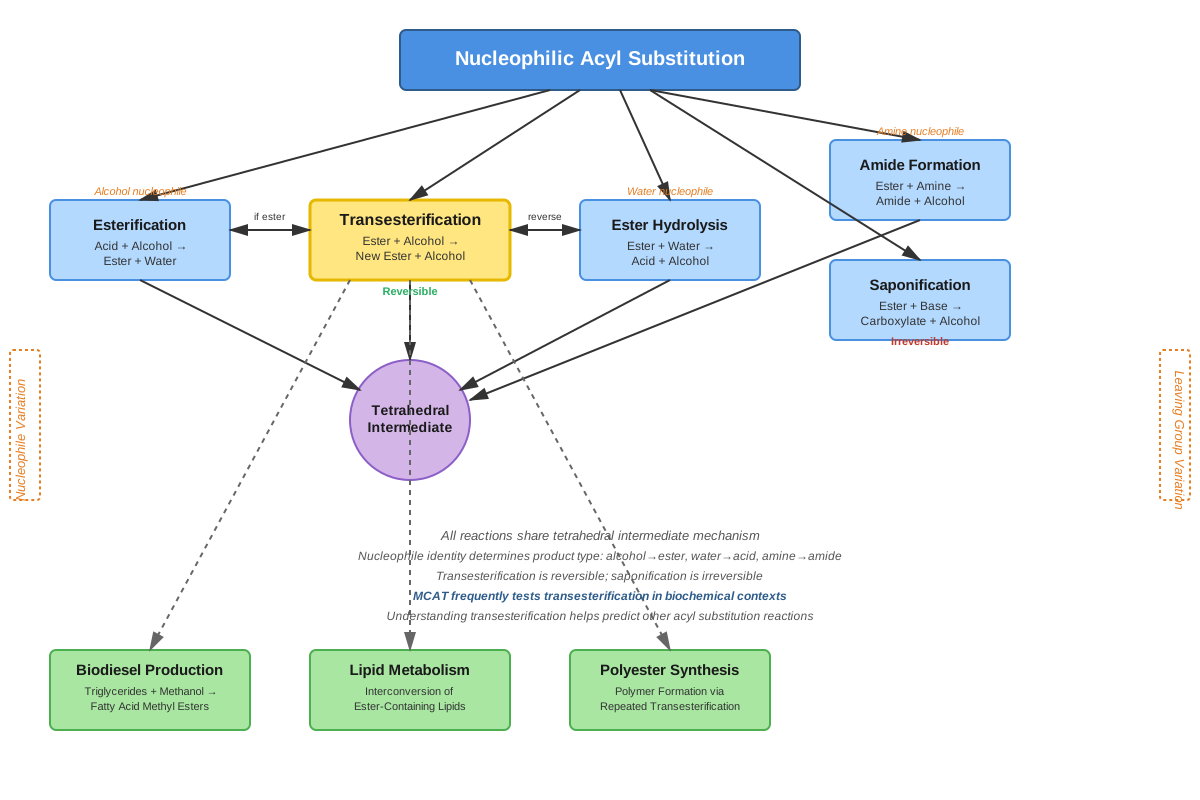
Transesterification is a fundamental reaction in Organic Chemistry that involves the exchange of the alkoxy group of an ester with another alcohol. This process is a cornerstone of Carbonyl Chemistry and represents one of the most important ester transformations tested on the MCAT. In this reaction, an ester reacts with an alcohol in the presence of an acid or base catalyst to produce a different ester and a different alcohol. The reaction is reversible and reaches equilibrium, making it essential to understand the conditions that drive the reaction forward.
For MCAT preparation, transesterification bridges multiple high-yield concepts including nucleophilic acyl substitution mechanisms, acid-base catalysis, and equilibrium principles. The reaction exemplifies how carbonyl compounds undergo substitution rather than addition reactions due to the presence of a good leaving group. Understanding transesterification provides insight into biochemical processes such as lipid metabolism, biodiesel production, and the synthesis of polyesters—all topics that may appear in MCAT passages integrating chemistry with biological systems.
The significance of Transesterification MCAT questions extends beyond pure mechanism recall. Test-makers frequently embed this reaction within passages discussing industrial chemistry, renewable fuels, or biochemical pathways involving triglycerides and fatty acid esters. Students must recognize the reaction pattern, predict products, understand the role of catalysts, and apply Le Châtelier's principle to optimize yields. Mastery of transesterification also reinforces understanding of other carbonyl reactions including esterification, hydrolysis, and amide formation, making it a central node in the network of Organic Chemistry transformations.
Learning Objectives
- [ ] Define Transesterification using accurate Organic Chemistry terminology
- [ ] Explain why Transesterification matters for the MCAT
- [ ] Apply Transesterification to exam-style questions
- [ ] Identify common mistakes related to Transesterification
- [ ] Connect Transesterification to related Organic Chemistry concepts
- [ ] Predict the products of transesterification reactions given starting materials and conditions
- [ ] Distinguish between acid-catalyzed and base-catalyzed transesterification mechanisms
- [ ] Apply Le Châtelier's principle to optimize transesterification equilibria
Prerequisites
- Ester structure and nomenclature: Essential for recognizing the functional group undergoing transformation and naming products correctly
- Nucleophilic acyl substitution mechanism: The fundamental mechanism class to which transesterification belongs
- Acid-base catalysis: Required to understand how catalysts activate carbonyl groups and generate nucleophiles
- Equilibrium principles: Necessary for predicting reaction direction and understanding how to drive reversible reactions to completion
- Alcohol functional groups: Critical for identifying the nucleophile and one of the products in transesterification
- Tetrahedral intermediate formation: The key mechanistic step in all acyl substitution reactions including transesterification
Why This Topic Matters
Clinical and Real-World Significance: Transesterification plays a vital role in biodiesel production, where triglycerides from vegetable oils or animal fats react with methanol to produce fatty acid methyl esters (biodiesel) and glycerol. This industrial application frequently appears in MCAT passages that integrate chemistry with environmental science or alternative energy topics. In biological systems, transesterification is involved in lipid metabolism and the interconversion of different ester-containing biomolecules. Pharmaceutical chemistry utilizes transesterification to modify drug molecules, improving their solubility, bioavailability, or stability.
Exam Statistics: Transesterification appears on approximately 15-20% of MCAT exams, either as a discrete question or embedded within passage-based questions. The reaction most commonly appears in Chemical and Physical Foundations of Biological Systems passages that discuss lipid chemistry, biofuel production, or polymer synthesis. Questions typically test mechanism understanding (40%), product prediction (35%), and application of equilibrium principles (25%). The MCAT favors questions that require students to apply transesterification concepts to novel contexts rather than simple recall.
Common Exam Contexts: MCAT passages featuring transesterification often present scenarios involving biodiesel synthesis from plant oils, the formation of polyesters like polyethylene terephthalate (PET), or the modification of pharmaceutical compounds. Passages may provide experimental data showing how different catalysts, temperatures, or alcohol concentrations affect reaction yields, requiring students to interpret results using their mechanistic understanding. Discrete questions frequently ask students to identify products, select appropriate catalysts, or explain why certain conditions favor product formation.
Core Concepts
Definition and General Reaction
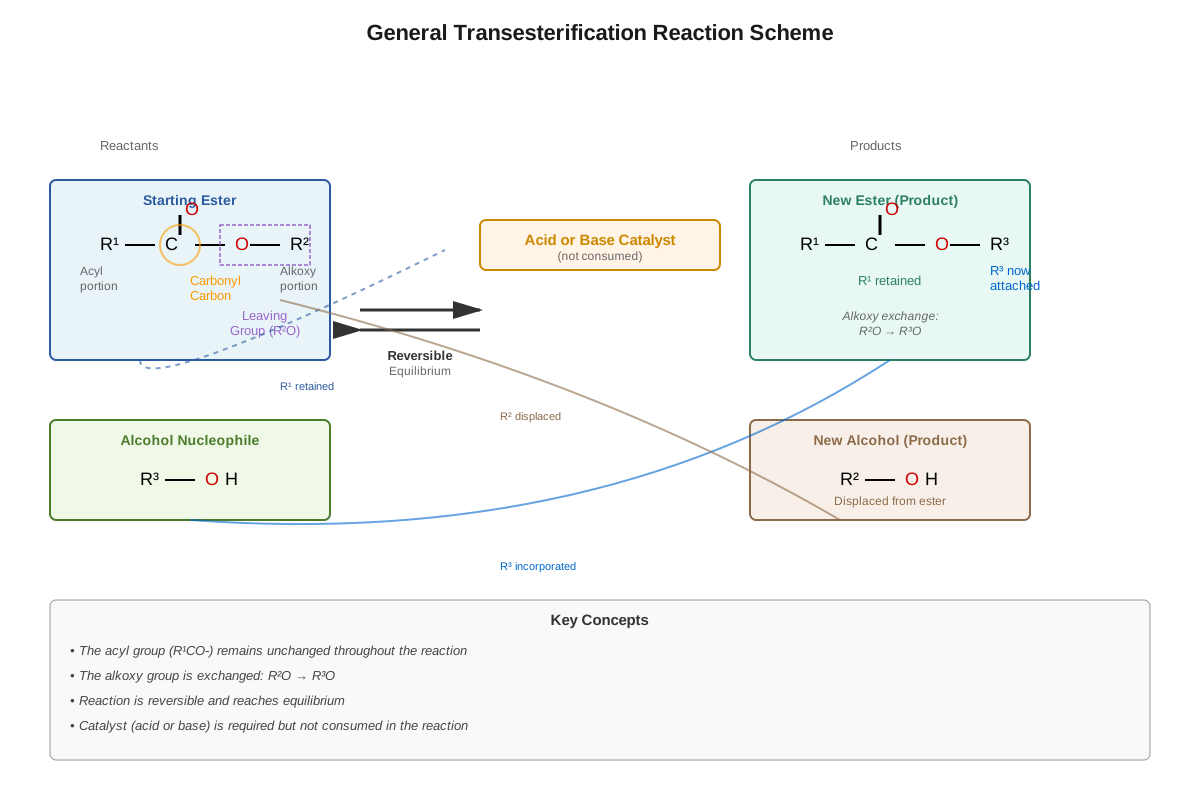
Transesterification is a nucleophilic acyl substitution reaction in which the alkoxy group (OR) of an ester is replaced by another alkoxy group from a different alcohol. The general reaction can be represented as:
R¹-COO-R² + R³-OH ⇌ R¹-COO-R³ + R²-OH
(ester 1)   (alcohol 2)  (ester 2)   (alcohol 1)
The reaction is reversible and reaches equilibrium unless driven forward by removing one of the products or using excess reactant. The carbonyl carbon remains bonded to the acyl group (R¹-CO-) throughout the reaction, while only the alkoxy portion exchanges. This distinguishes transesterification from complete ester hydrolysis, where the ester is converted to a carboxylic acid.
Mechanism: Base-Catalyzed Transesterification
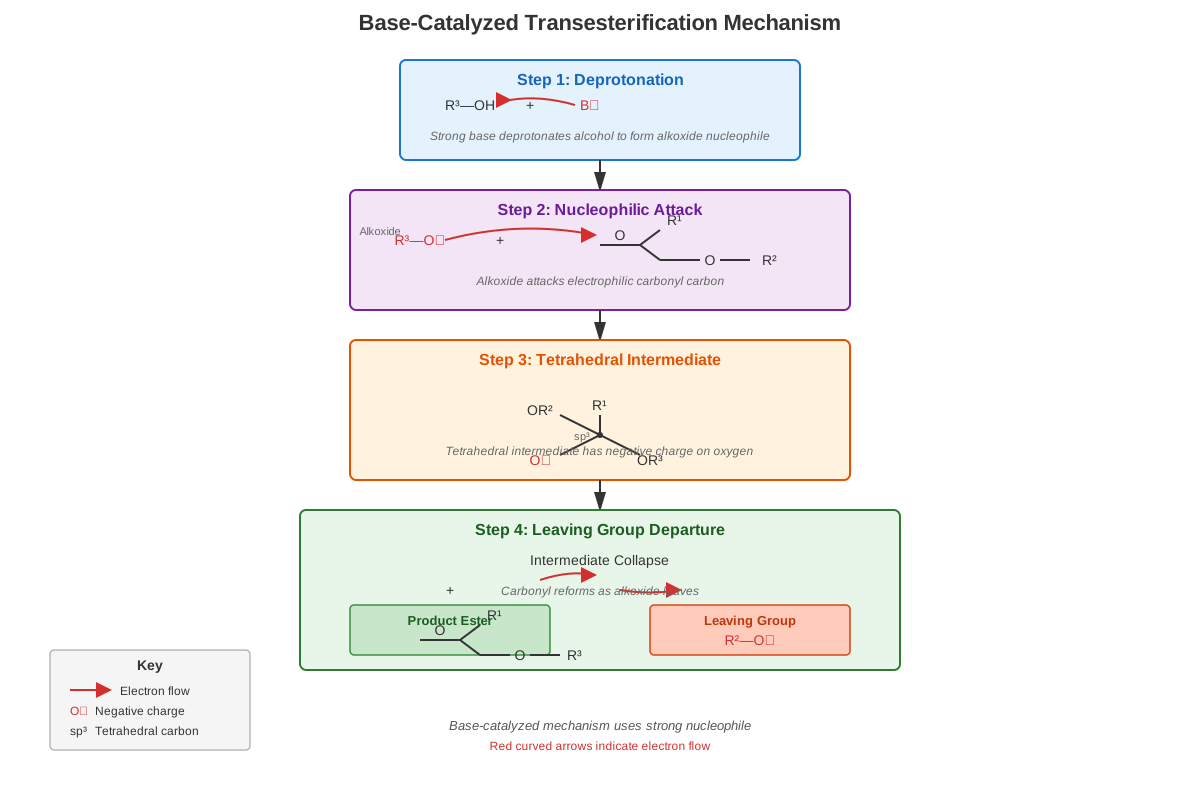
Base-catalyzed transesterification proceeds through a nucleophilic acyl substitution mechanism involving a tetrahedral intermediate. The base (commonly sodium methoxide, NaOCH₃, or sodium hydroxide) serves to generate a strong alkoxide nucleophile:
- Deprotonation: The base abstracts a proton from the alcohol (R³-OH) to generate an alkoxide ion (R³-O⁻), a powerful nucleophile
- Nucleophilic attack: The alkoxide attacks the electrophilic carbonyl carbon of the ester, forming a tetrahedral intermediate with a negative charge on oxygen
- Leaving group departure: The alkoxy group (R²-O⁻) leaves as the carbonyl reforms, generating the new ester and an alkoxide ion
- Proton transfer: The alkoxide ion (R²-O⁻) abstracts a proton from the alcohol (R³-OH) to regenerate the catalyst and produce the alcohol product (R²-OH)
The base-catalyzed mechanism is generally faster than the acid-catalyzed version because alkoxide ions are more nucleophilic than neutral alcohols. However, base catalysis is incompatible with base-sensitive substrates and cannot be used with acidic functional groups that would be deprotonated by the base.
Mechanism: Acid-Catalyzed Transesterification
Acid-catalyzed transesterification also proceeds through nucleophilic acyl substitution but involves protonation steps that activate the carbonyl:
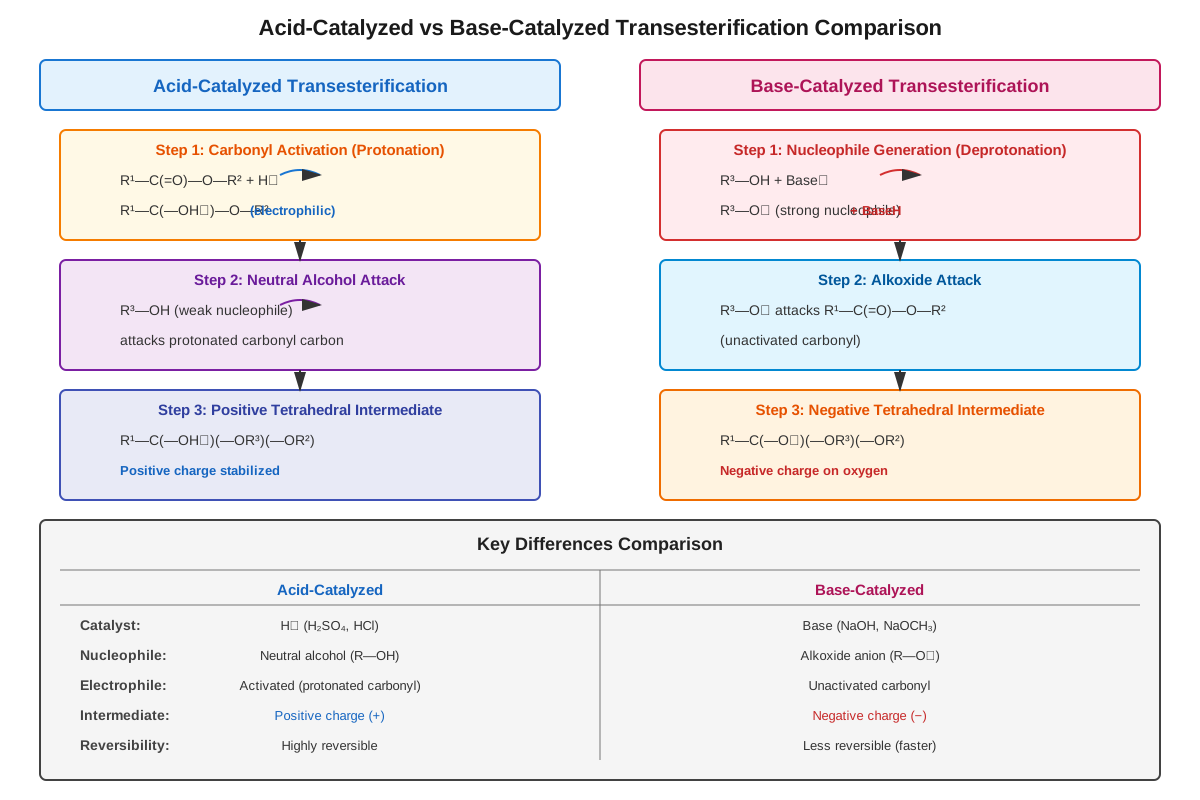
- Carbonyl protonation: The acid catalyst (H⁺) protonates the carbonyl oxygen, creating a resonance-stabilized carbocation that makes the carbonyl carbon more electrophilic
- Nucleophilic attack: The neutral alcohol (R³-OH) attacks the activated carbonyl carbon, forming a tetrahedral intermediate
- Proton transfer: Proton transfers occur within the tetrahedral intermediate to place a positive charge on the leaving group oxygen
- Leaving group departure: The protonated alkoxy group (R²-OH₂⁺) leaves as a neutral alcohol molecule, and the carbonyl reforms
- Deprotonation: Loss of a proton from the oxygen regenerates the acid catalyst and produces the new ester
Acid catalysis is milder and compatible with base-sensitive substrates, but the reaction is typically slower because neutral alcohols are weaker nucleophiles than alkoxide ions.
Comparison of Catalytic Mechanisms
| Feature | Base-Catalyzed | Acid-Catalyzed |
|---|---|---|
| Nucleophile | Alkoxide ion (R-O⁻) | Neutral alcohol (R-OH) |
| Activation | Generates strong nucleophile | Protonates carbonyl to increase electrophilicity |
| Rate | Generally faster | Generally slower |
| Substrate compatibility | Not compatible with acidic protons or base-sensitive groups | Compatible with base-sensitive substrates |
| Leaving group | Alkoxide ion (R-O⁻) | Neutral alcohol (R-OH) |
| Reversibility | Highly reversible | Highly reversible |
Driving the Equilibrium
Since transesterification is reversible, achieving high yields requires applying Le Châtelier's principle to shift equilibrium toward products:
- Excess alcohol: Using a large excess of the incoming alcohol (R³-OH) drives the reaction forward by mass action
- Product removal: Distilling off the lower-boiling alcohol product (R²-OH) continuously removes it from the equilibrium mixture
- Excess ester: Using excess starting ester can also shift equilibrium, though this is less common
- Temperature control: Higher temperatures generally increase reaction rates but may not significantly affect equilibrium position
In industrial biodiesel production, methanol is typically used in 6:1 molar excess relative to triglyceride to ensure complete conversion.
Transesterification in Biochemistry
Triglycerides (triacylglycerols) undergo transesterification during biodiesel production. Each triglyceride molecule contains three ester linkages connecting fatty acids to glycerol. When treated with methanol and a base catalyst, all three ester bonds undergo transesterification:
Triglyceride + 3 CH₃OH → 3 Fatty acid methyl esters + GlycerolThis reaction converts vegetable oils or animal fats into biodiesel (fatty acid methyl esters) and produces glycerol as a valuable byproduct. The MCAT may present passages describing this process and ask students to identify products, calculate theoretical yields, or explain how reaction conditions affect conversion efficiency.
Intramolecular Transesterification
When a molecule contains both an ester and a hydroxyl group in appropriate positions, intramolecular transesterification can occur, forming cyclic esters called lactones. This reaction is particularly favorable when forming five- or six-membered rings due to minimal ring strain. The mechanism follows the same nucleophilic acyl substitution pathway, but the nucleophile and leaving group are part of the same molecule.
Concept Relationships
Transesterification sits at the intersection of multiple organic chemistry concepts. The reaction fundamentally relies on nucleophilic acyl substitution, the general mechanism governing all carbonyl derivatives with leaving groups. Understanding this parent mechanism enables prediction of transesterification outcomes and recognition of the tetrahedral intermediate.
Acid-base chemistry directly influences transesterification through catalyst selection and mechanism. Base catalysis → generates alkoxide nucleophiles → accelerates nucleophilic attack. Acid catalysis → protonates carbonyl oxygen → increases electrophilicity → facilitates nucleophilic attack by weaker nucleophiles.
Equilibrium principles govern reaction completeness. Transesterification ⇌ reversible reaction → requires Le Châtelier's principle application → excess reactants or product removal → drives reaction to completion. This connection reinforces general chemistry concepts within an organic context.
The relationship to ester hydrolysis is particularly important: transesterification uses alcohol as nucleophile → produces different ester, while hydrolysis uses water as nucleophile → produces carboxylic acid. Both follow the same mechanistic framework but differ in nucleophile identity and product type.
Lipid chemistry provides biological context: triglycerides contain three ester groups → undergo transesterification with methanol → produce biodiesel and glycerol. This connects organic mechanisms to biochemistry and real-world applications.
High-Yield Facts
⭐ Transesterification is a reversible nucleophilic acyl substitution reaction where the alkoxy group of an ester exchanges with an alcohol
⭐ Base-catalyzed transesterification uses alkoxide nucleophiles and is generally faster than acid-catalyzed mechanisms
⭐ Acid-catalyzed transesterification protonates the carbonyl oxygen to increase electrophilicity and uses neutral alcohol nucleophiles
⭐ Excess alcohol or removal of the alcohol product drives the equilibrium toward ester product formation
⭐ Biodiesel production involves transesterification of triglycerides with methanol to produce fatty acid methyl esters and glycerol
- The tetrahedral intermediate is the key mechanistic feature of all nucleophilic acyl substitution reactions including transesterification
- Base catalysis requires strong bases like sodium methoxide (NaOCH₃) or sodium hydroxide (NaOH)
- Acid catalysis typically employs sulfuric acid (H₂SO₄) or p-toluenesulfonic acid (TsOH)
- Intramolecular transesterification can form lactones when hydroxyl and ester groups are appropriately positioned
- The carbonyl carbon remains bonded to the same acyl group throughout transesterification; only the alkoxy portion changes
- Transesterification cannot occur with carboxylic acids directly; they must first be converted to esters
- Methanol and ethanol are the most common alcohols used in transesterification due to their nucleophilicity and low cost
Quick check — test yourself on Transesterification so far.
Try Flashcards →Common Misconceptions
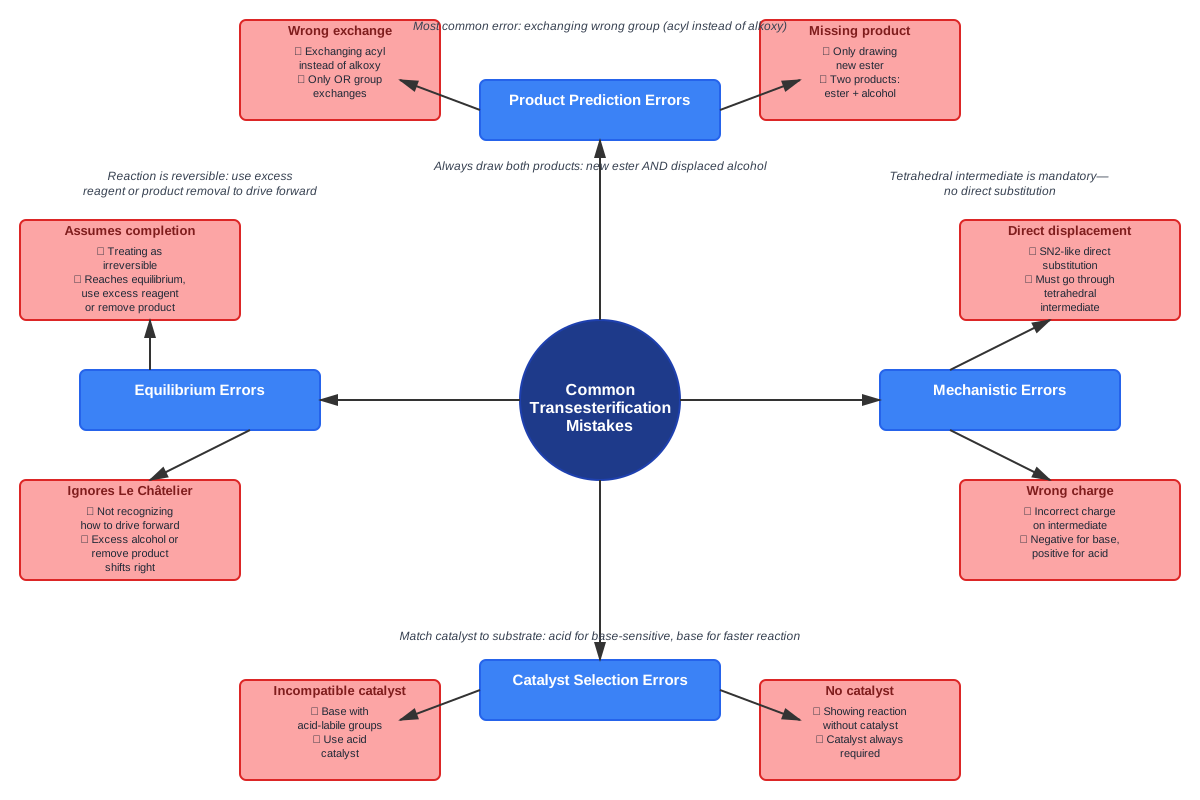
Misconception: Transesterification breaks the C-C bond between the carbonyl carbon and the acyl group.
Correction: Transesterification only exchanges the alkoxy group (OR) attached to the carbonyl; the acyl group (R-CO-) remains bonded to the carbonyl carbon throughout the reaction. Only the C-O bond to the alkoxy group breaks and reforms.
Misconception: Base-catalyzed transesterification uses hydroxide ion (OH⁻) as the nucleophile that attacks the carbonyl.
Correction: In base-catalyzed transesterification, the base deprotonates the alcohol to generate an alkoxide ion (RO⁻), which serves as the nucleophile. Hydroxide itself can cause ester hydrolysis (saponification) rather than transesterification if water is present.
Misconception: Transesterification always goes to completion without any special conditions.
Correction: Transesterification is a reversible equilibrium reaction. To achieve high yields, excess alcohol must be used, or one of the products (typically the lower-boiling alcohol) must be removed by distillation to shift the equilibrium forward according to Le Châtelier's principle.
Misconception: Acid and base catalysts can be used interchangeably in all transesterification reactions.
Correction: Substrate compatibility determines catalyst choice. Base catalysis cannot be used with substrates containing acidic protons or base-sensitive groups, as the base would deprotonate or degrade these groups. Acid catalysis is milder but slower and is preferred for base-sensitive substrates.
Misconception: The tetrahedral intermediate in transesterification is a stable, isolable compound.
Correction: The tetrahedral intermediate is a high-energy, unstable species that exists only transiently during the reaction mechanism. It rapidly collapses to reform the carbonyl group by expelling either the incoming alkoxide (reverting to starting materials) or the original alkoxy group (forming products).
Misconception: Transesterification and esterification are the same reaction.
Correction: Esterification forms an ester from a carboxylic acid and an alcohol, while transesterification converts one ester into a different ester using an alcohol. Esterification starts with a carboxylic acid; transesterification starts with an ester.
Worked Examples
Example 1: Predicting Transesterification Products
Question: Ethyl acetate is treated with excess methanol in the presence of sodium methoxide (NaOCH₃). Predict the major products and explain the mechanism.
Solution:
Step 1 - Identify the reactants:
- Ester: Ethyl acetate (CH₃-COO-CH₂CH₃)
- Alcohol: Methanol (CH₃OH)
- Catalyst: Sodium methoxide (NaOCH₃, a strong base)
Step 2 - Recognize the reaction type:
This is a base-catalyzed transesterification where the ethoxy group (-OCH₂CH₃) will be replaced by a methoxy group (-OCH₃).
Step 3 - Apply the mechanism:
- The base (CH₃O⁻) is already present as the catalyst
- Methoxide attacks the carbonyl carbon of ethyl acetate, forming a tetrahedral intermediate
- The ethoxy group (CH₂CH₃O⁻) leaves as the carbonyl reforms
- The ethoxide ion abstracts a proton from methanol, regenerating methoxide catalyst
Step 4 - Identify products:
- New ester: Methyl acetate (CH₃-COO-CH₃)
- Alcohol: Ethanol (CH₃CH₂OH)
Complete equation:
CH₃-COO-CH₂CH₃ + CH₃OH → CH₃-COO-CH₃ + CH₃CH₂OH
(ethyl acetate)   (methanol)  (methyl acetate) (ethanol)
Step 5 - Consider equilibrium:
The excess methanol drives the equilibrium toward products. Additionally, if ethanol (lower boiling point than methanol) is removed by distillation, the reaction will be driven to completion.
Key learning objective addressed: This example demonstrates product prediction and mechanism application for base-catalyzed transesterification.
Example 2: Biodiesel Production Analysis
Question: A researcher converts soybean oil (a triglyceride) to biodiesel using methanol and potassium hydroxide catalyst. Each triglyceride molecule contains three fatty acid chains with an average of 18 carbons each. If 100 g of triglyceride (average molecular weight 880 g/mol) is used with excess methanol, calculate the theoretical yield of biodiesel (fatty acid methyl esters, average MW 296 g/mol) and identify the other product.
Solution:
Step 1 - Write the balanced equation:
1 Triglyceride + 3 CH₃OH → 3 Fatty acid methyl esters + 1 GlycerolStep 2 - Calculate moles of triglyceride:
Moles = mass / molecular weight = 100 g / 880 g/mol = 0.114 mol triglyceride
Step 3 - Apply stoichiometry:
From the balanced equation, 1 mole of triglyceride produces 3 moles of fatty acid methyl esters (biodiesel).
Moles of biodiesel = 0.114 mol × 3 = 0.341 mol
Step 4 - Calculate mass of biodiesel:
Mass = moles × molecular weight = 0.341 mol × 296 g/mol = 101 g biodiesel
Step 5 - Identify the other product:
The other product is glycerol (1,2,3-propanetriol), which forms when all three ester linkages in the triglyceride undergo transesterification.
Step 6 - Explain the mechanism:
This is a base-catalyzed transesterification where:
- KOH generates methoxide ions (CH₃O⁻) from methanol
- Methoxide attacks each of the three ester carbonyl carbons in the triglyceride
- The fatty acid chains are released as methyl esters (biodiesel)
- Glycerol is released with three free hydroxyl groups
Step 7 - Consider practical factors:
- Excess methanol (typically 6:1 molar ratio) ensures complete conversion
- The reaction is reversible, so excess reactant drives it forward
- Glycerol is a valuable byproduct used in pharmaceuticals and cosmetics
Key learning objectives addressed: This example integrates transesterification with stoichiometry, biochemical applications, and equilibrium principles, demonstrating how the MCAT tests this topic in applied contexts.
Exam Strategy
Approaching MCAT Questions: When encountering transesterification questions, first identify whether the question asks about mechanism, products, or reaction conditions. For mechanism questions, determine if acid or base catalysis is specified, as this dictates the mechanistic pathway. For product prediction, identify the ester starting material and the incoming alcohol, then swap the alkoxy groups while keeping the acyl portion constant.
Trigger Words and Phrases:
- "Exchange of alkoxy groups" → transesterification
- "Biodiesel production" → transesterification of triglycerides with methanol
- "Ester reacts with alcohol" → likely transesterification if catalyst is present
- "Reversible ester conversion" → transesterification equilibrium
- "Sodium methoxide" or "NaOCH₃" → base-catalyzed transesterification
- "Sulfuric acid catalyst with alcohol" → acid-catalyzed transesterification
- "Excess methanol" → driving transesterification equilibrium forward
Process-of-Elimination Tips:
- Eliminate answer choices showing C-C bond cleavage in the acyl group (transesterification doesn't break these bonds)
- Eliminate choices showing carboxylic acid products unless water is explicitly present (that would be hydrolysis, not transesterification)
- For mechanism questions, eliminate pathways that don't show tetrahedral intermediate formation
- When asked about optimizing yields, eliminate choices that don't address equilibrium (like "use a better leaving group" when the leaving group is already appropriate)
- Eliminate base catalysis options if the substrate contains acidic protons or base-sensitive groups
Time Allocation: Discrete transesterification questions typically require 60-90 seconds: 20 seconds to identify the reaction type, 30 seconds to predict products or analyze mechanism, and 10-40 seconds to eliminate wrong answers and confirm the correct choice. Passage-based questions may require 90-120 seconds as they often integrate transesterification with data interpretation or biochemical context. If a question requires drawing the complete mechanism, allocate 2-3 minutes to ensure all intermediates and electron-pushing arrows are correct.
Exam Tip: When passages discuss biodiesel or lipid chemistry, immediately recognize that transesterification is likely being tested. Focus on the stoichiometry (3 moles of alcohol per mole of triglyceride) and the equilibrium-driving strategies mentioned in the passage.
Memory Techniques
TRANS Mnemonic for Transesterification:
- Tetrahedral intermediate forms
- Reversible equilibrium reaction
- Alkoxy groups exchange
- Nucleophilic acyl substitution mechanism
- Shift equilibrium with excess alcohol
Mechanism Memory Aid - "BAN":
For Base-catalyzed: Alkoxide Nucleophile attacks
For Acid-catalyzed: Activate carbonyl, Neutral alcohol attacks
Visualization Strategy: Picture the ester as a "carbonyl sandwich" where the carbonyl carbon is the filling and the acyl group (R-CO-) and alkoxy group (-OR) are the two pieces of bread. In transesterification, you're only swapping one piece of bread (the alkoxy group) while keeping the filling and the other piece (the acyl group) intact. This visual prevents the common mistake of thinking the acyl group changes.
Equilibrium Acronym - "PREP":
To drive transesterification to completion, use Product Removal or Excess reactant, applying Principles of Le Châtelier
Catalyst Selection Memory:
- Base = Bigger nucleophile, Better speed (faster)
- Acid = Activates carbonyl, Acceptable for sensitive substrates (milder)
Summary
Transesterification is a reversible nucleophilic acyl substitution reaction in which the alkoxy group of an ester exchanges with an alcohol to produce a different ester and alcohol. The reaction proceeds through a tetrahedral intermediate and can be catalyzed by either acids or bases, with base catalysis generally being faster due to the stronger nucleophilicity of alkoxide ions. Understanding both mechanistic pathways is essential for MCAT success, as questions may specify catalyst type or ask students to select appropriate conditions for given substrates. The reversible nature of transesterification requires application of Le Châtelier's principle—using excess alcohol or removing products drives the equilibrium toward completion. This reaction has significant real-world applications, particularly in biodiesel production where triglycerides undergo transesterification with methanol to produce fatty acid methyl esters and glycerol. MCAT questions frequently embed transesterification within passages discussing industrial chemistry, renewable energy, or lipid metabolism, requiring students to integrate mechanistic understanding with stoichiometry, equilibrium principles, and biochemical context.
Key Takeaways
- Transesterification exchanges the alkoxy group of an ester with an alcohol while preserving the acyl group bonded to the carbonyl carbon
- Base-catalyzed mechanisms use alkoxide nucleophiles and proceed faster; acid-catalyzed mechanisms protonate the carbonyl and use neutral alcohol nucleophiles
- The reaction is reversible and requires excess alcohol or product removal to achieve high yields via Le Châtelier's principle
- All transesterification reactions proceed through a tetrahedral intermediate characteristic of nucleophilic acyl substitution
- Biodiesel production exemplifies transesterification: triglycerides react with methanol to produce fatty acid methyl esters and glycerol
- Catalyst selection depends on substrate compatibility—bases are incompatible with acidic protons or base-sensitive groups
- Recognition of trigger words like "biodiesel," "excess methanol," or "ester with alcohol" helps identify transesterification questions on the MCAT
Related Topics
Ester Hydrolysis (Saponification): Understanding how esters react with water or hydroxide to form carboxylic acids or carboxylate salts provides contrast with transesterification and reinforces nucleophilic acyl substitution mechanisms. Mastering transesterification makes ester hydrolysis more intuitive since both follow similar mechanistic pathways.
Fischer Esterification: This reaction forms esters from carboxylic acids and alcohols, representing the "reverse" of ester hydrolysis and a complementary process to transesterification. Understanding how esters are initially formed enhances comprehension of how they can be transformed.
Lipid Structure and Metabolism: Triglycerides, phospholipids, and waxes all contain ester linkages that can undergo transesterification. This biochemical context frequently appears in MCAT passages integrating organic chemistry with biology.
Nucleophilic Acyl Substitution Reactions: Transesterification is one member of this reaction family, which includes reactions of acid chlorides, anhydrides, amides, and other carboxylic acid derivatives. Mastering transesterification strengthens understanding of the entire reaction class.
Le Châtelier's Principle and Chemical Equilibrium: The reversible nature of transesterification provides an excellent organic chemistry context for applying general chemistry equilibrium principles, reinforcing cross-disciplinary connections tested on the MCAT.
Practice CTA
Now that you've mastered the core concepts of transesterification, it's time to solidify your understanding through active practice. Attempt the practice questions and flashcards associated with this topic to test your ability to predict products, analyze mechanisms, and apply equilibrium principles. Focus particularly on questions that integrate transesterification with biochemical contexts like biodiesel production or lipid metabolism, as these represent high-yield MCAT scenarios. Remember that understanding the "why" behind each mechanistic step is more valuable than memorization—this deeper comprehension will enable you to tackle novel question formats confidently. You've built a strong foundation in this essential carbonyl chemistry topic; now demonstrate your mastery through deliberate practice!
Sign up free to keep reading
Create a free AnvayaPrep account to finish this MCAT guide on Transesterification — plus flashcards and practice questions.