Overview
Sodium borohydride (NaBH4) is one of the most important reducing agents in Organic Chemistry, particularly for the selective reduction of carbonyl compounds. This mild, water-soluble reagent plays a critical role in transforming aldehydes and ketones into their corresponding alcohols without affecting other functional groups that might be present in complex molecules. Understanding NaBH4 and its selectivity patterns is essential for success on the MCAT, where questions frequently test the ability to predict reaction products, distinguish between different reducing agents, and apply oxidation and reduction principles to solve multi-step synthesis problems.
The importance of NaBH4 extends beyond simple memorization of reaction outcomes. MCAT test-takers must understand the mechanistic basis for its selectivity, recognize when it will and will not react with various functional groups, and compare its reactivity profile with other reducing agents like lithium aluminum hydride (LiAlH4). This reagent appears regularly in both discrete questions and passage-based items, often embedded within larger synthesis sequences or biochemical contexts where carbonyl reduction plays a physiological role.
Mastery of NaBH4 connects directly to broader themes in Organic Chemistry MCAT preparation, including nucleophilic addition reactions, carbonyl chemistry, functional group transformations, and the principles governing oxidation and reduction reactions. The selectivity of this reagent exemplifies how subtle differences in reagent structure and reactivity can dramatically affect synthetic outcomes—a concept that appears throughout organic chemistry and biochemistry sections of the exam.
Learning Objectives
- [ ] Define NaBH4 using accurate Organic Chemistry terminology
- [ ] Explain why NaBH4 matters for the MCAT
- [ ] Apply NaBH4 to exam-style questions
- [ ] Identify common mistakes related to NaBH4
- [ ] Connect NaBH4 to related Organic Chemistry concepts
- [ ] Compare and contrast the selectivity of NaBH4 with LiAlH4 and other reducing agents
- [ ] Predict the products of NaBH4 reactions with various carbonyl-containing substrates
- [ ] Explain the mechanistic basis for NaBH4 selectivity using molecular orbital theory and sterics
Prerequisites
- Carbonyl functional groups (aldehydes, ketones, esters, carboxylic acids, amides): Essential for understanding which substrates NaBH4 will reduce and which remain unreactive
- Nucleophilic addition mechanisms: The reduction by NaBH4 proceeds through nucleophilic attack of hydride on the carbonyl carbon
- Oxidation states and redox concepts: Reduction involves a decrease in oxidation state, and recognizing these changes is fundamental to understanding NaBH4 chemistry
- Alcohol nomenclature and structure: The products of NaBH4 reductions are alcohols, requiring familiarity with primary and secondary alcohol classification
- Acid-base chemistry: The workup of NaBH4 reactions involves protonation steps that require understanding of aqueous acid-base reactions
Why This Topic Matters
NaBH4 represents a cornerstone concept in synthetic organic chemistry with direct relevance to biochemical processes tested on the MCAT. In biological systems, the reduction of carbonyl groups is essential for metabolism, including the conversion of pyruvate to lactate and the reduction of ketone bodies. Understanding selective reducing agents helps students grasp how cells achieve specific transformations in the presence of multiple reactive functional groups—a principle that extends to drug metabolism and biosynthesis pathways.
From an exam perspective, NaBH4 appears in approximately 2-4 questions per MCAT administration, either as discrete items or embedded within passage-based questions. These questions typically test three main competencies: (1) predicting reaction products when NaBH4 is applied to various substrates, (2) selecting appropriate reagents for specific transformations in multi-step synthesis problems, and (3) explaining why certain functional groups react while others remain intact. The topic frequently appears in passages discussing pharmaceutical synthesis, natural product chemistry, or metabolic pathways where carbonyl reduction plays a role.
Common question formats include asking students to identify which carbonyl compound will react fastest with NaBH4, predict the stereochemistry of reduction products, or explain why a particular synthesis sequence requires NaBH4 rather than a stronger reducing agent. The ability to quickly recognize NaBH4's selectivity pattern—reducing aldehydes and ketones but not esters, carboxylic acids, or amides—can save valuable time and improve accuracy on test day.
Core Concepts
Structure and Properties of Sodium Borohydride
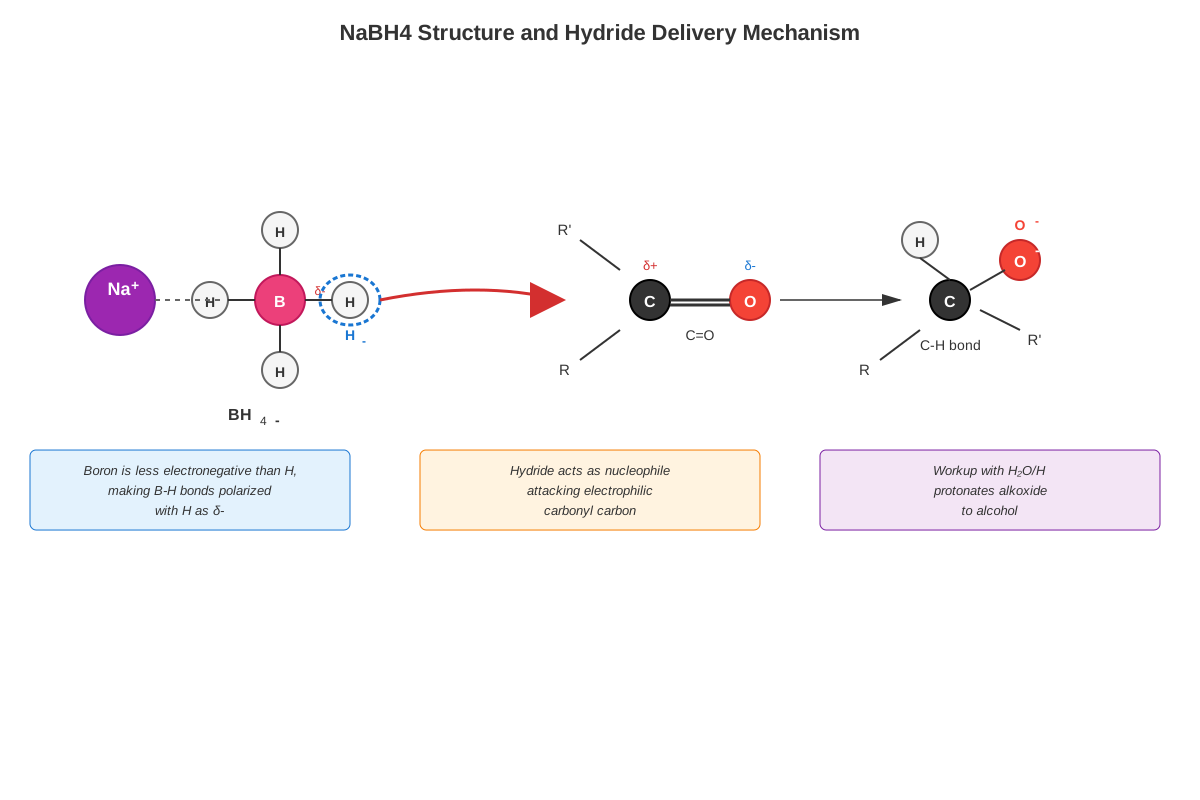
Sodium borohydride (NaBH4) is an ionic compound consisting of sodium cations (Na⁺) and borohydride anions (BH4⁻). The borohydride anion contains a central boron atom bonded to four hydrogen atoms, carrying a formal negative charge. This structure is critical to understanding the reagent's reactivity: the boron-hydrogen bonds are polarized such that hydrogen carries a partial negative charge, making these hydrogens hydridic (H⁻) in character. This hydridic hydrogen acts as a nucleophile, attacking electrophilic carbonyl carbons.
The key physical properties of NaBH4 include its stability in water and alcohols (unlike the more reactive LiAlH4, which reacts violently with protic solvents), its white crystalline solid appearance at room temperature, and its moderate reducing power. The water stability makes NaBH4 particularly useful in laboratory and industrial settings, as reactions can be conducted in aqueous or alcoholic solutions without special precautions for moisture exclusion. However, NaBH4 does slowly decompose in water, especially in acidic conditions, releasing hydrogen gas—a fact occasionally tested on the MCAT.
Mechanism of Reduction
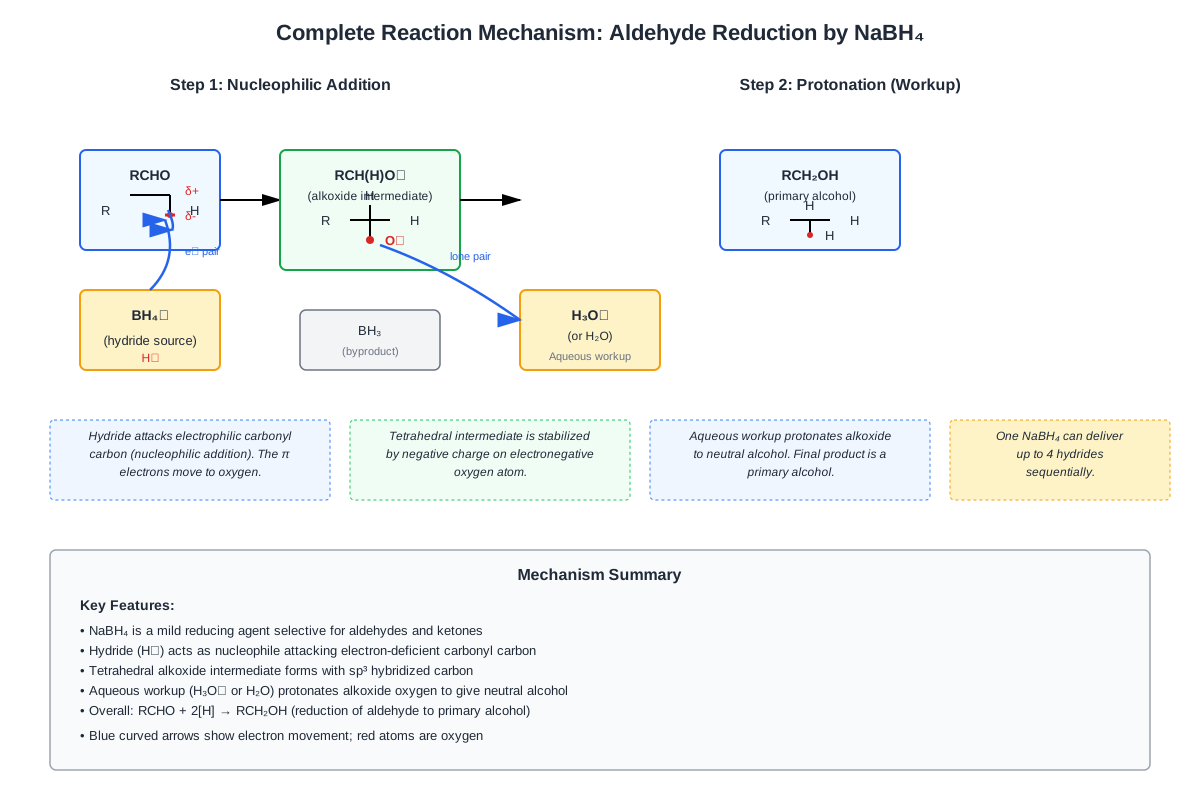
The reduction of carbonyl compounds by NaBH4 proceeds through a nucleophilic addition mechanism. The process begins when a hydride ion (H⁻) from the borohydride anion attacks the electrophilic carbonyl carbon. This carbon is electrophilic due to the polarization of the C=O double bond, where oxygen's higher electronegativity creates a partial positive charge on carbon. The nucleophilic attack occurs from the less hindered face of the carbonyl group, following a trajectory approximately perpendicular to the plane of the carbonyl.
As the hydride attacks, the π bond between carbon and oxygen breaks, with both electrons moving to the oxygen atom, generating an alkoxide intermediate (R₂CHO⁻ for ketones, RCHO⁻ for aldehydes). This tetrahedral alkoxide intermediate is then protonated during the aqueous workup step, typically by adding water or dilute acid, to yield the final alcohol product. One molecule of NaBH4 can theoretically deliver all four of its hydride ions sequentially, reducing up to four carbonyl groups, though in practice, the reactivity decreases with each successive hydride transfer.
Selectivity Pattern: What NaBH4 Reduces
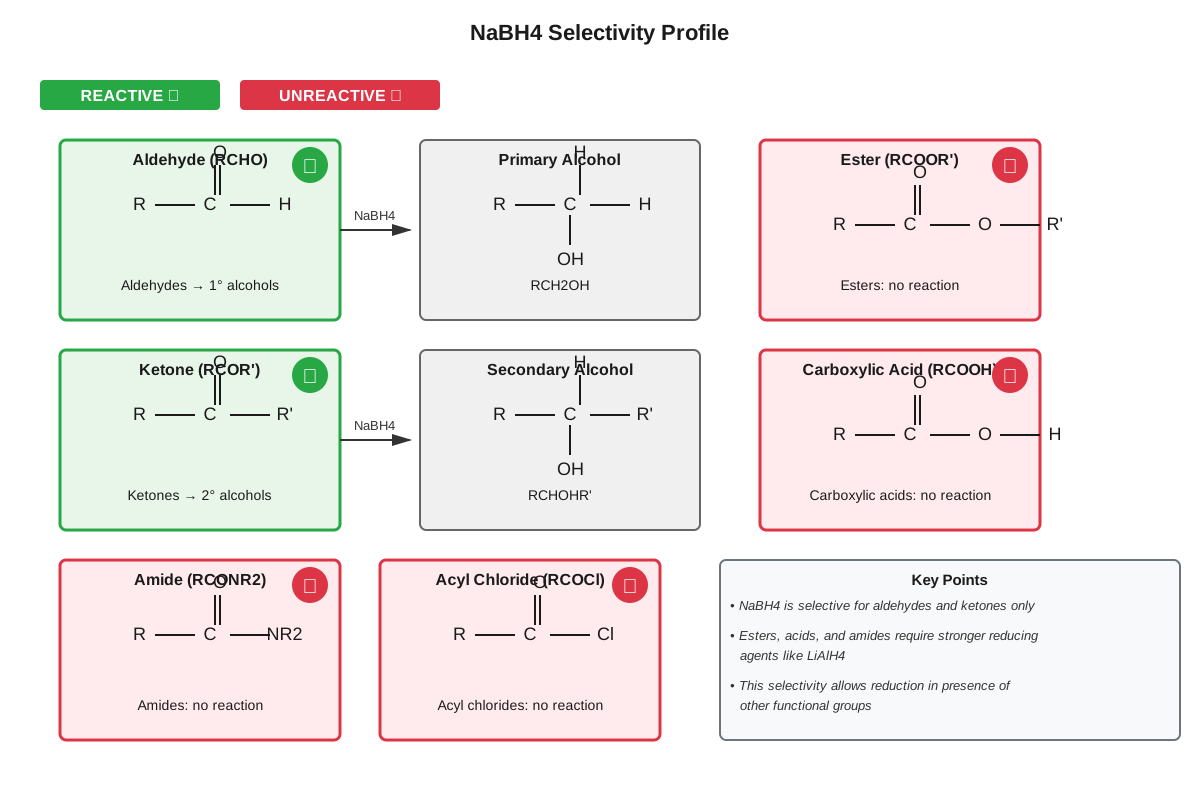
The defining characteristic of NaBH4 for MCAT purposes is its selectivity. This mild reducing agent reduces aldehydes and ketones to primary and secondary alcohols, respectively, but does not reduce carboxylic acids, esters, or amides under standard conditions. This selectivity arises from the relative electrophilicity of different carbonyl carbons and the moderate nucleophilicity of the hydride from NaBH4.
| Functional Group | Reactivity with NaBH4 | Product |
|---|---|---|
| Aldehyde (RCHO) | Reduces readily | Primary alcohol (RCH₂OH) |
| Ketone (R₂CO) | Reduces readily | Secondary alcohol (R₂CHOH) |
| Carboxylic acid (RCOOH) | No reaction | Unchanged |
| Ester (RCOOR') | No reaction | Unchanged |
| Amide (RCONR₂) | No reaction | Unchanged |
| Acyl chloride (RCOCl) | Reduces | Alcohol (via aldehyde) |
| Alkene (C=C) | No reaction | Unchanged |
| Alkyne (C≡C) | No reaction | Unchanged |
Aldehydes are generally more reactive than ketones toward NaBH4 due to both electronic and steric factors. Electronically, aldehydes have only one electron-donating alkyl group attached to the carbonyl carbon (versus two for ketones), making the carbonyl carbon more electrophilic. Sterically, the smaller substituent on aldehydes provides less hindrance to the approaching hydride nucleophile. This difference in reactivity can be exploited in selective reductions when both functional groups are present in the same molecule.
Comparison with Lithium Aluminum Hydride (LiAlH4)
Understanding NaBH4 requires comparing it with lithium aluminum hydride (LiAlH4), a much stronger reducing agent. While NaBH4 selectively reduces aldehydes and ketones, LiAlH4 reduces virtually all carbonyl-containing functional groups, including esters, carboxylic acids, and amides. This difference stems from the greater nucleophilicity of the hydride in LiAlH4, where aluminum is less electronegative than boron, making the Al-H bond more polarized and the hydride more reactive.
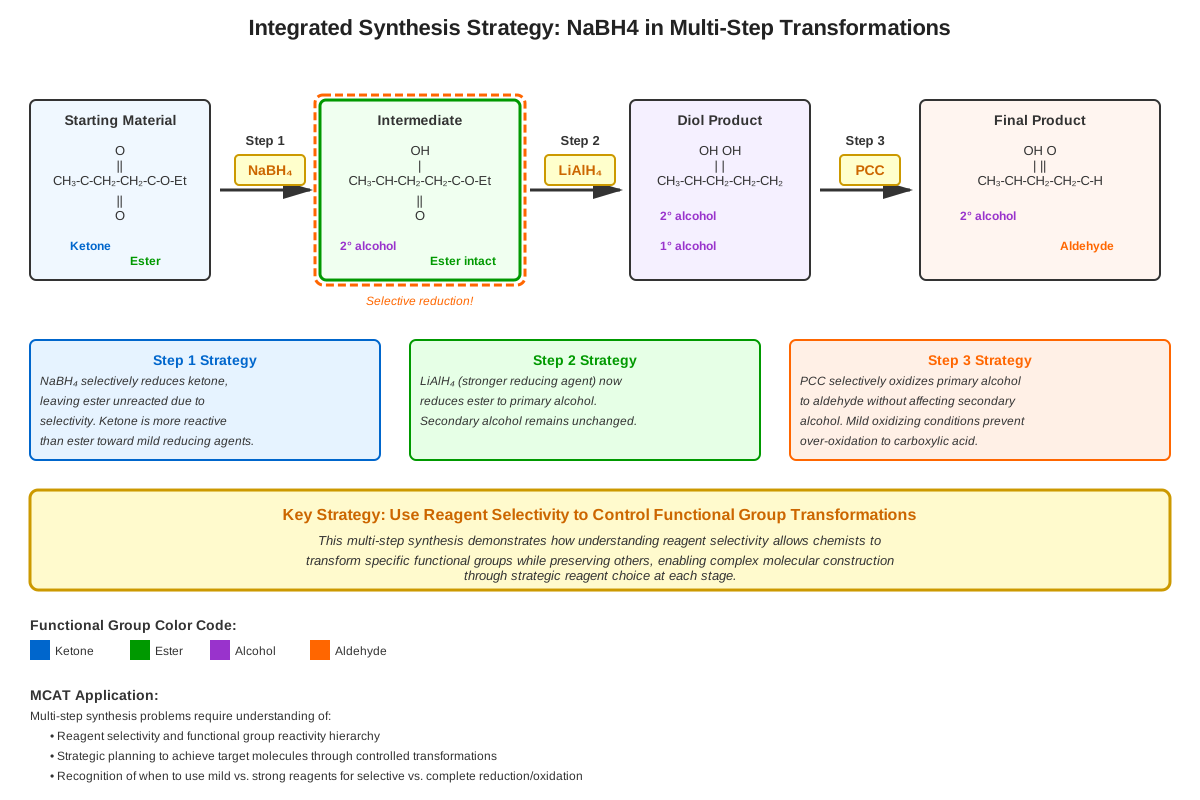
The practical implications are significant: NaBH4 can be used when selectivity is required—reducing a ketone in the presence of an ester, for example—while LiAlH4 would reduce both functional groups indiscriminately. Additionally, NaBH4 is compatible with protic solvents (water, alcohols), whereas LiAlH4 requires anhydrous conditions and reacts violently with water. For the MCAT, recognizing when to use each reagent based on the desired selectivity and the presence of other functional groups is a high-yield skill.
Stereochemistry of NaBH4 Reductions
When NaBH4 reduces a ketone or aldehyde that creates a new stereocenter, the stereochemical outcome depends on the substrate structure. For simple, unhindered ketones, the reduction typically produces a racemic mixture of enantiomers because the hydride can attack either face of the planar carbonyl group with equal probability. However, when the carbonyl is part of a cyclic system or has nearby stereocenters, the reduction can show diastereoselectivity.
In cyclohexanone derivatives, for example, NaBH4 preferentially delivers hydride from the less hindered face, often leading to the more stable equatorial alcohol as the major product. This follows from the principle that nucleophilic attack occurs more readily from the face with less steric congestion. While detailed stereochemical predictions are less commonly tested on the MCAT compared to graduate-level exams, understanding that NaBH4 reductions can create stereocenters and that steric factors influence the outcome is important for passage-based questions involving complex molecules.
Reaction Conditions and Workup
Standard NaBH4 reductions are typically performed in protic solvents such as methanol, ethanol, or water, often at room temperature or with mild heating. The reaction is usually quite rapid, proceeding to completion within minutes to hours depending on the substrate. After the reduction is complete, an aqueous workup is performed to protonate the alkoxide intermediate and neutralize any remaining NaBH4. This workup often involves adding water or dilute acid (such as HCl), which converts the alkoxide to the alcohol and decomposes excess NaBH4 to boric acid and hydrogen gas.
The evolution of hydrogen gas during the workup is a characteristic feature of NaBH4 reactions and can be used as a qualitative indicator that the reagent is being consumed. For MCAT purposes, understanding that the alcohol product is not formed directly but rather through a two-step process (hydride addition followed by protonation) is important for mechanistic questions.
Concept Relationships
The chemistry of NaBH4 sits at the intersection of several fundamental organic chemistry concepts. At its core, NaBH4 reactions exemplify nucleophilic addition to carbonyl groups, one of the most important reaction classes in organic chemistry. The hydride ion acts as a carbon nucleophile surrogate, adding to the electrophilic carbonyl carbon in a mechanism that parallels Grignard additions, cyanide additions, and other nucleophilic carbonyl additions.
The selectivity of NaBH4 connects directly to principles of oxidation and reduction. Reduction involves a decrease in oxidation state, and the conversion of a carbonyl (C=O) to an alcohol (C-OH) represents a two-electron reduction of the carbon atom. Understanding oxidation states allows students to recognize NaBH4 reactions as reductions even when the reagent structure is not explicitly shown.
The relationship map for NaBH4 concepts flows as follows:
Carbonyl electrophilicity → determines → Substrate reactivity → influences → Selectivity pattern → enables → Synthetic applications
Hydride nucleophilicity → drives → Mechanism of reduction → produces → Alkoxide intermediate → requires → Aqueous workup → yields → Alcohol product
Comparison with LiAlH4 → highlights → Selectivity differences → guides → Reagent selection in synthesis
These concepts also connect forward to more advanced topics. Understanding NaBH4 selectivity prepares students for learning about other selective reagents (DIBAL-H for partial ester reduction, for example) and for appreciating how protecting group strategies allow chemists to control reactivity in complex molecules. The stereochemical aspects of NaBH4 reductions connect to broader principles of stereoselective synthesis and conformational analysis.
Quick check — test yourself on NaBH4 so far.
Try Flashcards →High-Yield Facts
⭐ NaBH4 reduces aldehydes to primary alcohols and ketones to secondary alcohols but does NOT reduce carboxylic acids, esters, or amides under standard conditions.
⭐ NaBH4 is a mild, selective reducing agent that is stable in water and alcohols, unlike LiAlH4, which reacts violently with protic solvents.
⭐ The mechanism of NaBH4 reduction involves nucleophilic attack of hydride (H⁻) on the carbonyl carbon, forming an alkoxide intermediate that is protonated during workup.
⭐ Aldehydes react faster than ketones with NaBH4 due to both electronic factors (greater electrophilicity) and steric factors (less hindrance).
⭐ NaBH4 can selectively reduce a ketone or aldehyde in the presence of esters, making it invaluable for multi-step synthesis problems on the MCAT.
- One molecule of NaBH4 can theoretically deliver four hydride ions, reducing up to four carbonyl groups sequentially.
- NaBH4 reductions of unsymmetrical ketones create new stereocenters; in the absence of directing effects, racemic mixtures typically result.
- The aqueous workup of NaBH4 reactions produces hydrogen gas (H₂) as excess reagent decomposes.
- NaBH4 does not reduce carbon-carbon double bonds (alkenes) or triple bonds (alkynes), only carbonyl groups.
- In cyclic ketones, NaBH4 typically delivers hydride from the less hindered face, often producing the more stable alcohol stereoisomer.
- Acyl chlorides (RCOCl) are reduced by NaBH4, though they are more reactive than simple aldehydes or ketones.
- The selectivity of NaBH4 arises from its moderate nucleophilicity—strong enough to attack aldehydes and ketones but too weak for the less electrophilic carbonyls in esters and carboxylic acids.
Common Misconceptions
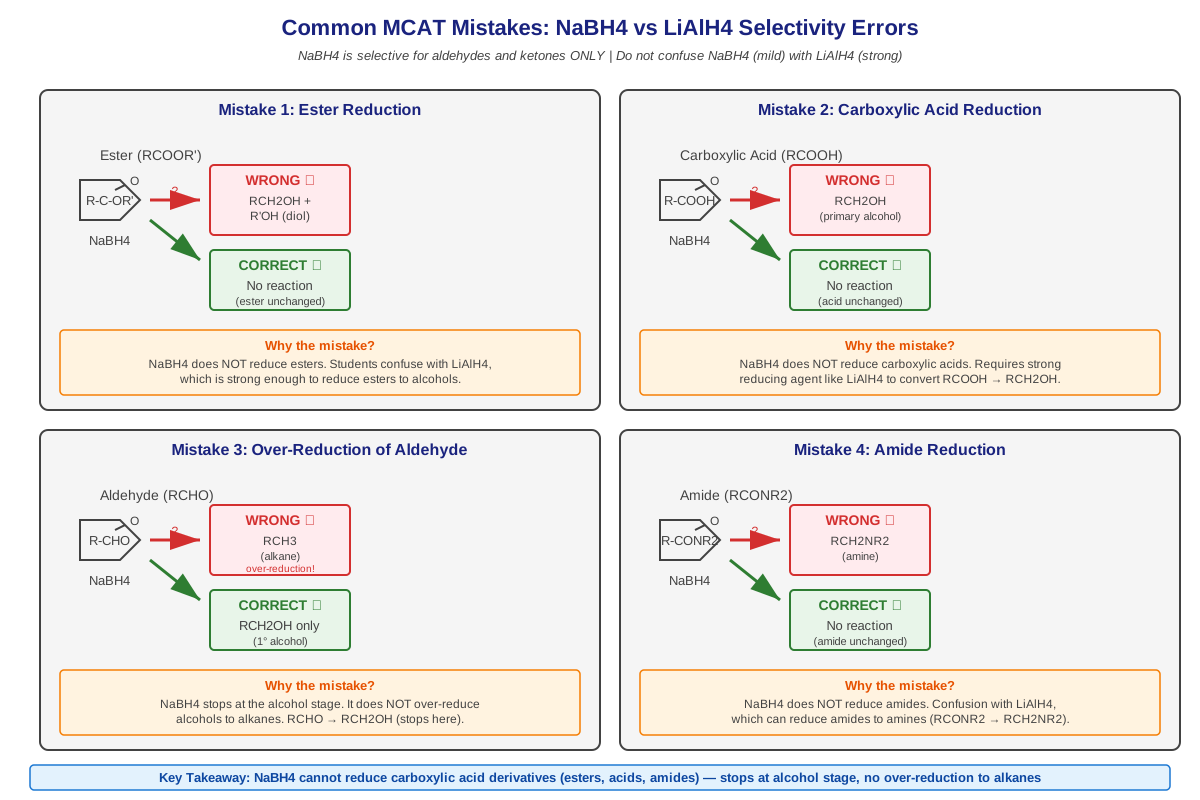
Misconception: NaBH4 reduces all carbonyl-containing compounds, including esters and carboxylic acids.
Correction: NaBH4 is selective and only reduces aldehydes and ketones under standard conditions. Esters, carboxylic acids, and amides are unreactive toward NaBH4 because their carbonyl carbons are less electrophilic due to resonance donation from the adjacent oxygen or nitrogen. This selectivity is the primary reason NaBH4 is chosen over stronger reducing agents like LiAlH4.
Misconception: The product of NaBH4 reduction is formed directly in one step without any workup required.
Correction: NaBH4 reduction produces an alkoxide intermediate (RO⁻), not the final alcohol. An aqueous workup step is necessary to protonate the alkoxide and generate the neutral alcohol product. This two-step process (reduction followed by protonation) is mechanistically important and occasionally tested.
Misconception: NaBH4 and LiAlH4 are interchangeable reducing agents with similar reactivity profiles.
Correction: These reagents differ dramatically in both reactivity and selectivity. LiAlH4 is much stronger and reduces esters, carboxylic acids, and amides in addition to aldehydes and ketones. LiAlH4 also requires anhydrous conditions and reacts violently with water, while NaBH4 is water-stable. Choosing between them requires understanding the substrate and desired selectivity.
Misconception: NaBH4 always produces a single stereoisomer when reducing ketones.
Correction: Unless there are directing effects from nearby groups or conformational constraints, NaBH4 reduction of an unsymmetrical ketone produces a racemic mixture of enantiomers because hydride can attack either face of the planar carbonyl with equal probability. Stereoselectivity requires additional structural features in the substrate.
Misconception: The hydride in NaBH4 is a proton (H⁺) that acts as an electrophile.
Correction: The hydride in NaBH4 is a hydride ion (H⁻), which carries a negative charge and acts as a nucleophile, not an electrophile. This nucleophilic character is essential for attacking the electrophilic carbonyl carbon. Confusing hydride (H⁻) with a proton (H⁺) leads to fundamental misunderstandings of the reaction mechanism.
Misconception: NaBH4 can reduce carbon-carbon double bonds (alkenes) in addition to carbonyl groups.
Correction: NaBH4 does not reduce alkenes or alkynes under standard conditions. The reagent is selective for polar π bonds (C=O) and does not react with nonpolar π bonds (C=C or C≡C). This selectivity allows NaBH4 to reduce carbonyl groups in molecules containing alkenes without affecting the carbon-carbon double bond.
Worked Examples
Example 1: Predicting Products of Selective Reduction
Question: A student wishes to synthesize compound B from compound A (shown below). Which reagent would accomplish this transformation selectively?
Compound A: 4-oxopentanoic acid (a molecule containing both a ketone at C-4 and a carboxylic acid at C-1)
Compound B: 4-hydroxypentanoic acid (the ketone reduced to a secondary alcohol, but the carboxylic acid unchanged)
Options:
- (A) LiAlH4 in ether, then H₃O⁺
- (B) NaBH4 in methanol, then H₂O
- (C) H₂ with Pd/C catalyst
- (D) Na metal in ethanol
Solution:
Step 1: Identify the functional group transformation required. The ketone must be reduced to a secondary alcohol, while the carboxylic acid must remain unchanged.
Step 2: Evaluate each reagent's selectivity:
- Option A (LiAlH4): This strong reducing agent would reduce BOTH the ketone and the carboxylic acid. LiAlH4 reduces carboxylic acids to primary alcohols, so the product would be 1,4-pentanediol, not the desired compound. Eliminate.
- Option B (NaBH4): This selective reducing agent reduces ketones but NOT carboxylic acids. This matches the required transformation perfectly. Keep.
- Option C (H₂/Pd): Catalytic hydrogenation reduces alkenes and alkynes but not carbonyl groups under standard conditions. Eliminate.
- Option D (Na metal): This is a strong reducing agent that would likely reduce both functional groups and is not selective. Eliminate.
Step 3: Confirm the mechanism for NaBH4. The hydride attacks the electrophilic carbonyl carbon of the ketone, forming an alkoxide intermediate. The carboxylic acid is protonated under the reaction conditions and its carbonyl is much less electrophilic due to resonance, so it does not react. Aqueous workup protonates the alkoxide to give the secondary alcohol.
Answer: (B) NaBH4 in methanol, then H₂O
Key Takeaway: This question tests the core concept of NaBH4 selectivity. Recognizing that NaBH4 reduces ketones but not carboxylic acids is essential for solving multi-step synthesis problems on the MCAT.
Example 2: Mechanistic Understanding and Stereochemistry
Question: When 2-methylcyclohexanone is treated with NaBH4 in ethanol followed by aqueous workup, what is the expected product?
Solution:
Step 1: Identify the substrate. 2-methylcyclohexanone is a cyclic ketone with a methyl substituent at the 2-position.
Step 2: Predict the reaction. NaBH4 will reduce the ketone to a secondary alcohol, specifically 2-methylcyclohexanol. The reduction creates a new stereocenter at C-1 (the former carbonyl carbon).
Step 3: Consider stereochemistry. The hydride can attack from either the top or bottom face of the carbonyl. However, the methyl group at C-2 creates steric hindrance on one face. The hydride will preferentially attack from the less hindered face, which is opposite to the methyl group.
Step 4: Determine the major product stereochemistry. Attack from the less hindered face places the incoming hydrogen and the methyl group on opposite sides of the ring. In the most stable chair conformation, this corresponds to the alcohol being equatorial (trans to the methyl group). The major product is trans-2-methylcyclohexanol, though some cis isomer (with the OH and methyl both axial) will also form.
Step 5: Write the mechanism:
- Hydride from BH₄⁻ attacks the carbonyl carbon from the less hindered face
- The π bond breaks, electrons move to oxygen, forming an alkoxide
- During aqueous workup, water or dilute acid protonates the alkoxide oxygen
- The final product is 2-methylcyclohexanol (mixture of stereoisomers, with trans predominating)
Answer: The product is 2-methylcyclohexanol, with the trans isomer (OH equatorial, methyl equatorial) as the major product due to preferential hydride attack from the less hindered face.
Key Takeaway: This example demonstrates that NaBH4 reductions can show stereoselectivity when steric factors favor attack from one face. Understanding conformational analysis and steric effects allows prediction of major products in cyclic systems.
Exam Strategy
When approaching MCAT questions involving NaBH4, begin by identifying all functional groups in the substrate molecule. Create a mental checklist: aldehydes and ketones will react; esters, carboxylic acids, and amides will not. This systematic approach prevents errors in complex molecules with multiple functional groups.
Trigger words and phrases to watch for include:
- "Selective reduction" or "mild reducing agent" → likely NaBH4
- "Reduces aldehydes and ketones but not esters" → definitively NaBH4
- "Water-stable reducing agent" → NaBH4 (not LiAlH4)
- "Converts ketone to secondary alcohol" → reduction, possibly NaBH4
- "Protic solvent" in the reaction conditions → compatible with NaBH4, not LiAlH4
For process-of-elimination strategies, remember that if a question asks which reagent will reduce a ketone WITHOUT affecting an ester in the same molecule, NaBH4 is almost certainly the answer. Conversely, if the question requires reduction of an ester or carboxylic acid, eliminate NaBH4 immediately and look for LiAlH4 or other stronger reducing agents.
Time allocation: Most NaBH4 questions can be answered in 60-90 seconds once you've mastered the selectivity pattern. Don't waste time drawing out full mechanisms unless specifically asked; instead, focus on quickly identifying which functional groups will react. For synthesis questions, if you see a ketone or aldehyde being converted to an alcohol while other carbonyl groups remain intact, NaBH4 should be your first consideration.
In passage-based questions, NaBH4 often appears in the context of pharmaceutical synthesis or natural product modification. The passage may provide a complex molecule and ask which positions will be reduced. Quickly scan for aldehydes and ketones, mark them mentally, and predict alcohol formation at those positions only. Be cautious of distractors that suggest reduction of esters or amides—these are designed to catch students who haven't mastered the selectivity pattern.
Memory Techniques
Mnemonic for NaBH4 selectivity: "Nice Borohydride Hits Aldehydes and Ketones" (NBHAK)
Remember that NaBH4 is the "Mild Child" of reducing agents—it's gentle and selective, only reducing the most reactive carbonyls (aldehydes and ketones). In contrast, LiAlH4 is the "Wild Child"—aggressive and non-selective, reducing everything in sight.
Visualization strategy: Picture the carbonyl carbon as a target with different levels of accessibility. Aldehydes and ketones are "open targets" that NaBH4's hydride can easily hit. Esters, carboxylic acids, and amides have "shields" (resonance donation from adjacent heteroatoms) that protect them from NaBH4's relatively weak hydride nucleophile. Only the stronger LiAlH4 can penetrate these shields.
Acronym for reaction conditions: "WAMP" - Water-stable, Alcohol solvents, Mild conditions, Protonation workup needed
For remembering the product: "Ketones → Secondary, Aldehydes → Primary" (KSAP). The number of carbons attached to the carbonyl determines the alcohol type produced.
Summary
Sodium borohydride (NaBH4) is a selective, mild reducing agent that converts aldehydes to primary alcohols and ketones to secondary alcohols through a nucleophilic addition mechanism. The hydride ion from the borohydride anion attacks the electrophilic carbonyl carbon, forming an alkoxide intermediate that is subsequently protonated during aqueous workup to yield the alcohol product. The defining characteristic of NaBH4 for MCAT purposes is its selectivity: it reduces aldehydes and ketones but does not reduce carboxylic acids, esters, or amides under standard conditions. This selectivity arises from the moderate nucleophilicity of the hydride and the reduced electrophilicity of carbonyl carbons in carboxylic acid derivatives due to resonance. Unlike the stronger reducing agent LiAlH4, NaBH4 is stable in protic solvents like water and alcohols, making it practical for laboratory use. Understanding when to use NaBH4 versus other reducing agents, predicting its reaction products, and recognizing its selectivity pattern are essential skills for MCAT success in organic chemistry questions involving oxidation and reduction.
Key Takeaways
- NaBH4 selectively reduces aldehydes and ketones to alcohols but does NOT reduce esters, carboxylic acids, or amides
- The mechanism involves nucleophilic attack of hydride (H⁻) on the carbonyl carbon, followed by aqueous workup to protonate the alkoxide intermediate
- NaBH4 is water-stable and compatible with protic solvents, unlike the more reactive LiAlH4
- Aldehydes react faster than ketones with NaBH4 due to electronic and steric factors
- The selectivity of NaBH4 makes it invaluable for multi-step synthesis problems where preservation of certain functional groups is required
- Stereochemical outcomes depend on substrate structure; unhindered ketones typically give racemic products, while cyclic systems may show stereoselectivity
- Recognizing trigger phrases like "selective reduction" or "mild reducing agent" helps identify NaBH4 as the correct answer on exam questions
Related Topics
Lithium Aluminum Hydride (LiAlH4): A stronger, non-selective reducing agent that reduces esters, carboxylic acids, and amides in addition to aldehydes and ketones. Mastering NaBH4 provides the foundation for understanding how reagent strength affects selectivity.
Oxidation of Alcohols: The reverse process of reduction; understanding NaBH4 reductions helps predict which oxidizing agents (PCC, Jones reagent, etc.) will convert alcohols back to carbonyl compounds.
Grignard Reactions: Another class of nucleophilic additions to carbonyl groups, where carbon nucleophiles (rather than hydride) attack aldehydes and ketones. The mechanistic parallels reinforce understanding of carbonyl electrophilicity.
Protecting Groups: In complex synthesis, protecting groups temporarily mask functional groups that would otherwise react with NaBH4, enabling selective transformations. Understanding NaBH4 selectivity is prerequisite knowledge for this advanced topic.
Stereochemistry and Conformational Analysis: The stereochemical outcomes of NaBH4 reductions in cyclic systems connect to broader principles of conformational preferences and stereoselective synthesis.
Practice CTA
Now that you've mastered the core concepts of NaBH4 and its role in selective carbonyl reduction, it's time to solidify your understanding through active practice. Attempt the practice questions and flashcards associated with this topic to test your ability to predict reaction products, select appropriate reagents for synthesis problems, and avoid common misconceptions. Remember, the MCAT rewards not just knowledge but the ability to apply concepts quickly and accurately under time pressure. Each practice question you complete builds the pattern recognition and problem-solving speed that will serve you on test day. You've got this—now go prove your mastery!
Sign up free to keep reading
Create a free AnvayaPrep account to finish this MCAT guide on NaBH4 — plus flashcards and practice questions.