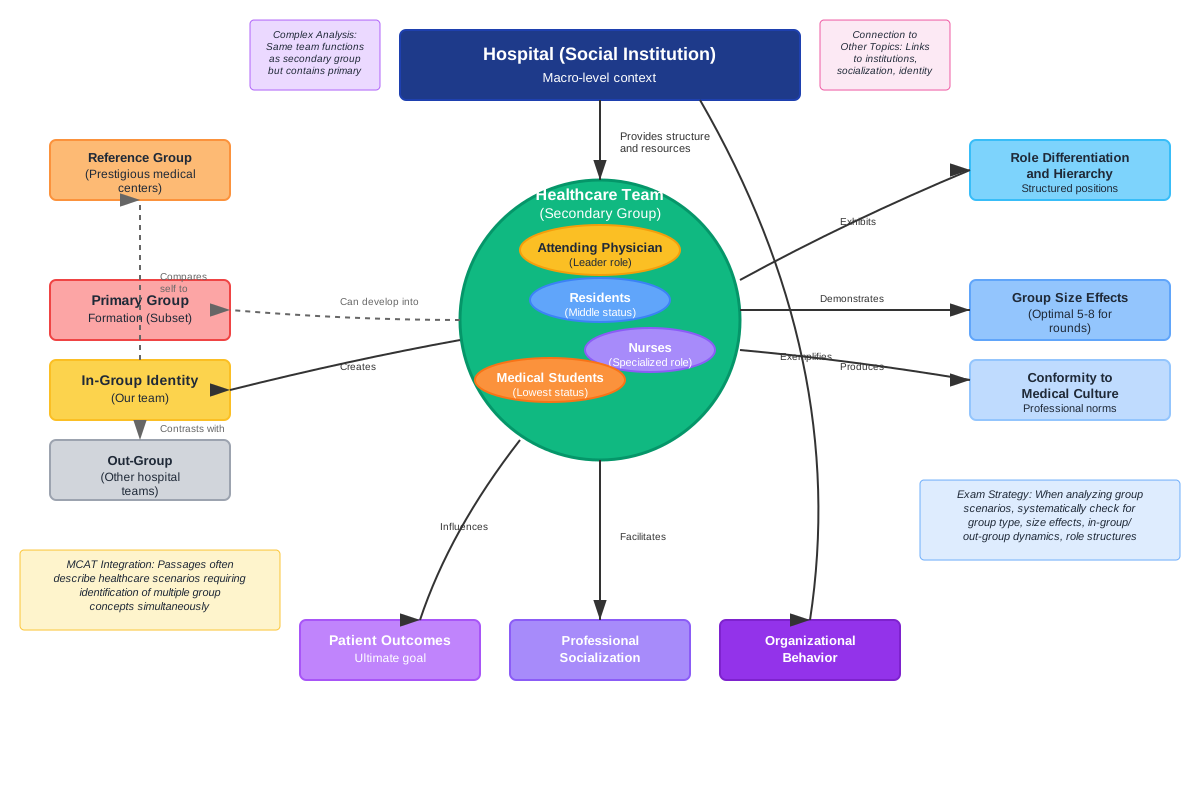
Overview
Groups represent one of the foundational concepts in Sociology and are essential to understanding human behavior within Social Structure and Institutions. A group consists of two or more individuals who share a sense of identity, interact with one another in structured ways, and have shared expectations about each other's behavior. Unlike mere aggregates or categories of people, groups involve meaningful social connections and influence individual behavior, attitudes, and identity formation. Understanding groups is critical for the MCAT because questions frequently test the ability to distinguish between different types of groups, analyze group dynamics, and predict how group membership affects individual behavior in medical and social contexts.
The study of groups bridges multiple domains tested on the MCAT, including social psychology, organizational behavior, and cultural sociology. Groups shape everything from patient compliance with medical recommendations to healthcare team effectiveness and health disparities across populations. The MCAT Psychological, Social, and Biological Foundations of Behavior section regularly presents passages describing social scenarios, research studies, or clinical situations where understanding group dynamics is essential for selecting correct answers. Questions may ask test-takers to identify group types, predict behavioral outcomes based on group membership, or analyze how group processes influence health behaviors and outcomes.
Mastering Groups Sociology concepts enables students to tackle complex MCAT passages that integrate social identity theory, conformity, social influence, and institutional behavior. This topic connects directly to concepts such as social identity, socialization, social institutions, organizational structures, and collective behavior. A solid understanding of groups provides the framework for analyzing how individuals navigate multiple social contexts and how these contexts shape health-related decisions and outcomes—themes that appear consistently across MCAT practice materials and actual exam questions.
Learning Objectives
- [ ] Define Groups using accurate Sociology terminology
- [ ] Explain why Groups matters for the MCAT
- [ ] Apply Groups to exam-style questions
- [ ] Identify common mistakes related to Groups
- [ ] Connect Groups to related Sociology concepts
- [ ] Distinguish between primary and secondary groups with specific examples
- [ ] Analyze how group membership influences individual behavior and identity
- [ ] Evaluate the differences between in-groups, out-groups, and reference groups in social contexts
- [ ] Apply group dynamics concepts to healthcare settings and medical scenarios
Prerequisites
- Basic understanding of socialization: Groups are primary agents of socialization that shape individual values, norms, and behaviors throughout the lifespan
- Familiarity with social norms: Groups establish and enforce norms that govern member behavior and create expectations for social interaction
- Concept of social identity: Group membership contributes significantly to how individuals define themselves and relate to others
- Understanding of social interaction: Groups represent structured patterns of interaction that differ from random or casual encounters
Why This Topic Matters
Clinical and Real-World Significance
Understanding groups is essential for medical professionals who must navigate complex healthcare teams, understand patient support networks, and recognize how group membership affects health behaviors. Physicians work within primary groups (close-knit medical teams) and secondary groups (hospital departments, professional organizations), and must understand how these different group types influence communication, decision-making, and patient care quality. Patient outcomes often depend on family groups, support groups, and community groups that influence treatment adherence, lifestyle modifications, and mental health. Health disparities frequently correlate with group membership based on ethnicity, socioeconomic status, or geographic location, making group analysis essential for addressing inequities in healthcare access and outcomes.
Exam Statistics and Question Types
Groups concepts appear in approximately 8-12% of MCAT Psychological, Social, and Biological Foundations of Behavior questions, making this a high-yield topic. Questions typically present in three formats: (1) passage-based questions requiring identification of group types in research studies or social scenarios, (2) discrete questions testing definitions and distinctions between group categories, and (3) application questions asking students to predict behavioral outcomes based on group dynamics. The MCAT frequently embeds groups concepts within passages about social psychology experiments, public health interventions, organizational behavior studies, or clinical team dynamics.
Common Exam Appearances
MCAT passages commonly describe research studies examining conformity, social influence, or collective behavior where identifying the relevant group type is essential for answering questions correctly. Clinical vignettes may present scenarios involving healthcare teams (secondary groups), patient families (primary groups), or professional medical associations (secondary groups) and ask how group membership influences decision-making or behavior. Public health passages often discuss community groups, reference groups, or social networks and their impact on health behaviors, requiring students to apply group concepts to predict intervention effectiveness or explain health outcome patterns.
Core Concepts
Definition and Characteristics of Groups
A group is defined as two or more people who interact with one another, share similar characteristics, and collectively have a sense of unity or common identity. This sociological definition distinguishes true groups from mere aggregates (collections of people in the same place without meaningful interaction, such as people waiting at a bus stop) and categories (people who share a characteristic but don't interact, such as all people born in 1995). Groups possess several defining characteristics: members interact regularly, share a sense of belonging or identity, have defined roles and statuses, establish norms governing behavior, and recognize boundaries distinguishing members from non-members.
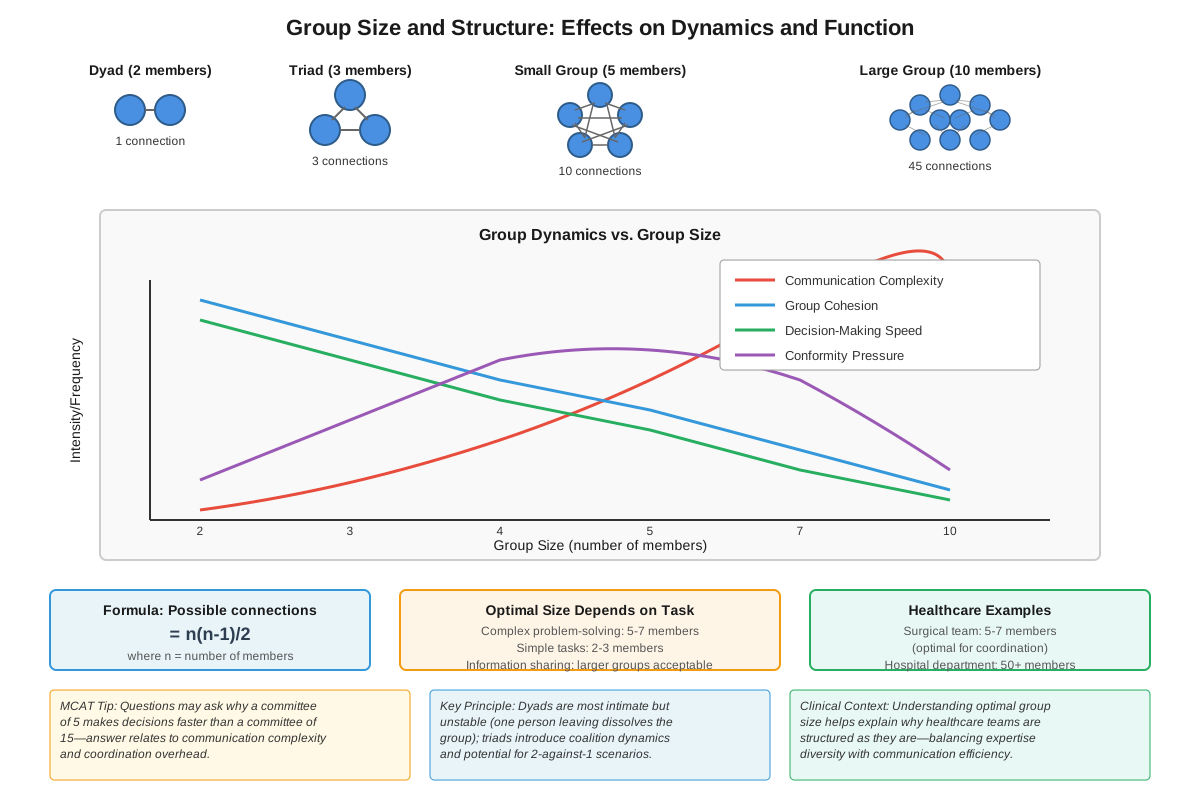
The size of a group significantly affects its dynamics. A dyad (two-person group) represents the smallest and most fragile group type, as the removal of one member dissolves the group entirely. Dyads feature intense, direct interaction and equal power distribution unless external factors create asymmetry. A triad (three-person group) introduces greater stability but also complexity, as coalition formation becomes possible (two members can align against the third). As groups grow larger, they become more stable but interaction becomes less intimate, formal structures emerge, and subgroups may form. The transition from small to large groups fundamentally changes interaction patterns, decision-making processes, and member satisfaction.
Primary Groups
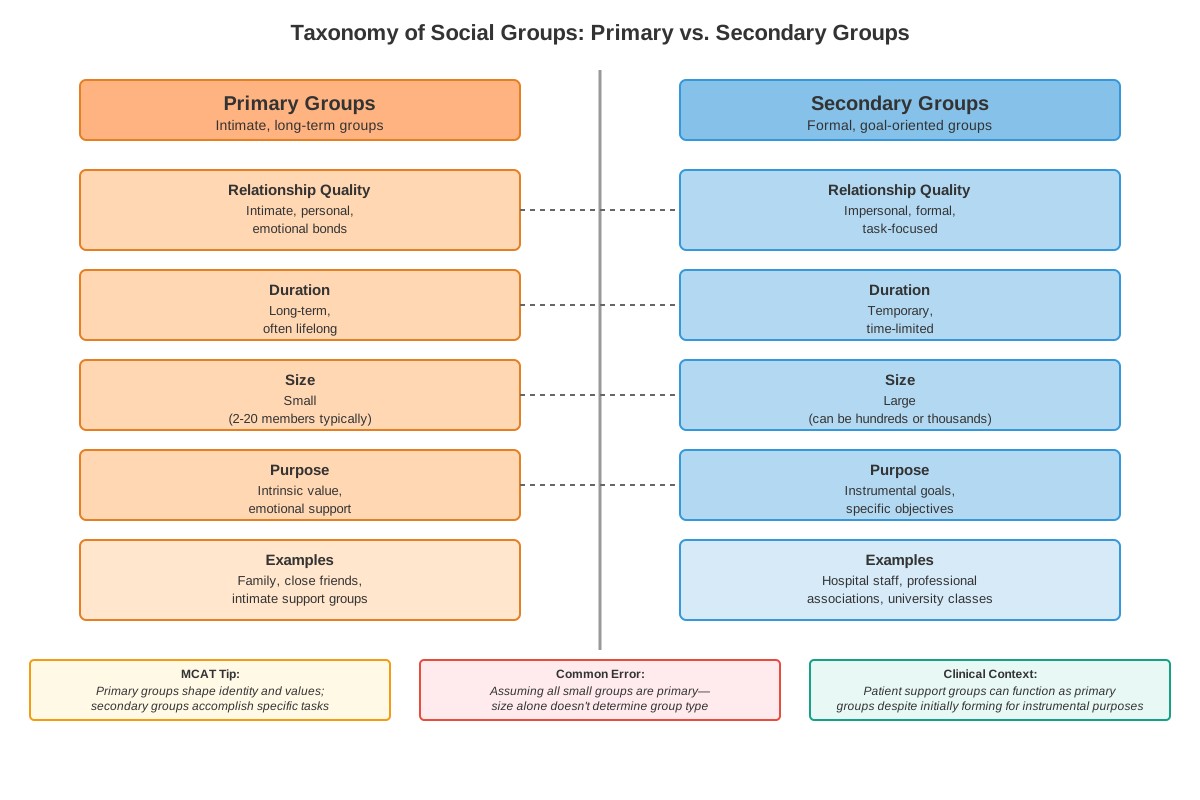
Primary groups are small, intimate, long-lasting groups characterized by face-to-face interaction, emotional depth, and relationships valued for their own sake rather than for instrumental purposes. Charles Horley Cooley introduced this concept, emphasizing that primary groups are "primary" because they are fundamental to forming social nature and ideals. Family units, close friend circles, and long-term romantic partnerships exemplify primary groups. These groups profoundly influence personality development, provide emotional support, and shape core values and identity. Members know each other deeply, interact frequently across multiple contexts, and maintain relationships that endure over extended periods.
Primary groups serve critical functions in society and individual development. They provide emotional security, facilitate socialization during childhood and throughout life, offer social support during stress or illness, and create a sense of belonging that contributes to psychological well-being. In healthcare contexts, primary groups (especially families) significantly influence health behaviors, treatment decisions, and recovery outcomes. The MCAT frequently tests understanding of how primary group membership affects patient compliance, mental health, and responses to illness. Primary groups also serve as reference points for self-evaluation and identity formation, making them essential for understanding social psychology concepts tested on the exam.
Secondary Groups
Secondary groups are larger, more impersonal, goal-oriented groups characterized by formal relationships and interactions focused on achieving specific objectives rather than emotional connection. Members interact in limited, specialized roles rather than as whole persons. Examples include workplace teams, professional organizations, university classes, political parties, and hospital departments. Secondary groups are typically temporary or role-specific, meaning membership may change as individuals move through different life stages or achieve particular goals. Relationships in secondary groups are instrumental—valued for what they help accomplish rather than for intrinsic emotional satisfaction.
Secondary groups serve different functions than primary groups, focusing on task completion, skill development, credential acquisition, and achievement of collective goals. In medical settings, healthcare teams function as secondary groups where professionals collaborate based on specialized roles (physician, nurse, pharmacist) to achieve patient care objectives. Understanding secondary group dynamics helps explain organizational behavior, professional socialization, and how institutional structures shape individual actions. The MCAT tests the ability to distinguish primary from secondary groups and predict how group type influences behavior, communication patterns, and decision-making processes.
| Feature | Primary Groups | Secondary Groups |
|---|---|---|
| Size | Small | Large |
| Duration | Long-term, often lifelong | Temporary or role-specific |
| Interaction | Face-to-face, frequent, intimate | Limited, formal, role-based |
| Relationships | Valued intrinsically | Valued instrumentally |
| Examples | Family, close friends | Workplace teams, classes |
| Function | Emotional support, socialization | Goal achievement, task completion |
| Identity Impact | Profound, shapes core self | Limited to specific roles |
In-Groups and Out-Groups
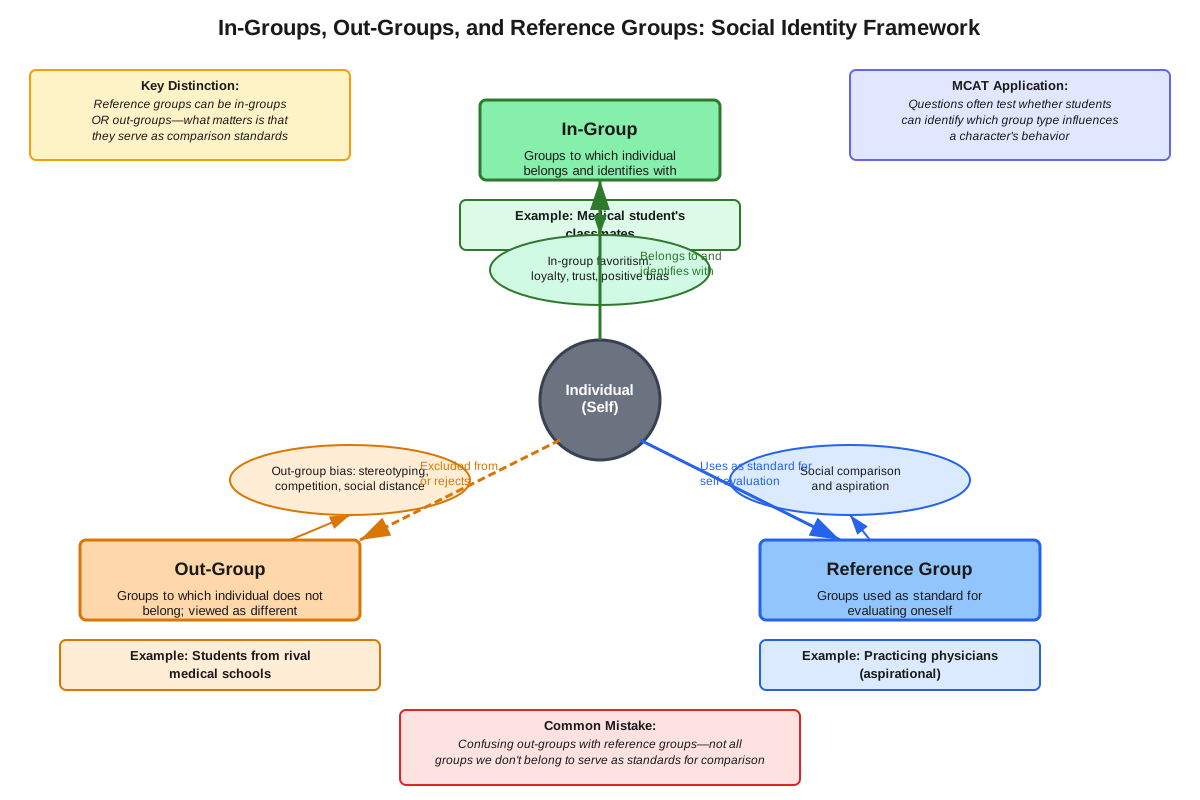
In-groups are groups to which an individual belongs and with which they identify, while out-groups are groups to which an individual does not belong and may view as different or competitive. This distinction, introduced by William Graham Sumner, is fundamental to understanding social identity, prejudice, and intergroup conflict. In-group membership creates feelings of loyalty, solidarity, and preference for fellow members (in-group bias or in-group favoritism). Individuals tend to view in-group members more positively, attribute their successes to internal qualities, and excuse their failures as situational. Conversely, out-group members may be stereotyped, viewed with suspicion, or blamed for negative outcomes (out-group homogeneity bias—the tendency to see out-group members as more similar to each other than they actually are).
The in-group/out-group distinction has profound implications for healthcare and social behavior. Medical professionals may unconsciously favor patients who share their social group memberships (ethnicity, socioeconomic status, education level) while providing different quality care to out-group members, contributing to health disparities. Understanding this dynamic is essential for recognizing implicit bias and its effects on clinical decision-making. The MCAT frequently presents scenarios requiring identification of in-group bias, analysis of intergroup conflict, or prediction of how group boundaries affect behavior. In-group/out-group dynamics also connect to concepts like discrimination, prejudice, social identity theory, and stereotype formation—all high-yield MCAT topics.
Reference Groups
Reference groups are groups that individuals use as standards for evaluating themselves and their behavior, regardless of whether they are actual members. Reference groups serve two primary functions: normative function (establishing standards for behavior and attitudes) and comparative function (providing benchmarks for self-evaluation). An individual may aspire to join a reference group (aspirational reference group), such as a pre-medical student viewing practicing physicians as a reference group, or may use a group they wish to avoid as a negative reference point (dissociative reference group).
Reference groups powerfully influence behavior, attitudes, and identity even without direct membership. Medical students often adopt the values, language, and behaviors of physicians (their aspirational reference group) during professional socialization, a process called anticipatory socialization. Understanding reference groups helps explain why individuals may adopt health behaviors, fashion choices, or attitudes that align with groups they admire or aspire to join. The MCAT tests this concept by presenting scenarios where individuals modify behavior to match reference group standards or experience conflict between multiple reference groups with competing norms. Reference groups also connect to concepts like social comparison theory, relative deprivation, and status attainment.
Social Networks
Social networks represent the web of social relationships surrounding an individual, including both strong ties (close relationships with frequent interaction) and weak ties (acquaintances or distant connections). Mark Granovetter's research demonstrated the "strength of weak ties"—weak connections often provide access to novel information, opportunities, and resources unavailable through close-knit primary groups. Social networks influence health outcomes through multiple pathways: providing social support, transmitting health information, modeling health behaviors, and facilitating access to healthcare resources. Network structure (density, centrality, clustering) affects how quickly information or behaviors spread through a population.
In healthcare contexts, understanding social networks helps explain disease transmission patterns, diffusion of health innovations, effectiveness of peer-based interventions, and social determinants of health. Patients with larger, more diverse social networks often experience better health outcomes, faster recovery from illness, and greater treatment adherence. The MCAT may present research passages examining social network effects on health behaviors or ask students to predict how network structure influences information flow or behavior change. Social networks connect to concepts like social capital, social support, collective efficacy, and community health.
Group Dynamics and Processes
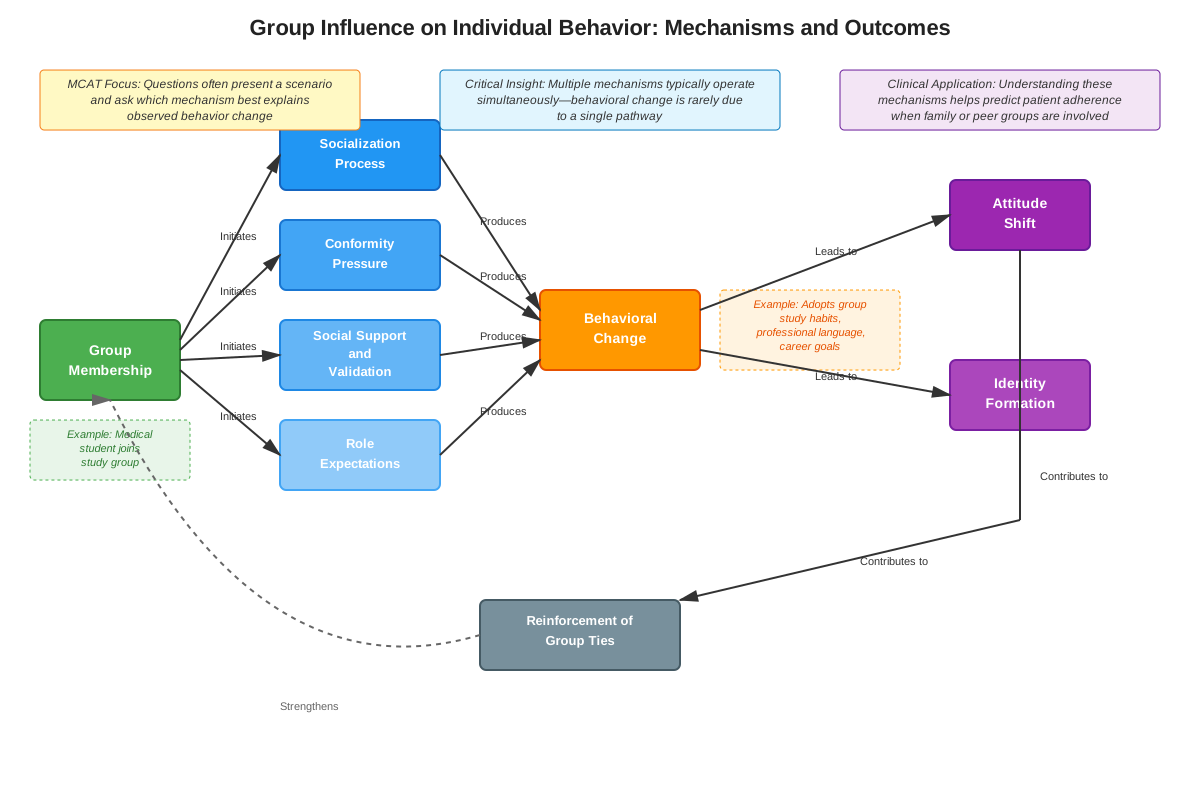
Group dynamics refers to the patterns of interaction, influence, and change that occur within groups over time. Key processes include conformity (changing behavior or attitudes to match group norms), groupthink (prioritizing consensus over critical evaluation of alternatives), social facilitation (improved performance on simple tasks in the presence of others), social loafing (reduced individual effort in group settings), and deindividuation (loss of self-awareness and individual accountability in group contexts). Understanding these processes helps predict how group membership influences individual behavior and decision-making.
In medical settings, group dynamics significantly affect healthcare team performance, patient safety, and clinical decision-making. Groupthink can lead to medical errors when team members fail to voice concerns about treatment plans. Social loafing may reduce individual accountability in large healthcare teams. Understanding these dynamics enables medical professionals to structure teams effectively, encourage dissenting opinions, and maintain individual accountability. The MCAT frequently tests group dynamics concepts through passages describing research studies or clinical scenarios where group processes influence outcomes. These concepts connect to social psychology topics like obedience, compliance, and social influence.
Concept Relationships
Groups concepts form an interconnected network essential for understanding social behavior. Primary groups and secondary groups represent a fundamental distinction based on relationship quality, duration, and purpose, with primary groups providing the emotional foundation that enables individuals to function effectively in secondary groups. In-groups and out-groups can be either primary or secondary—a family (primary group) serves as an in-group, while a professional organization (secondary group) also functions as an in-group for its members. The in-group/out-group distinction drives reference group selection, as individuals typically choose in-groups or aspirational groups as positive reference points.
Social networks encompass both primary and secondary group connections, with primary groups typically representing strong ties and secondary groups often providing weak ties. Network structure influences which groups become reference groups and how quickly norms, behaviors, or information spread between groups. Group dynamics processes (conformity, groupthink, social facilitation) operate within all group types but manifest differently—conformity pressure may be stronger in primary groups due to emotional bonds, while groupthink more commonly affects secondary groups focused on task completion.
These concepts connect to broader sociology topics: groups serve as agents of socialization, teaching norms and values; group membership contributes to social identity and self-concept; groups form the building blocks of social institutions (families form the institution of family, work groups form economic institutions); and group boundaries create social stratification when membership correlates with unequal resource distribution. Understanding these relationships enables comprehensive analysis of MCAT passages integrating multiple sociology concepts.
Relationship Map:
Individual → joins → Groups (primary/secondary) → creates → In-group/Out-group distinctions → influences → Reference Group selection → shapes → Social Identity → affects → Behavior and Attitudes → operates through → Group Dynamics → embedded within → Social Networks → forms → Social Structure and Institutions
Quick check — test yourself on Groups so far.
Try Flashcards →High-Yield Facts
⭐ Primary groups are small, intimate, long-lasting groups with face-to-face interaction and relationships valued intrinsically (family, close friends), while secondary groups are larger, impersonal, goal-oriented groups with formal relationships valued instrumentally (workplace teams, classes).
⭐ In-groups are groups to which individuals belong and identify, leading to in-group bias (favoritism toward members), while out-groups are groups to which individuals don't belong, often leading to stereotyping and out-group homogeneity bias.
⭐ Reference groups provide standards for self-evaluation and behavior regardless of actual membership; aspirational reference groups are groups individuals want to join, while dissociative reference groups are groups individuals want to avoid.
⭐ A dyad (two-person group) is the smallest and most fragile group type, while a triad (three-person group) introduces coalition formation possibilities and greater stability.
⭐ Aggregates are collections of people in the same place without meaningful interaction, and categories are people sharing characteristics without interaction—neither constitutes a true group.
- Social networks include both strong ties (close relationships) and weak ties (acquaintances); weak ties often provide access to novel information and opportunities unavailable through close connections.
- Groupthink occurs when groups prioritize consensus over critical evaluation, potentially leading to poor decisions, particularly in cohesive secondary groups focused on task completion.
- Social facilitation describes improved performance on simple tasks in the presence of others, while social loafing describes reduced individual effort in group settings where individual contributions are less identifiable.
- Primary groups profoundly influence socialization, personality development, and core values, while secondary groups facilitate anticipatory socialization into professional roles.
- Group membership significantly affects health behaviors, treatment adherence, and health outcomes through mechanisms including social support, norm transmission, and access to resources.
- Deindividuation refers to loss of self-awareness and reduced individual accountability in group contexts, potentially leading to behavior individuals wouldn't perform alone.
Common Misconceptions
Misconception: All groups that meet regularly are primary groups. → Correction: Primary groups require intimate, emotional relationships valued intrinsically, not just regular interaction. A weekly work meeting involves a secondary group despite regular contact because relationships are formal, role-based, and instrumentally valued.
Misconception: In-groups and out-groups are always based on demographic characteristics like race or ethnicity. → Correction: In-group/out-group distinctions can form around any shared characteristic or membership, including temporary groups (sports teams, class sections) or arbitrary distinctions (experimental groups in research studies). The key is identification and perceived boundaries, not demographic similarity.
Misconception: Reference groups must be groups the individual wants to join. → Correction: Reference groups include both aspirational groups (positive reference points) and dissociative groups (negative reference points individuals want to avoid). Both types influence behavior by establishing standards for comparison.
Misconception: Larger groups are always more effective than smaller groups. → Correction: Group size involves trade-offs. Larger groups offer more resources and stability but suffer from coordination challenges, reduced intimacy, social loafing, and communication difficulties. Optimal group size depends on the task and goals.
Misconception: Primary groups only include family members. → Correction: While families are prototypical primary groups, any small, intimate, long-lasting group with face-to-face interaction and intrinsically valued relationships qualifies. Close friend groups, long-term romantic partnerships, and tight-knit communities can all function as primary groups.
Misconception: Group dynamics concepts like conformity only apply to weak-willed individuals. → Correction: Conformity and other group influence processes affect virtually everyone regardless of personality strength. These are fundamental social psychological processes driven by needs for acceptance, accuracy, and social coordination, not individual weakness.
Worked Examples
Example 1: Distinguishing Group Types in a Clinical Scenario
Vignette: Dr. Martinez works in a large hospital where she attends weekly department meetings with 30 other physicians to discuss policy changes. She also participates in a small tumor board with three other oncologists who have worked together for eight years, meeting daily to discuss complex patient cases. Outside work, Dr. Martinez regularly attends meetings of the State Medical Association, an organization of 5,000 physicians she joined to advance her career. She aspires to join the leadership committee of this association. Finally, Dr. Martinez has a close group of three friends from medical school with whom she shares personal concerns and celebrates life milestones.
Question: Identify the primary groups, secondary groups, and reference groups in this scenario.
Solution:
Step 1: Identify primary groups by looking for small, intimate, long-lasting groups with face-to-face interaction and intrinsically valued relationships.
- The small tumor board (four oncologists working together for eight years with daily interaction) shows characteristics of a primary group due to long duration and close collaboration, but the relationship is primarily professional and task-focused, making it a secondary group.
- The three medical school friends with whom Dr. Martinez shares personal concerns and celebrates milestones clearly constitute a primary group—small size, intimate relationships, long duration, and intrinsically valued connections.
Step 2: Identify secondary groups by looking for larger, more formal, goal-oriented groups with instrumental relationships.
- The weekly department meetings (30 physicians discussing policy) represent a secondary group—large size, formal structure, specific purpose (policy discussion), and role-based interaction.
- The tumor board, despite close collaboration, functions as a secondary group because relationships are professional, role-based, and focused on task completion (patient care decisions).
- The State Medical Association (5,000 members) is clearly a secondary group—very large, formal organization, instrumental purpose (career advancement), and limited personal interaction.
Step 3: Identify reference groups by looking for groups used as standards for self-evaluation or behavior, particularly aspirational groups.
- The State Medical Association leadership committee serves as an aspirational reference group—Dr. Martinez wants to join this group and likely uses it as a standard for professional behavior and achievement.
- The medical school friends might also serve as a reference group for personal life decisions and values.
Answer: Primary group: medical school friends. Secondary groups: department meetings, tumor board, State Medical Association. Reference group: State Medical Association leadership committee (aspirational).
Connection to Learning Objectives: This example demonstrates application of group concepts to exam-style clinical scenarios, distinguishes between primary and secondary groups using specific criteria, and identifies reference groups in professional contexts.
Example 2: Analyzing Group Dynamics in a Research Study
Vignette: Researchers studied medication adherence among diabetes patients. They found that patients who participated in weekly support groups with other diabetics showed 40% better adherence than patients receiving only individual counseling. Patients in support groups reported feeling accountable to other members and stated that seeing others successfully manage diabetes motivated their own efforts. However, researchers noted that in groups larger than 12 members, some patients contributed less to discussions and adherence rates declined. Additionally, patients who identified strongly with their support group showed in-group bias, rating their group's diabetes management strategies as superior to other groups' approaches, even when strategies were objectively similar.
Question: Explain how group concepts account for the observed patterns in adherence, participation, and bias.
Solution:
Step 1: Analyze why support groups improved adherence compared to individual counseling.
- Support groups create social networks that provide multiple benefits: emotional support, information sharing, and behavioral modeling. Seeing others successfully manage diabetes provides vicarious learning and motivation.
- The groups function as reference groups, establishing norms for diabetes management and providing standards for self-evaluation. Patients compare their adherence to group norms.
- Feeling "accountable to other members" demonstrates how group membership creates social pressure for conformity to group norms (good adherence), a form of normative social influence.
- Over time, these support groups may develop characteristics of primary groups for some members—regular face-to-face interaction, emotional connections, and relationships valued beyond instrumental purposes.
Step 2: Explain reduced participation in larger groups.
- The decline in individual contributions in groups larger than 12 members exemplifies social loafing—reduced individual effort when personal contributions are less identifiable in larger groups.
- Larger groups also experience coordination challenges and reduced intimacy, making individual members feel less personally connected and accountable.
- This demonstrates the trade-off between group size and member engagement—larger groups offer more diverse perspectives but reduce individual participation and accountability.
Step 3: Analyze the in-group bias phenomenon.
- Patients who "identified strongly with their support group" formed clear in-group attachments, viewing their group as "us" versus other groups as "them."
- Rating their own group's strategies as superior despite objective similarity demonstrates classic in-group bias or in-group favoritism—the tendency to view in-group members and practices more positively than out-group alternatives.
- This bias can be beneficial (strengthening group cohesion and commitment to group norms) but may also prevent adoption of superior practices from other groups.
Answer: Support groups improved adherence through social support, reference group norm-setting, and conformity pressure. Reduced participation in larger groups resulted from social loafing. In-group bias emerged as patients identified with their groups and rated in-group practices as superior.
Connection to Learning Objectives: This example applies multiple group concepts to analyze research findings, demonstrates how group membership influences health behaviors, connects group dynamics to healthcare outcomes, and integrates concepts like social networks, reference groups, conformity, social loafing, and in-group bias.
Exam Strategy
Approaching MCAT Questions on Groups
When encountering groups questions on the MCAT, first identify what type of group is being described by systematically evaluating size, relationship quality, duration, and purpose. Create a mental checklist: Is the group small or large? Are relationships intimate or formal? Are relationships valued intrinsically or instrumentally? Is the group long-lasting or temporary? This systematic approach prevents confusion between primary and secondary groups, the most commonly tested distinction.
For questions involving in-groups and out-groups, identify the perspective from which the scenario is presented. Whose in-group is being described? What behaviors or attitudes suggest in-group bias or out-group derogation? Remember that in-group/out-group distinctions are subjective and based on identification, not objective characteristics. The same group can be an in-group for some individuals and an out-group for others.
When passages describe research studies involving groups, pay attention to group size, structure, and dynamics. Questions often test understanding of how these factors influence outcomes. Look for evidence of conformity, groupthink, social facilitation, or social loafing, and be prepared to explain how these processes account for observed results.
Trigger Words and Phrases
Watch for these high-yield trigger words that signal specific group concepts:
- "Close-knit," "intimate," "family-like" → Primary group
- "Professional," "formal," "task-oriented," "organizational" → Secondary group
- "Identify with," "feel part of," "us versus them" → In-group/out-group distinction
- "Aspire to join," "look up to," "use as a standard" → Reference group (aspirational)
- "Want to avoid," "distance themselves from" → Dissociative reference group
- "Pressure to agree," "went along with," "didn't want to stand out" → Conformity
- "Prioritized agreement," "avoided conflict," "didn't voice concerns" → Groupthink
- "Reduced effort," "let others do the work," "less identifiable contribution" → Social loafing
Process-of-Elimination Tips
When distinguishing between primary and secondary groups, eliminate options that confuse size with relationship quality. A small work team is still a secondary group despite small size if relationships are formal and task-focused. Conversely, don't assume all large groups are secondary—extended families can function as primary groups despite larger size if relationships remain intimate and intrinsically valued.
For in-group/out-group questions, eliminate options suggesting these distinctions only form around demographic characteristics. In-group/out-group boundaries can form around any shared characteristic, including arbitrary experimental assignments. Also eliminate options suggesting in-group bias requires conscious prejudice—in-group favoritism often operates automatically without awareness or malicious intent.
When questions ask about group effects on behavior, eliminate options that ignore the specific group type described. Primary groups influence through emotional bonds and identity formation, while secondary groups influence through formal rules and instrumental incentives. The mechanism of influence differs by group type.
Time Allocation
Groups questions typically require 60-90 seconds for discrete questions and 90-120 seconds for passage-based questions. Spend the first 20-30 seconds carefully identifying group types and relevant dynamics before evaluating answer choices. Don't rush this identification phase—correctly categorizing the group type eliminates wrong answers efficiently. For complex scenarios involving multiple groups, briefly note each group type before proceeding to the question stem. This upfront investment prevents confusion and reduces time spent reconsidering answer choices.
Memory Techniques
Mnemonic for Primary vs. Secondary Groups
"IFIES" for Primary groups:
- Intimate relationships
- Face-to-face interaction
- Intrinsically valued (valued for their own sake)
- Few members (small size)
- Emotional depth
- Stable/long-lasting
"GOLF" for Secondary groups:
- Goal-oriented
- Organizational/formal structure
- Large size
- Functional/instrumental relationships
Visualization Strategy for In-Groups and Out-Groups
Visualize in-groups as a circle with the individual at the center, surrounded by group members facing inward toward each other. This represents identification, belonging, and mutual focus. Visualize out-groups as a separate circle with members facing away from the individual, representing separation and difference. The space between circles represents social distance and potential conflict. This mental image helps remember that in-group/out-group distinctions are about perspective and identification, not inherent characteristics.
Acronym for Group Dynamics Processes
"COLD FISH" for key group dynamics:
- Conformity
- Obedience (related concept)
- Loafing (social loafing)
- Deindividuation
- Facilitation (social facilitation)
- In-group bias
- Social influence
- Homogeneity bias (out-group)
This acronym helps recall the major group processes frequently tested on the MCAT, particularly in passages describing research studies or social scenarios.
Memory Palace Technique
Create a mental journey through a hospital to remember group types and their healthcare applications:
- Emergency room entrance (aggregate): People waiting without meaningful interaction
- Family waiting room (primary group): Close family members supporting each other emotionally
- Hospital department meeting room (secondary group): Formal professional gathering
- Doctor's lounge (in-group): Physicians identifying with each other as colleagues
- Patient support group room (reference group): Patients using others as standards for health behaviors
Walking through this mental hospital helps retrieve group concepts and their clinical applications during the exam.
Summary
Groups represent fundamental units of social organization, consisting of two or more individuals who interact regularly, share identity, and maintain structured relationships. The distinction between primary groups (small, intimate, emotionally deep, intrinsically valued) and secondary groups (large, formal, goal-oriented, instrumentally valued) is essential for MCAT success, as this differentiation appears frequently in exam questions. In-groups (groups to which individuals belong and identify) and out-groups (groups to which individuals don't belong) create social boundaries that influence attitudes, behaviors, and intergroup relations through processes like in-group bias and out-group homogeneity. Reference groups provide standards for self-evaluation and behavior regardless of actual membership, with aspirational reference groups representing desired memberships and dissociative reference groups representing avoided identities. Social networks encompass the web of relationships surrounding individuals, including both strong ties (primary group connections) and weak ties (acquaintances providing novel information and opportunities). Group dynamics processes—including conformity, groupthink, social facilitation, and social loafing—describe how group membership influences individual behavior and decision-making. Understanding these concepts enables analysis of healthcare team dynamics, patient support systems, health behavior patterns, and social determinants of health, making groups a high-yield topic for MCAT preparation.
Key Takeaways
- Primary groups (small, intimate, intrinsically valued) and secondary groups (large, formal, instrumentally valued) represent the fundamental distinction in group types, with different functions and influences on behavior
- In-group bias leads individuals to favor members of groups to which they belong, while out-group homogeneity bias causes perception of out-group members as more similar than they actually are
- Reference groups influence behavior and self-evaluation regardless of actual membership, including both aspirational groups (desired membership) and dissociative groups (avoided identity)
- Group size affects dynamics: dyads are fragile but intimate, triads introduce coalition possibilities, and larger groups gain stability but lose intimacy and face coordination challenges
- Group dynamics processes (conformity, groupthink, social facilitation, social loafing) systematically influence individual behavior within group contexts, with important implications for healthcare teams and patient outcomes
- Social networks provide both strong ties (emotional support, primary group connections) and weak ties (novel information, opportunities), both essential for health and well-being
- Groups serve as agents of socialization, contributors to social identity, building blocks of social institutions, and mechanisms through which social stratification operates
Related Topics
Social Identity Theory: Examines how group membership contributes to self-concept and drives intergroup behavior, building directly on in-group/out-group concepts covered here. Mastering groups provides the foundation for understanding how social identities influence attitudes, stereotypes, and discrimination.
Conformity and Obedience: Explores specific mechanisms through which groups influence individual behavior, expanding on group dynamics processes introduced in this topic. Understanding groups enables deeper analysis of why and when individuals conform to group norms or obey authority figures.
Social Institutions: Analyzes large-scale organizational structures (family, education, religion, economy, government) that emerge from and organize groups. Groups represent the micro-level building blocks of macro-level institutions tested extensively on the MCAT.
Organizational Behavior: Examines how formal organizations (secondary groups) structure work, make decisions, and influence member behavior. Understanding secondary groups provides the foundation for analyzing workplace dynamics, healthcare organizations, and professional socialization.
Social Support and Health: Investigates how social relationships and group memberships influence health outcomes through emotional, informational, and instrumental support. Groups concepts explain the mechanisms through which social connections affect physical and mental health.
Practice CTA
Now that you've mastered the core concepts of groups in sociology, it's time to solidify your understanding through active practice. Attempt the practice questions and flashcards associated with this topic to test your ability to distinguish group types, analyze group dynamics, and apply these concepts to MCAT-style passages. Focus particularly on questions requiring differentiation between primary and secondary groups, identification of in-group bias, and analysis of how group membership influences health behaviors. Remember that groups concepts frequently integrate with other sociology topics like social identity, conformity, and social institutions, so look for opportunities to make these connections as you practice. Your ability to quickly and accurately identify group types and predict their behavioral effects will significantly boost your performance on the Psychological, Social, and Biological Foundations of Behavior section. You've built a strong foundation—now strengthen it through deliberate practice!
Sign up free to keep reading
Create a free AnvayaPrep account to finish this MCAT guide on Groups — plus flashcards and practice questions.