Overview
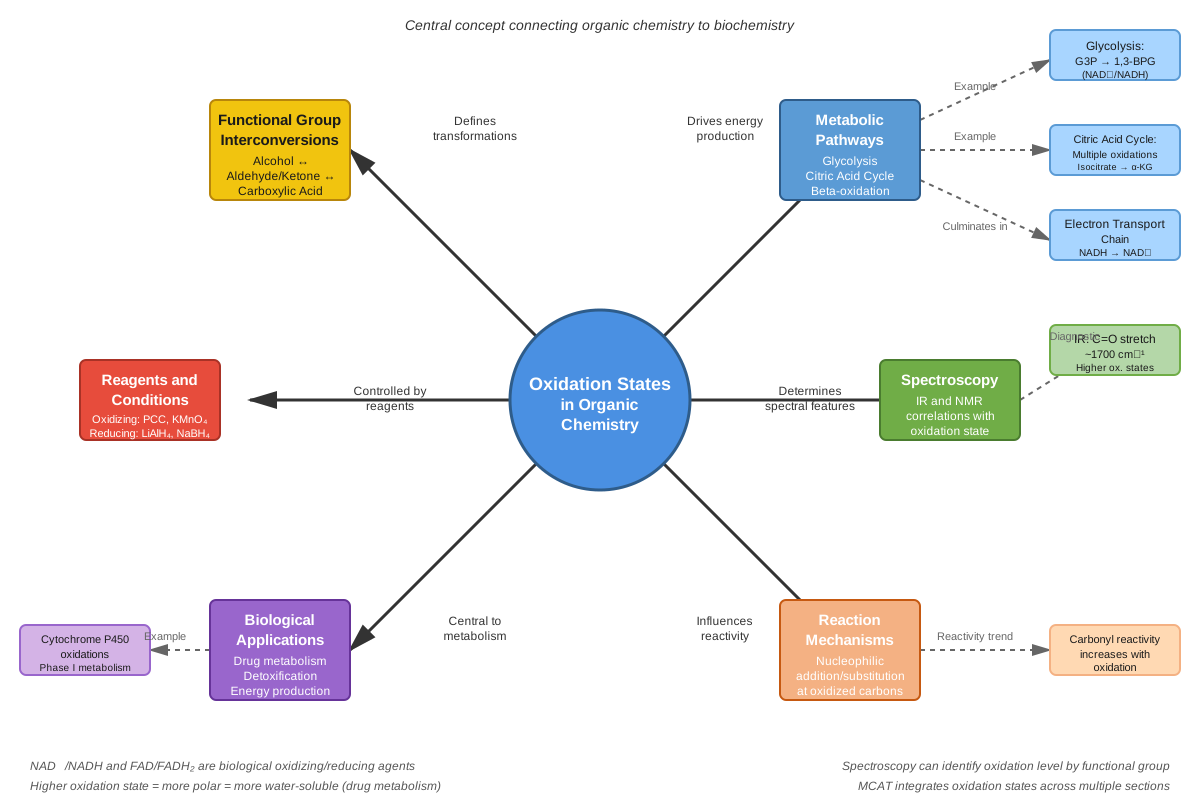
Oxidation states in organic chemistry represent a systematic method for tracking electron distribution and changes in organic molecules during chemical reactions. Unlike inorganic chemistry where oxidation states are often straightforward integers assigned to individual atoms, organic chemistry requires a more nuanced approach due to the prevalence of covalent bonding and the central role of carbon. Understanding oxidation states allows students to classify reactions as oxidations or reductions, predict reaction outcomes, and recognize patterns across seemingly disparate transformations.
For the MCAT, mastery of oxidation states in organic chemistry is essential because it provides a unifying framework for understanding metabolic pathways, drug metabolism, and countless synthetic transformations tested in both the Chemical and Physical Foundations of Biological Systems and Biological and Biochemical Foundations of Living Systems sections. The ability to quickly determine whether a carbon atom has been oxidized or reduced enables efficient analysis of complex biochemical processes such as glycolysis, the citric acid cycle, and fatty acid metabolism. This topic bridges fundamental organic chemistry principles with biological applications, making it a high-yield area for integrated MCAT questions.
The concept of Oxidation and Reduction in organic chemistry extends beyond simple electron transfer to encompass changes in bonding patterns, particularly the relationship between carbon atoms and heteroatoms (oxygen, nitrogen, halogens). This topic connects directly to functional group interconversions, reaction mechanisms, and the logic underlying synthetic strategy—all areas frequently tested on the MCAT. By understanding oxidation states, students gain insight into why certain reagents are chosen for specific transformations and how biological systems regulate energy production through controlled oxidation of organic molecules.
Learning Objectives
- [ ] Define oxidation states in organic chemistry using accurate Organic Chemistry terminology
- [ ] Explain why oxidation states in organic chemistry matters for the MCAT
- [ ] Apply oxidation states in organic chemistry to exam-style questions
- [ ] Identify common mistakes related to oxidation states in organic chemistry
- [ ] Connect oxidation states in organic chemistry to related Organic Chemistry concepts
- [ ] Calculate the oxidation state of carbon atoms in various functional groups using systematic methods
- [ ] Predict whether a given transformation represents an oxidation, reduction, or neither based on structural changes
- [ ] Analyze multi-step biochemical pathways to identify oxidation and reduction steps
Prerequisites
- Basic bonding theory and electronegativity: Understanding how electrons are shared in covalent bonds is essential for assigning oxidation states based on electron "ownership"
- Functional group recognition: Identifying alcohols, aldehydes, ketones, carboxylic acids, and other functional groups enables rapid assessment of oxidation levels
- Lewis structures and formal charge: The ability to draw accurate Lewis structures provides the foundation for tracking electron distribution changes
- Basic redox concepts from general chemistry: Familiarity with the definitions of oxidation (loss of electrons) and reduction (gain of electrons) provides the conceptual framework
Why This Topic Matters
Clinical and Real-World Significance
Oxidation and reduction reactions are fundamental to life itself. Every calorie of energy extracted from food involves the controlled oxidation of organic molecules, with electrons ultimately transferred to oxygen in the electron transport chain. Drug metabolism in the liver predominantly involves oxidation reactions catalyzed by cytochrome P450 enzymes, converting lipophilic drugs into more water-soluble metabolites for excretion. Understanding oxidation states helps explain why alcohol (ethanol) is metabolized first to acetaldehyde (oxidation) and then to acetic acid (further oxidation), with the toxic intermediate acetaldehyde responsible for hangover symptoms. Antioxidants function by preventing unwanted oxidation of biological molecules, protecting against cellular damage and aging.
MCAT Exam Statistics
Questions involving oxidation states in organic chemistry appear in approximately 3-5% of Chemical and Physical Foundations questions and 2-4% of Biological and Biochemical Foundations questions. These questions typically appear in two formats: (1) discrete questions asking students to identify oxidation or reduction in a given transformation, and (2) passage-based questions embedded in biochemical pathways or synthetic schemes. The MCAT frequently tests this concept indirectly by asking students to identify appropriate reagents for functional group interconversions, which requires understanding the oxidation level changes involved.
Common Exam Presentations
The MCAT presents oxidation state concepts through metabolic pathways (glycolysis, citric acid cycle, beta-oxidation), synthetic organic chemistry passages describing multi-step syntheses, and questions about biological oxidizing and reducing agents (NAD+/NADH, FAD/FADH₂). Passages may describe novel enzymatic reactions and ask students to classify steps as oxidations or reductions. Questions often integrate this topic with thermodynamics, asking whether oxidation or reduction is energetically favorable under specific conditions, or with kinetics, exploring how oxidation state affects reaction rates.
Core Concepts
Defining Oxidation States in Organic Molecules
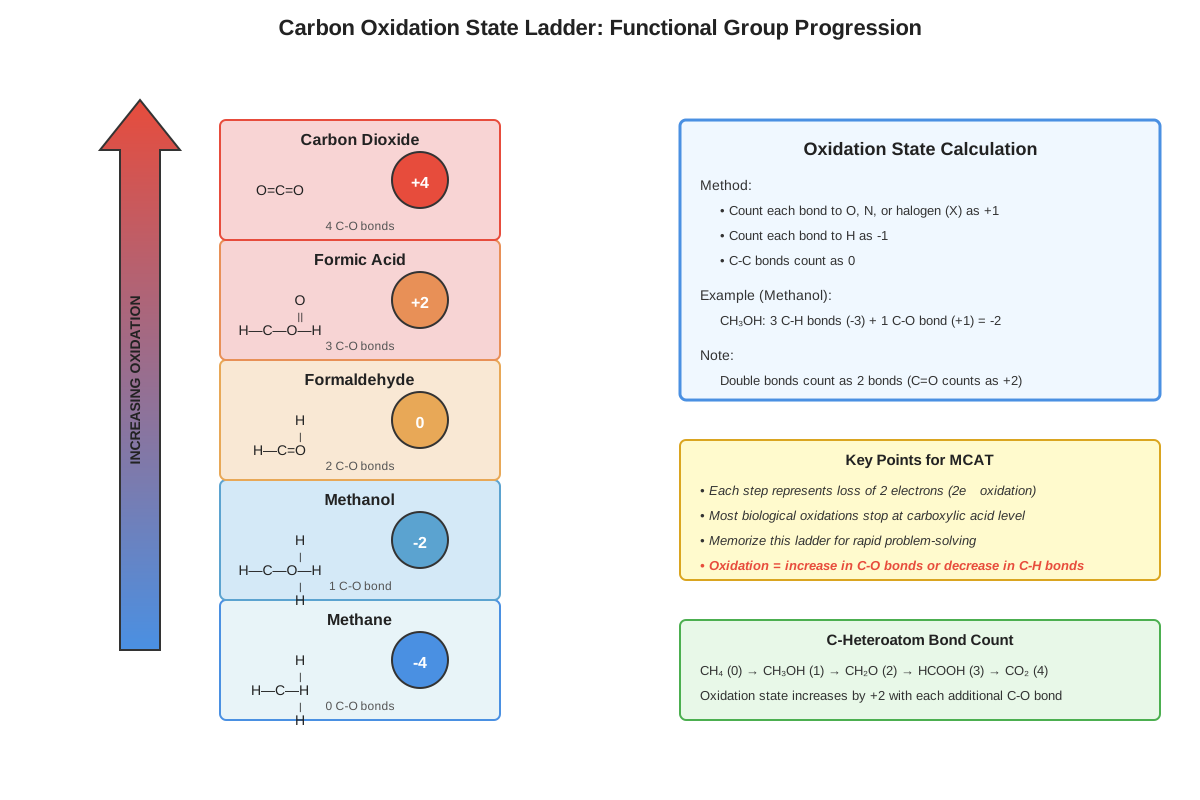
In organic chemistry, the traditional inorganic approach of assigning integer oxidation states to individual atoms becomes cumbersome due to extensive carbon-carbon bonding. Instead, organic chemists focus on the oxidation state of specific carbon atoms relative to their bonding environment. The fundamental principle is that oxidation involves an increase in bonds to more electronegative atoms (typically oxygen, nitrogen, or halogens) or a decrease in bonds to hydrogen. Conversely, reduction involves an increase in bonds to hydrogen or a decrease in bonds to more electronegative atoms.
A practical method for determining oxidation state changes examines the carbon atom of interest and counts:
- Each bond to a more electronegative atom (O, N, X) as +1
- Each bond to hydrogen as -1
- Bonds to other carbons as 0
The sum provides a relative oxidation state for that carbon. When this number increases during a reaction, oxidation has occurred; when it decreases, reduction has occurred.
The Oxidation Hierarchy of Functional Groups
Carbon functional groups can be arranged in an oxidation hierarchy based on the oxidation state of the carbon atom bearing the functional group:
| Oxidation Level | Functional Group | Example | Oxidation State |
|---|---|---|---|
| Most Reduced | Alkane (CH₃) | Methane | -4 |
| ↓ | Alcohol (CH₂OH) | Methanol | -2 |
| ↓ | Aldehyde (CHO) | Formaldehyde | 0 |
| Most Oxidized | Carboxylic Acid (COOH) | Formic Acid | +2 |
For a single carbon progressing through this series, each step represents a two-electron oxidation. Understanding this hierarchy is crucial for the MCAT because it allows rapid identification of oxidation and reduction in both synthetic and biochemical contexts.
Calculating Oxidation States: The Systematic Approach
To calculate the oxidation state of a specific carbon atom:
- Identify the carbon of interest in the molecule
- Count bonds to heteroatoms: Each C-O, C-N, or C-X bond contributes +1
- Count bonds to hydrogen: Each C-H bond contributes -1
- Ignore C-C bonds: These contribute 0
- Sum the contributions: The total is the oxidation state
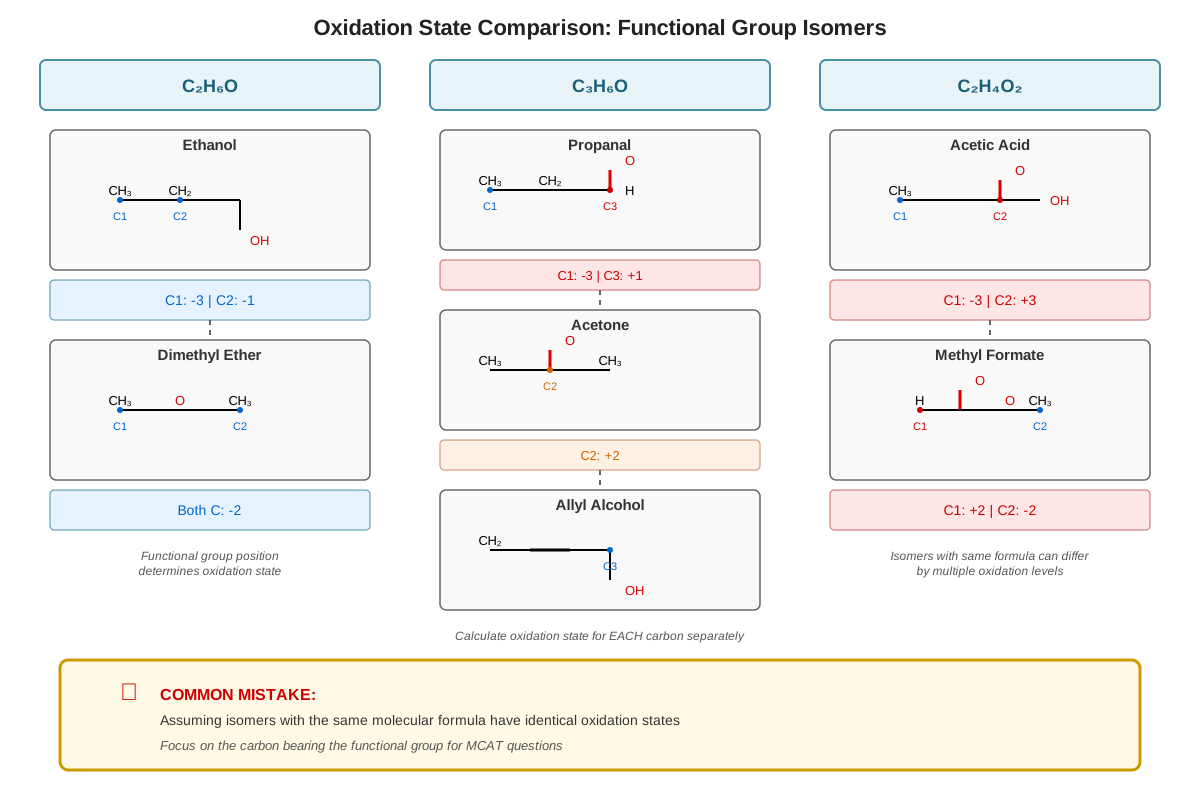
Example: In ethanol (CH₃CH₂OH)
- The CH₃ carbon: 3 C-H bonds = 3(-1) = -3
- The CH₂OH carbon: 2 C-H bonds + 1 C-O bond = 2(-1) + 1(+1) = -1
When ethanol is oxidized to acetaldehyde (CH₃CHO):
- The CH₃ carbon remains: -3 (unchanged)
- The CHO carbon: 1 C-H bond + 1 C=O (counts as 2 C-O bonds) = 1(-1) + 2(+1) = +1
The carbon bearing the functional group changed from -1 to +1, confirming oxidation occurred.
Recognizing Oxidation and Reduction in Reactions
Oxidation in organic chemistry manifests through several characteristic transformations:
- Addition of oxygen atoms to carbon
- Removal of hydrogen atoms from carbon
- Formation of carbon-heteroatom bonds
- Conversion of single bonds to multiple bonds with heteroatoms
Reduction shows the opposite patterns:
- Removal of oxygen atoms from carbon
- Addition of hydrogen atoms to carbon
- Breaking of carbon-heteroatom bonds
- Conversion of multiple bonds to single bonds
MCAT Exam Tip: When analyzing a transformation, focus on the carbon atom undergoing change. If it gains bonds to O, N, or X, or loses bonds to H, it's oxidized. If it gains bonds to H or loses bonds to O, N, or X, it's reduced.
Common Oxidation and Reduction Reactions
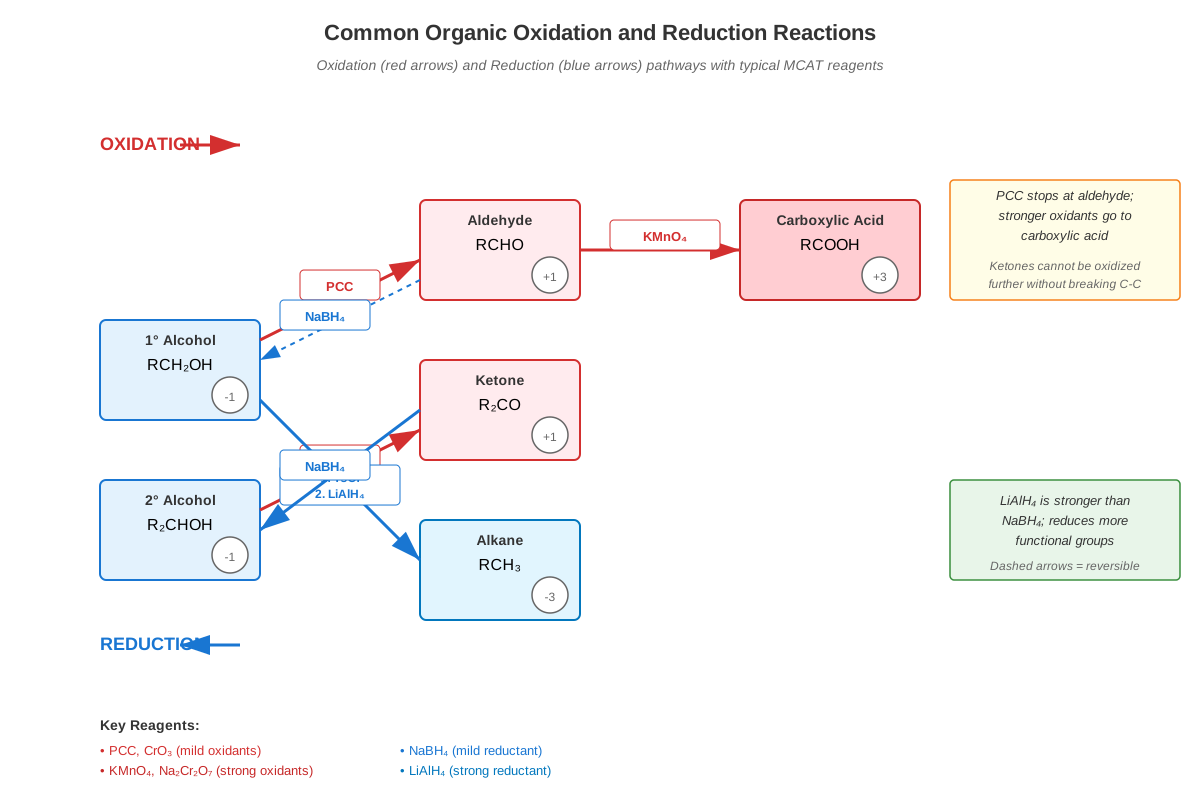
Key Oxidation Reactions:
- Primary alcohol → Aldehyde → Carboxylic acid
- Secondary alcohol → Ketone
- Alkene → Epoxide or diol
- Aldehyde → Carboxylic acid
Key Reduction Reactions:
- Carboxylic acid → Aldehyde → Primary alcohol
- Ketone → Secondary alcohol
- Alkene → Alkane
- Alkyne → Alkene → Alkane
Biological Oxidizing and Reducing Agents
In biochemical systems, oxidation and reduction are mediated by specific coenzymes that serve as electron carriers:
NAD⁺/NADH (Nicotinamide Adenine Dinucleotide):
- NAD⁺ is an oxidizing agent that accepts electrons (and H⁺)
- NADH is a reducing agent that donates electrons
- Primarily involved in catabolic pathways (breaking down molecules for energy)
FAD/FADH₂ (Flavin Adenine Dinucleotide):
- FAD is an oxidizing agent accepting two electrons and two protons
- FADH₂ is the reduced form
- Often involved in oxidations that produce carbon-carbon double bonds
NADP⁺/NADPH:
- Similar to NAD⁺/NADH but primarily used in anabolic (biosynthetic) pathways
- NADPH serves as a reducing agent in fatty acid synthesis and other biosynthetic processes
Oxidation States in Metabolic Pathways
Understanding oxidation states is essential for analyzing metabolic pathways tested on the MCAT:
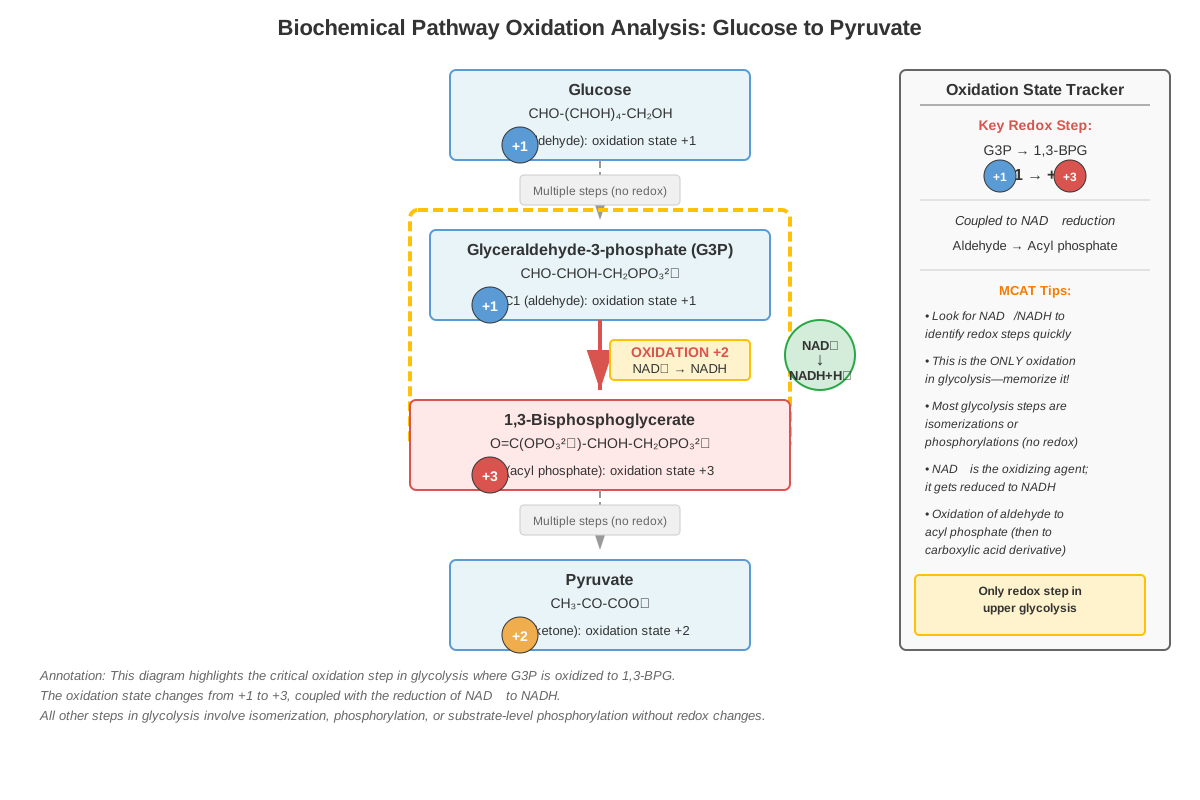
Glycolysis: The conversion of glyceraldehyde-3-phosphate to 1,3-bisphosphoglycerate involves oxidation of an aldehyde to an acyl phosphate, coupled with reduction of NAD⁺ to NADH.
Citric Acid Cycle: Multiple oxidation steps occur, including:
- Isocitrate → α-ketoglutarate (oxidation of secondary alcohol to ketone)
- α-ketoglutarate → Succinyl-CoA (oxidative decarboxylation)
- Succinate → Fumarate (oxidation creating a C=C double bond)
- Malate → Oxaloacetate (oxidation of secondary alcohol to ketone)
Fatty Acid Oxidation: Each cycle of beta-oxidation includes an oxidation step (acyl-CoA → enoyl-CoA) mediated by FAD, creating a carbon-carbon double bond.
Oxidation Without Oxygen
A critical concept for the MCAT is that oxidation does not require molecular oxygen. The term "oxidation" refers to electron loss or changes in bonding patterns, not necessarily the involvement of O₂. For example:
- Dehydrogenation reactions are oxidations (removal of H₂)
- Halogenation can be an oxidation (forming C-X bonds)
- Formation of carbon-carbon double bonds from single bonds represents oxidation
This understanding is crucial for analyzing anaerobic metabolic processes and synthetic organic reactions.
Concept Relationships
The concept of oxidation states in organic chemistry serves as a central organizing principle connecting multiple areas of organic chemistry and biochemistry. At the foundational level, oxidation states build upon electronegativity and bonding theory → these principles determine how electrons are "assigned" to atoms in covalent bonds → which enables calculation of oxidation states.
Oxidation states directly connect to functional group interconversions → understanding the oxidation hierarchy allows prediction of possible transformations → which informs synthetic strategy and retrosynthetic analysis. This relationship extends to reaction mechanisms → many mechanisms can be classified as oxidations or reductions → which helps predict products and understand reagent selection.
In biochemistry, oxidation states link to bioenergetics → oxidation of organic molecules releases energy → which is captured in high-energy bonds (ATP) → powering cellular processes. This connection extends to metabolic pathways → each pathway can be analyzed as a series of oxidations, reductions, and other transformations → revealing the logic of metabolism and regulation points.
The relationship to spectroscopy and analysis is also important → different oxidation states produce different functional groups → which show characteristic signals in IR, NMR, and mass spectrometry → enabling structure determination.
Conceptual Flow: Electronegativity → Bonding patterns → Oxidation state assignment → Functional group classification → Reaction prediction → Metabolic pathway analysis → Bioenergetics
Quick check — test yourself on Oxidation states in organic chemistry so far.
Try Flashcards →High-Yield Facts
⭐ Oxidation in organic chemistry means increasing bonds to O, N, or X, or decreasing bonds to H; reduction is the opposite
⭐ The oxidation hierarchy from most reduced to most oxidized: alkane → alcohol → aldehyde/ketone → carboxylic acid
⭐ NAD⁺ and FAD are biological oxidizing agents; NADH and FADH₂ are reducing agents
⭐ Primary alcohols can be oxidized to aldehydes then carboxylic acids; secondary alcohols oxidize to ketones; tertiary alcohols do not oxidize under normal conditions
⭐ Each step in the citric acid cycle that produces NADH or FADH₂ involves oxidation of a substrate molecule
- Oxidation does not require molecular oxygen; it refers to electron loss or bonding pattern changes
- The oxidation state of a carbon can be calculated by counting +1 for each bond to heteroatoms and -1 for each bond to hydrogen
- Dehydrogenation reactions (removal of H₂) are oxidations, even without oxygen involvement
- In fatty acid metabolism, beta-oxidation involves oxidation steps that create C=C bonds and reduce FAD to FADH₂
- Reduction of carbonyl groups (C=O) to alcohols (C-OH) is a common transformation requiring reducing agents like NaBH₄ or LiAlH₄
- The conversion of pyruvate to acetyl-CoA involves oxidative decarboxylation, removing CO₂ and oxidizing the remaining carbon
- Alcohol dehydrogenase catalyzes the oxidation of ethanol to acetaldehyde using NAD⁺ as the oxidizing agent
Common Misconceptions
Misconception: Oxidation always involves adding oxygen atoms to a molecule.
Correction: While adding oxygen is one form of oxidation, the fundamental definition involves electron loss or increased bonding to electronegative atoms. Removing hydrogen (dehydrogenation) is also oxidation, as is forming C-N or C-X bonds. The term "oxidation" is historical and doesn't require oxygen.
Misconception: All carbons in a molecule have the same oxidation state.
Correction: Each carbon atom in a molecule can have a different oxidation state depending on its bonding environment. In ethanol (CH₃CH₂OH), the methyl carbon is more reduced (-3) than the carbon bearing the hydroxyl group (-1). Always analyze the specific carbon undergoing transformation.
Misconception: Tertiary alcohols can be oxidized like primary and secondary alcohols.
Correction: Tertiary alcohols lack a hydrogen on the carbon bearing the OH group, preventing oxidation under typical conditions. Oxidation of alcohols requires a C-H bond adjacent to the OH group to form the C=O double bond. Tertiary alcohols are resistant to oxidation without breaking C-C bonds.
Misconception: If a molecule gains oxygen atoms, every carbon has been oxidized.
Correction: Adding oxygen to a molecule doesn't necessarily oxidize all carbons. For example, in epoxidation of an alkene, only the two carbons of the double bond are oxidized (each gains a bond to oxygen). Other carbons in the molecule remain unchanged in oxidation state.
Misconception: NADH and FADH₂ are oxidizing agents because they participate in oxidation reactions.
Correction: NADH and FADH₂ are reducing agents (reductants). They donate electrons to other molecules, becoming oxidized themselves to NAD⁺ and FAD. The substrate being reduced is accepting electrons from these coenzymes. The confusion arises from focusing on the wrong molecule in the electron transfer.
Misconception: Reduction always makes molecules smaller by removing atoms.
Correction: Reduction typically adds hydrogen atoms or removes oxygen atoms, often increasing molecular mass. For example, reducing a ketone to an alcohol adds two hydrogen atoms (increasing mass by 2 amu). The term "reduction" refers to electron gain, not size reduction.
Worked Examples
Example 1: Analyzing a Metabolic Transformation
Problem: In the citric acid cycle, succinate is converted to fumarate by the enzyme succinate dehydrogenase, with FAD reduced to FADH₂. Determine whether succinate is oxidized or reduced, and calculate the change in oxidation state of the relevant carbons.
Solution:
Step 1: Draw the structures
- Succinate: HOOC-CH₂-CH₂-COOH (two CH₂ groups)
- Fumarate: HOOC-CH=CH-COOH (one C=C double bond)
Step 2: Identify the carbons undergoing change
The two central carbons change from CH₂-CH₂ to CH=CH
Step 3: Calculate oxidation states
For each CH₂ carbon in succinate:
- 2 C-H bonds: 2(-1) = -2
- 1 C-C bond: 0
- 1 C-C bond (to carboxyl): 0
- Oxidation state = -2
For each CH carbon in fumarate:
- 1 C-H bond: 1(-1) = -1
- 1 C=C bond: 0 (carbon-carbon bonds don't count)
- 1 C-C bond (to carboxyl): 0
- Oxidation state = -1
Step 4: Determine the change
Each carbon changed from -2 to -1, an increase of +1 per carbon, or +2 total for both carbons.
Step 5: Classify the reaction
The oxidation state increased, so succinate has been oxidized to fumarate. This makes sense because FAD (an oxidizing agent) was reduced to FADH₂, accepting electrons from succinate.
Connection to Learning Objectives: This example demonstrates applying oxidation state concepts to biochemical pathways, a high-yield MCAT skill. It also illustrates that oxidation can occur through dehydrogenation (removal of H₂) without adding oxygen atoms.
Example 2: Predicting Reaction Classification
Problem: A student observes the following transformation in a laboratory synthesis:
CH₃CH₂CH₂OH → CH₃CH₂CHO
The reagent used was pyridinium chlorochromate (PCC). Classify this reaction as oxidation, reduction, or neither, and explain the reasoning.
Solution:
Step 1: Identify the functional groups
- Starting material: primary alcohol (CH₂OH group)
- Product: aldehyde (CHO group)
Step 2: Focus on the carbon bearing the functional group
In the starting alcohol (CH₂OH):
- 2 C-H bonds: 2(-1) = -2
- 1 C-O bond: 1(+1) = +1
- 1 C-C bond: 0
- Oxidation state = -1
In the product aldehyde (CHO):
- 1 C-H bond: 1(-1) = -1
- 1 C=O bond (counts as 2 C-O bonds): 2(+1) = +2
- 1 C-C bond: 0
- Oxidation state = +1
Step 3: Calculate the change
The oxidation state increased from -1 to +1, a change of +2.
Step 4: Classify the reaction
This is an oxidation reaction. The carbon lost bonds to hydrogen (went from 2 C-H to 1 C-H) and gained bonds to oxygen (went from 1 C-O to effectively 2 C-O bonds in the double bond).
Step 5: Verify with the oxidation hierarchy
Primary alcohol → aldehyde is a one-step oxidation in the functional group hierarchy, confirming our analysis.
Connection to Learning Objectives: This example demonstrates systematic calculation of oxidation states and application to synthetic transformations. It also reinforces the oxidation hierarchy concept and shows how to identify oxidation by analyzing bonding changes.
Exam Strategy
Approaching MCAT Questions on Oxidation States
When encountering questions about oxidation and reduction on the MCAT, follow this systematic approach:
- Identify the carbon(s) of interest: Don't try to analyze the entire molecule; focus on the specific carbon(s) undergoing transformation
- Use the quick bonding rule: Count bonds to heteroatoms vs. hydrogen rather than calculating full oxidation states unless necessary
- Apply the functional group hierarchy: If you recognize the functional groups, use the hierarchy (alkane < alcohol < aldehyde/ketone < carboxylic acid) for rapid classification
- Check for biological context: If NAD⁺, FAD, or NADPH appear, immediately identify them as oxidizing or reducing agents
- Eliminate impossible answers: Tertiary alcohols can't be oxidized, carboxylic acids can't be easily oxidized further, alkanes can't be reduced
Trigger Words and Phrases
Watch for these terms that signal oxidation/reduction concepts:
- "Dehydrogenase" enzymes → catalyze oxidation (removal of hydrogen)
- "Reductase" enzymes → catalyze reduction
- "Electron transport" → series of oxidation-reduction reactions
- "Coupled with NAD⁺ reduction" → the substrate is being oxidized
- "Requires NADPH" → reduction is occurring
- "Hydroxylation" → often oxidation (adding OH group)
Process of Elimination Tips
For questions asking "which step is an oxidation?":
- Eliminate any step where the functional group becomes more reduced in the hierarchy
- Eliminate steps involving only carbon-carbon bond formation/breaking with no heteroatom changes
- Eliminate hydration reactions (adding H₂O across a double bond) unless they're part of a larger oxidation sequence
For questions asking about appropriate reagents:
- If oxidation is needed, eliminate reducing agents (NaBH₄, LiAlH₄, H₂/Pt)
- If reduction is needed, eliminate oxidizing agents (PCC, KMnO₄, CrO₃)
- Match the strength of the reagent to the transformation (strong oxidizers for primary alcohol → carboxylic acid)
Time Allocation
For discrete questions on oxidation states: 60-90 seconds maximum. Use the functional group hierarchy for quick classification rather than calculating full oxidation states.
For passage-based questions: Identify oxidation/reduction steps while reading the passage (30 seconds), then reference your notes when answering specific questions (30-45 seconds per question).
Memory Techniques
OIL RIG Mnemonic
Oxidation Is Loss (of electrons/hydrogen)
Reduction Is Gain (of electrons/hydrogen)
This classic mnemonic works perfectly for organic chemistry when interpreted as loss/gain of hydrogen atoms.
The Oxidation Hierarchy Mnemonic: "All Alcoholics Are Crazy"
Alkane (most reduced)
Alcohol
Aldehyde (or ketone)
Carboxylic acid (most oxidized)
LEO the Lion Says GER
Lose Electrons = Oxidation
Gain Electrons = Reduction
NAD+ and FAD Visualization
Visualize NAD⁺ and FAD as "electron-hungry" molecules with a positive charge or oxidized state, ready to accept electrons. When they "eat" electrons and hydrogen, they become "full" (NADH, FADH₂) and can donate electrons to other molecules.
The Heteroatom Rule
"Heteroatoms Hike oxidation Up" - bonds to heteroatoms (O, N, X) increase oxidation state
"Hydrogen Helps Drop it Down" - bonds to hydrogen decrease oxidation state
Functional Group Ladder
Visualize a ladder where climbing up represents oxidation and climbing down represents reduction. Each rung is a functional group, and you can only move one or two rungs at a time with typical reagents.
Summary
Oxidation states in organic chemistry provide a systematic framework for analyzing electron distribution changes in organic molecules, essential for understanding both synthetic transformations and biochemical pathways on the MCAT. The key principle is that oxidation involves increasing bonds to electronegative atoms (O, N, X) or decreasing bonds to hydrogen, while reduction shows the opposite pattern. Rather than calculating formal oxidation states for every atom, organic chemists focus on the carbon atoms undergoing transformation and use the functional group hierarchy (alkane → alcohol → aldehyde/ketone → carboxylic acid) as a practical guide. In biological systems, NAD⁺ and FAD serve as oxidizing agents that accept electrons, while NADH and FADH₂ function as reducing agents that donate electrons. Understanding oxidation states enables rapid classification of metabolic reactions, prediction of reaction outcomes, and selection of appropriate reagents. For MCAT success, students must recognize oxidation and reduction in both synthetic and biochemical contexts, apply the bonding rule for quick analysis, and connect oxidation state changes to energy production in metabolism.
Key Takeaways
- Oxidation increases bonds to O/N/X or decreases bonds to H; reduction does the opposite
- The functional group hierarchy (alkane < alcohol < aldehyde/ketone < carboxylic acid) provides a quick reference for oxidation level
- Calculate oxidation states by counting +1 for each heteroatom bond and -1 for each hydrogen bond on the carbon of interest
- NAD⁺ and FAD are biological oxidizing agents; NADH and FADH₂ are reducing agents
- Primary alcohols oxidize to aldehydes then carboxylic acids; secondary alcohols oxidize to ketones; tertiary alcohols resist oxidation
- Oxidation doesn't require oxygen—dehydrogenation and heteroatom bond formation are also oxidations
- Focus on the specific carbon undergoing change rather than analyzing the entire molecule for efficient problem-solving
Related Topics
Reaction Mechanisms in Organic Chemistry: Understanding oxidation states enhances comprehension of why certain mechanisms proceed through specific intermediates and how electron flow relates to oxidation/reduction changes.
Spectroscopy and Structure Determination: Different oxidation states produce different functional groups with characteristic spectroscopic signatures, making oxidation state analysis crucial for structure elucidation.
Bioenergetics and Metabolism: Mastering oxidation states enables deeper understanding of how cells extract energy from nutrients through controlled oxidation and how this energy is stored in ATP.
Electrochemistry: The connection between organic oxidation/reduction and electrochemical potentials becomes important for understanding biological electron transport chains and redox reactions in cells.
Synthetic Strategy and Retrosynthesis: Knowledge of oxidation states is fundamental for planning multi-step syntheses and working backward from target molecules to available starting materials.
Practice CTA
Now that you've mastered the core concepts of oxidation states in organic chemistry, it's time to reinforce your understanding through active practice. Attempt the practice questions to test your ability to classify reactions, calculate oxidation states, and apply these concepts to MCAT-style passages. Use the flashcards to drill high-yield facts and ensure rapid recall under exam conditions. Remember, the difference between knowing these concepts and scoring points on test day lies in repeated application—each practice question strengthens the neural pathways that will serve you in the exam room. You've built a solid foundation; now make it automatic through deliberate practice!
Sign up free to keep reading
Create a free AnvayaPrep account to finish this MCAT guide on Oxidation states in organic chemistry — plus flashcards and practice questions.