Overview
Substitution vs elimination represents one of the most critical decision points in Organic Chemistry reaction mechanisms. When a nucleophile or base encounters an alkyl halide or similar substrate, the reaction can proceed through two fundamentally different pathways: substitution (where the nucleophile replaces the leaving group) or elimination (where a base removes a proton, forming a double bond). Understanding which pathway predominates under specific conditions is essential for predicting reaction outcomes and solving complex synthesis problems.
For the MCAT, mastery of substitution and elimination reactions is non-negotiable. These reactions appear frequently in both discrete questions and passage-based problems, often requiring students to analyze reaction conditions, substrate structure, and reagent properties to predict major products. The exam tests not just memorization of reaction types (SN1, SN2, E1, E2), but the ability to integrate multiple factors—substrate structure, nucleophile strength, solvent polarity, and temperature—to determine which mechanism dominates. This topic bridges fundamental concepts like stereochemistry, carbocation stability, and acid-base chemistry with practical synthetic applications.
Within the broader landscape of Organic Chemistry, substitution and elimination reactions connect to nearly every other major topic. They require understanding of molecular structure and bonding, stereochemistry (particularly for SN2 reactions), carbocation intermediates (for SN1 and E1), thermodynamics and kinetics, and the interplay between structure and reactivity. These reactions also serve as foundational knowledge for understanding more complex transformations in biological systems, including enzymatic mechanisms and metabolic pathways that appear in MCAT biochemistry passages.
Learning Objectives
- [ ] Define substitution vs elimination using accurate Organic Chemistry terminology
- [ ] Explain why substitution vs elimination matters for the MCAT
- [ ] Apply substitution vs elimination to exam-style questions
- [ ] Identify common mistakes related to substitution vs elimination
- [ ] Connect substitution vs elimination to related Organic Chemistry concepts
- [ ] Predict the major product of a reaction given substrate structure, nucleophile/base, solvent, and temperature
- [ ] Distinguish between conditions that favor SN1, SN2, E1, and E2 mechanisms
- [ ] Analyze the stereochemical outcomes of substitution and elimination reactions
Prerequisites
- Alkyl halides and leaving groups: Understanding substrate structure is essential because the degree of substitution (1°, 2°, 3°) directly determines which mechanisms are possible
- Nucleophiles and bases: Distinguishing between good nucleophiles and strong bases is critical for predicting whether substitution or elimination will occur
- Carbocation stability: SN1 and E1 mechanisms proceed through carbocation intermediates, making stability trends (3° > 2° > 1°) fundamental to mechanism prediction
- Stereochemistry basics: SN2 reactions involve inversion of configuration, while E2 reactions require antiperiplanar geometry
- Acid-base chemistry: Understanding pKa values helps predict whether a species will act as a nucleophile or base
- Solvent effects: Polar protic vs. polar aprotic solvents dramatically influence reaction rates and mechanisms
Why This Topic Matters
In clinical and industrial chemistry, substitution and elimination reactions are fundamental to drug synthesis, metabolic transformations, and the design of pharmaceutical compounds. Many drugs contain functional groups installed through substitution reactions, while elimination reactions are used to create alkenes in synthetic pathways. In biological systems, enzymatic substitution reactions (like those catalyzed by methyltransferases) and elimination reactions (like those in fatty acid metabolism) mirror the principles tested on the MCAT.
From an exam perspective, substitution vs elimination MCAT questions appear with high frequency—typically 2-4 questions per exam across both the Chemical and Physical Foundations section and occasionally in passage-based contexts. These questions test multiple cognitive levels: knowledge recall (identifying reaction types), application (predicting products), and analysis (determining which mechanism predominates under specific conditions). The MCAT particularly favors questions that require integrating multiple variables simultaneously, such as determining whether a bulky base will favor E2 over SN2 with a secondary substrate.
Common question formats include: discrete questions asking for major products given specific conditions; passage-based questions where students must analyze experimental data to determine which mechanism occurred; and questions requiring students to select appropriate reagents to achieve a specific transformation. The exam also tests this topic through "EXCEPT" questions (e.g., "All of the following favor SN2 EXCEPT...") and ranking questions (e.g., "Rank these substrates by SN1 reactivity").
Core Concepts
The Four Major Mechanisms
Substitution and elimination reactions encompass four distinct mechanisms, each with characteristic conditions and outcomes. Understanding these mechanisms individually is the foundation for predicting competition between them.
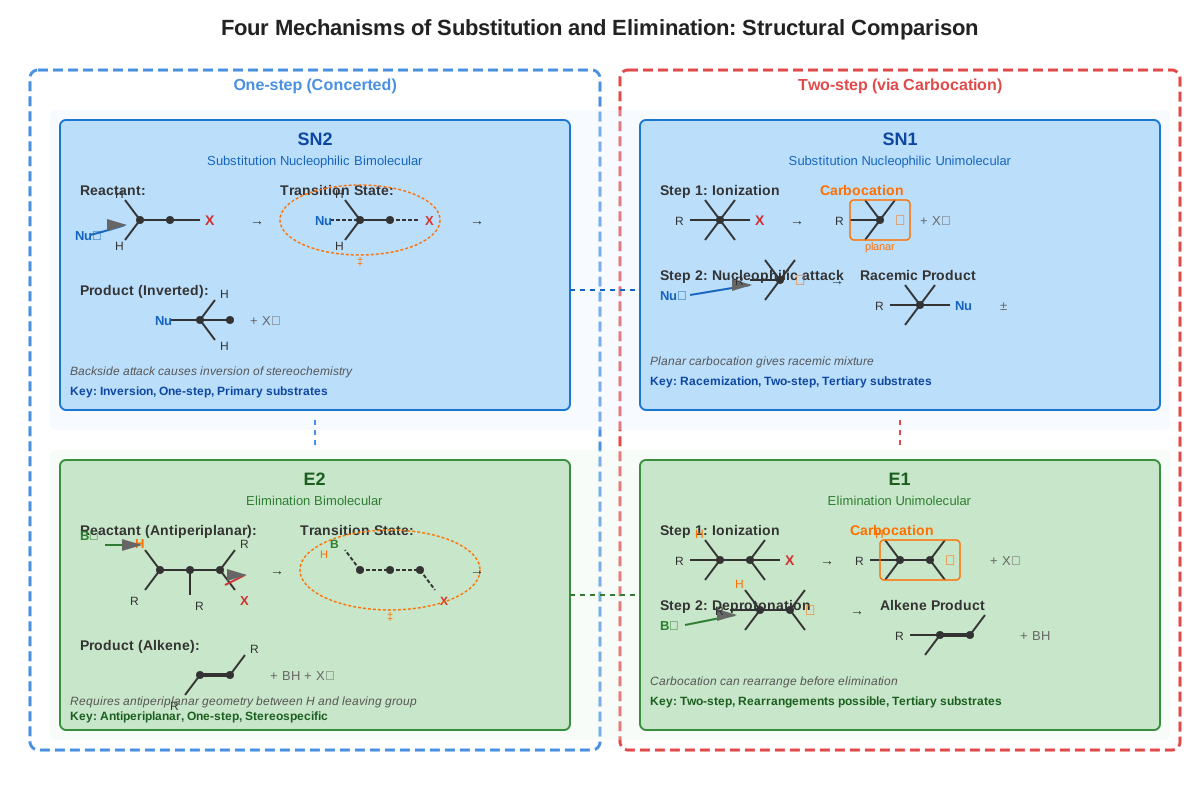
SN2 (Substitution, Nucleophilic, Bimolecular) is a concerted, one-step mechanism where the nucleophile attacks the substrate from the backside (opposite the leaving group) while the leaving group departs simultaneously. This mechanism exhibits second-order kinetics (rate = k[substrate][nucleophile]) and results in inversion of configuration at the stereocenter. SN2 reactions are favored by: strong nucleophiles (not necessarily strong bases), unhindered substrates (methyl > 1° >> 2°; 3° substrates cannot undergo SN2 due to steric hindrance), polar aprotic solvents (DMSO, DMF, acetone, acetonitrile), and lower temperatures.
SN1 (Substitution, Nucleophilic, Unimolecular) proceeds through a two-step mechanism: first, the leaving group departs to form a carbocation intermediate (rate-determining step), then the nucleophile attacks the carbocation. This mechanism exhibits first-order kinetics (rate = k[substrate]) and produces racemic mixtures (though often with slight inversion excess due to ion-pair effects). SN1 reactions are favored by: stable carbocations (3° > 2° >> 1°; benzylic and allylic carbocations are particularly stable), weak nucleophiles, polar protic solvents (water, alcohols) that stabilize the carbocation and leaving group, and higher temperatures.
E2 (Elimination, Bimolecular) is a concerted, one-step mechanism where the base removes a β-proton while the leaving group departs and a π bond forms simultaneously. This mechanism exhibits second-order kinetics (rate = k[substrate][base]) and requires antiperiplanar geometry (the H and leaving group must be 180° apart). E2 reactions are favored by: strong, bulky bases (tert-butoxide, LDA), hindered substrates (3° > 2° > 1°), polar aprotic solvents, and higher temperatures. The Zaitsev rule typically applies: the more substituted (more stable) alkene is the major product, unless a bulky base is used (which favors the less substituted Hofmann product).
E1 (Elimination, Unimolecular) proceeds through the same carbocation intermediate as SN1: the leaving group departs first (rate-determining), then a base removes a β-proton to form the alkene. This mechanism exhibits first-order kinetics (rate = k[substrate]) and follows the Zaitsev rule. E1 reactions are favored by: stable carbocations (3° > 2°), weak bases, polar protic solvents, and high temperatures. E1 and SN1 often compete directly since they share the same first step.
Factors Determining Mechanism Competition
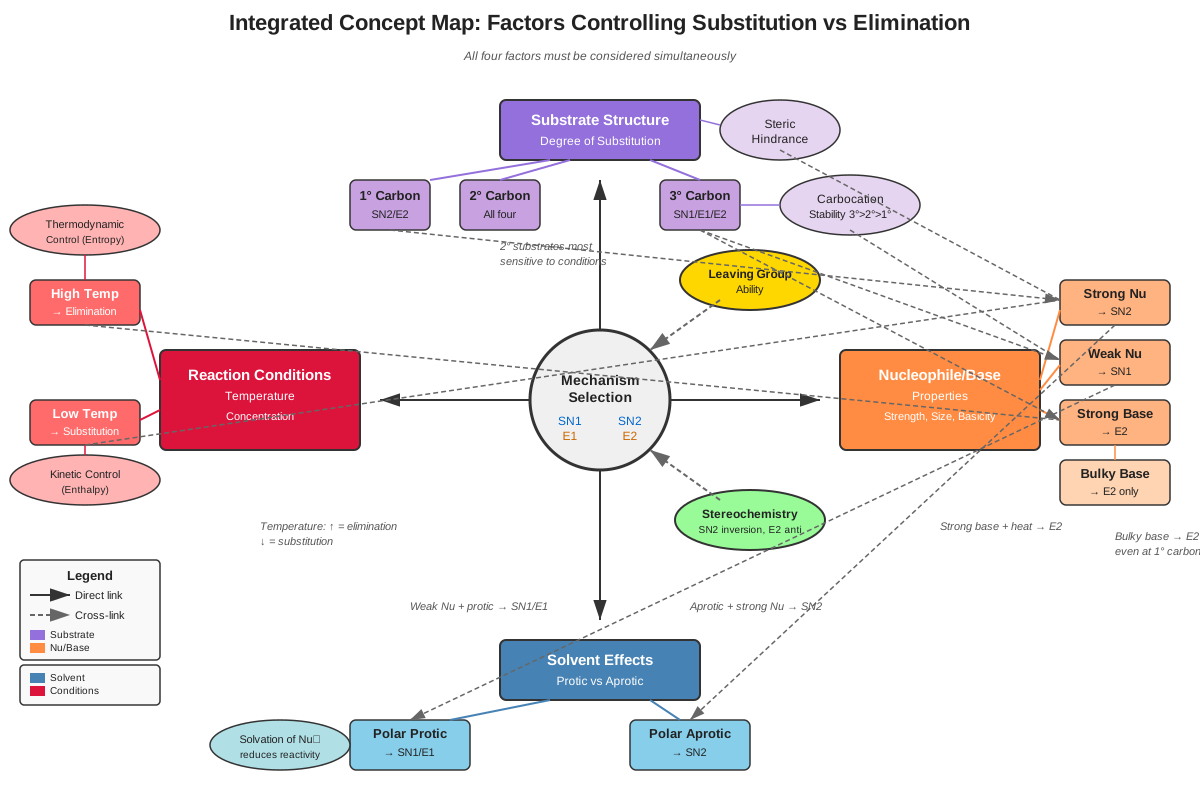
The competition between substitution and elimination depends on four primary factors that must be evaluated simultaneously.
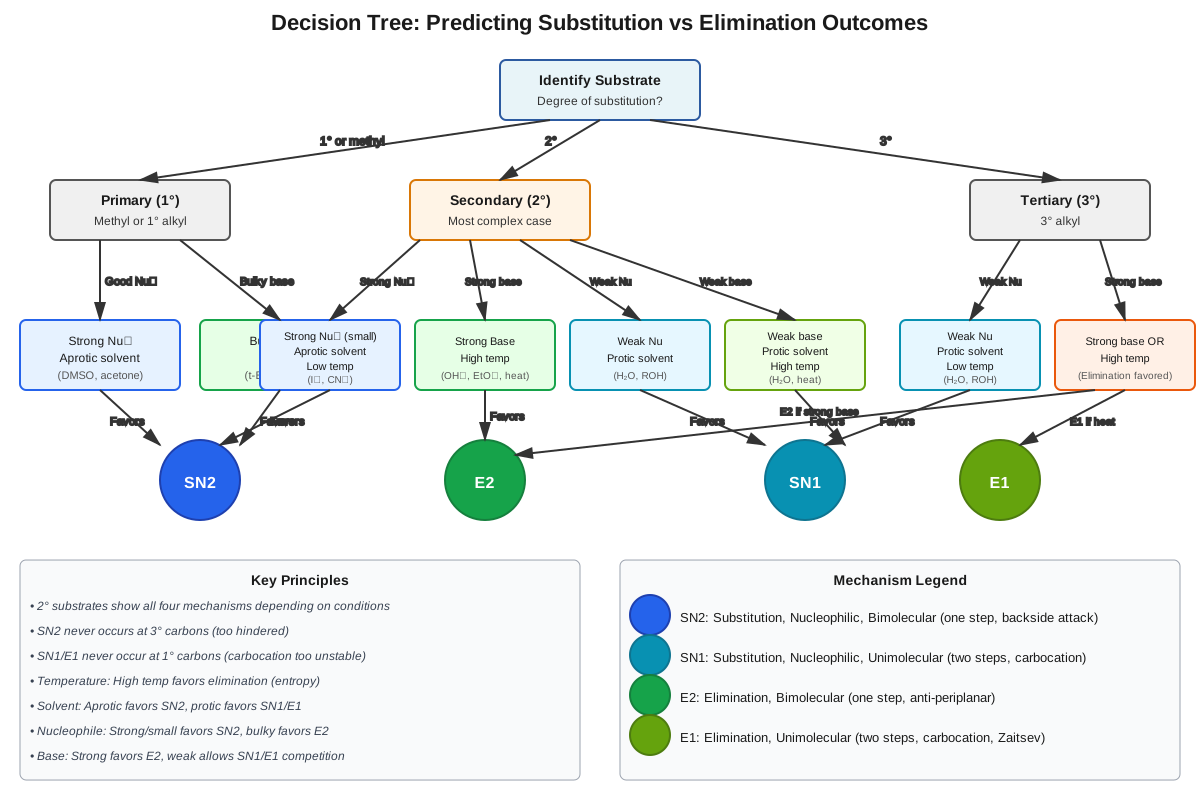
Substrate structure is perhaps the most important determinant. Methyl and primary substrates strongly favor SN2 because they are unhindered and cannot form stable carbocations. Secondary substrates represent the "battleground" where all four mechanisms can potentially compete, making the other factors critical. Tertiary substrates cannot undergo SN2 due to steric hindrance and favor SN1, E1, or E2 depending on conditions.
Nucleophile/base strength and size determines whether substitution or elimination predominates. Strong, small nucleophiles (I⁻, CN⁻, HS⁻) favor SN2. Strong, bulky bases (tert-butoxide, DBU, LDA) favor E2 by hindering backside attack while still being able to abstract β-protons. Weak nucleophiles/bases (H₂O, ROH) favor SN1/E1 mechanisms. The distinction between nucleophilicity (kinetic property, related to reaction rate) and basicity (thermodynamic property, related to pKa) is crucial: good nucleophiles are not always strong bases, and vice versa.
Solvent effects dramatically influence mechanism preference. Polar aprotic solvents (DMSO, DMF, acetone, acetonitrile) favor SN2 and E2 by not solvating the nucleophile/base, keeping it "naked" and reactive. Polar protic solvents (water, alcohols) favor SN1 and E1 by stabilizing carbocation intermediates and leaving groups through hydrogen bonding, while simultaneously solvating (and thus weakening) nucleophiles.
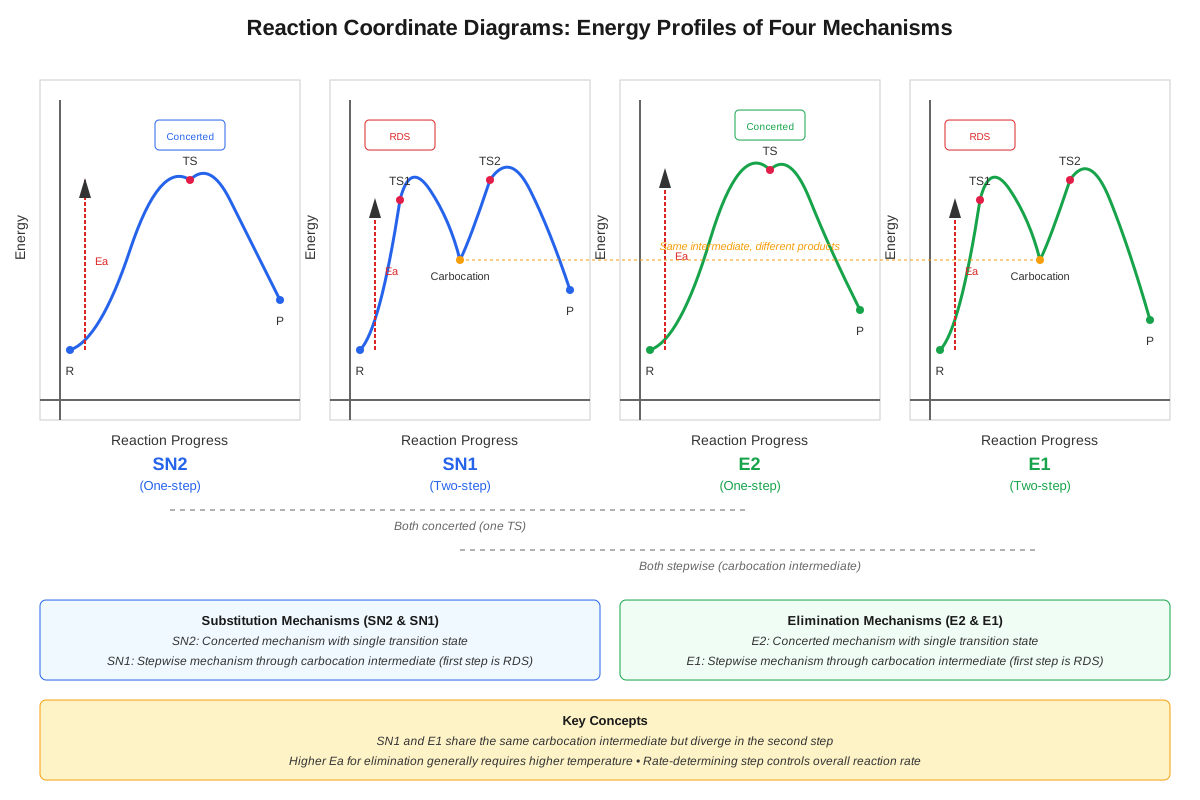
Temperature affects the substitution vs. elimination balance because elimination reactions have higher activation energies but are more entropically favorable (two molecules become three). Higher temperatures favor elimination (E2 or E1), while lower temperatures favor substitution (SN2 or SN1). This is why heating is often used to drive elimination reactions.
Decision Framework for Mechanism Prediction
A systematic approach to predicting mechanisms involves evaluating factors in a specific order:
- Identify the substrate type (methyl, 1°, 2°, 3°, allylic, benzylic)
- Evaluate the nucleophile/base (strong/weak, bulky/small, good nucleophile vs. strong base)
- Consider the solvent (polar protic vs. polar aprotic)
- Account for temperature (low vs. high)
- Apply the decision rules based on the combination of factors
| Substrate | Nucleophile/Base | Solvent | Temperature | Major Mechanism |
|---|---|---|---|---|
| Methyl, 1° | Strong, small | Polar aprotic | Low | SN2 |
| Methyl, 1° | Strong, bulky | Polar aprotic | High | E2 |
| 3° | Weak | Polar protic | Low | SN1 |
| 3° | Weak | Polar protic | High | E1 |
| 3° | Strong, bulky | Polar aprotic | High | E2 |
| 2° | Strong, small | Polar aprotic | Low | SN2 |
| 2° | Strong, bulky | Polar aprotic | High | E2 |
| 2° | Weak | Polar protic | Low | SN1 (+ E1) |
| 2° | Weak | Polar protic | High | E1 (+ SN1) |
Stereochemical Considerations
SN2 reactions proceed with complete inversion of configuration (Walden inversion) because the nucleophile attacks from the backside. If the substrate is (R), the product will be (S), and vice versa. This is a high-yield MCAT concept frequently tested through stereochemistry problems.
SN1 reactions produce racemic mixtures because the planar carbocation intermediate can be attacked from either face with equal probability. However, slight inversion excess often occurs due to ion-pair effects where the leaving group partially blocks one face.
E2 reactions require antiperiplanar geometry (180° dihedral angle between the β-hydrogen and leaving group). In cyclohexane systems, this means both groups must be axial. This geometric requirement can determine which β-hydrogen is removed and thus which alkene isomer forms. For acyclic systems, the anti-coplanar requirement leads to specific stereoisomers (E or Z) depending on substrate geometry.
E1 reactions can produce mixtures of stereoisomers because the carbocation can rotate before elimination occurs, allowing removal of different β-hydrogens.
Concept Relationships
The four mechanisms form two pairs based on their first step: SN2 and E2 are both concerted, bimolecular reactions that compete directly, while SN1 and E1 share the same carbocation-forming first step and thus always compete with each other. The choice between substitution and elimination within each pair depends primarily on the nucleophile/base properties and temperature.
Substrate structure connects to carbocation stability (prerequisite knowledge), which determines whether unimolecular mechanisms (SN1, E1) are viable. Tertiary substrates form stable carbocations quickly, enabling SN1/E1, while primary substrates cannot form carbocations and must react through SN2/E2 if they react at all.
Nucleophile/base properties connect to acid-base chemistry (prerequisite): strong bases (high pKa of conjugate acid) favor elimination, while good nucleophiles (high polarizability, low solvation) favor substitution. This relationship explains why iodide (weak base, excellent nucleophile) favors SN2, while tert-butoxide (strong base, poor nucleophile due to steric hindrance) favors E2.
Solvent effects connect to intermolecular forces and solvation: polar protic solvents stabilize charged species (carbocations, leaving groups) through hydrogen bonding, favoring SN1/E1, while polar aprotic solvents cannot hydrogen bond and thus don't stabilize charged species or solvate nucleophiles, favoring SN2/E2.
Temperature effects connect to thermodynamics and kinetics: elimination reactions are entropically favorable (ΔS > 0) because they increase the number of molecules, making them more favorable at high temperatures where TΔS becomes significant in the Gibbs free energy equation (ΔG = ΔH - TΔS).
Relationship Map: Substrate structure → determines possible mechanisms → Nucleophile/base properties → determines substitution vs. elimination preference → Solvent → modulates reaction rates and mechanism viability → Temperature → shifts equilibrium between substitution and elimination → Stereochemistry → determines product configuration and geometry
Quick check — test yourself on Substitution vs elimination so far.
Try Flashcards →High-Yield Facts
⭐ SN2 reactions require backside attack and proceed with inversion of configuration; tertiary substrates cannot undergo SN2 due to steric hindrance
⭐ SN1 and E1 mechanisms share the same carbocation-forming first step and always compete; temperature determines which predominates
⭐ Strong, bulky bases (tert-butoxide, LDA) favor E2 over SN2 even with primary and secondary substrates
⭐ Polar aprotic solvents (DMSO, DMF, acetone) favor SN2 and E2; polar protic solvents (H₂O, ROH) favor SN1 and E1
⭐ E2 reactions require antiperiplanar geometry: in cyclohexanes, both the β-hydrogen and leaving group must be axial
- Methyl and primary substrates react almost exclusively through SN2 or E2 mechanisms; they cannot form carbocations for SN1/E1
- Secondary substrates are the "battleground" where all four mechanisms can potentially compete
- The Zaitsev rule (more substituted alkene favored) applies to E1 and most E2 reactions; bulky bases give Hofmann products (less substituted alkene)
- Allylic and benzylic substrates undergo SN1/E1 readily due to resonance-stabilized carbocations
- Good nucleophiles are not necessarily strong bases: iodide is an excellent nucleophile but a weak base
- Carbocation rearrangements (hydride and methyl shifts) can occur during SN1 and E1 reactions to form more stable carbocations
- Increasing temperature always favors elimination over substitution due to entropy considerations
- The rate-determining step for SN1 and E1 is carbocation formation; for SN2 and E2, it's the single concerted step
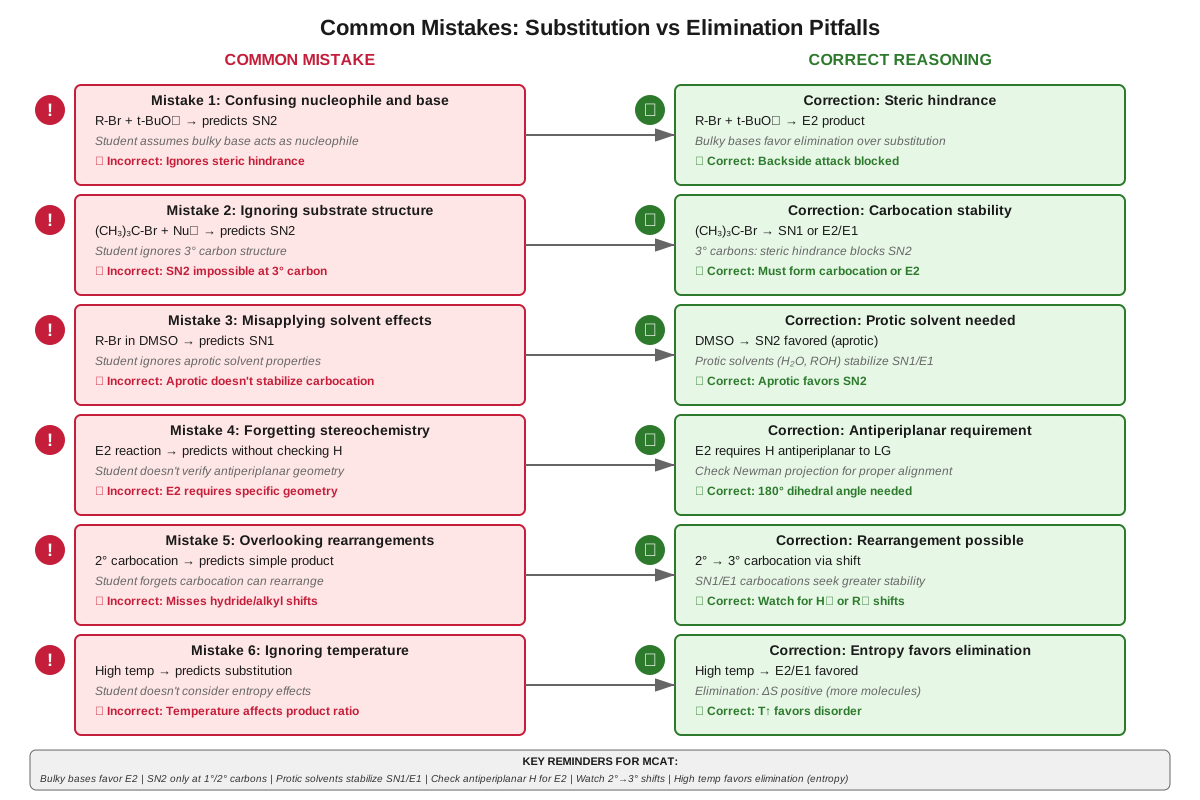
Common Misconceptions
Misconception: Strong bases always cause elimination reactions.
Correction: Small, strong bases like hydroxide or ethoxide can act as nucleophiles with primary substrates at low temperatures, giving SN2 products. Only bulky strong bases (tert-butoxide, LDA) consistently favor elimination because steric hindrance prevents backside attack.
Misconception: SN1 reactions always give exactly 50:50 racemic mixtures.
Correction: While SN1 reactions produce predominantly racemic products, slight inversion excess (55:45 or 60:40) often occurs due to ion-pair effects where the leaving group partially blocks one face of the carbocation before fully diffusing away.
Misconception: Tertiary substrates cannot undergo any substitution reactions.
Correction: Tertiary substrates readily undergo SN1 substitution with weak nucleophiles in polar protic solvents. They cannot undergo SN2 (due to steric hindrance), but SN1 is actually favored for tertiary substrates.
Misconception: E2 reactions can occur with any β-hydrogen regardless of geometry.
Correction: E2 reactions require antiperiplanar geometry (180° dihedral angle). In rigid systems like cyclohexanes, this means both the β-hydrogen and leaving group must be axial. If no β-hydrogen is antiperiplanar to the leaving group, E2 cannot occur.
Misconception: Polar aprotic solvents favor SN2 because they stabilize the transition state.
Correction: Polar aprotic solvents favor SN2 because they do NOT solvate the nucleophile, keeping it "naked" and highly reactive. Polar protic solvents solvate (and thus deactivate) nucleophiles through hydrogen bonding, slowing SN2 reactions.
Misconception: The strongest base always gives the most elimination.
Correction: While strong bases favor elimination, the base must also be able to abstract a β-proton. Extremely hindered bases might be too bulky to access β-hydrogens efficiently. Additionally, at very low temperatures, even strong bases might give substitution products with unhindered substrates.
Worked Examples
Example 1: Predicting Major Product with Secondary Substrate
Question: What is the major product when 2-bromopentane is treated with sodium ethoxide (NaOEt) in ethanol at 80°C?
Solution:
Step 1: Identify the substrate. 2-bromopentane is a secondary alkyl halide with bromine on carbon 2 of a five-carbon chain.
Step 2: Evaluate the nucleophile/base. Ethoxide (EtO⁻) is a strong base (pKa of EtOH ≈ 16) and a moderate nucleophile. It's not particularly bulky.
Step 3: Consider the solvent. Ethanol is a polar protic solvent, which typically favors SN1/E1 mechanisms. However, we're using the conjugate base (ethoxide) which is charged and reactive.
Step 4: Account for temperature. 80°C is elevated temperature, which favors elimination over substitution.
Step 5: Apply decision rules. With a secondary substrate, strong base, and high temperature, we expect competition between SN2 and E2. The elevated temperature tips the balance toward E2. The polar protic solvent would normally favor SN1/E1, but the strong base present makes E2 more likely than E1.
Step 6: Determine the elimination product. E2 elimination from 2-bromopentane can occur by removing a β-hydrogen from either C1 or C3. Removing from C3 gives 2-pentene (more substituted, disubstituted alkene). Removing from C1 gives 1-pentene (less substituted, monosubstituted alkene). By Zaitsev's rule, the more substituted alkene (2-pentene) is favored. Since ethoxide is not particularly bulky, Zaitsev's rule applies.
Answer: The major product is 2-pentene (mixture of E and Z isomers), formed via E2 elimination. Minor products would include 1-pentene and possibly some ethyl pentyl ether (from competing SN2).
Example 2: Mechanism Selection with Tertiary Substrate
Question: When 2-bromo-2-methylpropane (tert-butyl bromide) is dissolved in water at room temperature, what mechanism occurs and what is the major product?
Solution:
Step 1: Identify the substrate. 2-bromo-2-methylpropane is a tertiary alkyl halide (tert-butyl bromide).
Step 2: Evaluate the nucleophile/base. Water is a weak nucleophile and weak base.
Step 3: Consider the solvent. Water is a polar protic solvent, which stabilizes carbocations and leaving groups.
Step 4: Account for temperature. Room temperature is relatively low, favoring substitution over elimination.
Step 5: Apply decision rules. Tertiary substrate + weak nucleophile + polar protic solvent = SN1 or E1. The low temperature favors SN1 over E1. SN2 is impossible due to steric hindrance at the tertiary center. E2 is unlikely because water is a weak base.
Step 6: Describe the SN1 mechanism. The C-Br bond breaks heterolytically, forming a tert-butyl carbocation and bromide ion (rate-determining step). Water then attacks the planar carbocation from either face, forming a protonated alcohol. Finally, another water molecule deprotonates the oxonium ion, yielding the alcohol product.
Step 7: Determine the product. The major product is 2-methylpropan-2-ol (tert-butanol). The product is achiral, so stereochemistry is not a concern. A minor amount of E1 product (2-methylpropene) might form, especially if the solution is heated.
Answer: The reaction proceeds via SN1 mechanism, producing 2-methylpropan-2-ol (tert-butanol) as the major product. The mechanism involves carbocation formation followed by nucleophilic attack by water.
Exam Strategy
When approaching substitution vs elimination MCAT questions, use a systematic decision tree rather than trying to memorize every possible scenario. Start by identifying the substrate type (this eliminates certain mechanisms immediately), then evaluate the nucleophile/base, then consider solvent and temperature.
Trigger words to watch for include: "strong base" (suggests E2), "bulky base" (strongly suggests E2 over SN2), "heated" or "reflux" (favors elimination), "polar aprotic solvent" (favors SN2/E2), "polar protic solvent" (favors SN1/E1), "tertiary" (eliminates SN2 as possibility), "primary" (eliminates SN1/E1 as possibilities), and "inversion of configuration" (indicates SN2).
For process-of-elimination strategies, remember that certain combinations are impossible: tertiary substrates cannot undergo SN2, and primary substrates (except for special cases like allylic/benzylic) cannot undergo SN1/E1. If a question asks about a tertiary substrate and one answer choice suggests SN2, eliminate it immediately. Similarly, if the question describes a strong, bulky base with a secondary or tertiary substrate, eliminate any answer suggesting SN2.
Time allocation: Spend 10-15 seconds identifying substrate type and nucleophile/base properties, then 10-15 seconds applying the decision rules. Don't get bogged down trying to draw complete mechanisms unless specifically asked. For questions asking about major products, focus on the dominant mechanism first, then consider stereochemistry or regiochemistry only if needed.
Watch for questions that test multiple concepts simultaneously, such as: "Which substrate would react fastest via SN2?" (tests both mechanism knowledge and understanding of steric effects) or "What conditions would favor formation of the Hofmann product?" (tests E2 mechanism and understanding of bulky base effects).
Exam Tip: If a question provides multiple pieces of information (substrate, reagent, solvent, temperature), each piece is there for a reason. Don't ignore any factor—the MCAT often tests your ability to integrate all conditions simultaneously.
Memory Techniques
Mnemonic for SN2 conditions: "Small, Strong, Solvent, Speed"
- Small substrate (methyl, 1°)
- Strong nucleophile
- Solvent is polar aprotic
- Speed is fast (one step, concerted)
Mnemonic for SN1 conditions: "Tertiary Takes Time"
- Tertiary substrate (or secondary with good leaving group)
- Takes time (two steps, slower)
- Temperature doesn't need to be high
Mnemonic for E2 requirements: "BASHED"
- Base (strong)
- Antiperiplanar geometry
- Substrate (any, but better with 2° or 3°)
- Heat (high temperature)
- E2 is concerted (one step)
- Deprotonation and departure simultaneous
Visualization strategy: Picture SN2 as a "backside attack" where the nucleophile is an arrow pushing from behind, forcing the leaving group off the front (like pushing someone off a chair from behind). Picture E1/E2 as "pulling" a hydrogen away, which causes the leaving group to depart and a double bond to form (like pulling a thread that unravels a seam).
Acronym for solvent effects: "PAPA" (Polar Aprotic Prefers Attack)
- Polar Aprotic solvents favor nucleophilic Attack (SN2)
- Polar Protic solvents favor carbocation formation (SN1/E1)
Memory aid for substrate reactivity: "Me-1-2-3" for different mechanisms
- Methyl and 1° → SN2 or E2 only
- 2° → all four mechanisms possible (battleground)
- 3° → SN1, E1, or E2 only (never SN2)
Summary
Substitution vs elimination represents a critical decision point in organic reaction mechanisms where substrate structure, nucleophile/base properties, solvent, and temperature collectively determine whether a substitution or elimination pathway predominates. The four major mechanisms—SN1, SN2, E1, and E2—each have characteristic conditions, kinetics, and stereochemical outcomes. SN2 and E2 are concerted, bimolecular reactions favored by strong nucleophiles/bases and polar aprotic solvents, while SN1 and E1 proceed through carbocation intermediates and are favored by weak nucleophiles/bases and polar protic solvents. Substrate structure is the primary determinant: methyl and primary substrates favor SN2/E2, tertiary substrates favor SN1/E1/E2 (but never SN2), and secondary substrates represent the competitive battleground where all mechanisms are possible. Temperature shifts the balance from substitution (favored at low temperature) to elimination (favored at high temperature) due to entropy considerations. Mastering this topic requires systematic evaluation of all factors simultaneously and understanding the stereochemical consequences of each mechanism.
Key Takeaways
- Substrate structure determines which mechanisms are possible: 1° substrates cannot undergo SN1/E1, while 3° substrates cannot undergo SN2
- Strong, bulky bases favor E2 elimination over SN2 substitution, even with primary and secondary substrates
- Polar aprotic solvents favor SN2 and E2 by keeping nucleophiles/bases reactive; polar protic solvents favor SN1 and E1 by stabilizing carbocations
- SN2 proceeds with inversion of configuration; SN1 gives racemic products; E2 requires antiperiplanar geometry
- Temperature is the tiebreaker: high temperature favors elimination, low temperature favors substitution
- SN1 and E1 always compete because they share the same carbocation-forming first step
- Secondary substrates are the "battleground" where all four mechanisms can potentially occur, making other factors critical for prediction
Related Topics
Carbocation rearrangements: Understanding hydride and methyl shifts is essential for predicting SN1 and E1 products when rearrangement to a more stable carbocation is possible. This topic builds directly on the carbocation intermediates formed in unimolecular mechanisms.
Alkene stability and Zaitsev's rule: Predicting elimination products requires understanding why more substituted alkenes are more stable (hyperconjugation, increased substitution) and when the Hofmann product (less substituted) forms instead.
Stereochemistry of alkenes: E2 reactions can produce E or Z alkene isomers depending on substrate geometry and the antiperiplanar requirement, connecting to broader stereochemistry concepts.
Nucleophilicity vs. basicity: A deeper exploration of what makes a species a good nucleophile (polarizability, solvation) versus a strong base (pKa of conjugate acid) clarifies why certain reagents favor substitution while others favor elimination.
Synthesis planning: Mastering substitution and elimination enables retrosynthetic analysis, where chemists work backward from target molecules to determine which reactions and starting materials are needed.
Practice CTA
Now that you've mastered the core concepts of substitution vs elimination, it's time to solidify your understanding through active practice. Work through the practice questions to test your ability to predict mechanisms and products under various conditions. Use the flashcards to reinforce high-yield facts and decision rules. Remember: the MCAT rewards systematic thinking and the ability to integrate multiple factors simultaneously. Each practice problem you solve strengthens your pattern recognition and builds the confidence you need to excel on test day. You've got this!
Sign up free to keep reading
Create a free AnvayaPrep account to finish this MCAT guide on Substitution vs elimination — plus flashcards and practice questions.