Overview
Intelligence theories represent a foundational area within Psychology that explores how cognitive abilities are structured, measured, and understood. For the MCAT, this topic sits at the intersection of Cognition and Consciousness, developmental psychology, and social psychology, making it a high-yield area that frequently appears in both discrete questions and passage-based items. Understanding intelligence theories requires students to grasp not only the historical evolution of how psychologists have conceptualized mental abilities but also the practical implications of these theories for education, assessment, and understanding human diversity.
The study of intelligence theories Psychology encompasses multiple competing and complementary frameworks, from early psychometric approaches that emphasized general cognitive ability to contemporary models that recognize multiple forms of intelligence. These theories have profound implications for how society structures education, evaluates competence, and addresses questions of equity and fairness. The MCAT tests students' ability to distinguish between different theoretical frameworks, apply these concepts to research scenarios, and critically evaluate claims about intelligence testing and measurement.
For the Intelligence theories MCAT content, students must understand that this topic connects directly to broader themes in psychology including nature versus nurture debates, cultural influences on cognition, standardized testing validity, and the biological bases of behavior. Questions may present research studies examining correlations between intelligence measures and life outcomes, passages discussing educational interventions, or scenarios requiring students to identify which theoretical framework best explains observed patterns of cognitive abilities. Mastery of this material enables students to tackle complex passages in the Psychological, Social, and Biological Foundations of Behavior section while demonstrating critical thinking about measurement, individual differences, and the social implications of psychological research.
Learning Objectives
- [ ] Define Intelligence theories using accurate Psychology terminology
- [ ] Explain why Intelligence theories matters for the MCAT
- [ ] Apply Intelligence theories to exam-style questions
- [ ] Identify common mistakes related to Intelligence theories
- [ ] Connect Intelligence theories to related Psychology concepts
- [ ] Compare and contrast at least five major intelligence theories including their key proponents and core assumptions
- [ ] Analyze research scenarios to determine which intelligence theory best explains presented data
- [ ] Evaluate the strengths and limitations of different approaches to measuring intelligence
- [ ] Synthesize information about cultural and contextual factors that influence intelligence assessment
Prerequisites
- Basic understanding of psychological research methods: Necessary to evaluate studies examining intelligence and interpret correlation versus causation in intelligence research
- Familiarity with developmental psychology concepts: Intelligence theories often reference age-related changes and developmental trajectories in cognitive abilities
- Knowledge of brain structure and function: Some intelligence theories connect to neurological substrates and understanding of cortical processing
- Understanding of standardization and statistical concepts: Intelligence testing relies heavily on normal distributions, standard deviations, and standardized scores
- Awareness of nature versus nurture debates: Intelligence theories take different positions on genetic versus environmental contributions to cognitive abilities
Why This Topic Matters
Intelligence theories hold significant clinical and real-world importance across multiple domains. Educational systems worldwide use intelligence assessments to identify students who may benefit from gifted programs or require additional support, making these theories directly relevant to millions of individuals' life trajectories. In clinical settings, intelligence testing forms part of comprehensive neuropsychological evaluations for conditions ranging from learning disabilities to dementia, traumatic brain injury, and developmental disorders. The theories also inform workplace selection processes, military placement decisions, and research on cognitive aging.
On the MCAT, intelligence theories appear with moderate frequency, typically in 2-4 questions per Psychology/Sociology section. Questions most commonly take the form of passage-based items presenting research studies that students must interpret through the lens of different theoretical frameworks. Discrete questions may ask students to identify which theorist proposed a specific model or to distinguish between concepts like fluid versus crystallized intelligence. The topic also appears in questions addressing cultural bias in testing, the validity of IQ as a construct, and the relationship between intelligence and academic or occupational success.
Common exam passage scenarios include: research comparing performance across different types of cognitive tasks to support or challenge theories of general intelligence; studies examining how intelligence changes across the lifespan; cross-cultural research on cognitive abilities; interventions designed to enhance specific cognitive skills; and debates about the heritability of intelligence. Students who master this material gain the ability to quickly identify which theoretical framework is being tested and apply appropriate concepts to eliminate incorrect answer choices efficiently.
Core Concepts
Defining Intelligence
Intelligence can be defined as the capacity for learning, reasoning, problem-solving, and adapting to new situations. However, this seemingly straightforward definition masks considerable debate within psychology about whether intelligence represents a single unified ability or multiple distinct capacities. The field has evolved from early attempts to measure a single "mental age" to sophisticated models recognizing the multifaceted nature of cognitive abilities. Understanding this evolution is crucial for the MCAT because questions often require students to identify which definition or conceptualization of intelligence aligns with a particular theory or research finding.
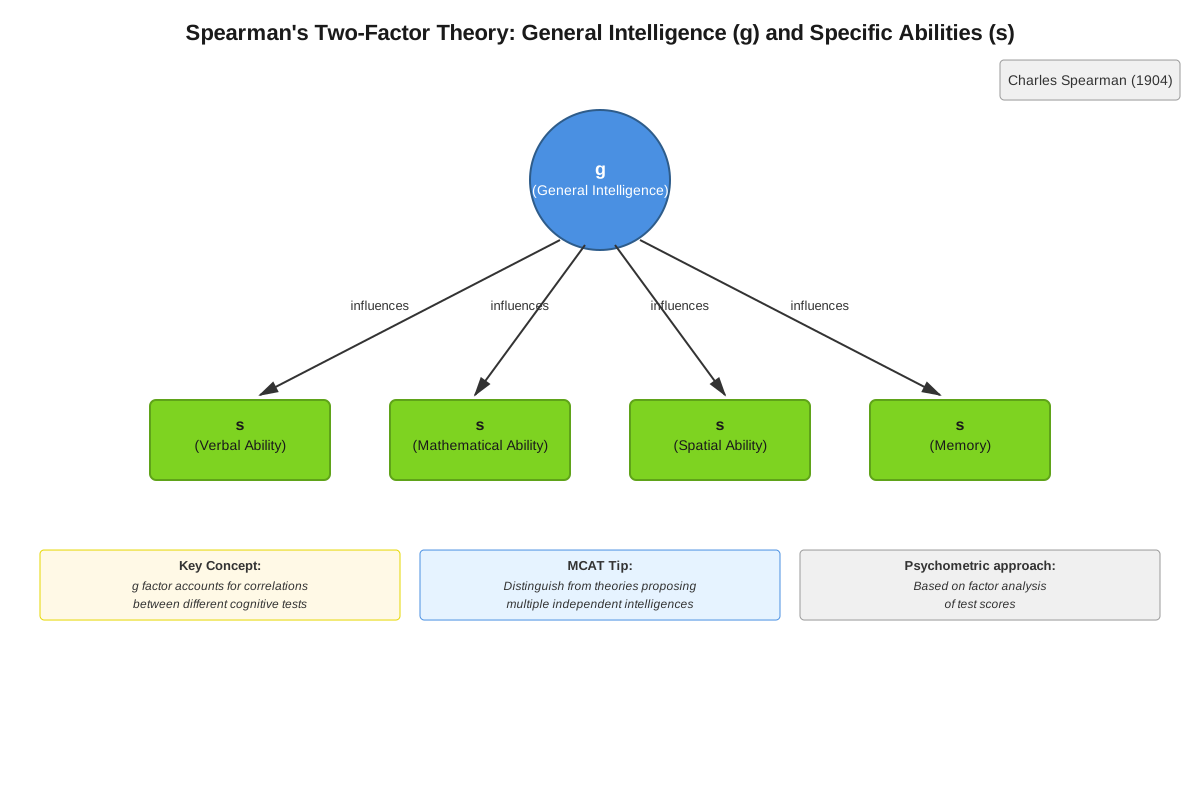
Spearman's Two-Factor Theory
Charles Spearman proposed one of the earliest and most influential models through his two-factor theory of intelligence. Based on statistical analysis of cognitive test performance, Spearman observed that individuals who performed well on one type of cognitive task tended to perform well on others, suggesting an underlying commonality. He termed this general intelligence or g factor, representing a general cognitive ability that influences performance across all intellectual tasks. According to Spearman, g reflects fundamental mental energy or processing power that applies broadly.
In addition to g, Spearman proposed specific factors or s factors—abilities unique to particular tasks or domains. For example, someone might have high g but also possess exceptional spatial reasoning ability (a specific factor) that exceeds what would be predicted by their general intelligence alone. This model suggests that test performance reflects both general cognitive ability and task-specific skills.
MCAT Tip: Questions presenting correlation matrices showing positive correlations among diverse cognitive tests are likely testing knowledge of Spearman's g factor concept.
Cattell-Horn-Carroll Theory
Raymond Cattell expanded on Spearman's work by distinguishing between two types of general intelligence: fluid intelligence (Gf) and crystallized intelligence (Gc). Fluid intelligence represents the capacity to reason abstractly, think logically, and solve novel problems independent of acquired knowledge. It involves pattern recognition, inductive reasoning, and the ability to see relationships between concepts. Fluid intelligence typically peaks in early adulthood and gradually declines with age, making it particularly vulnerable to neurological damage and aging processes.
Crystallized intelligence encompasses accumulated knowledge, vocabulary, and skills acquired through experience and education. It represents the application of previously learned information and tends to remain stable or even increase throughout adulthood as individuals continue learning. Reading comprehension, vocabulary tests, and general knowledge assessments primarily measure crystallized intelligence.
John Horn later collaborated with Cattell to expand this model, and John Carroll's three-stratum theory integrated these ideas into the comprehensive Cattell-Horn-Carroll (CHC) theory, which remains highly influential in contemporary intelligence testing. The CHC model organizes cognitive abilities hierarchically with g at the apex, broad abilities (including Gf and Gc) at the second level, and narrow specific abilities at the third level.
| Intelligence Type | Characteristics | Age Trajectory | Example Tasks |
|---|---|---|---|
| Fluid (Gf) | Abstract reasoning, novel problem-solving | Peaks early adulthood, declines with age | Pattern completion, matrix reasoning |
| Crystallized (Gc) | Accumulated knowledge, learned skills | Stable or increases with age | Vocabulary, general information |
Thurstone's Primary Mental Abilities
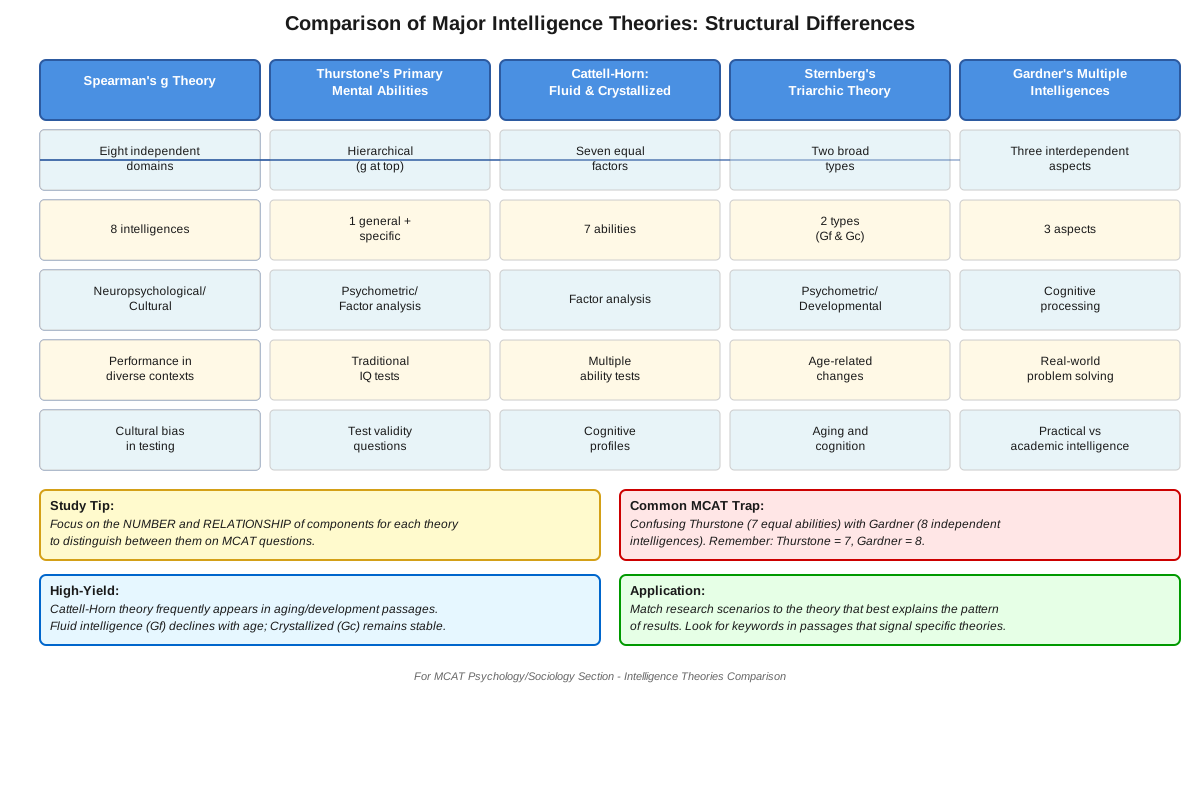
Louis Thurstone challenged the notion of a single general intelligence, instead proposing that intelligence comprises several distinct primary mental abilities, each relatively independent of the others. Through factor analysis of cognitive test data, Thurstone identified seven primary abilities:
- Verbal comprehension: Understanding and using language effectively
- Word fluency: Generating words rapidly
- Number facility: Performing arithmetic operations quickly and accurately
- Spatial visualization: Mentally manipulating visual images
- Perceptual speed: Quickly identifying similarities and differences in visual stimuli
- Memory: Recalling information
- Inductive reasoning: Identifying patterns and drawing general conclusions
Thurstone's model suggests that individuals possess unique profiles of strengths and weaknesses across these abilities rather than a single intelligence level. This theory influenced the development of aptitude batteries that assess multiple distinct abilities rather than yielding a single IQ score.
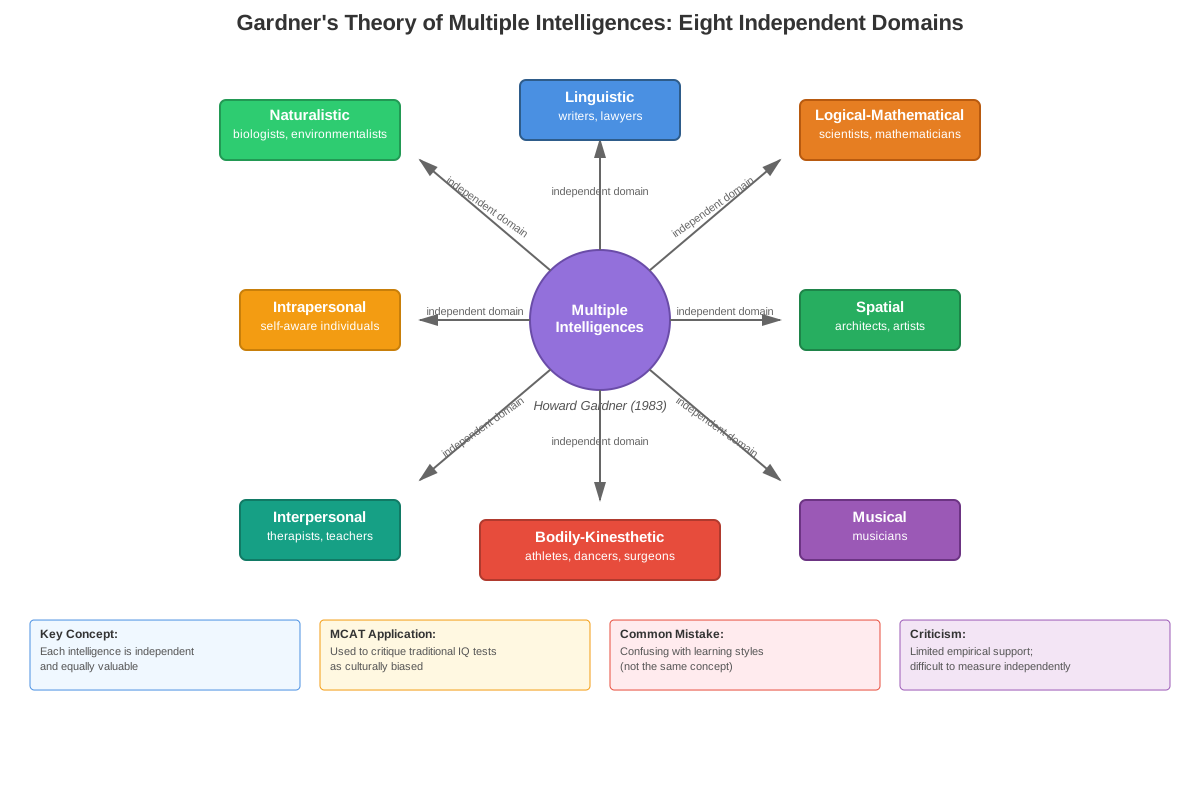
Gardner's Theory of Multiple Intelligences
Howard Gardner's theory of multiple intelligences represents a radical departure from traditional psychometric approaches. Gardner proposed that intelligence is not a single entity or even a set of related cognitive abilities, but rather comprises eight (originally seven) distinct and independent intelligences, each with its own developmental trajectory and neurological basis:
- Linguistic intelligence: Sensitivity to spoken and written language
- Logical-mathematical intelligence: Capacity for logical analysis and mathematical operations
- Spatial intelligence: Ability to visualize and manipulate spatial information
- Musical intelligence: Skill in performance, composition, and appreciation of music
- Bodily-kinesthetic intelligence: Using one's body skillfully to solve problems or create products
- Interpersonal intelligence: Understanding and interacting effectively with others
- Intrapersonal intelligence: Understanding oneself, including emotions, motivations, and desires
- Naturalistic intelligence: Recognizing and classifying patterns in nature (added later)
Gardner argued that traditional intelligence tests measure only linguistic and logical-mathematical intelligence while ignoring other equally important forms. His theory has been particularly influential in educational settings, though it has faced criticism from psychometricians who note the lack of empirical support for truly independent intelligences and the difficulty of reliably measuring some proposed types.
MCAT Alert: Questions may present scenarios where someone excels in one domain but struggles in another—this often signals testing of Gardner's multiple intelligences theory.
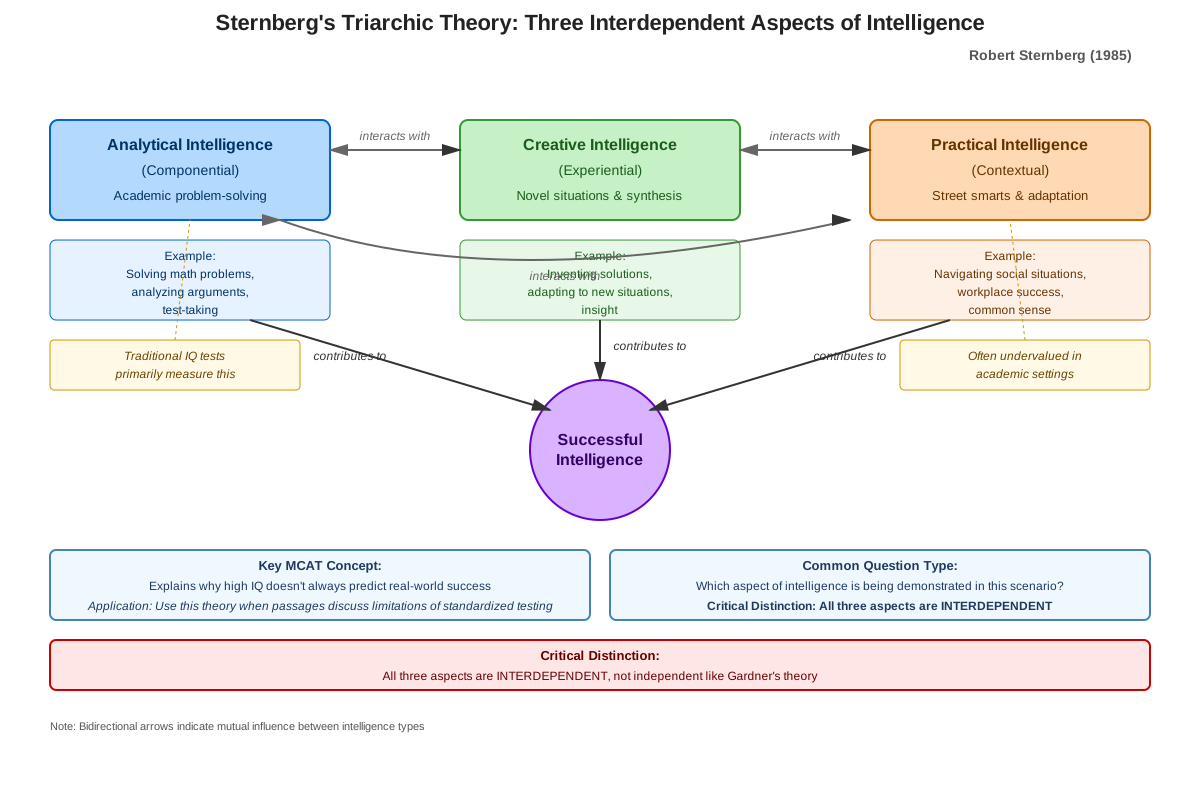
Sternberg's Triarchic Theory
Robert Sternberg proposed the triarchic theory of intelligence, which identifies three distinct aspects of intelligence that work together:
Analytical intelligence (componential) involves the mental processes used in problem-solving, including metacognitive skills for planning, monitoring, and evaluating one's approach to tasks. This aspect most closely resembles what traditional IQ tests measure and includes abilities like abstract reasoning and logical analysis.
Creative intelligence (experiential) encompasses the ability to deal with novel situations and automate information processing. It involves insight, synthesis, and the capacity to apply existing knowledge to new contexts. Individuals high in creative intelligence excel at generating innovative solutions and adapting to unfamiliar challenges.
Practical intelligence (contextual) represents the ability to adapt to, shape, and select environments to accomplish goals—what Sternberg calls "street smarts." This includes social competence, common sense, and the ability to navigate real-world situations effectively. Practical intelligence may not correlate strongly with academic intelligence but predicts success in everyday life and work settings.
Sternberg's theory emphasizes that successful intelligence requires balancing all three aspects and that different situations may call upon different types of intelligence. This framework has influenced discussions about why traditional IQ tests may not predict real-world success as strongly as expected.
Emotional Intelligence
Emotional intelligence (EI) refers to the ability to perceive, understand, manage, and use emotions effectively. While debated as a distinct form of intelligence versus a personality trait, emotional intelligence has gained significant attention in both research and applied settings. The concept includes four main components:
- Perceiving emotions: Accurately identifying emotions in oneself and others through facial expressions, tone of voice, and body language
- Using emotions: Harnessing emotions to facilitate thinking and problem-solving
- Understanding emotions: Comprehending emotional language, appreciating complex emotional relationships, and recognizing how emotions evolve
- Managing emotions: Regulating emotions in oneself and influencing emotions in others
Research suggests that emotional intelligence predicts outcomes including relationship quality, mental health, job performance (particularly in roles requiring interpersonal interaction), and leadership effectiveness. For the MCAT, students should recognize emotional intelligence as distinct from traditional cognitive intelligence while understanding ongoing debates about its measurement and theoretical status.
Biological and Environmental Influences
Intelligence theories must account for both biological and environmental contributions to cognitive abilities. Heritability studies using twin and adoption designs suggest that genetic factors account for approximately 50-80% of variance in IQ scores, with heritability estimates increasing from childhood to adulthood. However, heritability describes population-level variance, not individual potential, and does not imply that intelligence is fixed or unchangeable.
Environmental factors significantly influence intelligence development, including:
- Nutrition: Malnutrition, particularly in early development, impairs cognitive development
- Education: Formal schooling increases measured intelligence
- Socioeconomic status: Associated with differences in cognitive stimulation, stress, and resources
- Toxin exposure: Lead exposure and other environmental toxins reduce cognitive functioning
- Enrichment: Cognitively stimulating environments promote intellectual development
The Flynn effect describes the observation that average IQ scores have increased approximately 3 points per decade across the 20th century in developed nations, suggesting substantial environmental influences on measured intelligence. Proposed explanations include improved nutrition, increased educational attainment, greater test familiarity, and changes in cognitive demands of modern life.
Quick check — test yourself on Intelligence theories so far.
Try Flashcards →Concept Relationships
The various intelligence theories form an interconnected conceptual landscape that evolved through both refinement and challenge of earlier ideas. Spearman's g factor theory → provided the foundation for → Cattell's distinction between fluid and crystallized intelligence, which represented an elaboration rather than rejection of general intelligence. Meanwhile, Thurstone's primary mental abilities → challenged the primacy of g → leading to ongoing debates about whether correlations among cognitive abilities reflect a true general factor or simply overlapping specific abilities.
Gardner's multiple intelligences and Sternberg's triarchic theory → expanded the definition of intelligence beyond traditional cognitive abilities → connecting intelligence theories to broader discussions of human capabilities and success. These theories bridge to topics in developmental psychology (how different intelligences emerge and change), social psychology (interpersonal and emotional intelligence), and cultural psychology (how different cultures value and develop various forms of intelligence).
The biological versus environmental influences discussion → connects intelligence theories to behavioral genetics, neuroscience, and developmental psychology → while also linking to social issues including educational equity, test bias, and intervention effectiveness. Understanding these connections enables students to recognize how intelligence theories relate to broader MCAT topics including brain development, learning and memory, motivation, and social inequality.
Emotional intelligence → bridges cognitive and social psychology → connecting to topics including emotion regulation, social cognition, and interpersonal relationships. The Flynn effect → links intelligence theories to cultural change and environmental influences → connecting to discussions of socioeconomic factors, educational access, and public health.
High-Yield Facts
⭐ Spearman's g factor represents general intelligence that influences performance across all cognitive tasks, supported by positive correlations among diverse mental tests
⭐ Fluid intelligence involves abstract reasoning and novel problem-solving, peaks in early adulthood, and declines with age, while crystallized intelligence represents accumulated knowledge and remains stable or increases throughout adulthood
⭐ Gardner's theory of multiple intelligences proposes eight distinct, independent intelligences including linguistic, logical-mathematical, spatial, musical, bodily-kinesthetic, interpersonal, intrapersonal, and naturalistic
⭐ Sternberg's triarchic theory identifies analytical (problem-solving), creative (dealing with novelty), and practical (everyday adaptation) intelligence as three essential components
⭐ Thurstone's primary mental abilities include seven distinct factors: verbal comprehension, word fluency, number facility, spatial visualization, perceptual speed, memory, and inductive reasoning
- The Cattell-Horn-Carroll (CHC) theory organizes cognitive abilities hierarchically with g at the top, broad abilities at the middle level, and narrow specific abilities at the bottom
- Emotional intelligence encompasses perceiving, using, understanding, and managing emotions, predicting outcomes beyond traditional cognitive intelligence
- Intelligence shows approximately 50-80% heritability in adult populations, but heritability describes population variance, not individual potential or immutability
- The Flynn effect describes the approximately 3-point-per-decade increase in average IQ scores throughout the 20th century, demonstrating substantial environmental influences
- Traditional IQ tests primarily measure linguistic and logical-mathematical abilities, potentially underrepresenting other forms of intelligence valued in different contexts
Common Misconceptions
Misconception: Intelligence is a single, fixed trait that cannot change throughout life → Correction: Intelligence is multifaceted, and while some aspects show stability, others change with age (fluid intelligence declines, crystallized intelligence increases), and environmental interventions can enhance cognitive abilities
Misconception: High heritability of intelligence means that intelligence is determined by genes and cannot be changed by environment → Correction: Heritability describes the proportion of population variance attributable to genetic differences, not individual potential; even highly heritable traits can be substantially influenced by environmental interventions (e.g., the Flynn effect demonstrates environmental impacts despite high heritability)
Misconception: Gardner's multiple intelligences are empirically validated and widely accepted in psychology → Correction: While influential in education, Gardner's theory lacks strong empirical support from psychometric research, and many psychologists question whether all proposed "intelligences" represent distinct cognitive abilities rather than talents, personality traits, or skills
Misconception: IQ tests measure innate, pure intelligence unaffected by learning or culture → Correction: All intelligence tests are influenced by cultural knowledge, educational experiences, test-taking familiarity, and language proficiency; no test measures "pure" intelligence independent of environmental influences
Misconception: Emotional intelligence is the same as being emotionally sensitive or empathetic → Correction: Emotional intelligence specifically involves the ability to perceive, understand, use, and manage emotions effectively; it includes cognitive processing of emotional information, not just emotional sensitivity
Misconception: Fluid and crystallized intelligence are completely independent abilities → Correction: While distinguishable, fluid and crystallized intelligence are correlated; fluid intelligence contributes to the acquisition of crystallized intelligence, and both load on a general intelligence factor
Misconception: The g factor means everyone has a single intelligence level that applies equally to all tasks → Correction: The g factor represents a statistical commonality across cognitive tests, but individuals still show meaningful variation in specific abilities; someone can have high g but still show relative strengths and weaknesses across different cognitive domains
Worked Examples
Example 1: Distinguishing Intelligence Theories in Research Scenarios
Scenario: A research study examines cognitive abilities in adults aged 25-75. Researchers find that performance on novel pattern recognition tasks declines steadily with age, while vocabulary and general knowledge scores remain stable or increase. Performance on both types of tasks shows positive correlations within age groups. Which intelligence theory or theories best explain these findings?
Analysis:
Step 1: Identify the key observations
- Novel pattern recognition declines with age
- Vocabulary and general knowledge remain stable or increase with age
- Positive correlations exist between different cognitive measures
Step 2: Match observations to theoretical concepts
- The age-related decline in novel pattern recognition aligns with fluid intelligence (Gf), which involves abstract reasoning and novel problem-solving and typically peaks in early adulthood
- The stability/increase in vocabulary and general knowledge aligns with crystallized intelligence (Gc), which represents accumulated knowledge and remains stable or increases with age
- The positive correlations between measures support Spearman's g factor, indicating a general intelligence component
Step 3: Formulate the answer
The findings best support Cattell's fluid-crystallized intelligence distinction (or the broader Cattell-Horn-Carroll theory), which predicts exactly this pattern of differential age trajectories. The positive correlations also support Spearman's concept of general intelligence underlying diverse cognitive abilities.
Connection to learning objectives: This example demonstrates how to apply intelligence theories to research scenarios, distinguish between different theoretical frameworks based on empirical patterns, and recognize that multiple theories may simultaneously explain different aspects of data.
Example 2: Evaluating Claims About Intelligence
Scenario: An educational consultant claims that traditional IQ tests fail to capture important forms of intelligence and proposes assessing students across eight different "intelligences" including musical, bodily-kinesthetic, and interpersonal abilities. The consultant argues that students who score poorly on traditional tests may excel in these other areas and should not be considered less intelligent. Evaluate this claim using your knowledge of intelligence theories.
Analysis:
Step 1: Identify the theoretical framework being referenced
The consultant is clearly drawing on Gardner's theory of multiple intelligences, which proposes eight distinct, independent intelligences beyond the linguistic and logical-mathematical abilities emphasized in traditional testing.
Step 2: Evaluate the theoretical support
- Gardner's theory has been influential in education and has face validity (people clearly differ in musical, athletic, and social abilities)
- However, psychometric research has not strongly supported the independence of these "intelligences"—they tend to correlate positively, suggesting an underlying g factor
- Some proposed "intelligences" may be better characterized as talents, skills, or personality traits rather than forms of intelligence
Step 3: Consider the practical implications
- The consultant is correct that traditional IQ tests primarily measure linguistic and logical-mathematical abilities
- Recognizing diverse strengths can benefit educational practice and student self-concept
- However, calling all valued abilities "intelligences" may dilute the concept and lacks empirical precision
Step 4: Formulate a balanced evaluation
The consultant's claim reflects Gardner's multiple intelligences theory, which has heuristic value for recognizing diverse human capabilities but lacks strong empirical support for truly independent intelligences. While traditional IQ tests do have limitations and cultural biases, the evidence suggests that cognitive abilities show positive correlations (supporting g factor theory) rather than complete independence. A more accurate statement would be that students show diverse profiles of cognitive abilities, talents, and skills, some of which are not captured by traditional intelligence tests.
Connection to learning objectives: This example requires evaluating theoretical claims, identifying common misconceptions about intelligence theories, connecting theories to real-world applications, and demonstrating critical thinking about the strengths and limitations of different approaches.
Exam Strategy
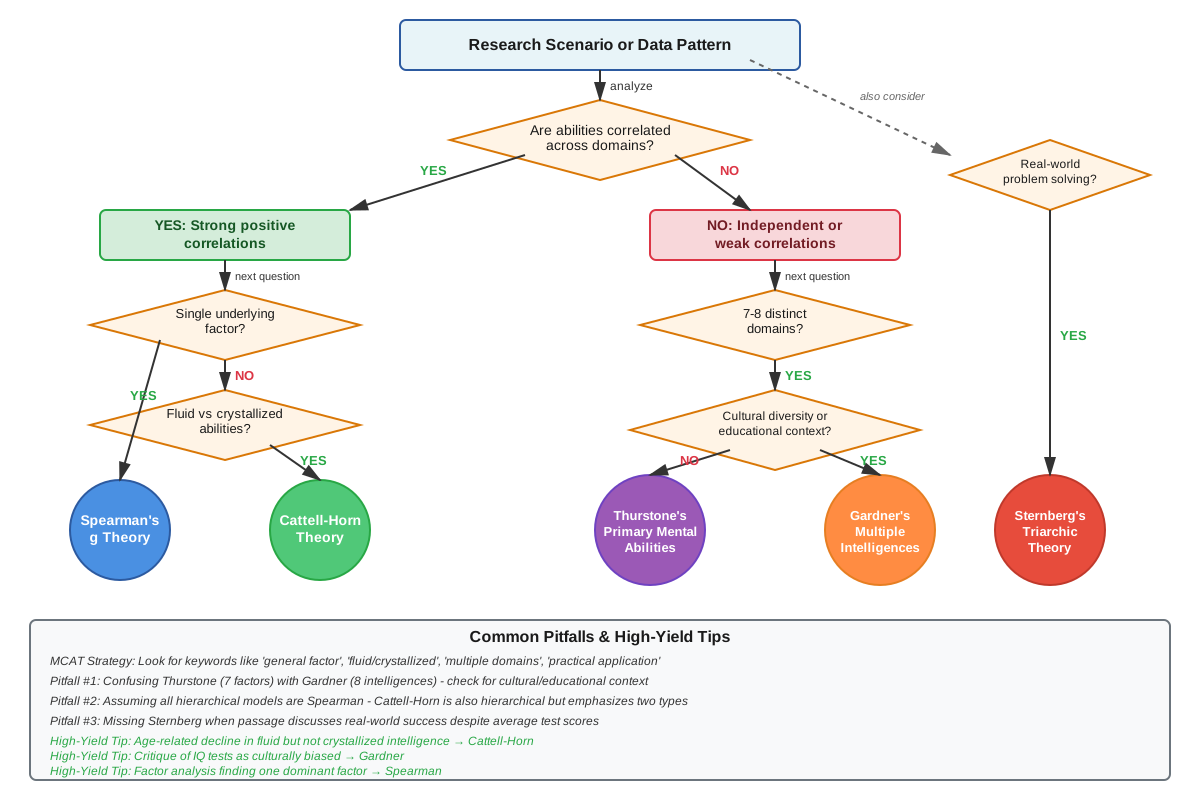
When approaching MCAT questions on intelligence theories, begin by identifying which theoretical framework is being tested. Key trigger words include:
- "General intelligence," "g factor," or "positive correlations among cognitive tests" → Spearman's theory
- "Novel problem-solving" declining with age or "accumulated knowledge" increasing with age → Fluid vs. crystallized intelligence
- "Multiple independent intelligences" or "musical/bodily-kinesthetic/interpersonal intelligence" → Gardner's theory
- "Analytical, creative, and practical" intelligence → Sternberg's triarchic theory
- "Seven distinct abilities" or specific mention of verbal comprehension, spatial visualization, etc. → Thurstone's primary mental abilities
For passage-based questions, quickly identify the research design and key findings, then match the pattern of results to theoretical predictions. Questions often present data showing either positive correlations (supporting g factor) or dissociations between abilities (supporting multiple intelligences or specific factors).
Process-of-elimination strategies:
- Eliminate answers that confuse fluid and crystallized intelligence (e.g., claiming vocabulary tests measure fluid intelligence)
- Rule out answers that attribute Gardner's specific intelligences to other theorists
- Eliminate options that claim intelligence is entirely genetic or entirely environmental (both contribute)
- Watch for answers that overstate the empirical support for Gardner's theory or understate evidence for g factor
Time allocation: Discrete questions on intelligence theories should take 60-90 seconds. For passage-based questions, spend 2-3 minutes on the passage, then 60-90 seconds per question. If a question requires distinguishing between similar theories (e.g., Thurstone vs. Gardner), invest the extra 15-20 seconds to carefully evaluate each option rather than guessing.
Critical Strategy: When questions present scenarios with age-related changes in cognitive abilities, immediately think fluid vs. crystallized intelligence—this is one of the highest-yield distinctions for the MCAT.
Memory Techniques
Mnemonic for Thurstone's Seven Primary Mental Abilities: "Very Wise Number Scholars Perceive Many Ideas"
- Verbal comprehension
- Word fluency
- Number facility
- Spatial visualization
- Perceptual speed
- Memory
- Inductive reasoning
Mnemonic for Gardner's Eight Intelligences: "Let's Make Some Music, Bouncing Balls In Nature"
- Linguistic
- Mathematical-logical
- Spatial
- Musical
- Bodily-kinesthetic
- Both interpersonal and intrapersonal (the two "B's")
- Intrapersonal
- Naturalistic
Visualization for Fluid vs. Crystallized Intelligence: Picture a flowing river (fluid) that moves quickly when young but slows with age, versus a crystal that grows larger and more elaborate over time as new layers accumulate. The river represents novel problem-solving ability that peaks early, while the crystal represents accumulated knowledge that continues growing.
Acronym for Sternberg's Triarchic Theory: "ACP" (like the medical abbreviation)
- Analytical
- Creative
- Practical
Memory aid for g factor: Think of "g" as "general" intelligence—the common factor underlying all cognitive abilities, like a general contractor who contributes to all aspects of building a house.
Summary
Intelligence theories represent diverse frameworks for understanding cognitive abilities, ranging from Spearman's unitary g factor to Gardner's multiple independent intelligences. The most empirically supported models recognize both general intelligence and specific abilities, with the Cattell-Horn-Carroll theory providing a comprehensive hierarchical framework. The critical distinction between fluid intelligence (abstract reasoning, novel problem-solving, declining with age) and crystallized intelligence (accumulated knowledge, stable or increasing with age) appears frequently on the MCAT and explains important developmental patterns. Alternative frameworks including Gardner's multiple intelligences and Sternberg's triarchic theory expand the concept of intelligence beyond traditional cognitive abilities, though they vary in empirical support. Intelligence results from both genetic and environmental influences, with heritability estimates around 50-80% but substantial malleability demonstrated by the Flynn effect and intervention studies. Understanding these theories enables students to interpret research findings, evaluate claims about intelligence testing, and recognize the multifaceted nature of human cognitive abilities.
Key Takeaways
- Spearman's g factor represents general intelligence underlying all cognitive abilities, supported by positive correlations among diverse mental tests
- Fluid intelligence (abstract reasoning, novel problem-solving) declines with age, while crystallized intelligence (accumulated knowledge) remains stable or increases—this distinction is extremely high-yield for the MCAT
- Gardner's multiple intelligences proposes eight independent intelligences but lacks strong empirical support, while Sternberg's triarchic theory identifies analytical, creative, and practical intelligence
- Intelligence shows substantial heritability (50-80%) but is also significantly influenced by environmental factors including education, nutrition, and socioeconomic status
- The Cattell-Horn-Carroll theory provides the most comprehensive contemporary framework, organizing abilities hierarchically from general intelligence through broad abilities to specific skills
- Traditional intelligence tests primarily measure linguistic and logical-mathematical abilities, potentially underrepresenting other valued capabilities
- The Flynn effect demonstrates that average IQ scores have increased substantially over time, proving that intelligence is not fixed and environmental factors matter significantly
Related Topics
Cognitive Development: Understanding how intelligence emerges and changes across the lifespan connects directly to Piaget's stages, information processing theories, and neurological maturation. Mastering intelligence theories provides the foundation for understanding developmental trajectories in cognitive abilities.
Psychological Testing and Measurement: Intelligence theories inform the construction and interpretation of cognitive assessments. Further study should include psychometric properties (reliability, validity), standardization procedures, and cultural considerations in testing.
Nature vs. Nurture Debates: Intelligence represents a key domain for examining genetic and environmental contributions to behavior. This connects to behavioral genetics, twin studies, adoption studies, and gene-environment interactions.
Social Inequality and Stratification: Intelligence testing has been used (and misused) to justify social hierarchies. Understanding intelligence theories enables critical analysis of claims about group differences and the role of opportunity structures in cognitive development.
Learning and Memory: The mechanisms underlying intelligence connect to topics including working memory capacity, processing speed, executive functions, and neural plasticity. These cognitive processes form the building blocks of intelligent behavior.
Practice CTA
Now that you've mastered the core concepts of intelligence theories, it's time to solidify your understanding through active practice. Challenge yourself with MCAT-style practice questions that require you to distinguish between theoretical frameworks, interpret research findings, and apply concepts to novel scenarios. Use flashcards to drill the key distinctions between theories and the specific contributions of major theorists. Remember that intelligence theories frequently appear in passage-based questions, so practice analyzing research studies and identifying which theoretical framework best explains presented data. Your ability to quickly recognize trigger words and match empirical patterns to theoretical predictions will serve you well on test day. You've built a strong foundation—now reinforce it through deliberate practice!
Sign up free to keep reading
Create a free AnvayaPrep account to finish this MCAT guide on Intelligence theories — plus flashcards and practice questions.