Overview
Cognitive development refers to the progressive changes in mental processes—including thinking, reasoning, problem-solving, memory, and language—that occur across the lifespan, particularly during childhood and adolescence. This domain of Psychology examines how individuals acquire, organize, and use knowledge as they mature, encompassing both qualitative shifts in thinking patterns and quantitative improvements in processing capacity. Understanding cognitive development is fundamental to the MCAT because it integrates biological maturation, environmental influences, and social interactions to explain how humans develop increasingly sophisticated mental capabilities.
For the MCAT, cognitive development MCAT questions frequently appear in the Psychological, Social, and Biological Foundations of Behavior section, often embedded within passages describing child behavior, educational interventions, or developmental disorders. The exam tests not only factual knowledge of major developmental theories but also the ability to apply these frameworks to novel scenarios, interpret research findings, and distinguish between different theoretical perspectives. Questions may ask students to identify developmental stages, predict cognitive capabilities at specific ages, or explain how environmental factors influence mental growth.
Within the broader context of Development and Personality, cognitive development connects intimately with social development, moral reasoning, and identity formation. The mental capabilities that emerge during cognitive development provide the foundation for understanding social relationships, forming moral judgments, and constructing a coherent sense of self. Mastering this topic enables students to integrate biological, psychological, and social perspectives—a hallmark of MCAT success in the behavioral sciences.
Learning Objectives
- [ ] Define Cognitive development using accurate Psychology terminology
- [ ] Explain why Cognitive development matters for the MCAT
- [ ] Apply Cognitive development to exam-style questions
- [ ] Identify common mistakes related to Cognitive development
- [ ] Connect Cognitive development to related Psychology concepts
- [ ] Compare and contrast major theories of cognitive development (Piaget, Vygotsky, Information Processing)
- [ ] Analyze how biological maturation and environmental factors interact to shape cognitive growth
- [ ] Evaluate the strengths and limitations of stage theories versus continuous development models
Prerequisites
- Basic brain anatomy and function: Understanding brain regions (prefrontal cortex, hippocampus) helps explain the biological basis for cognitive changes
- Learning theories (classical and operant conditioning): These mechanisms contribute to how children acquire knowledge and skills
- Memory systems (working, long-term, episodic, semantic): Cognitive development involves changes in memory capacity and organization
- Basic research methodology: Interpreting developmental studies requires understanding longitudinal versus cross-sectional designs
Why This Topic Matters
Cognitive development has profound clinical and real-world significance. Pediatricians, educators, and clinical psychologists rely on developmental milestones to identify delays or disorders such as intellectual disability, autism spectrum disorder, and specific learning disabilities. Early intervention programs are designed based on understanding typical cognitive trajectories, and educational curricula are structured to match children's developmental readiness. In medical practice, understanding cognitive development helps physicians communicate effectively with patients of different ages and recognize when cognitive functioning deviates from expected patterns.
On the MCAT, cognitive development appears in approximately 3-5% of Psychology/Sociology questions, making it a medium-yield topic that nonetheless appears consistently across test administrations. Questions typically take three forms: (1) discrete questions asking about specific theories or stages, (2) passage-based questions requiring application of developmental principles to research scenarios, and (3) questions integrating cognitive development with other topics like socialization, language acquisition, or brain development. The AAMC particularly favors questions that require distinguishing between theories (especially Piaget versus Vygotsky) and applying stage characteristics to novel situations.
Common passage contexts include educational interventions, cross-cultural developmental studies, research on executive function development, and investigations of how technology affects cognitive growth. Students must be prepared to identify which cognitive capabilities are present or absent at different ages, explain why certain tasks are difficult for children at specific stages, and evaluate whether research findings support or challenge major developmental theories.
Core Concepts
Defining Cognitive Development
Cognitive development encompasses the maturation of mental processes including perception, attention, memory, language, problem-solving, reasoning, and metacognition (thinking about thinking). This development results from the complex interplay of genetic programming, brain maturation, sensory experiences, and social interactions. Unlike physical development, which follows relatively predictable timelines, cognitive development shows considerable individual variation while maintaining recognizable general patterns.
Two major perspectives frame cognitive development: stage theories propose that development occurs through qualitative shifts in thinking, with distinct periods characterized by fundamentally different cognitive structures, while continuous theories suggest gradual, quantitative improvements in processing speed, capacity, and efficiency without discrete stages.
Piaget's Theory of Cognitive Development
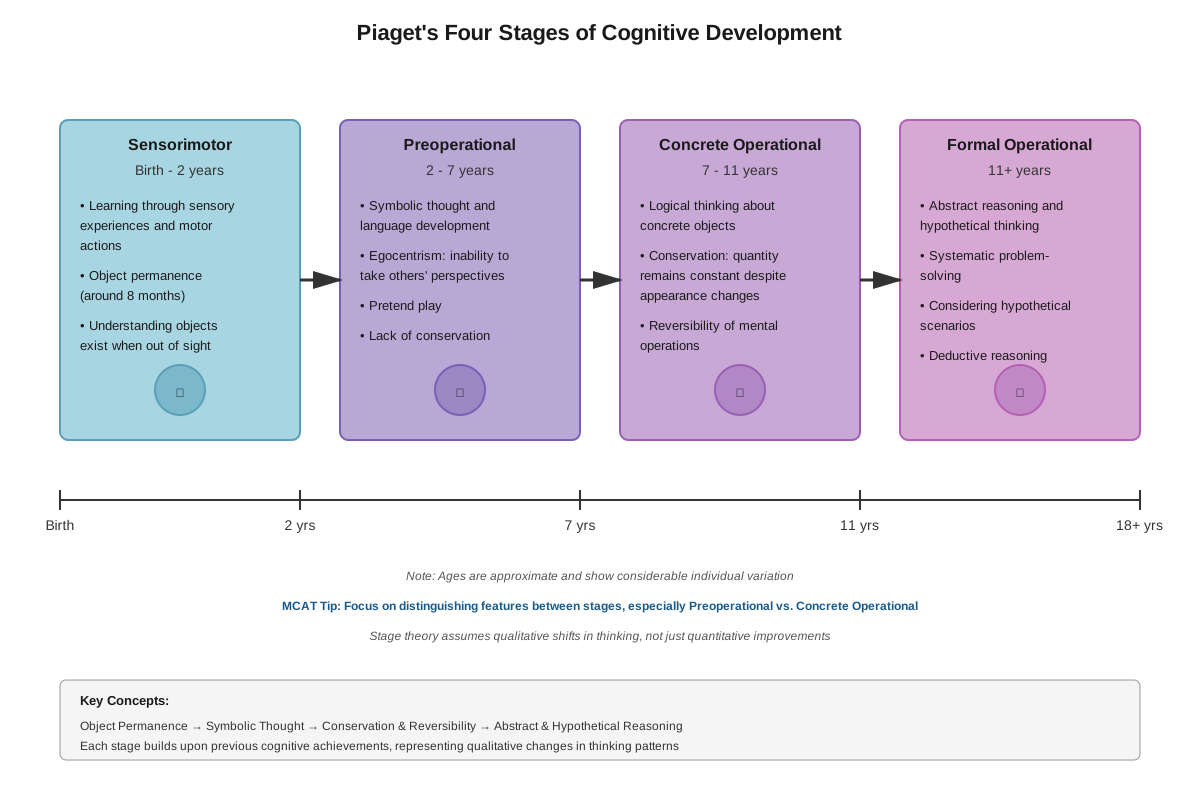
Jean Piaget's theory remains the most influential framework for understanding cognitive development on the MCAT. Piaget proposed that children actively construct knowledge through interaction with their environment, progressing through four universal, invariant stages. Each stage represents a qualitatively different way of understanding the world.
Sensorimotor Stage (Birth to 2 years)
During the sensorimotor stage, infants learn through sensory experiences and motor actions. Key achievements include:
- Object permanence: Understanding that objects continue to exist even when not directly perceived (typically emerges around 8 months)
- Coordination of sensory input with motor responses
- Goal-directed behavior
- Beginning of symbolic thought near the end of this stage
The A-not-B error (searching for a hidden object in its previous location rather than its current one) demonstrates immature object permanence and limited working memory.
Preoperational Stage (2 to 7 years)
The preoperational stage is characterized by symbolic thinking but limited logical reasoning. Key features include:
- Egocentrism: Inability to take another person's perspective (demonstrated by the three-mountains task)
- Centration: Focusing on one aspect of a situation while ignoring others
- Conservation errors: Failing to understand that quantity remains constant despite changes in appearance (e.g., believing a tall, thin glass contains more liquid than a short, wide glass with equal volume)
- Animism: Attributing life-like qualities to inanimate objects
- Irreversibility: Difficulty mentally reversing operations
Children in this stage can engage in pretend play and use language symbolically but struggle with logical operations and understanding transformations.
Concrete Operational Stage (7 to 11 years)
The concrete operational stage marks the emergence of logical thinking about concrete (tangible) objects and events. Achievements include:
- Conservation: Understanding that quantity remains constant despite perceptual changes (mass, volume, number)
- Reversibility: Mentally reversing operations
- Decentration: Considering multiple aspects of a situation simultaneously
- Seriation: Arranging objects in logical order (by size, weight, etc.)
- Classification: Organizing objects into hierarchical categories
- Transitivity: Understanding logical relationships (if A > B and B > C, then A > C)
However, children still struggle with abstract and hypothetical reasoning, requiring concrete examples to solve problems.
Formal Operational Stage (11+ years)
The formal operational stage involves abstract, hypothetical, and systematic reasoning. Capabilities include:
- Abstract thinking: Reasoning about concepts not tied to concrete objects
- Hypothetical-deductive reasoning: Generating and systematically testing hypotheses
- Metacognition: Thinking about one's own thought processes
- Propositional thought: Reasoning about verbal statements without concrete referents
Not all individuals fully achieve formal operational thinking, and even adults may revert to concrete operational thinking in unfamiliar domains.
Vygotsky's Sociocultural Theory
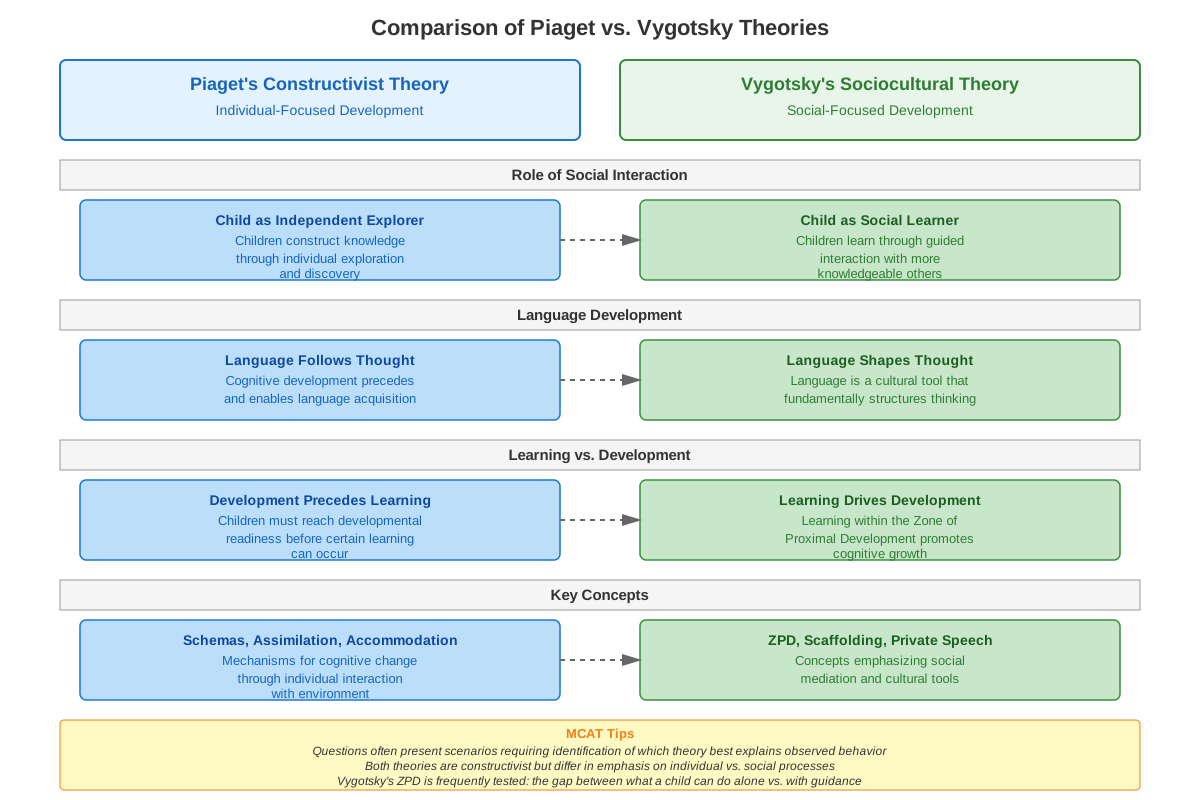
Lev Vygotsky emphasized the social and cultural context of cognitive development, contrasting with Piaget's focus on individual construction of knowledge. Key concepts include:
Zone of Proximal Development (ZPD)
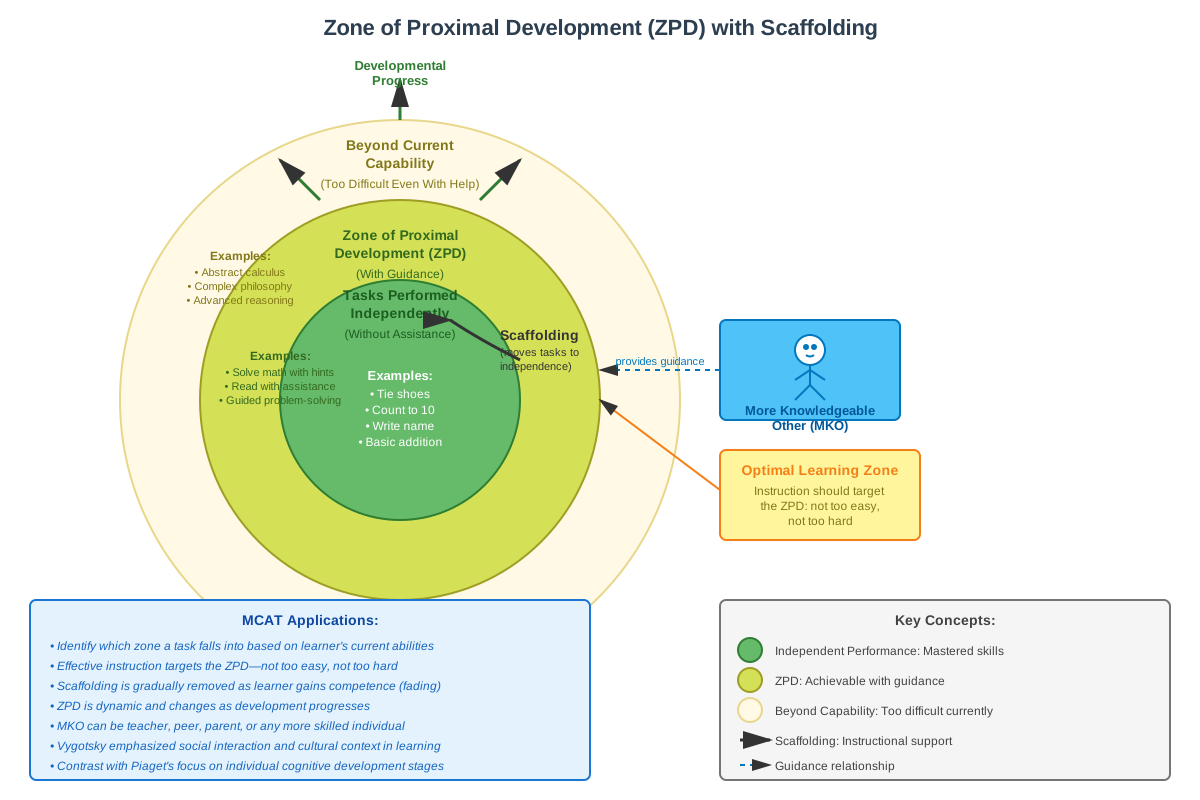
The zone of proximal development represents the gap between what a learner can do independently and what they can accomplish with guidance from a more knowledgeable other. Learning is most effective when instruction targets this zone, providing appropriate challenge with support.
Scaffolding
Scaffolding refers to temporary support provided by teachers, parents, or peers that is gradually withdrawn as the learner becomes more competent. This support is adjusted to the learner's current level and systematically reduced as skills develop.
Cultural Tools and Language
Vygotsky emphasized that cognitive development is mediated by cultural tools, particularly language. Private speech (talking to oneself) helps children regulate behavior and solve problems, eventually becoming internalized as inner speech. Cultural practices, symbols, and technologies shape how thinking develops.
Information Processing Theory
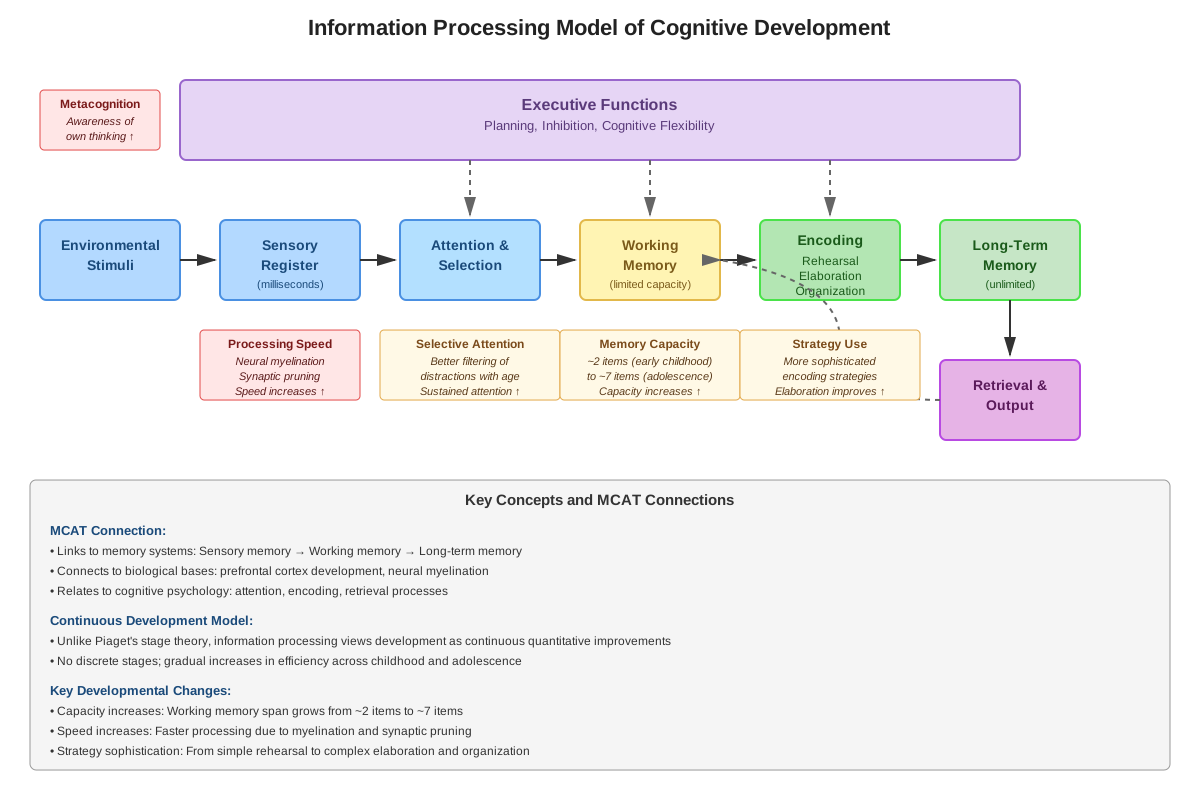
The information processing approach uses computer metaphors to understand cognitive development, focusing on how children encode, store, retrieve, and manipulate information. Development involves:
- Processing speed: Faster neural transmission and more efficient processing with age
- Working memory capacity: Increased ability to hold and manipulate information
- Attention: Better selective attention and sustained focus
- Strategies: More sophisticated encoding and retrieval strategies
- Metacognition: Improved awareness and control of cognitive processes
- Knowledge base: Accumulated domain-specific knowledge that facilitates further learning
This approach emphasizes continuous, quantitative changes rather than discrete stages.
Executive Function Development
Executive functions are higher-order cognitive processes that control and coordinate other cognitive abilities. These include:
- Inhibitory control: Suppressing inappropriate responses
- Working memory: Holding and manipulating information
- Cognitive flexibility: Switching between tasks or mental sets
Executive functions develop gradually throughout childhood and adolescence, paralleling prefrontal cortex maturation. The protracted development of the prefrontal cortex (continuing into the mid-20s) explains why adolescents show improved but still developing impulse control and planning abilities.
Theory of Mind
Theory of mind refers to understanding that others have mental states (beliefs, desires, intentions) different from one's own. This capability typically emerges around age 4-5, demonstrated by passing false-belief tasks (understanding that someone can hold a belief that doesn't match reality). Theory of mind development connects cognitive and social development, enabling empathy, deception, and sophisticated social interaction.
Concept Relationships
Cognitive development concepts form an interconnected network. Piaget's stages provide a broad framework → within which specific capabilities like object permanence, conservation, and abstract reasoning emerge sequentially. Vygotsky's sociocultural theory → complements Piaget by emphasizing how social interaction and cultural context → facilitate progression through developmental milestones. Information processing theory → offers mechanistic explanations for the changes Piaget described → by identifying specific improvements in speed, capacity, and strategy use.
Executive function development → underlies many stage transitions, as improved inhibitory control and working memory → enable conservation, decentration, and abstract reasoning. Theory of mind → builds on declining egocentrism and improved perspective-taking → connecting cognitive development to social cognition. Language development → both reflects and facilitates cognitive growth, serving as a cultural tool (Vygotsky) and enabling symbolic thought (Piaget).
Brain maturation → particularly prefrontal cortex development → provides the biological substrate for cognitive advances, while environmental stimulation and education → shape how genetic potential is realized. The zone of proximal development → explains individual variation within general stage progressions, showing how social support → can accelerate development within biological constraints.
Quick check — test yourself on Cognitive development so far.
Try Flashcards →High-Yield Facts
⭐ Piaget identified four stages: sensorimotor (0-2 years), preoperational (2-7 years), concrete operational (7-11 years), and formal operational (11+ years)
⭐ Object permanence emerges during the sensorimotor stage, typically around 8 months of age
⭐ Conservation (understanding that quantity remains constant despite perceptual changes) is achieved during the concrete operational stage, not before
⭐ Egocentrism characterizes preoperational thinking and refers to inability to take another's perspective, not selfishness
⭐ Zone of proximal development (ZPD) is the gap between independent performance and performance with guidance, central to Vygotsky's theory
- Scaffolding involves providing temporary, adjustable support that is gradually withdrawn as competence increases
- Formal operational thinking enables abstract reasoning and hypothetical-deductive logic, emerging around age 11 but not universal
- Theory of mind typically develops around age 4-5, demonstrated by passing false-belief tasks
- Executive functions (inhibitory control, working memory, cognitive flexibility) develop gradually throughout childhood and adolescence
- Information processing theory emphasizes continuous improvements in speed, capacity, and strategy rather than discrete stages
- Vygotsky emphasized cultural tools and social interaction as primary drivers of cognitive development, contrasting with Piaget's emphasis on individual exploration
- Private speech (self-talk) helps children regulate behavior and eventually becomes internalized as inner speech
Common Misconceptions
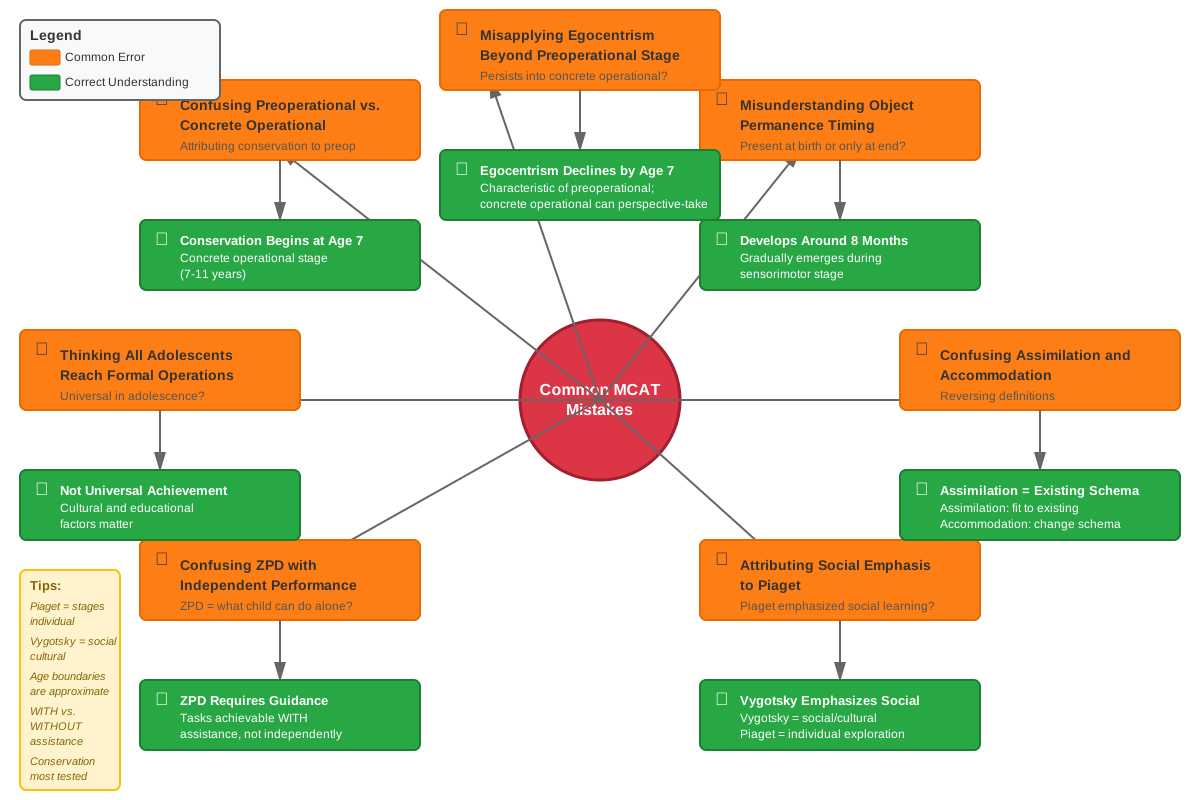
Misconception: Egocentrism in Piaget's theory means children are selfish or self-centered. → Correction: Egocentrism is a cognitive limitation—the inability to mentally represent another person's perspective—not a personality trait or moral failing. Children can be generous while still being egocentric.
Misconception: All adults achieve formal operational thinking. → Correction: Piaget acknowledged that not all individuals reach formal operational stage, and even those who do may not apply abstract reasoning consistently across all domains. Cultural and educational factors influence whether and when formal operations develop.
Misconception: Piaget's stages have rigid age boundaries that apply universally. → Correction: The ages associated with each stage are approximate averages. Individual children progress at different rates, and cultural factors influence timing. The sequence of stages is invariant, but timing varies.
Misconception: Vygotsky and Piaget's theories are completely contradictory. → Correction: While they emphasize different mechanisms (social interaction vs. individual exploration), both theories recognize that children actively construct knowledge and that development involves qualitative changes in thinking. They are complementary perspectives.
Misconception: Object permanence is an all-or-nothing achievement. → Correction: Object permanence develops gradually. Early forms emerge around 4-5 months (surprise at impossible events), but full object permanence with ability to search systematically for hidden objects develops around 8-12 months. The A-not-B error shows incomplete development even after basic object permanence emerges.
Misconception: Conservation is a single ability that emerges at one time. → Correction: Conservation develops in a predictable sequence (horizontal décalage): number conservation appears first (around age 6), followed by mass, then liquid, then volume (around age 11). Children may conserve in one domain while failing in another.
Misconception: The zone of proximal development is the same as difficulty level. → Correction: ZPD is specifically the range where learning can occur with assistance. Tasks below the ZPD are too easy (already mastered), while tasks above it are too difficult even with help. Effective instruction targets the ZPD specifically.
Worked Examples
Example 1: Applying Piaget's Theory
Vignette: A researcher shows 5-year-old children two identical balls of clay. After confirming the children agree the balls contain equal amounts of clay, the researcher rolls one ball into a long snake shape. When asked if the amounts are still equal, most children say the snake has more clay because it is longer.
Question: Which Piagetian concept best explains this response, and what stage are these children in?
Analysis:
- Identify the key behavior: Children believe quantity has changed despite no addition or removal of material
- Recognize the relevant concept: This demonstrates failure of conservation—the understanding that quantity remains constant despite perceptual changes
- Identify contributing factors: The children are showing centration (focusing only on length, ignoring width) and irreversibility (inability to mentally reverse the transformation)
- Determine the stage: Conservation is achieved during concrete operational stage (7-11 years). Since these 5-year-olds fail conservation, they are in the preoperational stage (2-7 years)
Answer: These children are in the preoperational stage, demonstrating lack of conservation due to centration on a single dimension (length) and inability to mentally reverse the transformation.
Connection to learning objectives: This example applies Piaget's theory to interpret children's behavior, demonstrates understanding of stage characteristics, and shows how to identify cognitive limitations specific to developmental periods.
Example 2: Distinguishing Piaget from Vygotsky
Vignette: A study examines how children learn to solve puzzles. In Condition A, children work independently with puzzles of increasing difficulty. In Condition B, children work with an adult who provides hints and demonstrations, gradually reducing assistance as the child improves. Condition B children show faster improvement and can eventually solve more difficult puzzles independently.
Question: Which theorist's framework best explains the superior performance in Condition B, and what specific concept applies?
Analysis:
- Identify key features: Condition B involves social interaction, guidance from a more knowledgeable other, and gradual withdrawal of support
- Compare theoretical frameworks:
- Piaget emphasized individual exploration and discovery
- Vygotsky emphasized social interaction and cultural transmission
- Match to specific concepts: The gradual reduction of support matches scaffolding, and the adult guidance helps children perform beyond their independent level, targeting the zone of proximal development
- Explain the mechanism: The adult's assistance allows children to accomplish tasks within their ZPD that they couldn't complete alone, and this supported practice leads to internalization of problem-solving strategies
Answer: Vygotsky's sociocultural theory best explains these results. The adult provides scaffolding within the children's zone of proximal development, enabling them to accomplish tasks beyond their independent capability and eventually internalize the strategies.
Connection to learning objectives: This example requires distinguishing between major theories, applying Vygotsky's concepts to a research scenario, and explaining how social factors influence cognitive development—all high-yield MCAT skills.
Exam Strategy
When approaching cognitive development MCAT questions, first identify which theoretical framework the question targets. Look for trigger words:
Piaget indicators: stages, conservation, object permanence, egocentrism, concrete vs. abstract, schema, assimilation, accommodation
Vygotsky indicators: zone of proximal development, scaffolding, cultural tools, social interaction, more knowledgeable other, private speech
Information processing indicators: working memory, processing speed, attention, strategies, capacity
Exam Tip: If a question describes a child failing a task independently but succeeding with help, think Vygotsky and ZPD. If it describes qualitatively different thinking at different ages, think Piaget and stages.
For stage identification questions, use age as a starting point but focus on the cognitive capabilities described. A 6-year-old showing conservation would be unusually advanced (early concrete operational), while a 6-year-old showing egocentrism would be typical (late preoperational).
Process of elimination strategy:
- Eliminate answers that place children in stages with capabilities they haven't demonstrated
- Eliminate answers that confuse similar concepts (e.g., egocentrism vs. selfishness)
- Eliminate answers that attribute social/emotional characteristics to cognitive stages
Time allocation: Discrete cognitive development questions should take 60-90 seconds. Passage-based questions may require 90-120 seconds to integrate passage information with theoretical knowledge. Don't overthink—the MCAT tests core concepts, not obscure details.
Watch for questions that require distinguishing between what children can and cannot do at specific stages. The MCAT frequently tests boundaries between stages (e.g., "Which task would be most difficult for a preoperational child?").
Memory Techniques
Mnemonic for Piaget's stages (in order): "Some People Can't Focus"
- Sensorimotor (0-2)
- Preoperational (2-7)
- Concrete operational (7-11)
- Formal operational (11+)
Mnemonic for preoperational limitations: "CEIA"
- Centration
- Egocentrism
- Irreversibility
- Animism
Visualization for ZPD: Picture three concentric circles:
- Inner circle: tasks the child can do alone (below ZPD)
- Middle ring: tasks possible with help (the ZPD—target this!)
- Outer area: tasks impossible even with help (above ZPD)
Concrete operational achievements: Remember "CRS" for Conservation, Reversibility, Seriation
Executive function triad: "WIC" - Working memory, Inhibitory control, Cognitive flexibility
Distinguishing Piaget vs. Vygotsky:
- Piaget = Personal exploration (individual focus)
- Vygotsky = Very social (social/cultural focus)
Summary
Cognitive development encompasses the progressive changes in thinking, reasoning, problem-solving, and knowledge acquisition across the lifespan. Piaget's stage theory proposes four universal stages—sensorimotor, preoperational, concrete operational, and formal operational—each characterized by qualitatively distinct cognitive structures. Key achievements include object permanence, conservation, and abstract reasoning. Vygotsky's sociocultural theory emphasizes social interaction and cultural context, introducing concepts like the zone of proximal development and scaffolding. Information processing approaches focus on continuous improvements in speed, capacity, and strategy use. Executive functions and theory of mind represent specific cognitive capabilities that develop gradually. For the MCAT, students must distinguish between theories, apply stage characteristics to novel scenarios, and understand how biological maturation and environmental factors interact to shape cognitive growth. Mastery requires knowing not just what children can do at different ages, but why certain tasks are difficult and how development can be supported.
Key Takeaways
- Piaget's four stages (sensorimotor, preoperational, concrete operational, formal operational) represent qualitatively different ways of thinking, with specific capabilities emerging in invariant sequence
- Conservation and object permanence are milestone achievements that distinguish concrete operational from preoperational thinking and sensorimotor from preoperational thinking, respectively
- Vygotsky's zone of proximal development explains how social interaction facilitates learning by targeting tasks achievable with guidance but not independently
- Egocentrism is a cognitive limitation (inability to take another's perspective), not a personality trait, characteristic of preoperational thinking
- Executive functions (working memory, inhibitory control, cognitive flexibility) develop gradually throughout childhood and adolescence, underlying many cognitive advances
- Distinguish theories by focus: Piaget emphasizes individual exploration and universal stages; Vygotsky emphasizes social interaction and cultural context; information processing emphasizes mechanisms and continuous change
- Theory of mind (understanding others' mental states) emerges around age 4-5 and bridges cognitive and social development
Related Topics
Social Development: Cognitive development provides the foundation for understanding social relationships, as theory of mind and declining egocentrism enable perspective-taking and empathy. Attachment theory and social learning theory build on cognitive capabilities.
Moral Development: Kohlberg's stages of moral reasoning parallel and depend on Piaget's cognitive stages, as abstract moral principles require formal operational thinking. Understanding cognitive development is prerequisite to understanding moral development.
Language Development: Language acquisition both reflects and facilitates cognitive development. Vygotsky's emphasis on language as a cultural tool connects directly to theories of language development and the relationship between thought and language.
Brain Development: The biological substrate of cognitive development, particularly prefrontal cortex maturation, explains the timeline of executive function development and the protracted development of abstract reasoning.
Intelligence and Testing: Understanding cognitive development informs interpretation of intelligence tests and explains why different cognitive abilities emerge at different ages, relevant to discussions of crystallized versus fluid intelligence.
Practice CTA
Now that you've mastered the core concepts of cognitive development, it's time to solidify your understanding through active practice. Work through the practice questions to test your ability to apply Piaget's and Vygotsky's theories to novel scenarios, distinguish between developmental stages, and analyze research findings. Use the flashcards to reinforce high-yield facts and stage characteristics. Remember: the MCAT rewards not just knowledge but application—practice translating these concepts into exam-ready skills. You've built a strong foundation; now demonstrate your mastery!
Sign up free to keep reading
Create a free AnvayaPrep account to finish this MCAT guide on Cognitive development — plus flashcards and practice questions.