Overview
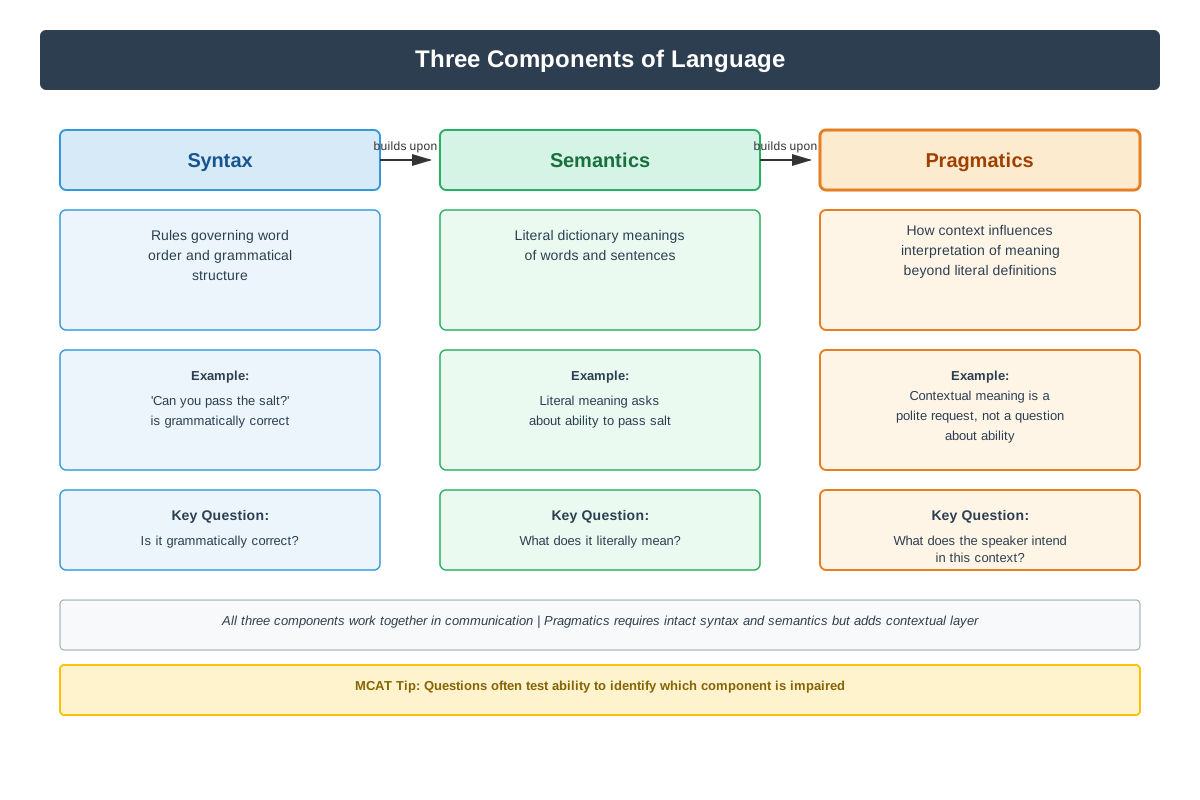
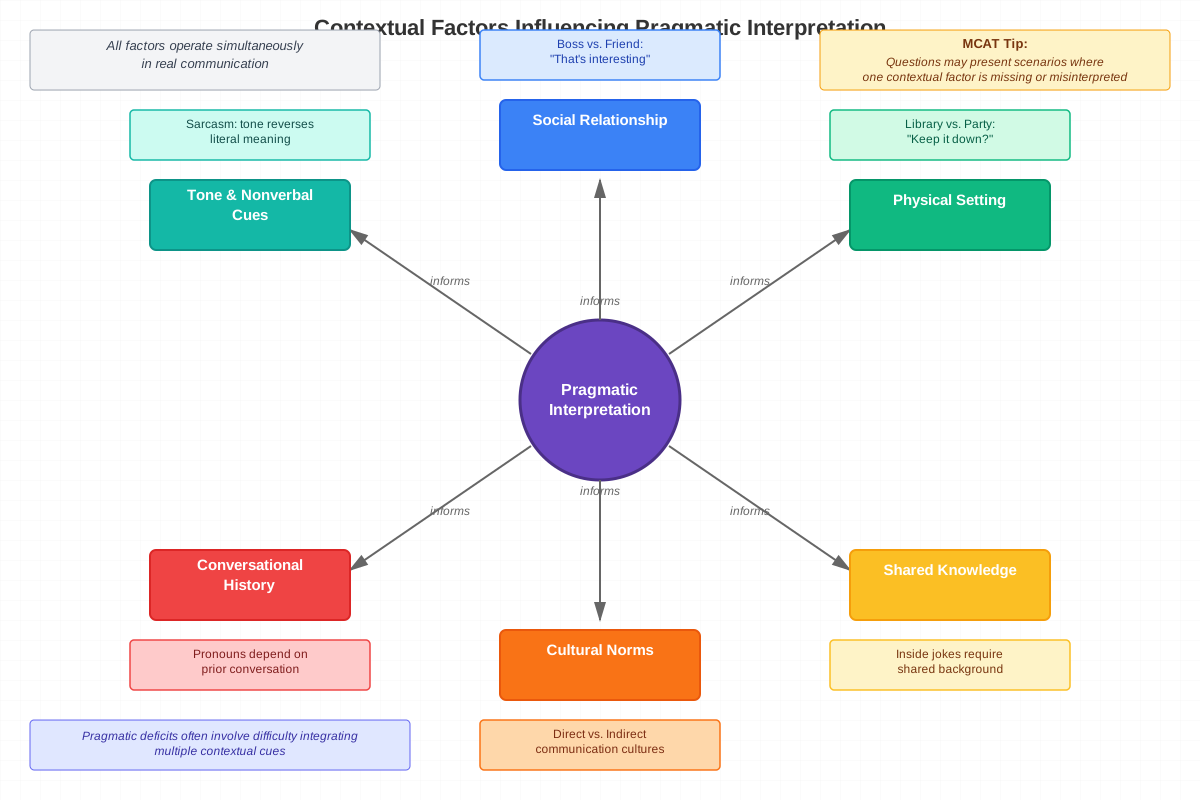
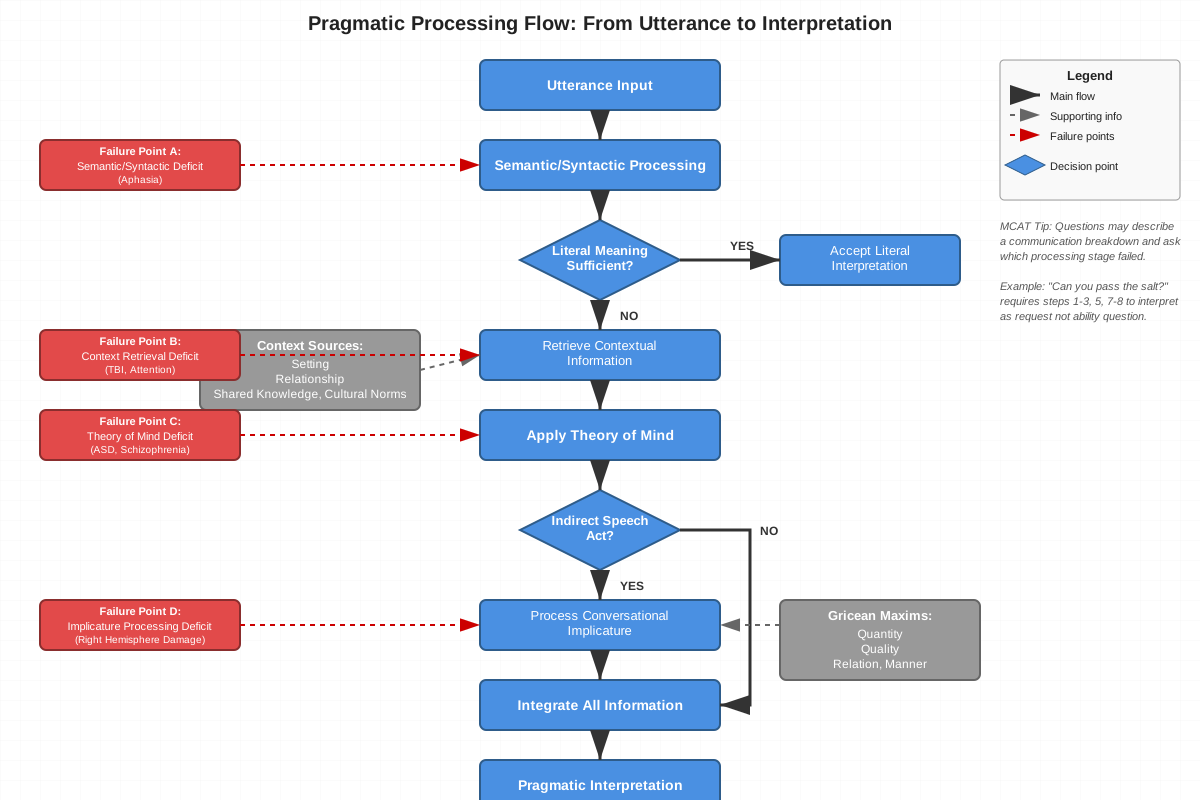
Pragmatics is a fundamental component of language and communication that examines how context influences the interpretation of meaning beyond the literal definitions of words. Within Psychology and the broader study of Cognition and Consciousness, pragmatics represents the bridge between pure linguistic knowledge and real-world communication effectiveness. While semantics deals with the literal meaning of words and syntax governs grammatical structure, pragmatics addresses how speakers and listeners use context, social cues, shared knowledge, and situational factors to convey and interpret intended meanings that often differ from literal interpretations.
For the MCAT, understanding Pragmatics Psychology is essential because it frequently appears in passages examining social cognition, language development, communication disorders, and interpersonal interactions. The exam tests not only definitional knowledge but also the ability to apply pragmatic principles to clinical scenarios, developmental contexts, and social situations. Questions may present vignettes involving miscommunication, cultural differences in communication styles, developmental delays in pragmatic language skills, or neurological conditions affecting pragmatic competence. The MCAT particularly emphasizes how pragmatic abilities develop across the lifespan and how deficits in pragmatic understanding manifest in various psychological and neurological conditions.
The study of pragmatics connects intimately with multiple Psychology domains tested on the MCAT, including social psychology (understanding conversational norms and social expectations), developmental psychology (acquisition of pragmatic skills in children), cognitive psychology (processing contextual information), and biological psychology (neural substrates supporting pragmatic language processing). Mastering Pragmatics MCAT content requires understanding both the theoretical frameworks that explain how context shapes meaning and the practical applications of these principles in clinical and research settings.
Learning Objectives
- [ ] Define Pragmatics using accurate Psychology terminology
- [ ] Explain why Pragmatics matters for the MCAT
- [ ] Apply Pragmatics to exam-style questions
- [ ] Identify common mistakes related to Pragmatics
- [ ] Connect Pragmatics to related Psychology concepts
- [ ] Distinguish between pragmatic, semantic, and syntactic aspects of language
- [ ] Analyze how pragmatic deficits manifest in specific clinical populations
- [ ] Evaluate the role of Theory of Mind in pragmatic language competence
Prerequisites
- Basic language components: Understanding of semantics (word meaning) and syntax (grammatical structure) provides the foundation for distinguishing pragmatics as the contextual layer of language use
- Social cognition fundamentals: Knowledge of how individuals process social information is necessary because pragmatics inherently involves interpreting social context and intentions
- Developmental stages: Familiarity with Piaget's stages and general cognitive development helps contextualize when and how pragmatic abilities emerge in children
- Theory of Mind: Understanding that individuals can attribute mental states to others is crucial because pragmatic competence requires inferring speaker intentions and beliefs
Why This Topic Matters
Clinical and Real-World Significance
Pragmatic language abilities are essential for successful social functioning and interpersonal relationships. Individuals with pragmatic deficits—whether from autism spectrum disorder, traumatic brain injury, right hemisphere damage, or social communication disorder—often struggle with employment, friendships, and daily interactions despite having intact vocabulary and grammar. Clinicians must assess pragmatic competence separately from other language abilities to provide appropriate interventions. Understanding pragmatics also illuminates cultural differences in communication styles, helping healthcare providers avoid misdiagnoses and communicate effectively with diverse patient populations.
Exam Statistics and Question Types
Pragmatics appears on the MCAT with moderate frequency, typically in 2-4 questions per exam. Questions most commonly appear in the Psychological, Social, and Biological Foundations of Behavior section, though they occasionally surface in Critical Analysis and Reasoning Skills passages involving communication theory. The topic appears in approximately 3-5% of Psychology/Sociology passages, often integrated with social cognition, language development, or neuropsychological assessment themes.
Common MCAT Presentation Formats
The MCAT presents pragmatics through several characteristic formats: (1) developmental vignettes showing children at different ages demonstrating varying levels of pragmatic competence; (2) clinical cases describing patients with specific brain lesions or disorders affecting pragmatic abilities; (3) research passages examining cross-cultural communication differences; (4) social psychology experiments investigating conversational norms and violations; (5) passages about autism spectrum disorder or other conditions with pragmatic impairments as core features. Questions often require students to identify which aspect of language is impaired (pragmatic vs. semantic vs. syntactic) or to predict how pragmatic deficits would manifest in specific social situations.
Core Concepts
Definition and Scope of Pragmatics
Pragmatics refers to the study of how context contributes to meaning in language use. It encompasses the rules and conventions governing language in social contexts, including how speakers convey intentions beyond literal word meanings and how listeners interpret these intentions. Unlike semantics, which focuses on the dictionary definitions of words, pragmatics examines how the same words can mean different things depending on who says them, when, where, to whom, and under what circumstances.
The field of Pragmatics Psychology specifically examines the cognitive and social processes underlying pragmatic competence. This includes understanding conversational implicature (implied meanings), speech acts (what we do with words), presupposition (assumed shared knowledge), deixis (context-dependent references like "here" or "you"), and conversational maxims (cooperative principles guiding effective communication).
Grice's Cooperative Principle and Conversational Maxims
Philosopher H.P. Grice proposed that effective communication relies on the Cooperative Principle—the assumption that conversational partners are working together toward mutual understanding. This principle operates through four conversational maxims:
| Maxim | Description | Example Violation |
|---|---|---|
| Quality | Be truthful; don't say what you believe to be false | Lying or making unsupported claims |
| Quantity | Provide the right amount of information—not too much or too little | Giving excessive irrelevant details or being cryptically brief |
| Relation | Be relevant to the conversation topic | Suddenly changing subjects without connection |
| Manner | Be clear, brief, and orderly; avoid ambiguity | Using unnecessarily obscure vocabulary or disorganized speech |
When speakers deliberately violate these maxims, they create conversational implicature—implied meanings that listeners must infer from context. For example, if someone asks "How was the movie?" and you respond "The popcorn was good," you're violating the maxim of relation to imply the movie itself was poor without stating it directly.
Speech Acts and Illocutionary Force
Speech act theory, developed by J.L. Austin and John Searle, recognizes that utterances perform actions beyond conveying information. Every speech act contains three components:
- Locutionary act: The literal meaning of the words spoken
- Illocutionary act: The intended function or force (promising, requesting, warning, etc.)
- Perlocutionary act: The actual effect on the listener
For MCAT purposes, understanding illocutionary force is particularly important. The same locutionary content can serve different illocutionary functions depending on context. "It's cold in here" could be a simple observation, an indirect request to close a window, or a complaint, depending on situational factors, tone, and relationship between speakers.
Deixis and Context-Dependent Reference
Deixis refers to words and phrases whose meanings depend entirely on context, particularly the spatiotemporal location of the speaker and listener. The MCAT tests understanding of several types:
- Person deixis: Pronouns like "I," "you," "we" that shift reference based on who is speaking
- Spatial deixis: Terms like "here," "there," "this," "that" requiring knowledge of physical location
- Temporal deixis: Words like "now," "then," "yesterday," "tomorrow" dependent on time of utterance
- Social deixis: Forms of address reflecting social relationships (formal vs. informal pronouns in many languages)
Pragmatic competence requires rapidly updating these context-dependent references during conversation. Individuals with pragmatic deficits often struggle with deictic terms, sometimes using "you" when they mean "I" or failing to adjust spatial references appropriately.
Presupposition and Shared Knowledge
Presupposition involves assumptions speakers make about shared background knowledge with their listeners. Effective communication requires accurately gauging what information is already known versus what needs explicit statement. For example, saying "My sister's husband is a doctor" presupposes the listener knows you have a sister, while "My brother-in-law is a doctor" presupposes understanding of kinship terminology.
The MCAT frequently tests understanding of how presupposition failures lead to communication breakdowns. Children develop the ability to assess others' knowledge states gradually, with young children often failing to provide necessary background information (assuming listeners share their knowledge) or over-explaining obvious information.
Pragmatic Development Across the Lifespan
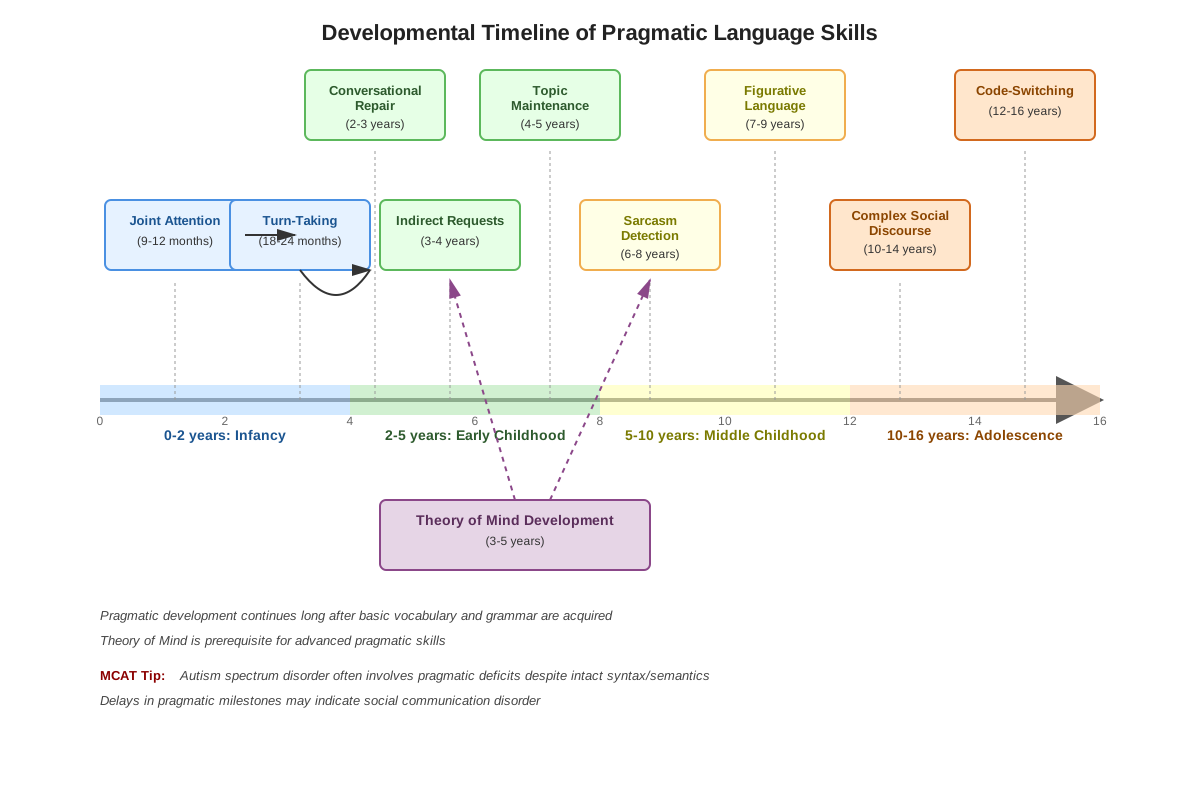
Pragmatic abilities develop throughout childhood and adolescence, following a predictable sequence:
Infancy (0-12 months):
- Joint attention emerges (following others' gaze)
- Protodeclarative pointing (pointing to share interest)
- Turn-taking in vocal exchanges
Toddlerhood (1-3 years):
- Using language for multiple functions (requesting, commenting, protesting)
- Beginning to adjust speech for different listeners
- Understanding simple indirect requests in familiar contexts
Preschool (3-5 years):
- Developing conversational skills (topic maintenance, turn-taking)
- Understanding that others may have different knowledge
- Beginning to use and understand simple figurative language
School Age (6-12 years):
- Mastering complex conversational rules
- Understanding sarcasm, irony, and subtle indirect meanings
- Adjusting communication style for different social contexts
- Developing narrative skills with appropriate background information
Adolescence and Beyond:
- Sophisticated understanding of multiple layers of meaning
- Mastery of social nuances in communication
- Cultural and contextual flexibility in language use
Pragmatic Deficits in Clinical Populations
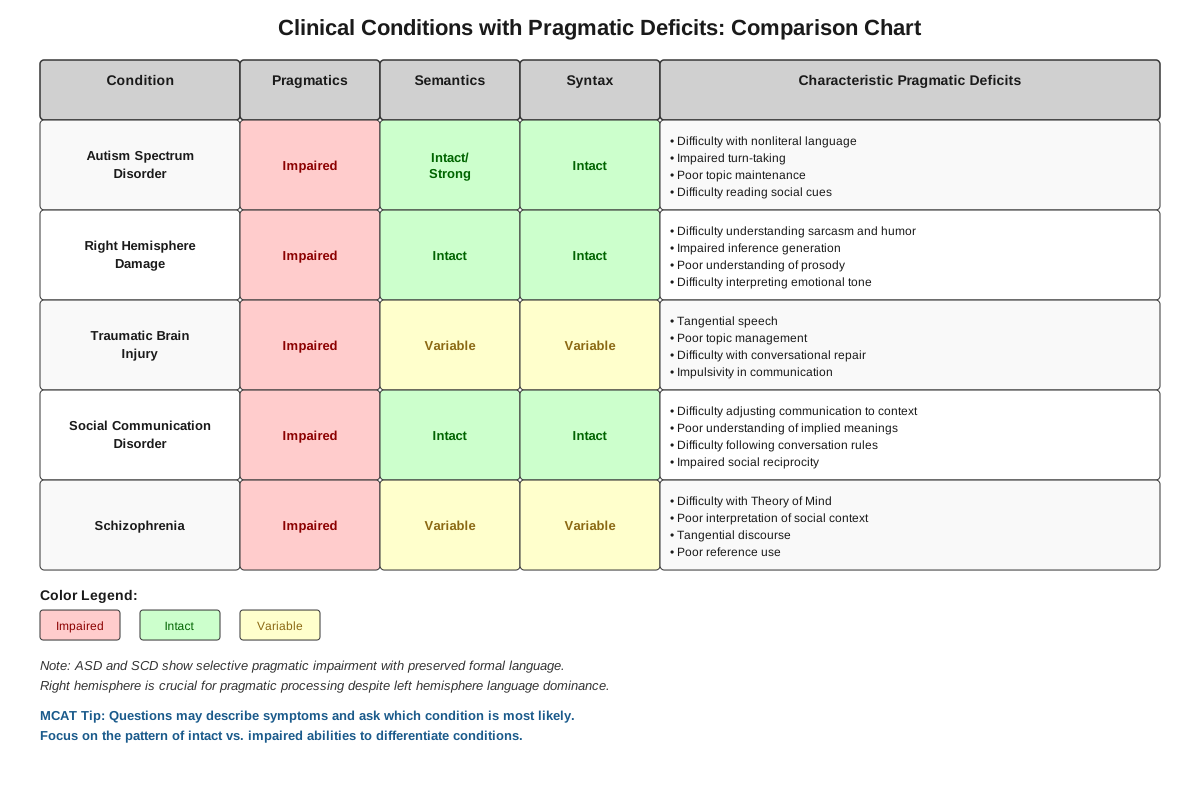
Several clinical conditions feature pragmatic impairments as core or associated features:
Autism Spectrum Disorder (ASD): Individuals with ASD often show significant pragmatic deficits despite sometimes having strong vocabulary and grammar. Common difficulties include interpreting nonliteral language, understanding conversational implicature, maintaining appropriate topics, recognizing when to provide background information, and adjusting communication for different social contexts. These deficits relate to underlying Theory of Mind impairments—difficulty understanding others' mental states and perspectives.
Right Hemisphere Damage: Unlike left hemisphere damage (which typically affects grammar and vocabulary), right hemisphere lesions often impair pragmatic abilities while preserving basic language structure. Patients may struggle with understanding humor, sarcasm, indirect requests, and emotional prosody. They may also have difficulty integrating contextual information or maintaining conversational coherence.
Traumatic Brain Injury (TBI): Frontal lobe damage from TBI frequently results in pragmatic deficits, including tangential speech, difficulty with topic maintenance, inappropriate social comments, and failure to consider listener needs. These deficits often persist even after recovery of other cognitive functions.
Social (Pragmatic) Communication Disorder: This diagnosis specifically describes persistent difficulties with pragmatic language use in the absence of restricted interests or repetitive behaviors characteristic of autism. Individuals struggle with using language for social purposes, adjusting communication to context, following conversational rules, and understanding nonliteral meanings.
Theory of Mind and Pragmatic Competence
Theory of Mind (ToM)—the ability to attribute mental states to oneself and others—is fundamentally connected to pragmatic competence. Understanding that speakers have intentions, beliefs, and knowledge states different from one's own is essential for interpreting indirect meanings, recognizing when to provide background information, and adjusting communication for different audiences.
The relationship between ToM and pragmatics is bidirectional: ToM development enables pragmatic competence, while pragmatic experiences (engaging in conversations requiring perspective-taking) strengthen ToM abilities. MCAT questions often test understanding of this relationship, particularly in developmental or clinical contexts.
Concept Relationships
Pragmatics sits at the intersection of multiple psychological domains, creating a rich network of conceptual relationships. Within language systems, pragmatics builds upon semantics (word meanings) and syntax (grammatical structure) but adds the crucial contextual layer that makes communication functional. This hierarchical relationship means pragmatic competence requires intact semantic and syntactic abilities, but the reverse is not true—individuals can have strong vocabulary and grammar while struggling with pragmatic use.
The connection between pragmatics and Theory of Mind is particularly strong and frequently tested on the MCAT. Theory of Mind enables pragmatic competence by allowing speakers to infer listener knowledge states, intentions, and perspectives. This relationship explains why individuals with autism spectrum disorder, who often have Theory of Mind deficits, simultaneously show pragmatic impairments. The developmental trajectory follows this pattern: Theory of Mind → Pragmatic Competence → Effective Social Communication.
Social cognition broadly encompasses pragmatics, as pragmatic language use requires processing social cues, understanding social norms, and navigating social hierarchies. Pragmatic abilities both depend on and contribute to social cognitive development. The relationship flows: Social Cognitive Development → Pragmatic Skill Acquisition → Enhanced Social Functioning → Further Social Cognitive Refinement.
Within Cognition and Consciousness, pragmatics connects to executive functions (particularly cognitive flexibility and inhibitory control needed to adjust communication for context), working memory (maintaining conversational context), and attention (monitoring both verbal content and nonverbal cues). Frontal lobe functions support pragmatic abilities, explaining why frontal damage impairs pragmatics while leaving basic language intact.
The relationship to developmental psychology is multifaceted: Pragmatic abilities emerge gradually across childhood, following and depending upon other developmental milestones. The progression follows: Joint Attention (infancy) → Intentional Communication (toddlerhood) → Theory of Mind (preschool) → Complex Pragmatic Competence (school age and beyond).
Quick check — test yourself on Pragmatics so far.
Try Flashcards →High-Yield Facts
⭐ Pragmatics examines how context influences meaning beyond literal word definitions, distinguishing it from semantics (word meaning) and syntax (grammatical structure).
⭐ Grice's Cooperative Principle includes four conversational maxims: Quality (truthfulness), Quantity (appropriate information amount), Relation (relevance), and Manner (clarity).
⭐ Conversational implicature occurs when speakers deliberately violate conversational maxims to convey implied meanings that listeners must infer from context.
⭐ Theory of Mind is essential for pragmatic competence because understanding speaker intentions and listener knowledge states requires attributing mental states to others.
⭐ Autism spectrum disorder features pragmatic deficits as a core characteristic, including difficulty with nonliteral language, conversational implicature, and adjusting communication for social context.
- Speech acts include locutionary (literal meaning), illocutionary (intended function), and perlocutionary (actual effect) components.
- Deixis refers to context-dependent references (pronouns, spatial terms, temporal terms) whose meanings shift based on speaker, location, and time.
- Right hemisphere damage typically impairs pragmatic abilities (understanding humor, sarcasm, emotional prosody) while preserving basic language structure.
- Presupposition involves assumptions about shared knowledge between speakers and listeners, with failures leading to communication breakdowns.
- Pragmatic abilities develop gradually throughout childhood, with sophisticated understanding of indirect meanings and social nuances emerging during school age and adolescence.
- Social (Pragmatic) Communication Disorder specifically describes persistent pragmatic deficits without the restricted interests or repetitive behaviors of autism.
- Frontal lobe damage from traumatic brain injury often impairs pragmatic abilities, causing tangential speech and inappropriate social comments despite intact vocabulary and grammar.
Common Misconceptions
Misconception: Pragmatics is just about being polite or having good manners in conversation.
Correction: While politeness is one aspect of pragmatics, the field encompasses all ways context influences meaning, including indirect requests, implied meanings, context-dependent references, presupposition, and the entire system of using language functionally in social contexts. Pragmatics is a cognitive-linguistic domain, not simply social etiquette.
Misconception: Individuals with strong vocabulary and grammar automatically have good pragmatic skills.
Correction: Pragmatic competence is dissociable from other language abilities. Many individuals with autism spectrum disorder, right hemisphere damage, or traumatic brain injury demonstrate intact or even superior vocabulary and grammatical abilities while showing significant pragmatic deficits. The MCAT frequently tests this distinction through clinical vignettes.
Misconception: Pragmatic deficits only affect verbal communication.
Correction: Pragmatics encompasses all aspects of functional communication, including nonverbal elements like gesture, facial expression, prosody (tone of voice), and body language. Pragmatic assessment examines how individuals integrate verbal and nonverbal channels to convey and interpret meaning in context.
Misconception: Children either have pragmatic abilities or they don't—it's not a developmental progression.
Correction: Pragmatic competence develops gradually throughout childhood and adolescence, with different abilities emerging at different ages. Understanding simple indirect requests in familiar contexts emerges in toddlerhood, while sophisticated comprehension of sarcasm, multiple layers of meaning, and subtle social nuances continues developing into adolescence and beyond.
Misconception: Violating conversational maxims always indicates communication failure or incompetence.
Correction: Skilled communicators deliberately violate conversational maxims to create conversational implicature—implied meanings that enrich communication. For example, responding to "How was your date?" with "The restaurant had nice decor" violates the maxim of relation to imply the date itself went poorly. This is sophisticated pragmatic use, not failure.
Misconception: Pragmatic abilities are the same across all cultures and languages.
Correction: While some pragmatic principles may be universal, many aspects vary significantly across cultures, including directness norms, politeness conventions, appropriate topics, turn-taking patterns, and use of silence. The MCAT may test understanding of cultural variation in pragmatic norms and the importance of avoiding ethnocentric assumptions about "correct" communication styles.
Worked Examples
Example 1: Developmental Pragmatics Vignette
Vignette: A researcher observes four-year-old Emma playing with blocks. When asked "Can you build a tower?" Emma responds "Yes" but continues playing without building anything. When her mother asks the same question, Emma immediately begins building a tower. Which of the following best explains Emma's different responses?
A) Emma has a semantic deficit affecting her understanding of the word "tower"
B) Emma has a syntactic deficit preventing her from processing questions
C) Emma failed to recognize the researcher's question as an indirect request rather than a literal inquiry about ability
D) Emma has a Theory of Mind deficit preventing her from understanding others' intentions
Analysis: This question tests understanding of pragmatic development and the distinction between literal and intended meanings. Let's work through systematically:
Step 1: Identify what aspect of language is being tested. Emma clearly understands the words (no semantic deficit) and the grammatical structure (no syntactic deficit), eliminating options A and B.
Step 2: Analyze the pragmatic dimension. "Can you build a tower?" has a literal meaning (inquiry about ability) and a pragmatic meaning in most contexts (indirect request to build). Emma's "yes" response addresses only the literal meaning.
Step 3: Consider developmental appropriateness. Four-year-olds are developing but haven't fully mastered understanding indirect requests, especially from unfamiliar people in novel contexts. Emma's appropriate response to her mother suggests she can interpret indirect requests in familiar relationships.
Step 4: Evaluate Theory of Mind involvement (option D). While Theory of Mind supports pragmatic competence, Emma's appropriate response to her mother indicates she can understand others' intentions in familiar contexts. This is a pragmatic competence issue specific to novel social situations, not a fundamental Theory of Mind deficit.
Answer: C. Emma failed to recognize the researcher's question as an indirect request rather than a literal inquiry about ability. This demonstrates typical developmental pragmatic abilities—understanding indirect meanings in familiar contexts before generalizing to unfamiliar situations.
Key Takeaway: This example illustrates how pragmatic competence develops gradually and context-dependently, and how MCAT questions distinguish pragmatic deficits from semantic, syntactic, or Theory of Mind issues.
Example 2: Clinical Pragmatics Case
Vignette: A 45-year-old patient recovering from a right hemisphere stroke demonstrates normal vocabulary, grammar, and articulation. However, when his doctor says "We need to discuss your discharge plans," the patient begins describing his military discharge from 20 years ago. When shown a cartoon with a humorous twist ending, he describes the events literally but doesn't understand why it's funny. His wife reports he often makes inappropriate comments in social situations. Which language component is primarily affected?
A) Semantic processing
B) Syntactic processing
C) Phonological processing
D) Pragmatic processing
Analysis: This clinical vignette requires distinguishing between different language components based on preserved and impaired abilities.
Step 1: Identify preserved abilities. The patient has "normal vocabulary, grammar, and articulation," indicating intact semantic (word meaning), syntactic (grammatical structure), and phonological (sound production) abilities.
Step 2: Identify impaired abilities. The patient shows three key deficits:
- Misinterpreting "discharge" by failing to use context (medical setting) to determine appropriate meaning
- Missing humor requiring inference beyond literal content
- Making socially inappropriate comments (pragmatic violation)
Step 3: Connect deficits to language components. All three deficits involve using context to interpret meaning appropriately—the defining feature of pragmatics. The patient processes literal meanings correctly but fails to integrate contextual information.
Step 4: Connect to neurological substrate. Right hemisphere damage characteristically impairs pragmatic abilities while preserving basic language structure, consistent with this presentation.
Answer: D. Pragmatic processing is primarily affected. This patient demonstrates the classic dissociation between preserved structural language abilities (semantics, syntax, phonology) and impaired contextual language use (pragmatics) following right hemisphere damage.
Key Takeaway: This example demonstrates how MCAT questions test the ability to distinguish pragmatic deficits from other language impairments based on clinical presentations, and how neurological substrates relate to specific language components.
Exam Strategy
Approaching Pragmatics Questions
When encountering MCAT questions about pragmatics, follow this systematic approach:
Step 1: Identify the language component being tested. Ask yourself: Is this about word meaning (semantics), grammatical structure (syntax), sound patterns (phonology), or contextual use (pragmatics)? Look for clues like "context," "social situation," "indirect meaning," or "implied."
Step 2: Distinguish pragmatics from Theory of Mind. While related, these are distinct concepts. Pragmatics involves the actual use of language in context; Theory of Mind involves attributing mental states. If the question focuses on communication behavior rather than understanding others' beliefs, it's likely testing pragmatics.
Step 3: Consider developmental or clinical context. Pragmatic abilities develop gradually and can be selectively impaired. If a vignette describes intact vocabulary and grammar but communication difficulties, suspect pragmatic deficits.
Trigger Words and Phrases
Watch for these high-yield terms that signal pragmatics content:
- "Context," "contextual," "situational"
- "Indirect request," "implied meaning," "intended meaning"
- "Social communication," "conversational," "discourse"
- "Appropriate/inappropriate" (in social contexts)
- "Nonliteral language," "figurative language," "sarcasm," "humor"
- "Right hemisphere damage" (often affects pragmatics)
- "Autism spectrum disorder" (pragmatic deficits are core features)
- "Theory of Mind" (closely related to pragmatics)
Process of Elimination Tips
Eliminate options confusing language components: If an option suggests semantic or syntactic deficits but the vignette describes intact vocabulary and grammar, eliminate it. The MCAT frequently includes these as distractors.
Eliminate developmentally inappropriate options: If a question describes a four-year-old not understanding subtle sarcasm, don't select options suggesting pathology—this is developmentally normal. Know typical pragmatic milestones.
Eliminate options confusing pragmatics with general social skills: While related, pragmatics specifically involves language use in context. Options describing general social awkwardness without communication components may be distractors.
Time Allocation
Pragmatics questions typically require moderate time investment (60-90 seconds). They often involve:
- Reading a clinical or developmental vignette (30-40 seconds)
- Identifying the language component affected (10-15 seconds)
- Eliminating clearly incorrect options (15-20 seconds)
- Selecting the best answer (10-15 seconds)
Don't rush through the vignette—contextual details are crucial for pragmatics questions. However, once you've identified the question as testing pragmatics versus other language components, the answer often becomes clear quickly.
Memory Techniques
Mnemonic for Grice's Maxims: "QRQM"
Quality - Be truthful
Relation - Be relevant
Quantity - Right amount of information
Manner - Be clear
Alternative: "Quite Right, Quite Mannerly" - reminds you of Quality, Relation, Quantity, Manner
Visualization for Pragmatics vs. Other Language Components
Picture language as a three-layer cake:
- Bottom layer (Phonology): The sounds—the basic ingredients
- Middle layer (Semantics & Syntax): The structure and flavor—words and grammar
- Top layer (Pragmatics): The frosting and decoration—context makes it appropriate for the occasion
This visualization helps remember that pragmatics builds on other language components but adds the contextual "finishing touch."
Acronym for Speech Act Components: "LIP"
Locutionary - Literal meaning
Illocutionary - Intended function
Perlocutionary - Produced effect
Think: "Read my LIPS" - you need all three components to fully understand communication.
Memory Aid for Pragmatic Development
"Babies Point, Toddlers Talk, Preschoolers Pretend, School-kids Socialize, Teens are Subtle"
- Babies Point: Joint attention and protodeclarative pointing (infancy)
- Toddlers Talk: Using language for multiple functions (1-3 years)
- Preschoolers Pretend: Beginning Theory of Mind and simple indirect meanings (3-5 years)
- School-kids Socialize: Mastering conversational rules (6-12 years)
- Teens are Subtle: Sophisticated understanding of multiple meaning layers (adolescence)
Clinical Conditions Mnemonic: "RIGHT-A-TBI"
RIGHT hemisphere damage - pragmatic deficits with intact basic language
Autism spectrum disorder - core pragmatic impairments
TBI (traumatic brain injury) - frontal damage affecting pragmatics
This reminds you of the three most commonly tested clinical conditions with pragmatic deficits.
Summary
Pragmatics represents the essential bridge between linguistic knowledge and functional communication, examining how context shapes meaning beyond literal word definitions. Unlike semantics (word meaning) and syntax (grammatical structure), pragmatics addresses the rules and conventions governing language use in social contexts, including conversational implicature, speech acts, deixis, presupposition, and adherence to conversational maxims. For the MCAT, understanding pragmatics requires recognizing its developmental trajectory from infancy through adolescence, its dependence on Theory of Mind abilities, and its selective impairment in clinical conditions like autism spectrum disorder, right hemisphere damage, and traumatic brain injury. Grice's Cooperative Principle and four conversational maxims (Quality, Quantity, Relation, Manner) provide the theoretical framework for understanding how speakers and listeners collaborate to create meaning. Pragmatic competence is dissociable from other language abilities—individuals can have strong vocabulary and grammar while showing significant pragmatic deficits, a distinction the MCAT frequently tests through clinical vignettes. Mastering this topic requires understanding both theoretical principles and their practical applications in developmental and clinical contexts.
Key Takeaways
- Pragmatics examines how context influences meaning in language use, distinguishing it from semantics (word meaning) and syntax (grammar)—this distinction is frequently tested on the MCAT
- Grice's four conversational maxims (Quality, Quantity, Relation, Manner) guide cooperative communication, and deliberate violations create conversational implicature (implied meanings)
- Theory of Mind is fundamentally connected to pragmatic competence because understanding speaker intentions and listener knowledge states requires attributing mental states to others
- Pragmatic abilities develop gradually throughout childhood and adolescence, with sophisticated understanding of indirect meanings and social nuances emerging during school age and continuing into adolescence
- Clinical dissociations are high-yield: autism spectrum disorder, right hemisphere damage, and traumatic brain injury can impair pragmatics while preserving vocabulary and grammar—recognize these patterns in vignettes
- Speech acts include three components (locutionary, illocutionary, perlocutionary), with illocutionary force (intended function) being particularly important for MCAT questions
- Pragmatic deficits manifest as difficulty with nonliteral language, conversational implicature, topic maintenance, adjusting communication for context, and providing appropriate background information—not simply as vocabulary or grammar errors
Related Topics
Theory of Mind: Mastering pragmatics provides foundation for deeper understanding of Theory of Mind development, including false belief tasks, perspective-taking abilities, and the relationship between social cognition and communication competence.
Language Development: Pragmatics connects to broader language acquisition topics, including the distinction between receptive and expressive language, critical periods for language learning, and the interaction between biological and environmental factors in language development.
Autism Spectrum Disorder: Understanding pragmatic deficits as core features of ASD enables deeper study of this condition's diagnostic criteria, neurobiological basis, and intervention approaches.
Social Cognition: Pragmatics serves as an entry point to broader social cognitive topics, including attribution theory, impression formation, social perception, and cultural influences on cognition and behavior.
Neuropsychological Assessment: Knowledge of pragmatic deficits following specific brain lesions connects to broader understanding of functional neuroanatomy, particularly lateralization of language functions and the role of frontal lobes in executive functions.
Communication Disorders: Pragmatics provides foundation for understanding various communication disorders beyond autism, including specific language impairment, social communication disorder, and acquired communication deficits following neurological injury.
Practice CTA
Now that you've mastered the core concepts of pragmatics, it's time to solidify your understanding through active practice. Challenge yourself with MCAT-style practice questions that test your ability to distinguish pragmatic deficits from other language impairments, apply Grice's conversational maxims to novel scenarios, and analyze clinical vignettes involving pragmatic competence. Use flashcards to reinforce high-yield facts about developmental milestones, clinical presentations, and theoretical frameworks. Remember: pragmatics questions reward careful attention to context and systematic analysis of what language component is actually being tested. Your ability to quickly identify pragmatic elements in complex vignettes will serve you well not only on the MCAT but in understanding real-world communication dynamics. You've got this—now prove it through practice!
Sign up free to keep reading
Create a free AnvayaPrep account to finish this MCAT guide on Pragmatics — plus flashcards and practice questions.