Overview
The Ainsworth strange situation is a landmark experimental paradigm developed by developmental psychologist Mary Ainsworth in the 1970s to assess attachment styles in infants and young children. This structured laboratory procedure observes how infants (typically 12-18 months old) respond to a series of separations and reunions with their primary caregiver, revealing the quality and security of the attachment bond. The procedure consists of eight episodes that systematically introduce stress through the presence of a stranger and brief separations from the caregiver, allowing researchers to classify attachment patterns based on the infant's behavior during reunion episodes.
For the MCAT, the Ainsworth strange situation represents a critical intersection of Development and Personality concepts within Psychology. This topic frequently appears in Psych/Soc passages that explore early childhood development, parenting styles, emotional regulation, and the long-term consequences of early attachment experiences. Understanding this paradigm provides essential context for questions about social development, emotional bonding, and how early experiences shape personality formation across the lifespan. The MCAT often tests not just the procedural details of the strange situation, but also the theoretical implications of different attachment patterns and their relationship to later developmental outcomes.
The strange situation connects to broader psychological frameworks including evolutionary psychology (attachment as an adaptive survival mechanism), social development theories, and the biological basis of bonding behaviors. It serves as empirical support for attachment theory, originally proposed by John Bowlby, and demonstrates how systematic observation can reveal individual differences in socio-emotional development. Mastery of this topic enables students to analyze research methodology questions, interpret behavioral data in experimental contexts, and understand how early relational experiences influence psychological development—all high-yield competencies for MCAT success.
Learning Objectives
- [ ] Define Ainsworth strange situation using accurate Psychology terminology
- [ ] Explain why Ainsworth strange situation matters for the MCAT
- [ ] Apply Ainsworth strange situation to exam-style questions
- [ ] Identify common mistakes related to Ainsworth strange situation
- [ ] Connect Ainsworth strange situation to related Psychology concepts
- [ ] Describe the eight episodes of the strange situation procedure in sequential order
- [ ] Differentiate between the four attachment styles (secure, anxious-ambivalent, anxious-avoidant, and disorganized) based on behavioral indicators
- [ ] Analyze how parenting behaviors and caregiver responsiveness correlate with specific attachment classifications
- [ ] Evaluate the cross-cultural validity and limitations of the strange situation paradigm
Prerequisites
- Basic developmental stages: Understanding of infant cognitive and emotional capabilities is necessary to appreciate why the strange situation is age-specific and what behaviors are developmentally appropriate
- Attachment theory fundamentals: Familiarity with John Bowlby's attachment theory provides the theoretical framework that the strange situation was designed to test empirically
- Observational research methods: Knowledge of naturalistic and structured observation techniques helps contextualize the strange situation as a research methodology
- Stress response systems: Basic understanding of how infants experience and respond to stress explains why separation creates the conditions necessary to reveal attachment patterns
Why This Topic Matters
The Ainsworth strange situation holds significant clinical and real-world importance because attachment patterns established in infancy predict numerous developmental outcomes. Secure attachment correlates with better emotional regulation, higher self-esteem, more successful peer relationships, and greater resilience to stress throughout childhood and into adulthood. Insecure attachment patterns have been linked to increased risk for anxiety disorders, depression, and relationship difficulties. Mental health professionals use attachment theory to inform therapeutic interventions, parenting education programs, and early childhood interventions for at-risk populations.
On the MCAT, this topic appears with moderate frequency in the Psychological, Social, and Biological Foundations of Behavior section. Exam statistics indicate that attachment-related questions appear in approximately 3-5% of Psych/Soc passages, often embedded within broader developmental psychology or social psychology contexts. Questions may present research scenarios requiring students to identify attachment styles from behavioral descriptions, analyze experimental design elements of attachment studies, or predict developmental outcomes based on early attachment patterns.
The strange situation commonly appears in MCAT passages in several formats: (1) research study descriptions requiring interpretation of methodology and results, (2) clinical vignettes where students must identify attachment patterns from behavioral descriptions, (3) questions about the relationship between parenting styles and attachment outcomes, and (4) cross-cultural psychology passages examining whether attachment patterns are universal or culturally specific. The MCAT particularly favors questions that require application of knowledge rather than simple recall, such as predicting how a child with a specific attachment style would respond to a novel situation or identifying which parenting behaviors would most likely produce secure attachment.
Core Concepts
The Strange Situation Procedure
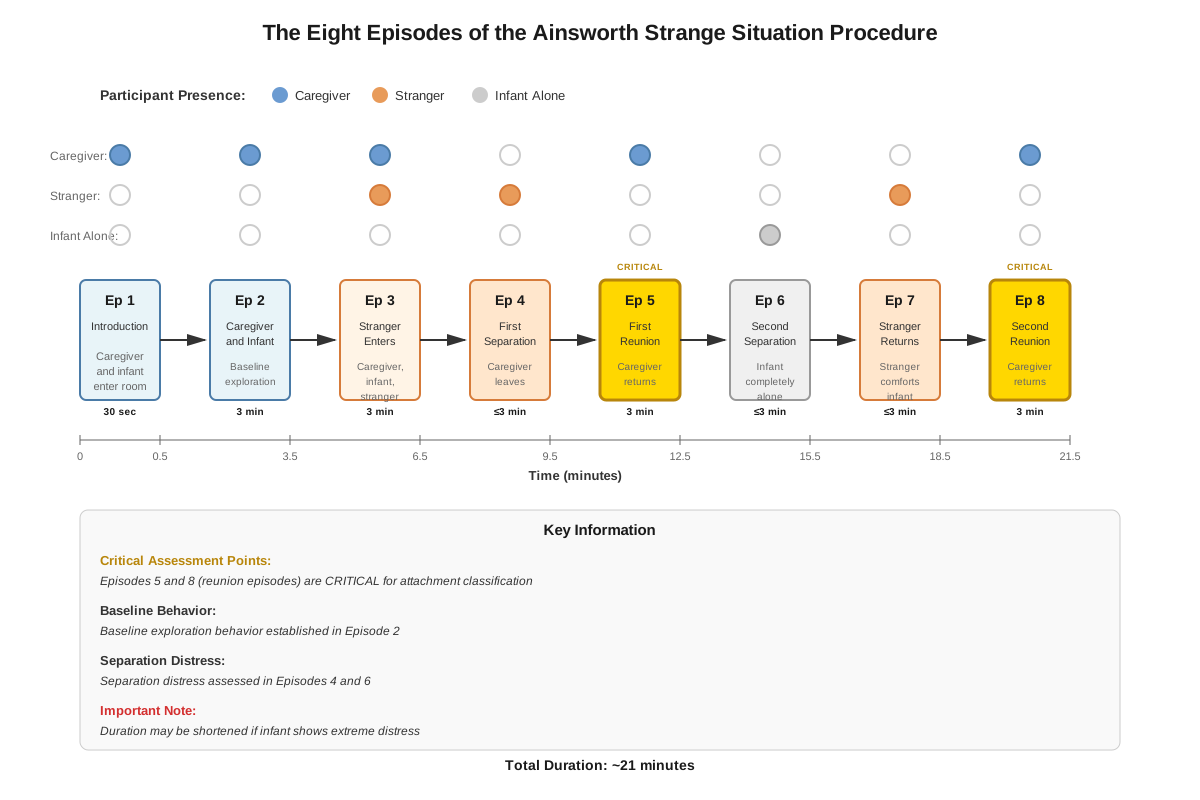
The Ainsworth strange situation is a standardized laboratory procedure lasting approximately 20 minutes, divided into eight distinct episodes. Each episode is designed to progressively increase the infant's stress level through the introduction of an unfamiliar environment, an unfamiliar person (the "stranger"), and brief separations from the primary caregiver. The procedure takes place in a comfortable room equipped with toys, and researchers observe the infant's behavior through a one-way mirror or video recording.
The eight episodes follow this sequence:
- Introduction (30 seconds): The caregiver and infant are introduced to the experimental room
- Caregiver and infant alone (3 minutes): The infant explores the room while the caregiver remains seated, providing a secure base
- Stranger enters (3 minutes): An unfamiliar adult enters, sits quietly, then attempts to interact with the infant
- First separation (3 minutes or less): The caregiver leaves the room, leaving the infant with the stranger
- First reunion (3 minutes): The caregiver returns and the stranger leaves; the caregiver comforts the infant if needed
- Second separation (3 minutes or less): The caregiver leaves again, and the infant is completely alone
- Stranger returns (3 minutes or less): The stranger enters and attempts to comfort or engage the infant
- Second reunion (3 minutes): The caregiver returns and the stranger leaves
MCAT Exam Tip: The reunion episodes (5 and 8) are the most critical for attachment classification. Focus on how the infant responds when the caregiver returns, not just on distress during separation.
The Four Attachment Styles
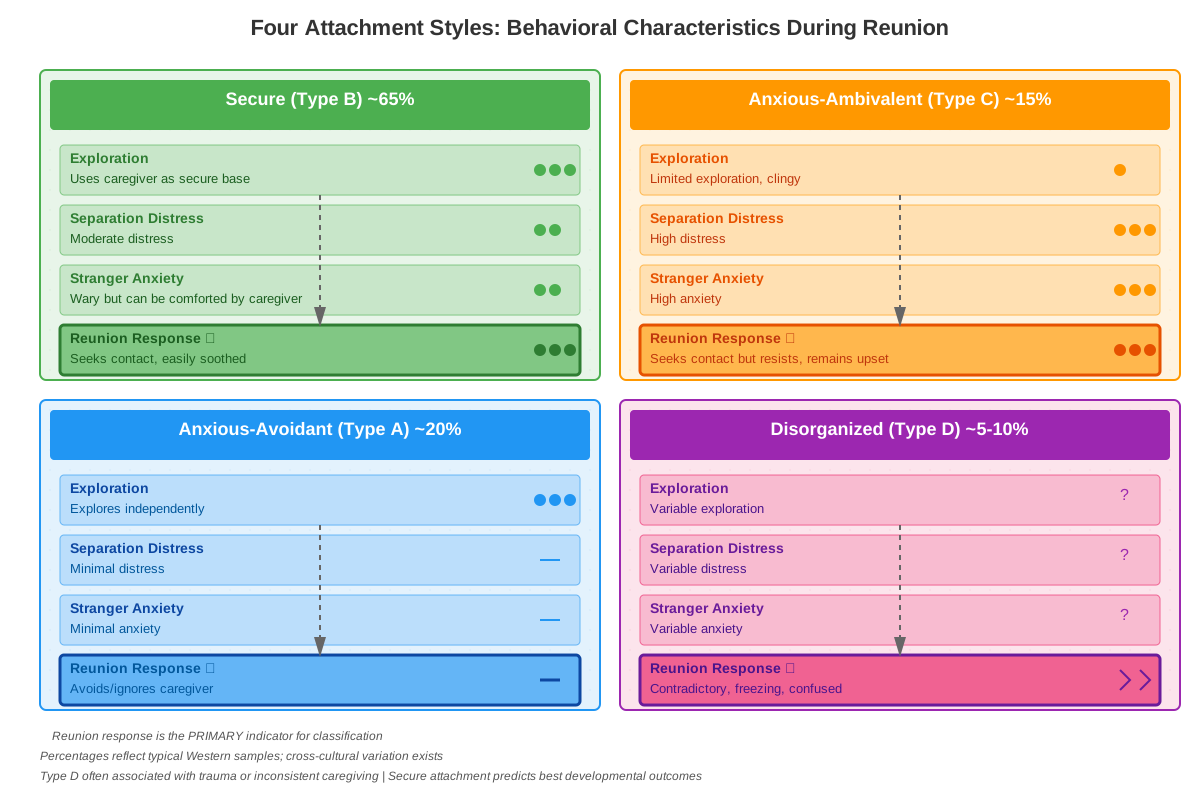
Based on infant behavior during the strange situation, Ainsworth identified three primary attachment patterns, with a fourth (disorganized) added later by Main and Solomon. These classifications reflect the quality of the infant-caregiver relationship and the infant's expectations about caregiver availability and responsiveness.
| Attachment Style | Separation Behavior | Reunion Behavior | Exploration Behavior | Caregiver Characteristics |
|---|---|---|---|---|
| Secure (Type B) | Moderate distress; may cry | Seeks contact; easily comforted; returns to play | Uses caregiver as secure base; explores freely | Sensitive, responsive, consistent |
| Anxious-Avoidant (Type A) | Little to no distress | Avoids or ignores caregiver; shows little preference for caregiver over stranger | Explores independently without checking back | Rejecting, insensitive, emotionally unavailable |
| Anxious-Ambivalent/Resistant (Type C) | Extreme distress; difficult to console | Seeks contact but resists comfort; may show anger; cannot be soothed | Limited exploration; clingy even before separation | Inconsistent, unpredictable responsiveness |
| Disorganized (Type D) | Variable, unpredictable | Contradictory behaviors; may freeze, show apprehension, or display confused sequences | Disoriented, contradictory patterns | Frightening, frightened, or severely neglectful |
Secure Attachment (Type B)
Secure attachment represents the optimal attachment pattern, observed in approximately 60-65% of middle-class American samples. Securely attached infants demonstrate confidence in their caregiver's availability and responsiveness. During the strange situation, these infants use the caregiver as a secure base for exploration, periodically checking back for reassurance. When separated, they show appropriate distress (indicating the caregiver is valued), but upon reunion, they actively seek contact, are easily comforted, and quickly return to exploration and play.
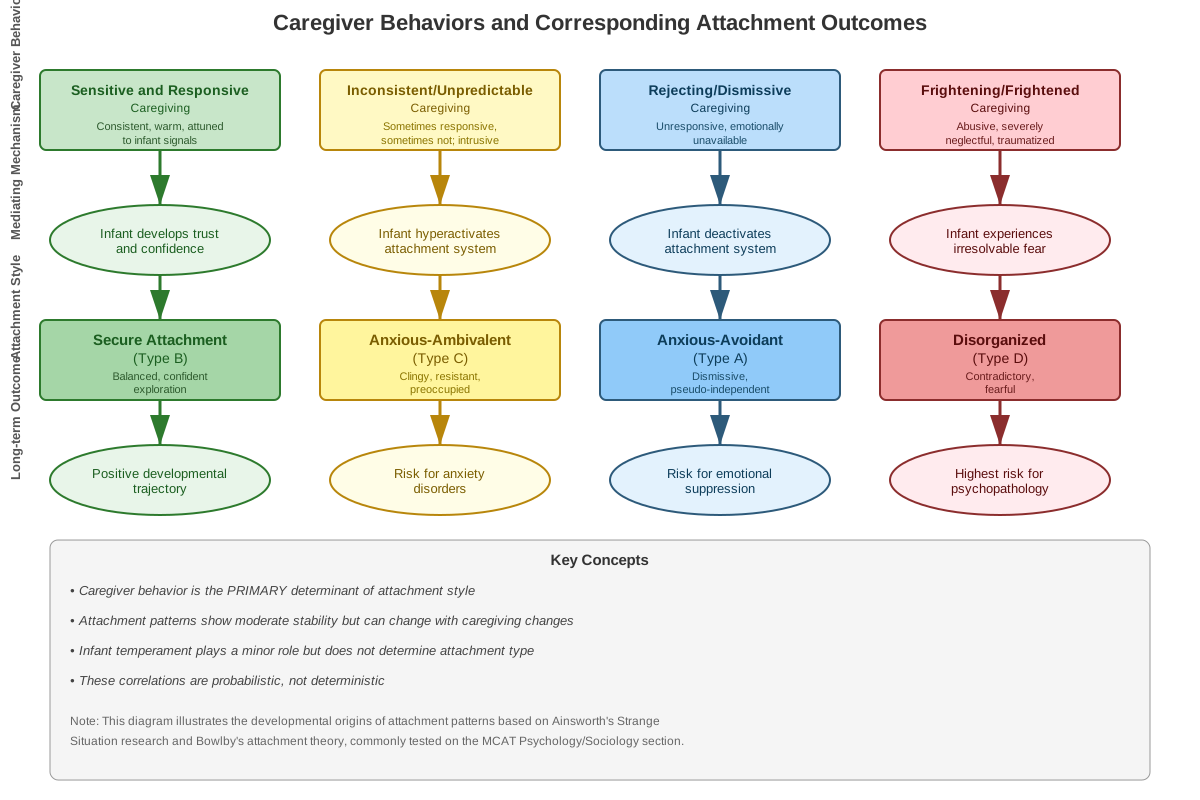
The caregiver behaviors that foster secure attachment include sensitive responsiveness—the ability to perceive, interpret correctly, and respond promptly and appropriately to infant signals. These caregivers provide consistent comfort during distress, engage in positive interactions during play, and respect the infant's autonomy during exploration. Secure attachment in infancy predicts numerous positive outcomes including better emotional regulation, higher quality friendships, greater academic achievement, and lower rates of psychopathology.
Anxious-Avoidant Attachment (Type A)
Anxious-avoidant attachment (also called insecure-avoidant) characterizes approximately 20% of infants in normative samples. These infants have learned that their caregiver is unlikely to provide comfort during distress, so they develop a defensive strategy of emotional suppression and self-reliance. During the strange situation, avoidant infants show minimal distress during separation and, critically, actively avoid or ignore the caregiver during reunion—turning away, looking away, or moving away when the caregiver attempts contact.
Despite appearing independent, physiological measures (heart rate, cortisol levels) reveal that avoidant infants experience significant internal stress; they have simply learned to suppress behavioral expressions of distress. This pattern develops in response to caregivers who are consistently rejecting, dismissive of emotional needs, or who actively discourage proximity-seeking and emotional expression. The infant adapts by minimizing attachment behaviors to maintain whatever limited connection is available.
Anxious-Ambivalent/Resistant Attachment (Type C)
Anxious-ambivalent attachment (also called anxious-resistant or insecure-ambivalent) occurs in approximately 10-15% of infants. These infants are uncertain about caregiver availability, leading to heightened anxiety and hyperactivation of attachment behaviors. In the strange situation, ambivalent infants show extreme distress during separation and, upon reunion, display contradictory behaviors—simultaneously seeking contact while angrily resisting comfort, pushing away while crying to be held.
This pattern reflects the infant's confusion about whether proximity-seeking will be met with responsiveness or rejection. The caregiver's inconsistent responsiveness—sometimes available and nurturing, other times preoccupied or intrusive—creates uncertainty that prevents the infant from developing confidence in the relationship. Unable to be soothed, these infants cannot return to exploration, remaining focused on the caregiver's whereabouts and availability. This preoccupation with the attachment figure interferes with exploration and learning.
Disorganized Attachment (Type D)
Disorganized attachment represents the most concerning pattern, associated with the highest risk for later psychopathology. Disorganized infants display contradictory, incomplete, or confused behaviors during the strange situation—approaching the caregiver with head averted, freezing in place, rocking while crying, or showing apprehension toward the caregiver. These behaviors suggest the infant faces an irresolvable paradox: the caregiver is simultaneously the source of comfort and the source of fear.
Disorganized attachment typically develops when caregivers are frightening (through abuse or harsh treatment) or frightened (through their own unresolved trauma, severe depression, or substance abuse). The infant has no organized strategy for obtaining comfort because the attachment figure is also the source of alarm. This pattern is strongly associated with maltreatment, parental psychopathology, and predicts elevated risk for dissociative symptoms, aggression, and both internalizing and externalizing disorders.
Theoretical Foundations and Internal Working Models
The strange situation operationalizes Bowlby's concept of internal working models—mental representations of self, others, and relationships that develop through repeated interactions with caregivers. Secure attachment fosters a working model of the self as worthy of care and others as trustworthy and available. Avoidant attachment creates models of the self as unworthy and others as rejecting. Ambivalent attachment produces models characterized by uncertainty about both self-worth and others' reliability.
These internal working models function as cognitive schemas that guide expectations, emotional responses, and behaviors in future relationships. They demonstrate relative stability across development while remaining open to revision through significant relationship experiences. The strange situation thus provides a window into these emerging cognitive-emotional structures during a critical period of development.
Concept Relationships
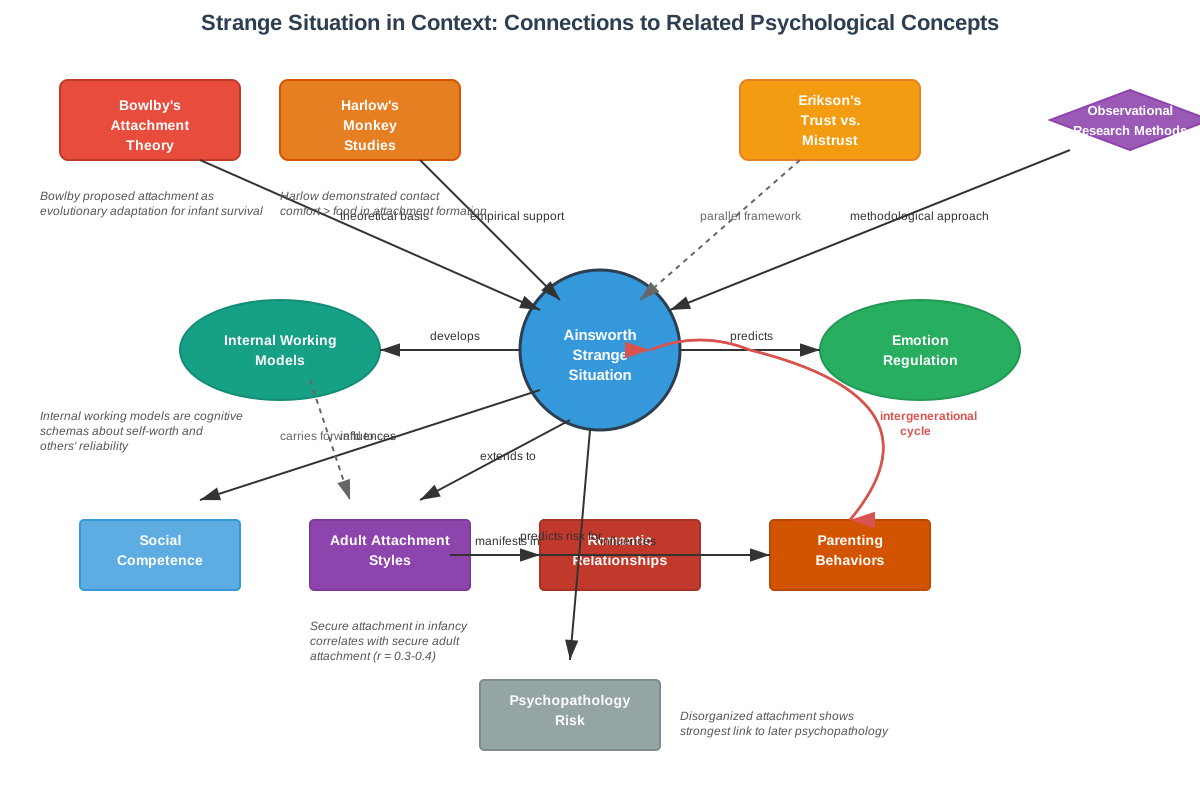
The Ainsworth strange situation directly operationalizes and tests attachment theory (Bowlby), providing empirical evidence for theoretical predictions about the nature and consequences of early bonds. The procedure demonstrates how caregiver sensitivity and responsiveness → shapes attachment security → which influences internal working models → that predict later social and emotional functioning.
Within developmental psychology, attachment patterns connect to temperament (though attachment is distinct from and not determined by temperament), emotional regulation (secure attachment facilitates better regulation strategies), and social competence (attachment quality predicts peer relationship quality). The strange situation methodology exemplifies observational research methods and demonstrates how standardized procedures can reveal individual differences in psychological constructs.
The concept links to parenting styles (authoritative parenting correlates with secure attachment), stress and coping (attachment security affects stress reactivity and coping strategies), and lifespan development (early attachment influences adult romantic relationships and parenting of the next generation). Cross-cultural research on the strange situation connects to cultural psychology, revealing both universal aspects of attachment and cultural variations in what constitutes optimal caregiving.
Relationship map: Caregiver behavior patterns → Infant attachment strategies → Strange situation behavioral responses → Attachment classification → Internal working models → Developmental outcomes (emotional regulation, relationship quality, mental health)
Quick check — test yourself on Ainsworth strange situation so far.
Try Flashcards →High-Yield Facts
⭐ The reunion episodes (episodes 5 and 8) are the most diagnostic for attachment classification—focus on how the infant responds when the caregiver returns, not just distress during separation
⭐ Secure attachment (Type B) is characterized by using the caregiver as a secure base, showing distress at separation, and being easily comforted upon reunion
⭐ Avoidant infants (Type A) actively avoid or ignore the caregiver during reunion despite experiencing physiological stress
⭐ Ambivalent infants (Type C) cannot be comforted during reunion and show simultaneous contact-seeking and contact-resisting behaviors
⭐ Disorganized attachment (Type D) involves contradictory, confused, or apprehensive behaviors toward the caregiver and is associated with frightening or frightened caregiving
- The strange situation is designed for infants aged 12-18 months, when attachment behaviors are well-established but before significant language development
- Approximately 60-65% of infants in normative American samples show secure attachment, though percentages vary across cultures
- Caregiver sensitivity and responsiveness are the strongest predictors of attachment security, more influential than infant temperament
- Attachment patterns show moderate stability across development but can change with significant changes in caregiving quality or life circumstances
- The strange situation has been criticized for potential cultural bias, as behaviors indicating security in individualistic cultures may differ from those in collectivistic cultures
- Secure attachment predicts better outcomes across multiple domains: emotional regulation, social competence, academic achievement, and mental health
- Disorganized attachment is the strongest predictor of later psychopathology among the attachment classifications
- The procedure deliberately induces mild stress to activate the attachment system—without stress, attachment behaviors may not be observable
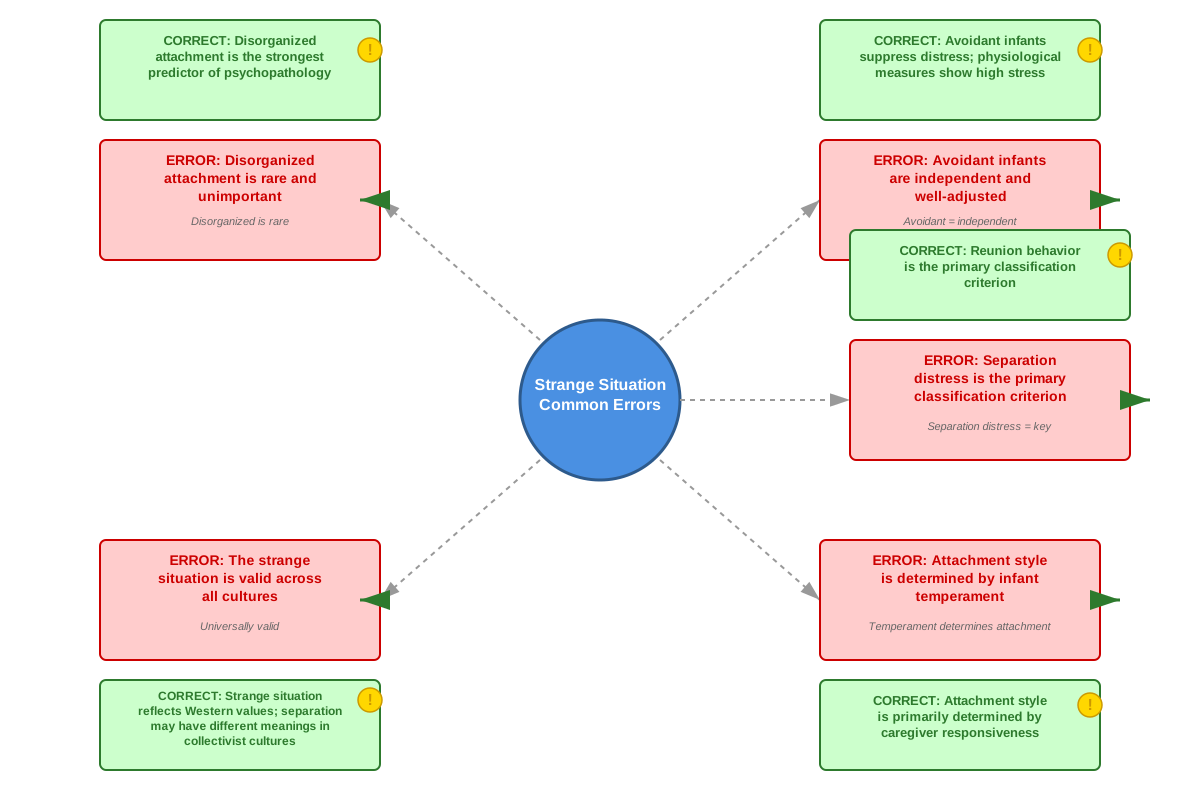
Common Misconceptions
Misconception: Infants who don't cry during separation have secure attachment because they're confident and independent.
Correction: Lack of distress during separation combined with avoidance during reunion indicates anxious-avoidant attachment, not security. Securely attached infants typically show some distress at separation, demonstrating that they value the caregiver's presence.
Misconception: Attachment style is determined primarily by infant temperament rather than caregiver behavior.
Correction: While temperament influences how attachment is expressed, research consistently shows that caregiver sensitivity and responsiveness are the primary determinants of attachment security. The same temperamentally difficult infant can develop secure or insecure attachment depending on caregiving quality.
Misconception: Ambivalent and avoidant attachment are equally problematic and predict similar outcomes.
Correction: Though both are insecure patterns, they involve opposite strategies (hyperactivation vs. deactivation of attachment behaviors) and predict different outcomes. Ambivalent attachment is more associated with anxiety disorders, while avoidant attachment relates more to conduct problems and emotional suppression.
Misconception: The strange situation measures the infant's personality rather than the relationship quality.
Correction: Attachment classification reflects the quality of the specific infant-caregiver relationship, not an inherent trait of the infant. The same infant may show different attachment patterns with different caregivers (mother vs. father), demonstrating that attachment is relationship-specific.
Misconception: Disorganized attachment is simply a more severe form of insecure attachment.
Correction: Disorganized attachment is qualitatively different from the organized insecure patterns (avoidant and ambivalent). It reflects the absence of a coherent attachment strategy rather than an ineffective strategy, typically resulting from frightening or frightened caregiving rather than simply insensitive care.
Misconception: Attachment patterns established in infancy are permanent and unchangeable.
Correction: While attachment patterns show moderate stability, they can change in response to significant changes in caregiving quality, major life events, or therapeutic interventions. Attachment is best understood as relatively stable but not immutable.
Worked Examples
Example 1: Identifying Attachment Style from Behavioral Description
Question: A researcher observes a 14-month-old infant during a strange situation procedure. The infant explores the room actively while the mother is present, occasionally glancing back at her. When the mother leaves, the infant stops playing and begins to cry. When the mother returns, the infant immediately approaches her with arms raised, calms quickly when picked up, and resumes playing after about 30 seconds. The infant shows little interest in the stranger throughout. What attachment classification best describes this infant?
Step 1: Identify the key behavioral indicators across the three critical dimensions:
- Exploration behavior: Active exploration with periodic checking back = uses caregiver as secure base
- Separation behavior: Stops playing and cries = shows appropriate distress
- Reunion behavior: Immediately seeks contact, calms quickly, returns to play = effective comfort-seeking and soothing
Step 2: Match the pattern to attachment classifications:
- The combination of secure base behavior, distress at separation, and effective comfort-seeking during reunion is the hallmark of secure attachment (Type B)
- Rule out avoidant: The infant doesn't ignore or avoid the caregiver during reunion
- Rule out ambivalent: The infant is easily comforted and returns to play, not resistant or unable to be soothed
- Rule out disorganized: No contradictory, confused, or apprehensive behaviors
Answer: This infant demonstrates secure attachment. The behavior pattern shows confidence in caregiver availability (secure base exploration), appropriate valuing of the caregiver (distress at separation), and effective use of the caregiver for emotional regulation (quick soothing and return to play).
MCAT Connection: This question type requires applying definitional knowledge to behavioral descriptions, a common MCAT format. Focus on the reunion behavior as the most diagnostic feature.
Example 2: Analyzing Research Design and Predicting Outcomes
Question: A longitudinal study follows children assessed with the strange situation at 18 months and evaluates their social competence with peers at age 5. Researchers find that children classified as securely attached in infancy have significantly higher peer relationship quality scores at age 5 compared to children with insecure attachment classifications. Which of the following best explains this finding?
A) Secure attachment causes better peer relationships through genetic factors
B) Internal working models developed through secure attachment facilitate positive expectations and behaviors in peer relationships
C) Children with secure attachment have higher intelligence, leading to better social skills
D) The strange situation directly teaches children social skills they later use with peers
Step 1: Evaluate the theoretical mechanism linking early attachment to later outcomes:
- Attachment theory proposes that early caregiver relationships create internal working models—cognitive-emotional schemas about self, others, and relationships
- These models guide expectations, emotional responses, and behaviors in future relationships
Step 2: Eliminate incorrect options:
- Option A: Attachment is primarily determined by caregiver behavior, not genetics; also, "causes" is too strong—correlation doesn't prove causation
- Option C: Attachment security is not primarily related to intelligence; this introduces an unrelated variable
- Option D: The strange situation is an assessment procedure, not an intervention or teaching method
Step 3: Confirm the correct answer:
- Option B correctly identifies the theoretical mechanism: internal working models serve as the bridge between early attachment experiences and later relationship functioning
- Securely attached children develop models of self as worthy and others as trustworthy, facilitating positive peer interactions
Answer: B. This explanation aligns with attachment theory's core concepts and explains the developmental continuity from infant-caregiver relationships to peer relationships.
MCAT Connection: This question requires understanding both the research methodology (longitudinal design) and the theoretical mechanisms (internal working models) that explain developmental outcomes. The MCAT frequently tests whether students can identify appropriate explanatory mechanisms rather than simply memorizing correlations.
Exam Strategy
When approaching Ainsworth strange situation questions on the MCAT, first identify whether the question asks about (1) procedural details of the methodology, (2) behavioral indicators of specific attachment styles, (3) caregiver behaviors that produce different patterns, or (4) developmental outcomes associated with attachment classifications.
Trigger words and phrases to watch for:
- "Reunion behavior" or "when the caregiver returns" → signals the most diagnostic information for classification
- "Secure base" → indicates secure attachment
- "Avoids" or "ignores caregiver" → suggests avoidant attachment
- "Cannot be comforted" or "resistant to contact" → indicates ambivalent attachment
- "Contradictory" or "disoriented" → points to disorganized attachment
- "Caregiver sensitivity" or "responsiveness" → relates to predictors of secure attachment
Process-of-elimination strategy: When identifying attachment styles from behavioral descriptions, systematically rule out patterns:
- First, check reunion behavior—is the infant easily comforted? (Yes = likely secure; No = likely ambivalent or disorganized)
- Does the infant avoid the caregiver? (Yes = avoidant; No = not avoidant)
- Are behaviors contradictory or confused? (Yes = disorganized; No = organized pattern)
Time-saving tip: Don't get distracted by separation distress alone. Many students focus too much on crying during separation, but reunion behavior is more diagnostic. An infant who cries during separation could be secure, ambivalent, or disorganized—the reunion tells you which.
For research design questions involving the strange situation, remember that it's an observational study using a standardized procedure with controlled conditions. This methodology allows for systematic comparison but has limitations regarding ecological validity and cultural generalizability.
When questions ask about developmental outcomes, apply the general principle: secure attachment predicts positive outcomes across domains (emotional regulation, social competence, mental health), while insecure patterns predict increased risk for difficulties, with disorganized attachment carrying the highest risk.
Memory Techniques
Mnemonic for Secure Attachment (Type B) characteristics: SECURE
- Seeks contact during reunion
- Easily comforted
- Confident exploration (secure base)
- Uses caregiver for emotional regulation
- Returns to play after comfort
- Expresses appropriate distress at separation
Mnemonic for the three organized attachment styles: AAA Battery (powers development)
- Avoidant: Avoids caregiver, shows little distress
- Ambivalent: Anxious, cannot be comforted, resistant
- Attached (Secure): Appropriate distress, easily comforted
Visualization for Avoidant vs. Ambivalent:
- Avoidant: Picture a child turning their back, walking away → "I don't need you" (defensive independence)
- Ambivalent: Picture a child simultaneously reaching toward and pushing away the caregiver → "I need you but I'm angry you left" (approach-avoidance conflict)
Acronym for what the Strange Situation assesses: BEAR
- Balance between attachment and exploration
- Emotional regulation strategies
- Attachment security
- Relationship quality with caregiver
Memory aid for episode sequence: "Intro, Together, Stranger comes, First separation, First reunion, Second separation, Stranger returns, Second reunion" = IT-S-FF-SSS (like a hissing sound that increases in intensity as stress builds)
Summary
The Ainsworth strange situation is a standardized laboratory procedure that assesses attachment quality in infants through eight episodes involving separations and reunions with the primary caregiver. The procedure reveals four attachment patterns: secure (Type B), characterized by secure base exploration and effective comfort-seeking; anxious-avoidant (Type A), marked by caregiver avoidance despite internal stress; anxious-ambivalent (Type C), involving extreme distress and inability to be comforted; and disorganized (Type D), displaying contradictory and confused behaviors. Reunion episodes provide the most diagnostic information for classification. Attachment patterns result primarily from caregiver sensitivity and responsiveness rather than infant temperament, with secure attachment fostering positive internal working models that predict better developmental outcomes. For the MCAT, students must recognize attachment styles from behavioral descriptions, understand the theoretical mechanisms linking early attachment to later development, and evaluate research designs using the strange situation methodology. This paradigm exemplifies how systematic observation can reveal individual differences in socio-emotional development and demonstrates the lasting impact of early relationship experiences.
Key Takeaways
- The strange situation uses eight episodes of separations and reunions to assess attachment quality, with reunion behavior being most diagnostic for classification
- Secure attachment (Type B) involves using the caregiver as a secure base, showing appropriate distress at separation, and being easily comforted during reunion
- Avoidant attachment (Type A) is characterized by active avoidance of the caregiver during reunion despite experiencing physiological stress
- Ambivalent attachment (Type C) involves extreme distress that cannot be soothed and simultaneous contact-seeking and contact-resisting behaviors
- Disorganized attachment (Type D) displays contradictory, confused behaviors and is associated with frightening or frightened caregiving
- Caregiver sensitivity and responsiveness are the primary determinants of attachment security, creating internal working models that influence later relationships
- Attachment patterns predict developmental outcomes across emotional regulation, social competence, and mental health, with secure attachment associated with optimal functioning
Related Topics
Attachment Theory (Bowlby): The theoretical foundation underlying the strange situation, explaining attachment as an evolutionary adaptation and describing the development of internal working models. Mastering the strange situation provides empirical grounding for attachment theory concepts.
Parenting Styles (Baumrind): The relationship between authoritative, authoritarian, permissive, and neglectful parenting styles and attachment security demonstrates how broader caregiving patterns influence child development.
Emotional Development: Attachment security affects emotional regulation, emotional expression, and the development of complex emotions like empathy, connecting early relationships to emotional competence.
Social Development and Peer Relationships: Understanding how early attachment influences later peer relationships, friendship quality, and social competence across childhood and adolescence.
Adult Attachment Styles: The extension of infant attachment patterns to adult romantic relationships, showing developmental continuity and the lasting influence of early experiences.
Cross-Cultural Psychology: Examining cultural variations in attachment patterns and caregiving practices reveals both universal aspects of attachment and culturally specific expressions of security.
Practice CTA
Now that you've mastered the Ainsworth strange situation, test your understanding with practice questions and flashcards! Focus on distinguishing between attachment styles based on behavioral descriptions and applying attachment concepts to predict developmental outcomes. Remember, the MCAT rewards deep understanding and application rather than simple memorization—practice analyzing research scenarios and clinical vignettes to build the critical thinking skills that will help you excel. You've built a strong foundation in this high-yield topic; reinforce it through active practice and you'll be well-prepared for any attachment-related question on test day!
Sign up free to keep reading
Create a free AnvayaPrep account to finish this MCAT guide on Ainsworth strange situation — plus flashcards and practice questions.