Overview
Attachment is a foundational concept in developmental psychology that describes the deep emotional bond formed between an infant and their primary caregiver during the early years of life. This enduring psychological connectedness profoundly influences social, emotional, and cognitive development throughout the lifespan. Understanding attachment theory is essential for the MCAT because it bridges multiple domains tested on the exam: developmental psychology, social psychology, and the biological bases of behavior. The concept appears frequently in Psychology passages that explore early childhood development, parenting styles, social relationships, and even psychopathology.
For the MCAT, attachment serves as a cornerstone within the broader Development and Personality framework. Questions may present clinical vignettes describing parent-child interactions, research studies examining attachment patterns across cultures, or scenarios requiring students to predict long-term outcomes based on early attachment experiences. The topic integrates seamlessly with concepts such as temperament, socialization, identity formation, and interpersonal relationships. Mastery of attachment theory enables students to analyze complex behavioral scenarios and understand how early experiences shape personality development and social functioning.
The study of Attachment Psychology extends beyond mere memorization of attachment styles. Students must understand the theoretical foundations established by John Bowlby and Mary Ainsworth, recognize the biological and evolutionary underpinnings of attachment behaviors, and apply these concepts to predict developmental trajectories. This topic frequently appears in passages that require integration of multiple psychological perspectives, making it a medium-to-high-yield area for exam preparation. Understanding attachment provides the conceptual scaffolding necessary to approach questions about social development, emotional regulation, and the formation of interpersonal relationships across the lifespan.
Learning Objectives
- [ ] Define Attachment using accurate Psychology terminology
- [ ] Explain why Attachment matters for the MCAT
- [ ] Apply Attachment to exam-style questions
- [ ] Identify common mistakes related to Attachment
- [ ] Connect Attachment to related Psychology concepts
- [ ] Distinguish between the four primary attachment styles identified in the Strange Situation paradigm
- [ ] Analyze how attachment patterns in infancy predict social and emotional outcomes in later development
- [ ] Evaluate the role of the caregiver's responsiveness in establishing secure versus insecure attachment bonds
Prerequisites
- Basic developmental stages: Understanding Piaget's stages and Erikson's psychosocial stages provides context for when attachment formation occurs (infancy and early childhood)
- Nature versus nurture debate: Recognizing the interplay between biological predispositions and environmental influences helps explain individual differences in attachment patterns
- Basic neuroscience: Familiarity with brain regions involved in emotion (amygdala, prefrontal cortex) and stress response systems (HPA axis) supports understanding of attachment's biological mechanisms
- Social psychology fundamentals: Knowledge of how relationships form and influence behavior provides a framework for understanding attachment's role in social development
Why This Topic Matters
Attachment has profound clinical and real-world significance that extends far beyond infancy. Research consistently demonstrates that early attachment patterns predict relationship quality, emotional regulation capacity, and mental health outcomes throughout life. Secure attachment in childhood correlates with better peer relationships, higher self-esteem, greater resilience to stress, and lower rates of anxiety and depression in adulthood. Conversely, insecure attachment patterns are associated with increased risk for personality disorders, relationship difficulties, and maladaptive coping strategies. Understanding these connections enables healthcare professionals to identify risk factors early and implement appropriate interventions.
On the MCAT, attachment appears with moderate-to-high frequency, particularly in passages within the Psychological, Social, and Biological Foundations of Behavior section. Approximately 3-5% of psychology questions directly or indirectly assess attachment knowledge. Questions typically appear in three formats: (1) research study passages describing experimental designs that measure attachment behaviors, (2) clinical vignettes requiring students to identify attachment styles based on behavioral descriptions, and (3) theoretical passages exploring the relationship between attachment and other developmental outcomes. The topic often appears alongside questions about parenting styles, temperament, social development, and emotional regulation.
Common exam scenarios include passages describing the Strange Situation procedure, longitudinal studies tracking attachment stability, cross-cultural comparisons of attachment patterns, or clinical cases involving children with disrupted attachment histories (such as those in foster care or institutional settings). Students must be prepared to analyze data tables showing attachment classification distributions, interpret behavioral observations to determine attachment style, and predict developmental outcomes based on early attachment experiences. The interdisciplinary nature of attachment makes it particularly valuable for passages that integrate biological, psychological, and social perspectives.
Core Concepts
Definition and Theoretical Foundation
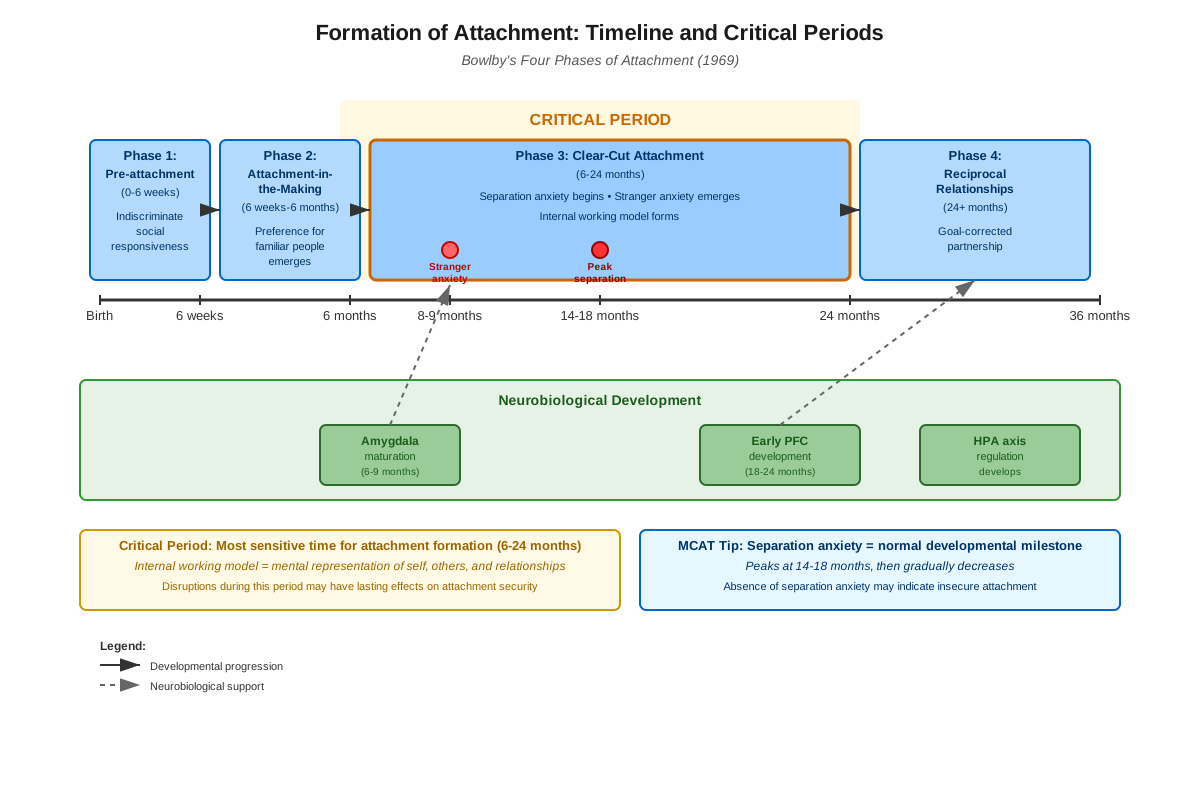
Attachment is defined as an enduring emotional bond between an infant and a primary caregiver, characterized by proximity-seeking behaviors, separation distress, and the use of the caregiver as a secure base for exploration. This concept was pioneered by British psychiatrist John Bowlby in the 1950s, who integrated evolutionary theory, ethology, and psychoanalytic concepts to explain the biological basis of the infant-caregiver bond. Bowlby proposed that attachment is an adaptive evolutionary mechanism that increases infant survival by maintaining proximity to protective caregivers during the vulnerable early years.
Bowlby's attachment theory posits that infants are biologically predisposed to form attachments through innate behaviors such as crying, clinging, and following. These behaviors activate caregiving responses in adults, creating a reciprocal system that promotes infant survival. The theory emphasizes that attachment is not merely about feeding (contradicting earlier psychoanalytic views) but about the quality of emotional responsiveness and comfort provided by the caregiver. The attachment system becomes activated during times of stress, illness, or perceived danger, prompting the infant to seek proximity to the attachment figure for protection and reassurance.
The Strange Situation Paradigm
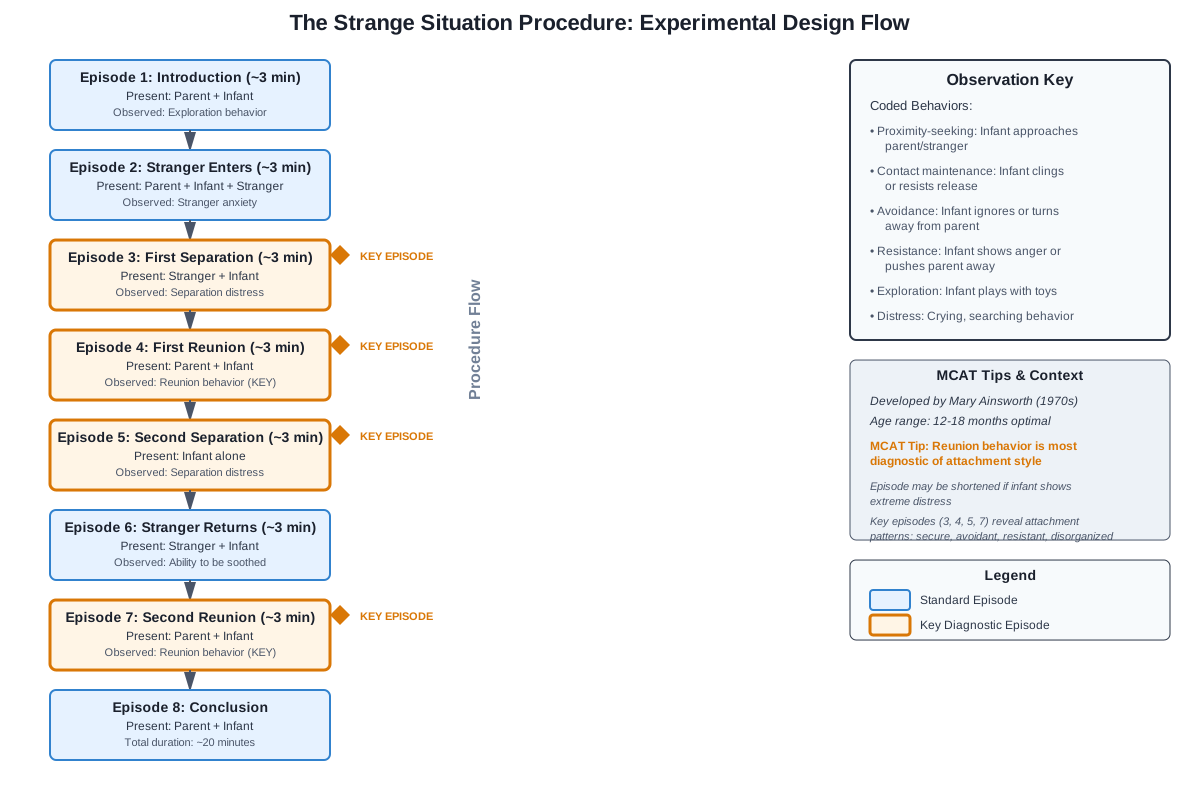
Mary Ainsworth, a developmental psychologist who worked with Bowlby, developed the Strange Situation procedure in the 1970s to empirically assess attachment quality in infants aged 12-18 months. This standardized laboratory procedure consists of eight episodes lasting approximately three minutes each, designed to progressively increase infant stress through separations from and reunions with the caregiver. The procedure takes place in an unfamiliar room with toys and involves a stranger entering and interacting with the infant.
The Strange Situation episodes follow this sequence:
- Mother and infant enter the room
- Mother sits while infant explores (baseline behavior)
- Stranger enters and talks with mother
- Mother leaves; stranger remains with infant (first separation)
- Mother returns; stranger leaves (first reunion)
- Mother leaves infant completely alone (second separation)
- Stranger returns
- Mother returns; stranger leaves (second reunion)
Researchers observe and code infant behaviors during separations and especially during reunions, as reunion behavior most reliably indicates attachment quality. Key behaviors assessed include proximity-seeking, contact maintenance, resistance to contact, and avoidance of the caregiver.
The Four Attachment Styles
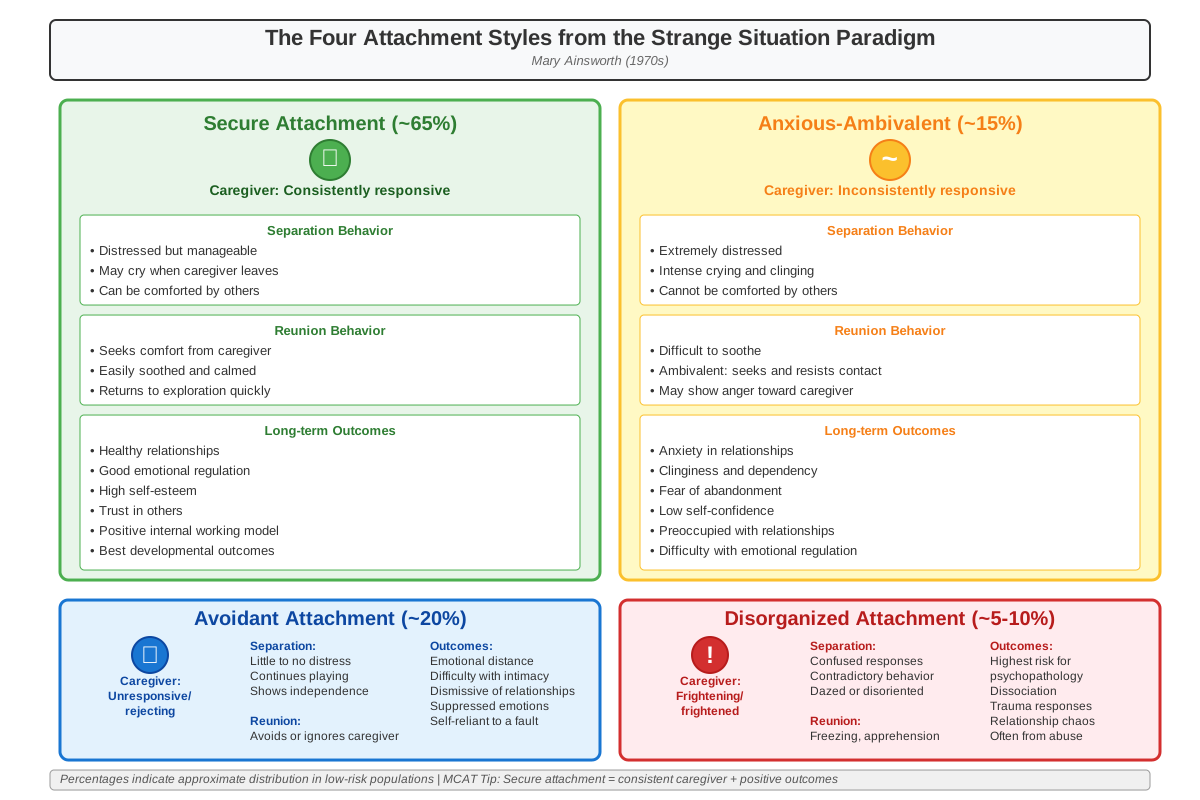
Based on Strange Situation observations, Ainsworth identified three primary attachment patterns, with a fourth pattern (disorganized) added later by Main and Solomon:
| Attachment Style | Percentage | Caregiver Behavior | Infant Behavior in Strange Situation | Long-term Outcomes |
|---|---|---|---|---|
| Secure | 60-65% | Sensitive, responsive, consistent | Distressed during separation; actively seeks contact upon reunion; easily comforted; returns to exploration | Positive self-concept, healthy relationships, effective emotion regulation |
| Insecure-Avoidant | 20-25% | Rejecting, emotionally unavailable, discouraging of dependence | Minimal distress during separation; actively avoids or ignores caregiver upon reunion; focuses on toys | Emotional distance in relationships, difficulty with intimacy, suppression of emotions |
| Insecure-Resistant (Ambivalent) | 10-15% | Inconsistent, unpredictable responsiveness | Extreme distress during separation; ambivalent upon reunion (seeks contact but resists comfort); difficulty returning to exploration | Anxiety in relationships, preoccupation with attachment figures, heightened emotional reactivity |
| Disorganized | 5-10% | Frightening, frightened, or severely neglectful | Contradictory behaviors; freezing, confusion, apprehension toward caregiver | Highest risk for psychopathology, dissociation, difficulty with emotion regulation |
Secure attachment develops when caregivers consistently respond to infant signals with sensitivity and appropriate care. Securely attached infants use the caregiver as a "secure base" from which to explore the environment, confident that the caregiver will be available if needed. Upon reunion after separation, these infants actively seek contact, are easily soothed, and quickly return to exploration. This pattern reflects the infant's internalized expectation that the caregiver is reliable and trustworthy.
Insecure-avoidant attachment results from caregivers who consistently reject or ignore infant bids for comfort and proximity. These caregivers often discourage emotional expression and emphasize independence prematurely. Avoidant infants learn to suppress attachment behaviors and minimize displays of distress. In the Strange Situation, they show little overt distress during separation and actively avoid or ignore the caregiver upon reunion, though physiological measures (heart rate, cortisol) reveal internal stress.
Insecure-resistant (ambivalent) attachment develops when caregivers respond inconsistently—sometimes sensitive and responsive, other times intrusive or unavailable. This unpredictability creates uncertainty in the infant about whether needs will be met. Resistant infants become hypervigilant to the caregiver's availability and exhibit clingy, dependent behavior. They show extreme distress during separation and ambivalent behavior upon reunion, simultaneously seeking contact and angrily resisting comfort, unable to be soothed effectively.
Disorganized attachment represents the most concerning pattern, typically arising from severely neglectful, abusive, or traumatic caregiving environments. The caregiver becomes a source of both comfort and fear, creating an irresolvable paradox for the infant. These infants display contradictory, confused, or apprehensive behaviors in the Strange Situation, such as approaching the caregiver with head averted, freezing in place, or showing disoriented expressions. This pattern is strongly associated with later psychopathology, including dissociative disorders and severe emotional dysregulation.
Internal Working Models
A central concept in attachment theory is the internal working model—a mental representation or cognitive schema that the infant develops about the self, others, and relationships based on early attachment experiences. These models form during the first two years of life and serve as templates for understanding and navigating social relationships throughout development. The internal working model includes expectations about whether others are trustworthy and responsive, whether the self is worthy of care and love, and how relationships function.
Securely attached children develop internal working models characterized by positive views of self (worthy of love) and others (trustworthy and available). Insecure-avoidant children develop models of others as rejecting and unavailable, leading them to view themselves as unworthy and to adopt self-reliant strategies. Insecure-resistant children develop models of others as unpredictable, creating anxiety about relationships and uncertainty about self-worth. These internal working models exhibit considerable stability across development, though they can be modified through significant relationship experiences, such as therapy or secure romantic partnerships in adulthood.
Biological Mechanisms of Attachment
Attachment has clear biological underpinnings that support its evolutionary adaptive function. The neuropeptides oxytocin and vasopressin play crucial roles in bonding and attachment behaviors. Oxytocin, often called the "bonding hormone," is released during physical contact, nursing, and positive social interactions, promoting feelings of trust, reducing stress, and facilitating social bonding. Research shows that both mothers and infants experience oxytocin surges during positive interactions, creating a neurobiological feedback loop that reinforces attachment behaviors.
The hypothalamic-pituitary-adrenal (HPA) axis, the body's primary stress response system, is profoundly influenced by attachment quality. Secure attachment relationships help regulate infant stress responses, with responsive caregiving effectively buffering the infant from excessive cortisol elevation during stressful events. This process, called co-regulation, allows the caregiver's calm presence to physiologically soothe the infant's stress response. Over time, repeated experiences of co-regulation help the infant develop self-regulation capacities. In contrast, insecure attachment patterns, particularly disorganized attachment, are associated with dysregulated HPA axis functioning, including both hyperreactivity and blunted cortisol responses.
Brain development is significantly shaped by attachment experiences. The prefrontal cortex, critical for emotion regulation and social cognition, develops extensively during the attachment period and is highly sensitive to the quality of caregiving. Secure attachment supports healthy prefrontal development, enhancing capacities for emotional control, empathy, and social understanding. The amygdala, central to fear and emotional processing, also shows attachment-related differences, with insecure attachment associated with heightened amygdala reactivity to social threats.
Attachment Across the Lifespan
While attachment theory originally focused on infancy, research demonstrates that attachment patterns influence relationships throughout life. Attachment styles in adulthood parallel infant patterns: secure, anxious (similar to resistant), avoidant, and disorganized (fearful-avoidant). Adult attachment styles influence romantic relationships, friendships, parenting behavior, and even therapeutic relationships. Securely attached adults form trusting, balanced relationships with appropriate intimacy and autonomy. Anxiously attached adults exhibit relationship anxiety, fear of abandonment, and preoccupation with partners. Avoidantly attached adults maintain emotional distance, value independence excessively, and struggle with intimacy.
Importantly, attachment patterns show both continuity and change across development. While early attachment predicts later patterns, significant relationship experiences can modify attachment orientations. Secure romantic relationships, effective psychotherapy, and positive mentoring relationships can help individuals with insecure attachment histories develop more secure patterns. Conversely, trauma, loss, or severely negative relationship experiences can shift secure individuals toward insecurity.
Cultural Considerations
While attachment is considered a universal human phenomenon, the distribution of attachment styles and the specific behaviors indicating security vary across cultures. The 60-65% secure attachment rate is most consistent in Western, middle-class populations. Cross-cultural research reveals important variations: German samples show higher rates of avoidant attachment (reflecting cultural values of early independence), while Japanese samples show higher rates of resistant attachment (reflecting cultural emphasis on interdependence and sensitivity to separation).
These differences highlight that attachment security should be understood within cultural context. Behaviors indicating security in one culture may not translate directly to another. For example, Japanese infants rarely experience separation from mothers in the first year, making the Strange Situation more stressful and potentially less valid for assessing attachment in that cultural context. The MCAT may present passages requiring students to consider how cultural values and practices influence attachment assessment and expression.
Quick check — test yourself on Attachment so far.
Try Flashcards →Concept Relationships
The concepts within attachment theory form an interconnected system. Attachment behaviors (crying, clinging, proximity-seeking) → activate caregiver responsiveness → which shapes attachment quality (secure vs. insecure) → leading to formation of internal working models → which influence emotion regulation capacities and social relationship patterns throughout development. The biological mechanisms (oxytocin, HPA axis, brain development) both support and are shaped by these psychological processes, illustrating the bidirectional relationship between biology and experience.
Attachment connects to numerous prerequisite and related topics in developmental psychology. Temperament (an infant's innate behavioral style) interacts with caregiver responsiveness to influence attachment formation—difficult temperament may challenge caregivers but does not determine attachment quality if caregivers remain sensitive. Erikson's first psychosocial stage (trust vs. mistrust) directly parallels attachment theory, with secure attachment reflecting successful resolution of this stage. Parenting styles (authoritative, authoritarian, permissive, neglectful) relate to attachment quality, with authoritative parenting most consistently associated with secure attachment.
Attachment also connects forward to later developmental concepts. Social development in childhood and adolescence builds on attachment foundations, with secure attachment predicting better peer relationships, social competence, and friendship quality. Identity formation during adolescence is facilitated by secure attachment, which provides the confidence to explore identity options. Emotional intelligence and emotion regulation capacities are rooted in early attachment experiences and the co-regulation provided by responsive caregivers. Understanding these connections enables students to integrate attachment into broader developmental frameworks on the MCAT.
High-Yield Facts
⭐ Attachment is an emotional bond between infant and caregiver characterized by proximity-seeking, separation distress, and use of the caregiver as a secure base for exploration.
⭐ The Strange Situation procedure assesses attachment quality in 12-18 month old infants through a series of separations and reunions with the caregiver.
⭐ Secure attachment (60-65% of infants) develops from consistent, sensitive caregiver responsiveness and predicts positive developmental outcomes.
⭐ Insecure-avoidant attachment results from rejecting caregiving; infants show minimal distress at separation and avoid the caregiver upon reunion.
⭐ Insecure-resistant (ambivalent) attachment results from inconsistent caregiving; infants show extreme distress and ambivalent reunion behavior (seeking but resisting contact).
- Disorganized attachment (5-10%) arises from frightening or severely neglectful caregiving and carries the highest risk for psychopathology.
- Internal working models are mental representations of self, others, and relationships formed from early attachment experiences that guide future social interactions.
- Oxytocin and vasopressin are neuropeptides that facilitate bonding and attachment behaviors in both caregivers and infants.
- Secure attachment helps regulate the infant's HPA axis stress response through caregiver co-regulation, supporting healthy stress response development.
- Attachment patterns show moderate stability across the lifespan but can be modified through significant relationship experiences.
- Cross-cultural research shows universal attachment patterns but varying distributions and behavioral expressions based on cultural values and practices.
- Adult attachment styles (secure, anxious, avoidant, fearful-avoidant) parallel infant patterns and influence romantic relationships and parenting behavior.
Common Misconceptions
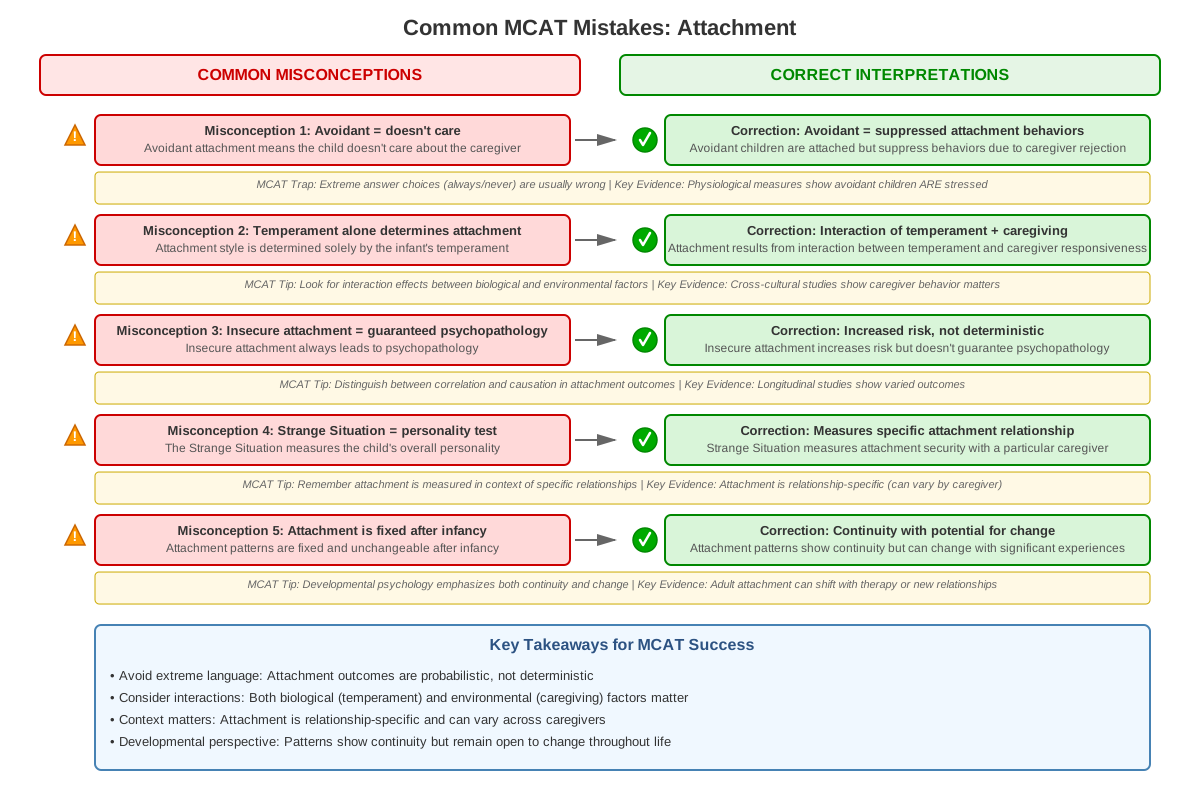
Misconception: Attachment is the same as bonding, which occurs immediately at birth. → Correction: Attachment is a gradual process that develops over the first year of life through repeated interactions, not an instantaneous event. While early contact facilitates relationship development, attachment quality depends on ongoing caregiver responsiveness, not just initial bonding moments.
Misconception: Insecure attachment is caused by infant temperament rather than caregiver behavior. → Correction: While temperament influences how infants express attachment behaviors, research consistently shows that caregiver sensitivity and responsiveness are the primary determinants of attachment security. Even infants with difficult temperaments can develop secure attachments with sensitive, responsive caregivers.
Misconception: Infants can only form attachments to their biological mothers. → Correction: Infants can form secure attachments to any consistent caregiver who provides sensitive, responsive care, including fathers, adoptive parents, grandparents, and other caregivers. The quality of care, not biological relationship, determines attachment security.
Misconception: Insecure attachment in infancy inevitably leads to psychological problems in adulthood. → Correction: While insecure attachment increases risk for later difficulties, it is not deterministic. Attachment patterns can change through positive relationship experiences, and many factors beyond early attachment influence developmental outcomes. Secure attachment is protective but not a guarantee, and insecure attachment is a risk factor but not a sentence.
Misconception: In the Strange Situation, infants who don't cry during separation must be securely attached because they're confident. → Correction: Lack of distress during separation combined with avoidance during reunion actually indicates insecure-avoidant attachment. Securely attached infants typically show some distress during separation (indicating the caregiver matters) but are easily comforted upon reunion. The reunion behavior is the most diagnostic feature.
Misconception: Attachment theory suggests mothers should never leave their infants or use childcare. → Correction: Attachment theory emphasizes quality of caregiver responsiveness during interactions, not constant physical presence. Brief, routine separations do not harm attachment security. What matters is that caregivers are consistently sensitive and responsive when present, and that infants have stable, responsive alternative caregivers during separations.
Worked Examples
Example 1: Strange Situation Analysis
Vignette: A researcher observes 15-month-old Emma in the Strange Situation procedure. During the first separation, Emma shows moderate distress and reduced exploration. When her mother returns, Emma immediately approaches her, reaches up to be held, and calms quickly once picked up. After being comforted, Emma returns to playing with toys while occasionally glancing back at her mother. During the second separation, Emma cries more intensely. Upon the second reunion, she again seeks immediate contact and is soothed within 30 seconds.
Question: What attachment style does Emma most likely exhibit, and what does this predict about her developmental trajectory?
Analysis:
- Step 1: Identify key behaviors. Emma shows distress during separation (indicating the caregiver is important), actively seeks proximity upon reunion (proximity-seeking), is easily comforted (effective co-regulation), and returns to exploration after being soothed (using caregiver as secure base).
- Step 2: Compare to attachment style criteria. These behaviors match the secure attachment pattern: distress at separation, active contact-seeking upon reunion, easy soothing, and return to exploration. Emma does not show avoidance (ruling out insecure-avoidant), extreme distress with inability to be comforted (ruling out insecure-resistant), or contradictory/confused behaviors (ruling out disorganized).
- Step 3: Predict outcomes. Secure attachment predicts positive developmental outcomes including better emotion regulation, higher quality peer relationships, greater social competence, positive self-concept, and resilience to stress.
Answer: Emma exhibits secure attachment. This pattern predicts she will likely develop effective emotion regulation skills, form positive peer relationships, maintain healthy self-esteem, and demonstrate resilience when facing developmental challenges. Her internal working model will likely include positive views of herself as worthy of care and others as trustworthy and available.
Example 2: Applying Attachment to Adult Relationships
Vignette: A research study examines romantic relationships in young adults. Participants complete questionnaires assessing their attachment style and relationship satisfaction. Results show that individuals classified as having anxious attachment report significantly lower relationship satisfaction, higher levels of relationship conflict, and greater fear of abandonment compared to those with secure attachment. These anxiously attached individuals also report that their partners perceive them as "clingy" and "needy."
Question: Based on attachment theory, explain the developmental origins of anxious attachment in adulthood and why it predicts these relationship patterns.
Analysis:
- Step 1: Connect adult anxious attachment to infant patterns. Adult anxious attachment parallels infant insecure-resistant (ambivalent) attachment, which develops from inconsistent caregiver responsiveness during infancy.
- Step 2: Explain internal working model formation. Inconsistent caregiving creates uncertainty about whether needs will be met, leading to hypervigilance regarding attachment figure availability. The resulting internal working model includes anxiety about relationships and uncertainty about self-worth.
- Step 3: Connect to adult relationship behaviors. These internal working models persist into adulthood, manifesting as preoccupation with partner availability, fear of abandonment, and clingy behavior. The anxiously attached person seeks constant reassurance because their early experiences taught them that caregivers are unpredictable.
- Step 4: Explain relationship satisfaction findings. The hypervigilance and reassurance-seeking behaviors create relationship strain. Partners may feel overwhelmed by constant demands for attention and reassurance, leading to conflict. The anxiously attached person's fears become self-fulfilling as their behavior pushes partners away.
Answer: Anxious attachment in adulthood originates from inconsistent caregiver responsiveness during infancy, which creates internal working models characterized by relationship anxiety and uncertainty about self-worth. These models lead to hypervigilance regarding partner availability, excessive reassurance-seeking, and fear of abandonment. These behaviors predict lower relationship satisfaction because they create relationship strain—the constant need for reassurance and fear of abandonment can overwhelm partners and create the very rejection the anxiously attached person fears. This demonstrates how early attachment experiences shape relationship patterns across the lifespan through persistent internal working models.
Exam Strategy
When approaching MCAT questions on attachment, first identify whether the question asks about (1) attachment classification based on behavioral descriptions, (2) prediction of outcomes based on attachment style, or (3) theoretical understanding of attachment mechanisms. For classification questions, focus on reunion behavior as the most diagnostic feature—how the infant responds when the caregiver returns after separation reveals attachment quality most reliably.
Trigger words to watch for include: "Strange Situation," "separation distress," "secure base," "internal working model," "sensitive responsiveness," and "co-regulation." When you see "reunion behavior" or "response to caregiver's return," immediately think about distinguishing between secure (seeks contact, easily soothed), avoidant (ignores/avoids caregiver), resistant (ambivalent—seeks but resists contact), and disorganized (contradictory/confused behaviors).
For process-of-elimination, remember these key distinctions: If an infant shows no distress and avoids the caregiver, eliminate secure and resistant (both show distress). If an infant shows extreme distress but cannot be comforted, eliminate secure and avoidant. If behaviors are contradictory or confused, consider disorganized. If the infant seeks contact and is easily soothed, secure is most likely. Many incorrect answer choices will confuse avoidant attachment (appearing independent) with secure attachment—remember that truly secure infants DO show distress at separation because the caregiver matters to them.
When passages describe caregiver behavior and ask you to predict infant attachment, use this framework: consistent sensitivity → secure; rejection/emotional unavailability → avoidant; inconsistency → resistant; frightening/severely neglectful → disorganized. For questions about long-term outcomes, remember that secure attachment is protective (positive outcomes) while insecure patterns increase risk, with disorganized carrying the highest risk for psychopathology.
Time allocation: Attachment questions typically require 60-90 seconds. Spend 20-30 seconds identifying the question type and locating relevant information in the passage, 30-40 seconds analyzing the behavioral descriptions or data, and 20-30 seconds selecting and confirming your answer. Don't overthink—attachment questions usually have clear correct answers if you systematically apply the classification criteria.
Memory Techniques
Mnemonic for Secure Attachment behaviors: SCREAM
- Separation causes distress
- Contact-seeking upon reunion
- Returns to exploration after comfort
- Easily soothed
- Attachment figure as secure base
- Mother (caregiver) viewed as reliable
Mnemonic for distinguishing insecure styles: AAR
- Avoidant = Avoids caregiver, appears independent (but internally stressed)
- Ambivalent (resistant) = Angry and clingy, can't be soothed
- Really confused = Disorganized (contradictory behaviors)
Visualization for Internal Working Models: Picture a mental "blueprint" or "map" that the infant creates based on early experiences. Secure attachment creates a map showing "others are trustworthy, I am worthy"—a clear, reliable map. Insecure attachment creates distorted maps: avoidant shows "others reject me, I must be self-reliant," resistant shows "others are unpredictable, I must stay vigilant," and disorganized shows a contradictory, confusing map with no clear path.
Acronym for Strange Situation sequence: MESS-MESS
- Mother and infant enter
- Exploration baseline
- Stranger enters
- Separation #1 (mother leaves)
- Mother returns (reunion #1)
- Exit mother (separation #2, alone)
- Stranger returns
- Second reunion (mother returns)
Memory aid for percentages: Think "Most are Secure" (60-65%), "Some Avoid" (20-25%), "Rare Resistance" (10-15%), and "Disorder is Disorganized" (5-10%, highest risk).
Summary
Attachment represents the foundational emotional bond between infant and caregiver, established through repeated interactions during the first year of life and profoundly influencing development across the lifespan. John Bowlby's attachment theory, empirically validated through Mary Ainsworth's Strange Situation paradigm, identifies four primary attachment patterns: secure (60-65%), insecure-avoidant (20-25%), insecure-resistant/ambivalent (10-15%), and disorganized (5-10%). Attachment quality depends primarily on caregiver sensitivity and responsiveness, not infant temperament or biological relationship. Early attachment experiences shape internal working models—mental representations of self, others, and relationships—that guide social interactions throughout life. Biological mechanisms including oxytocin, vasopressin, and HPA axis regulation support attachment formation and are shaped by attachment quality. For the MCAT, students must distinguish attachment styles based on behavioral descriptions (especially reunion behavior), predict developmental outcomes based on attachment patterns, understand the role of caregiver responsiveness, and connect attachment to broader developmental concepts including emotion regulation, social development, and relationship formation across the lifespan.
Key Takeaways
- Attachment is an emotional bond characterized by proximity-seeking, separation distress, and use of the caregiver as a secure base, developing through consistent caregiver responsiveness during infancy.
- The Strange Situation assesses attachment through separation-reunion episodes, with reunion behavior being the most diagnostic feature for classification.
- Secure attachment (60-65%) predicts positive outcomes; insecure-avoidant results from rejection; insecure-resistant from inconsistency; disorganized from frightening/neglectful care and carries highest risk.
- Internal working models formed from early attachment experiences create templates for understanding relationships that persist across development but can be modified through significant relationship experiences.
- Biological mechanisms (oxytocin, HPA axis regulation, brain development) both support and are shaped by attachment quality, illustrating bidirectional biology-experience interactions.
- Attachment patterns show moderate stability across the lifespan, influencing adult romantic relationships, parenting behavior, and social functioning.
- For MCAT questions, focus on reunion behavior to classify attachment, remember that secure infants DO show distress (because the caregiver matters), and connect attachment quality to caregiver responsiveness patterns.
Related Topics
Temperament: Individual differences in behavioral style present from birth that interact with caregiver responsiveness to influence (but not determine) attachment quality. Understanding temperament helps explain why some infants are more challenging to care for but can still develop secure attachments with sensitive caregivers.
Parenting Styles (Baumrind): The four parenting styles (authoritative, authoritarian, permissive, neglectful) relate to attachment quality, with authoritative parenting most consistently associated with secure attachment. Mastering attachment provides foundation for understanding how parenting approaches influence child development.
Erikson's Psychosocial Stages: The first stage (trust vs. mistrust) directly parallels attachment theory, with secure attachment reflecting successful trust development. Understanding attachment deepens comprehension of Erikson's framework.
Emotion Regulation: The capacity to manage emotional responses develops from early co-regulation experiences with caregivers during attachment formation. Secure attachment predicts better emotion regulation across development.
Social Development: Peer relationships, friendship quality, and social competence throughout childhood and adolescence build on attachment foundations. Mastering attachment enables understanding of how early relationships shape later social functioning.
Practice CTA
Now that you've mastered the core concepts of attachment theory, it's time to solidify your understanding through active practice. Challenge yourself with MCAT-style practice questions that require you to analyze Strange Situation scenarios, predict developmental outcomes based on attachment patterns, and integrate attachment concepts with other developmental psychology topics. Use flashcards to reinforce the distinguishing features of each attachment style, the Strange Situation procedure sequence, and key terminology. Remember: attachment is a high-yield topic that connects to numerous other concepts in developmental and social psychology—mastering it now will pay dividends throughout your MCAT preparation. You've built a strong foundation; now apply it to achieve the score you're working toward!
Sign up free to keep reading
Create a free AnvayaPrep account to finish this MCAT guide on Attachment — plus flashcards and practice questions.