Overview
Identity formation is a fundamental developmental process through which individuals construct a coherent sense of self, encompassing personal values, beliefs, goals, and social roles. This psychological phenomenon represents one of the most critical aspects of adolescent and young adult development, though it continues throughout the lifespan. In Psychology, identity formation integrates cognitive, emotional, and social dimensions as individuals navigate questions of "Who am I?" and "What is my place in society?" The process involves exploring various possibilities, making commitments to specific roles and values, and continuously revising one's self-concept in response to new experiences and social contexts.
For the MCAT, understanding identity formation is essential because it bridges multiple content areas within the Development and Personality domain. Questions frequently test knowledge of Erik Erikson's psychosocial stages, particularly the identity versus role confusion stage, as well as James Marcia's identity status paradigm. The exam commonly presents passages describing adolescent development, cultural influences on self-concept, or clinical scenarios involving identity crises. Strong mastery of this topic enables students to analyze complex behavioral patterns, predict developmental outcomes, and understand how identity influences health behaviors, treatment adherence, and psychological well-being.
Identity formation connects intimately with broader psychological concepts including socialization, self-concept, social identity theory, and moral development. It provides the foundation for understanding how individuals develop agency, make autonomous decisions, and navigate social roles across the lifespan. The topic also intersects with sociological concepts such as role theory, reference groups, and the looking-glass self, making it a high-yield area where interdisciplinary MCAT questions frequently appear.
Learning Objectives
- [ ] Define Identity formation using accurate Psychology terminology
- [ ] Explain why Identity formation matters for the MCAT
- [ ] Apply Identity formation to exam-style questions
- [ ] Identify common mistakes related to Identity formation
- [ ] Connect Identity formation to related Psychology concepts
- [ ] Distinguish between Erikson's identity versus role confusion stage and Marcia's four identity statuses
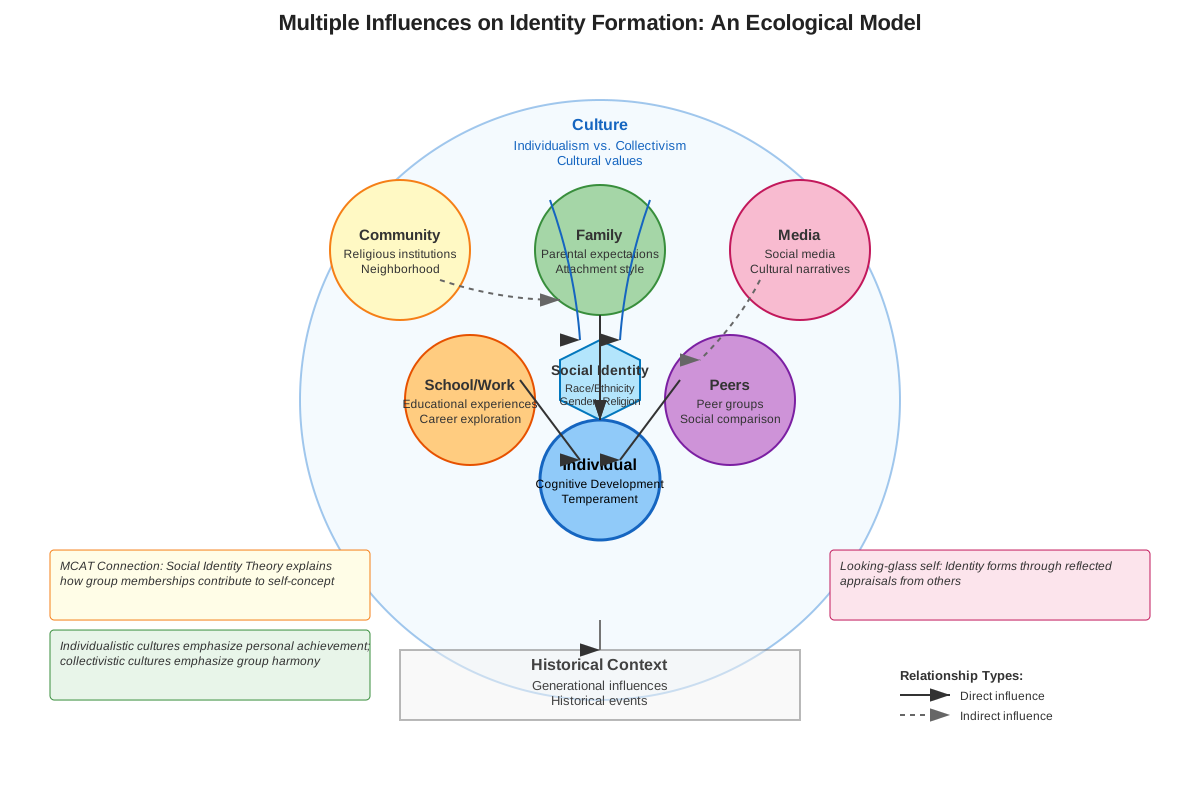
- [ ] Analyze how cultural, social, and familial factors influence identity development
- [ ] Evaluate the relationship between identity formation and psychological well-being across the lifespan
Prerequisites
- Erikson's Psychosocial Development Theory: Identity formation is most prominently featured in Erikson's fifth stage (identity vs. role confusion), making foundational knowledge of his eight-stage model essential
- Piaget's Cognitive Development: The formal operational stage enables the abstract thinking necessary for identity exploration, particularly the ability to consider hypothetical futures and multiple perspectives
- Social Influences on Behavior: Understanding how peers, family, culture, and institutions shape individual development provides context for the social dimensions of identity formation
- Self-concept and Self-esteem: Identity formation builds upon and refines one's self-concept, making prior knowledge of these constructs necessary for understanding identity processes
Why This Topic Matters
Identity formation has profound clinical and real-world significance. Identity crises contribute to psychological distress, particularly during adolescence and emerging adulthood. Individuals experiencing identity confusion show higher rates of anxiety, depression, and risky behaviors. Conversely, achieving a coherent identity correlates with better mental health outcomes, stronger interpersonal relationships, and greater life satisfaction. Healthcare providers must understand identity processes to effectively support patients through developmental transitions, address identity-related concerns in therapy, and recognize how identity influences health behaviors and treatment decisions.
On the MCAT, identity formation appears with moderate frequency, typically in 2-4 questions per Psychology/Sociology section. Questions most commonly take three forms: (1) passage-based questions requiring application of Erikson's or Marcia's frameworks to case studies, (2) discrete questions testing definitional knowledge of identity statuses or developmental stages, and (3) research-based passages examining correlational studies between identity development and various outcomes. The topic frequently appears integrated with questions about adolescent development, cultural psychology, or social identity theory.
Exam Tip: Identity formation questions often appear in passages describing longitudinal studies or cross-cultural comparisons. Watch for passages presenting adolescent case studies or research on developmental outcomes—these frequently test identity concepts even when not explicitly mentioned in the passage.
Core Concepts
Defining Identity Formation
Identity formation refers to the developmental process through which individuals integrate their past experiences, present circumstances, and future aspirations into a unified and coherent sense of self. This process involves answering fundamental existential questions about personal values, occupational goals, political beliefs, religious commitments, gender identity, sexual orientation, and social roles. Identity is not simply discovered but actively constructed through exploration, experimentation, and commitment-making across multiple life domains.
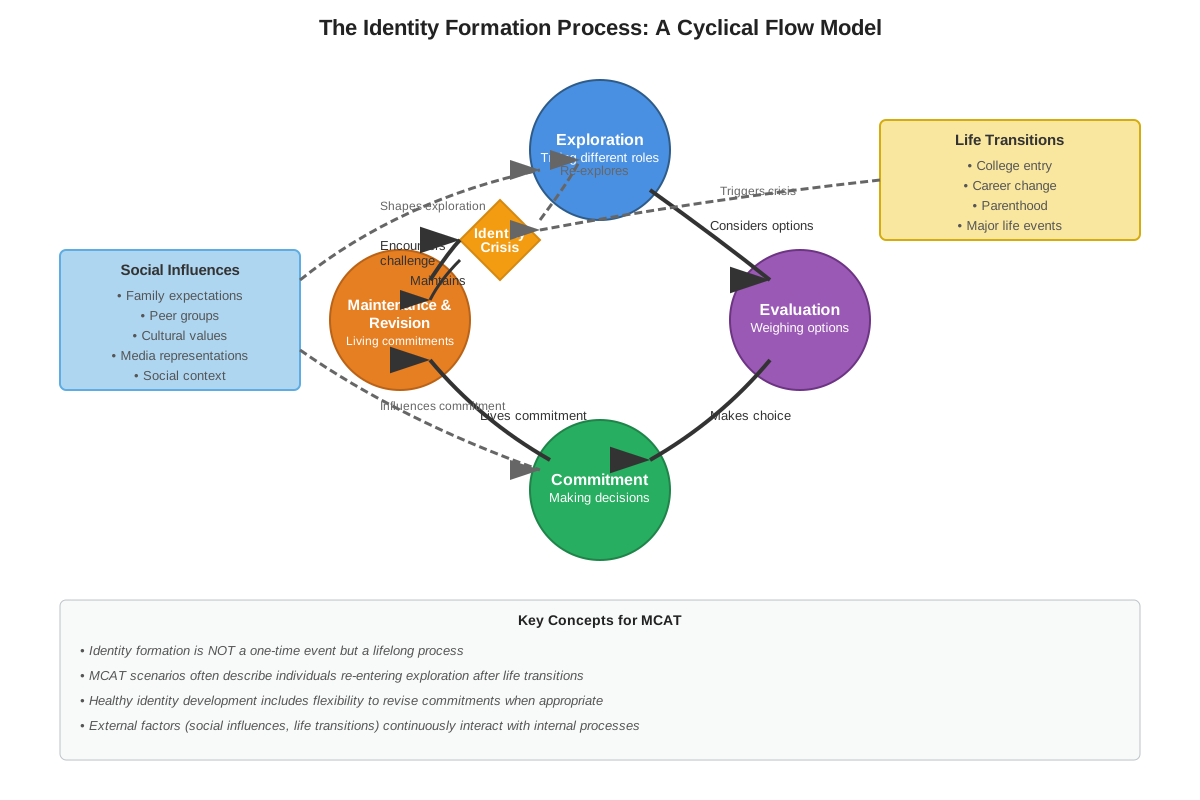
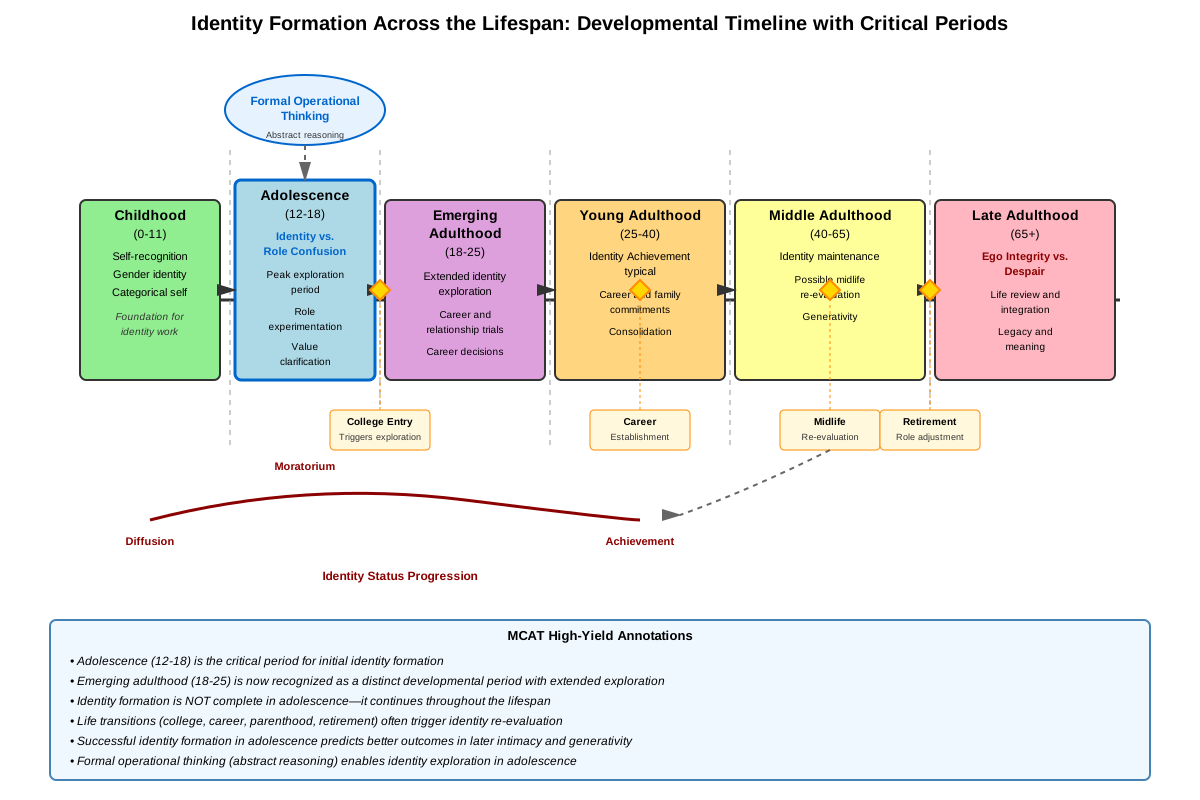
The formation process is inherently dynamic and iterative rather than linear. Individuals may revisit identity questions multiple times throughout life, particularly during major transitions such as entering college, beginning careers, forming intimate relationships, or experiencing significant losses. This ongoing nature distinguishes identity formation from a simple developmental milestone—it represents a lifelong process of self-definition and redefinition.
Erikson's Identity vs. Role Confusion Stage
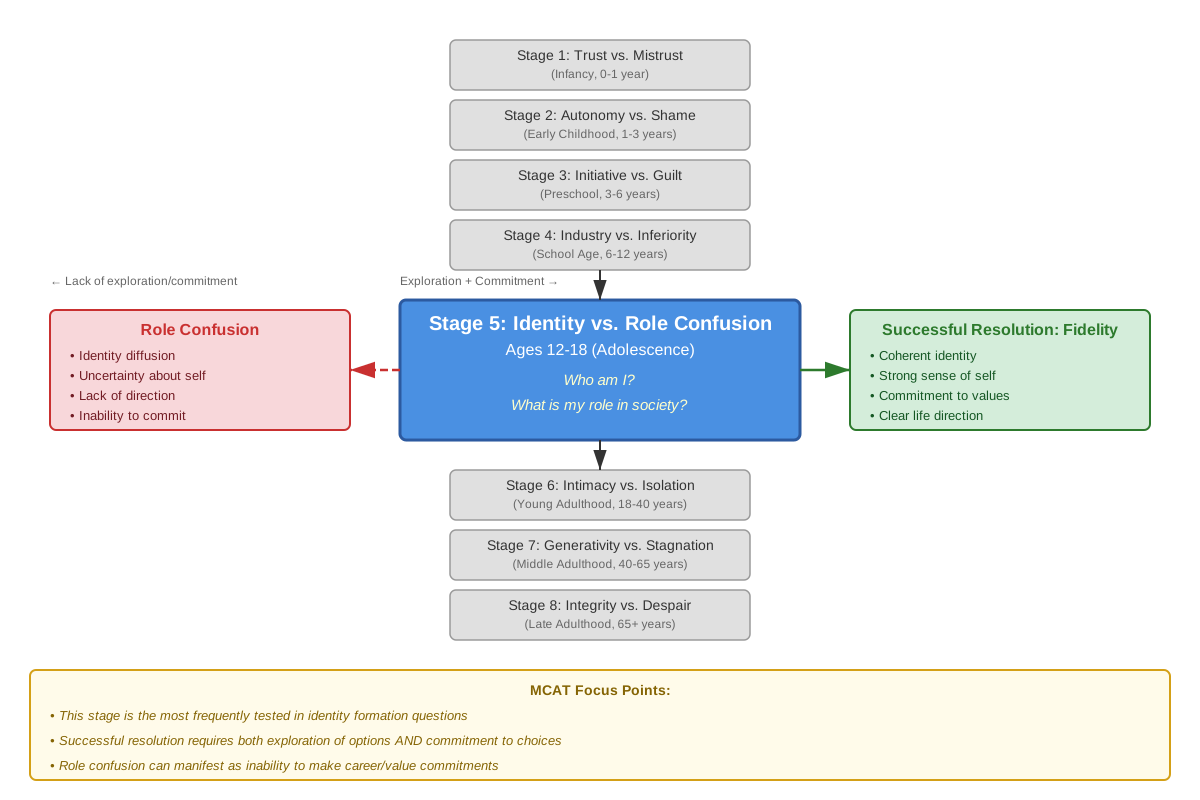
Erik Erikson positioned identity versus role confusion as the fifth stage in his psychosocial development theory, typically occurring during adolescence (ages 12-18). During this critical period, adolescents must integrate their childhood identifications with biological changes, cognitive maturation, and social expectations to form a stable identity. Success in this stage results in fidelity—the ability to commit to values, ideologies, and relationships despite inevitable contradictions and conflicts.
Adolescents who successfully navigate this stage develop a strong sense of self, clear values, and confidence in their future direction. They can answer questions about who they are and what they stand for with reasonable certainty. Conversely, those who experience role confusion struggle with uncertainty about their place in society, may adopt negative identities (defining themselves in opposition to societal expectations), or experience identity diffusion—a lack of direction and commitment.
The psychosocial moratorium concept is crucial here: Erikson recognized that modern societies often provide a sanctioned period during which adolescents can explore various roles without making permanent commitments. College, gap years, and extended adolescence serve this function, allowing experimentation before adult responsibilities demand firm commitments.
Marcia's Identity Status Paradigm
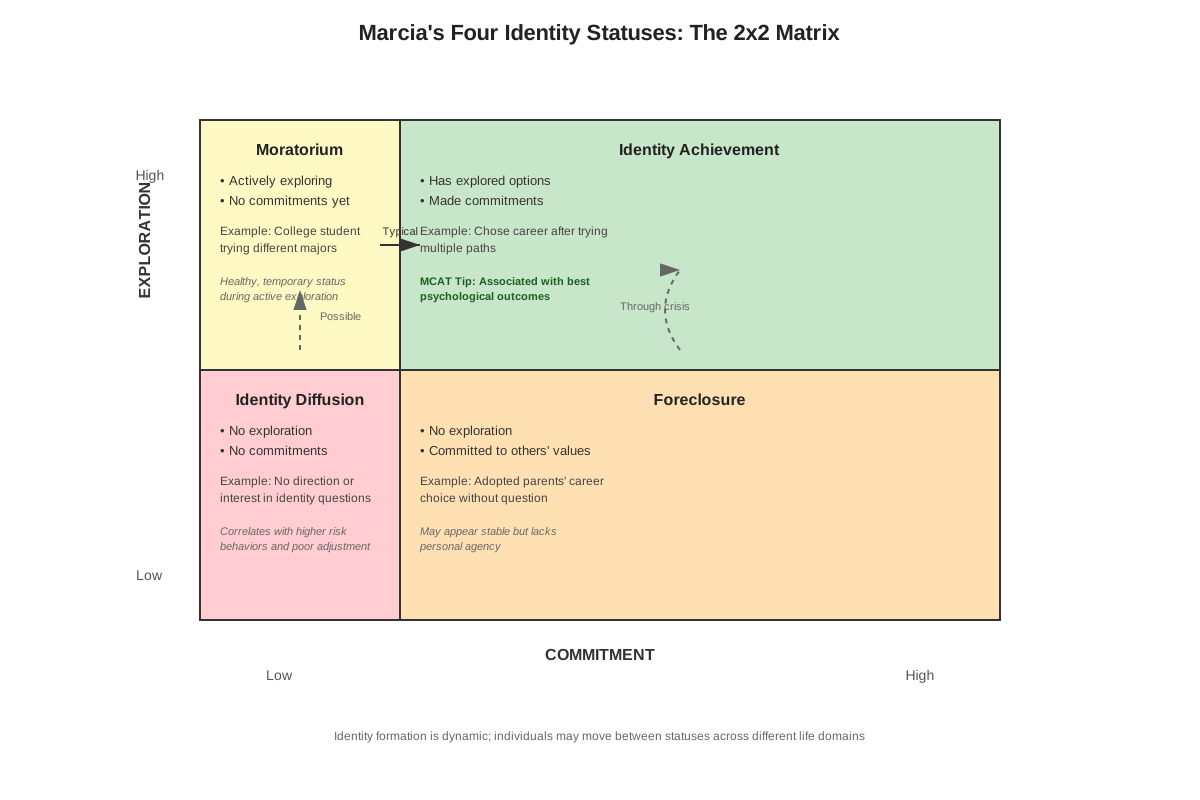
James Marcia expanded Erikson's framework by operationalizing identity formation into four distinct identity statuses based on two dimensions: exploration (the process of considering alternatives) and commitment (adherence to specific values, beliefs, or goals). This two-dimensional model provides greater nuance than Erikson's binary success-failure framework.
| Identity Status | Exploration | Commitment | Characteristics |
|---|---|---|---|
| Identity Achievement | High | High | Has explored alternatives and made firm commitments; psychologically healthiest status |
| Identity Moratorium | High | Low | Actively exploring but hasn't made commitments; experiencing identity crisis |
| Identity Foreclosure | Low | High | Made commitments without exploration; adopted others' values (often parents') |
| Identity Diffusion | Low | Low | Neither exploring nor committed; may be apathetic or overwhelmed |
Identity achievement represents the optimal outcome, characterized by autonomous decision-making, psychological well-being, and adaptive coping strategies. These individuals have actively questioned and explored various possibilities before making informed commitments.
Identity moratorium describes individuals in the midst of active exploration—the "identity crisis" state. While potentially stressful, this status is developmentally appropriate and often precedes achievement. Moratorium individuals show curiosity, openness to experience, and engagement with identity questions.
Identity foreclosure occurs when individuals commit to identities without personal exploration, typically adopting values and goals prescribed by parents or authority figures. While providing stability, foreclosure may limit personal growth and leave individuals vulnerable to identity crises later when confronted with alternatives.
Identity diffusion represents the most concerning status, characterized by lack of direction, low self-esteem, and poor psychological adjustment. Diffused individuals may feel overwhelmed by choices, apathetic about their futures, or unable to engage meaningfully with identity questions.
Domains of Identity
Identity formation occurs across multiple life domains simultaneously, though not necessarily at the same pace. Key domains include:
Occupational identity: Career goals, professional aspirations, and work-related values. This domain often receives considerable attention during late adolescence and emerging adulthood as individuals make educational and vocational decisions.
Ideological identity: Political beliefs, religious commitments, moral values, and philosophical worldviews. These commitments provide meaning and guide decision-making across life contexts.
Interpersonal identity: Relationship patterns, intimacy styles, and social roles. This includes gender identity, sexual orientation, and preferred relationship structures.
Cultural/ethnic identity: Connection to cultural heritage, ethnic group membership, and racial identity. This domain is particularly salient for minority group members navigating multiple cultural contexts.
Cultural and Social Influences
Identity formation processes vary significantly across cultural contexts. Individualistic cultures (common in Western societies) emphasize personal autonomy, self-expression, and differentiation from family. Identity achievement in these contexts involves establishing independence and making autonomous choices that may differ from parental expectations.
Collectivistic cultures prioritize group harmony, family obligations, and interdependence. In these contexts, adopting family values and maintaining group cohesion may represent healthy identity development rather than foreclosure. The Western emphasis on exploration and autonomous choice may not apply universally.
Social identity theory complements personal identity formation by explaining how group memberships contribute to self-concept. Individuals derive part of their identity from social categories (race, gender, nationality, religion), and these group identities influence behavior, attitudes, and intergroup relations.
Identity and Psychological Well-being
Research consistently demonstrates relationships between identity status and psychological outcomes. Identity achievement correlates with higher self-esteem, better emotional regulation, stronger interpersonal relationships, and greater life satisfaction. Moratorium status shows mixed outcomes—higher anxiety during exploration but generally positive long-term trajectories.
Foreclosure associates with rigid thinking, authoritarian attitudes, and vulnerability to identity crises when confronted with alternatives. Identity diffusion predicts the poorest outcomes: higher rates of depression, anxiety, substance abuse, and interpersonal difficulties.
Concept Relationships
Identity formation integrates multiple psychological processes and developmental domains. The relationship map flows as follows:
Cognitive Development (formal operational thinking) → enables → Identity Exploration (considering hypothetical futures and abstract values) → combined with → Social Influences (peer groups, family, culture, media) → produces → Identity Crisis/Moratorium → through → Commitment-Making → results in → Identity Achievement or alternative statuses → influences → Psychological Well-being and Behavioral Outcomes
Within Marcia's framework, the four identity statuses represent different combinations of exploration and commitment rather than sequential stages. Individuals may move between statuses across domains and time periods. The optimal developmental trajectory moves from diffusion → moratorium → achievement, though foreclosure → moratorium → achievement is also common when foreclosed individuals encounter challenges to adopted identities.
Identity formation connects to Erikson's other psychosocial stages: successful resolution of earlier stages (trust, autonomy, initiative, industry) provides the foundation for identity work, while identity achievement enables progression to intimacy versus isolation in young adulthood. The concept also relates to self-concept (identity represents the most elaborated, committed aspect of self-concept), socialization (the process through which social influences shape identity), and moral development (identity includes moral values and ethical commitments).
Quick check — test yourself on Identity formation so far.
Try Flashcards →High-Yield Facts
⭐ Identity formation is the developmental process of constructing a coherent sense of self through exploration and commitment across multiple life domains
⭐ Erikson's identity versus role confusion stage occurs during adolescence (ages 12-18) and represents the fifth psychosocial crisis
⭐ Marcia's identity status paradigm includes four statuses based on exploration and commitment dimensions: achievement, moratorium, foreclosure, and diffusion
⭐ Identity achievement (high exploration, high commitment) predicts the best psychological outcomes and represents optimal identity development
⭐ Identity foreclosure (low exploration, high commitment) involves adopting others' values without personal exploration, often parental expectations
- Identity moratorium represents active exploration without firm commitments—the "identity crisis" state that often precedes achievement
- Identity diffusion (low exploration, low commitment) associates with the poorest psychological outcomes including depression and low self-esteem
- Psychosocial moratorium refers to a socially sanctioned period allowing identity exploration without permanent commitments
- Cultural context significantly influences identity formation processes, with individualistic cultures emphasizing autonomy and collectivistic cultures prioritizing family harmony
- Identity formation continues throughout the lifespan, not just during adolescence, with major life transitions prompting identity revision
- Multiple identity domains (occupational, ideological, interpersonal, cultural) develop simultaneously but not necessarily at the same pace
- Fidelity—the ability to sustain commitments despite contradictions—represents the virtue gained from successfully resolving identity versus role confusion
Common Misconceptions
Misconception: Identity formation is completed during adolescence and remains stable thereafter → Correction: While adolescence represents a critical period for identity formation, the process continues throughout the lifespan. Major life transitions (career changes, relationship shifts, parenthood, retirement) prompt identity revision and development. Identity is dynamic rather than fixed.
Misconception: Identity foreclosure is always negative because it lacks exploration → Correction: While foreclosure may limit personal growth in individualistic Western contexts, it can represent healthy development in collectivistic cultures where adopting family values demonstrates respect and maintains social harmony. Context determines whether foreclosure is adaptive or maladaptive.
Misconception: Identity moratorium represents failure or pathology → Correction: Moratorium is a normal, often necessary developmental status representing active identity exploration. The "identity crisis" associated with moratorium, while potentially stressful, typically precedes identity achievement and reflects healthy engagement with identity questions.
Misconception: The four identity statuses represent sequential developmental stages → Correction: Marcia's statuses are not stages but rather different combinations of exploration and commitment that can occur in various orders. Individuals may move between statuses across time and domains, and different domains may show different statuses simultaneously.
Misconception: Identity formation only concerns adolescents and young adults → Correction: While particularly salient during adolescence, identity questions arise throughout life. Emerging adulthood (ages 18-25), midlife transitions, and late-life reviews all involve identity work. The MCAT tests understanding of identity across the lifespan, not just adolescence.
Misconception: Strong identity means never questioning one's commitments → Correction: Identity achievement involves the capacity to maintain commitments while remaining open to revision when circumstances change. Rigid, inflexible identity (often seen in foreclosure) differs from the flexible commitment characteristic of achievement.
Worked Examples
Example 1: Identifying Identity Status
Vignette: Maria, a 19-year-old college sophomore, grew up in a devoutly religious family. She attends religious services weekly, plans to pursue medicine as her parents suggested, and holds political views consistent with her family's beliefs. When asked about her career choice, she states, "My parents have always known I'd be a doctor, and they're usually right about these things." She has never seriously considered alternative careers or questioned her religious beliefs.
Question: Which identity status best describes Maria?
Analysis:
- Identify the two key dimensions: exploration and commitment
- Assess exploration: Maria has not actively explored alternatives in career, religion, or politics. She has not questioned or investigated options beyond what her family provided
- Assess commitment: Maria shows clear commitments to medicine, religion, and political views
- Map to identity statuses: Low exploration + High commitment = Identity Foreclosure
Answer: Identity foreclosure. Maria has made commitments without personal exploration, adopting her parents' values and goals directly. The statement "they're usually right about these things" indicates external rather than autonomous decision-making.
Connection to Learning Objectives: This example demonstrates application of Marcia's framework to case analysis, a common MCAT question format. It also illustrates the importance of distinguishing between genuine commitment (following exploration) and adopted commitment (without exploration).
Example 2: Developmental Trajectory Analysis
Vignette: A longitudinal study follows 200 adolescents from age 15 to 25. At age 15, most participants show identity diffusion. By age 18, 60% have moved to identity moratorium, actively exploring career options and questioning childhood beliefs. At age 22, 45% have reached identity achievement in occupational and ideological domains, while 30% remain in moratorium, 15% show foreclosure, and 10% remain diffused. The study finds that participants who achieved identity status by age 22 report significantly higher life satisfaction and lower anxiety than those in other statuses.
Question: Which finding best supports Erikson's theory of psychosocial development?
Analysis:
- Identify relevant Eriksonian concepts: identity versus role confusion occurs during adolescence; successful resolution leads to fidelity and better psychological outcomes
- Examine the developmental progression: diffusion → moratorium → achievement represents the expected trajectory
- Note the timing: identity work intensifies during late adolescence/emerging adulthood (ages 15-25), consistent with Erikson's framework
- Consider outcomes: identity achievement correlates with better psychological well-being (higher life satisfaction, lower anxiety), supporting Erikson's claim that successful identity formation promotes healthy development
Answer: The finding that identity achievement correlates with higher life satisfaction and lower anxiety supports Erikson's theory. This demonstrates that successful resolution of the identity versus role confusion crisis (achieving coherent identity) produces better psychological outcomes, consistent with Erikson's predictions about the importance of this developmental stage.
Connection to Learning Objectives: This example requires integrating Erikson's and Marcia's frameworks, understanding developmental trajectories, and connecting identity status to psychological outcomes—all high-yield MCAT skills.
Exam Strategy
When approaching identity formation questions on the MCAT, begin by identifying whether the question tests Erikson's psychosocial stages or Marcia's identity statuses—these frameworks appear most frequently. Look for age cues in passages: adolescence (12-18) signals Erikson's identity versus role confusion stage, while emerging adulthood (18-25) often involves continued identity work.
Trigger words and phrases to watch for:
- "Exploring alternatives," "questioning beliefs," "trying different roles" → suggests high exploration (moratorium or achievement)
- "Committed to," "decided on," "certain about" → indicates high commitment (foreclosure or achievement)
- "Adopted parents' values," "never questioned," "always known" → signals foreclosure
- "Confused about," "uncertain," "no direction" → points to diffusion
- "Identity crisis," "searching for meaning" → indicates moratorium
Process-of-elimination strategy: When distinguishing between identity statuses, use the two-dimensional framework systematically. First determine exploration level (high or low), then commitment level (high or low). This narrows options to one of four statuses. If a question asks about outcomes, remember: achievement > moratorium > foreclosure > diffusion in terms of psychological well-being.
For questions involving cultural contexts, be cautious about applying Western individualistic assumptions. Foreclosure may be adaptive in collectivistic cultures, and "successful" identity formation may look different across cultural contexts. The MCAT increasingly tests cultural competence, so consider cultural factors when analyzing identity scenarios.
Time allocation: Identity formation questions typically require 60-90 seconds. Passage-based questions may need slightly more time to extract relevant details, but the frameworks are straightforward once mastered. Don't overthink—if exploration and commitment levels are clear, the answer follows directly from Marcia's model.
Exam Tip: When a passage describes multiple individuals or a longitudinal study, create a quick two-column chart (exploration/commitment) for each person or time point. This visual organization prevents confusion and speeds answer selection.
Memory Techniques
FAME mnemonic for Marcia's four identity statuses:
- Foreclosure: Firm commitment, Failed to explore
- Achievement: Actively explored, Arrived at commitment
- Moratorium: Making explorations, Missing commitment
- Empty (Diffusion): Empty of exploration, Empty of commitment
Erikson's Stage 5 Visualization: Picture an adolescent standing at a crossroads with multiple paths (representing different potential identities). Successfully choosing a path represents identity achievement; standing paralyzed represents role confusion. The psychosocial moratorium is the time spent exploring each path before committing.
Two-Dimensional Grid Memory Aid: Visualize Marcia's framework as a 2×2 grid:
                    Commitment
                 Low  |  High
         ___________________
    High |  Mora-  | Achieve-
Explor-  | torium  |  ment
ation    |_________|_________
    Low  | Diffu-  | Fore-
         |  sion   | closure
Cultural Context Reminder: "Individualistic = Independent identity" (emphasizes autonomy and differentiation). "Collectivistic = Connected identity" (emphasizes family harmony and interdependence).
Outcome Hierarchy: Remember psychological well-being from best to worst: "Achievement Makes Fine Doctors" (Achievement > Moratorium > Foreclosure > Diffusion).
Summary
Identity formation represents the developmental process through which individuals construct a coherent sense of self by exploring alternatives and making commitments across multiple life domains. Erikson's identity versus role confusion stage positions adolescence as the critical period for this work, with successful resolution producing fidelity and role confusion leading to uncertainty and instability. Marcia operationalized identity formation into four statuses based on exploration and commitment dimensions: identity achievement (high/high), moratorium (high/low), foreclosure (low/high), and diffusion (low/low). Identity achievement predicts optimal psychological outcomes, while diffusion associates with the poorest adjustment. Cultural context significantly influences what constitutes healthy identity development, with individualistic cultures emphasizing autonomous exploration and collectivistic cultures valuing family harmony. Identity formation continues throughout the lifespan, not just during adolescence, with major transitions prompting identity revision. For the MCAT, students must distinguish between Erikson's and Marcia's frameworks, apply identity concepts to case studies, and recognize how identity status relates to psychological well-being and behavioral outcomes.
Key Takeaways
- Identity formation is the lifelong process of constructing a coherent self through exploration and commitment across occupational, ideological, interpersonal, and cultural domains
- Erikson's identity versus role confusion stage occurs during adolescence (12-18 years) and represents the fifth psychosocial crisis, with successful resolution producing fidelity
- Marcia's four identity statuses—achievement, moratorium, foreclosure, and diffusion—result from combinations of high/low exploration and high/low commitment
- Identity achievement (high exploration, high commitment) predicts the best psychological outcomes; identity diffusion (low exploration, low commitment) predicts the poorest
- Identity foreclosure involves commitment without exploration and may be adaptive in collectivistic cultures but limiting in individualistic contexts
- Cultural context fundamentally shapes identity formation processes, with individualistic cultures emphasizing autonomy and collectivistic cultures prioritizing interdependence
- Identity formation continues throughout the lifespan, with major life transitions prompting identity revision and development beyond adolescence
Related Topics
Erikson's Other Psychosocial Stages: Understanding the full eight-stage model provides context for how identity formation builds on earlier crises (trust, autonomy, initiative, industry) and enables later development (intimacy, generativity, integrity). Mastering identity formation facilitates understanding of the complete lifespan developmental framework.
Self-Concept and Self-Esteem: Identity represents the most elaborated, committed aspect of self-concept. Understanding how self-concept develops and influences behavior provides foundation for deeper analysis of identity processes and their psychological consequences.
Social Identity Theory: While personal identity concerns individual characteristics, social identity addresses group memberships. These concepts complement each other in explaining how individuals define themselves through both personal attributes and social categories.
Moral Development: Kohlberg's and Gilligan's theories of moral development intersect with identity formation, as moral values constitute a key component of ideological identity. Understanding moral development enhances analysis of how individuals form ethical commitments.
Socialization and Social Influence: Identity formation occurs within social contexts shaped by family, peers, institutions, and culture. Mastering socialization processes illuminates how external influences shape internal identity development.
Practice CTA
Now that you've mastered the core concepts of identity formation, test your understanding with practice questions and flashcards. Focus particularly on distinguishing between Marcia's four identity statuses and applying Erikson's framework to developmental scenarios—these represent the highest-yield applications for MCAT success. Remember that identity formation integrates cognitive, emotional, and social dimensions, so practice questions may require synthesizing multiple concepts. Your ability to quickly identify exploration and commitment levels in case studies will directly translate to points on test day. Approach practice systematically, and you'll find that identity formation questions become some of the most straightforward in the Psychology section!
Sign up free to keep reading
Create a free AnvayaPrep account to finish this MCAT guide on Identity formation — plus flashcards and practice questions.