Overview
Socialization is one of the most fundamental concepts in Sociology and represents a cornerstone topic for the MCAT's Psychological, Social, and Biological Foundations of Behavior section. This process describes how individuals learn and internalize the values, beliefs, norms, and social skills necessary to function effectively within their society. From the moment of birth through the end of life, humans undergo continuous socialization that shapes their identity, behavior patterns, and understanding of social roles. The MCAT frequently tests socialization concepts because they provide essential frameworks for understanding human behavior in medical contexts, patient-physician interactions, and health disparities across different social groups.
Understanding socialization is critical for future physicians who must navigate diverse patient populations, recognize how cultural backgrounds influence health behaviors, and appreciate how social factors contribute to medical outcomes. The MCAT emphasizes this topic within the broader context of Social Structure and Institutions, recognizing that individuals do not exist in isolation but are products of complex social processes. Questions on socialization often appear in passage-based formats that present research studies on child development, cultural adaptation, or behavioral change across the lifespan.
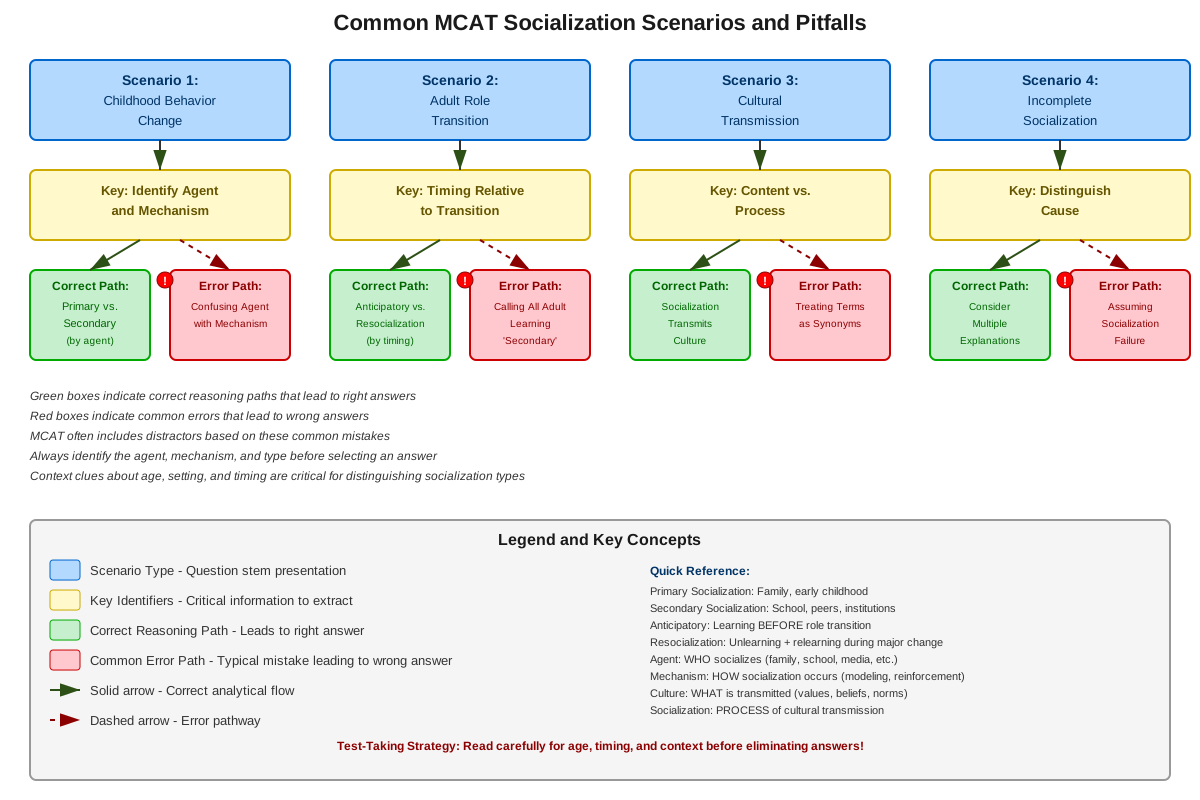
The concept of Socialization MCAT questions extends beyond simple definitions to application-based scenarios requiring students to identify agents of socialization, distinguish between types of socialization, and analyze how socialization failures or variations might explain behavioral patterns or social problems. Mastery of this topic enables students to connect individual-level psychological concepts with macro-level sociological structures, demonstrating the integrative thinking that characterizes high-scoring MCAT performance.
Learning Objectives
- [ ] Define Socialization using accurate Sociology terminology
- [ ] Explain why Socialization matters for the MCAT
- [ ] Apply Socialization to exam-style questions
- [ ] Identify common mistakes related to Socialization
- [ ] Connect Socialization to related Sociology concepts
- [ ] Distinguish between primary and secondary socialization with specific examples
- [ ] Analyze the roles of different agents of socialization across the lifespan
- [ ] Evaluate how anticipatory and resocialization processes differ from normative socialization
- [ ] Synthesize connections between socialization and identity formation theories
Prerequisites
- Basic understanding of social norms and values: Socialization fundamentally involves learning these cultural elements, so recognizing what norms and values are provides the foundation for understanding how they are transmitted.
- Familiarity with developmental stages: Socialization processes vary across childhood, adolescence, and adulthood, requiring basic knowledge of human development.
- Concept of culture: Since socialization transmits cultural knowledge, understanding culture as shared beliefs and practices is essential.
- Social roles and status: Socialization prepares individuals for various roles, making prior knowledge of role theory helpful.
Why This Topic Matters
Clinical and Real-World Significance
Socialization directly impacts medical practice in numerous ways. Physicians must understand how patients' socialization experiences shape their health beliefs, treatment compliance, and communication styles. For example, patients socialized in cultures that emphasize collectivism may make medical decisions differently than those from individualistic backgrounds. Understanding socialization helps explain why certain populations exhibit health disparities—differences in early childhood socialization regarding nutrition, exercise, and preventive care create lasting health behavior patterns. Additionally, medical professionals themselves undergo professional socialization during training, learning the norms, values, and behaviors expected of physicians.
MCAT Exam Statistics and Question Types
Socialization appears in approximately 8-12% of Psychological, Social, and Biological Foundations questions, making it a high-yield topic. Questions typically fall into three categories: (1) identification questions asking students to recognize agents or types of socialization in research scenarios, (2) application questions requiring analysis of how socialization explains behavioral patterns or social phenomena, and (3) evaluation questions asking students to predict outcomes based on socialization theory. The topic frequently appears in passages discussing child development research, cultural psychology studies, or public health interventions.
Common Exam Passage Contexts
MCAT passages featuring socialization often present:
- Research studies on parenting styles and child outcomes
- Cross-cultural comparisons of behavioral norms
- Studies on professional identity formation in medical or other fields
- Investigations of peer influence on adolescent behavior
- Research on immigrant adaptation and acculturation
- Studies examining how media exposure affects attitudes and behaviors
Core Concepts
Definition and Fundamental Nature of Socialization
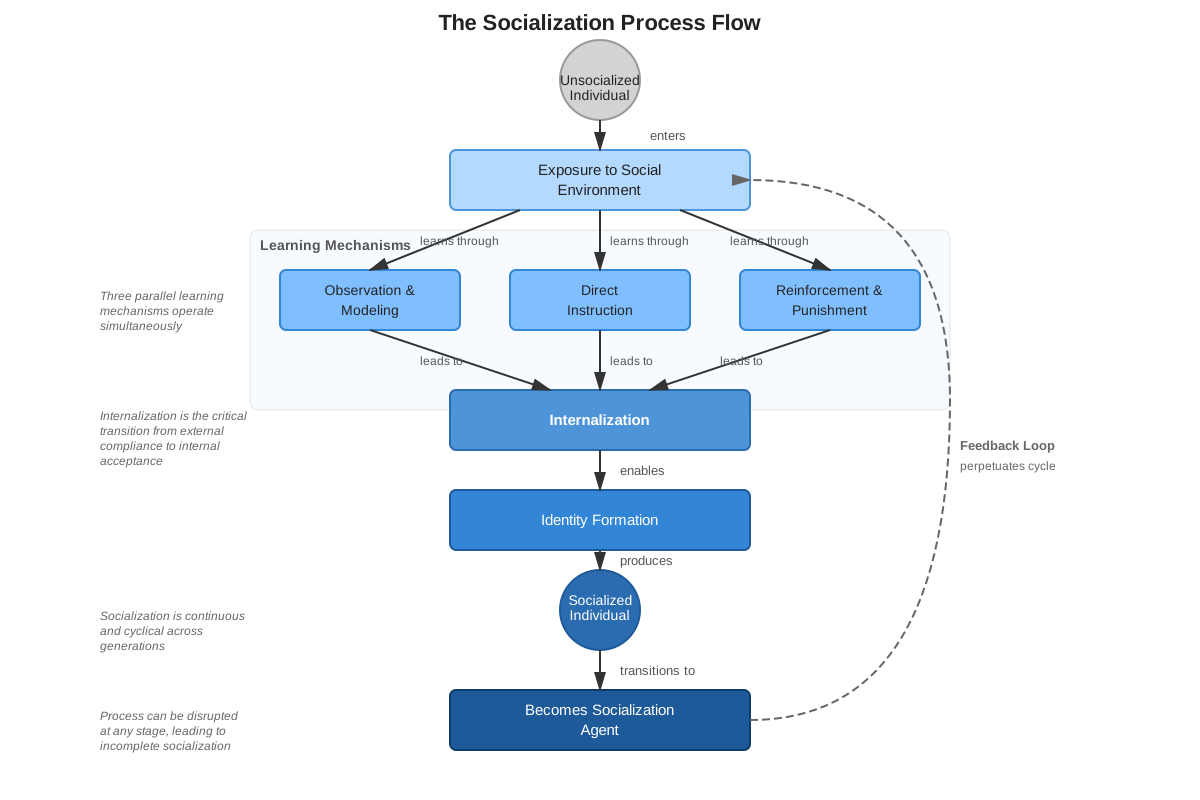
Socialization is the lifelong process through which individuals learn and internalize the values, beliefs, norms, customs, and social skills necessary to function as members of society. This process transforms biological beings into social beings capable of participating in organized social life. Socialization is not merely passive absorption of information but an active process involving interaction, interpretation, and sometimes resistance to social expectations.
The process serves multiple essential functions: it ensures cultural continuity across generations, establishes social control by teaching conformity to norms, provides individuals with social identity and sense of belonging, and enables the development of self-concept through social interaction. Without socialization, humans would lack language, self-awareness, and the capacity for complex social relationships—a reality tragically demonstrated by cases of severe childhood isolation.
Types of Socialization
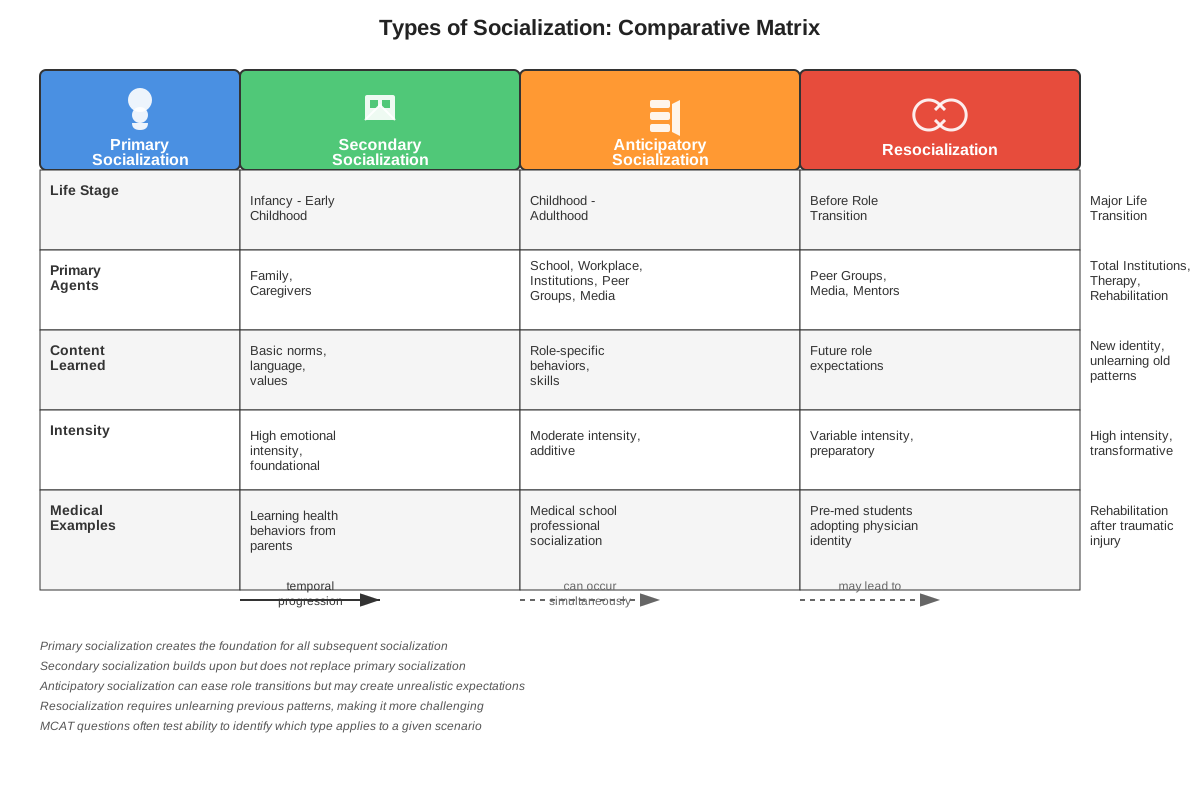
| Type | Timing | Purpose | Key Characteristics | Examples |
|---|---|---|---|---|
| Primary Socialization | Early childhood | Foundation of social identity | Occurs in family; most influential; emotional bonds central | Learning language, basic norms, gender roles |
| Secondary Socialization | Beyond childhood | Role-specific learning | Occurs in institutions; more formal; builds on primary | School behavior, workplace norms, organizational culture |
| Anticipatory Socialization | Before role transition | Preparation for future roles | Voluntary; involves rehearsal; may be inaccurate | Medical students learning physician behavior; engaged couples preparing for marriage |
| Resocialization | During major transitions | Replacing old norms with new | Often involuntary; can be intense; may involve "unlearning" | Military boot camp, rehabilitation programs, religious conversion |
Primary socialization occurs during infancy and early childhood, primarily within the family unit. This foundational period establishes basic language skills, emotional regulation, fundamental values, and initial understanding of social roles. The emotional bonds characteristic of primary socialization make this learning particularly powerful and resistant to change. Children learn not just explicit lessons but also implicit cultural assumptions through observation and interaction with primary caregivers.
Secondary socialization extends throughout life as individuals encounter new social contexts beyond the family. Schools, peer groups, workplaces, and other institutions provide role-specific knowledge and skills. Unlike primary socialization's emotional intensity, secondary socialization tends to be more formal, structured, and focused on particular behavioral expectations relevant to specific social contexts.
Anticipatory socialization involves learning and adopting the values and norms of a group one aspires to join. This forward-looking process helps individuals prepare for role transitions, though the anticipated role may differ from reality. Pre-medical students who begin adopting professional attitudes and terminology exemplify anticipatory socialization.
Resocialization represents a more radical transformation, requiring individuals to abandon previous behavioral patterns and adopt new ones. This process often occurs in "total institutions" (a concept developed by sociologist Erving Goffman) such as prisons, military organizations, or psychiatric hospitals, where individuals are isolated from broader society and subjected to intensive socialization processes designed to fundamentally reshape identity and behavior.
Agents of Socialization
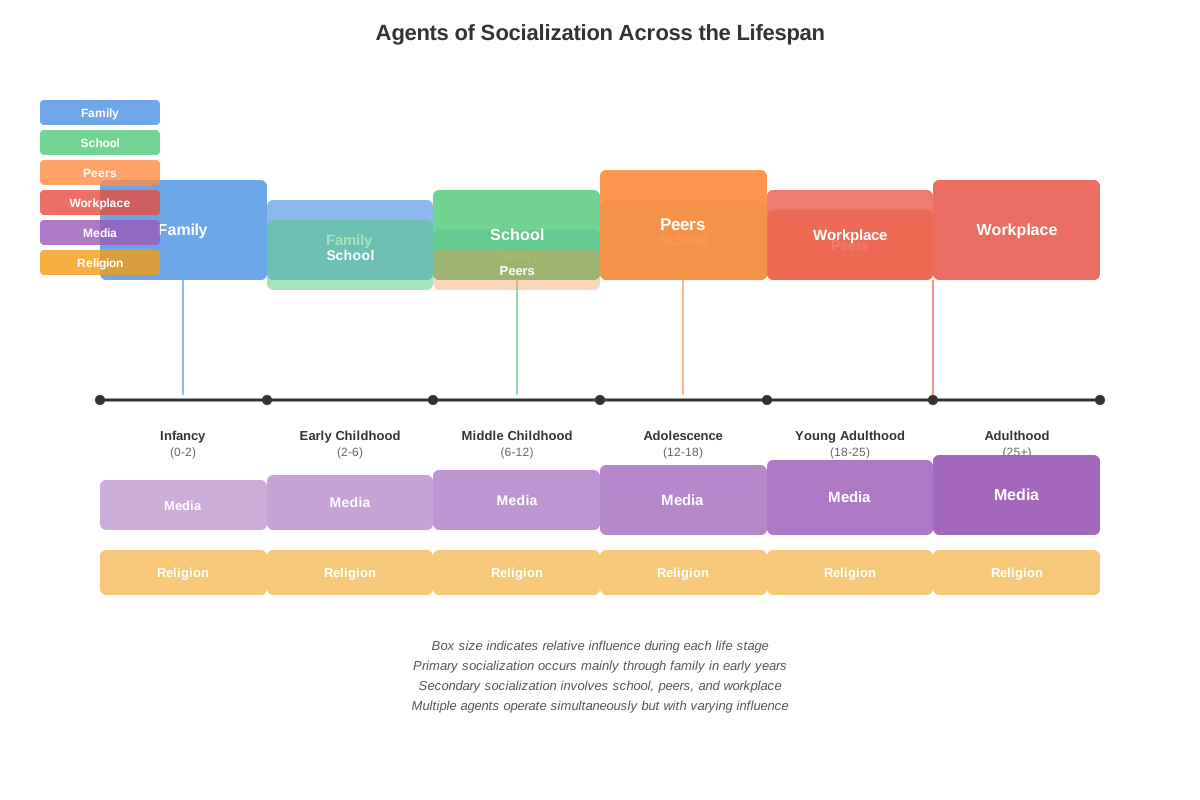
Agents of socialization are the individuals, groups, and institutions that transmit cultural knowledge and social norms. Different agents predominate at various life stages and exert varying degrees of influence:
Family serves as the primary agent during early childhood, providing the first and most influential socialization experiences. Families transmit cultural values, religious beliefs, political orientations, and class-based attitudes. The family's impact extends beyond explicit teaching to include modeling behavior, establishing emotional patterns, and creating the lens through which children initially interpret the world.
Peers become increasingly influential during adolescence, sometimes rivaling or exceeding family influence in certain domains. Peer groups teach age-appropriate behavior, provide social comparison opportunities, and often transmit youth subculture elements that may differ from adult values. The desire for peer acceptance can motivate significant behavioral changes and identity experimentation.
Schools function as formal socialization institutions, teaching not only academic content but also social norms like punctuality, respect for authority, competition, and cooperation. The "hidden curriculum" refers to implicit lessons about social hierarchy, gender roles, and cultural values transmitted through school structure and practices rather than explicit instruction.
Media (including television, internet, social media, and other mass communication) has become an increasingly powerful socialization agent, exposing individuals to diverse perspectives, role models, and behavioral norms. Media can reinforce or challenge values transmitted by other agents and provides parasocial relationships that influence identity formation.
Religion socializes members into specific belief systems, moral frameworks, and community practices. Religious institutions often provide comprehensive worldviews that guide behavior across multiple life domains and create strong group identity.
Workplace serves as a significant agent of adult socialization, teaching professional norms, organizational culture, and occupation-specific values. Professional socialization in medicine, for example, involves learning clinical skills alongside professional identity, ethical standards, and the informal culture of medical practice.
Government and legal systems socialize citizens regarding civic responsibilities, legal boundaries, and political participation. These institutions define acceptable behavior through laws and reinforce norms through sanctions.
Socialization Across the Lifespan
Socialization is not confined to childhood but continues throughout life as individuals encounter new roles, contexts, and expectations:
Childhood socialization establishes foundational elements of personality, language, and basic social competence. Children learn through play, imitation, and direct instruction, gradually developing more sophisticated understanding of social rules and role expectations.
Adolescent socialization involves identity exploration, increased peer influence, and preparation for adult roles. Adolescents navigate tensions between family expectations and peer norms while developing more abstract thinking about social issues and personal values.
Adult socialization focuses on role-specific learning as individuals enter careers, form families, and assume civic responsibilities. Adults may experience significant resocialization during major life transitions such as marriage, parenthood, career changes, or retirement.
Aging and late-life socialization involves adapting to changing social roles, often including retirement, grandparenthood, and eventually preparation for death. Societies vary considerably in how they socialize older adults and what roles remain available.
Socialization and the Development of Self
Socialization is intimately connected to self-concept development. The "looking-glass self" concept (Charles Horton Cooley) describes how individuals develop self-understanding through imagining how others perceive them. This three-step process involves: (1) imagining how we appear to others, (2) imagining their judgment of that appearance, and (3) developing self-feelings based on these imagined judgments.
George Herbert Mead's theory of self-development through social interaction identifies stages in which children progress from imitation (preparatory stage), through role-playing (play stage), to understanding multiple perspectives simultaneously (game stage). The development of the "generalized other"—an internalized sense of societal expectations—represents the culmination of socialization's role in self-formation.
Socialization and Social Control
Socialization functions as a primary mechanism of social control, the process by which society regulates individual behavior. Through internalization of norms and values, individuals develop internal controls (conscience, guilt, shame) that regulate behavior even without external surveillance. This internalization makes social control more efficient than relying solely on external sanctions. However, socialization is never completely successful—deviance and social change occur partly because socialization is incomplete, inconsistent, or actively resisted.
Concept Relationships
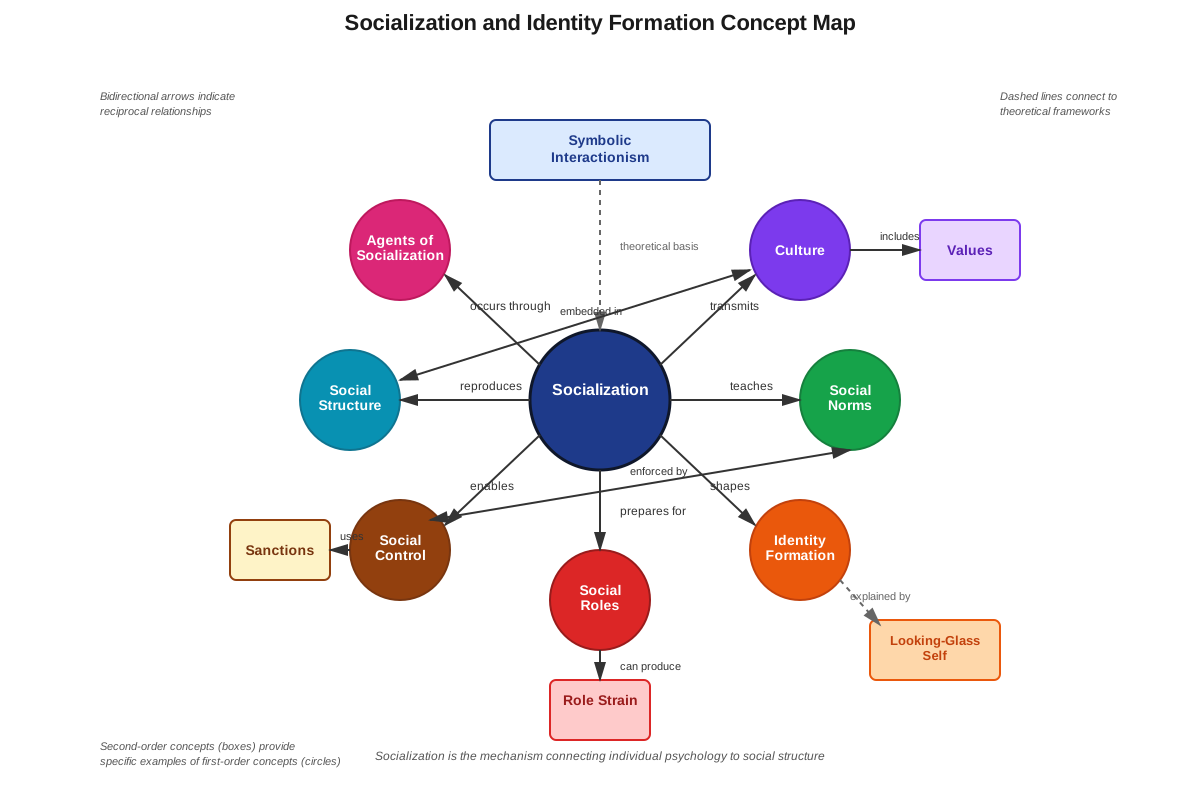
Socialization serves as a bridge concept connecting individual-level psychological processes with macro-level social structures. The relationship flows bidirectionally: Social Structure and Institutions → create contexts for → Socialization → which produces → Individual Identity and Behavior → which collectively reproduces or modifies → Social Structure and Institutions.
Within the topic itself, primary socialization establishes the foundation upon which secondary socialization builds. Both normative forms of socialization contrast with resocialization, which involves more dramatic transformation. Anticipatory socialization represents a temporal bridge, connecting current identity with future roles.
Socialization connects intimately with culture, as socialization is the mechanism through which culture is transmitted across generations. The concept also links to social stratification, since socialization experiences vary by social class, race, and gender, reproducing inequality across generations. Deviance represents, in part, socialization failure or exposure to deviant subcultures. Identity formation theories (including Erikson's psychosocial stages) depend fundamentally on socialization processes. Group dynamics and social influence concepts extend socialization principles to explain how groups shape member behavior throughout life.
The relationship to symbolic interactionism is particularly strong, as this theoretical perspective emphasizes how socialization occurs through symbolic communication and how individuals actively construct meaning through social interaction rather than passively absorbing cultural content.
Quick check — test yourself on Socialization so far.
Try Flashcards →High-Yield Facts
⭐ Socialization is a lifelong process that begins at birth and continues through death, not a process completed in childhood.
⭐ Primary socialization occurs in early childhood within the family and establishes the foundation for all subsequent socialization.
⭐ Agents of socialization include family, peers, schools, media, religion, workplace, and government—each with varying influence across the lifespan.
⭐ Anticipatory socialization involves learning norms and values of a group one aspires to join before actually becoming a member.
⭐ Resocialization requires abandoning previous behavioral patterns and adopting new ones, often occurring in total institutions.
- Secondary socialization builds upon primary socialization and occurs in institutions beyond the family, teaching role-specific behaviors.
- The "hidden curriculum" in schools refers to implicit lessons about social norms, authority, and cultural values transmitted through school structure rather than explicit content.
- Socialization serves multiple functions: ensuring cultural continuity, establishing social control, providing social identity, and enabling self-concept development.
- Gender socialization begins in infancy and involves learning culturally specific expectations for masculine and feminine behavior.
- Peer influence peaks during adolescence and can rival or exceed family influence in certain behavioral domains.
- Professional socialization in medicine involves learning not only clinical skills but also professional identity, ethical standards, and medical culture.
- Socialization is never completely successful—incomplete or inconsistent socialization contributes to deviance and enables social change.
Common Misconceptions
Misconception: Socialization only occurs during childhood and is complete by adulthood.
Correction: Socialization is a lifelong process. Adults undergo continuous socialization as they encounter new roles (parent, professional, retiree), new cultural contexts, and changing social expectations. Adult socialization may be less foundational than childhood socialization but remains significant throughout life.
Misconception: Socialization is a passive process where individuals simply absorb cultural information.
Correction: Socialization involves active interpretation, negotiation, and sometimes resistance. Individuals are not blank slates but active participants who may accept, modify, or reject socialization messages based on their experiences, personality, and other influences. The same socialization experiences can produce different outcomes in different individuals.
Misconception: All agents of socialization transmit consistent messages and values.
Correction: Agents of socialization often transmit conflicting messages. For example, family values may conflict with peer group norms, or religious teachings may contradict media messages. Individuals must navigate these contradictions, and the resulting tensions can produce stress but also enable critical thinking and social change.
Misconception: Resocialization and secondary socialization are the same thing.
Correction: Secondary socialization involves learning additional roles and norms that build upon primary socialization (like learning workplace behavior), while resocialization requires abandoning previous patterns and adopting fundamentally new ones (like military boot camp transforming civilian identity into soldier identity). Resocialization is more intensive and transformative.
Misconception: Successful socialization means complete conformity to social norms.
Correction: Even well-socialized individuals do not conform to all norms in all situations. Socialization provides knowledge of norms and general tendency toward conformity, but individuals retain agency and may choose nonconformity for various reasons. Additionally, societies contain multiple, sometimes contradictory norms, making complete conformity impossible.
Misconception: The family is always the most important agent of socialization throughout life.
Correction: While family is typically the primary agent during early childhood, the relative influence of different agents varies across the lifespan and across individuals. During adolescence, peers often become more influential in certain domains. In adulthood, workplace and professional associations may exert greater influence on daily behavior than family.
Worked Examples
Example 1: Identifying Socialization Types and Agents
Vignette: Maria, a 25-year-old college graduate, recently accepted a position as a first-year medical student. During her undergraduate years, she volunteered at a hospital where she observed physicians and began adopting their professional manner of speaking and dressing. Now in medical school, she participates in anatomy lab, attends lectures on medical ethics, and works with a mentor physician who teaches her clinical reasoning. She notices that some of her previous casual behaviors are no longer appropriate and consciously works to eliminate them.
Question: Identify the types of socialization and agents of socialization present in this scenario.
Analysis:
Step 1: Identify socialization occurring before medical school.
Maria's volunteer experience involved anticipatory socialization—she was learning and adopting the values, norms, and behaviors of physicians before actually becoming a medical student. She aspired to join the medical profession and began preparing by observing and imitating physician behavior.
Step 2: Identify the agent during volunteer experience.
The workplace (hospital) and the physicians she observed served as agents of socialization, providing role models and exposing her to medical culture.
Step 3: Identify socialization occurring during medical school.
Maria is now undergoing professional socialization, a form of secondary socialization specific to learning the medical profession. This builds upon her previous socialization but teaches specialized knowledge, skills, and professional identity.
Step 4: Identify agents during medical school.
Multiple agents are present: the medical school as an institution (through formal curriculum), peers (fellow medical students), and her mentor physician (providing direct guidance and modeling professional behavior).
Step 5: Identify the resocialization element.
Maria's conscious effort to eliminate previous casual behaviors suggests a mild form of resocialization—she is not just adding new behaviors but actively replacing old patterns with new, professionally appropriate ones. While less intensive than resocialization in total institutions, professional training does require abandoning some previous behavioral patterns.
Connection to Learning Objectives: This example demonstrates application of socialization concepts to realistic scenarios, distinguishes between types of socialization, and identifies multiple agents operating simultaneously—all key skills for MCAT questions.
Example 2: Analyzing Socialization Failure and Social Outcomes
Vignette: Researchers studied children raised in severely neglectful institutional settings where they received minimal social interaction during their first three years of life. When these children were later adopted into nurturing families, many showed persistent difficulties with language development, emotional regulation, and forming secure attachments, despite years of intervention. Control groups of children adopted before age one from similar institutions showed significantly better outcomes.
Question: Using socialization theory, explain these findings and their implications.
Analysis:
Step 1: Identify the socialization deficit.
These children experienced severe deprivation during the primary socialization period. The absence of consistent caregivers and social interaction during early childhood prevented normal socialization processes from occurring during this critical developmental window.
Step 2: Explain why timing matters.
Primary socialization during early childhood establishes foundational capacities including language, emotional regulation, and attachment patterns. This period appears to represent a sensitive period when certain socialization experiences have disproportionate impact. The brain's plasticity and rapid development during early childhood make this period particularly important for socialization.
Step 3: Connect to specific outcomes.
Language development depends on social interaction during early childhood—children learn language through communication with caregivers. Without this interaction, language acquisition is severely impaired. Emotional regulation is learned through responsive caregiving where adults help children manage emotions. Attachment requires consistent, responsive caregiving to develop secure patterns.
Step 4: Explain why later intervention has limited success.
While the brain retains plasticity throughout life, the foundational elements established during primary socialization are difficult to fully remediate later. Secondary socialization (the later interventions) builds upon primary socialization—when the foundation is absent or severely deficient, building upon it becomes extremely challenging.
Step 5: Explain the control group difference.
Children adopted before age one received adequate primary socialization during the critical early period, even though they also experienced institutional care. The timing of their adoption allowed them to undergo relatively normal primary socialization, preventing the severe deficits seen in later-adopted children.
Implications: This example demonstrates that socialization is not just important but essential for normal human development. It shows that timing matters—certain socialization experiences must occur during specific developmental periods. It also illustrates that socialization is not infinitely malleable—severe early deprivation can have lasting consequences despite later intervention.
Connection to Learning Objectives: This example applies socialization theory to explain research findings, connects socialization to developmental outcomes, and demonstrates why socialization matters for understanding human behavior—all relevant to MCAT passage analysis.
Exam Strategy
Approaching MCAT Socialization Questions
Step 1: Identify the question type
- Definition/identification: "Which of the following best describes socialization?"
- Application: "The scenario described illustrates which type of socialization?"
- Analysis: "How does the socialization process explain the observed outcome?"
- Evaluation: "Which intervention would most effectively address this socialization deficit?"
Step 2: Scan for trigger words and phrases
- "Learning cultural norms/values" → socialization definition
- "Early childhood" + "family" → primary socialization
- "Preparing for future role" → anticipatory socialization
- "Abandoning previous patterns" → resocialization
- "Total institution" → resocialization context
- "Peer influence" → agent of socialization
- "Professional training" → secondary/professional socialization
- "Across the lifespan" → continuous nature of socialization
Step 3: Map the scenario to socialization concepts
Identify: (1) What is being learned? (2) Who is doing the learning? (3) Who/what is teaching? (4) What life stage? (5) What type of social context?
Step 4: Eliminate answer choices systematically
- Eliminate options confusing socialization types (e.g., calling secondary socialization "primary")
- Eliminate options suggesting socialization ends in childhood
- Eliminate options treating socialization as purely passive
- Eliminate options that confuse agents of socialization
- Eliminate options that ignore the social/interactive nature of socialization
Time Allocation Advice
Socialization questions typically require 60-90 seconds. Spend:
- 20-30 seconds reading and mapping the scenario to concepts
- 20-30 seconds evaluating answer choices
- 10-20 seconds confirming your selection and eliminating alternatives
- 10 seconds marking and moving on
Exam Tip: When passages describe research on child development, cultural differences, or professional training, immediately activate your socialization framework. These passages almost always include at least one socialization question.
Process of Elimination Strategies
For "Which agent of socialization" questions: Eliminate based on life stage (family dominates early childhood; peers dominate adolescence; workplace dominates adult professional contexts).
For "Which type of socialization" questions: Use timing and purpose to eliminate. Primary = early childhood foundation; Secondary = later role-specific; Anticipatory = before joining group; Resocialization = abandoning old patterns.
For application questions: Eliminate answers that are too narrow (missing the social/interactive component) or too broad (including non-socialization processes like biological maturation).
Memory Techniques
MNEMONIC: FPSM-RW (Agents of Socialization)
Family
Peers
Schools
Media
Religion
Workplace
Memory aid: "First People Shape Me, Really Well"
MNEMONIC: PSAR (Types of Socialization)
Primary (early childhood, family, foundation)
Secondary (later, institutions, role-specific)
Anticipatory (preparing for future roles)
Resocialization (abandoning old, adopting new)
Memory aid: "Please Study All Regularly"
Visualization Strategy: The Socialization Timeline
Visualize a horizontal timeline from birth to old age:
- Left end (birth-5): Thick foundation labeled "PRIMARY" with family figures
- Middle section (5-18): Multiple layers labeled "SECONDARY" with school, peers, media icons
- Throughout timeline: Arrows pointing forward labeled "ANTICIPATORY" before major transitions
- Specific points: Circles labeled "RESOCIALIZATION" at major life disruptions (military, prison, career change)
Acronym: LIFE (Functions of Socialization)
Learning culture
Identity formation
Functioning in society
Ensuring social control
Association Technique: Agent-Stage Matching
Create strong mental associations:
- Family = Foundation (both start with F; family provides foundation)
- Peers = Pressure (both start with P; peer pressure is powerful)
- School = Structure (both start with S; school provides structured learning)
- Media = Messages (both start with M; media transmits messages)
Summary
Socialization represents the lifelong process through which individuals learn and internalize the cultural knowledge, norms, values, and behaviors necessary to function as members of society. This fundamental sociological concept explains how biological beings become social beings capable of participating in organized social life. Primary socialization during early childhood establishes foundational elements of identity, language, and basic social competence, while secondary socialization throughout life teaches role-specific behaviors in various institutional contexts. Multiple agents of socialization—including family, peers, schools, media, religion, and workplace—transmit cultural knowledge with varying influence across the lifespan. Anticipatory socialization prepares individuals for future roles, while resocialization involves more radical transformation of identity and behavior, often in total institutions. Understanding socialization is essential for MCAT success because it connects individual behavior to social structures, explains cultural variation in health behaviors, and provides frameworks for analyzing research on development, identity, and social influence. The concept bridges micro-level psychological processes and macro-level sociological structures, demonstrating the integrative thinking required for high-level performance on the exam.
Key Takeaways
- Socialization is lifelong, beginning at birth and continuing through death, not a process completed in childhood
- Primary socialization in early childhood establishes the foundation; secondary socialization builds upon it with role-specific learning
- Multiple agents (family, peers, schools, media, religion, workplace) socialize individuals with varying influence across life stages
- Anticipatory socialization prepares for future roles; resocialization requires abandoning old patterns for new ones
- Socialization serves critical functions: transmitting culture, enabling social control, forming identity, and ensuring social continuity
- Socialization is active and interactive, not passive absorption—individuals interpret, negotiate, and sometimes resist socialization messages
- Understanding socialization is essential for analyzing MCAT passages on development, cultural differences, professional training, and health behaviors
Related Topics
Culture and Society: Socialization is the mechanism through which culture is transmitted; mastering socialization enables deeper understanding of how cultural elements persist and change across generations.
Social Stratification: Socialization experiences vary by social class, race, and gender, reproducing inequality; understanding socialization illuminates how stratification systems perpetuate themselves.
Deviance and Social Control: Deviance can result from socialization failures or exposure to deviant subcultures; socialization theory explains both conformity and nonconformity.
Identity and the Self: Theories of identity formation (Erikson, Mead, Cooley) depend fundamentally on socialization processes; mastering socialization provides foundation for understanding self-concept development.
Group Dynamics and Social Influence: Socialization principles extend to explain how groups shape member behavior throughout life, connecting to conformity, obedience, and group polarization concepts.
Medical Sociology: Professional socialization in medicine, patient socialization regarding health behaviors, and cultural competence all build directly on socialization foundations.
Practice CTA
Now that you have mastered the core concepts of socialization, reinforce your learning by attempting practice questions and reviewing flashcards on this topic. Focus particularly on distinguishing between types of socialization, identifying agents in complex scenarios, and applying socialization theory to explain behavioral outcomes. Remember that socialization questions often appear in research-based passages, so practice analyzing study designs through a socialization lens. Your thorough understanding of this high-yield topic will serve you well across multiple question types on test day. Keep building on this foundation—you're developing the integrative thinking skills that characterize top MCAT performers!
Sign up free to keep reading
Create a free AnvayaPrep account to finish this MCAT guide on Socialization — plus flashcards and practice questions.