Overview
Motor development is a fundamental aspect of human growth that describes the progressive acquisition of movement skills and physical coordination from infancy through adulthood. Within Psychology and the broader context of Development and Personality, motor development represents the intricate interplay between biological maturation, environmental influences, and cognitive processes that enable humans to interact with their physical world. This developmental domain encompasses everything from a newborn's reflexive movements to the complex, coordinated actions of skilled athletes and musicians.
For the MCAT, understanding motor development Psychology is essential because it frequently appears in passages examining developmental milestones, neurological maturation, and the biopsychosocial model of human development. The exam tests not only knowledge of developmental sequences but also the ability to apply these concepts to clinical scenarios, research study designs, and theoretical frameworks. Questions may present case studies of children with developmental delays, research on environmental enrichment effects, or comparative analyses of different developmental theories. Motor development serves as a concrete, observable manifestation of underlying neurological and cognitive maturation, making it an ideal topic for integrating biological and psychological perspectives.
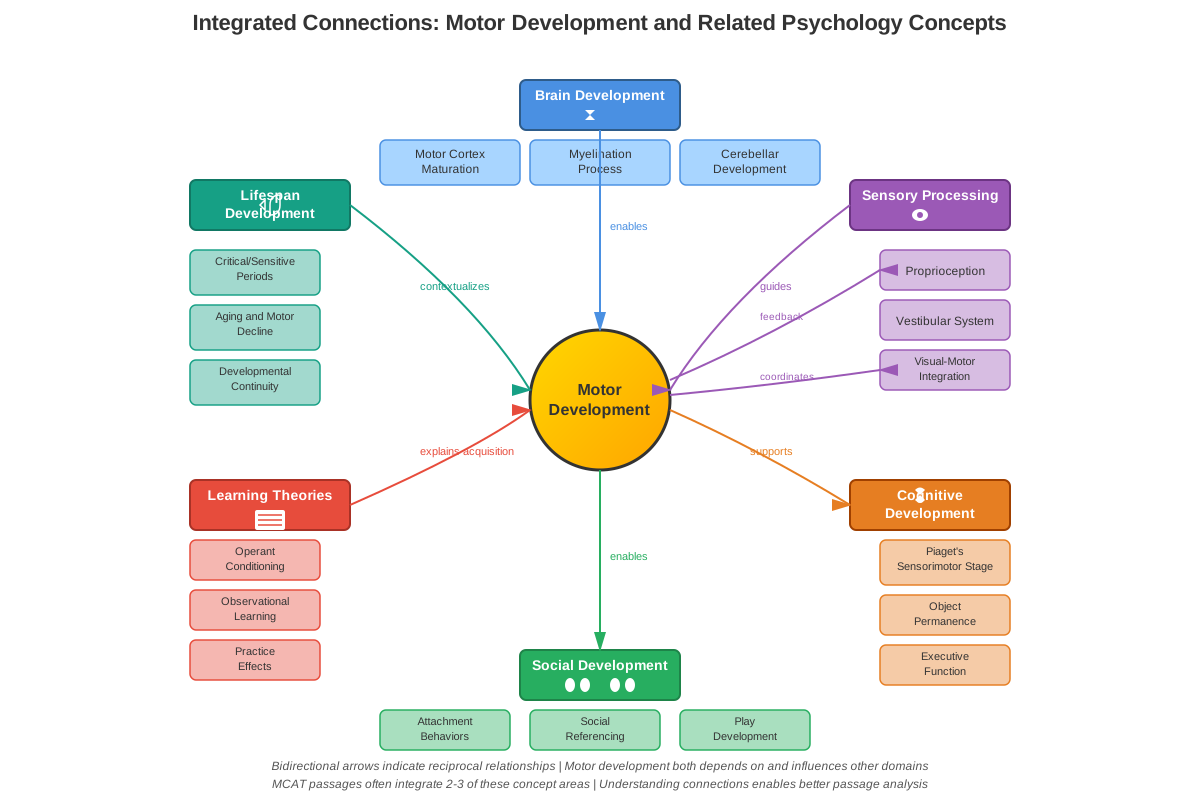
The study of motor development connects intimately with numerous other Psychology concepts tested on the MCAT, including brain development (particularly cerebellar and motor cortex maturation), sensory processing, learning theories, nature versus nurture debates, and lifespan development frameworks. Understanding motor development provides insight into critical periods of development, the role of practice and experience in skill acquisition, and how physical capabilities influence cognitive and social development. This topic exemplifies the MCAT's emphasis on interdisciplinary thinking, requiring students to synthesize knowledge from developmental psychology, neuroscience, and social psychology to answer complex, passage-based questions effectively.
Learning Objectives
- [ ] Define Motor development using accurate Psychology terminology
- [ ] Explain why Motor development matters for the MCAT
- [ ] Apply Motor development to exam-style questions
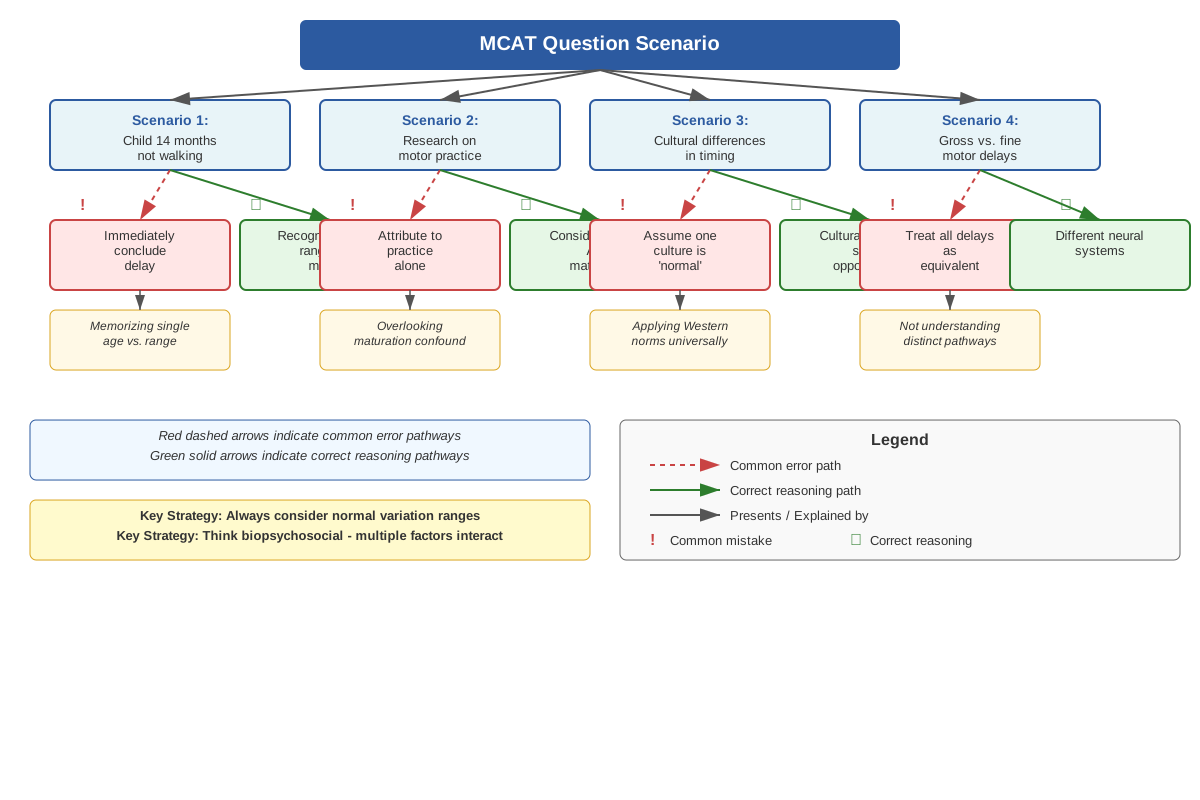
- [ ] Identify common mistakes related to Motor development
- [ ] Connect Motor development to related Psychology concepts
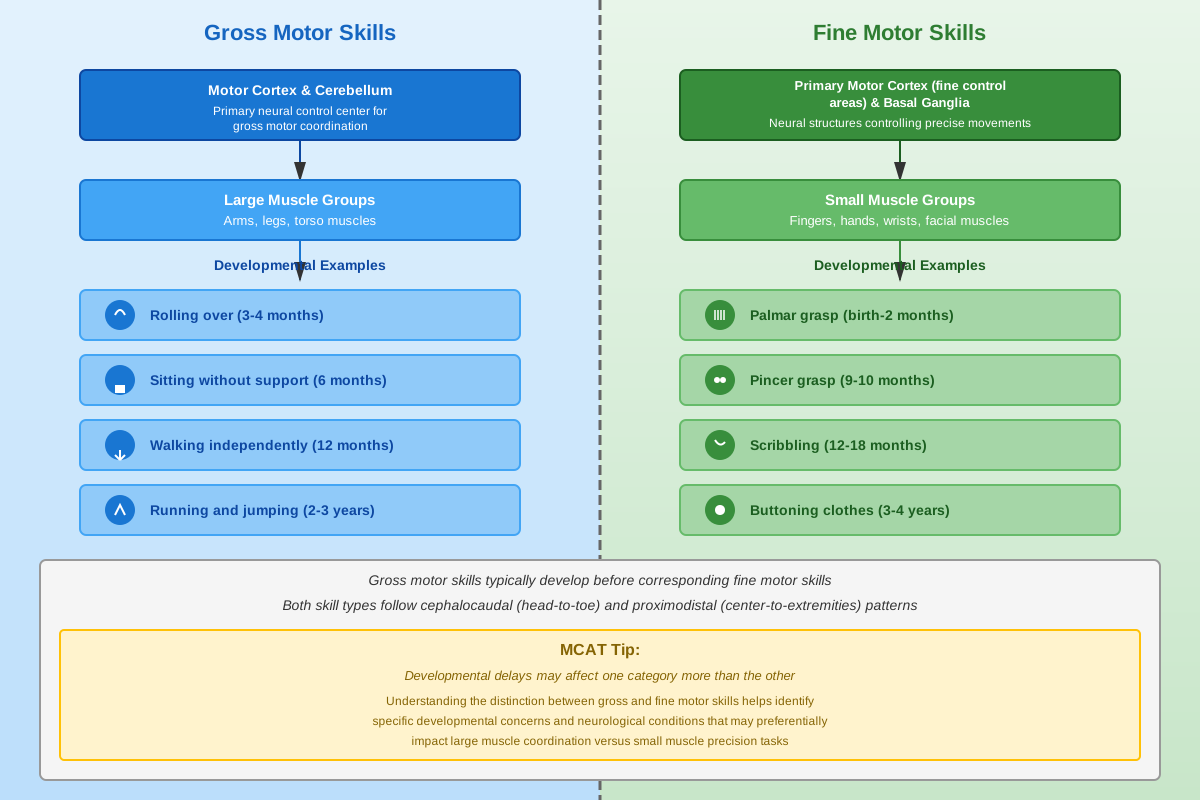
- [ ] Distinguish between gross motor and fine motor skill development with specific examples
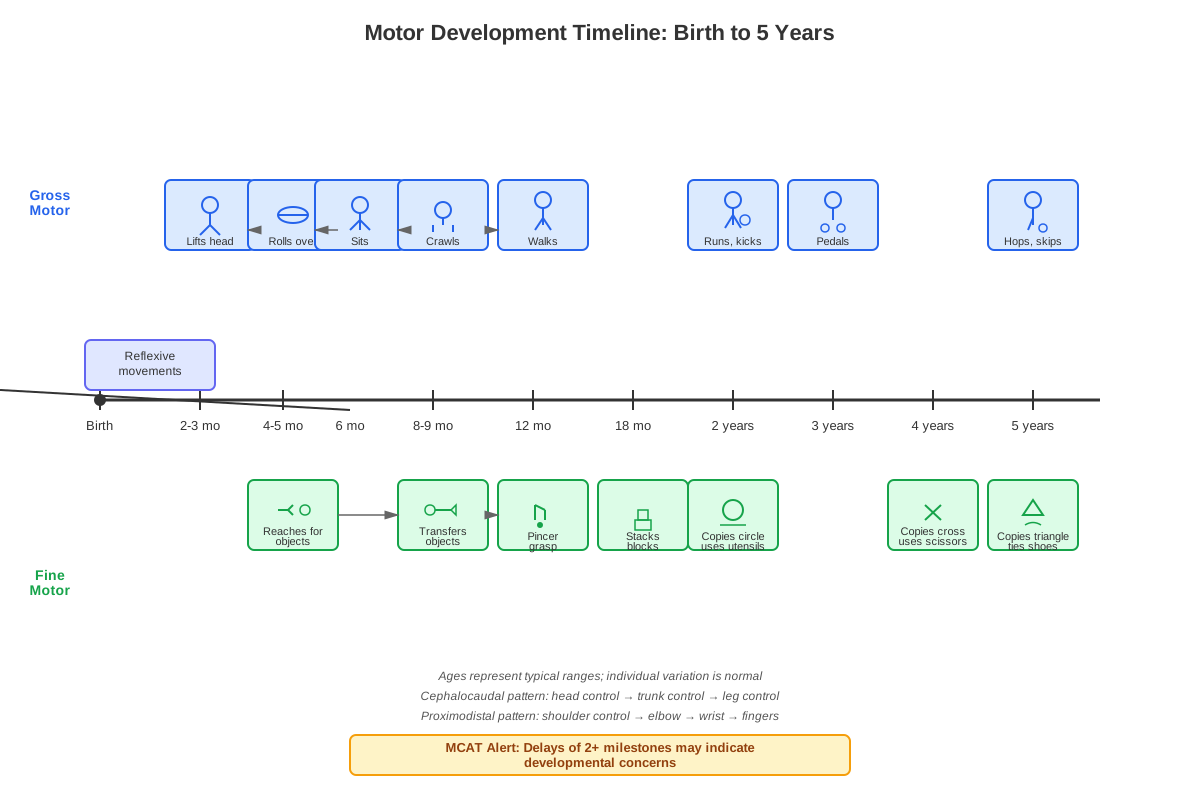
- [ ] Sequence major motor milestones from birth through early childhood with approximate age ranges
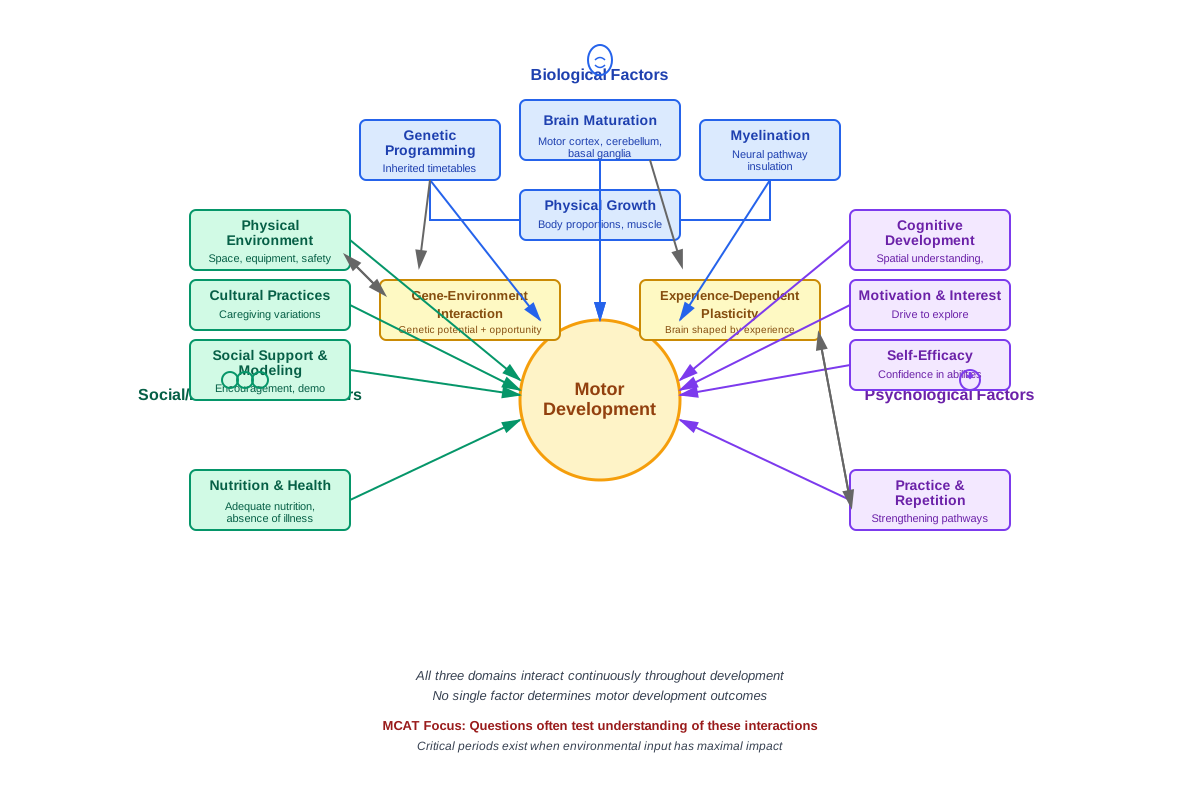
- [ ] Analyze how biological maturation and environmental factors interact to influence motor skill acquisition
- [ ] Evaluate research designs used to study motor development and identify their strengths and limitations
Prerequisites
- Basic developmental psychology principles: Understanding stages of development provides the framework for placing motor milestones within broader developmental contexts
- Fundamental neuroanatomy: Knowledge of brain structures (cerebellum, motor cortex, basal ganglia) is necessary to understand the biological basis of motor control
- Nature versus nurture concepts: This foundational debate directly applies to understanding how genetic programming and environmental experience shape motor development
- Research methodology basics: Familiarity with longitudinal, cross-sectional, and experimental designs helps evaluate motor development research presented in MCAT passages
Why This Topic Matters
Motor development holds significant clinical and real-world importance across multiple healthcare disciplines. Pediatricians routinely assess motor milestones to identify developmental delays that may signal neurological disorders, genetic conditions, or environmental deprivation. Physical and occupational therapists design interventions based on motor development principles to help children with cerebral palsy, autism spectrum disorders, or developmental coordination disorder. Understanding typical motor development patterns enables healthcare providers to distinguish normal variation from pathological delays requiring intervention. Additionally, motor development research has informed public health initiatives, such as the "Back to Sleep" campaign, which reduced SIDS but also affected the timeline of certain motor milestones.
On the MCAT, motor development appears with moderate frequency, particularly in Psychology/Sociology passages that integrate developmental psychology with biological concepts. Exam statistics suggest that approximately 3-5% of Psychology/Sociology questions involve developmental topics, with motor development representing a significant subset. Questions typically appear in three formats: discrete questions testing milestone knowledge, passage-based questions requiring application of developmental principles to research scenarios, and integrated questions connecting motor development to neurological maturation or learning theories.
Common exam presentations include passages describing research studies comparing motor development across different cultural contexts, clinical vignettes of children with developmental delays requiring differential diagnosis, and theoretical discussions of how motor skills influence cognitive development (such as Piaget's sensorimotor stage). The MCAT particularly favors questions that require students to analyze the interaction between biological maturation and environmental factors, evaluate research methodology in developmental studies, or apply knowledge of motor milestones to identify abnormal development patterns. Understanding motor development also provides context for questions about brain plasticity, critical periods, and the biopsychosocial model of development.
Core Concepts
Definition and Scope of Motor Development
Motor development refers to the progressive change in motor behavior throughout the lifespan, resulting from the interaction between biological maturation, environmental experiences, and the task demands of specific movements. This process involves both quantitative changes (such as increased strength and speed) and qualitative changes (such as improved coordination and efficiency). Motor development encompasses the acquisition of voluntary control over body movements, the refinement of movement patterns, and the adaptation of motor skills to changing environmental demands.
The field distinguishes between two primary categories of motor skills. Gross motor skills involve large muscle groups and whole-body movements, including activities such as rolling over, sitting, crawling, walking, running, and jumping. These skills typically develop earlier and form the foundation for more complex movements. Fine motor skills involve precise movements of small muscle groups, particularly in the hands and fingers, enabling activities such as grasping objects, writing, buttoning clothes, and manipulating small items. Fine motor development generally lags behind gross motor development and continues refining throughout childhood and adolescence.
Principles Governing Motor Development
Motor development follows several universal principles that describe the predictable patterns observed across individuals and cultures:
- Cephalocaudal development: Motor control progresses from head to toe, with infants first gaining control over head and neck movements, then trunk control, and finally leg and foot control
- Proximodistal development: Control develops from the center of the body outward, with shoulder control preceding elbow control, which precedes wrist and finger control
- General to specific: Broad, diffuse movements precede precise, refined movements
- Differentiation and integration: Initially undifferentiated movements become increasingly specialized (differentiation) and then coordinated into smooth, complex patterns (integration)
These principles reflect the underlying neurological maturation, particularly the progressive myelination of neural pathways and the development of motor cortex regions. The motor cortex in the frontal lobe, the cerebellum coordinating balance and smooth movements, and the basal ganglia regulating movement initiation and inhibition all undergo significant maturation during the periods of rapid motor development.
Major Motor Milestones
Understanding the typical sequence and timing of motor milestones is high-yield for the MCAT. While individual variation exists, the following table presents the average ages for key motor achievements:
| Age Range | Gross Motor Milestones | Fine Motor Milestones |
|---|---|---|
| 0-3 months | Lifts head when prone; some head control when held upright | Reflexive grasping; brings hands to mouth |
| 3-6 months | Rolls over; sits with support; bears weight on legs when supported | Reaches for objects; transfers objects between hands |
| 6-9 months | Sits independently; crawls; pulls to standing | Pincer grasp emerges (thumb and forefinger); bangs objects together |
| 9-12 months | Cruises (walks holding furniture); may walk independently | Refined pincer grasp; releases objects voluntarily |
| 12-18 months | Walks independently; climbs stairs with assistance | Stacks 2-3 blocks; scribbles with crayon |
| 18-24 months | Runs; kicks ball; walks up and down stairs | Stacks 4-6 blocks; turns pages; uses spoon |
| 2-3 years | Jumps with both feet; pedals tricycle; throws ball overhand | Stacks 8+ blocks; copies circle; uses scissors |
| 3-4 years | Hops on one foot; catches bounced ball | Copies cross; draws person with 2-4 body parts |
| 4-5 years | Skips; balances on one foot 5+ seconds | Copies square; writes some letters; uses fork proficiently |
MCAT Exam Tip: Questions often present scenarios requiring identification of age-appropriate versus delayed development. Memorize key milestones at 6, 12, and 24 months, as these are frequently tested boundaries.
Theoretical Perspectives on Motor Development
Several theoretical frameworks explain how motor development occurs, each emphasizing different mechanisms:
Maturationist Theory (Arnold Gesell) proposes that motor development unfolds according to a genetically predetermined sequence, with biological maturation as the primary driver. This perspective emphasizes the universality of developmental sequences across cultures and the limited impact of practice on the timing of milestone achievement. While this theory accurately describes the general sequence of motor development, it underestimates environmental influences.
Dynamic Systems Theory represents the contemporary understanding of motor development, proposing that motor skills emerge from the interaction of multiple subsystems: neurological maturation, body growth and composition, environmental affordances, and task demands. According to this perspective, motor development is not simply the unfolding of a genetic program but rather the self-organization of complex systems responding to changing constraints. For example, the transition from crawling to walking occurs when sufficient leg strength, balance control, and motivation converge, with the specific timing influenced by environmental factors such as floor surface and cultural practices.
Ecological Theory (Eleanor and James Gibson) emphasizes the role of perception in motor development, proposing that infants actively explore their environment to discover affordances—the action possibilities that objects and surfaces provide. Through this exploration, infants learn which movements are possible and effective in different contexts. This theory highlights the importance of environmental variety and exploratory behavior in motor skill acquisition.
Factors Influencing Motor Development
Motor development results from the complex interplay of multiple factors:
Biological factors include genetic inheritance, prenatal development, nutrition, and neurological maturation. Conditions such as Down syndrome, cerebral palsy, or muscular dystrophy directly impact motor development trajectories. Adequate nutrition, particularly protein and essential fatty acids, supports the brain development underlying motor control.
Environmental factors encompass physical environment characteristics, cultural practices, and opportunities for practice. Infants raised in environments with limited space for movement or restrictive caregiving practices may show delayed motor milestone achievement. Cultural variations in caregiving—such as whether infants are carried constantly, placed in infant seats, or given floor time—influence the timing of specific milestones while generally preserving the overall sequence.
Practice and experience play crucial roles, particularly for fine motor skills and complex movement patterns. While basic milestones like walking emerge with minimal practice due to strong maturational components, refinement of motor skills requires repeated practice. The concept of motor learning describes how practice leads to relatively permanent changes in motor performance through neural plasticity.
Motor Development Across the Lifespan
While most dramatic changes occur during infancy and early childhood, motor development continues throughout life. During middle childhood (ages 6-12), children refine motor skills, improve reaction time, and develop sport-specific abilities. Adolescence brings rapid physical growth that temporarily disrupts motor coordination, followed by peak motor performance in late adolescence and early adulthood.
Adulthood involves maintenance of motor skills, with gradual declines beginning in middle age due to decreased muscle mass, flexibility, and neural processing speed. However, regular physical activity and practice can maintain motor function at high levels well into older adulthood. Older adulthood typically involves more noticeable motor declines, including slower movement, reduced balance, and decreased fine motor precision, though substantial individual variation exists based on health status, activity levels, and genetic factors.
Concept Relationships
Motor development concepts form an interconnected network of relationships. The cephalocaudal and proximodistal principles → directly explain the sequence of motor milestones, with head control preceding sitting, which precedes walking. These principles themselves reflect underlying neurological maturation, particularly the progressive myelination of motor pathways from brain to spinal cord.
Gross motor development → provides the foundation for fine motor development, as trunk stability and postural control enable the precise hand movements required for manipulation. For example, independent sitting frees the hands for exploratory manipulation, accelerating fine motor skill development.
The relationship between motor development and cognitive development is bidirectional. Motor skills enable new forms of environmental exploration, which in turn stimulates cognitive development. Piaget's sensorimotor stage explicitly recognizes this connection, proposing that infants construct knowledge through motor interactions with objects. Conversely, cognitive advances enable more sophisticated motor planning and problem-solving in movement contexts.
Dynamic systems theory integrates multiple concepts by explaining how biological maturation, environmental affordances, body growth, and task demands interact to produce motor development. This framework connects motor development to broader developmental psychology concepts including nature versus nurture, critical periods, and developmental plasticity.
Motor development also connects to social development, as motor capabilities influence social interactions. Mobility enables infants to approach or avoid social partners, while fine motor skills enable participation in shared activities like eating meals or playing games. Cultural practices regarding motor development reflect broader socialization goals and values.
Quick check — test yourself on Motor development so far.
Try Flashcards →High-Yield Facts
⭐ Motor development follows cephalocaudal (head-to-toe) and proximodistal (center-to-periphery) principles universally across cultures
⭐ Most infants walk independently between 12-15 months; walking before 9 months or after 18 months warrants evaluation
⭐ The pincer grasp (thumb and forefinger opposition) typically emerges around 9 months and represents a critical fine motor milestone
⭐ Dynamic systems theory explains motor development as emerging from interactions among neurological maturation, body composition, environmental affordances, and task demands
⭐ Gross motor skills (large muscle movements) generally develop before fine motor skills (precise small muscle movements)
- Infants typically achieve independent sitting around 6 months, which frees hands for manipulation and accelerates fine motor development
- Crawling usually emerges between 6-10 months, though some infants skip crawling entirely and proceed directly to walking
- The cerebellum plays a crucial role in motor coordination and balance, with its development closely tied to motor milestone achievement
- Cultural practices significantly influence the timing (but not sequence) of motor milestones, as demonstrated by cross-cultural research
- Reflexive movements present at birth (rooting, grasping, stepping) are gradually replaced by voluntary motor control during the first year
- Motor development assessment is a key component of well-child visits, with delays potentially indicating neurological, genetic, or environmental concerns
- Practice and environmental enrichment accelerate motor skill refinement but have limited impact on the emergence of basic milestones driven primarily by maturation
Common Misconceptions
Misconception: All children must crawl before walking, and skipping crawling indicates developmental problems.
Correction: Crawling is common but not universal; approximately 10-15% of typically developing infants skip crawling entirely and proceed directly to walking. The key milestone is independent mobility, which can be achieved through various means (crawling, scooting, cruising).
Misconception: Earlier achievement of motor milestones predicts higher intelligence or superior athletic ability.
Correction: Within the normal range, timing of motor milestone achievement shows minimal correlation with later cognitive abilities or athletic performance. Individual variation in milestone timing reflects normal developmental diversity rather than meaningful differences in ability.
Misconception: Motor development is entirely determined by biological maturation, with environmental factors playing negligible roles.
Correction: While biological maturation provides the foundation for motor development, environmental factors significantly influence both timing and quality of motor skills. Adequate nutrition, opportunities for practice, and environmental variety all impact motor development trajectories.
Misconception: The stepping reflex present in newborns directly develops into walking.
Correction: The neonatal stepping reflex disappears around 2-3 months and is distinct from voluntary walking that emerges around 12 months. Walking represents a new motor pattern emerging from the integration of multiple developing systems, not simply the continuation of a reflex.
Misconception: Fine motor skills are less important than gross motor skills and develop automatically once gross motor milestones are achieved.
Correction: Fine motor skills follow their own developmental trajectory and require specific practice and environmental support. Fine motor development continues refining throughout childhood and adolescence, long after basic gross motor milestones are achieved, and is crucial for academic success and daily living skills.
Misconception: Motor development ends in early childhood once basic skills are acquired.
Correction: Motor development is a lifespan process involving continued refinement during childhood, peak performance in young adulthood, maintenance in middle age, and adaptive changes in older adulthood. Motor learning and skill acquisition continue throughout life.
Worked Examples
Example 1: Developmental Assessment Case
Vignette: A pediatrician evaluates a 15-month-old child during a well-child visit. The child can sit independently, crawl efficiently, pull to standing while holding furniture, and cruise along furniture. However, the child does not yet walk independently. The child can pick up small objects using thumb and forefinger, transfer objects between hands, and stack two blocks. The parents express concern that their child is not yet walking.
Question: Based on typical motor development patterns, how should the pediatrician interpret these findings?
Analysis:
First, identify the child's age: 15 months. Next, systematically evaluate the reported motor skills against expected milestones:
Gross motor skills present:
- Sitting independently (expected by 6-8 months) ✓
- Crawling (expected by 6-10 months) ✓
- Pulling to standing (expected by 8-10 months) ✓
- Cruising (expected by 9-12 months) ✓
- Independent walking (expected by 12-15 months) ✗
Fine motor skills present:
- Pincer grasp (expected by 9-10 months) ✓
- Transferring objects (expected by 6-7 months) ✓
- Stacking 2 blocks (expected by 15-18 months) ✓
Interpretation: The child demonstrates age-appropriate or advanced fine motor skills and has achieved all prerequisite gross motor milestones for walking. Independent walking typically emerges between 12-15 months, placing this child at the later end of the normal range. The progression from cruising to independent walking usually occurs within 1-3 months. Given that all prerequisite skills are present and fine motor development is on track, this represents normal developmental variation rather than delay.
Conclusion: The pediatrician should reassure the parents that their child's development falls within normal limits, explain that walking typically emerges between 12-15 months with some children walking as late as 18 months, and recommend follow-up if independent walking has not emerged by 18 months. This example illustrates the importance of evaluating the full pattern of motor development rather than focusing on a single milestone in isolation.
Example 2: Research Design Analysis
Vignette: Researchers investigate whether infant walkers affect the timing of independent walking. They recruit 200 families with infants aged 6 months and randomly assign half to use infant walkers daily and half to avoid walker use. They assess motor milestones monthly until age 18 months. Results show that infants in the walker group walked independently at an average age of 13.5 months, while the no-walker group walked at 12.8 months. The walker group also showed higher rates of minor injuries.
Question: What does this study design reveal about the relationship between environmental factors and motor development?
Analysis:
Study design identification: This is a randomized controlled trial (RCT), the gold standard for establishing causation. Random assignment helps control for confounding variables that might differ between families who choose to use walkers versus those who don't.
Key findings interpretation:
- The walker group showed delayed walking (13.5 vs. 12.8 months), contrary to what parents might expect from a device called a "walker"
- The difference (0.7 months or approximately 3 weeks) is statistically significant but both groups fall within the normal range (12-15 months)
- Increased injury rates suggest additional safety concerns
Theoretical implications:
This study demonstrates that environmental factors can influence motor development timing, supporting dynamic systems theory over pure maturationist perspectives. The delay likely occurs because walkers:
- Reduce time spent in prone position and floor play, limiting practice of prerequisite skills
- Alter the typical movement patterns and muscle activation required for walking
- Provide artificial support that reduces the need to develop independent balance
Practical applications:
The findings support pediatric recommendations against infant walker use, illustrating how motor development research informs clinical practice and public health policy. This example demonstrates the MCAT's emphasis on evaluating research methodology and connecting findings to theoretical frameworks.
Exam Strategy
When approaching MCAT questions on motor development, employ these strategic approaches:
Trigger word recognition: Watch for age specifications in vignettes, as these immediately activate milestone knowledge. Phrases like "appropriate for age," "developmental delay," or "within normal limits" signal that you need to compare presented behaviors against expected milestones. Terms like "cephalocaudal," "proximodistal," "gross motor," and "fine motor" indicate questions testing conceptual understanding rather than pure memorization.
Systematic milestone evaluation: When presented with a developmental case, create a mental checklist:
- Identify the child's age
- List expected milestones for that age range
- Compare presented skills against expectations
- Look for patterns (e.g., global delay vs. specific domain delay)
- Consider whether delays warrant concern or represent normal variation
Theory application questions: When questions ask about mechanisms or explanations for motor development patterns, distinguish between theoretical perspectives:
- Maturationist explanations emphasize biological programming and universal sequences
- Dynamic systems explanations emphasize interactions among multiple factors
- Ecological explanations emphasize perception-action coupling and environmental affordances
Choose answers that match the theoretical framework implied by the question stem.
Process of elimination strategies:
- Eliminate options that violate developmental principles (e.g., fine motor before gross motor, distal before proximal)
- Eliminate options with ages that fall far outside normal ranges (e.g., walking at 6 months or 24 months)
- Eliminate options that suggest single-factor causation when motor development involves multiple interacting factors
- Be cautious of extreme language ("always," "never," "only") as motor development shows individual variation
Time management: Motor development questions typically require less time than complex experimental passages. Quickly access milestone knowledge, make your comparison, and move forward. Don't second-guess milestone ages if you've studied them thoroughly—your first instinct is usually correct.
Integration with other topics: Be prepared for questions that connect motor development to brain development, Piaget's stages, research methodology, or cultural psychology. These integrated questions test deeper understanding and are often worth more points.
Memory Techniques
Milestone Sequence Mnemonic: "Rolling Sitting Crawling Standing Walking Running Jumping" (RSCSW RJ)
- This captures the major gross motor sequence from 3 months through 2 years
Age-Based Anchor Points:
- 6 months = SITS (Sits independently, Introduces solids, Transfers objects, Stranger anxiety begins)
- 9 months = PINCER (Pincer grasp, Pulls to standing, Crawls, Explores environment, Responds to name)
- 12 months = WALKS (Walks independently, Imitates actions, Likes games, Knows name, Says first words)
Principle Memory Device: "Children Progress Gradually Developing Increasingly"
- Cephalocaudal (head to toe)
- Proximodistal (center to periphery)
- General to specific
- Differentiation before integration
- Integration of skills
Fine vs. Gross Distinction: Visualize "GROSS = Giant Running Outside Sports Skills" (large movements, whole body) versus "FINE = Fingers In Narrow Exact movements" (small, precise)
Dynamic Systems Components: "BENT on development"
- Body composition and growth
- Environment and affordances
- Neurological maturation
- Task demands
Critical Age Boundaries: Create a mental number line with key decision points:
- Before 9 months walking = very early (investigate)
- 12-15 months walking = typical
- After 18 months walking = delayed (evaluate)
Summary
Motor development represents the progressive acquisition of movement skills from infancy through adulthood, following predictable principles including cephalocaudal and proximodistal progression. This developmental domain encompasses both gross motor skills involving large muscle groups and fine motor skills requiring precise coordination of small muscles. Major milestones include independent sitting around 6 months, crawling between 6-10 months, walking between 12-15 months, and progressive refinement of fine motor skills throughout childhood. Contemporary understanding emphasizes dynamic systems theory, which explains motor development as emerging from interactions among neurological maturation, body composition, environmental affordances, and task demands rather than simple genetic unfolding. Cultural practices and environmental factors influence milestone timing while preserving universal sequences. For the MCAT, students must know key milestone ages, understand developmental principles, distinguish theoretical perspectives, and apply this knowledge to clinical scenarios and research designs. Motor development connects intimately with brain maturation, cognitive development, and broader developmental psychology frameworks, making it essential for integrated, passage-based questions.
Key Takeaways
- Motor development follows universal principles (cephalocaudal, proximodistal, general-to-specific) that reflect underlying neurological maturation patterns
- Key milestone ages for the MCAT: sitting independently (~6 months), pincer grasp (~9 months), independent walking (12-15 months), with delays beyond 18 months warranting evaluation
- Dynamic systems theory explains motor development as emerging from interactions among multiple factors rather than simple genetic programming, representing the contemporary understanding tested on the MCAT
- Gross motor skills (large muscle movements) generally precede fine motor skills (precise small muscle movements), with gross motor providing the postural foundation for fine motor refinement
- Environmental factors and cultural practices influence motor development timing but not the fundamental sequence, demonstrating the interaction between nature and nurture
- Motor development assessment is clinically important for identifying neurological disorders, genetic conditions, and environmental deprivation requiring intervention
- Motor development continues across the lifespan, not just in early childhood, with refinement, peak performance, maintenance, and adaptive changes occurring at different life stages
Related Topics
Brain Development and Neuroplasticity: Understanding cerebellar maturation, motor cortex development, and myelination processes provides the biological foundation for motor milestone emergence. Mastering motor development enables deeper comprehension of how structural brain changes manifest in behavioral capabilities.
Piaget's Cognitive Development Theory: The sensorimotor stage (birth-2 years) explicitly connects motor development to cognitive development, proposing that infants construct knowledge through motor interactions with objects. Understanding motor milestones enriches comprehension of Piaget's framework.
Developmental Research Methods: Motor development studies exemplify longitudinal, cross-sectional, and cross-cultural research designs. Analyzing motor development research builds skills for evaluating methodology in MCAT passages.
Lifespan Development: Motor development represents one domain within comprehensive lifespan frameworks. Connecting motor development to cognitive, social, and emotional development creates integrated understanding of human development.
Nature versus Nurture: Motor development provides concrete examples for this fundamental debate, with clear evidence of both genetic programming (universal sequences) and environmental influence (timing variations), making it ideal for exam questions exploring gene-environment interactions.
Practice CTA
Now that you've mastered the core concepts of motor development, it's time to solidify your understanding through active practice. Challenge yourself with MCAT-style practice questions that require you to apply milestone knowledge to clinical scenarios, evaluate research designs, and integrate motor development with other psychological concepts. Use flashcards to drill key milestone ages and developmental principles until recall becomes automatic. Remember, the MCAT rewards not just knowledge but the ability to apply that knowledge under time pressure to novel scenarios. Your thorough understanding of motor development principles will serve you well not only on discrete questions but also in complex passages integrating developmental, biological, and social perspectives. You've built a strong foundation—now strengthen it through deliberate practice!
Sign up free to keep reading
Create a free AnvayaPrep account to finish this MCAT guide on Motor development — plus flashcards and practice questions.