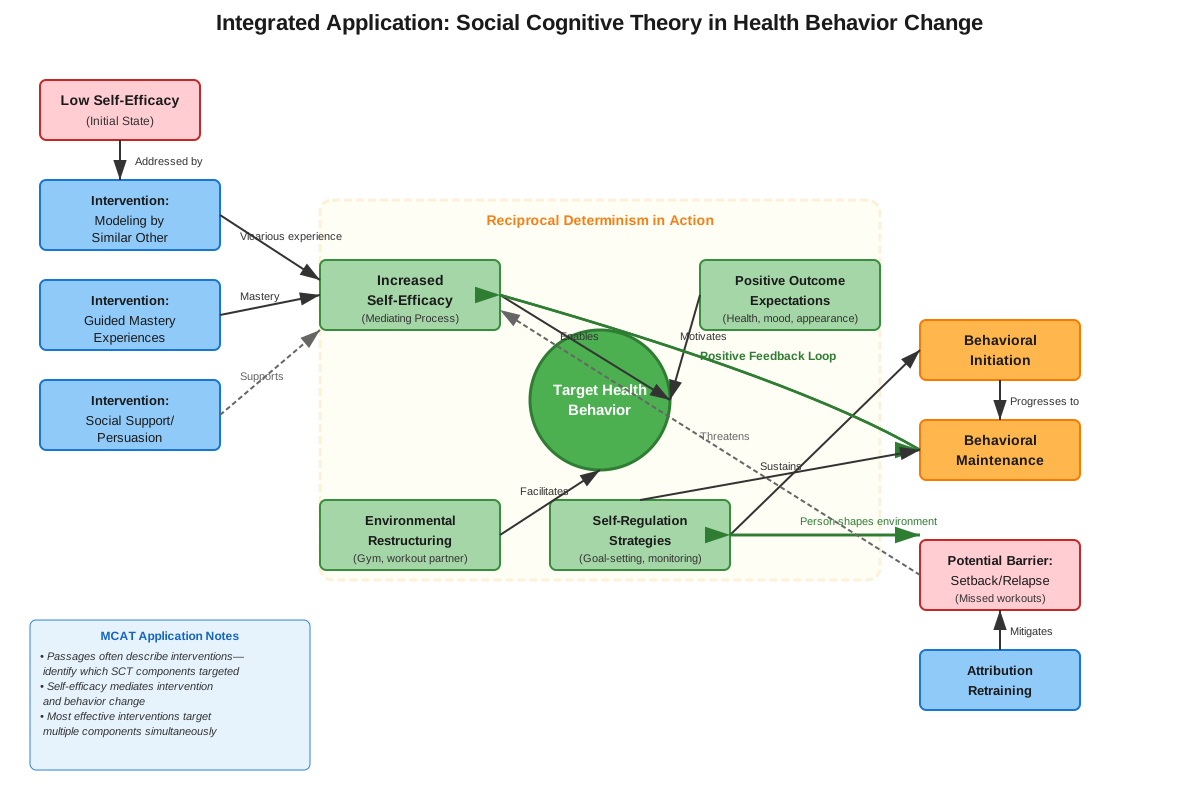
Overview
Social cognitive theory represents one of the most influential frameworks in Psychology for understanding how individuals learn, develop, and regulate their behavior through the dynamic interplay of personal factors, environmental influences, and behavioral patterns. Developed primarily by psychologist Albert Bandura, this theory revolutionized the field by demonstrating that learning occurs not only through direct reinforcement but also through observation, modeling, and cognitive processing. Unlike earlier behaviorist approaches that viewed humans as passive recipients of environmental stimuli, social cognitive theory emphasizes the active role individuals play in shaping their own development through self-regulation, self-efficacy beliefs, and reciprocal interactions with their environment.
For the MCAT, social cognitive theory appears frequently in the Psychology and Sociology section, particularly within questions addressing Development and Personality, learning processes, behavior change, and health psychology. The MCAT tests not only definitional knowledge but also the ability to apply theoretical frameworks to real-world scenarios, clinical vignettes, and research study designs. Understanding social cognitive theory enables students to analyze complex behavioral phenomena, predict outcomes of interventions, and explain individual differences in personality development and behavioral patterns.
This topic bridges multiple domains within Psychology, connecting developmental psychology, personality theory, learning theory, and health behavior models. Social cognitive theory provides the conceptual foundation for understanding self-efficacy (a person's belief in their capability to succeed), observational learning (learning by watching others), and reciprocal determinism (the bidirectional influence between person, behavior, and environment). Mastery of this framework is essential for interpreting MCAT passages involving behavior modification, educational interventions, therapeutic approaches, and public health campaigns.
Learning Objectives
- [ ] Define Social cognitive theory using accurate Psychology terminology
- [ ] Explain why Social cognitive theory matters for the MCAT
- [ ] Apply Social cognitive theory to exam-style questions
- [ ] Identify common mistakes related to Social cognitive theory
- [ ] Connect Social cognitive theory to related Psychology concepts
- [ ] Distinguish between social cognitive theory and traditional behaviorist approaches
- [ ] Analyze the components of reciprocal determinism and their interactions
- [ ] Evaluate the role of self-efficacy in predicting behavioral outcomes
- [ ] Apply observational learning principles to novel scenarios
Prerequisites
- Operant and classical conditioning: Social cognitive theory builds upon but extends beyond basic behaviorist principles by incorporating cognitive processes
- Basic developmental psychology: Understanding developmental stages provides context for how social cognitive processes change across the lifespan
- Personality theory fundamentals: Social cognitive theory represents a specific approach to understanding personality development and individual differences
- Cognitive processes (attention, memory, motivation): These mental processes are central to how observational learning and self-regulation occur
Why This Topic Matters
Social cognitive theory has profound clinical and real-world significance across multiple domains. In healthcare settings, the theory informs patient education programs, chronic disease management interventions, and health behavior change initiatives. For example, cardiac rehabilitation programs utilize self-efficacy enhancement strategies to help patients adopt exercise routines, while smoking cessation programs employ modeling techniques to demonstrate coping strategies. The theory's emphasis on self-efficacy has proven particularly valuable in predicting treatment adherence, recovery outcomes, and successful behavior modification.
On the MCAT, social cognitive theory appears in approximately 3-5% of Psychology and Sociology questions, making it a high-yield topic that warrants thorough understanding. Questions typically present in three formats: (1) passage-based questions requiring application of theory to research studies examining learning or behavior change, (2) discrete questions testing definitional knowledge and theoretical distinctions, and (3) pseudo-discrete questions embedded in clinical vignettes where students must identify which theoretical framework best explains observed phenomena.
Common MCAT passage contexts include: educational interventions examining how teacher modeling affects student performance; health psychology studies investigating factors predicting exercise adherence or dietary change; developmental research exploring how children acquire gender roles or moral behaviors through observation; and clinical trials comparing intervention approaches based on different theoretical models. The exam frequently tests the ability to distinguish social cognitive theory from purely behaviorist or psychodynamic approaches, identify components of reciprocal determinism in complex scenarios, and predict outcomes based on self-efficacy levels.
Core Concepts
Definition and Theoretical Foundation
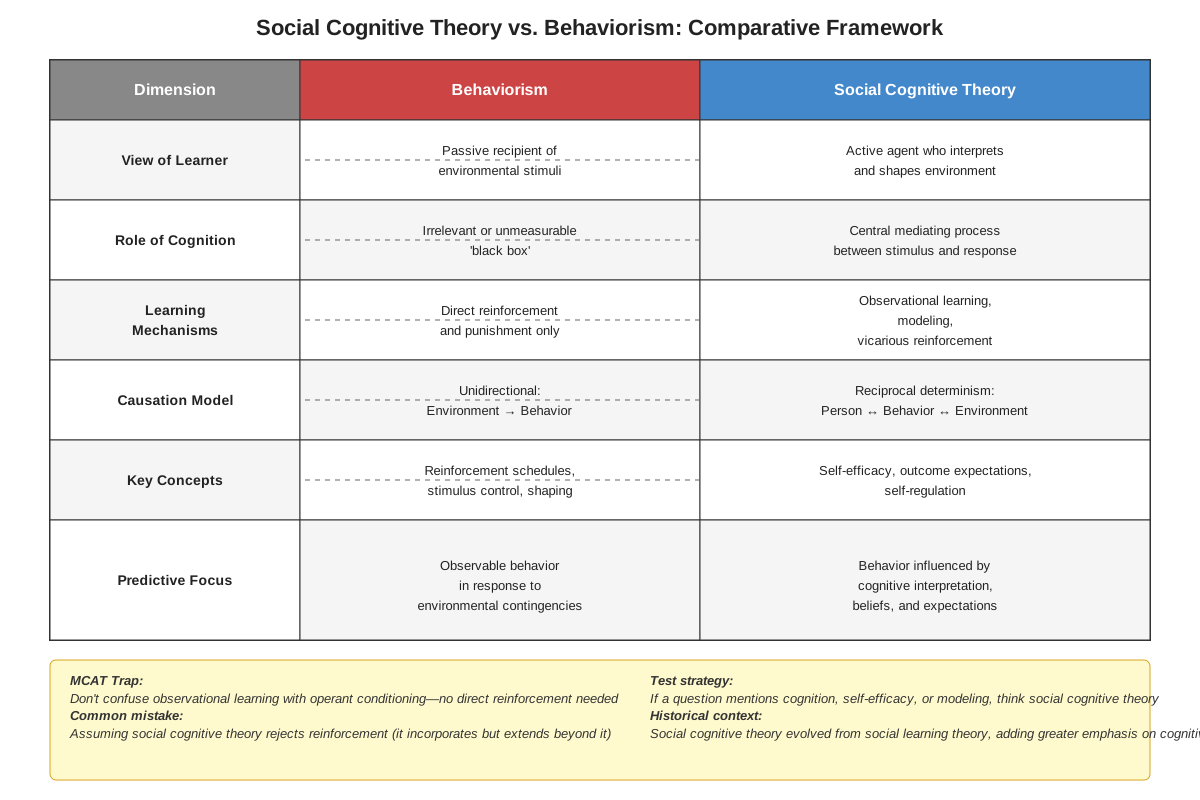
Social cognitive theory is a comprehensive framework explaining human behavior, learning, and personality development through the reciprocal interaction of cognitive, behavioral, and environmental factors. The theory posits that individuals are neither driven solely by inner forces (as psychodynamic theories suggest) nor controlled entirely by environmental stimuli (as radical behaviorism proposes). Instead, people function as active agents who both influence and are influenced by their social environments through cognitive mediation.
The theory emerged from Bandura's famous Bobo doll experiments (1961-1963), which demonstrated that children could acquire aggressive behaviors simply by observing adult models, even without direct reinforcement. These findings challenged the prevailing behaviorist view that learning required direct experience and reinforcement, establishing that observational learning (also called vicarious learning or modeling) represents a fundamental mechanism of human development.
Reciprocal Determinism
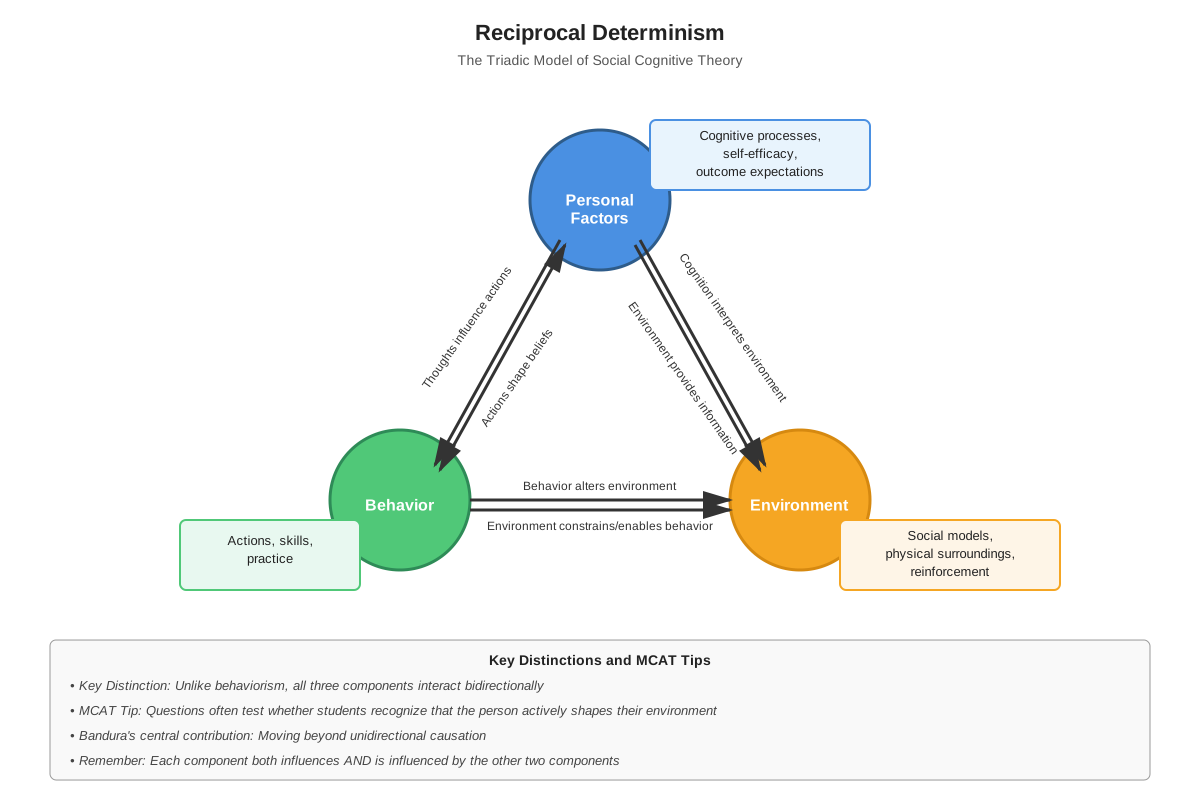
Reciprocal determinism constitutes the cornerstone principle of social cognitive theory, describing the continuous, bidirectional interaction among three factors:
- Personal factors (cognitive, affective, and biological characteristics)
- Behavioral factors (actions, responses, and performance)
- Environmental factors (social context, physical surroundings, and situational variables)
These three elements continuously influence one another in dynamic, reciprocal relationships rather than in a unidirectional cause-and-effect manner. For example, a student's belief in their mathematical ability (personal factor) influences how much effort they invest in studying calculus (behavioral factor), which affects their exam performance and teacher feedback (environmental factor), which in turn shapes their self-beliefs and future study behaviors.
| Factor Type | Examples | Influences | Influenced By |
|---|---|---|---|
| Personal | Self-efficacy, expectations, beliefs, goals, cognitive skills | Behavior selection, environmental interpretation | Environmental feedback, behavioral outcomes |
| Behavioral | Study habits, social interactions, performance | Environmental responses, personal evaluations | Personal capabilities, environmental opportunities |
| Environmental | Social support, resources, obstacles, cultural norms | Behavioral opportunities, personal development | Behavioral choices, personal characteristics |
Observational Learning (Modeling)
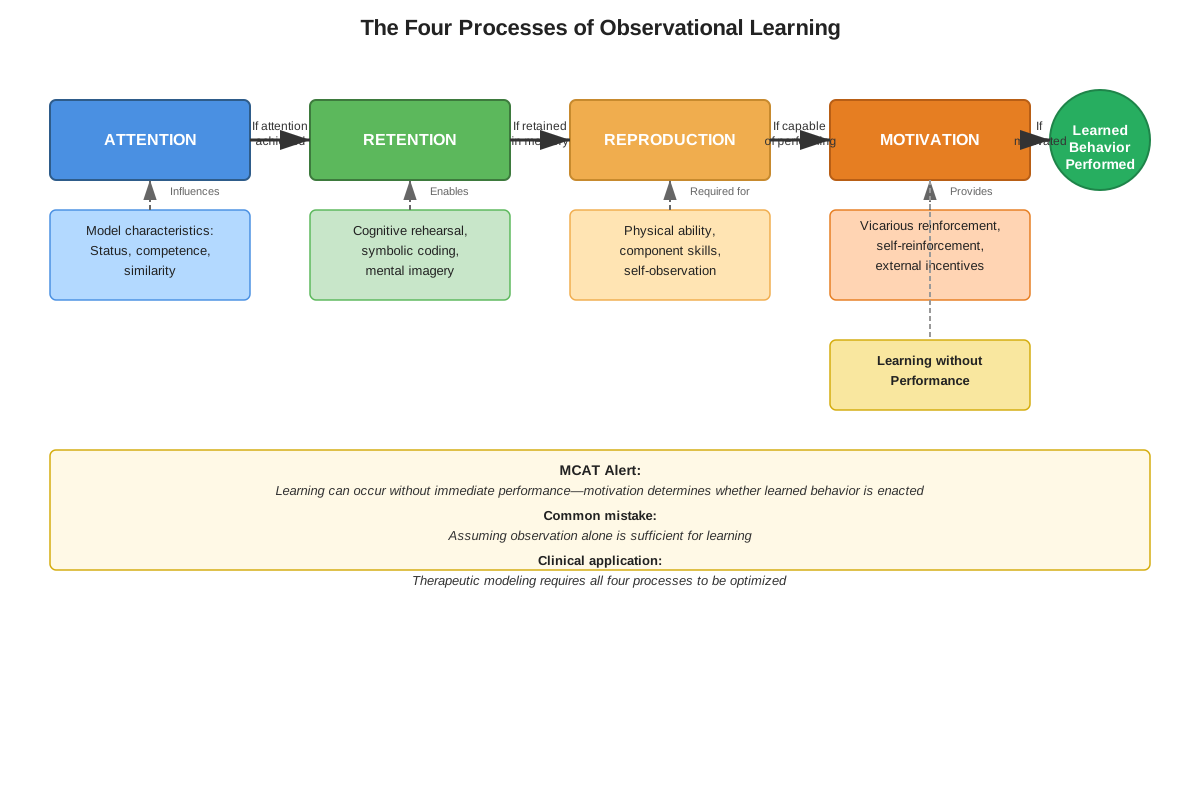
Observational learning refers to the process of acquiring new behaviors, attitudes, or emotional responses through watching others. This learning mechanism operates through four essential subprocesses:
- Attention: The observer must focus on the model and the relevant aspects of the modeled behavior. Factors affecting attention include model characteristics (attractiveness, competence, status), observer characteristics (arousal level, perceptual abilities), and situational factors (distinctiveness, complexity).
- Retention: The observer must encode and store a mental representation of the observed behavior in memory. This involves symbolic coding (verbal or visual), cognitive organization, and rehearsal (mental or physical).
- Reproduction: The observer must possess the physical and cognitive capabilities to perform the behavior. This requires translating symbolic representations into appropriate actions and self-correcting performance through feedback.
- Motivation: The observer must have incentive to perform the behavior. Motivation can arise from direct reinforcement (experiencing rewards), vicarious reinforcement (seeing the model rewarded), or self-reinforcement (internal satisfaction).
Importantly, observational learning distinguishes between acquisition (learning what to do) and performance (actually doing it). An individual may learn a behavior through observation but choose not to perform it based on expected consequences.
Self-Efficacy
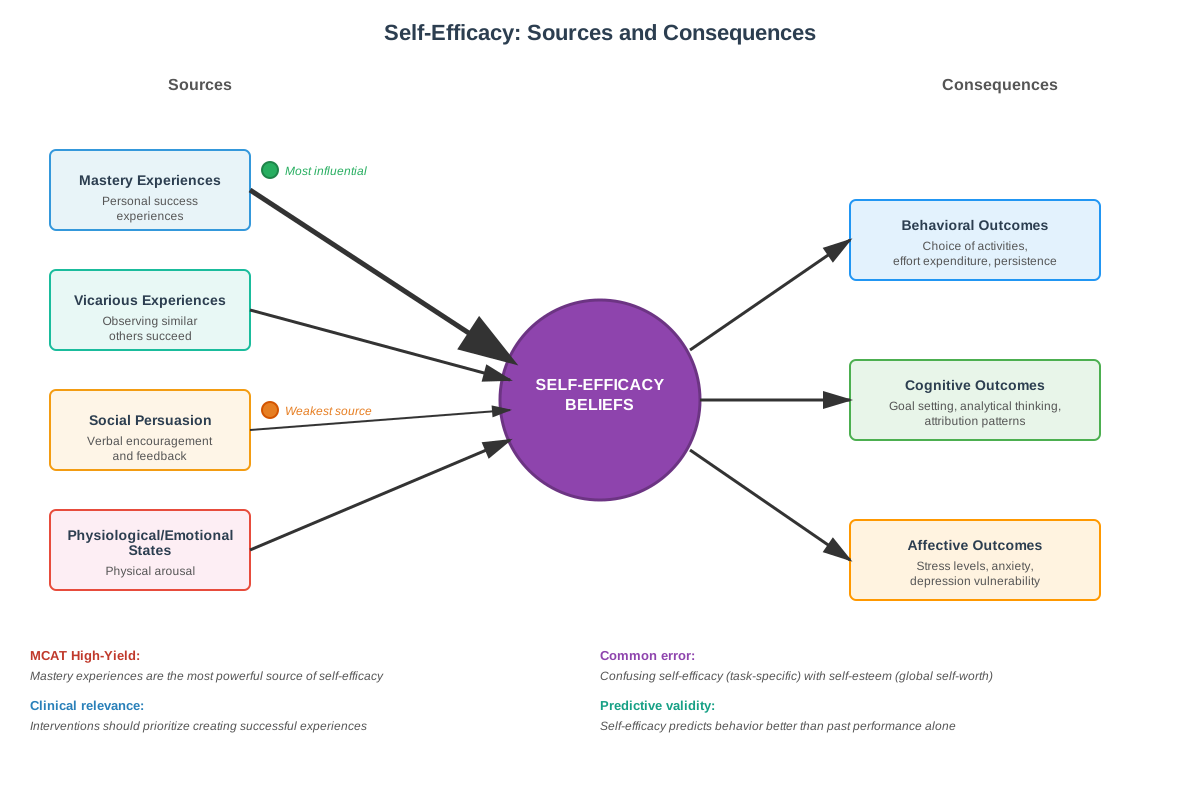
Self-efficacy represents an individual's belief in their capability to successfully execute behaviors required to produce specific outcomes. This concept differs from self-esteem (general self-worth) or outcome expectations (beliefs about whether behaviors lead to outcomes). Self-efficacy is behavior-specific and situation-specific; someone may have high self-efficacy for public speaking but low self-efficacy for mathematical problem-solving.
Self-efficacy develops through four primary sources:
- Mastery experiences: Direct success experiences provide the most powerful source of self-efficacy. Repeated successes build confidence, while failures (especially early failures) undermine it.
- Vicarious experiences: Observing similar others succeed through sustained effort raises observers' beliefs in their own capabilities. The more similar the model, the stronger the impact.
- Social persuasion: Verbal encouragement from credible sources can strengthen self-efficacy beliefs, though this source is weaker than mastery or vicarious experiences.
- Physiological and emotional states: People interpret arousal, stress, fatigue, and mood as indicators of capability. Anxiety may be interpreted as vulnerability to poor performance.
Self-efficacy profoundly influences behavior through multiple mechanisms: it affects goal selection (people pursue goals they believe they can achieve), effort expenditure (higher self-efficacy predicts greater persistence), resilience in the face of obstacles, and emotional reactions to challenges.
Self-Regulation and Self-Control
Self-regulation refers to the process by which individuals exercise control over their own thoughts, emotions, and behaviors to achieve goals. Social cognitive theory emphasizes human agency—the capacity to intentionally influence one's functioning and life circumstances. Self-regulation operates through three subfunctions:
- Self-observation: Monitoring one's behavior, including its determinants and effects
- Judgmental process: Comparing performance against personal standards and situational circumstances
- Self-reaction: Responding to one's behavior with self-satisfaction or self-criticism, which influences future behavior
Effective self-regulation requires setting proximal (short-term) goals rather than only distal (long-term) goals, as proximal goals provide immediate feedback and maintain motivation. Self-regulation also involves self-reinforcement—rewarding oneself for achieving standards—and self-punishment—withholding rewards or self-criticism for failing to meet standards.
Behavioral Capability
Behavioral capability refers to having both the knowledge and skills necessary to perform a behavior. Social cognitive theory recognizes that motivation alone is insufficient; individuals must possess actual competencies. This concept has important implications for intervention design—effective programs must provide both skill-building opportunities and motivational enhancement.
Concept Relationships
Social cognitive theory integrates multiple psychological processes into a unified framework. At the foundation, observational learning provides the mechanism through which environmental models influence personal cognitive structures (beliefs, expectations, knowledge). These cognitive structures, particularly self-efficacy beliefs, then influence behavioral choices and self-regulation strategies. The outcomes of these behaviors feed back into the environment, generating new models and consequences that further shape personal factors.
The relationship flows as: Environmental models → Attention and retention processes → Cognitive representations → Self-efficacy evaluation → Behavioral reproduction and motivation → Performance → Environmental consequences → Updated self-efficacy and expectations.
Reciprocal determinism serves as the overarching principle explaining how these components continuously interact. Personal factors (including self-efficacy) influence which environmental situations people select and create; behavioral patterns shape both environmental responses and personal self-evaluations; environmental factors provide learning opportunities and feedback that modify personal characteristics.
Social cognitive theory connects to prerequisite knowledge by extending classical and operant conditioning principles. While acknowledging that reinforcement influences behavior, the theory adds that reinforcement works largely through cognitive mediation—people form expectations about future consequences based on past reinforcement patterns. Unlike radical behaviorism, social cognitive theory emphasizes that reinforcement is neither necessary nor sufficient for learning; observation alone can produce learning.
The theory also relates to personality psychology by explaining individual differences in traits like conscientiousness (through self-regulation capacity), extraversion (through self-efficacy for social situations), and openness (through modeling diverse behaviors). In developmental psychology, social cognitive theory explains how children acquire gender roles, moral standards, and social skills through observing and imitating models in their environment.
High-Yield Facts
⭐ Social cognitive theory emphasizes reciprocal determinism—the bidirectional interaction among personal, behavioral, and environmental factors—rather than unidirectional causation.
⭐ Observational learning can occur without direct reinforcement; individuals can acquire behaviors simply by watching models, though performance depends on motivation.
⭐ Self-efficacy (belief in one's capability) is distinct from outcome expectations (belief that behaviors lead to outcomes) and predicts effort, persistence, and goal achievement.
⭐ The four processes essential for observational learning are attention, retention, reproduction, and motivation (remember: ARRM).
⭐ Self-efficacy develops primarily through mastery experiences (direct success), with vicarious experiences, social persuasion, and physiological states as additional sources.
- Reciprocal determinism distinguishes social cognitive theory from both behaviorism (which emphasizes environmental determinism) and psychodynamic theory (which emphasizes internal determinism).
- Vicarious reinforcement (observing a model being rewarded) increases the likelihood that observers will perform the modeled behavior.
- Proximal goals are more effective than distal goals for maintaining motivation and enabling self-regulation.
- Self-regulation involves self-observation, judgmental processes comparing performance to standards, and self-reactive influences (self-reinforcement or self-punishment).
- Behavioral capability (possessing necessary knowledge and skills) is required for behavior change; motivation alone is insufficient.
- Social cognitive theory explains both acquisition (learning) and performance (doing) of behaviors, recognizing these as distinct processes.
- Model characteristics affecting observational learning include perceived similarity, competence, status, and attractiveness.
Quick check — test yourself on Social cognitive theory so far.
Try Flashcards →Common Misconceptions
Misconception: Social cognitive theory is just another name for social learning theory, and the terms are completely interchangeable.
Correction: While Albert Bandura initially called his framework "social learning theory," he later renamed it "social cognitive theory" to emphasize the central role of cognitive processes (thinking, expectations, self-beliefs) in learning and behavior. The newer name reflects the theory's evolution beyond simple observational learning to include self-efficacy, self-regulation, and reciprocal determinism. On the MCAT, recognize that social cognitive theory represents the more comprehensive, cognitively-focused version.
Misconception: Self-efficacy and self-esteem are the same construct.
Correction: Self-efficacy is behavior-specific and situation-specific (e.g., "I can solve calculus problems"), while self-esteem reflects global self-worth (e.g., "I am a valuable person"). Someone can have high self-esteem but low self-efficacy for particular tasks, or vice versa. MCAT questions often test this distinction by presenting scenarios where confidence in specific capabilities differs from overall self-regard.
Misconception: Observational learning requires that the observer immediately perform the behavior they observed.
Correction: Observational learning distinguishes between acquisition (learning what to do) and performance (actually doing it). An individual can learn a behavior through observation and store it in memory without ever performing it, or may perform it much later when motivation and opportunity align. The Bobo doll experiments demonstrated that children who observed aggression but weren't immediately tested still retained and could later reproduce the aggressive behaviors.
Misconception: In reciprocal determinism, the three factors (personal, behavioral, environmental) always influence each other simultaneously and with equal strength.
Correction: While the three factors continuously interact, the strength and timing of influences vary across situations and individuals. Sometimes environmental factors dominate (e.g., in highly constrained situations), while other times personal factors exert stronger influence (e.g., when individuals have high self-efficacy and autonomy). The "reciprocal" aspect means bidirectional influence, not necessarily equal or simultaneous influence.
Misconception: Social cognitive theory rejects the importance of reinforcement in learning.
Correction: Social cognitive theory doesn't reject reinforcement; rather, it reconceptualizes how reinforcement works. The theory proposes that reinforcement operates largely through cognitive mediation—people form expectations about future consequences based on past reinforcement patterns. Additionally, the theory recognizes vicarious reinforcement (observing others being reinforced) and self-reinforcement (internal rewards) as important alongside external reinforcement. The key distinction is that reinforcement is neither necessary nor sufficient for learning to occur.
Misconception: Self-efficacy is a stable personality trait that remains constant across situations.
Correction: Self-efficacy is domain-specific and malleable, not a fixed trait. An individual's self-efficacy varies across different activities (high for athletics, low for academics) and can change through mastery experiences, modeling, persuasion, and reinterpretation of physiological states. Interventions can successfully enhance self-efficacy, which is why the concept is so valuable in clinical and educational settings.
Worked Examples
Example 1: Identifying Social Cognitive Theory Components
Vignette: A research study examines factors influencing college students' exercise behavior. Researchers find that students who believe they can successfully complete a workout routine (Factor A) are more likely to join a gym (Factor B). After joining, students who receive encouragement from trainers and workout partners (Factor C) report increased confidence in their abilities. Students with higher confidence set more challenging fitness goals and persist longer when exercises become difficult.
Question: Which factors represent personal, behavioral, and environmental components of reciprocal determinism?
Analysis:
Step 1: Identify the three factors in the vignette:
- Factor A: Belief in ability to complete workouts
- Factor B: Joining a gym
- Factor C: Encouragement from trainers and partners
Step 2: Classify each factor according to reciprocal determinism:
- Personal factor: Factor A represents self-efficacy beliefs (cognitive characteristic)
- Behavioral factor: Factor B represents the action taken (joining gym)
- Environmental factor: Factor C represents social support from others (external social context)
Step 3: Trace the reciprocal influences:
- Personal → Behavioral: Self-efficacy beliefs influence the decision to join the gym
- Environmental → Personal: Social encouragement increases self-efficacy
- Personal → Behavioral: Enhanced self-efficacy leads to goal-setting and persistence
Answer: Factor A (self-efficacy) = personal; Factor B (joining gym) = behavioral; Factor C (social encouragement) = environmental. The scenario demonstrates reciprocal determinism because each factor influences the others in a continuous cycle.
Connection to learning objectives: This example demonstrates application of social cognitive theory to exam-style questions by requiring identification of reciprocal determinism components and analysis of their interactions.
Example 2: Distinguishing Theoretical Approaches
Vignette: A 7-year-old child begins using aggressive language after watching older siblings use similar language when frustrated. The child has never been directly reinforced for using this language and, in fact, has been reprimanded for it. However, the child observed that the siblings often got their way after using aggressive language.
Question: Which theoretical framework best explains this behavior acquisition, and what mechanism is operating?
Analysis:
Step 1: Evaluate behaviorist explanation:
- Classical conditioning: No unconditioned stimulus paired with aggressive language
- Operant conditioning: The child was punished (reprimanded), not reinforced, yet behavior persists
- Behaviorist approaches cannot fully explain learning without direct reinforcement
Step 2: Evaluate social cognitive theory explanation:
- Observational learning occurred: Child watched siblings (models) use aggressive language
- Vicarious reinforcement operated: Child observed siblings being rewarded (getting their way)
- Learning occurred without direct experience or reinforcement to the child
Step 3: Identify the observational learning processes:
- Attention: Child focused on siblings' behavior during frustrating situations
- Retention: Child encoded and remembered the aggressive language patterns
- Reproduction: Child possessed capability to reproduce the verbal behavior
- Motivation: Vicarious reinforcement (seeing siblings succeed) provided motivation to perform behavior despite direct punishment
Answer: Social cognitive theory best explains this scenario through observational learning with vicarious reinforcement. The child learned by watching models (siblings) and was motivated by observing their success, even though the child personally received punishment. This demonstrates that learning can occur without direct reinforcement and that vicarious consequences influence behavior.
Connection to learning objectives: This example illustrates distinguishing social cognitive theory from behaviorist approaches and identifying how observational learning operates through attention, retention, reproduction, and motivation processes.
Exam Strategy
When approaching MCAT questions on social cognitive theory, begin by identifying whether the question asks about theoretical distinctions, component identification, or application to scenarios. Look for trigger words that signal specific concepts:
Trigger words for reciprocal determinism: "interaction between," "bidirectional," "influence each other," "both affect and are affected by"
Trigger words for observational learning: "watching," "modeling," "imitation," "observed," "vicarious," "without direct experience"
Trigger words for self-efficacy: "belief in capability," "confidence in ability," "perceived competence," "expectations of success"
Trigger words for self-regulation: "self-monitoring," "goal-setting," "self-reward," "self-control," "personal standards"
For passage-based questions, quickly identify the theoretical framework being tested by scanning for these key concepts. Many MCAT passages present research studies examining behavior change interventions—determine whether the intervention targets self-efficacy enhancement, provides models for observational learning, or addresses environmental barriers (environmental component of reciprocal determinism).
When eliminating answer choices, use these strategies:
- Eliminate purely behaviorist options if the scenario involves learning without direct reinforcement or emphasizes cognitive processes like beliefs and expectations.
- Eliminate options confusing self-efficacy with self-esteem by checking whether the concept is behavior-specific (self-efficacy) or global self-worth (self-esteem).
- Eliminate options suggesting unidirectional causation when reciprocal determinism is relevant—look for answers acknowledging bidirectional influences.
- Eliminate options claiming observational learning requires immediate performance—remember that acquisition and performance are distinct.
For time management, allocate approximately 60-70 seconds for discrete questions on social cognitive theory and 90-110 seconds for passage-based questions. If a question asks you to identify which theoretical framework best explains a scenario, quickly eliminate frameworks that cannot account for key features (e.g., eliminate behaviorism if no reinforcement occurred; eliminate psychodynamic theory if the focus is on current cognitions rather than unconscious conflicts).
Exam Tip: When a question presents a behavior change intervention, ask yourself: "Is this targeting personal factors (self-efficacy, knowledge), behavioral factors (skill-building, practice), or environmental factors (social support, resources)?" This framework helps you analyze interventions through the lens of reciprocal determinism.
Memory Techniques
ARRM for the four processes of observational learning:
- Attention: Must focus on the model
- Retention: Must remember what was observed
- Reproduction: Must be capable of performing the behavior
- Motivation: Must have incentive to perform
MSVP for sources of self-efficacy (in order of strength):
- Mastery experiences (most powerful)
- Social modeling (vicarious experiences)
- Verbal persuasion
- Physiological states
PBE Triangle for reciprocal determinism:
Visualize a triangle with three points:
- Personal (top): beliefs, self-efficacy, expectations
- Behavioral (bottom left): actions, performance
- Environmental (bottom right): social context, situations
Draw bidirectional arrows between all three points to remember continuous reciprocal influence.
"See-Store-Do-Want" for observational learning sequence:
- See: Attention to model
- Store: Retention in memory
- Do: Reproduction capability
- Want: Motivation to perform
Self-Efficacy vs. Outcome Expectations:
- Self-efficacy = "Can I do it?" (personal capability)
- Outcome expectations = "Will it work?" (behavior-outcome link)
For remembering that social cognitive theory emphasizes agency (active role) rather than passive reception:
Think "COGnitive = COntrol and Goals" — the cognitive emphasis means people actively control behavior and set goals rather than passively responding to stimuli.
Summary
Social cognitive theory provides a comprehensive framework for understanding human learning, behavior, and personality development through the reciprocal interaction of personal, behavioral, and environmental factors. The theory's core principle, reciprocal determinism, distinguishes it from both behaviorist approaches (which emphasize environmental control) and trait theories (which emphasize stable internal characteristics) by recognizing continuous bidirectional influences among cognition, behavior, and context. Observational learning demonstrates that individuals acquire new behaviors through watching models, operating through attention, retention, reproduction, and motivation processes, even without direct reinforcement. Self-efficacy—belief in one's capability to execute behaviors—emerges as a critical personal factor predicting goal selection, effort, persistence, and achievement across domains. Self-regulation mechanisms enable individuals to exercise agency by monitoring behavior, comparing performance to standards, and administering self-reinforcement. For MCAT success, students must distinguish social cognitive theory from related frameworks, identify components of reciprocal determinism in complex scenarios, apply observational learning principles to novel situations, and recognize how self-efficacy influences behavioral outcomes in clinical and research contexts.
Key Takeaways
- Social cognitive theory explains behavior through reciprocal determinism—the continuous, bidirectional interaction among personal factors (cognitions, self-efficacy), behavioral factors (actions, performance), and environmental factors (social context, situations)
- Observational learning enables behavior acquisition without direct reinforcement through four processes: attention, retention, reproduction, and motivation (ARRM)
- Self-efficacy (belief in capability to perform specific behaviors) differs from self-esteem (global self-worth) and outcome expectations (belief that behaviors lead to outcomes), and develops primarily through mastery experiences
- Vicarious reinforcement (observing models being rewarded) and vicarious punishment (observing models being punished) influence observers' likelihood of performing modeled behaviors
- Social cognitive theory emphasizes human agency and self-regulation, recognizing that individuals actively shape their development rather than passively responding to environmental contingencies
- Learning (acquisition) and performance are distinct processes in observational learning; individuals may learn behaviors without immediately performing them
- On the MCAT, social cognitive theory frequently appears in passages examining behavior change interventions, health psychology, educational contexts, and developmental processes
Related Topics
Self-Determination Theory: Explores intrinsic and extrinsic motivation, connecting to social cognitive theory's emphasis on self-regulation and agency. Understanding both theories enables comprehensive analysis of motivational processes.
Attribution Theory: Examines how people explain causes of behavior and outcomes, relating to self-efficacy development (attributing success to ability vs. effort affects future self-efficacy).
Health Belief Model and Theory of Planned Behavior: Alternative frameworks for predicting health behaviors that can be contrasted with social cognitive theory's approach in MCAT passages.
Developmental Psychology: Social cognitive theory provides mechanisms (observational learning, modeling) explaining how children acquire gender roles, moral standards, and social behaviors across developmental stages.
Personality Psychology: Social cognitive theory represents a social-cognitive approach to personality, contrasting with trait, psychodynamic, and humanistic approaches—understanding these distinctions is essential for comparative questions.
Behavioral and Cognitive Therapies: Clinical applications of social cognitive principles include modeling techniques, self-efficacy enhancement, and self-regulation training used in therapeutic interventions.
Practice CTA
Now that you've mastered the core concepts of social cognitive theory, reinforce your understanding by attempting practice questions and reviewing flashcards focused on this high-yield MCAT topic. Challenge yourself to identify reciprocal determinism components in complex scenarios, distinguish social cognitive theory from alternative frameworks, and apply observational learning principles to novel situations. Remember that active retrieval practice—testing yourself rather than passively rereading—produces the strongest learning gains. Your investment in thoroughly understanding social cognitive theory will pay dividends not only on MCAT questions directly testing this framework but also on passages examining behavior change, health psychology, and developmental processes where these principles operate behind the scenes. You've built a strong foundation—now strengthen it through deliberate practice!
Sign up free to keep reading
Create a free AnvayaPrep account to finish this MCAT guide on Social cognitive theory — plus flashcards and practice questions.